← The Team House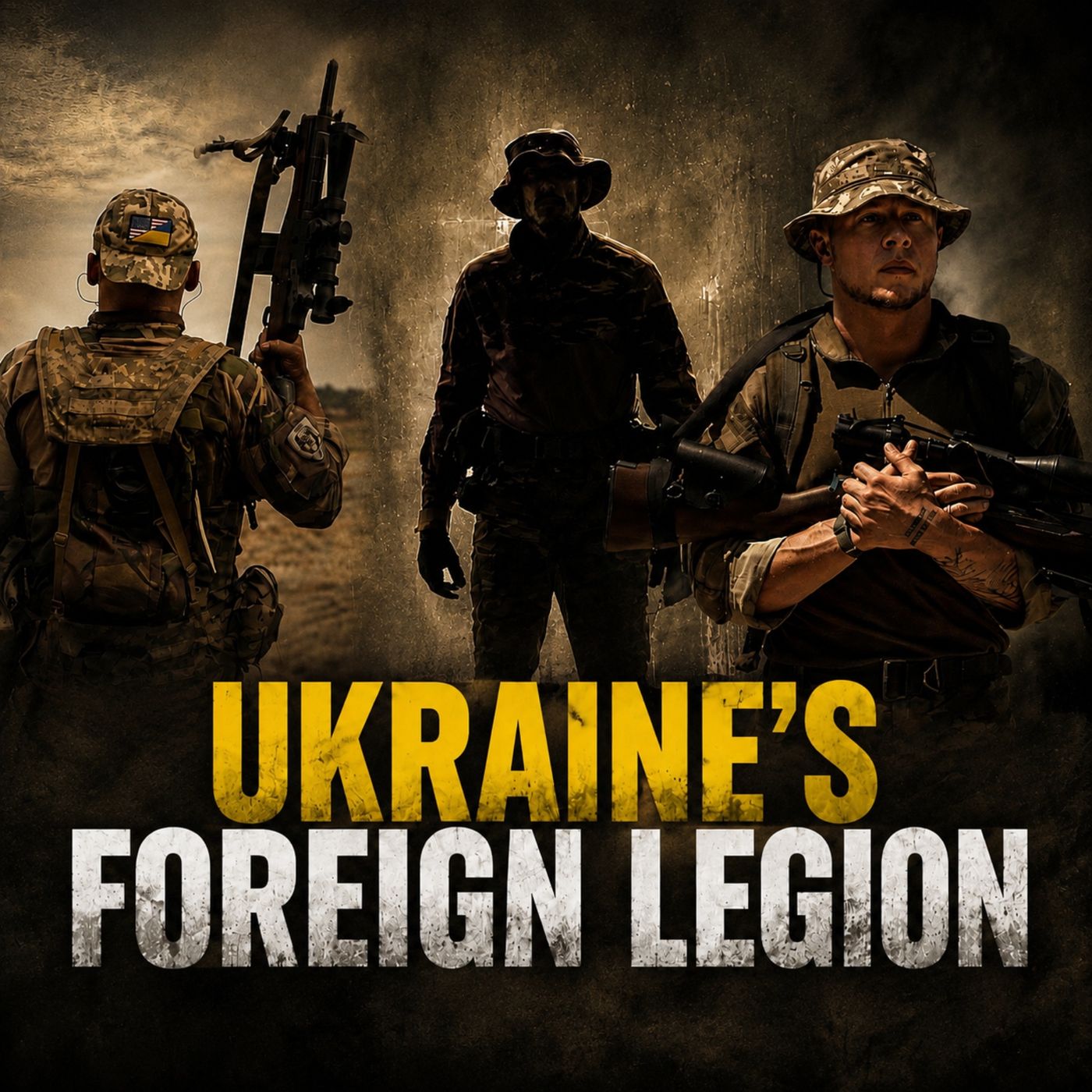
The Team House
Inside Ukraine’s Foreign Legion | Colin Freeman
02:07:56
We speak with journalist Colin Freeman about covering wars from Iraq and Somalia to Ukraine, including his own kidnapping by Somali pirates and the early days of Russia’s full-scale invasion. We also dig into his book The Mad and the Brave, the...
Loading summary
Transcript106 lines
- [00:01]
McDonald's Advertiser
All new drinks are now at McDonald's with refreshers like the Strawberry Watermelon Refresher and the Mango Pineapple Refresher with popping Boba. To crafted sodas like the Sprite Berry Blast with berry flavors and cold foam. Who knew ice cold drinks could be so fire six? All new drinks are here now at McDonald's.
- [00:28]
Jack Murphy
Refreshers contain caffeine. You can't predict the future, but you can prepare for it. Arizona State University is building degrees for what's ahead. Programs designed around emerging fields taught by faculty whose research is shaping our future, not just teaching about it. It's why we've been ranked number one in innovation for more than a decade. Your future is worth preparing for and you don't have to prepare alone. Future proof your career. Explore more than 350 programs at ASUonline ASU.
- [00:58]
McDonald's Advertiser
EDU.
- [00:59]
Jack Murphy
That's a degree better. Hey everyone. Welcome to the team house. I'm Jack Murphy here with tonight's guest journalist, Colin Freeman. He is the author of the Mad and the Brave, which is a book about the Ukrainian Foreign Legion, that is the foreigners from, I mean he'll tell us, but 50 some odd countries that came to Ukraine to help defend the country from Putin's invasion, the Russian invasion, mostly starting on the 22, 2022 full scale invasion that began going forward is kind of the context of the book. Collins also had an interesting career in his own right as a journalist covering various combat zones. So thank you, Colin, for joining us and thanks for reaching out.
- [01:47]
Colin Freeman
Thanks for having me on the podcast.
- [01:49]
Jack Murphy
Yeah, I just read the book, the PDF that you sent me. I'm going to, I need to order a hard copy from my library, have it in my collection. I just finished reading it before we started this interview and it was very, very good. Like I was telling you before the show, I wish I had written it because it was that good. So, Colin, let's start off a little bit with your kind of origin story. How did you grow up? Where did you grow up and how did that sort of take you towards journalism?
- [02:21]
Colin Freeman
Yeah, I grew up in Edinburgh in Scotland and I think when I was young I didn't have any interest in anything particular. Didn't want to be a banker, didn't want to be a lawyer, that kind of thing. Couldn't really work out what I wanted to do. And I realized that journalism was quite a good profession for people who aren't interested in anything in particular because every day is essentially different. Certainly that's the case if you're working on a general current affairs newspaper. So after I left school and went to university, I think by the end of uni, I decided that I would, I would try and become a journalist. I didn't do much at university in terms of journalism. I then got a job on a local paper in Grimsby, which is a town in the north of England, doing very kind of typical local paper stories, court stories, stories about animals, stuck up trees, village, village shows, all that sort of stuff, you know, the kind of. But, but it's a sort of microcosm of the world around us. And while it sometimes feels boring at the time, you do get to sort of see every side of human life from the, you know, life in the courts and the kind of darker underbelly of, of, of, of a place to the way the government works at local level, who the movers and shakers are and of course all the human interest stories in between. It's more the sum of the stories rather than the, the individual stories themselves. It's a great chance really to just sort of see life up front in all its different shades. Then I moved down to London to cut a long story short. Worked on a tabloid news agency chasing celebrities around. I've been, I've been told to get lost by all manner of famous British celebrities and some B list ones as well, like the, the, the, the Oasis, the Spice Girls. All these people, I think at one point or another said no comment, please go away to me. Probably did some American ones as well, but I didn't get very far. And then that, that was a kind of stepping stone, that tabloid stuff to Fleet street or, you know, which is, which is where our national newspapers, the shorthand for our national newspapers. And it toughens you up a bit, gets you used to, you know, gives you a bit of a thick skin. Then I worked on the London Evening Standard, which is kind of like the equivalent of the New York Post, I suppose. It's London's main, you know, newspaper, but it sort of sees itself as a national paper. I was there for about four years, but I only got so far up the chain really. I wasn't one of their, you know, their brightest rising stars. And if that's the case, in a competitive newsroom environment, you tend to realize that you, you know, you're never going to, you know, do that well, and when the really big stories happen, such as the Iraq war when it was looming, you realize you're not going to be part of a team that's going to get sent. And I think it was the Iraq War started In March of 2003, if I remember correctly. And many, as many of you, your listeners will remember. There was quite a kind of big roll up to the run up to the war. It was pretty clear it was going to happen. You know, you had troop deployments to the Gulf and so on months in advance. And I think at Christmas of 2002, about three months before the war started, I was on another celebrity doorstep and sitting outside some celebrity's house waiting for them to comment on some story, not even sure if they were there or not. I was whinging the photographer I was with about how the team for the, to cover the Iraq war for the Standard had already been picked and I wasn't going to be on it, not to any my great surprise. And he said, well, look, you know, rather than just sort of sitting there bitching, why don't you go and cover the war as a freelancer? And I said, can you do that? And it seemed a crazy idea, but it sort of lit a light bulb in my head and I thought, well, you know, I'll go and try and do it and if nothing else, it will be like a kind of a gap year or a backpacking adventure with a, with a bit of a difference, maybe with a bit more purpose. So off I went to Iraq. It seemed like a great idea to me. Some of the other people that I ran it past thought, no, that's, that's absolute bloody madness. You know, you don't speak Arabic, you, you don't have any contacts out in Iraq. You don't have any hostile environment training, no combat experience or anything like that. You've got no work lined up and actually you don't even know where Iraq is, which was true. I had to look where it was on the map. But anyway, I went out there, I pitched up actually on the day the war, formal combat hostilities actually ended On, I think, May 1st of 2003, that is the very last day of the active war, which is not a great spur to have in your cap, further to have in your cap as a war correspondent. But it turned out to be a good time because as we know, the, you know, the actual invasion at top of Saddam Hussein went like clockwork. It was the, it was the occupation afterwards. That was the bit that, you know, proved that did not go to plan. And that was where the news was really. So I was out there for a couple of years and that was kind of where I sort of learned my trade as a foreign correspondent from then I became, got a job on The Daily Telegraph back in London on their foreign des as chief foreign correspondent and spent about the next 10, 12 years covering, you know, different. Different big stories around the world, principally the Arab Spring, the Somali piracy crisis, and of course, the rest of the war in Iraq and Afghanistan. So that was kind of me. I then went freelance in 2016, still doing the same sort of stuff, really, essentially. And then when the war in Ukraine started, the Telegraph asked me back as an extra pair of hands to go and cover that. And so I was. I've been covering that on. Off for the last four years. I was in Kiev when the. I was in Ukraine at the start of the war, ended up in Kiev for most of the first month. And that's where I ended up getting the. The idea for the book about the. The international volunteers. That's me in a nutshell, rather large nutshell.
- [08:56]
Jack Murphy
Just to point out to the listeners, kind of the life of a freelance reporter. I mean, you really are just packing sort of like a laptop and a camera and a change of clothes and going over there on your own. There's no security blanket, there's no nothing. And you have to pitch editors and hopefully sell a story, right?
- [09:15]
Colin Freeman
That is exactly it, yes. And certainly when I first went to Iraq, I didn't find that many editors that keen. Initially, I thought that was just because they had their own people there. It turned out most of them didn't. Most of their staff correspondents had pulled out by then, but a lot of them were just reluctant to use you because they were worried that if something went wrong, as it could easily do, they would be, you know, morally, if not legally, liable for you. And that's not a position that a lot of media organizations want to find themselves in. Nobody wants to be waking up. What? No, no executive wants to be waking up to find some freelancer that they, you know, gave some vague kind of commission to via email, suddenly staring out from a hostage video. That's. That has happened in the past. And. Yeah, so that's the perennial problem for freelancers these days is. Is finding you know, news organizations that are. That are willing to. To trust them in war zones. Although, you know, it's. It's not surprising because it does come down to a duty of care sometimes.
- [10:18]
Jack Murphy
I remember a time because I was going back and forth to Syria and Iraq during the ISIS war, and it was like 2014 or 2015, I think it was one of the big ones. It was like Reuters or AP or someone. They would take copy from freelancers, but not photographs. It's very weird policy that they would not accept photojournalism, but if you went and wrote a story and submitted it, they would consider it.
- [10:46]
Colin Freeman
Yeah. I mean, different places have different rules. Some places will not take anything from anybody.
- [10:52]
Jack Murphy
Yes.
- [10:52]
Colin Freeman
Because they don't want to be seen to be encouraging people. Other places will say, well, look, we can't commission you to go, but when you get back, when you're back in, you're sort of safe and sound and assuming you're still alive, we can have a chat then, which is slightly having your cake and eating it a little bit. So, you know, it's. It's quite a difficult one. But we. When I was working on the Telegraph foreign desk, we did occasionally get people who were freelancers ringing up, saying they were off to, you know, about. To deploy themselves to. To somewhere dicey. And we would often try and dissuade them. I've generally found the best way of dissuading them was to sort of say, do you, you know, do your parents know where you're going? And they'd be like, well, what's that got to do with that? I said, well, it's your parents whose numbers we'll need in case you get kidnapped. And we also need things like your blood group and, you know, other information like that. And how will they respond if they were on the phone telling them that you've, you know, you've not been heard of for a week and that your face has just appeared in a hostage video? I don't think I've had to lay it on quite as thick as that. But when you mention things like that, that sometimes drives the point home to people in a way that they. They perhaps haven't sort of quite thought about it in the past. Yeah, I. I myself was actually kidnapped in Somalia back in 2008 while working for the.
- [12:23]
Jack Murphy
Can you tell us about that?
- [12:25]
Colin Freeman
Yeah, sure. I mean, that's why I, you know, this. This is a sort of a subject of particular interest to me. I was covering the Somali piracy crisis at the time, which, again, as many of your listeners will remember, was when Somali pirates were sailing out into the Gulf of Aden, hijacking ships and taking the crews hostage. So, yeah, we. The foreign editor said to me at the time, can you go to Somalia to do a bit of reporting on the ground, just to get an idea of what the, you know, what the local people think about the piracy. And so off we went. We went to a town called Basaso, which is in the northern region of Somalia, called Puntland. Which is where most of the piracy was taking place because it's close to the Gulf of Aden. So it's, it's like being the. Being a spot on the inter. On the interstate highway where you can just sail out into the sea and you've got, you know, hundreds of passing ships every day as, as most journalists do when they go there. And indeed most business people and aid workers, we, we use bodyguards that were hired by our fixers, local hires, just, you know, guys with, you know, guys who were the. Probably the fixer's cousins or relatives or relatives, cousins, friends, whatever, with guns. Guys with guns, about seven of them. And it's basically a kind of scarecrow effect. You're not expecting these people to lay their lives down for you, but you do have to hope that the fixers hires ones who are trustworthy. In our case, they were not trustworthy. And on the last day as we were driving to the airport, our, our bodyguards, the guys we were paying several hundred bucks to keep us safe every day, kidnapped us themselves and drove us off into the mountains. I won't go into the full details about it. There is a book I wrote about it, anyone wants to check it out, which tells the story in, in exhaustive detail. But basically we were held in a series of caves in the mountains of northern Somalia for about six weeks. We weren't, we weren't hurt badly or anything like that. We were threatened a few times and there was a few other thrills and spills. A gunfight in the cave at one point with a rival clan, which is not a great place to have a gunfight, you know, with all those, all those stone walls, lots of bullets, zigzag, ricocheting around. But eventually we were released. I can't go into the. The circumstances are released too much. But money was asked for. Whether money changed towns, I don't really know. That is quite frequent in that part of the world. We were also threatened at one point that when the negotiations were not going very well, the pirates happened to mention that a British naval vessel had killed a couple of pirates and a clan a few hundred miles down the road just the week before. And they said those, the clan. The clan to which those dead pirates belong. They're rather cross about that. And they've heard that we've got you, a British journalist hostage up here and they put in a counter offer for you. So if your newspaper doesn't pay up, they'd be very keen to buy you just to sort of have a little word about those pirates that your Navy killed. And I remember thinking, Jesus Christ, you know, it's the first time the Royal Navy has killed anyone in about 300 years and it happens to be the same bloody week that I'm stuck with a bunch of pirates in Somalia. So yeah, it was, it was, it was a, not a pleasant experience, but it was, it was manageable and it has sort of taught me, you know, the sort of, that it's fairly important to be careful when you get deployed abroad. Although realistically these days kidnapping is a, is a threat that can, you know, lots of journalists I know, I've had it happen to them, including quite a few in Iraq, where the consequences could be a lot more serious. You know, we had religious kidnappings that led to beheadings and so on.
- [16:43]
Jack Murphy
One thing I love about summer is how easy everything feels. The days are a little more relaxed and I find myself reaching for the same comfortable go anywhere pieces again and again. That's why I keep coming back to Quints. They focus on well made essentials that naturally become those everyday staples you actually live in all season long. Quince's 100% European linen pants and shirts are breathable, easy to throw on, and the summer upgrade your rotation needs starting at just $34. Their tees are soft enough to live in all day and lightweight cotton sweaters are exactly what you want when summer nights cool down. Everything at Quint's is priced 50 to 80% less than similar brands. They work directly with ethical factories and cut out the middlemen. So you're paying for exceptional quality, not brand markup. And it's not just clothing. Quint has become a trusted favorite for everything from home to travel to everyday essentials make your summer wardrobe easier. Go to quint.com house for free shipping on your order and 365 day returns. Now available in Canada too. That's Q U I n c e.com House for free shipping and 365 day returns quince.com House if upgrading your full sleep setup has been on the list For a while, Ghostbed's 4th of July sale is the time to actually do it. Right now you can get $250 off mattress bundles, which means you can add cooling pillows, cooling sheets or an adjustable base and still come out well ahead of what you'd pay anywhere else. And as a team house listener, you get an extra 10% off on top of that. Using the code HAUS, Ghostbed is a family owned company with more than 20 years of mattress making experience. Their background is in manufacturing, so every product in their lineup is built with the same focus on materials and construction rather than marketing spend in inflated markups. Every Ghostbed mattress is built with cooling from the ground up and their Pro Core support layer, which reinforces the center of the mattress with where your body puts the most weight. Don't take it from me, they've got more than 100,000 positive reviews from people who made the switch and didn't look back. Mattresses are made in the USA and Canada and come with a 101 night sleep trial, fast and free shipping and a Warranty up to 25 years, twice the industry standard. Not sure where to start? Head to ghostbed.com house and take their mattress quiz to find the right mattress, then build from there. Go to ghostbed.com house and use the promo code house at checkout. That's ghostbed.com house promo code house. Some exclusions apply. See site for details.
- [19:38]
McDonald's Advertiser
All new drinks are now at McDonald's with refreshers like the Strawberry Watermelon Refresher and the Mango Pineapple Refresher with Popping Boba to crafted sodas like the Sprite Berry Blast with berry flavors and cold foam. Who knew ice cold drinks could be so fire six all new drinks are here now at McDonald's.
- [20:05]
Jack Murphy
Refreshers contain caffeine.
- [20:07]
Colin Freeman
My name is Shannon Maldonado. I'm the founder of Yaoi, a gift
- [20:10]
Jack Murphy
shop from the lens of artists and
- [20:12]
Colin Freeman
handmade objects, I chose Shopify because when
- [20:15]
Jack Murphy
I was testing other platforms, it was
- [20:17]
Colin Freeman
definitely one of the most user friendly. It was important to me to think of about where we would be in the future. All of the tools for reading your sales, like planning inventory, they're just right there on your dashboard.
- [20:26]
Jack Murphy
For anyone starting a small business, the
- [20:28]
Colin Freeman
biggest thing I can tell you, it doesn't have to be perfect. Shopify can help you build upon it. Start your free trial on shopify.com all
- [20:37]
McDonald's Advertiser
new drinks are now at McDonald's with refreshers like the Strawberry Watermelon Refresher and the Mango Pineapple Refresher with Popping Boba to crafted sodas like the Sprite Berry Blast with berry flavors and cold foam. Who knew ice cold drinks could be so fire six all new drinks are here now at McDonald's.
- [21:04]
Jack Murphy
Refreshers contain caffeine. Yeah, yeah. I was going to say like one of the things I've been told about the kidnappings in Somalia is that they're not going to hurt you. Like that's not what it's about. It's all about a value transaction that they want to take place.
- [21:20]
Colin Freeman
That, that is generally the case. Yeah. And they, they actually, I think it's almost fair to say that they specialize in being, they try to be fairly honest brokers in that sense because, and, and to honor deals because, you know, there is a sense among a lot of, you know, a lot of Western firms, if they get somebody kidnapped in Somalia, they would sort of assume that the people doing the kidnapping would be bad faith actors and that offering them ransom money would simply be chucking good money after bad and making a bad situation worse, and that there'd be no reason that these people in this lawless part of the world would honor their deal. In actual fact, I think they do have a reputation for once a deal is struck, it usually goes through. You know, and as you say, there's, there's, there's not much relative to the numbers of people who've been taken by pirates. There's not been many cases where those people have not come home alive as long as money has been forthcoming. Whereas in Iraq or Syria, you know, you saw the majority of those, many of those cases will end up with somebody being beheaded. And there was a school of thought that says that these were not really kidnappings at all. They were more what you, what, what someone was reading described as deferred homicides. Right. You, you, you catch somebody, you intend to kill them, but you make out like there's going to be, you want some political concession which, you know, you know, is never going to be offered. For example, US Troops being pulled out of Iraq was, was a common one during that time. Yeah.
- [22:57]
Jack Murphy
And then how did you get interested or, or get sent to cover the war in Ukraine? How did that first come about?
- [23:06]
Colin Freeman
So, yeah, I was a jobbing freelancer for the Telegraph, you know, mainly for the foreign desk. Whenever they needed an extra pair of hands on someone, I was there. And the Ukraine war was obviously one of those cases. If you cast your mind back, you remember that the, the war, you know, there was quite a lot of pre indicators that the war was going to happen. Putin doing these enormous troop buildups throughout the new year of 2022. And it became fairly obvious that he was gonna make some key decision about it around last week, the last week of February of 2020, that 2022, we all have the Telegraph already had a couple of people in Kiev and one, one team in Kiev and one team in the east of Ukraine there in anticipation that the invasion would start. And initially they said to me, can you go to Lviv in the west of Ukraine just To be there as an extra pair of hands if, you know, like, if, if much happens or whatever. But we don't really think it will, you know, we don't improve that. Daft. So neither did I, of course. So I, I flew in on what I think was the, the very last flight from Lviv on February 23rd of 2022. The war, of course, started on the 24th. Got to the hotel, had a couple of beers, went to bed thinking, yeah, it's going to be a couple of weeks watching, covering what we call the diplomatic climb down story in the media where it's like, you know, there's been a big build up, lots of saber rattling and then Putin decides not to do much in the end and maybe send a few more tanks into bits of the Donbass that he already occupied or something like that. Then a few hours later, I'm sort of woken up by Flurries of WhatsApp Messages from colleagues in Kiev and elsewhere saying the war has started, you know, all hell is breaking loose. And yeah, so that was that. And so the, the first week was, was, you know, was, was a bit frightening because I had never, I'd covered wars in Africa, in the Middle East a bit before, but, you know, this was kind of like grownup warfare. This is, you know, the world's second superpower. And also it's Vladimir Putin, it's not one of the nice guys. And you know, nobody really had any idea of what, what kind of things he was capable of. As we now know, you know, he's barely capable of invading the Donbass, let alone Kiev or anywhere else. But at that time you were, you know, you were expecting Russian paratroopers to land in Lviv at any moment. You were, I was worried the border might be sealed. I was thinking like, you know, if all hell breaks loose, can I walk from Lviv back to Poland? It's only 70 miles or something. So, yeah, it was, it was quite sort of, that first week was, was quite scary. It was difficulty sleeping and so on. And also you're very adrenalized just from having to, you know, do the job as well, the daily reporting. Then on about day five, I had, I was, you know, I was tasked with replacing the team in Kiev that we had, who'd already been there for a month, that both had Covid and you know, they weren't feeling match fit for what could be, you know, an unending siege potentially. So I was kind of thinking, well, how on earth do I get into Kiev? All the cars are driving the other way. The higher car place in. In Lviv has been shut, you know, and nobody in their right mind is driving down that motorway. And I was kind of despairing. And then somebody said, well, why don't you take the train? I said, well, what do you mean, the train? Thinking like all the trains would have, you know, stopped ages ago. They pointed out that the trains were. Every day they were disgorging, you know, large numbers of refugees at the. At the border with Poland. And obviously those trains came back empty, and so you could just jump on one of them. And it was. Was one of the strangest train journeys I've ever done. You know, it's just almost a completely empty train. Me and one or. One or two other. A few other Ukrainians and I think an Italian photographer who was told by the steward not to take. To take his feet off the seat. They're still maintaining standards. The Ukrainian train service, as we got into Kiev and then covered the, you know, the siege of Kiev for the next. The next five weeks or so, by which time it was already showing signs of petering out.
- [27:28]
Jack Murphy
This is when they were trying to capture the airfield and there were assassination attempts.
- [27:33]
Colin Freeman
Yeah, yes, the majority. I mean, there was a lot of fear of Russian saboteurs wandering the streets in the first few days. And the Ukrainian troops, although pretty professional most of the time, were quite jumpy. Those saboteurs either were rounded up or proved to be nothing more than the rumor after about a week. Although you also have the Russians pushing into Open and Butcher in the northwest. That was the main focus of their assault, also an area called Bravo in the east. So the combat itself was limited to certain areas. But, I mean, Kyiv at that point certainly felt very much like a, you know, city under under siege. You had, you know, missiles coming in quite regularly in the mornings. And also just the streets were almost completely deserted at that time. Far, far quieter than they are now. And, you know, there was signs of the. Of things kind of fraying at the edges. Lots of spots on street corners where. Or streets where cars had crashed just because people were driving in a panic. Quite a lot of mentally unstable people out on the streets who. Primarily people who'd. Whose medic who on medication of one sort or another or otherwise unable to care for themselves, who'd been left basically to defend for themselves and who, you know, running out of appropriate medication. Yeah, just quite a few signs that, you know, the sort of. The place was buckling. But as. As time went on, you know, things sort of, you know, got back together, back to normal. Again and you know, shops were open, cafes were open, and we saw Ukrainians rallying around in the way that, you know, is, is, is now, you know, they're now very famous for around the world.
- [29:25]
Jack Murphy
When was the first time you came in contact with a foreigner that was fighting over there?
- [29:31]
Colin Freeman
Well, Zelensky announced the creation of the International Legion on about day three of the war from his bunker in the center of Kiev, a time when, you know, it all looked rather, rather grim for Kyiv and everybody was expecting that, you know, if, if the regime, if the Zelensky's government didn't collapse within 72 hours, in three days, it would be, you know, within three weeks or three months or whatever. And he, he framed it very much as an appeal to the wider world. He said, look, anyone who, anyone out there has got military skills and wants to come and fight for Ukraine, I'm fight, I'm forming an international legion. It will be for those who want to fight for democracy, freedom, human rights, not just for Ukraine, but for Europe and for the whole of the world. It's a very, you know, romantic appeal really and you know, you know, echoing the, the spirit of the, the International Brigade in, in Spain during the Spanish Civil war in the 1930s when volunteers around the world flocked to, to, to fight to help the Republican government, the democratically elected left wing Republican government in Spain, fight off Franco's fascists. And you know, you know, has since been regarded very much as a, you know, a, a dry run for, for World War II. And yeah, so that, that's what he said. And within I think a couple of weeks he, you know, the Ukrainian government said they'd done something like 20,000 email, 20,000 applications to join the, the, the new International Legion. I think majority that, that what by what they meant, that was 20, 000 emailed expressions of interest, but it was still a significant number. I think the first ones I met, I didn't actually meet them physically because a lot of them wanted to keep themselves fairly low profile because they were worried about getting tracked by the Russians. And sometimes one didn't want people to know at home that they were there because not all of them had actually told their families that they were going. You know, I spoke to a few on the phone. A lot of them were ex British soldiers, mainly people who were younger actually, and I think quite a lot who had missed out on Iraq or Afghanistan and who saw this as a, as a chance to put their, their skills to the test. And in that sense, soldiering is a pretty unique profession because you can spend your life training in soldiering and never get your skills, you know, the chance to put your skills to the test. It's like being a surgeon who never operates, foreign correspondent who never goes to, you know, covers a war, that sort of thing, you know, so there was a strong, there was a strong element of that people wanted to see whether their skills were up to, etc. There were also more seasoned, you know, combat veterans of Iraq and Afghanistan who wanted to see what it was like to fight a peer army, you know, where, you know, it would be the Russians this time rather than coalition forces that held all the aces. So there was that element and then there was also just quite a lot of people who had never fought before or if they did have military experience, you know, what was limited to, you know, driving trucks in, in, in logistics, squadrons and things like that. Who, you know, who again wanted, you know, wanted to see what combat was like. And I think it was, be fair to say for, for most of them, if not all of them that was also just drawn by the cause. You know, this was a pretty unique war in the, you know, for the first time since World War II, really it felt like a just war with a clear body and a clear goody and Zelensky and with, with echoes of the land grab that Hitler made that started World War II when he invaded Poland and the Czech Republic. A lot of people saying like, you know, I don't really want to come and fight particularly, but I feel it's my duty as a soldier and some with someone with, with the, the relevant military skills. I'm going to feel if I stay at home in London or, or New York or anywhere while there are Ukrainians out there fighting and dying. Partly because we know that this may not, this may only be, this may be the start of a bigger operation against other parts of Europe. And also it's. If he succeeded, proceeds, if he's not opposed, it will be the end of the, you know, the, the rules based order as we know it. And as a military equipped individual, I feel it's my job to go out there. So those were the kind of motivations that were involved. Although for a lot of them, you know, the, there were other factors, personal factors as well. A lot of them had, you know, civilian lives that they weren't particularly enjoying. Jobs that they found unfulfilling personal lives, that's, you know, marriages that were sometimes on the rocks. A few people, you know, were on the run from the law or had been in trouble with the law in the past and wanted to kind of wipe the slate clean. Which is something you also notice with, you know, people who went out to fight for ISIS as jihadists. That's the thing, you know, the sense of, I've not led a decent life. Well, I've led a bad life. This is the chance for me to kind of try and, you know, rectify that a bit. So you have a wide range, a very colorful range of people joining up. And that was one of the reasons I wanted to write the book really. It's partly an account of the combat that they faced and their experiences on the front line. That is obviously primarily what it is. It also tries to be a narrative of the first three years of the war. So you get that as a kind of thrown in for free, as it were, if you read the book. But it's also trying to describe what the, you know, why these people go out there and, and what it is about life in their home countries in America or, or the UK that they feel is lacking, you know, in their own, you know, and that for quite a few of them, I think that there's what I would call the, the sort of fight club element to it, as in the film, the book starring Brad Pitt, where you have a generation of men brought up these days in, in the United States or, and certainly in Britain where they've known, you know, their countries have known peace really for largely more or less for 80 years. And they don't really feel like there's, you know, many existential challenges left in life, that life is too, too mollycoddle, too soft. And they want to know whether they can face up to the kind of hardships that their, their forefathers faced in World War II or World War I. You know, they've seen it in, you know, programs like, oh, what's it called? The. Sorry, my, My memory. Band of brothers. Yeah. Oh, yeah. You know, they, they, you know, they've, they've got relatives who, you know, fought in that war in World War II, or they might have, in America's case, they might have relatives who fought in Vietnam. And it's that sense of what's it like to fight in a real, a proper grown up war. Can I handle it? Here's a chance.
- [37:05]
Jack Murphy
There was a very motley crew that showed up for this International legion especially. It sounds like early on in the war and you have a chapter you talk about, the Screamers, I think you guys call them Waltz. You know, people are pretending to be someone they're not. And then there's this ballistic missile strike that kind of separated the wheat from the shaft, it sounded like.
- [37:28]
Colin Freeman
Yeah. So when the legionnaires first came across the border, a lot of them were told to deploy or sorry to go to a base at a place called Yavoriv near the Polish border. It's actually a base that was used prior to the war by, as a kind of NATO training base. And you know, so there's, I think there's probably about a couple of thousand of them pitched up there at the, at the beginning of the war, all sort of sitting there waiting, you know, for orders, waiting to get trained up. And yes, as you say, some of them were, you know, fairly competent volunteers with proven military records and some of them were not. You had quite a lot of Walter Mitties, I. E. Fantasists. You had quite a lot who, yeah, so called screamers. I. People who had no military training at all but who bullshitted a lot that they had, you know, previous records as, you know, Navy seals or Delta Force or sas and then who would go off, run off screaming the moment the action stopped started. And yeah, I mean, according some of the volunteers I spoke to for the book, you, you could kind of see these fantasists a mile off, you know, that they all wore kind of beret and cat badges that had, you know, insignias that, you know, nobody actually seen before. And they would often talk about, you know, various missions they'd been on, you know, inevitably with the CIA or Delta Force where it's a bit like, can't really talk about it too much. But it was, you know, it was real hush hush stuff. But, you know, and you sort of think, well, if it was that hush hush, why, why is it not classified? You know, why are you even mentioning it? You know, so there was, there, there was quite a lot of those sorts of people and it was a big worry for the more regular, competent legionnaires to see these people having turned up because the Ukrainian military authorities didn't really have any means of vetting people at that particular point because, you know, if, if you've got. Normally when you go to war, you're fighting alongside other guys you've been with for years and years who you've trained alongside, you know their strengths, you know their weaknesses. Here you're being lined up to fight along with a whole load of people who are total strangers anyway, some of whom seem like complete whack jobs. And then, yeah, the other, the other problem with a lot of these people was that they had no sort of sense of, you know, secure Secure comms at all, no, you know, no situational awareness. They'd be posting tick tock videos of them sort of saying, yo, hang in here at Yavariv or whatever and sending all kinds of, you know, messages to, you know, on social media saying where they were and yeah, about, about, on, about March 14th I think it was, or something. One night at that particular base, the Russians hit it with a series of missiles, hypersonic missiles, big ones, and you know, they clearly identified this place as a haunt of international legionnaires. By some miracle, I think only one legionnaire of that was killed. A large number of Ukrainians were killed in a neighboring barracks. But as a result of that, a lot of the, it was something of a wake up call. A lot of the legionnaires then decided, actually, I don't really fancy this, I feel a bit out of my league. And it was widely presumed that the reason the Russians had managed to hit this place was because there was so much digital traffic on the Internet that they, you know, they'd been able to easily pinpoint where it was, all the foreigners, mobile phones and so on. Personally, I think they could have probably worked it out anyway just because it was a, it was an obvious place for all the foreigners to go to. But certainly, yes, as you say that, that kind of slightly sort of sifted the wheat from the chaff. A lot of people left deciding, you know, that this was not for them. But, but you know, probably on balance more, more of them stayed and, but that was certainly very much a kind of a baptism of fire for a lot of them.
- [41:47]
Jack Murphy
Hey guys, I'm Jack Murphy here at the team house and today I want to tell you about the sponsor for tonight's show, Mars Men. This is a natural testosterone support supplement, I take it. I've been taking it for about the last five weeks now and I'm starting to notice a difference. You take five of these pills each day and each one of these cans lasts you a month. I think you need to use them for a couple months to get the full effect of them. But I'm about five weeks in and I'm starting to notice a difference already. Increased energy, better performance in the gym, all of those things. I quite frankly in the past had a problem with testosterone, as a lot of military veterans do, as a lot of men who are going into their 40s do. And this is actually something that seems to be helping me get my levels back up even higher. So I'd highly recommend checking them out. It has eight different substances in it that help Boost your testosterone count. If you guys will go and check them out, we'd really appreciate it. So would the sponsor. For a limited time, our listeners get 50% off for life plus free shipping and three free gifts@ Mengotomars.com that's Mengotomars.com for 50% off and three free gifts when you check out. After you purchase they will ask you where you heard about them. Please show support for the show and tell them that the teamhouse sent you. Thank you everyone.
- [43:22]
Colin Freeman
When you're a maintenance engineer in a beverage manufacturing plant, you keep production lines moving and quality on track. Track because there is no room for slowdowns. With Grainger's vast selection of high quality motors, sensors, belts and hard to find parts, you can get what you need fast and all in one place. So nothing gets in the way of getting the job done. Call 1-800-GRAINGER click granger.com or just stop by Grainger for the ones who get it done.
- [43:53]
McDonald's Advertiser
All new drinks are now at McDonald's with refreshers like the strawberry watermelon refresher and the mango pineapple refresher with popping boba. To crafted sodas like the sprite berry blast with berry flavors and cold foam. Who knew ice cold drinks could be so fire six. All new drinks are here now at McDonald's.
- [44:20]
Jack Murphy
Refreshers contain caffeine. You profile a lot of of these foreign fighters that came over there. Some of them were professional soldiers, served in the paras. One of the one guy was a Sandhurst graduate as I recall. Yeah, but then there's also like another guy who was like, grew up on a farm in Scotland and just wanted to get it on.
- [44:43]
Colin Freeman
Yeah, yeah, that was Douglas Cartner who was, yeah, he had no military experience at all. I think he wanted to join the U. S Marine, want to join the Royal Marines or the commandos when he was, when he was a kid. But he'd, he, you know, had a problem with a shoulder or something like that during the, the qualification process. So that had kind of ruined his dream of joining the military. He became a tractor engineer instead of had a perfectly happy life. But he always felt there was something missing. And I think, you know, normally if you're a 20 something in the UK and you, you want, you know, thrills and kicks, you, you go off, maybe have a gap year around the world, travel to Asia and India and the Far east, that sort of thing. But if you've set your, your heart on being a commander or a member of the sas it's not really Going to be much of a substitute. So yeah, when the war came along, he just sort of thought, shall I do it? You know, why not? This is my, this is my one and only chance. And off he went. Yeah. Undeterred by the fact that, you know, he didn't have any military experience, undeterred by the fact that the Ukrainian embassy had told him no, mate, just, just stay at home and, you know, do a bit of charity work back in the UK if you want. Undeterred by the fact that his parents said to him, you know, you're bloody daft, you know, you'll get killed. And you know, in fairness to him, he played it fairly, fairly carefully. He started out with a, just a volunteer humanitarian unit, getting, getting to know the, the ropes, getting to know the ground in Ukraine a bit, then moved to a, some sort of medical unit where they had a number of soldiers or ex soldiers who were doing sort of humanitarian medical work a bit closer to the front lines and then from there eventually moved to a sort of medical unit that was a combat unit of some sort, if I remember rightly. And yeah, eventually, you know, a few months in, found himself heading towards the front lines, you know, ready for combat with a, with a Ukrainian legion that took a large number of foreigners. And yeah, we sort of try and describe what it's like for him when he, when he sort of first heads into combat. He's with all these, all these sort of other pals, many of whom are likewise rookies and there's a sort of sense of like, you know, finally we've got the chance to get here, we're sort of dreading it and yet we're longing for it at the same time. Then he gets to the, to the, to the base or the trenches where, you know, where he's going to be based and he's kind of expecting to get told, right, you go over there, you point your gun there and you know all that. And he's just left on his own in a trench, you know, not knowing what to do with this machine gun, a pkm, which is like a big belt fed thing, a bit like a general purpose machine gun that he's been trained on, but he has no idea where the front line is, you know, which direction it is. And then out the blue, several soldiers start walking towards him who's, because of the light at that time of day, because he was in some woods, you couldn't see whether they were Russians or Ukrainians, but they were, they were wandering, you know, with their guns in a sort of in a manner that, you know, didn't look terribly relaxed, looked like they meant business. And so he starts thinking, right, are those my guys or are they the enemy? And as they get nearer and nearer, he suddenly, well, like, I'm gonna have to do something. I'm gonna have to shoot if these guys are Russian soldiers, because the moment they see me here in my trench, you know, they're going to start shooting. So they get closer and closer. He's hoping they'll, you know what, you'll be able to work out who they are eventually. He's on the point of firing a warning burst over their heads, which I think would almost certainly have led to them firing back when one of them waved at him and said, hi, yeah, how you doing? In English or something. And, you know, he sort of like describes sort of wiping the sweat off. Off his prow and sort of pulling his hand off the trigger grip, which is kind of, you know, just about shaking by that time. And it turns out to be the. The guy who's going to be commanders, his new commander, who basically just almost wiped out that very first, you know, that very first day simply because nobody had told him which weight which direction to point is gun in. I, I'll mention that because it's sort of symptomatic of the kind of unexpected chaos you get on the Ukrainian front lines. People imagine that it's going to be a nice straight line. It's not. It meanders in and out like a river and it changes within the hours. And quite often people don't really know whether they're sort of, you know, the Russians are ahead of them or perhaps a little bit beside them or behind them or, or whatever. So, yeah, that was, I think, something of a baptism of fire for him. Definitely.
- [49:50]
Jack Murphy
Another interesting person you profile in the book is a Vietnamese American military veteran. Can you tell us about him? He had a very unique story.
- [50:00]
Colin Freeman
Yeah, I think his name. It's a while since I've reread the book, but I think his name was Hugh Lee. And yeah, he was a Vietnamese American. His family had come over at the end of the Vietnam war to the U.S. he, you know, was very much of the opinion America had given his family a decent life and that, you know, when, when, when other, when other parts of the world suffered, you know, suffered military aggression that, you know, he, he had a duty to, to help them just as he'd been helped or his family had been helped. So at the time he was running a restaurant in Colombia, of all places, having retired from the U.S. marines. And he'd served in Afghanistan as a, as, as a command center sort of technical operator more than a frontline soldier, but, you know, he'd still done U.S. marines training. He was a capable and competent operator, but, you know, he wouldn't call himself any kind of, you know, Rambo infantry guy kind of guy, you know, didn't sort of oversell his skills. Anyway, he, he decided to go out. I think he was, he was similar to a lot of the American soldiers out who volunteered for Ukraine in that he had. Having served in Afghanistan, he'd been quite disappointed by the pullout in 2021 of US forces from Afghanistan and by the collapse of the Afghan army. And that made him feel like, you know, we spent 20 years there, all that blood and treasure invested, and yet, you know, when it came to it, the moment we pulled out, the Afghan army collapsed. What was the point of supporting these people? I know the story is more complicated than that, as does he, but that was the kind of the, you know, the rough headline or one of the things he felt. And he saw the Ukrainians though, you know, actually fighting tooth and nail against the Russians and he sort of thought, yeah, these people are worth fighting. These people are worth supporting because they're fighting on their own and court that. They're not even, you know, asking us to come in officially, you know, and they're worth helping and there'll be a useful future ally for America in, in the future. So, yeah, off he went. Hugh did not have a good experience. He was at Yavariv when the missiles landed, but he didn't let that deter him. However, he, he didn't, he didn't have a very pleasant time with the, with the legionnaires when he first, first met them. He's described bumping into a bunch of guys who he, who, who he summed up as Special Forces washouts, basically sort of very M. Muscly Rambo, Rambo looking guys who he reckoned were sort of high on steroids or something, who were quite aggressive and dismissive of him. And again, you know, just that feeling of like, I don't want to be stuck in a trench with these guys. I'll feel more scared of them than the Russians. And then also on his, his very first deployment, he was sent to Irpin in the north, the northwest suburb of Kiev where the Russians were pushing in during that first month in Kiev. And his first assignment was to. Was to pick up a corpse from behind enemy lines, a Georgian fighter, as he had fighter from the, from the Volunteer from the, the ex Soviet state of Georgia who'd been killed and him, Hugh and several other, about a dozen other guys went through, through the combat area to actually pick this, this guy's body up, the Georgian's body up. He was a big heavy guy, 15 stone maybe. And they, they spent the next seven hours stretching him back through the enemy lines through, you know, mortar fire and, and, you know, potential sniper areas and potential minefields, back to, you know, back, back to the real world lines, the Ukrainian lines. And I, I don't think it was so much the, you know, the actual threat of, you know, the, the, the threat of armed danger, but the actual weight of the corpse was, was made it really, really hard. They only had a kind of, they had a soft stretch, one of those ones you wait that you can. You like almost like a tarpaulin with handles that you use primarily for getting people out of buildings which, which are more flexible which, but which make the actual task of carrying somebody far harder. And they said, you know, every sort of 100 yards or so he was getting exhausted. And they also kept dropping the guy, which didn't feel very respectful. And then by the time he got back to the end, back to the Ukrainian lines, he was exhausted. He felt somewhat out of shape for what he was being tasked to do as well. Somewhat rattled by, you know, his experiences with these other legionnaires early on. And he just burst into tears and he just realized, I cannot cope with this. And as a result of that, he then went home. And I mentioned that case in the book, I think just partly to sort of show that not everybody emerges a hero out of these things or not a hero in the conventional sense. You know, Hugh did still do his bit. He just decided it wasn't for him, but also just I think to sort of show to people that, you know, wartime experiences, as with Douglas Cartner, you know, the guy who, you know, wasn't told which direction to fire his gun in. Wartime experiences are never going to be what, what you expect them. You know, he was expecting to be there in a trench firing a gun and instead he's Humphrey a guy's body for seven miles, you know, staring at a dead man in, you know, staring into a dead man's eyes the whole time, be very much, very closely confronted with the, with the consequences of war and yet not actually participating in it, not getting the kind of adrenaline that you normally would. She's quite an unusual perhaps introduction to, you know, a conflict zone. And you know, it just sort of struck me that Again, it also underlined how different the war in Ukraine was to the one in Afghanistan where he had been before. If soldiers were killed, then they were helicopter lifted out. Usually, you know, their bodies might have had to drag them, you know, for a, you know, stretch them for a short time or something like that. But it would, it would be relatively unusual for anyone to have had the kind of experience that you had in Ukraine. Whereas in Ukraine, you know, there were no helicopters flying around anywhere. There wasn't that sort of kazavak system. And so situations like he had were actually very common and often very, very difficult. You know, most of the people I heard spoke to who did stretch during jobs said it was, you know, it was the most important, exhausting thing they've ever done, you know, on the battlefield.
- [56:56]
Jack Murphy
There's another guy you profile who had a bad experience, as I recall, and at he got to a certain point was kind of like, screw this, I'm going to go guard this diamond mine in the Congo and make some real money and then maybe come back.
- [57:08]
Colin Freeman
Yeah, that was Christopher Perryman, known as Pez, who, who was a, you know, a highly qualified soldier. He'd fought in Iraq in, you know, in the second Gulf War. He was a trained sniper. And yeah, he went to Ukraine thinking, yeah, very much like, this is, this is my job as a soldier. I, you know, I've, I've got the skills. I was, I will be able to help train Ukrainians and save some other guy from losing his life because of his, his lack of, you know, his, his lack of aptitude for the task. So, yeah, unfortunately, he, like a lot of people when he got there, found that the Ukrainian military system wasn't really capable of, you know, processing all the, the volunteers that were coming in, including the experienced people like him. Zelenskyy had not told his generals before create, you know, beforehand that he was creating the legion. So he was blindsiding them. And they didn't really have the organizational capacity to, you know, to, to put all these people in barracks just as the war was starting to train them up and to send them off in different, you know, big battalions of foreigners or whatever to the front lines. So a lot of the soldiers like Pez found themselves sitting around in the bases of places like Yavoriv where they're getting missiled. They're doing nothing. They're just getting bored and paranoid and wondering how much longer it's going to take before they get sent to the front lines. Keep. They keep getting promised that, you know, they'll get Sent soon and nothing happens. And he, like a lot of soldiers, ended up just kind of taking matters into his own hands. He teamed up with a bunch of other guys, about maybe a dozen of them, all of whom had sort of got to know each other during all this period, sitting around waiting in the barracks, sort of worked out. Yeah, this guy doesn't look too lucky. Looks sensible. That guy doesn't look too much like a Walter Mitty, so on and so forth. And yeah, they, they, they, they would form these little units and then they would try and bypass the Legion bureaucracy, essentially just go off and, you know, tout their services around the front lines like, like, you know, laborers looking for work, really. And usually what they do is that there'd be one person who maybe spoke a bit of Russian or Ukrainian who could do the introductions to certain commanders or some guy who maybe knew a Ukrainian commander who knew a man who knew a man. And they would, they would chase down those leads sometimes and hope, in the hope that one or two of those Ukrainian commanders would say, yeah, I can use some guys, you know, you can try. We'll try you out for a couple of weeks. But it was very much on probation and unfortunately the. Because there had been a few Walter Mitties and bad apples already, you know, sort of earning the Legion a bad reputation, a lot of the Ukrainian commanders are actually quite unwilling to take them, and they, they would find themselves just being told, thanks, but no thanks, or whatever. And quite a sort of unusual experience. If you go to a war expecting to fight and then everybody just saying, ah, sorry, don't need to, you know, we're good. Yeah, Normally, you know, you hear a lot of stories in Militarist about soldiers dreading the front line and trying to get out of it. Here, Here it was the opposite. People sort of, you know, hunting for the front lines like a kind of military El Dorado. And Pez found himself in that situation. I think he. They eventually got down to some place in Mykolaev in the south, where they got a little bit of action, but nothing very much. Just sort of, you know, and eventually he decided, look, I can't keep, you know, I can't stay here forever. I've been here three months. I'm running low on money. And payment. Payment wasn't very regular in the Legion then. It is now. And so he went back to the UK and I think, yeah, pursued a job guarding a diamond mine in Congo. I'm not sure whether he ever got it or not, but he did resurface again in October of that same year of 2022, and joined a unit that was, you know, offered much more scope for action. And they were out in some islands down in southern Ukraine on the delta area of the Dnipro River, Ukraine's main river, where there's lots of islands at the mouth of the river as it leads into the Black Sea. And on those islands, the Russians and the Ukrainians would often occupy one half, you know, sort of rival halves of the islands. And it was Pez's job and that of his team to sort of try and keep, you know, keep. Retain their section of the island. And pretty scary stuff because there's nowhere to run to if you, if you get stuck. You know, there's not going to be a boat that's going to let you off the island if you, if, if the Russians start to do it, start to really pile the pressure on. And so, yeah, he was there for a few months. There was a few gunfights. I think he had one or two disagreements with his, with his colleagues. Occasionally when things went wrong. There's an account of that when a gunfight goes wrong and Pez gets blamed for not having his weapon there at the time. There were reasons why that happened. But again, I use that example to sort of explain why, you know, what, it nearly led to fist fights afterwards. And again, what anybody else would have is just as a bad day at the office with these guys is a bad day at work where a few mistakes are made either side leads to people potentially getting killed and feelings running very, very high, especially when, once again, these people don't know each other. Anyway, post continued, but can you, can
- [63:08]
Jack Murphy
you finish the story about how he narrowly avoided capture? Because I remember he, like, had to jump off a balcony or something like that.
- [63:16]
Colin Freeman
Yeah. So, yeah, I can, I can plunge it in a bit more detail. They were, they were basically in a house doing, you know, an op, an observation point in a house on this island one night, and a whole lot of Russians suddenly surrounded them. It's not clear whether they actually surrounded them knowing that they were. There were legionnaires there or that there were Ukrainians there, or whether they actually thought, again, this is the, the element of confusion on the battlefield, that they, these Russians actually thought it was a Russian occupied op because apparently some Russian went, knocked on the door of the house, I think, expecting to be let in. One of the other legionnaires inside challenged him with a password. The Russian was unable to, you know, produce the password at that point. They both realized that, you know, each other were enemy forces. And I think one of the legionnaires fired a burst down the, down the, the, the stairway to keep the Russians at bay. After that, all hell broke loose, as you would imagine. And they were having, there were, there was machine gun fire coming in through the windows, there were smoke grenades coming through the windows. The Russians were surrounding them, shouting them in English as well, shouting come out, come out you bitches. And so on. So it was clear that I think they'd identified them as foreigners at that point. And there would obviously be potentially quite a big prize. A gun battle ensued for quite a long time. I can't quite remember how long, I don't think it was perhaps more than about half an hour, but I think it probably seemed like forever at the time. And eventually as the, as the upstairs room filled with tear gas and smoke grenade gas that the Russians had chucked in, PEZ sort of decided that, you know, it was, you know, he couldn't see his colleagues and his comrades anymore and leapt out of one of the windows, the upstairs window, about 20ft, nearly broke his ankle, smashed into a side, you know, the, the, the, the wall of the building he just jumped out of, smashed his head up and then kind of basically ran off through the back gardens of the house that he was in and somehow managed to get to safety. And by some miracle, when they were at the wrong, the agreed rendezvous point that they would go to in eventualities like this, met up with his comrades who also survived. Again, I think we're also all likewise convinced that, you know, everybody else was dead and as it turned out, nobody actually got killed in that particular incident. But I've watched sort of video grabs of it. I mean, you know, it's absolutely terrifying. And of course the consequences of being caught in that situation would have been, you know, would have been die. If you weren't killed, you'd have been taken Russian prisoner of war. I mean that is something that happened to some of the other legionnaires which we can perhaps talk about as well. But yeah, PEZ continued there. He parted company with that particular unit and then went, went and joined another unit. And then in October 2023, which I think was sort of later that same year after that gunfight on the island, he was on another operation near Snake island in the Black Sea and he was killed by more mortar fire, I believe. I don't know any more details than that. Nothing ever else was ever released. But as you know, the Ukrainians are often quite secretive about the, the details of military operations when casualties have Been sustained. But yeah, he was, he was one of, one of a number of people who are in the book who, you know, who are not, you know, sadly not around to have seen it, seen it published.
- [67:17]
Jack Murphy
I do want to ask you about the guys who were taken as prisoners of war. Those are some of the crazier stories in this book. There were a couple different guys, you profile, I believe, who were captured. Can you tell us about them a bit?
- [67:34]
Colin Freeman
Yeah, sure. I mean, the. I think there's three who are profiled in the book. A British guy named Andrew Harding. Sorry, yes, and Andrew Harding. Yes. So I may have to check his name. Andrew will call him, you know, from, from now. And it's been a while since I've, I've read the book. And then a two Americans, Alex Druckey and Andy Hueen, who may be familiar to some of your listeners. They were the first Americans to be taken captive in, in June of 2022. And, yeah, so Alex was a, was a, was a classic legionnaire in, in many ways. He had served in Iraq as a top gunner in about 2009 in Baghdad, which, as anyone who's spent time in Baghdad during those years will know, was a very dangerous job. You're driving around in a Humvee escorting convoys of VIPs and generals, so you're a big target. And Alex's job was to be in the lead Humvee with a.50 cal, you know, so if anybody, if any snipers or car bombers or insurgent gangs were waiting to try and take out the convoy, Alex would probably be the first to know. So after he came back from Iraq, he had quite bad ptsd and he tried to get other civilian jobs. He tried to become a police officer, for example, and found that, you know, I think partly because of his ptsd, he couldn't really deal with it. And also the rules of engagement was a civilian police. Police officer were very different from those as a, you know, a lead gunner in Iraq. And he began to feel like he was a bit of a failure in life. And also being an ex military man, you know, career military man, you know, he sort of felt that his life had lost purpose. When the Iraq War started, he decided to go. Despite having, you know, a 100% veterans pension with PTSD. Many would have queried that decision, you know, saying, you're, you know, you're only likely to make your demons far, far worse. Surely his view was, you know, these are demons that haunt me while I'm in civilian life. But, you know, it's a Case of conditioned reflexes. And if I'm, you know, back in a combat zone, that they will be. They will serve a useful purpose, and so hopefully will I by serving in the Legion. I think there's. I've listened to enough military podcasts to know that there are people who might dispute Alex's diagnosis of that sort of thing. But that was. That was Alex's version of events, and he said it worked. So for the first few months when he was there, he was training Ukrainian sort of military volunteers, and he was an ex staff sergeant, U.S. army staff sergeant. So he was used to dealing with sort of groups of 20 or 30 men. And I think he felt he's, you know, he's making a lot of difference effectively as a force multiplier, more useful, really, in some ways than what he could achieve individually as a, you know, as a competent. But that. That training work stopped after a while. I think fell foul of Ukrainian military bureaucracy, as things often do. And I think, like many people, he was keen just to sort of see what the combat was like. So he. He joined a volunteer unit up in Kharkiv. They were sent to do a drone recce one day on his very first mission. They were up in some forests outside of Kharkiv, and they ran into a much larger Russian unit that effectively ambushed them. The unit he was with scattered. There was about seven or eight of them. They all scattered in different directions. Alex and his companion had been told to look for another guy who'd gone missing. They felt reluctant to leave the area while this other guy was unaccounted for, mainly out of a sense of duty. That meant that they were still there. When the Russians started infiltrating through the. What they were, they saw through the woods, an enormous tracked vehicle going along like a, you know, like some kind of prehistoric dinosaur. That was their sort of first glimpse of the Russians with a whole lot of Russian soldiers wandering by them. They then tried to escape out there. I think they walked for about eight, seven or eight hours through the Ukrainian forest, trying to head back roughly in the direction of Kharkiv. No idea who they might be running into. Got chased by a wild boar at one point, and eventually, I think just at the point when they. They were hoping they might have got back to sort of what looked like a familiar village, they realized that the soldiers ahead of them were in fact, a big. A large gang of Russians. By the time they. The two groups laid eyes on each other, it was too late to run and they had to surrender, basically. And then Alex, he was, he was roughed up a bit at the time, not too badly. I think he said the, the Russian soldiers that caught them were like sort of, yeah, you know, you're another soldier, yeah, you're a foreigner, but you know, we're all soldiers here together. So just the usual kind of customary kicking and then a few conversations about, you know, what's, you know, what's Joe Biden like, what's, you know, what American women like, you know, are they hot, all this sort of stuff. Here, have a cigarette, mate, have a good drink of water. That then abruptly changed when they were handed over to the Russian intelligence services. And Alex spent about five weeks in a Russian black site prison, we'll call it. He doesn't really know what it was, but it certainly wasn't an official prison anywhere. Somewhere probably in the, the Donetsk People's Republic. The separatist held bit of Ukraine where he was tortured pretty much non stop by Russian secret police who thought he was a spy of some sort and were perhaps not surprisingly reluctant to think that any American would be crazy enough to join the international Legion. You know, he was sort of saying, yeah, I'm here as a volunteer. And they're saying, no, you wouldn't, you wouldn't do that. You know, you wouldn't be mad enough. Which was, which was a hard one to dissuade them off. And he was electrocuted quite a few times, you know, fairly badly, which he said was far worse than any of the other treatment that he. Torture, he suffered. They also did noise, you know, noise torture on them. Put them in a cell and, you know, playing very, very loud music at them. Although rather amusingly, they, they played band heavy, lots of heavy metal bands like Rammstein and, and other people, you know, sort of death metal and speed metal, American stuff, which I think they thought would be the epitome of torture and might well have worked quite well again, you know, on Guantanamo Bay inmates. But for Alex, it was exactly the sort of music that suburban teenagers of Alex's generation grew up with in America. So it's, oh yeah, here's Rammstein. It's a bit loud and it's, you know, it's the third time I've heard this one today. But it was manageable and it kind of reminded of them home. And I think they played, played this, this thing on a kind of loop of 80 tracks a day. And it allowed Alex to keep time in a way that he couldn't otherwise because the lights were switched on. The whole Time. And then they had this sort of slightly surreal experience when his captors told him that they were actually going to try and negotiate for his release via a prison swap or something like that. And he assumed, I think, as we all would, that, you know, somebody, you know, the Russian secret police, secret services would have some sort of hotline to the FBI or the CIA that they could do for, you know, organizing these sorts of things. They didn't. They presented Alex with a downloaded list of phone numbers for various U.S. departments, U.S. government departments that they'd printed off the Internet and said, right, you start ringing around these. And so he was ringing around, you know, the Department of Homeland Security switchboard and various other places and, you know, most of the time never getting through to anybody. And on the other. And on the education where, you know, he did get through to some switchboard operator. You know, when, when your spiel is, hello, my name is Alex Druckey, you know, I'm a prisoner of war in Russia. I'm being held by the, you know, the Russian secret police, the answer is, yes, I'm sure you are. Thank you, sir. We do not take nuisance callers here, you know. Slams. The founder and eventually, I think the, the Russian, his Russian captors discovered a number for the veterans. The U.S. veterans Crisis Line, which is a real life, you know, help, help number. And which Alex himself had rung several times when, you know, in. In his bad days back in. In. In the US when he was suffering badly from PTSD and overdoing it on the booze. So Alex said, no, this, this is not the right number to ring. This is a 24 hour veterans crisis line. To which his captor apparently said, well, you know, this is a crisis, though, and you are a veteran. So reading the line, Alex kind of went, do you know what? I've had enough of this. You know, you might be right. And so he rang it up and of course, being a veterans crisis line, you know, designed for people who are suicidal, there was actually a human being at the end of the phone who did listen and who did sort of then say, you. Yep, okay, I'll. I'll try and find a number for somebody who can help you. And short, you know, very shortly afterwards, put him through to a State Department official who clearly knew who Alex was and who knew about the case and who was in a position to start the process for negotiations for Alex's release. And I won't give away too much in the book, but basically, Alex spent about the next four months. He was transferred to A civilian prison with a number of other volunteers, about a dozen of them from various different parts of the world, includ a few other Americans and some Brits. And they were held there and eventually released as part of a prisoner swap. But the conditions in that civilian prison, although they were not getting tortured on a regular basis anymore, were still pretty torture. Grim. You know, Alex sort of remind, tells a story about there was a, there was a, a trustee in the prison, I. E. Another inmate, a Ukrainian inmate who was a, it was employed to sort of sweep the cells and change the light bulbs in on the CCTV in the cell when that went wrong. And the, the, the prison guards sort of took great delight in mentioning to Alex. So that guy. Yeah, he was a cannibal. He's a convicted cannibal. He's serving several licenses for eating people. And one day they sort of, the prison guards asked this cannibal, you know, which of the three prisoners in here would you prefer to eat? Because they had Alex, then they had Andy, who was Asian and they also had an African American in the cell as well. Which ethnicity would you prefer. Prefer to dine off? Which I think was an example of kind of a certain sort of dark Russian humor. And as Alex, you know, Alex later reflected there that this, this, this, this cannibal, I think his name was Ego, was actually, you know, one of the few friendly faces in the prison and he would occasionally give him his, you know, his s. His used cigarettes cast off. So which they would then Alex and his friends would then sort of dissect and make roll ups from, from using bits of bits of paper, bits of newspaper. And you know, but he did sort of say, you know, when your idea of a good day is getting, you know, cast off cigarettes from a convicted cannibal, it does sort of suggest that, you know, you perhaps you're a bit of a low point.
- [79:55]
Jack Murphy
Another thing that I thought that I thought was very interesting was he mentions how the interrogators, I guess they were at the other place at the, at the black site, presumably FSB guys, they were very good at torturing the hell out of people but they were very naive about how America works. Like just oblivious.
- [80:20]
Colin Freeman
Yes. I think they thought that Alex had been their official. Their suspicion was that Alex had been sent in by some US sort of secret service to equip the Ukrainians with the means to manufacture weapons of mass destruction. The basis for this being that Alex had done a course while he was a US army staff sergeant on WMD disposal, which I think was A fairly standard course in a lot of US military soldiers did prior to the 2003 deployment to Iraq. All it meant was you knew how to recognize potentially hazardous materials and the purposes, you know, the sort of procedures for potentially disposing of them or making them safe. They, yeah, they seem to have no real concept of who he was or anything like that and no way of disbelieving him in any way. And yeah, more generally, I think they're, they're, they're, they're sort of, a lot of their sort of expectations or preconceptions about Americans seem to be drawn from, you know, reading U. S. Spy novels and so on. You know, it was, it was quite comic. You would have thought perhaps it was a, you know, just a, A, a play of a ploy of some sort to hide the fact that they actually knew what they were doing. But often it didn't seem like that.
- [81:51]
Jack Murphy
And then tell us about the guys in Morpol in Mario.
- [81:56]
Colin Freeman
Paul yeah, yeah. So Mario Pole, as most of your listeners will remember, was the, the city that the Russians really laid siege to at the beginning of the war. So down on, down on the Azov, I think it's on the, on the Azov, the coast of the Azov Sea and southeast on Ukraine's sort of southeastern border. And yeah, it was just basically raised to the ground by shelling. And there was a big sort of. The Ukrainian forces there mounted a last stand at the Azov Steel works, which is this sort of vast complex steel complex, one of the biggest in the world that runs for several miles. It's just an enormous steel refinery. So there's a million and one places to hide there. If you are a soldier, you know, there's gantries, there's pipes, there's underground bunkers, there's, there's miles and miles of service tunnels. And also because this is a Soviet built facility, there are lots of purpose built military bunkers there as well that were built in the anticipation that Mario, Poland, the rest of the Soviet Union would one day be attacked by the US or by the West. So, you know, it's, it's both a factory and a citadel. And so the Ukrainians mounted a last stand there and among them was a, a British fighter by the name of John Harding. Um, and yeah, he, he had actually joined the Ukrainian military several years before as a volunteer, having previously fought for the, the Kurdish as a volunteer with the Kurdish anti ISIS forces in Iraq. And he was an ex parachute regiment soldier. He'd also fought in the Falklands conflict in 1982, which meant he was getting on by the time the, the war in, in Ukraine loomed. And I think, in fact he was, he was due to retire. It was his 60th birthday, was, was coming up around in 2022 sometime. And I think a month before the war started in January 2022, he'd said to his commander, you know, I'm good, it's time I retired. My legs are not what they were and, you know, I don't want to be a liability. And the commander said, well, fine, yeah, but do you know that the paperwork will be easier if you, if you just wait out, wait it out a month. I said, why don't you stay on to the end of February? And John said, yeah, sure. At that time, none of them thought the Ukrainian invasion was going to actually happen. They just thought this troop buildup was just another, you know, another, another saber rattling exercise by Putin. So he stayed on and then on the 23rd of February, the night before the invasion, he literally had his bags packed to head back to the uk and then he got the message the next morning from his comrades saying, oh yeah, the Russians have, coming in across the border. And John said, how many of them? And the reply came, all of them. And so it was that John found himself among the, the soldiers manning the, the Azov Brigade who were manning the, the, the sort of last stand in this steel factory in. We are, Paul, the Azov Steel factory. And he gives a pretty graphic account of that. It's, you know, they held out for a long time, basically managed to slow the Russian advance in, across the rest of Ukraine quite significantly. So the operation was a success from that point of view. But as, as the siege went on, I think it lasted until early May, so, you know, nearly three months. They ran low on supplies and ammunition and also on medicines and anesthetics. And John gives a very vivid account at one point of having to, you know, soldiers, you know, suffering gangrene in their wounds and having to perform amputations without anaesthetic and, you know, sort of they would have a surgeon with a bone saw who would do the job as quickly as he could on the lack of something used to take a couple of minutes and then they would have about six other soldiers just there to hold the, the patient down to, to, to try and keep them still when, you know, on the operating table. And I said to John, what was your sort of, you know, what way did, was there any way to prepare people for this? And he said, no, not really. All he would say Is this, this is really going to hurt me. And if you want, I can stick a piece of wood in your mouth that you can bite. But yeah, that's that sort of thing, you know. Absolutely. Extremes of experience. And eventually, yeah, they, they, they were ordered to surrender. Putin sealed the place off. He actually realized that he couldn't actually get the soldiers get, get the AZ off. He didn't want to send his own soldiers in because he realized they just still get, keep getting killed. He sealed it off and then the AOF soldiers were agreed a surrender, an internationally broken surrender on the condition that they would not actually be, that they would be taken into Russian custody but not harmed. And of course they were all tortured to within an inch of their life. John was, you know, got a really severe kicking during his spell, his five week spell in the black site, to which he tried to make it worse by saying to them, like, you know, you, you hit like my sister, you're hit like girls. I think basically actually trying to get them, daring them to kill him, you know, rather than sort of subject him to really prolonged serious, more, you know, more considered torture. It didn't, but it did break his sternum. And then later when he was released from captivity, I think he was taken hospital a few months later having suffered a suspected heart attack. And the doctor said actually the signs that you suffered an earlier heart attack, which is probably while you were in captivity, you know, it's a miracle you, you're still alive. So, yeah, John is one of, you know, one of thousands of AZOV soldiers who sort of went through that experience, but one of relatively few Westerners who know who's been around to tell the tale. And I think that's one of the valuable parts of the book is that you've got American and British soldiers giving firsthand accounts of what that brutal, what the, what the brutality is like in the Russian system. Because with the best will in the world, to some audiences around the world, when they hear Ukrainians talking about what happened, they often don't perhaps believe, you know, might not believe the 100% because they feel these are people who've got skin in the game. Whereas that's less likely when, when it's Westerners who are giving those accounts.
- [88:49]
Jack Murphy
Yeah, I mean, as you say that, it reminds me of an American World War II veteran named Jerry Sage who was captured and he was held in that, that, that prison. It was like Stalag 3. It was the great escape where they, they try to dig out. He got transferred. He wasn't part of that. But anyway, his memoir, what you're saying that reminds me of it is in his memoir he talks about the end of the war and his position where he is gets taken over by the Russians. And so the Russians capture him, liberate him, and they're going to be the ones that repatriate him back to the United States. And he saw how they treated the Poles and other Slavic people in Eastern Europe. It was just a scorpion. Disgusted by it. I think he actually got released through Odessa. I think from Odessa he sailed on a ship to Egypt and then the American military picked them back up. But history repeats itself.
- [89:45]
Colin Freeman
It does indeed. Yeah. And it's, I mean, one of the other soldiers, Andrew Hill, the guy I previously described as Andrew Harding, the British guy, Apologies, Andrew, if you're listening, he, when he got back to the uk, you know, he. There, there's no real support for legionnaires who, who've been through trauma or injury because the British government, like the American government, does not sanction them going out there to Ukraine. It doesn't, it doesn't stop them, but it doesn't sanction them either. Doesn't, doesn't endorse them going. And so you don't get, you know, you, you can't go to the nearest US military hospital or UK military hospital and get medical or, you know, mental health trauma help. And he ended up going to some local men's help group, you know, near his house, a perfectly good, well run mental health charity that had been recommended to him by a friend. But, you know, he, it was one of those things where, you know, you, you turn up and you're the new guy in the group and it's like, you know, please share your experience. And he sort of said like, you know, I'm Andrew Hill, British military volunteer in Ukraine. I was taken prisoner of war by the Russians and I was tortured for five weeks and then held in a POW camp where I nearly starved to death. And you can sort of see, he said you could see the jaws dropping by a mile in the, this room. And you know, the majority of the other guys in there are people just with every everyday complaints about, you know, drink problems, drug problems, arguments with the wife, depression, you know, very much sort of civilian first world issues. And I think he talked for about an hour and a half in that first session. It's supposed to be Everybody had 10 minutes each, but the rest of them all just like, really, what happened, what happened, what happened? And I think it was an interesting evening for, for his, his fellow, you Know, his, his fellow, the people also in the session and it no doubt put their problems into perspective, but it really wasn't suitable for him. And he, I don't think he went back. He needed, you know, to be in with, with other military but at the same time, I mean there wouldn't have been any other military people who would have had an experience comparable to that. There were, you know, I don't know, is anybody in the British military living or dead in, in, you know, in the last century who would have had experience of being tortured by the fsb? You might have had a few who'd been had experiences of, you know, mistreatment in captivity.
- [92:31]
Jack Murphy
Andy McNab, but yeah, yeah, maybe Andy McNabb in the, in the Gulf War.
- [92:38]
Colin Freeman
Yeah, I mean that would be the only sort of comparable experience and you know, that was a long time ago and yeah, it, the experiences would not have been entirely comparable anyway. Yeah, yeah, you know, and that was Special Forces. Andrew, Andrew Hill was not, although he'd done, you know, he'd done conduct under capture training, he was a trained infantry guy. I think actually given what he's been through, seemed to manage to cope quite well. Although I, I, I make a point, I'm not talking specifically about Andrew's case here, but I never make any judgments about sort of, you know, what kind of mental health state any of the people I interview are in when I interview them because they may not, they may not well disclose a lot about, you know, what they're feeling inside, even if of ostensibly, you know, they appear to be pretty, pretty stable on the outside. Yeah.
- [93:31]
Jack Murphy
And the story about how these POWs got released is like one of the most bizarre stories that anyone's likely to read in quite a while.
- [93:42]
Colin Freeman
Yeah. So I think when they were there for about four months and they were all just, they, several of them have been sentenced to, you know, appeared in court in Russian run courts where they'd been told that they were going to get the death sentence. And if that wasn't going to happen, they thought they get at least 25 years in, in the jail they were in, which given the conditions there would have meant a death sentence by the means. So very few of them I think expected to last more than about a year. Alex Drucke, who we spoke about earlier, had a nail hidden in his mattress, some nail that he pulled out of the, the metal strut for the mattress, which I think he said, you know, if needs be, I will use this to slit my throat. If, if this lasts to be on the point where I can stand it, you know, maybe in another year. They pretty much given up hope. And then there was something told, right, you, you're all moving from this jail. They weren't told why. And in. Initially, I think they thought this was possibly the moment where they were going to be taken and sent to a firing squad. They were then loaded into a lorry in extremely uncomfortable, stressed positions, all kind of bound up together and driven for about 12 hours to an unknown destination. They're all blindfolded, almost willing death by the time they got there after, after being 12 hours of being trussed up in stress positions and then found themselves at an airport in I think Rostov on Don, which is one of the Russian cities that acts as a forward base for the, for, for Russian operations in Ukraine. And so they said, all right, well, we're out in the, you know, we're out of Ukraine, something's clearly happening. And then they, they were then put on a plane with a whole load of Arabs on the plane, Arab men in expensive dress, you know, sort of expensive suits. And they're thinking, what is going on here? They're still not told what's going on really, and thinking maybe, you know, these Syrians were being transferred to President Assad's tender mercies, who was a mate of Putin's at the time. Or it's just the plane going to get. Go up in the sky and, you know, we're going to be told that we're on a prison swap and then it's just going to get shot down or develop mysterious mechanical failure and that'll be the end of that. But anyway, they duly landed in Saudi Arabia and at that point they met the US diplomats and were told like, yeah, there's been a prison swap, you're free to, you know, head home. And some of them had an inkling that this was happening on the plane on the way over. And the main reason for that was that they had. There was this sort of wealthy looking businessman who wandered up and down the plane at one, at one point, and he had a striking resemblance to a man called Roman Abramovich. I don't know how well he. Is he well known in the us?
- [96:49]
Jack Murphy
No, not well known.
- [96:52]
Colin Freeman
Well, he's a Russian oligarch and he's famous in the UK because he owns or used to own church Chelsea Football Club. Famous football club in the uk. He's a billionaire. And he'd been sanctioned, subsequent to the start of the Ukraine war, he'd been sanctioned for his alleged links to President Putin but he's familiar to a lot of these legionnaires who are keen footballers because of the fact that he had owned Chelsea Football Club. And one of them said to, said to this chap as he wandered past this man in the, in, you know, in the World cup suit said, you know, Mount Walmart, you look just like that guy, Roman Abramovich, the guy who owns Chelsea. Have you ever heard of him? And this man turned to him and sort of said, yes, that is because I am Roman Abramovich. And it turned out that Roman Abramovich had organized this prison swap, brokered it a deal between, well, I suppose essentially Britain, America and the Russians whereby the foreign volunteers and about 250 other Ukrainian prisoners of war were freed in return for a number of Russian prisoners of war. And Abramovich had done this, I think apparently partly to sort of, I think to sort of mend his reputation with the west and presumably hope long term that he, you know, he would be able to regain ownership of his assets in the uk, including Chelsea Football Club. There's also no coincidence that the plane landed in Saudi Arabia whose president, president, whose leader, Mohammed bin Salman, the Crown Prince was, you know, was also in the diplomatic doghouse at the time over the, the killing of a Saudi journalist, Jamal Khashoggi, which he was accused of giving the, the red light, the green light to. So both of them had a bit of reputational laundering to do. But that led to the, the freeing of about, you know, 12 or 13 legionnaires and many Ukrainian soldiers who would otherwise have probably still been there. And that's how Alex Druckey, for example, came to fly home tail end of 2022, and was then duly grilled for another three weeks or several hours by some FBI guys, which he did what he want, but he gave lengthy descriptions of the people who tortured him and hopes to this day, I think to maybe one day see them across the dock of a war crimes court. But I hope so.
- [99:31]
Jack Murphy
Another person mentioned in your book who has been a guest on this show before is Ryan o'. Leary.
- [99:37]
Colin Freeman
Oh, yes, yes. Yeah, I mean Ryan I, I never met, I think we did try to interview him once, but just the, the, the times never.
- [99:47]
Jack Murphy
Oh, we, we have like a three and a half hour episode with him. He had a lot.
- [99:51]
Colin Freeman
Yeah, yeah, you'll know, yes, you'll know most of Ryan's history then. But I interviewed one of the soldiers in the book. Jackson Knight worked for Ryan, worked under Ryan as part of Chosen Company and fought a number of battles with them. They were a volunteer unit of, made up mainly of legionnaires. And the interesting thing about Chosen Company, apart from the battles that they, they fought in, was that they were in essentially, essentially an effort to sort of improve the professionalism of, of the legion. I think it had got a bad reputation because of the, the Walter Mitty characters within the legion and the sort of fantasists and so on. Other legionnaires, Legion units had a bit of a reputation for be only fighting one week in three and spending a lot of time in bars and brothels and brawling and other stuff. And then there were a few other legionnaire units that you know, were okay but didn't really do much, didn't really see much action. And Chosen was sort of formed I think as a sort of a more serious elite legion within the legion, as it were. And the, the, the, the selection criteria was pretty rigorous. You had to have had, I think prior combat experience or certainly prior military experience. And also, you know, the idea was that you, you would be, you would be on prolonged deployments, no sort of spending one week in the Donbas and the next week in a bar in Kiev and also that you would be. There were. They were going to be frontline combat specialists doing trench charges and so on, and that you should expect to be injured or killed, no, no whinging or whining if that happened. So a pretty serious unit. And Jack Knight, you know, signed up to serve with them having had I think a slightly frustrating tour to start off with where he, he, you know, he'd done his best to get stuck in, in the action down south in Kherson in 2022, but then the Russians rather unsportingly then pull out the Kherson. So the big battle for Kherson, which I think he was hoping to take part in, didn't happen. And he, he said sort of account in the book of him sort of wandering around liberated Kon and being about the only person who isn't sort of cheering and waving, sort of thinking like, you know, it's, it's, it's nice to be here to see everybody free, but I would have liked to have played more of a role in it. And Jack joined the, the Chosen Company, I think partly to sort of hope to get some proper action. And he, he had partly in his, in his sort of military, in his family history. His great great great grandfather had won the Victoria Cross in World War I and he was keen to sort of try and follow in his great great grandfather's footsteps because he was from A military family, that kind of thing. It runs quite thick in the blood if you've got a distinguished ancestor. And yeah, during one of the battles in the Donbass where they were trying to take some trenches, things did not go according to plan. There was a large number of soldiers of Chosen Company were injured early on in the battle and Jack, who was staying at the back at the time because he was there as a sapper ready to go in and clear mines later on realized that he wasn't going to be doing much mine clearance if everybody got killed, killed and didn't come back alive. So he volunteered to go, go into the combat zone and try and stretch a few people out and did so I think at one point having to rescue a bunch of Ukrainian guys who'd strayed into a landmine, a minefield. And the way he told us just decided to, he, he had no choice but just to walk randomly into the minefield himself to get them and hope that he wouldn't get blown up himself. Basically ignoring everything he'd ever, he'd spent years training to do during his, his, his Royal Ordinance and Sapper Awareness course, you know, which is always about probing the ground carefully in front of you if you're in a lot in a minefield with a, with a product thing and taking each sort of step, you know, like an inch at a time. He said there's no time for that. And you know, there were drones overhead, this machine gun fire. I've just got to go for it and try and get these guys out and hope for the best. And that's what he did and he ended up getting himself a medal. And I think he felt that, you know, he'd, you know, to some extent at least followed in his, his ancestors footsteps. So again, somebody who was, he was there very much looking for purpose, who didn't really feel he terribly happy in civilian life and I think certainly found it in Ukraine doing things like that despite the sort of very high risks that you were running.
- [105:01]
Jack Murphy
And then kind of on like the darker side of things, you talk about two international volunteers who were, we think murdered by their own people.
- [105:12]
Colin Freeman
Yeah, I've got to be a little bit careful about what I say on these ones because I've written about these cases extensively, extensively, both in the book and the, you know, and, and in, and in the Telegraph, the newspaper I work for. And they're both live cases as in there are, you know, nobody has been arrested in either case yet. There is a particular suspect in one case. One case involves a guy called Daniel Burke, a military volunteer that I interviewed for the. The book several times and who I spent time without in Ukraine. He had fought like many of them have for the. With the Kurdish anti ISIS forces in, in, in. In Syria. And so when he came to Ukraine, he brought a certain amount of experience as somebody who was used to fighting in other people's wars. He, he knew it would be a bit disorganized. He knew you would probably have to sort of get quite a lot of things done for yourself. You couldn't expect the bureaucracy to do it for you. And he was a sort of mascot in some ways for the, for the volume, for the volunteers. Early on, he ran a unit called the Dark Angels that did some early operations that. Who posted details of themselves shooting up a Russian tank on social media that got huge numbers of followings. And you know, it's kind of very much summarized the kind of thing that a lot of volunteers as wanted to be doing, I think, you know, but anyway, in, in late 2020, September 2023 or so, he, he, he'd actually diversified into running a, a humanitarian mission instead, a sort of frontline rescue and support mission. And he went missing for several weeks. Nobody knew what had happened to him. It was thought at first maybe just been on a, you know, sort of bit of a booze bend or something for a few days. And if you know the legionnaire as well, you'll know that it's not unusual for someone to, you know, if they've been on a booze bender, don't expect to hear them, don't expect them to declare them missing for at least about a week. Yeah. But anyway, he, he had indeed disappeared. A police investigation was launched that eventually is his body was recovered from under a sewer or a culvert near a firing range in the countryside outside of Zaporista in Eastern Ukraine. And I think initially people thought, well, maybe, you know, have Russians done this? Or something like that. But it later became clear that a fellow volunteer had carried out, well, it appeared to have carried this, this, this killing out. He's. This volunteer later claimed that he'd shot Daniel by mistake, having sort of pretended to. What was it he said? He said, I think, I think the term is fragging, where you point a weapon at somebody when you shouldn't do and you know, it's violating basic military procedure. Apparently Daniel had said to him, you're fragging me while they're out at this range, just having a practice shoot or something.
- [108:25]
Jack Murphy
Oh, flagging, yeah, flagging.
- [108:30]
Colin Freeman
Flagging or fragging.
- [108:31]
Jack Murphy
Flagging. So flagging is when you're going over with your muzzle over friendly guys that you don't want to shoot. Fragging is when you actually kill one of your own guys intentionally.
- [108:41]
Colin Freeman
Pardon me.
- [108:42]
Jack Murphy
No, no, it's okay.
- [108:43]
Colin Freeman
Yeah, well, basically when you're pointing your weapon at somebody. Sorry, I'm. For anyone listening. I'm not a, I'm not an expert soldier, so, yeah, no worries. When you point a weapon at somebody, you know, who's a friendly force, you know, something that, you know. Every boy were ever given a gun or an air gun from, you know, from the age of 5 up, which is the first rule of weapons craft you're ever told, never point a gun at anyone whether it's loaded or not. Apparently this, this suspect, suspect in his shooting had. He later told police that he had. He pointed the gun, his gun at Daniel. Daniel said, don't do that, mate, that's stupid. He remonstrated for him. At which point the suspect then apparently sort of said, don't worry, it's the gun is not loaded, and then fired, you know, pulled the trigger on the gun at Daniel. And sure enough, the gun was loaded. He emptied a burst into him and killed him, then panicked and hid him in his body in this sewer. This was the account that he allegedly later gave to police who arrested him. It's not verified, so I should put that health warning on it. But as you can imagine, it raises more questions than it answers. Why would someone, an experienced soldier, ever point a gun at anybody in the first place, let alone then pull the trigger on somebody? Because if you imagine that happening in real life, even if that gun was not loaded, the next thing that Daniel would likely have done, having already been annoyed, would probably give him a, you know, punch him in the face and say, don't you ever do that again. I would have done, I think so. The explanation sort of doesn't seem to sort of bear much truth. Unfortunately, for reasons that have never been made clear, the Ukrainian police then let this individual go. He was released on bail to a hotel and then he then made himself scarce, perhaps not surprisingly.
- [110:45]
Jack Murphy
And he's on the lamb. So he's on the lam still.
- [110:50]
Colin Freeman
Yeah. And he's whereabouts this day are unknown. But he is wanted by the Ukrainian police in connection with Daniel's death. I, I cover that one in the book quite a bit, partly because I knew Daniel and partly I wanted to sort of try and give a detailed account of what happened because there was a lot, a great deal of claim and counterclaim in it. And partly because it, it sort of when it, when he disappeared, it was very, very soon the fingers point. Suspicion pointed at fellow legionnaires, even though nobody knew what had happened at that point. It was just this sort of sense of there are a lot of dodgy leaders, legionnaires out there, and it seems likely that Daniels has unfortunately had some sort of run in with one of them. And, you know, it just pointed to the sort of the sense that there were a lot of unsavory characters out there and that the legion's betting was not very good. It did not point a very good picture of. Of the Legion at that point. And that was similar in the other case that I write about in the book where, where a legionnaire called Jordan Chadic, a British guy who was an ex member of the Royal Scots Guards, who was found in a reservoir in Eastern Ukraine some way from the front lines in, in the summer of 2023. He was lying in the dead in the reservoir with his hands tied behind his back. As I say, the reservoir was. Was some way from the front line. So it was. He did not appear to have been, you know, killed by Russian soldiers. There are no known Russian separatist groups operating in that area or indeed anywhere else in, you know, Ukrainian territory. So it couldn't. Didn't seem like it was them either. And again, suspicion quickly focused on his fellow legionnaires. And apparently he had an argument the night before before with a bunch of his fellow legionnaires while drinking, and some sort of fight had broken out. And the next thing that anybody knew was that he, you know, his body had shown up in this, in this lake. There's a, there's, there's a limit of what I can say on that one. Again, because it's, it's quite a complicated story. There's a lot of. He said, they said a police probably couldn't do justice to it on a podcast, even if I, even if I tried to.
- [113:15]
Jack Murphy
But the stories given about how he ended up in that reservoir just don't make sense.
- [113:20]
Colin Freeman
No. Yeah. You know, at one point it was said that he was being taken to a local police station where, you know, he was going to be held because he was drunk, but in. Instead he ended up in this, in this reservoir instead. And you have to ask yourself if somebody's supposed to be getting taken to a police station because they're drunk and they have a, you know, they're, they're. They've needed to be restrained by handcuffs for their own safety because they've been involved in the punch up. How does that end up with them then dead in a reservoir? You know, somebody somewhere who would have been, you know, in charge of him as a, you know, in custody has some questions to answer, clearly, because even if somebody has been violent, even if somebody has been restrained as a prisoner, you know, at that point most soldiers would know, especially if they've ever taken prisoners of war or anything, that there are certain procedures you follow to, you know, if only to prevent a prisoner harming themselves or anything else. And clearly that wasn't. That didn't happen. And the, the tragedy of that case, of one of the tragedies is that quite apart from Jordan's death, is that, you know, nobody has been brought to book for it. And there's very little sign of any proper judicial process happening and very little sign of the British government really doing anything to try and question the other British soldiers who were with him at the time. I've spoken to several of them. I've asked them, you know, did, you know, have you had any. Anybody from the Foreign Office or the British police asking to speak to you about this? None of them have, you know, and that would not be, that would not be difficult if I can find out who they are. The, you know, the Ukrainian police know who they are. They interviewed them all afterwards. You just think, what, why is a. Why is a procedure not. Not underway so that Jordan's mother, among other people, can get some proper answers about what happened, even if it turns out it was some sort of misadventure? But that, that is life in the Legion. You know, you're often not fighting with, with, with people who you're often fighting with kind of rough diamonds of different sorts, and some who are not diamonds at all. But, you know, it says what also draws, draws them to it. And was one of them, I was speaking to him who fought in that same unit with Jordan, you know, in often very tough combat. That's why they were all pistas. Pistas, you know, as, as drunk. Very drunk, sorry, using English words. That was why they were all very drunk when this fight broke out. They were drinking off the stress of a very, very tough few months of COP deployment to Bakmut. And yeah, I said to this guy, what, you know, what was it like fighting out there? This other guy was in the unit. And he said, yeah, it was, you know, really, really hard going. Really tough, you know. And I said, you know, did you find it difficult? He said, yeah, but I loved it. And I think that sums up the, the Legion experience in its classic sense for a lot of them, really.
- [116:33]
Jack Murphy
And I, I mean, taking it from there, I want to kind of ask you about any concluding thoughts you have on about your work studying and interviewing the foreigners that served in Ukraine and sort of their impact in the war. I think at the end of the book you have an interesting segment where you talk about how every single person on the battlefield makes a difference in their own small way. But the foreigners and big picture were probably not strategically relevant to the overall scheme of the war.
- [117:08]
Colin Freeman
Not enough of them. Yeah, that's right. Yeah, yeah, yeah, yeah, sure. So as I said, I, I don't think the numbers ever reached many, much more than sort of 20 or 30,000, maybe a few more over the, over the years. But that sort of rough ballpark figure, which is about the same actually as fought in the Spanish Civil War and coincidentally is about the same, same numbers that volunteer to fight for ISIS as in fighting as jihadists in Iraq and Syria from around the world, which puts it into sort of some sort of weird perspective.
- [117:42]
McDonald's Advertiser
Yeah.
- [117:43]
Colin Freeman
So with those sort of numbers in a war with, you know, maybe about half a million competents on either side or possibly more, 35,000 or so, even if it was that many is not going to make that much of a difference. Where I think the Legion did make it difference, there was just in morale, Ukrainians, ordinary Ukrainians in the street would see these guys wandering around in, you know, in Ukrainian uniforms, but with these little sort of shoulder badges denoting the fact that they were from the UK or the US or wherever. And it was a huge, you know, it was a sign to a lot of Ukrainians that look, you know, the world is with you here. We believe in your cause. And yeah, sure, foreign governments, Western governments might not be sending troops. They may not, they may not be putting boots on the ground, but their own private citizens are, you know, and they're here not just to hand out aid and deliver, you know, first aid packages and medical stuff. They're actually here to fight and die alongside you. That's a big morale booster, I think, as well as the, you know, the, the, the individual tactical contributions that they made. Whether it was experienced US Marines, for example, teaching Ukrainians certain tactical stuff, or whether it was individual groups of volunteers showing metal and initiat initiative on the battlefield, which might often just be like, you know, taking a Russian machine gun position there or making a good judgment call somewhere else saying, now maybe that that's going to be too tough. Stay away from that. That's going to be too difficult. You know, just sound tactical advice. I think a lot of that percolated through to the Ukrainians over time. But yeah, one of the. I think that because you had a lot of bad apples and because they didn't have any huge strategic victories where an individual battalion of legionnaires kind of took a town or village, there weren't many good headlines that legion generated, really. Unfortunately, a lot of the headlines were about legionnaires killed, legionnaires captured, legionnaires murdered by other legionnaires, etc, and that perhaps did not encourage a, you know, many others to sort of join up, or certainly that perhaps not as many as might have done. And also the, the logistics around the legion were pretty poor. Poor in terms of people coming in, you know, and not sort of, you know, the recruitment system was poor. The, the, the, the system to actually get them channeled out to the front was. Was lousy and so on. And I do make the point in the book that if they'd had a better recruitment system and sort of quartermastering system and everything else, it just been better organized. You might have had far more legionnaires coming in. This is something I'd be interested in your opinion on, actually. I know you've discussed people like outfits like Dianco and Blackwater a lot on the podcast in the past. My sort of theory, or one of the theories I advance in the book is that, you know, if the west had been able to provide some sort of logistical support for the legion along the lines of a dying corps or a black water training group, that could have trained the legionnaires in the same way as they trained up the Iraqi army and the Iraqi police or the Afghan army. And that could have been done, you know, in Ukraine, if needs be, I think, or if need be elsewhere. And it could have been done on a private basis. That might have made a lot of difference because a lot of leaders, those bruising experiences, you know, Putin got to
- [121:26]
Jack Murphy
have his little green men. Why can't we have ours?
- [121:29]
Colin Freeman
Exactly. Yeah. Yeah. I mean, do you think. I mean, that there is a political difficulty with it in the, The British and American governments, for example, might feel that it was a step too far, that it was, it was one step off training troops. But I mean, you know, they were sending in heavy weaponry. They were sending in, you know, they were training Ukrainians in their own countries. We have Ukrainian training facilities here in the UK they were doing everything short of that. And in some ways things quite beyond that with the, with the heavy missiles and everything. Do you think that somewhere like Dying Core or Blackwater would have taken on something like that or do you think it would have been hard to get, you know, PMCs to take on such a thing?
- [122:15]
Jack Murphy
I think, yeah, you could probably. The thing with private military companies in the United States is that they don't really engage in offensive combat operations. We don't really have that so much. We have intelligence contractors, we have logistical contractors, security contractors that do mobile and static security for diplomats and so on. But we don't have like executive outcomes. You know, the South Africans that fought in Angola and Sierra Leone and they really took the fight to the enemy and didn't take any shit at all. We don't really have an equivalent of that. And I guess the question is, should we have something like that? And maybe, maybe.
- [122:59]
Colin Freeman
Yeah. I don't even think you'd need the equivalent of that though, because what this would be for, would be for the training and recruiting and equipment.
- [123:07]
Jack Murphy
It would be a Ukrainian unit with
- [123:09]
Colin Freeman
military, the Ukrainian military units.
- [123:11]
Jack Murphy
Right, right.
- [123:12]
Colin Freeman
So you wouldn't necessarily need the organizers at the, you know, at the sharp end. A bit like what you, it would pretty much the same models you'd have in Iraq and Afghanistan. A large scale sort of public sector, the large scale security sector, training.
- [123:29]
Jack Murphy
Yeah, you know, I, I think that in the United States at least, and to a lesser extent Western Europe, I think we were, and we are a victim of, you know, 70, 75 years of analysis of the Soviet Union and Russia that turned out to be wrong in a lot of ways. And we had all these theories about escalation ladders and we're going to do this and then they'll do that. I mean, I think in retrospect we probably should have just thrown up a no fly zone over Ukraine the day of the invasion and they're like, no, like, no, this is unacceptable. And called Putin, call him out. I mean, as we know, the, the Russians only respond when you punch them in the nose and tell them no, like that's not acceptable.
- [124:15]
Colin Freeman
Well, that, that certainly there was a lot of Ukrainians asking about that at the beginning of the war. Yeah, I mean, I would have said that even that was, that would have been riskier than.
- [124:24]
Jack Murphy
Yes.
- [124:25]
Colin Freeman
Yeah, yeah. What I'm sort of, what I sort of explore in the, in, in the last chapter of the book. And also, I mean, it would have been valuable for the, you know, the British for, for the Western forces because you'd have had loads of people going out there and gaining first hand experience of what it was Actually like to fight against the Russians, which would be, you know, which would be extremely useful. And I think it would have probably attracted a far, you know, potentially far more soldiers, you know, into the Ukrainian, you know, military fold, because there'll be a lot of people who probably like us, including serving US military soldiers. They might have had, you know, take a sabbatical of some sort, who would say that, you know, a few, three months fighting in Ukraine on the front lines is worth several years of training back home. I mean, it's strikes me as a little bit of a failure of imagination. I can think of all sorts of good reasons why it wouldn't happen, but that, that's always the case when you get a war. There's always people who are going to say, we can't do this for reasons A, B and C. And often it's, it's when people kind of find a reason around that that you get a breakthrough.
- [125:39]
Jack Murphy
Right.
- [125:39]
Colin Freeman
I'm interested to see, you know, I, I, I've not sort of found anybody who's, who's really sort of been able to sort of argue the, the ins and outs of this one. I'd be interested to see if any of your listeners have a reason to say, no, sorry, Paul, that wouldn't work, you know, which there may well be. But it seems a bit like a missed opportunity to me, I must say. And I do remember there's a guy in the book who I quote, who sort of says he was a former US army soldier, I think he was, unfortunately was actually killed out in Ukraine. And he says, you know, it surprises me they're not tons of guys from West Point out here just learning the ropes, you know, he was amazed that Legion was as small as it was. I think it's a telling point.
- [126:27]
Jack Murphy
So the book, for people who want to read it, I highly recommend it is the Mad and the Brave. It's a story of Ukraine's Foreign Legion. Available now. You can find it in bookshops or on Amazon, wherever you want to go. Colin, what's, what's the next book? What are you working on now?
- [126:46]
Colin Freeman
Oh, no idea. I've done, I think I've done three before. I've done one about my time in Iraq, one about being kidnapped in Somalia, other one about some other people being kidnapped, and some other, I have no idea. Books do not grow on trees where I know, you know, where I'm from. Sadly, I, I, I often think I would like to do another one on the Ukrainian Legion because every time I meet a legionnaire, even if it's just for a five minute conversation, they always tell me something that happened to them on the battlefield that made you think, that makes you think, Jesus Christ, I could have got a chapter in the book out of that. I wish I'd met you before. You know that's on the basis of a five minute conversation.
- [127:26]
Jack Murphy
Yeah, I think you should.
- [127:27]
Colin Freeman
Millions, million and once stories still to be, to be written about the Legion. And my one basically was kind of written to deadline to make sure it came out early. So, you know, I would not necessarily claim the stories I've done are necessarily the most thrilling stories that the Legionnaires have out there, but maybe the history books will give them. Maybe I'll do another. We'll see.
- [127:53]
Jack Murphy
That'd be great. Where can people find you online? Do you have a website or social media or anything?
- [127:59]
Colin Freeman
The easiest way to reach me is on my Twitter feed, which I'm also on Blue Sky B or whatever it's called, the other one, it's Colin Freeman 99 at, sorry, pardon me, Colin Freeman 99 is my Twitter feed. And also to be honest, if you Google me, you'll see me see the, the, the book and my Telegraph homepage. So I'm fairly easy to find you. And I can also be found@colin.freemantelegraph.co.uk which is my generic Telegraph email. I do check my email and my Twitter feed pretty regularly on my, and my, what do you call it? Spam. So, yeah, if anybody ever wants to get in touch, feel free to. Yeah. And thank you to anyone out there who's. Who's listening. And I hope I haven't made, made too many sort of faux pas or bloopers in terms of my military knowledge.
- [128:55]
Jack Murphy
No, no, it was great. And we, we'll have links down in the description for all that stuff that, where you can go and find Colin in his book. Thank you for joining us tonight, Colin. I really appreciate you taking the time.
- [129:08]
Colin Freeman
Thank you. I enjoyed it. Yeah.
- [129:10]
Jack Murphy
And everyone else out there. We'll see you guys next time.
- [129:14]
Colin Freeman
Thank you. Good night.
- [129:19]
Jack Murphy
Hey guys, I want to take a moment to tell you about the Team House podcast newsletter. If you go and subscribe, it's totally free and what it will do is aggregate all of our data, all of our content that we put out, the things that are on the Team house, on our Geopolitics podcast, eyes on things that I write journalistically with Sean Naylor on the highway high side, anything else that we have going on, books, we recommend upcoming guests that we have coming on the show and also, you know, filtering in some fun stuff in there as well, if you'll go and check it out. We send it out just once a week. We don't want to spam you guys. It's just a kind of roll up of all of our content on a weekly basis. You can find our newsletter at teamhousepodcast kit. Again, the website for that is teamhousepodcast.kit.com join so we hope to see you there. The link will be down in the description.