← The Team House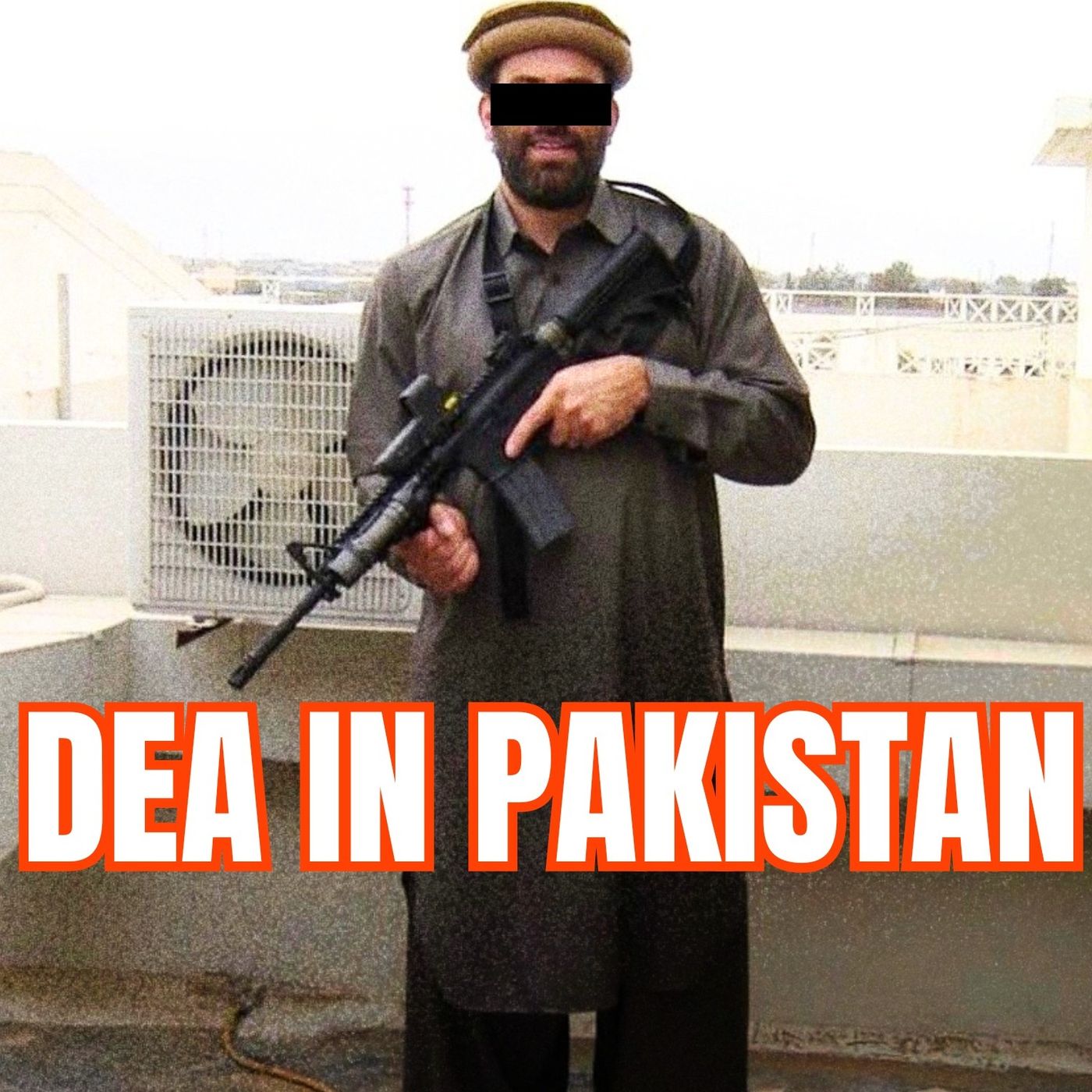
The Team House
International DEA Ops: Pakistan, West Africa, and the Cartel Pipeline | Dan Dobas | Ep. 394
02:07:28
Loading summary
Transcript227 lines
- [00:00]
Ryan Seacrest
Hey, it's Ryan Seacrest for Albertsons and Safeway. It's cough cold and flu season. Do not get caught feeling under the weather. Get back to feeling good with savings on all your cold and flu Essentials now through February 24th. Shop in store or online to stock up and save on items like Mucinex Fast Max liquid gels, Vicks Dayquil and nyquil Combo packs, holes, cough drops and Tylenol Children's liquid. Offer ends February 24th. Restrictions apply. Offers may vary. Visit albertsons or safeway.com for more details.
- [00:31]
Spinquest Announcer
I'm here with Spinquest where you can play and win from the comfort of your own home with hundreds of slot games and all of the table games you love with real cash prizes. Right now, $30 coin packs are on sale for $10. For new users, it's all@spinquest.com that's s p I n q U-E-T.com SpinQuest is.
- [00:54]
Spinquest Disclaimer
A free to play social casino void where prohibited. Visit spinquest.com for more details.
- [01:01]
Jack Murphy
Welcome to the team house. I'm Jack Murphy here with today's guest, Dan Dobis, who served in the Drug Enforcement Agency, had a good long career after a stint in the army, college education, and then was sent all over the world with the dea. Thanks for joining us today, Dan.
- [01:18]
Dan Dobis
No problem, Jack. Thanks for having me.
- [01:21]
Jack Murphy
This this interview was supposed to be in studio originally, but it's just as well that that didn't happen. Dan has a new job. He our producer Dimitri would have had to drive through some kind of crappy conditions in the city and I'm getting a cold. So I apologize if my voice sounds a little raspy during this interview. Dan, tell us a little bit if we be begin at the beginning here with your origin. Tell us about, you know, how you grew up, where you grew up and kind of how that took you into the next phase of your life.
- [01:57]
Dan Dobis
Sure. So I was born in Bridgeport, Connecticut, and we lived there until I was about five in the same house that my father was born in and his family lived in since the early 1910s. And then we moved to Trumbull, Connecticut, which was the suburb north of Bridgeport. I grew up playing sports and it was like football in the fall, basketball in the winter, baseball in the spring, baseball in the summer, swimming in the summer, but also playing, playing war in the woods with my friends and my brother. We got toy guns every Christmas, everything from like Tommy guns that made noise to sawed off shotguns that shot, you know, rubber darts. But my father had been in The army reserve in the mid-60s, and one of my uncles was in the Marines during the Korean War. But other than that, nobody in the family was in the military.
- [03:02]
Jack Murphy
And so, I mean, was the military or government service sort of like on your mind as you went into high school?
- [03:10]
Dan Dobis
I mean, it was. A lot of times I've thought about, like, my. The career path. I mean, I grew up with my father watching every war movie you could think of, like the Sands of Iwo Jima, the Longest Day, the Green Berets, Back to Bataan, Midway. I mean, everything you could think of. He. He watched him and I watched it with him. And it. It's weird. Like, we. We played. Like I said, we played war and stuff. And then all of a sudden, it seemed like at ninth grade, we stopped. Like, I started playing sports, like, you know, year round. And I think other things, like growing, you know, growing up. I mean, there's only two guys I went to high school with who joined the army out of high school. And one of them. One of them. I think both of them got kicked out. But I often wondered, like, why, like, watching those war movies and reading to books about World War II. I never. I never went into the military out of high school. Never even thought about it, but. But I did want, like, some job. All I knew, like, back then, it seems like my life, like, I never had a mentor, like, to steer me in a direction, but I knew. I heard of the FBI and the dea, and it seemed like exciting jobs. But instead. Instead I went right to college in New York City. I went to Manhattan College, which is. It's now Manhattan University. It's in Riverdale, up in the Bronx. Again, I played sports, played intramural sports, and I was inducted into the Manhattan College Honor Society and the National History Honor Society. But then again, I ended up going right to law school, right? Not enlisting. I thought if I had to do it over again, I would have enlisted out of college. Would have gave me a lot of options and more time. But I then went to Brooklyn Law School, and I graduated from Brooklyn law school in 1996, and I applied to the FBI, and they told me, you don't have any work experience, so we're not going to hire you. I applied to the dea, and they said, we're in a hiring freeze. We don't know when we're coming out of it. And it was like a lengthy hiring freeze. So I actually got a job right off Wall street working for National Discount Brokers, which no longer exist in the legal department. So I took the subway to work and got off at the Wall street stop, like 10,000 other people every day.
- [05:44]
Jack Murphy
And about what year is this?
- [05:46]
Dan Dobis
So I graduated from Manhattan in 93 and Brooklyn Law in 96.
- [05:52]
Jack Murphy
Okay, so excuse me, you're working this job and, I mean, I take it that you kind of found it unfulfilling at a certain point.
- [06:06]
Dan Dobis
It was. But it was interesting. It was my first experience with, like, careerism. Like, these. These Wall street guys all thought they were Gordon Gekko. And so here I was in the legal department, and I. I had. The. One of my tasks was to, you know, mediate this or. Yeah, mediate disputes between clients and the firm. And they had a very, you know, white shoe firm on retainer for large cases. But it was a small office of three other attorneys, plus a supervisor and myself. Actually, thinking back on it, I actually did a small claims case for the firm in Queens night court, and I won. So I always joke around that I retired from the legal profession with a record of one and. Oh, but I remember in law school, I remember talking to my parents and saying there was nobody really like me there. And that's why I. I always, like, I kind of turn my back on the profession because they would ask you. You would get a question, and you would ask three different lawyers or people, and then you get three different answers. Like, you know, one of them would be wildly off the mark. So basically my third year, I was running the intramural sports. Sports program and playing basketball in. In. In three different leagues all over New York City.
- [07:29]
Jack Murphy
So you're staying pretty busy that way, I guess.
- [07:31]
Dan Dobis
Yeah, yeah, I was. Yeah.
- [07:34]
Jack Murphy
When was it that you decided to go and enlist? Because that is a pretty drastic jump from working at this firm. And, you know, you passed the bar exam. You're.
- [07:44]
Dan Dobis
Oh, no, I didn't. I passed the. The. The part that's called the mpre, the multi. Multi State Professional responsibility. But I didn't even want to take the essay, multiple choice part. I didn't even want to take it because I graduated and I was thinking to myself, okay, I just finished seven years of school. I need to go do something. I was in really good shape, and I wanted. So I took the NYPD test and I finished really high. And they got me down to their recruiting facility in lafrac City, and then they wanted to get, like, they signed a background investigator to me. They wanted me, like, to start in the fall. And I was like, whoa, whoa, it's moving too fast. And one of my friends. Roommate was A district attorney in Brooklyn. He said, hey, I know you want action, but when nypd, with nypd, you'll make some arrests and you'll look up and it's 10 years later. But in retrospect, I probably. That's what I wanted, right? So I. So getting back to the bar, so I didn't want to take it, and I was like, I'm ready to do something. I even joked around about joining the French Foreign Legion just. Just to do something, like, you know, exciting to me, whatever. But my. My family convinced me and my friends convinced me, and I. I signed up for a bar review course late. And then. So I thought it was at the school. So I figure, okay, there'll be an instructor and I'll. I'll knuckle down and study. Because I had passed the first part, no problem. And then what do they do on day one? They roll in a huge TV with a VCR on wheels and they pushed play. And that was the bar review course. I'm like, this isn't going to work for me. Because it was like 95 degrees. I was living in Brooklyn, it was hot, and I was miserable. I ended up taking it with my friend. I mean, we. We took the subway there the morning of to the Javits center. And like, it was. It was a crazy scene. People were showing up in limos, people were throwing up in garbage cans. People were chain smoking. So I asked my friend, I'm like, what is going on here? Like, what are these people doing? He goes, this is their life, dude. Like, they wanted to be lawyers. You don't want to be a lawyer. They do. And this is it. This is like, you know, live or die for them. So I remember getting the results and I just. I just missed it. But I got. And I knew I needed a job. Somebody from Manhattan had college, had worked at National Discount Brokers. And I did a resume and sent it in, and the higher. I did an interview and they hired me. And I started thinking about, you know, after the FBI and DEA were like a no go. My student loans were coming due and I didn't know what to do. And my father found out that the military had loan repayment programs. So the first service that we looked at was the Air Force. I wanted to be a security police officer. Figured I'd get law enforcement experience. But what I think happened, if I could remember, was we missed the class, was supposed to be at Lackland, and there wasn't going to be another class date for like a year. And, you know, the firm Wanted to keep me. They wanted me to. They're like, take the bar again. Pass it. Take the stock brokerage exams, like series seven, series 63. We want you to stay. But I. I just couldn't do it. So then my father found out that the army had. The army had the loan repayment program too. So I took the train home to. We went to see the recruiter in Bridgeport. And this is before I knew they had quotas, right? So he's like, you know, he's like, I know you have two degrees, but so you know you can't go in as an officer, right? And my father was like, why not? He's like, because officers make too much money. And I was like, I don't care, I don't care. He's like, so you want to enlist? I'm like, yeah. He's like, what do you want to do? I was like, something exciting, something in the field. So he shows me a video of guys wearing BDUs and all cameoed up with, carrying heavy rucksacks. He's like, it's. This is called ground surveillance. It's ground Surveillance Systems Operator. I'm like, yeah, sounds great. He's like, and I can get you an airborne guarantee. I'm like, what does that mean? He's like, most guys you have to fight to get to airborne school. It's a reenlistment incentive. You know, it's a. It's a requirement for another job. You'll go right to airborne school after ait. I'm like, yes, sign me up, I'll take it. And he's like, all right, all right. So he signed me up and I signed the papers and I went back and I handed in my two week notice at the firm. And no one could believe, like, they thought I was lying, right? So. So this is pre GWAT 1997. And I mean, they're like, yeah, I remember this is a personal story, but I was kind of dating a girl who was dating a professional wrestler and we'd only gone on a couple of dates and then I was going home to take the ASVAB and sign the papers and I hadn't seen her and I was just concentrating on the army. I remember after I turned in my two week notice, she came down and started giving me the business about not calling her and this and that. And I'm like, no, I'm not blowing you off. I just joined the army and I turned in my two week notice. She's like, yeah, you're so full of it. You're like everybody else, I'm like, no, I just joined, I joined the army. I'm leaving in two weeks and I'm going to basic training. And she didn't know what to say. And my friends didn't know what to say either. And I do know that when I left, when my dad took me, he told me my mom started crying when I, when I, when I drove away to go to basic.
- [13:39]
Jack Murphy
Yeah, I can imagine.
- [13:42]
Podcast Host/Advertiser
Fellas, you already know what time it is. It's time to level up. And Bluechew just dropped something crazy. I'm talking about next level championship belt. Gold plated energy. Bluechew Gold is the newest innovation from the number one chewable Ed brand. This ain't your grandpa's little blue pill. This is the four in one beast that's setting the gold standard for performance. We're talking two ingredients for blood flow that keep the rocket pumping. Mixed with apophomorphine and oxytocin to turn up the arousal and connection to your brain and body. Bluechew Gold dissolves under your tongue and works in as little as 15 minutes. That means you can get it on quicker and stay in the game longer. Elevation without hesitation. This is peak passion and peak performance in a single tablet. These Bluechew pills will give you full ignition. You will be at full mast in 15 minutes or less. Ladies, if you're listening, you can send your man a link and make him a trophy husband with Bluechew Gold. Make life easier by getting harder and discover your options@bluechew.com and we've got a special deal for our listeners. Get 10% off your first month of BlueChew Gold with Code Housecall. That's promo code housecall. Visit bluechew.com for more details and important safety information. And we thank BlueChew for sponsoring this podcast.
- [15:13]
Ryan Seacrest
The new year means new health goals not just for your body, but for your finances too. But did you know financial health is directly related to identity protection? You need Lifelock because your personal info is in endless places that are outside of your control. It only takes one mistake, and not even your mistake to expose you to identity theft and lost funds. Lifelock monitors hundreds of millions of data points per second and alerts you to threats you could miss on your own. If your identity is stolen, LifeLock's US based restoration specialists will fix it, backed by the million dollar protection package. In fact, restoration is guaranteed or your subscription money back. Don't face drained accounts, fraudulent lo or other financial losses from identity theft alone. Resolve to make identity, health and wealth part of your New year's goals with LifeLock. Visit LifeLock.com iHeart and save up to 40% your first year. That's 40% off@lifelock.com iHeart terms apply.
- [16:14]
Spinquest Announcer
Forget whatever plans you have this weekend because you're staying at home and playing on spinquest. And there's never been a better time to sign up than right now. New users get $30 coin packs for just $10. All the table games you love with hundreds of slot games and real cash Prizes. That's at spinquest.com S P I N.
- [16:34]
Spinquest Disclaimer
Q U-E-S-T.com Spinquest is a free to play social casino void where prohibited. Visit spinquest.com for more details.
- [16:44]
ADT Home Security Announcer
In an emergency, every second counts. When you have ADT home security, you can count on peace of mind with 247 monitoring the most company operated monitoring centers in the industry and technology that helps first responders verify your alarm. Help is there the moment you need it. Whether you have ADT pros install your system or set it up yourself, ADT will help keep you safe when it matters most, when every second counts. Count on ADT. Visit ADT.com to learn more.
- [17:16]
Jack Murphy
And so what was the MOS you came in on? You said ground surveillance, something.
- [17:22]
Dan Dobis
Yeah, it doesn't exist anymore. It was 96 Romeo, which was ground surveillance systems operator. It was a tactical intelligence job. So they had ground radar systems. One was mounted on a Humvee, one was man packable. But they kind of got away from that. We went to the Rembas, which was. Yeah, remotely monitored battlefield sensor system.
- [17:45]
Jack Murphy
Those are seismic, aren't they?
- [17:47]
Dan Dobis
Yeah, yeah. So they could. So we would find like roads and trails, like high speed avenues of approach. We'd lay the sensors down in strings and we'd fall back, either fall back to like a, like a, like a what you call a fob now or a copy or we just make up, build a hide site and we'd monitor the sensors. And they were even back then. They could detect wheeled vehicles, tracked vehicles, people moving. They had a very crude IR camera that we could set up like on a tree branch that could, it was, it didn't work that well back then, but it was pretty, pretty advanced for the time. Then the sensors got smaller. But of course what sucked is our rucksacks were full of sensors and batteries and we had to jump them in. I mean I'm getting ahead of myself and we, you know, we would love to run the strings of sensors because our rucksacks would get. Would get lighter. The mos. What happened was at first they gave the sensors. They started training SF groups on the sensors, and from what I understand, then they gave the sensors to sf and then everybody in my mos. This was after I had got out and got picked up by dea. Everybody had to reclass. I think the Marines still use them, and I'm sure the army does too, but that was the mos. We were always attached to an infantry unit, like an infantry platoon or company, like what they called back then slices. Now they just call attachments or whatever. But my. My. My team first. I was a. I was a SAW gunner at first. Then I was the. The radio. The rto. Then I assistant team leader. Then I got promoted to E5 and took over a team, but we were always attached to an infantry unit. And I was. I was always attached to the 504th. That's who we supported, the first. The first brigade.
- [19:47]
Jack Murphy
And I mean, now you're kind of. Are you getting kind of the. The satisfaction that you hoped you would find after leaving a previous job?
- [19:56]
Dan Dobis
Yes and no. I mean, and this is unfortunate, no, because I was always still looking at, like, FBI, DEA, CIA, Secret Service. So I didn't give 100% to the job. I mean, there's still like three or four guys from. From the Army I talk to or text on a regular basis. And I. One of my friends, he did it 20 years. He retired out of Special Operations. Special Operations down in Tampa, I think. Yeah, he was an intel guy. He actually supported the unit for a long time. So once we hooked up a few years ago, I asked him straight up. I said, hey, did I make a mistake getting out? Like, should I have stayed in? And he's like, no. He's like, you've deployed just. And we could talk about that, right? You deployed just as much as we did. He's like, you ended up making a lot more money than I did. You probably put up with a lot less BS than I did. But, no, you made the right decision. But I was going to tell you, my. My career in the army was like. Like trying. Like trying to try out for different things and getting like. Like weird things happening every time. Like what? So when I was in airborne school, they said, the guys from regiment will be here after last formation. So if you're interested in going to RIP was rip, then go. Go see him. So these guys. And they still had black. Black Berets then. So they. They were at, like, a little table. So I lined up with a Few other guys. And I was like, you know, I'm. I'm interested. I'm. I want to go to Rip. He's like, what's your MOS? I was like, 96 Romeo. He's like, what the hell is that? I was like, ground surveillance systems. He's like. He checks his list. He's like, no, we don't have that in the regiment. So me not knowing anything about anything was just standing there. So there was two, like, an E6 and E7. And they were looking at me like, you know, I had three heads. They're like, all right. I'm like, okay. What? He goes, that means you can't go to Rip. Now move out, dumbass. Move out and draw fire. Get out of here. And I was like, okay. And then when I got to the 82nd, Colonel Flynn, now, well, then became General Michael Flynn, National Security Advisor. He's probably the best leader I've ever come across. I still actually have. He sent me a birthday card when I was at E4 and signed, I still have it. But someone had told me I should go to cid, right? And I was like, what's cid? He's like, criminal Investigation Division. You can be a special agent. So I went to my chain of command, not knowing. They frown on a new guy trying to get out, and they're like, nah. And I was like, okay, but they're like, you gotta go see the Colonel. So I went to see Colonel Flynn, and he's like, you know, I think you need to learn the job a little bit, and we can talk about CID at a later date, but you need to learn your job, so move out. And I was like, roger that, sir. And then I tried to go to selection twice, like, after I had was established in the 82nd. The first time, the sergeant major said, you're in a shortage mos. You're. You know, you're not going anywhere. And I was like, roger that, Sergeant Major. The second time, it was. There was another NCO who had been in the Gulf War, and he got out. He was in the 101st. He got out and came back in, and it was his dream to go to be an sf. So he's like, let's go to the briefing. So we went to the swic. We got the. The pamphlet. They said how, you know, how much you should be rucking, how much weight. And then we. I think. I can't remember the sequence. But again, we went to the sergeant Major, and he's like, you ain't going anywhere, and you're in your NCOs. This time I was in E5. You're in a shortage MOS, you're airborne, you ain't going anywhere. And. And I was like. The other guy was like, so it's volunteer. What do you mean? And I actually thought about going AWOL and showing up at selection, but thank God I didn't. And this guy, I heard he had done a couple tours in Korea. He was a great soldier. Had a Korean wife, actually volunteered to go back because at the time, if you were in Korea and you volunteered for selection, you automatically come back. So I got out and then I heard that they denied him to go to selection. He was an E6 at the time, so I felt bad. But yeah, it was like I was volunteering for all these things and like, getting shot down or it's like wrong place, wrong time when I should have just concentrated on leadership. But I have to give. I have to give the army credit. They are the first people that, like, noticed some leadership potential in me. I was scheduled to go to Air assault school. The 101st would bring in mobile training teams, but the list was so long, we had to go to a selection, like a battalion wide assessment and selection. And I did well and I was on the list to go to the next one. I remember being in the. Remember the end of day meeting where the platoon sergeant puts out the info. So I'm sitting there and so my nickname in the 82nd was Doc. Not because I was a medic, because the first sergeant found out I had a law degree. So I remember he called me over like the first week after pt and he's like, dobus, I hear you have a law degree. What is that? I was like, what do you mean? First sergeant's like, what kind of degree is that? I was like, it's a jurors doctor. He's like, jurors doctor. All right, we'll call you Doc from now on. I'll get the hell out of here. So he's like, the platoon sergeant's like, doc Obus, there's a. There's an E5 board, there's a promotion board in three weeks. So start studying, get your class A's in order. You're going to the board. And I was like, no, no, Sergeant, I'm going to Air Assault School next month. He's like, no, you're not. You're going to the board. We need a team leader. You're the next one. Get ready. I'm like, no, man, I'm going to Air Assault School. He's like, you're telling me you'd rather go to air Assault School? You know, back then, it was like, again, pre war, how many badges can you get? You know, double bubble. So he's like, you're telling me you'd rather go to air Assault School than be an nco? I was like, yeah. He's like, you're such a dumbass. He's like, get your class A's ready and start studying. And I was like, all right. So I did, and I got promoted to E5, and I went to what's now known as the Warrior Leaders course. Then it was pldc, Primary Leadership Development course at Fort Bragg, which is one of the best ones in the Army. It's like, lockdown, 30 days. But you learn leadership from the ground floor up. So it helped me. It helped me later on with dea.
- [26:47]
Jack Murphy
So talk to us about that, about that transition. When did it come that you had decided that you had had enough with the needs of the army and that you were going to take another stab at law enforcement?
- [26:58]
Dan Dobis
So it came time. I don't know if it was, like, six months out or 90 days out. So they sent me to the reenlistment NCO, and I went to see him at headquarters. He was a. He was a humid guy, and he had, like, a mustache and, like, long black hair. And he's like, so, what do you want? And, you know, this time, even though I was getting loan repayment, I still was paying my student loans, and I was living in the barracks. I finally got the nice E5 room. But the barracks were built in, like, 1953. They no longer exist. I was like, I like a bonus. He's like, oh, let me see what we can do. He's like, okay, I can get you $4,500. I was like, $4,500 a year? He's like, no. $4,500 total for four years. I'm like, nah, that's not gonna work. So I left and just went back to work. And then I think it was like, 90 days out or maybe more. They asked me what I was gonna do. I was like, I'm getting out. Oh. The first sergeant talked to me. He wanted me to go to OCS because we had another college graduate who had played college football. He was getting his package ready. He was going to ocs, and he did. I heard he graduated and he was in the 101st. But to be honest, I didn't want to be treated like a private again after being an nco. I Didn't want to go down to Fort Benning and be treated like a private again. So I didn't know what to do. The CIA had a briefing at Bragg, and I went, and I was the only enlisted guy there. Everybody was a captain or a major, and I did some application for them, and there was like. It was, no, no, go there. So I. I started applying, but then I. I didn't know what to do. I kind of wanted to stay in because I kind of liked it. So finally I went to see these two warrant officers at headquarters. Both were human guys. One guy had 101st combat patch, and I had heard he had been in Vietnam and got out breaking service and came back in. He was. He was pretty old. And the other guy had a 1st Marine Division combat patch, and I think he had been in Beirut. So I was like, hey, Chiefs, I don't know what to do. I mean, you know, the first sergeant said. He goes, the 82nd's the old army. He goes, you know, he goes, it's spit shine, jump boots, pressed, uniform, fresh haircut, you know, clean beret. He goes, the other. The rest of the Army's not like this. If you want to go do something else, something different, you can do it. But they said, listen, you're Airborne, you could pick another job. They're probably going to send you right back here. If they don't send you to the 82nd, they'll send you to the 18th Airborne Corps. Like, I think the 525 m. I. You know, because there was a guy I knew who was a. I think it was a 90, 97 series, was like counterintelligence special Agent. And he was always. Well, these guys were getting in trouble because they had creds, they had credentials. So they were, like, going into Fayetteville at the bars and showing their cred. So finally they had to lock them up in the company. I mean, in the headquarters safe. So I was like. I was like that. That sounds like a cool job. But they said, listen, you have your degrees, right? If you. He's. I remember what he said. He goes, you know, you go, you need to go be a special anus in charge somewhere. I said, what? He goes, you need to be a special anus in charge somewhere. And if you don't like it, you can come back. We'll always take you back, so go try that. If it doesn't work out, we'll see it right back here. So I just decided to get out. And it was kind of a rough transition. It's where I first learned that, like, the machine goes on without you. Right. I had a awesome. I think it was a four man ground surveillance team. I was the oldest guy, obviously, but I had like, great, great team members. I think it was down to two. Two guys at that time and me and one guy who was the first guy I met in the 82nd, he. He got killed in Iraq at Tal Afar. He was with the third ACR I actually wear. I have his KIA bracelet and. And they wanted like, the guy gave me one of the 90s, nicest compliments I've ever had. He goes, when I become a sergeant, I want to be like Sergeant Dobus because he treats us, you know, I hate to pound my chest and, you know, talk about myself, but he's like, he treats us with respect, lets us do our job, but we know that if we mess up, he's going to hammer us, but he lets us do our job. So. But I knew, you know, it struck me someone's going to take over the team and, you know, they'll forget about me, you know, sooner rather than later. So I moved back home to Connecticut and I got a job clerking for a judge in Connecticut Superior Court while I applied to every agency you could think of.
- [31:49]
Jack Murphy
And was the DEA the first that responded or what kind of led you there?
- [31:54]
Dan Dobis
Yeah. So I was in the process with like FBI, atf, Army Intelligence, and I was actually supposed to go down to. I was scheduled to go to is it Fort Meyer or Fort Belvoir for an interview with Army Intelligence. So all of a sudden DEA was the. They called and they offered me a. Offered me a spot in the academy in January of 2002. So I accepted. I grabbed it. My father wanted me to hold off and go interview with cid. No, it was Army Intel. Sorry. Because it's part of that job was travel. DEA offered me the job. I just jumped on it. And it turns out I spoke to a lot of guys in law enforcement. They're like, were you like, fixated on dea? I'm like, no, they offered me the job first. And like, yep, same with me. When a guy I work with now applied to many police departments and the one he went with was the first to offer him a spot in the academy, and he jumped on it.
- [32:51]
Podcast Host/Advertiser
This time of year, the pace doesn't slow down, but you still need to. The calendar's packed, the weather's changing, and your body's reminding you that it's time to rest and reset. That's where ghostbed can help. It's a family run company founded by a team with over 20 years of mattress making expertise. They've spent decades perfecting how to build a bed that's durable, comfortable and engineered.
- [33:14]
Jack Murphy
To help you recover.
- [33:16]
Podcast Host/Advertiser
Every Ghostbed mattress is made with premium materials, proven cooling technology and their exclusive procore Layer, a targeted support system that reinforces the center of the mattress where your body is the heaviest. It helps to keep your spine aligned and your back supported so you wake up ready to take on what's next. And Ghostbed's cooling materials don't just keep you from overheating, they help regulate your temperature year round. Each mattress comes with a 101 night sleep trial and a 20 to 25 year warranty plus fast free shipping. Most orders arrive in two to five days, so better rest is just around the corner right now. During Ghostbed's holiday sale you can get 25% off site wide for a limited time, just go to ghostbed.com house and use the promo code house at checkout. That's ghostbed.com house promo code house. Upgrade your sleep with Ghostbed, the makers of the coolest beds in the world. Some exclusions apply. See site for details and thank you Ghostbed for sponsoring the show. Please check out the link down in the description and support our sponsor.
- [34:31]
Spinquest Announcer
Forget whatever plans you have this weekend because you're staying at home and playing on spinquest and there's never been a better time to sign up than right now. New users get $30 coin packs for just $10. All the table games you love with hundreds of slot games and real cash prizes. That's at spinquest.com S P I N.
- [34:50]
Spinquest Disclaimer
Q U-E-T.com Spinquest is a free to play social casino void we're prohibited. Visit spinquest.com for more details.
- [35:00]
ADT Home Security Announcer
In an emergency, every second counts. When you have ADT home security, you can count on peace of mind with 24.7monitoring the most company operated monitoring centers in the industry and technology that helps first responders verify your alarm. Help is there the moment you need it. Whether you have ADT pros install your system or set it up yourself, ADT will help keep you safe when it matters most. When every second Counts, count on ADT. Visit ADT.com to learn more.
- [35:32]
Dan Dobis
If you're the purchasing manager at a manufacturing plant, you know having a trusted partner makes all the difference. That's why hands down, you count on Grainger for auto reordering. With on time restocks, your team will have the cut resistant gloves they need at the start of their Shift and you can end your day knowing they've got safety well in hand. Call 1-800-GRAINGER click granger.com or just stop by Grainger for the ones who get it done.
- [36:02]
Jack Murphy
So you went to the academy in 2002?
- [36:05]
Dan Dobis
Yeah, January 2002 I started. Mm. So it was. Go ahead.
- [36:12]
Jack Murphy
I was just gonna ask what, what was the training pipeline like?
- [36:15]
Dan Dobis
So it, it was 16. It was either 16 weeks or 18 weeks. So I think it was 16. Sometimes they add, they add, add classes. But it was anything and everything you could know, want to know about narcotics. It, but it was, it was fight, it was firearms. And it was known as the toughest firearms qualification course in federal law enforcement. It was a hundred round course back then that started at the 50 yard line from the prone, if you could believe that. So we learned undercover. We spent a lot of time in the raid house learning entries. We learned anything about drug law enforcement like what we call a by walking, a by bust. But we learned how to, how to run. What used to be called confidential sources are now called confidential informants. We learned how to run them and operate them to such a good extent that later on when I was in Pakistan with DEA or Mauritania, North Africa and you know, intel guys and military guys were trying to run what they called sources. It was not good to our standards. It was like we learned that from the jump. And they really drill down on you how to run an informant when he got out to the field. Some guys specialize in technical wiretaps, some guys love to work with informants. So the course of instruction was pretty good. You also have a pretty extensive law course of instruction. Academics, you testify, learn how to testify in front of a judge. They bring in judges have a moot court. There's like emergency vehicle operation or tactical vehicle operation, you know, the Hogan's Alley part, using simunitions they did have back then they had like punishment PT where if somebody screwed up in class or something because we wore, we had like gray polo shirts or black sweatshirts, black BDU pants and black boots. But we had punishment PT and which has been eliminated. But I thought it was going to be like the military, but it wasn't. It was easier. It was also where I again come into contact with careerism and people that aren't all. Because you know, in the army everybody's working toward the same goal. Because if you don't achieve that goal, like you could die, right? Like you're on a jump and if you don't know the procedures or how to link up on the ground because we didn't have GPS yet. We got the slugger or the plugger, right? Yeah, so, so we have to link up on the ground. But, you know, it was, somebody could get seriously hurt or die. But in, in, in dea, not everybody. And this, this hit me in the field, not everybody was, you know, working toward the same goal. But you know, instead of being a jerk, you have to understand that people have family stuff in different situations. But it was a, it was a different experience.
- [39:21]
Jack Murphy
And at what point did you become a badged DEA agent?
- [39:26]
Dan Dobis
So I graduated from the academy in May of 2002 and at that point you could go up to the eight, the office that you hired out of. So I hired out of the Bridgeport, Connecticut office. I reported there and they were looking for volunteers to go up to New Haven, if you know, Connecticut. So they were up on a big wire with a source in the Bronx. So I volunteered and I did my 60 or 90 days in New Haven working this wire and then packed up my stuff and PCs to my first duty station, which was the Los Angeles Field Division, the Riverside District office. And I had only been to California once in my life when, so, so when I was in the army, went to JRTC twice, right? Never been that hot, never been that cold. It was a winter rotation at JRTC in a summer rotation and then went to NTC, took my team to augment the LURs. The LURs section, the 11th ACR was the OP4. So we augmented, we were augmentees and I learned the other side, I learned what OP4 did, but we also got to finish early and we rented or we took the, like the mill van and went to, went to LA and just drove around. So I remember I got orders like the last week of DEA Academy, I was in la and they called me down to the front of the office and they said, the sack said you're going to Riverside. And there was a, two instructors that had been in la. I was like, where's Riverside? As it doesn't sound so bad. Must be near like a river or the water. And they started laughing and they're like, you'll, you'll learn, you'll know. And Riverside was in the Inland Empire, was like the Met before law enforcement chased super labs across the border. It was like the meth capital of America. The two biggest counties land wise in America, right? San Bernardino and Riverside. So I reported to the office. We have a field training program with a field training agent. So my field training agent who then became my Partner. He retired as a lieutenant colonel out of air force osi. He actually deployed to Iraq multiple times. Won a bronze star working with the Italian carabinieri. They got a lot of the deck of cards guys. But here's where I got lucky. He was assigned to a local task force that was full of SWAT and ex SWAT guys. So they banged doors. Every week we work nights. First. The first summer I was there, there were times we did two entries a night, which will never happen in law enforcement again unless something drastic changes. I mean, I worked so hard. I actually got run down and got the flu. Had to take sick leave because we were working till like 3, 4 in the morning. And I didn't know, but the local guys got overtime. We didn't get overtime. But the amount of entries that we did, and I later checked, you know, near retirement, how many entries I did compared to guys my, any agent I knew. And it was. I far and away surpassed the amount of entries that we did. All because I worked on this task force. And it turned out my partner who I was partnered with in the stack, he was number one, I was number two, he was an 82nd guy and he was a. In football. I'm a raider fan. He was a raider fan too. In fact, we still stay in touch. He retired as a captain from the Riverside sheriff department. But we were number one and two in the stack and we became really close. There's, there's two guys that I can owe, like to the fact I didn't starve when I was a new agent because I, I was paying student loans, I bought a truck, I rented an apartment. So my FTA and, and my partner from the sheriff's department had me over their house almost every weekend feeding me. So I didn't starve. So I owe them. I owe them a lot, those two guys.
- [43:26]
Jack Murphy
So being a narco cop in L. A like the image that comes to the public's mind is like Denzel and training Day. Like what's the reality of it?
- [43:39]
Dan Dobis
There's guys who did a lot of undercover and they had, they were pierced, had a lot of piercings and this and that. And even there was a. There was a guy I know who I was friends with. He did, he. He was a black guy, he was a ex football player. He did undercover. But you know that, that, the criminal stuff. No, that, that didn't happen. Then there's tons of guys who just look like normal guys, you know, working cases. Right. Because we're crim. Our job title is actually criminal investigator and we're supposed to be disrupting and dismantling, you know, complicated drug trafficking now transnational organized criminal organizations. So. But yeah, no, like, rolling around in a. In a. A car like Denzel had. And. And, you know, no, like, everything was accounted for. Like, money we paid informants, money we did, you know, made buys undercover. I mean, I only did on. Like, undercover is not for everybody. I did it in my life, I think three times. Once. Once I posed as a guy who just got out of the army, and I was all scruffy, going to a bar, trying to get a job as a bouncer because they were the. My. My task force had word that they were selling. Selling meth out of the bar. Another time, they. They did the same thing. They dressed me up because I had to check. Well, hopefully check a box on the field training agent program to do undercover. So they sent me to a trailer to try to buy meth from a woman who lived there. And then the last time was when I. After I got back from overseas and got back to Connecticut, I played a lawyer. Like a preppy lawyer wearing a polo shirt and khakis, trying to buy coke from another female. Another female dealer. Although she. She was a. She was a hard ass, and she never sold to me, and that was the extent of my undercover work.
- [45:47]
Jack Murphy
So all your stuff in LA was really, like, overt. You guys were mostly kicking indoors, going after, you know, serving warrants.
- [45:55]
Dan Dobis
Yeah, the task. And there was a lot of state and local task forces in Southern California. They did a lot of the entry work. And there were also, in the DEA offices, they're broken up into. Into task forces, which are a combination of agents and local. State and locals that are deputized. Right. Call them task force officers and enforcement groups, which are all agents. So most of the enforcement groups did a lot of the. The Title 3 wire stuff. Try to get, you know, work your way up to the top of organizations and the state. You know, a lot of guys competed to be on the local task forces because you were out of the office, away from the flagpole. And like me working nights, I got night differential, but I was away from the flagpole. And even when my partner went to Iraq, my boss kept me on the task force. And I was a. I was a young agent, but we were doing good work. I had a sergeant from the sheriff's department as my boss. He wanted to make federal cases. So I learned by doing it like they made me do the federal paperwork. So we did a combination of casework and kicking doors because, you know, there's no crime before overtime, so anything. And those guys love the ot, but I love the experience of kicking the.
- [47:06]
Jack Murphy
Doors with them during that timeframe in la. Did you have any particularly hairy entries that you recall?
- [47:15]
Dan Dobis
There was one entry that we did right before we were in the raid van. We arrived like at 9:54 and we hit the house. It turned out it was like a maze in the backyard. It was like a tire maze. Do you remember the old shoot houses made out of tires? So they were all stacked up. It was a mess dealer and. And I didn't even know what was going. I got lost. It was like a maze. And I had to call on the radio for my guys because it was such a bizarre scene. And the other time was we were a perimeter team for the Riverside Sheriff SWAT Team, which was called, I think SIB no EST Emergency Services. So they. They rolled up, it was a fortified house and they threw flashbangs. But we were on comms with them and they breached the door and there was a pit bull and we could hear the SWAT guys screaming at the people inside to hold that door. We'll blow the effing dog's head off. And a lot of flashbangs went off. There were more. The more complicated entries and hairy entries were when I took over a task force. But those were two that stuck in my mind. But we did. We did so many when I was an agent those two years.
- [48:37]
Jack Murphy
Was that tire maze, like actually. Were they actually using that as a shoot house or was that just some meth head making a maze in his backyard?
- [48:44]
Dan Dobis
That was a tweaker who had. Who had junk piled up inside the house. And we could. I remember we could. So they used a method of entry called the two man. Like the modified flood or two man cell. And somehow I got separated from my wingman, but I hooked up with this guys behind me and we couldn't get through the house. There was so much junk. It smelled musty and terrible. Then we cleared the house and we made our way to the backyard. And it was like. There was no roof, but it was like another. There was so much stuff with these tires stacked up in columns. I tell you, I. I thought I was going to get lost in here forever.
- [49:29]
Jack Murphy
And after your time in la, you got an overseas assignment, right?
- [49:34]
Dan Dobis
Yeah. So we were reopening our office in Kabul and they put out a solicitation for. I don't know if you ever heard of the FAST team. Yeah, so the FAST team was starting, but it wasn't going to be a Permanent thing. So I put in for that. But I didn't know anybody to try to get hookups, so I didn't get it. But I got an email like a week later from the ASAC, the GS15 who ran the AFPAC theater. He's like, hey, I saw your resume. I saw that you put in for fast. We're going to be expanding our offices in Afghanistan and Pakistan. So if you're interested, please put in for it. And the solicitation will drop next week. So for one of the few times in my life, I put in for it and I was selected. So I went to the overseas orientation. I went to the State Department school and the DEA overseas training, which is very far advanced now. Now they have like a personal recovery section. Back then, I mean, you know, I had never been overseas at all, but I was going to a country where, you know, the, the tribal areas were insane. You know, the PAC government didn't go to the, was the federally administered Tribe. The Fatah.
- [50:54]
Jack Murphy
Yeah, yeah.
- [50:55]
Dan Dobis
And, and Baluchistan, which I ended up spending a lot of time in. But I, I soaked up all I could going to the State Department, you know, going to their library and looking through the books on Pakistan stuff.
- [51:08]
Jack Murphy
And so you weren't going there to actually be on a FAST team or, or was there one in, in Pakistan?
- [51:14]
Dan Dobis
No, the FAST team. So at first it was a TDY assignment, then it became permanent and in Afghan, mostly in Afghanistan, but they went to Central America also. But, but after that first tdy, I think it took fast like a year or so to get off the ground. So, so what I was part of was the Islamabad country office and there was also the Kabul country office. So we were there for two year, Kabul was one year, Islamabad was two years. While the fast guys did like 30 to 90 days in country and then jumped back out, we were there for the duration.
- [51:52]
Jack Murphy
And what was your mission in Pakistan?
- [51:55]
Dan Dobis
So technically we were called special Agent advisors. So we advised our Pakistani counterparts which were the anti narcotic force. So they had, they had a, an unmarked house in Islamabad that we went, we're supposed to go to every day and work with them. They, you know, they operated strangely. A lot of strange things going on, you know, in the city and like how we, how we, we would, we would like. So they were, they had a vetted unit, right? We would vet them. They had to be drug tested and polygraphed. Well, after a while, after like a year or two, they refused to be polygraphed and they failed the drug test. And Some of the, some of the counterparts were like, we need to smoke hash to do undercover work. It's part of blending in so that that unit got abolished. But the main, one of the best things I did was down in Quetta, which is in Baluchistan. It's one of the most dangerous cities for Westerners. There are no Westerners. The Brits had a safe house down there. And there's a huge army base that has an airstrip and it had a housing area. So the Brits were on the housing area. And we would just go down for a week at a time and stay with them. But our vetted unit had a section down there, so we had to help them, had to work with them, especially on technical surveillance. So my bosses were like, we're going to rent our own house. So I went down a bunch of times and the only way to get down there was take a King Air piloted by a Dynacor pilot from Islamabad to Quetta. So we rented the house from a broker and I went down there with a rucksack full of gear and I think some MREs and an M4 and a Glock. And I got to the house and there were no locks on the doors. So there was no running water. There were no utensils. There were no, no, no bowls, no cups. So I was freaked out. I was like, there's no. I'm in Quetta by myself in this house. There's no locks on the door. There was a lock on the bedroom door. So the first couple nights I slept with the M4, it was like basic training at the M4 in bed with me. And the, the, I think the Glock was under my pillow. And as soon as I got up in the morning, I raised holy hell with my boss in Islamabad. I said, get the, get the carpenters or whoever over here and get some locks. And I need funds to outfit the house. So I ended up spending six months down there on the border. And it was funny. The Dynacor had to contract, so the State Department had bought the packs of Vietnam era Hueys, right? And the Dynacor guys were teaching the packs how to fly. They had some good pilots. But also the one thing I didn't understand was maintenance, right? They didn't want to do maintenance. They didn't understand maintenance. So they were trying to teach them how to take care of the helicopters. But there were a lot of interesting things. Like for both years I was there, I. Well, let me backtrack. So the house we rented, you know who we live next to we live next to the Iranians. The Iranians had a consulate in Quetta. So I was friends, I became good friends with the, with UKSF guys. First sas, then sbs. They would take, they were training their own counterparts. They would take me out, help them do surveillance, do entry training. So we would drive around and I saw like I was a black BMW or a Mercedes and I was like, who is that? And they told me the Iranians. And they drove me by the consulate and I took note of the car. And then like a couple days later I was driving our old Land Cruiser back to my house and I see that car parked in the driveway next to mine. So I get out and go up onto the roof and I'm watching them. I think one day I followed them and they went. So it was the Iranian, the Iranians who worked at the consulate lived right next to me. I tried to pass it up to Chain in Islamabad, but it didn't go. I don't think it went anywhere. Yeah, I became good friends with those Brit guys. They had me at their house again. Three food and drink and help, you know, I help them do their own training. I had a video of them. They're trying to teach the packs entry training and it's, they're, you know, they're non aggressive, non athletic. They're doing like bunny hops through the, through the breach point and the, the, the Brits are screaming at them. But they, they actually had a, they made us a survival map of the city of Quetta and they made all, they color coded all the intersections and the checkpoints. So I made my own and you know if anybody got in trouble, they could radio into the house, hey, I'm at blue six or green three and you'd know exactly where you were. So I kept that map with me and I framed it because they labeled like where the, you know, there was Hazara town and Pashtunabad know they would build this mud brick houses up on the side of mountains outside of Quetta. It was like the Baluchistan desert. It was like the Thar desert, I think, I don't know or maybe just Baluchistan, but it was, it was pretty crazy. But the, one of the other things we did that was great was I wrote up a concept of operation. I think the guys in Quetta said that the Pakistani coast guard wanted training and the Pakistani coast guard at that point had no boats. They guarded the coast like they literally guard the coast by driving up and down the one coast road that was bordering the Arabian Sea. There, that runs up to Iran. So I wrote up a plan, gave it to the State Department. I said, we want to train Pakistani coast Guard. We want you to buy enough equipment to outfit the Coast Guard. And so I wrote the con op, gave it to my boss, he approved it, gave it to the State Department. They approved it. They bought all this high end gear we had shipped to Islamabad. I had to convince the Dynacor guys to fly it down to Islamabad. I had to convince the Pakistani colonel who was in charge of the air wing to ferry the gear and us and the helicopters down to the Coast Guard base at Posni and then brief him on this mission. So we ended up training them in how to safely load and unload helicopters, how to fly in a helicopter, prisoner search, vehicle search, desert patrolling. And it was me, a Navy SEAL lieutenant who was attached at the time to the embassy, Marine captain who was attached to the embassy and the Dynacor guys, one of which he was a retired first sergeant from RTB who was trying to buy, his dream was to buy beachfront property in like Costa Rica. He was trying to save up as much. So he was down, he was down here for the duration trying to save up money. And I remember we were trying to build a gym on the base. And so he, we had, we had money and me and him drove into Quetta. So it was, if you can picture this, it's me and wearing like, you know, 511 pants and a shirt and this black American, former first sergeant. We had like $10,000. We went to like a gym, a gym store in Quetta. We had like $10,000 cash and pistols in Quetta. And guys are, you know, giving us the stink eye. We're trying to buy gym equipment. And that was the first place I, I remember waiting outside to leave and I saw these little kids running on the street. One had blondish brown hair, one had red hair. And I told the guy I was with, like, what are these Westerners doing down here? This place is crazy. He's like, those aren't Westerners. Those are, those are Pashtuns or whatever. I'm like, what do you mean? He's like, you're a history major who was here. I was like, well, Alexander the Great was here. The British were here multiple times. The Russians, he goes, that's, that's, that's who. Those kids. And I, I heard them speaking like Urdu or Pashtun. And they were, but they, one kid had red hair and like blue eyes. The other kid had blondish. I couldn't get over even now, like you could tell it made an impression on me. And they were speaking like, I don't know, it was Farsi or whatever. I couldn't believe it. But the descendants of all those armies that had been through.
- [60:54]
Jack Murphy
And one thing we haven't really talked about. I mean, what was the actual purpose of the DEA being in Pakistan at this time? Was it mostly about interdicting opium coming out of Afghanistan?
- [61:06]
Dan Dobis
No, there wasn't a lot of interdiction on my side. I mean, a lot of times when we were in Quetta, we would take the Hueys up and we do interdiction flights because they did have camel caravans of opium, you know, hash, heroin, going from Afghanistan down through the desert to the Mokran coast, you know, to the Arabian scene. They had the, their, their, their, their fishing boats were called daos, right? The daos would pick up the heroin and they take it to wherever it went, Dubai or wherever. But we, we were, well, when I, when I was getting ready to go there, they were letting us go out on operations, right? They were letting us go. They would have these huge piles of hash and they'd burn them and Americans, but they shut that down. Like they wouldn't let us go out on ops with them. So me being in coeta, I tried to make the most of it I could. And on the interdiction side, that was mostly in Afghanistan. So what we were doing, we were doing a lot of intel gathering, but we were training our counterparts in the anti narcotic force on how to do investigations, how to do narcotics investigations the right way.
- [62:24]
Jack Murphy
And. Sorry, as your time in Islamabad and in Pakistan winds down, what was your next assignment?
- [62:36]
Dan Dobis
So I could have extended, but I, I chose to come home. There was a spot open in my hometown office in Bridgeport, and I put in for it. And my bosses did make a call because Pakistan was a hardship. And they told me, you know, this is a hardship tour. But they called back to D.C. and said, hey, this guy did a great job for us. There's a spot open in his hometown. You know, thinking back on it, I probably should have stayed another year because the money know, hazardous duty pay post differential was really good. But I had met my future wife and I remember, so I, I met her, you know, so we, we, we were there for 90 days, like at a time, right? We could take RNR. We, we so was in country for 90 days. Take R and R out of country, back in country. And you had to take your last R and R before, before your last 90 days in. So I met her when I came home on my last R and R and we stayed in contact. And when I came home, she picked me up at the airport. And I mean, she's told me subsequently, I look like I was fried. I look like I was burned out. You know, I had, I had, I think I sent you a picture. When I was in Quetta, I grew a beard and I was dressed in a shalwar kamece in a pack hole. And the, the A and F counterparts actually took me to the bazaar in Quetta and they said, just don't talk, okay? Keep your mouth shut and we'll, we'll take you to the bazaar. And I picked up some, some things that most, you know, Westerners couldn't pick up. They said the only thing wrong with you is your shoulders are too wide because you're, you know, you're, you're trying to work out, but you blend in, you know, decent amount as long as you don't talk. And the first time I came home and showed my mother those pictures and I have a lot of them, I was like, who's, who's this, you know, terrorist? She had no idea. And I was like, that's me. And she's like, what? And I think that's me. So she didn't even know it was me. It was, it was, it turned out to be a good time, but it was, it was hard. It was hard to live in.
- [64:43]
Jack Murphy
Here we go. I hope viewers can see that. If you're watching this on the youtubes, you're pretty convincing there, Dan.
- [64:52]
Dan Dobis
That's, that's the roof of our, that's the roof of our safe house in Quetta, which unfortunately doesn't exist anymore with. They closed it down. But it was a good post, you know, to keep your foot, keep your hand in what's going on in Baluchistan. You know, Quetta was always big with the Taliban, so it's a shame we don't have it anymore, but it is, it's a dangerous place.
- [65:14]
Jack Murphy
So you head back to Bridgeport.
- [65:16]
Dan Dobis
Yeah.
- [65:17]
Jack Murphy
What was, what's there to do in Bridgeport for the dea?
- [65:21]
Dan Dobis
So Connecticut is a user state. It's not a source state. Also it's a through state. Right. The source is mostly New York City. So narcotics are trafficked up I95 through Connecticut to Massachusetts to Rhode island. And there were, there were some violent street gangs in Bridgeport. They still have high rise housing projects. So I, it's mostly a task force office. A lot of task force, A lot of task force Officers from the state and local departments really help us do our job. But again, I hooked up with the locals. I ran with the Bridgeport Police Department. They had a. Excuse me, they had a new team called the Neighborhood Enforcement Team. Again, they work nights. I work with them for about a year trying to help them with narcotics operations. And then I got to go to. At that point, I was a tactical instructor for dea and I had gone to San Bernardino Sheriff SWAT School. When I was in la, I got to go to Bridgeport Police Department SWAT School. And both schools they made fun of me as the only fed. Gave me some extra time in the gas chamber. But those guys were great, great instructors. And it was a pretty new team, but they were pretty squared away. And I was lucky to get to go to their SWAT school. But one of the best cases I did with a DEA agent and a bunch of task force officers that we got assigned case specific was to dismantle a violent street gang in Bridgeport called the Stack Boys. We basically dismantled it from the top down. They were. Their base of operations was a housing project called the Green Homes, the Charles Green Homes. And they had some houses throughout the city. But we utilized undercovers and confidential informants and we bought them up to the federal threshold. A lot of the main leaders of the gang and we had a pretty big takedown. We hit multiple locations and basically dismantled the gang. It was a pretty good case.
- [67:40]
Jack Murphy
About how many arrests did you guys make?
- [67:44]
Dan Dobis
I think it was roughly 16. But what's funny was what I could remember. So when we did a lot of warrants, we didn't find it was like street level amounts of drugs. Right? We did find a decent amount of guns, but a lot of them had boxes and boxes of sneakers. So most of them Nikes and Sean John and stuff. But I remember doing one of the interrogations to one of the most violent guys and I finally said, hey man, where's the money? Like, we've been following you guys for like over a year. He's like, there's no money. I was like, what do you mean? He goes, we buy sneakers, we pop bottles, we go to the club.
- [68:25]
Jack Murphy
Yeah.
- [68:26]
Dan Dobis
He goes, there's no money. He goes, we spend it all. And I was like, that's why it.
- [68:32]
Jack Murphy
Was a. I'm gonna use that line on the irs. There's no money. I'd be.
- [68:36]
Dan Dobis
I've been popping bottles.
- [68:37]
Jack Murphy
What are you talking about?
- [68:39]
Dan Dobis
I still remember he. He looked at me like I. Again, like I was an idiot. He's like, there's no money. That's Hilarious. He's like, you saw how many Jordans I had is we're popping bottles in the club. He's like, there's no money. We spend it all. That's why it's a significant local impact case and not, not a, you know, cartel gay case like that. Yeah. But still those cases really help, like the neighborhoods, like the working people where those gangs live and operate. So it's good to dismantle gangs.
- [69:11]
Jack Murphy
Yeah, yeah. And I mean, presumably they were deep into the local drug distribution network.
- [69:17]
Dan Dobis
Yeah, 100%. 100%.
- [69:22]
Jack Murphy
And after some time there, you start coming up on potentially another overseas assignment.
- [69:29]
Dan Dobis
Yeah. So they started. So North Africa was, well, I guess the DoD, the DoW now was they were getting their own intel reports that cartels were warehousing cocaine. If you were in, in North Africa, there were covert airstrips in the desert. So they approached DEA and said, would you, if we paid for it, would you send teams of agents and analysts to the North African countries? So of course DEA said yes, as long as you're paying for it. So I put in for it. Hope again, one of the lucky circumstances. I put in for it on a Friday and I highlighted my experience in Pakistan. By Monday. The head of the program was calling my boss and said, can he be here, you know, next month? Can he deploy next month? So it was a two month tdy and I was hoping against hope to go to Morocco.
- [70:31]
Spinquest Announcer
Forget whatever plans you have this weekend because you're staying at home and playing on Spin Quest. And there's never been a better time to sign up than right now. New users get $30 coin packs for just $10. All the table games you love. With hundreds of slot games and real cash Prizes. That's at spinquest.com S P I N.
- [70:50]
Spinquest Disclaimer
Q U-E-T.com Spinquest is a free to play social casino void where prohibited. Visit spinquest.com for more details.
- [71:00]
ADT Home Security Announcer
In an emergency, every second counts. When you have ADT home security, you can count on peace of mind with 24. 7 Monitoring the most company operated monitoring centers in the industry and technology that helps first responders verify your alarm. Help is there the moment you need it. Whether you have ADT pros install your system or set it up yourself, ADT will help keep you safe when it matters most. When every second Counts, count on ADT. Visit ADT.com to learn more.
- [71:31]
Spinquest Announcer
Get that AMEX gold card ready.
- [71:33]
Dan Dobis
I'm way too tired to cook tonight.
- [71:35]
American Express Announcer
You read my mind. With the gold card, we can get up to $120 a year in statement credits. Are you feeling the Cheesecake Factory? Five guys? Either of those sound good?
- [71:46]
Dan Dobis
Yes.
- [71:47]
American Express Announcer
Which one? Both pay with the gold card to receive up to $10 a month in statement credits at participating partners. Uncover more ways to reward yourself@american express.com explored-gold enrollment required terms apply.
- [72:01]
Dan Dobis
Or Algeria, of course, I end up in Mauritania, which is a fourth world country, right? It's one of the worst countries, I think, for development. Supposedly, there's still slavery in Mauritania. There was only one hotel, the state, like, I was hoping to live on the embassy grounds. There was only one hotel in the city of. The capital city of Nawak Cha, where they would put Westerners up. Now, I remember going to a briefing in country briefing with the agency at DEA headquarters, and they said, Al Qaeda and the Islamic Maghreb is in Mali and Mauritania. If they catch Westerners, they're looking to cut your head off on video. So I'm like, all right. So some of the fast guys had volunteered to go, and they're like, how are we going to get our weapons in? Because we had no office there. And they're like, no, you're not taking weapons in. Like, what do you mean, no weapons? Like, well, maybe ask at the embassy when you get to the embassy. So those guys dropped out. So in retrospect, they were smart. I should have dropped out. So you know what they gave me? They gave me a Blue Force satellite tracker. They're like, if you. If you're getting caught, activate the satellite tracker. We'll know you're in trouble. So I barricaded my door in that hotel every night, and I slept with the satellite tracker because Noakchot was like the Wild West. And then we befriended the Marine security guard detachment, and they lived in the city, but they took us to the beach. It was, again, a wild experience. It was right where the Atlantic Ocean ended, right? The coastline of Africa. Zero development. We would go out into the water and schools of fish would swim within our, you know, in and around our legs. If that was America, it would be like Ocean City, Maryland, or Atlantic City. It was like this beautiful coastline, the same as I was when I was on the Arabian Sea. No, Zero development. Some French expatriates had tried to open a. A beachfront restaurant, and it. It didn't open. So they, like. It was a shack just selling, like, I don't know, drinks. But as far as the eye could see, there was zero development. And then if you went north, it became one of the. It's like an unincorporated country. It's right there at the. Like the. The northwest tip of Africa before you get to Libya. And it's like a. It's like bandits and pirates. West Western. I. It's. It. The name escapes me now, but it's not even a functioning country. But I think it, like, it's the. The northern border of Mauritania and the western border of, like, Libya. It's. It's the. I don't know. It's barely a country. And they say smugglers live there, and there's. There's no government. If I had a map, I would show it to you, but, yeah, I'm.
- [75:00]
Jack Murphy
Looking at it here. Actually. Why don't I go ahead and just use the share function again here. Just trying to find the right tab. Sorry, guys. Here it is. Okay, so you're talking about up in this area over here.
- [75:14]
Dan Dobis
Western Sahara. That's it right there. So there's Mauritania, and it's all desert except for the coast. But Western Sahara is like what you would call like an unincorporated city or unincorporated area in the U.S. it's totally lawless. What we heard was a lot of smuggling and stuff. So getting back to our original point about one of our original points of the DEA Academy, well, when we got in country, we asked if we could. My team leader asked the ambassador if we could know, get issued weapons from the agency. And what we heard was the agency said, no, no weapons. So I worked. We worked with the guys from the. The military attache office, and there were some MARSOC guys who were, you know, had grown their hair out and were in plain clothes, and they were trying to run informants up and down the coast. And we tried to help. Help them, but it was like they just didn't get the training on informant management that that DEA does. It was kind of. I don't want to say disturbing, but they. They weren't getting good intel and they had a good source. But, you know, you. You can only do what you can when you're on a tdy.
- [76:31]
Jack Murphy
And let's talk a little bit about why you were there, because as I understand it, and I. I want to hear your perspective. A lot of drug trade running from South America to West Africa and then up European markets. Was that something you were looking at?
- [76:50]
Dan Dobis
Correct. That's what we were tasked with gathering intel on. And I did. I mean, we did actually find. I couldn't believe it. We were, you know, driving around this. The. The city of Noakcha. We went to the Airport and we found a Russian cargo plane. So we took, you know, I was on the perimeter of the airport, I took, we took covert pictures of it and we transmitted them back to, we had an analyst with us, she transmitted them back to headquarters. It turned out that plane had been reported as destroyed. Crashed and destroyed. So the tail number that we found, it had been repainted and renumbered. And we had heard that Colombians were moving in, trying to open businesses, but the Mauritanians didn't really want them. They didn't know what to do. But we did find that one plane. It was like a Russian version of a C130, I think. I don't know if it was like an Antonov or Tupolev or something, so. But it had been reported as crashed. And we took pictures of it at the airport and sent them up. But yeah, they were, we had heard stories of, or read reports of desert airstrips farther in, in Mali and farther into the Sahara there, where they would just land and then, and then take off, bound for Europe with. And Europe has a big cocaine issue. But that's where that was like the, the midway point to transport the cocaine to Europe.
- [78:18]
Jack Murphy
Yeah, I read somewhere that in this area of like the Sahel, there are places like you can just land a plane anywhere in the desert.
- [78:25]
Dan Dobis
Yeah, we were told the same thing. Yeah. It's such hard packed, hard, you know, compacted, hard packed sand. It would just take an organization, a little bit of work to make it, you know, to make it landable.
- [78:39]
Jack Murphy
What did you start to find? Like, did you start to map out these networks and how they move the cocaine through this region?
- [78:46]
Dan Dobis
Well, what my team did was just gather intel in Mauritania. I mean, we went to, I think the port on the west coast is Noadi Bu. So we went up there and the Mauritanians were good. There was a lot of smuggling issues, you know, via ship, via dao. If there was law enforcement presence in Mauritania, they just moved to Western Sahara. So we gathered what we could on, you know, like there was a fleeting Colombian presence in Mauritania, so we reported it. The same with the teams in the other North African countries. And I don't know what, what came of the info, the intel. Like, you know, unfortunately, like a typical op, we, we gather this intel and report it and we don't, we, we didn't know, we don't know what happened.
- [79:36]
Jack Murphy
Sure, yeah, that's how it goes sometimes. You're a little piece of the puzzle.
- [79:41]
Dan Dobis
Yeah.
- [79:43]
Jack Murphy
And then for you, you Got. You got promoted to be a group supervisor, right?
- [79:48]
Dan Dobis
Yeah. So I. I came to the point where I didn't. And being an NCO in the army helped me because I was nervous about promoting, but I knew at least what it was about and I could do the job. So we started putting in for jobs, had input from my wife on places that we would move to and had a bunch of interviews, was even told I was selected for. I remember being at the range and my boss and her boss, her boss came up to me and congratulated me for being promoted to a supervisor job in San Diego. And the Career board cable came out the next day and somebody else got it. I put in for the task force in Riverside that was detached. It used to be run by the state and locals. It was based at Palm Springs Police Department, but DEA took over the management. It was still run by a board of chiefs and captains, but dea, the task force commander was dea, and it was about an hour away from Riverside in the desert. So that's the job I got. And we were allowed to live. I was the first supervisor to allow. I was only the second one. They hadn't had a supervisor for 18 months. So I had to get manpower, get equipment, but I was allowed to live out there. And we covered a lot of area from Palm Springs all the way out to the Arizona border. Excuse me. There was a checkpoint. There was a border patrol checkpoint at the Arizona border and then down past the Salton Sea to like, where. Where. Not to where Imperial county starts. So it was a massive, massive area. And I had never. I need. I needed to get a really. Learn it and learn how. How high the temperatures got in the summer. The highest I saw was 121. I had a brand new government car. We're on surveillance. And I was parked in a parking lot. And my car, it was. It had been driven off, off the car carrier in downtown LA and driven out to Riverside. And I drove it to pack to Palm Springs. So it had like, I don't know, 120 miles. It was overheating just sitting there. And the temperature read 121. So in the summer it could get to like 115 for a week at a time. It was. It was brutal. But there were, you know, it's a big smuggling area because the Interstate 10 goes through the area, right all the way out to Arizona. We had to respond to that border patrol checkpoint a lot of times, and a lot of times they would make a seizure. A lot of it was like meth secreted in hidden compartments. And they X rayed it. And so we'd have to go out and take. Take custody of it and drive it back and book it into Palm Springs PD was really. And then take it to Riverside the next day. But it was. I had to do a lot of liaison because we were based at Palm Springs pd, so I had to. I met with the chief every week. I worked with the captain and the lieutenants every week. And we were co located next to a sheriff's department street team. So we sat next to each other. So we had to really. You had to really do a lot of liaison because it would have taken one small thing. The chief would have told my boss, hey, I want this guy Dobus out of here. And I would have got moved back to the office or whatever. So we had to do liaison. But we were lucky enough to be co located with the Desert Regional SWAT team and we could use their facility. They had an abandoned building on the Palm Springs airport. We could train there sometimes. They would observe us. With our training, I was able to utilize a separate pool of money to buy my task force the best gear in the entire division. We had Liberator headsets with low profile, low cut helmets and greens, so we all look the same. So we ended up doing the most entries of any group in the division when I was there. But some of those neighborhoods in Indio and Coachella were heavily infested by cartels.
- [84:15]
Jack Murphy
Yeah. I was going to ask what was sort of your experience and the difference between the first time you were there and the second. Had it changed?
- [84:23]
Dan Dobis
Yeah. So first the area was more developed. Not only Palm Springs, Palm Desert, Rancho Mirage, but Riverside City was more developed. But the emphasis. Well, there was a heavy, heavily, heavy emphasis on technical surveillance. But in my group did that. But I also had agents who loved working with informants. So I gave them the latitude to do whatever they like. Not like best, but whatever they could do best. Right. I wasn't micromanaging them. I wanted them to do as long as they were doing something and producing, that was good. And they all produced. But again, and I guess I was kind of naive, like growing up. And again, experienced careerism and politics for the first time, which I don't mesh well with, it turns out. But the core group of the task force. And the task force was dea, FBI, hsi, Riverside Sheriff's Department, Palm Springs Police Department, Border patrol In the Indio station. We worked great with Border patrol. They gave us two agents and a third with a canine. I had my own canine for My drug dog for a while. Which DEA doesn't have their own drug dogs. My task force had a TDY drug dog. So it was a lot of different agencies had to make it work. But we had great success while I was there for five and a half years and I was talking to one of my mentors from Connecticut, and when I got rotated to headquarters. So the DEA career management career path is you hit. I don't know what it is. Five years, you go on a list to rotate to headquarters to do what in the army is the equivalent of, like, staff time. You have to learn, you know, the mother. Mother. How the mothership operates. And he was like, it's a shame. He's like. He's like, you were there for five years. You did all that work. And I goes, I bet you had that the Coachella Valley wired, right? I was like, yeah, I did. I could call on any pd, anybody for help. We put on a, like a kind of like, stay off drugs, stay away from drugs day at the Palm Springs Minor league Stadium. I had the Customs and Border Protection Blackhawk fly in and land on the outfield grass, give tours. I mean, we had. We had vendors give, you know, food for. For the guests. It was. It was just, you know, going out and talking to people and. And not sitting behind the desk. You could manage, get these relationships going and you could get things done.
- [87:18]
Jack Murphy
What were some of the more interesting busts that you did during this time? You mentioned that some of them were a little dicey.
- [87:25]
Dan Dobis
Yeah. So there was. There was two in particular. There was a compound in Coachella close to the Interstate 10. It had, like, multiple outbuildings, and there was a main house. And the. If I can remember, I think the owner was linked to a cartel, and I can't remember how. We got a warrant, and we got warrants for the outbuildings. So I think we had four teams hit the outbuildings simultaneously. And we had a helicopter overhead. We had LZs picked out for medevac in case somebody went down, but there was no blue on blue. We successfully cleared the outbuildings. We found an illegal cockfighting operation in one of the outbuildings. We found. I can't remember what. What drugs, what dope we found, but that was complicated. And another one was we were going to hit a house in Coachella on a street that was heavily. It was all Mexican, but heavily cartel. So I got. I reached out to CBP and I said, hey, we got this. We're doing this entry on this house. Can you give US Air support with your night sign, right? Can you light up the backyard looking for squirters? Because it was a nice house. So we had multiple meetings and we had a briefing and we had, we had, we were going to close off. Sheriff's units were going to close off both sides of the road. We had a perimeter team and we had another team that was right behind my stack. We were the entry team. So we could pass out prisoners or not prisoners, but people that came to the door. Because at this time we had kind of segued from the hostage rescue type. Breach and go in and breach and clear. I had an FBI agent on my team who was a former First Group guy and what had trickled down, and I'm sure you know those guys from the unit, Bob Horgan and Michael McNulty, I think they, they, they, they got killed on an entry because there was a barricaded like, like rp, RPK or.
- [89:45]
Jack Murphy
That was in El Kaim. And if our, our viewers go back in time, we have an interview with a former operator, Jesse Betcher, who was there on that operation. So you guys can go back and actually hear it, you know, from, from somebody who was there. But yeah, you're, you're absolutely right, Dan.
- [90:02]
Dan Dobis
So, so, you know, and everybody wanted to do breach, you know, breach and hit, right? Like kind of like a hostage rescue type thing, but they started going to call outs. So it went from like the unit to SF to H to FBI HRT to FBI swat, down to our level. So this, this former First Group guy who was an FBI agent told us, he goes, it's going to be. We're going to, we're not going to call out, but we're going to do breach and clear or breach and hold. So we breached the front door and we did a call out from there. So what we did was we got. Well, let me backtrack. After the briefing, we took off in a convoy, right? And we had a sheriff's, a marked car leading us. And I was in our unmarked raid van. And I look behind us and there's like a convoy of six or eight vehicles following us. I look to my right and there's a Blackhawk following us in parallel. And I thought to myself, this is some Iraq type shit right here, even though it's not anywhere near that level. But I'm like nobody else. And I'll give a plug to my team and me. Nobody else was doing stuff like this. I wasn't on a specialized team or the FAST team. And I had a Black Hawk paralleling us, and we shut down the street. We did the breach and I had team Internal radio and a radio to the helicopter on approach. I told the helicopter, light it up. And it was hovering above the house. And they lit up the backyard. And again, successful. No friendly injuries, A couple of arrests. And I don't remember if we seized anything, but what I do remember was when the entry. We were searching the house, people came out on the street and they were filming us and they were cursing at us. And for one of the few times, maybe if someone hears this, they'll disagree, but I lost my bearing and I went onto the street and I was yelling back at him and I needed some of the sheriff's guys to pull me back and shut me up because they were saying they were cursing at us and filming at us.
- [92:13]
Podcast Host/Advertiser
And.
- [92:13]
Dan Dobis
And I was, I was, you know, I was. I was mad because it was at a stressful morning, right, with this, the helicopter and the multiple teams and stuff. And I wasn't having it. I wasn't having it. That's not the way to act, you know, especially when you're. You're on. You're in the middle of a. Middle of the street. We want to. We want to, you know, we want goodwill. But at that point, I had had it. You know, I had had it. And it was a cartel, you know, a quote, unquote cartel, neighborhood, sympathetic. And we were pulling guys out. I can't remember if it was off a wire or an informant, but it was, it was. It was a complicated thing. And, you know, the task force, it was a mix of guys who were in the military, like myself from the 82nd and a first group guy, we had another 82nd guy. We had guys who weren't in the military, but we trained together. We got extra training, and we were always safe. And we did a lot, like I said, the most entries in the division when I was there.
- [93:13]
Jack Murphy
Awesome. And. And so after all these adventures you had, you did have to return to the mothership, right?
- [93:20]
Dan Dobis
Yeah. So my name, my number came up and we moved. I mean, we were, you know, my wife's from New England, I'm from New England, so we want to get back to the east coast. But so I. I show. And I was kind of recruited to the. The chemical investigation section by my predecessor. He was another LA guy. One of his friends recommended me to him as a guy who was running his own show. My predecessor did a good job, like bringing this section up to the major leagues and getting them in the game. He Knew that. Excuse me. He knew precursor chemicals and tableting and capsuling machines like we call pill presses were the wave of the future synthetics. So he dropped a lot of dead weight out of the Section. And he recruited some real go getters. And we started to work with the intelligence community and the combatant commands. So for the first like six or seven months, I was what they call a staff coordinator. I was just there. Didn't know what to do. He was like, create some program, create some initiative. I didn't even know what that meant. So it took some trips out to the field with people from the Section to brief the divisions on what we did and what we could offer them. And then, lucky enough, we had a great relationship with Customs and Border Protection. They run the National Targeting center in Sterling, Virginia. And it's what a real watch center should be. It's high tech. There's a watch floor that has their screens all over. There's a massive screen that has a spinning globe. Identifies ships on the sea that are suspect. Maybe ships that have turned off their id. But a lot of agencies are there. And so my boss selected me to be the first. Well, actually the second. 1811. There had been an 1811 there a month before me. And the SES from Customs kicked them out because he didn't like him, didn't like his attitude. So there's a lot of pressure on me. So because. And I wasn't just there for chemicals. I turned out to be like the catch all for dea. Anything to do with dea, I had to answer. And we did a lot of great things working with our agents overseas, trying to seize loads of fentanyl precursor chemicals. But those guys, those men and women at NTC treated me like one of the family. I've never been treated better by a local agency. I still talk to them now. And then when my boss retired, I got promoted and I was able to stage three subsequent agents at NTC full time to be a liaison officer and, and help with precursor chemicals and pill presses and binders and equipment. So it's a. Was a great, great relationship and it's a. It's a great place to work.
- [96:29]
Jack Murphy
Let me ask you more about that. I was going to. I was actually going to bring it up later, but since this is part of where you came in touch with it in your career, let's hit it up right now. Tell us about precursor chemicals and sort of the effort to interdict them either abroad or before they get to where it's actually what they're used for. To manufacture methamphetamines, right?
- [96:49]
Dan Dobis
Yeah, mostly now they're used. The, the big, the big drug is fentanyl, right?
- [96:55]
Jack Murphy
Yeah, yeah, yeah.
- [96:56]
Dan Dobis
And, and so, yeah, like, like obviously you need chemicals to make meth, but fentanyl has replaced meth in a sense. But to get, I mean there are specific chemicals just made to make fentanyl, but many of these chemicals, a lot of them are called dual use or really multi use chemicals. And I didn't understand the scope, not only of the chemical trade worldwide, but the scope of international commerce. Like whether it's via maritime, air or rail or truck, it's insane, the scope of it. So when you hear a politician or the head of an agency say we're going to disrupt the flow of chemicals, please, I'm retired now, but call me and let me know how you're going to do it. Because we worked that problem for five and a half years and I even went as far as trying to find. And they're doing it now. I don't know under what authority. Trying to find the US The US Code to allow for a visit board search seizure. VBSS mission we went to, we had a great relationship with the joint, joint Interagency Task Force west in Hawaii. When I was out there for a visit, I talked to some, some, some seals and I said, hey, if I had information that a freighter was bringing chemicals to the US or Mexico, would you guys do a VBSS mission? He's like, of course we would. He's like, give us the info. But you know, if I set that up, I probably would have got fired. But it was like so frustrating because mismanifesting or mislabeling the chemicals is a massive problem. If there's corruption at the ports, you're not gonna. If a load of fentanyl chemicals is secreted inside a Conex box full of, full of, pick something, you know, magnesium or any chemical that's used to make 100 odd products, you're not going to find it. So, and then the dual, like we would beg for intelligence on these chemicals because we wanted to find the source of the diversion, right? So, for example, were the chemicals thrown overboard with a flotation device before they reach the port? Did the ship meet with and mate with a smaller ship like a dhow or a fishing boat to unload the chemicals? Did the chemicals, were they stolen at the port or at the airport? Okay, were they stolen right out of a bonded warehouse in either one, did they do the proverbial fall off the back of the truck on the way to the factory, or was somebody at the factory corrupt and were they just taken there? So, but it's very hard to get that intelligence. For example, at some of the labs overseas, the barrels of chemicals, the bags, the labels are ripped off. But we would beg for anything, like pocket litter, phone numbers they found on. So we could try to see what the network was and where the diversion was happening. So we could, we could try to at least interdict it.
- [100:29]
Jack Murphy
I've heard that much of these chemicals come from, or they did from India and China, and I believe Thailand may have been involved also. Are they manufacturing these chemicals like, like in their mind, Are they even thinking about the drug trade? Or that's like they're manufacturing industrial chemicals in their mind and then it gets hijacked along the way by bad actors?
- [100:52]
Dan Dobis
Well, there's many, there's many issues with China, like, the geopolitical issue, like, are they engaged in, like, I don't know, what do they call it? The Hundred Year War or like, like hybrid warfare? Yeah, yeah. Is it hybrid warfare so they can try to, you know, degrade the US from the inside without firing a shot? But there are, there is Chinese organized crime that wants to make money. But, you know, reference India. They just have massive chemical industry. And my experience is, no. I mean, yes, stuff does get diverted, but they're just industry, right? They're making money making massive amounts of chemicals and pharmaceuticals. But China, you have to wonder, you know, and you know, you see, you see reports, you hear things, but, you know, you don't know until we were, you know, we did, you know, hit loads, but fentanyl precursors are largely coming through the air. Right. We had a phrase in my section that the fentanyl war is being fought in the air. And we had. And for a while we were doing well. And then I don't know what happened, but it became very, very difficult to get fine chemicals, fentanyl precursors, in air shipments. And then, of course, like I said, there's the mislabeling, mismanifesting, which we're always trying to get ahead of, but the corruption. There's so much money in the international chemical and legitimate pharmaceutical, legitimate chemical, pharmaceutical world. And the commerce, the scope of the commerce, to try to get my head around it and say, how are we going to. How are we going to tackle this? We're a small section at headquarters that's not really operational. How are we going to tackle this program? We came up with a lot of initiatives and programs to try to tackle it do the best we could for the American people.
- [102:47]
Jack Murphy
What did you find was most effective in going after them?
- [102:52]
Dan Dobis
If we could work with our partner agencies, a lot of times we ended up coordinating efforts with the IC and the combatant commands. And then when Trump took over his second term, the military kind of took over in a sense, that set. But we found that these agencies didn't know what we were doing, and they wanted to know what we were doing, but they wanted to help. We would show them the programs that we had, the initiatives, and a lot of them ate it up. I mean, we were going to the agencies a lot of times sharing info, but you just don't know what happens. We weren't read into a lot of their programs, but we were willing to help however we could to try to get a grip on this program, on this problem. Because if there's roughly, if 100,000Americans were dying a year, and the problem is originating on our doorstep, the southwest border, we want to do what we can do and work with who we can work with. So every agency and combatant command I worked with while I was the section chief was. Was great. I mean, I couldn't complain, really, about any of them. It just wish we had worked closely with them sooner because we were actually doing a lot of the same things. And, you know, a lot of times they had more resources, but we would. We would fill in a lot of blanks for them with the stuff that we were doing and the stuff that we knew.
- [104:44]
Jack Murphy
A couple other subjects I wanted to ask you about that are sort of like current events, but you were in this field until pretty recently, so I'd love to just hear, you know, your perspective with your expertise. One of the big things that's come up over the last year, drug smuggling from Venezuela to the United States. And we have these drone strikes and airstrikes against alleged drug boats in the Caribbean and the Pacific. Where would you rank Venezuela as far as drug trafficking? Would you consider them like a serious or imminent threat to the United States?
- [105:20]
Dan Dobis
Personally, yes, as far as the. The amount being smuggled, but it was. I'll tell you, it wasn't on my. I've heard the phrase it wasn't on my bingo card that we were going to, you know, drone Venezuelan boats. And there's a former DEA ASAC who was stationed in Venezuela, and he's been on the Mic Drop podcast multiple times. He has a lot of good insight. His name is Wes Tabor. I listened to his first podcast where he goes, you know, he has a lot of he puts DEA management on blast. Right. How our leadership, how leadership is lacking. But he has a lot of great info because he was stationed in Venezuela. But it's interesting that even inside the agency we have there's a lot of agents I know who are against droning the boats for a lot of issues. They say it's quote unquote illegal or bad for our brand.
- [106:25]
Podcast Host/Advertiser
Right.
- [106:25]
Dan Dobis
We were DEA was never associated with drone strikes on boats until, you know, leadership goes on Fox News or wherever and they're asked about it. So then we get linked.
- [106:38]
Spinquest Announcer
Forget everything you had planned for this weekend because you are sitting on your couch and winning from the comfort of your own home. I'm here with spinquest where you can play hundreds of slot games, all all the table games you love and you could even win real cash prizes. New users $30 coin packs are on sale for 10@Spinquest.com SpinQuest is a free.
- [107:00]
Spinquest Disclaimer
To play social casino void where prohibited. Visit spinquest.com for more details.
- [107:07]
ADT Home Security Announcer
In an emergency, every second counts. When you have ADT home security, you can count on peace of mind with 24. 7 monitoring the most company operated monitoring centers in the industry and technology that helps first respond. Verify your alarm. Help is there the moment you need it. Whether you have ADT pros, install your system or set it up yourself, ADT will help keep you safe when it matters most. When every second Counts, count on ADT. Visit ADT.com to learn more.
- [107:38]
Spinquest Announcer
Get that MX Gold cart ready.
- [107:40]
Dan Dobis
I'm way too tired to cook tonight.
- [107:42]
American Express Announcer
You read my mind. With the gold cart, we can get up to $120 a year in statement credits. Are you feeling the Cheesecake Factory? Five guys. Either of those sound good?
- [107:53]
Podcast Host/Advertiser
Yes.
- [107:53]
American Express Announcer
Which one? Both pay with the Gold card to receive up to $10 a month in statement credits of participating partners. Uncover more ways to reward yourself@americanexpress.com explored gold enrollment required terms apply to it.
- [108:09]
Dan Dobis
And a lot of people have a bad opinion of But I was kind of shocked to find that there were agents who were totally against it. I personally think that it hadn't been. You know, I'll give you a backstory. We hosted this chemical conference, right? My section called Chemical Working Group Biggest chemical conference in the world. This year it had over 200 attendees, 15 foreign partners. We had two VIP speakers from the White House, including Sebastian Gorka. He told us, you're all great at your job, you're all working super hard. But what you've been doing for the last 20 years, it's not working is that we're going to try something different. And this was after, like the first boat got hit. So we were, we all were looking at us like, you know, what's going to happen, what's going to happen? And we saw what's going to happen. So it hadn't happened before. And, you know, our bingo card was filled with Mexico, Mexico, Mexico.
- [109:11]
Jack Murphy
But what do you think about this approach that we've taken towards Venezuela? Do you think it's like, meaningful or effective from a law enforcement perspective?
- [109:20]
Dan Dobis
I do, because I believe it's gotten to the point where these international criminal organizations, they're not just drug trafficking organizations anymore. They're involved in so many things, are so embedded in so many countries and have so many different things besides narcotics. And they're so wealthy and powerful that they have to know that the equation has changed, right? They have to know that they've poked the bear enough times so that the bear is now awake. Okay? And the bear is not going to just maybe extradite you to the US in five years or eight years. Like the bear might push a button and you might wake up dead, right? You and your family or your labs, right? With, with the amount of Americans that were dying every year, this, this hadn't been tried. And a lot of my friends in the military in the D.C. area, like at the 0506 level, we would. This, we've been discussing this for years before the Venezuelan drone strikes and they were all for it. And we actually would game it out to an extent. Like, what are the second and third order effects? What's the trigger for, you know, somebody to retaliate in the US And I know we would, and we would actually socialize it to other agencies. Like the State Department was totally against it, but the military was totally for it. And if it would, you know, degrade these eight, these organizations, I'm, I'm for it.
- [111:04]
Jack Murphy
And you mentioned Mexico. That was going to be. My next question is.
- [111:10]
Podcast Host/Advertiser
Excuse.
- [111:11]
Jack Murphy
Mexico is kind of like next up, right? Kind of. At least that's what we hear about in the press, that now it's, you know, going after the cartels in Mexico. What do you think would be the right approach for us to counter the cartels, the Mexican drug cartels, if they.
- [111:29]
Dan Dobis
Would give us full access and full cooperation, we obviously have the tools through. Seventh Group obviously works Central South America, right? Jsoc, the train. I'm not even talking about direct action. I'm talking about the training piece. And we've been doing J sets for years. It's just, it's a question of access and how much, how much they're gonna, how much they're gonna give us, how, how much access.
- [112:03]
Jack Murphy
What about going unilaterally? Like, you know, we, we did the recent raid and grabbed up Maduro. I mean, I bring it up because there's like talks about this, you know, at kind of like high levels of the government. What do you think about the United States operating unilaterally in Mexico?
- [112:20]
Dan Dobis
Well, I know a lot of the, I don't know what you call them, the Vet Vet bro network on YouTube and Spotify, they talk about this. I mean, I'll tell you, I love all their podcasts and respect, you know, what they did, but a lot of them don't know what they're talking about. Unilateral. I mean, one part of me says these cartels have been operating, they've been playing against the JV team for the last 10 to 15 years. So let them come up against Dev Group or the unit, they would open up a world of hurt, in my opinion. And actually a lot of my friends who I don't see, you know, don't talk to anymore because I'm retired, they military felt the same way. Right. And I feel that. But what's that going to do? And speaking to others in the government, there's the issue of trade with Mexico, there's the immigration issue, the remitter issue. And then obviously it's, I mean, we can do what we need to do to defend our country and protect the people, but unilateral action at a country on our doorstep is a big, big line to cross. But if you're asking my personal opinion, it's a line that, that could be, that probably should be crossed because as I, if, if it rises to that level, because what I said before, I'm of the opinion that these, these cartels have been playing against the JV team for so long and they've been poking the bear and poking the bear. Well, guess what? Now the bear is awake. And you're not going to stand against the bear, but it's going to open all kinds of, like I said, second and third order effects that. Does the country have the stomach for that? I don't know.
- [114:15]
Jack Murphy
Yeah. I mean, I can't help but think to Iraq and Afghanistan where, you know, these units were incredibly effective and very good at what their job was, but we still lost the war. Right?
- [114:27]
Dan Dobis
I mean, DEA sends a lot of agents and analysts down there and we again, we have vetted units that mentor The Mexicans. But it seemed like when I was in headquarters, every time we took two steps forward, we'd take a step back. Like, there'd be great vetted units, and all of a sudden we'd have a great counterpart, and he'd be reassigned across the country. You know, why is that? We're making great progress. Seizures were made. But, you know, and how. How. I mean, it's a black hole of. Of information. I hope it's getting better, but I still speak to a lot of people, you know, at headquarters and. And in the field, and, you know, it's. It's not. It's not that good. No matter what they say on a. On a macro level, I'm talking about the guys on the ground, men and women on the ground, and. And it's a black hole of intel.
- [115:25]
Jack Murphy
You're setting aside some of, like, you know, the idea of, like, a Delta Force rate or something like that, you know, because of, you know, some of the strategic considerations. What do you think would be the correct approach? I mean, you mentioned working in, you know, a much closer relationship with the Mexican government. What would maybe that look like?
- [115:46]
Dan Dobis
I think it would have DEA and military units embedded with the. Like. I mean, you know, because you were embedded, right. When you were in sf, didn't you help train the Iraqis, but on the ground with them. Right. Actually. And. But is the corruption so vast that they. They can't stand for an American unit to be on the ground with, you know, Seymour or Sedana or another. Another Mex, a Mexican police unit. But we have the expertise in training from DEA to the military, and it's just. I don't have confidence that they would let us. Let us there. Although, you know, we. I know, like, seventh group put some. Some. Some odas in to train, but to what extent? I don't know.
- [116:39]
Jack Murphy
Yeah, I mean, I think the Mexican government is very sensitive about colonialism and, like, having Yankee soldiers on their street not fly well with them. Maybe you could put like, a seventh group guy or a DEA guy who is, you know, Latino and is, like, almost completely invisible, you know, with the rest of the Mexican unit. But, yeah, I don't think. I don't think putting, like, American soldiers on the ground would go over well.
- [117:03]
Dan Dobis
No. Plus. So one time a few years ago, one of my friends from the army, we. We approached the State Department, people that we knew with this situation, and they said, do you understand? Like, they brought up the Mexican American War and how much, you know, Yankees are despised back from the Mexican American War. So it was kind of eye opening to me. But.
- [117:28]
Jack Murphy
Yeah, the term gringo, if I recall right, it comes from, like one of those border wars that we fought with the Mexicans.
- [117:35]
Dan Dobis
Yeah, maybe when we were chasing Pancho Villa through.
- [117:38]
Jack Murphy
Yeah, I think so.
- [117:38]
Dan Dobis
Yeah. It was black. Blackjack Pershing and George Patton, maybe. I don't know. We're trying to chase them, chase them down.
- [117:45]
Jack Murphy
So tell us about your retirement from the DEA when that came about and sort of where you are today.
- [117:51]
Dan Dobis
Sure. So it came about recently. I wanted to get back out to the field. I didn't want to stay at headquarters. I figured after 24 years and, you know, overseas twice in two different war zones, on two different continents, worked on both sides of the country, plus was a tactical instructor and a counselor at Quantico for basic agents, plus learning the politics at headquarters. I had a lot to offer out to the field, but I wanted to do it at the senior executive level. But the process is different now. There was no interviews. There was just like, calls. So, you know, I talk to a lot of my friends, excuse me, fellow fellow GS fifteens, and I had people telling me, like, did you put in for that job? It wasn't advertised. This wasn't advertised. You know, and they can do, you know, to do what they want, but if that option wasn't there, let me see what's out in the civilian world. So there were a lot of interesting things, but there's a lot of people trying to get out and trying to get jobs now. So. I retired on December 5, and I went to work for a company called maven on December 10th. I've only been there since then, but it's a great company. Roughly like 600 approximate people. They have a global law enforcement aspect and they have a military, like a SOCOM counterterror aspect, and they support all the combatant commands. So it's. So far, I have no complaints. So far. It's all new to me. It was kind of crazy going from one agency 24 years to another job and having to learn, like, new terminology, new verbiage. Even. Even their outlook had a different screen than the one I used. I couldn't even send an email at first. I was like, where's the send? But I don't know what was going on. But yeah, the. Like I said, there's a global law enforcement component and a. Like a military component. And they're headquartered in Alexandria and they. They have a office outside our second. Or in our second home, me and you in Fayetteville.
- [120:26]
Jack Murphy
Oh, yeah. I Know, that's, that's great. I mean, Dan, thank you for sharing all of your experiences with us. Is there anything else that you'd like to, you know, talk about or riff off of before we get going tonight?
- [120:40]
Dan Dobis
No, I just, like we talked about before, I never thought that, you know, like, I, I, I, you would want to, like, you would want to talk to me, right? You have. We had so many, I guess maybe we're conditioned to, to think that other units or other people do more than us or, but like I said, I saw another podcast where they said, you know, how many stories can you hear about Hell Week? How many stories.
- [121:10]
Jack Murphy
I agree.
- [121:11]
Dan Dobis
How many stories can you hear about buds? How many stories can you hear about the Q course? Right. And let's get men and women on who were there in regular units, whether it's the 82nd, the 101st. Let's talk to DEA. You know, DEA doesn't get a lot of publicity, I don't think, compared to FBI or CIA. But the one thing I would say is, like, there is, this seems to be like a leadership vacuum in, There's a leadership, I've been hearing there's a leadership problem in government since I got promoted, but it's such a difficult, Leadership's a difficult animal because can you be trained to be a leader? Are you born with a little leadership ability and experience helps you, but then you have the things that I don't mesh well with and a lot of my friends don't, which is careerism and politics.
- [122:11]
Jack Murphy
Like one quick friends with.
- [122:14]
Dan Dobis
Yeah, like a quick story. One of my friends at headquarters, we were looking at a promotion list and, you know, we're commenting on the people that we knew. And he turned to me and he asked me, why are you getting mad? He's like, you've been in the army and he was in the Marines. And he's like, you've been in DEA for 20 odd years. He goes, you have to know there's people who can do. They're good at one thing and it's getting promoted and that's what they're going to do. They didn't do the job, they can't do the job. So don't get mad. You know, just, just roll with it. He's like, he's like, you did. You're doing your thing, it's fine. I said, you know why it makes me mad? This is going to sound archaic, but it offends my sense of fairness, right? And then at the end of the day, I said, you know, why ELSIT makes me mad. And this would apply to me if I was in the Crusades or the Civil War. I said it offends my sense of honor. Right. It's dishonorable to be involved in these political games and careers and for personal gain. I've never accepted it. Now I understand it. Being in Washington for five and a half years, and, I mean, I was able to go to the White House twice and brief the National Security Council in person on pill presses and precursor chemicals, and I briefed them a third. That was during the Biden administration. I briefed the Trump NSC in a skiff on the impact of tariffs on China and things like that. So I got to see a lot of, and talk to a lot of people in so many different agencies. And a lot of the agencies had the same problems that we did, but it's the leadership problem that has to be dealt with in some point. But I've often thought that a lot of these agencies are almost too big to be run by one person. There's no way that one person can run a massive agency, just like the President. How do you keep a handle on a country like this? There's so many components going in so many different directions and there's so many different factions. It's so tough to. It's so tough to provide leadership. I know that I forget who was. Maybe Colonel McKnight from the old. From the Ranger Regiment from Blackhawk down, said the last, the last unit you could actually have influence on, leadership wise, was the battalion, I think, because even that was like, say 800 to 1,000 guys. But you still, you were with them every day. You took orders from the brigade, but once you promoted to brigade commander or higher, he goes, you're not going to influence those guys. It's the, it's the platoon leader, the company commander, and on my level, it's the group. The group supervisor, the task force commander.
- [125:18]
Podcast Host/Advertiser
Right.
- [125:18]
Dan Dobis
And when you become an ASAC or a section chief, you still can. It's tougher in the field because there's multiple groups. I mean, I had a. I had the biggest section at headquarters, roughly between like 18 and 20, 24 people in, in Washington and in Hawaii. So I could, I could influence them directly, but once you get higher and you have, you know, so many disparate elements, it's tough to exert leadership.
- [125:48]
Jack Murphy
Yeah, I, I mean, I can see that. And, you know, sometimes the type of person that is really good at getting promoted, you know, when you accept that type of system, you end up with very Toxic leaders. And that trickles down throughout the entire organization. Right.
- [126:04]
Dan Dobis
I just couldn't. I couldn't accept it. I don't know if, like, those archaic notions that I, you know, hung onto, but I'll tell you, there's a couple times that my unit chief, he'll know who he is, had to hold me back from, like, jacking somebody up against the wall in headquarters. Right. In suits, because. Because they're off the wall ideas, you know, treating people terrible. I don't know if you remember some of. One of the things in the old army was the ability. There was hazing. But you. You. You could take off your top at least. At least in the 82nd, because that's where the rank was, and there was a sand pit behind the barracks. And if. If it got to that, you could go Wrestlemania or fight. And it was amazing the things you could work out just by wrestling somebody. I mean, my squad leader hit me in the face once, and I deserved it. Right? But then, from then on, I understood his message and I had to fly right, to give an example, be an example to the younger guys. But he clocked me in the face, and the first sergeant saw it and wanted to know if I wanted to prefer charges. And I said, no, I deserved it. Right? But, like, sometimes I would just get so frustrated that I would. I would want to, you know, I want to get physical to make them see the. The correct point of view. But I know you can't make decisions out of emotion because a good decision is never made out of emotion. But it's good to have people that you could bounce ideas and you could vent to also. Right? Especially when they're smarter than you. Right.
- [127:51]
Jack Murphy
Well, Dan, again, thank you for doing this. And. And the answer is, yes, I do want to talk to you and people like you. And we've had a bunch of DEA guys on the show, and I like interviewing them. I mean, for one reason is because, like you said, how many podcasts about buds do you really want to listen to? It's a totally, like, new experience that's somewhat outside my wheelhouse. I'm hearing stories for the first time. I've never talked to a guy who was stationed in Mauritania before.
- [128:18]
Podcast Host/Advertiser
Right.
- [128:19]
Jack Murphy
And then the other reason is when I'm interviewing, like, CIA guys and JSOC guys, I feel like I'm pulling teeth to get information out of them. But with DEA guys especially, and because all their cases are public after they're prosecuted, you guys are, like, very open and able to talk about what you've done? I don't know. Do you know or did you know he passed away? Larry Laveron?
- [128:45]
Podcast Host/Advertiser
No, he was a DEA guy.
- [128:47]
Jack Murphy
He was one of the dudes that was down in South America like the 80s and 90s. And I remember getting him on the phone a few times and man, he had the craziest stories. Back when they were like flying, it was, it was actually Vietnam era pilots flying Hueys down there for DEA guys and Navy seals down in Bolivia and Colombia.
- [129:10]
Dan Dobis
Yeah, the last, the last one of the Dynacor pilots stationed in Quetta was a Vietnam veteran who had finished. I think he was on like operation Lam Song 719, which is the last big offensive. And he was, he was a Huey pilot back then. But yet, like DEA does so much work all over the world that there's so many stories. Like one I had the Dynacor pilot drive. So one quick story. In Pakistan, we all got assigned high value targets, high value traffickers. Most of them were Afghani or Pakistani. And one of them, his phone came back to this obscure village high in the tribal area. Like elevation, like, I don't know, 8 to 10,000ft. So I had the pilot take me, fly me over the village, a place where his sat phone came back to. And I took a lot of surveillance photos. And when I got back to the embassy, that was when Donald Rumsfeld had pre positioned JSOC guys at all hotspot embassies. But just one, one guy like 90 days at a time. So we had dev group guys. So I told them and they were great, like one on one. They were great guys, team wise. We, you know, we had some issues with them, but that maybe at the, you know, at the gym or at the bar. But there was one guy, actually, before I finished my story, he was killed. He was an agency contractor. He was in the book Not a Good Day to Die about Roberts Ridge. They called him Goody. Michael Goodboe I think his name was. But I would work out with him at the gym. Super nice guy. Didn't know him. One time I was at the embassy in Islamabad ready to go on leave. I was with another guy from the military office and the other guy was there. He's like, do you know who that guy is? I'm like, no. I just work out with him at the gym once while he goes, he's an American hero. He's like, go read the book. Not a Good Day to Die. He's the guy, Goody, who saved the Chinooks from getting shot down. He found the Dishka position. So guys like that, you just, you didn't know who they were. But they were great guys. But so back at the embassy after taking those photos, I told the dev group guy what I did. He's like, oh, you want us to go pick the guy up? I was like, what do you mean? He's like, if you want, we'll go to that village and we'll grab the guy up and we'll bring him back here. And if I did it, I probably would definitely kicked out of the country. I would have got fired. But I came close to saying, yeah, let's go get this guy. You know that stories like that, like being in Pakistan during the height of the Jiwa and actually going into Afghanistan. I escorted a delegation of Pakistani anti narcotic force officers to Kabul for a high level meeting and they ended up screaming at their Afghan counterparts. And I took a C130 back with a CODEL, a congressional delegation with all these senators and it was like, I can't believe I'm doing this stuff like this.
- [132:18]
Spinquest Announcer
Yeah, I forget whatever plans you have this weekend because you're staying at home and playing on spinquest and there's never been a better time to sign up than right now. New users get $30 coin packs for just $10. All the table games you love with hundreds of slot games and real cash prizes. That's at spinquest.com S P I N.
- [132:39]
Spinquest Disclaimer
Q U-E-T.com Spinquest is a free to play social casino void where prohibited. Visit spinquest.com for more details.
- [132:49]
ADT Home Security Announcer
In an emergency, every second counts. When you have ADT home security, you can count on peace of mind with 24. 7 Monitoring the most company operated monitoring centers in the industry and technology that helps first responders verify your alarm. Help is there the moment you need it. Whether you have ADT pros install your system or set it up yourself, ADT will help keep you safe when it matters most, when every second counts. Count on ADT. Visit ADT.com to learn more with an AMEX card.
- [133:21]
American Express Announcer
My benefits suit me. So I earn on both big and little things in life. And so can you. Are you a foodie who dines in or one who takes out? Maybe a traveler searching for new destinations and travel perks? Saving rewards for something big or maybe for someone small. There's an AMEX card waiting for you. See if you pre qualify for an American Express card with no impact on your credit score. Learn more at americanexpress.com Tech-4-offers your credit score may be impacted if you accept a card, terms apply.
- [133:49]
Jack Murphy
I think also the DEA Fast Teams is sort of like an untold story and there's a lot of untold stories around that. If you, if you know any of those guys who would like to be interviewed, feel free to pass them our way. Otherwise, thank you again, Dan. Thanks for doing this interview. Thanks for having me sharing your many years of experience and expertise with us. Please hold on just a moment.
- [134:15]
Dan Dobis
Sure.
- [134:15]
Jack Murphy
And for everyone else, we'll see you guys next week. Thanks for tuning in and hopefully I won't be sick next week.
- [134:23]
Podcast Host/Advertiser
Hey guys, I want to tell all of you today about a new newsletter that we're launching that encompasses both the Teamhouse Podcast, the Eyes on podcast and the High side news outlet which I run with Sean Naylor. The newsletter is going to be once a week, it's going to come into your inbox and you're going to get the most current podcasts on Eyeson and the Team House and whatever's topical or current on the High side. So it's another way for us to get the information out to you as social media outreach algorithms are pretty iffy and you never really know what you're going to get. So this is a once a week email. It'll slide into your inbox and it will have, you know, the greatest hits of that week.
- [135:04]
Dan Dobis
It's really good, man.
- [135:05]
Spinquest Announcer
Checking it out.
- [135:07]
Podcast Host/Advertiser
The website for it is teamhousepodcast.kit.com join teamhousepodcast.kit.com Join go there and you enter into your email list or you enter your email into the little thing on the website and you're good to go. And that'll be it. So we really appreciate your support and hope you'll consider signing up.
- [135:30]
Dan Dobis
Where's the link?
- [135:32]
Podcast Host/Advertiser
The link will also be down in the description if you're looking for it there.
- [135:35]
Dan Dobis
And that's Teamhouse Podcast Kit K I t kilo india tango.com joint.
- [135:47]
Spinquest Announcer
Forget everything you had planned for this weekend because you are sitting on your couch and winning from the comfort of your own home. I'm here with Spin Quest where you can play hundreds of slot games, all the table games you love and you could even win real cash Prizes. New users. 30 coin packs are on sale for 10@Spinquest.com SpinQuest is a free to play.
- [136:10]
Spinquest Disclaimer
Social casino void where prohibited. Visit Spin Quest for more details.
- [136:16]
ADT Home Security Announcer
In an emergency, every second counts. When you have ADT home security, you can count on peace of mind with 24. 7 Monitoring the most company operated monitoring centers in the industry and technology that helps first responders verify your alarm. Help is there the moment you need it. Whether you have ADT pros install your system or set it up yourself, ADT will help keep you safe when it matters most. When every second Counts, count on ADT. Visit ADT.com to learn more.
- [136:47]
Dan Dobis
My AMEX Blue Cash Everyday Card is my go to accessory. When I shop I can earn 3% cash back on US online retail purchases. Try on the Blue Cash Everyday Card. Learn more@americanexpress.com Explore BCE terms and cash back Cap apply.
- [137:09]
Spinquest Announcer
Forget everything you had planned for this weekend because you are sitting on your couch and winning from the comfort of your own home. I'm here with Spinquest where you can play hundreds of slot games, all the table games you love and you could even win real cash prizes. New users 30 coin packs are on sale for 10@Spinquest.com Spin Quest is a.
- [137:31]
Spinquest Disclaimer
Free to play social casino void where prohibited visits spinquest.com for more details.
- [137:38]
ADT Home Security Announcer
In an emergency, every second counts. When you have ADT home security, you can count on peace of mind with 24. 7 Monitoring, the most company operated monitoring centers in the industry and technology that helps first responders verify your alarm. Help is there the moment you need it. Whether you have ADT pros install your system or set it up yourself, ADT will help keep you safe when it matters most. When every second Counts, count on ADT. Visit ADT.com to learn more.
- [138:08]
American Express Announcer
Are you really buying a car online on autotrader right now? Really? I can get super specific with dealer listings and see cars based on my budget. You can really have it delivered or pick it up. I think kid is walking up the slide. Really Autotrader?
- [138:22]
Dan Dobis
Buy your car online?
- [138:23]
American Express Announcer
Really.
- [138:25]
Podcast Host/Advertiser
Foreign?
- [138:30]
Spinquest Announcer
I'm here with Spinquest where you can play and win from the comfort of your own home with hundreds of slot games and all of the table games you love with real cash prizes. Right now thirty dollar coin packs are on sale for $10 for new users. It's all@spinquest.com that's s p I n.
- [138:50]
Spinquest Disclaimer
Q u e s t Spinquest is a free to play social casino void where prohibited. Visit spinquest.com for more details.
- [139:00]
ADT Home Security Announcer
In an emergency, every second counts. When you have ADT home security, you can count on peace of mind with 24.7monitoring the most company operated monitoring centers in the industry and technology that helps first responders verify your alarm Help is there the moment you need it. Whether you have ADT pros install your system or set it up yourself. ADT will help keep you safe when it matters most. When every second Counts, count on ADT. Visit ADT.com to learn more.
- [139:31]
Dan Dobis
Warrenchi Home Ever heard of Warren Chi? It's an energy someone gives off when they have an American Home Shield warranty.
- [139:40]
American Express Announcer
It's the feeling of protected appliances and home systems covered repairs or replacements, H vacs, ovens, fridges. Wow, my warranty is incredible.
- [139:50]
ADT Home Security Announcer
American Home Shield don't worry, be warranty.
- [139:53]
Dan Dobis
For 20% off our plans.
- [139:54]
ADT Home Security Announcer
Visit ahs.com listen see ahs.com contracts for coverage details including limit amounts, fees, limitations and exclusions.
- [140:07]
Spinquest Announcer
I'm here with Spinquest where you can play and win from the comfort of your own home with hundreds of slot games and all of the table games you love with real cash prizes. Right now, $30 coin packs are on sale for $10. For new users, it's all@spinquest.com that's s p I n q u e-t.com SpinQuest.
- [140:29]
Spinquest Disclaimer
Is a free to play social casino void where prohibited. Visit spinquest.com for more details.
- [140:36]
ADT Home Security Announcer
In an emergency, every second counts. When you have ADT home security, you can count on peace of mind with 24. 7 Monitoring, the most company operated monitoring centers in the industry and technology that helps first responders verify your alarm. Help is there the moment you need it. Whether you have ADT pros install your system or set it up yourself, ADT will help keep you safe when it matters most. When every second Counts, count on ADT. Visit ADT.com to learn more.
- [141:15]
Spinquest Announcer
Forget everything you had planned for this weekend because you are sitting on your couch and winning from the comfort of your own home. I'm here with Spinquest where you can play hundreds of slot games, all the table games you love and you could even win real CAT cash prizes. New users $30 coin packs are on sale for 10@Spinquest.com SpinQuest is a free.
- [141:37]
Spinquest Disclaimer
To play social casino void where prohibited. Visit spinquest.com for more details.
- [141:44]
ADT Home Security Announcer
In an emergency, every second counts. When you have ADT home security, you can count on peace of mind with 24. 7 Monitoring, the most company operated monitoring centers in the industry and technology that helps first responders verify your alarm. Help is there the moment you need it. Whether you have ADT pros install your system or set it up yourself, ADT will help keep you safe when it matters most. When every second Counts, count on ADT. Visit ADT.com to learn more.
- [142:21]
Spinquest Announcer
Forget everything you had planned for this weekend because you are still sitting on your couch and winning from the comfort of your own home. I'm here with Spinquest where you can play hundreds of slot games, all the table games you love, and you could even win real cash prizes. New users $30 coin packs are on sale for 10@Spinquest.com SpinQuest is a free.
- [142:44]
Spinquest Disclaimer
To play social casino void where prohibited. Visit spinquest.com for more details.
- [142:50]
ADT Home Security Announcer
In an emergency, every second counts. When you have ADT home security, you can count on peace of mind with 24.7monitoring the most company operated monitoring centers in the industry and technology that helps first responders verify your alarm help is there the moment you need it. Whether you have ADT pros install your system or set it up yourself, ADT will help keep you safe when it matters most. When every second Counts, count on ADT. Visit ADT.com to learn more.
- [143:27]
Spinquest Announcer
I'm here with Spinquest where you can play and win from the comfort of your own home with hundreds of slot games and all of the table games you love with real cash prizes. Right now, thirty dollar coin packs are on sale for $10 for new users, it's all@spin spinquest.com that's S P I.
- [143:46]
Spinquest Disclaimer
N Q U E-T.com SpendQuest is a free to play social casino void where prohibited. Visit spinquest.com for more details.
- [143:57]
ADT Home Security Announcer
In an emergency, every second counts. When you have ADT home security, you can count on peace of mind with 24.7monitoring the most company operated monitoring centers in the industry and technology that helps first responders verify your alarm help is there the moment you need it. Whether you have ADT pros install your system or set it up yourself, ADT will help keep you safe when it matters most. When every second Counts, count on ADT. Visit ADT.com to learn more.
- [144:36]
Spinquest Announcer
Forget everything you had planned for this weekend because you are sitting on your couch and winning from the comfort of your own home. I'm here with Spinquest where you can play hundreds of slot games, all the table games you love and you could even win real cash prizes. New users $30 coin packs are on sale for 10@Spinquest.com SpinQuest is a free.
- [144:58]
Spinquest Disclaimer
To play social casino void where prohibited. Visit spinquest.com for more details.
- [145:05]
ADT Home Security Announcer
In an emergency, every second counts. When you have ADT home security, you can count on peace of mind with 24.7monitoring the most company operated monitoring centers in the industry and technology that helps first responders verify your alarm help is there the moment you need it. Whether you have ADT pros install your system or set it up yourself. ADT will help keep you safe when it matters most, when every second Counts, count on ADT. Visit ADT.com to learn more.
- [145:45]
Spinquest Announcer
I'm here with Spinquest where you can play and win from the comfort of your own home with hundreds of slot games and all of the table games you love with real cash prizes. Right now, thirty dollar coin packs are on sale for $10. For new users, it's all@spinquest.com that's S P I N Q U-E-S-T.com SpinQuest is.
- [146:07]
Spinquest Disclaimer
A free to play social casino void where prohibited. Visit spinquest.com for more details.
- [146:14]
ADT Home Security Announcer
In an emergency, every second counts. When you have ADT home security, you can count on peace of mind with 247 monitoring the most company operated monitoring centers in the industry and technology that helps first responders verify your alarm. Help is there the moment you need it. Whether you have ADT pros install your system or set it up yourself, ADT will help keep you safe when it matters most. When every second counts, count on ADT. Visit ADT.com to learn more.
- [146:45]
Ryan Seacrest
Hey, it's Ryan Seacrest for Albertsons N Safeway. It's cough, cold and flu season. Do not get caught feeling under the weather. Get back to feeling good with savings on all your cold and flu Essentials now through February 24th. Shop in store or online to stock up and save on items like Mucinex, Fast Max Liquid Gels, Vicks Dayquil and nyquil Combo packs, holes, cough drops and Tylenol Children's liquid. Offer ends February 24th. Restrictions apply. Offers may vary. Visit albertsons or safeway.com for more details.
- [147:16]
Spinquest Announcer
Forget whatever plans you have this weekend because you're staying at home and playing on spinquest and there's never been a better time to sign up than right now. New users get $30 coin packs for just $10. All the table games you love with hundreds of slot games and real cash Prizes. That's at spinquest.comS-P-I-N q u-e s t.com.
- [147:37]
Spinquest Disclaimer
Spin Quest is a free to play social casino void where prohibited. Visit spinquest.com for more details.
- [147:45]
Ryan Seacrest
The new year brings new health goals and wealth goals. Protecting your identity is an important step. Your info is in endless places that could expose you to identity theft leading to lost funds. Lifelock monitors millions of data points per second. If your identity is stolen, LifeLock's restoration specialist will fix it, guaranteed or your money back. Resolve to make identity, health and wealth part of your New year's goals with LifeLock. Save up to 40% your first year. Visit LifeLock. Com. IHeart terms apply.