← The Team House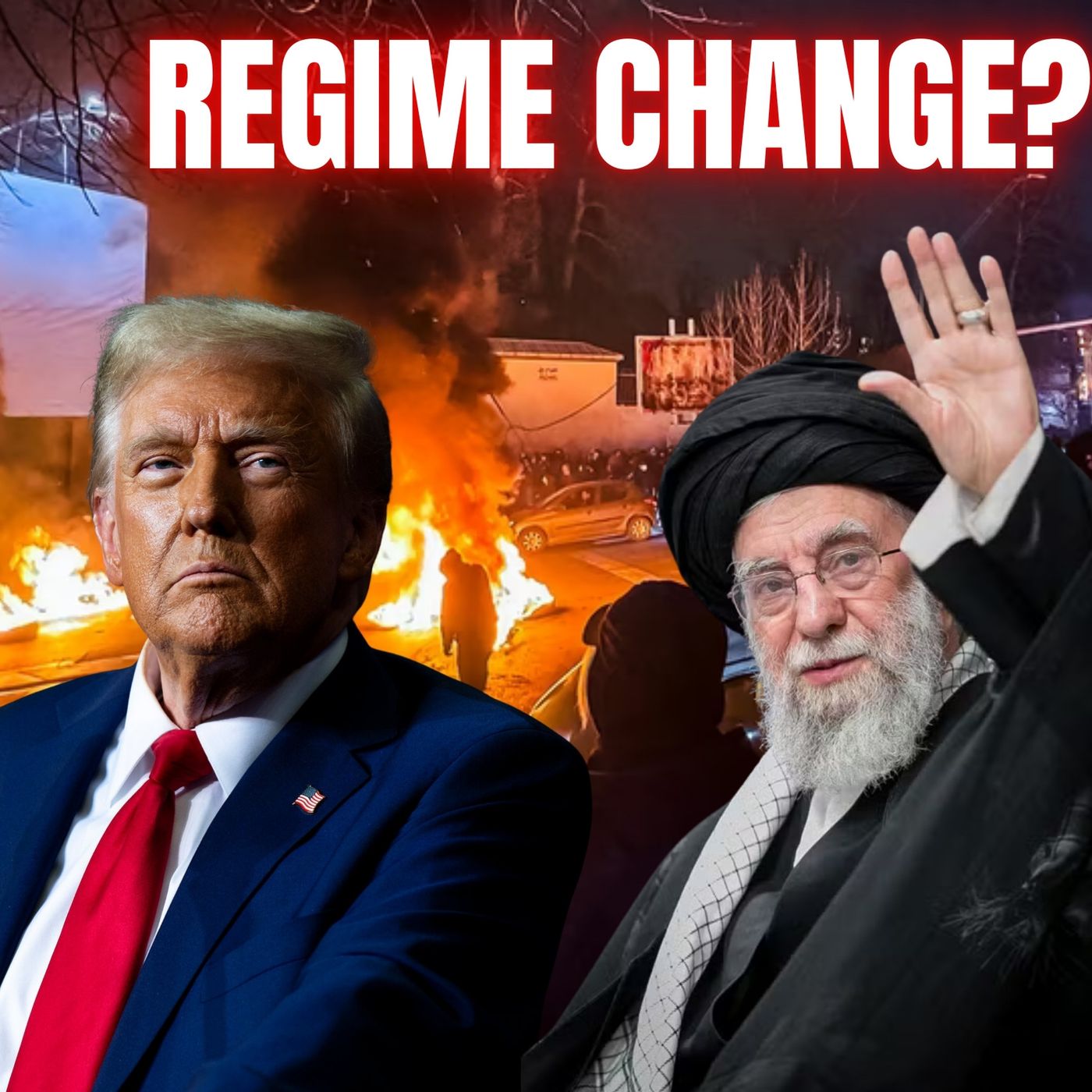
The Team House
Is the U.S. Starting Another Illegal War? | EYES ON GEOPOLITICS
01:07:29
We break down the rising tensions with Iran, from the U.S. military buildup to the real strike options on the table and what escalation could look like. With Mick Mulroy, Marc Polymeropoulos, Andy Milburn, and Iran expert Jonathan Hackett, we examine...
Loading summary
Transcript224 lines
- [00:01]
Jonathan Hackett
At Lowe's, get up to 35% off select major appliances plus members get free delivery, install and more when you spend
- [00:09]
Dan Morgan
$2,500 on select major appliances.
- [00:12]
Jonathan Hackett
Lowe's we help you save valid through 225 while supplies last.
- [00:16]
Mark Polymeropoulos
Selection varies by location.
- [00:17]
Jonathan Hackett
Excludes Massachusetts, Maryland, Wisconsin, New Jersey, Florida. Loyalty program. Subject to terms and conditions. Visit lowe's.com terms for details. Subject to change. Visit your nearby Lowe's on Colorado street in Kennewick.
- [00:30]
Ryan Seacrest
Hey, it's Ryan Seacrest for Albertsons and Safeway. Are you feeling those winter blues? Well, do not worry, they've got you covered with ways to boost your mood. Add a little sweetness to your day with big savings on all your favorite sweets. Shop in store or online and save on items like Gummy Savers, five Flavors, Reese's Peanut Butter Cup, Sour Patch watermelon, M&M's party size stand Up Bags and Ferrero Rocher Mixed Variety squares. Offer ends February 24th. Restrictions apply. Offers may vary. Visit albertsons or safeway.com for more details.
- [01:02]
Dee
Hey, what's up guys? This is D. Do us a favor and check out our patreon page. It's patreon.com teamhouse. You get both Teamhouse episodes and Eyes on Geopolitics episodes completely ad free. You get them early too. You can ask us questions. You can also watch the team ass episodes live as we shoot them. So. And you help support the show and support what we're doing here. It's patreon.com theteam house. Those links are in the description or if you're listening, it's in the show notes down below so you can click it real quick and easy and it helps us keep the lights on. So we appreciate it and we appreciate you guys listening. Thanks a bunch. Hey everybody. Welcome to another episode of Eyes on Geopolitics. I'm here with Mick Mulroy, Mark Polymeropoulos and Jonathan Hackett. I think Andy Milburn will be joining us soon. Soon. A lot happening. Us just beat Canada in the gold medal game in the Olympics and overtime.
- [02:01]
Mick Mulroy
Incredible game.
- [02:02]
Dee
Yep.
- [02:03]
Mark Polymeropoulos
He is a communist. He was rooting against America.
- [02:05]
Dee
I wasn't rooting against America. I was more apathetic to the whole thing. That's. That's that best. I'll give it to you. I mean, I gave a little. I didn't really fist pump when Jackie scored. But anyway, it was a really good game.
- [02:17]
Mark Polymeropoulos
Go down the street, go see AOC and have your little latte with her.
- [02:22]
Dee
I would love to, to be honest. Happy to buy her a latte. A lot happening as usual. We brought John on, of course, because John is like our resident expert in Iran, and things seem to be heating up. We have a ton of assets in and around the area.
- [02:40]
Mark Polymeropoulos
That's John.
- [02:41]
Dee
That's beautiful, man. Yeah. Yeah, Check out John's book.
- [02:46]
Mick Mulroy
And I appreciate it.
- [02:47]
Dee
I didn't just pull it out for the Iran shot. Shadow weapons, covert action, intelligence operations, and unconventional warfare. It's out now. That link is in the description. Yeah. So a lot of happening. We have a ton of assets in the. In the Gulf, in and around the area, in and around Iran, as much as we've had in 20 years, but outside of the ground forces. So we really are showing the stick. I don't know. There is a meeting planned on Thursday with the Iranian foreign minister and Witkoff and Jared Kushner. I don't know if that's like, for a new hotel or anything or actually this Iran deal, but, yeah, that's pretty much what's happening. Obviously, everything else in the world is exploding as well, but that's what's, you know, dominating the headlines. So, guys, welcome. And you guys can mud wrestle for. Who wants to go first.
- [03:42]
Mick Mulroy
Well, I got to jump early, unfortunately, so. Well, where to start? I think you. We're right. We have probably as much air power arrayed for this as we did and maybe even surpassed the 2003 invasion of Iraq, which me and Mark were intimately involved with. Not the air power and a considerable amount of naval force. Right. So this looks like it's headed either to force or on into an agreement, although it seems unlikely if we maintain the maximal position position of having to zero enrichment, including significant restrictions on the ballistic missile program, maybe even proxy force support. If they do not accept that, and they haven't accepted that, and according to some, they haven't even acknowledged the red lines that we have. Even though, as Mark just pointed out, the meeting is on Thursday. That might be to hear if they have come along to our side
- [04:45]
Commercial Announcer
and
- [04:46]
Mick Mulroy
want to avoid what looks like to be a fairly significant military confrontation between the US And Iran. If they do not, I do not see the US Just simply turning tail and going home. I just don't see that happening. So unless they agree with, it has to be way better than the JCPOA politically, for President Trump to accept it. It's going to be significant. Now the question is going to be, is it going to be focused just on the nuclear sites? There's some indication that they've started rebuilding and reinforcing those sites and the ballistic missile launch sites and manufacturing centers, or is it also going to include direct targeting of the regime? And there's a lot I don't know. It's hard to keep up with the stuff that's accurate, not accurate, but there's a lot of information. I should say that they have started basically continuity of regime planning, meaning that they've started dispersing their leadership. They've started having every key leader pick four successive leaders. So it's clear that Iran, that indicates to me that they think it's going to happen, which means they know they're not going to go on Thursday and agree to what the United States is. So I will stop there thinking that potentially I'd like to see, as I hope everybody would, a diplomatic resolution to this, but it doesn't look like it's hidden.
- [06:08]
Mark Polymeropoulos
Hey, John, can I ask you a question? It's actually great to have Iran experts here because, you know, Mick and I play them on TV and we're actually not really Iran experts. And one of the things I think we have to have a little bit of humility on this. But the key question that I'm kind of really grappling with, and perhaps you can shed some light, has to do with not US Decision making, but Iranian decision making. And I think it's just the notion. But that does kind of reflect back to how does the US Kind of grapple with the notion of if the supreme leader, if the Iranian leadership actually has made the calculation that a military a strike on them is actually worth it for regime survival, how can there actually be an agreement at that point? And I've been kind of mulling this and kind of contemplating this to see is there really a diplomatic opening here? Because if you go with that line of thinking that I was reading some former Israeli intelligence officials saying that that's the case, then how do you get out of this right now? Or is this is a conflict just inevitable if the Iranians really say, like, hey, we're not going to back down to pressure, this is too weird. It's too much pride for us. And the US Kind of holds that maximalist line, you know, where do we go from here now other than in a week or so ago in the future when these things are kind of go round and round again, we have this enormous force package ready to go. What are your thoughts, John?
- [07:31]
Jonathan Hackett
Yeah, so I'm thinking back to, I think it was 2006 when the Mossad director, Mehr Dagan, said that Mahmoud Ahmadinejad is not our Rational, but he's rational, like, within his own worldview. The things he's doing make sense to him. And I think this is the best way to think about how the regime is calculating what it's doing. And there's two precedents for what's happening right now. The first is 1988, when the Iran Iraq War was negotiated to end, and the previous ayatollah said that this is a poison chalice that they have to drink from to end the war after a million people had just died on both sides. But that meant that they had to get to the point where a million people had died on both sides before drinking from that poison chalice, according to them. And then, of course, the other was the 2015 JCPOA, which was an imperfect agreement, but to them was a necessary agreement to get what they wanted after a very long time of pressure to reach that point, including the Stuxnet attack on their nuclear facilities and other things that really crippled the regiment, not as publicly as people have seen, but did have effects on the regime. The point there is that they don't get there until it seems like everything else has been exhausted and there's no other choice for survival. And right now, they may not be calculating that they're at that point. True, they see all these forces arrayed against them, but there has been restraint, I guess you could call it shown against Venezuela, for example, and also back in June last year, where the US didn't push beyond a certain strategic endpoint, similar to 1991 when George Bush Sr. Decided not to push into Baghdad after Desert Storm, Desert Shield, there was a decision made to stop. I think the regime may be looking at those historic precedents and hoping within their own worldview that there's more to be squeezed out of this. And if we look at the jcpoa, it was imperfect for one reason. That was because proxies were not included in that agreement. And to the west, and perhaps the west would like that now. But I feel like the proxies are so weakened and so destroyed that it's almost a throwaway that could be added to it. That wouldn't really have a true effect in reality, because Hezbollah so crippled. Hezbollah's crippled. The Iraqi, other PMF groups are so crippled. So you have to wonder, is it just two tracks? Is it nuclear and ICBM or MRBM missile limitations that are gonna be built into this agreement, or is it not even an agreement at all that the regime is looking for? Perhaps they're looking for safe exit out of Iran into maybe Moscow or some country where they could be safe. And this is a facade where they're just looking like they're negotiating these things that are familiar to everyone, but instead it could be actually they're trying to negotiate for their own survival, whatever that survival might look like.
- [10:02]
Mark Polymeropoulos
Do you think the United States, though, understands this? I mean, one of the worries, and I think, you know, we've talked about this on the show before, is, is, you know, there has been a hollowing out of Iran expertise in the US Government. You know, the National Security Council staff, I don't think operates as it did in the past. And we have seen both at CIA and the State Department kind of you a lot of exodus of really smart folks. Do you think there are people around Kushner and Witkoff and the administration who know what they're doing on this? I don't know the answer to that. I'm curious if you have confidence that they are being given this kind of analysis and advice that you just kind of put forward.
- [10:40]
Jonathan Hackett
I think they're not, and I think it's not necessarily because they don't want that. I think it's because it's not organic right now. If you look back at 2015 and the years leading up to the JCPOA, you had kind of a concert of things happening together that it was organic. For example, John Kerry and Jawad Zarif walking together in Geneva, having private conversations. You had other people like Robert Malley in College in 1979, new members of the future regime. As college students in the United States, they had these relationships that had been built over decades, and that just doesn't organically exist in the current group of folks who are in Switzerland doing these negotiations.
- [11:20]
Mark Polymeropoulos
Andy, greetings.
- [11:23]
Andy Milburn
Good to see you guys.
- [11:27]
Mark Polymeropoulos
Any comments on kind of current status of where we are? There was just an announcement on social media that Thursday might be a day in which Kushner and Wyckoff meet the Iranian foreign minister in Geneva. So it looks like there's kind of one last gasp effort to avoid conflict.
- [11:44]
Andy Milburn
Yeah, I mean, are we. Have we started a bet on this?
- [11:51]
Jonathan Hackett
I think we should market it. It's a 75% bet that by December 31st there'll be a new regime in Iran.
- [11:57]
Andy Milburn
Really?
- [11:58]
Mick Mulroy
Well, I mean, isn't the guy. Isn't that the chances of guy's just going to die? Isn't he like, 84?
- [12:03]
Jonathan Hackett
Right.
- [12:04]
Andy Milburn
Yeah.
- [12:05]
Mick Mulroy
So there'll be a new regime. I don't know why you take that bit.
- [12:10]
Dee
I guess, you know, somebody in the NSC probably put some money on it.
- [12:14]
Mick Mulroy
That's a big issue now, people.
- [12:16]
Mark Polymeropoulos
Andy, what are your thoughts?
- [12:22]
Andy Milburn
So, so almost for a moment I was at a loss for words because, Mark, I, you know, if you, if you're asking me what my prediction is, I, I just, I don't, I don't have one anymore. And here's why. I'm not sure if you were to ask senior members of the administration right now, this isn't necessarily a criticism, what is going to happen? I don't think anyone knows. I think this could go, this could act out on a whim right up to the last minute. We talked about the fact that this is, we hate to use the term unprecedented. In fact, we try and avoid using that term on this show. But this is, this is a build up in the Middle east that I think I'm correct in saying hasn't occurred since the earliest part of the century. Right. I mean, not the early part of the century, around the beginning of the Iraq war. So to back down now or to find a compromise and then have to reposition all of these assets could, could definitely be seen as a, as a credibility blow. You know, whether, whether it's painted that way or not, we, you know, you and I, and probably, I think a lot of people who listen to the show know how things work in the Middle East. And regardless how it is painted, it does appear, you know, we've been saying, banging the drone, we're going to do this, we're going to do this, we're going to strike. Yeah. And then we don't. What does it say? What are the repercussions from that?
- [13:57]
Mark Polymeropoulos
Mick, I want to get before you. I know, Mick, you gotta, you gotta go. But there's something that's been bugging me. I sent you a note the other day in our chat on this too. And that's the idea of it seems like the administration, you know, keeps leaking their potential strike options. And then, John, I want your take on this too. But Mick, the strike options, it's like, you know, going to a New Jersey diner, you know, you want to go, you know, order some, you know, fried eggs or burger. And one of them has to do with, we're going to assassinate the leadership. And you know, and to me that, first of all, there's a little humility there involved. I don't know if the United States has that level of granularity in terms of intelligence collection to do so. We're not the Israelis. But number two. And Mick, this goes to things you and I did in the past. You know, there is international law on this. I don't know. You know, we are not at armed conflict with Iran under loaq. We're not supposed to be able to do this until we are at conflict with them. And then there's the executive order 12333, which bans the assassination of foreign leaders. And I see nothing in the press about this. But for you and I and Andy, I'll throw you in there, too, for, you know, for practitioners and Jonathan, I mean, everybody, Dee, we're gonna throw you in as well. You're coming on the COVID action. Like, this kind of stuff is what. How we don't go to jail. Like, there is. I mean, so it's not like a bunch of CIA and Marines are like, hey, let's go whack some people. Like, there actually are rules behind this. There are lawyers attached to your hip everywhere. And so, Mick, your thoughts that there's no debate on this? I mean, to me, I mean, you sat in that job as the. As the D, I believe. I mean, you don't just go assassin. You remember when Trump said, hey, I want to go kill Bashar al Assad? It was written about in Bob Woodward's book. And I think the national security world was like, yeah, we really can't do that. Anyway, your thoughts on that menu option with the lack of any kind of legal underpinning. And of course, I will throw out that Mick also went to law school. So this matters to you.
- [15:46]
Mick Mulroy
There is that. So there's not a lot of debate on any of it. Right, right. That's kind of surprising. I mean, normally you'd think that there'd be a lot of discussion, the President talking about it with the American people, of why this is important because it's, you know, the enemy gets a vote on this. This might not just be surgical strikes, and then it's over. This could be, you know, aircraft carriers that are struck by a missile. It could be, you know, soldiers, US Soldiers that are killed sitting at a base somewhere. It could be clandestine ops against our, you know, soft targets and diplomats. Right. It could be all the above. And, you know, Jonathan should talk about all the capabilities that they have that he lays out in this book. So there should be a discussion before we even have, I think, a direct confrontation. And folks that watch the show know that I supported this, the strikes against the nuclear facilities. So I'm not dovish on this. But there needs to be buy in because this might not go as smoothly as Venezuela.
- [16:44]
Andy Milburn
Right.
- [16:44]
Mick Mulroy
This could go sideways. We could have, you Know, in addition to everything I just referenced, we could have pilot shut down, etc.
- [16:50]
Mark Polymeropoulos
Is a decapitation strike on leadership, Is that legal? What is your view on that? Is it depending on official and lawyer?
- [16:58]
Mick Mulroy
Yeah, so it is. It is not legal to take out a leader of a country that we're not at war. Right. Once we're at war, which would be the same with us. Right. So they would be essentially legal to try to take out our commander in chief, but we're not at war with them. We're doing this because at least what I think is we're trying to mitigate the threat of them acquiring nuclear weapon, which we, through multiple administrations said is unacceptable. But to go after the leadership, even as despotic as it is, is another step. Right. So we have no authority, we, the executive Branch and the DoD, to go to war with Iran. And we are taking that one step further, at least in the press with debating whether we're going to take out the leadership. So there's a legal issue with it, but there's also a practical like, okay, so say we do take out the leadership, who's going to take over? Is it going to be more amenable to joining an agreement with the United States? Potentially not. The IRGC has historically been even more hawkish when it comes to acquiring nuclear weapons than the Supreme Leader. So there is the legality and then there's the actual practical effect of taking out the leadership, which might not be putting the United States in a better position, and certainly it could destabilize the entire region, which is why I think so many countries are really concerned about what happens next. I would only add one more thing and then toss it to you guys. President Trump keeps saying limited. The way I'm reading that, and I could be wrong, is normally, as everybody in the military knows, you present a low, medium and high threshold. Same thing in the Agency. Right. If you're saying limited, at least it indicates to me he's talking on the low end. And I don't think taking out the Supreme Leader would be considered the low end. So I don't know if it's legitimate that they're talking about this as one of the courses of action they're considering or not, because, you know, I just wouldn't see that as. As a limited course of action.
- [19:02]
Mark Polymeropoulos
Jonathan, what do you think about that, that kind of assassin, when, you know, a regime decapitation strike as an opening legal, Isn't it smart as well? Is it smart?
- [19:15]
Jonathan Hackett
Yeah, I mean, I'm thinking back to the custom Soleimani assassination back in 2020, January 8th, and they're up before January, and there's what is legal and what's possible. And with the assassination of Soleimani, they used the authorization for use of military force that was approved for war in Iraq. Like back to that 2003 buildup we were just talking about. That's what that was for. Nowhere in there does it mention Iran. There's lots of obviously, debate about and discussion about how that was patently unlawful according to international law and according to our own law, because of who that person was and what he represented as far as a political figure and a military figure from a sovereign country. But does that matter in terms of US Decision making? Because like the Melian dialogue from Thucydides, the strong do what they can and the weak do what they must. And if the US Is the major power, what relevance does the law have to that power? And that's like a moral, ethical question. But when you have a National Security Council who's making decisions based on a single individual's direction, sometimes moral and ethical decision making is not put into there. And so thinking about the attorneys they have making these things, I don't remember John Yoo put out the torture memo back in the early 2000s for Rumsfeld. I mean, the attorneys that are there are making opinions that have been kind of predetermined by the policy setter. So they say we want a legal opinion that justifies this action, and that legal opinion will justify that action, even if it's a very flimsy or tenuous connection to the moral, ethical and legal things behind it. And I wouldn't be surprised if a memo was being drafted in the past few weeks, or memos very similar in structure where they basically just say, here are A, B and C reasons why this is lawful. And if an outside observer analyzes that, they would say that's clearly not right. But the President's not interested in that analysis. He's looking for a legal justification because that's how international law works. There isn't a common law of international law. There's this thing that we agree to and that we, we uphold. And that's why we respond to the pressures of international outcry and hide behind our memos, regardless of how lawful they look. With, with Venezuela, you know, we used, we had a thin justification for that. We've had thin justifications for invading Iraq. Remember holding up the photograph at the UN Security Council showing the, the refrigerator trucks of chemical weapons and all that. Despite those things not being true. And I think that's what the US will produce in this case. No matter what the option is, whether it's just striking nuclear facilities again or if it's decapitating the regime, there will again be some small, thin justification made to hide behind in the international community despite the US doing it, no matter what.
- [22:03]
Sean Naylor
Hey everyone, I want to tell you about my new novel the Most Dangerous man, out in June. It is a novel about a Regimental Reconnaissance Company soldier who gets kidnapped while he's on a mission to West Africa and when he wakes up he finds that he is now being hunted for sport by a group of tech billionaires through the wilds of West Africa. This book is based on stories that I heard over the years about safari guides taking wealthy clients hunting for poachers on game reserves in Africa. I took that and I took a century old short story, the Most Dangerous Game and modernized it. And the product is this book, which I think will feel contemporary and resonate with audiences today. Thank you and please check it out.
- [22:59]
Jonathan Hackett
Foreign
- [23:02]
Ryan Seacrest
hey, it's Ryan Seacrest for Albertsons and Safeway. Are you feeling those winter blues? Well, do not worry, they've got you covered with ways to boost your mood. Add a little sweetness to your day with big savings on all your favorite sweets. Shop in store or online and save on items like Gummy Savers, five Flavors, Reese's Peanut Butter Cup Sour Patch, Watermelon, M M's Party Size Stand Up Bags and Ferrero Rocher Mixed Variety squares. Offer ends February 24th. Restrictions apply. Offers may vary. Visit albertsons or safeway.com for more details.
- [23:33]
Commercial Announcer
Every year, people make the same fitness goal train harder, but most fail because recovery gets ignored, especially connective tissue that muscles depend on to grow. Frog Fuel was developed by Navy Seals and perfected by a Stanford trained scientist. Delivering 15 grams of nano hydrolyzed collagen protein that digests in just 15 minutes. It's science backed and ready to drink. No mixing, no sugar, no junk this year. Don't just train harder, recover smarter. Go to frogfuel.com that's frogfuel.com stay unbreakable
- [24:04]
Mick Mulroy
if you're the purchasing manager at a manufacturing plant, you know having a trusted partner makes all the difference.
- [24:10]
Commercial Announcer
That's why hands down, you count on
- [24:12]
Mick Mulroy
Grainger for auto reordering. With on time restocks, your team will
- [24:17]
Jonathan Hackett
have the cut resistant gloves they need
- [24:18]
Mick Mulroy
at the start of their shift and you can end your day knowing they've
- [24:22]
Commercial Announcer
got safety well in hand.
- [24:24]
Jonathan Hackett
Call 1-800-GRAINGER click granger.com or just stop
- [24:28]
Mick Mulroy
by Granger for the ones who get it done.
- [24:34]
Mark Polymeropoulos
All right, let's just switch to one topic that I think, again, has not been covered a lot. Jonathan's going to really help out with this, but I want to go to Andy just for his thoughts on it. And that has to do with potential kind of asymmetric or any kind of Iranian response. Again, I think we've gotten so enamored with the power and the might of the US Military, particularly with successful operations and the Maduro op being one. You know, it always, I think in essence, we've gotten lucky in some points that it hasn't ended in US Casualties. But I don't think we're talking enough about in the cost benefit of this is what the potential Iranian response. So, Andy. And we'll go to Jonathan in a sec because I think he's, you know, he's written a book and is an expert on this. But, Andy, I want to get your sense on this as well as someone who's a veteran of, you know, decades of being in the Middle east and frankly, going up against the Iranians and their proxies. And so I think those of us who have done that do have a, you know, there's no hubris. There's no, you know, there's a sense of humility that this is not an adversary that might just fold and we might, you know, take some hits on this. And let me just, let me close this by a conversation. Jonathan mentioned Mira Dagan. When I worked with the Israelis in the past, particularly in the early 2000s, when they would be considering operations like this, they would do a cost benefit analysis and say, and I remember Degan saying this to us personally, saying, you know, if we take this course of action, we might lose an embassy. Okay, got it. And everyone's kind of shocked. And they said, but we're willing to take that risk. And that certainly, to me, is not being done in the United States now. So, Andy, what are your thoughts on that in terms of potential Iranian response? And are we not talking about this enough in terms of what the American people might, you know, be seeing in the next couple of days or weeks?
- [26:12]
Andy Milburn
Yeah, and I'm glad you brought this up because I think it's fair to say that pretty much everyone in our August group of co hosts for this show now has been involved with this particular problem set in the past. Enough said. But my point is that we've all been focused on Iran's malign influence in the region. Right. And I think Again, I can't speak for you guys, but if we could go back, the Jijik POA offered a couple of positive things. It offered access, it offered some level of transparency. I said some level, not total transparency, but it offered a better level than we have now. We went from scrapping the JIGPOA to a piston. But the big problem with the JIGPOA was that it didn't even address proxies. And I think what we're going to look at again, I said I wouldn't predict, but I think what we're going to look at again is a default to the easy button, which is a focus on nuclear enrichment and kind of a hand wave towards proxies. And I think one of the problems here that we've all wrestled with is the problem of monitoring. So if Iran said, okay, hey, we're out of proxy business, we would know that Iran's lying because just like ballistic missiles, they're not going to de invest. But secondly, how is that monitored and how do we do we do this? By conducting meos and taking ships over and trying to prove the smoking gun connected with Iran. I mean it's not an easy. You can't just say, hey, Iran's not going to suddenly say hey, I'm going to open up all shipments from Iranian ports to inspections so you can ensure we're not transporting lethal aid to our properties proxies. We know that's not going to happen. But what measures short of that can that problem even be monitored? I think that purely from my point of view, that's one of the biggest problems with the discussions now. You either make it relatively uncomplex and you focus on nuclear enrichment or you get to what is really the issue for the US really is the issue not an issue that appears existential because Israel convinces us that it is. But, but that problem of destabilizing the region, which is I would say the primary reason, and ballistic missiles, but to a lesser extent, I don't see this conversation going down. The last thing I'll say, you know, we've been talking about what, what will the strikes, you know, what sort of strikes they will be. And of course we begin with, well, what are they intended to accomplish? I would say one of two things. One is a mowing the grass type return to nuclear facilities that perhaps sets the program back six months to a year. And the other is retribution. Right. I said I was going to do this, so I'm going to do it. At least 7,000 people have died, you know, at least probably many Many more. In the latest Iranian revolution, the president did say that if the killing went on, he was going to intervene. The killing did go on after he said that. So we may be facing a hey, I've got to do this. And that. If we're following that rationale, that leads me to say, only under those conditions, I think, would we go after leaders of the Basij or the IRGC and say, hey, this was justice for what they did in terms of meting out punishment to the protesters. Very last thing I'll say is I don't think anyone. I would hope no one harbors any real thought that by taking leaders out of any organization within Iran, we are really enabling a democratic takeover by any opposition group, because we're not. That's a huge gap, as we all know.
- [30:17]
Mark Polymeropoulos
Jonathan, what's the Iranian response likely to be in your mind? And I think go in terms of high, medium or low confidence on this, and also throw in the notion, I think in the past there's been some kind of tacit understandings in order to avoid escalation between the US And Iran, but the asymmetric capabilities and what Iran could do in terms of damage to US Interests, US Facilities overseas, just to Americans, what are your thoughts on that? Because, again, I don't think that's really been discussed enough, particularly in the U.S. national security media from Congress or the American people. Everyone is thinks this is so antiseptic, but it might not be. So what are your thoughts on Iranian capabilities to inflict some harm on us?
- [30:59]
Jonathan Hackett
So a lot of the responses we've seen over the past 25 years from Iran against the west are not the full response option that the regime has. And I think that that has kind of convinced some observers that perhaps the regime is so weak that it can't actually respond. But if you look at Farsi language discussions from the regime to their own audience, they use this term heroic restraint all the time when they're talking about what they've done. Like when Cosmos Soleimani was assassinated, that was, like, huge, groundbreaking moment where, like, this guy was untouchable. And, like, the thought was, if he dies, the whole thing is going to, like, there's massive war going to happen. And there wasn't. And the Ayatollah himself said that they're exercising heroic restraint. Like, what does that mean? Right. And if you look at what their actual military doctrine is, it's called the Mosaic Doctrine, where they have this very high emphasis on dispersal of not just forces, but also decision making, which is part of the reason why the airline was shot down in January after Soleimani was killed. Because decision making was so decentralized that people that should have been looking at these missile systems were not looking at them because of their way that they're doing their command and control. It's designed so that if leaders get taken out, the war still happens. Right. And that's actually from the German military in World War II called Afstrog tactic, which is mission command, which the US also uses. But Iran has really pushed it down to the ground force level. And why I'm saying that when we think about the negotiations and including proxies into those negotiations to remove Iran's connection to proxies, this is an unrealistic request that I hope the negotiators understand why when we look at, for example, the Marine Corps, we have the Marine Air Ground task force concept where the air and the ground component work together and they're both necessary components of the success of those operating forces. The proxies are also like this within the Mosaic doctrine. If you remove the proxies, the doctrine falls apart because part of that rapidly decentralized command and control is the fact that the proxies can operate on their own without regime coordination in the moment. And this is a huge difference between Arab militaries and Iranians military. Not just the rtesh, which is their regular conventional forces, but also the irgc. They're designed to operate independently if they must. They're designed to operate without any connection back to some C2 node somewhere else. And I think that when we're thinking about how do they actually respond without heroic restraint, this is the real scenario we should be looking at, rather than looking at the past 25 years and saying, well, how do they react when we did X, Y and Z? Because that's likely not what they're going to do this time. Because I think they understand this is an existential threat for real. And you can see that not in their rhetoric but in their actions. For example, on January 31, the IRGC dispersed a bunch of ground force units to all of their intercontinental ballistic missile sites and their medium range ballistic missile sites, which they've never done before. And they did this to protect those sites from ground force incursions, which means they expect there could be boots in the ground that might attack those facilities. They've never done that before since 1988. Right. Another example is sending out notams for live fire over the Persian Gulf, warning mariners to stay away and actually firing live munitions across the water, which they haven't done in a long time. Additionally, they have Russia there with them doing those maritime exercises, which is obviously a deterrent effect, which changes the US decision calculus about what type of attacks they might take because they don't want to hit Russian forces. Or maybe if they do, they have to change how they think about that. 80% of their oil goes to China. That means China has to be part of this decision making calculus as well. And Iran knows that. So they're probably thinking about how do we, how do we use those assets we have, which are foreign assets, Chinese and Russian assets, and how do we disperse decision making as far down as possible so that even if the US does strike us, we'll be able to, to do things to not just them, but to Israel, to uae, to Bahrain, to Saudi Arabia. I mean, these are the things that are in their minds as they're thinking about what they do. And I would imagine that these decisions have already been made long ago. Right. So it's not like they're deciding it now and they're disseminating the information now about what to do instead. This is part of their doctrine has been built in since 2002 when the mosaic doctrine was made part of their military doctrine at their basically the equivalent of their war college. All of the officers who have been trained in the IRGC since 2002 have been trained on this doctrine. Just like the Marine Air Ground Task Force concept we have in the Marine Corps. Very similar, you know, at every echelon of rank they're exposed to a higher level of this concept. And that is their doctrine that we've just never seen it before used 100%. And that's what I would be concerned about.
- [35:23]
Mark Polymeropoulos
Do you think the administration has this level of granularity again that you're describing, whether it's NSC staff or input from the state or the agency or from diagnosis? I mean, because I would think that this is actually important again, in a normal working administration you have a course of action. There'd be National Security Council meetings, it's staffed up and down and there would be, you know, and you do go through this cost benefit calculation. But do you think anyone's actually, you know, in an Oval Office meeting with the President saying, hey, this is what could happen and this is why exactly the scenario you laid out. And then of course it affects the negotiators because if we're putting proxies on the table, but you're saying this is non negotiable, then what are we doing?
- [36:02]
Jonathan Hackett
Right. And I think you're Right. That probably there is not the level of granularity that you would hope. And it's not that it doesn't exist. It does. For example, the DIA puts out an unclassified report every year called Iran's Military Power. And it's like 150 page document that anyone can download and read. And it has a lot of this information about how their order of battle looks and how they disperse forces and et cetera. Is that information making it to the Oval Office? Probably not. And I remember even during my time when I was in the Middle east, most recently at the embassy over there, we had the President's Daily Brief getting put together all the time and it wasn't getting read. So even if the President's Daily Brief is not getting read, and that is the most important piece of material that we produce as an intelligence community, if that's not getting read, then that other report's definitely not getting read. Right. And that means it's not just not getting read by the President. It's not being absorbed by the decision makers that are there that could go tell the President that this is perhaps option A might be preferable to option B because of this granularity that we have. And I don't think that that exists right now.
- [37:03]
Mark Polymeropoulos
Andy, quick question for you. There's been reports the Wall Street Journal wrote an article and I find it interesting because we've all been out there for extended period of time to get cranky, but that there is some issues with. I think it was the Ford Carrier Battle Group, especially the carrier that's being extended now and the deployment, I think it's going to be the longest deployment of a carrier since Vietnam. And sailors, airmen, pilots or whatever are getting cranky. There's problems with the toilet. I mean, it sounds a little bit kind of into the weeds, but do you think any of that matters? And it's not necessarily for morale, but also shit starts breaking. You and Jonathan certainly know that. But Andy, what are your thoughts on this extended deployment and does that cause you any concern? You see a lot on social media, people are saying, suck it up. I'm not sure that's really the right response. Of course, Commander in Chief calls you to do something, you do it. But you know, should we be concerned about this extended deployment and then, you know, and what really an immense amount of firepower with that carrier battle group, what they can bring.
- [38:04]
Andy Milburn
Yeah, So a couple things. I think that's a really good point. And you know, the Marine in me is, you know, shut the fuck up. What are you talking about? But on the other hand, look, it's a, we keep saying this and it's progressively truer and truer. It's an all volunteer force and the all volunteer force, the demographics within that all volunteer force change repeatedly. So, you know, you can't. And I would argue that social media access makes it even worse. Right. People think that, oh, hey, people can communicate better with their families. Well, they can to a point. But it also heightens that sense of proximity and the proximity of all their concerns at home. Where I'm heading on this is. Yeah, I think you're definitely seeing cracks. The Navy is notoriously close mouthed. I think John will agree with that. When it comes to releasing information about morale or about leadership. And when they relieve people, it's always, you know, loss of trust and confidence. Raycor is not much better. But my point is there's always kind of this opaque thing, but if you look between the lines, you've got, you know, you've got a lot of churn in social media about reduced readiness of these carrier groups. That's a pragmatic reason. It's not that you, you know, we're giving into to feeling overly compassionate to whatever generation this is. You've got a record of mishaps on the, is on the Roosevelt. Right. Recently, I forget how many aircraft they lost overboard. They shot one of their own aircraft down. Some of these mistakes were. When you watch them on video, it's just incomprehensible. How does a trained crew do those things? I don't know what the investigations have revealed. The Navy haven't released those investigations, but I would. Maybe fatigue is part of it. Right. Either way, something's going wrong. And we saw this in the Pacific in the seventh fleet, remember, back in about 10, 15 years ago, culminating in a couple of fatal collisions.
- [40:26]
Mark Polymeropoulos
Jonathan, what are your thoughts on that too? Because think about it from a leadership perspective, if you want to address it that way. Because I think the idea of, you know, the suck it up is not going to work if you're the captain of the carrier. I mean, you do care about your crew.
- [40:38]
Jonathan Hackett
Yeah.
- [40:38]
Mark Polymeropoulos
And so. And of course then there's the notion too, of readiness and being able to carry out critical tasks in combat in which people are going to be asked to put in 20 hour days.
- [40:51]
Jonathan Hackett
Yeah, you've got a real dilemma because of the way our fleets are designed. You can't just send another aircraft carrier that hasn't been spun up yet. You know, it takes so many months to get ready to go so your only option is to chop A ship from 7th Fleet to 5th Fleet, for example, and extend its deployment. And now you're asking for every person participating on that thing to extend their life. And mentioning social media, actually, I've seen posts on Facebook and other places where spouses are complaining about how much time their husbands are out there, which is a problem from an OPSEC perspective because we're not the only ones looking at that, you know, and when morale gets affected like that, there are leaks like this that can then be used to exploit the, not just the information environment, but also the actual combat effectiveness of those individuals because it helps the other side understand things. And I'll also mention actually the regime is taking advantage of exactly what you're talking about right now. I just saw, I'm at Yale Law School right now and we have a veterans community and there was a veterans community message put out requesting a petition to be signed by combat veterans to protest against the US going to war against Iran. I looked into where that thing came from and it came from the Quincy Institute, which is a regime connected think tank, because they want veterans to basically say this statement and then the regime can say, look, American veterans don't support this war. So we have, we cannot forget that information environment that is attached to and integral to these combat deployments of actual ships sitting out there at sea at the same time because it's the same world. Right? We can't just think about the, the naval dimension or the air dimension. They're all connected together. And I'll also mention too that the UK just disallowed the US from using Diego Garcia, which is a massive difference from the past. And it's extremely important because last year in April, when we were also doing a lot of deterrent buildup with our, our Lancers, we used Diego Garcia to pre position those Lancers because we need a certain area and distance to put those aircraft for them to be effective. Not just to be used once, but to use over and over in, in combat. And Diego Garcia is kind of that special place to do that where we have access, basing and overflight. Well, the UK just disallowed us from doing that not only in Diego Garcia, but also in mainland uk. So that changes the calculus and it pushes a lot of pressure onto the Navy because that means the Navy is now the go to place to launch from sea rather than launching from land. And of course there are a couple of places we can use like Jordan for example, and Qatar to launch air assets, but those are so close and inside the engagement zone, that kind of puts them at risk in a way where we still need further out rings of aircraft. And the only way to do that now, because the UK is prohibiting us from using those locations, is aircraft carriers, which again, puts further pressure on those forces that are going to be deployed there. Because if we launch a strike and it lasts for more than a day, those aircraft carriers have to remain even longer than they have remained now.
- [43:40]
Mark Polymeropoulos
Right.
- [43:41]
Jonathan Hackett
And what does that mean? I mean, do we bring another aircraft carrier from another fleet? And if we do that, we lose our force projection in those areas where we remove those carriers. So these are all things I'm thinking about when I'm seeing what's going on, especially with the Mediterranean deployment and then the 5th Fleet deployments ramping up.
- [43:59]
Mark Polymeropoulos
I would just add that there's been obviously a lot of controversy over the UK denial of Diego Garcia. But this is what happens when we treat allies like shit. Was in the UK when the kind of explosion of anger about President Trump's statements about, about NATO forces and their performance in Afghanistan, the whole Greenland issue and the anger in the UK and this is not just the general public, but also with current and former, at least intelligence officials that I know was something I'd never seen before. And so this is the result. I mean, Keir Starmer, the Prime Minister who would never. I mean, no British prime minister would do this except if he had the support of the public, and he does. There's no. The political controversy in the UK is not. Has a lot to do with the Epstein files. It has very little to do with Starmer's move here, because I think it's popular because of. We've treated our allies like. Like crap. Let me just flip something, Dee. I'm going to put you on the spot here.
- [44:54]
Dee
Great.
- [44:54]
Mark Polymeropoulos
I was, I know I was joking before about your, your love of aoc, and I'm totally kidding on this. You know, this is a, a political podcast usually, but I think, but, but AOC did make the news because she started, you know, sending out on social media, you know, no war in Iran. And I guess the question I would have for you is what is a smart strategy from the Democrats? Presumably they're the ones or select Republicans as well, who are not in favor of military action. And would it be just kind of a statement like that, which in some ways I think is not helpful, or would it be better to say, hey, what we do need is Congressional authorization. We need another aumf, Authorized Use of Military Force. We need at least The President to address the American people. Congressional hearings, I mean these are things that are supposed to happen. So if you're coming from the Democrat side, you know, is it effective just with these little slogans, no war in Iran or would it be smarter to actually be a little more nuanced? Hey, make, hey President Trump, make the case, let Congress vote. If you go through the war powers resolution and things like that, or even just tell us what the end state, what the goals are.
- [46:00]
Dee
I think it depends what your goal is, right? Is your goal messaging? Right, because messaging, a 10 word statement goes viral a lot more than you know, we should really have a sit down congressional meeting and hearing about this and like lay out your plan and give us X's and O's. Also, I think the seal's kind of been broken with Venezuela and the drug votes in terms of international law and like where Congress sits. Does Congress have any authority? Do they, do they, they have authority, but they want to use their authority also. The other problem is most Democrats are kind of for this, right? They, they. We've hated IRA Iran for a long time. We call even Democrats. It's not just a republic thing. Cozy up with Israel and aipac. I mean if you want to talk nuts and bolts, I think that's why AOC goes that way where it's like put it on a fucking poster or a T shirt because it's like easy for people to understand. Like the majority of the American public doesn't give a fuck about Iran. Well, doesn't want us spending more and more money on a foreign war even if it's three week engagement where we're just blowing the shit out of them. And frankly there is no plan. Right. Like I saw a couple people tweet who are like experts or national security analysts saying that the move is, oh, it's good because we don't have a huge ground force there. It's just a buildup of Navy and air force assets. We'll have a two, three week, four week aerial bombardment and will negotiate with the remnants. It's like that's the fucking plan here. Like to me as the layman that makes absolutely no sense whatsoever because we've talked about it before that more than likely Iran's not going to come out of this and, and bring the Shaw in on a fucking white horse driving, you know, heading down Main street to take control or they're not going to become some liberal democracy that's ready for AI and, and modernization and being part of the, the global economy like an IRGC faction is going to take over and probably be even more brutal than the Ayatollah is, and that's who we're going to negotiate with. Like, I think it's just wishful thinking, frankly. And I always heard from other CIA folks that, like, wishful thinking is the worst thing to have. And I just. And I'm just still reeling from the fact that more than likely there isn't somebody with a granular kind of look at what's going on in the O office, advising the President and his advisors or the Cabinet or Pete Hickseth or whoever. To me, that's like a complete dereliction of duty. You don't have some smart guy in there. I got one on a fucking podcast today, on Sunday. What are we talking about? You can't get one in the fucking Oval Office. Like, to me, that's a fucking joke. I'm done. Thank you, Mark.
- [48:50]
Mark Polymeropoulos
Well, we'll get. We'll get Jonathan to walk down to 1600 Pennsylvania.
- [48:54]
Dee
Please. Let him in, guys.
- [48:55]
Mark Polymeropoulos
Let me. But for Jonathan and Andy, I want to throw something in. It's a. That's on a personal level. And so I struggle with this sometimes. I'm not a fan of this administration. That's not a surprise. On this podcast, Dee gets a lot of hate mail. But where I agree with kind of the overall premise is, and if you've been at the tip of the spear, which we have, we have friends who've been killed by the Iranians, in essence, the EFPs in Iraq, the Iranians support the Shia groups there. I mean, in my entire adult life of 26 years at CIA, a lot of it was folks on Iran or her proxies. And none of it was just a struggle for influence. It was kinetic, it was down and dirty. I do not like this regime, and I would love to see regime change. We also seem to forget that the Iranians were trying to kill President Trump and John Bolton and Mike Pompeo and others. And so there's a side of me on just the personal side is, yeah, if we could get this regime out of there, I'm all for it. Sometimes, though, I struggle just with the mechanics of it. And what I think is an administration that doesn't have the competence to do, do this. Right? So with that all in mind, think just from a personal standpoint. You are both former Marines. You both have been, you know, actively in the fight against the Iranians. What does your gut tell you on this? I mean, is there something that gnaws on you? So right now we're saying a lot of things. The administration is not doing right on this. But again, I sometimes I sit back and I say, you know what? But I'm actually for the notion of regime change and in particular, I am absolutely for supporting the Iranian people who rose up.
- [50:30]
Ryan Seacrest
Hey, it's Ryan Seacrest for Albertsons and Safeway. It's cough, cold and flu season. Do not get caught feeling under the weather. Get back to feeling good with savings on all your cold and flu Essentials. Now through February 24th. Shop in store or online to stock up and save on items like Mucinex Fast Max liquid gels, Vicks Dayquil and nyquil combo packs, Hall's Cough Drops and Tylenol Children's Liquid. The offer ends February 24th. Restrictions apply. Offers may vary. Visit albertsons or safeway.com for more details.
- [51:00]
Commercial Announcer
Every year, people make the same fitness goal, train harder. But most fail because recovery gets ignored, especially connective tissue that muscles depend on to grow. Frog Fuel was developed by Navy SEALs and perfected by a Stanford trained scientist, delivering 15 grams of nano hydrolyzed collagen protein that digests in just 15 minutes. It's science back and ready to drink. No mixing, no sugar, no junk this year. Don't just train harder, recover smarter. Go to frogfuel.com that's frogfuel.com Stay unbreakable
- [51:31]
Andy Milburn
with Verbo care, help is always ready before, during and after your stay. We've planned for the plot twists, so
- [51:39]
Commercial Announcer
support is always available because a great
- [51:42]
Andy Milburn
trip starts with peace of mind, whether
- [51:45]
Mark Polymeropoulos
that's 10,000 or 30,000 killed. It was a debacle. And so Jonathan, let's start with you from your gut on this, your personal, your personal experiences.
- [51:57]
Jonathan Hackett
My thought, being involved in this stuff over these past 25 years, I'm the first one to say war is not good and we should try to do everything we can to avoid violence. And I think we have done almost everything we could to avoid violence in this case. I mean, over years and years. And the other thing that I think about is there's our strategic end states, but there's also the strategic end states of the Iranian people that are suffering under this regime. And that's 90% of the country, maybe more than that, that want this regime gone and have wanted this regime gone more and more over the past 47 years. Right. And especially in the past two months, January 8th and 9th, if you do the math on it, on the low end, they were killing five human beings per minute every minute for 48 hours. On the high end, you're talking in excess of 20 to 30 people per minute for 48 hours. That's insane. And all the complaints we had about the war in Gaza, that was over two years, and Israel killed almost the same amount of people in two years that the regime killed in two to three days. Where is the outcry from the west against that? That's how I'm looking at that. And especially because you're talking about a country of almost 90 million people suffering, not just violence and death and rape and destruction, which it's beyond what most people understand. If you see the videos and what's going on there, it's utterly disgusting that there are these animals doing this to people who just want to be free. And with that in mind, regime change is not. It's not great. But what if that could be freedom for people at some point and it won't be freedom tomorrow? And that's the thing to think about. There's a cost if there is regime change. Just like the French Revolution and even the American Revolution, when there's regime change, there's a moment of absolute, like, violence. And it doesn't matter if the Shah comes in on a white horse. Well, he's got to get there first. And while he's getting there, there is lawlessness, there is violence. I mean, we remember in Baghdad, when we came in there, there was absolute unrest because there's no government, there's no sovereignty, there's no police, there's no trash, there's no sewer. Like the things that keep society together for a moment, it just evaporates. And that is going to be a really tragic moment. I've spoken to Iranians who are in Iran right now. They want that. They're willing to pay that cost and they're even willing to die for that right now. And that's something to remember that when our interests align and the interests of those people align, that's the moment to act. And I think that moment is now.
- [54:22]
Mark Polymeropoulos
So I was in Europe recently and I was lucky to be involved with a group who received a briefing from one of the, you know, the Shah's or the Crown Prince's senior advisors. And it wasn't a rah rah speech of this has to be done, but it was much more of kind of the state of where the Iranian people are. And it was pretty compelling argument that, you know, the regime is on its last dying days. At some point that might mean one year or five years. But I do think that what I come back to as well is again, is I hope we do this right, but it's the Iranian people and the idea of a new future and you know, everybody, I mean, I'm going to say this, I live in the D.C. area, so we have a zillion Iranian friends who are all mesmerized by this and certainly want to see change. Andy, what are your thoughts on that? Again, as someone who is kind of up against the Iranians for some time and you know, perhaps a critic, as I am, of, you know, the mechanics of how the Trump administration is doing this, but does this not you as well, like, you know, hold on a second, like the right side of history is going to be regime change?
- [55:22]
Andy Milburn
Yeah, I absolutely agree. And yes, we can, you know, quite rightfully we talked about, well, you can't rush into, you can't force regime change from the air, etc. Etc. But there are, as everyone here knows, things that could be taking place right now that are focused on practical long term goals. And so one of which, and it is kind of the messaging to the US Domestic public that, you know, there's been very little of that. Right. I mean, this would be a good opportunity for the administration to give the case for intervention in Iran based on, based on what the Iranian regime has done. Make absolutely open the cruelty, the scale of death that has occurred and all these other things, myriad things that they're doing, you know, blinding, using munitions deliberately to blind people in the crowd. I mean, all of these things that as far as in the long term, do I think American popular opinion plays a big role in foreign policy? No, absolutely not. But it's certainly something the administration, if they're looking for reelection and building a case domestically, they start on that. And then the second part, as everyone here knows we wouldn't be reading about or seeing about, which are developing covert options, which I'm sure are happening. And it's again, I mean, those of us who work with resistance groups in Mosul for instance, know it's easier said than done. But I'm sure there's two parts of that, right? There is the assessment piece up front, which are the legitimate groups, which ones are likely to be able to bear a burden and which ones do we want to bear a burden in an insurgency, whether it be long term or short term, how do we enable them? Should we enable them? You know, all these are complex questions that takes a while on the ground to be able to understand. I would imagine that we are looking at those things as well as other non kinetic options, focused as kind of foreign movement in Consonants with our support for an insurgent group within Iran. In other words, planning a campaign that's focused on perhaps covert operations to parallel what is happening out in the open. And the last piece, I would say, yeah, I think strikes are going to happen. I think they're going to be a little bit of a mowing the grass option. Unless we start seeing domestically this case for intervention to support the insurgency. Unless we see that openly, I think that the follow on the strikes are going to be going off the nuclear facilities, which as we know is an imperfect short term solution. But that is all. Yeah, I mean, I would absolutely think that there are covert steps taking place now as long as we don't undermine those covert steps by announcing, hey, we have just taken these covert steps.
- [58:37]
Mark Polymeropoulos
Right. Wait, yeah, probably the Israelis, you know, the Israelis have done a pretty remarkable job in terms of, you know, recruiting assets and principal agent networks amongst the kind of the ethnic minorities in Iran. So I would imagine there's some of that going on. Before we close, I want to, I want to kind of throw out a subject. This just came to me and it's something that you guys, actually, Andy and Jonathan, you are perfect for this. One of the things that I found really interesting over the last couple years as I kind of make the rounds and give some guest lectures at universities is teaching about ethics and morality in conflict. And you know, I've given this talk. I went down to the Citadel, I did it, I did it at Catholic University. And you know, this was groups that actually think about this stuff. And so this is what's, what I think is gnawing at me a little bit. And I want to get your take on that. If there was to be an agreement that avoids war, it's going to be an agreement around the nuclear program. But in essence, what that does is it allows the regime to survive. And then we go back to the ethics and morality of President Trump several weeks ago, that help was on the way. And again, the conversation we just had was what appeals to me, maybe to us is that that's something that actually matters, that the Iranian people actually stayed out in the streets because they thought the US Was coming. And so on, that ethics piece of it, the morality piece of it, actually an agreement, a nuclear agreement that would avoid war has a unethical component to that, which means the regime survives. And that's what it's actually keeping me up at night. It's driving me crazy a little bit. So Jonathan, what are your thoughts on that? Because, look, I mean, the one thing and I know Mick certainly much better than Andy, than I do you. We've known each other for a couple years, Jonathan. We just met. But Mick, who, U.S. military, Marine Corps lawyer, is one of the most ethical people I've ever met. And I think that's not based on his training at CIA. It's based on his training with the Marine Corps. And again, so, Jonathan, off to you on that ethics piece of this. An agreement to stave off war in some ways is unethical because of our promises made.
- [60:37]
Jonathan Hackett
Yeah, I completely agree. I mean, being a world leader has the word leader in it. That means you have to lead. And leading is not easy. Right. And if you're going to say, if you're the president and you're going to say the help is on the way, it has to be on the way. And I'm thinking about like the Berlin airlift, when we went and saved all those people in Berlin. That was at a great risk to us and a great risk to the people in Berlin. And we did it because we said we're going to do it. Even things like the Lend Lease program and all these other things in World War II where we like huge risk to do, and there was a lot of repercussions that could have come from it, but we didn't negotiate with the enemy to stay back and allow things to continue. And the status quo in Iran has not worked for anybody, not even for the regime, I mean, for anybody since 1979. And if we continue to put it on life support, what are we accomplishing just to say that we had an agreement? There's really nothing that comes to this, because everybody knows that if the regime comes to this agreement, they're going to get some concessions for themselves, too, that are positive for the regime beyond the agreement itself. Do we really want to be again keeping them on life support just so that this will happen again? I mean, even today and Yesterday, this was 40 days since the actual protest killings. The major day 8 and 9 happened, people were out there protesting at Sharif University, beating up Basijis. That's again, a perfect opportunity to do something. And coming to this agreement betrays those people who even today are out there protesting because they believe that this world power who said they're going to help will come to help. We could have chosen to say nothing that's different, but we didn't say nothing. We said something, and now we need to do something.
- [62:10]
Mark Polymeropoulos
This reminds me, Andy, of. And you've talked about it before, and this is not a new subject that I've Raised, but in my career, working with the Iraqi Kurds, the Syrian opposition, running one of our bases in Afghanistan with our Afghan indigenous, we don't have a great track record of keeping our promises. And so that's what kind of gnaws at me about this idea of war avoidance might mean regime survival. And then we betray the actual protesters on the streets. What do you think of that?
- [62:39]
Andy Milburn
Yeah, 100%. In fact, after we withdrew or announced we were going to withdraw, the reality wasn't quite the same on the ground from Syria. Do you remember that? It was in 2019. Right.
- [62:52]
Mark Polymeropoulos
Trump did it after a call with Turkish Everyone.
- [62:58]
Andy Milburn
And so I did a interview with msnbc, what it was called then, Kendallanian, and just basically not saying anything controversial except that, hey, this is, you know, explaining what the SDF had done for us. Explaining the fact that when we just kind of throw our allies to the wolves after they have done things where our interests align is not a good precedent because there are pragmatic reasons. Right. But even so, I was beaten up for my emotional argument. So I think there's just a lack of understanding about this, that the solid, pragmatic reason that we all understand as former SOF or IC practitioners is that you can't betray people and then expect other people to trust you. That's number one. And number two, when we're just using the intelligence community and we're just using sof, our record of using proxies is actually really, really good. You know, I mean, whether it be the SDF or looking back in things like Plan Colombia or in El Salvador, when we're not putting massive amounts of troops on the ground, when we're just using proxies, we have a pretty good success rate. So we don't want to violate that. Right. We don't want to betray that trust. That's a good, you know, that's a good enough reason. I think all of us, it goes far deeper than that. And I don't think we have to feel apologetic about talking about American values and what those really are. And all of us understand, I think, I mean, the reason why we served our country in different forms wasn't because we thought that our country made the best deals possible. Right. It was because our country represented certain values that went beyond transactional negotiations, and those values were persistent. Right. And those were things, regardless of administration, that we were willing to risk our lives for. So that is important for all of us who've worn the uniform.
- [65:07]
Mark Polymeropoulos
Agreed. And so let's see what happens. Again, the irony is that if there's a deal that avoids war, it's going to give the Iranian regime life to fight another day. That's going to be hard for some of us to stomach. D I'm going to throw it back to you. I'm going to give you one more opportunity D to acknowledge you're happy the US Won the gold medal.
- [65:25]
Dee
I am happy the US Won the gold medal.
- [65:28]
Mark Polymeropoulos
You're a hockey, you're a hockey fan.
- [65:29]
Dee
I am, yes. I am a hockey fan.
- [65:31]
Jonathan Hackett
J.T.
- [65:31]
Mark Polymeropoulos
miller. Trocheck. Come on. Gold medals. This is a big deal.
- [65:34]
Dee
Ranger fan. The Rangers stink. So I'm a little bit angry about that, but yeah, no, I am. I mean, I'm fine with it, honestly. Gotta be honest. You guys can call me a commie all you want. I don't know, blow me. That's for the, for the audience. We just had an incredible nuanced conversation about the Iraq, possible Iranian war. Now it's like devolved into hockey talk and I'm telling everybody to blow me. Sorry, I'm leaving it in too. It was a great game, obviously and I enjoyed watching it and I am happy. I am happy the US won.
- [66:06]
Mark Polymeropoulos
All right, so are you happy now? I'm playing there.
- [66:11]
Dee
Okay.
- [66:11]
Mark Polymeropoulos
A little bit. A little bit. A little assuaged by your non communist leanings at this point, but you can go back to give you a little coffee shop in Brooklyn.
- [66:18]
Dee
Thank you.
- [66:19]
Mark Polymeropoulos
Okay.
- [66:23]
Andy Milburn
When did the Soviet Union annex the Czechoslovakia? I mean really. And it's 1968. Right. So Hungary was 56. And I think Czechoslovakia was, was 68. And there was a Winter Olympics. I want to say the next Winter Olympics, Czechoslovakia played the Soviet Union in ice hockey. And you can still find copies of that match, but it was blood laden as you can imagine. They pretty much ignored the puck throughout. I'm not comparing that to the United States versus Canada.
- [67:02]
Mark Polymeropoulos
It was a pretty rough game.
- [67:03]
Dee
It was pretty rough. And the only problem with it was also you can't fight. They can't have fights or they'll get kicked out of the game during the Olympics, which isn't the same as regular NHL. So there weren't any like real, you know, fist fights. They were just some scrums.
- [67:17]
Mark Polymeropoulos
Awesome game.
- [67:20]
Dee
Incredible game, guys.
- [67:21]
Mark Polymeropoulos
Gotcha. Thanks.
- [67:23]
Dee
I want everyone to do me a favor. I want everyone to check out John's
- [67:27]
Jonathan Hackett
book,
- [67:29]
Dee
I can't remember. Iran Shadows, Iran's Shadow Weapons. It's on Amazon right now. The link is in the description down below. Andy Milburn's got a great book. When the Tempest Gathers, check that out. Mark as well. All the links are down in the description. And we have the Whitefish Security Summit coming in April, April 2nd to the 4th. Check that out. The links are down in the description. The keynote speaker is General Stanley McChrystal. So it should be a good one. And Mick's gonna be there. Maybe Izon will be there. We're trying to figure that out. I have a phone call with the organizer later. We'll see if they meet our price. Yeah, so.
- [68:09]
Mark Polymeropoulos
And by the way, business class travel only.
- [68:11]
Dee
I mean, that's the only way to go. That's the only way to go. Dude. Check that out. That link is in the description as well. And of course, if you want to help Support the show, patreon.com the teamhouse. You get both Teamhouse and Eyes on episodes ad free early and you can ask us questions, do all that. It's a little bit more access to us. And if you have any questions for the guys on Eyes on, hit, send them over on Patreon. I'll make sure everyone gets them. Jonathan, as always, a pleasure. We gotta have you on more and more because I feel like you're the smartest guy in the room and I'm. I'm still freaking out about the fact that it's 50. 50 that there is a person in the. Not in the Oval Office talking about these things while they're. That's crazy. That freaks me the fuck out because if I can get a guy for a podcast, they could definitely get somebody in the Oval Office to brief the President or the NSA or whoever they need to brief.
- [69:09]
Jonathan Hackett
It's a choice.
- [69:11]
Mark Polymeropoulos
It's a war on expertise. So.
- [69:15]
Dee
All right, guys, that's it. I love you. Thank you.
- [69:17]
Jonathan Hackett
Thanks, guys.
- [69:19]
Mark Polymeropoulos
Take care.
- [69:21]
Sean Naylor
Hey, guys, I want to tell all of you today about a new newsletter that we're launching that encompasses both the Team House podcast, the Eyes on podcast, and the High side news outlet, which I run with Sean Naylor. The newsletter is going to be once a week, it's going to come into your inbox and you're going to get the most current podcasts on Eyeson and the Team House and whatever's topical or current on the High side. So it's another way for us to get the information out to you, as social media algorithms are pretty iffy and
- [69:54]
Mark Polymeropoulos
you never really know what you.
- [69:55]
Sean Naylor
You're going to get. So this is a once a week email. It'll slide into your inbox and it will have, you know, the greatest hits of that week.
- [70:01]
Host/Interviewer
It's really good man.
- [70:03]
Andy Milburn
Checking it out.
- [70:05]
Sean Naylor
The website for it is teamhousepodcast.kit.com join teamhousepodcast.kit.com Join go there and you enter into your email list or you enter your email into the little thing on the website and you're good to go. And that'll be it. So we really appreciate your support and hope you'll consider signing up.
- [70:28]
Dan Morgan
Where's the link?
- [70:29]
Sean Naylor
The link will also be down in the description if you're looking for it
- [70:33]
Ryan Seacrest
there and that's teamhousepodcast.com hey, it's Ryan Seacrest for Albertsons and Safeway. Are you feeling those winter blues? Well, do not worry, they've got you covered with ways to boost your mood, add a little sweetness to your day with big savings on all your favorite sweets. Shop in store or online and save on items like Gummy Savers, five Flavors, Reese's Peanut Butter Cup, Sour Patch, Watermelon M and Ms. Party Size Stand Up Bags and Ferrero Rocher Mixed Variety squares. Offer ends February 24th. Restrictions apply. Offers may vary. Visit albertsons or safeway.com for more details.
- [71:07]
Commercial Announcer
Every year, people make the same fitness goal. Train harder. But most fail because recovery gets ignored, especially connective tissue that muscles depend on to grow from. Frogfuel was developed by Navy Seals and perfected by a Stanford trained scientist, delivering 15 grams of nano hydrolyzed collagen protein that digests in just 15 minutes. It's science backed and ready to drink. No mixing, no sugar, no junk. This year, don't just train harder, recover smarter. Go to frogfuel.com that's frogfuel.com stay unbreakable
- [71:38]
Mark Polymeropoulos
if you're an H Vac technician and a call comes in, Grainger knows that
- [71:42]
Jonathan Hackett
you need a partner that helps you find the right product fast and hassle free. And you know that when the first problem of the day is a clanking blower motor, there's no need to break a sweat.
- [71:52]
Mark Polymeropoulos
With Grainger's easy to use website and product details, you're confident you'll soon have
- [71:57]
Jonathan Hackett
everything humming right along.
- [71:59]
Mark Polymeropoulos
Call 1-800-GRAINGER clickgrainger.com or just stop by Grainger for the ones who get it done.
- [72:07]
Sean Naylor
Kit K I T Foreign
- [72:13]
Ryan Seacrest
hey, it's Ryan Seacrest for Albertsons and Safeway. Are you feeling those winter blues? Well, do not worry, they've got you covered with ways to boost your mood, add a little sweetness to your day with big savings on all your favorite sweets. Shop in store or online and save on items like Gummy Savers Five Flavors Reese's Peanut Butter Cup Sour Patch Watermelon, M&M's Party Size Stand Up Bags and Ferrero Rocher Mixed Variety squares. Offer ends February 24th. Restrictions apply. Offers may vary. Visit albertsons or safeway.com for more details.
- [72:44]
Commercial Announcer
Every year people make the same fitness goal train harder, but most fail because recovery gets ignored, especially connective tissue that muscles depend on to grow. Frog Fuel was developed by Navy Seals and perfected by a Stanford trained scientist. Delivering 15 grams of nano hydrolyzed collagen protein that digests in just 15 minutes. It's science backed and ready to drink. No mixing, no sugar, no junk. This year, don't just train harder, recover smarter. Go to frogfuel.com that's frogfuel.com Stay unbreakable. Support is available 247 with VRBoCare.
- [73:19]
Andy Milburn
We're here day or night ready whenever you need help because a great trip
- [73:25]
Commercial Announcer
starts with the right support.
- [73:27]
Jonathan Hackett
Foreign.
- [73:35]
Ryan Seacrest
Hey, it's Ryan Seacrest for Albertsons and Safeway. Are you feeling those winter blues? Well, do not worry, they've got you covered with ways to boost your mood. Add a little sweetness to your day with big savings on all your favorite sweets. Shop in store or online and save on items like Gummy Savers. Five Flavors, Reese's Peanut Butter Cup Sour Patch, Watermelon, M M's Party Size Stand Up Bags and Ferrero Rocher Mixed Variety Square. Offer ends February 24th. Restrictions apply. Offers may vary. Visit albertsons or safeway.com for more details.
- [74:06]
Commercial Announcer
Every year people make the same fitness goal train harder, but most fail because recovery gets ignored, especially connective tissue that muscles depend on to grow. Frog Fuel was developed by Navy Seals and perfected by a Stanford trained scientist. Delivering 15 grams of nano hydrolyzed collagen protein that digests in just 15 minutes.
- [74:25]
Jonathan Hackett
Minutes.
- [74:25]
Commercial Announcer
It's science backed and ready to drink. No mixing, no sugar, no junk. This year, don't just train harder, recover smarter. Go to frogfuel.com that's frogfuel.com Stay unbreakable.
- [74:38]
Host/Interviewer
I've got Dan Morgan here on the pod.
- [74:40]
Andy Milburn
Say hi Dan.
- [74:41]
Dan Morgan
Hey, how's it going today?
- [74:42]
Host/Interviewer
It's going good, man. Tell us who you are and what you do.
- [74:45]
Dan Morgan
I'm Dan Morgan. I'm an attorney and a managing partner at Morgan and Morgan, which is America's largest injury law firm.
- [74:51]
Host/Interviewer
That's pretty awesome. I think I saw a billboard of yours recently. It said 20 billion one. 20 billion is an insane number.
- [75:00]
Dan Morgan
Yeah, 20 billion recovered. It's actually I think somewhere north probably closer to 22, 23 after this year. And each year we get bigger and badder and our army grows. So the number will hopefully keep getting bigger and bigger as time goes on.
- [75:13]
Andy Milburn
Awesome.
- [75:13]
Host/Interviewer
So how does someone get in contact with Morgan and Morgan? What would I do if I got into an accident?
- [75:18]
Dan Morgan
Probably the easiest way is dialing pound law. That's £529 from your cell phone. We are always open. Our call center is always waiting to take your call. 247 365.
- [75:28]
Jonathan Hackett
Wow.
- [75:28]
Host/Interviewer
Dan Morgan from Morgan Morgan, America's largest injury law firm. Thanks for coming by the show.
- [75:32]
Dan Morgan
Thanks for having me. Visit forthepeople.com for an office near you.
- [75:42]
Ryan Seacrest
Hey, it's Ryan Seacrest for Albertsons and Safeway. Are you feeling those winter blues? Well, do not worry. They've got you covered with win ways to boost your mood, add a little sweetness to your day. With big savings on all your favorite sweets, shop in store or online and save on items like Gummy Savers, five flavors, Reese's Peanut Butter Cup Sour Patch Watermelon, M M's Party Size Stand up Bags and Ferrero Rocher Mixed Variety squares. Offer ends February 24th. Restrictions apply. Offers may vary. Visit albertsons or safeway.com for more details.
- [76:13]
Commercial Announcer
Every year people make the same fitness goal. Train harder. But most fail because recovery gets ignored. Especially connective tissue that muscles dep on to grow. Frog fuel was developed by Navy Seals and perfected by a Stanford trained scientist. Delivering 15 grams of nano hydrolyzed collagen protein that digests in just 15 minutes. It's science backed and ready to drink. No mixing, no sugar, no junk. This year, don't just train harder, recover smarter. Go to frogfuel.com that's frogfuel.com Stay unbreakable.
- [76:46]
Host/Interviewer
I've got Dan Morgan here on the pod.
- [76:48]
Andy Milburn
Say hi Dan.
- [76:49]
Dan Morgan
Hey, how's it going today?
- [76:50]
Host/Interviewer
It's going good, man. Tell us who you are and what you do.
- [76:53]
Dan Morgan
I'm Dan Morgan. I'm an attorney and a managing partner at Morgan and Morgan, which is America's largest injury law firm.
- [76:59]
Host/Interviewer
That's pretty awesome. I think I saw a billboard of yours recently that said 20 billion won. 20 billion is an insane number.
- [77:08]
Dan Morgan
Yeah, 20 billion recovered. It's actually I think somewhere north, probably closer to 22, 23 after this year. And each year we get bigger and badder and our army grows. So the number will hopefully keep getting bigger and bigger as time goes on.
- [77:20]
Andy Milburn
Awesome.
- [77:21]
Host/Interviewer
So how does someone get in contact with Morgan and Morgan? What would I do if I got into an accident?
- [77:26]
Dan Morgan
Probably the easiest way is dialing pound law. That's £529 from your cell phone. We are always open. Our call center is always waiting to take your call. 247365 wow.
- [77:36]
Host/Interviewer
Dan Morgan from Morgan Morgan, America's large injury law firm. Thanks for coming by the show.
- [77:40]
Dan Morgan
Thanks for having me. Visit forthepeople.com for an office near you.
- [77:51]
Ryan Seacrest
Hey, it's Ryan Seacrest for Albertsons and Safeway. Are you feeling those winter blues? Well, do not worry, they've got you covered with ways to boost your mood. Add a little sweetness to your day. With big savings on all your favorite sweets. Shop in store or online and save on items like Gummy Savers. Five flavors, Reese's Peanut Butter Cup Sour Patch watermelon, M&M's party size stand Up Bags and Ferrero Rocher Mixed Variety squares. Offer ends February. February 24th. Restrictions apply. Offers may vary. Visit albertsons or safeway.com for more details.
- [78:22]
Commercial Announcer
Every year people make the same fitness goal, train harder. But most fail because recovery gets ignored. Especially connective tissue that muscles depend on to grow. Frog Fuel was developed by Navy Seals and perfected by a Stanford trained scientist. Delivering 15 grams of nano hydrolyzed collagen protein that digests in just 15 minutes. It's science backed and ready to drink. No mixing, no sugar, no junk. This year. Don't just train harder, recover smarter. Go to frogfuel.com that's frogfuel.com Stay unbreakable.
- [78:54]
Host/Interviewer
I've got Dan Morgan here on the pod.
- [78:56]
Andy Milburn
Say hi Dan.
- [78:57]
Dan Morgan
Hey, how's it going today?
- [78:58]
Host/Interviewer
It's going good, man. Tell us who you are and what you do.
- [79:01]
Dan Morgan
I'm Dan Morgan. I'm an attorney and a managing partner at Morgan and Morgan, which is America's largest injury law firm.
- [79:07]
Host/Interviewer
That's pretty awesome. I think I saw a billboard of yours recently that said 20 billion one 20 billion is an insane number.
- [79:16]
Dan Morgan
Yeah, 20 billion recovered. It's actually I think somewhere north, probably closer to 22, 23 after this year. And each year we get bigger and badder and our army grows. So the number will hopefully keep getting bigger and bigger as time goes on.
- [79:28]
Andy Milburn
Awesome.
- [79:29]
Host/Interviewer
So how does someone get in contact with Morgan and Morgan? What would I do if I got into an accident?
- [79:34]
Dan Morgan
Probably the easiest way is dialing pound law. That's £529 from your cell phone. We are always open. Our call center is always waiting to take your call. 247365 wow.
- [79:44]
Host/Interviewer
Dan Morgan from Morgan and Morgan, America's large injury law firm. Thanks for coming by the show.
- [79:48]
Dan Morgan
Thanks for having me. Visit forthepeople.com for an office near.
- [79:59]
Ryan Seacrest
Hey, it's Ryan Seacrest for Albertsons and Safeway. It's cough, cold and flu season. Do not get caught feeling under the weather. Get back to feeling good with savings on all your cold and flu Essentials now through February 24th. Shop in store or online to stock up and save on items like Mucinex Fast Max Liquid Gels, Vicks Dayquil and nyquil Combo packs, Hull's Cough Drops and Tylenol Children's liquid. Offer ends February 24th. Restrictions apply. Offers may vary. Visit albertsons or safeway.com for more details.
- [80:30]
Commercial Announcer
Every year people make the same fitness train harder. But most fail because recovery gets ignored. Especially connective tissue that muscles depend on to grow. Frog fuel was developed by Navy SEALs and perfected by a Stanford trained scientist delivering 15 grams of nano hydrolyzed collagen protein that digests in just 15 minutes. It's science backed and ready to drink. No mixing, no sugar, no junk this year. Don't just train harder, recovery smarter. Go to frogfuel.com that's frogfuel.com Stay unbreakable.
- [81:02]
Host/Interviewer
I've got Dan Morgan here on the pod.
- [81:04]
Andy Milburn
Say hi Dan.
- [81:05]
Dan Morgan
Hey, how's it going today?
- [81:06]
Host/Interviewer
It's going good, man. Tell us who you are and what you do.
- [81:09]
Dan Morgan
I'm Dan Morgan. I'm an attorney and a managing partner at Morgan and Morgan, which is America's largest injury law firm.
- [81:15]
Host/Interviewer
That's pretty awesome. I think I saw a billboard of yours recently. It said 20 billion won. 20 million is an insane number.
- [81:24]
Dan Morgan
Yeah, 20 billion recovered. It's actually I think somewhere north, probably closer to 22, 23 after this year. And each year we get bigger and badder and our army grows. So the number will hopefully keep getting bigger and bigger as time goes on.
- [81:36]
Andy Milburn
Awesome.
- [81:37]
Host/Interviewer
So how does someone get in contact with Morgan and Morgan? What would I do if I got into an accident?
- [81:41]
Dan Morgan
Probably the easiest way is dialing pound law. That's £529 from your cell phone. We are always open. Our call center is always waiting for to take your call. 247365.
- [81:51]
Mark Polymeropoulos
Wow.
- [81:52]
Host/Interviewer
Dan Morgan from Morgan Morgan, America's largest injury law firm. Thanks for coming by the show.
- [81:56]
Dan Morgan
Thanks for having me. Visit forthepeople.com for an office near you.
- [82:06]
Ryan Seacrest
Hey, it's Ryan Seacrest for Albertsons and Safeway. It's cough cold and flu season. Do not get Caught feeling under the weather? Get back to feeling good with savings on all your cold and flu Essentials now through February 24th. Shop in store or online to stock up and save on on Items like Mucinex, Fast Max Liquid Gels, Vicks DayQuil and NyQuil combo packs, holes, cough drops and Tylenol Children's liquid. Offer ends February 24th. Restrictions apply. Offers may vary. Visit albertsons or safeway.com for more details.
- [82:36]
Commercial Announcer
Every year people make the same fitness goal, train harder. But most fail because recovery gets ignored. Especially connective tissue that muscles depend on to grow from. Fuel was developed by Navy Seals and perfected by a Stanford trained scientist. Delivering 15 grams of nano hydrolyzed collagen protein that digests in just 15 minutes. It's science backed and ready to drink. No mixing, no sugar, no junk this year. Don't just train harder, recover smarter. Go to frogfuel.com that's frogfuel.com Stay unbreakable.
- [83:08]
Host/Interviewer
I've got Dan Morgan here on the pod.
- [83:11]
Andy Milburn
Say hi Dan.
- [83:11]
Dan Morgan
Hey, how's it going today?
- [83:13]
Host/Interviewer
It's going good, man. Tell us who you are and what you do.
- [83:16]
Dan Morgan
I'm Dan Morgan. I'm an attorney and a managing partner at Morgan and Morgan, which is America's largest injury law firm.
- [83:22]
Host/Interviewer
That's pretty awesome. I think I saw a billboard of yours recently that said 20 billion won. 20 billion is an insane number.
- [83:31]
Dan Morgan
Yeah, 20 billion recovered. It's actually, I think somewhere north. Probably closer to 22, 23 after this year. And each year we get bigger and badder and our army grows. So the the number will hopefully keep getting bigger and bigger as time goes on.
- [83:43]
Andy Milburn
Awesome.
- [83:44]
Host/Interviewer
So how does someone get in contact with Morgan and Morgan? What would I do if I got into an accident?
- [83:48]
Dan Morgan
Probably the easiest way is dialing pound law. That's £529 from your cell phone. We are always open. Our call center is always waiting to take your call. 247365 wow.
- [83:59]
Host/Interviewer
Dan Morgan from Morgan and Morgan, America's largest injury law firm. Thanks for coming by the show.
- [84:03]
Dan Morgan
Thanks for having me. Visit forthepeople.com for an office near you you.
- [84:08]
Ryan Seacrest
Hey, it's Ryan Seacrest for Albertsons and Safeway. It's cough cold and flu season. Do not get caught feeling under the weather. Get back to feeling good with savings on all your cold and flu Essentials now through February 24th. Shop in store or online to stock up and save on Items like Mucinex, Fast Max Liquid Gels, Vicks, DayQuil and NyQuil combo packs. Hall's Cough Drops and Tylenol Children's Liquid offer ends February 24th. Restrictions apply. Offers may vary. Visit albertsons or safeway.com for more details.
- [84:39]
Commercial Announcer
Every year, people make the same fitness goal train harder. But most fail because recovery gets ignored, especially connective tissue that muscles depend on to grow. Frog Fuel was developed by Navy SEALs and perfected by a Stanford trained scientist, delivering 15 grams of nano hydrolyzed collagen protein that digests in just 15 minutes. Its science based on packed and ready to drink. No mixing, no sugar, no junk. This year, don't just train harder, recover smarter. Go to frogfuel.com that's frogfuel.com Stay unbreakable when you're a pro, you got to do a little bit of everything.
- [85:12]
Andy Milburn
A little,
- [85:14]
Jonathan Hackett
a little, and even a little.
- [85:19]
Commercial Announcer
And it helps to have something that
- [85:21]
Jonathan Hackett
works as hard as you do.
- [85:22]
Commercial Announcer
That's why Valspar has durable, high coverage Paint Paint for every job, every time made for more Valspar pros, head to Lowe's today and talk to a pro rep about saving time and money on your next job with Valspar Signature paint. Exclusions apply. See valsparpro.com for details.