← The Team House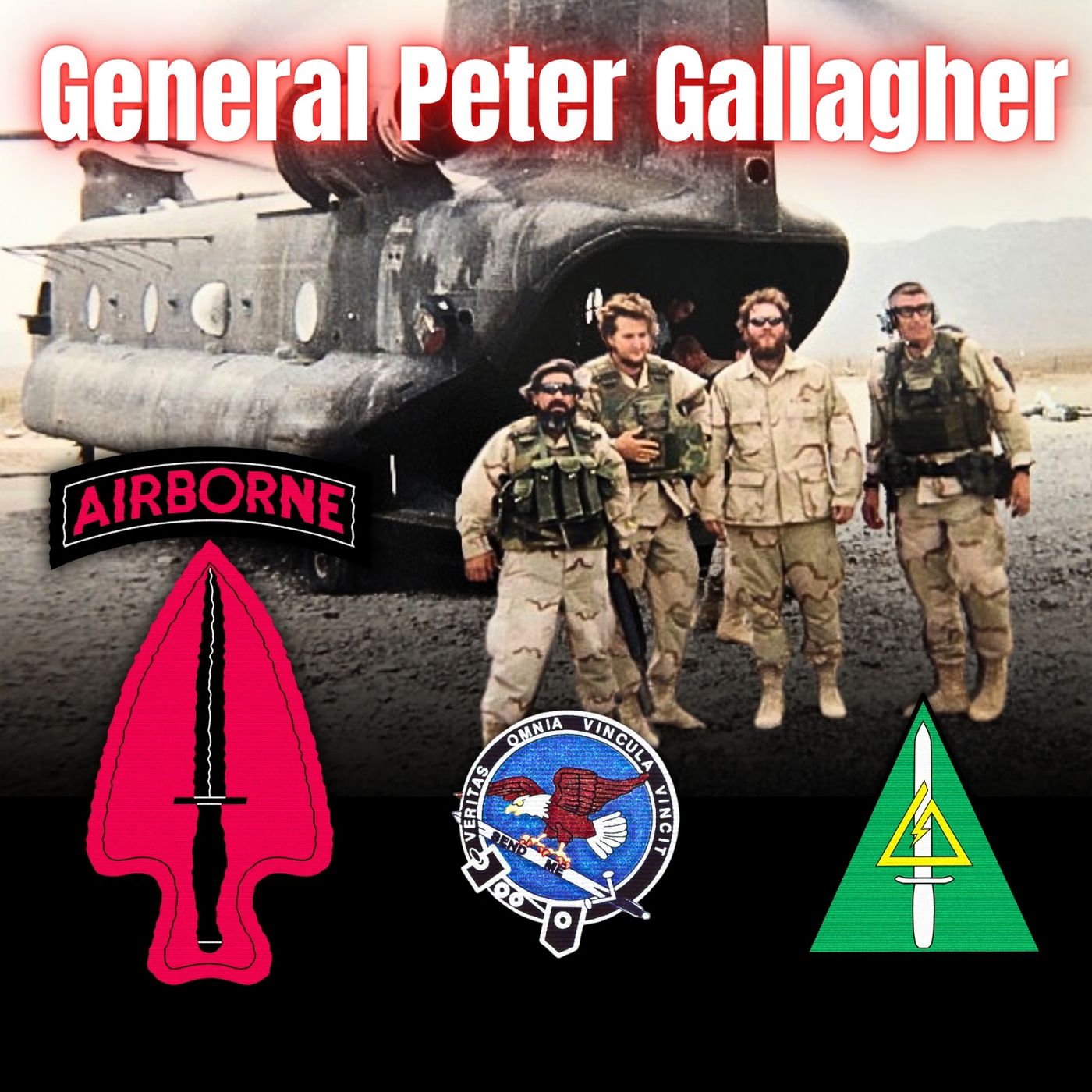
The Team House
Serving in Delta Force & TFO | Pete Gallagher | Ep. 381
02:36:28
In this episode, Major General Pete Gallagher shares his extensive military career, detailing his journey from a young boy in Kansas to a distinguished leader in the U.S. Army. He discusses his early life, the impact of his father's death, and how it...
Loading summary
Transcript127 lines
- [00:01]
Grainger Advertiser
If you're an H VAC technician and a call comes in, Grainger knows that you need a partner that helps you find the right product fast and hassle free. And you know that when the first problem of the day is a clanking blower motor, there's no need to break a sweat. With Grainger's easy to use website and product details, you're confident you'll soon have everything humming right along. Call 1-800-GRAINGER Click grainger.com or just stop by Granger for the ones who get it done. It's time for trash day nose yoga with Hefty. Let's transform stinky scenarios with a joyful scent of fabuloso. Inhale you forgot to empty your kid's lunchbox. Exhale a field of lavender. Inhale stinky leftovers. Exhale watermelon in the summer. That's the power of Hefty. Ultra strong trash bags with Fabuloso.
- [01:01]
Pete Gallagher
The Team House with your hosts Jack Murphy and David Park.
- [01:12]
Jack Murphy
Hey folks, this is episode 381 of the Team House. I'm Jack Murphy with our guest tonight is Major General retired Pete Gallagher. He served for 35 years as a signals officer, 12 of those in the special operations community, seven of those years in army special mission units. All kinds of different interesting assignments throughout the war on terror and beyond here that we're going to get into. Thanks, Pete for joining us on the show tonight.
- [01:41]
Pete Gallagher
Hey, Jack, it's my pleasure. Thanks. I want to give a shout out to Frank d'. Alessio. He obviously connected us. A good friend from ATF did some crazy things there for that task force and I'm glad he made the connection.
- [01:53]
Jack Murphy
There and folks out there can go and find Frank. On two episodes we've done in the past, Frank was a undercover ATF guy who's infiltrating Nazi motorcycle gangs. Yeah, he's got some stories, so yeah, you guys can go back in time and find those if you want.
- [02:11]
Pete Gallagher
But he also runs a pretty awesome Black river tobacco company. He runs a Cigar Lounge about 15 minutes from me. It's a, it's like my Cheers. I'm like Norm. And Frank's like, Sam, that's my Cheers.
- [02:24]
Jack Murphy
Is, is that down in, is it South Carolina?
- [02:28]
Pete Gallagher
No, it's in North Carolina. North Carolina, right off I95. So anybody out there, listen, if you're traveling down I95 and you want a really nice cigar land to come in and smoke a stick and have, have some brown water, you know, Frank's a great American and he'll take good care of you.
- [02:43]
Jack Murphy
That's awesome. So, Pete, I'm going to ask you the same question I ask everyone. Tell us a little bit about how you grew up and how that eventually took you towards military service.
- [02:53]
Pete Gallagher
Yeah. So I was born in a place called Pittsburgh, Kansas, on the southeast corner of the state, you know, right in the four state area. So you got Kansas, Missouri, Oklahoma and Arkansas right in that area. And I grew up, you know, middle class family. My dad owned a construction company. He built those metal buildings. And throughout the four state area, any industrial park would be, you know, building. You'd find a bunch of metal buildings built by Gallagher Construction Company. My mom kept the books. I was the fourth of six kids. You know, they tried to do everything they could to give us a quality of life. I mean, sent us to a Catholic school there and we had a swimming pool in our yard. But it was a, it was always leaking. It was nasty. It was miserable. By the time we got it clean in the summer, it was, summer was almost over. It was. We had a little cabin by the lake, a grand lake that was never finished. It was one of these things that was always a work in progress. My dad had a boat and it leaked all the time. So he tried to give us the great American dream. But it was interesting kind of times. But unfortunately, my two older sisters and my older brother, they had moved out of the house. I was in high school and I had two younger brothers. My dad passed away when he was 51 years old. And that was pretty significant for me because my mom was a wreck and she, you know, every year going back to the, you know, Catholic school and construction company. Every summer I'd work for my dad, right? And, and you know, I'd work with all these misfits, these wage grade misfit guys that were just, you know, rude, talking, you know, cuss. Every other word was a cuss word. Every night after, after work, they'd be pouring down the beers and I'm this teenage kid, you know, trying to work out and get ready for, for high school football, working construction in the summer. And every time I'd start the school year, I'd have to kind of decompress and get back into making sure I wasn't saying something stupid in front of Sister Mary Elephant there at the, at the Catholic school, you know what I mean? But one year in particular, it was, it was the summer of 19, actually 1980. I was getting ready to go into my senior year and July 25, you know, typically my dad would wake me up on a Monday morning and, you know, kind of chew my ass, telling me it was time to get up and get ready for work. And that morning my mom woke me up just in shock because my dad wasn't breathing and he had died in his sleep of a heart attack. And it kind of changed the game for me. I was, you know, a little bit of a, I was a little bit of a hellion. I, I, you know, raised. I wasn't the best student in the world. You know, probably B's and C's, occasional less than that. But I immediately had to grow up. I immediately had to. I'm 16, almost 17 years old. I had a kind of a shock to the system there where I really needed to grow up and take care of my mom and take care of my two younger brothers and kind of figure out life. And it kind of launched me into trying to become the adult in the house. Like I said, my mom was a wreck. And so trying to navigate that because most of my, all three of my older siblings were out of the house at the time. So that was a kind of a wake up moment for me. And then that same fall, I had a brand new high school football coach. He was just a model citizen. He was a math teacher in high school coach. And I really liked him a lot. I mean, he was, you know, I was trying to do everything I could to, you know, make sure he knew I was going to be his go to guy on the football team my senior year. But I was also pretty good at math. And so as I was going through my senior year, I knew I wanted to go to college and I knew I was, I mean, I was looking at trying to play football. I didn't have any real offers. There was a couple junior colleges that, you know, offered some scholarships, but Pitt State, Pittsburgh State University in Kansas, the Gorillas, they were an NAIA football powerhouse at the time. Now they're Division 2. But I decided to, he recommended that I walk on to Pitt State. And one of the other things, he said he had a really good buddy when he was going to college. That was ROTC cadre at Pitt State, an airborne ranger, a guy named Kurt Long. And Chuck introduced me to Kurt. And Chuck Smith was legendary football coach, but that was his first year there. But he said, you know, if I had it all to do over again, I would have, I would have got commission and I would have served at least four years. He goes, I highly recommend you join rotc, at least for the first two years. Give it A shot. You'll learn a little bit about leadership. You'll get to shoot guns, you'll get to rappel off the, you know, Russ hall. You'll get to, you know, you'll learn a little bit about leadership, but you're also going to be able to boost your gpa. And so for me that was like, okay, you know, I'll do that, I'll try that. So, you know, as a freshman going into Pitt State, you know, I had a, I had a girlfriend, ended up marrying her later. But I go into Pitt State and you know, I'm working at the library. I'm, you know, majoring in mathematics, I'm playing football. I've got a couple other part time things I'm doing. And you know, my freshman year on the football team, I, I didn't make, I didn't make the varsity I was on, but I started on the junior varsity. We had like five games. So every other year back then they would either red shirt the freshman or they would allow them to play, you know, junior varsity. So I had the opportunity to play in a few games, starting at outside linebacker there at Pitt. And it was, it was a lot of fun. And I went in through spring ball, I go through, you know, summer, and I get to the fall of my sophomore year and I feel like I'm doing pretty good. You know, had a really good off season and kind of working to get ready. And I realized, you know, a bunch of juco transfers came in that were freaking super fast, super strong and they came in and I started noticing my position on the depth chart going down instead of going up. And so after we had a scrimmage and I kind of got, I got juked by the quarterback and I missed a tackle and I got yanked out of the scrimmage and I didn't get to go back in. And then Monday, it was a scrimmage on a Saturday. Monday I go back in there and I see I've dropped two positions on the depth chart. I just started thinking about everything I was trying to balance, you know, trying to manage, trying to, you know, do okay in academics, having a girlfriend and load balancing all this stuff. And then I, you know, I was still having fun with the ROTC stuff, but I just didn't have time to do it. And so I made a decision to hang up my cleats and focus on something that I could actually maybe go pro in, right? And there's my thoughts are if I stuck it out, I may have been able to start as a senior but you never know. And I just wasn't going to waste the time and energy because it was college. Sports is like a full time job. And I don't think I was good enough. You know, I, I mean, I had great hands. I was probably big enough, but I don't know if I was fast enough. There was a lot of, a lot of speedsters coming in there. And it was just, it was a conscious decision. It was almost like one that you make it and you're, you don't want to make it, but when you make it, you know, it was the right choice. Right. And so, so I did that and I decided to kind of go all in on a military, you know, at least do four years. And that was kind of what he said, you know, go try to go active duty and do at least four years. And so, you know, I got married in 1984, ended up going to the ROTC Advanced Camp. And I didn't, I had no idea what branch I wanted to go. You know, and a lot of guys wanted to go aviation, A lot of guys wanted to go mi. A lot of guys wanted to go infantry. I didn't know what I wanted to do. I wanted to, what I thought is I was going to go in four years and I wanted something technical to go with my math degree so I could learn something and be marketable. So, you know, when I was out at Fort Riley for the Advanced ROTC Advanced Camp, you know, I learned a little bit about Signal Corps and what they do. And I was like, you know, maybe I'll go Signal Corps and see what that's all about. And so I put that down. I ended up getting my first choice. I got commissioned in 85. I still had to do my student teaching. I was, I was majoring in math and phys ed at the time and had to do student teaching. And my wife had to do her student teaching as well. So we didn't actually, you know, enter active duty until summer of 1986. And it, I went to Fort Gordon, Georgia there and it was kind of the beginning of my signal core journey.
- [11:23]
Jack Murphy
That's cool. So you had to go through. I mean, I guess I should just ask you what's like that process of becoming a signals officer. Like what is your kind of like advanced individual training and all that stuff? That, that kind of pipeline.
- [11:40]
Pete Gallagher
Yeah. So. So as an officer, every officer now they call it Bullock Basic Officer Leadership Course, but back then they called it SOBC Signal Officer Basic Course. And it's, it's almost six months it's at Fort Gordon, Georgia. And they train you on, you know, all the foundational stuff of how to be an officer, okay? And it builds on everything you get, whether you're OCS or West Point or rotc. They start building that foundation of, okay, this is what it's going to be like for you to be successful as a platoon leader or as a battalion level staff officer. These are the things you need to know, the things you need to learn. A lot of focus on pt, a lot of focus on maintenance, logistics. All the fundamentals, you know, the, the accountability, maintenance, all the readiness kind of things that a good platoon leader needs to learn and know they teach you all that, but then they really focus on the technical skills. And at the time, you know, when I was at Gordon, I got pinpointed. Everybody was either getting Korea or Germany. And then a few folks would get like Fort Huachuca, Arizona, Fort Hood or Fort Bragg. Those were like the big, you know, places where most folks were trying to go. And I didn't know much about any of those. I actually wanted to go to Fort Lewis, Washington. And I put that in as my, my first assignment, but I didn't. I wanted to go there because that's where my wife was born. And we were, you know, thinking about, you know, going out there and just seeing what it was like. But I ended up getting pinpointed to 3rd Infantry Division in Wurzburg, Germany. And so after I graduated the Signal Basic course, I was actually. My wife got pregnant with our first son. It was actually. It's interesting because his birthday is exactly nine months after my birthday. I'm not sure that's coincidental or not, but his, he was born in. When I graduated Fort Gordon, I ended up going to Wright Patterson Air Force Base for this very technical school on computer networking. And I kind of realized it was a graduate level training at the Air Force Institute of Technology. And I went from six months at Fort Gordon to six months there. And it was kind of Nerd Geek 101 kind of stuff. I mean, it was not in my wheelhouse, but I was learning about computer networks. I was learning all this stuff. And it was, it was a lot of studying and it was, it was a lot of work to learn all that technical stuff because I, you know, like I said, I was pretty good at math, but I really didn't understand all the computer networking and all that kind of stuff. But one of the things that happened is while I was there at right Pat, my first son, my oldest son was born and my wife was having some complications and I. His birth was right by my right. The, the night of his birth was the day before my computer networking final. And it was the hardest class I had. And I tried to get out of taking the final and getting it rescheduled, but the instructor was kind of a jerk and he wouldn't let me. So I ended up taking the test and I just, I bombed it. And that was like. I was doing pretty well in all the other courses, but I ended up getting like a C. Barely got a C in that class. And anyway, it was just, it was like, it was one of those things where. And the guy was a captain, he was an army captain teaching at this Air Force. But it, it was like, I will never be like that guy. You know, if one of my guys or one of my soldiers, you know, if they have a family issue, you got to let them take care of that. And you can re. You can reschedule a test, you can reschedule, you know, if somebody needs to come off a JRTC deployment or whatever, you know, allow them the opportunity to take care of their family if they need to. And so it just kind of left a mark. But, but my son was born there at Wright Pat and now, you know, actually he's serving. He's a major in the army today. But yeah, it was a, that was kind of the training path. And then I ended up going over to Germany for my. Actually before, right after. Right Pat, I ended up going to airborne school, Fort Benning. And then my wife, my, my newborn baby and I flew to Germany to begin our three year journey there in the 3rd Infantry Division. Rock of the Marne in Birchburg.
- [15:46]
Jack Murphy
Hey guys, it's your pal Jack. I just want to take a moment to tell you about the sponsor for this show, which is Stopbox. Stopbox makes this very cool box to secure your items in or your valuables or weapons. Could be a firearm knife, things that you want to keep away from kids. Opens up like so. And the way it locks is very interesting. And you can change the combination, by the way. So you have these actuators on the side. And in this case for demonstration purposes, the code is to hold down the index finger and pointer finger and then come over and there's a thumb. Hit that and it opens up. So that's the code. And this thing is proudly made in the US of A. So they keep the quality very high. It's also TSA compliant, so you can throw this in a bag and travel with it. And Stopbox also offers a range of other innovative products including their vehicle safe chamber lock and other essential gear designed to keep you prepared and protected wherever you are. For a limited time only, our listeners are getting a crazy deal. Not only do you get 10% off your entire order when you use the code house@stopboxusa.com but they are also giving you a buy one, get one free for their StopBox Pro. That's 10% off and a free Stopbox Pro when you use the code house@stopboxusa.com Discover a Better Way to balance security and readiness with Stopbox.
- [17:20]
Pete Gallagher
If you're the purchasing manager at a manufacturing plant, you know having a trusted.
- [17:25]
Jack Murphy
Partner makes all the difference.
- [17:27]
Pete Gallagher
That's why, hands down, you count on.
- [17:28]
Jack Murphy
Grainger for auto reordering. With on time restocks, your team will have the cut resistant gloves they need.
- [17:35]
Pete Gallagher
At the start of their shift and.
- [17:37]
Jack Murphy
You can end your day knowing they've got safety well in hand. Call 1-800-GRAINGER clickgrainger.com or just stop by.
- [17:45]
Pete Gallagher
Grainger for the ones who get it done.
- [17:50]
Grainger Advertiser
If you're an H VAC technician and a call comes in, Grainger knows that you need a partner that helps you find the right product fast and hassle free. And you know that when the first problem of the day is a clanking blower motor, there's no need to break a sweat. With Grainger's easy to use website and product details, you're confident you'll soon have everything humming right along. Call 1-800-GRAINGER Click grainger.com or just stop by Grainger for the ones who get it done.
- [18:20]
Jack Murphy
Reggie, I just sold my car online. Let's go, Grandpa. Wait, you did?
- [18:25]
Pete Gallagher
Yep.
- [18:26]
Jack Murphy
On Carvana. Just put in the license plate, answered a few questions, got an offer in minutes. Easier than setting up that new digital picture frame.
- [18:33]
Pete Gallagher
You don't say.
- [18:34]
Jack Murphy
Yeah, they're even picking it up tomorrow.
- [18:36]
Pete Gallagher
Talk about fast.
- [18:37]
Jack Murphy
Wow. Way to go. So about that picture frame.
- [18:41]
Pete Gallagher
Ah, forget about it.
- [18:41]
Jack Murphy
Until Carvana makes one, I'm not interested.
- [18:44]
Grainger Advertiser
Car selling made easy on Carvana.
- [18:48]
Listener/Viewer Questioner
Pick up.
- [18:49]
Grainger Advertiser
These may apply.
- [18:50]
Jack Murphy
I'd like to ask a little bit about army signals in general. Like for people out there, including myself, quite frankly, that don't necessarily understand all the ins and outs of it is your job as a signals officer is primarily helping the unit communicate internally or helping units communicate with one another? What's sort of like the. The way that's framed out?
- [19:11]
Pete Gallagher
Yeah. So. So it's so every unit has to be able to move, shoot and communicate and every infantry unit every even an A team in Special Forces has, you know, 18 echoes communicators on the team. There are specially trained experts that know, understand, you know, have the expertise and the technical, know how to be able to install, operate and maintain the communication systems that that unit requires. And, and the higher you are on echelon, you know, so an infantry platoon may have a radio or two. Now they have a lot of, now they have Android devices and, and all kinds of comps. But back in the day they may have a radio and they'd be up on one single radio. As you go up the higher echelons, you know, company, battalion, brigade, there's more coordination and synchronization required. Not only down and in with your units, but with adjacent units and higher headquarters. So there will be, you know, requirements for communications at command posts where decisions are made. And like the Special Ops, it would be a forward operating base, for example, where you'd have additional communications. It might be satellite reach back or big HF systems that allow you to communicate, you know, with, you know, beyond line of sight to higher headquarters and things like that. And so, so it's, it's really. You're like the phone company for the, for the army, you know, you know what I mean? It's like you're like the Verizon or the AT&T for the army and that's. And you got to ensure that, you know, I mean, obviously the enemy gets a vote and you know, if they have electronic warfare capability and all that, you have to have what's called a PACE plan. The ability to have a primary alternate contingency and emergency. You have multiple options so commanders can command because, you know, decisions don't get disseminated down to the lowest tactical level if you don't have good communications.
- [20:58]
Jack Murphy
All right, and then you went to the advanced course for special operations signals.
- [21:08]
Pete Gallagher
Yeah, yeah. So I spent, I felt like I was a pretty damn good signal officer in Germany. You know, we spent a lot of time, you know, supporting what was called the Reforger exercise return of forces to Germany as an infantry division. We had, we had our, you know, tactical assembly areas. We would have these things called lariat advances, which were alerts. There was a constant state of readiness during the Cold War. And at this time, you know, President Reagan had just actually when I got to Germany, President Reagan was still president. While I was In Germany, George H.W. bush took over. And then in 1989, just cause happened and I was over in Germany fighting the Cold War. I was concerned about Russia and ussr, The Soviet Union. And we had our GDP locations, we were training, we were doing maintenance. We were doing all the stuff that every good unit does. And I was really. I felt like I was a good platoon leader, a really good company xo and I was learning how to be a good signal officer. And I was pretty excited about, you know, what I was learning. But. But I also realized that, you know, okay, you have this thing called just cause. And I heard about all the units that went, and none of them were coming out of Germany. And then when I wrapped up that assignment, just as my wife and I were, you know, in our. We had another son born in. While we were in Germany. He's now a Special Ops communicator over in that third group. But he. He was born when we were in Germany. And as our family was making its way back to the. To the Signal Officer advanced course at Fort Gordon. This was in 1990. Saddam invades Kuwait and I'm leaving 3rd Infantry Division. And there were some guys that had the opportunity to get deployed to Operation Desert Shield. I get to the Signal Advanced course and I'm watching it on tv, and units from Bragg are going. I mean, as you know, there was a lot of different units that ended up going to Desert Shield and Desert Storm. One of the guys I met and we became really good friends at the Signal Advanced Course had just came from this Special ops signal battalion that had just stood up in 1986 called the 112. And he had a certain swagger about him, and he had a certain kind of, you know, mindset and focus. And we immediately kind of became really good friends at the Signal Advanced Course. And he started telling me about this unit at Bragg called the 112 special op signal Battalion. And so the more I heard about it, the more intrigued I was. And it was. And so for my class, there was one slot for the 112 and I wanted it. And I told Signal Branch that I wanted it. And then I went up to Fort Bragg with him. I interviewed with the battalion commander, interviewed with the Battalion S3 and the XO and I told them how bad I wanted to be in that unit. And so I ended up getting the slot. But while we're at the Signal Advanced course, I was supposed to do a couple follow on courses. The battalion commander calls me and says, hey, we're getting ready to deploy to Desert Storm or Desert Shield. And it was right before Desert Storm started. He goes, I need you to cancel your follow on course. I need you to come into the. I want to make my S1 and then make you a company commander. So I was like, absolutely. So, you know, I. You know, as a brand new captain, every captain wants to command a company at least, or an oda, right? You want. You want that, that green tab leadership position. And so, you know, for me, it's like, hell, yeah. I get to command in a special ops signal battalion. I'm in. Yeah. So I was like, you know, we couldn't leave Fort Gordon fast enough to get to Fort Bragg. And then I get to Fort Bragg and most of the unit is deployed. And I become the S1, the personnel officer. And they come back and my first duty is to run the award ceremony for all the war heroes that had just come back. Right. So you got this big. And I was like, you know, so I was like, okay, I missed just cause I miss Desert Shield Desert. And I was like, will my day ever come? And I really wasn't worried about it, but it's just one of those things I wanted to get to brag, I wanted to, you know, be part of something. And it was. But I learned a lot. And I had the opportunity to command Alpha Company. We called it Alpha Pride. And the focus was proud of who you are, what you do, and who you represent. And I took command of the company that it was probably the weakest company in the battalion. And that was an opportunity for me. Like on day one, actually. It was actually on day one, I had a chance to make an impact. There's this thing called gmf, which I think it stands for Ground Mobile Force or something, but they manage all the satellite constellations out there. And so right after the change of command as a company, brand new company commander, one of my platoon leaders comes up to me and we had this ongoing exercise supporting usasak, US Army Special Operations Command. It was a pretty high visibility exercise. And we had what was called an 85 van, which is satellite hub van, right outside of the USASOC headquarters. And they were running comms into a bunch of the leaders in there. Well, we got notified from gmf, which they're like the big brother of all satellite operations. And they were, you don't want to screw up. And so what happens? They said, we tracked off the bird. They can't reach anybody in the van. They don't know what the heck's going on. So as soon as my kind of welcome speech to the battalion or to the company was over, I drive over to the USASAG headquarters and I see one of our specialists walking up with some bolt cutters. And I'm like, specialist Blanco, what are you doing? He goes, I got to open the van and get us back on the satellite. I don't know what the hell. And then I see this guy named Sergeant Lewis walking up with a Burger King bag. He's got a Burger King bag and he's like, you know, jawjacking, just kind of loaf. I'm like, what the hell? I said, Sergeant Lewis? He goes, yeah, sir. I had to go get something to eat. I'm like, okay, you are no longer the team chief for this, Blanca. You are now in charge of this team. And Sergeant Lewis, I need you to see the, see the first sergeant. When you go back to the company area, I need you to see the first sergeant. And he was one of these weak NCOs. And what I noticed right then is number one I had to make. It was a leadership opportunity on day one. But it was also a guy like Blancit saw that I was willing to make a decision and take away the burden of him having to work for a piece of crap nco, you know what I mean? And this nco and he, he was, he was a weak link and it was pretty obvious. And so Blanca became a team chief and did, did a really good job. But for me it was just, it was kind of like day one in that unit. It was kind of an exciting opportunity, but we had, you know, several different exercises and events. We did a big exercise supporting soccer over in Auchenbury, England and all across Europe. We had teams all over to include up in Norway. It was a great event. We did that. We were getting ready to plan for a Cobra Gold over in Thailand. I had an opportunity to go over with, to do the pre deployment site survey with our, at the time, our battalion command sergeant major. His name was Ronnie Beaver McCann. I don't know if you ever met Beaver. He was a first group guy, but he was the 112 command sergeant major and we were getting ready for all that. And then I was on a JRTC exercise, actually JRT, I believe we were at Fort Chaffee, Arkansas at the time, not Fort Polk, Louisiana on a JRTC exercise with 7th Group and Sauk South. And I get a call from our battalion xo and he said, hey, how much do you know about the Special Mission Unit across post there? I said, well, I mean, I've driven by the compound a lot. I don't really know anybody that works there. I don't know a whole lot about it. He goes, well, they need a captain. They're Standing up a new tactical communications troop and they need a captain for this job. And, and you know, the battalion commander is looking at one guy, but he goes, I think you'd be perfect for the job. Are you interested? And I said, yeah, hell yeah, I'm interested. It was just kind of like, so you go from conventional 3rd Infantry Division to White Sof and now it's an opportunity to go into a whole nother part of sof. And so I ended up, you know, trying out and it wasn't, you know, I didn't have to do the long walk. I, I wasn't going to, you know, West Virginia selection and doing all the stuff that, that an operator in that unit goes through. But you go through a lot of the other stuff you eat, the PT test, the psych eval, the background checks, you know, all the, you know, the, everything that goes into it. And then you go through this interboard interview board, which was pretty brutal, but it was, it was, you know, when it was all said and done, you get out of the board and you're like, holy, that was miserable. And then the Sergeant Major of Signal Squadron comes out. He goes, well, how do you think you did? I said, I don't know how I did. He goes, well, you did great. The guys love you. I'm like, awesome. So I go back to the 112 and I got to kind of finish up my time. I'm the assistant three after my company command. And while I'm, while I know I'm going from 112 signal over to the special Mission Unit, they are doing rehearsals for operations in Somalia. And so I get my badge, I get a lot of my kit, I get my wall lockers, I can come and go and go into Signal Squadron. They didn't in process me completely, but they gave me the signal. Squadron commander wanted me to have access and come over and meet with the guys when I could. And he wanted me to be a role player for all the train ups for Somalia. And so I go out there, you know, while I'm still in the 112th, while they're prepping for, you know, operations in Somalia, I go out to the compound and they're doing all these rehearsals with The Rangers with 160th Special Ops Aviation Regiment. And I'm watching these rehearsals happen with all these aviation assets, all these different units and everything that's going on, the number of role players and what they put into their training scenarios. And I'm like, holy. They spent more, they spent more training budget on this One rehearsal than we probably were able to spend in the. You know, I mean, it was just. It was amazing. I knew that this was okay. This is a different kind of place. This is a pretty significant. And before I signed into the unit, I actually went on a jrx, a joint readiness exercise started out at Fort Bliss, and then we went out to the Nevada Test Site, and it was with one of the squadrons in the Unit B squadron. But the day we deployed for the jrx, you know, I went into the Signal Squadron team rooms, and I go in. I think it's in August of 1993. And I, you know, I'm starting to get to know the guys and I get to go out on this exercise with. With one of the. One of the squadrons, but I still got to go back to the 112 and finish my job. And so I go back and I. My last day in the 112 signal battalion was a Monday morning. It was October 4, 1993. And so, you know, it's my last day. I'm getting ready to do final out, take all my paperwork, 201, file everything and go from the regular system to the. What's called the Dasser, which is, you know, where all the special mission units files. So I have to basically sign out on the personnel side in one unit, drive over across post to the new unit. And when I get to this unit, everything was different because every time I'd been in the team rooms, you know, it's typical team rooms. I mean, like team house, right? I mean, it's like a locker room. It's. It's, you know, it's. It's alpha males doing what alpha males do. And the, you know, camaraderie, the teamwork, the banter, none of that was happening on the 4th of October. I walked in there, everybody was laser focused. Everybody was moving with the purpose. There were guys in there, you know, packing their stuff, rolling stuff, getting it packed up. Nobody was saying everybody had total focus, mindset. And like, it was. It was all on. It was. Mission was on, and I hadn't seen the news. I mean, I got up, I did pt, took a shower. You signed out and drove across post. And one of the other captains in the unit is like. His name's John Hildebrand. He's. He's like. I said, john, what the hell's going on? Why is everybody so. What's going on? Because you haven't seen the news, have you? I said, no. He goes, yeah, let's walk in here. So we go into the Squadron conference room. They have two TVs on. One was on Fox, one was on CNN. And we walk in and I see the Somali kid bouncing on the rotor blade, you know, you remember that scene?
- [33:30]
Jack Murphy
Yep.
- [33:31]
Pete Gallagher
It was on the news and you just. It was all over, it was all over the news. And I was like, holy shit. Okay. You know, because I saw those guys on the day I flew out to the jrx, everybody from Signal Squadron that was flying to Somalia, they were going out one way, we were going the other. And so I. And it was like, wow. And this was probably around 9:30 in the morning. So I'm trying to sign into the unit through their Personnel Services troop, which is like their S1 or their, their HR, human resources entity. Those guys are dealing with mass casualty. Yeah, they don't have time to in process this new captain, you know what I mean? So I'm just like, I'm just like watching and learning and saying, holy crap, this is. These guys, they'll get to me when they can get to me. And I remember the personnel service, Troop Sergeant Major Angie Whitaker comes up to me and she said, hey, sir, I'm so sorry, but I said, you guys do what you got to do. And so I go down, back down to the Signal Squadron. And there was a legendary retired warrant officer, a guy named Mr. Z. Paul Ziesman, he was the deputy commander of Signal Squadron. He was up at the meeting in what's called the Beckwith Rooms, named after Charlie Beckwith. This is where the room where like, it's a command conference room basically. And he comes back down from the Beckwith Room and he goes, all right, a squadron is going to deploy tonight. The DCO is going with them. John, he's talking to Hildebrandt, the other captain. He goes, you're going to go over with a squadron, Pete. You are going to be a Casualty Assistance Officer. They've identified you to be a Casualty Assistance Officer for a guy named Randy Shugart. He's missing in action right now. He's probably in escape and evasion mode. Hopefully we can roll him, you know, pick him up. But right now he's missing in action. But I need you to go to a meeting at 1 o' clock this afternoon. And like, roger that. Whatever I got to do, you know. And so that moment, that first day in that unit with that responsibility and knowing what happened, and I think everybody knows what happened afterwards. If you've seen Black Hawk down or if you've read the book, I mean, Randy Shugart and Gary Gordon, you Know, both of the guys that went in to, you know, and gave their life trying to save the pilot, Mike Durant, at the. At the second crash site. I mean, you know, they, they definitely, they were put in for and definitely deserve the Medal of Honor. But to actually be selected for a duty like that, um, on day one, it was like, for me, it was like nothing else mattered at that point. Yeah, I mean, I knew I needed to learn how to be a, you know, a communicator in the unit, but I needed to focus on that and I needed to, you know, and that's. That's what Mr. Z said. He goes, this is no fail, man. This is. This is your job. Everything else can wait, but you gotta, you know, do everything you can. And it was a couple days, I think, before, you know, they got. They identified the remains and they notified, you know, Stephanie Shugart, and. And I, I was allowed. And I got brought to her house to meet her and help her and just what an amazing, amazing person. I mean, and. And Randy's parents, Herb and Lois, they were, you know, just salt of the earth dairy farmers from the great state of Pennsylvania. And just, I mean, just to be able to just help this family navigate that, you know, this. All the process it goes with, you know, losing a loved one in combat and everything else, especially with like a Medal of Honor recipient, everything that goes with it, because there's ceremonies that, I mean, it was. It was a. Interesting time for sure. And one of the things that, you know, as we were going through it, there was a guy, one of the sergeant majors in the unit. His name was Craig Maxim. I don't know if you've ever heard of Craig or met Craig, but he was this wirely wiry, you know, just big old bushy mustache. He was an operator's operator. He was. He was the man. But Craig led every one of. He went on every single notification to every family member of the. The guys from the unit that were killed. But he also led every one of the color details. And they were immaculate, flawless. He had, you know, all. I mean, there was a combination. We had a couple guys from Signal Squadron. They're part of the color detail, but they. They did every single service, you know, memorial service. But when I was getting ready for Randy's funeral, which was in Carlisle Barracks, Pennsylvania, or not it wasn't at Carlisle Barracks, but it was in Carlisle, Pennsylvania. But when a former unit member was actually going to the war College, this time a Colonel Ike Slaughter. So he was like, magnificent. He was like one of Those guys that, you know, he, he was helping me kind of like my, almost like my advanced party where he was on the ground in, in Carlisle and he could help me kind of orchestrate stuff. But if you can imagine the number of people that were coming in from all different locations and trying to orchestrate all this and, you know, planes, trains and Automobiles, you know, VIPs coming from all over. I mean, General Downing, you know, just all these different cats and coming from different places, you know, and I was focused on the family, but you have all these heavy hitters and you didn't want. I couldn't have any hiccups, you know what I mean? So I'm laying out the plan. I go into Sergeant Major Maxim's office and I'm kind of laying out the entire plan. Boom, boom, boom. You know, walking it through and trying to make sure I didn't miss a fricking beat, you know, because again, before that, before Randy, before Randy's funeral, we had the memorial service. When C squadron came back, we had the memorial service at JFK Chapel there on Fort Bragg. And Wayne Downing, I remember him telling me he was the four star commander at SOCOM at the time. He's like, hey, if you run in, he goes, number one, this duty is sacred. And you do not let anybody tell you, no, do not. If you run into a single brick wall, I want you to call me directly. Do not. I didn't. There was no way in hell I was going to call him. I was just not going to let. I was going to breach any brick wall. But it was one of these things where I knew the pressure was on. I could not screw this up. I mean, I could. There's probably things I did screw up when I was in that unit, but that was one thing I was making sure. There's no way in hell I can screw this up. So anyways, I'm getting ready for Randy's funeral and trying to, you know, again, take care of the family and all the, all the people flying in and everything, laying it out for Craig Maximum. He's like, damn, sir, you got this wired tight. He goes, you consider being an operator? And that was like the greatest compliment because I knew this guy was legendary. And I was like, sorry, Major, I'm a, I'm a communicator. I think the unit needs communicators. I said, that's, that's where I can best serve the unit. But I appreciate the, the vote of confidence. And, you know, I, I thought about it, but I, I felt I knew my place, you know what I mean? And, and I knew, you know, what I brought to the organization and, but it was, it was one of those really significant compliments at the time. But yeah, that was kind of my, I guess between the white soft and the 112th and then joining that unit as you know, a fairly young captain. I think I was about 93. I had just turned 30 at the time.
- [40:48]
Listener/Viewer Questioner
So if you're in the market for a new mattress, you've probably seen all the brands out there vying for your attention. Big names, splashy ads, all promising the same thing. But here's the only brand does it right. It's Ghostbed. Ghostbed was created and is still run by manufacturing experts with more than 20 years of mattress making experience. They know the craft and they know how to build a bed that actually lasts. So how do they offer premium mattresses for up to 50% off less than the competition? It's not hype, it's smart logistics. As a family owned company, that means there's no board of investors to answer to. It's just folks working hard selling, selling mattresses. These are the true manufacturing pros. And the result is an exceptional cooling and comfort at a price that won't keep you up at night. Every Ghostbed mattress includes proven cooling materials backed by a 20 to 25 year warranty. You also get 100 one night sleep trial with free returns if the mattress doesn't work for you. And fast free shipping. Most orders arrive in two to five days. Right now, as a team house listener, you can get 25% off site wide. For a limited time you can just go to ghostbed.com house and use the promo code house at checkout. That's ghostbed.com house promo code house. Upgrade your sleep with Ghostbed, the makers of the coolest beds in the world. Some exclusions apply. See site for details. I want to thank Ghostbed so much for continuously supporting us. It's been going on a year almost so I really appreciate that. I hope you guys. If you're in the, if you're in the market for mattresses or pillows or bedding, check out Ghostbed. You can go to ghostbed.com house and get 25% off right now. Love you and love Ghostbed. Thanks guys.
- [42:30]
Grainger Advertiser
Take an AMEX card with you on your morning coffee run and earn cash back on a weekend trip. Earn miles. See if you pre qualify for an American Express card with no impact on your credit score. Learn more@americanexpress.com check for offers your credit score may be impacted. If you accept a card, terms apply.
- [42:45]
Jack Murphy
And I mean, that's a bit of a baptism by fire arriving to the unit under those circumstances.
- [42:51]
Pete Gallagher
Yeah, absolutely.
- [42:53]
Jack Murphy
How was the rest of your time there helping to establish this joint communicator unit or troop?
- [43:00]
Pete Gallagher
Well, so, so the tactical communications troop, it consisted of running the base station for the unit, the reach back, basically the, the, you know, the, the lifeline for everybody deployed was the base station. So we had operators in the base station, you know, but we also ran. We had a deployable team that ran the unit's command post every time it would deploy. They were the forward communicators. And then we had communicators with every saber squadron. So every saber squadron at the time had two communicators that had to go through the operator training course and get. And be able to pass. Oh, wow, OTC they went through. They were direct support communicators for the saber squadrons. Now I think they have, you know, a lot more than two, but back then it was only two. You had a senior and a junior and they were. It's kind of like an ODA but. But on steroids a little bit where a saber squadron had a couple communicators there and then. But all of those worked for the TACCOM troop commander. And so I didn't go to otc, but I got to go to a lot of different training events that were related to otc. So my first year in the, in the unit, I went to they, the selection and training squadron, I guess. And you've had like Paul Howell on here before. Some of the best operators teach S T. They teach operator training course, they run selection, but they ran a combat skills course for, for support folks like myself, communicators, medics and others. It was only a couple weeks, but it was an abbreviated kind of basic focus on the fundamentals, basic rifle marksmanship, all the kind of PT tests you did, all the stuff that. It was like a abbreviated condensed otc. I mean, we did ladders, fast rope, we rappelled off the tower, we ran the O course, we did cqb. I mean, everything that they thought we might need to do or a support guide might have to do. They tried to take all the lessons from Somalia and say, hey, look, never again are we going to, you know, have to rely on support guys to go outside the wire and not have them, you know, trained and ready on the basics. And so it was pretty awesome to go through that because I will tell you, on day one, you know, my basic Rifle marksmanship, my target. It looked like a freaking shotgun blast. But by the end of the two weeks when we had the long gun competition, I kind of went from worst to first. So it was kind of cool. A lot of the guys in the squadron made fun of me, but it was one of those things. I mean, I wasn't. I wasn't like a laser, you know, a dead eye shooter. But by the time those guys got done with me, that was a pretty damn good shot. And because they know what the hell they're doing and they focus on the fundamentals and, you know, but so I got to go through that. We went through live agent training, you know, where. Went to Fort McClellan, Alabama with the OTC course. I did live agent training, did a lot of role playing for the OTC class. As they were going through all the different scenarios. I spent a lot of time, time, you know, helping S T where they would always, you know, request volunteers to be role players. And then ended up. Going to HALO school in. In June of. With that OTC class that was going through. I got to go to HALO school with them out at Marana in Arizona, which was pretty cool. But that first year we did a. My first real exercise with the unit was an exercise called hadrian's wall with 22 SAS over in Scotland and England. And it was pretty awesome. I mean, it was my first time going out as the senior, you know, representing the squadron. And we were out there with a squadron. It was in December, and it was. I think it was at the. While we were at that exercise, we had members of the unit that were down in Colombia. We got notified that Pablo Escobar had been killed. But there was still a lot going on with exercise or operations in Colombia. And so, you know, I spent the time over with the Tutu sas. Great exercise. Kind of a little bit of a suck fest because you just try to outdo each other on the training. It was pretty cold, it was rainy. It was somewhat miserable. But when it was all said and done, we went back to Hereford, you know, had a great after action review and, you know, drink some suds together in a place. I don't remember the name of the bar, but they called it the Sticky Carpet. But it was. It was just good bonding and camaraderie. And they had a similar unit, the 264th signals organization, that some of the guys there, we became pretty good friends. And then later on I ran into some of them when I was, you know, the JCU commander after 9 11. But it was it was a good first year. I spent easter Sunday in 1994 in. In Bogota, Colombia, you know, going to visit our guys that were. That were there. That was an interesting time. In the summer of 94, we were planning very. I mean, very heavily for Haiti. Haiti. Yep. And, you know, I was the lead planner for Haiti, as you kind of know what happened there. I mean, you know, they aborted the mission. I mean, we had guys at the ready and. But I did have communicators from my team with Colin Powell on the ground. Colin Powell, Sam Nunn, and Jimmy Carter. I had a. One of our signal squadron communicators was there, and we had another one up at the White House. I mean, that. That's how, you know. And I. I mean, they handpicked this unit to send communicators. So what I learned there, I mean, just, you know, going through. I mean, just all the different. Every quarter you'd run a joint readiness exercise, every. And there was always training events where the squadrons are doing environmental training, whether it's winter training, jungle training, you know, they would do building training in urban areas. There was always a need to participate in those types of events and learn and do everything you can to understand what it takes for the operator on the X and everything that they need to have all the enablers to. To interconnect them. So I learned how important it was not only for the assault net, the fires net, emergency resupply, casa vac, you know, all the kinds of things where they need a lifeline and they need something now. There's no time to blink. I mean, you got to have the ability to. To connect those guys. And so I spent three years in that unit. I wanted. As I was leaving, you know, the. I went through two different signal squadron commanders. I wanted to come back more than anything and. And be the signal squadron commander. I ended up leaving that unit and going to Command and General Staff College at Fort Leavenworth, which was pretty close to where I grew up. Spent a year there before I ended up going out to Hawaii.
- [49:50]
Jack Murphy
And what was the assignment out in Hawaii?
- [49:55]
Pete Gallagher
So I was in the 25th Infantry Division. It was interesting because I was at a. Before I left Fort Bragg, I want. I knew I wanted to come back to Fort Bragg because my wife had a teaching job, our kids. Our kids had friends, and I had. We had a house. We had bought a house. It was like, you know, there's a signal brigade at Fort Bragg. There was a signal battalion in the 82nd. And my goal was to get back to a conventional signal unit, buy a little bit of time, and then get back to signal squadron. That's what I wanted, to get back to Leavenworth, come back to bragging and find my way back into signal squadron. But when I get out to Fort Leavenworth at CGSC because my records were on the Dasser or they were hidden from the normal system, when signal branch came out to interview us and decide where we wanted to go, the branch assignment officer said, hey, we want to get you what's called branch qualified, which means via Battalion S3 or an XO or Brigade S6, and that even if it means going back to Fort Bragg. So I was trying to find a job back at Fort Bragg. When I get out to Leavenworth, a new lieutenant colonel assignment officer and the major's assignment officer were interviewing all the majors from the Signal Corps. It was branch day and you're meeting with your assignment officer. And they didn't have my orbit and they had everybody else's orb in there. And I said, well, I have a copy of it. They didn't have it because it wasn't, I guess because I had just left the unit, it wasn't in the system. And so she looks at my orb, she says, germany, Fort Bragg. You spent six years at Fort Bragg. You're to go on overseas. I said, well, wait a minute, I've been overseas. I was in Germany. I said, and the guy sitting next to her, I said, I can't remember his name, but I said, he told me I got to get branch. I can get branch qualified even if it means going back to Fort Bragg. I've already got units that want me to come back. And she goes, well, it's not fair for you to do back to back assignments in homestead at Fort Bragg and just. Oh, no. She said, it's not fair for you to just hang out at Fort Bragg while other people are doing, you know, back to back tours in Korea. I said, ma', am, have you ever been stationed at Fort Bragg? I said, nobody just hangs out at Fort Bragg. I say, in the units of Fort Bragg, they're on mission. They're on every deployment. You've got the units with the highest level of priority. I said, you don't just hang out at Fort Bragg. I said, I want to go to Fort Bragg for the mission. It's not to hang out in Fayetteville. But she goes, well, okay, but if you did have to go overseas, where would you want to go? And I said, it's like a stump to chump question. I said, okay, maybe Hawaii, Alaska, Italy, you know, I just kind of threw things out. There she was, and she had just come from Alaska. She goes, why Alaska? Why not Saudi Arabia? I'm like, what? And so I'm like, holy shit. This didn't go as planned. So I go home and I talk to my wife. I'm like, I might be going to Saudi Arabia. I don't understand.
- [52:56]
Jack Murphy
They don't got no beer in Saudi Arabia. Like, hell with that. I'm going to.
- [53:00]
Pete Gallagher
This did not go as planned. Plan. But then Scotty Miller, who was in the unit with me, was my next. It was lived right across the street from me at Leavenworth. We actually became really good friends while we were at CGSC together. He was, as, you know, he was the assault force commander on the ground there in Somalia, and obviously got to know him pretty well when I was working with Randy's family there. But Scott. Scott introduced me to the division commander of the 25th Infantry Division at Leavenworth. So I talked to him, and, you know, it was basically over a beer at a place called the Havana Club there on Fort Leavenworth. It was almost like an interview. And. And so I ended up getting the opportunity to go serve in the 25th ID. So when I left CGSC, I go to 25th Infantry Division and I. My first job is as the division. It's called the Adso Assistant Division Signal Officer. Now they call it the Deputy G6, but it's a. It's a majors billet. You're on the division staff and, you know, you do what division staff officers do. A lot of planning, a lot of, you know, every. All the different exercises. And in 25th at the time, they have all these different exercises all across the Pacific. You know, Balacatan in the Philippines you have Cobra Gold, and in Thailand, you have JRTC rotations where one of the maneuver brigades would rotate back to Fort Polk and go through jrtc. So you're always kind of planning, you know, division activities and events there. So I spent a year doing that, and then I became the battalion S3 at the 125th Signal Battalion. And the great part about that is the battalion commander was a guy named Tom Trowbridge who had spent time in the unit. He was in the unit before I was. He was a legendary communicator as well. He was. He spent. He was a Ranger Regimentals S6. We spent time in the Ranger Regiment. And he was the JCU commander, the Joint Communications Commander at jsoc. And so he and I had a history and. And we had a lot of, you know, had walked some of the same ground previously. And I got to be his S3 for a year, which is really his operations officer, as you know. And. And so, you know, it's conventional communications for a conventional S for a conventional division in the Pacific. But. But I learned a lot, and it was a great opportunity. And then I stuck around one more year to be. I was trying to work my timing again to try to get back to Bragg. And so I stuck around one more year to be what's called the Secretary of the General Staff, working for two different commanding generals. A guy named Tom Hill who ended up going to First Corps, and then a guy named Kip Ward who came in after him. So as a Secretary General Staff, it's a thankless job, really. You run the staff for the general, the aides, all the. You learn how a division headquarters runs. But it wasn't a job I necessarily wanted, but it was a job the CG wanted me to do, so I did it. But while I was in that job, I got. I got to go interview and put my name in the hat for JCU and I. So I went and interviewed an interview with. At the time, lieutenant or no, it was Major General Doug Brown. Doug Brown was a former 1 60th guy, ended up being the four star at SOCOM. But General Brown selected me to be the next JCU commander. And while I'm working for General Hill, he gets announced to go to I Corps, the first Corps out at Fort Lewis. So he's getting promoted to three star. And he and Doug Brown are friends. They've known each other from days in the 101st together, and they've known each other for a long time. And General Hill wanted me to be his aide and go, like, leave Hawaii and go to Fort Fort Lewis. But I had just been selected for jcu, and I was like, there's no freaking way I want to go be his aide. I've been the sts for a year. But I was like. I said, sir, I think it would be an honor to be your aide, but it would not be the honorable thing to do. I looked General Brown in the eye and told him I wanted to be his JCU commander, and I am not. I want to be the JCU commander. That's what I want to do. And I want to command. So I had the opportunity. We ended up pulling our kids out of school a little bit early in 2000, and I took command on our anniversary on the 12th of May in 2000. And at the time everything was focused on the Balkans. A lot of work going on inside the JSOC community. It was all about the Balkans and, and you know, Tuzla, all across Bosnia, you know, Sarajevo, I mean, they were, they were hunting the, you know, the war criminals. Piffwick, I think is what they called the operations. So, you know, again, one of my first trips when I got to JCU was, was into. To see what we were doing on the ground there in Bosnia. But we had a really awesome training cycle. You know, the, the Joint Operational Readiness training cycle for the JSOC units inside jcu. We have these named exercises that we run every quarter. And we do everything from, you know, basic establishment of the isb, the forward staging base, mission support sites, you know, putting your communicators through the drills, just battle drill after battle drill. We had communicators that would go up and work in the national capital region with, at the FBI headquarters for what's called the emergency support teams, where those guys were on a short string. They had to be wheels up within an hour and a half. So we would constantly, every month we would, we would do a rotation up there. We did, we had, we would do shipboard training where we would establish a float staging bases on a variety of Navy vessels. We would do that once a quarter. I got to do my first quarterly training brief to General Brown on the USS Teddy Roosevelt, which was pretty awesome. And, but I will tell you, we had, you know, and we had a joint readiness exercise out in Guam and in the Pacific where we were on the USS Belleau Wood. And it was miserable. We couldn't get comps and I thought I was going to get fired. It was, it was, it was, it was one of those things where I thought I was gonna, I thought I was gonna lose my job because we just could not. There was, there was problems with the satellite antennas on the actual ship and we had difficulty communicating where the JSOC commander had to leave the vessel because he didn't have reliable comms. And I was frustrated as hell because I felt like I let him down. But you know, we hot washed it. We figured it out and you know, I mean, the unit had succeeded so many times before that. And after that he realized that there was a problem and it was beyond what our operators were able to fix at the time. But so while we're going through all that, we have a change of command and Dale Daly takes over for, for Doug Brown and Daly's the new jsoc. Commander. And he starts, stands up this capability called Advanced Force Operations afo. And so they pick former squadron commander over at the unit Toleda, a guy named Scotty Miller we've talked about before, again, the same guy that was on the ground in Somalia. So Scott's a personal friend of mine. We're neighbors, we live in, you know, in the same neighborhood there in Pine Valley in North Carolina. We, you know, we would drink beer and share stories together and all that. So Scott's standing up this. And I hand pick some of my very best communicators inside jcu, which is saying a lot because in jcu, they, they are considered the best communicators in the department of, I guess now Department of War. And so best of all the services. But I hand picked three or four guys, actually three guys that can function in this low vis environment, that have the maturity, have the ability to help Miller stand up, this capability. And so we go through another joint readiness exercise out at Nellis Air Force Base, kind of run in the traps and, and getting our muscle memory and improving what we do. But then In September of 2001, we're on this big exercise. It's the first real theater wide AFO joint, AFO focused joint readiness exercise. And so we have folks spread out from England, Germany, Hungary. And because we still had stuff going on in the Balkans, we had an operating base in Tuzla. We were flying from the UK in a C17 with. I was, I was actually with the JSOC J3 and a bunch of the battle staff that were flying in to establish a staging base in Tuzla. When across the data net we get word that, you know, the World Trade center and the Pentagon had been, you know, airplanes had crashed into the World Trade center in the Pentagon and the communicator watching the data net force holds us up. It's like this doesn't make sense because it hadn't, it was, you know, we were, it was everything. Almost all the traffic up to that point was exercise traffic. Right, right. And we get this and it's like, holy.
- [62:09]
Jack Murphy
Does it come across like this is. This is not a drill, you know, not part of.
- [62:13]
Pete Gallagher
Yeah, yeah, I didn't say that. It just, but it was like, it, you know, it didn't say exercise and it was just, it was like, bam. And so I get it and I give it to the J3. He's like, Holy. You know, I'm just like. And so we're sitting there and we land, we land on the ground at the Airfield in Tuzla. As the ramp comes down, I remember a master sergeant Wayne Haddad, he was the jock nco. He walks up, meets us on the ramp and basically just told us in. He was like, hey, the exercise has been canceled. You know, we're going into crisis action planning. So it was a few days before we could actually leave and get back on, on U. S. Soil. But yeah, it was another kind of monumental moment there as, as the commander of DoD's finest communicators, I guess now Department of war's finest communicators.
- [62:58]
Jack Murphy
Oh, and what was kind of like the, the tone, I guess when you got back to the states, because I mean now you're planning for a real war, right?
- [63:08]
Pete Gallagher
Oh yeah, yeah. So, so we get back and it's, you know, typically you're on a stream for a four hour sequence, you know, you know what I mean? Yeah. There's a JCS order to launch the national mission force. You typically, you know, it's fairly, it's usually no notice and it's, you know, the, the O300. I mean you go through the drill. This was, you know, crisis action planning to deliberate planning to, you know, building concept of operations on what can we do, what will we do, what are we going to, you know, and all this stuff has to get briefed up to the president. Right. And so we're going through the drill at, at Fort Bragg. We've got, you know, a bunch of different scenarios going on and you know, we're, we start pushing communicators out probably I think it was around the 7th of October, you know, we start sending LNOs to different, different locations. And then I can't remember what day we actually deployed, but we ended up deploying to establish a staging base at Masira, Oman. And then we had a float staging base on the Kitty Hawk. Comms were good by the way, on that one, which was real world and it mattered. And when it mattered most, that was.
- [64:21]
Jack Murphy
Where the super long helicopter infill was flown off the Kittyhawk.
- [64:25]
Pete Gallagher
Yeah. So we're at Masira Aman with the staging basin and you got the whole task force there. Right. The rangers are getting ready for operation Rhino and the unit, the special mission unit out of Bragg is getting ready for operation Gecko. And those are set to go down the 1920 October. So we're going through everything, you know, a couple things that I got in a couple heated arguments with the J6 at the time because they were, they wanted to use. What was the they. There was a deal with Call signs. They didn't want to switch call signs from one squadron to another or something. So we had to. We had to resolve that. We got that resolved. But there was a crypto was going to change on midnight on the 20th. It was going to, you know. Yeah. And so I tell the J6. I said, hey, we gotta talk to the sitcom J6 and have them freeze the crypto key. Yeah, yeah. He didn't. And he didn't want to do it, and he didn't want to tell the bot. He didn't want to tell the JSOC commander that we had. We had a crypto changeover in the middle of the op. And I said, sir, we gotta.
- [65:45]
Jack Murphy
No bueno.
- [65:46]
Pete Gallagher
Yeah. And so I'm a lieutenant colonel at the time. He's an Air Force colonel. And I tell General Daly, I said. I said, hey, sir, we gotta. We're gonna. We're gonna have to either roll early or we're gonna have to freeze the crypto, but we can't have operators flying and be dicking around with changing the crypto key in the middle of the app. And so I ended up calling back to jsoc. I called the. One of my buddies that was in the. In JSOC at the time, and then I ended up calling. Personally called. I kind of went over the head of the JSOC J6. And I personally called Dennis Moran, who was a Centcom J6. I said, hey, sir, we got a little bit of problem. I think, you know, you can make a decision, but we need to make a damn decision because we can't have this go down. Go down in the middle of the op. And so they ended up rolling early, but it was created a bit of a kabuki dance because the guys go through the rehearsals and they're on one set of key, and then they got to come back and reload all their crap with the new key. But they did it, and they were able to do all the com checks, but it's like, why don't we just freeze it? And you know what I mean? But it's one of those things. But. But if the. The J6 at the time didn't have the guts to tell the boss that he needed to, you know, we need to do this. I was like, you can't just let it happen. We got to, yeah, be proactive and, like, make it happen. You got to take care of the guys on the ground. You can't let them just, you know. Anyway, that was frustrating.
- [67:08]
Jack Murphy
One of those situations you mentioned where all Of a sudden, the reach back is cut off because the combo is rolled over.
- [67:14]
Pete Gallagher
Yeah, yeah. And that's. That's just. That can't happen. Yeah, you just can't have to happen. So then, you know, we ended up pushing. I mean, so. So we. We went kind of from that, that mode of. Of the initial operations, Rhino and Gecko, to operation called Relentless Pursuit, I think, or Relentless Strike. I can't. Went from relentless. We ended up. We kind of rolled from multiple operations, a multitude of strikes, to something called Relentless Pursuit, which. Which kind of took us into the battle of Tora Bora. And so at the time, Miller had brought over a whole bunch of different operators from different units and started standing up this AFO task force and they established Advanced Force Operations and they were some of the first elements. And I added some additional JCU communicators with them to establish comms in Bagram. And this was when. Bagram, it wasn't.
- [68:20]
Jack Murphy
It was a bomb.
- [68:21]
Pete Gallagher
There was no. There was no green beans. It was. It was. It was dusty. It was. There was minefield. There was. There was mines out there, live mines. There was. It was. It was a very, very rustic to say the least. And so we get out there and we get set up and, you know, guys are, you know, using the bathroom in a. In a piss tube, you know, the white PVC pipe tube, you know, burning their stuff. I mean, it was. It was luxury living at its finest, but it was. And then I remember Gary Harrell had come over. He. He was leading an element from. From centcom and Miller was leading afo. And that's when kind of things started happening where, you know, the first squadron that came in was B Squadron. And then can't remember who came in behind them, but we were kind of doing a rotation in about January, and so I came. I came back in January of 2002 and I sent. You know, we had a. We kind of did a rotation and had some other folks out there. So I wasn't. I wasn't out there during the Roberts Ridge or the. What was it called? Pete blabber ended. I know Pete was on your show before, but Pete ended up replacing Scotty Miller as the AFO lead out there for Tora Bora. Yeah. What was the name of the operation? Anaconda. Anaconda. Anaconda, yeah. So. So I had. I had some guys out there, you know, supporting JSOC at the time. That was a pretty ugly, ugly event, you know, what went down with Anaconda. And I know. I mean, I don't know if Pete was able to tell you the story there, but yeah, there was a lot of, a lot of hard lessons learned on that one. I ended up giving up command of JCU in the summer of 2002 and then I got to go command another unit, so which I went back to the 112 Signal Battalion to become the Signal Battalion commander. And while I was supporting JSOC as JCU commander, the 112 had supported John Mulholland in the fifth group up in, you know, Uzbekistan. You know, on the early days they, they had a company up there supporting him and, and by the time I got to the 112, they had been rotating, you know, in and out of. In and out of Afghanistan. And when I took command on the, In July of 2002, the 112 had folks all across Afghanistan. They had a team up in Djibouti supporting Horn of Africa and they had a team out in the Philippines supporting Siege of Soda P or Combined Joint Special Operations Task Force Philippines. And so I think the picture that was on the, on the splash page, that was me out at Organy on my first battlefield circ there, pulling a couple of my guys out of Organy and switching out the teams there. There was a great opportunity, you know, to go from JCU to the 112th, continue serving in soft, continuing in command, continuing, you know, to support the fight while we, you know, my first year in the 112, about December of 2002, we started planning real heavy for operations in Iraq. There was CENTCOM level exercises that were all kind of setting the stage for what would we need to do if we were going to go into Iraq. And in the spring, obviously of 2003 is when operation Iraqi Freedom kicked off. And I basically deployed a battalion tack tactical command post co located in Al Udid, Qatar, with, with supporting General Gary Harrell, who was the soxent commander at the time. But we had. One of my companies was in Romania supporting Charlie Cleveland and 10th group and I had another company in Jordan and spread out between Jordan and Kuwait supporting John Mulholland and fifth Group. So. And one company was. Had just returned from Afghanistan and they were kind of our reserve back at Fort Bragg. So the majority of my battalion was deployed from 2003 for the initial phase of Operation Iraqi Freedom.
- [72:42]
Jack Murphy
How did that kind of go on or how did it turn out for you from like a signals perspective? I mean, a lot of times we hear the operator perspective or the soldier on the ground, the tanker kind of interested in the communications piece of it.
- [72:56]
Pete Gallagher
Yeah. So I would tell you that this. I mean, even though you're in Special Ops and you have probably better communications capability than the conventional forces, at least we did at the time, they still, our systems were still too big, too clunky, not as maneuverable as they needed to be to support up and support what needed to happen. And especially with, you know, 10th group, where they established a staging base in Romania, and you have this big satellite hub in Romania, typically, you don't jump a satellite hub. You jump the spokes, you jump the single dish. You know. But General Cleveland wanted to get his just sort of out of Romania and into northern Iraq. And so jumping the hub was. Was a bit of a. An undertaking and was challenged. I mean, the guys, you know, fought through it, but. But we. We learned a lot of lessons and we can't. And. And what we were able to do, though, from the lessons we learned on OIF1, by the time I gave up command in 2004 of the 112, we had pretty much modernized the whole battalion. We had, you know, supportive USASAK and, And socom really, SOCOM was in our corner helping us, you know, modernize the. Get smaller, lighter, more capable capabilities out there and basically upgrade almost every team that we had in the inventory, which was good, but a lot of that was you kind of got to go to war with the kit you have, and then, you know, you. You build as you come as you are, build as you go and constantly improve. Right. And that's what we were trying to do is constantly improve and. And try to make things better for. For the commanders and the soft elements that were out in the field. So.
- [74:41]
Jack Murphy
And after the invasion and everything, what was sort of the next step for you?
- [74:47]
Pete Gallagher
So I spent about four months over there, came back, and then we had downsized our support to about a company level. So we started rotating companies, you know, always had a company rotating over the whole time I was. Remainder of the time I was in command, and so. And I took a couple more trips over to visit the guys, but I was not there, you know, permanently. After probably about, I guess, back July of 03, that's when it started getting, you know, after the initial phase of OIF started getting ugly into the, you know, the insurgency. Right. And so things were starting to get a little uglier there, but. Yeah.
- [75:27]
Jack Murphy
And then what did you do after the 1 talent, 1 12th.
- [75:32]
Pete Gallagher
So I got selected on the. What's called the smooth board, the special Mission Unit Selection Board, to command a. A mission support squadron. For a Special Mission Unit up in, up in Northern Virginia based out of Fort Belvoir. So I got selected, I got notified. Actually, I got notified while I was in Iraq visiting. I was visiting the task force in Iraq and, and I got a call, and I remember I got the call from the deputy Commanding General of usasak. And then I get to the units, the Special Mission Units Forward Deployed Headquarters in Baghdad. And I remember Bennett Sakalik congratulating me. It was like he already knew. He didn't know. I guess a lot of folks knew before I knew. But anyway, I, I got notified while I was there. And then the following summer I took command of the Mission Support Squadron for this Special Mission Unit. It was a unique, very unique command. Everything the unit does is, is, you know, low visibility, kind of clandestine mindset. Most of the, you know, a lot of our. You work very closely with the intel community. You know, we have, you know, specialists in human intelligence in, in one of our squadrons we had specialists in signals intelligence in another one of our squadrons. And then I had the squadron that had all of the medics, all of the riggers, all of the logisticians and all the communicators and everything we had to do. You know, if you have to do it in a clandestine environment, in many cases, you know, not in uniform, in many cases, everything has to be unattributable, you know, non attributable. So it's all, you know, you've got to be able to hide in plain sight and be able to, you know, connect these operatives that are spread out in a variety of, you know, very dangerous places and make sure they, they have everything they need to function and survive. And so it was a, it was a unique opportunity there to command a similar but very different kind of unit. And so for me, it was six straight years of commanding in Special Ops, you know, between JCU 1 12th and then this, this other special. I'm sorry, yeah, between JCU the 112 and then this other Special Mission Unit. It was, it was, you know, I loved it. It was, it was great. You know, but while I was in that unit, every time the unit commander would deploy, I would, he would put me in charge of. Be like the rear D. I was running the, the unit in the rear and we were constantly rotating a squadron commander over forward deployed to run all the unit operations that were happening between Afghanistan and Iraq and a lot of the adjacent countries. Okay. Because a lot of what we were doing was, you know, intelligence, reconnaissance, surveillance and those types of things. And so, as In March of 2005, I got to deploy. We had previously called this the forward deployed element, Dead A. It was pre. You know, you. I think you talked about Dead A in your book, actually, but it was a. They named it. It was just our. Our commander had called it that. But McChrystal wanted to change the name of the task force, and so he called IT Task Force 356. And the story behind the task force is one of our operatives was actually killed in a. In a suicide bombing at the mosul dining facility December 21st. A guy named Rob O', Dell, Special Forces, 18 series. He was a member of the unit. He got killed. And because our unit was kind of leading this task force, General McChrystal picked the number based on the julian date of the date that Rob got killed. And so 356 was. Was what, you know, the Julian date of December 21st. So I was the first commander of Task Force 356, which was pretty awesome. And I get over there and I'm replacing a guy named Sean, Sean Mulholland, who's related to John. Sean was. He had one of the other squadrons at the time. But we did the battle handoff. And then one of the big things that happened, you know, I had a tremendous team of. In the task force supporting. Supporting the task force. I had a smaller task force 356 that we had a foreign fighter exploitation team. So I had members from our unit, some intel support. I had members from the FBI HRT that was on our team. And what we were really trying to do is understand and run the rat lines back to all these different countries that were fueling the insurgency with foreign fighters. And so a lot of it was, you know, things that were coming off of computers. We had a computer forensics exploitation expert out there. We had. We were getting information from the. The tactical screening facility, the tsf, where they were doing before guys would go to. To, like, a lot of the prisons. They would, you know, there was. There was interrogations going on to kind of exploit and analyze what was happening so they could, you know, disseminate that information and find and fix. So that was kind of. We were there, there during this whole thing called the F3EAD cycle. I think you're familiar with that. Find, fix, finish, exploit, analyze and disseminate. Where we came in was really the Exploit, analyze and disseminate. Exploit, analyze and disseminate. We were. We were trying to pull the thread on all of that stuff and working with the task force on the Ground that we're doing multiple operations every single night. We had there was a joint interagency task force being led over in Afghanistan, there was another one in Iraq. And then we had, working directly for me, I had, you know, operatives and analysts at various embassies and stations co located with their counterparts where really we would fuse the intel, put a plan of action together and then give it to a force to take action. And you know, typically on the ground in Iraq or Afghanistan, it was a direct action and one of the units would take it. But if it was in one of these other countries, it was usually internal law enforcement where they would take action based on information, you know. And so it became a pretty powerful machine. And one of the things that while I was there we had this special event that we had planned where we brought in a chief of base and, and one of my senior liaisons that was in, in, I'm not going to say what country, but, but they came in with some equivalents to, I would say probably equivalent to like the US FBI where they brought in some investigators that were hardcore, you know, now really they understood the culture and they, they were going to do the interrogations. And so we launched this thing at Abu Ghraib and it was on the 2nd of April in 2005. So I fly out there with my team, we get everything set up and we're kind of going through our first day of planning. We're getting kind of putting on our game face to figure out how we're going to do all this. We're coordinating with the staff there at Abu Ghraib. You know, you have conventional units there, you have MI units, you have military police, you have, you know, Marines guarding the facility and all that stuff. So we're trying to get the lay of the land and figure out we've got this nasty little hooch we're staying in. You know, we set up our comms. We had a couple communicators from the joint communications support element with us that, you know, it was kind of a mixed bag of teammates and we built this little, I would say a little cross functional team to go take on this mission. And so, you know, we, we get there on day one, we get everything set up. And that night at chow, right after the call for prayer, at about 7:06pm or 1906, you know, local time or whatever, we're, we're eating chow, we're at the dining facility and we hear like, damn, that was close. And we hear another one. It was like, like holy. They're bracketing the dining facility. And then it's just, and then all hell broke loose. And for about two and a half hours it was just constant state of rockets. Four, there were four vehicle borne IEDs that hit the towers of the camp. There was, it was, the gunfight went on for, I mean it went on for a long time. It was pretty significant. And, and we ended up a couple of our guys, I mean, we went to chow, you know, we didn't bring our long guns with us or nods, but it was getting dark and all. And so a couple of guys went back and they scooped up our long guns. We were still at the dining facility because they didn't want a lot of people running around the compound. But we, we were kind of bracing ourselves for the Alamo moment, you know what I mean? Because it was, we didn't know what the heck was going on. There was a, I think like 70, some insurgents got killed. I think there was like 44 wounded, u. S. Wounded. We had one guy that basically had a shrapnel scrape on his arm, but that was about it. But, but it was. I was supposed to leave that night at 9 o'. Clock. I was getting the team set up and I was going to go back to Balad. I called back and, and told General McChrystal. I, I said, hey, there's threats, there's, there's, there's discussion of having like the threat indicates there may be more of this. And I don't really feel comfortable leaving my guys out here and not being here. So I'm going to stay for the week if you're okay with it. And I didn't have great comms with all the other outsides, which kind of. But I had a good NCO back at the lot that was taking care of all the other outsides. So I had good enough comms, but in Balad I had great comms, but here I had, but it was like I could do what I needed to do from Abu Ghraib for a week, but I didn't want to leave the team and not. And go back to Balad when, you know, they thought there might be, you know, this was, this was during the heavy days of Zarqawi, just doing, you know, brutal stuff in a variety of locations. And that same night, so I forgot to tell you this, but while I was at Balad, my brother was also, he was in a conventional unit. He was a logistician in the first coscoms Core Support Command and out of Fort Bragg. They were on the other side of Balad. But every Sunday night or every Sunday afternoon, he and I would, would meet at our defect, our dining facility for lunch. We'd have lunch together and then we'd smoke a cigar and drink near beer afterwards and just kind of shoot the crap and, and tell stories about what happened. And so that Saturday night when when all hell broke loose, I sent him a note and I said, hey man, I'm not going to be able to have to meet you for lunch and cigars tomorrow. Crazy thing happened, I'll tell you when I get back. And his response was, yeah, no kidding, me too. I'll talk to you when I can. And so come to find out, I get back to Balad and he was leading a convoy of a logistics unit that was getting ready to go replace another unit. And he was. They were about two and a half miles outside the gate of Abu Ghraib, going to a logistics facility when their vehicle, their convoy got blown up by. They actually lost guys in the convoy and they got, they hit an IED and they got, came to like a standstill and they, you know, they had Apache gunships called in and actually help them get through that, that situation. But that all happened, you know, myself and my brother, you know, within just about a three mile radius of each other on the same night, which was pretty crazy. When we told that story to my mom, she about lost her mind, but I bet.
- [87:11]
Jack Murphy
And before we move on, I wanted to ask you sort of what you learned about the foreign fighter networks. Because, I mean, it's a. Obviously kind of a nebulous thing, but I remember the intel we were getting at the time that these guys were coming from all across North Africa through Syria into Iraq. What did you.
- [87:30]
Pete Gallagher
There was, there was a lot of them coming from North Africa. There was a lot of them coming from through Jordan. The rat lines were running through Jordan and through Syria. There was a lot coming from places like Saudi Arabia, you know, other. I mean, it was, yeah, there was no like, single source. Yeah. Of foreign fighters there. There was a. I mean, they were coming from all over the place. And Zarqawi, I mean, he was, God rest his soul, but he was, I mean, he was, he was a vicious, vicious. He, I mean, he was doing everything he could to fuel the insurgency and wreak havoc on, on our forces on the ground. And I mean, just ruthless killings of. I mean, thank God he met his fate, you know, a few months later. But yeah, it was, it was pretty brutal. But I would say, I mean, there was no single source A lot of them coming from North Africa. A lot of them coming, you know, from. I mean, he had ties back to Jordan, obviously, so. Some coming from Jordan. Yeah, Yeah. But the folks we brought over were brought over for a reason, because a lot of them were coming from that particular country. And I'm just. Yeah.
- [88:49]
Jack Murphy
And around after this assignment was this when you went to be a part of the Joint Recon Task Force.
- [88:58]
Pete Gallagher
Yeah. So there was a lot of different units doing clandestine, like, stuff. Right. And General McChrystal realized that we needed to establish some best practices and some capabilities. So you had the Ranger Recon Detachment. You had operational support troop at the unit down at Fort Bragg. You had. I can't remember the name of the squadron that. Out of a dev Group.
- [89:24]
Jack Murphy
Black Squadron.
- [89:25]
Pete Gallagher
Yeah, yeah. And. And then you had, you know, the unit I was in. And so what they did is they picked a guy named John Burnham. I don't know if, you know, John. He's a retired Navy seal, but. John. And. And Heitman. I can't remember Heitman's first name, but he. He led the Black Squadron group. And then we had. So what they. They did is they stood up this Joint Readiness Task Force CO located with our unit at our headquarters. Headquarters at Fort Belvoir, and really trying to get a handle on who's doing what, where, and for what purpose, for all the clandestine related activities. You know, it was kind of Advanced Force Operations that Miller and those guys had stood up was a very small sliver, but all the units were building their own intel capabilities. They were all building their own, you know, they were running sources, they were running, you know, and doing signals intelligence and all that. And so it was really trying to get it all organized and focused and, and, and they stood up a task force to kind of coordinate and deconflict that stuff so we wouldn't have folks tripping over each other, I guess, and. And really trying to establish some best practices for a lot of that capability.
- [90:32]
Jack Murphy
So it's sort of like JSOC for the recon community.
- [90:36]
Pete Gallagher
Yeah, yeah, yeah. It was really a JSOC entity. Yeah, but that. But our. Our boss was asked to stand it up, and at the time, it was Conrad Troutman. And then Mike Nagata came and took over my second year there as the unit commander.
- [90:54]
Jack Murphy
And around this time, like, what were you seeing from, you know, the recon community, I guess you could say, like, how had it evolved over the subsequent, you know, 10 years or so?
- [91:04]
Pete Gallagher
I mean, a lot of it was, you know, having the process of the, the capability down for, you know, getting guys to go to the farm and actually learn how to do humid operations correctly and then coordinating that and deconflicting that with the agency. Everything we did on the signet side had NSA oversight, you know, because, and so making sure that, you know, we weren't, we weren't going to get out of sorts with, with folks that really had SIGINT authorities and, and stay synchronized with, with the, with nsa. But a lot of things was really establishing best practices and best capabilities for techno, like technical capabilities, you know, clandestine comms, covcom capabilities, you know, making sure guys could go in, you know, undetected with capabilities that were going to allow them to, to do what they needed to do and be able to communicate in a clandestine fashion and trying to find the best kit that wouldn't, you know, send some sort of military signature where they could go in with something that you know, just looked like a phone or a laptop or, or whatever. But it had, you know, capabilities that could be used. We had some, established some cover capabilities for logistics where things could be forward staged, you know, in a variety of locations and just, you know, learning and working with intel community teammates and counterparts to put some, you know, systems in place using, you know, diplomatic pouch to, you know, get capability in and get it distributed to, you know, different locations. Just variety of tradecraft and field craft capabilities that constantly were evolving. Does that answer your question?
- [92:50]
Jack Murphy
Yeah, absolutely. And from there you were off to the war college?
- [92:55]
Pete Gallagher
Yeah, I ended up. So when I was Mike Nagata, I was, I think I. So on the trip later I went back to Iraq and it was just a short visit visiting our guys. And, and the first time I think Troutman was my boss. The second time Mike Nagata was my boss. And well, and I, I, I got selected for Brigade command while I was, we were in Balad. I remember we were kitten up, getting ready to fly out on a, on a helicopter out to the, to link up with some of our guys that were in a safe house out on the Syrian border. And I was flying with Nagata and a couple others and he gets the brigade command slate. And you know, commanders typically get notified when somebody on their organization either gets promoted or gets slated for command. And he raised my command slate. He said, well, Pete, looks like you're going to command a brigade. You got the disa, Central Field Command, whatever the hell that is. He goes, you know, you can't spell disappointment without disa. And I was like, I never forgot that. So anyway, I get slated for command. And then I leave the unit and I go to National War College. And so I'm at National war College in 2006, 2007. My son, my oldest son, had just enlisted in the army as an infantryman, and he signed an Airborne contract. He was supposed to go to 82nd. He's going through one station unit training at Fort Benning, Georgia, and he gets pinpointed to 3rd Brigade, 10th Mountain Division. And at that time, 3rd Brigade, 10th Mountain division. The. The brigade commander was a guy named Mick Nicholson, who later became my boss. But they were deployed and they were in the Korengal. They were all on what's considered Regional command East. And I'm at the war college at national in downtown D.C. spending my year there before I go into Brigade Command, and I go down to my son's graduation. And he's excited. He just made it through something. I didn't even think he was going to, you know, survive his teenage years, because he was. He was more of a hellion than I was. But he ended up, you know, making it through basic training and AIT as an infantryman. And he's slated to go to the 10th Mountain Division. When I go to his graduation at Banning, he can't wait to introduce me to his. His drill sergeant. And so I go meet his drill sergeant. I was like, this is freaking awesome, man. He's proud of his accomplishments, and his drill sergeant told me some great things about him and all that. Then he gets to 10th Mountain, and he's up at Fort Drum, New York, and the Brigade he's going to is deployed, and he's going as a replacement because they've lost a bunch of soldiers. And so he's in third Brigade, and he's slated to go to Afghanistan. He just doesn't know when. And I'm sitting at, you know, I'm living at Fort Belvoir. I'm attending the National War College. And I started asking him about, you know, it's like, matt, hey, what are you doing for, like, pre combat training? He's like, we're not doing anything. We're freaking painting walls, moving wall lockers. I said, well, who's. He goes, well, they got rear D, you know, Rear D, the rear detachment NCOs, they're. They're not the cream of the crop. They're, you know, as proud as he was of his drill sergeant. He was frustrated as hell when he was, you know, in hurry up and wait mode, sitting back at Fort Drum, North Carolina, or Fort Drum, New York. And so I I'm like, this sucks. And I realized Mick Nicholson's nco, his command sergeant Major was a guy named Jim Redmore. Jim was, he was the fire support NCO at the unit at Fort Bragg when I was there as a signal squadron. We got to know each other pretty well. And so I sent Jim a note. Reach out to him on email. I said, hey, sorry, Major, I don't know if you remember, we worked together in the unit, but my son is in your brigade and he's getting ready to deploy. And when I saw him graduate, I basically told the story about when he graduated. He was, you know, he, he had nothing but confidence in the non commissioned officer corps and he was as proud as he could be. But he's on his way to Afghanistan in a few weeks and I want to make sure he's an asset, not a liability because he's not getting any training right now. And he, he goes, sir, I remember you. I remember you well. He goes, my daughter's over in Iraq by now, right now. I know exactly what you're going through. I got this. And that weekend was Labor Day weekend. And Matt come, he gets a, he gets a pass and he comes down to visit me at Fort Belvoir. And you know, I had just left the unit. I had all the medics that, that worked for me. And so there was a high speed Special Forces medic that was in, in the mission support squadron. And he brought over a dummy and he brought over, you know, a mannequin, you know, basically brought over all kinds of training aids for, for medical training. And so I'm Cook. We're having a cookout on our back porch at Fort Belvoir. And the guy's name's Neil Gleason. Neal is running Matt through scenario after scenario of, you know, first, first responder, combat lifesaver kind of stuff. And just the whole weekend, Saturday and Sunday, and, and it's just boom, boom, boom, just running him through drill after drill, and then he puts together a med kit for him and, and he puts together, he has this laminated, you know, training thing. And, you know, it's just SF Medic 101 kind of stuff. But by the time Matt got done, you know, drill after drill, just doing this, he had a lot of confidence in casualty collection, you know what I mean? Just treating a casualty and all that stuff. And he was like, motivated. It was like the first, first bit of pre deployment training he had was by accident over beer with one of my buddies from the unit. But Matt left and Neil, he Built him a med kit with a little, you know, in a canvas pack. And. And he said, hey, man, when you get back up to Fort Drum, when all you. He goes, when all your privates are sitting around pounding your puds waiting for leadership from an NCO and you're not getting it, just pull this stuff out and do everything we did this weekend. Do it with your buddies. And that's, like, cool. He loved it. And so he goes back up to Fort Drum. About that time, the ricochet effect had happened from Sergeant Major Redmore back to the rear D. And they started, you know, putting them through their paces and running, you know, taking them into ranges and doing all the kind of stuff that they should have been doing. But, yeah, just, you know, I mean, we owe it to those young kids before we put them out there to make sure that we're not sending them out there, you know? And it hits home pretty hard when it's your own son, you know what I mean? So I called in a favor, but it was worth it, and it needed to happen.
- [99:49]
Jack Murphy
Was your son ready to drop his SFAS packet after that experience?
- [99:55]
Pete Gallagher
Yeah. Well, I don't. Yeah, I don't know about that. He was still a private first class, but he was. He was pretty motivated. But then he gets to. What's funny is he goes back to Afghanistan, and by this time, my. My brother that was with me in Balad a few years earlier, is now in JSOC as a logistician, and he's in Bagram. And so Matt flies into a first. He flies into K2, I think, and he flies into Bagram. And, you know, my brother meets him at Bagram at the airfield, and he's, you know, duffel bag, drag, carrying all this crap. And, you know, they go have lunch together or they go have chow together or whatever, and they. And they get caught up, and then he flies out. I think he ends up going out to Organ E, same place where I was. I picked up my team from the 112. But he ends up going out there. They're in Vermel, I think. I think they end up in Vermeil. Is that.
- [100:50]
Jack Murphy
I'm not sure.
- [100:51]
Pete Gallagher
Yeah, so he's in. I don't know if you've ever heard of the book by Sean Parnell called Outlaw Platoon. Yeah, but Matt. Matt was in that Platoon 287, if I'm not mistaken. He was in. Sean Parnell was his platoon leader. By the time Matt gets there, they're six months into the rotation. So here you got this this newbie that showing up, and he's fresh meat, obviously, so he's got to like, find his way amongst a unit as a, as an fng, you know, kind of trying to earn his, earn his stripes and figure out life. And the first time he goes outside the wire, one of the other, they, they go to set up a casualty collection point for another platoon that had got hit. And everything that Neil taught him on our back porch that day, he was able to actually put into practice on this, on his first mission outside the wire, which.
- [101:44]
Jack Murphy
Wow.
- [101:44]
Pete Gallagher
Holy crap. Yeah. Then that brigade, I don't know if you remember, but that brigade got extended. Typically they were doing 12 month rotations. That brigade got it. They were supposed to come home over the holidays. And in fact, some of the, some of the folks, the advance they sent, the, they had already done the left seat, right seat with the brigade that was coming in behind them. And some of the elements of their unit had already returned back to Fort Drum and some of the families had left Christmas presents waiting for their arrival after, right after the holidays where they were, you know, they left the tree up and they left Christmas presents waiting and they got notified they weren't coming back till like Memorial Day. So he ended up, you know, spending probably about nine months over there. But when he was, when he got back, he, you know, he was again. It was one of those moments where my other son and I went up to meet him at Fort Drum, New York. We kind of went back to the, we went to the welcome home thing and I, I flew up there. It was, it was Memorial Day weekend. I remember it pretty, pretty clear. But when they got back and they came in, he couldn't wait to introduce me to a squad leader. There's a guy named Staff Sergeant Jeffrey hall, former Ranger. It was in the 10th Mountain, and I asked Sergeant Hall, I was like, you know, like any dad would do, I guess. I'm like, so how'd he do? He's, I'll tell you what, sir, he's steady in a gunfight. I was like, holy shit, that was the greatest thing anybody could ever tell me. You know what I mean? I was like, okay. I, I was like, wow, that's good to hear. You know what I mean? And so anyway, later on, okay, after the war college, I get to disa, Central Field Command, and you can't spell disappointment without disa. I'm responsible, you know, for all the, like, Enterprise, the big pipes, for all of the centcom, aor, you know, so we've got a lot of different things going on. You know, we're trying to build up capacity, network capacity, big pipes for reach back, you know, for Iraq and Afghanistan. And at the time Iraq was hot and heavy. Petraeus was leading Iraq. I can't remember who was leading Afghanistan at the time. But anyway, while I'm, while I'm at disasscent, we go through a couple major challenges. Number one is we had this, we had this event called Buckshot Yankee. And buckshot Yankee, the 101st was the forward deployed in RC East Regional Command East. A good friend of mine was the, was the G6 there named Brett Reister. What had happened is there was cyber vulnerabilities being on all USB drives and they were able to kind of penetrate networks and move laterally through the networks. And they were considered a huge risk by at the time it was NSA and joint task Force gno Global Network Ops before this was before cybercom actually stood up. But this operation became a freaking nightmare for everybody on the ground. Yeah. And they were trying to identify, you know, all the risk and had to wipe a bunch of different machines, clean them up and get rid of what they believe to be all of the cyber risk and the cyber threats on these. It significantly changed a lot of tactics, techniques and procedures of what people were doing when they were going out on aircraft and when they were going out in vehicles. Because thumb drives at the time were being used for almost everything. It created quite a challenge. But that was kind of thing one that was pretty significant. The other thing that happened that was really significant was there was a cable or an anchor drag across some undersea cables off the coast of Alexandria, Egypt. And during this time it wiped out about 95% of the intra theater or in the reach back inner theater reach back comms from CENTCOM AOR to anywhere in the world. Basically it these big pipes on rely on these fiber optic cables that go undersea. They carry a tremendous amount of data. And when we lost that, I get a call in the middle of the night as the disassembly commander, the theater net ops center for all of centcom. So everything is happening, you know, from the network side. We're monitoring it and managing it and trying to, you know, operate, defend and constantly improve the network. And we get this call that, you know, we had a cable cut and first things like, okay, and what does that mean? Well, we have no reach back except satellite. It's like, oh, that's pretty significant because the throughput on satellite and latency and everything else just, you know, it's it's with two major operations going on simultaneously. It created a real challenge. So we ended up, you know, figuring out how to execute something called minimize, where you minimize unnecessary traffic, focus on the stuff that matters most. We had to bump up some, add some additional satellite capacity to certain organizations out there, reduce for others. We were making all kinds of moves. And at the same time, we're working with all these telecommunications because a lot of this is commercial telecommunications providers that do all this. And it had impact not on just operations. It was the banking industry, everything. And we had huge impacts globally on, you know, commerce and everything else. But, you know, they had to get these cable repair ships out there and it, it took a while and we've had to alt route a bunch of that stuff. But all that stuff, you know, was happening. And then we had a. General Petraeus ended up coming out of Iraq and taking over centcom. And I think that's when we went through Buckshot Yankee, which. So the first cable cut thing actually happened first. But then we went through Buckshot Yankee, which was the big cyber event. I had a new DISA director and we were looking at how do we get more capability over in the theater, more fiber connectivity, multiple routes, reduce the add capacity, add resiliency, and reduce the single points of failure. So we spend a lot of time and energy working that and coordinating that and setting up different routes. And one of the things we were trying to do is establish a fiber ring around Afghanistan, around Ring Road and connect a lot of the keynotes. And we were putting beefing up the comms in Cobbler, in Kandahar and in Bagram. And so as the disassembly commander, I go over in 2009, it's in the spring of 2009, I think it was right after Buckshot Yankee actually. And my son is deployed again. This time he's still in 287, but now he's Sergeant Gallagher and not, you know, PFC Gallagher. And while I'm visiting the 101st and Regional Command east and we're looking to set up, you know, big communications node there and add capacity. I get a chance to fly out to FOB Airborne, which is where my son was located. And so, you know, I hop my NCO, I see and I hop on a 47 and we start flying into FOB airborne and we're going to spend the night. I'm going to meet with Matt's battalion commander, we're going to do midnight chow with him and his buddies, spend the night, and then we're going to link up with at the time, the deputy commanding General of the 101st and the G6 were going to meet us the next morning, and we were going to do. Go out to Pakistan and do some other stuff. And so anyway, I fly out to FOB Airborne, and as we're flying in, they're getting rocketed and we get waved off. And so we end up landing at FOB Shank, which is where the 3rd Brigade headquarters is. So I was going to go in and see my buddy Dave Hate. We were in the war college together, and I was going to go tag up with Dave and kind of check in with the brigade commander. And we were on kind of a milk run. So we ended up catching a ride on a supply bird that was going from FOB To FOB Right? So we start. We get off my NCO and I get off the bird at FOB Shank. We start heading into the brigade talk when one of the crew, the crew chief from the aircraft runs up and grabs us and said, hey, we got the all clear from FOB Airborne. And so we're gonna. We're gonna head back over there. All right? So we get back in the helicopter and we go back to FOB Airborne and we land, we drop off, and it's like freaking pitch black. And we see a couple little lights. And then my son walks up to me and goes, dad, you're not gonna let a couple freaking rockets cause you to puss out. And, you know, he's basically busting my chops, but he goes, I can't believe you weren't gonna land here because of a couple rockets. We get that shit all the time. All right, buddy? So anyway, it was. It was pretty cool to see him. I mean, he had been downrange for a little bit. And so anyway, we had. We ended up having midnight chow. He was in his. He was in the same squad. He was actually a team leader now, still working for Sergeant Hall. And, you know, we. He showed me his hooch and everything and his living arrangements. We got to, you know, stayed up and had midnight chat with him and all of his buddies. Everybody was in his squad and, you know, kind of telling stories like you do at a. At a combat outpost there. And. And we get back, and then he gets selected to be a squad leader, and he gets moved from that team, in that squad for working for Sergeant Hall. And now he's leading a squad that does all the. What's considered all the. Oh, man, what are they? Key leader engagements. All the Kles. When his battle, when his battalion commander was doing battlefield circulation, they had a psd, and Matt led the. The. The security detail for. For Colonel Gallahue, The. The battalion commander. That was his new squad. So he got moved from, I think, B Company over to hhc, and so he got fleeted up to squad leader and moved to a different role. Well, about a week after he got fleeted up to squad leader and moved to a different role, his squad, Sergeant hall and I think three or four other guys got killed by an IED blast. Oh, my God. And so I'm sitting in my office back at Tampa, and I get this call from Matt, and I told my deputy. My deputy was a GS15 civilian. I said, hey, if I ever get a call from my son, I don't care who I'm talking to. I don't care what I'm doing. If he calls, interrupt me. I'll take the call. And so I had somebody in my office, and. And Sid was a little nervous. He didn't want to interrupt me. But he said, hey, sir, your son's on the phone. So I get on the phone with him, and I could tell something was wrong. And I. I hadn't heard the news of this, and. And he. Yeah, he said he had sick. I mean, he had never dealt with, like, grief ever in his life. He had not. He hadn't even seen, you know, one of his grandparents die or anything like that. He had not. I don't even know if he'd ever been to a funeral up until that point. And so, you know, he calls me and he kind of is telling me what's going on. He said. He goes. He goes, I'm over here in hhc. And he goes, it's because those were my guys. Those were. Those were my buddies. I've been with these guys for years. That was my squad. That was my team. Those were my guys. I should have been there. And he had significant remorse, you know, and he had. He had guilt and. And everything else, and he was. He was dealing with it. He. That was a long conversation about how to deal with grief and how to compartmentalize it and be able to, you know, when you're sitting in your cot or when you're working in. You know, when you're working out at the gym or whatever, or if you're at the dining facility, you can think about all that. But when you're on the turret and you're out there and you're doing, you know, PSD for those key leader engagements, you got to put that you got to lock that stuff in a box, and you got to focus, and you got to make sure you keep your head on a swivel and focus on the mission. That's why you're there. And it was a hard conversation for me just to hear the pain in his voice, you know what I mean? And I had just had. Probably just a few weeks earlier, you know, had midnight chat with all those guys, and so I tried to make it a point to go to all their funerals. I hit all but one. But, yeah, it was. It was tough on him, but he, you know, he's. He's a. He's a stud. He's. He's. But yeah, that was a. That was an interesting, you know, dad moment and being the father of a. Of a two soldiers and they both, you know, between them, they've got, you know, five combat deployments. So, you know, Matt's had three. He's had two in the 10th Mountain and one with the 82nd. And then his younger brother Jake had to combat. He was in. Deployed in Operation New dawn. And, you know, as a young paratrooper in the 82nd. And then he got deployed in Inherent Resolve. They were both in. In Iraq at the same time, so for. In 2017. But yeah, that was a. That was an interesting one, you know.
- [115:14]
Jack Murphy
Yeah. I mean, being, you know, immensely proud, but also very worried about your son's.
- [115:20]
Pete Gallagher
Yeah, yeah, yeah. I'd much rather be deployed myself than be worried about them when they're deployed. You know what I mean? Yeah.
- [115:27]
Jack Murphy
You probably every other parent, too. And then 2009, you're with the AFPAC Coordination Center.
- [115:42]
Pete Gallagher
Pardon?
- [115:43]
Jack Murphy
2009, you were with the.
- [115:45]
Pete Gallagher
Oh, yeah, yeah. So I leave. Yeah, I leave this ascent, right. And they have this big signal conference every year. It was down at Fort Lauderdale. And I get told by the Chief of Signal and by the Army CIO, G6 or no, the Netcom commander. Hey, look, we're going to try to. We're going to try to get you to Fort Gordon to be the Chief of Staff. And it should be a great job for you and may make you competitive. I'm like, all right, cool, I'll do that. Whatever. Whatever you guys need me to do. But so I think I'm going to Fort Gordon to be the Chief of Staff. And my wife and I are actually celebrating our anniversary. We're down at Key West, Florida, and I get notified that I'm been by name requested by General McChrystal to stand up this thing called the Pakistan Afghanistan Coordination Cell. It was actually Scott Miller who was on the Joint Staff as the ddso, the Deputy Director for Special Ops at the time. Miller was or Miller was the Deputy Director for special ops. McChrystal was the director of the Joint Staff. And they're standing up this cross functional team on the Joint Staff to focus the attention of D.C. and all the interagency and everybody on the main effort which President Obama made clear was Afghanistan and Pakistan. So they built this thing and Admiral Mullen at the time was the Chairman of the Joint Chiefs. It was established in, in 2009 and I was one of the plank holders. I had the chance to work between myself and a. There's a Navy seal was the other, oh six, a guy named Tim Symanski. Miller handpicked both of us basically and got McChrystal to sign the by name request. But they built the team with people they knew and trusted and so it was pretty cool to again, it was an opportunity to do something other than signal and go in there and be a Deputy Director for a very important entity. At the time there was a lot of antibodies. The Joint Staff J5 didn't, you know, he felt like that was his job. He didn't want something one star, you know, having, you know, the same credibility as a Joint Director. But if you know Scotty Miller, if you know Mick Nicholson who came in behind him and every other PAC director that came in, I mean they were all, you know, high quality, you know, war fighting leaders that were the right guys for the job. But it was a, it was an interesting opportunity. So when we first get there, you know, it's McChrystal. When we're first getting set up, McChrystal just gets on the ground in Afghanistan and he's doing, and he's doing his assessment. And I remember, I mean it was late nights every night, early mornings, late nights, weekends. It was probably of all the jobs I had in 35 years of service, that was probably the worst grind because we were constantly just churning out read ahead material for the Chairman and the SecDef. And at the time the chairman was Admiral Mullen and the SEC def with Bob Gates, Secretary Gates. And it was during this period where McChrystal was going over there and he wanted to. And they were ramping up the number of forces and he was doing his assessment. And I get a call on Saturday night from the Director of the Joint Staff's office and they said, hey, somebody leaked McChrystal's assessment. And Bob Woodward, you know, Bob Woodward, the author and he said, bob Woodward has a copy of it. And he let us know that I need you to come in and we need to go through this assessment and we need to look for what should be redacted because he wants to give us a shot to redact things that, that should be redacted before he goes to the press with it. So that was good on him to do that. So I, you know, call in a few guys, Dave Doyle and a couple intel analysts and a few folks. And we end up meeting at like 9:30 on Saturday night. And we're going through the McChrystal assessment line by line. And the guidance was, you know, if it's a risk, risk to mission, risk to force and risk to international relations, everything else is fair game. Okay, leave it in there unless it, unless it will cause a risk to mission. The risk, risk to the force and risk to international. So we went, we spent all night going through that and, and making a recommendation of what should be redacted and why. And so the next morning, you know, Miller, he let us do all the work and then he meets us in the next morning with the, the Director of the Joint Staff Admiral or General Cartwright, the Vice chief vice Chairman of the Joint Chiefs, and Michelle Flournoy, who was OSD policy. And we're sitting in the Vice's office and we're going through it and you know, some of what we recommended being redacted. They said, now that's common knowledge. That's not, you know, we don't have to worry about that. So we finally get to a spot where we're comfortable saying, okay, you know, leave this in. We'll take that out. So then it's got to go to Mullen. So Sunday morning we have the meeting with the Vice in Flournoy. Then the next day it has to go to Mullen and Gates. And so, you know, we're churning all day on Sunday and then it finally gets to Secretary Gates and Mullen and they're satisfied. It's like, okay, we can let this go. This, this will, this should be no harm, no foul. It's fine if he prints it. And. But then Secretary Gates is a press secretary comes down and he wants me to email the redacted version to Bob Woodward. I said, absolutely not. I said, I am not. I will give, I will send you the redacted version, but I am not going to be the guy that pulls the trigger on an email to Bob Woodward on unclassified networking.
- [121:36]
Jack Murphy
I don't blame you.
- [121:37]
Pete Gallagher
He goes, damn, I got to go log in. I said, yeah, but I'm not doing it. But anyway, yeah, it was interesting then, you know, constantly supporting, trying to do everything we could to support General McChrystal, make sure that ISAF was synchronized with CENTCOM, was synchronized with the joint staff, was synchronized with the services, and it was, it was, it was good. We established a thing called the AFPAC Hands. I don't know if you remember that, where we were trying to get guys, you know, trained on the language and the culture and we. There was folks identified from all the different services. It was a good idea. I don't think it actually delivered as. As we wanted it to, but trying to get guys, you know, culturally, culturally astute and, you know, learning, you know, Dari or Farsi and trying to. And Pashtu and learning the languages and being able to go over there and actually, you know, be difference makers and some of them did better than others. I mean. But by the time I ended up my next job, I ended up from there. I went over to be the ISAF J6. But it was a good year in the Pakistan Afghanistan Coordination Cell. But I could not wait to deploy. But a year of that churn, I was ready. I was ready to get downrange. And so as we're approaching, you know, the spring, I think I'm going over to be General McChrystal's J6. And then I don't know if you ever heard of a lady named Sally Donnelly. Do you know who Sally is? She's a very. She's a strategic communications expert. She's spent a lot of time. She was a special advisor to the chairman at the time, Admiral Mullen, and she spent some time in media. She does a lot to prep people for, you know, going through congressional hearings and testimony and stuff like that. She's very, very knowledgeable. Anyway, she walks down with a couple copies of the Rolling Stone article and drops them on my desk and Tim Symanski's desk and we start reading it and as soon as we read like the first paragraph and a half, it's like, oh, crap, this is. And then so McChrystal ends up obviously resigning and gets replaced by General Petraeus. The good thing is I had met Petraeus when I was the disassant commander before, so I didn't. I had never worked for him, but prior to that. But I worked, you know, with him when I was down at Disocent. He was a CENTCOM commander and when he was before that when he was in Iraq. So I felt comfortable Enough knowing, you know, if I wasn't going to work for McChrystal, I was going to be working for a good boss. So I ended up deploying in August of 2010 to be the ISAF. You know, J6 there. It was a big push. There was really getting everybody on the Afghan mission network, which was the coalition communications or computer network where everything was releasable, and really trying to get us off of sipper and really writing for release and sharing information with coalition partners and actually trying to operate as a coalition with everybody on the same network. It was a NATO job. So my staff was an interesting mix of people. I had a Canadian deputy when I first got there. He was amazing. I had a Polish frequency manager, I had a German sergeant major. I had a French plans officer. I had. It was, it was a mixed bag of donuts, man. It was, it was awesome. And it was very difficult to find anybody on my staff that could speak clear English, let alone write, you know, clear English for staff products. It was, it was quite challenging. So I spent a lot of, you know, a lot of time kind of, you know, really muddling through some stuff. But it was, it was an interesting time. You know, I learned a lot working for General Petraeus. I spent a lot of time trying to do battlefield circulations, trying to pull the whole J6 community together from all the regional commands and, and all the different units and stuff that were out there. It was a, it was in the height of the surge, so there was a, there was a lot happening during that time. Obviously the biggest thing that happened was, and it wasn't, I was not involved with it at all was the Neptune Spear, the operation to take down, you know, to kill bin Laden. That happened while I was there, but had absolutely nothing to do with it. You know, I come in the morning for our standard, you know, battle update brief. First thing in the morning, go in to try to make sure everything's working. You know, so when the commander takes his update brief, he isn't frustrated with the comms and the VTC and everything else. So I go in a little bit early like I did every morning. And then I, you know, they got the TV on and they're getting ready for the Obama's speech after the operation it happened. But the operational security for that was, was, you know, from president on down, you know, through jsoc was, was pretty tight. I mean, I don't even think they let Petraeus know until the operation was ongoing. I mean, that's how, you know, how good the opsec Was. And then right before, shortly before I redeployed after, you know, I was there for about 13 months. The had the horrible crash of extortion 17 where we lost all the special operators that were on the, on the Chinook. That was a pretty, pretty brutal incident as well. Through my time there, it was. There was a lot of. I think they've been making quite a bit of progress. I had Petraeus for probably the first 11 months and then I ended up having John Allen for the last couple months there. Then I came back and I was spent a year in as the XO to the CIO G6 back in the Pentagon. That was another, you know, interesting job. A little bit of a grind. Not necessarily a job you really want until it's over. And then while I was. It was a test of my resilience, I'll put it that way. But I mean being deployed with guys like McChrystal and Miller and you know, Mick Nicholson and you know, Joe Votel and all these different leaders, you know, that were just so calm and poised under pressure to just going back to the Pentagon and seeing the. The stupid stuff people would just freak out over when nobody's shooting at you and you know, and you just. You just watch and learn and live working for some of the most poised leaders under pressure and then you get in an environment where, you know, they flip out over the craziest stuff. But anyway, it was a. It was an interesting year. I was kind of. It was a position that they picked me for again because this was probably about the third opportunity I was. I had to be looked at for. For Brigadier General. And while I was in that job, I ended up getting selected. And so I ended up. My next role was as they. I got selected for one star and I went out to Fort Huachuca, Arizona and commanded what's called Network Enterprise Technology Command, Netcom, which is. They run really all the IT infrastructure for all the post camps and stations for the Army. So it was more of an enterprise IT type role. About 16,000 people spread out all over the globe. Pretty big mission. But the biggest challenge I had in that role was dealing with sequestration. So we were furloughing and we had a pretty heavy concentration of civilian workforce and we had to go through the challenges of sequestration, trying to figure out how do we keep the network up when you don't have any money, you know, and trying to make sure we focused on ensuring that all of our OCONUS connections weren't bothered. And we took all of our risk in conus. And there was a method to the madness. There is all your four star headquarters in the army were in conus and all the army senior leaders were in conus. And if we could isolate everything forward deployed in Indo Paycom and Southwest Asia and in EUCOM and Korea and everything else and make sure that they could kind of focus and operate without any risk admission, we would assume risk and stateside because we know the senior leaders weren't going to tolerate it. We would be able to get the resources we needed. So there was a little bit of method to the madness, but it was, it was interesting times. We were trying to manage, you know, down to the dollar, every individual contract and a lot of this, you know, enterprise, it is, is a lot of its contract labor. And so it was, it was creative contract management and just to try to make sure that, you know, we could keep the phones up, keep all the VTCs up and the networks running so the army could continue to function. But it was an interesting time, especially for the civilian workforce because they were furloughed for, for quite a bit of time. And from there I, I spent a couple years at Netcom. I was the acting or the deputy commander for a few months, about a year, and then I ended up being the acting commander for the second year. And then from there I ended up going to CENTCOM to be the J6 for, for General Austin, who I had worked for when he was the director of the Joint Staff. He was the first four star in centcom. And so I get there in late May and I start my transition the first week of June and my first day as the J6 after the left seat, right seat with my predecessor was the day Mosul or the day ISIS went rolling into Mosul. And so we ended up going right into crisis action planning for operation. What ended up becoming Operation Inherent Resolve. So that was again another tremendous opportunity, another baptism by fire in a new role. But it was, it was good, you know, pulling all the communicators together, trying to find creative ways to stitch together the coalition, rebuilding A lot of the big connectivity that had had been atrophied in Iraq because there wasn't a whole lot left in Iraq. But there were still, you know, there was still fiber and there was still capabilities that, that weren't hot. So we had to figure out what was available to us and what we could reestablish and start building the, an interesting connection for this coalition that was, that was forming under Operation Inherent Resolve. I did that for a couple years Ended up getting promoted to Major General. I actually thought I was going to go to, they were looking at me to either go command, what's called CCOM Communication, Electronic Command, or possibly the Cyber center of Excellence. Then I get notified that I'm going to be what's called the AONS director, the Architecture, Operations, Network and Space director for the G6 of the Army. And so, so I ended up working for the, the new G6 or the, the G60 army, a guy named Lieutenant General Bob Farrell. And when I get there and I have my first office call with him, like, hey, I thought I was supposed to be going to cecom. What, what happened? He said, general, Millie happened. Millie wanted you to come here to the Army G6. And part of that was because Millie got to know me when I was on the Joint Staff. And I think he trusted me and he brought me in. He knew there was, that the army network was pretty jacked up and that the army didn't have the network it needed. And there was this report that was written from the Institute of Defense Analysis that was directed by the House Armed Services Committee Air Land Subcommittee that really wanted to take a good hard look at the, at the Army's network because the network was not the network the army needed to fight against a peer adversary. And so I got selected to lead what's called the Army's Network Cross Functional Team and spent my last four years, you know, leaning in to try to modernize the army network. And that's everything from, you know, multipath, you know, resilient communications in a contested environment, you know, where you're contested in space, the electromagnetic spectrum and cyber, trying to find resilient capabilities that can, that can function in that environment. Being able to establish a common operating environment for computer, you know, for command and control and being able to communicate and synchronize all the war fighting functions. Trying to streamline and make our command post more survivable, more mobile, reduce signature, and then really working on joint interoperability. So those were kind of the three or four lines of effort we were focused on and we were driving it pretty hard, you know, and I, I did that from 2017 to 2021. And that's where I culminated my career in the Army. I ended up, we went through Covid, which was an interesting time. We went through some major, you know, fielding of new capabilities to a lot of the units called the Integrated Tactical Network, you know, providing units smaller, lighter, more capable comms connectivity than they had before. And that's, that's going to Be a constant work in progress because technology keeps evolving, the threat keeps evolving. And so what we kind of found and what we decided then is we made a decision to stop fielding capabilities that weren't going to, it weren't going to be needed in the future fight. And we, we tried to fix the ability for immediately for units to have better capabilities to fight immediately, get them capability that was either being leveraged by the special ops community or by others. But get them new kit that was capable without trying to develop something new and take years to develop and spend, you know, a fortune. And by the time you filled it, it's obsolete. So trying to use a lot more stuff off the shelf and then capitalizing on stuff that the special mission units and the special ops community was using if it could scale to the Army. We were trying to, you know, feed, you know, deliver that kind of capability into the Army. So it was a great mission. I had a very small team, I like to call them the most powerful platoon on the planet. There are about 24 people assigned and I had about, I would say attached, I had about another 25. So it was roughly about 50 folks that were really trying, you know, doing the heavy, heavy lifting of, of trying to modernize the army and get a network that will allow the army to do the cape, you know, command and control that it needs to be able to do. Again, the focus was pure adversary. Think Russia, China, think electromagnetic or electronic warfare and being able to fight through all that. So that was fun. It was a, it was a good last few years. And then July of 2021, I, you know, hung up the uniform and I made my move into, into industry.
- [136:41]
Jack Murphy
How did, how did that feel after, you know, 35 years of military service? And, you know, the way you describe your career, I mean, it's a great trip, a great ride. You know, you did all the things you're supposed to do. Got promoted to two star. What was it like to finally hang up the uniform?
- [136:59]
Pete Gallagher
Everybody tells you you will know when it's time. And I knew, I knew it was time. I mean, it was, I mean, I was kind of seeing the writing on the wall. There was only a few other things that I could do if, if I was to, I was, I, I hit five years in grade as a two star and it's kind of like, okay, it's time to get out of the way and make room for some other guys to, to move up. If I was going to be a three star, which I don't think I was going to be, it Would have been the Army G6 or DISA or possibly the Joint Staff J6. And at the time, they picked a great guy to be the G6, a guy named John Morrison, personal friend of mine. They picked a Marine to be The Joint Staff J6, guy named Dennis Crawl. He and I served together in centcom. Another great American, great leader. And they picked an Air Force leader for this. So I kind of knew that, you know, there was nothing. The. The music stopped and there were no more chairs. And I was okay with that because I didn't really want to do three more years of grind. I was, you know, a couple of those jobs would have been in the Pentagon. And I. It was. It was time to move on. And I was very. I. I served longer than I ever thought I was going to be able to. You know, I went in thinking I'd do four years, build a little technical, you know, technical skills to offset my math degree and, and figure out where it would take me on the commercial side. I ended up spending a lot more time and being able to do a lot more things than I ever dreamed possible. And I think it was good. It was. The time was right for me personally. And so we, you know, I was looking. I was looking at all kinds of different things. I reached out to a whole bunch of peers, a whole bunch of former bosses, folks that used to work with me, folks that used to work for me, folks I had met in industry over the, you know, and on my way out. It was kind of during the height of COVID It was, you know, early summer of 21. Covid hit in 20. But, you know, everybody was working hybrid, you know, at the time. Almost all of my interviews were either zoom calls or teams calls or whatever. Not a lot of space to face. And I kind of narrowed my search down to, you know, I was looking at everything and I. I felt like, you know, I've got 35 years of experience. Experience. I need to be able to use that to give something back. And with a son that's, you know, former infantry, now special ops communicator, another son that's former infantry, now is a military intelligence officer. The company I ended up joining, caci, was a perfect fit for me because I can leverage my, you know, technical skills, my leadership, my domain experience, and be able to provide capabilities that's going to help those guys, you know, give them solutions that will allow them to do their jobs better. So for me, it was. It was a good fit. And there was jobs. I was looking at companies, I was looking at that were big, that were big bureaucratic machines. It would have reminded me of serving in the building. There were other companies that were big bureaucratic machines that would have reminded me of serving in something like DISA again. And then there was this company which reminded me a lot of JSOC because it's got structure, it's got tremendous, I mean it's 40 plus percent veterans, a lot of support to the soft and intelligence community and across all the federal government. But what I liked about it is they had the structure in place, but they had been really on a trajectory of going from kind of butts and seats services to high end, very unique, very technical, mission focused capabilities. Everything from space to airborne platforms to terrestrial. You know, everything from command and control communications to ISR electronic warfare counter uas. I mean it was, it was a great fit for me personally to feel like I could come in, I could bring something to the table, but I could also learn something. So it was a good one of the things people. Oh, go ahead.
- [140:54]
Jack Murphy
I'm sorry, I was just going to ask, you know, specifically what do you do at Khaki?
- [140:59]
Pete Gallagher
So I'm a senior vice president in the, it's called our C3I Command Control, Communications, intelligence line of business. So our primary customer base in, in the division, I'm, I'm in the division that does tactical and platform C3I but our customers are army at Aberdeen Proving Ground, Huntsville. We support SOCOM with a big program at Fort Bragg, North Carolina that supports all of SOCOM and with their deployable communications capability. We do some work with the Air Force, we do some work with Customs and Border Patrol, we run their Air and maritime operations center for them and we run the DHS ICE tactical communications. I mean it's a pretty good portfolio. It's kind of right in my wheelhouse, but I like it. It's a. And one of the things that when I was leaving, a lot of other retirees and folks tell me the thing they missed the most when they got out was the camaraderie. And the thing I like about this company because you got so many veterans and the, from the CEO on down, everybody's so mission focused that the camaraderie is there. I mean I feel like the people I work with, you know, the role I have, I feel like I can do good in the role. People I work with, I feel like I can have fun, you know, and feel like I'm with like minded individuals that get the mission accomplished. And it's, it's actually for me it's been a pretty good fit. I've been doing it for about a little over four years now.
- [142:29]
Jack Murphy
And tell us about the Six Eight Alliance.
- [142:32]
Pete Gallagher
Yeah, so another great piece of advice I had when I was transitioning was you're going to want to do different things like be on boards or do consulting part time. And, and so I immediately, when I Transitioned back into 2021, I, I stood up in LLC and I called it Six Eight alliance because the unit I was in up in Northern Virginia, the motto was Isaiah 6:8. When the Lord says, whom shall I? Who will go for us? And Isaiah 6:8, he says, it is I, Lord, send me. And sent me was kind of a unit motto. And so I, I had to pick a name and I was trying to find something that wasn't already taken. So I, I set up an LLC in North Carolina for really, it's focused on consulting leader development. If I get to sit on any boards or anything like that, I'll do that through the limited liability company. I'm also had the honor of, you know, speaking at a ROTC commissioning a few years ago at Campbell University. And we bought a house right outside Campbell. Right, right on, actually right on the golf course there at Keith Hills by Campbell University. And when the, the president of the university found out I was moving there, he asked me if I wanted to be an adjunct professor. And so I met with the dean, I met with the, the, the chair of the Homeland Security Department. And so I teach about four different classes. I teach in the Homeland Security department. Department. I teach one on foundations and concepts of terrorism. I teach a course on intelligence and national security. Teach a core. I'm getting ready to teach a course on Homeland Security and another one on national and international security. So they're, they're very, they're all undergraduate courses, you know, 200 through 300 series. You know, it's a lot of fun. It's a good opportunity. It's to, to do good and have some fun. Stay connected to the, to the youth, you know, contribute to my local university there in, in North Carolina.
- [144:39]
Jack Murphy
I think, I think we have a question for you from a viewer or listener. But Pete, you mentioned that you might be working on a book also.
- [144:51]
Pete Gallagher
Yeah, I'm, I'm putting some pen to paper. I'm trying to get it structured. I am, yeah, I'm, I'm not sure exactly what to call it, and I'm not sure exactly what, you know, it's, it's really going to be, I think, a, a bit of an autobiography and A And a leadership book. That's where I want to go with it. I'm just trying to kind of make sure it will resonate. Hopefully it will resonate with. With some folks beside myself. If nothing else, I want to leave it as something that maybe my kids and grandkids will read.
- [145:21]
Jack Murphy
You should.
- [145:21]
Pete Gallagher
And able to hear some stories they wouldn't otherwise get to hear. But yeah, I'm working on it right now. It's a. It's a long way from publication though.
- [145:29]
Jack Murphy
Oh, that's great.
- [145:30]
Pete Gallagher
I've got a whole bunch of stuff jumbled together and I'm getting. I'm trying to get it organized into some sections and I still have a lot of editing I need to do.
- [145:39]
Jack Murphy
D. What do we got?
- [145:40]
Listener/Viewer Questioner
All righty. We got from Sean. He asked, can you talk about the overall frequency of having to troubleshoot army comms issues and what's the most extreme action you've had to take or heard of to re establish communications?
- [145:54]
Jack Murphy
Good question.
- [146:00]
Pete Gallagher
The most. Say that again about the frequency.
- [146:08]
Listener/Viewer Questioner
Sorry about that. Hold on. What's the most extreme action you have had to take or heard of to re establish army communications and the overall frequency of having to troubleshoot army comms issues?
- [146:23]
Pete Gallagher
Yeah. So I will tell you, there was a. I think the most extreme challenge I had was actually on a float staging base in the Pacific and we were operating out of Guam and we were on. On the USS Bellaud. It was a Navy vessel and it was. As well as the joint communications unit commander and I had the best communicators on the planet on my team. And we were out there and we had done this multiple times before and, and we could not make it work. And the extreme. I mean the, the. Because it was a staging base and the JSOC commander who was a two star at the time and I was a. At the time I was a major, I could not provide him the comms he needed. He had to depart the vessel and go back and. And go back to the intermediate staging base to command and control. It was frustrating. It was. It felt like mission failure to me. We stayed there and tried to identify and isolate the problem and continue to work. One of the tier commanders from the Navy side, he was on the vessel and I didn't want to leave the vessel and leave him stranded without. So our guys constantly troubleshoot on it and we realized it was a problem inside the system, inside the Navy ship where we. We just couldn't fix it. Our guys couldn't fix it and the Navy couldn't fix it. And it was the only afloat staging base where we've had that kind of a troubleshooting problem where we could not find a solution. I think another, I mentioned the cable cut in, in Iraq. I mean that was significant. Just the, the sheer impact it had on. Because at that time in, in 2000, you know, seven 2008 off the, you know, having all two simultaneous wars going on in Iraq and Afghanistan and all the reach back requirements that those four star commanders on the ground back to centcom, back to the Pentagon and the, and the fact that, you know, they were operating basically on a, on a shoestring, you know, with satellite connectivity and significant reduction of bandwidth, a lot of messages couldn't go through. That was a, that was a pretty significant challenge. And I would say on the tactical side, at the lowest echelon, I think being in situations in Afghanistan where you've got all the different, the crew systems and the counter IED systems and you got communicator, you can get communication systems on a lot of these convoys and platforms. And the spectrum was so congested that a lot of the, if you had some of your counter ID systems up and running for force protection, a lot of the comms wouldn't work. And so we were actually, we weren't, we weren't being contested through electronic warfare, but we were congesting ourselves by just, you know, mismanagement of the spectrum. And we had stuff that was just coide interference on antennas and different things like that. And so you had to find creative ways to win and when to turn off and turn on the systems and, and, and be creative on kind of, you know, establishing some TTPs for that. Hopefully that answered the question.
- [149:48]
Jack Murphy
Yeah, I think so. Thank you, Pete. And before we get going tonight, is there anything that we didn't get to talk about that you'd like to mention?
- [150:00]
Pete Gallagher
I mean, I just think that, you know, I know, you know, you had Pete blabber on here before. He talks a lot about common sense leadership. I think, you know, I, I established something I called common sense leadership years ago. And it was a, it was, you know, and it applied, it kind of helped me out through the military a little bit. But it was one of these things where, you know, having the five senses and, and I call them the five senses of leadership. And that's a sense of pride. And I think if you go into any organization and they have a sense of pride in, in what they do and who they are, what they do and who they represent, typically that's, that's kind of the key to a high performing organization. And I think, you know, as a communicator, having a sense of urgency is important. When you do have a problem with the spectrum or you have a cable cut, or you may not be able to fix it immediately, you may not be able to get the answer from the top, but you got to figure the downtime is measured in seconds and you got to get after it. You got to have a sense of urgency. I think it's important to have a sense of direction. Know where you're at, where you're going and how you're going to get there. And that's not just when you're driving from here to, you know, from North Carolina up to New York. If I was coming up to see you in person, I would need to have a plan, right? But it's also, you know, if you're a leader and you're mentoring a young soldier or you've got an employee, it's like, you know, when you sit down for performance counseling, it's like, here's where you're at, here's where I'd like you to go, and here's how you get there. And I think helping put that sense of direction in place, I think that's, you know, it's a key part of counseling and mentoring, no matter whether you're in the military or in any world, in any job. I think having a sense of purpose, too. Understanding the big picture. I had a leader one time that had a little sign on his desk said, why leads? What and how? And if the leader knows why to things need to be done and the people that are working for him know what to do and how to do it, typically, they can usually be successful. But I think, you know, if you have a. A bricklayer putting one brick on top of another, if he knows he's building a cathedral, he'll be a little bit more excited about putting one brick on top of another, you know. And I know Sidney Shack now used to use this example. You know who Sydney Shack now is?
- [152:16]
Jack Murphy
Oh, yeah.
- [152:18]
Pete Gallagher
He says, you got the guy and he's putting one brick on top of another. And you ask him what he's doing. He says, I'm putting one brick on top of another. And you asked the other guy, what are you doing? He goes, I'm building a wall. Can't you see it's going to be a big, beautiful wall? And he asked the third guy, and the third guy says, I'm going to build the cathedral. It's going to be the Most beautiful cathedral. He goes, that guy has a sense of purpose. He takes pride in what he's doing, right anyway. Sense of purpose, knowing the why, knowing the big picture. And I think it's also important to have a sense of humor. Okay. And this is, you know, I was kind of a little bit of a smart ass growing up. I was sometimes a class clown. Like I said, when my dad died, I kind of had to buckle down and become. Become the man. But I feel like I haven't lost my sense of humor. I just got to know when to temper it and, you know, make sure I don't say the wrong thing in the right, you know, and offend somebody unintentionally. But I think it is important to have fun. I think it's important to be able to laugh at yourself. I think it's important not to be thin skinned and be able to have a good time, because I think you can have a hell of a lot more fun, you know, being ready when. When, you know, when you can have, you know, tell a few jokes every now and then and be able to take a joke. I think, yeah, I think. I guess what I'd leave you with is my last kind of mantra that I latched onto. My youngest son, when he was a. He was a teenager and I was in the unit in Virginia, he was playing travel hockey. He was the captain of his hockey team, and he had. He had what he called the three rules of Gallagherism. And he was the hockey captain and said, okay, Jake, talk me through this. He goes, find a way. Don't be that guy, and give him the business. I said, oh, explain it. He goes, find a way, dad. Find a way to get the puck. Find a way to score. Find a way to win. Find a way. All right, I like it. He goes, don't be that guy. Don't be that guy that gets a penalty when the game's on the line and we got to play a man down. Don't be that guy that, you know, violates curfew and, you know, has to sit the bench. Don't be that guy that does stupid. And if you find that guy, give him the business. A little tough love, a little performance, a little, you know, wall to wall counseling, whatever it takes. Give them the business. I'm like, all right, I can live with that. That's pretty good. So anyway, don't be that guy. Give them the business. But I think the most important of those three was really find a way. And I think, you know, growing up as a special ops Communicator. I mean, I like to call myself a special ops communicator. Even though it was only about a third of my career in special Ops. I think that's what really gave me the fire in my belly to want to continue serving and want to keep doing this, because I feel like kind of like Abrams charter, you know, for the Rangers. If you can take back what you learn to the regular army and make it a better, you know, make your unit better, I think you've, you've, You've done something there. And I felt like, you know, even though I was never a Ranger, having the privilege and honor of serving in some of the best special mission units in the Army. What I've learned there, I've been able to take to some of the conventional assignments and I think make the organizations better. So for me, it's about being able to take something, bring what you've learned, and be able to contribute to the whatever organization you find yourself in. So, anyway, Jack, I want to thank you and for giving me the opportunity to be on this. This was really fun.
- [155:37]
Jack Murphy
Yeah, absolutely. I really appreciate you spending your evening chatting with us. This has been really interesting and, you know, insightful for me.
- [155:47]
Pete Gallagher
Yeah, I mean, I know you have a lot of good shows with gunslingers and folks that are doing a lot of stuff where, you know, they're working on muzzle velocity and, you know, you know, close quarter battle and there's some real, I mean, you have some real, no kitten, you know, warriors and gunslingers on here. I mean, I'm, you know, I've worked around the nation's heroes and supported the best of the very best. And I've just been blessed to, you know, like I said, consider myself a special ops communicator. And I've, I've loved every minute of it.
- [156:15]
Jack Murphy
We've also had all kinds of other people, from CIA analysts to a combat weatherman who is a hero in his own right. I'll embarrass him by saying that he has a bronze Star with valor. All these incredible people that, you know, you get to meet through doing a show like this, it's. It's awesome. And like, I've tried to get special Ops logic logisticians on the show before, and I've had a hard time getting them to talk. But the logistics are, as you know, I mean, it's paramount. None of the other stuff.
- [156:49]
Pete Gallagher
Yeah, absolutely.
- [156:51]
Jack Murphy
But, yeah, thanks again, Pete, and hope to talk to you again soon. And for everyone else out there watching, thanks for joining us on the team.
- [156:58]
Pete Gallagher
House.
- [156:59]
Jack Murphy
Check us out on Patreon if you haven't already, and we'll see you next time.
- [157:04]
Pete Gallagher
All right, thanks, Jack. Hey, guys.
- [157:09]
Jack Murphy
I want to tell all of you today about a new newsletter that we're launching that encompasses is both the Teamhouse Podcast, the Eyes on podcast and the High side news outlet, which I run with Sean Naylor. The newsletter is going to be once a week, it's going to come into your inbox and you're going to get the most current podcasts on Eyeson and the Team House and whatever's topical or current on the High side. So it's another way for us to get the information out to you as social media media algorithms are pretty iffy and you never really know what you're going to get. So this is a once a week email. It'll slide into your inbox and it will have, you know the greatest hits of that week.
- [157:49]
Pete Gallagher
It's really good checking it out.
- [157:53]
Jack Murphy
The website for it is teamhousepodcast.kit.com join teamhousepodcast kit.com join go there and you enter into your email list, or you enter your email into the little thing on the website and you're good to go and that'll be it. So we really appreciate your support and hope you'll consider signing up. The link will also be down in the description if you're looking for it there.
- [158:21]
Pete Gallagher
And that's teamhousepodcast kit k I t kilo India tango.com backslash joint SA.