← The Team House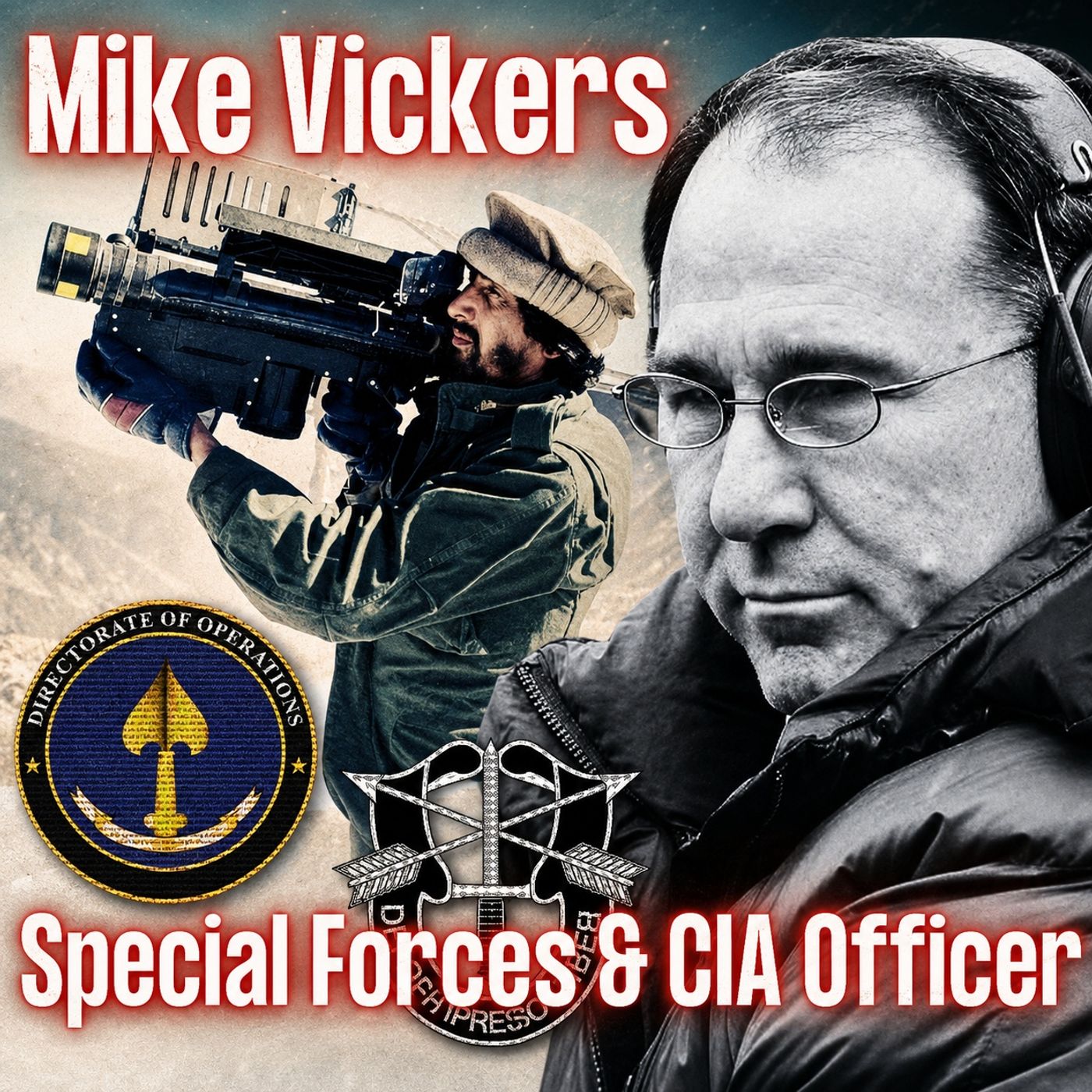
The Team House
Special Forces to CIA in Afghanistan Fighting the Soviets | Mike Vickers (throwback)
01:40:55
original air date 12/1/23 Michael Vickers joins us to discuss his path from 10th Special Forces Group to the CIA, including Cold War missions, Berlin tradecraft, Grenada, Beirut, and Ground Branch. We also get into the covert war in Afghanistan, the...
Loading summary
Transcript128 lines
- [00:01]
Commercial Announcer
All new drinks are now at McDonald's with refreshers like the Strawberry Watermelon Refresher and the Mango Pineapple Refresher with popping Boba. To crafted sodas like the Sprite Berry Blast with berry flavors and cold foam. Who knew ice cold drinks could be so fire six? All new drinks are here now at McDonald's.
- [00:28]
Interviewer
Refreshers contain caffeine.
- [00:30]
Co-Host/Interviewer
At Arizona State University, we're bringing world class education from our globally acclaimed faculty to you. Earn your degree from the nation's most innovative university online. That's a degree. Better learn more at ASUonline.
- [00:43]
Mike
ASU. EDU.
- [00:45]
Interviewer
So, Mr. Vickers, really appreciate your patience with us and your being gracious with your time. We'll jump right into it here. Could you tell us a little bit about your origin story, sort of about how you grew up and how that took you and led you towards governmental service?
- [01:02]
Commercial Announcer
Sure.
- [01:02]
Mike
So I grew up in Southern California and went to Hollywood High School and had dreams of being a professional baseball player, football player, or quarterback. And my passions were much greater than my abilities. So as I completed high school, I started thinking about what else I wanted to do. And as it turned out, a high school teacher gave me a copy of the New York Times or put it in front of my desk when I was in the school library. And it had an article about CIA's big paramilitary operation during the Vietnam War in Laos, supporting the Hmong tribesmen, and said, you might be interested in this. And, you know, it was about secret armies. It's the first I'd heard of it. And I thought, yeah, you know, I think I might want to be a CIA officer. And so that kind of planted the seed. And, and then I thought the best path for doing that was to go into the Special Forces, which I did after a couple of years of college and, and then became an officer, and then actually then became a CIA operations officer.
- [02:06]
Interviewer
Tell us about landing in 10th Special Forces Group. And I mean, this is during the Cold War, of course. What was 10th group like at that time? What was your initial roles and duty positions?
- [02:18]
Mike
Yeah, so I, I completed the Special Forces qualification course as a weapons sergeant in May 1974, and then was assigned to the 10th Group, which had two battalions at Fort Devens, Massachusetts at the time. And, you know, as you know, Special Forces groups are oriented toward different regions of the world. And after Vietnam, the number of groups collapsed down to three. But the 10th group had Europe and the Soviet bloc. And basically the operational detachments were divided. Some of them would go hit their operational areas were Eastern Europe and the Soviet Union. And that's the part I was in. So I had Russian and Czech, and then others had the stay behind mission if the Soviets overran Germany or Scandinavia or others. And so they learned Norwegian and German and French and Danish and that sort of thing. And the group was really a fantastic learning experience. You know, I was kind of the youngest guy on the team. Most of my teammates were Vietnam veterans. Some had participated in, you know, very sensitive reconnaissance operations in Laos, in North Vietnam, with macv, SOG or, you know, studies and observation groups that were doing these dangerous special reconnaissance missions. And then we also had a number of Eastern European emigres, you know, who were born in Czechoslovakia or elsewhere. One of my group commanders was born in Georgia and battalion commander was born in Czechoslovakia. And so they were a great source of knowledge about, you know, if we actually had to deploy into our unconventional warfare operational areas, what it would be like to live there and everything else. So it was a tremendous learning experience for me. And, you know, they sent me to a lot of training then. You know, in the post Vietnam era, we didn't have a lot of operations. And so it was mostly a great deal of training. Till the 1980s, we did have one. You know, our job was mainly to prepare for World War three. And our job was either to do special reconnaissance behind enemy lines or direct action. And then if there was a resistance movement, unconventional warfare. And one special mission we had, as a few of us in the in the group, was was to train with very small nuclear weapons, man portable nuclear weapons, to actually try to stop the Soviet advances by interdicting the second echelon forces had one potential combat deployment to Angola. During that period. Angola had gone into a civil war, but it was aborted at the last minute, and the president decided to go the COVID action route rather than overt military or special operations use.
- [05:38]
Interviewer
Would you like to talk a little bit about? One thing I thought was unique and interesting about your book was you talked about getting sent to Berlin to do like, some clandestine tradecraft training.
- [05:48]
Mike
Yeah. So the 10th group in those days, you know, I mentioned two battalions in the group headquarters at Fort Devens. There was a battalion forward at Bod Toltz in Bavaria. I later served in that unit. And then there was essentially a company size force in civilian clothes that was in Berlin called Detachment A. Changed its name in the 1980s to. To something else. But they had a stay behind mission. You know, if the Soviets overran Berlin, and then also potentially to go out into East Germany, you know, given the location of Berlin in the event of war. And so one of the training episodes I had was to go serve with them and do essentially urban unconventional warfare. You know, how we would sabotage facilities and how we would clandestinely communicate so we couldn't be found out by the secret police. And so a lot of, a lot of denied area trade crops.
- [06:53]
Interviewer
And then you touched upon it, the training with the special Atomic demolition Munition. Yeah, you tell us a little bit more about what that entailed.
- [07:02]
Mike
Yeah, so from the early, I guess the late 1960s and early 1970s up until the mid-1980s, special operations forces, mainly seals and Green Berets, a select portion of them were given this mission to train to place, to arm and place this device. And you know, so with all nuclear weapons, you have personal reliability programs. You know, you have to do extra vetting of the people selected for this. And pretty intensive training. You know, it's really a no fail mission. So you'd have these operational readiness evaluations by nuclear inspectors to make sure you knew how to do everything. And the command and control for those things obviously directed from very on high. So there's communications procedures you have to learn. And so it's pretty intensive training. And as I said, the standards were very high for that. And you know, it was probably considered one of the most risky missions. I mean, they were all risky in those days if general war broke out. But this thing in particular, to have to, you know, in place, it had a timer on it that, you know, you could arm. And then you'd have to get in an overwatch position to maintain custody of it. So, you know, the kind of the gallows humor among those trained in it was as soon as you touch that dial, the thing would, you know, if it was in place, that would detonate. And. But yeah, it was a very interesting experience. And then, you know, learning how to parachute with it, either free fall or static line. And you could also scuba with it too. So that's hence the seals or special forces scuba teams.
- [09:04]
Interviewer
I've actually been doing a lot of research on the greenlight teams recently, and I think that it's easy for us today to look back on it as sort of strange, Dr. Strangelove, sort of esque mission. But what I'm struck by all the people I talked to is like, how deadly serious all of you guys were about this mission and completely ready to execute it if they were called upon.
- [09:27]
Mike
Yeah, well, I mean, so some context, you know, beginning in the 1950s, you know, Soviets had numerical superiority in Europe. And so we kind of went the route in the Eisenhower administration and through the 60s and 70s to make up for that numerical inferiority by having lots of tactical nuclear weapons. So artillery shells, mines, you know, things you can drop from air, bombs from aircraft. And then this was just part of that family, you know, that this was the Special Forces and SEAL role, you know, to go behind enemy lines with a small nuclear weapon, but, you know, as part of a. Part of a larger family. And it was a very, very serious mission.
- [10:14]
Commercial Announcer
So as a.
- [10:14]
Interviewer
As, you know, the. The kid, the teenager that read the New York Times article about Special Ops and Laos, I mean, was this what all of this sounds like, a dream come true?
- [10:24]
Mike
Yeah, I had to pinch myself. I was really lucky, you know. You know, the path actually worked out in terms of, you know, I. I originally thought I would go into Special Forces for maybe, you know, five years or something and then go to CIA. And I decided to become an officer and ended up staying for 10 before I went to CIA, you know, so I really loved it. It was just. Just a great experience.
- [10:55]
Interviewer
So you went to officer Candidate School, and then you got to do a pretty big venue change from Germany and 10th Group to 3rd Battalion, 7th Group. That was down at Fort Gulik, Panama, right?
- [11:08]
Mike
That's right. Yeah. I was on the Atlantic side of the Canal Zone rather than the Pacific side. So most of the forces in Panama were over on the Pacific side, but there was an infantry battalion and a Special Forces battalion on the Atlantic. And, you know, the reason I chose that when I. When I graduated from ocs, we didn't have an SF branch in those days. And so I was an infantry officer, went to infantry officer training, and the assignments officer came down to our class as we were getting our assignments and said, how would you like to go right back to Special Forces and be a detachment commander? Because you don't need to be a platoon leader given your enlisted experience, you could go right into company command. And I thought, well, great. So I get a captain's job as a lieutenant, and then I have a captain's job as a. As a captain. And, you know, there were three assignments offered. The tenth Group, the fifth Group, and. And third of the seventh. And I was very tempted to go Back to the 10th group. My former battalion commander had become the group commander, and he just got the Medal of Honor award in Paris, Davis. This. This year. And. But, you know, the insurgencies were really heating up in Central America. That was the big focus, you know, a communist insurgency in El Salvador. And had taken over in Nicaragua. And, you know, it's always good to kind of follow the sound of guns, you know, to go where the action is. And so I learned Spanish and, and ended up in 3rd Battalion, 7th Group. And as it turned out, I was get. You know, after the Iran rescue attempt and the taking of our. Should say it the other way, the taking of our hostages in Tehran and then the. The Iran rescue attempt, we became very concerned about other high threat embassies. And so I was given essentially a troop command of two operational detachments that would go around to high threat embassies in Latin America, mainly Central America, but Colombia and others too, to make sure that if we needed to do a rescue, you know, our special mission forces, that they had the blueprints and, you know, knew where the cameras were and, you know, all the things you would need to do to a rescue like that. So, you know, it caused me to interact a lot with the State Department and with CIA, you know, across the region. And again, a great learning experience.
- [13:40]
Interviewer
I thought it was really cool. As I was reading the book this, I think you said it was the AST mission and then became the Rst mission. This is that sort of nascent, what we would call today Advanced Force operations is probably the term that you probably use nowadays. As I was reading the book, I read about this operation that you guys got sent down to Honduras. And I was like, oh, I remember hearing about this years and years ago, but I had no idea it was you. Could you explain a little bit more about, like, what the mission entailed and how you guys went over to sort of prepare the environment?
- [14:15]
Mike
Sure. So, you know, the, the normal mission was, you know, intelligence collection. So, you know, visiting these embassies and making sure we had all the information we would need for a rescue beforehand. And then if there was an actual terrorist incident, then a small portion of my team would deploy to be the first on site where we've been to this country several times, and start preparing the environment for the rescue force that would come in, but also provide special operations advice to the ambassador and the country team chief of Station, Ambassador, etc. And so in late April 1982, a Honduras Honduran terrorist group supported by Cuba, hijacked an airliner, a Dash 7 airliner prop plane, to Gusa Galpa Airport, the capital of Honduras, with 58 hostages on board and 10, 10 of whom were Americans. And so we got deployed right away by southcom to the embassy to meet with the ambassador, who I served with a lot of years in Government. He ended up becoming ambassador multiple places. John Negroponte and then Deputy Secretary of State and about military options, including bringing in, you know, some of our special mission forces to be in a position to do a rescue. And so they came in and there was a three day standoff with this terrorist group with the hostages. I was up for three nights essentially, you know, with my little team, my four man team doing surveillance around the airfield and, and with our army special operations counterparts. And we had one interesting incident. The terrorists had a homemade improvised explosive device with nitroglycerin on the plane. And you know, the airplane was getting really hot and nitroglycerin can become unstable when it gets hot like that. So the terrorists actually asked for assistance in that regard. And we had to scramble to how they would diffuse the bomb. And it turned out, you know, kitty litter was a pretty good field expedient to do. So we raced out to Tegucigalpa to procure some and that, that kind of did the trick. And some of the hostages were able to escape from the plane on the third day and the gunfire, but fortunately they were only injured from the fall, not from the terrorist shots. And then the terrorists decided to give up the ghost after three days for safe passage to Cuba. And so that was incident number one. And then four months later a similar terrorist group took 109 hostages in San Pedro Sula town in the north of Honduras, including three government ministers. So we did it all over again and went there and did, you know, 10 day siege. And it ended the same way with
- [17:40]
Interviewer
negotiations and also showed the capabilities of, you know, that, that the concept worked as far as the reconnaissance.
- [17:47]
Mike
Yes, yes. So it was considered a model for the combat, for other combatant commands to then follow southcom's lead on having this kind of capability. And that eventually led to more special operations intelligence units and then the RSTs, as you mentioned, when you guys were
- [18:06]
Co-Host/Interviewer
developing this capability, you know, if you're, you're developing capability, there's not necessarily groundwork that's been laid before, you know, laid before. How, how did you guys go about that process?
- [18:19]
Mike
Yeah, so it was a, you know, kind of a one of a kind unit at the time made out of two ODAs and people were selected for their fluency and, you know, civilian clothes and long hair selected for their fluency in Spanish and their intelligence tradecraft in addition to other special operations skills. And, and then, you know, had to have training. We were kind of ahead of our time on satellite communications. So we had really reliable communications, some Technical surveillance devices and stuff that weren't organic to the, to the Special Forces battalion that we had to procure commercially and learn how to use. And so we were really building this from the ground up, including, you know, learning how to put these target folders together of what exactly was needed and how to present it to the operators, you know, who would do the rescue. And so you needed to know a lot about close quarter battle and sniping and lots of other things. So right before I had that command for a few months, I had command of a sniper team, which also was useful, you know, personal preparation before I took this counterterrorism intelligence mission.
- [19:43]
Interviewer
And then let's talk a little bit about how you made that transition from Special Forces to the CIA. Like how did that take place for you?
- [19:54]
Mike
You know, so my original goal was to serve in the Special Forces and learn more languages and get competent in all these disciplines and then go to CIA. And, and then I thought, well, maybe I'll make the Army a career. And you know, I went to, went to OCS and had this command, but you know, as I was wrestling with it, I thought, okay, I've had this great experience as a lieutenant and captain commanding this troop and participating in real operations, you know, but my next assignment would be infantry company command in a peacetime army. And I thought I wanted to join more of the Cold War fight. You know, I saw what was going on in Central America and what CIA was doing and, and I thought potentially I could contribute more if I went to CIA. And so I applied for the career training program and you know, got accepted and joined the agency.
- [20:52]
Interviewer
And the, the way I read it in the book, if I, if I understood correctly, you had some adventures before you even got trained as a CIA officer.
- [21:04]
Mike
Yeah, so the, in my day, the career training program for operations officers, we had a, a 10 week course, you know, kind of introduction to CIA and the intelligence community, all the different directorates, and learned how to write reports and do analysis and some basic tradecraft and learned about our satellites and you know, the science and technology side and etc. Had senior case officers come in and talk to us about agents they recruited and including Russians that were handled in Moscow. And you know, so it was pretty good training. And then you typically do two three month assignments on a operational desk to learn operations more. And then you would go to the operations course, what we call the Farm, a special facility. And then in those days we also had a 12 week paramilitary operations course called Special Operations Training. And during my first assignment in Latin America division. I was selected for this because there was a coup in Suriname and a former Dutch colony and in northern tip of South America. And we had assets in prison. And the branch chief wanted to do a jailbreak essentially, and thought I had the right skills to help plan that with assets and stuff. And so that was kind of my introduction to CIA. And then, lo and behold, a crisis occurred in Grenada. As I was some weeks into this assignment, working on this jailbreak plan. And, you know, we had 600 medical students attending training in Grenada, American medical students. And, you know, the situation deteriorated. The coup leaders killed the president of the country and some others. And President Reagan made the decision over a weekend to do the invasion of Grenada. It was combination of special operations forces and Marines. And I was. Before I had even completed my CIA operational training, I was called into headquarters and said by the. Who was going to become the chief of station? A man named Bill Rooney, very distinguished career in CIA, said, you're going to Grenada with me and a communicator. And we were going in with the special operations forces in the main effort in the South.
- [23:45]
Commercial Announcer
And.
- [23:47]
Mike
And I didn't know that at the time. I was just told to come into headquarters and pack for two weeks on a Sunday. And so I thought I was going to be going to one of the bases supporting the operations. And so I packed a bunch of suits. And as soon as I got in and I was told I was going into combat, you know, I was glad I had a few casual clothes in my luggage, you know, so we got weapons, we got a lot of cash so we could pay assets and stuff. And the SATCOM radio got a briefing and had an airplane take us to a staging base and then went in with the invading forces. And so I went into combat with a Ralph Lauren polo shirt, some linen pants and some loafers and a weapon and big bag of cash and Sat Com. You know, you gotta hand it to CIA. They go to war in style. You know, this is not quite how we did it. The Special Forces and the military.
- [24:44]
Co-Host/Interviewer
The military elements you're leaking out probably looks, you go, CIA, they don't know anything.
- [24:50]
Mike
Right, Right. Yeah. And. And so, you know, our task was to establish a station and then, you know, bring in people to interrogate Cuban prisoners and others. And then, you know, we had some other things to do that led to my first combat experience in Grenada, looking at an arms cached in a. In the very, very forward lines where there was still a lot of combat. And it was a company of the 82nd that we were actually visiting at the time. And, you know, lo and behold, as soon as we got there, Cubans attacked the position. And, you know, all we had at the time were Browning high power pistols. And so I thought about it for, you know, as we're face down in the dirt, I thought about it for a few seconds and I thought, I just saw a bunch of AKs and ammunition in this warehouse, you know, that were Cubans for the Grenadians. And I thought, you know, we could use some of those if we're going to get shot at. And back. So little crawled over there, got some, gave. Gave one to my chief of station and one for me, and battle was over in 10 minutes. But it was an interesting experience.
- [26:04]
Interviewer
And so you, I think you said you spent like a week crawling around Grenada and then showed up back home, you know, covered in dirt in your Ralph Lauren polo shirt that you'd been wearing for a week.
- [26:16]
Mike
Yeah. So it was actually almost two weeks. And we had another mission where we were told to apprehend a Libyan intelligence officer on the island who had been ordered by Gaddafi to take American hostages. And before we could capture him, he had fled to the Soviet embassy. But we had this chase around St. George's the capital. And, yeah, toward the end of the operation that when the training staff learned that I had been in combat for 10 days, they weren't too happy about it. And so they said, okay, war's over for you. Come home. And so I hitched a military flight to Barbados, took off, went into the bathroom, took off all my dirty clothes, threw them in the trash can, you know, put on some fresh civilian clothes, took my AMEX card out, bought a plane ticket, you know, for the States, and came home.
- [27:18]
Co-Host/Interviewer
I'm really surprised you didn't get, like, a deal with Ralph Lauren after that. And like, they didn't develop it. They didn't develop a new combat line of leisure wear.
- [27:27]
Mike
Yeah, there you go.
- [27:32]
Interviewer
So now you finally have the opportunity to go to the farm and become, you know, a formalized officer.
- [27:38]
Mike
Yeah, so before that, you know, when I came into the agency, I had Czech, Russian and Spanish, and I was debating whether I would go to Latin America, where the wars were, or, you know, to Moscow or somewhere for a first assignment. And so I thought I would get assigned to Soviet operations when I came back from Grenada. That's what I had requested, and they called me in. As it turned out, we invaded Grenada on a Tuesday, the Sunday before the Marine barracks were blown up in Lebanon. And. And then months before that our embassy had been blown up by, you know, what today we know as Hezbollah. And so I was called in and said, the near east division wants you assigned to them for a special counterterrorism task force to identify the perpetrators and develop response options, etc. And I say, you know, I don't know anything about the Middle east, you know, and. And, well, it's a directed assignment, and they want you. And so that was my introduction to the. To the Middle east to work with our station there on assets who could report on Hezbollah and then develop various strike options. And then after that, I went to the Farm.
- [28:59]
Interviewer
I mean, just to wrap up Beirut. I mean, was there any kind of final thoughts or did anything come out of that time that you spent there that you thought was notable or important or even personal reflections?
- [29:12]
Mike
Yeah. So, I mean, one. You know, Grenada was this great, exhilarating experience, and it felt like a real extension of what I'd been doing in Special Forces, particularly the last years as an officer in Latin America. And, you know, I knew the people we were going in with, and so it was like old home week for me. And the operation, there were problems, but the operation was generally a success with Lebanon, you know, we had a peacekeeping force in there with the Marines who did not have good rules of engagement, very restrictive rules of engagement. And, you know, it was really kind of muddled policy for a country that was, you know, essentially heading into civil war and sectarian conflict and the same thing. Our station had similar challenges, you know, and so Americans started getting kidnapped, including our chief of station, the late Bill Buckley, tortured and killed. And so it really was a. A searing experience for me in terms of, you know, fail policy, of, you know, we weren't in it to win it. And we essentially put ourselves in a position where we were. We were very vulnerable. And. And, you know, and as I said, it was my introduction into the Middle East. And then later, you know, decades later, when I was involved in Iraq and others, you know, seeing that sectarian conflict again, back all those memories.
- [30:49]
Co-Host/Interviewer
Yeah, When. When you did go to the farm. Now. Now you're going to the Farm, but you've already had combat experience as a CIA officer or a CIA employee. Did that help you or hurt you or did nobody there know about it?
- [31:02]
Mike
Now they knew about it, and it was both. You know, they. The chief instructor pulled me aside. You know, I got an award for heroism, and one of the top agency officials came down and they talked about it. And, you know, some of the instructors were, okay, let's Test this guy's metal some more, you know, so he doesn't think he's too big for his britches and all that. But others, you know, were. Were impressed. And one guy said to me, geez, you really just, you know, picked up the weapons and did this? You know, I don't know if I could have done that in that situation. And this guy had served in mostly Europe. And I thought, well, you know, this is kind of what I'd been trained to do for 10 years. So it's kind of nature. But yeah, so it was a mixture actually of both. You know, some let's screw with them a little bit, and then others, you know, I was in a little bit of a special class, but some of
- [31:55]
Co-Host/Interviewer
them were sort of like, okay, you can handle Grenada, but let's see how you handle the seedier sides of Virginia.
- [32:03]
Mike
Sure. Right.
- [32:07]
Co-Host/Interviewer
Can you man up?
- [32:08]
Mike
Yeah, yeah, right.
- [32:12]
Interviewer
And after the farm, you got what, as I recall, you describe in your book as sort of your dream assignment. You got assigned to ground branch.
- [32:22]
Mike
Yeah. So, you know, after the operations course where you're trained to recruit and handle agents, then we had this special operations course, including. Including another airborne school, you know, five parachute jobs, which was old hat, but, you know, and it was sort of like a Special Forces qualification course. Again, not as strenuous, but same basic tactics and techniques. And then as I came out again and was thinking about where I would go for an assignment, which division or part of the world, you know, Soviet, East European or Latin American America. The what today is the Special Activities Center. Then it was called International Activities because it had counterterrorism and counternarcotics as well as the paramilitary stuff. The division chief there said to me, we would like you to come to this division because we're creating a program to fast track a few officers for leadership of our covert action that would combine case officer work with management of these covert action programs. And said, we want you to be the first case. And so how you can argue with a senior official on a fast track to the top? So I did. And then he said, where do you want to go? You want to go to El Salvador? What would you like for a first tour? Well, there's a lot of wars going on, and so if you don't mind, I'd like to go to ground branch first and then do the case officer stuff next. And said, sure. So I got assigned a ground branch in special operations group, and then within a couple weeks, I was told that they were creating this new position for the Afghanistan Covert action program combining two jobs into one. Essentially the program officer overall oversight of management of the program, which had been a senior CIA case officer and then the chief paramilitary advisor who had been a Marine colonel on detail. And they were combining them into two and interviewed a bunch of candidates and thought I was the right guy for the job. So it was really like the job of a lifetime for me, you know, and I, I thought, you know, instead of just fighting Soviet surrogates in Central America or elsewhere, now we've got the main enemy in Afghanistan. And it, you know, and so it really seemed like the job of a
- [34:49]
Co-Host/Interviewer
lifetime prior to that though, you know, you going to, or volunteering to go to ground branch, like you said, is, was that a, did some people consider that like a misstep in a career as it wasn't really attached to a larger division or whatever? And like, did it have legitimacy in the, in the wider agency at the time?
- [35:16]
Mike
Yes and no. I mean there were a lot of paramilitary operations going on that hadn't been before, you know, Central America and Afghanistan. And so that raised the important, you know, they. The first one since Laos in a bit.
- [35:32]
Commercial Announcer
All new drinks are now at McDonald's with refreshers like the strawberry watermelon refresher and the Mango pineapple refresher with popping Boba to crafted sodas like the Sprite Berry Blast with berry flavors and cold foam. Who knew ice cold drinks could be so fire six all new drinks are here now at McDonald's.
- [35:59]
Interviewer
Refreshers contain caffeine.
- [36:02]
Mike
This is the story of the one, the one who keeps multiple buildings running smoothly day after day. Plumbing that flows, H Vac that hums. Cleaning supplies that keep surfaces sparkling. That's why she counts on Grainger. With easy reordering online and 247 support, Grainger helps her keep the products she needs on hand so shelves stay stocked and buildings stay ready. Call 1-800-GRAINGER Click grainger.com or just stop by Grainger for the ones who get it done.
- [36:32]
Commercial Announcer
All new drinks are now at McDonald's with refreshers like the strawberry watermelon refresher and the Mango pineapple refresher with popping Boba to crafted sodas like the Sprite Berry Blast with berry flavors and cold foam. Who knew ice cold drinks could be so fire six all new drinks are here now at McDonald's.
- [36:59]
Interviewer
Refreshers contain caffeine.
- [37:03]
Mike
But yeah, in those days ground branch officers didn't become chiefs of station. Later they would integrated more into the directorate of operations. And so that's Why? I kind of chose the general operations track. Right. I knew I could do the paramilitary stuff, but I didn't want to just do that, you know, since aspirations to become a chief of station and other things. And so, you know, and my reasoning was just, this is a unique time. We're in a lot of wars, and I have skills that can contribute to this. And so I want to do this first, but I knew I'd have to do the other stuff. Right.
- [37:45]
Interviewer
So as you. You get on the Afghan program, I would be remiss if I didn't ask you. I mean, you dedicated your book to Gustav and Bert Dunn, and I'd love to ask you about those two gentlemen and if you could tell us about coming onto the program and working with them.
- [38:01]
Mike
Sure. So the near east and South Asia Division was responsible for agency operations from Morocco to Bangladesh and essentially divided in half, you know, the Arab Israeli world up to the, you know, Arabian Gulf, the Gulf States and Iraq, and then Iran over to Bangladesh for South Asian operations. And Gustav Rados, a veteran case officer and Greek American, was the chief of South Asian operations. And. And so he's the guy who wanted to create this new position as program officer and. And chief paramilitary adviser into one and brought me in. And then Bert Dunn was his boss. Bert Dunn had just come in as the chief of Near East Division. And Bert was one of the founding members of Special Forces. West Virginia lawyer, founding members of special forces in 1952, and had been in the 82nd before that, you know, in his army time, and then joined the CIA after law school. And his first assignment was in Pakistan and learned Pashto, is the agency's most fluent Pashto speaker, and set up the Pakistani special Forces and went all over, you know, the tribal areas in those days. We had the U2 flights over the Soviet Union out of Peshawar, Gary Powers and all that, and so was involved in that, too. And he'd served in all these difficult places around the world. He'd been chief in Afghanistan. He'd served in Pakistan, India, supporting Tibetan insurgents when we were doing that in the 60s against China, served in Vietnam and then in Africa. And so he was my kind of. Both of them were really my kind of guys. You know, street smart, but also, you know, a guy who went to the sound of guns and had the, you know, the Special Forces background. And so we just clicked, and they were very good to me.
- [40:26]
Interviewer
And as the. The program, I mean, I'd love to hear in your words, how this program evolved. Evolved as. As it sort of got off the ground and there was a presidential finding for Afghanistan. And the, the impression I get reading through your book is that as time went on, the spigot became fully open. Like we were really about sticking it to the Soviets in Afghanistan.
- [40:48]
Mike
Yeah. So, you know, his background, there was, you know, there was kind of this great game, you know, first between the Russians and the British and then the 19th century and then later in the Cold War between the United States and the Soviet Union for influence in Afghanistan, you know, and the Soviets generally got the better of the deal. They built a tunnel, they trained a lot of Afghan military officers, you know, and then they started underground communist parties in the 60s and we focused on agriculture in, in the south and Helman province and you know, up to that period. And then in 1973, the king's cousin overthrew him after, you know, several decades of royal rule. And the prime minister ran the country for five years. And then he was overthrown in 1978 by the communist parties with Soviet support, launching a communist revolution in Afghanistan. And immediately it triggered resistance, you know, trying to impose land reform, which really means land appropriation. And then, you know, atheism, you know, just not going to fly in Afghanistan. And, and the communist Afghan government asked for Soviet assistance and Soviets were given a lot but didn't want to intervene, you know, until they did finally. And, and so before the Soviets intervened in, In December, late December 1979 that summer, there were a couple of what we call non lethal findings to provide political and psychological support to the resistance and money essentially, and communications support. And, and then when the Soviets invaded in force, then three days after that, President Jimmy Carter signed a lethal finding authorizing CIA. The third finding authorizing CIA to support the resistance, you know, fully with. And so within 10 days, CIA actually had weapons starting flowing to the resistance. But for the first five years, President Carter's last year and President Reagan's first term, the program was reasonably big. It was, we had a lot of foreign partners and the Saudis being one, obviously Pakistan. The Saudis matched US dollar for dollar. And so the US government budget was 60 million and the Saudi Arabia Saudis matched that. So it was $120 million a year. But analysts thought there was no chance that the resistance could defeat the Soviets. The policy goal in the finding was just to make the occupation as costly as possible for the Soviets. So the war kind of settled into this stalemate and the resistance was lightly equipped, mostly with small arms, not a lot of heavy weapons, more mortars and anti tank weapons. And rocket launchers and stuff. Very few surface to air missiles, you know, a handful of them, 20 or so. Not a lot of training, communication, not, not a lot of intelligence. But they were still holding their own against the Soviets. And then in the summer of 1984, Congressman Charlie Wilson from Texas, who had, was on the House Defense Appropriation subcommittee, really wanted to expand the funding for the program. So CIA went in for a 10% budget increase and Wilson quadrupled the budget, you know, 300% increase, which you don't see every day. And that's right at the, you know, and so that naturally caused a lot of concern in CIA about, you know, can we execute this? You know, is it too much money? Can the resistance absorb it? And that's exactly the moment that I got the job. And I thought, hell yeah, we can execute this.
- [45:12]
Interviewer
18 Bravo. Of course you think you can, right?
- [45:15]
Mike
Exactly. Here's what I do with this, you know. Yeah, yeah. Developing plans and, and everything else. And so a series of things led to a big change. That was the first one that, you know, the funding just went way up and the Saudis agreed to match it. And then five years into the war, we were getting some criticism in Congress, you know, and Central America was already very controversial. You know, you had a thing called the Boland Amendment that suspended aid to the Contras for a while and other things. But the controversy on Afghanistan was, you know, some Republicans felt that the Pakistanis were corruption problem, the Pakistanis were keeping all the weapons for themselves and they weren't getting into the resistance. And so we had to show that and that CIA's management of the program wasn't very good because we were letting the Pakistanis control the end distribution. And so we had to address that. And then on the left side of the aisle there was concern that this was a hopeless war and we're just fighting to the last Afghan and it was immoral. And so that triggered a National Security Council review of the program, how to deal with these political problems from both local left and right. But as any good NSC review, it also said, okay, what are we trying to do here? We're five years into this thing. What are, should we revisit our goals? And the inner what today we would call a paper principles committee meeting. The NSC staff circulated documents with questions that the State Department, Defense Department and CIA were supposed to answer about, you know, our goals and what we thought we should do. And one of them was instead of, you know, stay the course, etc. It was to change our goal to defeating the Soviets and drive them out by all means available. It was in the working papers and I, I like the phrase, I remembered it 30 years later and you know, made it the title of my book, but I thought, that's the one we want to do with all this new money. And you know, didn't really have an idea yet totally how we would do that, but reprogrammed everything I could in terms of more heavy weapons, more this, more that, But I, I knew it wasn't going to be enough yet. And lo and behold, George Schultz at the State Department and his key deputies went along with this. CIA's leadership did under Bill Casey, Casper Weinberger in defense did, you know, on the policy side. And so our goal then became to defeat the Soviets and drive them out. And President Reagan signed a top secret national security decision directive which has been mostly declassified for the past decade with that goal and mind that that was, that was our aim there. And so in a sense, now we had a hunting license to do what was required to do that. And so then that triggered, okay, do, when can we get all our partners to escalate with us? And so that meant resting strategic control. So we controlled the strategy from the Pakistanis, you know, and that would help solve this issue of are they controlling too much or diverting things, but also for us to put in all these new weapons and both quantity and quality and then getting our suppliers, the Chinese were a big ally of ours and our largest arms supplier, and Egypt was another. Would they agree with the escalation? And not only escalation in quantity, but also in more advanced weapons, rocket launchers from the Chinese surface to air missiles, you know, that would really make our partners more vulnerable. And you know, Pakistan in terms of subversion and maybe invasion, you know, the Chinese with diplomatic repercussions when their weapons are found, you know, surface to air missiles are shooting down Soviet aircraft. And so I had to go to all these countries with the top leadership of their intelligence services to try to get them to go along with the escalation. And they all did within six months. And then that included trying to get a more advanced surface to air weapon. You know, in, in covert action programs, you want plausible deniability, you know, so what, you know, covert means for your listeners is you're concealing the sponsor of the operation, but not the operation because you're influencing events, you know, you're supporting a war, you're doing political action or whatever it is, but you, you don't want the United States role to Be apparent, you know, even if people suspect it, you're not acknowledging it.
- [50:28]
Co-Host/Interviewer
Right.
- [50:29]
Mike
And, you know, so in paramilitary operations, the ones that are kind of the most deniable are when you're using the enemy's weapons, which is what the Afghan program was for the first five years. And then, you know, you can lift up the skirt a little more by going to Western weapons and then even more with U.S. weapons. And within 12 months, we kind of went to the spectrum in certain high areas. You know, we went for Western surface, surface to air missiles, a British blowpipe, and then eventually the US Stinger, you know, so further escalations in that regard. And so first the Brits turned us down on the blowpipe, and then we went back to them and Prime Minister Thatcher agreed. And so we started that program up, and then we went back to Congress and said, you know, we now have a strategy and a real detailed plan, and we know you just get you quadrupled our budget, but we actually need double that. You know, if you'll just double it one more time and take us up to a billion, billion, two, we think we can actually achieve this objective in a couple years. And lo and behold, Charlie Wilson came through again that summer and transferred money from the Department of Defense, and the Saudis matched it. And so within less than 12 months, the program had increased by a factor of more than 10, you know, from like 120 million to almost 1.2 billion where it leveled off. And then lots of, you know, we went from 20 surface to air missiles, some of which didn't work, to, you know, damn near 2000, and increased our training by factor of 10 and all sorts of other things. And so the tempo of combat went up. The number of aircraft shot down, the size of ambushes, the attacks on urban areas and bases, shelling with rockets, shelling into Kabul, all that just increased dramatically. And at the same time, Mikhail Gorbachev came to power in the Soviet Union in March, March 85, just as we were beginning on this escalation path, all of 85 took his top general from Eastern Europe, East Germany, and put him in charge, said, Got two years to win the war. We'll give you 25,000 more troops to the 105 that the Soviets had there already. So we had this dual escalation, you know, ours covert and theirs over. And within 12 months, we had won that battle of the surges, and Gorbachev started looking for the exit.
- [53:10]
Co-Host/Interviewer
Mike, just out of curiosity, when you're going around and selling, you know, partner nations on the idea of increasing their investments, increasing the weapons ship to Afghanistan, things like that. Do you need a different pitch for each country? Like, because Afghanistan isn't like necessarily strategically necessary for anybody. Is it just the idea of bleeding the Soviet Union?
- [53:36]
Mike
Yeah, so it differed in each case. So you know, with China, they had had a border clash in 1969 and we had, you know, the opening to China led by Henry Kissinger and then Nixon and then consolidated in the normalization of relations under President Carter and started an intelligence partnership with the Chinese and then started supporting the Afghan program because they wanted to weaken the Soviets and have them tied down in a war because, you know, they were worried about a Soviet invasion of China from the north. You know, Soviet priorities were NATO number one, you know, that was the big war, China number two, and then maybe Iran number three. And Afghanistan was, was kind of number four there, which is why we thought there were limits on their ability to escalate. And so with the Chinese it was really more a case of they're already in it, are they willing to go in it even more with more sophisticated weapons and numbers of weapons. And you know, there was a debate about whether they would. The national intelligence officer for China told me, there's no way they will give you these surface to air missiles. And they ended up doing it, you know, and where with Pakistan, you know, it was a function of the Islamic world not liking these infidels invading a Muslim country. And so that, you know, affected Egypt and Pakistan. And then with Pakistan there was the really the risk of, you know, cross border raids with special forces, airstrikes sabotaged by the KGB and Afghan secret service and maybe an invasion because the Soviets would do these big sweeps, you know, search and destroy missions right up to the border. And so it's a little different for them and they were in it, but it took some convincing more about the risk of, you know, escalation that would directly affect them as the frontline state. I meant I should have mentioned Saudi Arabia to another one, you know, was mostly helping fund the program. But again it was the invasion of a Muslim country. And then with the Brits, you know, it was more high technology. You know, we were partnering on intelligence collection and other things and support for resistance commanders. But it was really, you know, do we want to stick it to the Soviets with this advanced weapon that they're not going to want know that shoots down more aircraft and same for the US decision. So yeah, you know, the pitch was tailored to their own interests in Afghanistan.
- [56:14]
Interviewer
In each case, I think you answered at Least half of my next question. But because you talked about it in the book at some length, I wanted to ask you about the covert operation cooperation that you mentioned with China, which is this interesting historical interlude. Almost impossible to imagine something like that happening today. But I just wanted to see if I can tease out of you a little bit any sort of a cultural observations about their approach to warfare, covert operations or anything else that you took away from those numerous meetings where you interfaced directly with the Chinese intelligence apparatus.
- [56:52]
Mike
Yeah, so you know, it was very interesting in a sense that you know, they had the long Chinese civil war and you know, Mao had been dead for almost a decade but and Deng Xiaoping actually approved this big escalation. But you know, so in our initial discussions we had big debates about guerrilla warfare strategy and you know, so try different visions about how to defeat the Soviets in Afghanistan. You know, is it really lots of people armed with AKs or is it combined arms and stuff which I was pushing and more, you know, when shift the anti air balance more in the insurgents favor and stuff. And so that took some convincing. You know, we went back and forth and you know they're saying to me look, we really know guerrilla warfare, you know, we overthrew our own government this way. And I'd say well yeah, I know something about it too and here's why I think we need to do this. And they finally went along. But it was very interesting. It was very interesting culturally in a sense that their negotiating style, you know, you weren't allowed to, when you made presentations, they would just say continue, continue with no break, you know, and if you said you couldn't ask them questions when they were talking for 30 minutes and they didn't want any interruption, if I'd say well okay, you want me to elaborate on this or something then just continue, you know. And so we were really almost like ships passing in the night. And then, you know, as they often, as I later learned they do with businesses a lot, you don't clinch the deal until the very end. And so it looked like we weren't going to get everything we want. We were heading to the air, we got some things. We were heading to the airport and they're waiting for us at an airport lounge with drinks and stuff, was the head of armaments for the PLA and saying okay, read everything, better late than never. But yeah, it was, you know, and I, I imagined myself when I was in Special Forces, you know, in the tenth group where we had this World War III mission and you know, to liberate Eastern Europe. You know, I thought this would be, if this ever came to pass, this would be, you know, T.E. lawrence and all this great stuff. But I also thought I'd read, you know, about World War II and OSS and China and others. And I knew about the, the border conflict that they had had in 69. I'd study that as, as I was completing my bachelor's degree. And I thought, well, maybe I'd find myself on the side of the Chinese against the Russians. You know, that would be really exotic. You know, Eastern Europe I kind of know, but this one would be exotic. And lo and behold, the. They became my partner to fight in Afghanistan. You know, I didn't have the imagination to think about that.
- [60:03]
Commercial Announcer
But
- [60:06]
Interviewer
yeah, as far as the, the end game in Afghanistan, I mean, the obvious end of the conflict is the Soviet withdraw. When did you know it was over,
- [60:18]
Commercial Announcer
really?
- [60:18]
Mike
In sort of early 1980s, 86. Gorbachev gave this open speech in February 86 about bleeding wound. And we've got to extricate ourselves from this. And our escalation was just starting. I mean, we had, we had flows of stuff going there through 1987. And you know, this meant strengthening the logistics system from ships to what you do at ports to railroads, to trucks, to warehouses and then to Toyota Land Cruisers and even, you know, 10,000 mules. You know, I grew up in Hollywood, I didn't know a damn thing about mules. And suddenly I find myself dealing with China about, you know, 10,000 of these things. And it turns out Chinese mules were better for Afghanistan than Tennessee mules, which, you know, who would think? But, and so, you know, it really was pretty clear in 86. But then you had this dance of negotiations. The first Soviet 6 regiments come out that summer, but the Soviets are hoping that we'll leave the Afghan government in place. And so there's negotiations about that. And the US rightly holds firm. And then eventually Gorbachev says, okay, we just want out. We don't care what kind of government is there. And that cinched the deal. And, and then from the time the agreement was signed, they withdrew in two big phases. And so that was not quite a year, like nine months, but you know, it. So it just played out in, in slow motion. But the writing was on the wall. Their, their tactics shifted. Their. Once we started shooting down so many aircraft, they started flying above surface to air missile range, which meant they couldn't do close order support very well. They didn't do offensive operations as much anymore. You know, they just Kind of hunkered down to their bases and, you know, so it was pretty clear. And also they announced this policy like we did in Vietnam, the Afghanization, you know, to basically shift to an indirect role where the Afghan, the communist Afghans are going to do the fighting and the Soviets are going to support them but not do the combat. And, and you know, so we saw all that and that, that kind of, you know, led to, led to the end game. What was important was holding their feet to the front fire, you know, really sustaining this through this period. And this is where I really give, I think there's important lessons from President Reagan in this, is that, you know, as relations were really warming between Reagan and Gorbachev and you know, big breakthroughs in diplomacy, we kept the heat on in Afghanistan, pressure, you know, and still said, look, we want to do business with you. This can be great. But, you know, we, we disagree on this one thing. And he ended up getting his way.
- [63:27]
Co-Host/Interviewer
Yeah.
- [63:30]
Interviewer
As we kind of get towards the end of part one of our interview with you, I wanted to ask a couple questions that are sort of like big picture things that I think maybe you're uniquely qualified to answer at the time. We've talked at length about supporting the Mujahideen in Afghanistan. At the same time there were paramilitary programs supporting UNITA in Angola and the FDN or the Contras in Nicaragua. I was wondering if you could talk a little bit about these three essentially anti Soviet covert operations around the world and what was the global strategy behind them.
- [64:06]
Mike
Yeah, and there was also a brief period of supporting Cambodians against the Vietnamese occupation of Cambodia, although it's very, very small. So, you know, it really, we started this period on defense in Central America. You know, Nicaragua had fallen to the Sandinistas, you know, and there was a sense that the Soviets and their Cuban allies, allies and others were really on the march and insurgency really exploded in El Salvador and you know, so we were counterinsurgency and essentially dealing there. And then the Contra program is kind of the first big one in a sense because Afghanistan is this, we're doing what we can there, but there's no thought you're going to win where we really didn't want, want to lose. And we certainly didn't want to have more countries fall to communism in Central America. But there was even a hope, well, maybe we could defeat them in Nicaragua and at least in our backyard, you know, so it starts off fairly modest and then as you move to 1984, 1, the Contra program becomes politically controversial and has this hiatus and it's, you know, it's doing so. So we had a lot of success, success in counterinsurgency in El Salvador, but not as much, you know, on the offensive side in Nicaragua. And then as Afghanistan escalates, that then becomes the real main effort. And so people's minds change between this is hopeless to maybe we can win there. And if we win here, it really matters. You know, this is the, the main enemy in the, in the big enchilada where if you win in Nicaragua, you know, you move a pawn on the chessboard rather than a queen. And then Angola picks up, I think in 86 or so. And you know, the Cubans had sent a big proxy army into Angola, 20 some thousand troops. And that kicks in as well. And then President Reagan gives the Reagan Doctrine speech, which is we'll support anti communist insurgencies. And I want to say that's early 85, if I remember right. And it provides kind of the strategic framework for this global irregular war that kind of came in parts essentially and at different times and different emphasis. And it's tied to a broader strategy of restricting technology transfer, hurting the Soviets with low oil prices, you know, other things to kind of weaken, weaken the system. And then of course, the Reagan buildup, you know, that they really can't match this defense.
- [67:11]
Interviewer
Star Wars.
- [67:13]
Mike
Yeah, that, you know, missile defense. Defense. And, and then since the late 70s, we started shifting our strategy, our conventional strategy in Europe to deep attack. You know, we knew we really couldn't. You know, up until say 1976, our strategy was to trade space for time essentially to withdraw under pressure of a Soviet advance. And every war game showed that they could break through on multiple fronts and it just didn't work. Once we developed the precision weapons and the intelligence, surveillance and reconnaissance and other things. The first STEALTH aircraft, the F117, the Army Tactical missile system, you know, that's finally getting to Ukraine today. The joint surveillance and market acquisition J stars. That really worried the Soviets about their strategy, that, you know, all the second echelon forces would be vulnerable. And you know, rather than having a tank battle right up in front, those reinforcing forces could get hit. And that's what the Soviet general staff backed Gorbachev because as they looked out, you know, 10, 20 years, they thought we're just going to fall further behind the United States in technology and we got to do something to revitalize our system to catch up. And so all that weighed them down.
- [68:39]
Co-Host/Interviewer
Do you, do you think that all of these.
- [68:42]
Mike
I would Add to support for Solidarity in Poland. You know, that was a big one too, keeping them alive.
- [68:48]
Co-Host/Interviewer
Do you think that all these, these, these counter sort of Soviet wars that we fought that, you know, are challenging because you can't, you can't always mold the, the indigenous peoples that, that you are, your proxy soldiers. Right. They're doing their thing. But do you think that all those led up to Gorbachev to, to the, you know, because in 89, we saw the fall of, of the Berlin Wall like that. Do you think that we basically defeated the Soviet Union through these, even if we didn't win in the specific places all the time?
- [69:22]
Commercial Announcer
Yeah.
- [69:22]
Mike
So I think, you know, in Nicaragua, the result was a little more ambiguous because the Sandinistas got defeated in election in 1990, but, you know, pressure from the insurgents in Angola, we really defeated the Cubans and in Afghanistan defeated the Soviets. And it was the only defeat the Red army had suffered in its history. So real blow to its credibility and claim on resources forces and same with the kgb. And, you know, and I, I do think that had a big effect on, on the Soviets. You know, it's not the only thing that led to the dissolution of the Soviet Empire. Gorbachev's critical in that, in a sense, not using force in Eastern Europe when, you know, the Wall starts tumbling down and Solidarity gets elected and, you know, all that. But the defeat of the RA Red army was a big deal.
- [70:17]
Interviewer
Yeah, another sort of, like, big picture. And this is more of a institutional question, and I hope I won't start a food fight with this one, but the differences between the Special Activities Division and Special Forces, or between ground branch and Special Forces, what are the pros and cons of each? Why do we maintain these two, in some ways, parallel capabilities?
- [70:41]
Mike
Yeah, so that's a question that's been debated over the decades. You know, should CIA just focus on intelligence and not covert action, and particularly paramilitary covert action where, you know, the military has very strong capabilities. And so, you know, part of the reason for that is the political benefits of COVID action to begin with. You know, so the way I like to describe it, if we're going to support an insurgency against the hostile power in peacetime, presidents overwhelmingly defer to CIA there. So it's not a question of capabilities, it's a question of plausible deniability and escalation control. And, you know, if we had Special Forces doing Afghanistan, it's not that they couldn't do it technically. It's that you run a higher risk that you're going to trigger a direct war than if CIA is doing it, you're still killing Soviets, you know, I mean, it's still a war. It's just that it provides this level of control that president seems to go to. And then when you go to war, you know, particularly a big war, you don't have enough CIA for that. And then there's no reason not to use your military, you know, for that. And then all these other missions, counterterrorism and, you know, that require real surgical skill and everything that's properly the military, you know, and those things occur in peacetime. But, you know, so there's this kind of division of labor based on, you know, the politics of it and whether covert or overt makes sense or whether, you know, and then CIA essentially working through partners with a smaller footprint rather than, you know, something more muscular. You know, as you get to the more muscular side, you get to dod. And you know, that's true in a number of areas, whether it's drones or whether it's cyber. You know, you, you have these equal, you have capabilities in both areas, but for different purposes. So I think it serves the country, it gives the President more options, and it serves the country well to have both. But you got to know the limitations of both.
- [73:04]
Co-Host/Interviewer
There's sort of this idea or rumor, I guess, that Republican presidents will lean more heavily on the military and Democratic presidents will lean more heavily on the CIA. Do you think that's an actual thing or is it just sort of whomever fits best?
- [73:23]
Mike
Yeah, I don't think that bears out necessarily in history. I mean, From the last two decades of the Cold War and maybe parts of the last 20 years, you know, the differences in general about aggressive foreign policy have differentiated the parties until recently. You know, when, you know, you've got all this isolationism strain creeping in. But, you know, part of the reason, I think analysts explain that Republicans won five out of six presidential elections in the late Cold War is because they were trusted more on national security. So I think it, rather than military or CIA, I think it's more how aggressively you use either one. There's still nuances involved. Like I said, you know, what Carter started, Reagan continued, and then Reagan escalated, but it took a while. Right? And, and then, you know, after 9 11, President Bush for the invasion of Afghanistan, went with essentially a CIA led plan because it was very rapid. And you know, of course the military was going to fold in on that. You know, CIA wasn't going to fight the Afghan war by themselves, but you needed air power and you needed Special Forces and all that. But, you know, the initial options that the military came up with weren't unconventional. They were airstrikes, strikes, or massive invasion. And President Bush didn't want to, you know, airstrikes were too little and massive invasion too late, you know, so, you know, so that's what kind of drove it.
- [75:08]
Interviewer
Do we have any questions?
- [75:10]
Mike
And then, you know, the other thing that drives it is our foreign partners. You know, a lot of times, for their own risk, they'll want to deal with CIA or intelligence channels because they think it provides them more. More protection. And, you know, and then it's. It's also flexible. Like we can, you know, if CIA needs certain capabilities that the Department of Defense has, we can loan them to them, you know, so, you know, and so then it's just a question of what authority do you want? Right.
- [75:42]
Interviewer
I. I think we have a few viewer questions.
- [75:44]
Co-Host/Interviewer
Yeah, we have. We have some great questions First. First off, Rory, thank you very much for the donation. I didn't see a question. If there is one, please throw it in chat and we'll keep an eye out for it. Andrew Dunbar. Thanks, buddy. Do you have any funny anecdotes about dealing with the State Department? Seems like SF and the diplomatic service would be a bit of a culture clash.
- [76:10]
Mike
Well, yeah, I don't know how funny they are, but, you know, when I was dealing on the counterterrorism intelligence collection, you know, in case our embassies were seized by terrorists, you know, the diplomat, the ambassadors and the diplomats thought, okay, this is a good thing to have. I want someone to come and rescue me if things go bad. And so, you know, I dealt with the security people and the ambassador and the chief of station, and they were all. They were in high threat areas, so they were supportive of having the military, you know, prepare for this and, you know, more. I think what your listener is referring to is approaches to foreign policy decisions and use of force. The interagency, where we do have differences of opinion, you know, sometimes that's where the different departments, you know, can diverge sometimes. But on. On what I did there, I don't think. And then also generally, I wouldn't say all ambassadors, but lots of ambassadors welcome all the help they can get. You know, so they've got us, you know, whatever size, country team, but, you know, if you can send them a few people that will really augment them and do something for them useful, they generally welcome it. You know, it's. It's more for their empire and more. More ability to do good Things, you know, in, in their particular country. So yeah, I didn't, I didn't really have that experience.
- [77:45]
Co-Host/Interviewer
They, they didn't look at you as atavistic knuckle draggers who should like sit in a corner and only come out when, you know, break wing.
- [77:52]
Mike
They'd laugh like, you know, like one and best that are, you know, I mentioned John Negroponte earlier that I served with over several decades, you know, when we were both in the Bush 2 administration. He said, I remember you as a special Forces captain and you know, you wanted to take pictures of my bathroom and all this other stuff. You were being held in your bathroom. We're going to want to know how
- [78:17]
Commercial Announcer
to get in there.
- [78:22]
Co-Host/Interviewer
Spencer Devins, thank you very much. From your perspective, what does the United States need to address the PRC going into the, into the rest of this century? When does your recommendation need to be done by?
- [78:37]
Mike
So I have a chapter in the book called Winning the New Cold War that deals with how to compete, how to prevail over China over several decades and Russia as an ally of China as well. And you know, probably the biggest factor since they're a global power in an integrated world, is really the, the economic and technological competition. We've been the dominant economic power in the world for a century and we never had a rival in the 20th century that had more than than 50% of our GDP. So we had this economic escalation, dominance. You know, World War II is the best example of that. You know, we get surprised at the beginning, but then we mobilize American industry and you know, we flood the Pacific with ships and, you know, other things and landing craft to go to D day and all that. And you know, that may not be as true in the 21st century if China continues to grow now, they been stumbling. And then you also have this revolution in technology with AI and quantum and that can remake the world and we don't want to be on the losing end of that. Right. And then those things translate into like the original Cold War, into competitions for global influence, you know, all around Africa, Latin America and elsewhere. And as warfare has evolved, you know, our position has been eroded in the western Pacific. So China kind of went to school on the US military more than any other country in Desert Storm or in the aftermath of Desert Storm. And the big conclusion the Chinese drew out of this was terrible idea to give the United States six months to build up massive combat power right on your border and then beat your brains in, you know, and, and so they developed this anti access strategy to try to prevent US force hurt the ones that are in the region by attacking air bases and surface ships and then prevent the reinforcements or make it very costly for them to come in. And they've, they've pursued that strategy for several decades. And now you have these new warfare domains, space and cyber, that are inherently global. And while the Chinese are pretty parallel powerful opposite Taiwan, you know, once you get out of missile range, you know, if we were both projecting power say to Africa or somewhere, you know, the US would dominate and we'd like to keep it that way. So we have undersea dominance, you know, we have really more and long range strike, we have better space systems. I'd like to keep it that way because the way for China to become a global military power is to gain advantages in those areas. And you know, so there's a number of things you have to do to strengthen regional and global deterrence. But then you got to win this Cold War which might be from proxies and influence and a lot of the COVID action and the special ops stuff that you know below direct conflict. Because you know, another characteristic of the old Cold war in this one is nuclear weapons tends to put a little bit of a brake on conventional war. You can't do world to the way you know you otherwise would. And so that means you got to get at your adversary through more devious ways. And you know, we've got our work work cut out for us for there.
- [82:09]
Co-Host/Interviewer
M. Corbin, thank you very much. If possible, any commentary on the lasting impact of, of the ISI Director General Hamid Gul.
- [82:19]
Mike
Ah, so he, funny question. So he, he came in late in the Soviet Afghan war and was a conventional armor officer and wanted to shift the insurgency into conventional battle essentially and, and ordered assaults on cities which played right into Soviet and, and doctrine Afghan government hands. You know, like you make yourself a big target and stay there long enough, we'll pound you. You know, you don't want to do daylight assaults on cities generally, but particularly when your enemy has our artillery superiority and air superiority and you know, everything else. So he was a pretty disruptive force in the end game of Afghanistan and then became very anti US and so over time, you know, supported the Taliban and others. Over time really became an agitation tater for, you know, essentially not partnering with the US and everything else. So he's, he's, he's not my favorite Pakistani.
- [83:47]
Co-Host/Interviewer
Spencer Day Devins, thank you very much. He has a couple questions coming up. He's in a meeting. So he's going to get to these later, do you see any sort of scenario where we risk becoming Eisenhower's feared Garrison state while we try to maintain escalation dominance with an adversary that could have a larger DDP than we do?
- [84:07]
Mike
Yeah, so that's the challenge of the economics is that I say now China may have peaked and they're, you know, they're emphasizing political control over economic growth. And so they're kind of killing their golden goose right now. So it may not be as dire as, as we think, but you know, they could, they could recover. And you know, the genius of Eisenhower was to recognize that the Cold War would be fought hopefully short of conventional war because of nuclear weapons. And in fact, you know, he emphasized nuclear weapons very dramatically in his strategy, the national security strategy, the new look. But he also thought it was very important to put the United States in a long term competition on a sustainable fiscal path. You know, we had spent a lot of money mobilizing for Korea, you know, demobilized after World War II and then ramped up for Korea. And it really created a lot of budget problems and everything. And so Eisenhower kind of put us on a steady state where innovation was emphasized. Nuclear weapons would be used to deter war and hopefully bring an end if you, if you had one. But, but also all these innovations in, you know, after Sputnik, in the space race, NASA and DARPA was created and then the nro and, and so, you know, we a, and then used covert action, you know, to compete in the third world. And so it was a pretty effective grand strategy, you know, and then even on the economic side, you know, the interstate highway system, you know, so it's a good model for, you know, you know, at the end of the day, I think who wins this new Cold War between us and China and its allies will be who has the strongest, strongest overall system, which means our domestic power base, you know, which it's got resilience. You can't spend yourself into oblivion. And you know, and what, you know, one of the dangers of great powers is they, you know, both we and the Soviets made these mistakes in the Cold War is, you know, strategies and art, not a science. So you can overreach and make yourself vulnerable on peripheral things or you can under reach and not do anything and then the world really gets bad for you. And you know, we've done over various periods of time, you know, and you want to find that realm where you're adding to your power, not depleting it, and, and then taking advantage of your adversary when they make a mistake, you know, and that's what we eventually did in the late Cold War, you know. You know, I like to describe the Cold War. We started off pretty strong, you know, the first decade and a half. We kind of had trouble in the middle couple decades, and then we finished strong, and that was enough to win it.
- [87:06]
Co-Host/Interviewer
Great answer also from Sensor. If, if it's possible, how would you seek to make covert action programs immune to the polls of U.S. domestic, domestic political theater?
- [87:19]
Interviewer
I'm not sure it works like that.
- [87:22]
Mike
Yeah. So, you know, intelligence emphasizes our Republican form of government, where a couple committees in Congress do the oversight for the American people to keep things secret. But, you know, one of the tests of a covert action program is, you know, it ought to be consistent with broader US Foreign policy interests and goals. And when it's too disjointed from that, you know, and then the likelihood that it's going to get leaked by opponents goes up as well, you're going to have trouble, you know, you're going to have controversy. And so, you know, you'd like the test of it, as you'd like the American people to say, okay, yeah, I see, I see why my government's doing that. It's in our interest, and I see why it was secret, you know, rather than what the hell are you doing. Right, right. You know, and so, and so we've had both over decades, and, you know, hopefully we've learned how to do that. You know, the answer is not to do covert action. I mean, presidents will differ on, you know, how aggressive they want to be. But, you know, when it succeeds, it really succeeds very well. And it's generally our biggest programs that are the most successful.
- [88:38]
Commercial Announcer
Successful.
- [88:41]
Mike
But then we've also had spectacular failures like Bay of Pigs and. Right. Others you just got, you know, gotta avoid the dumb and do the smart.
- [88:50]
Co-Host/Interviewer
Right. And unfortunately, sometimes you don't know if it's dumb or smart until it's already done.
- [88:55]
Mike
Yeah, right.
- [88:56]
Co-Host/Interviewer
I mean, sometimes that's.
- [89:00]
Mike
Right.
- [89:02]
Co-Host/Interviewer
How involved or aware should the average American be about national security topics and how would you amend current engagement?
- [89:14]
Mike
Well, I think we're very affected by what goes on in the rest of the world. And, you know, it's incumbent upon our political leaders, you know, to make that case. And then, you know, and I think engagement is important and, you know, and one of the reasons we're connected is not just trade and, and, and others, although that, that matters. It's also the reach of weapons, you know, and the destructiveness of weapons. So beginning with nuclear weapons, but also now there's more ways to reach intercontinental distances, cyber being one example. You know, so the two oceans don't protect us in the way they have in the past. And you know, what, what, what happens overseas matters to us. And it's the same thing, you know, as, as terrorists go from a local or regional problem to ones with global ambitions or extra regional, you know, it affects our interests more. And, and, and so you, when we've disengaged, we've paid a price for it down the road. Now that doesn't mean over engagement, it just means you can't completely disengage. You know, you get, you use economy of force in a lot of places and that's enough, but you can't just up and leave and say, I don't care about the place.
- [90:39]
Co-Host/Interviewer
You know, you've mentioned cyber a couple times and I, I'm curious about your position on this. And obviously sometimes the cyber gangs are in China or in Russia. They're in a non permissive environment. But you know, we do see like ransomware attacks on hospitals where a hospital would get locked down if, if a group of armed people were to go into that hospital and, and lock it down. We, we have specific reactions to it. Do you feel as though the US Government should start viewing certain types of cyber attacks as actually offensive military or acts of war, acts of war or acts of terrorism and treat them as such?
- [91:19]
Mike
Yeah, it's a great question. So, so one, you know, cyber is this unique weapon that it, you know, it can be used by states, it can be used, you know, to harass and destroy, you know, distributed denial of service attacks and then really destructive attacks. It can be used for intelligence collection as well as force, etc. So it has a lot of, a lot of different attributes. And so where a lot of supposedly non governmental cyber actors are operating hostile territory and hurting you, you have to have some kind of, of diplomatic or some response because they're operating on this guy's territory, probably with his acceptance and they're hurting you, you know, so mainly a problem right now in Russia, but it's also China, China as well. And then, you know, as you mentioned, we had this experience, experience, you know, when I was Under Secretary of Defense for Intelligence, North Korea whacked Sony Pictures and the Iranians whacked Saudi Arabian Oil, you know, abcake and others, big destructive attacks. And as you said, had North Koreans walked into Sony and blew up those computers, there'd be no doubt about a response. But you know, you do it with cyber. It's this. Well, what is it? It's. And, you know, it's just a computer and. Or 30, 30,000 computers or whatever the case is. But so we have a ways to go in this nascent field to develop, you know, in a way, it was easier to develop strategy in the nuclear world after the advent of nuclear weapons than it has been. You know, cyber's been around now for a couple decades, and we're still struggling with what does it mean and how is it to fit in the world of force and what's acceptable intelligence collection and what's not. You know, so like this intellectual mass on a massive scale, this intellectual property theft, you know, like one of the things I thought in the Cold War against the Soviet Union, you know, where we really didn't interact economically and we restricted technology. They got some of them. But I thought, you know, you really can't steal your way to economic competitiveness, you know, so they're trying to get our computers through, you know, clandestine means and stuff like that. And it seemed like we had enormous advantage cyber. And the Chinese have changed my views about that. Right. Given massive gains they've made economically from taking intellectual property, it looks like crime pays.
- [94:13]
Co-Host/Interviewer
Right?
- [94:13]
Mike
So.
- [94:14]
Co-Host/Interviewer
Right. And. And it's also tough because we've had people on the show in the counterintelligence industry or from, you know, the FBI, the CIA, who are like, when every, you know, Chinese national or Chinese descendant who has relatives in mainland are a potential spy for the United States, like, how do you stop. How do you stop your technology from walking out the doors when the Chinese government can walk up to them and go, hey, I saw your grandmother last week.
- [94:42]
Mike
Yeah, right. Yeah, yeah. So, I mean, you know, the FBI's job jar has grown dramatically with this technology problem and the proliferation, you know, the. The traditional counterintelligence problem of I've got, you know, 100 intelligence off hostile intelligence officers working in this country has. Has changed pretty dramatically. And then you've got, you know, still international terrorist extremists and domestic. So they got.
- [95:10]
Interviewer
Yeah, maybe we'll do one more before we let Mike.
- [95:13]
Co-Host/Interviewer
We have. We have like three more, if that's okay, because one of them, like, is a very generous donation. I want to make sure we get to it. I read in your bio that 1978, you went to. Over. Over to Hereford UK and completed a British Sasuke course. How did you get that opportunity and how was that experience for you?
- [95:30]
Interviewer
It's also in the book By All Means Available, which I hope you guys will go and take a Look at.
- [95:36]
Mike
Yeah. So, you know, we were just starting to develop precision counterterrorism capabilities in the late 1970s, you know, after the Munich massacre in 72 and some airline hijackers or hijackings and know. So the Israelis were ahead of us and the Brits were ahead of us in certain ways. And then we started building this capability. And I was fortunate enough. I was in a special forces unit in Germany at the time, and Bod Tol's part of the tenth group. And I got selected to go to this training early on. And, you know, it not only gave me some new tactical skills this close quarter battle, and they, they had a lot to teach us then. You know, today, you know, we're, we're the best force in the world in, in those areas, but, and have been for the past couple decades. But, you know, started me really on this counterterrorism track that became a pretty big part of my career along with unconventional warfare and, you know, other parts that, you know. So it was more than just tactical training in a sense. It, you know, got me thinking about precision counterterrorism operations and all that goes into it and stuff. So it's a great experience.
- [96:57]
Co-Host/Interviewer
So we have four questions left. I'm only going to ask one of them and then we'll get the other three next show. We don't want to keep you too late. We know you're on a timeline. Mohammed Sabani, thank you very much for the very generous donation. Love the show as always, y'. All. What actions you, if any, can be taken for America to compete in hardware chip production with the entire rare earth processing and supply chain being owned by Chinese? Also, how can America protect its infrastructure from cyber attacks?
- [97:26]
Mike
Yeah, two great questions really, at the heart of this new competition. So one, you know, we've got this chip acts to try to repatriate production that had gone overseas the past couple decades in advanced chips, you know, we really are still ahead. But then you want to restrict some of that. So I think, you know, and that's companies like Nvidia, you know, the GPUs and stuff that's been subject of some administration restrictions and things. I want to maintain that lead. There are certain areas where we're behind in, you know, precision, you know, how many things you can fit on a chip and stuff. The scale, nanometers and things. That Taiwan Semiconductor, you know, is more advanced than us. But it's, it's just a critical area. It's an area that, you know, we invented, we dominated. It had military Implications as well as commercial, economic and you know, know, it's going to be just as important in this century. And then the caller, two other parts to that one, you know, the, the de risking of supply chains. Now I think there's more. We're discovering more rare earths everywhere. You know, China has pretty big dominance now, but, you know, they're all over the world and including in the United States, you know, Wyoming and elsewhere. And so we just got to have the right policies to go after them and then the relationships with, with, with some foreign governments to, to compete in, in that area. And then, you know, where we're dependent in pharmaceuticals, as we saw in, in, in many, you know, in Covid and medical supplies, you know, you got to de risk that it doesn't mean decouple completely, but you have to have ultimate alternative sources of supply and assured sources. Supply doesn't mean everything has to be in the United States. Just can't all be in China. Right. And then on cybersecurity, you know, that's a tough one because. The public private partnership only goes so far because, you know, we've got a free market system and it sensitive, you know, companies don't want to tell you all their vulnerabilities or, you know, for lots of reasons. And so, you know, our Cyber Command commander has three missions essentially to support combatant commanders, to defend all of DoD's networks, but then to defend the United States against a massive attack. You know, something that's beyond crime and everything else. But he's the only commander who really can't see the battlefield. You know, he sees part of the battlefield or if he can, if he can target the attacker, you know, where it's coming from, he can see that. But, you know, if the attacks, if he doesn't see the point of origin and it's hitting all these other places that he doesn't have visibility on, you got a challenge with that. And so, you know, and I, you know, there's a big debate about cyber offense and cyber defense. You know, I think some of the advances in AI are going to really enable the offense going forward. We need a lot of, you know, attention to this and, and you know, if quantum computing comes around in the next decade or so. So yeah, I mean, it's great. Those are both really strategic questions and it's not something, something national Security councils typically are trained or Right, you know, kind of problem.
- [101:10]
Interviewer
Well, Mike, I really appreciate you, you know, being willing to tackle so many of these difficult subjects. And this turned out to be a pretty wide ranging interview actually. I hope that all of you out there will go and check out his memoir. By all means available. I read it. It was terrific and we will have Mike back next Friday Friday for part two where I'm sure we'll have more of these policy discussions and we'll also be talking about the latter part of his career where he served as the assistant secretary of Defense for special Ops and low intensity conflict ASD Solick and also headed up usdi. So again Mikey thank you very much for taking the time for this interview. Thank you both and we will see all of you next Friday.
- [101:53]
Co-Host/Interviewer
Also real quick make sure you check out Jack and I being interview on the Cleared Hot podcast with Andy Stump. He was generous enough to invite us out to Montana and it's out there now sat around and shot the shift for a while so and Mike thanks so much. We will see you on Friday.
- [102:07]
Mike
Okay take care. Thanks.