← The Team House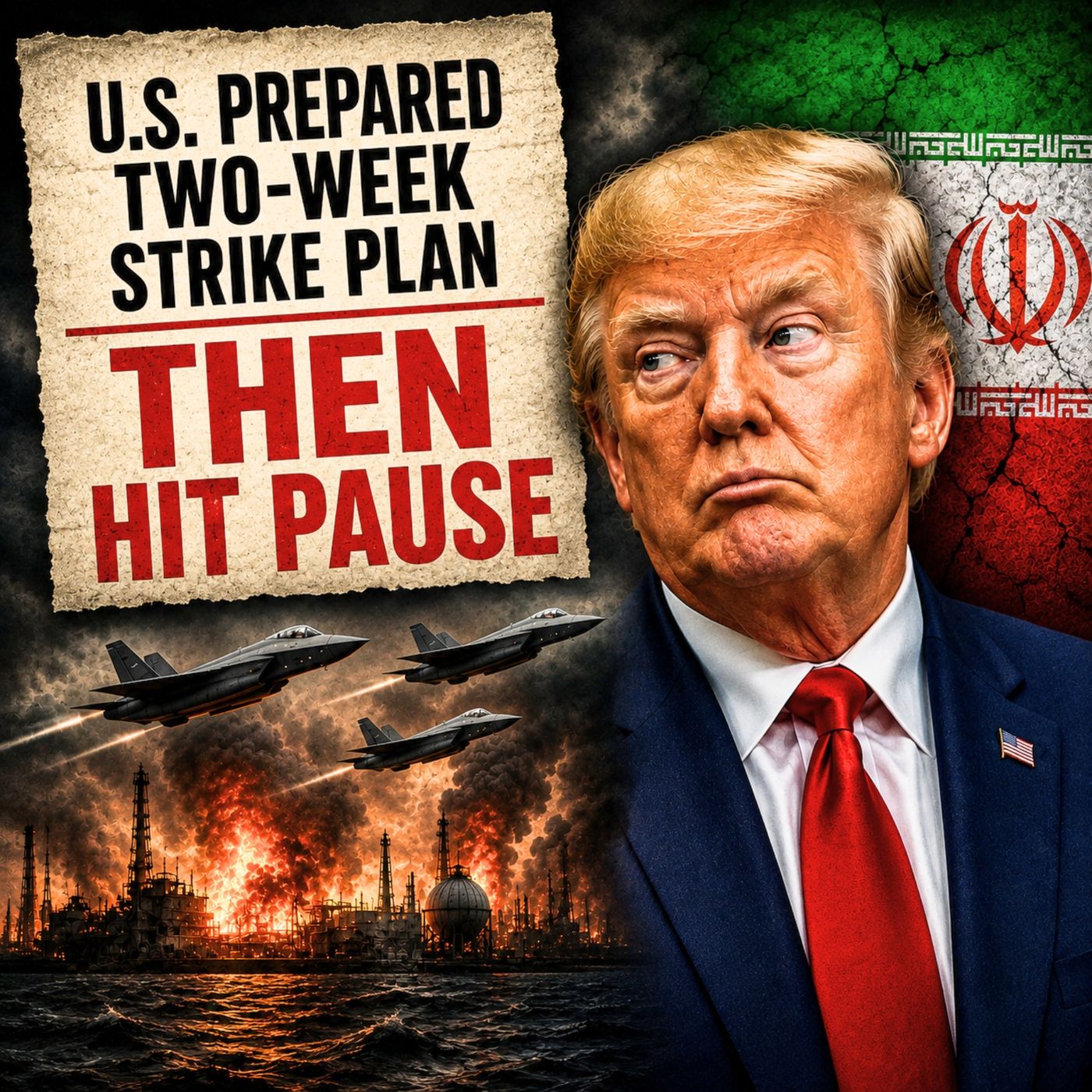
The Team House
Trump's Bluff Went Nowhere (Iran War Update) | EYES ON GEOPOLITICS
00:55:43
As reports of a much larger U.S. military campaign against Iran emerged, the Trump administration abruptly paused the strikes and shifted back toward diplomacy. We break down whether the threat of escalation was a negotiating strategy, why sanctions...
Loading summary
Transcript163 lines
- [00:00]
Ryan Seacrest
Hey guys, it's Ryan. I want to tell you about my new pastime, Chumba Casino. Chumba Casino has been around for over a decade delivering the most fun you can have online. Play social casino style games for free anytime, anywhere. So sign up@chumbacasino.com no purchase necessary VGW
- [00:13]
Chumba Casino Announcer
Group board prohibited by law See terms
- [00:14]
Jonathan Hackett
and conditions 21 Meet Keith Loving dad
- [00:17]
Jack Murphy
board game champ Bus driving pro.
- [00:20]
Mick Mulroy
I drive 65,000 miles in my bus each year. If people knew what I know, lives could be saved. Like how there are some things I simply can't see on my route. The other day a car tried to sneak past me and ends up right in my blind spot. I turn slowly, so accidentally avoided. But no car should be in the blind spot for a 40,000 pound bus. It's our roads, it's our safety.
- [00:42]
Jack Murphy
Visit www.sharetheroadsafely.gov I think inertia is a
- [00:47]
John
good word to use to describe what we see happening right now. Because if there isn't a change in policy, if it's the same policy just amplified or reduced, it's, it's the inertia of the operation continues moving in the same kind of general direction, which is the hardening of Iran's regime, the weakening of US Influence in the region, the growth of Saudi Arabia as a power regionally, the decline of Israel as a power in the region. And one thing on the horizon we haven't talked about is the growth of Turkey, also in the region because Turkey has always had the dream of returning to the Ottoman control over these, these places between today's Turkey all the way down to Yemen.
- [01:24]
Mick Mulroy
All right, guys. Hey, welcome everybody to another episode of Eyes on Geopolitics. I'm here with Jack Murphy, Jonathan Hackett and Mick Mulroy. A lot happening as usual throughout this past week. We had been striking Iran, that had stopped. And then there was talk more and more about a bigger hit potentially hitting like energy infrastructure. CENTCOM commander General Bradley Cooper briefed President Trump about a bigger campaign that would, that would roughly take about two weeks. I feel like we're living this war two weeks at a time, frankly. Another interesting thing I saw from Axios that the Trump officials basically were giving were saying how like they were surprised about Iran being so aggressive in terms of like the negotiations, which is like, I don't know how they can be shocked by that. They'd be getting pummeled for four months and like they're still around. And as the week was leading on, it was you hearing more and more About a bigger strike. Bigger strike or a bigger campaign, essentially, probably within. In conjunction with Israel, at least that was the talk. And last night, basically, it was paused. I don't know if Trump put out a statement or a tweet or whatever saying that. Oh, yeah, he did. It was like, ridiculous. You guys can go ahead and read it. I'm not going to read it for you. It was, you know, one of Trump's regular ridiculous kind of tweets that he writes. A lot of stuff happening in the background, too, that I was reading about, like Saudi Arabia, MbS called up Trump to, like, I guess, you know, to have Trump, like a kind of exercise restraint and stuff like that. Because Iran had, you know, warned and told everybody, supposedly, too, that they hit up, like Pakistan, Saudi Arabia and Turkey, that if they helped us in any way with this campaign or this bombing, that they would be in line for some sort of retaliation. So ended up last night late. Not late, even late last night. It's probably like 9pm Eastern. Trump releases that tweet, says it's not going to happen and that there's a possible deal on the table. This is shit we've heard before, many, many times. I don't know what the fuck's gonna happen, you guys. Tell me. It's beyond frustrating to live this over and over and over again. It's like Groundhog's Day. So I'd love to know what you guys are tracking with this. Mick, you go first.
- [04:00]
Jonathan Hackett
So I was, I mean, all week, as in every week, talking about this on abc, talking about trying to isolate the regime economically, etcetera, Sanctions, secondary sanctions. And then I see brother Jonathan talking to brother Jack about how that shit isn't going to work. I was like, damn it. And then maybe. I don't know if you guys. I mean, obviously those two know what I'm talking about, but maybe it's a good thing that Jonathan kind of does a summary of that. Again. I still. I'm still going to advocate that we have to do something. So. But I think it's important. The points that he had in that, of how the regime has kind of figured out their way around that, and essentially they still become rich, that it only really impacts the people. So I think we need to take that into consideration. But I'll leave that for Jonathan to explain even more. But so what do we see this week? We're in a situation right now where we obviously can't leave it at the current state or we have failed. And I always look at this as we look at it as a partisan thing, because I'm not. So I want to figure out a way out of this that's, that is successful for the United States, which I think also translates successful for the region and the world. Right. So we can't leave it like this. Burano controls the Strait of Hormuz. That's unacceptable. They are likely going to go for a nuclear weapon now. So we, we haven't ensured that they will never get a nuclear weapon. We probably have in part inspired them to. I think Midnight Hammer did degrade it. But now the people that are in power and I think could make a very good case that if they would have had the nuclear weapon, which some of them have been advocating for the whole time, they wouldn't be getting attacked right now. And I think even if you're any American who despises the Iranian regime, you can still put yourself in their position and say, so would I. Right. I would rather be, you know, North Korea than Iran right now. So we have not met that objective. We have to figure a way to meet that objective. The objectives that we came close to, like degrading their ballistic missile capacity, manufacturing capacity, etc. Are going to be replaced. So they are going to be replaced. So within six months. I don't know what the assessment is, but whatever the assessment is, we will get to a point where they have replaced it, maybe exceeded it, and now definitely aren't going to restrict themselves on amount and range. So we're going to get in a place where even that wasn't a success, at least at the time that they reach it. So what are we going to do differently? I really, and I know this might be difficult for the current administration, but they're going to have to do a little humble pie with the international community. Talk about the fact that even though none of them may have agreed or very few of them, with the US Going to war with Iran, this is impacting the world, it's impacting their people. This is a global trade issue. International waterways shouldn't just be the responsibility. Even if we had a potential cause in it of the United States, whether it's military coalitions, I know we talked about this last time, political coalitions, how to isolate the regime, how to find irgc, see commercial infrastructure around the world, seize it, stop it, affect it. I know this isn't going to be the be all answer to any of this stuff and it's probably going to take a long time, but something needs to change their perspective. The current situation, other than a major escalation is not going to change their mind. And the assessment of at least the CIA and DIA is, even the massive escalation isn't going to change their mind. So where do we go from here? I think that is at least part of the answer. But I do think Jonathan's point to Jack earlier in the week, I think, I think it was this week, I don't know, needs to be addressed as well.
- [08:06]
John
Yeah. And the thing that you're mentioning, Mick, about what Jack and I talked about, we did like an Iran deep dive, like a special episode, like a historical kind of, you know, narrow focus talk. I think that was this past week came out. So listeners, if they missed that, they can check that out. It was like off schedule. But basically we were discussing all kinds of things about Iran, but in particular the sanctions, because that's a big hot topic in the west, not just the United States, but even back when the JCPOA was being negotiated, that was a question of how do we fit sanctions into the JCPOA as part of it, as a response to them breaking parts of the jcpoa, plus separate US sanctions and separate EU sanctions that could be relied upon to influence behavior. Because that's the whole point of using the economic instrument of national power is to influence the, the outcome of another state's behavior in a way that's beneficial or at least neutral, not negative to us. And that big question is, do sanctions do that? And I argue that no, they don't. If they're alone, if they're used as a single insular tool to affect a country that's an authoritarian state, no. And the reason is sanctions are designed to harm capitalist countries. For example, in a democracy like America, if another state that was powerful, like China, for example, sanctioned America in some way, let's say on car manufacturing parts or Amazon items at their point of origin, or crude oil production that produces plastics, which the US Relies heavily on, somehow affecting this massively. So it touched a lot of Americans. Americans would go to the polls and they would vote and change the political representation in a way that would modify that, and that would be something that China would benefit from. That's how a sanction would work in a democracy. Unfortunately, countries like China, North Korea, Iran and others are not democracies at all. And they're actually designed to separate the small kernel of leaders from the rest of the population. And Iran is an excellent example of that, where the small kernel of elites are extremely resilient. And they have dense real estate portfolios in London, they have money in banks all over the world they have Swiss bank accounts with billions of dollars. That's why there's been all this discussion about unfreezing assets. In, let's say South Korea, for example, there's like $6 billion sitting in a bank account that doesn't belong to the Iranian people. Well, I mean it does technically, but it's not accessible by them. Instead, it's the regime alone that has control over this. And that's a big problem with sanctions is that, okay, you sanction an authoritarian state, they're just going to ignore the sanctions, they're going to further oppress the people, they're going to squeeze every dollar and cent out of those people, they're going to continue working in the black market. And it's important to remember, even in the United States, where we have capitalist economy that is free, most of our economy is actually in the private markets. It's not public. There's a whole shadow banking system in the United States, for example, you can't go and open a bank account at JP Morgan or at Morgan Stanley, but that's where most of the assets in the country sit is in these non bank banks. Iran has non bank banks too. So does Russia, so does China. That's how all these transactions are happening every day. Billions and billions of dollars a day moving between these countries despite these sanctions. So there's a lot of arguments for sanctions and a lot of arguments against sanctions. But I think it's something that's not debated enough and understood from the perspective of the ones being sanctioned, not from American consumption of voters who say, oh, it's good we did something, it's good to do something, but maybe there's other things to do as well. In conjunction with that, right now we're using a military instrument which we're using in Iran. We're also using an economic instrument. We're attempting to use a diplomatic instrument, attempting here and there. And it's very haphazard compared to the other two instruments. But there needs to be some more unification across these different instruments so that they're all going toward the same objective. Like you mentioned, Mick, there are certain objectives here. They have to be unified. You can't have three different objectives for each of these instruments going after the different objectives. They have to be the same objective with little components that kind of all lead to this larger grand objective.
- [11:52]
Jonathan Hackett
So we could still go after the irgc commercial infrastructure sees it to affect them since they are not insulated from their own means of raising.
- [12:03]
John
Absolutely. And actually a great example of that is I mentioned this before, like Audi and Mercedes, for example, three, not allowed to ship completed vehicles to Iran. So what they do is they just separate the pieces by several inches and put Styrofoam between them in giant box and crates, bring them into Iran, take the little pieces out, put the vehicles together. Now you've got a complete vehicle. Because the way the law is written, it cannot be a completed vehicle shipped to Iran. But pieces can be. Both sides are very smart. Both sides have an economic interest in evading this law. Right. Same thing in London. There's certain rules about how foreigners can own assets in the uk. The IRGC commanders read this and they're like, oh, I can just avoid this by incorporating a new business in Companies House, which is the UK's registry for basically, like LLCs in the United States. I can just incorporate this with a different person's name on a different little identifier here, but keep the address the same. Same building, same bank account, same postal address. All of it's the same. But because the way the law is written, I'm allowed to bring my hundreds of millions of dollars in here and then I can go buy all the real estate down in this very expensive area in Mayfair in London, which they do. They actually just bought a house. Moshtoba, from his coma, bought a huge mansion across the street from the Israeli embassy in London a couple of months ago, during the. During the war, while the war was ongoing. So it's like they see these laws, we wrote these laws, they know how to avoid them. It's like anyone who's wanting to get something done, they're going to look at it and be like, how do I go over, around, under or through this obstacle? Just like any survivor would. And I think it would be a mistake for us to think they would look at that and be like, oh, I'm not allowed to do it. No, of course they're going to find a way to do it.
- [13:34]
Jonathan Hackett
How do you even know that? Is that public?
- [13:38]
Jack Murphy
It is public.
- [13:39]
Jonathan Hackett
Oh, wow.
- [13:42]
Jack Murphy
The laws in the city of London are totally different.
- [13:44]
Mick Mulroy
Well, you got a ton of Russian money too, in London, too.
- [13:47]
John
Yeah. London's a great target because they left the European Union. So a lot of the rules in the EU that prevented a lot of this activity do not apply in the uk. Or at least they apply loosely.
- [13:57]
Jack Murphy
Hey, guys, I'm Jack Murphy here at the Team house and today I want to tell you about the sponsor for tonight's show, Mars Men. This is a natural testosterone support supplement, I take it. I've been taking it for about the last five weeks now, and I'm starting to notice a difference. You take five of these pills each day, and each one of these cans lasts you a month. I think you need to use them for a couple months to get the full effect of them. But I'm about five weeks in and I'm starting to notice a difference already. Increased energy, better performance in the gym, all of those things. I've, you know, quite frankly, in the past had a problem with testosterone, as a lot of military veterans do, as a lot of men who are going into their 40s do. And this is actually something that seems to be helping me get my levels back up even higher. So I'd highly recommend checking them out. It has eight different substances in it that help boost your testosterone count. If you guys will go and check them out, we'd really appreciate it. So would the sponsor. For a limited time, our listeners get 50% off for life plus free shipping and three free gifts@ Mengotomars.com that's Mengotomars.com for 50% off and three free gifts when you check out. After you purchase, they will ask you where you heard about them. Please show support for the show and tell them that the teamhouse sent you. Thank you, everyone.
- [15:31]
Mick Mulroy
Ch, ch, ch.
- [15:32]
Ryan Seacrest
Chumba looking for excitement. Chumba Casino is here. Play anytime.
- [15:36]
Chumba Casino Announcer
Play anywhere. Play on the train.
- [15:38]
Ryan Seacrest
Play at the store.
- [15:38]
Chumba Casino Announcer
Play at home. Play when you're bored.
- [15:40]
Ryan Seacrest
Play today for your chance to win
- [15:42]
John
and get daily bonuses when you log in.
- [15:44]
Jonathan Hackett
So what are you waiting for?
- [15:45]
Ryan Seacrest
Don't delay. Chumba Casino is free to play. Experience social gameplay like never before. Go to Chumba Casino right now to play hundreds of games, including online slots, bingo, Slingo and more. Live the chumba life@chumbacasino.com.
- [15:58]
Chumba Casino Announcer
no purchase necessary. VGW Group void where prohibited by law 21 terms and conditions apply.
- [16:03]
Jonathan Hackett
They could change the rules.
- [16:06]
Mick Mulroy
Yeah.
- [16:06]
Jack Murphy
Is one of the other problems with sanctions against Iran that. You know, we've had various levels of sanctions in place against the Iranians since the 1980s. And I mean, I feel like we really tried to isolate Iran from the international economy to the extent that we were able to previously.
- [16:24]
Mick Mulroy
I mean, that's not what we do with everybody. You know, we've done that with Venezuela, Cuba, like, everybody except China. Like, we really like them for some reason. But.
- [16:33]
John
Well, if you follow Mearsheimer's theory of international relations, which I know. D you love Mearsheimer.
- [16:38]
Mick Mulroy
I used to like Mearsheimer a lot. I think he's lost his fucking mind
- [16:41]
John
as of late, went off the rails. But the concept is basically like, okay, you've got this concert of nations and they all have their own interests, black boxes interacting with each other, all out for their own interests. And if you isolate some of them, even for different reasons, they're going to seek each other out for support because these, these states need support. They need international trade, they need places to put their money, take their money. All this stuff. It's, it's, it's not crazy to think that Iran, Venezuela, China, North Korea would become friends in this context. And it is kind of what's happening, of course.
- [17:10]
Jonathan Hackett
Yeah, I think that's a fact.
- [17:12]
Mick Mulroy
Yeah, I mean we're seeing. Go ahead, Mixar.
- [17:15]
Jonathan Hackett
So one, one thing I'm starting to hear more of. Do you think Iran would even accept anything close to the jcpoa? Again, like, could we say. Okay, I don't either.
- [17:27]
Mick Mulroy
No.
- [17:27]
John
And especially because Hassan Rouhani was the chief negotiator for that or not the chief negotiator. He's heavily involved in negotiations for that. He has a nuclear background. He was the president at the time. Afterward, you know, it's kind of this, this moment of detente where the Iranian government was kind of opening up a little bit. Kind of like glasnost in the 1980s with the Russians kind of thinking like, okay, we need to be a little more global now. But as you can see, there's a massive backlash to that in the regime. And they were like, no, that was, that was wrong. Look what it did to us. It harmed us. We are never going back. And even now they talk about Rouhani being a traitor, they talk about Ahmadi Nejad being a traitor, which is crazy because Ahmadi Nijad is like died in the wool revolutionary Iran. So like to hear some of these folks say that, I mean, it just shows how opposed they would be to going back to something like that, which again they said was heroic flexibility, sacrificing to even accept this deal in the first place. There was a lot of humiliation and shame within the regime decision making body to accept that in 2015 in the first place. And look where it got them. Especially after 2017, 18 when we withdrew from JCPOA, took them out of Swift again, which was the banking system in the world, forced them into this shadow banking system even deeper, which then hurt us. So they see that as a big mistake and they won't go back to that.
- [18:42]
Mick Mulroy
Yeah, I know that. They're like, obviously the IRGC is not a trustworthy organization. Like, I know that. But they're obviously very cunning negotiators and just in general, very crafty. Why would they ever trust anything we have to say at a negotiation table? Because the last one, that was like a real negotiation that was, you know, it was going over the weekend and set to start on Monday. We bombed Iran and smoked, like, you know, their top tier leadership.
- [19:18]
Jonathan Hackett
Yeah. And we had an MOU that lasted how long? Right.
- [19:22]
Mick Mulroy
Yeah. I mean, 48 hours or whatever. It was short.
- [19:26]
Jonathan Hackett
It seems like Secretary Rubio is getting more involved. I think that's a good thing. I think he's very experienced and
- [19:35]
Jack Murphy
because
- [19:35]
Jonathan Hackett
whoever did the draft of that MOU that failed miserably, it was so vague that it was a waste of time. And it probably, to Dee's point, I think it's going to make actually solving this more difficult because now they don't even. They don't. And potentially we don't believe each other at all. Even after written in signatories and signing it in France and all this other stuff. We're going to have to get the professionals involved in the negotiations and we're going to have to actually stick to our agreement or the whole negotiation process is going to be just considered window dressing. Like, both sides are doing it because it doesn't commit them to anything, and the rest of the world's eventually going to figure out it's simply not going to end. So whatever impact it's going to have on the international energy markets or stock markets and just going to have, because they're going to stop listening to or on the verge of a negotiated settlement or we're on the verge for mass. I mean, they're just going to say, that's just like Charlie Brown's teacher talking right now. It's just not. It's just noise because we get to the verge of all these things. And then, like, I think right now, correct me if I'm wrong, but the last I checked was we were going to do a massive escalation. We heard that he had approved it, and now we're not. Because there's some framework that's agreed to.
- [20:53]
Mick Mulroy
Yeah. But we. So I wanted to mention that because, like, that's part I missed in the beginning. We introduced that framework last minute. It wasn't Iran being like, you know what? Like, let's talk. So, like, this whole buildup over the last week about this massive, you know, bombardment or this campaign for two weeks, frankly, seemed like a bluff. And like, we. It's. It's not like it's the first time a couple weeks ago was the same thing. Like there was a talk about a bigger escalation and stuff like that. And then Trump suddenly stopped it. Like, how many times can you do that before it's like shit or get off the pot, this isn't going to work. And clearly it didn't work this time because it wasn't like Iran was calling up and saying, hey, let's, let's talk about this. Like we gave the Qataris a deal to give to Iran and then we paused the, you know, the airstrikes.
- [21:44]
John
It also seems the Saudis played a big part in this. I mean we all saw that MBS called Trump. But I think, you know, over the weekend, Saturday in fact, Kuwait was hit by drones. There was a ship that blew up off the coast of Oman. So there's a lot of kinetic activity that's concerning to Gulf countries, to the GCC countries. And I think it's not just mbs, it's other Gulf countries, obviously the Kuwaitis because they got attacked yesterday. But others calling up the US and saying, hey, please tone it down, or even to Iran as well, if it's Qatar and Oman asking Iran, please tone it down because you're affecting our situation here locally. Because there's the regional concern too. It's not just an international conflict, although it is. But for the GCC countries, they're very concerned about the here and now, like what they can see right off their coastline and that's, that's their, their lifeblood, the economy that flows out of there. And the longer that there's under attack, the less they can return to the status quo, which if they ever could, I'm not sure.
- [22:34]
Jonathan Hackett
So an interesting point, somebody brought up on the Egypt attack, more tactical I suppose, but there's a view that it might have been launched from like a maritime platform. Right. Because the Shahed even like the 136, this person explained the travel from like western Iran to get there would have taken hours. It would have gone over multiple countries. It would have probably if it would have been launched by the Houthis. Still, same thing would have gone like the entire length of Egypt. So where did it come from? And I'm sure, I'm sure the intelligence community is looking for the answer, but it's likely didn't come from either of those two places. So are they starting to use like clandestine maritime platforms that they can launch and then ski daddle but get closer to things like Egypt? Right. So there's Suez canals there too. Right. Is that going to be challenged. Is, is this something we should be looking at?
- [23:28]
John
Well, you think about the daos that they use already. The Houthis use these. The, you know, part of it's in daos are these small wooden craft, small boats that are very hard to detect that actually make up a lot of their non standard maritime capability. Not only Iran, but also the Houthis and in Somalia as well as another concern along the Horn of Africa region all the way up into the Red Sea, up and down the hundreds of kilometers of coast of Egypt there. It wouldn't be difficult to get a dao that can hug the coastline, popping along the coastline, keeping it in view, you know, about 10 miles off the coast, just moving all the way up until they get to a point where they can launch that shahed with that they had hidden underneath the, you know, the underbelly of the Dow and then skidaddle out of the way or continue on as if they had just been, you know, trading up and down the coast like they have for centuries. It's very hard to track these, these daos and I think it's a major concern from a non standard maritime perspective.
- [24:21]
Mick Mulroy
Jack, you wanted to say something?
- [24:22]
Jack Murphy
I think I was, I was just going to add that, you know, there's this sort of like, you know, wishy washy sort of conversation that I don't think a lot of people want to have or hear. But the question of credibility and the question of hard power versus soft power and I think this administration's approach has been, you know, that soft power doesn't exist. That's not a real thing. Everything is about hard power. We have more guns than you do. And there's a certain amount of, you know, that holds true to a certain point. And I think we're seeing that right now that, you know, we need diplomacy, we need diplomatic pressure, we need all these other things and just relying on airstrikes as a method of hard power to lead into negotiations. I mean, I think we just don't have the credibility. That's what sort of you were saying D that like we go back and forth and back and forth and at a certain point people just don't believe what you're saying anymore.
- [25:19]
Jonathan Hackett
Yeah, it's kind of like that old story about Vietnam or the US Colonel says, you know, we won every battle.
- [25:26]
Jack Murphy
Yeah.
- [25:27]
Jonathan Hackett
And the Vietnamese colonel said that's both true and irrelevant. Like we do have the most guns, the biggest guns and the best guns and the best military. I think even Iran would probably say, yeah, gotcha. And right now it's not that relevant. Right. So the issue I think is we got to have better policies, better policy makers make better policies. And I'm not making this partisan, but this has been something that's gone through multiple administrations now, you know, and meaning Democrat and Republican and you know, when's the last time we really came out successful? Say winning a war is, it's kind of hard to find, right. But being successful for having gone to war, like for the country, you know, I'm obviously biased, but it's not the military's fault. They're told to do something, they do it the best they can. They're told to expand, they're told to this and it is the actual decision makers, whether they are both sides of the aisle, need to stop relying on the fact that we simply have the best military, that they can do anything they want. Even if the policy itself is flawed, it can't necessarily make up for bad policy, which I'm getting. And again, that has been decisions over the last, I mean, when's the last time we had successful military endeavor?
- [26:47]
John
Operation Anaconda and then we continued after October 2001.
- [26:52]
Mick Mulroy
Yeah, I was going to say Grenada.
- [26:56]
Jonathan Hackett
Well, yeah, well, I mean I think, I think that like if you look at Desert Storm, right, it was limited in scope, it had a clear objective and we stopped there. So I know a lot of people, oh, what is it in a war? Well, that's the point. That's the point. You know, the point isn't to have a long drawn out war where everybody gets, you know, combat action rivets. The point is to win and be successful with our policy. So it might have been 100 hour ground war, but that's what we want. Because it was a clear set objective, the military understood what it was politically, strategically and how to accomplish it, the accomplishment. And then they were done. There wasn't no expansion, there was no fishing creep. We didn't rebuild the country anyway. So that's a bigger issue that I doubt we can solve here on eyes on. But people need. I guess my grand point is just because we have the biggest military doesn't mean we can fix flawed policy decisions.
- [27:54]
John
And on your soft power note, I mean look at China. They are maximizing soft power in a way that is globally true successful and has been. And it's not a secret either. They're very vocal about this is our goal. We will set up this stuff around here. We'll publish these documents that say these things about what we're going to do and Then they go do it. And then we're like, oh my gosh, they're setting up police stations in Solomon Islands. It's like, well, they said they were going to do that like years earlier and they're doing it right now.
- [28:20]
Mick Mulroy
I mean, they have it them in New York, they have like these unofficial police stations in Brooklyn.
- [28:28]
John
They had one in Texas and the consulate got closed because they were doing that.
- [28:31]
Mick Mulroy
Wait, John will do a way better job of this than me.
- [28:35]
John
So they're basically enforcing China's laws inside the United States using these clandestine police stations with actual Chinese domestic police in out of the embassies. The embassy, I don't remember if it was Houston. It was one of the major cities in Texas during the first Trump administration was closed because of this reason. There's one in California and there's one in New York City. The New York City one's huge. And they're actually like going out and enforcing Chinese laws inside the United States.
- [29:01]
Jonathan Hackett
So on Chinese citizens or Chinese Americans or what's the.
- [29:04]
Chumba Casino Announcer
Both.
- [29:05]
John
So they're using that pressure campaign that, you know, the mss, the Chinese Ministry of State Security does as well, where they'll say, hey, you're of Chinese origin or you're Taiwanese origin, you're going to either work with us or we're going to do something to your family in whichever place they are, and so on. Or actual Chinese citizens who are here doing things, dual citizens or even visitors, they enforce laws against them as well. Yeah, that's soft power.
- [29:30]
Mick Mulroy
Yeah, it doesn't get any like. Yeah, it's pretty incredible. Where do you guys think this goes? I mean, we're kind of like in this fucking like nebulous like purgatory area where the. All right, we're not gonna bomb them now. Doesn't seem like there's a lot, like real deal talks, maybe some back channeling and stuff like that, but frankly, we all know what the issue is and you know, I don't see Iran giving up their stranglehold on the Hormuz. So. Right. Where do we, where do we go from here? Is it still more. Are we gonna do this two week campaign from CENTCOM Commander Bradley Cooper or like that's gonna go where? You know, arguably it's could be work, you know, hitting infrastructure, could be looked at as war crimes. I know that some of them are dual use and stuff like that. But like, what does that do if we, if we start talking about it again, if we actually go through it? What does that do if like Iran starts retaliating hitting Israel, hitting our bases continuously, we're still at the same fucking place. And then gas is likely $10 more per gallon, you know, per barrel. So if not more. Because at some point, you know, China was doing a little bit to like kind of alleviate the global crude price, but they've since stopped doing that. So at some point, like someone's gonna have to pay for this fucking check, you know what I mean?
- [30:53]
Jonathan Hackett
Like, yeah, it does sound like we're gonna focus on infrastructure targets because I imagine there they've assessed that, look, we've hit a lot of military targets and it's not changed their perspective. So I think you're right about the issue of international law and whether this is clear. Under the law of armed conflict, it has to have a serious nexus to their military capacity. But say for argument's sake, it does. It still doesn't negate the fact that they have a vote and they're going to counterattack. Right? So if we hit, I think there's three main energy generation facilities that would have major impacts on the people as well, of course, as the regime. And they're going to of course, do the same thing to all the Gulf allies. So I imagine the Gulf countries are super concerned because power desalinization, it would have a bad impact on Iran, it would have a catastrophic impact on Kuwait, Qatar, uae, Saudi Arabia. I mean, they have a population that can't necessarily exist there if they don't have the capacity to make water. Like, how long could you go without water? Was it three days? What are you gonna do with a population if you run out of water? And I don't know the details of how, but we do know how reliant they are on it and so does Iran. And I'm sure they've made an assessment of how they could actually overwhelm their system. And what's the other issue on, on escalation? It's the lack of interceptor missiles, right? So it's, you got kind of a perfect storm. So we hit them, they hit our allies because we don't have the adequate enough protection. And it causes catastrophic humanitarian issues.
- [32:37]
Mick Mulroy
Just like for the numbers, like in terms of Patriots, we started off with 2,400 in the region, we're down to 800 THAAD missiles, we had 450, we're down to 250. So we have 1,000, a little bit more than 1,000. We're going to start using SM6s from the Navy, like more $8 million, 6 million dollar interceptors to knock down these $50,000, drones. Like, how is that cost effective? Forget about the fact that people are fucking dying. Obviously, like that's the first and foremost we should think of that. But how does that make sense on our end? Especially like we spoke about it last week or a week before, like how many patriots can we actually build a year? We can't resupply what we have, not in this quick a time frame. So like we're gonna this, the ice cream's running out. Well, what happens when there's no more?
- [33:28]
John
Well, the other problem is that Iran is not just a static adversary. They're adapting and learning from how we are employing our air defense systems. And the Khaybar Shekan, which, or Shikast it means like Khaybar destroyer. Khaybar is a place that there was some Arab Jews during Muhammad's time. Muhammad ran them out. And they've named currently this missile after that episode from the Quran. And this is what they're using to attack Israel, Jordan and some further targets. It's a medium range ballistic missile and it's very advanced because it's able to actually adjust itself as it comes down on its lower trajectory. And they've actually noticed how our air defenses work and they've adjusted that adjuster to better work inside of our air defense envelope so they're able to actually overcome. And that's actually the weapon they used in Jordan a few weeks ago, not the most recent one now that was intercepted, but before that, that actually did strike and kill Americans. I saw some people saying like, oh, you know these, these targets have been on the map for many years. It's on Google Maps. It's like, yeah, but you don't know where the actual people are at that moment. But if you're using SIGINT and you're using adware exploitation, which is what they actually used to strike some Americans elsewhere in the Gulf. They're using that to triangulate and figure out the 10 digit grid for where to actually strike and kill Americans. And they're doing it really well and they're learning each time how to do it better. And it's, it's dangerous for us to view them as a static adversary that's just sitting there launching ballistic missiles, which is part of what they are doing, but they're doing it carefully and thoughtfully each time in a way that they're trying to improve casualties and harm toward Americans. And I think that's something that we shouldn't forget too.
- [35:02]
Mick Mulroy
Like isn't this the stuff we study about asymmetric warfare? Right? Like it seems like they're winning in that right now by a lot. Because if we're spending 4 million bucks for a Patriot missile on a $50,000 a HE drone, the cost benefit analysis isn't there. Exactly. It doesn't really make sense. I'd love to know if, like, where are we? Obviously it's probably classified, like, where are we with a lower cost interceptor system that is actually, actually makes sense in this scenario or most scenarios.
- [35:34]
Jonathan Hackett
So how's the Iron Beam work?
- [35:36]
Jack Murphy
There's, there's all kinds of counter UAS systems and things that are being developed and all sorts of different technologies. Like, it's a huge endeavor, but like, this is like the basic problem that the US military has had since 911 is that we were built to have these big slug fests with the Russians and then we end up fighting counterinsurgencies or, you know, another state actor like Iran that's, you know, uses asymmetric tactics and we have this bespoke military gear that costs billions of dollars. That's countering, as you point out, you know, a drone that costs, you know, $10,000. And so the ROI just doesn't really make sense over the long run, you know, in a protracted conflict.
- [36:19]
Mick Mulroy
Because, like, aren't. Weren't Patriots designed to shoot down migs and Sukhoi and no Patriots were designed
- [36:25]
Jack Murphy
to shoot down like ballistic missiles or other ballistics.
- [36:28]
Mick Mulroy
Yeah, but at least ballistic missiles are like expensive. So most likely they're going to be like dollar for dollar or at least close to it.
- [36:36]
Jonathan Hackett
That's why the equation used to work.
- [36:39]
Chumba Casino Announcer
Right.
- [36:40]
Jonathan Hackett
And we have like. So I mean, folks that follow the show, we have Lobo as a training facility. Training testing facility in Montana. I know that the DoD, because they have a hub at Montana State University and they're working with us, are basically looking for companies that claim they can do this. And testing them like this has become like the Manhattan Project I think of today is what Jack is just talking about. Like, we gotta figure this out fast because this isn't going to work. The current basically dynamic is not acceptable. So I will at least hear about it. Because we're not, we're not a company that does this stuff, but we're a company that hosts the testing. Hopefully it happens really quick. But I throw it back to you guys, I mean, we know the iron beans in operation now, right? Is it, how's it if, you know, if you don't, sorry for asking, how is it being rolled out? Is it being successful? Is it the kind of, what we hoped that you could use a relatively inexpensive defensive system to shoot down even in, you know, more expensive incoming threats. And are we exploiting it? And is there a US version? And what are we doing to maximize it?
- [37:57]
John
The thing with air defenses is if you look at, usually in the military, you'll see a chart that has different air defense intercept points at which which tool can intercept which air defense item at which altitude and which speed. And the problem with Iron Dome and Iron Beam is that they actually are designed for a very narrow intercept envelope.
- [38:16]
Mick Mulroy
They're different, close.
- [38:19]
John
Not only that, but it has to be coming at a specific trajectory. So for example, if you have a weapon that is too fast, like a hypersonic missile, it won't even detect it. Or if you have a weapon that's too low and slow, it also won't detect it because the radar cross section doesn't make sense to it as far as what is an adversary item and what is not. So it can actually target specific, like kind of pie piece. Right. So you need other tools. That's why the THAAD is important. That's why the Patriot is important. And actually Patriot and Iron Dome work well together because they covered very different sections of the air intercept space. Without getting too technical about it, but if, you know, people can just look it up online, there are these graphs that show you, you need like five minimum different types of air defense systems to actually cover like 80 or 90% of the sky. That still leaves a 10% gap. And that's not even counting for asymmetric uses of these weapons and new tools that are used in different ways than they were initially expected. For example, the anti ship missile that the Houthis have, that's a direct fire weapon that's supposed to go from a launch pad on the Earth to a ship that's not designed to be a air weapon coming down. Right, right. But the Houthis are using it as that. So that's something to think about. When these, when these tools are designed, they're designed for specific weapons at specific times and altitudes and so on. So it's a concern that we just can't cover the sky enough. And that's true. I mean, even with a cram, if you've seen video of cram, it's very good at shooting stuff down, but doesn't shoot everything down. And you don't have an unlimited supply of munitions there on the ground. Maybe you've got stuff in theater, but if the enemy knows what your actual saturation point is based on their testing of Your air defenses, they can figure out that, hey, we can actually oversaturate you. And Iran did that when they attacked Israel a little while back. They did get weapons inside and hit the ground, hit targets because it was a saturated air defense environment.
- [40:03]
Mick Mulroy
Jack, you're, you're a journalist. Give me a, ask a question.
- [40:09]
Jack Murphy
Well, I mean, I'm not to be like, unhelpful or unconstructive, but like, we've done certain things here in this campaign against Iran that cannot be taken back or undone. And I feel like we have kind of run ourselves down into a cul de sac from a policy perspective, and it's an imperfect example, but, you know, Vladimir Putin did the same thing in Ukraine. He ran his country down into this kind of cul de sac that he can't return from. And as Mick pointed out, maybe we have to eat some humble pie on this one, but then there are personalities involved in all of this, and this administration doesn't particularly do humble very well. So I have, you know, I wish I had answers. I wish I could, like, give you some sort of prognosis of like, where all of this is heading. But unfortunately, I suspect it's a stalemate that's probably going to run through the rest of this administration and the next guy is going to have to figure it out, come to some sort of peace treaty or something.
- [41:13]
Jonathan Hackett
That's probably the case. And you know, and I agree, like, this isn't about just throwing mud. Right, Right. It's easy to, you know, any war to just throw mud. It's super easy. So it is about, at least, I think our discussion always is, about how to advance U.S. interests. So it isn't just poking somebody in the, in the eye. But it's really difficult to see a way out of this that's not just a stalemate. Like, escalation doesn't seem to be just, if you listen to the reporting on the assessment, an option, even though we might do it. But we can't accept failure. Like, we're not, I don't think. Right.
- [41:57]
Jack Murphy
Well, your point about the strait of her muse and the highly enriched uranium is correct. Like, I don't think we can accept that as a country to just like, leave things as they are.
- [42:08]
Jonathan Hackett
Yeah. And so maybe the other next administration, be it, you know, Republican or Democrat, gets a new crack at this, but that's a long time to wait in the current circumstances.
- [42:19]
Mick Mulroy
Yeah, I think it's time for the America and our, whoever is following this to kind of like, kind of come to the Come to the realization that we've broken it kind of beyond repair. And you know, I would argue, or there's some people that would argue because it's arguable for sure that like is even being involved in this thing with Iran right now in America's interests. Thankfully, you know, we live here, so our gas prices are higher, but it's not like, it's not to the point of like what you see is going on in Europe and everywhere and Southeast Asia. But, you know, it does affect our, our economy in some sort of way. And would it make sense to like, disengage? I'm not saying completely, you know, still be around whenever ISIS pops their head out to fucking chop it off. But.
- [43:14]
Jonathan Hackett
But what would that do though? Like, they're still controlling the straight of Hormuz.
- [43:20]
Mick Mulroy
That's going to be the new reality on the ground. I mean, unfortunately, like, I hate to admit it, but, you know, we knew this was going in like for 30, 40 years, that this is what likely would happen if we attacked Iran. And it's happened pretty much probably to the book maybe, maybe a little bit more. Like people are a little bit more surprised that they were attacking our bases and our allies in the region as much. But we knew Hormuz was on the table. That's why George W. Bush, when he probably had the most political capital ever, when he went into Iraq, those earth that early first six months maybe could have pushed it, but that's why no other administration ever did that like attacked Iran, because they knew the fallout would be rough. And even it would, I would argue it would have been rougher for them to go in because we weren't so energy independent at that time. But now we relate. We pretty much are. Even though it's a global market and everything like that. But yeah, I think, unfortunately, I mean, I don't want to say, like, I know Iran's gonna win this one, but
- [44:20]
Jonathan Hackett
they probably will go toward a nuclear weapon.
- [44:22]
Mick Mulroy
Right, of course. Mentioned that, yeah.
- [44:24]
Jonathan Hackett
So we, we can really disengage.
- [44:27]
John
Engage.
- [44:27]
Mick Mulroy
Yeah. If you read John's incredible book, I Ran Shadow Weapons, their number one thing. It's not exporting revolution. It's not any of that. It's regime security. And the ultimate regime security is having, you know, a hand, a dozen nukes. No one's gonna say to you ever again, you see North Korea, the guy's a lunatic.
- [44:45]
Jack Murphy
You know, something I would like to ask you guys about that. I've read and heard and. But you know, to. It's a fascinating kind of thing to think about and look at because it's not something that they really, it's not a theory that they teach in college. This idea that the administration is waging this war in a manner to, I guess you could say, game the markets, that they're doing these like weekend bombing campaigns when the stock exchanges shut down and then calling them off. And I mean that's. Do you, do you guys feel that that's true, that that's the approach that they're taking? And if so, I mean, how does that impact our worf? I mean, I don't think we've ever fought a war quite like that before.
- [45:29]
John
I think one thing to recognize is that even if it, whether it's true or not, that they're doing this consciously to exploit the market. The market is an efficient organism and it's going to adapt in ways that make the most benefit out of the situation. So every time that this occurs, the market as a whole general information collective adapts to the situation and there are new benefits to be created and extracted from that behavior. Like for example this weekend, the announcement that this will, that the attacks will happen and then the de escalation. If you look at after hours trading, you can see the market responding to this as an organism which is many, many people's different decisions, including institutional investors and you know, quote, unquote, dumb money, which is everybody else, retail investors, all reacting to this situation in a way that creates value for some people to extract the value. So whether it's intentional or not, there are people that are looking at this and saying, how can I make the most out of this situation? And there are a lot of people doing that. Some of them are inside the administration, like the teleprompter guy that just got outed for making, you know, insider trades based on things that he saw on the teleprompter that Trump was about to read minutes later. Right. So there are actors out there, whether that's intentional as a policy or not, who are saying, hey, this is my shot to make some money. And that is insider information. And it's very difficult to go after when the Consumer Financial Protection Bureau and the CFTC are regulatory capture with, with the current, you know, way of thinking about the economy.
- [46:51]
Mick Mulroy
John, you get me fucking crazy saying these things right now. You said just could. Don't get the, don't get the fucking lefty out on me because they fucking gutted that fucking agency.
- [47:02]
John
Yeah, so like polymarket and Kalshi can't really be regulated very well because those like CFTC and CFPB and ftc. First of all they can't figure out who's the one that's supposed to regulate insider trading on on those markets.
- [47:14]
Ryan Seacrest
Right.
- [47:15]
John
Like they're infighting with each other about that. And there's also not a lot of political will to to answer that question. I'm not saying stop it from happening.
- [47:22]
Mick Mulroy
You get me? All right. So and frankly like a ton of a dozen states or more have filed cease and desist lawsuits against Calcium Poly Market the betting exchanges because all like DraftKings and sport and FanDuel they've gone through the state legislator to get approved for for to operate in that state. And Kalashi and polymark are just because it's a prediction market bullshit is can do it anywhere federally. Right. So they a lot of states file cease and desist or file charges and the DOJ is actually fighting on on the side of Calcium polymarket against the states. Like it's fucking crazy. It makes no sense. John got me triggered. This is John's fault everybody and also happens to be a strategic advisor or whatever somebody like on the board getting paid from this is Donald Trump Jr. Like shocking. Yeah. So okay, that's it. That's my library for the week.
- [48:20]
Jonathan Hackett
When does it the statements, whether they're manipulation or not just simply not work because they're. They're known on the market.
- [48:28]
Mick Mulroy
It's a good question Market.
- [48:29]
Jonathan Hackett
And on the energy market. Right. Because at least an amlodge and financial guy but like if you're looking for futures on the energy market, you actually need to be accurate. Right. Like you can't just take a false statement that's designed to manipulate you and go with it. Is my question more the point?
- [48:49]
Mick Mulroy
Well, I think, I think like for the insiders most likely like that last week there was a short position that was taken up on oil. Right. Right before the 13 days of bombing were going on and we stopped and like somebody knew obviously that we were going to stop at a certain time they took out a position and oil went up or dropped or I think it dropped 7%. So in that 7% somebody made a fuck ton of money. Especially if your bet's big enough.
- [49:15]
John
The other thing is these oil futures that you mentioned. Typically if you compare oil futures and the bond market, there should be some correlation between how people think about the future for bond returns because bond returns are based on future US government decisions and futures which are private decisions but also react to public choices that the US foreign policy makes. And they're divergent in A way that is unusual right now, and they're actually converging back again. In other words, the market is ignoring what the government is saying to some degree and thinking it's less dangerous than it sounds. Which is interesting. It's like you're saying, mick, it means that the economy largely is basically adapting to this rhetoric and saying it's not as bad as it sounds. So we can just kind of continue on as usual. And if you look at the harmonics of the market, of the. Of the future's reactions to all the statements that have been said since February 28, there's a dramatic decline in the reaction to those statements as time goes on.
- [50:10]
Mick Mulroy
It's because how many times can you possibly make the statement right? Like, you know, crying wolf, like. Yeah, you can only do it so many times before. Like the market really like jumps or go. Goes up or down.
- [50:21]
John
Right.
- [50:22]
Chumba Casino Announcer
Dramatically.
- [50:22]
John
It's like Kim Jong un back in 2006 when they first. Or Kim Jong Un. Yeah, no, Kim Jong Il. Sorry, Kim Jong Il when He first in 2006, successfully launched a nuclear weapon test. Huge market reaction to that. But as time went on and the. The Kim family made more and more statements about nukes, there was less and less reaction globally in the markets to those statements because we realized that, well, they're probably not going to launch nukes at anybody. It's just testing and it's rhetoric. And it kind of dramatically declined. Even during Trump 1, when there was a lot of changes in our relationship with North Korea that were being expressed, the market still kind of put less interest in that. And you saw slower reactions to those statements, both positive and negative statements.
- [51:01]
Mick Mulroy
So what happens next, guys? You guys are the smart guys. Tell me, Jack, you first.
- [51:06]
Jack Murphy
Didn't I already say, I can't really predict what's going to happen, this is going to end.
- [51:11]
Mick Mulroy
I didn't hear that part.
- [51:13]
Jonathan Hackett
It's hard to predict predicting the future. We'd be on catchy, right? I mean, I don't even know. I don't even know how to get on that thing.
- [51:21]
Mick Mulroy
Well, it's quite easy now. You could do it anywhere. And that's.
- [51:23]
Jonathan Hackett
I think anybody listens to us and then tries to predict on Kelty.
- [51:28]
Mick Mulroy
I mean, they should listen to John. He's predicted some stuff. I should. I should have bet some stuff John was saying. I mean, he met. He called it like, I think, as when maybe we were leading up to it, not before the bomb started dropping. Like the Mosaic thing's gonna happen. IRGC is going to take control and there's not going to really be much central control over anything, really. It's going to be commanders in the field deciding what to do when they want to do it. He called that. You know, you called it on the button. I don't know how you could have made money on that. Well, we did text a little bit while I was going on who was going to be the next whoever, and you called it, and I should have bet it, and I didn't.
- [52:04]
John
I was also on an interview with somebody else, and they asked me two days before the conflict started. They're like, what do you think's happening? I said, I think we're going to war in two days. And we did.
- [52:12]
Mick Mulroy
Hell, yeah. We're gonna start charging for we should. Predictions.
- [52:16]
Jonathan Hackett
Yeah. Like. And subscribe.
- [52:18]
Mick Mulroy
Yeah.
- [52:18]
Jonathan Hackett
For your found out like button. Yeah.
- [52:22]
Mick Mulroy
Get rich on Kali. And you know, from our predictions. All right, quick, before we get out of here, are we just going to keep doing this over and over again for the next two years?
- [52:35]
Jonathan Hackett
That's where it's going. To Jack's point. That's where it's going. I mean, there's. I don't think we can accept failure. And if there's a way to come up with a success, I hope we find it. But it's very difficult to see from here.
- [52:49]
John
I think inertia is a good word to use to describe what we see happening right now, because if there isn't a change in policy, if it's the same policy just amplified or reduced, it's the inertia of the operation continues moving in the same kind of general direction, which is the hardening of Iran's regime, the weakening of US Influence in the region, the growth of Saudi Arabia as a power regionally, the decline of Israel as a power in the region. And one thing on the horizon we haven't talked about is the growth of Turkey also in the region. Because Turkey has always had the dream of returning to the Ottoman control over these. These places between today's Turkey all the way down to Yemen, they have always wanted that back. Erdogan thinks that he's out of Turk, too. And you're going to see that expansion as well, especially vis a vis Israel, as Israel loses power in the region. Turkey will fill the vacuum, not Saudi Arabia. It's mostly going to be Turkey. So I think we should look out for that, especially in Syria. Jelani was not put there by accident. That was heavily supported by Turkey. Right.
- [53:45]
Mick Mulroy
Yeah.
- [53:46]
John
And you're going to see that with the Kurds across North Iraq and also in Syria, the way the Kurds have shifted position vis a vis Turkey. These are things that off, you know, Iran takes our attention, but it's important to have the context of what's around Iran and what comes the day after. Whether that's a treaty or whatever it is, but the day after that thing happens, what's next? You know, nobody just like stops moving. It's like musical chairs. They're going to continue rotating around and it's important to keep focus on what are the things next.
- [54:17]
Mick Mulroy
Always a pleasure. As always. I want everyone to do us a favor like and subscribe if you're following us. If you're listening on online on audio, you could subscribe and like there. Jack Murphy's got a new book out called the Most Dangerous Man. It's an incredible book. That link's in the description, of course. John's books, the Theory of a Regular War and Iran Shadow Weapons. Incredible. Those links are in the description. We're waiting for mix memoir to come out. I'm excited about that.
- [54:42]
Jonathan Hackett
It's not gonna happen.
- [54:45]
Mick Mulroy
Make the White Fish Security Summit. Yeah, I would love a towel inside gb inside Ground Ranch tells all that's the Whitefish Security Summit. Check that out. That's happening end of February next year, 2027. And his new podcast, Pupping the Porch, Applied stoicism. All those links are in the description. And check us out on Patreon patreon.com theteamhouse Guys, love you. Thank you.
- [55:17]
Jack Murphy
Thanks everyone.
- [55:19]
Mick Mulroy
Drew McIntyre here from WWE. Wielding the Claymore can be a life of king chaos. When I'm not dominating in the ring. Chumba Casino is how this warrior takes a wee break. With hundreds of online social games and new weekly releases, there's always something fresh to try and those daily boosts next level. Even my free time feels like Valhalla. So when life feels like a battle, kick up your feet, have some fun and let's Chumba.
- [55:44]
Chumba Casino Announcer
No purchase necessary vgw group void where prohibited by law. Cts and Cs 21 plus sponsored by Chumba Casino.
- [55:50]
Mick Mulroy
Hello everyone. If you're hearing this, you are not a member of the Patreon. You can get your hands on ad free episodes that come out early and you can ask us questions, maybe we'll answer them. You can also watch the Teamhouse podcast completely ad free and early and you can also watch it live as we interview our guests. And it's the best way to support the channel. So if you can, if you're open to it, you can go to patreon.com theteamhouse that link is in the description. We appreciate the supporters and we hope you would consider being one. So it's patreon.com theteamhouse thanks guys.
- [56:27]
Ryan Seacrest
Hey guys, it is Ryan. For years Chum has been setting the bar for online social casino fun and it just keeps getting better. With new games released every week and daily bonuses to collect, the fun never stops. So claim your welcome bonus now@chumbacasino.com no
- [56:40]
Chumba Casino Announcer
purchase necessary BGW Report by loss in terms of conditions 21/.
- [56:48]
Ryan Seacrest
Hey, it is Ryan Seacrest here and I have discovered a fun new escape from the daily grind. Chumba Casino Chumba Casino has hundreds of social casino style games. It's all free to play anytime, anywhere with daily bonuses. So get to chumbacasino.com no purchase necessary
- [57:01]
Chumba Casino Announcer
BGW group Void we're prohibited by law. See terms and conditions 21/.
- [57:10]
Ryan Seacrest
Hey it's Ryan Seacrest here and I have discovered a fun new escape from the daily grind. Chumba Casino Chumba Casino has hundreds of social casino style games as all free to play anytime anywhere with daily bonuses. So get to chumbacasino.com no purchase necessary
- [57:23]
Chumba Casino Announcer
bgw terms and conditions 21/.
- [57:32]
Ryan Seacrest
Looking for a little Hollywood style fun? Check out Ryan Seacrest 10k ways exclusively at Chumba Casino. There's 10,000 ways to play. Play get spinning for free@chumbac casino.com no purchase necessary.
- [57:43]
Chumba Casino Announcer
VGW Group Void we're prohibited by law. CTS and C is 21 sponsored by Chumba Casino.
- [57:54]
Ryan Seacrest
Hey it is Ryan Seacrest here. If you love great games and a little extra excitement to your day, I got something fun for you. Shamba Casino and I have teamed up to create an exclusive online social casino game. It's called Ryan Seacrest 10K Ways. It's fun and free to play just like all your favorites from Chumba Casino. And Every spin brings 10,000 ways to keep the good times going. Check it out and play for free today@chumbacasino.com no purchase necessary.
- [58:20]
Chumba Casino Announcer
VGW group void we're prohibited by law. CTS and C21+ sponsored by Chumba Casino.
- [58:30]
Ryan Seacrest
Hey guys, it's Ryan. I want to tell you about my new pastime, Chumba Casino. Chumba Casino has been around for over a decade delivering the most fun you can have online. Play social casino style games for free anytime, anywhere. So sign up@chumbacasino.com no purchase necessary.
- [58:44]
Chumba Casino Announcer
VGW Revoid we're prohibited by law. See terms and conditions 21 plus.
- [58:53]
Tyler Reddick
Tyler redick here from 2311 Racing. Game night's fun until someone spends five minutes lining up one shot. Chalk. Breathe. Rechalk. Still aiming well, they figure it out. I fire up Chumba Casino. I can spin anywhere, anytime. And there's always a new social casino game every week. Spins happen way faster than that shot. Play now@chumbacasino.com let's Chuma.
- [59:16]
Chumba Casino Announcer
Sponsored by Chumba Casino. No purchase necessary. VGW group void where prohibited by Law21+, terms and conditions apply.
- [59:32]
Ryan Seacrest
Ryan Seacrest here. Every great barbecue has one secret ingredient. Patience. You do a little and you wait a little. And while your dinner does its thing, you got a few minutes to yourself, right? Well, kick back with a little Chumba Casino. A flip and a spin. Who knows, maybe even a login bonus. It is the perfect recipe. Chumba Casino. All always good to have you back.
- [59:57]
Chumba Casino Announcer
No purchase necessary. BGW group void. We're prohibited by law. CTS and C's. 21+ sponsored by Chumba Casino.
- [60:07]
Tyler Reddick
Tyler redick here from 2311 Racing. Victory Lane. Yeah, it's even better with Chumba by my side. Race to chumbacasino.com let's Chumba.
- [60:17]
Ryan Seacrest
No purchase necessary.
- [60:18]
Chumba Casino Announcer
VTW group void where prohibited by laws.
- [60:20]
Ryan Seacrest
CTNC's 21+ sponsored by Chumba Casino. Hello, it is Ryan. And I was on a flight the other day playing one of my favorite social spin slot games on chumbacasino.com I looked over the person sitting next to me and you know what they were doing? They were also playing Chumba Casino. Everybody's loving having fun with it. Chumba Casino is home to hundreds of casino style games that you can play for free, anytime, anywhere. So sign up now@chumbacasino.com to claim your free welcome bonus. That's chumbacasino.com and live the Chumba life.
- [60:54]
Chumba Casino Announcer
Sponsored by Chumba Casino. No purchase necessary. VGW group void where prohibited by Law21+, terms and conditions apply.
- [61:06]
Jonathan Hackett
Step into the world of power, loyalty and luck. I'm gonna make him an offer he can't refuse. With family, cannolis and spins mean everything. Now you want to get mixed up in the family business. Introducing the godfather@champacasino.com test your luck in the shadowy world of the Godfather slots. Someday I will call upon you to do a service for me. Play the Godfather now@chumbacasino.com. welcome to the family.
- [61:32]
Chumba Casino Announcer
No purchase necessary. VGW group void. We're Prohibited by law, 21 terms and conditions apply.
- [61:37]
Tyler Reddick
Tyler Reddick here from 2311 Racing another checkered flag for the books. Time to celebrate with Chumba. Jump in@chumbacasino.com let's Chumba.
- [61:46]
Ryan Seacrest
No purchase necessary.
- [61:47]
Chumba Casino Announcer
BTW Group void where prohibited by law.
- [61:49]
Ryan Seacrest
CTNCs 21/plus sponsored by Chumba Casino.