← The Team House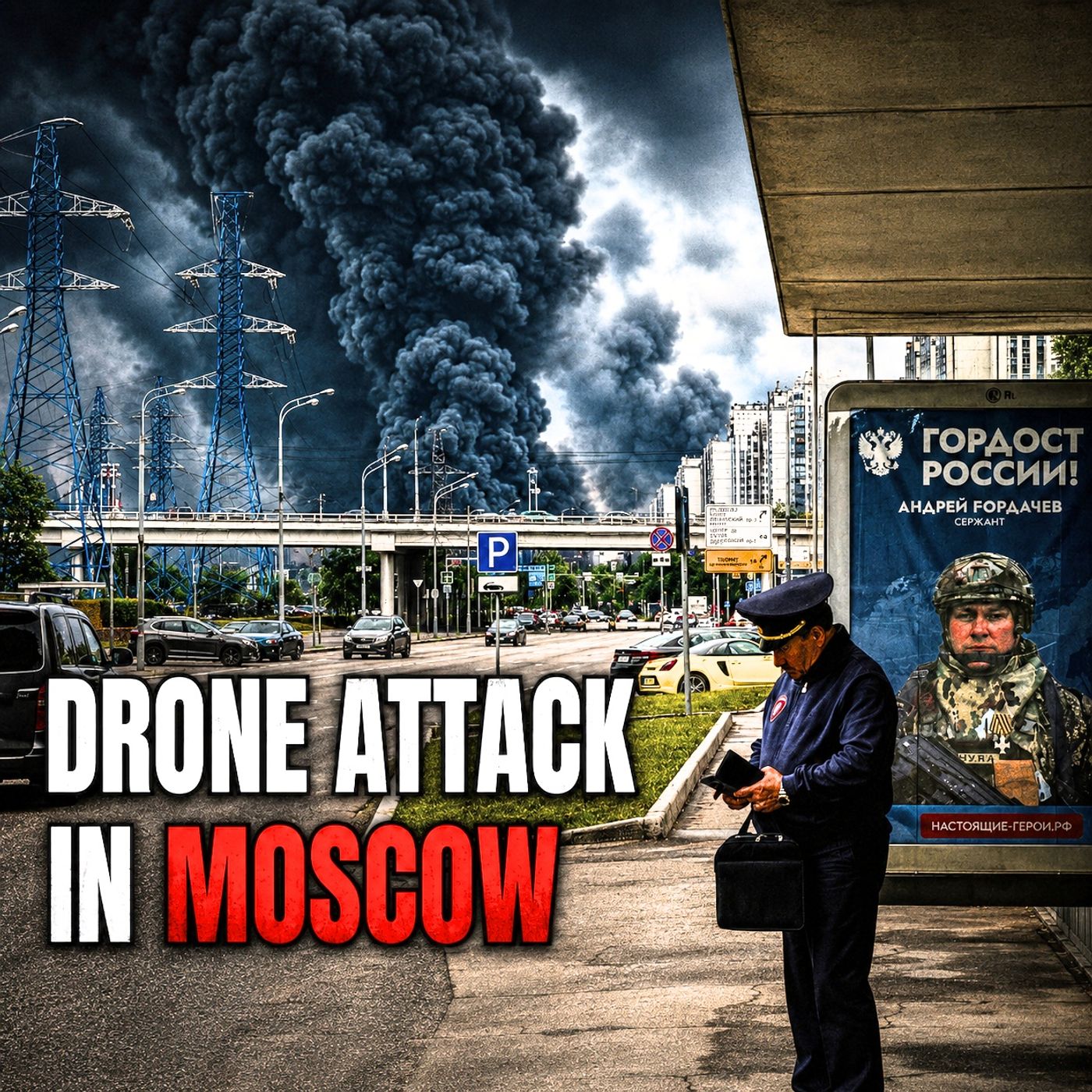
The Team House
Ukraine Is Breaking Russia’s War Machine | EYES ON GEOPOLITICS
00:57:12
This week we break down the collapse of the Iran ceasefire talks, the escalating tit-for-tat strikes between Tehran and Washington, the fight over the Strait of Hormuz, and why the current MOU may be far more fragile than it appears. We also dive into...
Loading summary
Transcript82 lines
- [00:02]
A
This July 4th at Lowe's get up to 45% off select major appliances, plus save $80 on a select Char Broil Performance Series gas Grill. Now $299. Our best lineup is here at Lowe's. Lowe's. We help you Save valid through 7A while supplies last selection varies by location. See Lowes.com for more details.
- [00:25]
B
Visit your nearby Lowe's.
- [00:31]
A
Este cuatro de Julio and loaves ahoras ta cuar entei cinco porciento en electro domestico Selectos ademas ahora ocenta dola parria Gas Selecta Char Broil Performance Series Ahora dosientos noventa y nueve dolares nuestra mejor selecion esta qui en Lowes Lowe's nosotros ayugamos.
- [00:50]
C
Two ahoras.
- [01:00]
B
Hey, everybody. Welcome to another episode of Eyes on Geopolitics. I'm here with Jonathan Hackett. Mick Mulroy might be joined by Andy Milburn. Fingers crossed. Per usual, a lot happening. Dizzying as ever. We left off yet last week, Vance and Kushner and Wyckoff are gonna meet in Switzerland with the Iranian delegation to supposedly hammer out what comes next during the 60 day ceasefire. Obviously that's not exactly happening. Over the last week, there's been. The Iranians hit a couple of commercial ships with some drones. We knocked down a drone out of the sky and then we. And then we hit areas in southern Iran. Iran then shot. I might be getting the timeline wrong, but, like, Iran shot drones and ballistic missiles at Kuwait and Bahrain. So it very much doesn't seem like there is a ceasefire anymore. Israel and Lebanon made a deal. If Hezbollah is exactly game for this deal. Doesn't sound like it. So there's a lot to be, a lot to be said. I mean, where are you guys tracking? What are you guys looking at? Hackett, you can go first.
- [02:12]
C
Well, it seems that the strikes back and forth between Iran, United States are different than they were obviously during the war, which was, you know, kind of an unrestrained military operation at that time. And now it's more tit for tat, which is actually very similar to what it looked like back in 2019, 2020, around the custom Soleimani strike. If people remember that time period, there was a lot of escalation in November and December leading up to that, back and forth increasing each time. And we kind of see something very similar right now, which is a little bit more choreographed, in my opinion, or at least telegraphed. These are not intended to cause wide scale damage or destruction to the other side. Instead, they're a messaging opportunity for each side to demonstrate to the other that there is resolve. And this is a key component of deterrence. You know, deterrence requires that the other side believes that the threat is credible and the threat needs to be public. People need to know the threat exists. And so we kind of see that playing out right now. That's why these strikes are so small, precise, specific on very narrow targets, and not continuing after each one occurs. So I think that's how the best way to probably read that is a, a military extension or an operational extension of the discussions going on in Switzerland to demonstrate both sides to each other that they're serious in both directions, serious about negotiating, but also serious about what happens if negotiations fall apart. And they have to both feel that they can keep up the reality that that's true on both sides.
- [03:35]
B
Make you there.
- [03:36]
D
Yeah,
- [03:39]
B
go ahead, Go ahead.
- [03:40]
D
Yeah, yeah. So I'll start with some positive. Right. So obviously there was a signing of a ceasefire agreement between Israel and Lebanon. I'd agree that Hezbollah is the problem here, but it, on the positive front, it does, it does specify the need to disarm Hezbollah and get Hezbollah above the river, which is required by UN resolution anyway. And I think it does recognize that the key factor in this is also a Iranian proxy. Right. So although Iran is demanding the stabilization of the Middle East, Iran is also the biggest destabilizing factor in the Middle East. It's kind of like, you know, starting the fire and then demanding it be put out and then somehow taking credit for at least the parts of the fire that were put up. But on the positive side, I think that was a good thing and hats off to Secretary Rubio for getting it to where it is. The other positive I would say is there does seem to be an attempt now led by centcom to create an alternative path through the Strait of Hormuz that's obviously closer to Oman. That said, so that they can mitigate against this unwillingness by Iran to give up control of the Strait, which they clearly are not. Clearly. And have no intention to. However, I'm told by people who I both served in the US Navy and are familiar with transiting there and in a commercial capacity that it would only be available to use for outflow. Don't know why that's the case. If there's somebody that knows, I had to jump off the call with him. So I didn't get the details of why that's the case. But he said that that Path out is could get the 500 plus ships that are stuck, but it can't be used, I think en masse for inflow. If that's the case, it would be interesting to hear exactly why. Maybe I'll give my friend a call after this again. But anyway, so that's somewhat positive. The negative is it looks like to me that Iran has no interest in even doing any part of the MoU except for take money. So I don't know how much we've given away already. But my advocacy would be stop, don't give them any more money, don't allow them to make any more money, don't give them any more unfrozen access and stop talking about 300 billion, which seems, I don't even know why that was ever the case. They need to preserve that capacity, that carrot, if you will, for an ironclad, verifiable, more restrictive jcpoa, period. Because if we give all this up front, it's just basic negotiations, right? They're going to have little to no incentive to enter another agreement. And everything they're saying says they're not going to enter agreement that's more restrictive than the jcpoa. They're saying, I mean, Peseschkian came out and said we are never going to give up enrichment. Well, if you're not going to give up enrichment, you're not going to get a more restrictive JCPOA because it was already pretty restricted in there. So I would say stop any money going to them, potentially get ready because we still have the assets in place to blockade because they have not done anything, anything that they were supposed to do under this agreement, which was very little, open the strait, same status as before the war, they have not done. So I think we're on solid footing to say, well then you're not getting any of the benefits. And until we get through this nuclear discussions and we find out whether you're legitimately, genuinely negotiating or you're just stalling to the end of this administration, which I think many people think they're doing, you're not getting any financial incentive. In fact, we're going to reimpose sanctions, we're going to put more sanctions. So, and then I'd end with this and I'd be interested to hear both of your comments on this. There is a lot more discussions when I am talking, particularly on foreign media of other countries being willing to join a coalition to open force, open the strait. I don't know if they necessarily in the European countries specifically, I don't Know if they necessarily mean use ground forces, but willing to contribute mine clearing, you know, capabilities. Many countries like Germany, for example, have that capability. There's two standing groups in NATO, for example, but there's more of a willingness to go, okay, didn't agree with the war. Why I wasn't asked about the war. But the Strait is international, and it affects my people as much as it affects the Americans. I have to do something. I'm speaking as if I was a leader of one of these countries. So I think there's a growing potential that other countries could become involved because of the Strait. We'll have to see what that means.
- [09:02]
C
Yeah, I think Japan is actually a key, you know, non European partner in this because they have mine clearing capabilities and they also have operational experience not only in the strait area, but in the Red Sea. So from south to north, all along the eastern part of the Arabian Peninsula, their ships have sailed recently on counter piracy missions in an integrated capacity with the not only the UK Maritime Organization, but also the Combined Maritime Task Force, which is dozens and dozens of countries working together. So I think Japan would definitely be a key part of that, especially because Japan is suffering from this conflict just like everyone else, obviously, but in particular because of the energy squeeze on Japan, on their economy. So there is an incentive for them to want to participate, not just morally, but economically as well. For the Japanese industrial capacity, that's an acute problem for them. But also, going back to the agreement that you're talking about, Mick, there's a fundamental flaw in this agreement. No matter how brilliant this agreement comes, even if, let's say, the ideal situation happens and it suddenly flip flops over into this overwhelmingly POS thing for the United States and overwhelmingly negative for Iran. It's an executive agreement, not a treaty. And that means just like the jcpoa, the next president could come in, crumple it up and throw it away, and you have to put yourself in the mind of the other side of the table. They know that. So they're worried about, you know, even if this deal turns out and they get the 300 billion, everything's great for Iran, that could all go away and get pulled away immediately. So if you were thinking like that pragmatically, you'd have to be setting up some kind of background structures to protect yourself in the case that your negotiating counterpart pulls the rug out from under you. And that goes exactly to what Pizzkin is talking about with the enrichment. It would be unwise for them to stop enrichment even with this agreement. But it'd be even more unwise knowing that the agreement itself is on flimsy ground and will likely be changed in the next presidency. Even if a Republican comes in, it will still likely be changed because the current agreement is not popular with some of the Republican Party. So it's possible that no matter who.
- [11:06]
D
Secretary Rubio.
- [11:08]
C
Right, Exactly. Yeah.
- [11:09]
D
So no matter who comes in. Yeah, exactly.
- [11:12]
C
No matter who comes in, it's going to get shaken up and changed in a negative way, probably to Iran. And so they're thinking about that. They're saying, what structures can we set up behind the scenes so that if and when this does happen, we're ready to survive again, to continue surviving. They're not stupid. We've seen this. They've demonstrated forethought, significant forethought, over decades. Again, we mentioned this last episode. Some of the guys sitting at that table, like Aragchi themselves, have sat at the table with Americans in the last 20 years, every single time. So these are experienced negotiators. They've felt what it feels like when the US Decides to renege on a major agreement. They won't allow themselves to be left out in the cold, ever. And I don't think they ever have. They've always been preparing to be betrayed by the other side. I mean, it's in their ideology that you can't trust the west, you can't trust Israel, and all this, like, that's built into their ideology. So even if the agreement was pure and true, they still wouldn't believe it. So you have to expect that they're setting things up in the background. And we, as pragmatic thinkers in the US Government, especially in the intel side, have to be thinking about what things are just in case this agreement doesn't happen. And a lot of those things look like surrogate forces, special ways of using the economy to continue having access to cash, the ability to keep the Shadow Fleet going. Because right now we've removed a lot of the restrictions on their ability to ship oil. So we're allowing them to make money off of the oil that we have said was the terrible thing for them to do, and we're letting them do that now. Well, they're not going to just stop using their Shadow Fleet. They're going to continue using the Shadow Fleet and use regular commercial fleets. It would not make sense for them to suddenly just pull the plug on this elaborate system of clandestine shipping and receiving and financial assets that they've spent blood on and treasure on. They're not giving that up. And it would Be very naive of us on this side of the negotiating table to think that that's true. And so there has to be something on the west side, not just the United States, but also Europe, European partners, and as you mentioned, any international partners like Japan or South Korea coming together to ensure that even if this agreement gets crumpled up, there are structures on our side in place that are going to help preserve our position there too. Because that energy value is not going away anytime soon. Even if we completely change to electric vehicles, you still require petroleum to make plastics. A lot of the crude oil that China was using was not for energy. It was for producing plastics like things you buy on Amazon. That's what that crude oil is for. And until we find a solution to replace that, we're kind of still dependent on that. Straight until we change otherwise.
- [13:39]
D
So on that point, Jonathan, I think there is a provision in the mou, if I recall, where the agreement would be also validated with the UN Security Council. So I think they are concerned about the very issue that you brought up, which is obviously the case because we tore it up in 2018 or threw it away. The other thing, and I don't know if this would work. But if. What if the UN passed a resolution specifically calling for a coalition to open the strait and they countries did contribute to a maritime coalition that simply went, went through the strait, collected all the 500 plus ships and left. I mean, would Iran obviously risky and, and I don't know that if this is just simply a hypothetical because I don't know that any countries would do it, but say they would. They're not attacking Iran, they're simply going through an international waterway to ensure it's open so they can get their oil that's going to go to their country. Right. Would Iran attack them? Would they? You know, it's coming down, it's coming down the Red Sea, it's coming down, it's going in the Gulf of Oman, it's going, getting closer to the strait. When Iran attack a blue flagged international coalition of countries who aren't part of the war that are simply going into the Persian Gulf to collect and escort these ships out and then they just keep doing it, they keep bringing ships in and out. Would Iran be willing to then turn its military efforts against an international coalition?
- [15:19]
C
I think the only way that would be successful is if Pakistan was a key member of that fleet. And another point is that the UN has only done, I believe, 13 missions like this like UNISOM and Somalia, Manusma and Mali for example. And the operation UNIFIL on in northeast Israel, Lebanon, Syria region and UN do another force as well. I believe there have been only 13 since 1946. So it takes a lot of political will, first of all to even have it structured and then for it to function. That's a whole separate issue. In Mali in particular, which was the most recent one that I participated in, it was a very challenging, to say the least, operation to hold these forces together, to actually do something toward a shared outcome because they kind of don't put their individual state interest aside when they go in there. So I'd be, I'd be interested to analyze that more. But as I mentioned with Pakistan, that's important because right now Pakistan is really the only actor that has a navy that can contribute. Because Qatar doesn't really. Bahrain doesn't really. Bahrain wouldn't participate anyway. Qatar might. But Pakistan needs to contribute fleet forces and also put the imprimatur of an actual international force rather than a US backed force. This is very important here, so that would need to occur. But going again to the fundamental weakness of even this, this is a good idea. But look at UNSCR 1701, which is the 2006 cease fire between Hezbollah and Israel that was supposed to see the withdrawal of Hezbollah from the south. The Lebanese armed forces were supposed to come in and replace them. Both Israel and Hezbollah have violated different components of 1701. And right now they're firing at each other. I mean, this is what, 20 years later? And that UNSCR 1701 is only a page long. It's not complicated. So even if the UN did come together, the Security Council did come together, that would be a good show of unity. Which also is something that we do need these days. Maybe a UN General assembly plus Security Council joint resolution, something like this would be helpful to show unity. But in the end, we need the political will for it to actually be carried out. And it seems that that will isn't there yet.
- [17:25]
B
Your mattress is one of those things you don't think about until it's too late. Until you're waking up with aches and pains and realizing you've been sleeping on a problem for years. Today's sponsor, Ghostbed, is here to change that. And with the summer coming, there's one more thing worth thinking about. Sleeping hot. If you ever woken up in the middle of the night, overheated and uncomfortable, you know how much it wrecks your sleep. Most mattresses trap heat. Ghostbed is built specifically to prevent that. It's built different baby I had a go. I've had a Ghostbed mattress now for probably like 10 months. I love it. It's freaking awesome. I have the cooling thing. Definitely keeps it cool compared to my old mattress. I love it. I'm so happy I have it and I'm so happy that they sponsor this show. Every mattress in the Ghostbed lineup comes with cooling technology built right in. Not an upgrade you pay extra for. It's part of how every mattress is designed. From their entry level comfort all the way up to the Lux. I have the Lux, by the way, because I'm fancy. Which features their most in. The Lux features their most advanced cooling system. And if you're not sure which one is right for you, head to ghostbed.com team and take their mattress quiz. A few questions and you get a personalized mattress recommendation. Fast, free shipping and 101 nights to try it out. If it's not the right fit, you get your money back. Simple, easy peasy, baby. Right now you can take advantage of Memorial Day pricing and Code Team gets you an extra 10% off when you upgrade your sleep at Ghostbed, the makers of the coolest beds in the world. Go get some. I Love Ghostbed. That's ghostbed.com team and use the code team T E A M for an extra 10% off site wide. Thank you guys for supporting the show and thanks Ghostbed for supporting the show. Love you. Bye.
- [19:07]
A
This July 4th at Lowe's get up to 45% off select major appliances plus save $80 on a select Char Broil Performance series gas Grill. Now $299. Our best lineup is here at Lowe's. Lowe's. We help you Save valid through 7, 8 while supplies last selection varies by location. See Lowes.com for more details.
- [19:31]
B
Visit your nearby lowes.
- [19:36]
D
Are you really buying a car online on autotrader right now?
- [19:39]
B
Really? I can get super specific with dealer listings and see cars based on my budget.
- [19:43]
C
You really have it delivered or pick it up?
- [19:46]
D
I think kid is walking up the slide.
- [19:48]
B
Really?
- [19:48]
C
Autotrader Buy your car online.
- [19:50]
B
Really?
- [19:52]
A
This July 4th at Lowe's. Get up to 45% off select major appliances plus save $80 on a select Charbroil Performance Series gas grill. Now $299. Our best lineup is here at Lowe's. Lowe's. We help you Save valid through 7A while supplies last selection varies by location. See lowe's.com for more details.
- [20:16]
B
Visit your nearby lowes.
- [20:21]
D
Yeah, I don't think it's a magic bullet, but the current situation isn't working. So if it's not working, it's time for other ideas in my opinion. And if that's, if even if the resolution itself sent a message and then there was an armada that went down there, I'd just be interesting to see because they're already shooting at commercial ships, right? So it can't get much worse than that. They're shooting at unarmed civilians and somebody's going to get, I mean we're going to have a mass casualty event here pretty soon.
- [20:49]
C
And these civilians are just, these are mariners, these are guys from the Philippines, you know, from, from trying to make Seychelles. Yeah, they're in a tough spot anyway and they're stuck on this giant vessel. If any of the listeners have ever been on one of these huge container ships, it's very lonely. There's like 13 people on this giant, giant object at sea. It's, it's, it's terrible. And imagine also living under the threat that you might get bombed any day for just, for being in the water and you have nothing to do with it. You know, it's, it's got to be tough for them.
- [21:17]
B
John, let me ask you. We've seen like oil prices go down somewhere around 70, 75 bucks. Is that showing up in like Japan, South Korea, like where they're really affected? Because I remember we were talking about it there. Their price for oil back when this was really going hot was, you know, 160 bucks a barrel or something like that. Are they seeing relief in terms of prices or is that just like the market being the market and not really, you know, showing like what the reality is and like on the ground?
- [21:49]
C
Well, you have to remember that oil is a commodity, so it's sold on futures, not on current value. So what you're seeing is the future assumptions about the market that these people purchasing these futures are making. So they think that for example, in 60 days or a year and it's actually the one year Brent crude benchmark you should look at like what, what do people think will be going on one year from now? And it's slightly higher I think than current futures of like normal oil futures that everyone's looking at, which means people are not pricing the risk out as much as we might feel like they are. The other thing is that as summer goes through, oil prices will decrease just because the blends for summer crude change. And we're kind of coming up on that period. The, another very important economic component to match up to these futures pricing is we're about to end A quarter fiscal quarter. We're about to enter the summertime and we're about to see some huge earnings on tech get released. And there was just massive sell offs on tech the past month and a half. That look like kind of a downward trend there. Those things are all going to conspire together because these things are all backed by energy requirements. So if risk comes up anywhere, that energy area, the tech, the chips, the AI area, which is massive component of the market right now, is going to react in a way that's higher than should be. In other words, they're more risk sensitive currently because there are more difficult to measure factors that are affecting these prices. And I think there's a lot of hope right now with people, they think that we might be on the way to something. But remember, we're only in the first week and a half of a 60 day negotiating window. And as we get closer to that midpoint and toward the end point, especially toward August, people will begin to notice more of a reality in front of them rather than a dream. So if the negotiations don't appear to be improving, well, I think you'll see oil futures go back up again, obviously even before they're over, before the negotiations are over because the risk will find the correct balance point within the market. That's, that's more likely what's going to happen. But unless something goes on, like Mick mentioned with the securing of the straits with a maritime organization, I don't think the oil will be able to recover to pre war levels soon. Because the new risk that's in there, even if, if hostilities go away completely and sustainably. The new problem is that Iran is going to exact tolls on vessels that could be direct tolls as they've been advertising, or it could be indirect through kind of off market exchanges between Iranian activity and other country activity where there's this kind of in kind requirement that if you want to pass through the straits, you have to do something for us. But it's not going to be on the balance sheet. So there might be some of that going on as well which has to get priced into that oil price, you know, so it's all getting stacked onto that. One barrel of oil costs more because there are more things affecting that barrel as it passes through. So that's something to think about too. There are these exogenous or outside factors that are not energy related and not war related that are going to be baked into that barrel estimate.
- [24:45]
D
You know, there's another thing that came up this week that I've Gotten pinged a lot about that isn't talked about as much as say the Strait itself or, you know, what's going on in Lebanon is there's a component of the agreement that says the US is going to pull their military, our military, from the proximity of Iran. Well, my friends that are in the proximity of Iran include our friends, I should say the uae, Qatar, Bahrain, Kuwait, Saudi Arabia even. I suppose that's a big win for Iran. It's a big loss for those countries. At the same time, apparently we're asking those countries to pay to reconstruct the very country that attacked them and then we're going to leave. So if we go with the letter of the MOU itself, I don't know what else will be the proximity of Iran. Maybe I'm misreading it, but I think most people would say these countries are right across the Strait, right? UAE's right there and then Qatar's right there. So that's gotta be the proximity. Are we really planning to do that? And if we are, why? Because that's not in our interest.
- [26:00]
C
Turkey is a NATO ally and we have Inderlik Base, a US occupied NATO base that's on the like Turkey shares a border that it's actually Turkey's border with Iran is the oldest border that exists in the world. That's an interesting factoid. And that border is a NATO Iran border. Are we thinking we're going to withdraw from Turkey? I don't think so.
- [26:22]
D
No way. And why would we withdraw from these places? Because Iran wants us to. That's why we want to be there. You know, I mean, literally, if they're that concerned, we should go. Well, then we're definitely not doing it right. And let's remember, when it comes to US presence overseas, yes, it does benefit the country. Nothing wrong with that. But it's for our own purposes. It gives us the ability to project power around the world. If we want to be the global power center of the world, we have to have that ability. Not that we want to run around starting wars, but we want to have the capacity to surge the places. So these are our to benefit us. Same in Europe. It's not a charity case for Europe, it's not a charity case for the Middle East. But it seems that we've given away our ability to stay in the proximity of Iran and there's nobody talking about it except for the countries that assume that means them. So this is going to be. If we get through a lot of these more difficult things, say for example, Iran just Gives up their ability to control straight. I don't think they're going to do it. But say they do, say peace breaks out in Lebanon, great. We still got plenty of big hurdles to get through. And that's a big one. And so is the 300 billion, which I still can't imagine any country is going to contribute to.
- [27:49]
B
Doesn't that just add to like the thinking that for some people, my kind of, myself included, that the MOU is kind of, at least some of the bits of it are kind of like we're never gonna back out of like Kuwait or any of our bases in and around the region ever. Like, that's never gonna happen. So like, and like you mentioned the 300 billion dollar reconstruction fund. These things sound like pie in the sky, like nonsense, frankly. You know what I mean? To be, I mean from in the layman at least watching this. I mean, you guys are practitioners, you guys are experts. Like you tell me these things seem like tasks that are literally impossible or like are just, are deal breakers for either side really. Because like you said, Iran's not going to give up the straight.
- [28:40]
D
Yeah, I mean, think about it. When a country wins a war, they don't negotiate the terms, they dictate them. Right? When a country wins the war, they don't pay to reconstruct the other country unless they have removed their adversary. So you could say, oh, the Marshall Plan. Yeah, that's because we took out Nazi Germany. Right. We weren't paying Nazis to stay in place to reconstruct the country. You see what I mean? Like, so this is not how. And I don't think the US has to do this. My point is not to say we lost. My point is like, we don't have an obligation to do any of this stuff. We don't have an obligation to reconstruct their country with the regime still in place. That's simply going to make sure the regime stays in place forever. Don't know why we would do that.
- [29:31]
C
I think also it's a reflection of this very public negotiation going on where normally these kind of maximalist positions would be, the things that define the edges of what's going to be discussed that would happen privately in a secret setting, could be in Switzerland like it was in 2015. And before 2015 leading up to that, there were days and days when John Kerry and Zarif, the former minister of Iran at the time, took walks together privately and discussed the terms without notes, without secretaries, without recording it. It was all private and it was carefully, quietly done. So that they could just speak together as representatives of their countries to their interests without anyone noticing that. Because I'm sure there were some crazy terms in that discussion as well. But those crazy terms kind of fall away into the background and they're the backdrop of what we're going to get to later. And if you've studied best alternative to a negotiated outcome and zone of primary agreement and all these like, concepts of negotiation, there's, there's a big piece that one side comes in with, another piece the other side comes in with, and they don't all align together. It's not a Venn diagram. Instead, there's this place in between where they're supposed to meet at that shouldn't be public because once it's public now, you're involving many other individuals, any other entities who also share opinions and beliefs and then exert pressure on the negotiators, which pulls away the power the negotiators are supposed to have to clandestinely or secretly discuss the terms outside of the public view. It's important for transparency. It's important that we all understand, like, how this agreement gets reached. But in the moment that that's happening, it's actually better to have it quiet. Just like covert operations. You don't need to tell everyone what every covert operation is. There's, there are transparency mechanisms built in to help make sure there is oversight. But it shouldn't be just completely in the open all the time because that, that takes away the power of doing it that way. Just like negotiations between states. Also
- [31:24]
B
question for you guys, what happens to those negotiations when people show up on Sunday in Switzerland just to continue them and like get to the next step and the big boss of one country tweets out or true socials out that he's going to, he's going to wipe everybody out. Or, you know, some extremely hypothetical. Of course. Yeah, no, this is a hypothesis. I thought, this is a thought exercise. It didn't actually happen last week. What, what do you think happens in that, like whole like the Iranians thinking? I mean, I know I've read that the Iranians have like psychologists to try and understand like how Trump thinks and how he operates and stuff like that. Which, if you could find a psychologist, I could figure that out. You know, they should be, you know, you know, give them some kind of prize. But yeah, what happens to the dynamics of the negotiation when something like that happens?
- [32:21]
C
I think very little happens because we are seeing the English language things that are said that Trump says, for example, in Iranian media, they do the Exact same thing. They say very similar things. And for example, after Qasem Soleimani was assassinated, there was a lot of this, like, we will punch America in the nose that they would say in Farsi and like they were going to bloody America. And like a lot of these statements and it wasn't like low level people saying that it was the president, it was the foreign minister, it was the IRGC commander. And they're still doing it now. And you'll see this in Farsi. They're talking as if they've defeated the U.S. they've torn the U.S. down. If you look at the imagery in Tehran where they had these regime sponsored graffiti artists, if you see like it looks like aircraft carriers destroyed, there's one that has like a rope tied around an aircraft carrier, like pulling it in half. So they have their own rhetoric in Farsi going on, but all we're seeing is the English side. That doesn't mean we should match their rhetoric. In fact, I don't think that's probably helpful. But I'm just saying that it might, in, in context, it may not be as extreme as we measure, but it's also not helpful.
- [33:23]
D
And I, and I mean, it's not helpful. I agree with Jonathan. I do think there's so much of it now that it's kind of just become background noise. And I say that because, you know, when you say stuff like I'm going to wipe out your civilization, that's, that's pretty, you know, hyperbolic. But when you say that every Tuesday, it becomes like, right. So even when I'm on, you know, I use this as examples because I tend to get more feedback because I'm usually on, when I do the foreign thing with Iranians, when they start saying, oh, President Trump said, even the host interrupts and says, look, if we're going to talk about everything President Trump says, that's all we're going to talk about. Like, we're not, we're not, we're not even going to go into like, that was inappropriate stuff because it's just going to happen again and again and again, again and again. And therefore it's not even. We never address the substance of it from their perspective. Right. You see what I mean? Like the host doesn't even want to talk about it anymore because then that's all we do on their program is talk about that. So I think even the Iranians, they'll use it to their benefit. Right. But they take it too serious. Well, maybe. I mean, we did start our decapitation Strikes between Friday and Monday. We're supposed to meet on Monday, so. But I think, you know, when it comes to the rhetoric, even if it's unhelpful, and I'm sure the Secretary of State would say it is if you could, but I. I just don't think it's having that big of an impact anymore. I just don't think we're gonna, you know, if you don't do this, we're gonna, you know, start the war over and we're gonna blow your country into Bolivian. I just. I just think they just. Just right over there.
- [35:05]
B
Isn't that. Doesn't that kind of say something else about, like, how fundamentally broken this reality is that we're living in? Because, like, back in the day. Not even back in the day, like, literally, you know, last term or during Obama or Bush, if a president made a statement like that, or any kind of statement that the president makes carries. Used to carry a ton of weight, and now it's just like, oh, yeah, that's like our crazy granddad, that's like, out of his mind. But it happens to be the leader of the free world, the guy making the. Actually making the decisions. Right? Like, the fact is this shit went down because BB came for a PowerPoint and then five guys in the Situation Room figured, let's bomb Iran. Let's. And not just bomb around. Let's take out the top 40 of the entire hierarchy. Hierarchy. And just see where everything lands afterwards when the smoke settles, you know, and here we are. So, I mean, I don't know, two parts.
- [36:02]
D
There's part. There's the actual decision, and then there's a rhetoric. As far as the rhetoric, I mean, if somebody was asking me, I go with Teddy Roosevelt, right? Walk softly and carry a big stick. But obviously that's not the current thought process of the administration, and they're not asking me. So it is what it is. But the decision process, I think, would be greatly helped, to your point, Dee, by expanding it back to what it always has been, which is a process. The National Security Council is a process that has input from several different levels. Expertise, diplomacy, military, intelligence, economic. I think we'd be helped by that, rather than just people who feel like they have to agree in a very limited.
- [36:52]
C
It seems that the process is not working. I mean, we see that because this kind of whipsaw behavior with foreign policy, where it seems like there's one thought that's executed, it didn't work out well, they didn't like it, so they stopped. They'll Try something new. And there's a lot of this kind of testing of policy in real time. Normally, that testing of policy would happen in discussions in the NSC where someone would bring that up and they'd war game it, they'd talk through it and they'd find out like, oh, there's a weakness here in that execution pathway. We need to rethink how we're going to get there. And it wouldn't happen in the real world normally, but it seems that that is actually happening now where they're testing out policy decisions by making them, by doing them, which is obviously backwards.
- [37:34]
D
Yeah. Just to give a short example of what Jonathan's talking about, okay, we decide to go to war. What's likely to happen? The strait's going to be closed. The intelligence community is going to say, yes, that's likely to happen. So you have to go with that assumption. Okay, so the strait is closed. What do we have to do to open the strait if they won't open it? Well, we're going to have to use ground forces. Are we willing to do that, yes or no?
- [37:56]
B
No.
- [37:57]
D
Okay, so then we're going to do a blockade. What effect will the blockade have on the regime? How long will it take to have the actual effect that we want? Are we willing to wait that long? Will we take the economic pressure and if the answer is no. Right. I know that's not super sophisticated, but ultimately that's what is discussed in the National Security Council. Are we willing to take that pain? No. Well, then rethink the whole thing. Or, you know, it's that kind of scenario, the constituency plans, whether we're willing to do it. What is it? The enemy's most likely course of action, most dangerous course of action. It's basic military planning, to be honest. But they do it at a, at an interagency level in the nsc. And everybody weighs in because there's expertise, like for the, like the Energy Department, the Treasury Department. They have a lot of input into things that you don't necessarily think of as a military person. But then you're like, oh, and then other things we can do to amp up pressure. There could have been an alternative to strikes, those kind of things. And it's not like it's over. You know, as. As we talk about every week, I want the US to come out ahead. So it's not over. We still have a chance to get a better nuclear agreement, which is good for the world, but we're going to have to probably do. We're going to have to do something different because it doesn't seem to be heading in that direction. They seem to be saying we're not going to budge on anything. There's not even real discussions about recovering the heu, which, you know, the vice President said was in the mou.
- [39:36]
C
Yeah, More likely we're going to have to have an Atoms for Peace type, you know, Eisenhower outcome where they're allowed to continue using what they have under very strict supervision and guardrails and different agreements with various countries. China in particular is very interested in small modular reactors smarts that they've been building in the Middle east and North Africa and things. And I think that probably to get true international buy in, you're going to need China or Russia, Rosatom, for example, to come in with the US and actually agree to monitor and work with the Iranian program. That's probably the most realistic. It might not be ideal or what we want, but to actually get it back again under scrutiny, that's probably what's going to have to happen.
- [40:17]
D
Perfect. Be the enemy.
- [40:19]
B
Yep. So a lot's going to be happening. We're going to keep an eye on it. And obviously this is probably going to be a lead off discussion again next week. If I had a bet. All right, moving on to Ukraine and Russia. We've seen over the last several weeks Russia's air defenses either severely depleted or they're moving them around because they don't know where Ukraine's going to hit next. You've seen a lot of hits in Moscow, super far and super deep. Crimea is getting pounded as well. So there's a lot going on there over the last week as well. Our last few days, the Russian delegation or, you know, Putin was in a closed door meeting with Lukashenko. Talking about what? I don't know. I mean, Lukashenko is being the president of Belarus or the dictator. Belarus. I don't know if they're asking. He's trying to push him to join the fight, get some Belarusian soldiers in on it. I don't know, but it obviously seems like, I don't know if the tide's turning in Ukraine, but Russia does not seem like this unstoppable force. They really haven't for four years. But, you know, to see Moscow get peppered like they did is pretty incredible, frankly. And it's something we haven't seen before. So, you know, where you guys at on this? What do you guys like tracking?
- [41:44]
D
So to start with, and we shared this in our group chat, the average life expectancy now for a Russian recruit is three weeks. From when they walk through, they stand on their version of the yellow footprints. If you've been to Parris island, you know what I'm talking about, they're dead. It's literally minutes once they get into combat. Right. So the meat grinder is running out of meat. The meat grinder is running out of meat. I think you're muted there, buddy. I can't hear you. Can you hear him, Jonathan?
- [42:13]
C
I can't hear D. I see his mouth moving.
- [42:15]
B
Yeah, we're a little, you're a little choppy mix. Sorry, I have my mic muted. Just repeat what you were saying from when they first get in. The average lifespan of a new soldier.
- [42:24]
D
Yes. So there was a study, I think, a well sourced one that for when a soldier is taken from his village in Russia and enters into training, he has three weeks and he'll be dead three weeks. That's the average. They have minutes. Like 27 minutes is the average soldier's life expectancy once they engage in combat. So the meat grinder is running out of meat. Even if you don't care, which Putin obviously doesn't care about the next generation of Russian males, they're still going to run out. There's just not going to be. And this is at the same time when the capacity, not only the actual capabilities of these really sophisticated drones are increasing, but they're, their quantity is also increasing substantially. Like they're producing more drones every day than they did the day before. So think about it, just running out of soldiers. But at the same time, Ukraine is, and you already mentioned it, they're striking further into Russia, which is where all of their significant logistical facilities are on purpose. Right. Because they didn't think they could be hit. They're. There's a state of emergency in Crimea for the same reasons and that's going to get more and more challenging. And quite frankly, if they could take Kursk Bridge out for weeks at a time, not just days, and potentially block the ground corridor that the Russians have, that's going to seriously challenge Russians ability to stay in Crimea. So talk about a shift right now that's going on. We're talking about Iran all the time. And maybe it's a good thing because it's just happening either way. Ukraine is shifting the tide. I don't want to overstate it and say like they're going to throw them out tomorrow. Probably not, but the tide is shifting. So there's one of two things can happen. It can keep shifting and then potentially, hopefully Putin's deposed and cooler heads there Step in. Or Putin does a Crazy Ivan and goes, I don't know what he can do, but he could seriously escalate, start, you know, using tactical nukes. I don't know. Hopefully that's not the case. The. The west needs to be very specific now. We are going to support Ukraine even more. And by the way, the US Is doing basically nothing. We're basically just allowing to buy some of our stuff. That's nothing, essentially. But we could double down on it. We could increase our support. Obviously, there's support for that in Congress across the aisle. Double down and say, Putin, the only way out of this is immediate ceasefire negotiations, period. If not, we're just going to increase our support and we're going to increase the economic consequences to you. That's what we should be doing now. If not, I think Putin's going to probably go with the extreme option because he doesn't see another way out of it. I don't know what that extreme option is, but it could drag in other countries into war. That's why you're seeing countries like Moldovas. I think they're talking about joining. Help me out, Jonathan. There's the country they're talking about. For some reason I can't remember the name of the country, but it's. The other country's in NATO. All right, so there's other things that are happening right now that are prepping for this. It's either going to turn to something that's what we want to see, like a negotiated into this settlement, probably more in line with what General Kellogg was proposing a long time ago, if you remember a long time being a couple years ago. Or. Or Putin's going to do a Crazy Ivan and literally do something extreme and that could push this into expanded war, into NATO countries, and we don't want that.
- [46:22]
C
Yeah. In particular, Poland, if you've seen recently there's a little spat between Zelensky and Tusk, the Polish president. And I'm curious if there is some Russian influence operation in there to amplify that and make it worse. Because I think what Russia wants most is for less European countries to support Ukraine. They already got their success with the US Supporting Ukraine. Less. And I'm curious if that is kind of a pocket that they're trying to exploit now because they are running out of new options. And so perhaps they're trying to do more of dividing support so that there's less for Ukraine to have. The problem is that Ukraine now has the largest ground force in Europe. It's a seasoned combat force, it has the ability to act autonomously. There are needs for support, for sure. But the Ukraine today is not the Ukraine four years ago. And so it's kind of too late, I think, for Russia to try to exert those influence operations, especially on Poland, Estonia, Latvia, Lithuania, which is kind of that area that they are targeting because it's the near enemy for them. And those countries are concerned about what Russia will do next. And even a few months ago, before the tables had started turning, those three countries, Latvia, Lithuania, Estonia, were very concerned about being next. And I think Russia wanted them to be next. But since things are changing, Putin has to think about how can I still exploit that northern pocket, probably through influence operations against Poland. And as you know, Polish history, Poland has routinely been invaded by the east and west over time. It's very difficult for Poland to retain its territorial integrity, mostly due to its terrain structure. And so that's very hard for Poland and Poland's acutely aware of that. And so Russia's kind of probably pushing that button a little bit domestically in Poland to create some, some tension between those erstwhile allies between Ukraine and Poland, one being a EU member and one not being a EU member. So I think that's, that's a place Putin's trying to acutely influence. The problem is there's a lot to focus on. As you mentioned, Mick, Crimea become a problem that was originally an asset and it's now becoming a weight that's pulling down attention southeast out of the combat area that Putin wanted to have. And that's going to be an interesting development. And as you mentioned, with the bridge, that's infrastructure, that's a fixed target. So if you're creative, you can find new ways to go after it. Even if it becomes hardened or defended, well, there will be ways to destroy it because it's a fixed target. So that's going to be a challenge for them and a very expensive challenge for them to defend. And it will be a low cost, relative low cost thing to attack and destroy Romania.
- [49:03]
D
That's the country I couldn't remember Maldevia. And I think there's support from both sides, so from the Maldavian population and the Romanian to join.
- [49:15]
C
Problem with Moldova is that Transnistria is one of those frozen conflict zones that Russia invaded and occupied and still occupies. Illegal. And it's the same concern that Georgia has. If you drive down Tbilisi, there's all kinds of. There's actually a NATO office in Tbilisi because Georgia wants to join NATO. And both Georgia and Moldova have this, this Russian pocket inside their territory that's occupied by Russian forces to this day.
- [49:41]
D
Because if they join, do you think anything.
- [49:45]
C
So the problem is they cannot join until that's released. Right. So, so the thing is that you have to have complete territorial integrity to join NATO. Now this was a question because Cyprus joined, even though it's split in half by Turkey. But that was kind of put to the side.
- [50:00]
B
Don't get me crazy, John. You get me trying to set me
- [50:04]
D
all the way out.
- [50:06]
C
Yeah. Otherwise that has been followed. That rule has been followed. So countries have to have their territorial integrity, which is a reason that, that Russia wanted to keep Crimea occupied. Even if they lost all of Ukraine, they wanted to keep Crimea because that would exclude Ukraine from joining NATO and joining the EU if Russian forces occupied Crimea. So similar with Moldova, Moldova would have to shake that Russian occupation or surrender that territory to Russia, which is not going to happen. So there's, there's those two options. Otherwise they can't join.
- [50:35]
B
What do you guys. Oh, and the other thing we didn't mention, that's been all over like the Internet and stuff showing like all the fuel shortages in Russia, you know, people fighting on fuel lines and stuff like that. And like, like, you know, wasn't it John McCain who said like they're a gas station with nuclear weapons or whatever,
- [50:51]
D
like, you know, station with an army.
- [50:53]
B
Yeah, yeah. So it's pretty incredible to see. There also talks, supposedly they're going to have some closed door talks Monday starting tomorrow about stopping the export of diesel from Russia out, I guess, to save it and ration it, which is incredible and insane to see. So you're seeing the Ukrainian. You know, they've been, they've been targeting oil infrastructure for months now and you're really seeing it kind of pay off. And I cannot believe it's like people are probably walking around like it's a funeral in the Kremlin or wherever Putin's bunker is. You know, like, who's going to tell him the bad news and all, you know, things to that nature. So, you know, I would lock my windows if I'm like a high up Russian official or something like that. Because who knows if you're gonna get tossed out of a window or not in the next, you know, coming months. It's, it's a pretty wild scene.
- [51:48]
D
What's going on that would be an indicator. We start seeing a lot of senior people get killed. It's either a coup was attempted or. Yeah, it probably means that, to be frank, because he tried to get ahead of it by taking them out, I mean, ultimately they can do it, right. If you got the right people, they could. Putin, you know, he has the levers, but if the lever is not working for him anymore, they could turn it against him and it's in their own country's interest. And quite frankly, it would be an absolute gift to this generation that's being annihilated.
- [52:22]
B
Yeah.
- [52:24]
D
And Ukraine too, of course.
- [52:26]
B
Right. Anything else you guys want to touch on before we, we move on about Ukraine and Russia? Did I miss anything? I mean that's pretty much general what I was saying, but.
- [52:38]
C
Okay, well, General Donahue got forced out of Europe most likely because of disagreements on either NATO policy or Ukraine policy.
- [52:46]
B
My opinion that's why you think. Yeah, yeah, we just.
- [52:52]
D
Big, big loss for the US military. Well known, super respected in the special operations community, including inside the agencies. I mean the guy did everything. He was a troop commander, squadron commander, unit commander of the army component of JSOC. He, you know, 82nd Airborne, commanding general. I mean the guy was just a great American selfless service. And the idea that he was just, he was going to be the next Army Chief of Staff, I think and I know people who would know and they told me he was going to be the next Army Chief Staff. So big loss, big loss. I don't know how that works now. I think he, there's an issue of keeping his four star because when he retires, the guy needs to be able to. And I know this seems forever but. And he'll probably move on with his life. I hope he comes back. And I don't know if that's possible, but obviously the current acting or not acting, the current chairman of Joint Chiefs of Staff was retired before he became the Chairman of the Joint Chiefs of Staff. So maybe CD could do the same thing.
- [54:12]
B
Yeah. And for everybody else, like you know, who doesn't know the inside inner workings of the Pentagon, who Exactly. General Donahue is the famous picture of him walking onto the either was C17 or whatever getting, leaving Afghanistan. So he was technically the last boots on the ground from our 20 year adventure in Afghanistan. Yeah, it's pretty incredible on a guy like that gets, gets pushed out. And frankly like John, if you, if you're thinking that's because of, you know, strategy in Ukraine, I don't understand. I don't see where the, the downside is of helping Ukraine. Okay, if you don't want to give them $100 billion a year, fine. But like more than what we're doing right now, I understand where the friction is. I mean, I do understand, obviously, we all know why, but I'm saying, like, it just doesn't make sense at one
- [55:04]
D
point, since you brought it up rightfully. I'd like to say for those that are blaming General Donahue on, like, the accident of Afghanistan, one, the military doesn't make policy. Two, he was sent there after the decision was made, and it was actually. It was already going down. He made the best that he could of the situation he was in, period. So blaming him for it is just, in my opinion, nonsensical. Not that many people are. Yeah, that is an issue, in my opinion. It's not. He was simply ordered, and he did the best with what he had.
- [55:45]
B
Yeah. And if anyone's confused as to what I'm talking about in terms of, it's because this administration, for some reason or other, kowtows to the Putin regime and does everything it can to make it as easy as possible for Putin to get what he wants or placate him, at the very minimum. Placate him. And it's a fucking disgrace, let's be honest. Just. I just want to make sure there's nobody confused about how I feel. Yeah. All right, boys, if there's anything else, this is great. We'll do the plugs. Look at John's beautiful background, too. You can grab his two books, Theory of a Regular War and Iran Shadow Weapons. So the reason why he did that is for me to be able to plug it and remember the titles of the books, which I appreciate, John, thank you. Yeah, thank you, Mick. The Whitefish Security Summit, happening in February of 2027. Check that out. That link is in the description Mix. Got a great podcast called the Pub on the Porch. Applied Stoicism. All those links are in the description. If you want to find these guys on LinkedIn or Twitter or wherever else, everything's there and help support the show, go to patreon.com theteamhouse please. You get ad free episodes and early episodes. Like, you'll get this episode earlier than the. Than the regular people. So we appreciate. And we appreciate the continued support. Thank you, guys. Guys, Happy Sunday. Go get them. Punish the enemy. That's what me and my friends say in our group chat. Friend in the morning. Later.
- [57:24]
E
Hey, guys, I want to take a moment to tell you about the Teamhouse podcast newsletter. If you go and subscribe, it's totally free and what it will do is aggregate all of our data, all of our content that we put out, the things that are on the team house, on our Geopolitics podcast Eyes on things that I write journalistically with Sean Naylor. On the high side, anything else that we have going on books, we recommend upcoming guests that we have coming on the show and also, you know, filtering in some fun stuff in there as well. If you go and check it out. We send it out just once a week. We don't want to spam you guys. It's just a kind of roll up of all of our content on a weekly basis. You can find our newsletter@teamhousepodcast kids.com join again. The website for that is teamhousepodcast.kit.com join so we hope to see you there. The link will be down this July
- [58:25]
A
4th at Lowe's get up to 45% off select major appliances plus save $80 on a select Char Broil Performance Series gas Grill. Now $299 our best lineup is here here at Lowe's. Lowe's we help you Save valid through 7, 8, while supplies last selection varies by location. See lowe's.com for more details.
- [58:48]
B
Visit your nearby Lowe's
- [58:53]
D
in the description.
- [59:01]
A
This July 4th at Lowe's get up to 45% off select major appliances plus save $80 on a select Char Broil Performance Series gas Grill. Now $299. Our best lineup is here at Lowe's. Lowe's we help you save valid through 7 8, while supplies last selection varies by location. See lowe's.com for more details.
- [59:25]
B
Visit your nearby Lowe's.