Podcast
The Thing About Witch Hunts
Hosted by Josh Hutchinson and Sarah Jack · EN
Witch trials have shaped communities, claimed lives, and defined entire eras of history. The Thing About Witch Hunts investigates the real history behind witch hunts and modern witchcraft persecution worldwide, from the Salem witch trials of 1692 to the deadly witchcraft accusations devastating communities today. Hosted by Josh Hutchinson and Sarah Jack, each episode delivers essential context for history lovers, true crime fans, and human rights advocates.
#witchtrials #witchhunts #SalemWitchTrials #witchcraft #witchcraftpersecution #history #truecrime #humanrights #historypodcast #persecutio
40episodes
Episodes
Newest firstAll episodes
Healing the Past: The Reclamation Project with Claire Standen
2w ago00:48:41Tap to summarizeReclamation: Restorative Justice and a Church Returned for Scotland’s Accused WitchesWe follow the question history books can’t answer: once the harm of witch hunting is acknowledged, what does repair look like? Trauma resolution practitioner Claire Standen, founder of Reclamation, is building a Scottish community interest organization seeking reparations for the thousands prosecuted under Scotland’s Witchcraft Act (1500s–1700s), arguing apology without action isn’t meaningful. Her central demand is radical and concrete: the Church of Scotland—already apologetic—should gift an unused church building (not sold or grant-funded) to be stewarded as a community headquarters and a Center for Female Authority, reclaiming sacred space once tied to persecution. Drawing on trauma work and epigenetic inheritance, she connects historic terror to today’s inherited silence and societal patterns, and outlines a restorative justice approach where those harmed define what healing requires. Reclamation is seeking social media support and seed funding via ourreclamation.org.00:00 Show Intro and Big Question01:38 Meet Claire Standen03:18 What Reclamation Aims For05:26 Trauma Work Meets History09:02 The Synchronicity Road Trip15:40 Reclaiming Witch Legacy20:26 Apologies vs Reparations24:21 Inherited Silence and Epigenetics27:03 What Makes Apology Meaningful31:32 Why a Gifted Church Matters40:12 Center for Female Authority Vision45:32 How to Help and Connect48:18 Closing ReflectionsLinks:Reclamation ProjectThe Thing About the Salem Witch TrialsSalem Witch Trials DailySalem Witch Trial History YouTube Channel
Transcribe →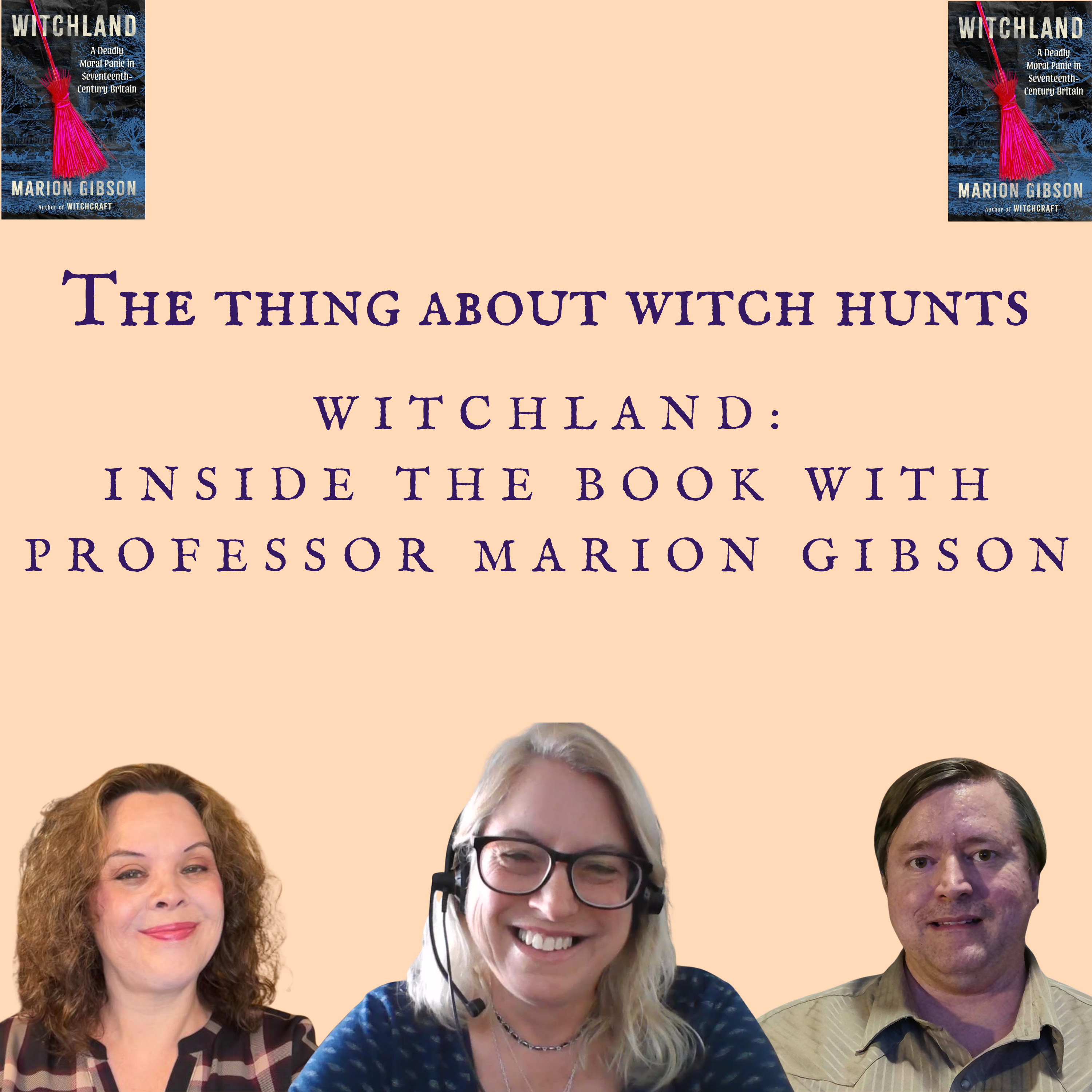
Witchland: Inside the Book with Professor Marion Gibson
3w ago00:51:28Tap to summarizeWitchland with Professor Marion Gibson: The Witchfinder General, Civil War Chaos, and Recovering the AccusedWe sit down with Professor Marion Gibson (emeritus, Exeter University) to explore her new book, “Witchland: A Tale of Witch Hunting and War in 17th Century Britain,” a gripping, archive-driven look at the 1640s British Civil Wars and the Matthew Hopkins–John Stearne witch hunts that pursued roughly 200–300 people. Marion explains her mission to remedy a “triple injustice” by restoring the accused to history—their names, neighbors, and ordinary lives—rather than centering persecutors. We dig into how war, religious conflict, migration, and the 1604 Witchcraft Act helped fuel mass prosecutions; how “watchers,” clergy, and communities escalated sleep-deprivation interrogations; and how templates of questions produced patterned confessions about familiars, spirits, and the devil. Stories range from the nameless “Witch of Newbury” to Scotland’s pricking practices, Great Yarmouth’s transatlantic links to New England, Cornwall’s Ann Jeffries and Moses Pitt, and growing efforts to memorialize victims.00:00 Meet Marion Gibson02:49 Why Write Witchland04:43 Triple Injustice06:48 Civil War Panic09:17 Witch of Newbury11:16 Law That Enabled Hunts14:01 Familiars And Confessions17:18 Religion And Reformers20:48 Building A National Story25:00 Accusations And Watchers30:39 Templates And Scotland40:54 Cornwall Fairies Tale44:30 Memorials And Memory47:18 Buy The Book Next50:31 Final Thanks And OutroBuy Witchland by Marion GibsonBuy Books on English and European Witch TrialsCT Witch and Culture FestHistory Camp BostonEnd Witch HuntsThe Thing About Witch Hunts: https://aboutwitchhunts.comThe Thing About the Salem Witch Trials: https://aboutsalem.comSalem Witch Trials History Youtube
Transcribe →
The Witch Trial History of Exeter, England with Professor Mark Stoyle
4w ago00:53:42Tap to summarizeWe head inside Roman-walled Exeter, Devon, with University of Southampton historian Mark Stoyle, author of Witchcraft in Exeter, to trace a century of quarter sessions and church-court records showing a steady trickle of cases rather than explosive mass witch hunts. Stoyle explains how Henry VIII made Exeter a county with its own justices, prison, and gallows just before Elizabeth I’s 1563 Witchcraft Act, yet local magistrates often resisted executions, sometimes banishing the accused, and most defendants were acquitted; about 30 people were formally tried, with only four executed. Stories include toad and animal familiars, harmed livestock and failed butter or beer, William Harvey dissecting a “familiar” to amuse Charles I, a boy haunted by a pig in a hat in the last Exeter case, and the Bideford witches (1682) alongside the mystery of “Alice” vs “Avis” Molland in 1685. The hosts also announce August 2026 appearances at History Camp Boston and Connecticut Witch and Culture Fest.LinksBuy The Western Rising of 1549 by Mark Stoyle: https://bookshop.org/a/90227/9780300276886Buy Books on English and European Witch Trials: https://bookshop.org/lists/european-witch-huntsCT Witch and Culture Fest: https://ctwitchfest.com/History Camp Boston: https://historycamp.org/events/history-camp-boston/hcb-2026/End Witch Hunts: https://www.endwitchhunts.orgThe Thing About Witch Hunts: https://aboutwitchhunts.comThe Thing About the Salem Witch Trials: https://aboutsalem.comSalem Witch Trials History Youtube: https://youtube.com/@aboutwitchhunts
Transcribe →
American Revolution: The Treaty of Watertown, 1776 with Marilynne K. Roach
Jul 1500:29:51Tap to summarizeThe Treaty of Watertown: Independence, Alliance, and the Fowle House Council ChamberWe step into an upstairs council chamber above a shoemaker’s house in Watertown, Massachusetts—where, on July 18, 1776, the Declaration of Independence was read aloud to a crowd that included Mi’kmaq and Maliseet representatives, and where the next day the Treaty of Watertown was signed as the first international treaty negotiated by the new United States. With historian Marilynne Roach of the Historical Society of Watertown, we trace how the Edmund Fowle House became Massachusetts’ wartime seat of government, what restoration work revealed about the L-shaped chamber and its preserved details, and how archival minutes illuminate daily Revolutionary governance. We also follow the treaty’s 1980s revival by Mi’kmaq veterans, the renewed collaboration with the Grand Council of the Mi’kmaq and Maliseet representatives, and plans for Watertown’s July 18 celebration marking the 250th anniversary.00:00 Watertown Treaty Preview01:52 Fowle House Restored05:43 Council Work In Wartime07:50 Who Led The Council09:43 Edmund Fowle Home Life13:09 Declaration Read Aloud15:51 Treaty Negotiations18:40 Forgotten Then Remembered21:12 Planning The 250th23:42 Friendship Still Binding25:00 Symbols Of Liberty26:18 Witch Trials Echoes27:13 Hidden Shoe Magic28:17 Visit And Support29:26 Closing Thanks And EventLinksThe Thing About Salem websiteEnd Witch HuntsThe Thing About Witch HuntsSalem Witch Trials History YouTube
Transcribe →
200 Episodes About Witch Hunts: Celebrating a Milestone with a Lesson in Witch Trial History
Jul 201:06:24Tap to summarizeEpisode 200: The Long Arc of Witch Hunts—From Connecticut to a Global CrisisThe Thing About Witch Hunts: We mark episode 200 by tracing the full arc of witch hunts from ancient prosecutions to early modern demonology, colonial New England, and today’s escalating global violence. We begin with Connecticut’s executions—starting with Alice Young in 1647—and the 2023 resolution absolving the indicted victims, then widen out through England, Scotland, Wales, Ireland, the Basque country, Sweden, and Salem, emphasizing how courts, texts, and laws shaped prosecutions and how “hysteria” does not accurately describe these bureaucratic trials. We connect historic concepts like the diabolical pact, the sabbath, and “crimen exceptum” to modern accusations, banishment, torture, and killings across at least sixty nations, citing UN-documented violence, Ghana’s Akua Denteh, and contradictory legal responses. We center survivors and the accused as people, invite action, and point listeners to endwitchhunts.org and World Day Against Witch Hunts (August 10).Thank you to the 175 guests who have appeared on the podcast and to all who have viewed or listened to The Thing About Witch Hunts. And we aren't stopping with 200 episodes. Subscribe today and watch the amazing episodes coming up.End Witch Hunts endwitchhunts.orgAbout Witch Hunts aboutwitchhunts.comSalem Witch Trials History YouTube: https://youtube.com/@aboutwitchhunts00:00 Episode 200 Mission02:53 Ancient Roots05:14 Church Turns to Heresy09:58 Malleus and Sexism11:36 England Goes Secular12:23 Pamphlets and Skeptics18:12 Laws Across Colonies25:02 Europe Scale and Stress27:17 England Local Panics31:02 Scotland Burning Regime34:50 Wales and Healing Magic37:25 Ireland Rare Trials40:11 Basque Hunt Split Courts43:16 Sweden Blockula to Salem44:40 Connecticut Before Salem46:20 Massachusetts and Salem51:22 After Trials Vigilantes53:45 Modern Global Crisis58:59 Law Patchwork Today01:01:07 Memorials and World Day01:03:20 What You Can Do01:05:22 Final Call to Action
Transcribe →
Witches and Familiars with Dr. Holly Bamford
Jun 1700:50:36Tap to summarizeWhat was a witch's familiar, and why did these animal spirits sit at the heart of English witch trials? Returning guest Dr. Holly Bamford joins hosts Josh Hutchinson and Sarah Jack to explain the witch's familiar, the witch's mark, and the overlooked history of male witches in early modern England. Learn what the familiar meant, how the witch's mark was used as evidence, why the witch-familiar bond mirrored motherhood, and why men accused of witchcraft were not simply feminized. Featuring Agnes Waterhouse and her cat Satan, John Bysack and his six snails, and John Palmer's familiar named Jezebel.What a witch's familiar was in English witchcraftWhy the familiar mattered so much in witch trialsHow the witch's mark was used as evidenceWho was accused of being a male witchWhy men accused of witchcraft were not feminizedHow the witch-familiar bond mirrored motherhoodWhy Agnes Waterhouse and her cat Satan became a foundational caseWhat John Palmer's familiar Jezebel reveals about marriage00:00 Familiars in Trials01:01 Meet Dr Bamford02:08 Conference Paper Idea04:14 What Is a Familiar07:51 Pamphlets and Audiences11:47 Counting Trials Limits15:03 Agnes Waterhouse Case19:21 Marks and Teats22:56 Motherhood and Familiars31:52 Male Witches and Snails41:49 Humanoid Familiar Jezebel46:27 Further Reading Wrap48:53 Modern Meaning Outro#WitchTrials #Witchcraft #WitchsFamiliar #WitchesMark #MaleWitches #WitchcraftHistory #EarlyModernEngland #Familiars #Folklore #AgnesWaterhouse #HistoryPodcast #WitchHunts #EndWitchHuntsBuy: Witchcraft, the Devil, and Emotions in Early Modern England by Charlotte-Rose Millar https://bookshop.org/a/90227/9780367204549Buy the book Cunning-Folk and Familiar Spirits by Emma Wilby https://bookshop.org/a/90227/9781845190798Register for the Magic and Witchcraft Conference June 24-25 Online & In Personhttps://www.eventbrite.com/e/magic-and-witchcraft-conference-2026-nature-and-the-supernatural-tickets-1989231567166End Witch Hunts: https://www.endwitchhunts.orgThe Thing About Witch Hunts: https://aboutwitchhunts.com
Transcribe →
Metacom's Resistance: Perspectives on King Philip's War with Sarah Stewart
Jun 1000:53:48Tap to summarizeMetacom’s Resistance, Puritan Mythology, and King Philip’s War with Sarah Stewart (Partnership of Historic Bostons)We speak with Sarah Stewart, president of the Partnership of Historic Bostons, a public history organization focused on 17th-century New England, to confront Puritan mythology and widen the lens beyond Salem to Indigenous history, enslaved Africans, and displaced peoples. We dig into why King Philip’s War, which is often skipped in schools and told through colonial monuments, Increase Mather, and captivity narratives, was a turning point that devastated Native sovereignty, reshaped New England, and fed the fear that later influenced the Salem witch trials. Sarah breaks down PHB’s “Metacom’s Resistance” series, the need for reframing the war through Indigenous voices, and the realities of enslavement, land commodification, and legal encroachment on sovereignty. 00:00 Meet Sarah Stewart00:50 Origins of the Partnership01:51 Broadening the 17th Century Lens03:21 Programs and Events04:58 Puritans Beyond the Myths06:51 Building Community Feedback08:06 Why King Philip's War Matters10:53 How the Story Got Distorted13:22 Metacom's Resistance Series17:49 Indigenous Voices Center Stage20:50 Violence and Witch Trial Fear23:59 Captivity and Enslavement25:53 Land Commodification Clash28:50 Land And Equality29:31 Amplifying Indigenous Voices33:08 Powerful Panels And Future Events37:08 Puritans Fear And Ongoing Wars39:11 Courts Sovereignty And Punishment42:23 Thomas Morton And Other Paths45:29 War Choices And Modern Parallels46:55 Audience Reflections And Truth52:01 Keep Learning Stay ConnectedPartnership of Historic Bostons“The Unknown War: King Philip's War, 1675-1678” (video)“The Past is Now: An Inter-Tribal Panel Discussion of King Philp's War” (video)“Surviving Slavery: Indigenous Enslavement in King Philip's War” (video)“Erasure: History, Memory and King Philip's War” (video)“What Really Happened at Turners Falls?” (video)“The Long Legacy: The Cost and Consequences of King Philip's War” (video)“The Slews and Hoars of Beverly: From Witchcraft to Slavery” (video): https://www.youtube.com/watch?v=2GEspMnY9-o“The Other: Understanding Witch Hunts, Part I, with Emerson Baker, Sarah Jack, and Josh Hutchinson” (video)“Resistance: Stopping Witch Hunts, Part II” (video)Jenny Hale Pulsipher, Subjects unto the Same King: Indians, English, and the Contest for Authority in Colonial New EnglandJill Lepore, The Name of War: King Philip's War and the Origins of American IdentityPeter C. Mancall, The Trials of Thomas Morton
Transcribe →
Open Mic Night with Guests Josh Hutchinson and Sarah Jack
Jun 300:52:18Tap to summarizeWe turn the mic on each other for a fast, personal Q&A spanning Salem and global witch hunts, from the infamous Salem witch cake to pop-culture “broom” upgrades and the accused people we can’t stop thinking about, including Samuel Wardwell, Katherine Harrison, Mary Esty, and Rebecca Nurse. We dig into why confessions didn’t always save lives, how spectral evidence shaped cases, and how banishment could be a brutal alternative to execution. We break down our three podcast formats—Salem Witch Trials Daily, The Thing About the Salem Witch Trials, and The Thing About Witch Hunts—and share what listeners most ask about innocence, “real” witchcraft, and the reality that accusations still occur in at least 60 countries. We close with how End Witch Hunts grows through volunteering, donations, subscriptions, and petitions for exonerations.00:00 Welcome And Guests01:18 Witch Cake Debate02:23 Flying On Appliances03:52 Accused Who Haunt Us08:17 Banishment And Survival09:20 Three Podcasts Explained10:57 Questions We Get Asked13:32 Research Methods Shift15:21 Growing Reach Staying Grounded19:10 What Makes Our Show Different24:15 Devil Nicknames And Laughs26:58 Witch Trials Ice Cream29:38 Descendant Emotions And Ancestors35:31 Understanding Accusers And Fear43:43 Why The Accused Were Innocent45:31 June Trials And Daily Plug46:24 How To Support End Witch Hunts51:36 Final Thanks And Call To Action LinksSupport The Thing About Witch Hunts: https://endwitchhunts.org/donateThe Thing About Witch Hunts Website: https://aboutwitchhunts.comThe Thing About the Salem Witch Trials: https://aboutsalem.comSalem Witch Trials Daily: https://aboutsalem.com/salem-witch-trials-daily/YouTube: https://youtube.com/@aboutwitchhuntsSalem Witch Hunt Facebook Page: https://facebook.com/salemwitchhunt
Transcribe →
The Art and Folklore of Divination with Icy Sedgwick, author of Fate or Fortune
May 2700:50:57Tap to summarizeDivination folklore, folk magic history, and the practice of reading omens, cards, and natural signs are at the heart of this conversation with Icy Sedgwick, author of Fate or Fortune: The Art and Folklore of Divination, folklorist, and host of the Fabulous Folklore Podcast. From ancient liver divination in Mesopotamia to love divination games played by young women in early modern England, this episode traces the deep folk roots of divinatory practice across centuries and cultures.Icy Sedgwick is a writer, researcher, and diviner specializing in folklore, plant lore, and folk magic. Her book Fate or Fortune: The Art of Divination explores the history, folklore, and practice of divination from a folklore studies perspective. She is the creator and host of the Fabulous Folklore Podcast, based in Newcastle, England.Divination is one of the oldest and most universal human impulses, and its fingerprints are all over witch trial history. In this episode, Josh Hutchinson and Sarah Jack sit down with Icy Sedgwick to explore what folk magic tradition tells us about the people who practiced divination, why they sought answers through omens and tools and rituals, and what those practices reveal about the communities that preserved them. The conversation is wide-ranging, deeply grounded in folklore scholarship, and endlessly surprising.IN THIS EPISODE YOU WILL LEARN:What separates divination from fortune telling, and why has that distinction mattered throughout history?How did cunning women turn ordinary household objects into powerful folk magic tools?What do love divination rituals reveal about the real lives of women in early modern communities?Why did playing cards become so deeply entangled with the devil in folk tradition?What ancient civilizations left behind physical records of their divination practices, and what did those records reveal?How has dowsing been used for purposes far stranger than finding water?What does folklore say about omens you never asked for but receive anyway?Which forms of divination are experiencing a genuine resurgence right now, and which trend is Icy warning practitioners to avoid?Pick up Icy Sedgwick's book Fate or Fortune: The Art and Folklore of Divination through our affiliate bookshop at bookshop.org/shop/endwitchhuntsicysedgwick.com#divination #folklore #folkmagic #witchtrials #salemwitchtrials #fortunetelling #cunningfolk #omens #tarot #cartomancy #dowsing #folklorePodcast #witchhunts #occulthistory #historicalpodcast #folklorestudies #divinationhistory #witchcraft #palmistry #scapulamancy
Transcribe →
Connecticut Witch Trials Before Salem: The Play Windsor's Daughter Restores Alice Young's Legacy
May 2000:51:56Tap to summarizeAlice Young was the first person executed for witchcraft in the American colonies, in Windsor, Connecticut, in 1647, before the Salem witch trials. Award-winning author Beth Caruso and playwright Lauren Cavanaugh join Josh Hutchinson and Sarah Jack to explore her story and the new play Windsor's Daughter that is bringing her life back into the light.This conversation moves between historical research and present-day resonance, asking what it means to memorialize people whose graves were never marked, whose names faded from community memory, and whose persecution mirrors patterns still unfolding today.WHAT YOU WILL LEARNWhy Alice Young's 1647 execution changed American historyWhy her name nearly vanished from historyWhat made Windsor, Connecticut, a powder kegHow a play brings her execution to the stage without showing itWhy there is no grave to visitWhat the 2023 exoneration meant for her descendantsHow her story connects to persecution happening todayWhere to follow Windsor's Daughter as it finds its stageLinksAuthor Beth Caruso at OneofWindsor.com https://www.oneofwindsor.com/Playwright Lauren Cavanaugh https://hartford.culturalyst.com/CavanaughLMCConnecticutwitchtrials.org https://connecticutwitchtrials.org/Listen to more CT Witch Trials Podcast Episodes https://connecticutwitchtrials.org/witch-hunt-podcast/Support the Podcast Buy a Witch Trial History Book! https://bookshop.org/lists/connecticut-witch-trials
Transcribe →