← The Thyroid (and Hormone) Fixer Podcast: Thyropause, Menopause, Metabolism and How to Fix It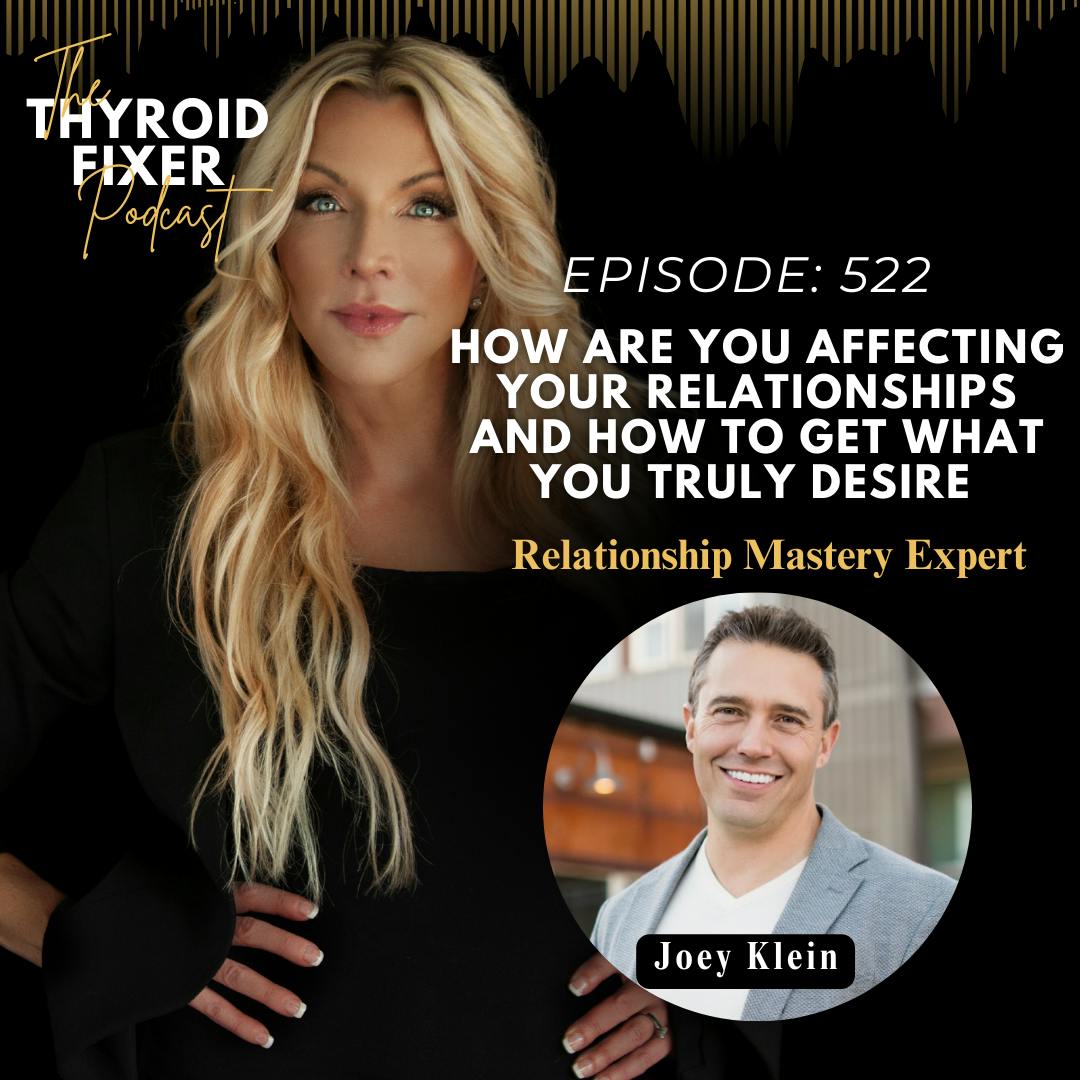
The Thyroid (and Hormone) Fixer Podcast: Thyropause, Menopause, Metabolism and How to Fix It
522. How are YOU Affecting Your Relationships and How to Get What You Truly Desire
00:51:54
Loading summary
Transcript31 lines
- [00:00]
Dr. Amy
Welcome to the Thyroid Fixer podcast, where we dive deep into the world of thyroid and hormones, especially for you ladies navigating perimenopause and menopause, and really for anyone struggling with hypothyroidism. I'm your host, Dr. Amy, thyroid and hormone specialist and CEO of a global telemedicine practice where we prescribe the right thyroid treatment and bioidentical hormones to all 50 states and most of Canada, helping you become that badass human that you're meant to be. So if you're battling weight gain and heroin loss, you can't lose weight no matter what you do. Your energy levels are plummeting and your libido left town. Then you're in the right place and you have found your tribe. Remember, I want you to embrace every inch of that badass woman that you truly are. So if you're ready to dive in and fix things, let's get started. We're all looking to support our thyroid naturally, boost our immune system, and just really have more energy. I have found Purality Health. Now, the only problem with Purality Health is that it tastes so good. All of their supplements, from the Mind Boost that I'm going to tell you about to the vitamin C, tastes so good, you want to eat it every day. You want to take it every day. It's crazy. I'm addicted to it. I'll tell you more about that. But let's start with the thyroid, something I talk about all the time. As you know, Purality offers a wide range of products that can assist you with thyroid health. But specifically, my favorite is the adaptogenic mushrooms in Mushroom Mind Boost. It tastes like chocolate. I will put Mushroom Mind Boost on a spoon with a little bit of peanut butter, and it's literally a treat. But not only that, it's a liposomal blend of functional mushrooms like Rishi and Cordyceps. Now, Rishi and Cordyceps, they help regulate your body's stress response. We know we need to balance our stress, balance our cortisol so T3 and T4 can work, and so T4 can be converted over to T3. Then another amazing product to support the thyroid is the liposomal lion's Mane. That gives us focus, clarity, cognitive support. Again, bringing down stress. Lion's Mane can help boost nerve function, support your mood, both of which is significantly affected when thyroid levels are imbalanced. Now, there's the vitamin C. Ooh, vitamin C for our skin, for our immune system, for adrenal support, oxidative stress reduction. And it Tastes like you're eating a starburst. It's incredible. I put in my water and it flavors my water. It's amazing. Since the thyroid is incredibly sensitive to inflammation and cellular damage, vitamin C protection is crucial. And here's the best part. Their patented liposomal delivery system makes all of these ingredients highly absorbable to your body. Is actually using what you're taking. Bonus. Right? So if you're ready to finally feel like yourself again, you want to head to purality health.com forward/doctor Amy and enter the coupon code Dr. Amy to save up to 45% off. So you're going to go to P U R A L I T Y H E A l t h.com/d r a M I E and use that same code, D R A M I e. Get your 45 off because your body deserves more than you know. Just okay. Health. All right, let's get real for a second. When you hear the word mom, what comes to mind? Strength? Patience? Maybe the person who always shows up, even when it's inconvenient. Maybe it's love. Maybe it's resilience. Maybe it's just someone who's always in your corner no matter how messy things get. But here's what I know. Motherhood isn't one size fits all. Some of us were raised by rock star moms. Some of us are moms. Some of us are step moms. Hey, that's me. Or longing moms. Or mother figures. Or carrying all of that care without any official title. Whatever it looks like, it's big. It's real. It deserves to be recognized. Because let's be honest, moms eat equal home. So whether you're celebrating one, remembering one, figuring out how to be one, or somewhere in between, moms deserve more than just a generic candle and a brunch reservation. They deserve actual comfort. That's where cozy earth comes in. They make the kind of stuff that feels like home wrapped around you from their temperature regulating bedding. Oh my God, yes, you will sleep cooler. I am in love with my cozy earth sheets to their next level. Soft pajamas. Yeah, I wear those two. Everything they do is about giving you and the people you love that sanctuary feeling. Now, personally, I'm obsessed with their bamboo pajamas. They're light but cozy, insanely soft and honestly make me want to cancel plans and just hang out and watch Netflix and lounge in my PJs. Whether I'm gifting them or living in them myself. It's the easiest way I know to take care of me or someone else. So whether you're shopping for your mom, your stepmom, your best friend, yourself, whoever, here's how you show them or show yourself a little extra love. Head to cozyearth.com c o z y e a r t h.com use the code Dr. AmY-R-A m I e and get this 40% off your entire order. 40% off. You got to try it. You got to try the sheets, you got to try the bedding, got to try the PJs and buy some for that loved woman in your life because she deserves more than basic she and you deserve the best. If you're struggling to have an open conversation, discuss hard things in your relationship and you're just coming up against, against defiance, against defensiveness, against pushback, then you need to listen to this episode. I brought in, really one of the most amazing people I know to talk about relationships and having that relationship alchemy where you can not only get along better with others, but really have those hard conversations while staying your own true self and actually getting what you want in life. So my guest today is Joey Klein. He is a transformation and mastery expert. He's an author, he's a speaker, he's the founder and CEO of InterMatrix System, which I've talked about before on the show, which really helps you dive into your own life, creating that life that you want with real life results. Joey's story comes after crawling out of a ditch of a hard partying lifestyle that culminated in a near death experience at 19 years old. He set out on a journey to find peace and joy for himself and became obsessed with figuring out how to make instant transformation possible. This is a quest that took him all over the world to study different traditional disciplines like meditation, martial arts and spiritual traditions. Then upon his return, he studied with expert psychologists and neuroscientists, ultimately leading him to create his proprietary inner matrix method. While instant transformation is possible, Joey's enduring passion is training mastery inside himself and his clients to truly live the life that's possible for each of us. So today we just dive into all of his knowledge, his experience, his research, his training, because I wanted to bring him here to help you have that vision for yourself. Whether it's perfect health, a better relationship, more money, whatever it is, we're going to start off talking about you and then we're going to end talking about more of you, but in a relationship with another person and how to manage that, especially when it comes to wanting that support on your wellness journey. Wanting that partner to back you no matter what and to see your vision for a better life and better health. So enjoy this episode with Joey Klein. So I really thought it was time to bring on a relationship expert. A gosh, Joey, what do we call you? Not just a, you're a, you're an educational expert, you're a life mastery expert, your business expert. But we're really going to talk about today just communication in relationships because you're also a communication expert as well. So I thank you so much for jumping on to unpack this for my listeners because it's a hot topic. It really is a hot topic when it comes to talking to your partner, talking about your health, having a beautiful relationship and a happy life. So we're going to dive into all that today and more.
- [08:53]
Joey Klein
Yeah, looking forward to it. And it's awesome to be here and this is going to be fun.
- [08:57]
Dr. Amy
All right, so let's just start at the top with, you know, this whole concept of mastering happiness and fulfillment. And I think so many people are looking for that in their life, but they can't even define what that means for them. You know, it's very easy to say, well, I'll be happy when I find that perfect spouse. I'll be happy when my business explodes, when I make X amount of money. Money. But what do you say to that when you're working with people who kind of have that preconceived notion of really what happiness and fulfillment is?
- [09:31]
Joey Klein
Yeah. So, you know, I think, I think you're kind of on track with some of the things you were saying where I think people often misstep. Right. I call it the pieces of the board. Right. Like the checker pieces on the board. It's like they're trying to get all the pieces of life typically lined up just so. And the thinking is if I have the right spouse or partner and I have, you know, the family and I have a certain amount of money and I live in a certain place and I get all the pieces of life sort of just. So then the byproduct of that is going to be I'm happy and I'm fulfilled and everything is okay now. And ultimately that never, ever hits the mark. Right? And like when I first started my career, I worked with some of the, you know, the most famous and, you know, well off people in the world, like famous actors and actresses, because I was in LA and they had everything you could imagine, right. And two jets and four houses in different countries and like just mind boggling, you know, sort of not just wealth, but, like, beautiful families and opportunities and privilege and all the things. And I wasn't there because they were happy. I was there because they were really unhappy and depressed and miserable and high anxiety and overwhelm and, you know, really just sort of like, like, like dealing with life like so many people do. Right. And so for me, fulfillment, happiness really comes down to one thing, which is what do we wake up to every day, regardless of the wealth or our spouse or our kids or anything else in life? Like, all that's great, and we can. We should strive for that and have vision and, you know, grow and all that. But at the end of the day, when we get out of bed in the morning, we wake up, we, you know, we open our eyes and we go, man, who am I right now? How do I feel? If we're experiencing joy and we access inspiration or passion or, you know, just a sense of love or gratitude within ourself, like, that's the actual experience we're having of ourself. We have everything. And. And what I find is that people don't understand that the way to cultivate that is, is inner training in a very, very direct way. Like, you have to train your nervous system to access joy. You have to train the mind to access joy. You have to train the. The emotional self to. To sort of be in the reflex of joy. And most people don't really understand how to train those inner mechanisms, and that's why they're missing on what they really want.
- [11:39]
Dr. Amy
That is so true. So really, I mean, even before I love the flow of the conversation because it's going this way, even before we can have a difficult conversation with anyone in our life, with any relationship, we have to go inside ourselves first. Because there's that whole saying of, you know, to change a person, you have to change yourself. Well, I think a lot of us get in that mindset of, I want to change my partner. When he or she changes, then I will be okay. Okay, And I will be fulfilled. And it's quite the opposite, right?
- [12:14]
Joey Klein
Yeah. Yeah. My opinion is the. Is the exact opposite.
- [12:17]
Dr. Amy
Right?
- [12:17]
Joey Klein
Because if we really look at, like. And I had the opportunity to, you know, at this point train literally, you know, tens of thousands of people all over the world and thousands of them one on one. And. And this comes up all the time, right? Like, I'm unhappy with my partner and they're doing X, Y and Z, and if they would just do this other thing, like, we would be okay. The relationship would be great, and I would be okay, but what we forget is like, wait a minute, let's talk about how that relationship came to be in the first place, right? And the reality is, like, we were attracted to that person because of who we are and who we are being. And so if we were in some ways responsible for or holding a certain pattern dynamic within ourselves that has this person fit with us, they wouldn't be in our life in the first place. We'd be with somebody else who wouldn't be doing the thing that we're upset and agitated about, right? And so it's like a lot of times we forget the science of relationship and well, wait a minute. Why are the people who are in my life in my life in the first place? And that has to do with us. That has to do with who we are with ourself every day, right? And it's sort of like the law of coherence. It's like, if I'm an angry person or I'm overwhelmed, like, I'm going to fit very well. And you know what's going to compliment me is other people who are angry or maybe individuals who are unworthy. But if I'm angry, I'm not going to be around people who are joyful and inspired because it just doesn't fit, right? The energy just doesn't match. And so that idea of, like, if you transform yourself in a relationship, you truly do not only just transform the relationship, but you can have a tremendous influence on the other person is, is 100% true. And so, as I say, we've got three aspects of relationship. We have the first aspect, which is us, and then we've got the second aspect, which is the relationship itself, right? The energy of two people coming together forms like this living entity almost called the relationship. And then there's the other person. And there are rules to, to sort of follow if we know what they are in each aspect of the relationship, what we're responsible for as it comes to ourself, what we're not responsible for, what we're responsible for as it is comes to the relationship and then the other person. And so a lot of times what we don't realize is, like, we go to try to change the other person, but the other person will change if we bring a new stimulus to the space, if we bring a new influence to the space. And so, as I say, you know, we're not 50% responsible for a relationship, because that's very popular. Well, I'll attend my end. I'm 50% responsible. But they're still not doing their thing. And I always tell people, I said, no, no, if there's a relationship in your life, you're 100% responsible for the condition of the relationship. And if you own it that way you're going to see the access points to see it, you know, see it change and transform. And so if I'm going to my significant other or whoever that I'm in a relationship with and I'm already agitated, then I'm going to have the inability to communicate well or hear the other person. And if I can sort of notice that I'm agitated and that agitation or that frustration or that disappointment or that shame or that guilt or whatever's going on for me actually has nothing to do with them and their behavior. They're just sort of activating those pattern dynamics within us. And we are responsible for those emotions as they are responsible for their emotions. They can't be responsible for our emotions because they actually can't change our emotions. It's our nervous system. We're the only one who can inherently change our emotions and they are the only one who can really change their emotions. But if you show up to that conversation, same conversation, and you show up with say compassion or you're just centered, right? Just centered, peace with yourself, or you show up with a sense of optimism or faith, like that conversation is going to go very different, that's going to be a very different impact on them and then they're going to respond in a different way and you're going to be able to hear things that you literally can't hear. If we're in more of a fear based state, like fear, anxiety, etc.
- [16:05]
Dr. Amy
So really what I hear you saying is that, that not only do we have to start with ourselves, but we also have to be aware and cognizant when something else might be going on. And I'll just say our partner, it can be any relationship, but when something else is going on with our partner. And what I picture as you were talking is almost someone standing in the middle of a storm, grounded, where like the Tasmanian devil or a tornado is spinning around them. And we've all been around people like that, that we're just like you are spiraling out of control. And our most common reaction is to react to that spiral, to get defensive. You know, why are you being like that and trying to calm them down in a way that isn't going to work? Because we have to be that center and that strength in order to calm that tornado that's going around us. Basically, yeah.
- [17:01]
Joey Klein
100% right. And I think the misnomer is that when they're like a Tasmanian devil, that we're trying to calm them down for them. Like, hey, I'm doing you a favor here. I'm trying to help you. Why aren't you letting me do this for you? But the reality is, if we really understand just the core nervous system and how it operates and how our psyche is built, it's like, actually, we want them to calm down for us, right? It's like, yes, we do care about the other person. We want it for them. Second, but we really are like, man, I wish you would just be a little bit calmer so I would feel better. Yeah, because you in this state of frenzy makes me feel unsafe or afraid or annoyed or anxious or whatever it is. And it's like, man, if I can get this person to do different, then I won't feel so anxious. And so we're trying to. And most of this is unconscious. We don't realize we're doing it, or most people don't realize they're doing it, but it's like, I'm trying to manage this other person, so I inherently feel better. And if we take a different approach and we realize that, like. Like. Like, I train people, right? And I talk about in power of emotion, when we train people, it's like, emotions are not there to inform about what's happening in our life, and emotions aren't actually there to inform us about what to do. And most people, 99% of human beings, when they feel a certain way, they go, man, I feel annoyed. Therefore, you must be doing something wrong or bad or the situation must not be right for me when. When it doesn't work that way at all, right? Or they go, man, I feel annoyed, or I feel overwhelmed or I feel afraid or I feel, you know, unloved or whatever it is, that must be a sign I need to leave a relationship. I'm not in the right circumstance. And so instead of, like, relating to our emotional sort of radar in that way and go, emotions are there informing me about what's happening or what to do. We change the game by going, emotions are there to inform where I am at. And if we realize that and we go, man, I'm angry, then we go, okay, well, what's the vision of relationship that I hold? I want connection, my relationship and fun and adventure and trust and, you know, loyalty. And, you know, we all have these ideas of relationship we want to build. Oh, if I'm angry where I'm at, right? Now is not going to be productive for the vision of relationship. I say I want. And so I'm not in a good place right now. I am not in a capacity where I'm going to execute well, because, like, we've all been angry before. Executed felt like in that place of righteousness that comes with anger, that we're doing the right thing, you know, said some choice words or wrote an email to her boss and then calmed down a little bit. And then we're like, oh, my God, I can't believe I said that. Somebody I care about, we feel the regret of it. And all of a sudden we see it differently when we're no longer angry, right? Or we look at the email, we're like, God, I hope I have a job in the morning. And I probably shouldn't have sent that email. And it just seemed like it made different sense when I was upset. So, like, for me, if I feel angry, I go, Joey, you need to check yourself right now. You're not prepared to engage with this other person. Yes, they're in a frenzy. Yes, they're a tornado. Yes, they're. They're Tanzania devil, all that. My job is to go, okay, I'm angry. I need to get. I need to get to a place of peace or can I need to anchor myself or do my work and training and get to a place of compassion. Like true compassion is the experience of myself for where this other person's at, man, this person's in a lot of pain. Let me get to a place of compassion. And once we start to dictate or once we start to demand of ourself in some ways or expect ourselves, it's like, hey, I'm going to be peaceful regardless. It's like I'm going to be peaceful even though they're upset, and I'm going to be peaceful even though the environment is challenging. And we would develop that competency. That's true freedom. Because now I can define my experience of myself no matter what my situation is or circumstances are. It's not easy, but it can become effortless if we train the condition and make it a reflex.
- [20:45]
Dr. Amy
Well, and just like you're saying training, training, it's just like going to the gym and training. The first time you go to the gym, it sucks, you're sore, it's hard, you get tired. But as you do it more and more, it becomes almost second nature. And yes, there are times where you challenge yourself and you lift a little bit heavier or push a little bit harder. But that is why we Call it training. You're not going to be perfect out of the gate on day one. And I've gone, I've trained with you, I've gone through the inner matrix system. Many of my patients have as well. And what's amazing to me, kind of going back to the power of emotion, is when you really break it down. And you broke it down for us here. When you really break down emotion, you start to step back and realize that your emotions can lie to you too. They can make a situation that isn't threatening and isn't directed at you or however you're taking it, but, but your emotions can be false. It's almost like the, the whole fear thing of false evidence appearing real. I, I pull that into just what you said about whether it's not just fear, it's, it's anger, it's agitation, it's self worth, it's, they don't like me, they're not hearing me. But that might not be true. That might not be even true for that person that you're directing your emotion at or blaming your emotion on. Maybe they're going through something that you're not aware of, but you're taking it very personally. And I think that that is, that's so powerful to go deep on that. I, I just love how you break it down for people, especially in the inner matrix system too.
- [22:22]
Joey Klein
Yeah, yeah, exactly. It's like in many ways we could say all emotions are false, period, right? It's like, yep, when I think about somebody and I'm like, oh man. It's like when people first fall in love, they do this all the time on the, on the love based side of things, right? It's like I tell people all the time, like when they first fall in love and you know, they're two months in, I'm like, man, you need to be really careful right now because you are about to jack up your, your life, right? Because it's like we create this whole idea because we're feeling these strong emotions of like, love and connection and passion and all of a sudden we're married and we're living together and we have two kids and we've created a list of all the ways it's going to be in our mind. And we haven't even gotten to know the person yet because we've known him two months, right? And it's like, you don't know anything about a human being in two months, but yet when we feel this long, this very strong love and connection and rapport all of a Sudden the emotions can create a whole fantasy about who the person is and what's going to happen and unfold from. From where we're at. Right? Same thing on the other side. Like, when we feel betrayal, it's like we can look at somebody new that we're with, and we're like, you're cheating on me. And it's like, no, no, that, that was your ex, right? And they cheated on you. And it ingrained that emotional pattern and that dynamic within you, which then became a lens. And so now your nervous system is a little bit hypersensitive to certain things. And now you're looking at them and you're like, oh, you're a cheater. And it's like, no, no, they're not. You're just in that emotion and you're not seeing clearly what's there. So it can happen that way too. And so we got to learn to break these things down and go, wait a minute, what's the vision of relationship that I want? And get clear on the outcomes that we want to create. And then learn to leverage emotion so that we're consistently aligning ourself and our behavior with that vision. And then the third piece is learning to assess what's their relative division. And so if I have a vision in my relationship for wealth and as I get to know somebody and they're new and I realize, like, oh, this person doesn't manage their money well and they have a lot of debt and they're, they're not financially savvy, it's like, oh, that's not going to create my vision for, like, wealth and sustainability and safety that I have for my life. So I gotta, I gotta disengage this person, right? And I gotta, I gotta find somebody else is the right person for me or emotional maturity. It's like, oh, I want to be with somebody who's able to have a conversation and work things through and, and have a healthy emotional dynamic. It's like, well, we gotta learn to assess what's actually there and see if the capacity is there to sort of nurture and build the vision that we want. But we can't do that if we don't first name the vision. Number two, manage ourself, our own emotion, where we're at, and then learn to three, assess accurately the situation and what level engagement or management makes sense.
- [25:02]
Dr. Amy
So when we, we bring in those tough topics, those tough conversations, and I'm going to tie this into talking to your partner about health, because that is a huge hurdle for many of my listeners, especially the women, when it comes to investing in their health. So before we even step into that realm, you talk a lot about the power of vision, just like you said. And obviously you go much, much deeper in. In trainings when you're working with people. But just kind of on a broad surface level for the listeners, is it true that when you actually hold that vision, so maybe you're just what you said, you're playing out in your mind. You can actually see and feel the emotion tied to that vision of better health, open communication in your relationship, more wealth, prosperity, and you really hold that vision. It's not just like putting a picture on a vision board and sticking it up in the kitchen. You're really going deep. And this is what you train people on, really going deep on the power of your vision that does manifest. And I don't know whether it's quantum, whether it's our energy, like you said earlier, kind of coming up against the other person's energy, but there is such power in vision for all aspects of your health. Can you go deeper on that just a little bit?
- [26:21]
Joey Klein
Absolutely. So most people, like, if you. If you talk to a hundred people, one person out of a hundred, if you just picked a random set of a hundred, one out of a hundred will have a clear vision or destination for themselves, their life, their health, and where they want to be. So that means the other 99 are just kind of going with the flow and going to end up where they happen to end up based on the circumstances that are presented to them. And that is the way most human beings truly get through life, because they have the absence of a clear design for where they want to be and what they want to create. And it changes the game when you have a clear design for who you want to become, what you want to create, and you go, man, here's health. And what I want my health to look like, say, in 20 years. And here's health and what I want it to look like in five years, in three years, in a year, like, here's where I'd like to be, and we can get as specific and clear about that as possible, and then do the same with finance and do the same with lifestyle and do the same with family and do the same with relationships. Because once we get clear on what it is we're actively going to pursue and create now we have context for living. And so what that context gives us, yes, there is a sense of, when I focus on something with clarity and a vision, with regularity, that we do Attract it to us and we are going to be attracted to it. But more powerful than that and more practical than that, my opinion is it gives us our yeses and our nosy where we can start to go, hey, if I want to be here in a year and I keep eating ice cream every night before bed, based on what I understand, is that going to fulfill that vision? And as soon as we have a vision of who we want to be, all of a sudden we have context for every micro decision we make. And once we start aligning our micro decisions with outcomes that we want, we underestimate the power in our ability to form and create the exact version of life we want to manifest.
- [28:08]
Dr. Amy
Oh, that is so good. Because even as you were speaking, I'm thinking, right, so if I want to lose 20 pounds and I have that vision of me in the perfect dress fitting beautifully £20 down, going to, you know, a dance or a reunion or whatever it is, and I'm eating McDonald's every day, I am not aligning the vision. I can, I can visualize it all day long, but the actions don't support that vision. It's not going to, it's not going to pair up. Do you ever feel like your energy is just off? Like you're not fully alive during the day and then you're restless at night? Chances are your circadian rhythm, your body's natural clock, has been disrupted by a lack of sunlight. So what's the solution? This is where I bring in the Mitolux sun lamp. It is designed to mimic the best of the sun, helping restore your body's rhythm. UVB for vitamin D, that helps our energy. Red and infrared light for mitochondrial support. And let's not forget our skin and collagen formation. It's amazing. It's like a reset button for your health that you just turn on and then sit in front of and enjoy. And during those long, gloomy winters, those long days, it's a lifesaver. No more winter blues, by the way, improves your mood. No more low energy, improves your energy. So you need to get yourself a mito luxe lamp. It's so portable, it's so easy. I sit it on my desk, I take it with me to my bathroom, I stick my face in front of it. After I wash my face, put on my serum. It is amazing for your skin, but amazing for your energy, amazing for your mood. You want to go to mitolux.com forward/doctor Amy so that's M I T O L U X.com forward/r A M I E. You're going to use the code. Dr. Amy they are giving me the code to give to you for 10 off. You will not regret it. This is the best, best, best red light, hands down. I have many of them in my house. This is the only one that I use. It is so easy, portable and it works. The most important thing is it works. So mitoluxe.com forward/doctor Amy don't forget to use the code. Dr. Amy yeah.
- [30:37]
Joey Klein
And neurologically speaking, there's like what's called neuro association, right? And when it comes to the brain, and so it's interesting because it's unconscious for most people again, but every choice, decision and action a human being ever makes is, is based on emotion, 100%. It's not based on rational thinking. And this is, this is proven by way. If we just look at how we develop, like when we're, when we're first born and we're alive for the first, say, one to say, five years of our life, almost our entire communication system is two things. Number one, it's emotion, right? We're feeling sad, we're feeling anger, we're feeling joy, we're feeling, you know, happy. We're feeling all those emotions that we feel through the mirror nerve in our brain and we're learning those emotions through the people around us. We can't call it anger or happiness because we don't have language, which gives us the ability to form thoughts. So there are no thoughts. But there's emotional imprinting happening from third trimester when, when we're in the womb of our mother. Like emotional imprinting is actually happening before we're even born. And that, that's our primary language system until we're about five or six years old, until we start learning language. And then the second communication is sensation. We feel hot and we feel cold and we feel pain and we feel, you know, we feel all the different sensations that, that are going on in the body. So those are the two core motivators when it comes to decision making. Every choice, decision, action will ever take. And then we rationalize the choice. And so basically it's like, hey, if I'm going to go to the gym this morning or not, it depends on the emotion that I feel. Most people have no idea that they're even feeling it, right? They just know what they're thinking, oh, I'm tired, I deserve to rest. And then they go back to bed. They might have access to the thought that they're having or I just don't like working out or whatever it might be. But if we look at the emotion, it's like, no embarrassment is tied to working out because you got made fun of as a kid in gym class. And that emotion linked to the idea of working out, going to the gym, or I feel insecure because I think I'm a little heavy and I don't want people to see me. And so the insecurity keeps me from executing the movement. And when we understand how to learn train awareness and sensitivity of ourselves, we can learn to see these things and go, oh, I have right now actively linked, you know, shame to working out or, you know, fear to working out and therefore I'm not working out. And so if we can use that vision like you, you articulated so well of like, man, this is the way I look and I'm confident and this is what I'm doing and I'm in the dress and I'm the version of myself I want to be. And you know, I'm in love and I have my romantic partner and it's, it's all working out well. Those are emotions of passion and love and connection and empowerment and confidence. And if we can like envision that and then think about working out and start to link those emotions to working out, now we start to pre wire ourselves to want to go to the gym. We wake up, we don't even know why, we're like, oh, I need to get to the gym. And it's like that micro choice. If we start today, day one is like, if we can compound that over a year, that's transformation. But if we work out for seven days and then we go look in the mirror, we're like, nothing happened. I'm still a chubby, I'm still overweight, nothing changed. And I'm sore and I'm more uncomfortable. So now the nervous system has those uncomfortable things tied to working out. And so now we have the emotional emotion tied to not wanting to do it. And we have nervous system discomfort. So now we're out of there. But if we can leverage vision to reorient our emotion, right, Neuro association to working out, we can get ourselves to feel joyful, leverage vision to do that, link it to working out and do that, you know, for a few weeks. And now all of a sudden we're working out 300 days in a row. You're going to look very different 300 days because of the micro step call that worked out today. And so, so many people think that transformation or the reinvention of needs to come with some big gesture or some big event. And it's not that, like, every extraordinary outcome that any human being has ever really realized for themselves came by way of a bunch of little micro steps or micro decisions, micro actions that just compounded and built energy over time. And so vision, in its truest sense, if we leverage it properly, gives us context for those microdecisions so that we're training our relationship to those micro decisions and those micro actions such that we want to do it. And therefore, it just becomes a new reflex. And those reflexes ultimately produce that vision, that reality we're wanting to see for ourself.
- [35:02]
Dr. Amy
You know, what I'm also hearing here, and you can totally correct me if I'm wrong, but it sounds like maybe instead of years of talk therapy, unearthing why you don't want to go to the gym because you were bullied or made fun of when you were 10 years old, and whatever, you can do this work yourself. You don't have to sit and talk to someone for an hour a week for the next year rehashing all the traumas in your life. You can literally do an inner change of yourself.
- [35:34]
Joey Klein
Yeah, 100%. Like, what I would say is a person, ultimately, it's only we who can train ourselves. Like, even though I have a trainer, like, I've, you know, I'm a competitive martial artist. I used to travel. You know, you train and travel all over the world and compete, so I understand how to give myself a workout, But I still hire a trainer, and I go to the gym twice a week in addition to working out myself, because it's like, you know, I'm still the one that has to get myself to the gym and do the workout. He can't do that for me. But if I leverage his expertise, he gets me the results much faster, just like my martial arts master did. Like, I had to do the training myself at the only day, at the end of the day, I was the only one who. Who could train myself. Right. I had to get myself to the dojong so that he could teach me the system of training that made me good at martial arts. Like, without him and without that system, I would have never been any good. I could have done it myself, and I would have just hurt myself trying to kick over my head or something. And so 100%, like, therapy, often, what people don't realize is most traditional therapies make worse what they're trying to alleviate from a neurological perspective, because they do exactly what you said so very well. Right. They go to the past, and they focus on the bad things that have happened and the painful places in life. But what happens is every time we go back to the past and back to the past and back to the past, we're activating the very emotion in the moment that we want to alleviate and transcend and go beyond. And so if we talk about our past and where things came from all the time time and why our current challenge is there, we feel sad, and then we talk about it again, we feel sad, we talk about it again, we feel sad, or we talk about again, we feel angry, we talk about again, we feel angry. And then you get very good at training and conditioning anger in the nervous system. That becomes our reflex. And it gets stronger and stronger and stronger. And then, you know, we focus a lot on traditional therapies, on, well, what's going wrong right now and why is it going wrong in the current circumstances? And it's like, well, I'm frustrated with my husband because or I'm frustrated with my wife because or I'm not getting this result because. And same thing, we're reinforcing the very thing that we want to get out of. And so the way we start to change the game is actually, as we just talked about, let's name, let's go. We got to go to the future instead of the past because current challenges are creating from our past actions. And if we focus on the past, that's going to do a lot of good for recreating the past. It's not going to be very helpful for defining the future that we want to build. And so let's change the game and go to future focus as opposed to past focus, and go, well, what do I want to create in my future? Let's create a vision of who I want to become and like, talk about how I do that so that I feel it if I want to feel it in the future. And then. So it's like the exact opposite of what most people do is what we need to do if we really want to reinvent ourself and see different progress. We got to get future focus, vision, focus, focus, and then train oursel to show up as the person that's going to align with that vision. Matter of fact, as it pertains to transformation, you don't need to know what. What challenge you have, and you don't actually need to know where it came from. You need to know what action do I need to take today that's going to produce the new result and get good at taking that action. That will answer for whatever challenge is there and, and whatever potentially happened in the past.
- [38:45]
Dr. Amy
I love this. Oh, this is such gold. This is such gold. Thank you so much for this, Joey. Okay, so now we have to move on to taking that change that we can produce in ourself. Work on ourself first. Now, how do we have those tough conversations? And I'm, I'm bringing up the health conversation because this is of course, is what, what I hear from my patients, what I hear from my audience. That, and it usually is not to be so cliche, sorry guys. But it usually is the woman who is, is really in pursuit of her health or really wanting to change the, the body that she has right now because she's carrying an extra 30 pounds and she doesn't know why and she's so fatigued and she doesn't want to go out, she doesn't want to be social, she doesn't want to put on clothes. She's, she's anxious every day because she's counting the hairs that come out of her head. So she wants the answer to what's going on with her health. And this is normally what I, this woman will of course go to her insurance based PCP and she'll start there and she won't get that answer. So she'll go to another insurance cover doctor and we'll get that answer. And eventually she comes into this functional medicine world that I'm in and discovers, you know what, they don't take insurance. I'm going to have to invest in myself, but I actually might be able to change. You have that conversation with your spouse and there's resistance. You know, you can't spend any more money on yourself. Why don't you just find a doctor in the insurance system that will cover this? They can certainly help you. You've already been to four of them. One of them must have an answer. And this is what I hear from these women. And now they're being held back because of that resistance from their partner. How do they overcome that? How do they have that tough conversation?
- [40:31]
Joey Klein
Yeah, such a good question. So it's multifaceted and it truly does start with us 100%. And nothing's going to change until we get inside of ownership with ourself and we're willing to stop deferring. And here's what I mean by that. If I go, okay, I'm going to create a vision for my health which women or men have done. If they're going to start taking action and look at opportunities. These like like the wonderful ones you provide. And it's like they have an idea of who they want to become. And so there's a vision there. Otherwise they wouldn't even be seeking out support to see a change. And so instead of getting hyper focused on just the problem, hey, I want to stop losing the hair and, and you know, feeling lethargic and all the things you just named, we've got to go. Okay, let me imagine none of that was there. If it was exactly the way I wanted it to be, how would I feel and who would I be with my health? That's step one. Who do I want to be with my health and what do I want to achieve in regard to my health for me, Period, End of story, hard stop and get clear on the outcome that we want to create. Then once we do that, we go. I'm 100% committed to making that reality happen for me. Nobody else is responsible for it. And that's what I mean by ownership is if this is going to happen, it's up to me. And if we hold it that way, it's going to give us the ability to have conversations differently. It's going to give us the ability to see opportunities that are there that we can't see or go create the opportunities. But that will never happen if we don't do that first thing, which is let me get really clear on the vision of health and vitality that I want for myself. That's number one. And number two, I'm committed to this for myself no matter what. The key there is no matter what, no exceptions, no deferral. And then that starts to create an energy of confidence, right? That starts to create some, some empowerment there that'll start to elicit the emotions from us that we need to leverage that are 100% in inside everybody. We just need to learn how to draw them out from us so that we can leverage them. And then number two is, okay, let me see what, what resources that I have to leverage to create my outcome. And if I want to engage with a doctor who can support my health and my vitality or, or personal trainer or whatever, it might be a chef, right? I recently hired a new chef who like, like puts my macros together and makes it all very simple for me. So I actually execute, execute my nutrition plan, right? It's like, okay, great, now that we know what that is, it's like, okay, let's look at having the conversation and if we go into the conversation of this is going to happen with a big exclamation point, then it will. But if we go into the conversation with, I hope it happens, then it won't. If we go into the conversation of if it's, if it's easy or if it's like kind of what I need, you know, if it, if it, if it's effortless, it'll happen. If not, like if we, we need to go into it with, this is going to happen for me, period. Now, that doesn't mean that your significant other, your partner, your spouse is going to give you the money or that they're going to feel okay about it. And it doesn't necessarily mean that that's where it's going to come from. Maybe for many people it can come from there. For many people it won't. Right. Depending on their circumstance dynamic. But number two is, okay, let's go to the places where we can have those conversations. Number one, go there with a sense of passion and inspiration and faith and, and, and all of those emotions that align with vision. Communicate from there and share with them. Hey, manage your end of the relationship. This is who I want to be. This is why I want to be this person. This is how I feel like this is going to contribute to me being a better version of myself with you in our relationship. And I'd really like to ask your support in making X happen. Would you be up for supporting there inside the money or the encouragement or whatever it might be? And then you make the request. Now, the request is an expectation, right? You're setting an expectation. Hey, I have an expectation that we put some financial resources in this direction or I have the expectation that you affirm me and you believe in me around this process because I really, you know, that that support would really be so very helpful. Like communicate in these ways, understand what we're communicating. There is our expectation, and it is 100% okay that the person says yes to meeting expectation. And it's also okay that they say no to meeting the expectation. And if they say yes to it, okay, great, we're off and running, right? Like, take the resources, go spend it. Trust them to show up a little bit more and encouraging. There's a willingness on their part to do it. If they're a hard stop and they're like, no, I'm not going to contribute money to that reality or to that cause and they're a no to the expectation, then you got to go back to that first thing I talked about, which is I'm absolutely committed to the outcome of and the result. And so then it's how Am I going to get the outcome? And you look at your situation, you do the thing that's right for you, and that can look a lot of different ways. It might be, hey, I'm going to go get an additional job and I'm going to find a way to develop the money that I need, create the money I need, and I'm going to go pay for this. I'm going to do it on my own. And it's going to mean a little bit less time together and it's going to mean that I'm not home in the evenings. I want you to understand that. But I'm not willing to not have this happen for myself. So you're, you're a hard. Yes, that I'm going to go make this happen. If you're committed to it 99 of the time, your partner will be committed with you. You are a hundred percent committed. Your partner will become 100 committed with you. If you're 99 committed, that's not committed. That means they're not going to commit to you. So if you're 100% committed, they'll get committed 1% of the time. They'll never get on board with or for you. And I know people don't like when I say this, but if you actually are 100% committed to your dream and your goal and your version of yourself and the life you want to aspire to, I don't care how long you've been with somebody, if they're actually never going to support you fulfilling the vision you have for yourself, then you've grown beyond that relationship and it's okay to have that transition. And so many people don't fulfill the version of themselves they want to become because they're appeasing somebody's else expectations of them for the sake of keeping something in place. But the very act of transformation means that which is in place has to transform. And so if we get to that place of 100% committed, we're going to be able to have the conversation, name the expectation, be in the pursuit of it, and in a way that's caring and compassionate and thoughtful and inclusive of the other person in such a way that they will most likely show up and get on board and be 100 supportive. And in the rare instance that they're not, you deserve the best version of yourself and the person who's going to be there with you for that.
- [47:03]
Dr. Amy
And again, I'm picturing this as you're talking. I'm picturing the person that is in doubt and is in fear. And, and just that kind of timid mindset of going into this conversation that's not committed, that's not standing in, in your knowing that this is good for you and this is your next step for your health. So immediately as I, as I picture this in my mind of this, this timid person going into the conversation, they're going to get resistance right away. So you. Then you go into the conversation with, well, I'm just going to tell them this is exactly what I'm doing. So now it's defense going in, expecting that person to push back and say no. Well, then you're going to get that right. If you, if you go into that conversation expecting it, that's probably what you're going to get in return. So it makes complete and total sense what you're saying, because then I, as you're describing, and I'm also picturing this person who is 100% committed. They're grounded. They know that this is what they need to do for them. And I love how you put it. You almost put a little bit of a what's in it for them? Spin on it that, you know, if I do this, our relationship will get better, honey, maybe you'll get more sex because I'm going to actually want it. I'm going to feel better about myself. You know, we can go out to eat a couple times a week because I'm not going to say no because I'll put on £5 if we go to a restaurant. So you almost spin it a little bit, right? To. To show that other person what's in it for them.
- [48:33]
Joey Klein
Yeah, for me, it's like it's name division. Right. It really is just naming and sharing the vision. And so many people, they're not going into conversations or they're not approaching their life with vision. They're approaching it with the things that they want to go away. They're going, man, they're here. These set of challenges I have, and I want them to be gone. And that's what we're constantly presenting to ourself and other people very different than, okay, I've got this challenge again. If it wasn't there, what would it look like? Like, and we create a vision of vibrant health and then we go, okay, this is who I would be with myself, and this is the experience I'd have inside of Vibrant Health. Great. Well, what would that mean for my relationship? Right? Relationship. Having those three aspects. Me, the relationship, the other person. Well, what's the vision of relationship that becomes possible in vibrant health. Yeah, we're spending more time together, and I'm happier and I have more energy and we're going on more trips and like, here is. And I'm there for the kids in a different way, and I'm able to be less moody in. Instead of that, I'm. I'm bringing a sense of, like, joy and passion, enthusiasm and happiness there. And it's like, man, I want to share that with you. This is who I want to be together, and I want us to have this type of life together, and I want to be on a health journey with one another so that these are the things that we do and we create because that's something a person can enroll in. That's something that they can get excited about, not just creating on behalf of the other person that they clearly love and care about, like they love and care about you, but they can enroll in that for themselves, too, and they understand why it's important, why it's a priority. And they're much more likely to say, yeah, let's come together and figure this out from that space than the other. And then, sure, sometimes we have, you know, financial agreements with one another and we don't, like, maybe the resource isn't there. And we have an agreement around, you know, how we're going to manage money collectively and, and sure, all that might be there. And so it's not always the answer. Isn't always this person's going to let me spend the money on X or, hey, I'm going to go run up my credit card bill to do Y. Like there might be some. Some, like, realities there around whole vision in terms of the life I want to live and the life we want to build and what we want to make possible for our future. That's a practicality. But then we go, okay, great, I understand that. I can't make it happen here. All right. 100% ownership. I go back to again. Well, what are the things I could do to start moving my health forward now that don't cost any money?
- [50:46]
Dr. Amy
Yeah.
- [50:47]
Joey Klein
And then almost start saving a little bit so I can go do that awesome program or, or that training or hire that doctor that I want to work with, and then, hey, where can I go make some. Some additional money? Right. What can I do to make that happen? It's like, what I find is when we're 100% committed and we have a clarity of vision and we know why it's important to us, we'll start to get. Become resourceful and we'll learn how to make it happen. But that, again, is a condition within us. And like, I know a lot of people, they often don't see these connections. And I bet you see it all the time, you know, in the work you do and being. Being a doctor and the way you are. But it's like so oftentimes our health gets where it is because of our internal patterns and emotions and dynamics with ourselves. And those are driving behaviors that ultimately create the situation that we're managing. And so a lot of times that is the first step or one of the most important steps to, to changing. If we're going to change our pattern dynamics that are again, going to compound in that microwave we talked about earlier that then produce a completely different vitality.
- [51:48]
Dr. Amy
Oh, my gosh. Just mic drop. Just absolute. So many mic drop moments in this episode that I've gotten chills over that. I hope my audience is receiving the same way that I am, because I can just almost feel the change in people happening as you're speaking now, obviously, this is just scratching the surface. We can go so much deeper. You can go so much deeper. Everyone can go so much deeper in this. Can you tell people first about your new book and then you're giving an offer that we chatted about before we jumped on that is just jaw dropping. Phenomenal. That if anybody does want to have a complimentary blind spot training session with one of your certified intermatrix coaches. Coaches. Trainers. To really discover what's holding them back and what to do about it, you're offering that to them. So explain more about the book, Joey, and then about that offer as well, certainly.
- [52:41]
Joey Klein
So the, the book that just came out is called Relationship Alchemy. Getting along well with Others. And I've been, you know, doing transformational work with people for. For over two decades now. 22, 23 years in, in the trenches, 10 hours a day. I. I'm kind of obsessed about it. And over that time, it's like a lot of people have relationship challenges. And so it's like, hey, man, there are clear things that if we do these clear things in that first aspect of relationship with ourself and the relationship and the other person, it's going to make sure our relationships thrive. Like not just our family, but our co workers and our relationship with our boss and our superior and our employees and our friends, right? It's like if we do certain key things, relationships are going to thrive and if we do other key things, it's gonna. They're gonna struggle, right? We're gonna destroy those relationships. And oftentimes we don't even realize what we're doing that diminishes a relationship and we don't understand what we're doing to cause them to thrive. And so the book is like, you know, 20 years of work and seeing exactly what works and exactly what doesn't work. And we've compiled that in, in Relationship Alchemy. And I, and I say that because most books today are written because somebody wants to market something they haven't done yet. Or like AI is writing the book. And everything that I produce or create and every training that I've ever put on was because I walked literally several hundred people through a process and it produced a predictable result and therefore it became a staple in our training. And this book is no different. Right? And so you know what it helps people do is understand those blind spots of why am I not creating the relationship that I want and what can I do about it? And also giving the step by step practical actions to take to produce the result they want. So it's not just theory, we're not just talking about it. It's like, no, no, here are the tools and the tactics and the strategies to make it happen. The blind spot training that we combined with the book for your audience is basically going to help people right there. We're going to team them up with one of my top trainers, as long as they just, just mention you in the podcast and we'll get them with one of our best trainers. And it's a three session course where we're basically going to help them find what I call the ghost in the machine, where it's like, hey, those emotions that are actually driving behaviors different than what I need to take to produce the result, what are they? So we're going to show you how to discover those, but we're going to take it a step further and show you how to stop the train, right? Get out of those emotions, those feelings, those inner dynamics. And also how do we anchor to new emotions different experiences. And usually people pay something like a thousand bucks for it, but we're just giving it complimentary. They buy the, I think it's like a twenty, twenty five dollar book. Joeykline.com they can register for it right there on the main page of the website and we'll get them, get them.
- [55:17]
Dr. Amy
All set up and just make sure. You mentioned Dr. Amy the thyroid Fixer podcast. But that is incredible, Joey. That's a no brainer. Anyone who doesn't do this is silly. That's incredible. And thank you for being so generous with that offer as well.
- [55:30]
Joey Klein
Yeah, what I find is people just have to experience firsthand what's possible in order to realize it's available. And for me, especially with so much stuff out there today that's that doesn't deliver on the promises that are made. We all know about that. It's like understand if something's different is to have the experience of it and get an immediate result. And so that's what we like to do for people. Just give people access to what's possible.
- [55:55]
Dr. Amy
I absolutely love it. So we will put all of those links in the show notes, but make sure you you grab the book and take advantage of this amazing offer because I I can speak from experience working with the Intermatrix trainings, working with Joey himself. It really is life changing. It's transformational. So thank you for the work that you're doing in this world.
- [56:14]
Joey Klein
Absolutely. This has been awesome.
- [56:16]
Dr. Amy
Thank you so much. And once again folks, we'll put all the links in the show notes so check it out. I truly hope this episode helps just one person up level themselves the revolution relationship and to get that vision, that dream that they see for themselves in their life. The information shared on the Thyroid Fixer Podcast is intended solely for informational and educational purposes. It is not a substitute for professional medical advice, diagnosis, or treatment. Always consult with your physician or other qualified healthc care provider with any questions you may have regarding a medical condition, treatment or before making changes to your health care regimen, including medications, supplements, or other therapies. Use of the information provided in this podcast does not establish a doctor, patient, or client provider relationship between you and the host or between you and any other healthcare professionals featured on the show. Any medical opinions or statements made by guests are their own and do not necessarily reflect those of the host or affiliated parties. Statements regarding dietary supplements or health related products mentioned in this podcast have not been evaluated by the fda. These products are not intended to diagnose, treat, cure or prevent any disease. Some episodes of the Thyroid Fixer Podcast may include sponsorships or affiliate links. The host may receive compensation for discussing or promoting certain products or services. Any such sponsorships or affiliations will be clearly disclosed during the episode. All opinions expressed are those of the host or guest and do not necessarily reflect the views of any sponsors. The inclusion of a product or service does not imply endorsement by any healthcare professional featured on this podcast.