Podcast
The TWIML AI Podcast (formerly This Week in Machine Learning & Artificial Intelligence)
Hosted by Sam Charrington · EN
Machine learning and artificial intelligence are dramatically changing the way businesses operate and people live. The TWIML AI Podcast brings the top minds and ideas from the world of ML and AI to a broad and influential community of ML/AI researchers, data scientists, engineers and tech-savvy business and IT leaders. Hosted by Sam Charrington, a sought after industry analyst, speaker, commentator and thought leader. Technologies covered include machine learning, artificial intelligence, deep learning, natural language processing, neural networks, analytics, computer science, data science and more.
72episodes
Episodes
Newest firstAll episodes
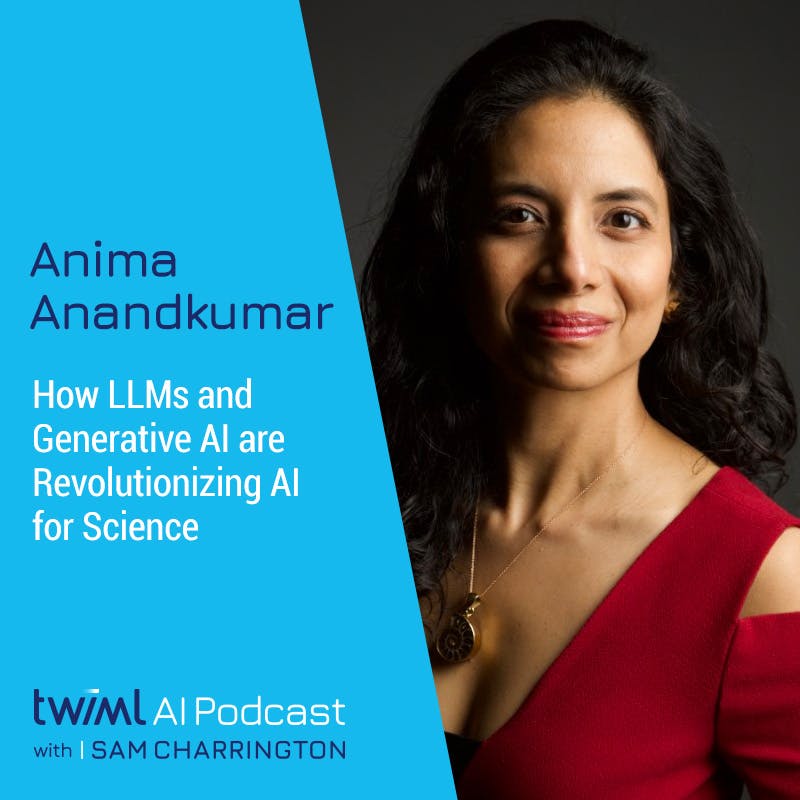
How LLMs and Generative AI are Revolutionizing AI for Science with Anima Anandkumar - #614
Jan 30, 2023Tap to summarizeToday we’re joined by Anima Anandkumar, Bren Professor of Computing And Mathematical Sciences at Caltech and Sr Director of AI Research at NVIDIA. In our conversation, we take a broad look at the emerging field of AI for Science, focusing on both practical applications and longer-term research areas. We discuss the latest developments in the area of protein folding, and how much it has evolved since we first discussed it on the podcast in 2018, the impact of generative models and stable diffusion on the space, and the application of neural operators. We also explore the ways in which prediction models like weather models could be improved, how foundation models are helping to drive innovation, and finally, we dig into MineDojo, a new framework built on the popular Minecraft game for embodied agent research, which won a 2022 Outstanding Paper Award at NeurIPS. The complete show notes for this episode can be found at twimlai.com/go/614
Transcribe →
Automated Model Tuning with SigOpt - #324
Dec 9, 2019Tap to summarizeIn this TWIML Democast, we're joined by SigOpt Co-Founder and CEO Scott Clark. Scott details the SigOpt platform, and gives us a live demo! This episode is best consumed by watching the corresponding video demo, which you can find at twimlai.com/talk/324.
Transcribe →
DevOps for ML with Dotscience - #320
Nov 26, 2019Tap to summarizeToday we’re joined by Luke Marsden, Founder and CEO of Dotscience. Luke walks us through the Dotscience platform and their manifesto on DevOps for ML. Thanks to Luke and Dotscience for their sponsorship of this Democast and their continued support of TWIML. Head to https://twimlai.com/democast/dotscience to watch the full democast!
Transcribe →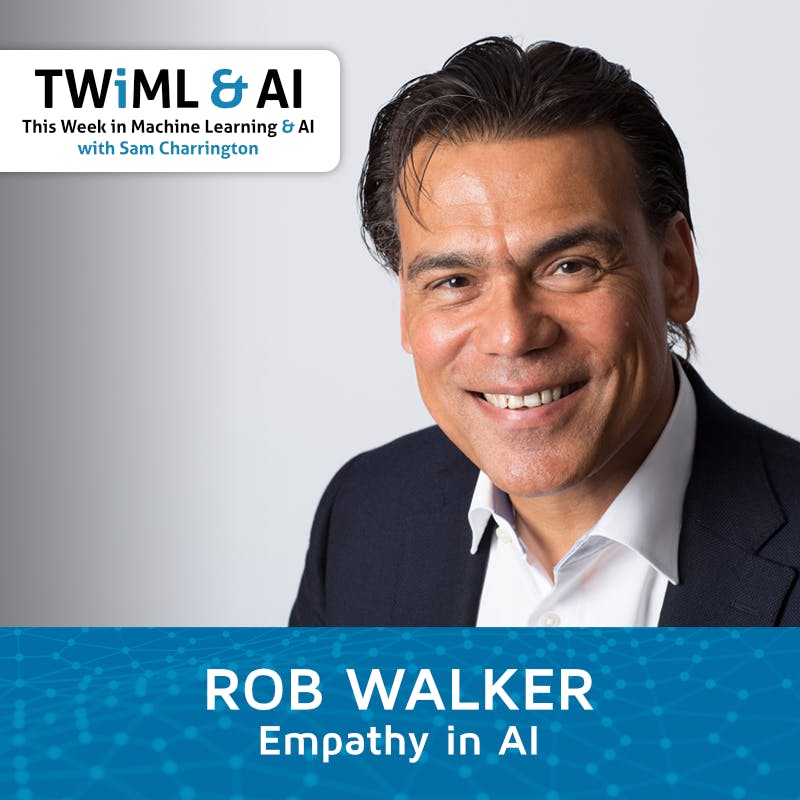
Empathy in AI with Rob Walker - TWiML Talk #248
Apr 5, 2019Tap to summarizeToday we’re joined by Rob Walker, Vice President of Decision Management at Pegasystems. Rob joined us back in episode 127 to discuss “Hyperpersonalizing the customer experience.” Today, he’s back for a discussion about the role of empathy in AI systems. In our conversation, we dig into the role empathy plays in consumer-facing human-AI interactions, the differences between empathy and ethics, and a few examples of ways empathy should be considered when enterprise AI systems.
Transcribe →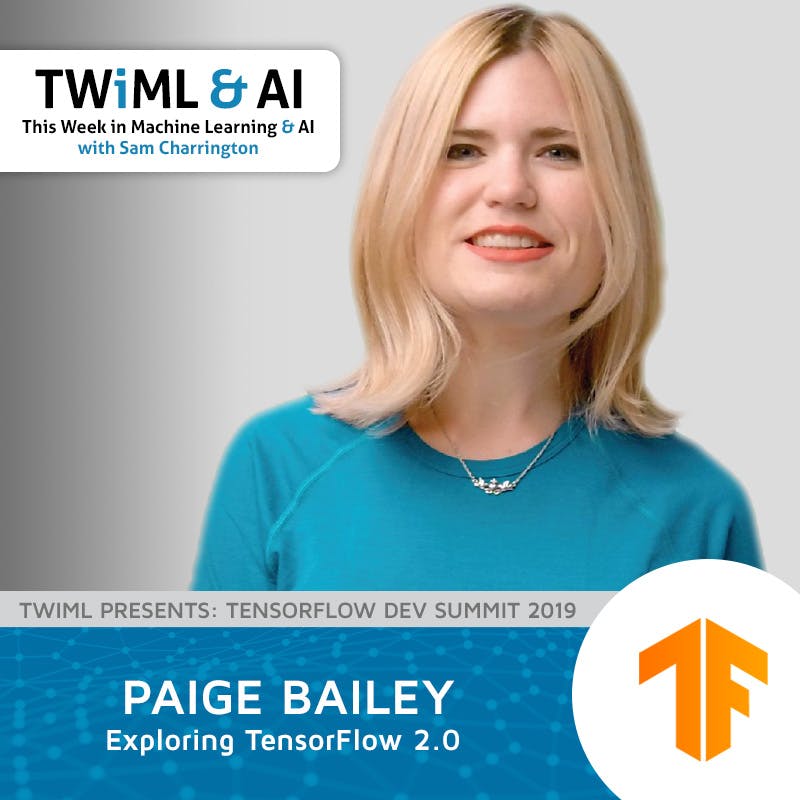
Exploring TensorFlow 2.0 with Paige Bailey - TWiML Talk #242
Mar 25, 2019Tap to summarizeToday we're joined by Paige Bailey, TensorFlow developer advocate at Google, to discuss the TensorFlow 2.0 alpha release. Paige and I talk through the latest TensorFlow updates, including the evolution of the TensorFlow APIs and the role of eager mode, tf.keras and tf.function, the evolution of TensorFlow for Swift and its inclusion in the new fast.ai course, new updates to TFX (or TensorFlow Extended), Google’s end-to-end ML platform, the emphasis on community collaboration with TF 2.0, and more.
Transcribe →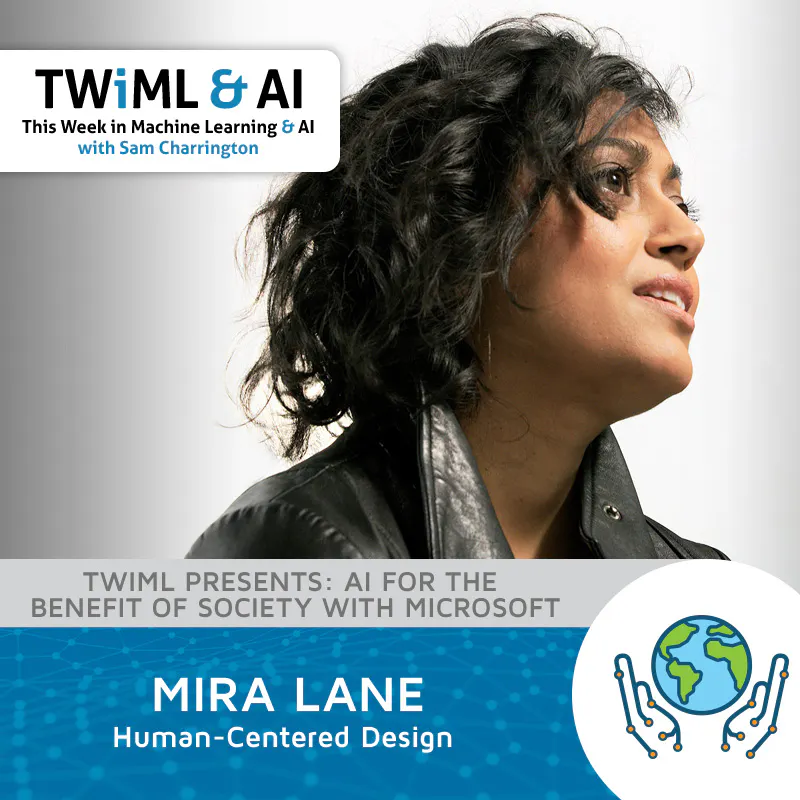
Human-Centered Design with Mira Lane - TWiML Talk #233
Feb 22, 2019Tap to summarizeToday we present the final episode in our AI for the Benefit of Society series, in which we’re joined by Mira Lane, Partner Director for Ethics and Society at Microsoft. Mira and I focus our conversation on the role of culture and human-centered design in AI. We discuss how Mira defines human-centered design, its connections to culture and responsible innovation, and how these ideas can be scalably implemented across large engineering organizations.
Transcribe →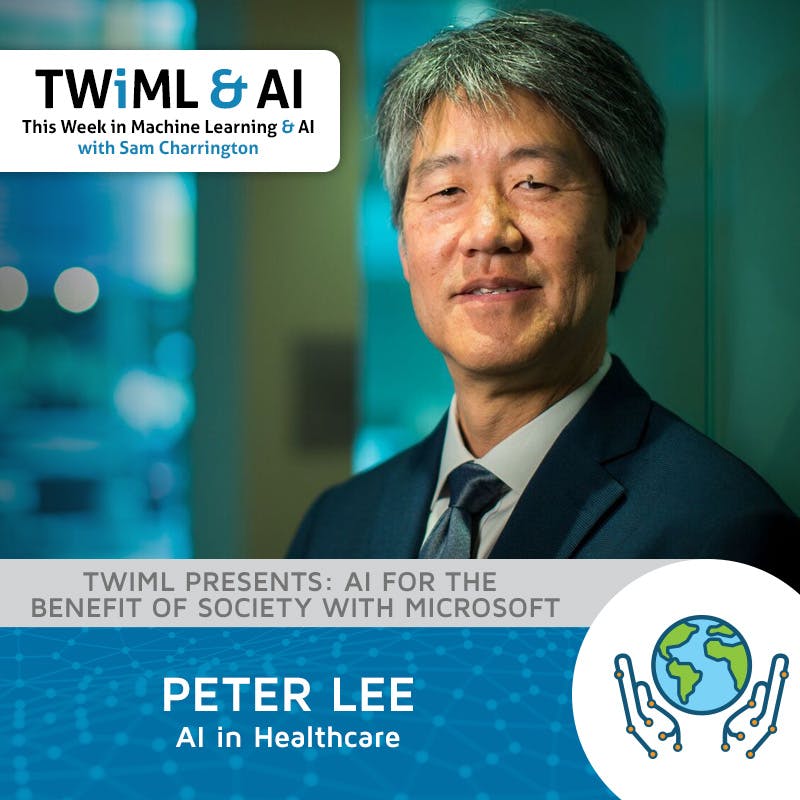
AI for Healthcare with Peter Lee - TWiML Talk #231
Feb 18, 2019Tap to summarizeIn this episode, we’re joined by Peter Lee, Corporate Vice President at Microsoft Research responsible for the company’s healthcare initiatives. Peter and I met back at Microsoft Ignite, where he gave me some really interesting takes on AI development in China, which is linked in the show notes. This conversation centers around impact areas Peter sees for AI in healthcare, namely diagnostics and therapeutics, tools, and the future of precision medicine.
Transcribe →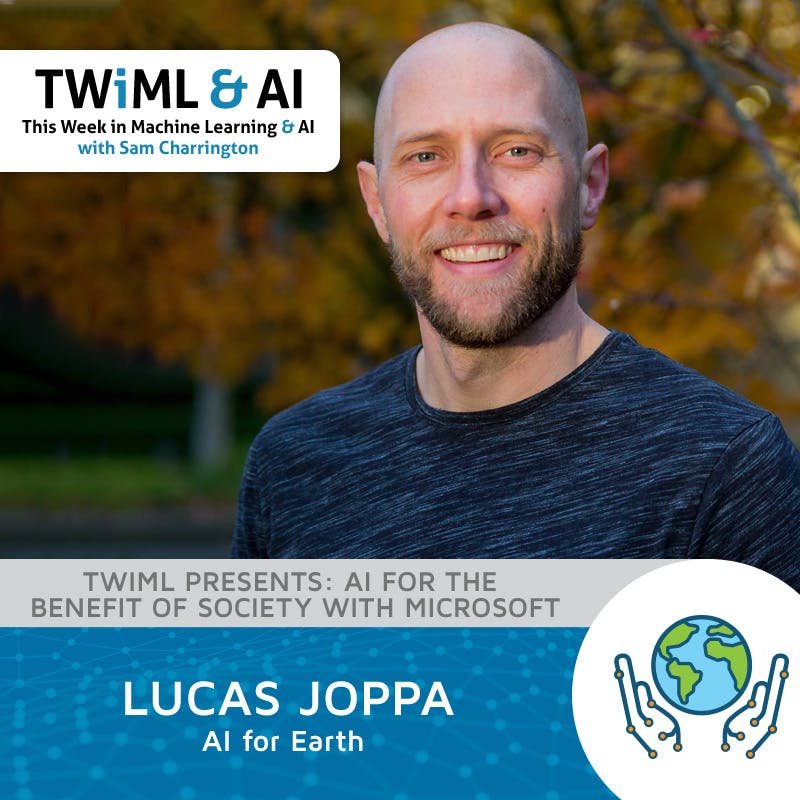
AI for Earth with Lucas Joppa - TWiML Talk #228
Feb 8, 2019Tap to summarizeToday we’re joined by Lucas Joppa, Chief Environmental Officer at Microsoft and Zach Parisa, Co-founder and president of Silvia Terra, a Microsoft AI for Earth grantee. In our conversation, we explore the ways that ML & AI can be used to advance our understanding of forests and other ecosystems, supporting conservation efforts. We discuss how Silvia Terra uses computer vision and data from a wide array of sensors, combined with AI, to yield more detailed estimates of the various species in our forests.
Transcribe →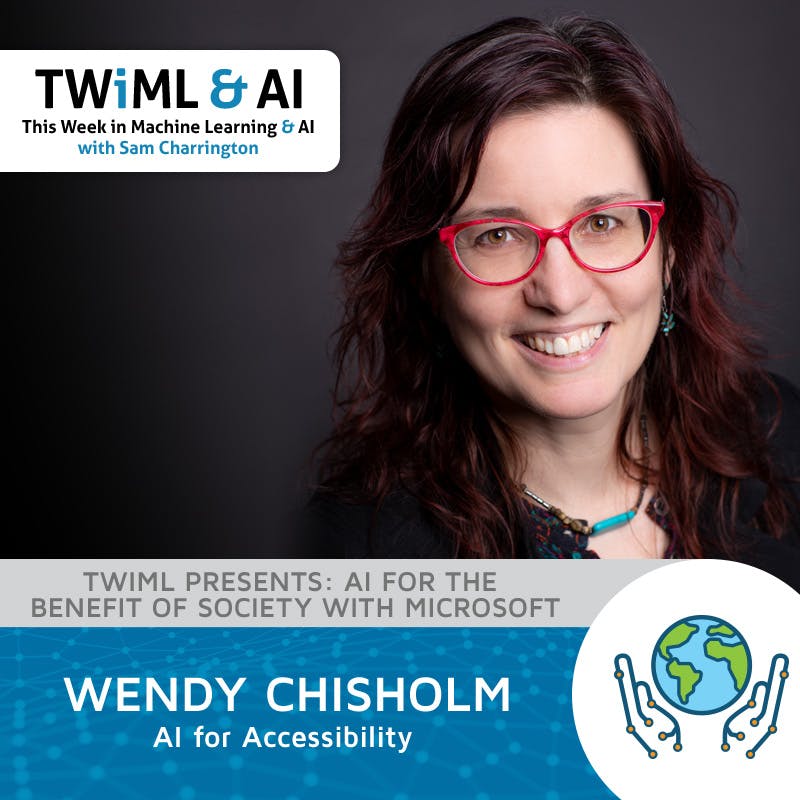
AI for Accessibility with Wendy Chisholm - TWiML Talk #227
Feb 6, 2019Tap to summarizeToday we’re joined by Wendy Chisholm, a principal accessibility architect at Microsoft, and one of the chief proponents of the AI for Accessibility program, which extends grants to AI-powered accessibility projects the areas of Employment, Daily Life, and Communication & Connection. In our conversation, we discuss the intersection of AI and accessibility, the lasting impact that innovation in AI can have for people with disabilities and society as a whole, and the importance of projects in this area.
Transcribe →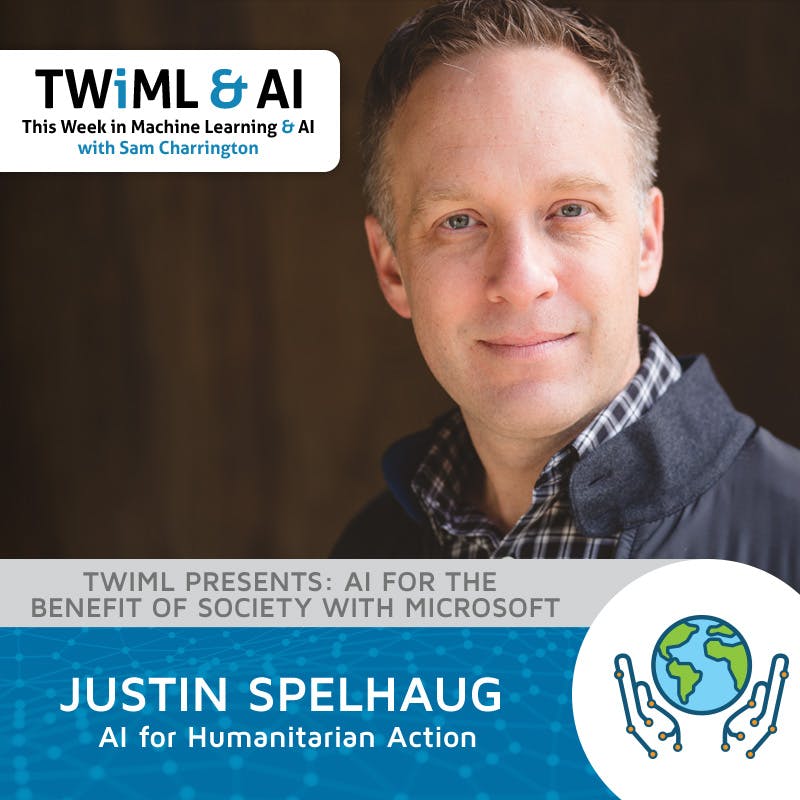
AI for Humanitarian Action with Justin Spelhaug - TWiML Talk #226
Feb 4, 2019Tap to summarizeToday we're joined by Justin Spelhaug, General Manager of Technology for Social Impact at Microsoft. In our conversation, we discuss the company’s efforts in AI for Humanitarian Action, covering Microsoft’s overall approach to technology for social impact, how his group helps mission-driven organizations best leverage technologies like AI, and how AI is being used at places like the World Bank, Operation Smile, and Mission Measurement to create greater impact.
Transcribe →