← The Ultimate Human with Gary Brecka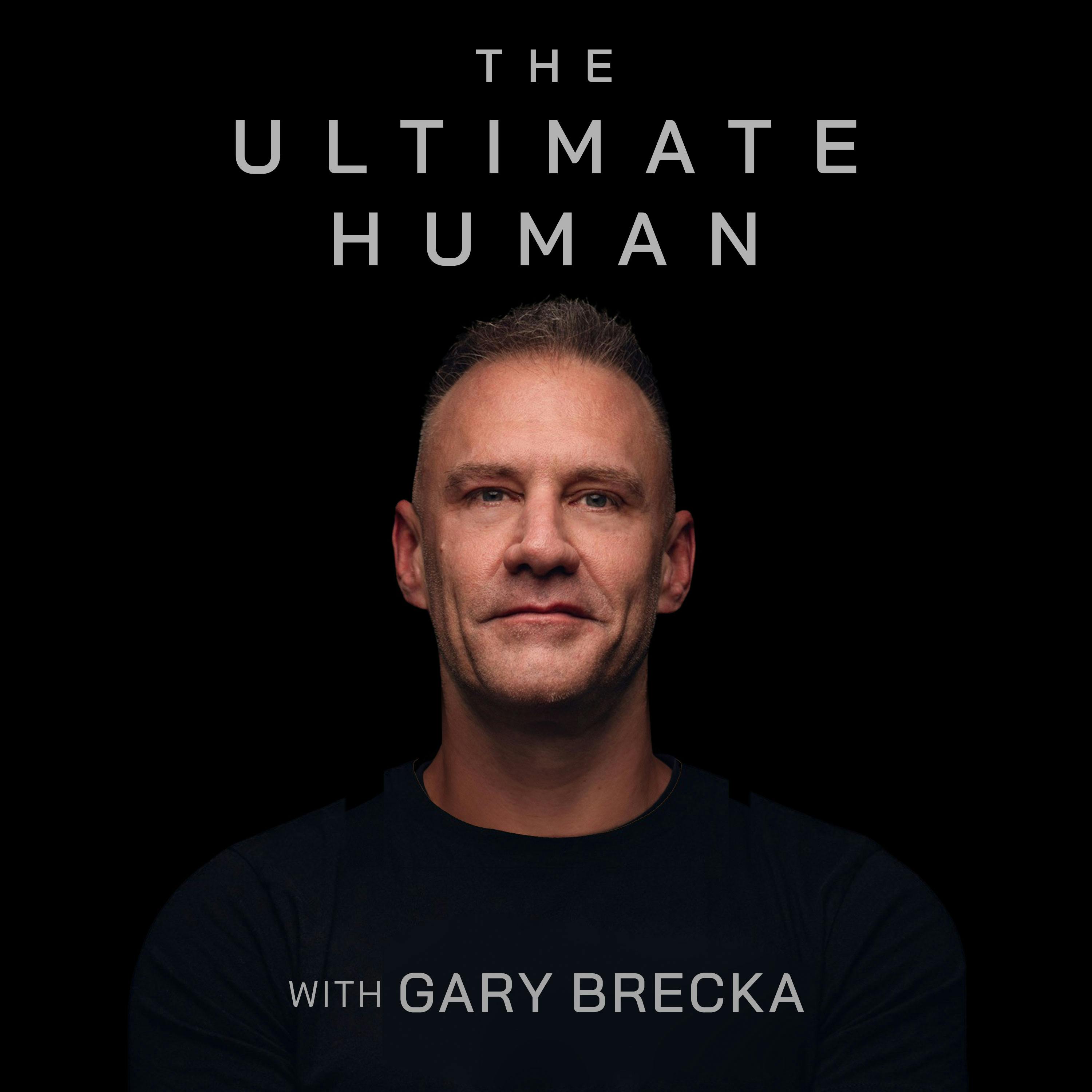
The Ultimate Human with Gary Brecka
128. Kristen Holmes: The TRUTH About Women's Fasting Windows (Science Says You're Doing It Wrong)
00:15:28
Loading summary
Transcript68 lines
- [00:00]
A
The average American is eating over the course of 15 hours.
- [00:04]
B
It was astounding to me.
- [00:05]
A
It puts a lot of stress on our system. Like, digestion is effortful. That's why your sleep is so messed up, because your body's having to prioritize digestion. So all the restoration and repair that should be happening like, has to basically take a backseat while we digest.
- [00:18]
B
Sometimes the women that have the most narrow feeding window have the highest level of hormone disruption.
- [00:24]
A
These really narrow eating windows put a lot of stress on the body. When people restrict their feeding window to 10 hours, they have better markers of sleep and better markers of recovery, regardless of what phase of the menstrual cycle they're in. Fueling for your activities, to me is the principle that all women need to be think about.
- [00:43]
B
I'm really excited to hear what comes out of your research with whoop. If I was to hypothesize, we're going to see the big data WHOOP support what we are seeing in lab values and whatnot for women, I think there.
- [00:54]
A
Isn'T a lot of research on.
- [01:04]
B
Ultimate human. Hey guys, welcome back to the Ultimate Human podcast where we go down the road of everything. Anti aging, biohacking, longevity, and everything in between. Kristen Holmes, who's been on the podcast before, came back for a short because we just thought it was so important to do a short anecdotal review of our discussion on time restricted eating and the female menstrual cycle. She's working on some really interesting things at whoop, which aren't ready for public dissemination yet, but using big data to look at how wearables can actually track the menstrual cycle in women and maybe a potential alternative to birth control. And then we started to go down the road of time restricted eating. So I hope you enjoy this short podcast with Kristen Holmes. You know, one of the things I have been trying to do is, is increase the appeal to my female audience and not just get more women onto the podcast, but talk more about what women's issues, things that are important to women, that the biohacking space is sort of, you know, negating.
- [02:10]
A
Yeah.
- [02:10]
B
And we started talking about time restricted eating and we have noticed in our clinical setting that sometimes the women that have the most narrow feeding window have the highest level of hormone disruption.
- [02:26]
A
Yeah.
- [02:26]
B
Um, so, and very likely, according to our OB gyn, has a lot to do with, you know, they can eat differently during different parts of the menstrual cycle. So, you know, if they wanted to sort of like accordion, expand and contract Their, their feeding window, which is a little difficult to do. But a lot of these young women that just adopt strict intermittent fasting and they're very militant about it, the hormones, hormones go into a tailspin and we, we've, again, it's anecdotal, but we find quite a few of these women have this issue.
- [02:59]
A
And I, and I think, I think the, there isn't a lot of research on women and intermittent fasting. A lot of the research is in men. So there's still so much more that I think we have to do. But I do think a lot of the women, a lot of the researchers in this space would say that these really narrow eating windows put a lot of stress on the body. And especially during the luteal phase, for example, the couple weeks leading into menses, your body is already working really, really hard. It's a metabolically super expensive time. So when we're layering on other stress, we're intermittent fasting, we're exercising, we're doing cold plunge, we're doing sauna. When you've got all these stressors, you are basically asking your body to do, you know, herculean kind of level type of work. Right. It's just unnecessary. Right, Agreed. So I think again, given that the research isn't quite there yet, I think there is a case to be made that during the luteal phase, not a time to have a really narrow eating window.
- [04:01]
B
Right.
- [04:01]
A
And just to clarify, you know, the way I interpret the literature, there's intermittent fasting, which basically has a caloric restriction component and then there's time restricted eating, which is, has a circadian component. And I'm not a nutritionist and I'm not an expert in fasting, but my PhD was in circadian alignment predicts psychological and physiological resilience. So I spent a lot of time on circadian things and I have seen in the data when people restrict their feeding window to 10 hours, they have better markers of sleep and better markers of recovery, regardless of what phase of the menstrual cycle they're in. So there is, I think, a sweet spot. And it looks like it's about 10 hours where we're eating and then we're fasting the other 14 hours.
- [04:48]
B
Okay.
- [04:49]
A
And that's where, you know, people call, you know, it fasting, but it's really, it's not fasting. You're basically just giving your body a rest when it normally would be resting. Right. We are really, we are meant to be eating when it's light out. Right. Or you Know, as the sun is setting, a little bit after the sun sets, you know, that is when our body is primed to metabolize food. I'm a firm believer in, you know, making sure you're distributing your macronutrients throughout the day, biasing toward a little bit earlier in the day when you're going to be most active, fueling for requirements like for your activities. To me is the principle that all.
- [05:25]
B
What you need to think about in the morning. So rather than having your restricted window be, don't start eating until noon or two, starting in, in the morning and stop eating earlier.
- [05:35]
A
Yeah. And it's. And, and I don't think when you eat necessarily is going to impact how much g weight you gain. Like, I don't know that the evidence really, there really exists.
- [05:43]
B
I would agree with that.
- [05:44]
A
I, I would say that, that said, I think we are metabolically more primed to digest food earlier in the day. Right.
- [05:53]
B
So certainly not.
- [05:54]
A
I think we know that late, late.
- [05:55]
B
At night, right before bed disaster.
- [05:57]
A
When I look at the data, I, you know, it is just, it literally eating a meal two hours before bedtime is the same pretty much as drinking alcohol two hours before bedtime. You know, so when you, when you look at the, the impact on markers of sleep and recovery, they behave very similarly.
- [06:14]
B
Oh yeah, right. No, we, we, we. You know, what was interesting was when we, when we did this little sleep challenge that, that I ran. Again, super anecdotal, but, um, feeding and alcohol, I mean alcohol almost at, in any amount right before bed. 100% impact on sleep. Yeah. Disruption, negative impact.
- [06:37]
A
And when you look at stress monitor.
- [06:38]
B
And the same with the, it's insane with the food. Yeah.
- [06:40]
A
Have you looked at your stress monitor? When you eat right before you go to bed, you're, you're, you know, basically your stress monitor is like this. And then about three or four hours later, it, you know, levels out.
- [06:52]
B
Right.
- [06:52]
A
But that's a great way to kind of look at the impact of your food or al same with alcohol. Like you might pass out, but your stress monitors like this. Until the alcohol, you know, makes its way through your system is processed and then you start to flatten out. Yeah, but it's crazy.
- [07:09]
B
Those were the two things that people clocked in that not only had no effect on baseline, had negative effect on baseline. And there was a two. Two that were consistent. Like they didn't change the temperature of the room. Sometimes the sleep score actually still improved. They didn't darken the room so much sometimes. Sleep score still improved. Yeah. They didn't do like the breath work or the contrast shower. Some people even reported using screen time in bed and it didn't, the majority of the people, you know, was below baseline. But you know, some people didn't have an effect on baseline. No one that clocked in eating right before bed or having alcohol right before bed. In, in our little study, which is about 8,000 or so people, no one did not see a detrimental effect on their sleep. So those two are absolutes for me. You know, stop two hours before bed eating and then just, you know, kind of no alcohol before bed.
- [07:58]
A
I go so far to say where I really think that like the, the benefits of just the circadian alignment piece of just literally restricting your, your eating window to 10 hours and really making sure that you're stopping your last bite a couple hours before you sleep.
- [08:16]
B
Yeah.
- [08:17]
A
Viewing morning sunlight, viewing the sunset. Like just those two things like, can get you really far.
- [08:23]
B
Yeah.
- [08:23]
A
And they're, and they're both right. Like it's not, you're not changing the quality and content of your food. Obviously that really matters. But for people who don't, who can't afford it, everyone can pretty much get outside within 20 minutes of waking up. Pretty much everyone can watch the sunset for the most part. And people can narrow their feeding window to 10 hours for the most part. Yeah, like you do that, you really put yourself on a good path to improve, I think all sorts of outcomes.
- [08:45]
B
I agree. And you know, I've heard you talk about this with your, you know, your previous experience with athletes and your own athletic performance that, you know, if you're ignoring the basics, sometimes we want to focus on the exotics. Everyone wants to focus on the training, everybody wants to focus on the exercise and my PR and how much I'm lifting and, but, and, and sleep gets tucked away, hydration gets tucked away, nutrition gets tucked away. There's just some basic, not, you don't even have to be hyper disciplined. You know, just some basic parameters that you can shroud your day in that would dramatically, you know, improve, improve your health outcomes. But back to the time restricted eating with, with women. We, you know, we, we, we have tens of thousands of, of females that we actually do have blood work on. And so we, you know, we pull 74 biomarkers. Then we pull, 10 to 12 weeks later we pull the same 74 biomarkers and we'll look at changes in those biomarkers. But more than just anecdotally and younger menstruating females that have very tight feeding windows And I'm going to say very tight feeding windows. Less than eight hours.
- [09:49]
A
Yeah. So many. Six.
- [09:50]
B
Eight hours. Six. Somewhere. Four. And they're getting all their meals in four because either their husband or the boyfriend or something is doing it. And it has significantly less of a detrimental impact on men than it does on women. And then I did a podcast with Dr. Valter Longo, who's at University of Southern California. He wrote the Longevity Diet. I think he's probably the most published researcher in the world on fasting, intermittent fasting, you know, time restricted, eating fast, mimicking diets. And I think he would agree with, with your analysis, and I know that he agrees with, with mine, that, that even 10 to 12 hours. But when he said as wide as 12 hours, and I was like, isn't everybody eating in 12 hours? He said, actually, no. Most people start eating right when they get up in the morning and they.
- [10:35]
A
Do not stop eating until the average is 15 hours. Yeah, the average American is eating over the course of 15 hours. Like, isn't that just.
- [10:44]
B
It was mind blowing to me.
- [10:45]
A
No, I know because. Because we're in a bubble.
- [10:47]
B
Yeah, we are in a bubble.
- [10:48]
A
We are in a bubble. Okay. We did not. We're not representative of America. America is eating 15 hours a day.
- [10:55]
B
And, and in the study that they did, people ate 17 times a day. I said, there's no freaking way people.
- [11:01]
A
Eat 17 times a day.
- [11:02]
B
He said, yeah, 17 times a day. They might have three big meals, but there are 17 times that they are consciously ingesting food. I don't mean just throwing a, you know, starburst in their mouth. I mean, actually eating it just puts.
- [11:16]
A
A lot of stress on our system. Like, digestion is effortful, right?
- [11:19]
B
It's not only effortful, but evolutionarily, it's so important, right?
- [11:23]
A
It's.
- [11:23]
B
It's such an important process that when the body is engaged in other activities that are necessary, like elimination of waste repaired, you know, detoxification, you know, waste elimination. By waste, I don't mean urine or stool. I mean cellular waste. Right? Lymphatic system in the brain. The, the, you know, our lymphatic system, you know, eliminating waste from the body. The. When, when we ingest food, those processes come to a grinding halt because the shift becomes the priority of digestion. And if you think about it evolutionarily, it makes, or, you know, ancestrally, it makes a lot of sense. We didn't know when we were going to get our next meal. So when you ate, the body was like, this is a priority yeah.
- [12:00]
A
I'm getting nutrition, sleep. That's why your sleep is so messed up, because your body's having to prioritize digestion, divert all the resources to that. So all the restoration and repair that should be happening take a backseat while we digest.
- [12:14]
B
Yeah. So your body's on its way to doing something else and you shift it back to digestion. It's on its way to doing something else. You shift it back to digestion. Even when we did these short term fasting challenges, most of the breakthroughs happened on days two and three and people were like, whoa. Like the level of mental clarity, like a light bulb just went on. And I felt cognizant, clear, clean, awake. What was for the first time sometimes in their entire adult lifetime that they actually didn't eat for a period of time. Yeah.
- [12:44]
A
And so giving your body a break.
- [12:46]
B
Yeah, I'm, I'm really excited to hear, you know, what comes out of, you know, your, your research with, with whoop and what comes out of the big data at Woo. Because I think what we're going to do is we're going, I, if I was to hypothesize, we're going to see the big data whoop support what we are seeing in, in lab values and whatnot for, for women. So better for them to just restrict their calories over a longer period of time than to pile them in, into a very shortened window. And what we also see on the labs is, you know, the pituitary, which actually regulates our thyroid, our metabolism is also regulating the menstrual cycle. Right. I mean it's releasing luteinizing hormone, follicle stimulating hormone. And these, these men and women, by the way, so these are regulating the production of testosterone. They're regulating the, the cycle, how they go from ovulation to follicular to luteal phase. And so one of the, the interesting things about time restricted eating and the in the pituitary is if you don't eat very often or you don't eat a wide enough window, the pituitary begins to slow down. The thyroid, it starts to throttle back to metabolism. So it drops that T4 hormone, drops a T3 hormone. And in an effort to save your life because it perceives low blood sugar over a prolonged period of time as starvation.
- [14:11]
A
Yeah.
- [14:11]
B
And it's like, well, we better save this person. So. And although I don't personally know the direct mechanism when, when it's restricting the function of the thyroid, it can also restrict through luteinizing hormone and follicle stimulating hormone. It can also throw the menstrual cycle off.
- [14:30]
A
Right?
- [14:30]
B
Because we see the drop in thyroid hormone levels almost to hypothyroid levels in super narrow windows and then the concomitant response in the menstrual cycle and they're just all over the place.
- [14:43]
A
And that's why I see, you know, when we're restricting calories, like you don't. It's not safe for you to have a baby. So you don't get your menstrual, you don't get your period, you're not going to ovulate. Right. Like, so all these things like start to shut down because, you know, it's not a safe environment to have a baby. So your body's really smart in that way.
- [14:59]
B
Young ladies eat in a water feeding window.
- [15:01]
A
Yeah, yeah, yeah. No, let's not fast until we know more about how to do that properly.
- [15:06]
B
Yeah, I mean, you fast once in a while, but I'm saying is the.
- [15:09]
A
The hyper restricted hour, like fast. Yeah, 14 is plenty.
- [15:14]
B
Beautiful. Awesome.
- [15:16]
A
Yeah.
- [15:16]
B
Well, guys, all right, I'm sure we're going to shut the camera off and we're going to start it back up again. So let's just zip it and that's just science.