← The Underworld Podcast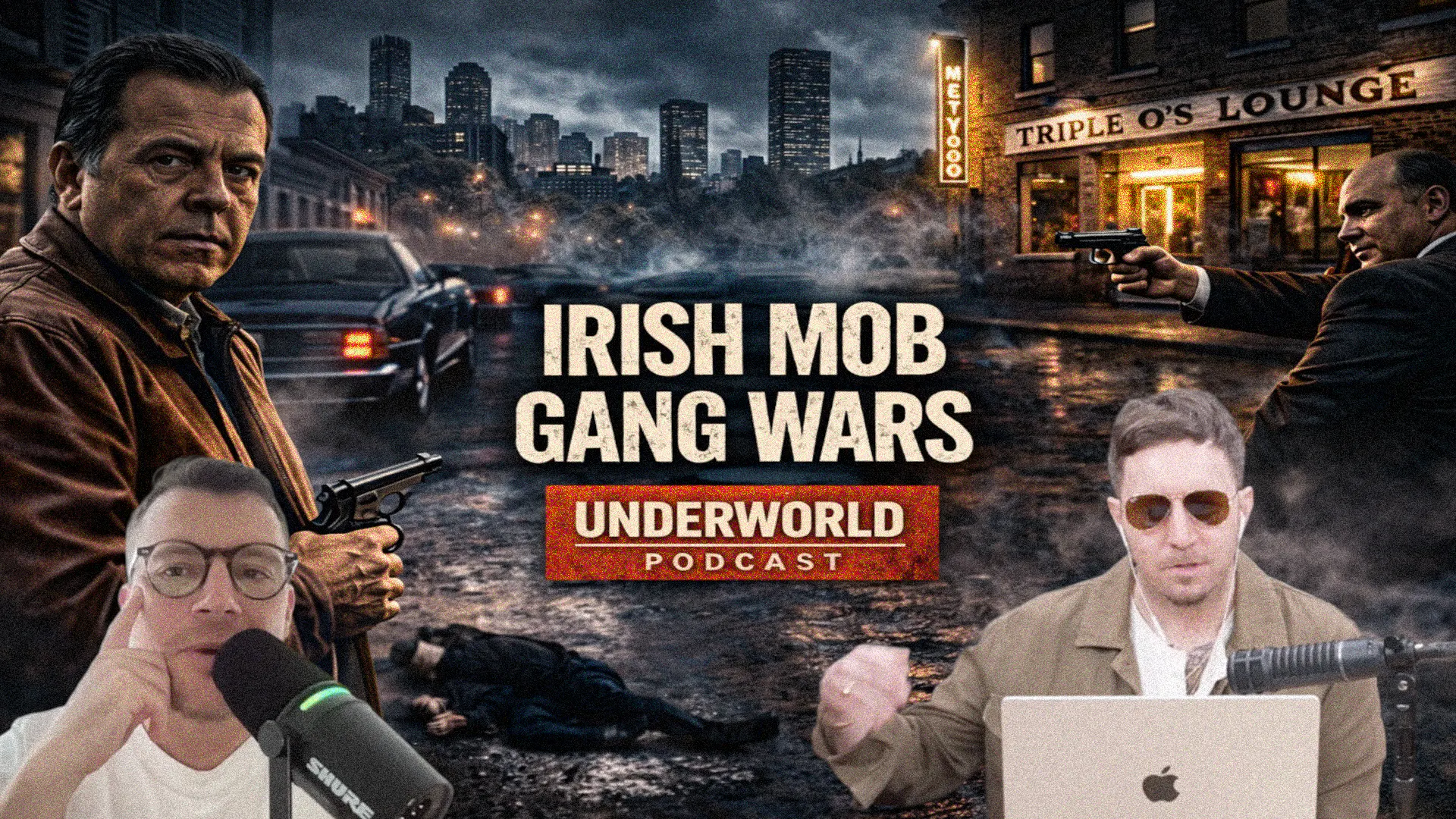
Loading summary
Transcript145 lines
- [00:01]
Carvana Customer
Hey, sweetie. Your mother showed me this Carvana thing for selling the car. I'm gonna give it a try. Wish me luck. Me again. I put in the license plate. It gave me an offer. Unbelievable. Okay, I accepted the offer. They're picking it up Tuesday from the driveway. I haven't even left my chair. It's done. The car is gone. I'm holding a check anyway. Carvana, give it a whirl. Love ya.
- [00:24]
Carvana Advertiser / Sponsor Voice
So good you'll want to leave a voicemail about it. Sell your car today on Carvana.
- [00:29]
Sean Williams
Pick up.
- [00:29]
Carvana Advertiser / Sponsor Voice
Fees may apply.
- [00:30]
Podcast Narrator
Have you ever wondered what it's like to witness a murder?
- [00:33]
Dani Gold
Forrest grabbed the knife and then just stabbed Johnny in one motion.
- [00:38]
Podcast Narrator
Or how it feels to be shot.
- [00:40]
Dani Gold
I was immediately hit by a barrage of bullets.
- [00:43]
Podcast Narrator
Or how you would react if your spouse hired someone to kill you and
- [00:48]
Sean Williams
he was to put me in a grave with a bullet wound on my head.
- [00:52]
Podcast Narrator
These are the stories you'll hear on the podcast called what was that Like? True stories told by the actual person who went through it. You'll hear from a stalking victim.
- [01:02]
Carvana Advertiser / Sponsor Voice
Came back upstairs.
- [01:03]
Dani Gold
And when I came back and turned the corner into my room, I saw him standing there.
- [01:06]
Podcast Narrator
You'll hear from a man who was kidnapped and tortured.
- [01:10]
Sean Williams
I would do anything, say anything to simply get away.
- [01:14]
Podcast Narrator
And you'll hear actual 911 calls.
- [01:17]
Sean Williams
Take a deep breath.
- [01:18]
Carvana Customer
Oh my God.
- [01:19]
Sean Williams
Take a deep breath.
- [01:20]
Carvana Customer
Oh my God. Oh my God.
- [01:22]
Podcast Narrator
Real people in unreal situations. Search for what was that like on
- [01:27]
Dani Gold
any podcast app or@whatwosthatlike.com June 7, 1964 Boston and the city is turning into a free for all for anyone who can get a crew together. It's one of the few major cities in America where the Italian Mafia isn't the dominant force, leaving room for others to ply their trade. Two of the others are the McLaughlin gang from Charlestown and the Winter Hill Gang from Somerville. Both are Irish and they've been at war for the last few years. What started out as a drunken fight during labor day weekend in 1961 over someone disrespecting a woman has turned into an all out gang war in the city of Boston and the surrounding suburbs. If you don't know Boston and have never seen an Affleck movie, Charlestown is a rough working class Irish neighborhood. You just north of Boston's downtown and Somerville is or was a rough working class Irish neighborhood in the nearby suburbs. Think guys in fitted Red Sox hats with terrible fades and super thin line beards who love a good brawl. The winter Hill Gang, later made infamous by Whitey Bulger, takes their name from the neighborhood of Winter Hill where they operate. They're led by a local street fighting legend by the name of James Buddy McLean. The McLaughlin gang is led by three brothers, Bernie, George, and Edward. And in the summer of 1964, the momentum is on their side. A month earlier, they had taken out a top Winter Hill member, and now they feel crazy enough to take another shot at McClain after several failed hits. But gutting him won't be easy. He's legendarily tough and careful and beloved by everyone in Winter Hill. On this particular day, McClane is jogging back from his workout at the YMCA with a.38 revolver in his hand as one does. As he runs around the corner of one block, he suddenly catches sight of the barrel of a gun, pointing out a car window. Thinking quickly, he ducks down at the last second as a bullet whizzes by his head, just missing him. McClane tries to run into a nearby club that his gang owns, but because it's Sunday, the side door is locked. The car with the shooter chases him, closing in, but before they can get another shot off, McClane sprints by them and lets off three shots of his own, catching the shooter in the front seat, right in the shoulder. The shooter fires back but can't hit McClane, who manages to run around to the front door of the club and make his way inside. He runs right to the bar, where he knows there's a gun and ammunition stashed. He reloads and heads back out onto the street, a gun in each of his hands, only to find the McLaughlin hit squad had fled. McClane then goes to a different bar because, hey, it's Boston and he's Irish. What else are you gonna do? He orders a drink and calls up one of his top lieutenants to come down to the bar immediately. The lieutenant arrives and McLean tells him what happened, to which he says, you can't live at home anymore. You have to have guys with you at all times. We have to get better organized and eliminate every fucking one of them. We need another safe house. Get someone to look after your family. Give them plenty of money. Boston's first Irish gang war is about to ratchet up another level. This is the Underworld Podcast. Welcome back to the Underworld Podcast, a program about international organized crime past, present and future from two journalists who have reported on this sort of stuff all over the world. Or as we like to call it, Cautionary Tales. From Cautionary Tales. I'm one of your host, Dani Gold and my co host, your amigo and mine, Sean Williams, who is now based in Buenos Aires, Argentina and I think just got back from Paraguay. Right, Sean, are you making new friends in Latin America? How are your tango skills?
- [05:31]
Sean Williams
Yeah, I mean, I just got back from Paraguay, what, 10 minutes ago, to let people be on the curtain a bit. No tango skills, but my skills of like looking confused and saying perdon is like, that is through the roof. So great accent. That's a good time.
- [05:47]
Dani Gold
Great accent there.
- [05:48]
Sean Williams
I know.
- [05:48]
Dani Gold
As, as always, you guys can Support us@patreon.com Underworldpodcast or, or on Spotify or itunes and I think even on YouTube. Now you can buy merch like T shirtsnerworldpod.com and you can email us tips or advertising inquiries or anything else at the underworld podcastmail.com Honestly, Sean, I got no spark today, man. No witticisms. Winter's been too long, so let's just, let's get it going, man.
- [06:11]
Sean Williams
I mean, I thought people are listening in for the banter alone, actually.
- [06:15]
Dani Gold
No, some people like the banter. I think a healthy amount of people do like the banter. I just got no banter.
- [06:20]
Sean Williams
Okay.
- [06:20]
Dani Gold
Now I'm just kind of tired.
- [06:22]
Sean Williams
That's fine, you know. Yeah, you tell a nice story. Yeah.
- [06:24]
Dani Gold
Okay. Boston, Boston and its suburbs in the 1950s, heading into the 1960s. It's a city caught between two worlds. You've got the old ethnic neighborhoods like Charlestown, South Boston and the North End still kind of humming with this tight knit insularity of immigrant generations where everybody knows everybody. And loyalty to like your corner or your block or the city runs deeper than almost anything else. You're talking mostly Italian and Irish here. Neighborhoods of dock workers and longshoremen, smoky bar rooms, parish halls. And suburban Boston. At that point, it's starting to sprawl outwards towards towns like Somerville, Everett and Revere. Shout out to the dog track. And Revere beach, one of the worst beaches ever. They're filling up with working class families looking for a little more space. But those suburbs never really leave the old neighborhood behind. The same allegiances, the same grudges, the same faces just a few miles further from the water. Underneath the surface of all that blue collar respectability and kind of strict Catholicism, of course, is a parallel economy that's been running for decades. Bookmaking and numbers running, loan sharking, truck hijacking, union rackets. All the kind of Goodfellas classics that you see in the opening. Like 20 minutes of Goodfellas, right? The bookies and the gangsters. Though they're relatively low level, Right. They're not shadowy figures to most people. It's all very neighborhoody, right? Not super violent, besides, kind of these street brawls and the occasional, you know, solid beating or murder. But these guys, they're part of the neighborhood, part of the fabric of everyone's lives.
- [07:52]
Sean Williams
So let me get this straight. You managed to, like, if you manage to remain miserable and wintry, you're going to end up writing intros like that, like Don DeLillo or something? Like, how. How do we make sure that you never see a ray of sunshine ever again?
- [08:05]
Dani Gold
You know, I tried to read Underworld and I gave up in like, 25 pages. Maybe it's just not for me. I used to be able to finish any. Have you read it?
- [08:14]
Sean Williams
I did the same when I was younger, and then I re. I managed to redo it, like a few years ago. It's awesome, but it's deep. Yeah.
- [08:22]
Dani Gold
What's the other one? What's the other one he wrote that I gave up on?
- [08:25]
Sean Williams
Oh, my God. Yeah, I can't remember now. God studied all this shit in uni.
- [08:30]
Dani Gold
They just kind of bore me out these days, man. Like, I can't get through it.
- [08:34]
Sean Williams
That's a shame.
- [08:35]
Dani Gold
But people love it anyway. By the early 1960s, the Boston underworld is nominally under the influence of the New England mob, the patriarchal crime family operating out of Providence, Rhode Island. Raymond Patriarchal runs his empire with, like, a quiet, cold efficiency. And Boston is a revenue stream that he kind of oversees and expects to remain orderly. But Boston is a difficult city to fully tame, and Patriarcha doesn't have the men on the ground or the power to tame it fully, which is where you get these Irish crews, which are tough, territorial, and deeply skeptical of Italian authority, operating with a degree of independence that other cities would not have tolerated. Like this sort of thing. 50s and 60s. In New York, it was tough. You did have, like, the Westies and things like that, but no one operated at the major level that the Irish crews in Boston were operating at. These groups, they pay tribute, they follow certain rules, but they're never fully absorbed or fully under the thumb of the Italians. And that tension kind of simmering for years beneath the surface is like kindling. It's ready to explode.
- [09:36]
Sean Williams
I mean, I like the phrase Italian authority. It's just quite a. Quite funny to European ears. Like pizza, recce or football formations. I don't know. I mean, you know, I'm not too good at organized crime.
- [09:45]
Dani Gold
You don't think that's funny to European Ears, Italian authority and organized crime.
- [09:50]
Sean Williams
Yeah, that's, that's probably fair enough. I'll take back my comment about the Italian people.
- [09:55]
Dani Gold
Enter James McLean, born in 1930 in Somerville, Massachusetts. Shout out again to Davis Square. Terrible burritos, terrible pizza. His parents can't take care of him when he's born, so they give him up for adoption. But his real father still checks up on him once in a while. McClane gets the nickname Buddy because he's just a cute, well behaved kid and it sticks. Young Buddy gets the coveted job of crossing guard in his last year of elementary school because he's responsible and intelligent. And also all the other kids are terrified of him because he can beat the crap out of them and pretty much everyone else. Even though he's like 10 years old, he's like a brawler, a real Boston brawler. There's a story about him beating up a bunch of 16 year olds when he's 11. Just a fighter from the start. Buddy gets his first real job as a part time worker at a trucking company at the age of 13 during World War II. Because all the older guys are all fighting. And that's just what you did back then. You got a job when you were 13. There were no iPads, no one's on Roblox. We used to raise kids right in this country. Ship them off to the mines, the warehouses as soon as they're bar mitzvah age. And guarantee you if we did that now, it would solve like pretty much all of Gen Z's issues.
- [11:01]
Sean Williams
Yeah, but imagine how more efficient all those child miners and chimney sweeps could have been if they just got that anxiety and addiction issues diagnosed. I mean, you ever think about that?
- [11:09]
Dani Gold
Did not think about that.
- [11:10]
Sean Williams
But think about the, think about the Industrial Revolution, but with like, you know, everyone's in therapy. That would have been great.
- [11:16]
Dani Gold
The children yearn for the minds. Everyone knows that Buddy's an extremely hard worker and everyone likes him. When he turns 17, his dad gets him a job as a longshoreman, which for those who don't know, guy basically works at the docks. In this case East Boston and Charlestown. Also classic young mobster job. Buddy's a tough kid, but he gets pushed around by some of the hard ass longshoremen, some of the older guys. So he starts working out intensely and he gets really jacked and starts boxing. Soon enough he picks a fight with the longshoremen who had kind of messed with him earlier, and he just beats the hell out of all of them. What you're going to see is a constant theme in his life after that beat down in front of everyone. Buddy, who is polite and kind of quiet by nature, gets a ton of respect at the dogs and nobody messes with him, and his rep starts to spread. In 1948, he gets his first taste of the criminal life when he's leaving work and a dock worker hands him a box of Cuban cigars as a gift, which, you know, kind of fell off the back of a truck. Interestingly, not illegal then, right? It's pre castero. He sells the cigars to a local shop and afterwards asks his dad, who was connected down there, what the deal was. Why did that guy give him the cigars? Bit of a naive kid. Buddy, his dad, fills him in on the fact that some of the dock workers, they like to rip stuff off sometimes and sell it, but warns him not to do it because he could get fired. Buddy, though, his mind is already racing. He gets together a few dock worker buds, including childhood friend Howie Winter, and they start stealing from the docks. They start out by stealing some kind of like select choice merchandise and storing it in a warehouse where they know the owners. Buddy's calling the shots. He's the mastermind. And around the same time, he gets married and starts having kids.
- [12:52]
Sean Williams
You reckon this guy would have made millions as an influencer? He's like getting shredded. He's violent, he's boxing, brash, smoking cigars. Like I'm seeing dollar signs, man. You know, done well.
- [13:02]
Dani Gold
You know, here's the thing. I actually, from learning about him, he actually seems like a pretty stand up guy. Besides obviously organized crime. So I don't think he would have been an efficient influencer in that regard.
- [13:14]
Sean Williams
Okay. You know, the gangster with too many morals for. For Instagram.
- [13:19]
Dani Gold
He does come across like someone who, who has like a sort of stand up guy quality to him. You know, the sort of old school gangster that usually it's a lie, you know, usually they're all scumbags, but he might break the mold, to be honest with you.
- [13:31]
Sean Williams
Interesting.
- [13:32]
Dani Gold
So he's still fighting in the streets sometimes, but he starts having this aura of being this legendary street fighter. In the book Love and feared, Buddy McClane, there's a story about a cop visiting four guys in the hospital, trying to find out why they were all beaten up badly. And it turns out they picked a fight with Buddy. And the cop is shocked to hear one guy did all that damage. He even gets the reputation as being the toughest guy around, just like Rocco Di Mayo in Essex County. Sean the jacket There we go. Yeah, I was waiting for you to. It's been a while. We need to throw one in, but I mean, that's perfect. The jacket. He gets such a badass reputation that people from all over the area come to fight him. Local boxers, other tough guys, all types of challengers. And on Friday nights at this one bar, Buddy would post up welcoming anyone who wanted to throw down. Which sounds like a movie, but apparently the dude could just fight really well. He would sometimes have five to six fights in a night, just dropping people left and right. Which, by the way, you know, you read about these like the Monk Eastman story or boxing rounds in like the 20s and 30s, and they're like. Fights were like 25 rounds.
- [14:37]
Sean Williams
Yeah.
- [14:38]
Dani Gold
Was it just. Were people's. Was people's skin and bones just tougher than. Were people hitting A lot lighter? Were the gloves like 47 ounces or was it. Is it all just exaggerated? 47 seconds?
- [14:50]
Sean Williams
I thought, like, I thought they were basically hitting with. I think they were basically hitting with gloves that were made out of concrete as well, weren't they? So they just sort of rearrange in. I read something once that actually that like, bare knuckle fighting in the old days were actually less dangerous because you don't get the kind of CTE hits that way. You would have got like your face smashed about. But it wasn't this kind of like brain chugging. I don't know. Maybe that's right. Maybe I dreamt that. Maybe.
- [15:18]
Dani Gold
I mean, I'll look that up at one of these points, but I'd rather. I want the mystery to sort of persist in my head.
- [15:24]
Sean Williams
It can hang over everyone's next two seconds until you'll get up.
- [15:28]
Dani Gold
So he and his friends, they just hang at this one bar and people would come from all over the triumph. And apparently he wasn't a jerk about it. He wasn't like picking fights or being a bully. It was more like an athletic competition. He's actually. He becomes like a beloved figure in the neighborhood, known for being a nice guy and extremely polite, not some thug who just goes around beating people up for fun. There are also stories of him doing things like paying for someone's rent when they were about to be evicted, hunting down some neighborhood youths who jack the ladies purse when she gets robbed leaving church. You know, that sort of stuff.
- [15:58]
Sean Williams
Yeah, okay, fair enough. He's not an influencer. He'd probably have to like kick the homeless person or something like that.
- [16:02]
Dani Gold
Yeah, no, he seems, by all accounts, stand up, dude. Just endless stories of this type of chivalrous behavior while also beating people up. Very yin and yang. In another story, he walks in on an armored robbery. Sorry, armored. Armed robbery of a liquor store where there's a cop who's actually one of the customers in there getting robbed. And while the gunmen are masked, buddy basically tells them he knows who they are and they need to stop it and return the money. And they do. He old school. Like I said, old school in that way. Trying to keep crimes like that down in his neighborhood. And he actually earns the respect of the Somerville police. And in turn, the cops basically look the other way on his dock. Robberies and truck hijackings he starts doing with his crew. He's basically become a local legend at one of his favorite bars. They actually keep his preferred bar stool empty just in case he comes in, which is how I think. Sean, that was your story in the nightclubs in Berlin, right? They kept the bathroom stall completely empty for you?
- [16:54]
Sean Williams
No, cuck stall. Yeah, yeah.
- [16:56]
Dani Gold
No, not. Not. Not the seat stall that you sit on. I meant the bathroom stall that you go. But, yeah, that works too. They kept the cuck stall. Yeah, yeah, yeah. Someone got mad at me for. For continuing to make the Berlin jo. And one of the commenters making fun of you too much.
- [17:11]
Sean Williams
Are they coming out to bat for me? Okay, they're coming out to bat for you.
- [17:14]
Dani Gold
They're tired of me giving you. Giving you a hard time. But little do they know that this is one of the sort of things you developed in Berlin. You like being, you know, insulted and yelled. Right. Does that play into it further?
- [17:27]
Sean Williams
Yeah, I mean, the stool. Exhibit A.
- [17:33]
Dani Gold
His fighting and general demeanor earned him real celebrity status. People would, like, gather in a crowd and just watch him work out outside. So I guess that is sort of influencer, like, right? He's. He's working out. People are just watching him do it.
- [17:44]
Sean Williams
I was going to say. I love that. You don't even need to say, I'm actually going to talk about this other guy now, because you've just mentioned me sitting in a cuck chair in a club, and then this guy sort of like beating people up, which is clearly not me. And people like him.
- [17:57]
Dani Gold
I don't know, dude. I've seen you on the. On the pitch. You get, you know, got wide shoulders. You can get aggressive when you need to be.
- [18:02]
Sean Williams
Yeah, yeah. I'm in Buenos Aires now, so I'm getting the shit kicked out of me.
- [18:06]
Dani Gold
Well, are they? Are they? I thought I would assume Argentinians are, like, finesse Players. Is that not right?
- [18:11]
Sean Williams
No, they have both. They're mad. They have the Italian break your legs challenges and kicking off. But they also dive and they're like really theatrical. It's quite annoying, actually, to play with.
- [18:21]
Dani Gold
Yeah, but you're a proper Englishman. You could be the enforcer.
- [18:24]
Sean Williams
Yeah, but then they. They realize I'm an Englishman and it makes them even more mad, so.
- [18:28]
Dani Gold
Oh, yeah, yeah.
- [18:30]
Sean Williams
All that stuff. Let's. I can't even say the name because then. Yeah, don't do it.
- [18:35]
Dani Gold
Not yet. We got to get ads and for Argentine steakhouses. By the mid-1950s, Buddy's hijacking takes more of a goodfellas vibe. You know, Jimmy the Gent, he has the drivers on the take, so it looks like a hijacking, but really the drivers are in on it and they get some cash too. And he does all this while remaining alongshoremen and a teamster. So he simply sits in on the local teamster meetings where they discuss what shipments are coming in and he takes note of what he and his crew can steal. Then he contacts various buyers to see if there's any interest in the goods. And one of those buyers just happens to be Raymond Patriarca from Rhode island, the boss of the Patriarcha crime family, the main Italian mob family in New England, which I always thought was weird. I mean, Providence is a very mobbed up place. I think we've talked about Buddy Cianzi before, greatest mayor in the history of America. But I always found it weird that like the group overseeing Boston, which is, I'm sure, pretty sure a bigger city with a lot more money coming through, it was. Was based out of. Out of Rhode Island. Even though I guess the docs. A lot of stuff came in through Providence.
- [19:35]
Sean Williams
But yeah, yeah, I mean, talk about getting cut, like the whole of Massachusetts getting cut by Rhode Island.
- [19:41]
Dani Gold
We're starting rivalries that people just don't even know. In 1957, one of Buddy's guys flees town because he's a suspect in a bunch of robberies. He's also keeping a book and loan sharking. And he sets up McClain to take it over. Within a few months, McClain triples the business while sending half the profits to his buddy on the run. While all this is going on, the McLaughlin gang is on the rise and starts making their presence known. This is a gang led by three brothers with their base in Charlestown, AKA Ben Affleckville or Casey Affleck. Affleckville in general, if you've ever seen a Affleck Brothers movie. It's probably based in Charlestown. There's five brothers originally, but two of them die in World War II. And from a young age they get up to shenanigans, robberies, assaulting people. In the book Boston Mob by Mark Sangini, he quotes a local cop describing them as low animal, like cheap thieves and petty shoplifters. To just paint a picture, one of the brothers gets arrested for the first time in what would be 30 acre arrests at the age of 8 for trying to steal oranges.
- [20:40]
Sean Williams
Such a throwback thing, but watch it. What happens when you an 8 year old steals oranges? What do you do with them? Do they go to detention of some kind of special place for kids? Like what happens?
- [20:52]
Dani Gold
I don't know. It's also weird to cite that as like one because that's, you know, stealing bread out of the mouth of decadent. Sean. I don't know. I'm not gonna quote that song again more, but I feel like that's sort of a crime that you understand like of kids like 8 years old and starving that he's gonna steal. Need some vitamin C. I mean, scurvy was still around back then, I assume, but anyway, bad guy, bad brothers, they do bad things. Another one of the brothers, Edward, whose name is Punchy because he's a boxer. Side note, was anyone in working class Boston back then not a boxer? I'm pretty sure everyone at some point was a boxer in Boston. They eventually. He eventually starts working at the Charlestown docks with his brother Bernie, becoming a labor organizer. Because in the 1950s, if you're a criminal looking to up your game in the organized part of that, that's just what you do. Him and his brothers, they soon build up a loan sharking and gambling operation right at the docks. They also manage to hook up with the Genovese crime family in New York. And they serve as their muscle in Boston when it comes to union disputes. Now, whereas Buddy would mostly fight with people who were looking for a fight and was also like a nice guy who would do charity and stuff like that. McLaughlin brothers and their gang are cut from a different cloth. They enjoy the violence. They don't mind inflicting it on random people. Other criminals are scared of them, according to a mid-1950s FBI report. And unlike Buddy and his gang, the McLaughlins aren't opposed to murder. They would do contract hits for the New England mob, the patriarchal crime family. And sometimes they would just kill people over random disputes. For example, one time a union member threatens to revoke their longshoremen cards after they beat the crap out of a different union guy. So in response, they kill the union member who threatened them. They're sort of the quintessential like new younger thugs doing away with the old respectful ways of doing things. You know that sort of old trope in organized crime. Working outside in the springtime, you know you're dealing with chilly mornings, hot afternoons, everything in between. It's really hard to get one pair of pants that can keep you situated with all that. Not to mention you got mud, rain, whatever else the weather decides to throw at you. That's why you need workwear that can keep up with the changing conditions. And True Work has you covered. You know, it's not like most of these other brands that are cotton or cotton blends. That's tough to move in or it gets soaked. Where True Work Easy Performance fabrics. You can stretch in them. They keep you comfortable over a wide variety of conditions. Four way stretch for bending, kneeling and climbing. Water resistant finish. It's just what you want if you're working outdoors. They've been tested and validated for over 10 years by Real trade pros working in real job site conditions. 15,000 five star reviews. It's worth experiencing the difference for yourself. You know, I've been using it when I go upstate and do some stuff outdoors. You don't want the cheap gear you have. You get a hole in the crotch or the knee after like, you know, 15 wears T2 work pant. It's different. It's built for people who hold themselves to a higher standard. Four way stretch water resistance. Nine pockets placed where trade pros said they needed them. The work doesn't stop just because the weather changes. Upgrade to the T2 work pant and stay comfortable no matter what the day brings. Get 15 off your first order@truework.com with code Underworld. That's T R U E w e r k.com code Underworld True work Built like it matters, because it does. Jacqueline Furlan Smith, a 40 year old former Canadian military trainer, moves to Costa Rica to follow her dreams. But in the summer of 2021 vanishes without a trouble trace.
- [24:17]
Carvana Advertiser / Sponsor Voice
How can a woman just go missing and us put out all that effort to find her? And she's still missing.
- [24:23]
Dani Gold
I'm David Ridgeon and this is Someone knows something. Season 10, the Jacqueline Furlan Smith case. Available now on CBC. Listen and wherever you get your podcasts, yeah, they are.
- [24:35]
Sean Williams
They're not nice at all. I had Speaking of trolls, did I tell you the story of my one trip to Boston, like, a few years ago.
- [24:40]
Dani Gold
No, you did not. And I'm looking forward to more lore.
- [24:42]
Sean Williams
Oh, yeah, it was great. I did an in flight mag story back in the good old days of in flight mag stories. And they sent me out from Boston to. From Berlin to Boston, which is pretty sweet. And then I got an entire penthouse floor of a hotel, which Jay Z had just stayed in, like, a couple of days before. And then I made a map of all the most notorious dive bars in Boston because. Idiot. And then I just did a, like, a crawl around them. I ended up in this place that was genuinely, like, scary. And it had a guy was propping up the bar, and he'd been an official in Ceausescu's Romania. And I think he was, like, saying that someone else in the bar, like another Romanian, wanted to kill him or something. Anyway, I'm pretty sure. I'm pretty sure that bar was in this Charlestown place. And, like, yeah, sometimes you do got to hand it to Boston. That place was rough, like, way rough. And this was in, like, 2015. So, yeah, I probably wouldn't do that these days.
- [25:37]
Dani Gold
I think it's gentrified a bit. What was. What was the story on?
- [25:41]
Sean Williams
It was really cool. It was just about, like, the islands. All the islands that you can visit on little boats and stuff just off the bay, or is it the harbor? I don't really know. And someone just took me on a boat, and it was a nice sunny day, and I was like, okay, I went on a boat. And that was the story. That's it. God loved in flight mags, man Covid.
- [26:01]
Dani Gold
Anyway, so during the 1950s, it was nice. I liked hearing about it. I want to read that story. During the 1950s, we talked about Buddy's taking over this gambling operation from his buddy, and he's growing it. And at one point, a bunch of bookmakers who are aligned under some Italian gangsters operating under the patriarchal family, they start getting threatened by the McLaughlins. Instead of switching over to the McLaughlins, the bookmakers decide just to realign themselves with Buddy and his crew. The Italians are pissed, but they know Buddy isn't a pushover. And they know he does business with their boss Patriarca, down at the docks. So they decide it's best to have a sit down first. Buddy tells them at this meeting that if they leave Somerville to McClane and his guys, he won't try to encroach on any of their territory. The Italians, they're pissed off at first, but Buddy lays it out to Them like you're not properly backing the bookmakers in Somerville versus the McLaughlins. Someone needs to deal with them and we will. To which one of the Italians says, quote, you want to deal with those fucking animals? Which, like, as we said, notorious at that point. Buddy says that he will and also says that it'll help provide muscle for the Italians if someone isn't paying their debts in Boston and the surrounding area. He also offers a bunch of other stuff, like laying off the big bets they get on the Boston on the Italian bookmakers, saying he'll work with them on hijackings and selling stolen goods. And the Italians accept, figuring it's actually a pretty good deal since they don't have the muscle to do battle with the McLaughlins and Buddy's crew at that moment. So Buddy's expanding, getting into more than just hijacking, stealing from the docks and running a few local books. This is going to be the foundation for the Winter Hill gang, which is the name the press eventually comes up with for Buddy and his crew because they hang out in the Winter Hill Neighborhood of Somerville. McClane further expands when high profile gangsters not associated with either McLaughlins or the Italians come looking for his help after hearing about his deal with the Italians. But he sticks to his deal with the Italian mob. Doesn't get directly involved outside of Somerville, but he tells them they can hire his friends to help with collections, with the deal being that they get a 50% cut and a few of the gangsters, they take up his offer. Buddy's debt collection methods are actually pretty different from what you would think, right? His guys are polite but firm. They try to work out payment plans. They use Buddy's feared reputation as this sort of implied threat of violence, which I kind of feel like is a lot of how debt collection works anyway. More of the like, I'm disappointed in you, then I'm going to break your leg strategy. And I mean, you can easily see the difference, right, between the McLaughlins and the winter Hill gang and how things are shaping up. The McLaughlins by all accounts, are just deranged. But Buddy and his gang, even though, you know Buddy's a vastly different character, they still get along with the McLaughlins and they would drink and party together because even though, you know, Buddy's a different type of cat, they still had a lot of things in common. Basically being criminals, beating people up in street fights and being Irish and drinking. In 1960, the McLaughlins even try to get Buddy and his gang to team up with them to push out the Italians. But McClain declines, saying he made a deal with the Italians to stay in Somerville, and it's just easier to work together. And if they did attempt to push out the Italians, it might work, but they would probably lose.
- [29:03]
Sean Williams
I guess the elephant in the room here for me is like, are we into Whitey Bulger era Boston? I forget when he starts coming into play.
- [29:09]
Dani Gold
No, he's in jail for a lot of this. I talk about it later on. He really doesn't sort of emerge, I think, until the early 70s as, like, the bit player. But he does end up taking. He's in a different gang, too. Those two gangs. That's the second Irish, Irish, Irish mob war. They fight. They get absorbed into the Winter Hill gang, and that's when. When Whitey Bulger takes over as boss of the Winter Hill game, which I think is in the early to mid-70s. But that's another potential. I mean, Whitey Bulger, I didn't want to do that because it was. It's just like too. You know, there's so many movies made about him. There's so much stuff on him.
- [29:42]
Sean Williams
Yeah. I mean, I remember I got into him a bit because there was the time when he tried to take over. Hi Alaia.
- [29:48]
Dani Gold
Yes.
- [29:48]
Sean Williams
Kind of like gone into the movie as well. Right. The Black. And that was a kind of interesting one to do. But, yeah, I think he's. Yeah, yeah, he's. But, yeah.
- [29:56]
Dani Gold
So these two gangs, they hang out, and one labor day weekend in 1961, Buddy George McLaughlin, one of the brothers, and a bunch of other goons are partying together in the coastal town of Salisbury, which is located right where Massachusetts and New Hampshire meet. George McLaughlin is a notorious drunk, and it's Labor Day, so, you know, the guy is most likely toasted beyond belief early on in the weekend. On Saturday, George says something rude to a young woman, and Buddy, being who he is, gets in George's face. George throws a punch at Buddy, who promptly just beats the hell out of him. No one at the party really thinks much of it. It's typical Labor Day weekend, Irish goon squad festivities. It happens. They fight each other. People get drunk and brawl, but. But George doesn't take too kindly to it. He goes over to a local bar and starts talking trash about Buddy loudly, where some of McLean's squad is actually kind of hanging out. He follows that up by mouthing off to another young woman and again catches another beating. Two on the same day, but he's not finished yet. He returns to the cottage. He's splitting with two McClane associates and their wives. Starts talking trash to one of the wives. The husband goes after McLaughlin, who stabs him with a broken whiskey bottle. Then the other McLean associate gets involved and they beat him senseless, Then dump him in an alley, leaving him for dead. Assuming someone would just think he got hit by a car or something. But a passerby finds him, brings him to the hospital with a broken skull and only two remaining teeth. He's in critical condition for two weeks, but he survives. And the other McLaughlin brothers, they somehow find out what happened immediately. And Bernie McLaughlin goes hunting for the two McLean associates who have fled town and are in hiding. So Bernie, who's the leader of the McLaughlins, goes to see Buddy at his house about giving up his two friends. McClane tells Bernie he's not going to give them up, that his brother George got what was coming to him. The McLaughlins are pissed. They're not going to let it die. Soon after, Bernie and Punchy McLaughlin go pay a visit to Howie Winter, who I mentioned earlier. Also kind of funny, like, his name is Howie Winter. It's the Winter Hill Gang, but it's not named after him. I don't know. Just interesting.
- [31:54]
Sean Williams
Maybe.
- [31:54]
Dani Gold
Sean. No. Yes. Not interesting.
- [31:58]
Sean Williams
Five out of ten.
- [31:59]
Dani Gold
Okay. Howie is McClain's childhood friend and is generally viewed as the number two in the winter Hogang. They demand Winter give up the location of the two Winter Hill Gang members. But like Buddy, he refuses the McLaughlins. They're not used to people saying no to them. A little over a month later, on October 30, 1961, Buddy is at home when his dogs start barking like crazy. Grabs his gun and goes outside and sees several goons moving around his car. Fires a bunch of shots at them. They scatter away, running into a waiting car. The following morning, his neighbor looks over and sees something's wrong with Buddy's car. The hood is up and there's something dangling from under the passenger side of the car. When the neighbor looks closer, he sees dynamite attached and then calls the cops. Cop shows up who just happens to be friends with Buddy. And after inspecting the car, he tells Buddy someone was trying to put a car bomb on his ride. Which I feel like you don't need a cop to tell you that if there's a bunch of guys fiddling around your car and there's dynamite obviously visible, like, I feel like I could come to that conclusion. Buddy tells the cop not to call it in, that he's going to handle it himself.
- [32:59]
Sean Williams
Yeah, I mean, this feels More like a threat than a serious attempt. Like leaving a stick of dynamite just dangling from the hood of a car like he's the roadrunner or something. What's going on?
- [33:07]
Dani Gold
I think they were trying to lay a bomb for it and it just didn't. They just didn't have time. Right.
- [33:12]
Sean Williams
Oh, okay, okay, that's. I was thinking that like they've just hung it like some kind of weird threat. Yeah. All right, that makes sense.
- [33:19]
Dani Gold
More sense that day, Halloween 1961. Buddy and an associate go looking for the McLaughlins and catch Bernie outside a bar where he's making a collection. Buddy puts five bullets at him from close range. And when cops arrive on the scene and find a dime McLaughlin asking who shot him, he refuses to say. You know, some nice old school murta. And he isn't even Italian. When Buddy goes to tell his inner circle about the hit, they all agree that now the McLaughlins won't stop until the Winter Hill gang are all dead. A few days later, Buddy and his associates get picked up for the murder due to an eyewitness. An interesting note about the associate. He was a low level guy in the Winter Hill Gang who was basically the driver for the hit. But after the incident, he does a short sit in jail for a different matter and actually moves to California at McClain's urging to get out of his life and change his name to Alex Rocco. He changes his name to Alex Rocco to become an actor. And he later plays Mo Green in the Godfather, who was based on Mo Dalitz, who I eventually want to do an episode on. So that's a little fun fact right there. Pretty crazy.
- [34:15]
Sean Williams
That's. That's better than the last one. You could definitely get half an hour down the pub out of that one.
- [34:19]
Dani Gold
Yeah, I mean, it's pretty. I mean, you know, Mo Green, one of the. One of the best, man. The Moe Green special.
- [34:23]
Sean Williams
Yeah.
- [34:24]
Dani Gold
Anyway, Buddy and the eventual Mo Green get hell without bond. But the case gets dropped a few months later due to lack of evidence because the witness changes their mind. By 1962, there is full on gang warfare in the streets of Boston between the Winter Hill gang and the McLaughlin brothers, which also becomes known as the Charlestown Mob. And the gang war becomes known as the first Irish mob war of Boston. The second Irish mob war. Like I said, a decade later, that's gonna lead to the emergence of Whitey Bulger as the boss of the Winter Hill Gang. But this one, because Charlestown and Somerville actually bore each other, it's almost like a neighborhood civil war. You know, there's a dividing line between the two areas. You have a bunch of people who are connected through either family or marriage or longtime friendship, basically having to pick sides. And some people are actually forced to move houses across the dividing line.
- [35:09]
Sean Williams
Wow. Irish guys find each other in rival neighborhoods. I've never heard of such a thing. Just in case, I'll add a disclaimer just in case anyone's listening. They're Irish or they're uncomfortable with that comment. It's okay, don't worry. I can say this because I'm English.
- [35:22]
Dani Gold
That's true. And you, do you actually do, you know, use a lot or save a lot of your scoring for England itself too. So I feel like you can get away with that sort of stuff, you
- [35:31]
Sean Williams
know, I thought you were going to say, and you, you do do a really good Irish accent. At which point we would have moved swiftly on.
- [35:36]
Dani Gold
Do you.
- [35:37]
Sean Williams
I do have an Irish name. No, absolutely not. I could do, I could do an Ian Paisley, but that's for another time.
- [35:42]
Dani Gold
We'll get to it. So all these businesses too, that, that operate in neighborhoods, legitimate ones and criminal ones, they suffer during the feud because, you know, people aren't hiding, they're going out with like hit squads. Everyone's got bodyguards. To ensure loyalty on his end, Buddy would have someone on his team followed by an observer for a few days and write every observation down. Very Stasi like behavior, but effective. He would then hand the notes to whoever was the subject of the tale as sort of an implied threat to keep people on their toes. Buddy's crew takes an early loss when In April of 1962, he gets sentenced to two years in prison for a previous unrelated fight. But he continues throwing his gang behind bars and actually uses his time in prison to recruit new members. In July of 62, a Somerville friend of the McLaughlins turns up dead with a bullet in his head. In September, a McLaughlin brother finds Howie Winters car and puts a bomb in it. A woman actually borrows the car from Winter and after she parks it and exits, the bomb explodes 24 hours after it was placed. I guess these were like old school car bombs that go off on a timer because of instead of ignition. I'm not really sure how that worked. Kind of a dumb way to hit someone, but yeah, they're sort of very out in the open. Public warring at this point in Boston's gang war history, it's kind of unheard of since prohibition ended. Maybe between Chinatown gangs, but not like this among like, you know, the Irish and Italian gangs in Boston. McLaughlin's also trying to take out McClane while he's in prison, but he beats the brakes off two attackers and sends them both to the hospital.
- [37:06]
Sean Williams
Yeah, I mean, that's not surprising. Imagine getting the audio that you're going to take down the guy who literally does public workouts and is known for basically beating up everyone he's ever met since he was 10 years old. I wouldn't take that job.
- [37:18]
Dani Gold
Toughest guy in the neighborhood. One of the people that Buddy recruits in prison is a guy by the name of Joe the Animal Barboza. Which is, you know, a top tier nickname for an underworld guy.
- [37:27]
Sean Williams
Good.
- [37:27]
Dani Gold
The Animal is a renowned hitman for the Italian mob, but not an official member because he's Portuguese and not Italian. He's actually annoyed with the Italians and kind of blames them for him being in prison in the first place. So he views himself as more of a free agent. He's also a former pro boxer just like everyone else already with a notorious reputation. A real psycho where one story has him literally biting a man to death. Overlay payment. Prison. Yeah. Buddy persuades him to join the Winter Hill gang along with a few underlings he has working for him. Buddy gets out of prison in May 1963. And as soon as he's out, McLaughlin send people to Winter Hill to see if they can get a clean shot at him. They report back to the brothers that not only are there a ton of people around him making an attempt very hard, but there are cops all over. Almost like they're waiting for an attack. Later in the summer of 1963, Buddy goes back to work at the docks, which are located in Charlestown, like the center of enemy territory. Which is. It's insane that he's still working this job. And also insane that he'll do it in the stronghold of the gang trying to kill him. It's so crazy that even the Boston police Chief calls the head of the Somerville police chief to be like, keep your boy out of Charlestown. Yeah.
- [38:34]
Sean Williams
I mean, this is when like rise and grind culture was actually cool, right? He's like, what, pulling a 9 to 5? He's got a family and he's a dangerous criminal. It's like that guy who says he works his six hour days or whatever. It is like, I'm gonna kill you. I work one week, I'm gonna kill you. It's like, yeah, but he just does supplements, whinges and sort of goes down the gym or does software development. Right. This guy is like, this guy is A legend.
- [38:58]
Dani Gold
What's going on with your algorithm, bud? You're really on this today.
- [39:01]
Sean Williams
I just, I love that video. I've watched that video so many times.
- [39:06]
Dani Gold
Oh, the guy who I have four days in one day.
- [39:08]
Sean Williams
That guy, he's like, yeah, yeah, I do three days. Six hour days. Yeah, I've done a month. Do a month. I've done three months. Yeah, it's awesome.
- [39:16]
Dani Gold
That's a classic of the genre. McLaughlin's guys spot him walking alone at one point, but don't feel they have the right guns on them to take him out since it's just a chance sighting. Remember, they are not the only guys in Charlestown with a gun. Five days after that sighting, a gang member does have the right gun at him when he spies. Buddy takes a shot at him and misses so badly that the Winter Hill Gang start calling him Ray Charles. But the Winter Hill Gang does take the incident seriously enough that they tell McLean he has to have bodyguards around him when he's in enemy territory. And he reluctantly agrees. The next major event in the war comes when a top Winter Hill member is gets caught by the McLaughlins in the summer of 1964. This gang member, he's got a hustle with a partner where they would extort rich guys who are cheating on their wives with hookers in Florida. Not sure of the mechanics of how that works, but okay.
- [40:00]
Sean Williams
You know, I'm guessing sexy lady camera maybe. I don't know.
- [40:03]
Dani Gold
Yeah, but getting the Boston guys down there seems tough. The partner sells out the Winter Hill guy and sets him up for the McLaughlins to grab. They handcuff him, they drive him to a dirt road, then they kill him. It's a big blow to the organization. And then shortly after that, that's where we get the cold open. And the attempted hit on McClain that fails. He actually goes into hiding after it. And Howie Winter is placed in charge of the business aspects. Buddy then gets a tip from a very unlikely place. The FBI. But if you know your history of Boston organized crime, doesn't seem that unlikely. The Feds had apparently been investigating the McLaughlins for some time and were not big fans of them. Pretty easy to see why law enforcement would choose Buddy over the brothers. Now this particularly FBI agent Paul Rico, who one journalist will later call perhaps the most corrupt FBI agent in history, gets into all types of shenanigans. But pause for a second. There's no way he's even the most corrupt FBI agent helping the Winter Hill gang, let alone history. Because basically, 10 or so years Later, FBI agent John Connolly will infamously spend decades protecting and helping mob boss Whitey Bulger, who coincidentally took over as boss of the Winter Hill Gang in the late 70s. So not in the early or mid-70s. Now, the reason this corrupt FBI agent decides to side with the Winter Hill Gang is because he hears the McLaughlin brothers call him and J. Edgar Hoover Fennoix on an illegal wiretap. Seriously, that's. That's the entire reason of what it was. But we are talking about Boston in the 60s. So I'm pretty sure most people in the neighborhood who find out about this would probably be like, yeah, yeah, that makes sense. That's a legit reason for the FBI to try to get you killed. But anyway, the tip is about a top person in the McLaughlin organization who just happens to be one of the shooters from the Cold Open. And basically The Fed tells McClane the location of a hooker who this guy frequently visits. And the next time he goes to visit this hooker with another McLaughlin goon. McClane and two of his people are waiting for them inside the apartment. They grab them, they torture the guys, they interrogate them before killing them and dumping their bodies in the Boston harbor to send a message. Which is what we do when you need to send a message. You're not to be trifled with, isn't it, Sean? Just dumping shit in the harbor.
- [42:08]
Sean Williams
Yeah. It's also really important to distinguish that from taking a dump in the harbor. I mean, if you do that, they might not let you back into New Zealand or anywhere. I mean, it's just a hypothetical.
- [42:18]
Dani Gold
Still illegal. Yeah. Still, we've tried to get that repeal, but it's still still legal. The interrogation works out. They find out that the two remaining McLaughlin brothers have weekly meets on Monday mornings in front of various police stations as a sort of protection from attack. And they also find out that the McLaughlin brothers have a spy in Somerville that only they know the identity of. It's kind of like the depart, right? That sort of secret spy in the other organization thing. But I guess the part is more police and gangsters. But you guys, you get it. When the bodies are discovered in the harbor, it's intimidating enough that a few McLaughlin guys actually decide to switch sides. They reach out to Buddy. They tell him that McLaughlins are actually on the run with some of their top guys, not staying in Charlestown anymore. And if the Winter Hill gang wanted to make a move, now is the time to do so. Buddy wastes no time. He actually catches one of the McLaughlin's top lieutenants. In Charleston outside the guy's apartment and. But he actually lets the guy go because it's with his kid. He warns the guy next time he catches him, he's dead. And tells him that he and McLaughlin should just quit the war, quit the game, and leave Boston. Spoilers. Spoiler alert. This is very ends up being very Carlito's way. You'll see what happens at the end. The Winter Hill gang at this point is looking like they're going to finish this thing off. And in yet another blow, George McLaughlin gets drunk at a christening and kills a random civilian and gets put on the FBI's 10 most wanted list and goes on the run. McLaughlins are just not nice guys, man. You can see why they'd want Buddy and his crew to be in charge. Basically, it's a wrap, right? November 1964. The hit squad catches Punchy McLaughlin off guard when they find him outside a Boston hospital alone. There's an assassin dressed up as a rabbi. Yep, a rabbi. Like it's a Guy Ritchie movie. Catches him, shoots him in the face. But he survives the initial shot and smartly runs back into the hospital, but not before being shot in the back. He ends up surviving, but losing a part of his jaw and getting a collapsed lung. But also, I feel like Hasidic Jew in South Boston is not a great disguise in the 1960s. And that's usually what people like when they say rabbi, they mean Hasidic Jew. But personally I would have gone with Priest, but to each their own.
- [44:20]
Sean Williams
Yeah, maybe it boils down to hats. Who's got a cooler hat? It's a pretty good showdown. Haseed or Priest? They're both pretty cool hats.
- [44:28]
Dani Gold
Get some sick hat, like if it's cold weather. And the fur one. The strymos in the fur one.
- [44:32]
Sean Williams
Yeah.
- [44:33]
Dani Gold
Incredible hats.
- [44:34]
Sean Williams
Yeah.
- [44:34]
Dani Gold
A few months later, in early 1965, George McLaughlin finally gets arrested. And the guy who brings him in is that corrupt FBI agent. He originally planned to kill him and then plant a gun on him, which is just what you did back then. But changes his mind at the last second. Now Punchy, despite being close to mortally wounded, is still in hiding. Moving from location to location on Cape Cod, McClane sends the Italian mafia hitman the Animal Barboza to find him and kill him. Takes him a while, but he finally tracks him down. The Winter Hill gang lays an ambush. They wait to see him drive by. They unload on him. They hit him three times, but he speeds away and drives himself to the hospital. And again, somehow survives. This guy either won't die or the Winter Hill gang just can't shoot people for shit. This time, Punchy's hand has to be amputated. He's basically got like no body parts left at this point.
- [45:21]
Sean Williams
It does make his nickname way funnier though.
- [45:24]
Dani Gold
Yeah, yeah, it definitely does. McLaughlin Gang by this point falling apart. Their loan sharking and gambling operations are collapsing. Their guys are scared to go to collect debts. And McClane is also telling people who owe them money not to pay. They don't have to worry about the McLaughlins. And even though everyone thinks they're finished and his crew is excited, McClane tells his people it's not over until all the McLaughlins are in the ground. Although it sounds like the only one left is basically crippled, so. I don't know, man, I feel like you won't. In the fall of that year, 1965, Buddy figures out what bus stop Punchy takes to catch the bus to go to his brother George's murder trial. Which, why, why are you taking the bus? Like, if you're in a gang war and you're taking the bus, you've lost that gang war. You're not in the gang war anymore. You should give up, throw in the towel, get an email job and just, just, it's done. So for you. Now they want to send a shooter that Punchy doesn't know, and they decide on an up and coming gangster by the name of Stephen Flemmy. The reason I even mention his name is because I imagine a lot of you are familiar with Whitey Bulger. And Stephen Flemmi ends up becoming one of his top guys and also an FBI informant for like 20 years who is now serving life in prison. But October 21, 1965, Flemmy walks behind Punchy McLaughlin as he's getting on the bus, shoots him twice in the back of the head. And when Punchy turns around, he's shot five more times and finally dies. The first Irish gang war in Boston, as it's known as, basically ends that day. And the McLaughlin Group is eviscerated. Or is it because, remember that guy that McLaughlin lets live because he's with his kid, him and, like, one other guy are still around. They ask Buddy for a truce and Buddy says no.
- [46:54]
Sean Williams
I think also incredibly funny that he shoots him twice in the head and the guy goes, huh? And just turns around. It's amazing.
- [47:01]
Dani Gold
Rumors spread that the remaining two guys skip town, but less than two weeks later, Buddy's out with two of his bodyguards doing collections when that guy, who McClane let live, comes out of nowhere and pops him with a shotgun, killing him. It is a wild ending to a gang war that was supposedly over. Nobody wins this one, really, right? The temporarily Triumphant Buddy, at 35, is dead, killed at the last second. Just a real buzzer beater, you know. There's a lesson there, Sean. I'm not sure what it is. What? What is it?
- [47:29]
Sean Williams
I'm gonna say that whenever you complain about things happening today, just read literally any story from the 60s and it was probably a lot worse back then. Yeah, that'll do. Yeah. Yeah.
- [47:40]
Dani Gold
2,000 people attend Buddy's wake. The Winter Hill gang, though they power on the animal. Barboza tracks that guy down and the only other One of the two remaining McLaughlin gang guys takes them both out. There's a couple other, I guess, remaining high level guys who flee, but the remaining lower level ones are actually incorporated into the Winter Hill Gang. Buddy's childhood friend and number two, Howie Winter, takes over as the gang's leader. He becomes known as sort of a diplomatic, pragmatic leader and really tries to consolidate the Irish underworld while maintaining good ties with the patriarch of crime family. In 1972, Winter mediates and ends a gang war between two other smallish Irish gangs called I think the Killeen and Mullen gangs. That gang war had been raging for several years. It's known as Boston's second Irish mob war. And Winter, with the help of the patriarchal crime family, steps in to end it. Both of those smaller surviving gang members, or gang surviving members, basically joined the Winter Hill Gang and settle the beef. And one of those surviving members is Whitey Bulger. Bulger had been in jail for most of the Winter Hill McLaughlin gang war, only being paroled in 1965. Bulger, who actually becomes an FBI informant in 1971 because the Boston FBI office, like we said, corrupt as hell, works himself high enough in the organization that when Winter and several other gang leaders get sent to jail in 1971 for fixing horse races, he actually takes over and the rest is history.
- [48:59]
Sean Williams
Yeah, I would just say that this is actually a better show than the Rest is History fact. But yeah, that was a great story. Really interesting.
- [49:05]
Dani Gold
Much better. Yeah, I stumbled a bit with it, guys. Both Sean and I were up very early this morning and had a lot of technical difficulties. I can't even see him right now. We're doing this old school, so hope you guys enjoyed it. Patreon.com General podcast for support for us, the norworldpodcastmail.com to email you. Can
- [49:24]
Sean Williams
I don't know that stuff.
- [49:26]
Dani Gold
T shirts, underworldpod.com all that good stuff guys. Anyway, glad you enjoyed it. Hope I didn't speed through it too much. We're on deadline. Thank you guys for tuning in. As always,
- [50:48]
Carvana Advertiser / Sponsor Voice
When you manage procurement for multiple facilities, every order matters. But when it's for a hospital system, they matter even more. Grainger gets it and knows there's no time for managing multiple suppliers and no room for shipping delays. That's why Grainger offers millions of products in fast, dependable delivery so you can keep your facility stocked, safe and running smoothly. Call 1-800-GRAINGER Click grainger.com or just stop by Grainger for the ones who get it done. When you manage procurement for multiple facilities, every order matters, but when it's for a hospital system, they matter even more. Grainger gets it and knows there's no time for managing multiple suppliers and no room for shipping delays. That's why Granger offers millions of products in fast, dependable delivery so you can keep your facility stocked, safe and running smoothly. Call 1-800-granger. Click granger.com or just stop by Granger for the ones who get it done.