Podcast
The Unspeakeasy With Meghan Daum
Hosted by Meghan Daum · EN
Author, essayist and journalist Meghan Daum has spent decades giving voice—and bringing nuance, humor and surprising perspectives—to things that lots of people are thinking but are afraid to say out loud. Now, she brings her observations to the realm of conversation. In candid, free-ranging interviews, Meghan talks with artists, entertainers, journalists, scientists, scholars, and anyone else who's willing to do the "unspeakable" and question prevailing cultural and moral assumptions.
35episodes
Episodes
Newest firstAll episodes

Is The Racial Reckoning Over? John McWhorter on language, art, and defunding the grammar police
Aug 1901:11:07Tap to summarizeThis is the full version of the Aug 4 episode, now available to all subscribers. Author, New York Times columnist, and superstar linguist John McWhorter returns to the pod to catch us up on what’s been on his mind now that the Woke Emergency is over . . . or is it over? We talk about how figures like Robin D’Angelo and Ibram X. Kendi have receded from the spotlight and then move on to more pressing questions topics, such as whether New York City mayoral candidate Zohran Mamdani’s “I vs me” confusion is disqualifying (I say yes), whether a smart person would say “stupider” or “more stupid,” when it became acceptable to say “anyways,” and why kids today have substituted “based off” for “based on.” We also discuss John’s long-running conversations with economist Glenn Loury on The Glenn Show and how their divergent views on the Trump phenomenon have changed (and also not changed) the dynamics of their discussions. (Listen to my 2024 interview with Glenn Loury here.) John reflects on Glenn’s 2024 memoir and explains why he would be reluctant to expand the personal writing in his columns into an entire book. Finally, we talk about the definition of a public intellectual and why so many people with microphones count themselves as such. Would a legendary public intellectual like Susan Sontag have adapted to the YouTube era? What John has to say might surprise you. John McWhorter is one of several speakers featured at the Unspeakeasy Small Gathering for Big Ideas rereat in New York City October 11-12, 2025. Find out more at https://theunspeakeasy.com/nyc. GUEST BIO John McWhorter writes a weekly newsletter for The New York Times, is a professor of linguistics at Columbia University, and the author or more than 20 books, most recently Pronoun Trouble, Nine Nasty Words, and Woke Racism. HOUSEKEEPING Order my new book, The Catastrophe Hour: Selected Essays, on Amazon or directly from the publisher here. Join the listener and reader community by subscribing to my Substack at theunspeakablepodcast.com. Visit The Unspeakable on YouTube.
Transcribe →
Is Everything Terrible? Tablet editor Alana Newhouse on the problem with burning it all down.
Aug 1800:23:26Tap to summarizeThis week I’m joined by Alana Newhouse, journalist, cultural critic, and founder/editor-in-chief of Tablet Magazine. Since launching Tablet in 2009, Alana has carved out a space for nuanced and surprising reporting on Jewish identity and the larger cultural questions shaping those issues, as well as the broader issues of our time. We discuss her 2021 essay, Everything Is Broken, in which she diagnoses systemic failures in medicine, media, education, and culture. Alana traces these breakdowns to a pervasive cultural force she calls flatness — the drive toward frictionless interaction, simplified narratives, and ideological conformity. Drawing from her own story of navigating a medical crisis with her own child, Alana exposes how even privileged, insured families can be failed by institutions. She also offers a blueprint for repair: embracing complexity, friction, unpredictability, and deep creative engagement. Alana will be a guest speaker at our Unspeakeasy Small Gathering for Big Ideas weekend, October 11-12 in New York City. Programming and ticketing info here. Are you a fan of what Alana has done at Tablet? Show your love (and get a big discount) by using promo code ALANA1800 at checkout. GUEST BIO Alana Newhouse is the founder and editor-in-chief of Tablet Magazine. Want to hear the whole conversation? Upgrade your subscription here. HOUSEKEEPING 📖 Order my new book, The Catastrophe Hour: Selected Essays, on Amazon or directly from the publisher here. 📘 The Catastrophe Hour book club for yearly paying subscribers starts June 11 and will run for 14 consecutive Wednesdays, 3-4 pm ET. We will meet on Zoom. More info here. 🗽 Live event in NYC on Sept 3! Come see me discuss The Catastrophe Hour with bestselling novelist and columnist Lionel Shriver (catch my recent interview with Lionel here). The Village Underground, 6 pm. Tickets and info [here](http://paid%20subscribers%20get%20access%20to%20my%20entire%20interview%20with%20rachel%20mason.%20to%20hear%20the%20entire%20conversation,%20become%20a%20paying%20subscriber%20here./).
Transcribe →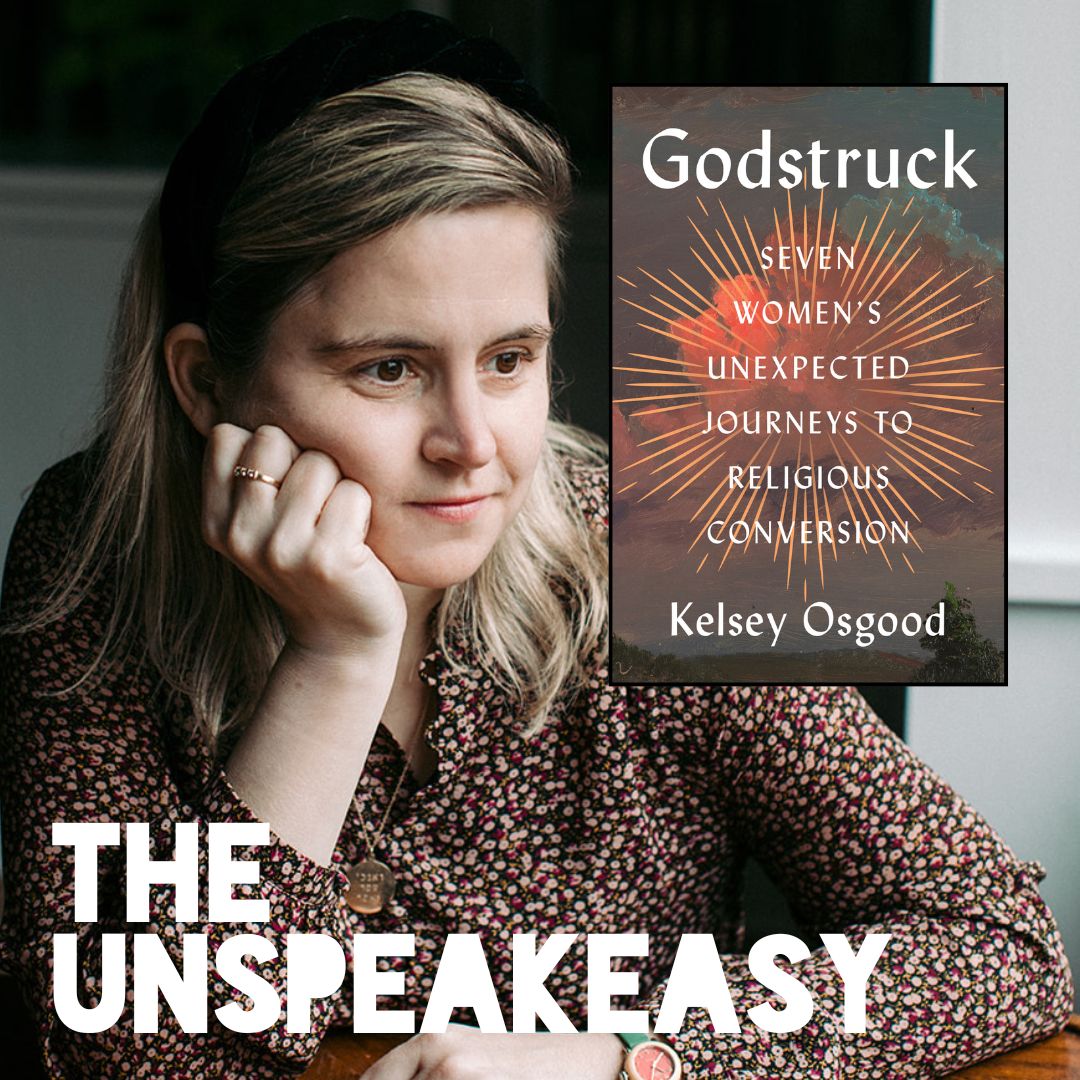
Extreme Religious Conversion - Kelsey Osgood on women, religious transformations, and what anorexia has to do with it. (FULL INTERVIEW)
Aug 4, 202501:16:07Tap to summarizeThis week, I’m joined by author Kelsey Osgood to discuss her recent book “Godstruck: Seven Women’s Unexpected Journeys To Religious Conversion.” The book, which profiles women who traded secular lives for religious communities such as the Church of Jesus Christ of Latter-day Saints, evangelical Christianity, Quakerism, Orthodox Judaism, Saudi-based Islam, and even the Amish faith, is fascinating in its own right. But we also discuss Kelsey’s previous book about her struggle with and recovery from anorexia, which overlaps with her religious transformation in some surprising ways. In that book, How To Disappear Completely, Kelsey wrote not just about anorexia itself but the culture surrounding it, notably the “peak sad girl” era of the late 1990s through early 2000s. The therapeutic approach that accompanied it, she argues, took universal human questions that have been asked for millennia and repackaged them as personal neuroses to be indulged and then solved — or, more often, deemed unsolvable. Her conversion to Judaism and participation in an Orthodox community helped reframe her entire way of thinking and changed her life for the better. GUEST BIO Kelsey Osgood is the author of How to Disappear Completely: On Modern Anorexia, which was chosen for the Barnes & Noble Discover Great New Writers Program, and Godstruck: Seven Women's Unexpected Journeys to Religious Conversion, which came out in April from Viking. Her work has appeared online or in print at The Atlantic, The New York Times, Harper's, and the New Yorker, among other outlets. HOUSEKEEPING 📖 Order my new book, The Catastrophe Hour: Selected Essays, on Amazon or directly from the publisher here. 📘 The Catastrophe Hour book club for yearly paying subscribers starts June 11 and will run for 14 consecutive Wednesdays, 3-4 pm ET. We will meet on Zoom. 📹 The Unspeakeasy Live livestream takes place every Thursday at 3:00 p.m. ET. Look for a notification on your Substack app when we’re live. Stuff to read and listen to: New York Times, Jan 31, 2025: The L.A. Fires Taught Me To Accept Help Recent(ish) solo episodes: January 9: The First 24 Hours January 16: The Immaterial World January 27: Housing Wars February 5: Remembrance Of Things Past February 13: What Is A "Catastrophe?" March 2: A Mental Infection March 31: Dignity Is Out Of Style 📺 Visit The Unspeakable on YouTube. ✈️ The Unspeakeasy’s 2025 retreat season is underway. It includes a just-announced COED retreat with more attendees and multiple speakers. October 11-12 in New York City. Programming and ticketing info here.
Transcribe →
Is Sports Betting More Addictive Than Porn? Alex Grodd on the latest scourge affecting young men
Dec 2, 2024Tap to summarizeUntil 2018, sports betting was almost a sport unto itself. To place a bet, you had to call your bookie, go to the race track, or make a trip to Las Vegas. But in 2018, the Supreme Court put an end to a longtime federal ban on sports betting, and it is now legal in most states and accessible on smartphones. For years, we've been hearing alarm bells about the addictive qualities of online pornography, which many experts believe has dulled the senses and hindered the relationship prospects of generations of young men. But according to Alex Grodd, founder of The Disagreement, a media and education company that puts out a podcast of the same name, sports betting in its current incarnation poses an even greater threat. In this conversation, Alex describes how compulsive betting and predatory marketing is leading to financial ruin for countless users, many of whom he spoke with for a recent episode of The Disagreement. He also talks about how this connects with the "masculinity crisis" as well as the overall drop in attention span for just about everyone. Listen to The Disagreement here. GUEST BIO Alex Grodd is the founder and CEO of The Disagreement and hosts its podcast. Prior to starting The Disagreement, Alex founded and ran BetterLesson, an edtech company that provides professional development tools to teachers. Alex forged his love for disagreement by facilitating debates among students during his days as a middle school teacher at public schools in Atlanta and Boston. Want to hear the whole conversation? Upgrade your subscription here. HOUSEKEEPING 📺 Visit The Unspeakable on YouTube! ✈️ The Unspeakeasy has new retreats for 2025. See where we'll be! 🥂 Join The Unspeakeasy, my community for freethinking women.
Transcribe →
Has Literature Canceled Itself? Sherman Alexie on reading, writing, and book banning.
Mar 21, 2024Tap to summarizeIf you were in middle school or high school in the last couple of decades, there’s a good chance you were assigned Sherman’s classic young adult novel The Absolutely True Diary of a Part-Time Indian, an epistolary novel with cartoon illustrations about a native teenage boy growing up on the Spokane Indian Reservation who decides to attend a nearly all-white high school. The book is semi-autobiographical. Sherman grew up on that reservation in the 1970s and 80s and is a member of the Spokane Tribe. He is also arguably — or perhaps inarguably — the most significant native American writer of the last 30 years. Not only did The Absolutely True Diary of a Part-Time Indian win the 2007 National Book Award for Young People’s Literature, among other prizes, but his 2009 book War Dances won the 2010 Pen/Faulkner award for fiction, and his 1993 story collection The Lone Ranger and Tonto Fistfight in Heaven was adapted into the popular and highly acclaimed film Smoke Signals. Best of all (for me, anyway), Sherman is teaching a class for the brand-new Unspeakeasy School Of Thought. It’s in a brand new genre: Writing Your Cancelation Story. In this conversation, Sherman talks about his career, his 2018 “cancelation event” (or at least its aftermath) and offers his thoughts on the state of writing and publishing, not least of all the recent incident wherein editors at the journal Guernica retracted an essay when the Twitter mob and its own staffers deemed it harmful, even “genocidal.” GUEST BIO Sherman Alexie is a poet, short story writer, novelist, essayist, memoirist, and filmmaker. He’s published two dozen books, including The Absolutely True Diary of a Part-Time Indian, which won the National Book Award for Young People’s Literature and was listed by the American Library Association as the Most Banned and Challenged Book from 2010 to 2019. He’s won the PEN-Faulkner and PEN-Malamud awards, and he wrote and co-produced the award-winning film Smoke Signals, which was based on his short story collection The Lone Ranger and Tonto Fistfight in Heaven. Visit Sherman’s Substack. Check out his upcoming course here. HOUSEKEEPING 📝 The Unspeakeasy now has writing classes! Learn more here. ✈️ Unspeakeasy Retreats: See where we’re going to be in 2024! 🥂 Join The Unspeakeasy, my community for freethinking women. 🔥 Follow my other podcast, A Special Place in Hell.
Transcribe →