← The Urbanist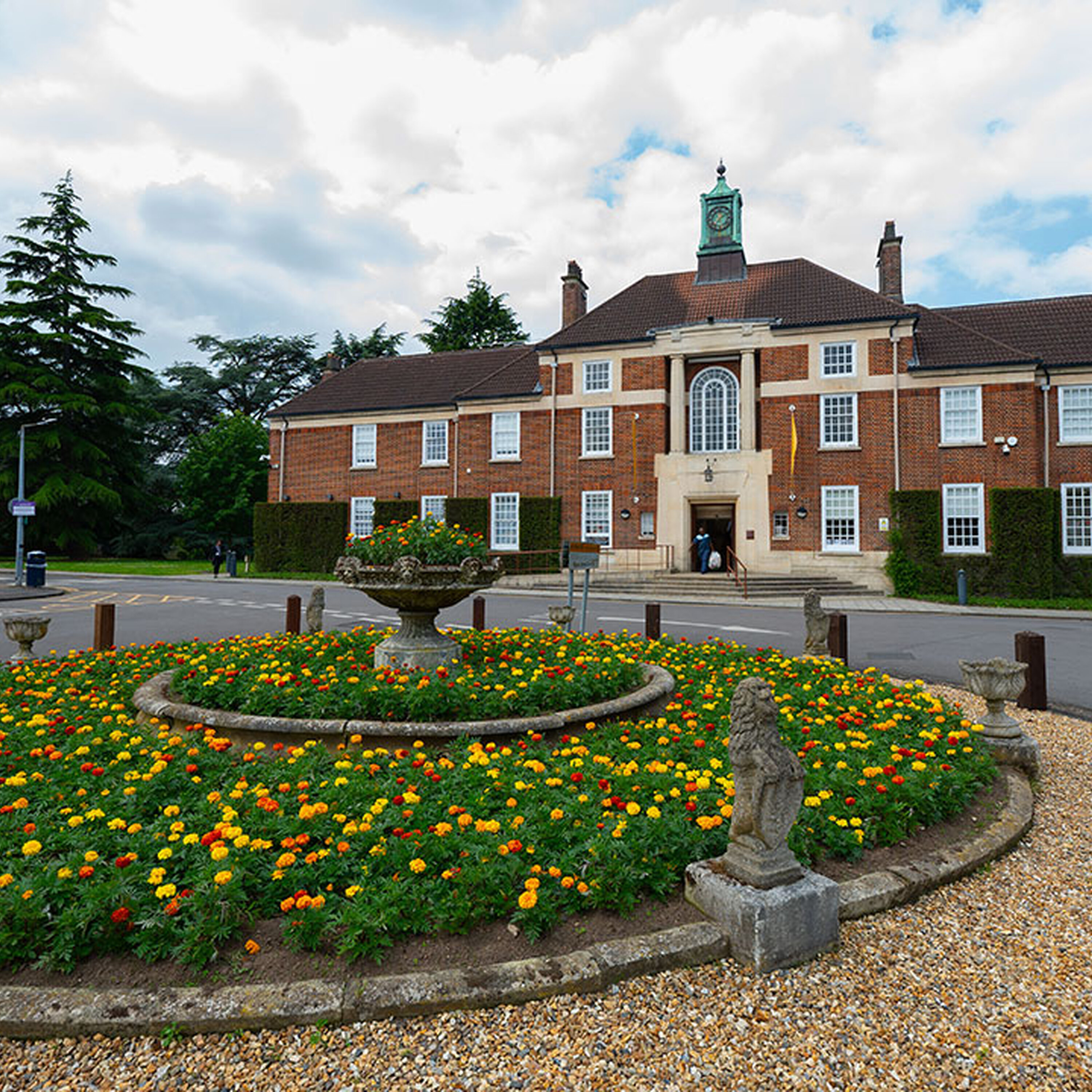
Loading summary
Transcript14 lines
- [00:00]
Unknown
Foreign.
- [00:10]
Andrew Tuck
Healthcare plays an integral role in how we experience cities. The world's oldest psychiatric hospital was founded in the 13th century in London. Now, as well as treating patients, it plays host to a museum that documents the treatment of and the attitude towards mental illness or over the centuries, as well as staging intriguing art exhibitions. You're listening to Tall Stories, a Monocle production brought to you by the team behind the Urbanist. I'm Andrew Tuck. In this episode, Monocle's Sophie Monaghan Coombs reports from the Bethlehem Royal Hospital and Museum of the Mind.
- [00:59]
Sophie Monaghan Coombs
In a London suburb, along a peaceful road bordered by houses on one side and a grassy wood on the other, is a hospital. In fact, it's an institution with an important history.
- [01:10]
Colin (Director of Museum of the Mind)
Bethlehem Hospital is a working psychiatric hospital, but it also happens to be the hospital with the longest continuous history of mental health care. It's a history that goes back to the foundation of the hospital in 1247. And we've been on four separate sites over the course of, of our history, starting off in the very centre of London, moving progressively outwards, London catching up with us each time. The governors of the hospital were seeking a little bit more by way of green, open space, because they thought that, all else being equal, if one had to be in residence for the sake of one's mental health, it would be better to be surrounded by trees and flowers and gardens and such like.
- [01:52]
Sophie Monaghan Coombs
And it's not just a hospital that's here. There's a museum too. The Bethlehem Museum of the Mind. That was the voice of its director, Colin. The Museum of the Mind occupies a red brick building on the hospital site. On entering, two prostrate figures greet you lying down either side of a staircase. One looks pained as he attempts to breach his chains. The other appears doleful. The statues have the nicknames Raving Madness and Melancholy Madness. They represent the two ways in which mental illness was understood in the 17th century. They're perhaps not the most welcoming of ushers today. I'm here for the opening of a new exhibition entitled Between Sleeping and Waking.
- [02:34]
Colin (Director of Museum of the Mind)
Like all museums, we have more in our store than we can possibly put on display at any one time. And in particular, we have over a thousand works of art, mostly by former patients and service users of Bethlehem Hospital. This means that we put on temporary exhibitions from time to time alongside our permanent displays. And the exhibition we're opening today is, is called Between Sleeping and Waking. And what we've done is we've taken the work of sleep researchers who have developed a taxonomy of the most commonly shared dreams that people have. We've then consulted our collections and found a painting to illustrate each of these archetypes, as it were.
- [03:17]
Sophie Monaghan Coombs
The collection Colin speaks of mostly comes from former patients before art or occupational therapy. The hospital would often enable their artistic patients to continue their creative practice while they were here.
- [03:29]
Colin (Director of Museum of the Mind)
So the collection is quite varied in nature. Some of it might go under the category of outsider art, I suppose, if you think about work produced by people who have not been part of the art establishment, but perhaps have begun their creative practice while in hospital, perhaps as a therapy. But there'll be lots of other works in our collection which actually they've been done by trained artists who maybe were artists before they became unwell and just continued that creative practice because it was so much bound up with their identity and their sense of self and purpose, just from an art critical point of view. There's work within our collection which, from that point of view, does stand up in terms of its quality. And in other cases, the quality is in the powers of observation or the obvious resilience of people shown in the face of very unfavorable circumstances.
- [04:32]
Sophie Monaghan Coombs
Those works are on show for the patients and staff who populate the hospital, but also for the public to come and see through them. And historical displays, the museum tells the story of the hospital. And while this is a tale of health and healing, it's also the story of a city.
- [04:48]
Colin (Director of Museum of the Mind)
The history of Bethlehem Hospital is tied closely with the history of London, and there is light and shade in that history, clearly the hospital's nickname that we can never really shake. In fact, the word bedlam was given to the English language because of the existence of this hospital. It's just a different way of spelling the name of this hospital, and it wouldn't be there were it not for that. So I suppose that tells you that the hospital's PR over the centuries has had something to be desired. But actually, what it really tells you is that over the course of centuries, because the hospital's been around for so long, almost anything that's happened, for good or ill, in mental health care terms, has some form of reflection.
- [05:29]
Sophie Monaghan Coombs
Here at Bethlehem, that light and shade can be disturbing. For centuries, the hospital encouraged people to visit, even if they didn't have a direct link to a patient. Donations were exchanged for the opportunity to gawk at the people here and their suffering. Of course, before the nhs, the hospital relied on these donations to keep going, but inadvertently created a twisted tourist attraction until the practice was stopped in 1770.
- [05:56]
Colin (Director of Museum of the Mind)
And, of course, over the centuries, there has been reform and change. And there's been ebbs and flows as well. The use of restraint, straitjackets, chains, etc. Very dramatically expressed in one of the statues on show in the museum, so called Raving Madness. But those forms of restraint were done away with in Bethlehem in the 1850s, but the memory that they were there still retained. And we cannot say today that restraint is no longer a feature of mental health care, because after all, there is a mental health act which outlines circumstances in which someone may have to to accept psychiatric treatment without regard to their wishes in the matter. So this is an example of an issue that has a history to it, but there's a contemporary iteration and as a society kind of need to continue to think, how do we want to move forward with this?
- [06:54]
Sophie Monaghan Coombs
And so the Raving Madness statue bids me goodbye as I leave Bethlehem. Museum of the Mind, a fascinating place to reflect on the history of mental illness in this city. But more importantly, as Colin says, it's somewhere to ponder its future.
- [07:18]
Andrew Tuck
Tolstoys is a monocle production from the team behind the Urbanist. This episode was written by Sophie Monaghan Combs and produced and edited by David Stevens. Be sure to subscribe to the podcast to receive new episodes every week. I'm Andrew Tuck. Goodbye and thank you for listening, City lovers.