← The Urbanist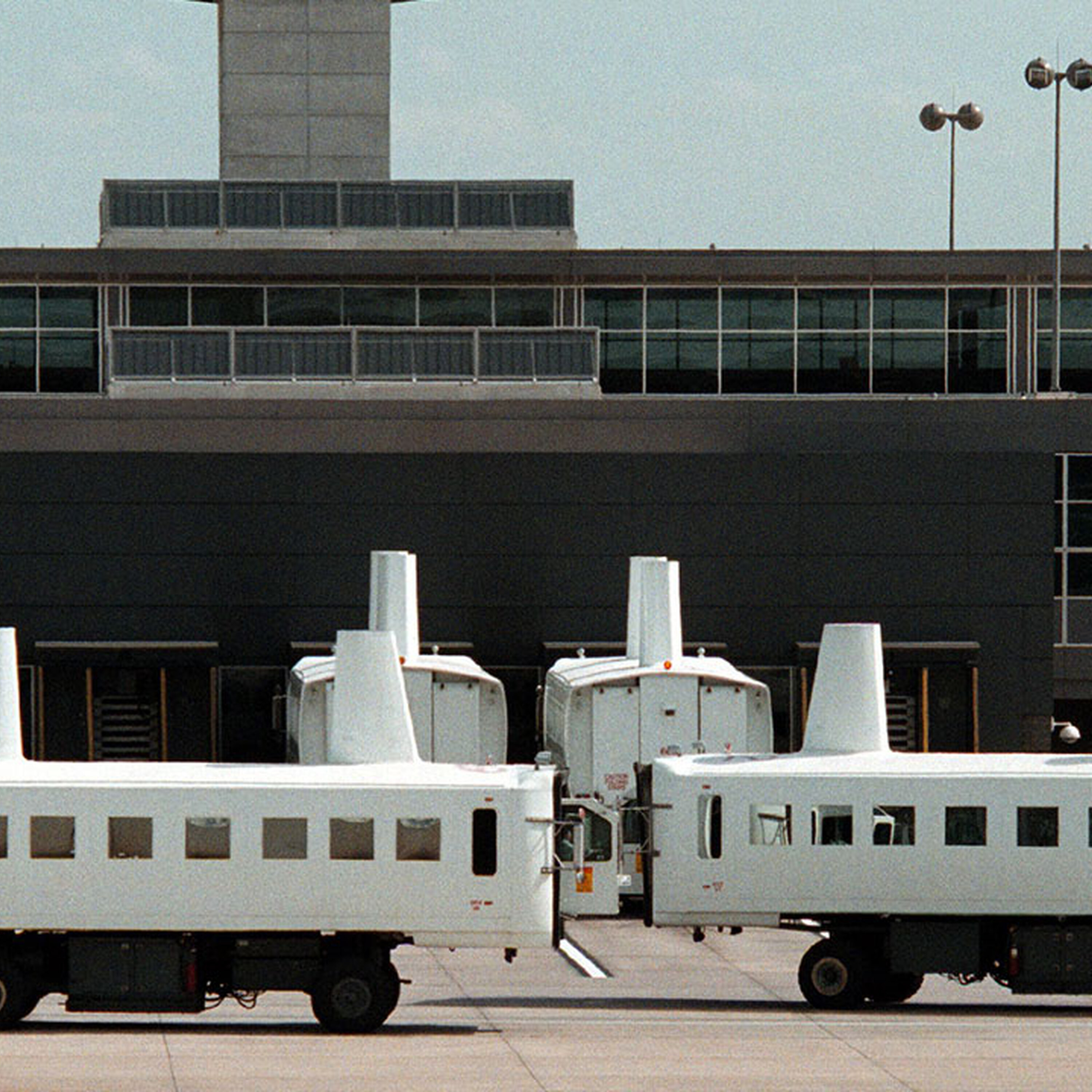
Loading summary
Transcript9 lines
- [00:00]
Andrew Tuck
Foreign.
- [00:10]
Narrator/Host
From the past for futuristic technology can often seem silly in the modern day. But many of the most outlandish ideas from history have become design icons, whether they still serve their original groundbreaking purpose or not. You're listening to Tall Stories, a Monocle production brought to you by the team behind the Urbanist. I'm Andrew Tuck. In this episode, Gregory Scruggs sings the praises of a heritage feature of Washington's Dulles International Airport that gives the terminal a unique charm thanks to its once innovative design.
- [00:50]
Gregory Scruggs
In a 1958 promotional film for Washington's forthcoming Dulles Airport, a bow tie wearing traveler with a cheeky grin on his face buys a Playboy magazine from an airport news agent, then darts for gate 29. As the doors immediately close behind him.
- [01:05]
Andrew Tuck
The early arrival can spend time and money in the concessions right up until the last minute.
- [01:12]
Gregory Scruggs
Called the expanding airport, the nine minute animated short bears the signature of furniture designers Charles and Ray Eames. The couple were good friends with Finnish architect IRO Saarinen, who who was busy designing a new international airport for the U.S. capitol. He wanted to drum up interest in his ideas for a modern airport through a medium the public could easily understand. The results follow passengers from curbside to takeoff and highlight design innovations along the way. None more so than the mobile lounge for our Playboy reading friend. Making the mad dash just as the doors slammed shut was not actually boarding the plane. Instead, he was entering a mid century vision of an airport lounge replete with travelers dressed in tailored suits and reading newspapers, potted plants for decoration and a sharp briefcase or two resting against a sofa. But this lounge had wheels.
- [02:06]
Andrew Tuck
As the lounge moves from terminal to aircraft, the passengers find themselves in a spacious room isolated from fumes and noise.
- [02:17]
Gregory Scruggs
Back in the era when boarding a plane required walking outside no matter the weather. Saarinen's plans for Dulles, and ideally all future airports, was from mobile lounges, also known as plane mates, to ferry passengers from terminal to boarding doors. Instead of braving the elements on the Runway, 90 people at a time would cruise across the tarmac at a top speed of 40 km per hour, roomier than a bus and with rugged wheels, the that frankly looked suitable for off roading. Some mobile lounges also had hydraulic pistons that allowed them to raise and lower in order to line up with doorways on airplanes and buildings alike. In 1962, Dulles opened to much fanfare. The swooping roof became an architectural icon and arguably one of Saarinen's finest works. The mobile lounges entered service and quickly inspired copycats. Montreal's Mirabel Airport was was designed around the concept, and airports from JFK to Jeddah employed them for passenger transport. But the rosy vision presented in the Eames video did not exactly come to pass. The jet bridge was invented at the same time that Saarinen was sketching out his mobile lounges, and they went on to become vastly more popular method of transferring people between aircraft and airport. And as airports grew in size, fixed rail systems ended up proving economical to move large numbers of people between terminals. But Dell is true to its master design held onto its mobile lounges. Here too, the Eames video painted a more glamorous picture than the real world version. The minimalist interior only vaguely suggests a lounge, and I assure you no passenger has ever been served a pre flight cocktail during their few minutes tootling across the Runway. More to the point, the mobile lounges at Dulles are rarely used for their original straight to plane function. From Noble plane mates, they've been downgraded to more pedestrian people movers, sending passengers to outer concourses not otherwise connected to the main terminal. More than 60 years after its debut, Dulles has become a major international gateway with flights serving five continents. Last month, the Metropolitan Washington Airports Authority approved Dulles next and a 25 year expansion plan that calls for adding a fifth Runway, building new concourses and expanding the Aerotrain. With such ambitious growth plans, will the humble mobile lounge be scrapped? The answer is about as certain as the new departure time for a delayed flight. In 2023, the airport's authority announced a $16 million investment to refurbish two mobile lounges. Then they'll have to decide whether to proceed with a $160 million upgrade of all 47 still in operation. But the newly approved master plan hints at phasing out the mobile lounges once and for all. Nevertheless, on July 23, a defiant Dulles airport Instagram account wrote, despite the rumors and misinformation, our mobile lounges aren't going anywhere anytime soon. Published to the tune of Rick Astley's Never going to give you up, the mobile lounge debate ultimately begs the question of how faithfully the airport's authority takes their role in stewarding a modernist architectural icon. During a 2003 renovation, they commissioned designer Christian Schwartz to recreate the typeface that Saarinen intended for Dulles. The elongated sans serif typography gels brilliantly with the main terminals interior interior and transports the traveler immediately to the early 60s. Could a similar touch of modernist nostalgia become a permanent fixture even as Dulles grows? I suggest Dulles keep the pair of mobile lounges currently under refurbishment in long term service. Let them go back and forth between the main terminal and the next closest concourse in perpetuity so that future generations of passengers and can still experience a sliver of Saarinen's design vision even as most travelers in a rush will hop on the quicker train. Aviation buffs and design nerds alike will undoubtedly make a mobile lounge pilgrimage. When flying through Dulles today, some passengers treat a gate assignment to the concourses only reached by mobile lounge as Siberian exile, as though riding one is an odyssey to the outer edge of the of the known universe. But I get a secret thrill out of the chance to experience a living, functional piece of modernist design history, even one that's seen better days. Well into adulthood, I still see myself in the excited boy perched at the front of the mobile lounge in the Eames film, eager to take in the view.
- [07:14]
Narrator/Host
Tall Stories is a Monocle production from the team behind the Urbanist. This episode was written by Gregory Scruggs and produced and edited by David Stevens. Be sure to subscribe to the podcast to receive new episodes every week. I'm Andrew Tuck. Goodbye and thank you for listening. City lovers.
- [07:32]
Andrew Tuck
Sa.