← The Victor Davis Hanson Show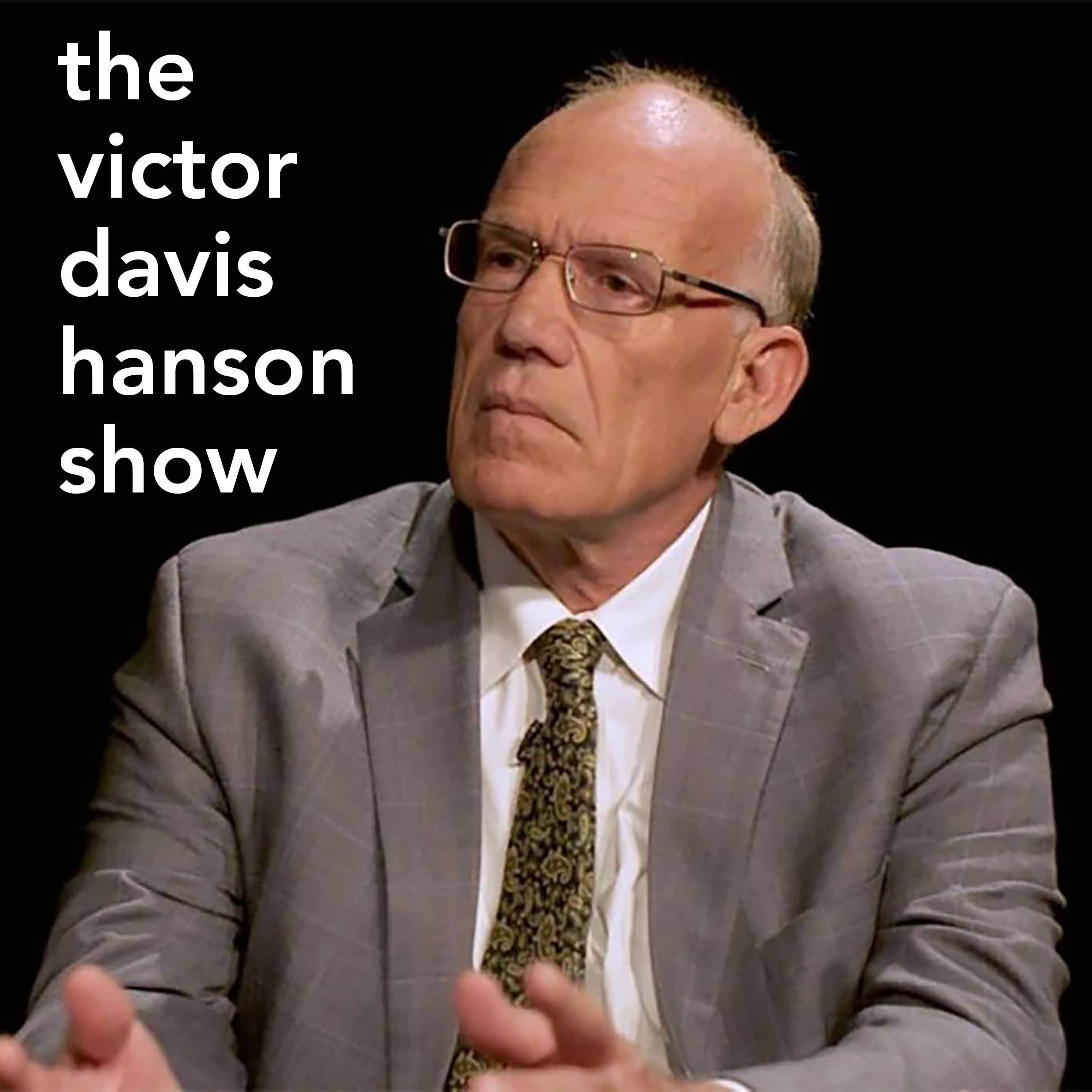
Loading summary
Transcript36 lines
- [00:03]
Victor Davis Hanson
Running a small business means you're wearing a lot of hats. Your personal phone number becomes your business phone and before you know it, you're juggling customer calls day and night. As your team grows, it becomes impossible to manage without your personal number. That's where OpenPhone comes in. OpenPhone is the number one business phone system. OpenPhone will help you separate your personal life from from your growing business. For just $15 a month, the cost of a few cups of coffee, you can get complete transparency and visibility into everything happening with your business phone number. OpenPhone works through an app on your phone or computer and integrates with HubSpot and hundreds of other systems. It's affordable and easy to use whether you're a one person operation and need help managing calls automatically or or have a large team and need better tools for efficient collaboration. OpenPhone is a no brainer. Plus they've won multiple awards by G2 for software reviews and are trusted by over 50,000 businesses. Right now, OpenPhone is offering 20% off your first six months when you go to openphone.com Victor that's O P N P H O N E dot com for 20% off six months openphone.com Victor and if you have existing numbers with another service, OpenPhone will port them over at no extra charge.
- [01:39]
Sammy Wink
Hello and welcome to the Victor Davis Hansen Show. This is our Friday news roundup and we've got a lot of news this week, but especially the fires in la. So so we'll get to that right after these messages. As the new year approaches, we often make resolutions to do something differently this year. Make a resolution that truly matters. Join Wired to Fish Coffee and Making a Difference in the World. Imagine starting your day like I do with a delicious cup of their fair trade sourced Arabica coffee, knowing that each sip supports a cause you believe in like conservation and clean water or your faith. At Wired to Fish Coffee they believe one small change can lead to monumental impacts. Hence their generous give back of 25% to clean water, conservation and faith based initiatives. Start 2025 by raising your mugs to a new year filled with purpose, community and great coffee. Subscribe and save today and enjoy discounted coffee and free freight or just give this great brand a try with discount code. Just news or just the news? For 10% off your first order, head over to Wired2Fish Coffee today and make your 2025 a year. You aligned your coffee with your values. Did you know 80% of resolutions fail by February? You can beat the odds with Lumen and improve your health. Lumen is the world's first handheld metabolic coach. It's a device that measures your metabolism through your breath. And on the app, it lets you know if you're burning fat or carbs and gives you tailored guidance to improve your nutrition, workout, sleep, and even stress management. All you have to do is breathe into your lumen first thing in the morning and you'll know what's going on with your metabolism, whether you're burning mostly fats or carbs. Then Lumen gives you a personalized nutrition plan for that day based on your measurements. You can also breathe into it before and after workouts and meals so you know exactly what's going on in your body in real time. And Lumen will give you tips to keep you on top of your health game. What I like about my Lumen is it makes me think twice about consuming high carb snacks, especially before bedtime. And it gives me healthy recipes for low carb meals. Your metabolism is your body's engine. It it's how your body turns the food you eat into the fuel that keeps you going. Take the next step in improving your health. Go to Lumen Me Victor to get 20% off your lumen, that is L U M E N ME Victor for 20% off your purchase. Thank you Lumen, for sponsoring this episode of the Victor Davis Hanson Show. Welcome back. Victor is the Barton and Neely Anderson Senior Fellow in Military History and Classics at the Hoover Institution and the Wayne Marcia Gabusky Distinguished Fellow in History at Hillsdale College. Please come join him at his website, victorhanson.com it's called the Blade of Perseus and it's got a lot of original material on it for which you can subscribe at $5 a month or $50 a year. So come join us. So Victor, we've had a real disaster in LA this week. The fires that broke out. There's so many issues that are associated with it. Water, insurance, the governor dei. So wherever you wanted to start, that'll be good with me and your viewers.
- [05:31]
Kirsten Crowley
It's not funny. It's the we're in now to 36 hours of what was a forest fire. We've had one at Pepperdine University a couple of years ago. They're common in California, but you would think that the governor after the massive paradise structure fire, I think 85 died up in the hills above Sacramento, way above Sacramento. And then the Aspen fire, in which I had a house that maybe a quarter mile it almost burned down. You would think that Gavin Newsom would have learned from that what would he have learned? He would have learned that you go back to what our grandfathers did in the California Sierra Nevada forest. You sent timber crews in to harvest logs. And we had one of the largest timber industries in the world. I think we're down from 25 logging mills down to three. We don't do that anymore. The environmentalists told us this was a natural phenomenon of fires, of rotten stumps, of charred brush, ecosystems. So we didn't go into the forest and clean it up. And every once in a while things happen. You'd have a large thing. The problem is there's 40 million people in the state. 40 million. So this is not a pastoral society. This is not a deindustrial side, deindustrialized society. This is not a decivilized society. It's a postmodern society. And it needs the essentials of life. You've got to be protected from fires. We're not doing that. We have to have water. Gavin Newsom inherited a bond that allotted $7.5 billion to build three massive reservoirs. The Los Banos Grandes along the Aqueduct, the sites site along the Sacramento river, and a huge dam at Temperance Flat on the San Joaquin. The idea was that these tertiary low level dams, low elevation, would provide enough water for days like now, where we were in winter. And Los Angeles has had very little rainfall. All of its reservoirs should be full. But when you're not building storage as the population increases, and more importantly, you're letting the water that comes off the snow melt of the Sierra through the Sacramento river and the Feather river and the Klamath river and all of the rivers of Northern California that comprise the California Water Project and the Central Valley Project. When you let it go, go out to the ocean through the delta and you don't pump it back into the aqueduct which makes its way all the way down to Los Angeles and pumped over the mountains and fills dozens of reservoirs, then you don't have 100% hydrants in time of need. So 20 to 25% of the fire hydrants during this fire were inactive. And there was low pressure in the other ones. And the chaparral hills around Los Angeles. Everybody had said after the Pepperdine fire and all of these fires, the Santa Ana winds come in the late fall and early winter on a dry year. Please clean the chaparral well. No, there's fauna, there's flora there. This is a natural environment. It's not natural. People are living there. So they created Tender and Kindle and then they waited to the fires and what do they always say it was on specific Climate change. Climate change. Do they really think that if we outlawed the internal combustion engine that the Chinese would. Whatever we do doesn't matter with India and China. So why would you talk about climate change and then not do things that's in your power? And what would those things be? Well, you would have the fire chief insist on a budget that that would be adequate for the third largest city in the United States. They spend for fire protection and the safety of these millions people. They spend 65% of the 1.4 billion that they spend on homeless people. Think of that more on homeless than protecting citizens that are working and need to be protected or they won't be able to make money to support the homeless people. People cutting your nose off. In addition, the mayor. Karen Bass. Where is Mayor Bass? Well, is she right on the front lines? Is she out there like Ron DeSantis with flames behind her and she's trying to. Oregon? No, she's on a junket to Africa. The inauguration of the president of Ghana. Is this some kind of DI thing? Why would you go all the way to Africa at a time when you were told that the Santa Ana winds are blowing? Well, maybe Joe Biden is flying out. Well, yeah, he was in Los Angeles. Had nothing to do with the fires. He was there to put thousands of acres off use as a gift to Donald Trump. I mean that ironically. In other words, I'm going to try to screw up as many things as I can. I'm going out to California. In case you ever want to develop rare earth metals for EV batteries or gas or oil, we're going to put it all off. So while he was there, he had to cancel out. So then he gave a news conference and what were two things he said? My grandson's house made it. And I had a grandson, a great grandson. Joe, we don't want to hear all about Hunter and Beau, with all due respect, why do you always personalize it? And maybe Kamala Harris, who's vice president for another, for another, I don't know, week, she's planning the junket overseas to three countries. The last way to get a free trip. She was nowhere. She's a Los Angeles resident. You would think the president is here, the vice president's here, and the governor's here, and the mayor's here. It was just Gavin Newsom, but he had no credibility because he never did anything in reaction to these other forest fires that would have prevented this one. Again, beefing up the state forest fire patrol The Cal fire giving money to clean the hills. He could have had grazing. He could have sent crews in. No, because it's an ecological men trope that you let nature take its course and some things happen and people are stupid enough to live in the hills, that's their fault. That's the governing ideology. He blew up four downs. He didn't just take the $7.5 billion bond and not build them in an act of omission. He took four dams on the Klamath river because he said indigenous native peoples wanted to have salmon runs. Fine, it's 1830 again, but it's not 1830 again. So he blew them up. They gave 80,000 homes clean hydroelectric power. They gave thousands of people recreational lakes. They prevented floods on the Klamath river and they provided irrigation water. He just blew all of that up. And then he didn't build any. And then he comes to Los Angeles just to make a performance art with his usual get up that he wears. A man of the people. And then he retreats to his $9 million brand new home in the Bay Area. And so there was no. And then we get to the fire chief, the last tessera in this sad mosaic, Kirsten Crowley. She's been fire chief for two years. What were we told? She's the first woman fire chief. That's not. I fought for greater budgets. I have a billion dollar budget. No, I'm the first woman. I am the first non binary LBGT community Non stop, non stop, non D E I D E I here's my record of putting out fires. Here's the LA Fire Department's new response time. We've cut back the response time by minutes. Here's what we do. Here's how many fire trucks? Nothing. It's all about. I hired. Since I've come 70% DI. That's something we should think about. When somebody says that they hired 70% of their employees on die criteria, that means you systematically discriminated against usually white males, many of whom probably had grown up in fire families of la in the fire service. They were in great physical shape. They passed the test with flying. You eliminated them because of their sexual orientation, their gender or their race. And then you created a non merocratic system. And this is something that we saw in New Orleans with a police chief when she was bragging that she was a DEI FBI consultant. Why she didn't put barricades on the streets. Bourbon street people forget that DEI is a very dangerous, toxic notion. And it's not new. It's an Ancient idea that you put ideology ahead of merit. It's what operates most of the world. Their DEI is my first cousin. We hire him because he's my first cousin. I was in Libya. I think I've mentioned it. I said once, when I was in Libya, I saw the potholes were two feet deep in the roads and I said, you were one of the greatest exporters of fossil fuels of which asphalt is made. Why do you. Can't you. Why are you swerving around? And the driver turned to me and he said, we hire our first cousin. We hire our first cousins. We have no merit. We just hire our tribe. My tribe. My tribe, not his tribe. Well, that's what this, this is a new tribalism. A Soviet commissar, and it's killing the United States. So you put these two toxic ideologies. Here comes the green New deal and here comes woke dei and they explode. And we don't want to fight fires. We want to let nature take its course. We don't want to build downs. We don't have enough water. And we're hiring an incompetent mayor by election. And we hired an incompetent head of the fire service. And we don't have a president or a vice president to be seen. And there's one last thing in this sad tale. I say it's sad because if you look at LA tonight, it's Dresden, Germany, circa, you know, early winter 1945. It looks like an infernal Hamburg or Cologne in World War II, or Tokyo on March 9, the B29 raids. And that is the insurance industry. These people are very wealthy. This is the wealthiest. You go down the PCH and Pacific Palisades, there's a fires in downtown Santa Monica. The bank of America building is on fire. It wasn't just out in the hills. This thing got so yard, it was a biblical inferno. And it went right across the pch, jumped over it, jumped into Santa Monica and you know the, the wealthiest zip codes in California. Many of these people were uninsured. Yeah, they either didn't have the money anymore or they were denied. I wasn't. I had a place in the Sierra. I still do a fire, as I said, came a quarter mile, never filed a claim in 16 years. Paid the premium on time, would never file a claim. And I had some snow damage and other problems. I never filed. And they canceled it. And why do they cancel it? Because the state regulates them, because they do not go after insurance fraud. And they know that the state will not or cannot manage to Prevent forest fires. So the insurance company is, I'm not going to insure these California people. There's people filing false claims on me. They don't do anything to them. I've got to comply with these crazy regulations that don't exist in any other state. And then they let all this brush go, they destroy their timber industry, they let the forest go to hell. And we get these fires. And they come to me and say we have the most pricey square footage in the United States. That little bungalow that I insured, that 1200 square foot home. I owed them a million point six for that little Monterey cottage. And they're saying, you know, done, I'm out so long, wouldn't want to be you. And that's what they did. And then they get all angry. They have the insurance company laugh, they left because you're not worth it. You being us California. They said to us, sorry, you 40 million people are completely deranged. You've lost your minds. You're trying to go back to some kind of 1830 pristine rivers rushing down, flooding the plains, going to the ocean. No electricity, no fossil fuels, just. But you got 40 million people here and it's very cruel not to provide them with security against elemental and biblical fires or not let them have enough water. Why would you do that? The final irony, and it's sad. I want to be very careful what I say because my heart goes out to those people. But those zip codes in Santa Monica, Pacific Palisades are among the most left wing. It was very strange to watch these different cable channels and then to see these people say this stage is awful. Karen Bass is a terrible mayor. She junketed. And Gavin, Joe Biden, you want to say yes and you voted for every one of them and you voted for everyone. And maybe the fires will do to the state what we saw. The looting. Did it result in new legislation that 70% of the population voted for in California? But boy, what a way to learn a lesson. This was a DEI woke hydrogen bomb. And I guess we could say Gavin Newsom is like neuroinduced fiddling why the state burned.
- [20:03]
Sammy Wink
Yeah. Well, Victor, let's go ahead and take a break and then come back and talk a little bit about. There's one more thing on the topic actually. So let's listen to these messages and then we'll be right back.
- [20:18]
Victor Davis Hanson
Question. Ready to optimize your nutrition this year factor has chef made gourmet meals that make eating well easy. They're dietitian approved and ready to heat and Eat in two minutes so you can fuel right and feel great no matter what life throws at you. Factor Arrives fresh and fully prepared, perfect for any active, busy lifestyle. Lose up to eight pounds in eight weeks with Factor Keto Meals Based on a randomized controlled clinical trial with Factor Keto. Results will vary depending on diet and exercise. Factor now with 40 options across eight dietary preferences on the menu each week, it's easy to pick meals tailored to your goals. Choose from preferences like Calorie Smart, Protein plus or Keto Factor can help you feel your best all day long with wholesome smoothies, breakfast grab and go snacks and more. Add ons. Reach your goals this year with ingredients you can trust and convenience that can't be beat. Eat smart with Factor get started@factor meals.com Victor 50 off that's the code V I C T O r the number 5 the number 0 off Victor 50 off to get 50% off your first box plus free shipping. That's code Victor 50 off at Factor Meals.com Victor 50 off to get 50% off plus free shipping on your first box did you know that American homeowners nationwide have over $32 trillion in equity, and cyber criminals are targeting it with a growing scam the FBI calls house stealing. House alarms, doorbell cameras and deadbolts won't work against these thieves because they're not after your stuff, they're after your equity. If your title isn't being monitored, scammers can transfer the title of your home into their name using a one page document they file at the county, then take out loans against it or even sell it behind your back. The scariest part? You won't find out until collection or even foreclosure notices start arriving in your mailbox. By then the damage has been done and you're left with a financial and legal nightmare. The best way to protect your equity is with Triple Lock protection from our friends at home Title Lock triple lock protection is 247 monitoring alerts of any changes and God forbid if the worst happens, restoration services at no out of pocket cost to you. So when was the last time you checked on your title? If you're like me, the answer is never. And that's exactly what scammers are counting on. But you can check on your home's title today and make sure you're not already a victim. You can get a free title history report and 30 day free trial of Triple Lock protection today by going to hometitle lock.com and using the promo code Victor or click on the link in the Description that's home title lock.com promo code Victor hometitlelock.com.
- [23:32]
Sammy Wink
Welcome back to the Victor Davis Hanson show. You can find VictorX, his handle is vdhansen and at Hanson's Morning cup on Facebook. So please come join us there. There's one last thing on this fire that I thought was strange. They seem to have a specific address where it started, 1190 some drive in in LA. And yet they haven't said anything about how it started, its origins, nothing. And it's the strangest thing. I mean maybe they don't want to stir up anything.
- [24:09]
Kirsten Crowley
Climate change, climate change, Santa Ana wind, Santa Ana wind, Santa Ana wind. Climate change, climate change. Yeah, they don't want to tell you. They say typically on a place in a disaster like this, lightning is the culprit. Well, there was no reports of a storm on the horizon. It was clear. So why don't they tell us just to. Because people will say, you know, homeless people tend to light fires, just to take one group for example. And so why don't you just send your reporters out, your journalists talk to people and then say there doesn't seem to be evidence that this was a human caused fire. But they don't even go that far. They just say climate change, climate change, climate change, Santa Ana winds. But it's very mysterious that these fires broke out in all these different places and there was no reports of lightning strikes or something.
- [25:02]
Sammy Wink
So we'll find out, I'm sure soon.
- [25:04]
Kirsten Crowley
When we do find out, should it be human cause we won't hear much about it. It'll be on page 15 in a week. Mr. Joe Smith was found lighting fire. Whether that caused the fire, the larger Palisades fire, is unknown. That's what we do. We're invested with DEI at every level of our society. It's going to be, everybody says it's going to be. It's almost, it's dead, it's peak. I've said that myself. It's going to be very hard to stop. It's like the Soviet commissar system when you put ideological purity over everything else. And either Judah, science, the trains running on time, whether tanks have gasoline, it has to be ideologically correct. Think of the billions of hours that we've spent with all of those workshops for the fire people of Los Angeles where they had to listen to, oh, we're going to have inclusion. This is where the finest diversity fire department in the United States. We're the envy. There's a very narcissistic element in DEI that We are morally superior to anybody in the world because of our diversity, equity, inclusion. But you're not teaching people the fire skills. Americans don't care whether the LA fire department is all black, all gay, all female, as long as they are the best people in the world. And lifting heavy hoses, climbing up seven story ladders, jumping in with oxygen tanks on their back and masks to save children, that's what they want. But if that's not the criteria, then you're back to Joe Biden announcing in advance that his vice president will be a black woman. And you end up with Kamala Harris. And then you go around and you do two things. You say, that's my insurance policy, she's incompetent, no one would ever put her in there. And at the same time you say, how dare you suggest that? Are you suggesting that black women, when we predetermine anybody's race and gender, that doesn't mean that they're not the best qualified. Yeah, when you do that, if you just say, I'm only going to appoint a white male vice president, same thing. So you don't. And that's what they've done and they've really hurt the country. And now the whole subtext of this whole disaster is Donald Trump. Because now we're seen clips where he said years ago, during the Paradise Fire, California does not clean up their forest. California lets irrigation and precious water out to the sea. California doesn't allow timber to harvest trees. California does not have a workable dams and aqueduct system as it is funded for. And he's coming into office. There was a very final thing in this rant. There's a very weird clip from Joe Biden and one of the arguments he used this year why he should be reelected was fires in California. And he came to California and said, if you elect Donald Trump, there's going to be fires because of global warming. Well, Joe, the amount of carbon emissions that have been let into the air in the last two days, if it's analogous to the Paradise Fire, I think in one week they let out in the Paradise Fire, let more carbon emissions than all of the automobiles in California for an entire week, think of that. That's the amount of pollution. And this thing because it has so many structures, plastics, you know, composition, roofs, appliances, it's going to be, this is a puritanical society. So that think about what's going on here. If you're living in Pacific Palisades and let's say that you have a bunch of newspapers that you've Saved. And you look around, they're around the house and you look around like this and you say I'm going to go in my backyard and put them in an incinerator and just burn them. Micro little emissions. And the EPA will catch you for that. That's what they're concerned about. But the great existential problems of doing more damage than the Chinese probably did for a whole day or two, that's so existential and so damaging. They don't talk about not one person. And I surveyed all of the news coverage today, said this is the amount of carbon pollutants that we did. I didn't hear one environmentalist say it's estimated that there was 6,000 deer that went up in smoke, maybe a couple of California native bear clans and millions of three toed salamanders that were all engulfed. They didn't say that. But they will go after one person building a building and say, look at him, he destroyed a spotted owl nesting area. Well, there's no owls in that area. Your policies are equating death. They result into death. And the environmentalists, it's very funny, they make it, to quote the historian Tacitus, they make it a desert and they call it peace. They make a disaster and they call it ecology. They make a disaster and they call it diversity. And these people are very dangerous, nihilistic people. Very nihilistic.
- [30:47]
Sammy Wink
Another thing that turned the stomach this week was to listen to Mark Zuckerberg claim that he won't censor anymore. And these are two quotes from him.
- [30:57]
Kirsten Crowley
He was crying though, giving credit.
- [30:59]
Sammy Wink
Oh, that just makes me sick. Sick to my stomach. But here's what he says. It's time to get back to our roots around free expression on Facebook and Instagram. And the second quote is fact checkers have become too politically biased and have destroyed more trust than they have created. Both of which are just too little too late. Mark Zuckerberg but I think he's going to get away with it. But I feel like he thinks the entirety of the US population are just stupid and they don't see what he's done in the past.
- [31:38]
Kirsten Crowley
It would have been better. I'm glad he's gone away from the dark side. He's known for making these huge Hawaiian mansions and roping off areas that people public had access to or building mansions in Paulpo by combining lots against the zoning code. So it wasn't that he was always civic minded to begin with, but what if he had just said this? Would you be happy if he said this? He would have Said I, Mark Zuckerberg, have seen the light and I have been an agent of destruction. And I want to apologize for the following things. Number one, in the 2020 election, I infused $419 million. That was the largest single contribution in political history. And my purpose was to absorb the work of the registrars in key swing states so that I could add drop boxes, my own people working and ensure ensure that the ballot to my taste was correct. Number two, I want to apologize. I enlisted or I was asked to be part of and I complied with the FBI. So I had Federal Bureau of Investigation agents working with my people to ensure they could censor the news. And I did my best to tell the world that Hunter Biden's laptop was a product of Russian disinformation. And I was so successful that one poll after the 2020 election said, said or found that people thought they would have changed their votes had they known that everything that was incriminating, it was the whole thing was incriminating to the Biden conglomerate was true. But I made sure that people didn't know that I censored Miranda Devine. I did everything I could and I'm kind of sorry for that. And third, these fact checkers were not just fact checkers. They denied thousands of people a voice who could not communicate, could not have a podcast, a website, because I created an arbitrary list of phraseologies, news stories that I kicked you off of. And while I'm a private company, I depend on the public Internet waves the same way radio stations do. But being a left winger who always wants to over regulate everything, for me, I don't want to be a regular regulated by any federal communications agency. If he had just said that and been honest. But now it's kind of like, well, I destroyed a lot of people's lives. I ensured that parlier, a billion dollar company, I helped destroy it along with Apple and Amazon and all of us did. We kind of got together and either denied them apps in the case of Apple or Amazon or Google, or in the case of me, we made sure that we denied access or stories and also what was put on Facebook and news stories that Facebook had, they were also warped as well, politically. So why is he doing this now?
- [34:59]
Sammy Wink
Yes, well, I mean, I think it's kind of obvious. Donald Trump's in and the right is in and these are the right answers to the questions for business.
- [35:09]
Kirsten Crowley
I mean, that's because we know that Mark Andreessen, the Silicon Valley financier, went to a White House conference under Joe Biden's tenure just a few months ago. And he heard something that startled him to the degree that he was no longer going to be a Democratic donor. They said that they were going to control artificial intelligence and let about seven companies have a monopoly and that would be it. And they would regulate everybody out. Who wanted to be the lucky chosen few? Well, the people who are part of the silicon left wing nexus, I suppose. But my point is, he was very worried. First of all, like most leftists who are terrified now, he says to himself, I know if I were Donald Trump right now and I know what I did to him. I spent $419 million to destroy his candidacy. And I then had the most amazing comeback in presidential history. And now I had power as the president of the United States. I know what I would do as Zuckerberg Trump to Zuckerberg for doing what I did. So therefore, he must think just like I do, and he's going to go after me, and therefore I'm going to preempt that and crawl on all fours down to Mar a Lago, which he did and tried to say, please, please, Donald Trump. And what did he say? He said, I'm here as a patriotic American to fight for American supremacy in the tech world, the EU and Asia and all over the world. They're trying to censor Facebook and fine us just like they're trying to do to X and they're trying to do to American companies. And we're American Donald Trump and you can protect our label and protect Americans on free speech. So he did that patriotic thing, you know what I mean? And if Donald Trump had lost the election, he's not going to. He would have hired more censors. He would have gone over to Kamala Harris and said, I did a great job. I spent $419 million to destroy Donald Trump. I got the FBI and I'm going to get the CIA next time. Whatever you want. I will censor the news for you, Kamala. I want to be one of those companies that you choose for artificial intelligence monopolies. So just the way it is.
- [37:41]
Sammy Wink
Yeah, it sure is. Well, let's go ahead and take a break and then come back and talk a little bit about cannabis.
- [37:47]
Kirsten Crowley
Stay with us. Oh, Canada.
- [37:57]
Sammy Wink
Welcome back to the Victor Davis Hansen Show. Victor, so Justin Trudeau has formally resigned this week from party leader and he's going to be stepping down as the prime minister. And so I was wondering your thoughts on on the new.
- [38:15]
Kirsten Crowley
Why is he doing that now? How is he doing that now?
- [38:18]
Sammy Wink
They keep saying Donald Trump Undid him.
- [38:21]
Kirsten Crowley
Well, it does like this. His party comes to him. And he said, over the last seven or eight years, you have so alienated the truckers, the average people, the immigration. You've got the United States, Matt. You're a liability, and we're going to lose this election. We're probably going to lose it anyway, but you got to get out of here because you have taken on Donald Trump, you idiot. You just said that. Right when we're in a trade dispute and a border dispute and we're like a Lilliputian compared to Goliath. You said that you were disappointed that Kamala Harris wouldn't have been the first woman president of the United States. So why are you doing this? Why are you insulting somebody who's just elected president, who has a grudge against all the things we've gotten away with? We've gotten away without doing anything on the border. We don't care whether they send drugs in the United States. We think it's kind of funny. We get free protection under NATO and American air shield, and we don't really pay our way. And we have terrorists. So why did you rock the boat? Get the hell out of here. So excuse me. And that's what he did. And they got rid of him. And it won't help because the next person who takes his place is going to lose the. The election. But it. And then, of course, we have. Since you brought up the question of Canada, we have, oh, Canada, Alberta, with these nightly commercials by Mr. Ford, the governor, or the provincial head of Alberta. And it's aerial views of their impressive oil fields or distribution, their river, their commerce, about how much we love the United States. And the subtext is we have all of this oil and we built all of these facilities to export to you, and you cancel the Keystone. And we're left wing. He's not. But Canadians are left wing. And Joe Biden, you did this to us, your spiritual brethren. And now we have to crawl on our knees to beg Donald Trump, whom we despise. It was the best thing that Canada ever had. So that's what they're doing now. And then, of course, Donald Trump, we get into the last part of this triad is Donald Trump. Trump's trolling everybody's. Why is he talking about taking over Greenland? Why is he talking about getting back the Panama Canal? Why is he saying that Canada should be the 51st state?
- [40:48]
Sammy Wink
You preempted me. That was my next question.
- [40:51]
Kirsten Crowley
Well, it's like he takes a. He sees a problem that is simmering and so rather than addressing it, he does this. He takes a little hand grenade, takes the pin off and goes. And people have attention. So he takes the most extreme position possible. So let's take them one. So Canada, we're tired on the border. We're tired about drugs coming in. We're tired of your asymmetrical, we're tired of your hostility. We're going to make you 51st state just absorb you. And then everybody goes, oh my God, that's so terrible. Oh, no, he's crazy. And then they say, Donald Trump, would you rule out the use of force? Nah, I won't in theory, use force. Oh my God, Donald Trump's going to invade Canada. It'll be another 1812. And then slowly, the next day or two, Trudeau says, I quit, problem solved. So then he goes to Greenland and he says, you're Europeans. You talk about colonialism and all these isms and ology and you're so left wing and humanitarian. And here you have this huge state, country, colony, colony that's three times the size of Texas and it's in North America. And you come all the way over to our continent, Denmark, and you colonized it and these 50 million people don't have a say, really. They're not autonomous. And worse, you're a little puny country and you don't want to spend any money to defend them and help them and develop that place. And under global warming, there's the Northwest Passages starting to open up and the Chinese are there and the Russians and you're going to lose this valuable, critical, near continent sized country that's not even a country because you're an imperialistic power way over there in postmodern Europe. So we want to buy it from you or take it from you. Oh my God, he's going to take it. So what does Denmark do? Almost immediately, so, and then quietly they say, we'll give them a billion dollars. We're going to give them a billion. Our colonists, they wouldn't have done that before. And then the next thing is, let's put a polar bear or Greenland on our coat of arms so that they feel inclusive and part of Denmark. And then now they're all, everybody's in discussions about the Antarctic, excuse me, the Arctic and all of the competition between Russia and China and how the west has been left out. And Greenland is integral to that as an Arctic place. And the United States is the only country that has the wherewithal to include to, I shouldn't say, to make it part of North America and the west, and Denmark can't do anything and is a pacifistic, disarmed little country. It's like this little. Basically, Trump is saying, where in the world does this little tiny country like this have this huge, big spot and it doesn't want to or can't defend it? And then these superpower vultures are coming in to prey on it. And we're here to help you, but you won't let us help you. And Greenland in World War II, even in World War I, played a critical role about transatlantic logistics and supply, submarines, air power. Then he goes to the Panama Canal, and everybody knows what's going on. The Panama Canal. Jimmy Carter gave it away. People like William F. Buckley were for it. And we had all of these demands when we gave it away that you have to give us a discount. You have to keep foreign powers out, you have to maintain it. Nobody knew that. Everybody knew that that was not going to happen. So the Chinese are at the entrance and the exit or whichever is which, and they're controlling their companies, are operating it to the degree that it's going to be fixed. It's not coming from the revenues themselves. The United States is not getting a discount. They're not necessarily put to the head. All those things were not there. And then because you're a Yankee, and then all of a sudden, Donald Trump said, we need it back. Oh, my gosh, this is war. This is horrible. And then sure enough, he throws the hand grenade, and then people start talking sense. Maybe we Panamanians have kind of gone over a little bored. Maybe we can negotiate, maybe we'll do this. But it's very sad commentary on all of these countries that are playing the victim, that they were the victimizers and they didn't. They weren't even willing to talk about compromise under Obama or Biden. They just thought, you know, the United States is too wealthy. It's so powerful, we can just rip them off. They don't care on trade, on violating the terms of the Canal Treaty or not defending or not really helping Greenland maintain its territorial integrity and autonomy in a world that wants it. It's not that we want it, it's that China wants it and Russia wants it, and bellicose power hostile to the west want it. And so I'm sure if there was a huge NATO base there that Denmark controlled, you know what I mean? And it was huge, and they had 30 or 40,000 NATO troops based there, he wouldn't say a word. But it's so funny that this Very utopian, postmodern little country is suddenly putting Greenland on its coat of arms, et cetera. Read the Art of the Deal, everybody. You go into a room. When I wrote the first Trump book, it was the Art of the Deal, the art of the comeback. And you go in and you scream and you yell and you want 80% of the deal, and you just scream and yell and you stalk out, and then the poor guy gets worn down. 70, 60, and he knows what you're doing, and yet he can't stop it. He thinks to himself, this is Donald Trump. This is all an act. I'm not going to fall for it. And then. And he gets down to 55%. And that's what he wanted all the time when he went in the room. 55% advantage. He gets it. And then there's two critical things in the Art of the Deal, Donald Trump says, never make fun of the person you took. You might have to do business with him and don't talk about him to other people. Praise him. So then after it's all over and if we renegotiate with Panama, he's going to say, the Panamas are some of the greatest people. Oh, my God. I tried to negot. They were tough cookies. It was a hard deal. Said that with Mexico the other day, Ms. Shine Bomb. Oh, it was a wonderful talk. It was great, great, great, great, great. And all of a sudden you found out when the phone call was over, the caravan dissipated. Did you see that? 15,000 people on their way to the United States to beat the deadline.
- [47:59]
Sammy Wink
Yes.
- [48:00]
Kirsten Crowley
And they just turned around and went home. So what they're saying to us is. What Mexico was saying to us is, well, we were lying all those years when we said that you couldn't do anything, and we can't do anything, and you, you can't send them back home. They just went home. It's the weirdest thing in the world that all the world has just changed like that. Everybody said, you couldn't do this, you couldn't do this. And just Hamas will never negotiate. You know what I mean? Caravans will never dissipate. The border can never be closed. The Europeans hate Trump. They'll never talk to him. The Assad family will be there for centuries. It's just weird. And it's all because he's a showman. He's a brilliant student of human nature, and he understands everybody thinks it's simplistic. He's not simplistic. He's very sophisticated and complex. He's an actor. He's got it down perfect. And the weird thing again about it is they know what he's doing, but he does it so well. They know that no one's ever going to believe they know what he's doing. They know that. They know that because sometimes they don't think, even they think that they don't know what he's doing. So when it was perfect, when the headline said Trump won't rule out military action, they said one of those awful reporters, and they are awful. And they thought, I'm going to get Trump. I'm going to get him to say he might use force. You allow force? No, I can't. Oh my God. And then everybody's thinking, oh, my God. And then Panama and Greenland or Canada, oh, my God. He's unpredictable, he's crazy. He's capable. Maybe you better negotiate more with him.
- [49:42]
Sammy Wink
I was going to ask you who he was trolling us the other coming, but he's trolling everyone. Yeah, I suppose.
- [49:52]
Kirsten Crowley
The weird thing about Donald Trump, and that's what the never Trumpers, they never saw that. They never saw anything, but they never saw that. Actually, he was not vindictive. He was like Joe Biden. He did not weaponize social media. He did not weaponize the doj, he did not weaponize the CIA, he did not weaponize the FBI. He didn't go after his enemies. He wanted to be liked by people and he didn't hold a grudge. As he said, I give people first sight, second and third chances, but not fourth. But they never understood that. And so they were willing to renounce all the positions they held their entire lives. Abortion, border control, deterrence, abroad, crime fighting. They were willing to go and join the left like Liz Cheney and just basically say to America, everything I told you for 40 years, it was a lie. It was all about me. Because this guy came in and he. His MAGA agenda embodies about 70% of the Republican orthodoxy on taxes, regulation, foreign policy, most deterrent, foreign policy, military spending. And yet I renounce the whole thing. And I'd rather have a hard left socialist because of my pride and I had an argument with that person, person to person argument. And because my reputation has been shattered, I blame him. And because I'm a narcissist myself, I'm going to disown everything I've ever said or professed to be just to get even with him and get back at him. Good luck. These people are really stupid, too. Any person who loses Wyoming in a congressional primary by 40 points should have got the message that the Republican Party didn't like her. And if that would true, why would Kamala Harris hire her, rent her, whatever she did? The arrangement to have her, I don't know what she promised her, maybe a cabinet position, secretary of defense. Why would she have her and campaign for her? A post election poll said that Liz Cheney and I have no personal animus against Liz Cheney. It's just a fact that people thought that she was a drag on the ticket and that she lost more voters than she brought.
- [52:13]
Sammy Wink
Victor, since you're talking about things Donald Trump has inspired, I was recently reading an article that suggested that he's inspired global populism. And I was wondering if that's how you see it as well you know, the events in Germany and France. And I'm partly asking because Le Pen died just yesterday. I believe it was. We're recording on Wednesday night.
- [52:37]
Kirsten Crowley
I see it with Dutch folks, farmers. We see a backlash about the child rape and a growing anger in Britain about their prime minister. We see Germany's in chaos. The alternative for Germany is the largest of all the minority parties. They're all minority parties. But this is the largest now as far as polls go. And we see it in France. And I think it's more, it works something like this. We don't want to be the first one to jump in the cold water. But now that the United States is the most powerful country in the world, the biggest economy and by the way, 20 years ago the EU economy was of the same size as the American economy. The United States economy is over two and a half times larger than the EU economy, the European zoned economy. So they look at this huge economic juggernaut and military juggernaut and they see Trump there and they see that he is antithesis to the globalist Davos mentality and they think he did it, he's the strongest in the world. If he can do it, then it's safe for us to do it. And so that's what he did. And he allowed them to be themselves. That's what he did. And everybody wants to follow the strong horse to unfortunately quote bin Laden. He was right about one thing. Human nature follows strength.
- [54:12]
Sammy Wink
Well, Victor, we're at the end of our show and I have a Christmas card that some young person sent you. And it was a very nice card Christmas card. It says merry Christmas. Victor, I love listening to your podcast several times each week and I've read several of your books. I just wanted you to know that you do have fans under the age of 35. I hope you had a very merry Christmas and that you get to rest, enjoy lots of yummy food and great memories with your friends and family. Thank you for all the hope, encouragement and wisdom you share with me and many others. Many thanks, Brittany.
- [54:54]
Kirsten Crowley
Brittany, I want to thank you for that. It helps my ego, so I'm not going to be called Skeletor by my enemy. Thank you and I appreciate that. It's going to be a wild time. This is the reason I'm not smiling as much as I have been lately. I had to do eight hours of Zoom today. We're interviewing candidates where I work, but this has been one of the most exciting times of my life. It kind of reminds me of the Reagan revolution right after Jimmy Carter, who passed away. You never say anything bad about the day. Dice nihil nisi bonum de mortuis. Never speak a bad word about the recently deceased. But that changed from that. You can't do this. Oh, it's malaise to. Anything's possible. It's the same idea. And you get the idea that. Oil, yes. Gas, of course. Border wall. Why not get rid of. Defund the police. BLM's a joke. Of course it is. It always was. Three genders. No, two, as always. Tear down statues? I don't think so. Take over the Manhattan Bridge and say death to the Jews. No, I wouldn't do that if I were you. That's the move. It's very exciting. And Silicon Valley people, they're thinking to themselves two things. I'll just finish with this. We're left wing because we make a lot of money and we have noblesse oblige. We give redistribution and we like high taxes to help the poor because they don't hurt us. Because if we're worth $2 billion, what do you care if the tax rate's 10% or 13%? Right. You're never going to be able to take that much money from. You got so much. However, there is a third rail. Do not touch anything that impedes our ability to make those billions. That is regulation. So they looked around, they said, this Biden is different than Clinton and even Obama. We don't mind the high taxes. We kind of like them because it makes us feel less guilty. But he's starting to screw around with our ability to make money and regulations and picking and choosing winners and getting the FBI involved. This is scary because I don't mind paying high taxes if I make money. But if I don't make money, I'm middle class in my mind and I'm not going to give pay 13% California taxes when I'm regulated out of business. So that's what's happened. And that's why all of these very brilliant Silicon Valley magnets, whether it's Mark Zuckerberg or Elon Musk or David Sacks, they understand that this left is capable of putting them out of business because it's a neo Marxist Maoist quality of result movement.
- [58:02]
Sammy Wink
Yeah. Well, Victor, thank you for all your wisdom today as usual and thanks to our audience for listening. We are. Without you, we're nothing. So thank you.
- [58:14]
Kirsten Crowley
Someone wrote me a final note. They said, why don't you just for your new videos once, wear a tie, a suit and Sammy, wear nice clothes. I said, I promise next time we'll do that.
- [58:27]
Sammy Wink
Okay, maybe next time. I kind of got my sweatshirt on today, so.
- [58:32]
Kirsten Crowley
Okay. Thank you, everybody.
- [58:34]
Sammy Wink
Thank you, everybody. This is Sammy Wink and Victor Davis Hansen and we're signing off.