← The Victor Davis Hanson Show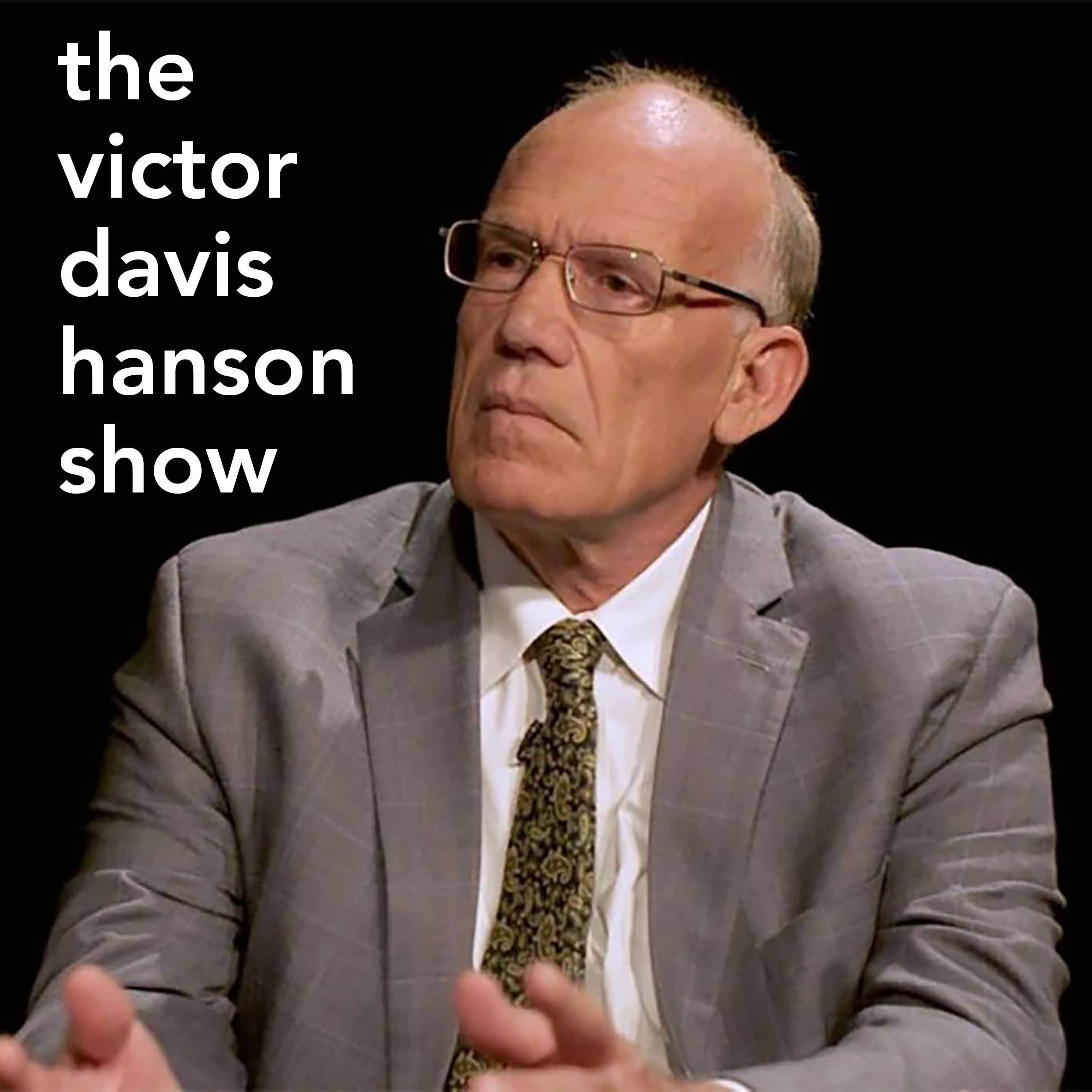
Loading summary
Transcript57 lines
- [00:00]
Victor Davis Hanson
Before we dive into today's topics, there's a development that ties directly into the themes we cover on this program. Right now, 134 countries representing 98% of global GDP are rolling out programmable digital currencies aimed at ending financial privacy. This isn't just about tech. It's about control. It's the most serious threat to personal liberty since the rise of the surveillance state in China. 260 million people are already using a digital yuan that comes with government imposed expiration dates. And the IMF has admitted these currencies can be programmed to control what kind of things people can own. Our friends at American Alternative Assets have created a vital new guide, the Digital Dollar Trap. How CBDCs threaten your financial freedom. It outlines seven alarming ways digital currencies threaten your freedom and how precious metals and maybe the only way out. Call 833-2-USA-GOLD or visit victorlovesgold.com to get your free copy. That's 833-287-2465 or victorlovesgold.com now let's get into the show.
- [01:30]
Jack Fowler
Hello ladies. Hello gentlemen, and welcome to the Victor Davis Hansen Show. Victor is the Martin and Ely Anderson Senior Fellow at the Hoover Institution and the Wayne and Marsha Busky Distinguished Fellow in History at Hillsdale College. And he's got a website, the Blade of Perseus. Its address is victorhansen.com it is the place you should be going regularly and even subscribing to and later in this episode. I think this is an episode. I'm having an episode. I will tell you why I believe you should be subscribing. We are recording on Saturday the 23rd. This particular episode will be up on Tuesday the 26th, by which time people will have long desired to get Victor's take on the John Bolton House investigation. And we're going to get Victor's take on that as we begin the program. We're also going to get his take on this cracker barrel situation. What's happening with US India relations. James Comey back in the news being a bad boy. Is he ever a good boy? Hey, Marco Rubio cuts visas for truckers. So maybe we'll have another topic or two to bring up and we'll do that when we come back from these important messages. If you're running a business, you know.
- [02:48]
Victor Davis Hanson
That every time you miss a call you're leaving money on the table. When every customer conversation matters, you need a phone system that keeps up and helps you stay connected 24 7. And that's why you need OpenPhone OpenPhone is the number one business phone system that streamlines and scales your customer communications. It works through an app on your phone or computer, so no more carrying two phones or using a landline. With OpenPhone your team can share one number and collaborate on customer calls and texts like a shared inbox. That way any teammate can pick up right where the last person left off, keeping response times faster than ever. Plus say goodbye to voicemail. Their AI agent can be set up in minutes to handle calls after hours, answer questions and capture leads so you never miss a customer. So whether you're a one person operation drowning in calls and texts or or having a large team that needs better collaboration tools, Openphone is a no brainer. See why over 60,000 businesses trust Openphone. Openphone is offering our listeners 20% off your first six months at openphone.com Victor that's O P E N P H O-N-E openphone.com Victor and if you have existing numbers with another service, Open Phone will port them over at no extra charge. Open Phone no missed calls, no missed.
- [04:18]
Commercial Advertiser 1
Customers if you're like me, you have a lot of product on your bathroom counter. Well, I have found the secret serum and it's Vibriance Super C Serum. The ingredients in this one bottle can replace your day creams, eye creams, night creams, neck creams, wrinkle creams, and even dark spot reducers. Made in the USA with the highest quality ingredients including vitamin C, hyaluronic acid, vitamin and vitamin E, Super C Serum delivers noticeable results, simplify your skin care routine, get a healthier complexion and minimize wrinkles and age spots with Vibrance. I just began using Super C Serum last week and I love it. My skin feels so much better, soft, moist and fresh. And by the way, it smells beautiful like the orange blossoms outside my kitchen door. Give it a try and you'll love it too. And if you don't find it better than your current skincare routine, you'll get a full refund. Go to vibrance.com victor to save up to 37% off and free shipping. That's Vibrance V I B R I A n c e vibrance.com Victor and we'd like to thank Vibrance for sponsoring the Victor Davis Hansen Show.
- [05:42]
Jack Fowler
We are back with the Victor Davis Hansen Show. Victor, I guess. I guess I should just start off by saying John Bolton, what do you think?
- [05:55]
Victor Davis Hanson
Well, the Trump administration, it was kind of counterintuitive. So Trump, you would think, should not comment on it. But he did say something that was unique. He said, you know, he's a low life, he's not a smart person. He always wanted to go to war. But then he's suffering from Trump derangement syndrome. But then so are a lot of people. Nobody goes after them. So I think he got that out. And now the left and the never Trumpers are saying, well, this is tit for tat retribution. And that might be true if during the 2020 campaign, he was fired in 2019 as national security adviser, who, according to scuttlebutton, Washington had finagled to engineer in the shadows the ouster of H.R. mcMaster. Then he came in and he was tickled to death because he didn't have to be confirmed by the Senate for that position. And nobody on the left, he was despised as much as he's canonized now by the left. And so he came in and then, of course, he was an interventionist, optional war guy, and he immediately crossed swords with Donald Trump. So he was out in a little over a year. But the point I'm making is then he took his notes. He was a prodigious note taker, and he had access, allegedly, to classified information. And he wanted to get this, I was in the room book out during the 2020 election to hurt Donald Trump. Now, he didn't like Joe Biden, but apparently he wanted to hurt Trump more than he did Biden. The Trump administration sued to stop it, as you remember, and the judge was very strange. He said that Bolton was not doing his country any good, that he was releasing information based on classified files via his notes that was not in the interest of the United States. But he didn't have an injunction at that point. The election happened. Trump lost. The Biden administration came in and dropped the investigation. So now the question is, is Pam Bondi and Cash Patel rebooting that old investigation? And to suggest that they were on the verge of showing he was using classified information as notes. If that's the case, then there's this little bit of stronger argument of retribution because it's been four years, or as some sources have leaked, he took out information, whether actual files or his version of files as embodied by his notes, handbooks and notes. And he was using that information to either hurt Donald Trump or if he was, in fact, lobbying for foreign entities. And I don't know whether he's registered as a foreign agent or not. And that's what some of the Trump people apparently have leaked, that this is new information. But what's really damning for him is there's a whole corpus of things he said in 2022 that are surfacing all over the Internet and all over conservative news, but even mainstream news, because they don't like him. I mean, they, they like him more than they do Trump and they find him useful, but they still don't like him. And in these clips about Mar Lago, you know, he kind of laughs and said, Donald Trump doesn't care about classified information. Anything that came across his desk, he just, you know, consumed. It was classified information. He treated like French fries. He just ate it. Ah, he did this. And this is what, this is what he deserves. And almost everything he said now is applicable to his own situation. So it's very ironic. It's an existential question. I know our listeners are kind of confused as I am about it, because you have clear criminal exposure with Clapper, McCabe, Brennan and Comey, even Anthony Fauci. There's evidence today that he was deliberately suppressing news of what Peter Dasak was up to, and Francis Collins and he was up to in facilitating the transference of instrumentation, expertise and in some cases money to the Wuhan Lab. And that was just a taboo topic. And they went after people. So what do you do with all these people that under the Biden wax and effigy just went wild and weaponized these bureaucracies? One of the, the chief themes was to hurt Trump, whether his message or his administration or Trump the person. And so the question is, if you don't do anything, they'll do it again. And there's no deterrence. If you do do something, it looks like you're engaging in revenge politics. So what you have to be very careful is you have to find evidence that shows their culpability. Then if you can show their culpability, then the way is clear because you can show that these people broke the law. There's evidence they broke the law and they were given a free hand, a de facto clemency amnesty during the Biden four years because they, the Bidens weaponized the government and found Clapper and Brennan and Comey and McCabe and Fauci and all of these people very useful for their anti Trump narratives. And they never were accounted so they were the ones that were enjoying special preference. If you can make that argument, then he'll get public opinion behind him that he's a corrective to a misapplication of justice and that these people were beneficiaries of political bias. And now there's no bias. And Their exposure will be re examined. If you can do that. I think it'll be fine if he finds new things they've done, especially new evidence of things they've done. Yeah.
- [12:15]
Jack Fowler
If I can say a few things personal, Victor, I mean, I've served on two boards with John Bolton. I like John. I don't want to call him a friend, you know, but we're friendly were I talked to him in any number of years. He was on any number of National Review cruises also, which I used to run. So I had a lot of interaction with him and I considered him heroic. At one point when I was on the board of Gatestone Institute, which you know of and I hope, I assume many of our listeners check out Gatestone and John was honorary chairman, but he was so tough on. On against the Obama administration, Iran policy. So he was kind of a hero in that sense. And then putting the stink on everything was the service in the White House. And that post 2020, you think, was.
- [13:05]
Victor Davis Hanson
What was he doing?
- [13:06]
Jack Fowler
Was he working? What part of his job was work and what part of it was research for the book that he was intending on writing as soon as he got out in order to kneecap Donald Trump's reelection chances? And that really, you know, the guy's smart. I like him. Who cares what I think like or not. But he really, he really diminished his stock with a lot of people with his intentionality.
- [13:32]
Victor Davis Hanson
He did. He didn't have to do that. He could have politely disagreed with Donald Trump and said, I am more of an interventionist. You are a more Jacksonian, reluctant to use force to effect change in America's interest. I can't serve you anymore because I don't agree with your policies and then nobly resign and then more or less become somebody like Bob Gates. You know what I mean? That he worked for Obama. He wrote a book. It was critical of Obama, but I reviewed it, I think, for National Review. But by and large, he was professional about it. H.R. mcMaster wrote a book. It was critical of Donald Trump. Donald Trump didn't like it, but if you read the entire book, there is a theme to it, that he tried to transmogrify Trump's idea. When Trump had an idea that he disagreed with, he said, I will implement it. I know the institutional mechanisms to do that. I'm not going to block it. So he could have done all that, but instead he really did think after January 6th that Donald Trump was through and he felt that he had contributed to that downfall by the argument and litigation that he had gotten into with Trump during the campaign. And he leaked that this book was going to be a bombshell and a revelation of Trump's sloppy style and illegality. And then after January 6th, I really think that he had delusions of bill crystal grandeur, that he was going to be one of the old Bush, Romney, McCain guards that people would look to. And therefore he doubled down. And when Trump had the 93 indictments, 25 states got him off the ballot, the Mar a Lago raid, he weighed in on these things and he felt that this was the nail in the Trump coffin. But what he didn't understand is that he had no constituency, that he had never, ever, ever been able to get Senate confirmation for any high post in a Republican administration. George W. Bush tried. He could not do it. He had to make a year recess appointment. He was mentioned prominently to Donald Trump when he came in. And people said, you got to appoint Bolton, but he cannot be confirmed. You can only appoint him to either a sub cabinet position that does not require confirmation or the National Security advisor that doesn't. But otherwise he's toxic. And he was a denizen of the Sunday and Sunday talk shows. He was everywhere. And then he made this case that Donald Trump was dangerous, reckless, and he just wouldn't stop. And it was obsessions. And he really did believe that after 2020 defeat, after the January's prior, the subsequent January 6th demonstration riot, all of these indictments, Trump was through. Anybody who knew Trump knew that he was a Nietzschean figure, that the more they tried to destroy him, the stronger he would get. So he was another person. Like, I don't know, you know, you look at all these people, you look at Bill Kristol, you look at John Kasich, you look at Mitt Romney, you look at all these people who went after Trump and then you ask yourself, where are they now?
- [17:04]
Jack Fowler
Yeah, I think John Bolton also had presidential ambitions himself once upon a time. So why am I serving this idiot? You know, it's probably he had a.
- [17:12]
Victor Davis Hanson
Huge pack, he raised, I don't know what it was. $10 million, $7 million to give to preselected congressional candidates for the most part. I think that thing is defunct now. I was told by some donors that there was no way in blank they were going to give him money anymore. And he's very unpopular. If you mention his name among not just MAGA people, but now doctrinaire Republicans, they're very negative toward him. I don't understand why he did all of this. It's ego. He didn't have to do all these things.
- [17:48]
Jack Fowler
Well, he's proof of the enemy of my enemy is my friends and the friends of my enemy is my enemy. So we're going to get to that theme with Cracker Barrel, I think. But first I want to tell our listeners and our viewers about our friends@besthotgrill.com Football is back. So is tailgating. So whether it's Friday night lights Saturday, college or pro Sundays, Solaire Tailgate Infrared grills set up fast and heat up quickly. Only three minutes to searing hot temperatures. Just like the big backyard Solaires. Solaire Grill will make you the master of the tailgate. The with the juiciest, most flavorful food in the parking lot. And the fast grilling times leave you more time to enjoy the pregame festivities. They also cool down fast so that you won't miss a minute of the game. The USA made Solaire anywhere, everywhere and all about Infrared Grills are portable and perfect for any grilling on the go. From picnics to camping RVs to boating, but especially tailgating. Amaze your tailgating friends with the great food you grill with your Solaire Infrared Grill. Learn more about these fantastic grills and Solaires Try before you buy demo rental program@besthotgrill.com that's besthotgrill.com besthotgrill.com and we thank our friends from Solaire for sponsoring the Victor Davis Hansen Show. Victor, about Cracker Barrel, which I kind of, I like Cracker Barrel. I've probably eaten there 20, 30 times over over the years. Something homey, kitschy, you know, fun in its way about it. But this, it's proof of this. The angst. Not the angst, no. The anger of typical Americans who've been treated by major companies as if we don't like you, Budweiser, Target, etc. And whether it's, whether it's malicious, whether the folks at Cracker Barrel were really trying to do some Dylan Mulvaney kind of ploy to attract a new audience and stick, you know, give the finger to their, to their true customer base. That's how it's perceived. And I think it's more evidence of middle America is just done fed up with being treated as second and third class citizens. Your thoughts?
- [20:07]
Victor Davis Hanson
Well, they lost what, 200 billion in stock? That's hard to do if you're a coo. The problem is that these people are insular. So at the same time this was happening there, these Democratic strategists that issued these lists of words you couldn't Use birthing person, all of this stuff, safe spaces, trigger warnings. And what they were trying to say to the Democrats, their fellow Democrats was we're in a bubble, an academic media, administrative state bubble and we're a bi coastal elite and we don't like the people in the middle and we think they were the losers of globalization. They didn't code as Joe Biden said or they didn't understand they were going to be shut down in their coal plants like Kilaueita, you know, the clingers, deplorables, the whole chumps garbage vocabulary. And they are the majority basically or they're just half the country, I should say. And they. So they're a huge constituency. And then Cracker Barrel, remember that? Was that an influencer or was she that woman that they had all over the Internet that said after the sweeps in la, I think she was a streaming, a very low level actress and she said oh, none of you people should go into a restaurant because Mexican nationals are cooking and you should just get over there at a Cracker Barrel. And I think that had an influence on the CEO. They thought oh my gosh. And well, who are the CEOs? They're in a bubble too. Most of them are MBAs from these elite places. I don't know if the Cracker Barrel people are, but that's who the corporate elite are. So they thought, you know, we're just, we're going to be really sly, we're not going to offend our constituency. We'll just get this kind of white nationalist barrel out and these white supremacist old man with overall and just get them out and we'll just have a who can object to a law go. They really do think people are stupid. So the average Cracker Barrel constituent says well they're removing that because they don't like me. And they think that resonates that I am a white working class person, rural and I go to these places. And that's true, I do. But they don't want to admit that because they're embarrassed because the DEI apparatus and I'm not going to go there anymore. That's basically what it is. And so I predict that they'll probably have to do something, put a barrel without a guy on or something. But it's part of this thing that I don't have to be very careful. But we had a show where the Sacramento State President Luke Wood was angry because I had mentioned and you and I mentioned that he had said that he was going to eliminate whiteness. I think a few years before he was appointed, and he didn't really retract it. He just tried to say, I was a professor at the time, and this was type of language. And then we had Doreen St Feliz at the New Yorker saying that white people were smelly, they caused plague. She hated them. She couldn't imagine marrying a person. And then we had Jasmine Crockett, white this, white that white. You know, everything. We had Ellie Mostells. And I don't. I think what happened is they didn't realize that 67% of the country identify as white. And they don't like that it's racist. And they keep doing it, and they attack, you know, the whole subtext of the clingers of Obama and the irredeemables and deplorables of Hillary and then Joe Biden's chumps, dregs, and garbage was the white working class. And that was the whole subtext. And they have been demonized, demonized, demonized. And the more that it doesn't work, the more that the left doubles down. And now I think they're so explicit that they have created a permanent backlash. And people are sick of it. They're sick of it. Because what's. And if they don't stop it. Jesse Waters, I think a week ago, when he was quoting Joy Reid and she said, what have whites ever done with music? And what have whites ever given in the world? And they're stupid. They can't think. You know, if you had reversed that and somebody said that their career would be over. They wouldn't even have a private podcast. People would just. There would be no sponsors, there would be no ad, nothing. But, you know, Jesse Waters said on national tv, well, I can list a lot of things. White people, in other words, he was saying, you don't want to get into that. I guess the subtext of that was Chopin, Mozart, Beethoven were a little bit more adept at music than Diddy are. Kenya West. But why get into that? Racial chauvinism, essentialism, and that's what they're asking for. Because when you start stereotyping a whole group and then you say that they're stupid or they're smelly or they start plagues, or you wouldn't want to be around them. Or. Ellie Mostell said, after I came out of COVID I didn't want to see any white people. And you keep doing that, and there's no pushback. You get energized. I can keep doing even more of that. Well, there's a breaking point. And I think the country has reached it. And they. And I don't know what follows, but I think there's going to be a big. And you can see this with the Cracker Barrel. You saw it, as you said, with Bud Light and Target. People are just sick of it. They're sick to death of it.
- [25:53]
Jack Fowler
The music stuff, it's not only a rewriting of history, but then it's also an accusation of thievery. You know, you didn't do this. You, whoever you is, we did it. And you then stole our.
- [26:08]
Victor Davis Hanson
Yeah. Joy Reid comes from the Caribbean. Her parents did. I think one of them came from the Congo, one from the Caribbean. And she was always talking about cultural appropriation. So then she comes on with a blonde wig, you know, or she dyed her hair blonde. I mean, she had been critical of white people who had dreadlocks, and she. I think she wore them once and she said, I'm going to be, you know, I'm going to shock people by being indigenous and all this. But if you really. I just went to the store last week and I think I saw maybe, I don't know, 20 Hispanic women with dyed blonde hair. I thought it was great, but if I walked in with a sombrero, I. They probably would have said, you're culturally appropriating. What I'm getting at is always one way. And it's all predicated on the idea that we are victims and you're victimizers. And then there's all these rational exegesis why it's so crazy everybody wants to come to the United States. It was founded by these old white men, Madison, Washington, Jefferson, Hamilton, who was probably half white. But. But why would you want to come to a country like that? What was it about the country that attracted you to come? If it was not tolerance and making race incidental, not essential, why would you come to this country and try to change it into something that you wouldn't want to live in? And so they can't answer that question. And then when they get into this group did this and this group did this and this group did this. It's all predicated on the idea. You won't say, well, who were the people who died on Omaha Beach? Who were the people who went into Guadalcanal and were slaughtered? Who were the people who flew the 8th Air Force? 40,000 of them dropped out of the sky. Who were those people? Because if you want to play that game, then everybody's going to play that game. So don't play that game because the other side doesn't want to play it. I mean, I don't want to play it. But if they continue to do that out of insecurity, it's not going to go anywhere. It's makes people angrier and angrier and not just so called white people. When you see 25% of black males voted for Trump and 55% of Hispanic males, part of that was they were saying we're sick and tired of being black or Hispanic or white. We just want to be people and we want to get affordable gas, affordable food, affordable electricity, safe streets, be able to buy a house. And you people, all you do are leaders. Just talk about race.
- [28:40]
Jack Fowler
Yeah, well, we're going to talk a little more about cultural obtuseness and about James Comey. We're going to get Victor's take on those things. When we come back from these important messages.
- [28:56]
Commercial Advertiser 1
You might be wondering when is the right time to add collagen to my diet. How about today? Collagen production starts to dwindle in your 20s, but by the time you've hit your 50s, decreased collagen contributes to wrinkles, sagging skin and joint discomfort. Native Path collagen can help. It's packed with only type 1 and 3 collagen fibers, the ones your body needs most for healthy joints, skin, bones, hair, nails and gut. Plus it's third party tested for purity with no fillers, no additives and no artificial junk. Two scoops a day of native path delivers 18 grams of protein. Mix it into your coffee, tea or any drink. It's completely flavorless and easy to use right now. Get a special deal at a fraction of the retail price plus free shipping available@getnativepath.com Victor with over 4 million jars sold, thousands of 5 star reviews and a 365 day money back guarantee, this is your moment to take control of aging before symptoms get worse. Go to getnativepath.com Victor now supplies are limited and demand is surging. And we'd like to thank Native Path for sponsoring the Victor Davis Hanson show.
- [30:26]
Jack Fowler
We are back with the Victor Davis Hansen show. We are recording. Recording on Saturday, August 23rd. This episode is up on the 26th. I'm Jack Fowler. I'm in Sunny. It's a beautiful day here in Milford, Connecticut and Victor, I hope it's sunny and not too hot.
- [30:42]
Victor Davis Hanson
It's only 107 yesterday.
- [30:44]
Jack Fowler
Oh, wow.
- [30:45]
Victor Davis Hanson
Okay.
- [30:46]
Jack Fowler
Fry, fry.
- [30:48]
Victor Davis Hanson
It got so hot the capacitor on the house pump went out and then the pressure switch. So we changed the pressure switch, it went on for a day, changed the capacitor for four days, and now the bearing and the pump went out, submersible went out. So they're out. The crew is out there pulling the. Well, the pump I'm going to have to build a little tiny. I used to have a little shed that covered it so it doesn't get too hot. Because when it gets really hot and the pump goes on, it starts to stress out and throw a bearing.
- [31:23]
Jack Fowler
Okay, well, sunny California has its brutality there. So, Victor, let's. Let's talk about a little maybe as long as you want, or if at all about this NFL, male cheerleaders. And you know, we've talked about the NFL before. It's sort of. I think you and I are on the same page of fans, but not really anymore. Just tired of so much of the woke up. Also the change in the nature of the game, especially. Victor, do you ever watch these old YouTube videos of this week in the NFL in 1971, week three. And it's. That's what I. Yeah, it's a different game. And guys, you know, they score a touchdown, they flip the football to the. To the ref. They're not beating their chest or doing all this insanity. So that's kind of made. Made it.
- [32:15]
Victor Davis Hanson
I was just looking at a video where they had a 19. 1966 playground and the guy had a. Did you see that video?
- [32:21]
Jack Fowler
No.
- [32:22]
Victor Davis Hanson
And all these kids were on all this jungle gyms and going up slides and they were like completely out of control and nobody was hurt, but they were all confident kids and they were running around and the parents were like smoking cigarettes and watching them. And I thought, no Karens here, no leash on the kid's neck. And that's the way I. I can remember when my mom went to a PTA meeting and we were all out in the playground in the evening at the school, and I was doing chin ups and some guy came behind me and grabbed my legs so I couldn't do the chin up. And this tooth right here, I chipped and it still chipped. And every time they try to put. Every time they grind it down a little bit and put a cap, it falls apart. But the point is, my mom said, I told you about that. That's going to mar your appearance for the rest of your life because you were not careful. And then that was it. And then it's held you back.
- [33:22]
Jack Fowler
What are your thoughts about the NFL with these male cheerleaders? I think 12 teams.
- [33:28]
Victor Davis Hanson
When I have these questions, I always Ask when the people make these new policies, initiatives, who was the constituency? Who is the constituency at Cracker Barrel for getting rid of the old guy in the barrel? Who is the constituency for male cheerleaders? So I try to do it analytically rather than emotionally. So you could make the argument that 70% of the fanatic loyal NFL fans are male. 30%, let's say women. I'm just being arbitrary. Maybe it's 60, 40, who knows? So when they go there full of testosterone and revved up with a couple of beers, they love to see Dallas cheerleader types. It's kind of like burlesque. It's kind of like Vegas, right? It's a nice break. And you have all these guys pumped up on the field, hyper masculine. Then you get these hyper feminine women, right? And that's part of the tradition. So then you say, well we're going to put men there and that's going to appeal to whom? The 30% of women. If that were true, then you would see like guys, six, six and solid muscle. And they would come out and they would be making pyramids, you know, with 20 high and then they would be throwing, tossing guys to each other in midair or they would be going, they would look like Hulk Hogan or something.
- [34:53]
Jack Fowler
The Chippendale dancer.
- [34:56]
Victor Davis Hanson
Well, Chippendales, but not. But instead they have these guys with long hair, the ones that I saw, and they're feminized, they're tan and they resonate a gayness to them. So I don't think the women are going to be attracted to that. And I don't see how the male athlete is going to be attracted. I mean the male audience would prefer them to females. So then I asked themselves, well, what is the idea? Are you going to try to tell everybody that you're cutting age woke or you're equity, diversity, inclusion. Because it's not a market centered proposition. It's not going to work as far as building attendance or having people promote the NFL. It's just not, it's not a fan generated phenomenon. It's a top down PC cracker barrel solution. Yeah.
- [35:56]
Jack Fowler
Well, Victor, changing topics. Totally. We'll get to James Comey in a little bit before our big break. Donald Trump has been out on the streets, streets of Washington D.C. i'm interested in two things, your thoughts on that and also the fact that the police union chief in the District of Columbia is backing Donald Trump's or the federal government's intervention. He says it's not a long term solution. It's terrific that there Is this intervention? Crime has gone down because of it. So Trump's getting support from the police in Washington, D.C. and Trump was out on Thursday night out in the District. Any thoughts on that?
- [36:40]
Victor Davis Hanson
The opposition to it is very strange. The black community is kind of quiet, but kind of in ambush interviews on the street. They find support for it, but it's mostly a white professional opposition, a Chevy Chase, Alexandria type, suburban or Georgetown type of person that's against it. And then you get the feeling that those who are in the safest neighborhoods or the best zip codes or have private security, for them, it's an abstract constitutional question, that they want to show their fides and their moral superiority. But for people who live right on the battle zones, they're for it, of course. And then I don't think we've ever had eight or nine days without a murder in Washington. So then the left says, well, it's just because 30 days. Well, wait a minute. You said that he was going to be there forever. He was a fascist, he's taken over Washington. So you admit it's going to be over 30 days. And what would happen when you, when you say it's only going to be for 30 days, then what you expect will happen when Donald Trump can no longer put the guard there for 30 days, do you think, oh, you said there was no crime, remember? So you're saying now we hate Donald Trump for intervening. Now we hate him for he's only going to be there 30 days. It was just a performance arts stunt. There's no crime. But when he pulls out for 30 days, we admit crime is going to explode. Is that what they're saying? So they're completely incoherent in their opposition to him. It's a Pavlovian response. If Donald Trump wants to close the borders, we're for illegal immigration. If Donald Trump wants to stop crime in Washington, we're pro crime. If Donald Trump wants to build a wall, then we want to tear it down. Whatever he says he's going to do is never adjudicated by the left on whether it helps the left or the right or the country at large. It's just we are the opposite of what he wants. The problem with that is he's not dumb. He selects issues that are 40, 60 issues. The border is a 70, 30 issue. Deportation is a 55, 45. Now, despite the hysteria, deporting criminals is a 70, 30 position. Going in and fighting crime is probably 55, 45 with the National Guard of the troops. And so when they get all of this automatic response. They always find themselves on the bad side of the poles. And that's why that and their arrogance. I call it Pete buttigiegism. It's this appearance of sanctimonious scolding, talking down self righteousness. My pronouns are they, them, ze, zay or whatever. No one wants that. It's like Gavin Newsom when he's trying to put on his exoskin and be a conservative with Charlie Kirk. He says, I don't know, you guys just make up this little Latinx stuff as a clobber Swift.
- [40:02]
Jack Fowler
Nobody says that.
- [40:02]
Victor Davis Hanson
I would never. No, I've never heard it once. And then bam. Hey Gavin, you're an idiot. Don't you understand? The Internet has no amnesia. In like a nanosecond he's on there talking about his Latinx, you know, Latinx community. So they know what they're doing. They can't help it. They're an addict that's fixated. They know that the diversity, equity, inclusion, PC, affirmative action, racial obsessions are killing them and they can't stop. And Donald Trump comes in and basically appeals to the black community over the heads of their left wing Trump deranged leaders. And they don't want to buck their leaders. But privately they're very happy that there hasn't been murders for, for as long as the troops have been there.
- [40:49]
Jack Fowler
Victor and our listeners and our viewers, total control over your money. It's closer than you think. Right now, 134 countries representing 98% of the world's economy are building central bank digital currencies. These systems are designed to make every transaction visible, trackable and controllable by government authorities. It's a level of financial oversight that mirrors the tactics used by authoritarian regimes throughout history. Look at China. 260 million citizens are already using the digital yuan that can expire if not spent by government deadlines. And it's not just theory. The IMF admits these currencies can be programmed to decide what people are allowed to own. Once cash disappears, so does the last real protection individuals have had against financial control for thousands of years. And that's why our friends at American Alternative Assets put together a must read guide, the Digital Dollar. How CBDCs threaten your financial freedom. This free report explains how digital currencies represent one of the greatest threats to personal liberty and why physical gold and physical silver may be the last line of defense. Call 833-USA-YOLD or visit victorlovesgold.com to claim your copy. Now that's 833-287-2465 or victorlovesgold.com history has shown us what happens when governments gain total control. Don't let it happen again. And we thank our good friends at American Alternative Assets for sponsoring the Victor Davis Hansen Show. Victor, one more prelude before we get to James Co Tomi is that you mentioned that line about the bad side of polls and I really I get the New York Post every day. I am in dreadful. I am in fear that New York City is which is not the greatest city in the world as is, but is going to go down the crapper with Mondami elected. They still have not unified against one person to take them on. And when that happens, if that happens, more likely when that happens, I think the intensification of being on the bad side of polls is going to happen because New York City, what happens there is going to be reflective in so many of these other issues that it is going to just harden problems for the Democrats. Do you think New York City is going to make those bad sides worse?
- [43:20]
Victor Davis Hanson
Yeah. You start with the idea that in the primary votes Eric Adams, Curtis Silwa and Andrew Cuomo together had about 50% of the vote. And I think he had what, 27 or something. I don't know what it was, but it was more than each of the three. So the problem was easily solvable had they rallied around one candidate. And that proved impossible because Eric Adams was a very unpopular mayor. Andrew Cuomo ended up in disgrace as he left office as governor. Curtis Silwa was sort of a perennial candidate. And so they didn't have a strong unifying candidate. So that's going to get him elected. And then the things that he said that outraged the country, I'm going to go after affluent whiter communities. We need to gain the means of production. That resonated with two groups, the subsidized poor who thought they're going to get more free stuff, and the white upscale professional class that makes maybe 100 to 150,000 childless, single, living with someone maybe, but doesn't have the money to buy the type of house and purchase the type of lifestyle that they think they deserve given their brilliance, education, credential, moral smugness. So that's who his constituency is. And it doesn't exist in a very great number nationwide. You saw Fatah, the person running for the mayor of Minneapolis. He had a rally the other day. He didn't speak English. There were no American flags. It was mostly Somalians and immigrants and Palestinian ware and emblematic Palestinian stuff. And he's going to run for mayor. And I guess he's saying that guilty white professionals. The Karen class loves this. Please hit me some more, Fatah. But I don't know. I don't know if it's going to work.
- [45:28]
Jack Fowler
And I saw the Democrats delegitimized his primary.
- [45:33]
Victor Davis Hanson
They did. They did. They thought, you know what? This is an embarrassment. So what's happening is that I guess a larger existential question is how did the Democrats go crazy? Because this. I wasn't a big fan of Bill Clinton, but I keep hearkening Back to the 92 and 96 Democratic convention platforms that Mark Penn and Doug Schoen wrote. And you go back and look at them. Juveniles who commit murder, violent crime, try them as adults, 100,000 police officers shut the border, deportation legal only. Immigration, energy, development, balance the budget. That's pretty conservative today. And yet they won. They won with the help of Ross Perot in 92 and 96 or Clinton wouldn't have won. But after the Bush interlude, then they had Obama and it started on Obama. He moved the party far to the left. Then Biden doesn't know who he is or what he was. And his body was hijacked by other minds that inhabited it. But what caused this? They keep saying the Democrats, they all project. So Republicans were hijacked by MAGA? No, you look at the MAGA agenda. It's got 95% of doctrinaire Republicanism, you know, low taxes, deregulation, conservative judges, full energy development. It's different on the border, it's different on foreign policy, but it's got a lot more of the traditional Republican than the current Democratic Party has Clintonism. So I asked myself, why did they go crazy, Jack? And I think I came up with some answers. Number one, the bicoastal elite made out like bandits under globalization. And that was in, you know, academia, media, law, corporate investment, big tech. And the muscular classes didn't do as well. They were outsourced offshore. Their wages were stagnant, their factories closed down. Agriculture, mining, timber had low commodity prices. Globalization brought these other natural resources and commodities onto the world, et cetera. So then the Democratic Party had money, and I'm talking about $419 million from Mark Zuckerberg in the 2020 election, $300 million from George Soros over a variety of Reid Hoffman funded the whole E. Jean Carroll lawsuit. Elon Musk, before he was a Trumper, he was a Clintonite and a Bidenite in 2000. Lisa Jobs, the Atlanta, all of these people, Mike Bloomberg a billion dollars. And he used. After he blew his own candidate, he gave him another 300 million or so to stop Trump. So the Democratic Party said, we don't need the middle class. We are the wealthy people, but we're the good wealthy people. And the professional classes that benefited. It wasn't just the billionaires and multimillionaires. The next echelon on the coastal university classes, credential letters. They were very affluent, they could buy homes, they could buy nice imported cars. They sent their kids to prep. That group said, we have solved the existential problems of the world. We don't worry about food, shelter, we don't worry about the price of steak or roast beef. We don't worry about the cost of electricity. We want a perfect world. It's so stupid. Clingers and deplorables and chumps and drags and garbage and irredeemables, those people do because they're losers. They didn't. As Biden said, well, you didn't learn how to code. Or Hillary said, well, you all, I'm going to close down all the coal plants in West Virginia. They were labeled dummies. And they didn't know what was good for them because what was good for them was transgenderism, open borders, illegal immigration, your carbon footprint, new green deal, the United nations, usaid, this utopian agenda. And they did not ever talk about how do I buy a house, how do I buy a car, how do I buy food, how do I pay for electricity? They didn't care because they were wealthy. And then the poor, they said, we feel we're not selfish. We feel guilty that we made out like bandits. We feel universities were saying, you know, we got a million people here from foreign countries and we're charging them, overcharging them, and we got all these billion dollar endowments. So we're going to have radical DEI admissions, full freight for people that are not white. So they said to the subsidized poor, we're your ally. There was no middle class class in this movement. The universities then became global universities. And their whole point was, we're going to train the new administrative state class. The diplomats, the lawyers, the administrators, the clerks, the media people, the lawyers. And they're all going to be indoctrinated. They're all going to be left. They're all going to be part of the progressive project. That's what we have. We have the universities. We don't need public opinion. We do not need the middle class. We can influence. It will stalk all the newsrooms with left wing journalists, graduates. We'll stalk all of NPR. 86 left wing people in the editorial. That was the role of the universities. That changed when I was in the university. It was left wing, but it was liberal left wing. It wasn't North Korean left wing like it is now. And so that was a big change. And then in addition to globalization and the disparagement of the middle class and the takeover of the university, then they came up with the idea that they were going to change the demography. And that was going to be tricky because that was race based. But Ted Kennedy had pretty much made it impossible for Europeans or people from Japan, affluent people to come. He wanted family reconciliation across the southern border and he authored an open borders bill. And Reagan in 86. They can talk about all they want about Simpson, Mazzoli, but it opened the border as well. They took the border patrol off the border and it was the duty of the employer to look at i9 forms which were a joke and forged. So anyway, the left opened the borders. They brought in 50 million people who are not born in the United States. Right now. It's an all time high. Somewhere around 15 to 16% of the population, 30 million of them are here illegal. And they said to themselves, this is our new constituency now. When Tucker Carlson mentioned it and said, wow, they're changing, they said, oh, you're part of the sick great replacement theory. But they had written books called Demography is Destiny and the New Democratic Majority. They were triumphalist. The only thing that put a little hole in their balloon is they found out that second generation Mexican Americans and more Asians than they expected were voting conservative finally in 2024. But otherwise they felt they could change the demography. So they started talking not about affirmative action, black, white, 88, 12% binary. It was diversity. If you're not white, you may be the richest ethnic group in the United States. You may be from India, that's the highest. I think it's $125,000 a year per capita income. You may be Korean American, you may be Arab American and have a higher income than so called all white. But you are not privileged, you are a victim, you are an oppressed. And the white guy in East Palestine Ohio who has nothing, he's actually oppressing a dentist from India who makes 250,000 a year. That's what they sold us. And that's how crazy they went. So when they were all done, they said, you know what, we're not going to worry about the middle class because we're worried about climate change, we're worried about all these boutique issues that nobody cared about. And then we're going to pander to race because we're trying to change the demography, but we can't do it with affirmative action. We've got to make a new group called the non white. And to make the non white, we really have to bore down on white racists, call them racists. We got to call them names. They're garbage. And we'll tell our black leaders to just go out, just, you know, don't talk about reconciliation, content of our character. Just level both barrels and just say, these white people are horrible. You can say whatever you want. You can say they're filthy, they're dirty, they. Cause that's what they did. And that's what the Democratic Party is. It's a result of massive new wealth that was asymmetrically located in the United States after the millennium from globalization. And it was the takeover of the universities to indoctrinate generation after generation in this Marxist dialogue of the wealthy people in the country. It was to subsidize the poor, a large underclass, and tell them that they were oppressed. And then it was to open the borders and change the demography. Put all of that together and you get an Ilyan Omar, you get a Rashid Tlaib, you get a Mandami, you get Bernie Sanders, you get these university crazy pro Hamas demonstrators, you get 300,000 Chinese students, you get 30 million illegal aliens. And that's where we are. That's the Democratic Party. It was by intent. The only thing they did not anticipate is that it would boomerang on them, that it would offend Mexican Americans, black males, an increasing number of young people. I think Trump won the 18 to 29 rubric by two points. He picked up two points from women from 2020. He picked up points from the independents. So it offended people, everybody. Yeah. And.
- [56:10]
Jack Fowler
Well, that was. I'm not going to call it a rant, Victor. You call these things rants, but that was pretty darn good. Well, we're. That pushes us into a break. And the promised. The promised James Comey topic will come up when we return from these final important messages. We are back with the Victor Davis Hansen show. Victor's website, the blade of Perseus. VictorHansen.com is the address. Go there. Subscribe. It's 650amonth or discounted. $65 for the full year. And when you subscribe, you can read Victor's twice weekly articles exclusive for the Blade of Perseus and his exclusive weekly video. Plus links galore to everything else Victor writes in his many appearances. Victorhansen.com the Blade of Perseus Excuse me, Victor. So here's a headline from Just the News Exclusive. Prosecutors secured evidence Comey Authorized Classified Leaks but decline, Declined Charges Let me just read the first two paragraphs of this article. Federal prosecutors gathered evidence from James Comey's top lieutenants that he authorized the leak authorized the leak of classified information to reporters just before the 2016 election, but declined to bring criminal charges, according to recently declassified memos that call into question the former FBI director's testimony to Congress. The bombshell revelations involving ex FBI General counsel James Baker and ex Comey Chief of Staff James Rybicki were memorialized in documents that FBI Director Cash Patel discovered earlier this year, but the passages were originally redacted by the Justice Department Inversion sent to Congress earlier this month, Attorney General Pam Bondi intervened, eliminated the redactions, dispatching new versions of the memos this week to the House and Senate Judiciary Committees. Officials told Just the News. I know he's your favorite person, Victor. What do you have to say about.
- [58:20]
Victor Davis Hanson
I don't think he ever gave any testimony. He testified to the House Oversight Committee, but he said he couldn't remember. He didn't know 245 times as I remember. Or was it to the House Intelligence, one of the two committees? So yes, he testified, but he never. He lied by saying basically he did a kind of a plead the Fifth Amendment by saying I don't know, without pleading the Fifth Amendment. But he's another person that thought he fooled Liz Cheney and he thought he was going to tackle Trump and destroy him. And you look at after he left, he was completely shattered. And he is today, as we said last time, he's reduced to seashell collections on the beach or he takes pictures of a forest in quotes, Nietzsche or something on his social media. Or he says it's unfair that his daughter was fired from the dio, which may have been unfair, I don't know. But he's a completely broken person. He was an iconic figure of Toulouse, the law enforcement community. He had been a prosecutor. He had hogged the limelight during the 2016 election. And now it looks like the only thing that may save him is the degree to which these transgressions that are being uncovered and had been suppressed by the Biden administration, the degree to which the statute of limitations still applies. I don't know to what degree they do. If they're racketeering or confused conspiracy. I think his biggest problem is they'll bring him in and ask him to testify, and then he'll have a choice. He'll either have to contradict what the written statements are that he made. I'm not sure he'll know them all, unless he has copies and he'll perjure himself for a fresh offense, or he will stick with what he said, and then he will be lying when he said, I don't remember, I don't know when he did remember and did know, but it's past the statute of limitations. So then he'll just be hurt publicly. But he's already down in the depths of public opinion. He's one of the most unpopular people around, so maybe Taylor Swift will come to his aid. What's so weird is that these people don't stop. So you get Andrew McCabe weighing in on the Bolton rate, and you look at him and you say, Mr. McCabe, you were mentioned in the paid stroke correspondence as saying that there's going to be an insurance policy that, don't worry, we're not going to let Trump be president. You lied on four occasions to federal investigators, three times under oath. So you are a proven liar. It was only Bill Barr's naivete or magnanimity or whatever that allowed you not to be prosecuted for perjury in which any other American citizen would have been. And now you're on there taking the high moral ground. Same thing with Comey. Same thing with Clappers. They, I don't know what it is. Is it Liars Club? Why do they all lie? Why does Comey lie by not answering 245 times and feigning ignorance? Why does McCabe have to lie 4 times to FedlnGuesker as they never leaked? Why does Clapper have to lie and say that his national security agent doesn't spy on people when they did? Why does Brennan have to lie that he's not tapping into Senate? They're all liars. Fauci's a liar. Why does Fauci have to lie that the Wuhan lab had nothing to do with the creation of the Wuhan COVID virus? Well, because he helped birth it through, you know, transfers of expertise and money. But what do you do with these liars? That's the question. I think that Bondi and Patel and Bongino, what do you do with them? Because if you go after them, then it's retribution. If you let them go, then they're higher than the law. I guess what you do you bring them back in and say, you said this, you wrote this, here's a transcript. Do you abide by what you said? And they either say yes or no. They either say, you know what, I was wrong and I apologize, I didn't mean that, or yes, I was right and that's about all you can do.
- [62:53]
Jack Fowler
Well, there's no sense of shame and no sense of profumo from back in Britain in the, in the 60s.
- [63:00]
Victor Davis Hanson
The whole principle is that Donald Trump is orange and he has a queen's accent, comb all her hair. And he has crude speech and he says things like low life and dirty cops and fake news and we're sober and judicious and we use proper vocabulary. But believe me, anybody who's listening, what is the true morality? Somebody who's silver tongued and repeatedly breaks the law as a federal official or someone who's trying to uncover it can be crude. Take your.
- [63:36]
Jack Fowler
Well, they feel they're entitled to the situation that they're in. They're not going to leave their jobs and go sell real estate or work at Walmart. Anyway. Victor, before we, and I do, I want to get to some something Marco Rubio did. But before that, I was just curious. You mentioned before Simpson, Mazzoli and I know you were friends with Alan Simpson. Did he ever talk to you about that bill in any way?
- [64:04]
Victor Davis Hanson
Yeah, he did. There was a polite group of people that asked us to discuss it. Maybe 2000. No, no, no, no. 20, 15 or 16. It was during the, the Trump campaign. A private group of people wanted me to debate him. So we did. I liked him. We had a polite debate among 30 people about Simpson. Mazzoli and I very politely said pulling the Border Patrol off the border and turning over enforcement to employers that had to check I9 forms. And I can tell you when you checked, when you had an i9 form and you sent back the Social Security address, they were all fake. I can remember my brother having about 50 of them from the year i9s, and they'd all come back that the person's name was false, the ID license that they gave was false, address was false, name was false. So it didn't work. And it was basically, there was no border enforcement anymore. It was like, we're not going to be able to hire illegal aliens. And so all the employers of the United States are going to be the Border Patrol. And it didn't work. And then they offered amnesties. And only 30% of the people who were offered amnesties took citizenship pathways because they thought, you know what? There's no difference in America between being a resident alien and a citizen. You can do almost. Almost everything that a citizen. Citizen's been. Citizenship has been so diminished. There's no delineation between just kind of being here.
- [65:50]
Jack Fowler
Okay, well, Curious.
- [65:52]
Victor Davis Hanson
He was a wonderful. He was a wonderful guy. He was very funny, and I knew him very well for 20 years. Yeah.
- [66:00]
Jack Fowler
Kazoo. Oh, kazoo. Whatever that was.
- [66:03]
Victor Davis Hanson
Yeah, that was considered just. That was almost considered, like, profanity. Remember when he said that? Yeah. People got very angry. And then now you hear the F bomb and the S bomb. It's really shocking about the decline. I was thinking that the other day. If you think what you see that menagerie you see on planes with people dressed in yoga pants and halter tops and bare feet and sloppy clothes and eating chilly boats. There's no decorum. And then you see all of these politicians saying the F word, the S word. And then it's like you've torn off the veneer of manners. It all started in the 60s with the left. You know, they wanted to get back to a visualian. Natural savage, I think. You know what I think a lot of people kind of have tics like I do now as I get older. Like when I go to the store. Store to get my shopping cart, the store that I go to, always. People leave trash in it. You know what I mean? So I always pick the shopping cart with the most trash, and then I very carefully put it in the wastebasket, and then I buy my food. And even if it's a long walk, I make sure that I put park. Because the place I go, you should see the parking lots full of trash and the park. The shopping carts look like they're scattered all over. So I always go and walk all the way and park it. Not because I think I'm moral, but because if everybody would do that, we could restore a veneer of decorum and rules and not litter, not throw the shopping cart anywhere. Try not to get. You know, everybody can do their part to restore a civilization because we have. We're kind of like a Rousseau. And we tore the veneer off, and then we said, oh, we don't have to do any of these things anymore. It was like I went to UC Santa Cruz in 1971, and I went to the seminar, and everybody was sitting on the ground in the dorm lounge. That's where it was held. The professor said, call me John, and no titles. And three people there. One girl had patchouli oil. Remember Patchouli oil. It was this weird scent. And she had not shaved her legs or underarms. And she had one of those wife beater old men T shirts on with no bra. And it was very strong. And she. I was like, I had just turned 18. And she turned to me and she said, you think I stink, don't you? I said, well, what is that smell? She goes, that's a natural body oil. And then another guy, about an hour later passed wind in a very loud laugh. And the professor laughed and then said something to the effect, well, we don't really care about all these conventions. We don't need to shake hands. We don't need to worry about whether you have to pass wind. You don't have to worry about shaving your legs. These are all natural. And it got to the point where I was taking showers in the morning, at lunch and in the evening, shampooing my hair three times a day and trying to wear cologne, anything to distance myself. I felt that I was. These were savages, you know what I mean? But they were all natural, going back to nature and that 60s legacy, what was institutionalized because I get the UC Santa Cruz alumni and I just look every once in a while magazine or newsletter. And these people are all in my class 71 now. And you wouldn't believe what they are. They're politicians, they're corporate lawyers, they're big tech grandees, they're investors or hedge funds. And so that culture is in the top echelon of America today. And that's the problem. That's the problem.
- [70:07]
Jack Fowler
Well, Victor, let's close out by getting your take on another story. Here's the headline. Finally Shutting the barn Door. Marco Rubio freezes all visas for truck drivers. This is from Red State Secretary of State Marco Rubio has ordered a freeze on all work visas for commercial truck drivers. This follows an August 12th pile up on a Florida highway caused by by an 18 wheeler driven by an illegal immigrant attempting an illegal U turn along across a median strip. And a message on X Rubio said, quote, effective immediately, we are pausing all issuance of worker visas for commercial truck drivers. The increasing number of foreign drivers operating large tractor trailer trucks on US roads is endangering American lives and undercutting the livelihoods of American truckers. Victor, I know you got a thing about truckers and well, you like truckers.
- [71:03]
Victor Davis Hanson
But, you know, I like truckers. I just think that I like especially the old breed of truckers, but the new breed, and I just drove yesterday the 220 miles home and I was on I5 and I thought these people. I was going, the speed limit is 70. Ahead of me were three trucks. I was the number two car behind. They were going 75 miles an hour, passing trucks that were going 65 miles an hour. The speed limit was 55. And I looked behind me, there was about 25 cars in the left. There's only two lanes in California on freeways for the most part. And every time I passed one going 65 in the right lane at the three trucks ahead of me were passing first. They had. They were looking at their cell phones. Three out of four were. So it's kind of like I said, road war. I just talked. It's very funny. I just talked to a good friend of mine who's Indian American. He's very successful, very wonderful guy. He was telling me that the trucking industry in California, first of all, people who are undocumented, whether Mexican American or from India, are not getting in the cabs right now. That was one effect. But more importantly, those people who are green card holders or legal citizens, whether they're white, Indian, Hispanic, doesn't matter. They're afraid to go to Florida because when they see the California plates on a semi, they feel that they're going to be pulled over, examined. And you can see why, after what happened. And so I don't know how long that's going to last. But the other thing really quickly is why did this make such a splash that it was two things. It wasn't just a trucker. I was driving to Pepperdine in the winter, I think I told you. And I was going in the dense fog, 10ft visibility, and a guy passed me in a semi. I was in the right lane going 40, and that was probably his max. A guy ahead of me was going 40. I could barely see his red tail. Zero visibility tool leaf fog in Tulare of all place. This car, this truck went around me. He went about 70 miles an hour. I thought, oh. And sure enough, in about 30 seconds. And I have. I always put the window down so I can hear as well see in the fog. And he hit a car ahead of him and jackknife and the car ahead of me almost hit his block the whole way. We both pulled over and we couldn't do anything. We just got as far away as we could. And the next eight cars hit. And then we wanted to get out of there. And no one was hurt, apparently, but they were all hitting each other. And he was standing out there without any emotion. And then we had to go around on the shoulder. So we walked about 200 yards to make sure there were no road signs. And then we went around his at one mile an hour, the two of us. And we got back on the road, and no one else could get around him. But it was the same thing. Somebody going very, very fast. And he was not acquainted. He was Indian American. He was not acquainted with road signs. He was just walking around bewildered. And so what I'm getting at is when you. What got people mad was three things. Gavin Newsom's California knew that he could not read or speak English. They knew he was here illegally, so they gave him a license. And then people said to themselves, if I was not an illegal alien and I was not from a foreign country, I would not be able to get a professional driver's license. It's hard to get if I did not pass the test. That was number one. People are outraged at Gavin Newsom. Number two, nobody in their right mind going on a thoroughfare, freeway, suddenly decides he wants to go in the other direction and just tries to cut across the median and go backwards. That is insane. Nobody is. I've never seen that happen. And yet he did that. It was just a prescription of arrogant, dangerous behavior. Number three, once he did that, he heard somebody hit his second semi, and he has a camera, and he and his brother or whoever the person was in the cab with him, it was like this, jack, somebody hit my cab. Just. They were dead. He didn't get out. He didn't rush. And then there's a later clip where he's on the side of the road. It's like, now, maybe he doesn't know the language. Maybe he's bewildered. Maybe he felt bad. But the point I'm making, he made no effort to go out there and see if he could render first aid or anything. He was. He was just like, things happen. I just cut across the medium without warning, and cars hit me. I guess they die. So that's got people enraged. And we get back to the original thing we talked about. I think we talked about with Sammy. California is a dangerous place. It's not just dangerous for California. When you have the most illegal aliens in the United States and you have the most sanctuary jurisdictions and you allow people to commit crimes and to be exempt from ICE deportation, they don't just stay in California. They go everywhere. And when they go everywhere and there's no background audits, they can cause a lot of damage. And that's what happens in California. When you look at the California budget and look at. I had this little bad habit of looking at the little pie graphs of the 1970s budget. Fifty years, 55 years later, the new budget. And they have infrastructure, maintenance, medi Cal, health, education. It's just. It's mostly education and medi Cal. And when you look at that, we're in the bottom 10 of test scores. I don't mean education as in excellence. I'm talking about remedial education. So California is just. It's a very dangerous place to live. It's a very heartless place. It's a very callous place to live. Nobody cares about you here. They don't care. Gavin Newsom, if you went to Gavin Newsom, said your system allowed an illegal alien to get a license and he only recognized one traffic sign out of 12, and somebody had been indoctrinated in your city system to give him a pass because he was not a toxic white male. Rager, privilege, etc. And now he killed three people. They would say, racist. Racist. That's their attitude. You're a racist for bringing it up. I'm not a racist for giving somebody special privileges on the basis of their race.
- [78:23]
Jack Fowler
Well, viva Secretary of State Rubio for what he did. He's very good.
- [78:30]
Victor Davis Hanson
He's what Trump said. When I have a problem, I have Marco. Do it, solve it, and it gets done.
- [78:36]
Jack Fowler
He's hitting everything out of the park. Well, Victor, we've come to the end, except for a few duties. And one of those duties is to read from the many comments we get hundreds of comments now on Apple Rumble, YouTube, Victor's website. And here are two. This is from Richard Gray, 802. That Mr. Hansen is genius goes without saying. But what really needs to be said is that the courage he has to say what he says is, to me, inspiring. Thank you, Mr. Hansen. We're out here and we love you for being you. Keep it coming. And then there's a comment from Robert Graham, 5619, who writes with sad tears in my eyes at the end of this installment. I'm longing for more. Victor, you are a national treasure. Very grateful to you and your heritage, which had the integrity to raise a child such as yourself. I'm so very impressed with your uncanny ability to consistently remember the truth, names and dates from recent to ancient history. What a treasure, giving us the education we needed in our public and often private education. So that's Robert Graham. Thank you. Richard Gray. Thank you. I want to thank the people who write me about Civil Thoughts. That's the free weekly email newsletter I write for the center for Civil Society if you want to get it. And you should go to civilthoughts.com sign up. Every Friday you'll get my email, which has 14 recommended readings. It's totally free. We are not selling your name. I know you're going to like it. Also, a reminder again, Victor's website, the blade of perseus victorhansen.com and if you're on X, Victor's handle is is Dhanson. And if you're on Facebook, check out the Victor Davis Hansen Fan Club and VDH's Morning Cup. Victor, you've been terrific as ever and thanks for all the wisdom you shared. Thanks folks for watching and listening. We'll be back soon with another episode of the Victor Davis Hansen Show.
- [80:33]
Victor Davis Hanson
Thank you everybody. I much appreciate it.
- [80:38]
Commercial Advertiser 1
If you're like me, you have a lot of product on your bathroom counter. Well, I have found the secret Serum and its vibrant Super C Serum. The ingredients in this one bottle can replace your day creams, eye creams, night creams, neck creams, wrinkle creams and even dark spot reducers. Made in the usa with the highest quality ingredients including vitamin C, hyaluronic acid, vitamin B5 and vitamin E, Super C Serum delivers noticeable results, simplify your skin care routine, get a healthier complexion and minimize wrinkles and age spots with Vibrance. I just began using Super C Serum last week and I love it. My skin feels so much better, soft, moist and fresh. And by the way, it smells beautiful like the orange blossoms outside my kitchen door. Give it a try and you'll love it too. And if you don't find it better than your current skincare routine, you'll get a full refund. Go to vibrance.com victor to save up to 37% off and free shipping. That's Vibrance V I B R I A n c e vibrance.com Victor and we'd like to thank Vibrance for sponsoring the Victor Davis Hansen Show.