← The Victor Davis Hanson Show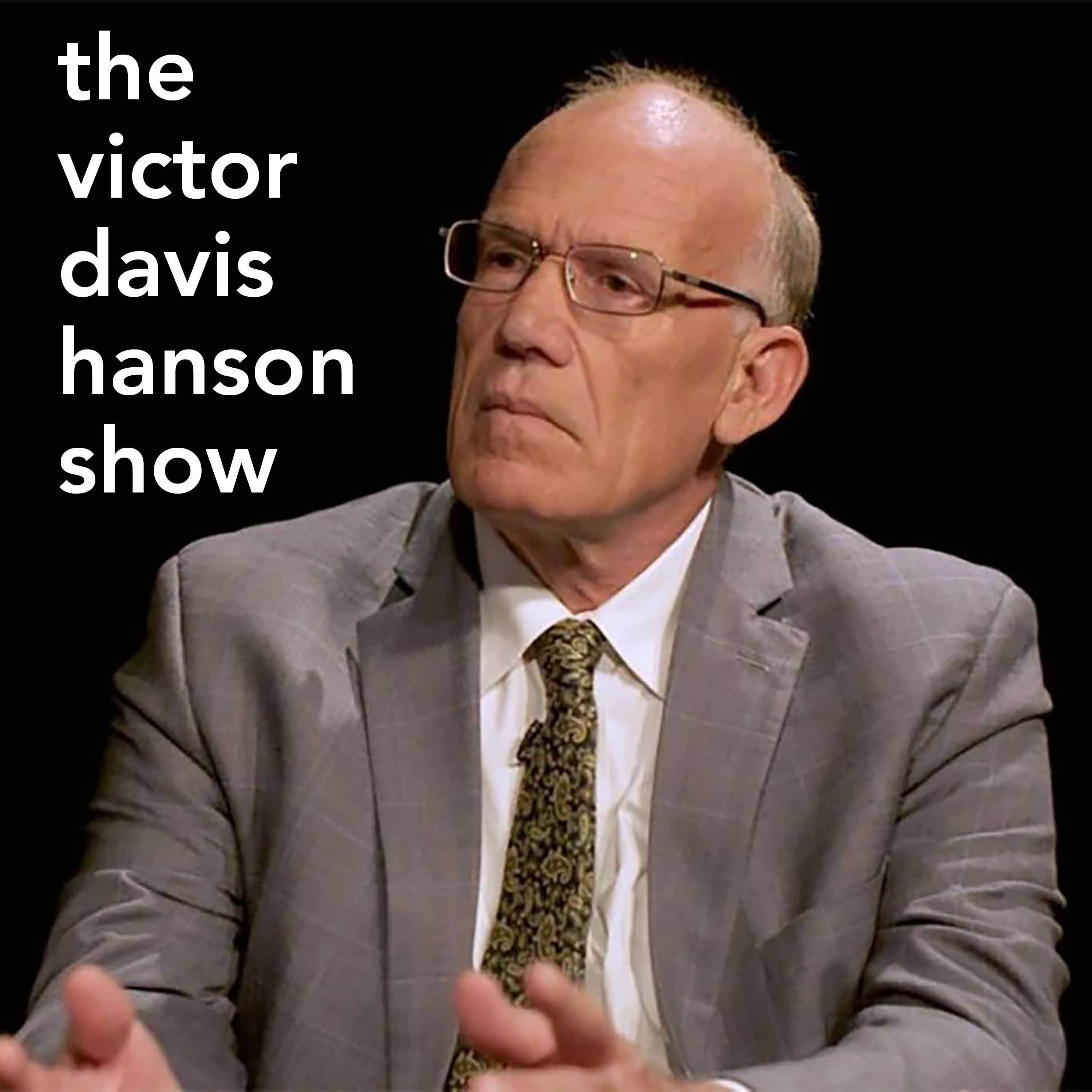
Loading summary
Transcript69 lines
- [00:00]
Eduardo VDH
This is unconstitutional. Have you heard some biased journalists, maybe on a podcast or a YouTube show say this? Probably. Do you just take their word for it? Which begs another question. Have you ever taken the time to read and understand for yourself the meaning of the United States Constitution? Most haven't. That's why I'm excited that Hillsdale College is offering a brand new free online course called the the Federalist. This terrific course explains how the United States Constitution established a government strong enough to secure the rights of citizens and safe enough to wield that power. And today it's our responsibility to pay attention, to be vigilant, as our founders might say, in order to preserve and protect Republican self government. Hillsdale's online course, The Federalist includes 10 lectures, each about 30 minutes long. You can take the course at your own pace. There's no cost to sign up. They're remarkably well produced and engaging and a must for anyone like me who's never really delved into the Federalist papers. Enroll here at no cost. Go right now to Hillsdale Edu VDH to enroll. Again, there's no cost and it's easy to get started. That's Hillsdale. Eduardo VDH to enroll for free Hillsdale.
- [01:23]
Victor Davis Hanson
Edu VDH hello and welcome to the Victor Davis Hanson Show. This is our Saturday edition where we take a little bit of history in the middle section and this week Victor's going to be looking at the first Gulf War, so stay with us for that. Before that we have some news to go through and we have China surveilling countries and we have Russia threatening nuclear attacks on us. So stay with us and we'll be back with those two stories.
- [01:57]
Shopify Ad
Shopify helps you sell at every stage of your business.
- [02:00]
Victor Davis Hanson
Like that.
- [02:01]
Shopify Ad
Let's put it online and see what happens.
- [02:03]
Jack
Stage and the site is live that.
- [02:05]
Shopify Ad
We opened a store and need a fast checkout.
- [02:07]
Jack
Stage thanks.
- [02:08]
Shopify Ad
You're all set that count it up and ship it around the globe.
- [02:11]
Jack
Stage this one's going to Thailand and.
- [02:15]
Shopify Ad
That'S Wait, did we just hit a million orders? Stage Whatever your stage Businesses that grow grow with Shopify. Sign up for your $1 a month trial@shopify.com Listen, why drop a fortune on.
- [02:28]
Victor Davis Hanson
Basics when you don't have to? Quince has the good stuff. High quality fabrics, classic fits and lightweight layers for warm weather, all at prices that make sense. Everything I've ordered from Quint's has been nothing but solid. Quince has closet staples you'll want to reach for over and over again, like cashmere and cotton sweaters from just $50, breathable flow knit polos and comfortable lightweight pants that somehow work for both weekend hangs and dress up dinners. The best part? Everything with Quince is half the cost of similar brands. By working directly with top artisans and cutting out the middlemen quite. Quince gives you luxury pieces without the markup and Quince only works with factories that use safe, ethical and responsible manufacturing practices and premium fabrics and finishes. My favorite piece this summer is a linen blazer which is perfect for any day in the office or even recording podcasts. It's beautiful and comfortable and a classic fit and the best thing is it's affordable price. You just can't be Quince. Keep it classic and cool with long lasting staples from Quince. Go to quince.comVictor for free shipping on your order and 365 day returns. That's Quince Q U I N C E.comVictor to get free shipping and 365 day returns quince.comVictor and we'd like to thank Quince for sponsoring the Victor Davis Hansen Show. Welcome back to the Victor Davis Hansen Show. Victor is the Martin and Nealy Anderson Senior Fellow in Military History and Classics at the Hoover Institution and the Wayne and Marshabusky Distinguished Fellow in History at Hillsdale College. You can find him at his website victorhanson.com and the name of the website is the Plate of Sorry Victor, the Blade of Perseus. So please come join us there for all things and all work that Victor does. These podcasts, podcasts, his articles and you can even access links for his books as well. So come join us. So Victor, Russia has threatened, or at least the former President Medvedev has threatened the United States, that Russia could potentially have a nuclear attack and other things he said. And I thought this was an interesting response by Donald Trump, he says about Medvedev threat, I guess, but not just nuclear because he says this, he goes, I don't care what India does with Russia, they can take their dead economies down together for all I care. We have done very little business with India. Their tariffs are too high amongst the highest in the world. Likewise, Russia and the USA do almost no business together. Let's keep it that way and tell Medvedev, the failed former president of Russia who thinks he still is the president, to watch his words. He's entering very dangerous territory.
- [05:55]
Jack
And so that was in response to Medved's threat that Donald Trump, by giving a deadline to Putin of 50 days and then shortening it to 10 days, was opening a scenario where Russia and the threat of a secondary boycott. The. The potential targets of Russia would not be confined to Ukraine. So to put that context of Trump's kind of saber rattling, it was in response to a direct threat from Medved that Russia would target us. So Trump has a policy we saw with North Korea in the first term. You don't do that. Anybody who threatens the homeland of the United States is going to get threat back. That said, Medev, remember, was president of Russia when we, when Putin flirted with the idea that it was going to be a quasi constitutional system. He was president during the hot mic in 2012 in Seoul, South Korea. I think it was in March when that famous hot mic win. Obama put his hand over the mic and said to Medvedev, tell Vladimir that I'll be flexible on missile defense. That is, I will dismantle it in Poland and the Czech Republic if he gives me space, because this is my last election. So Madadv, yeah, I can tell Vladimir that. And the thing we forget about that, they both kept their word. Putin did not invade during that election year, 2012. He waited till 2014. And Obama didn't do anything about it because he had been given space so he wouldn't look weak during the election. But he did dismantle what would have been very valuable missile defense because it would have helped Ukraine right now. So Medeva had carved out a position 15 years ago as a young, kind of handsome, Westernized, English speaking moderate. And that was his role. And then he didn't go. Then he was president and Putin said, you know, I'm prime Minister, it's my turn now. And he just kicked him out. And then Medevaz said, oh, I have to be an attack dog. So now he is. He plays the role of the insane Russian, the bad cop. And he's threatened. I mentioned him in the epilogue to the End of Everything. He's threatened almost everybody. He's threatened to use tactical nuclear weapons against Ukraine. He's threatened Britain to use nuclear weapons. He threatens everybody. And Trump is just basically, he sent two nuclear submarines into the area and said, don't do it. We'll see what happens. The problem with this whole scenario is everything was, if I could use that vernacular, messed up in 201617 with Brennan, Clapper and Comey fabricating this Russian collusion hoax. Because remember in 2009, it was Hillary and her team under Obama's direction that said, oh, George Bush was too mean to Putin, the Russians don't like us. They went into Osatia and they went into Georgia in 2008. And the criticism wasn't that Bush did nothing, he was bogged down in Iraq, unpopular at the time, but that he'd been too mean. So they said, we're going to push this reset button and we're going to be happy and friends. And then they did the worst of both worlds. You do not tell the Russian dictatorship what to do unless you're going to back it up. So they'd say, you're going to be a democracy. You're going to be a democracy. You have human rights. Oh, that's bad. You're killing Russian dissidents. This is terrible. We don't like you. But they didn't. But he had no respect for. For them. So they were so upset and humiliated by Russia when they put their head in a guillotine and they chopped it off, that they blamed Donald Trump the next round in 2016, and that Russian collusion hoax that this new troll from Tulsi Gabbard and Senator Grassley and FBI and John Radcliffe at the CIA show was. Putin was mystified, and so was Medved. And all of them, they said, you know, and it's not that they're not capable of it. This is weird. We tap into their emails, we tap into these communications, and what do we find? They're blaming us for something that we do, everything. But one thing we didn't do is we didn't collude with Donald Trump because we don't really give a blank who is elected, Trump or Hillary. We can deal with both of them. And so my point is, once they tagged Trump as a colluder, then they went to the races to destroy his transition and his early first 22 months during the Mueller investigation. So he was Trump's puppet. He was Trump's asset. He was working for the Russians. This is Rachel Maddow. This is Jake Tapper. This is Chris Matthew. This is all of CNN, MSNBC. Go down the 99 in these parts where Devin Nunes has a residence, and you would see posters attacking Devin Newsom as a. So what was that? What am I getting at? As a Russian puppet for defending Trump? So what am I getting at? I'm getting at this. It made it almost impossible to conduct tough diplomacy or any diplomacy with the Russians, because every time Donald Trump met with Putin the first term, Brennan went on MSNBC and said he was traitorous. Or Clapper went on cnn, said he was an asset. It was all cooked up. And so the problem was that then Donald Trump, to react against them, said, well, Vladimir And I get along. That set them on fire. He would just troll them. So when he went out of office, they looked at Biden and they said, biden, we hack. He doesn't do anything. We marshal our armor on the border of Ukraine. He says his reaction will depend on whether it's a minor invasion or not. We invaded during Obama, we invaded. Well, we invaded during Bush somewhere, and we invaded now under Biden, but we didn't invade during Trump because they thought he was crazy. And the result of all this is, what I'm getting at is it had a lot of ramifications. I'm not saying Trump would have been in a stronger position to deter Putin, or he would have been in a stronger position now to negotiate with him. But when you call somebody a traitor and he was treasonous with our arch enemy Russia, then it makes it very hard for him to do anything because he's under this cloud of suspicion. And Russia's done enough evil things in the world without concocting new ones that are not true. And so the result is that Trump came into office thinking that Putin would like a change of direction because he didn't call him a murderer like Biden did, but he thought he would be tougher than Biden. So he thought, wow, I got the art of the deal down perfect with Putin. I'm not offensive. I don't caricature or castigate him, but I'm tougher and he doesn't try to play me. And then after, you know, the first six months, Trump said he doesn't. Every time he talks nice to me, we have wonderful conversations. He kills people. Well, Trump has to have leverage, and the leverage is giving aid to Ukraine. And giving aid to Ukraine is antithetical to the MAGA base. So he's in a bind. And now he's basically saying, okay, we're going to give stuff to Ukraine so that it doesn't end up like Kabul in 2021 and ruin my administration the way it did Biden's, that flight collapse. But I also have to be careful that MAGA people don't want us to spend money halfway across the world for corrupt Ukrainians. And so he's in a tough position. So now he's coming up with this secondary boycott, and that's got involved India, because India is buying Russian oil and supplying with them things. And he's saying, I don't really care what happens to India. I don't really care. Correct me if I'm wrong. I think India, though, actually is running a deficit with us I may be wrong, but I don't know why he attacked India. But nevertheless, the point is, the only way you're going to get Russia's attention is to have a secondary boycott. If you have a secondary boycott, it's a little different than a boycott or sanctions. And Russia is the third largest oil producer in the world and it's producing a lot of oil. So if you want to go after Russian oil, you may cause a recessionary climate in the global economy. You may offend a lot of our neutrals or friends that are buying Russian oil on the sly, like Germany. And you got to be careful. But what other leverage does he have to get Putin to stop? He said 100,000 Russians have been killed since the start of the year.
- [15:34]
Victor Davis Hanson
Wow. He was saying, or you said million casualties. I noticed a comment by a listener who said that you had your statistics wrong, but I don't think they realized you said casualties and not dead on the bat end. Yeah, I don't think so either.
- [15:51]
Jack
I looked at various sources. They said that from February 24th of 2022 to the current summer of 2025, three years, that there was a million dead Russians, wounded Russians, missing Russians. They don't know what happened to them. And missing means thousands of them probably surrendered. And there's somewhere around 2 to 300,000 Ukrainians that are dead, missing, wounded, captured, etc. Casualties is from the Latin word casus, fall, the fallen, and fatalities are from fatalities meaning dead. Fallen means you can fall on the ground. If you're wounded, you can fall on the ground. If you're a prisoner, you can fall on the ground. If you're dead, you can fall on the ground somewhere and nobody knows where you are. That's what a casualty is.
- [17:01]
Victor Davis Hanson
I thought the reader probably didn't understand the word casualty as opposed to the dead. But anyway, we have a sponsor. Quince and I would like to take a moment to to welcome them back. Of course. And I do like Quince clothing and I'm wearing a jacket right now from Quince. Quince has the closet staples you'll want to reach for over and over. Like cozy cashmere and cotton sweaters from just $50, breathable flow knit polos and comfortable lightweight pants that somehow work for both weekend hangs and dressed up dinners. The best part, everything with Quince is half the cost of similar brands. By working directly with top artisans and cutting out the middlemen, Quince gives you luxury pieces without the markup. And Quince only works with factories that use safe, ethical and responsible manufacturing practices. And Premium fabrics and finishes keep it classic and cool with long lasting staples. From quints. Go to quint.com Victor for free shipping on your order and 365 day returns. That's Quince Q-U-I-N C E.com Victor to get free shipping and 365 day returns. Quint.com Victor and we'd like to thank Quint for sponsoring the Victor Davis Hansen Show. So, Victor, I was looking at, I think it was red state and they had with their article all the times that Russia, since the war has begun, has threatened nuclear attacks on whoever, not just the United States. And it looked like a good 40ish or so, 30 to 40, 50. I don't know. A lot of times they've threatened.
- [18:56]
Jack
I listed a lot in the epilogue of the independence everything.
- [18:59]
Victor Davis Hanson
Yeah. And so I was wondering what we still have to take it seriously, even though the temptation is to say, oh, come on, they're just blustering as they've always blustered for the last 40 times. And I so I was wondering your.
- [19:13]
Jack
Thoughts on that before we go on very seriously. And that's why Donald Trump is trying to raise revenue to create our version of Iron Dome, a missile defense system for the United States. Because our enemies, whether it's Pakistan or North Korea or China or Russia, their whole premise is that we're such a sophisticated society that one nuclear missile, you know, with a quarter megaton, a big one, could destroy an entire city. And that in itself in psychological, economic, political, social, moral, destroy the fabric of the United States. And they feel that they're more durable because they're much more acquainted with death and destruction, so that the whole system is asymmetrical. We'll threaten you. We'll do all this because you are so wealthy and so sophisticated and so humane and you won't lose any. And you're not crazy like we are. And what Trump is trying to do is say, yeah, we're actually crazier than you are. And that's his effort to ensure deterrence. That's why he's trying to beef up the nuclear strategic deterrent. And China is building two to three nuclear bombs a month. And by 2030 they're going to have over a thousand. They only had about 200 and their goal is to get 6 or 7,000 nuclear weapons. There's also a story that Gordon Chang, an article that he wrote suggesting that they are very worried that if we go into a secondary boycott because China is buying Russian oil and we don't export food to China. They can't survive. They may be the world's greatest food producer, but they're also the greatest food importer for their 1.4 billion people. So they are doing two things, he says. Gordon they're stockpiling food and they are sending exotic diseases through their agents into the United States to researchers in Michigan were caught with vira that could infect cropland. And then they had anonymous mail campaign to various people sending seeds in the mail that as if they were, I don't know, just a noxious seeds. And they were evasive species that had the ability to kill crops either through weeds, take them over, or somehow hybridization that would destroy that. And then they're of course buying land near farmland. They're buying farmland and buying farmland and other land near military bases. This all accelerated under Biden. They looked at Biden as a four year window into parity. They could not believe that he was present. Whether it was the Chinese. We saw that in March of the first few months of his administration when they went to Anchorage, Alaska for a mini summit. And I thought, you know, maybe the people would say to China, you killed 50 million people with your virus. You killed over a million Americans. You disabled probably 20 million Americans. And we don't like it. And they just said Jake Sullivan and Anthony Blinken and yelled at and they just said, oh, please, please don't be mean to me. At that point, everything followed. We had the Chinese balloon that came in, we had the open siding of China with Russia, we had China supplying a lot of arms to Iran. And they just, their whole attitude was that the United States is in decline and we're going to just take advantage of this president because we might not ever get anybody like him again, and they might not. So I think Trump's strategy now is to do what Henry Kissinger said, that China shall not be a closer friend to Russia than it is to us and Russia won't be closer to China than it is to us triangulation and break up that alliance. And the alliance is based on the tensions between China a potential alliance with either one of them to break them up. Russia's got a, it's got the largest landmass of any country, but it only has 144 million people. China has a landmass about the size of our country, but it's got 1.4 billion. So it's over four times the size of the United States population. And so they need territory and Russia knows that and doesn't have enough people to defend territory. So we're trying to needle Russia about that. By the same token, we're trying to needle China about Russia.
- [24:21]
Victor Davis Hanson
Since you have entered the China zone, the news this week, and I think one of these is last week, is that China has been, has banned foreigners from leaving the country or at least a couple of them. They do do this, but one of them is simply a US Government employee for the Commerce Department that has been forbidden to leave. And then there's a Wells Fargo executive that has been. So just so you know the nature of the people.
- [24:50]
Jack
Can you answer?
- [24:51]
Victor Davis Hanson
Go ahead.
- [24:52]
Jack
Trump is rightfully proud of his ability to get hostages back, but there's a double edged sword to that. When you show such empathy and that, you know, it's kind of like the Romans who said, Cicero once said that I think it was in the Proarchia or maybe. Yeah, it was in the Proarchia. He said civis romanus sum is on the lips of every Roman. Wherever you go around the world, you say I am a Roman citizen. And then you have exemption or you have sanctity and people will save you. Well, if you have that attitude, then you're almost inviting people to take Americans hostage because Trump will react to it and try to negotiate them away home. Whereas Biden either didn't know they were gone, didn't care and didn't do much unless they were dei. In the case of Brittney Griner, where he left a US Former military service person and did everything he could to bring this African American basketball player home, who, unlike the other person, was guilty of trying to bring marijuana into a totalitarian country where the other guy hadn't done anything.
- [26:07]
Victor Davis Hanson
And then the other news on China is that they have, I want to say armed, but have equipped regular trawler fishing trawlers with sophisticated surveillance. And they have the, these trawlers all over the, like the Indian Ocean, not just the South China Sea or anything like that, into the Indian Ocean along the east coast of Africa. And so they're trying to get in the Persian Gulf. I saw one. So they're trying to get information on all these countries for whatever reason. We don't really know.
- [26:42]
Jack
Well, China's whole theory is that they don't have oil, they don't have natural gas. They have some oil, 6 million barrels a day or something. They don't have a lot of natural gas. They can't feed themselves. They don't. They're parasitical for scientific technology on the US And Europe, at least for a while longer. But they do have people. So their Attitude is, we got all these people, let's use them. So let's send 300,000 students to the United States and make everyone a potential spy. By law, they have to report back when they come home what they found, what they saw, what they know about the United States. And let's put them on ships and let's have the Belt and Road, the Silk Road, let's put them in every port. If you look at a map of the choke points, choke points being places in a time of existential tension, you could cut off the world's commerce. Gibraltar, in and out. Suez, Panama Canal, the Bosphorus areas in the South China Sea, they're there. They're either operating the port themselves or they're in a partnership. And they have trawlers and tankers that we've always said were dual use. They're stationed there, tankers and cargo ships, and they were able to be outfitted with weapons and missiles. It's just a way of using their population in a time of crisis. All of a sudden, China's are everywhere, and I don't think our intelligentsia understands that. I think partly because China's given so much Money, I think $500 million in the last two years to universities here, they flooded the zone with 300,000 students. They've brilliantly tapped into the yellow peril racism of the 19th century and said the Americans are racist. They've used DEI to say they were, you know, part of the DEI exploited minority in American history. They do all of that and the result is to create a landscape in which they're not treated the way they should be treated. Well, it's China. We were an ally of them in World War II. Mao was an aberration, whatever. But if we were empirical, we would say this is an existential threat to us. They hate our guts, they want to destroy us, and we have to be very careful with them because they're insidious.
- [29:16]
Victor Davis Hanson
All right, Victor, well, let's go ahead and take a break and then we'll come back and talk a little bit about the. The first call. Four, stay with us and we'll be right back.
- [29:29]
Eduardo VDH
If you're running a business, you know that every time you miss a call, you're leaving money on the table. When every customer conversation matters, you need a phone system that keeps up and helps you stay connected 24, 7. And that's why you need OpenPhone. OpenPhone is the number one business phone system that streamlines and scales your customer communications. It works through an app on your phone or computer. So no more carrying two phones or using a landline. With OpenPhone, your team can share one number and collaborate on customer calls and texts like a shared inbox. That way any teammate can pick up right where the last person left off, keeping response times faster than ever. Plus say goodbye to voicemail. Their AI agent can be set up in minutes to handle calls after hours, answer questions and capture leads so you never miss a customer. So whether you're a one person operation drowning in calls and texts, or having a large team that needs better collaboration tools, Openphone is a no brainer. See why over 60,000 businesses trust Openphone? Openphone is offering our listeners 20% off your first six months at openphone.com Victor that's O P E N P H O- N E openphone.com Victor and if you have existing numbers with another service, Openphone will port them over at no extra charge. Openphone no missed calls, no missed customers.
- [31:01]
Shopify Ad
If you're shopping while working, eating, or even listening to this podcast, then you know and love the thrill of a deal. But are you getting the deal and cash back? Rakuten shoppers? Do they get the brands they love? Savings and cash back. And you can get it too. Start getting cash back at your favorite stores like Target, Sephora, and even Expedia. Stack sales on top of cash back and feel what it's like to know you're maximizing the savings. It's easy to use and you get your cash back sent to you through PayPal or check. The idea is simple. Stores pay Rakuten for sending them shoppers and Rakuten shares the money with you as cash back. Download the free Rakuten app or go to rakuten.com to start saving today. It's the most rewarding way to shop. That's R A K u t n rakuten.com.
- [31:52]
Victor Davis Hanson
Welcome back to the Victor Davis Hansen Show. You can find Victor on social media. His X handle is Ed Hansen and his Facebook page is Hanson's Morning Cup. So please come join him there if social media is your place to get news. So Victor, we're anxious to hear about the first Gulf War. And I know one of the big things in that war was the speed with which it was conducted, but also that there were claims of wmd. Right? Isn't that. Oh wait, that was the second Gulf War. Did I get it?
- [32:28]
Jack
There were claims of WMD in the second Gulf War, but there was also claims in the first Gulf War because we found nerve gas deposits and bombed them. And that has Been a putative cause of Gulf War Syndrome. That sarin gas when it's in the air can get into the DNA of people and make them chronically sick and give you birth defects in heart valves, leukemia of your children. So we had a lot of soldiers that were in the area when we bombed his first generation WMD and that orange cloud or Agent Orange. We also used chemicals, they had chemicals, we didn't use them. We used bombs to destroy their chemical and nerve depots. And some of that toxicity Americans were exposed. We had hundreds, thousands of American soldiers that came back and had mono like symptoms. Fatigue, dizziness, long Covid kind of terrible thing. The war though broke out because when they took our hostages, they being the new theocracy, Khomeini. Saddam thought in 1980 he would jump in because nobody in the west liked him and he was a partner of Russia. But if he attacked Iran, he could change the border. Get some. Iraq is still mad. When the British colonialists divided up the Middle east, they gave Kuwait, which had been under Ottoman times, had been part of the Iraq province. So Iraq really didn't have a port now except down near Basa. So they thought they would expand at the expense of Iran. That war went on for basically a decade and Iraq only had a third of the population. And that's when Kissinger said it's too bad both sides can't lose. And that was Iran Contra. When we were trying to get hostages by giving them weapons to fight Iraq and we armed Iraq, we did a lot of dumb things that we thought were necessary. We gave passes to Saddam's genocidal history so he would hurt Iran. Nevertheless, when it was all over, Iraq sort of won in the sense that Iran sued for peace. So Saddam had this huge army that was battle hardened, like a million combat troops and another million reserves. He had like 4,000 T62 and T72 frontline Russian tanks. I'm just saying that summer of 1990 people were scared of him. So then he went into Kuwait and he said, he threatened the Kuwaitis and said I want two things. All the oil wells on the border, you're drilling down and then you're going underneath and taking my oil on my side of the border. So I want your border oil wells and then I want $10 billion from you, 20 from the Saudis because I'm an Arab and these were Persians and I stopped them and I lost three or four hundred thousand dead. So you pay me. And they said no, no, no, you attacked. It was your foolhardy expedition. We're not going to pay you. So he invaded Iraq. And then, of course, the famous comment by the ambassador to Iraq under George H.W. bush, April Glaspie, it's one of those controversial remarks. Did this destroy deterrence? When Saddam and Xi talked, he said, what would be, I'm paraphrasing, what would be the attitude of the United States? And she said something to the effect that we don't involve ourselves in interstate boundary disputes of the Arab world. He came from that conversation thinking that he was going to invade Kuwait, which he did. He absorbed it in two days. So now he had oil. He was getting up to 20% of Middle east oil, and there was no way the Saudis could stop him. He had this huge army and Kuwait was right next to Saudi. And the Saudis begged, beg, begged, beg, beg. And we were kind of, if you remember that great Senate debate, no blood for oil. No blood for oil. The Saudis were the ones that, you know, gave us these oil boycotts. Why should we help them? And the bush administration, George H.W. bush basically sent James Baker, their Secretary of State, and Dick Cheney all over the Arab world and said, look.
- [37:12]
Victor Davis Hanson
You.
- [37:12]
Jack
Give us 50 or 60 billion dollars and get all the Arabs on board and we'll get some Europeans and we'll make it a big effort and we'll get in there before they get into Saudi Arabia. So started on August 2. By August 17, we had already sending ground troops. We had a lot of stuff hidden in Saudi Arabia, you know, concrete reinforced F15 and F16, F15, mostly bunkers. So from August 2nd, we call that Desert Shield to August, well, all the way to the first of the year to, I think, January 17th, we just kept building and building and building our troop strength up and bringing stuff in. And he, he took hostages. Anybody who was a Westerner, and he's, you know, he had that little picture of the little kid and he said, oh, wouldn't you like to stop a war? We only have you, so you'll stop a war. So he was on TV all the time. And then he was hoping the anti war movement in the United States would help him in Europe. No blood for oil. We don't want to do this. Vietnam was only 15 years in the distant mirror. So it wasn't that distant. So people, they had a big fight whether the congressional resolution to allow George H.W. bush to use force was passed. The New Year came. No, we kept trying to, you know, that's remember, they brought in everybody, every leftist, everybody in the world went. It was kind of A joke. You would go from August 2nd to January 17th of the new year 91, you'd go over to Iraq and you would pose with Saddam. And he says, I come back from Iraq and he wants peace. And it didn't work, of course. So then finally they said, that's it. So they started an air campaign. And he had four or five hundred jets, but they just completely obliterated them. And this was the world's introduction into smart weapons. And this was the Reagan buildup. So he had battleships From World War II he refurbished. He had carriers, he had smart weapons. It was a video game war. You could see they would shoot a smart bomb, drop a bomb with a camera or shoot a missile. And you could see it hit. And they were very accurate because they were smart. And they began attriting Saddam's forces. Every day they'd blow up. He did everything to stop them. He sent 80 or 90 missiles into Israel. Scuds. And then he thought, oh, the Jews are going to fight with the Americans. And you, you Arabs, you Egyptians and Jordanians, even got the Syrians on our side. And if the Jews come in the Israelis, then you'll all flip and join with me. So we told the Israelis, you cannot retaliate. And they didn't. That was the first time in their history they have not retaliated to a foreign attack. And then when that didn't work, you started sending them in to Kuwait. I think they killed 20 or 30Americans. They hit a base, then they sent them into Saudi Arabia. They were kind of like V2 rockets. Inaccurate, but had a huge payload, two or three thousand pounds. And then finally, General Schwarzenegger. Excuse me, let me cut that. General Schwarzkopf, he was the sort of rotund. He sounded like Patton rotund. And he wanted to go in. He said, you know, you cannot win a war with air power. So the end of February, we unleashed the ground attack. And it was pretty smart what we did. We took the Marines like they were going. Everybody thought we were going to invade by like an Iwo Jima or Okinawa maritime landing on the Kuwait shore. And that's the closest route. Rather than go way down in the desert and go all the way up through Iraq. But we kind of fooled them. And then we made a big left hook and went around them. And they had these big berms that. Where they were dug, all of their armor was dug down into the ground so that you couldn't see them or that you couldn't blow them up. And they went around and they broke through it was kind of sad in a way. They used bulldozers just to take the 30 or 40 foot berm and just throw them, just bulldoze them over. It was kind of like I used to have a scraper on a Massey. And at the front you just push dirt. When you have a washed out bank, you can just push dirt. They just pushed the whole dirt on top of people and smothered them. Then they just, they just ran around the end run round of the Iraqi forces and they were headed to Baghdad. The land war only lasted 100 hours, four days, and there were three. I'm doing this by memory. There was the Medina ridge battle, the 73 Easterling battle, Eastern battle, and there was another one. And in those three battles there were more tanks than the battle of Kursk in World War II. And H.R. mcMaster, my colleague, I think he was a captain at Medina Ridge and his, his company, or I should say his battalion of tanks. I think there was, I don't know, nine or ten Abrams. Every round they shot hit a 72 Russian tank and blew them up. When you look at the tank losses, it was something in those three battles, seven or 800 tanks they blew up and they lost maybe two Americans. They had greater range, greater accuracy. That was the introduction of the Abrams tank to the world, which was far superior to any other tank at that time. And then when we squeezed them between our force, the Marines in Kuwait and the advancing army, then they had to leave Kuwait. And it was kind of tragic. They were all. They had about 2,000 vehicles and they were stealing clothes and tennis shoes and TV sets. So you'd see these pictures every night on TV of a pickup truck and it had like 15 TVs in it. And then it was just. They had no air to cover. So they turned the US Air Force on them and they called it the highway of death. And they bombed the last bit of the caravan so they could not turn around and they bombed the first so they could not go ahead. And then they just wiped them out. And the journalists came in and there was these horrific pictures of charred skeletons and everybody got outraged. The actual number of people that were killed was not nearly as much as the media said. A lot of them just had jumped out into the desert and got out. But it was very important, those images, because when Saddam gave up, we did not demand unconditional surrender. Schwarzkopf met him in a tent and he didn't even. He didn't really. He was trying to be magnanimous. He acted gruff and tough, but when he walked out, Saddam still had air power with helicopters. And we were all bragging the war was over. And then the Kurds. And then George Bush said, well, I didn't get rid of him. That was the point of the war. You said. But I never said it was the point of the war. I followed the U.N. the U.N. said the point of the war is to get him out of Kuwait. If I try to remove him, the Arab world will get scared because that will empower Iran and radical Islamists. And they said, well, he's killing the Kurds. The Kurds rose up because he said, that wasn't my goal. But it could be your goal if you want to rise up to dissonance. So they did rise up and we didn't help them because. And then Saddam said, well, you said I could use helicopter gunship. He just started slaughtering people. And then he. Then it went South. George H.W. bush had a 90% approval rating. He was a shoo in by March of 1991 for the November election in 92. But he had also said, read my lips, no new taxes. And then it got worse. And then we had something called the no fly zones. So we had to play kind of cops and robbers for years with Saddam. So British, French, American jets would fly around the periphery of Iraq to make sure that there were no Saddam jets or he wasn't killing people. And then he kind of cheat, it was just cat and mouse. And then finally the French said, ah, I'm sick of it. British said, I'm sick of it. So we got sick of it. And because that war was not finished, that was the precursor of the second March of 2003, 12 years later, because we had not finished the job in that war. We said the purpose is not to get him out of anywhere, it's to get him destroy his regime, nation build, put a consensual government in like Jordan or Egypt and we'll be done. And that did not work out well. Or maybe it did because there is a constitutional system in Iraq. They're not at war with us. They're kind of pro Iranian because they have a Shia majority. But maybe that's not the right question. The right question is, was getting rid of Saddam and leaving something better for the Iraqi people worth the pain and suffering and death on the Iraqi people and 4,500American lives and thousands wounded? I don't think so. Cost of benefit. I don't mean at all.
- [47:20]
Victor Davis Hanson
Are you talking referring though to the second Gulf War when they actually got rid of it?
- [47:24]
Jack
Yes, I supported that war. It was after 9 11. So the idea was that Saddam Hussein had sheltered Abu Nadal and he'd sheltered a lot of the terrorist kingpins in the world. He supposedly, I believe the CIA, that he had wmd. He may have. And he moved it to Syria. That was one scenario, but. And he had violated all the UN sanctions. He had violated. And the UN had said you could remove him. So it seemed after 9 11, you didn't want a guy like that with WMD. And they had posters of 911 all over. You know, he was bragging. But the idea that we're going to send American kids all the way across to the Middle east and fight on the ground, the type of war they like to, where civilian and soldiers are indistinguishable from block to block, that's not how we fight. We fight the Gulf War. Open spaces, heavy armor, massive air support. Bam, bam, bam, bam, get home.
- [48:32]
Victor Davis Hanson
And you said four days for the first golf.
- [48:35]
Jack
Yes, but for that was only the ground attack.
- [48:37]
Victor Davis Hanson
Oh, okay. So.
- [48:38]
Jack
And that was kind of dorky in the sense that once we said the, the Air force said on January 17 that they could win the war by air, and they were doing it, but we couldn't get him to stop and get out of the Kuwait. So there was a big fight among military strategists. Can you win a war with air power without boots on the ground? How are you going to get him out of Kuwait? He's. You need to physically eject him with troops. So the idea was you were going to cut off all of the main Iraqi armor in Iraq, and then it was going to be sort of like your thumb and you cut the base and they're stuck in Kuwait and they can't get out. And then the Marines would come. And so it was a good strategy, but again, they said, well, we're going to fight. And they completely defeated the Iraqis. Iraqis wanted to quit, but you could have done a couple more days and humiliated them and got rid of Saddam. And if you got rid of Saddam, I don't think you would have had to go back in 12 years, 11 years later. But they wanted to end the war on a hundred hours. I think Bush or Baker said that sounds pretty good, 48 hours, the hundred hour war. So anyway.
- [50:05]
Victor Davis Hanson
I remember after the second Gulf War that there were people that wanted to be critics of George W. Bush. And they made the argument that women, of course, and this was the left women were better off under Saddam Hussein than they were under this new free State, which, you know, in some ways you could make that argument since, you know, freedom and democracy makes it difficult for women in the free state.
- [50:31]
Jack
I had a with my friend Christopher Hitchens, and he made the twofold argument that Afghanistan was better under the Russians because they were secular and they gave women the same rights as men and they were better than the Taliban. We had fought the wrong war and helped the wrong people. And then in the second Gulf War, he said he had a tripart ranking. What we created was the best. Saddam was second, and the Islamists were the worst. He was right about that. And if you weren't going to go in, then Saddam was better than the alternative. But he probably killed over a million of his own people.
- [51:11]
Victor Davis Hanson
And in some really unusual fashion.
- [51:14]
Jack
Well, there's that really scary, horrific picture where he's speaking. It's like Stalin speaking to the World War II Politburoer. And he's speaking and he stops and everybody keeps clapping. And then he starts saying that there's people in this room that are traitors, that are Western spies. And everybody looks around and they keep clapping. No, no, great Saddam. He goes, yes, there are. Yes, there are. And all of a sudden these people, his special forces, come in from the back and they drag people out and they're screaming, please, please. And they're screaming and kicking, and they take them right out. And you hear them shoot them. Everybody hears them shoot them. And they go, saddam, Saddam. And then there was. The whole family was corrupt. It was just a mess.
- [52:01]
Victor Davis Hanson
Yeah, sure is. Well, Victor, let's go ahead and take a break and come back and talk a little bit about California Senator Alex Padilla and Trump threatening Canada with higher tariffs. Stay with us and we'll be right back.
- [52:20]
Eduardo VDH
It shouldn't be this difficult to get basic medical treatment in our country, yet so many Americans are still being denied access to the care and medications they trust. That's why I want to tell you about all family pharmacy. This isn't just another online pharmacy. They're truly helping Americans get access to the medications they believe in, like Ivermectin, mebenzadol, hydroxychloroquine, methylene blue, antibiotics, and many more. And now they've recently lowered their prices to make it even easier and more affordable for families to get what they need. The process is simple. Just fill out a form online, select the medication you need, a doctor reviews your order, writes the prescription, and your order is shipped straight to your door. If you believe in medical freedom, this is the pharmacy for you. This company is Truly making a difference. And more people need to know. Visit their website and order what you need today. Go to allfamilypharmacy.com Victor and use the code Victor10 for 10% off your order.
- [53:27]
Victor Davis Hanson
Welcome back to the Victor Davis Hansen Show. You can catch these podcasts on YouTube and on Rumble if you would like to see them in video form. So please come join us. Victor. So our California senator, Alex Padilla has been complaining that the streets of LA are empty because ICE is doing their job. And I thought that was a little bit comic since he. Since if that's all who are in the streets of LA, then just as.
- [53:59]
Jack
Well to get there's over 1 million Mexican nationals in the city of Los Angeles and in the county even more. And as I said earlier, about 50% of all accidents are hit and run and believed to be committed by illegal aliens. Senator Padilla was elected by American citizens. He's my senator. He's supposed to represent American citizens. He's not supposed to represent Mexican nationals. I have been Senator Padilla in the last five or six years, pre and post Covid. I have been to downtown Los Angeles and I have been to downtown Los Angeles during the downtown renaissance of the 1990s and the early 21st century. It was booming, new high rises, museums, beautiful parks. And the last three times I live in a time warp, I've said to myself, I gotta be careful. I'm going to downtown Los Angeles for an appointment. I've gone there for a doctor's appointment. I've gone there to meet a friend of mine. I've gone there for business, to speak at various clubs, you know, the Jonathan Club, the community club. And here's my point. I always thought you had to be careful about traffic because it was so congested. There was no one there. This was before I send it to Padilla. There was no one there. There were two types of people when I got out and walked around. One, homeless people everywhere. Two, Mexican nationals with canteens selling everything from clothes to trinkets to food to coffee, everywhere. But there was no business people. It was deserted or it was half empty. The stores every. I walked down Rodeo Drive at that time, it didn't even look like Rodeo Drive. So there were other factors, Senator Padilla, besides Mexican nationals fearing that they're going to be deported, that caused Los Angeles downtown to be destroyed. And I don't understand why you're so worried about people from a different country when you're not worried about your own citizens. I don't get it. There's an article I quoted to Jack and the recent McClatchy papers that were dumbfounded. All of a sudden, the emergency rooms are accessible and you can get a doctor's appointment. This is terrible because it means that illegal aliens are either being deported or they're not using these health facilities. I have an acquaintance that, you know, had a serious cancer problem that was just diagnosed and he couldn't get to a specialist. And I tried to make an appointment. When I try to make an appointment with a specialist, it's about a year. And a physical checkup is months. And when I go to these different scanning places during the surgery I had. And it's just. Everything is swarmed in California because of Gavin Newsom's generous subsidies of illegal alien health. So if you walk across the border and you're one of the 10,000 a day that came across under Biden, you come into California, you get everything, but everything comes at something. Gavin doesn't care. Pelosi doesn't care. They have all their concierge and all the money they need. But the other middle class has to compete with people from a different country to access health care and other things. And so it's. So he's worried that there's not enough illegal aliens that make downtown LA work. What makes downtown LA work is the following. It's finance people, it's real estate people, it's lawyers, it's corporate headquarters, it's museums, it's public facilities. They're not doing that as they used to. Maybe it's the zoom culture. Maybe I don't know what it is, but a lot of it is people do not want to go down there. When I walked on the sidewalks, I had to tiptoe around homeless people, and there were canteens that were offering alternative services. You could buy a watch, you could buy a coffee, you could buy a taco, but there's just hundreds of them. So I don't know what kind of California he wants. And that's what's really scary.
- [58:25]
Victor Davis Hanson
Let's then turn to Trump and his tariff and trade negotiations. And recently Canada has said it might, I guess I don't think it has yet recognize Palestine as a state. And Trump has said it's going to. If they do that, it's going to make it very difficult to negotiate with them.
- [58:47]
Jack
There's a couple of things there that's really disingenuous to say. We may recognize Gaza as a state. What they're really saying is we're going to recognize the killers Hamas, as the government, because there's no way to get them out if you do that. They were the ones that caused this entire mess. Everybody would like the people of Gaza to have an open and free election and have an Arab army there to make sure that Hamas is not there. It's not going to happen. So when you say genocidal Israel, they could bring all the food they want and they're trying to, but Hamas will kill you if you go to an Israeli food distribution center and they are afraid of Hamas. There are local tribes of Bedouin related people in Gaza that have carved out autonomous zones. They're closer to the Israelis than they are to Hamas. I think they have about 600,000 of the 2 million population are autonomous. But when Canada says that, as Europe did, France did, Britain did, Hamas just announced it's not going to even negotiate for hostages anymore. I mean, don't they understand these people are terrorists. They took hostages. They don't give up hostages. They took innocent people and they murdered, raped, mutilated, beheaded, desecrated 1200 people and 6000 of them did it. It wasn't just the Hamas. Once they said hey everybody, we're going into the kibbutzes to rape and kill and murder and be had follow us, they had 6,000 people join in. And so how do you deal with that? You have to get rid of Hamas. And when you recognize a Palestinian state and you do not put a qualifier that Hamas can't be part of it because it's a killer organization. It's like the ss. It's like saying we're going to rebuild Germany and are the Nazis going to be able to be allowed to be. No. Would we say the poor German people need a post war state and let them let it. It's up to them. No, it's not up to them. They started it. So we said to them, you cannot have a Nazi party, period. And so we should say to, and we do say to Gaza, you can have any government you want, but you got to get rid of Hamas and Canada can't do that. The other other existential question is Trump is getting into iffy ground when he's using tariffs for non economic purposes like he, he's angry at Venezuela will put a tariff, the judge, we have a crooked judge in Brazil will put sanctions on him. And what you want to do is create logic order for the whole world and say we aim if you have a surplus with us and if you have trade barriers to to us, you're going to have a 15% tariff so that we have trade Symmetry. No surpluses, no debits. And when you start using tariffs for political purposes or you can't come to a reasonable agreement with Canada and Mexico, we haven't yet. I don't understand, by the way, why we're harder on Canada than we are in Mexico. I think everybody should take a deep breath. We're sending 63 million in remittances to Mexico. And the people who are sending them for the large part are subsidized by local and state and federal subsidies. And I went to a local drugstore today and I can tell you just to get a prescription. I waited 40 minutes because people who are apparently not familiar with how to use a medi Cal card, half of all things in California are medi Cal. But you just go to these places and the people pull out these cards and it's not, oh, I need some insulin, here's my car. Bam. 10 minutes. You know what I mean? It's, oh, let me see this, this, that. Oh, that. No, that's not good. Pull out another one. So it's a. We have a problem with people coming up from Mexico illegally. We don't have a problem with Canadians coming in to the same degree illegally. We don't have as much remittances going to Canada as the 63 million that are subsidized by our taxes. There are drugs coming across the Canadian, but it's not killing 70,000 people like the cartels who get Chinese product sent into Mexico with the knowledge of the Mexican government. And we don't run a 171 billion dollar surplus. Mexico has 171 billion dollar surplus and Canada is about 62 or 3. So yes, let's address Canada's surplus. Let's address its shortiness on defense expenditures in NATO. But let's be honest. The 63 and 173 and the cartel money that they make 20 or 30 billion, it's about a quarter of a trillion dollars that leaves this country for Mexico. It dwarfs what leaves the country for Canada. And we don't worry about Canadian cartels. And the Mexican government is even further left than the Canadian government. And so I think right now we should take a big pause with Canada and deal with Mexico and say you're going to get a tax on remittances and you better do something about the Chinese fentanyl or we'll do something about the cartels. And we need to reduce the $171 billion trade deficit with Mexico.
- [64:53]
Victor Davis Hanson
Okay, Victor, so last subject. Everybody's interested in the Russian Collusion hoax tale. And this week we had cash. Patel, the FBI director has said he's found in the FBI burn bin lots of evidence on things that went were corrupt. In the Russian collision.
- [65:15]
Jack
I don't know why he has a burn room or burn bags. What do they have to hide?
- [65:19]
Victor Davis Hanson
I think the FBI does that regularly, right?
- [65:22]
Jack
They have, I guess they have certain materials that they think as soon as the statute limitations are where they can.
- [65:27]
Victor Davis Hanson
Burn them or just materials that can be burned because whatever, but they tend to be incriminating.
- [65:37]
Jack
This is going to be interesting because the three blind mice, Rennan, Clapper, Comey have told us they had nothing to do with this and they gave an accurate assessment. So now Tulsi Gabbard's given another trove. And now we have Senator Grassley, the House, the Senate Judiciary Committee and he's pro tem leader of the Senate. He's released information from the classified Durham report, which is, I don't know why it was ever classified. It was damning. And we're getting all of these testimonies from the next tier of the 18 intelligence agencies. So very quickly, what we have is this. We now know what actually happened because these 18 intelligence authorities and their subordinates were mad at the blind mice, the three, and they have a record of it. They said that we told Brennan or we told Clapper that this was. There was no evidence for it. The Steele dossier was. And they said what could be true, it would be true. And then they didn't listen to them. And then they picked five people, that's all they could find. And they had like fragmented emails and even that was pathetic. And they did this because after the election, Hillary Clinton's dossier had failed to convince the American people, the Steele dossier, that Donald Trump had colluded. Nobody believed that. So during that transition, Obama took over from Hillary and brought in his three intelligence and investigatory heads and said, basically, I got the guy Trump, you find me the crime in berea style. And they said, okay. And they went to their 18 intelligence subordinate and they couldn't find any. So they cherry picked a few and they created a false narrative. Now this is where it gets interesting. How do we know this and what degree are they criminally exposed? A lot of those people were really angry at them because they were misquoted or they, they were lied to or they were manipulated and they're still alive and some of them are still working and they have been coming as whistleblowers to the Director of National Intelligence. Tulsi Gabbard. So we should expect there's going to be a testimonies from these people that will be supported by the documents. There will be testimony by Clapper, Comey and Brennan that they didn't do this, but it won't be supported by the documents because they won't find any evidence there was Russian collusion in the documents. But they'll find now, for the first time, excuse me, that their own people were saying there was no evidence and it's unwriting. So now the three are going to have to say to all the whistleblowers, you're wrong and those documents are wrong. Or. Or they're going to say, you're right, you were right, there was no evidence of Russian collusion. All the documents prove that you're right. They all prove that we were wrong and lied. However, at this meeting in December, we were told by Barack Obama to reject all of your accurate assessments and all of the documents that you presented. And he's the commander in chief, so he gave us an order. It's you, Barak. And I think they're going to do that. So then the next question is, is it a statute of limitations violation? So they're going to be called it is, because this happened in 2016 and 1718. However, they have said so many things on the record and they've lied. They're going to bring them into Congress and they're going to put them under oath and they're going to say to Clapper, have you ever. They're going to read first they said under oath, I don't know anything about this dossier. I never computed into my reasoning. I've never looked at it. Is that true or not? Because then they're going to have documentation and he's going to have to lie, and that won't be under the statute. And they're going to bring in. That was Brennan, excuse me. Then they're going to bring in Clapper and they're going to say, you said that he was a Russian. Can you please tell me the evidence for that? And here you are. And what did you mean when you said that none of this Russian collusion would have been possible? When you praised Barack Obama for opening the investigation that is ordering you to reject valid intelligence, what did you mean? And we'll see what they say. And when they start lying, my guess is they're going to do like Joe Biden's doctor, you're going to see Comey say, well, last time I said I couldn't remember 245 times. I'll try it again, but this time I'll just say, you know, they've been so persecuting me and my Seashells incident, and I'm just gonna plead the Fifth. I think they'll all plead the Fifth.
- [71:19]
Victor Davis Hanson
Do you have any belief or faith that there will be heads that will roll for this? Proverbially, no.
- [71:27]
Jack
No. I'm kind of bitter. I thought that Durham should have released that classified addendum to his investigation and Michael Horowitz should have done more with. They had the Goods on Andrew McCabe, the interim. He lied four times and they didn't do anything to him. Kevin Kleinsmith, I think that was Judge Brodzberg. He should have been put in jail for five years for doctoring. FBI lawyer doctored an email from Carter Page and they went after him to destroy his life. They should have to pay for that. But I don't think they will because. And then what are you going to do with all these media people? Jake Tapper, Rachel Maddow, they were all saying, Russian collusion, Russian collusion, Russian collusion, Russian. They had no evidence for it at all and there's not going to be anybody. And then they just demonized the last two weeks. Tulsi Gabriel, oh, she's just out of religion and she was really smart. She just started to meter it out. Each release was better than the one before, and she's got more because she will have whistleblower testimonies. So everybody's listening. Basically, it was that Hillary Clinton wanted to destroy Donald Trump. So she hired. There was an old dossier, a guy that the never Trumpers had. So she got hold of Christopher Steele and said, I will pay you, but I gotta hide it from the dnc. Perkins Cohey, Fusion gps. And then you get all this dirt on Donald Trump. I mean, dirt, he urinated on a prostitute, all this stuff. And then I'm going to contact the FBI, and that's in the Soros. A Soros fund person is talking to people connected with Hillary Clinton and the dnc. And the idea is the FBI will take it from. From there. So then the FBI, the doj, took the dossier and started spreading it around, collusion to the media. And the FBI at one point was so embarrassed whether he was a contractor or not, it's kind of murky. There are reports that they were paying Christopher Steele, the FBI, but I don't know if the money actually came from them or just solely from Hillary. But they did offer him a million dollars. Finally they said, you know what you keep, you keep evading us. Just tell us, is this true? We'll give you a million dollars if you can bring in third party evidence. And he didn't want to take them up on it. So that shows you how eager they were to defame Trump. And then it was. The funny thing was the Russians, they had tapped into Hillary's emails and the Dutch had tapped into their emails. And so we know a lot of the correspondence. And it's like, it's really kind of funny to read it. It's kind of like, well, we do anything we want, but my gosh, this is a horse of a different color. Why do they think that we created this dog who is steel? We don't care about Trump or Hillary. They're both Americans. We can deal with either one of them. Why are they thinking we could collude with him, but we didn't. Why did we get blamed for. We can get blamed for everything, but we shouldn't get blamed for stuff we didn't do. It was really funny that they're confused about it.
- [74:57]
Victor Davis Hanson
Yeah, I know it is amusing. But I think I am and I think your audience are a little worried that we have to accept this as the detritus of democracy or how do we.
- [75:13]
Jack
I think what you have to do is when you have a new FBI director prior to Cash Patel, I guess the office said FBI director qualifications ability to lie convincingly under oath to Congress. Robert Mueller did when he said he didn't know what the former FDI dossier was. Andrew McCabe did. Comey did. Christopher Wray did too. When he about the going after Catholics and school board stuff. He wasn't honest. And informants on January 6th. I don't know what you do. What do you do with Fauci? That was really funny when I don't know who thought up the pardons because they gave every potential felon a pardon. Milley calling his Chinese counterpart. That was treasonous pardon. Fauci sending money over that was illegal to do illegal experimentation on viruses that broke out with COVID and killed 50 million-plus. He was pardoned. Francis Collins is consort. He was pardoned. And Clapper was pardoned. Brennan was pardoned. I think, I think.
- [76:27]
Victor Davis Hanson
Well, I think I don't know if common. Most of us believe that he was only partially aware of the people that were getting pardons at best, if aware at all. Because the reason we can assume that is because he did sign with his own pen Hunter's pardon.
- [76:44]
Jack
I think he signed his sister and brother too.
- [76:47]
Victor Davis Hanson
Yeah. So there were a few exclusive people that he put the pin to the paper.
- [76:52]
Jack
But he did say he wasn't going to do it when he was still a candidate. President Biden, there are these rumors that you might pardon Hunter Biden before the election. I would not do that. No way. I'm not going to do that. I don't know anything about that. Never knew anything about that.
- [77:10]
Victor Davis Hanson
All right, Victor. Well, as we do at the end, let's look at a few more comments on yours and Jack's Tuesday episode. So cowgirl said, loved the farmer rant. People do not realize just how important they are to our survival. And you gave a great talk on that. Mary Guard says, I totally agree with Victor on illegals. If they have, if they have been here over five years, have a job, no criminal record and are not on any government assistance, get a green card that has to be renewed every year but cannot vote unless they are still citizens.
- [77:50]
Jack
And that's up to them. Yeah, they have to pay a representative fine so that we don't reward illegality. Thousand dollars, two thousand. I don't know what it would be.
- [78:00]
Victor Davis Hanson
And I just want to do justice to your audience that there were quite a few people that just were on were of the opinion that they came in illegally, they're criminals. Deport them. Deport them all. And so there were.
- [78:14]
Jack
Well, I mean, half of me wants to do that, but I don't want this administration to crumble. And it's 53% right now, 54% want deportations of the way that we're doing it. Criminals first. Second, the group that has already been adjudicated and has deportation orders. Third, people in gangs. Fourth, people who are collateral. So you go into a house. Oh, you're a gang member. Oh, you had a hit and run. Who's this person in the corner? Oh, we can't find. Well, I'm not going to let him get off. He's in the house. So I'm going to, you know, if I bump into you, you're going to go. But the problem is that when you get to these people that have been here 20 years and they came here when they're eight, I'm just taking an arbitrary. And they're working and they speak English. They're not breaking the law other than the immigration law, maybe be clear about that. And I don't know why they didn't go in and ask for, you know, a green card. And so part of me wants to say it's your fault you didn't go get a green card. But you're talking about everybody has the wrong numbers. Just forget Joe Biden for a minute. What was the size of the illegal alien? It wasn't 11 million that people had said. They said that when I wrote the book Mexifornia in 2002 and three people looking at false names filed for Social Security cards and i9 forms, it was 20 million. And so now we have another 12. There's 32 million people and that's a conservative estimate. So you. We're going to have to get the first we got to deport the, the 12 million and then we might get another million or two right off the bat of the pre existing 20 million that were criminals. And by the way, we're going to get into all sorts of discussions because the left's going to say, well, it was just a dui. He was just at a bar, he had too many drinks and he kind of swerved and wiggled his red light or something. No, no, no, no, no, no. If you're here illegally and you've got a du, you endangered injured somebody, too many people die every day. But when you get the other people, it seems to me if you're not giving them citizenship, you're not giving them amnesty and they're kind of under scrutiny by having to apply for a green card at any time they break the law, they'll be deported until they successfully if they wish to get citizenship past Simpson. Ms. Only days, as I said earlier, 2/3 didn't even apply for. For citizenship.
- [81:03]
Victor Davis Hanson
All right, Victor, thank you very much. I know it's been a long week for you. I appreciate your finishing it up with this podcast and thanks our audience for joining us.
- [81:12]
Jack
Thank you very much.
- [81:13]
Victor Davis Hanson
This is Sammy Wink and Victor Davis Hansen and we're signing off.