← The Victor Davis Hanson Show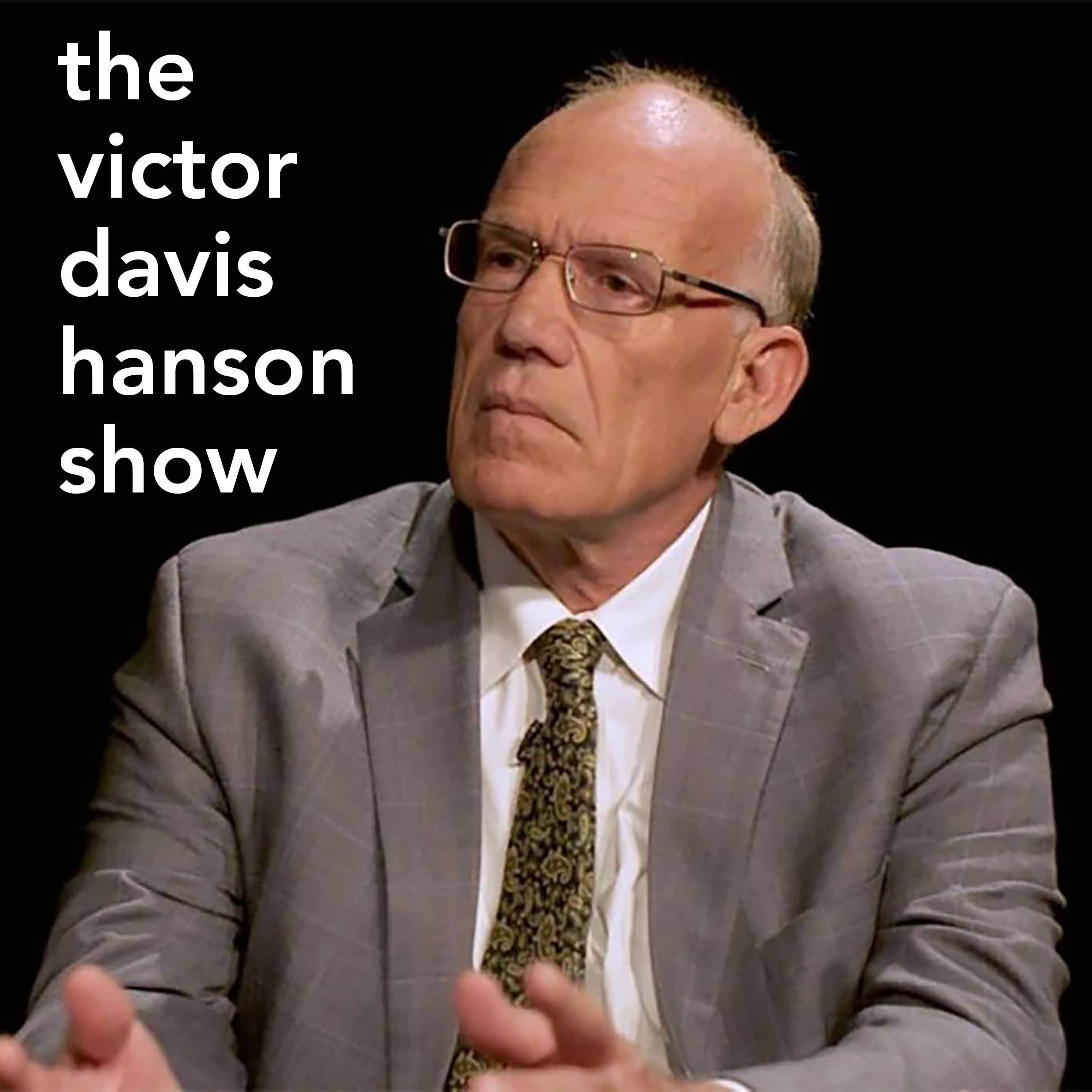
Loading summary
Transcript62 lines
- [00:03]
Advertiser
Running a small business means you're wearing a lot of hats. Your personal phone number becomes your business phone and before you know it, you're juggling customer calls day and night. As your team grows, it becomes impossible to manage without your personal number. That's where OpenPhone comes in. OpenPhone is the number one business phone system. OpenPhone will help you separate your personal life from from your growing business. For just $15 a month, the cost of a few cups of coffee, you can get complete transparency and visibility into everything happening with your business phone number. OpenPhone works through an app on your phone or computer and integrates with HubSpot and hundreds of other systems. It's affordable and easy to use whether you're a one person operation and need help managing calls automatically or or have a large team and need better tools for efficient collaboration. OpenPhone is a no brainer. Plus they've won multiple awards by G2 for software reviews and are trusted by over 50,000 businesses. Right now, OpenPhone is offering 20% off your first six months when you go to openphone.com Victor that's O P N P H O N E dot com for 20% off six months openphone.com Victor and if you have existing numbers with another service, OpenPhone will port them over at no extra charge.
- [01:38]
Sammy Wink
Hello and welcome to the Victor Davis Hanson Show. This is our Saturday edition where we do something a little bit different in the middle segment and today Victor is going to be looking at the Temple of Artemis at Ephesus. So stay with us for that and we'll start with some news stories, a little bit on the continuation of the coverage of the fires in la and then we'll turn to lots of news about Trump. Stay with us and we'll be right back.
- [02:06]
Lumen Representative
Did you know 80% of resolutions fail by February. You can beat the odds with Lumen and improve your health. Lumen is the world's first handheld metabolic coach. It's a device that measures your metabolism through your breath. And on the app it lets you know if your burning fat or carbs and gives you tailored guidance to improve your nutrition, workout, sleep and even stress management. All you have to do is breathe into your lumen first thing in the morning and you'll know what's going on with your metabolism, whether you're burning mostly fats or carbs. Then Lumen gives you a personalized nutrition plan for that day based on your measurements. You can also breathe into it before and after workouts and meals so you know exactly what's going on in your body in real time and Lumen will give you tips to keep you on top of your health game. What I like about my Lumen is it makes me think twice about consuming high carb snacks, especially before bedtime. And it gives me healthy recipes for low carb meals. Your metabolism is your body's engine. It's how your body turns the food you eat into the fuel that keeps you going. Take the next step in improving your health. Go to Lumen me to get 20% off your lumen that is L u m e n me Victor for 20% off your purchase. Thank you Lumen for sponsoring this episode of the Victor Davis Hansen Show.
- [03:40]
Advertiser
Question Ready to optimize your nutrition? This year, Factor has chef made gourmet meals that make eating well easy. They're dietitian approved and ready to heat and eat in two minutes so you can fuel right and feel great no matter what life throws at you. Factor arrives fresh and fully prepared, perfect for any active, busy lifestyle. Lose up to £8 in eight weeks with factor keto meals based on a randomized controlled clinical trial with Factor Keto. Results will vary depending on diet and exercise. Now with 40 options across eight dietary preferences on the menu each week, it's easy to pick meals tailored to your goals. Choose from preferences like Calorie Smart, Protein plus or Keto Factor can help you feel your best all day long with wholesome smoothies, breakfast grab and go snacks and more add ons. Reach your goals this year with ingredients you can trust and convenience that can't be beat. Eat Smart with Factor get started@factor meals.com Victor 50 off that's the code V I C T O r the number five the number zero off Victor 50 off to get 50% off your first box plus free shipping. That's code Victor 50 off at Factor Meals.com Victor 50 off to get 50% OFF plus free shipping on your first box.
- [05:14]
Sammy Wink
Welcome back to the Victor Davis Hansen Show. So Victor, we are looking at the fires, of course, and we've talked a lot about them. But it seems to me that they're starting to talk about those who have started these fires. And in fact we have one story of one fire and it wasn't the Palisades fire, but one fire that they found a homeless man with a propane torch and the citizens were attempting to stop him. And I was wondering your thoughts on.
- [05:45]
Victor Davis Hanson
The citizens arrest where they put zip ties on him and he was riding a bicycle with a portable small propane torch allegedly lighting Christmas trees. But the point is a couple of things about the cause. There are no storms in Los Angeles right now. That's the problem. So the question of causation pops up. If you have about 200,000 homeless people and they are in the greater Los Angeles area and the temperatures are in the low to mid-30s at night and they light fires. That's not. When I would drive back from Pepperdine University on Malibu Canyon Road on occasion I would see people on the side of the road who had fires. So that is beyond dispute. And then when you have the mayor in 2018 stating when there was a fire and somebody alleged that a homeless, she said don't even go there. My point is that homelessness is lumped in with DEI and new green deal wokeness. It's one of those taboo subjects. So when you have a mayor who's already ruled out the possibility and past fires and you find somebody today who was lighting fires and the the powers that be will not discuss causation or agents, you know that, that then you're bumping against this ideological firewall. And already the pushback has happened. People are suggesting, if you think that Mayor Bass was culpable by being told that the winds were reaching 100 mile an hour, a mile hour velocities and she went to Ghana, There was no reason to go to Ghana except for the die performance art showboating then they've already called the people who say that racist. So you're bumping up to it. What's different this time? You're blasting through the DEI wall. So now people are saying I don't care what you said. Maybe that was a discussion you could have had prior to Los Angeles. But when you lose 12,000 homes and 200,000 people are homeless and you've lost $100 billion and you've lost five to 10 lives, we don't care about niceties anymore, according to what you call niceties. So we are going to discuss the fact that the assistant mayor was removed because he phoned in a death threat. He should have never been appointed. We're going to talk about you going off to Ghana and then when people pressed you at the airport, not even replying to a journalist, and by the way, a journalist was an Australian, I think, which suggests that only a foreigner would have enough journalistic integrity to ask her a blunt question. And when you have a $700,000 grandee as head of the utilities and you're firing them about every year for either incompetence or bribery or both, and she can't explain why she can't explain why these 3 million gallon tanks are empty. And then you have a governor who comes down and says, ah, the tyrants. This is a local matter, it's not my problem. Then you have a complete collapse of the authorities and people. Now, what's new about this fire, as opposed to the campfire, the paradise fire, the Aspen fire, is that people are fed up. They can't get insurance because of the regulatory climate and the inability to fight fires and the water situation. So now they're saying, I have nothing to lose. I'm going to speak my mind and be intellectually honest. And so this is the, not the beginning of the end, but the end of the beginning of the whole WOKE critique movement. And I think people are going to be very angry about this.
- [09:50]
Sammy Wink
Yes, I agree with that. Well, let's turn then now to Trump because there's so much news out on Trump. It's interesting the way he seems to be able to dominate the news. So many things going on. So let's start out three things and let's just start with the first. He is being sentenced today in his the case that Bragg brought against him. And I was wondering, your reflections on.
- [10:12]
Victor Davis Hanson
It went out as exactly what Marshawn said. He should have thrown the case out. There was presidential immunity established by the Supreme Court, but it went ahead. And the Supreme Court 5, 4, whereas Justice Roberts and Comey Brown Barrett joined the liberal majority, of course. So the sentencing went on. It was all performance art for one reason. So people on the left could say he's now a convicted felon, which he is, and there's going to be a sort of Damocles over his head so that he has to think, well, when I come out of the presidency at 82, they might sentence me. But he gave a speech and he's. Marshawn asked for it. He said, this is not about, this is only about the presidency. That saves you basically from going to jail. Not the occupant. You, the president, you had gone to jail. And you want to say, and then Trump got angry and replied that this was a witch hunt. And it is. And so Mershon has no defense on a number of counts. Why didn't he recuse himself? A he was a donor to the Biden campaign. But more importantly, his wife was making a very lucrative career servicing Democratic clients in a campaign cycle on the wink nod idea that I am a stalwart whose dad is trying to put Donald Trump in jail, number one. Number two, these are all coordinated. So Alvin Bragg was being helped by Mr. Co Angelo and who basically wrote the writ over the objections of the federal prosecutors, which this was a federal case. So what did he do? He went right back to Merrick Garland's doj, occupied the number three spot and then he re emerged. Excuse me, he re emerged to Alvin Bragg. He came from Letitia James. So he went from Letita James, helped her draft the crazy real estate charges. Collateral went to Mr. Merrick Garland's DOJ, occupied the third spot, quit, went back over to help Alvin Bragg. Meanwhile, Fannie Willis is over here in the south at Georgia and she's got Nathan Wade talking with the Biden Council who that day is apparently part of the doj. The DOJ people and the White House are talking about why haven't you indicted Trump and they appoint that day. DOJ does Jack Smith. It's all coordinated. The judge never addressed the idea that he should have recused himself. He never addressed the idea that Alvin Bragg took a federal offense, supposed campaign, federal campaign and he created a new state law and he is acting as if he's a federal prosecutor. When the federal prosecutors who are no fan of Trump's did not want to go ahead with the case. There is nothing wrong legally with asking someone that you've had a tryst with that you think will in the future blackmail you. And by the way, she owes Donald Trump $500,000 for a court order to pay his legal expenses, which she lost that case of defamation. So she broke the non disclosure contract. And then Mr. Bragg said, well, it didn't have anything to do with protecting his family, it had everything to do for protecting his campaign. And therefore it was a campaign financ expense and therefore he didn't put it on his record and therefore everywhere the record appeared was a separate felony count, only it was really only one count and therefore we're going to charge him with a campaign finance. Everybody said you're not a federal prosecutor, you don't duplicate. And then there was this idea about you don't need a unanimous verdict to convict him, etc, etc. They did all sorts of things and I think that was kind of the straw that broke the camel's back. Nobody cares. And they're going to be very. There's going to be about 250 federal judges that are appointed by Trump. And a lot of these people who think that it's cute and neat that you can call Donald Trump a felon, they're going to be surprised that if there is a special prosecutor that goes back and seeks coordination between Alvin Bragg And Letitia James and Jack Smith and Eugene Carroll's suit, which was paid by Reid Hoffman, a big Biden donor, and Fanny Willis. They're going to look at racketeering charges or conspiracy as well.
- [15:00]
Sammy Wink
They should, I think.
- [15:00]
Victor Davis Hanson
Yeah, and they should. And the judges, all of the judges, except the Jack Smith judge. I mean, Judge Kaplan, he egregiously said that Donald Trump was de facto guilty of rape, even though the jury made the distinction it was sexual assault. Me doing this to you in today's climate, can be sexual assault. You can say that was an unwanted. And he touched me. I was at Cal State Fresno once, and we had a distinguished professor, and he hugged a student and gave her a C. At the end of the semester, I was on the board that investigated him. They asked him one question. Did you touch her? Not did you hug her? She says you touched her. You invaded her space. Yes, I did. Okay, no more sabbaticals for you. You're out of the classroom for a year. And so that's where we are. And the point I'm making is if that is sexual assault and Joe Biden is guilty, I mean, we see him on camera blowing in women's, having women recoil. Tara Reid coming out of nowhere and saying that he sexually assaulted her. Turkey, gobbling a little child's neck. Everything that under their definition of sexual assault would qualify. And so Judge Kaplan called that rape. And of course, it wasn't. And then when George Stephanopoulos, I guess, got a cue from the judge, so he thought he would do an interview in which he just said, donald Trump's a rapist, Rapist, rapist, rapist. Donald Trump sued. He lost. They settled ABC, $16 million. And so that was Judge Kaplan. This is Judge Mershon. I went through him. And then we had Judge McAfee in Georgia. He was the one that had both Letita James and Nathan Wade lying, clearly lying under oath about, well, we didn't spend anything. We have no records, because it's a cultural black thing that we don't have to have records because we spend cash because of history of race. He listened to all that. They didn't remove them from the case. He didn't care. And the appellate court overturned him. And then, of course, the worst of all was Judge Engoron and the Letitia James. He was the guy that when the camera came and looked at him, he was smarting off to the camera. He was editorializing. He ruled completely against Trump on every state. And finally we get to the. And he was even consulting people outside the courtroom, which you're not supposed to do about the true value. So essentially, Mar A Lago was put up as Capital for $17 million. It's probably worth $700 million. And that was supposedly undervaluing a real estate case to get a loan from the Deutsche bank, which was paid off on time with interest to the profit of the Deutsche bank, and to the delight of the Deutsche bank, which wanted. When asked, they said they would lend him again, and they convicted him on that and charged him initially $450 million.
- [18:04]
Sammy Wink
Well, let's take the next thing. Trump has floated this week that he would like to meet with Vladimir Putin to solve this war that's devastating the Ukraine.
- [18:17]
Victor Davis Hanson
Vladimir Putin. Vladimir Putin's in a bad spot. So is Ukraine. I misspoke on earlier, I said that I thought Ukraine had lost 10 million of its 40 million population. It's down to about 14 million. It's a shrunken country of 36 million. It's lost probably 6 to 800,000 dead, wounded or missing. Trump was right when he said it was under reported. The level of deaths and wounded in that war. It's getting close to 2 million total. So they all want out of it. The question is, what can Putin afford to stay in power? So he's going to have to go back and tell the Russian people and enforce his will. I mean, he has the power. I mean, he'll do anything. He's a ruthless. That's one thing that Joe Biden said that was not smart diplomatically, but it was true that he's a ruthless killer. But nevertheless, he's got to explain why there's a million dead Russians and wounded, and what did he get out of it? So he wants to meet, and we know what he wants to do. He wants to say, Kwame was already mine. Donbas was already mine. I'm not going back to my embarkation point on February 24th of 2022. And then he'll say Ukraine can't be a NATO and there's a basis for a negotiation. And he wants Trump to bail him out, and so does Ukraine. The people who are most adamant for this war are grandee leftist in Europe, the United States, who feel that Vladimir Putin's Russia is an existential enemy. Of course, they didn't. When Hillary Clinton pushed the Jacuzzi button in Geneva in 2008, and that was all the rage. I saw it at Stanford. Oh, this is so wonderful. George W. Bush punished. He just punished mercilessly. Russia, Russia. And that's getting into that cold War atmosphere. Let's be. We're not slaves to the Cold War. We're going to have reset. So they sent, and we're going to make it. It's going to be human rights. And then when he went in, of course, into Donbass and Crimea under Obama, then all of a sudden, oh, my God, he's awful. And he looked at our magnanimity and he interpreted his weakness to be exploited, not reciprocated in kind. So we hate him. And now Donald Trump and he are friends, and he's trying to just throw the 2006. We hate him, hate him, hate him, hate him, hate him. And there we were. But they were the ones that started reset. They are the ones when they're in power, that Putin goes into Donbas, into Crimea, into Kiev. And that's the question. So they want to punish Putin for a variety of reasons other than what is in the best interest of Ukraine right now. Maybe geostrategically, we must defeat Putin. I get that. But in the best interest of Ukraine, if they keep going, and the Europeans have pretty much had it with their ability to supply Ukraine, Germany especially, but if they keep going, Ukraine's going to get down to about 20 million people. They're leaving in droves.
- [21:40]
Sammy Wink
Yeah, well, the last thing that is on my list of Trump things this week is Trump's released what his first executive orders are going to be, the first hundred, and they're going to all concern border security and rebuilding the US Energy sector. And I was wondering, well, he's got.
- [21:59]
Victor Davis Hanson
A big problem, because Joe Biden knows that. So he has put off limits, invoking an archaic 1950s law that he can put, what, 600,000 acres off limits for all energy development? Think of the mentality of that. It's almost like, well, when I came in, I was a green New Deal guy, and I stopped leasing, I canceled Keystone, I stopped LGDN port, and then I had a midterm, and gas doubled, tripled in up to $6. So what did I do? Oh, yes, I know what I did. I drained the Strategic Petroleum Reserve. I went over to Saudi Arabia and Iran and I asked them to pimp more. They wouldn't do it. So then I started telling the Frackers I didn't mean it. You guys are wonderful. Keep fracking, please. So they got up to Trump levels of production, and then he thinks, well, I don't have to run for reelection. So now, oil was good when I needed the midterms, and now it's bad. And by the way, where is Kamala Harris? Because during the campaign she was asked specifically, they often showed a tape or they quoted her tape where she said, oh, fracking, I'm against it, don't worry. But she wanted Pennsylvania. So they asked her when she was in Pennsylvania, are you still for fracking ban? Oh, yeah. No. Oh, no, I never said that I'm for fracking. Okay, you're for fracking. Now we need to know what you're going to do with. Your boss says he's going to put all this land off for fracking. What do you think? Now she's against fracking again, As I said that, I wrote an article and said that the only time that she would adhere to a moderate position was for 100 days. And if she lost, she would rebu to form, which she has already. But if she won, she would do too, because she would just say, sorry, that was what I needed to win. Now I'm president. But he's going to try to revoke that. Lawyers are split whether he can. The other thing that's very weird about this is we're always told that Europhill's fellow Europeans are the left. They love the socialist eu. So you want to help the left, what would you do? Well, you would try to help their energy needs. So after the Nordstrom pipeline, which I think with a wink and a nod, the Europeans, and maybe the Americans knew, the Ukrainians blew up. So you don't want them to have natural gas. There is very little going into Ukraine now. So you'd want to help Ukraine and you would want to help the eu and you would want to help your left wing socialist things. But what did Biden do? The first thing he did when he came into office, he canceled the East Med pipeline. That was the ability of Israel, through the agency of Cyprus and Greece, to send millions of cubic feet of natural gas into Italy and therefore into Central Europe. He canceled it. And then the only way you're going to get Europe out of its four times higher electricity rates than ours is either burn natural gas or build nuclear plants. And they're not going to build, Mary, other than France, they're not. So he put on hold a lot of the liquefied natural gas terminals in the south. So he basically said to Europe, sorry, I'm not going to help you. And so Donald Trump is going to come in and he's going to immediately tell the Europeans, I know you don't like me. It's just like the NATO thing. I yelled and screamed at you. Half of you now pay 2%. You're in better shape to resist Russian threats. But you hate me for helping you. I'm going to do the same thing. I'm going to build liquefied natural gas export terminals. You should build them. We'll supply you with raw product for your factories. You can go ahead and hate me and say that I'm desecrating the environment, but privately you can say you like me. And that's what they're doing, by the way, all over Europe now. You can see that, the Notre Dame Cathedral. They're basically saying, we hate Trump. We hate Trump. We hate Trump. Oh, my God. Thank God he's here, because now we have somebody that will protect us from Putin. And he's going to deal with the Chinese, he's going to help NATO, he's going to open up the economies, he's going to help conservatives in Europe have a chance to get back in power. So it's a very strange thing.
- [26:31]
Sammy Wink
Yeah, it's the bizarre European bipolarism or something to that effect. Well, Victor, let's go ahead and take a break and then come back and talk a little bit about the Temple of Artemis at Ephesus. Stay with us. And we'll be back.
- [26:49]
Advertiser
Did you know that American homeowners nationwide have over $32 trillion in equity? And cyber criminals are targeting it with a growing scam the FBI calls house stealing. House alarms, doorbell cameras and deadbolts won't work against these thieves because they're not after your stuff, they're after your equity. If your title isn't being monitored, scammers can transfer the title of your home into their names using a one page document they file at the county, then take out loans against it or even sell it behind your back. The scariest part? You won't find out until collection or even foreclosure notices start arriving in your mailbox. But by then, the damage has been done and you're left with a financial and legal nightmare. The best way to protect your equity is with triple lock protection from our friends at home. Title lock. Triple lock protection is 247 monitoring alerts of any changes. And God forbid, if the worst happens, restoration services at no out of pocket cost to you. So when was the last time you checked on your title? If you're like me, the answer is never. And that's exactly what scammers are counting on. But you can check on your home's title today and make sure you're not already a victim. You can get a free title history report and 30 day free trial of triple lock protection today by going to hometitlelock.com and using the promo code Victor or click on the link in the description. That's hometitle lock.com promo code Victor hometitlelock.com.
- [28:30]
eHarmony Representative
This podcast is brought to you by eHarmony, the dating app to find someone you can be yourself with. Ever wondered if there's a better way to gauge your compatibility with other people on dating apps? Well, There is on eHarmony. Thanks to their compatibility quiz, you can see what makes you compatible with other members on eHarmony. You're one step closer to finding someone you can be yourself with without having to pretend to be someone you're not. Get who gets you on eHarmony? Sign up today.
- [29:00]
Sammy Wink
Welcome back to the Victor Davis Hanson Show. Victor is the Martin and Nelly Anderson Senior Fellow in Military History and Classics at the Hoover Institute and the Wayne and Marsha Buskey Distinguished Fellow in History at Hillsdale College. He has a website, victorhanson.com Please come join us there. It's called the Blade of Perseus and he has a new element on that website. He is doing short videos on Friday morning and there is a current one placed there for Ultra subscribers. So subscribers to the website. So Victoria, the temple of Artemis at Ephesus, another of one of the seven Wonders of Theodore.
- [29:39]
Victor Davis Hanson
Yes. Remember what we're doing? Trying to. We've done two already. The two in mainland Greece or in the Greek domain, the Colossus of Rhodes, that Hellenistic huge statue that somewhere guided travelers into the harbor at the city of Rhodes on Rhodes. And then we did the Chrysantine, that's a fancy word for gold and ivory statue, gigantic statue of Zeus that was in the temple of Olympian Zeus in Olympia in which you can still see the stylobate, some of the columns. Then we move to two others in Turkey. One was the mausoleum for King Mausolus of Caria. We talked about the grave. The other one is a huge temple of Artemis. You know, everybody knows her from mythology is the Roman goddess Diana of the Hunt, sort of the masculine side of womanhood. Well, the temple was built by the proverbial rich Croesus and then in 550 BC it was the first marble ever built in a temple built in Ionia in marble. Maybe the first temple in the world built of marble. But why is it in the seven Wonders of the World? Remember, the seven Wonders of the World was after or during the expansion of the Greek speaking peoples into Egypt, into Asia Minor and all the way into Afghanistan. Hellenism or the language, literature, art, science of Greece spread and it opened up a new world of both foreign wonders of the world, such as the hanging gardens at Babylon, which we'll talk about, or the pyramids at Giza, but also what Greeks were doing throughout the world. And this was a period of what we call in archaeology gigantism, that things were big. Colossus of Rhodes, the siege works of Demetrius the besieger were larger, the catapults of anything ever seen. Colossus of Rhodes was one of the largest statues, freestanding statues. So it was the idea in Alexander's age, bigger is better. And so they decided to rebuild this temple that had burned down. And how does the temple burn down? It's out of stone. People forget the interior roof is the joist that goes after you have the stone base of the roof and then you have to span the width of the temple with huge timber. And that timber then has joists for the pediment. So the pediment is of stone, but all down the side of the roof you have rafters and joist and they are very flammable. And when they burn then the roof collapses and the pediments can fall inward as well. And the temple as well, it has oil and olive oil votives and it's got drapery and the interior can, if it gets hot enough, it will actually melt the marble which is used for lime. One of the reasons we don't have Greek temples is in the Byzantine and more modern Greek period, villagers would go in and get a block, make a huge fire, put it in there and then drain off the lime for whitewash on their stucco. So any case, this was probably one of the three largest. It's what we call a 400 foot temple. Think about that. A football field is 300, so it's 1 1/3 football. It's about 390ft and it was huge. And there's only two other temples that are comparable in size. It's even bigger than the Olympian Zeus. The great temple in Rome, the Roman temple that sits near Syntagma Square in Athens. Today there's a temple, and I've been there, of Apollo at Didyma near Miletus. It's out in the middle of nowhere. At least it was. It's huge. And then there's the Samayun, the harem, we call it in Samos, the temple to Hera. It's huge. But this was one of the largest, if not the largest temple in the world. It was built during the Hellenistic period from about 330 onward. And it existed somewhere. It's mentioned in literature, Christian literature, from about 200 AD to 400 AD as being in decay. And then the Goths came in and northern raiders came in and destroyed it. Whether they carried off the statuary, I don't know, but there's not much left. So when you go there today, there's the Stylo Bay, which was the foundation. And they. And I was there in 1973 and 1974, and they had reconstructed one column they found. The British had gone in there earlier and found the site of the famous Temple of Artemis. So if you go to Ephesus today, it's a huge site. It's almost, in some ways, like Herculaneum in Italy, the volcanic site. And you can see the largest temple in the Greek world. And it was famous. And we have a lot of contemporary Hellenistic inscriptions, temples that are outside of Greece, tending to be in the islands or on the coast of Asia Minor, even a little bit inward, or Ionic, and the Ionic order, it's a little different. It succeeds the Doric. It doesn't have that Doric severity where there is a scroll for the capital rather than just an abacus like that. And in addition, the columns are not just put on the stile bait. They have a base. And at Temple of Artemis at Ephesus, there's at least 34, 35 columns that were inscribed with beautiful. I shouldn't say inscribed, but they were carved with scenes from mythology on the bases of the columns. And in addition to that, when the columns go up and they taper up, they don't have the points around them, but they have what we call not flutes, but fillets. In other words, they go around and then they're blunted, so they have a flat space, and they look a lot more elegant and they give off shadows better. And then there's a couple of other things. It's what we call a dipteral column. Instead of just having an outside exterior colonnade, it has two. Think of that, two colonnades outside the temple that go around both sides and almost 400ft in one direction. So you have like 123 columns. It was just astounding. It was built on a marsh, and so they kind of. It lasted for so long. So then rather than like the earlier temple, just to try to excavate and push, make a firm foundation, to have it sink when there would be flooding, or more importantly, when they were drawing water out from wells and then it started to sink down, they kind of did what the Venetians did, they made a spongy. They put in sheepskin and other materials, kind of like a garbage, and made it go like this. I'm exaggerating it like this, but it was flexible and it probably would have survived. It would have been like the Temple of Hephaestus and the Agora. It's intact today, but it was in the wrong place and it was looted. But you can see two great things at Ephesus, the temple of Hadrian's library and the Temple of Artemis at Ephesus. So it's worth seeing. So those are the last two that are on the Turkish mainland, and then we only have three more, and two of those are in Egypt. So next time we'll be talking about the lighthouse of Pharaohs in the harbor at Alexandria. I've been to all of these places, and this one's a little strange, but we'll talk about it. And then the famous pyramids of the pharaohs at Giza, and then the Hanging Gardens of Babylon. Someone. When I went there, somebody gave me a block from the U.S. army. I was embedded. And it had. He rebuilt it. And it was a little. Just like, you know, a baked brick or something. And it had Saddam's image on it. Saddam Hussein, every single one. He rebuilt the Hanging Gardens of Babylon. But anyway, it was a seven wonder, the Z, A seventh wonder of the world. And it was mostly because of its gigantism. It was so big. Big is better.
- [38:47]
Lumen Representative
Yeah.
- [38:48]
Victor Davis Hanson
And I was thinking, what do we do in this country, like the Colossus of Rhodes or the mausoleum or the Temple of Artemis? We have the gateway arch in St. Louis, as I said, 600ft high. I've never walked inside it. I've talked to people who have. We had the Statue of Liberty, I think, with the base, if you count the base, that's 300ft.
- [39:08]
Sammy Wink
Don't they try for the tallest building, too? Like the Needle in Seattle?
- [39:13]
Victor Davis Hanson
I believe it is. Yeah. We're trying to get a. I think a New York building is projected at Maybe Chicago, is it? 1600ft. And we're trying to rival our Asian competitors on that or the ones that are in the Middle east and Dubai or something. But there is something about monumentalism that makes people want. We don't build these Lincoln Memorials or statuary anymore. One of the things that's weird. We had on our Mr. Shubin, the classical art supporter in architecture. And if he were to be appointed as the National Endowment for the Arts, he would encourage that. It's very funny. I was Noticing that after that conversation, Donald Trump has pledged that new federal buildings will reflect a classical heritage, Greco Roman heritage. And same thing about art. And the left went crazy. They said, oh, it's pseudo romantic schlock, classic. This is what Trump does in his hotels. And they don't understand he's waging a counter revolution against something. And the something is them. They went through all of the grants that the NEA and the NEH does and they systematically excluded traditional art, traditional architecture, and gave us modern art, Foucaultian art, whatever you want to call it, and these ugly buildings. And that was a revolution on their part. So I don't know if they're mad that he's waging a revolution that's they're calling him a Maoist. I've seen that. Trump the Maoist, Trump the Maoist. And I don't know, I'm thinking, well, you mean you were the Maoist and now he's doing what you did. He's a counter revolution or he's doing what you did, but he might win. Is that what you're mad or is it both? But this is funny because Trumpism or MAGA, whatever you call it, it's a 360 degree, 247 revolution. Nothing is too trivial, nothing is too important. So art, yes. He's going to change the way we fund art. Jay Bacharya, No DEI grants for health stuff. Architecture, maybe a building will look like those beautiful buildings built in Washington, Treasury Department, Supreme Court, who knows? But it's going to encompass all of that. And he's inviting everybody, according to the station, to participate. And I think the people, the voters of Los Angeles are going to participate and say no mas.
- [41:36]
Sammy Wink
And as far as the art goes, he with the better sense of beauty should win out, don't you think? Maybe. But you know, I have a question on that. With the temples in Greece in general, is it true, this is what I understand in terms of art appreciation, or at least a classical view of art appreciation, that the Doric temples were simple and considered more elegant, the Ionic were a little bit more decorative and the Corinthian were of course the most decorative. And did the Romans prefer Corinthian temples or were they? Did they?
- [42:11]
Victor Davis Hanson
They did and they did for some practical reasons. The problem with the ionic order is when you have a scroll and you're going down the length of the building and usually remember that there was a perfect proportion that the number of columns on the length would double, double the, the width. So it would be either 12 by 7 or 13 by 6. There was a clo. Was one added to one of the dimensions, but it was usually double. But when you turn the corner, what do you do so that you have the corner ion. They didn't know. They tried to do a scroll here and then make it scroll like that on a corner piece. It doesn't work because you lose the image. And so you don't want to go back to the. Just the abacus, which had never caused that problem. Because an abacus is an abacus is an abacus, whether it's on a corner or on the lawn length. So they came up with a Corinthian leaf. These are acanthus leaves that are sprouting and you can put them anywhere in a corner and straight. That was one idea. It gave a lot of opportunity for sculptors to make different types of foliage on the side. They had a base as well as the Ionic order did. They had fluted columns. Corinthian, the first Corinthian capital. And somebody's going to correct me if I'm wrong. We have a lot of classicists that listen. So I'm doing this by memory. But it's at the. It's at the temple of Basae in Arcadia. And that was built about 440. And there's actually. They found a Corinthian column, but it wasn't a structural column. It was on like a little monument. Somebody made it because it was a new idea. But as a general rule, Doric is from the Peloponnese south. Although the Parthenon is a Doric temple. And historians architectural students call it Doric severity. And the idea that the Doric culture is associate with Sparta and toughness and lack of money. They don't have money. They have these crazy iron spits and severity. And that temple then will not be ornate in the same way. At least the columns won't. And they often don't have a freeze course and a metope like the Parthenon does. It's an ornate Doric temple. So when you look at it looks severe and majestic and not kind of, but the look of the Ionic. The Ionic columns ratio between height and width is much thinner. So a Doric column is stubby and it has in tosses where it kind of bulges. So when you look down they don't look wavering. The optical illusion is not there. They look straight. So they have to. And the same thing with the stile bay. They have a high point in the middle, so it looks straight when you look at it.
- [45:25]
Sammy Wink
But it's curved.
- [45:26]
Victor Davis Hanson
It's actually curved. Ionic columns are much more elegant in the sense they're taller. And the Ionic temples, for a variety of reasons, were larger. Part of it was because they were in Asia Minor, more Ionia. We get the name Ionic order from Ionia. And those early temples along the coast at Samos, as I said, at Ephesus, the first temple of Ephesus was a very early Ionic temple, as I remember. But they had more money. Ionia is so much richer than mainland Greece as far as farmland.
- [46:03]
Sammy Wink
Did those temples, like the temple of Artemis at Ephesus, also have antacis, that slight bending to make it look natural to the environment?
- [46:13]
Victor Davis Hanson
I don't think they do. I don't think the point is that, because the stylobates did. But in the case of the Ionic order, you don't have to bulge out the columns. It's just a term that goes like this. You have a hump, you know, whether it's in Steidel bait or the column goes like this. But you don't need. That's not what you have to do that. Because the Doric columns are kind of short and stubby, but the long, elegant ones, that doesn't create an optical problem like that. But what was unusual about the Parthenon, it had an exterior freeze course and an interior one. And it had metapees. There was. The triglyphs represent the beams going across in stone. And then between the triglyphs, there is a metope, a square, and they put a sculpture in those squares. And then below that, and the architrave goes around. That's just a blank space. They decorated that with a freeze course. So what was unusual about the Parthenon? You had this majestic sculpture in the east and the west at the pediment, the triangle. So you had two of those. The fight over who, Poseidon and Athena, and then the Amazons. And then you had a continuous freeze course about 500ft all around. And then above that, you had metaphysically, very few temples ever did that. Yeah, it was too costly.
- [47:49]
Sammy Wink
Yeah, sounds very expensive. So, Victor, let's go ahead and take a break and then come back and talk a little bit more about the news, a little bit about the terrorist attack in New Orleans. Stay with us and we'll be back.
- [48:05]
eHarmony Representative
Welch's can't make everything make sense, like why your mom still listens to the radio or what she meant when she sent that emoji. But a zero sugar drink that's still full of fruit flavor, we made that make sense. And Strawberry, passion fruit, Concord grape and more. You gotta sip it to get it. New Welch's, zero sugar. Let's fruit stuff up.
- [48:28]
Sammy Wink
We're back. This is the Victor Davis Hanson show. You can find VictorX, his handle is Dhanson and at Facebook, Hanson's morning cup. So please come join him there if that's your social media outlet. Victor. So Shamsu Din Jabbar is the terrorist in New Orleans and the FBI has found that he had two IEDs that he tried to set off. And the unusual thing about them was that they had a chemical explosive called RDX which is many times that of TNT and something that's used commonly in the Middle east for IDFs. And I was wondering if you thought that and the trip to Cairo had anything to do with each other and that maybe he has some contacts and inspiration.
- [49:23]
Victor Davis Hanson
Reminds me of Jon Stewart. I'm not a big fan, but I kind of enjoy him. Once in a while he was getting in an argument with somebody about Wuhan, was it Colbert? And then finally he got exasperated. He says, my God, are you nutty. There is the first patient is in Wuhan. There is a lab in Wuhan. It is run by the PLA in Wuhan. It is a level four. They were doing gain of function. Covid is a gain of function. The people who got it are gain of function. What in the blank is wrong with you? So in this case, wannabe real estate guy turns up killing 16 people by running over them and then has sophisticated explosive devices with a material that's not found. The United States is common in the Middle east and he has a sophisticated detonator and he's trying to get to his car to blow them up. And it's pre planned and it follows one going on in Germany. And then people say, oh, he was in Cairo too not too long before. Why would he go to Chiral? So the point is there's more there. The problem with our investigatory agents is I don't mind that they keep an open mind. They have to keep in mind. That's not my. I shouldn't even say I don't mind. I like that. But they don't have an open mind. They say they have an open mind, but they all start with the premise that if I suggest that I'm investing, not saying investigating a Islamic terrorist motive, I'm going to get this big wave of criticism. So I'm looking at Major Hassan at Fort Hood. He yelled Allah Akbar. What do I do? Do I say he yelled Allah Akbar and murdered 13 and it was Islamic inspired and I'm going to get all this criticism and I might be attacked or am I going to say it was workplace violence and then some general is going to pat me on the head and say, you're absolutely right. So that. And I don't understand it. It's all over the Western world. But that's the problem, that there's no upside in saying that. We're going to investigate the idea that he acted with the aid and help of Islamic forces in the Middle east versus he just had a bad marriage. He was upset. He kind of stumbled on. He might have been just on the Internet. I want this type of that for them is more politically correct. It's another instance of the pernicious role of ideology. It warps empiricism.
- [51:57]
Sammy Wink
Yeah, it sure does.
- [51:59]
Victor Davis Hanson
That's the problem.
- [52:00]
Sammy Wink
Yeah. Well, what about the Honduras president who. It's a woman. She threatened that she would not let the US Use their military bases in Honduras if they engaged in mass deportation plans. And I was wondering what your thoughts on that.
- [52:19]
Victor Davis Hanson
Yeah, well, I do not think in general it's a good policy for a very tiny country to threaten the United States. And in particular, I wouldn't do it with Donald Trump as president. It's not like he's going to be Joe Biden. He's not going to know what it is. Or Barack Obama. Please do it some more. I enjoy it. So there's about a half. There's 300,000 to 500,000 Hondurans here and they send back, I don't know what it is, 30 or $40 billion. It's 1/3 of all their foreign exchange. So let me get this straight. And we have a U.S. base there. And the U.S. base is to make sure that communism is not emboldened the Chinese or the Iranians helping local guerrilla forces to overthrow countries favorable to the United States. So we invested hundreds of millions of dollars and built this huge base. And it's one of the few in Latin America that has ability for a C5. These huge 10,000 foot runways. And basically we went in and built it at the request of the prior government for a stabilizing role. And it adds enormous amounts of money into the local economy for food and gas and equipment. And we help infrastructure. And when there is a flood or a fire or an earthquake, the first thing Hondurans do is ask for air support at this huge American base. Okay. That's a preface to it all. So Donald Trump said, you have been sending your criminals. True. And people who are not Audited and we now have half a million and they're starting to turn up among the Venezuela and the Guatemala and all these gangs. So when we come, we're going to send them back. And she is saying, if you do what, we're going to get rid of your base. You don't pay for it. Okay, that's fine with me. Please, please. Promises, promises. We're going to, we're not going to send any more. Promises, promises. So it's kind of like Canada. The point is that Donald Trump here was the way the world is. It was like this asymmetrical. Here's the United States and Everybody says it's 1946, after World War II and you've got the biggest navy and all the money and you're the only big major power now. There's no China, there's no Russia, Europe's flattened, Britain's broke. So we can take stuff from you and it's your duty to build us all back up. So we did. And now it's 80 years later and they're saying you're in the United States. No, no, no. We're $36 trillion broke and we're suffering a woke revolution and we have no borders and we have 50 million people who are not born in the United states and that's 16% of the population. And we're tired of it. We have 100,000 in one year, 80,000, 70,000 killed by fentanyl by one neighbor. The other neighbor is just sending people across the border that they don't like. So we're done. Been there, done that. From now on, the United States will be treated like any other country. If you're Panama and we have a treaty and it says you give us rite of passage first and you give us a discount rate because we built the whole thing that's enriching you. And you put China presence at the entry and exit and you do not give us priority of usage or you charge us the same, then we're going to look, but we're going to address that. If you're Denmark and you're a colonial power and you've got this huge country that's closer to north New York than it is to Copenhagen and it's part of North America and In World War II Europe, you were run over in what, three days by the Nazis and we had to go in to take your former colony and put bases there and develop it and stop the U boat threat. And it was very critical. And then what did we do after World War II? When you run over in four days, we took the country and handed it back. And you, being a postmodern, very impressive socialist country, are basically an imperialistic colonial power, and you have no power. So then you get mad at Donald Trump. Yeah. And what do you do? Oh, we're going to pay a billion dollars for you. Oh, we're going to give you more autonomy. Oh, we're going to put Greenland on our coat of arms. So they're not going to. It's the same thing. And as I said earlier, they don't understand Donald Trump. Guatemala doesn't anybody. What he does is he trolls to correct the disequilibrium, an asymmetrical situation that's been festering for years, and he has an edge to it. So in the case of Guatemala, okay, Yankee go home. Yankee go home. And you know what? When you say Yankee go home, they're going to do just what they did in the Philippines. Yankee, go home and take me with you. And so he tells Golf of Mexico, hey, you know what? I like golf. How dare you. We're going to. We have, well, Let me see. 1700 miles coastline, America. 1700 miles, Mexico. Age of renaming things Left says everything has to change. We have to change this name and topple statue. So you've had your 200, 300, 400 years. It'll be the Gulf of America for our turn. It's the same length of the coastline. How do you like that? And what is the subtext? Let's not get an argument, because this argument could escalate to questions of border security, our safety valve of dumping people in your country. 63 billion of remittances. We've been ripping you off. And same thing with Guatemala. Same thing. What's different is the national mood. The national mood is like, I don't know what it is. I can't figure it out because it just amazes me with people I know on the left and they're like, we had our dei, we had our Green Net, New Deal, we had our revolution. We had our Maoist thing. We had the Post George Floyd mania and we destroyed the country. And Joe Biden, we lied. He really is senile. Please get him out. Just, I can't take it anymore. I'm Eliot and True romance. I can't take it anymore. I'm in a fetal position. That's what the Democratic Party is. It's really funny because David Axelrod, he was the one that told everybody that Biden was senile because he got orders from his boss and so he was on television the other day talking about Jimmy Carter. And Carter was a decent person. Carter was a really. I know, nihil dicole de mortui. She's not supposed to speak ill of the dead, but he could be a really angry guy, Jimmy Carter, mean spirited, but I'll pass on that. But Axelrod was saying that basically Trump doesn't have his character and everything. And I'm thinking, oh, so you worked for Chicago. Is it Times or Tribune and the Chicago newspapers. When you decided to become a political operative, you were Barack Obama's campaign manager for Senate, and there was no way in the world he was going to win the Democratic primary. I think his name was Claire Hall. He was very well funded, mainstream Democrat, I think, Catholic. And all of a sudden you leak that he hid his wife. There was a sealed divorce record, and somehow reporters leaked that from a media franchise with connections to Axelrod. So then all of a sudden, this nobody named Barack Obama, who had run for Congress and completely got wiped out. A non entity with no credibility among independents or conservatives, no credibility about the black community, only among white liberal elites, which wasn't enough to get him the nomination. So he gets the nomination and lightning strikes twice. Jack Ryan's running on the Republican side. He's way ahead of him. And there had been a little spat in his divorce. It was sealed to protect the children. And supposedly in the whole case that supposedly his wife kicked him in the leg and he kicked his wife back. And that was spousal. And then she dropped it all and said, please, nothing happened, no matter. And then with a Jack Ryan, when they got a divorce, his wife said, he made me go to a porn club in Paris. Something like that.
- [61:15]
Sammy Wink
I remember.
- [61:16]
Victor Davis Hanson
And they leaked it. And Obama says, hey, this is weird, it happened twice. We destroyed the other candidate with false charges and leaking sealed divorce records. And who was the architect of that? The man who just said that Donald Trump should emulate other people that are of more higher moral standing. That was funny when he was at the funeral of Jimmy Carter.
- [61:41]
Sammy Wink
Yeah, I was wondering about that. There's so much talk. You know what? Just. Can I say something before you go into that? They're at a funeral and then you listen to all these newscasts, opinion journalists, etc. Well, they were not looking happy with each other. Herod, Joe Biden and stuff. And I'm thinking, well, they're at a funeral. What are they supposed to be?
- [62:05]
Victor Davis Hanson
Yeah. And Bill Clinton started that when his transportation. I'm assuming this way. I remember Transportation Secretary Ron Brown got killed in A tragic accident in Serbia, above the. In the airplane crash. And he was at the funeral and he was doing the same thing, and he was laughing. And then somebody poked him and said the cameras were looking. He was going. It was like that. It was. Anyway, so they go there, and he's sitting next to Barack Obama. Michelle suddenly, mysteriously can't come, and she didn't want to come because she had to see the Trumps. So she split because she'd said all these things about he was a racist and he. Nobody knew what Trump would say to her. And she's Michelle, who's De Wiss Michel, the deified goddess of America. So she didn't want to come. So then Barack didn't want her to come because he wanted to talk. You know how Barack Obama is. He thinks he can charm a snake or anything. So he's there with Trump, trying to flatter Trump so that Trump will give him little deals or, you know, hey, Barack, I got a library. And, you know, you brought up the archive stuff and might have a little problem. In other words, you have a lot of power, like I did, to punish people and use the law. So please don't do it to me, because I like you now. So they were having a good time. And then I really liked George W. Bush, but he was like the great stone face, that Hawthorne short story. It was like. And his wife looked very elegant, youthful Laura Trump. But he was just. I don't know why he did that. I know that he does. Trump had attacked Jeb. He was at an occasion, oh, a few years ago that I was at, and somebody said, why do you not want to endorse Trump? He attacked my brother Jeb. It was true. I understand that, but I thought he would be a little bit warmer. And then he gave Obama a little.
- [64:05]
Sammy Wink
Nudge, like, friendly one. Yeah.
- [64:08]
Victor Davis Hanson
And then there was. Hillary was like, she thinks she's still part of the resistance. I'm part of the resistance. It was illegitimate. And Bill, just. Why am I sitting over here at the end of the. I am more important. I feel your pain. I should be over there next to Trump. And then there was Mike Pence, who. He and Trump had that big fight over January 6th. And his wife, when he got near his wife, she wouldn't. She turned away. It's hard. Donald Trump is a scrapper. He likes that stuff. But Melania Trump hasn't hurt any. No one. And there she was, and she was very kind. And Mrs. Pence just turned her cold shoulder to her.
- [64:58]
Sammy Wink
I thought that was kind of yeah, that's not nice.
- [65:00]
Victor Davis Hanson
These are all psychodramas that the average person doesn't care about. But what's funny is I quoted that column about, we were talking about the Colossus of Rhodes and that Shakespearean quote out of Julius, he strothes above us like a colossus. He was like the Notre Dame on steroids. He comes here and there was all of these two term distinguished presidents. George W. Bush, Bill Clinton, Barack Obama. And they were always sort of lorded over George H.W. bush and now Joe Biden. Joe Biden was not a two term president. I think somebody on Fox News pointed this out. One of my favorite commentators, he's on Trace Gallagher a lot. He's really a good guy. And he said two term president. Two term president. Two term president. Oh my God, Trump. Two term president. He's now in the Bush, Clinton Obama club. And he's even at the front of the line now. And he had an interruption like Lower Cleveland with the greatest comeback in presidential history. And he was just something about him. I mean he just dominates. We had that governor, he had all the governors, the Republicans there. And he was like a masterful master of ceremonies. He was sober, he was gracious and they were all like wonderful. They were competing to see how they could help his MAGA agenda. I got an idea, I got an idea. It was like, yes, go to it, go to it, go to it. I'm your spiritual forefather. And so it's an exciting time. I know that the left is licking its wounds. It went to their proverbial bear cave and are inside and they're just licking their wounds, are going to come out and they already have. Elizabeth Warren is so angry, she's trying to stop Pete Hecseth. I thought that was funny. She said, this guy has a Jerusalem cloths on his stomach and it's a theocrat. And he's got the four, you know, the little cross for Mark, Matthew, Luke and John. And then you're at this funeral and they have the program for Jimmy Carter and it's got the Jerusalem cross. And everybody on the Internet said, well, what is it? Senator Warren, was Jimmy Carter a white supremacist? So it these people.
- [67:29]
Sammy Wink
Well, you were speaking of Melania and recently and this week she apparently signed with Amazon for a $40 million contract. Now this is a change from the.
- [67:40]
Victor Davis Hanson
First administration of was a woman Wintour. She kind of bragged that she kept her off the pages of Vogue. And they, with all due respect, I'm not one to trash people's looks. But if you look at Michelle Obama and you look at the former model Melania Trump, and your standards are model esque. I'm not saying that Michelle's not attractive, but what I'm saying is, if that's your view, that you want this certain glamorous look for your glamorous magazine. There is no more glamorous first lady in history than Melania Trump. And to put Michelle again and again there and not her at all. And I hope that they ask her to be on there and she says no. But. So Jeff Bezos is, you know, he's thinking the whole European world's after Amazon because it's a monopoly and it's destroyed, you know, it's destroyed small commerce. It really has. I'm the worst one. I have an Amazon prime account. I have it delivered out here to farm every day if I need. I get everything from a circuit breaker to a BB gun pellet to, you name it, a saw, a crescent wrench, you name it. I should just go to town, but I don't. Sometimes I do. But my point is he's vulnerable. Everybody doesn't like that. And he was one of the co conspirators with Apple and Google to destroy Parlier. Or is it Parlier? But any case, right after January 6th, they destroyed the wonderful Rebecca Mercer. Her whole company, they destroyed it. It was a conspiracy. And he was the primary culprit. So he knows that he's culpable. So now he's thinking, my pollsters tell me this crazy guy's going to win. And I keep saying this, and I know what I tried to do to him. And if I was him and I knew what I did to me and now I was powerful, I would go after me and he'll after me. So let me think. What can I do? Gets his advisor. Hey, no endorsement. Washington Post. Cancel that. Don't endorse Harris. Okay? And they said, well, what if the people don't like it? Well, you're losing $76 million. Fire them. What do they care? Why do you want to subsidize them? Insulting you. They come in, hey, there's an op Ed making fun of you, bending the knee to Trump. Fire it. Don't run it. Well, the person might quit. Good. Get rid of them. And then the piece their resistance is. Can I go to Mar? A Lago? Please, please. I'm the second richest man in the world. Elon gets to go, but can I go to. Well, have you treated Melania well? Well, we'll give her a 40 million dollar deal. And then we have Mark Zuckerberg since spends 14, 419 million dollars to destroy Donald Trump, according to Molly Ball and that conspiracy cabal, liberal writer for the Time magazine at the time. And now what is he doing? He cuts a little video. We're going to fire the fact checkers. We're going to be true, we're going to be honest. Subtext. Oh, man. I had the FBI and me conspired to press truth to hurt Donald Trump. We canceled all of his supporters. We could. And now we're under assault for antitrust legislation and the Europeans are after me and that guy is my only hope. So he cuts the video. I'm so sorry. I like that you did it. And we're going to hire a conservative. We're going to put conservatives on our board. It's all down the line. And Google's director, I don't know, Apple, we had the apple head, CO2. Oh, they're all going to mar a lago. And they're all trying to say we didn't mean it because we know that you might do what we do to you because that's what we think.
- [71:38]
Sammy Wink
As you're talking, you make me think that the foundations of our politics and of our business world seem to be being the foundations. That we didn't see the face of the business world, the face of politics, human nature. But now we're seeing them all crumble with this Trump and this social media and Elon Musk. We're seeing the background and we all.
- [72:04]
Victor Davis Hanson
See dust right above us.
- [72:07]
Sammy Wink
It's amazing.
- [72:10]
Victor Davis Hanson
I think they say to themselves, they get in a room. I'm just being metaphorical. They get in a room and they say, okay, you impeached him twice? Yes, I did. Did you try him as a private suit? Yes, I did. These are the figurative people who did this. So you impeach him twice? Yes. And you tried him as a private citizen? Yes. And how about you? Well, we did 20 months and $40 million in the Mueller investigation. Well, how about you? What did you do? Well, I got the FBI to work on Twitter and Facebook and to smear him. And I rounded up 51 intelligence authorities to lie to the American people on the eve of the debate to say that the laptop was cooked up by Donald J. Trump. And what did you do? What was your part? Well, I organized 16 attorney generals in the states to get him off the ballot. And what did you do? Well, I was the one that helped Fannie Willis coordinate with the legal counsel and Jack Smith and Letitia James and E. Jean Carroll and Alvin Bragg. And what did you do? Well, I was the one that ramped up the Hitler vocabulary and fascia, and we got two assassination attempts out of that because we lowered the bar of the acceptable hate. And then this deity says, and it didn't work, did it? They said, no. Everything we did to destroy this guy didn't work.
- [73:41]
Sammy Wink
No, it just made him bigger.
- [73:42]
Victor Davis Hanson
What you did. You, you, you. And he goes around the table and says, you made him bigger and stronger. He's a Nietzschean figure. Anything that didn't kill him made him. So what do we do? Get to Mar Lago. And then they come like this.
- [73:59]
Sammy Wink
Go to Mar? A Lago.
- [74:01]
Victor Davis Hanson
Trump says what he always says, I am. I'm Julius Caesar, Clement, Clementia, Caesara on my coins, clemency of Caesar. So I will forgive you once and twice, but not three times. And then he says to his aides, that SOB attacked me and tried to destroy me, and he will do it again and I'll forgive him and he'll do it again. At that time, I won't. So that's what he's dealing with. And I really admire people who stayed with him, like Susan Lyles and Stephen Chung, Steven Miller, Jason Miller, Devin Nunes. Man, those were dark days. I remember that. I sure were God. I wrote a couple of articles on January 6th defending him. I walked into Hoover and someone said, you've got a big problem, Victor. You're up on charges at the Faculty Senate. They're going to censor you. You've got to sit down, and we've got to go over every word you said on Fox News. So I didn't say anything wrong, but that was a minor, trivial thing. If you said Stanford Faculty Senate tried to censor me, somebody would say, promises, promises. Right. But can you imagine what all those people endured? They were personae non gratae, and yet they came back and they were loyal to him. I'm happy to see that Desantis and even Nikki Haley are not. You know, one of the tragic casualties was Mike Pompeo. I understand that for a moment he flirted with running for president, and unwisely, he editorialized January 6th and also the Mar A Lago raid. But if you put juxtapose that. I understand that he was a little bit more. What's the word? Interventionist, neoconish than the MAGA base. But if you put all that aside and look at his loyalty to Trump, when they crafted foreign policy vis a vis North Korea, China, Russia, he was a pretty good Secretary of State, and now he's the people. He and the people around him are not going to play a role. That said, I really admire and like Marco Rubio, too.
- [76:19]
Sammy Wink
Yeah, yeah. So we have great hopes for our Secretary of State.
- [76:23]
Victor Davis Hanson
He has a big bench. He's not going to be all these crazy cabinet appointments. There's not going to be Pete Buttigiegs and Mayorkas and people like that. They think there are, but they're not.
- [76:33]
Sammy Wink
Hopefully they'll get business.
- [76:35]
Victor Davis Hanson
The big difference is somebody like Kristi Noem likes the United States and she loves it and she wants to protect it. She's not like New Yorkers that wants to destroy what he thinks is a historical aberration.
- [76:47]
Sammy Wink
That's another thing on the left that's been exposed, which is good. Well, Victor, we're at the end of our podcast today. Thank you for all your words of wisdom today and the discussion of the Temple of.
- [76:57]
Victor Davis Hanson
Thank everybody for listening. These videos are kind of an experiment. Yeah, old Skeletor doesn't like to be seen.
- [77:04]
Sammy Wink
Okay, you're not doing too bad, Skeletor. Thanks to our audience as well for listening. This is Sammy Wink and Victor Davis Hanson, and we're signing off.