← The Victor Davis Hanson Show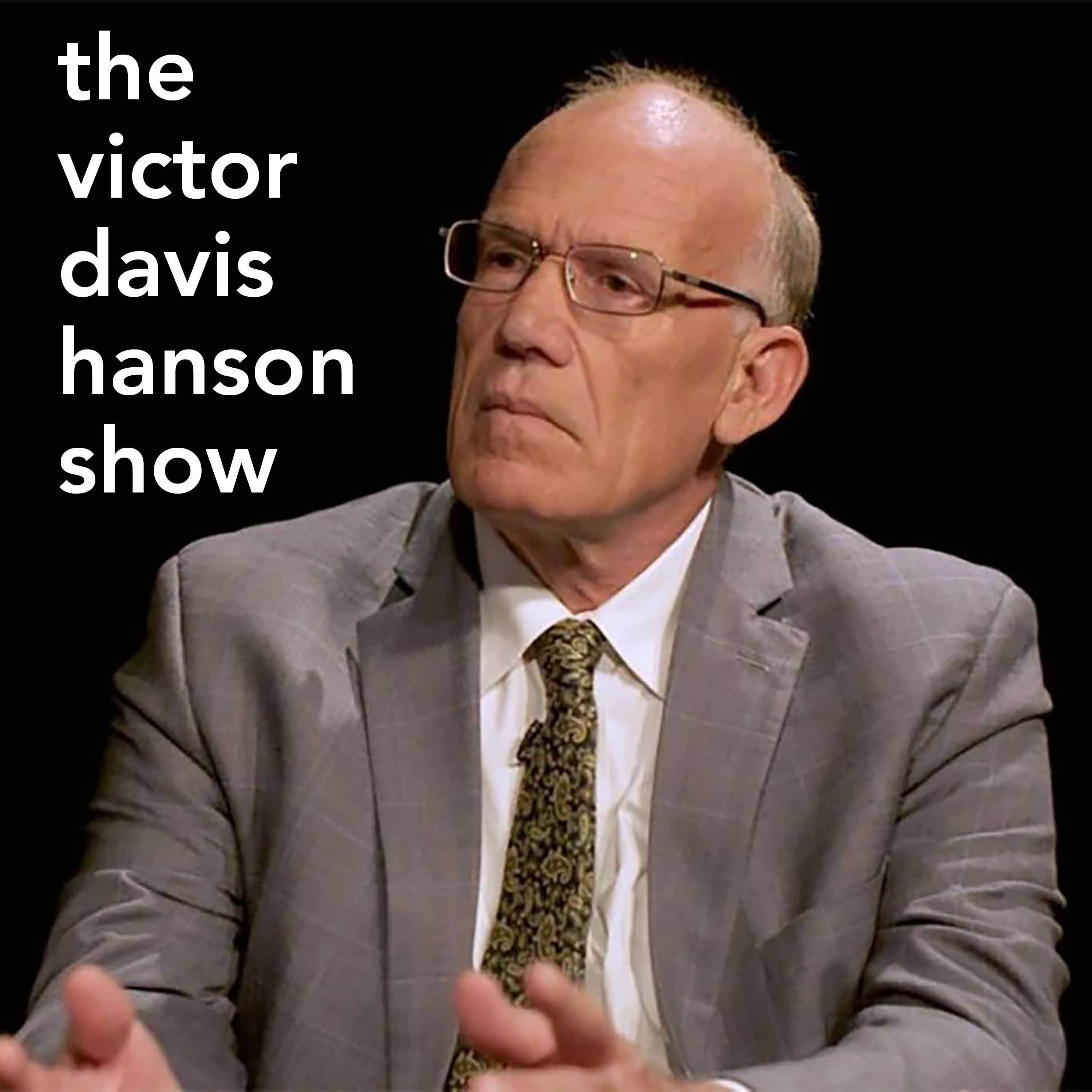
The Victor Davis Hanson Show
More WWII ‘Revisionist’ History & the Vulgarity of a Kennedy Scion
01:07:07
Loading summary
Transcript63 lines
- [00:00]
Jack Fowler
If you're running a business, you know.
- [00:02]
OpenPhone Advertiser
That every time you miss a call, you're leaving money on the table. When every customer conversation matters, you need a phone system that keeps up and helps you stay connected 24, 7. And that's why you need OpenPhone. OpenPhone is the number one business phone system that streamlines and scales your customer communications. It works through an app on your phone or computer, so no more carrying two phones or using a landline. With OpenPhone, your team can share one number and collaborate on customer calls and texts like a shared inbox. That way any teammate can pick up right where the last person left off, keeping response times faster than ever. Plus say goodbye to voicemail. Their AI agent can be set up in minutes to handle calls after hours, answer questions and capture leads so you never miss a customer. So whether you're a one person operation drowning in calls and texts or having a large team that needs better collaboration tools, OpenPhone is a no brainer. See why over 60,000 businesses trust OpenPhone. OpenPhone is offering our listeners 20% off your first six months@openphone.com Victor that's O P E N P H o n e openphone.com Victor and if you have existing numbers with another service, Open Phone will port them over at no extra charge. Open Phone no missed calls, no missed customers.
- [01:47]
Jack Fowler
Hello ladies. Hello gentlemen, and welcome to the Victor Davis Hansen Show. Victor is the Marvel Martin and Neely Anderson Senior Fellow at the Hoover Institution and the Wayne and Marshabusky Distinguished Fellow in History at Hillsdale College. And he's a man with the website the blade of Perseus. VictorHansen.com is the address. You should be checking it out early and often and you should be subscribing too. We are talking on Saturday 23rd August. Our schedules are a little screwy this week, so this episode's up on Thursday. I know it's way out from when we've are talking, but you know, Victor's, Victor's wisdom is evergreen. So what are we going to talk about today? Well, let's begin the show. Victor. Two topics. One is this interview that Tucker Carlson has had with a, I don't even call him a faux historian, but an alleged historian, David Cullum. We have the grandson of John F. Kennedy acting like a lunatic, I think in public. And, and then we have a topic I wanted to get to on the previous show about India and its relations with the US language. The left's trying to rewrite the language book. It's also Great news. The 100th issue of Strategica has come out. We'll get to that towards the end of the show. We'll start off with Tucker when we come back from these important messages.
- [03:17]
Shopify Advertiser
Shopify helps you sell at every stage of your business. Like that. Let's put it online and see what happens.
- [03:22]
Victor Davis Hanson
Stage and the site is live.
- [03:24]
Shopify Advertiser
That reopened a store and need a fast checkout. Stage thanks. You're all set that count it up and ship it around the globe.
- [03:31]
Victor Davis Hanson
Stage this one's going to Thailand and that.
- [03:35]
Shopify Advertiser
Wait, did we just hit a million orders? Stage Whatever your stage Businesses that grow grow with Shopify. Sign up for your $1 a month trial@shopify.com Listen, if you're like me, you.
- [03:48]
Vibrance Advertiser
Have a lot of product on your bathroom counter. Well, I have found the secret serum and it's vibrant. Super C Serum. The ingredients in this one bottle can replace your day creams, eye creams, night creams, neck creams, wrinkle creams, and even dark spot reducers. Made in the usa. With the highest quality ingredients including vitamin C, hyaluronic acid, vitamin B5 and vitamin E, Super C serum delivers noticeable results. Simplify your skin care routine, get a healthier complexion and minimize wrinkles and age spots with Vibrance. I just began using Super C serum last week and I love it. My skin feels so much better, soft, moist and fresh. And by the way, it smells beautiful like the orange blossoms outside my kitchen door. Give it a try and you'll love it too. And if you don't find it better than your current skincare routine, you'll get a full refund. Go to vibrance.com victor to save up to 37% off and free shipping. That's Vibrance V I B R I A N C E. Vibrance.com Victor and we'd like to thank Vibrance for sponsoring the Victor Davis Hansen Show.
- [05:10]
Jack Fowler
We are back with the Victor Davis Hansen Show. By the way, I'm Jack Fowler. I'm a man blessed, lucky, fortunate to be able to ask Victor twice a week his thoughts on a variety of topics. So, Victor, let's get to the first topic. Tucker Carlson and David Cullum. David Cullum is a professor at. Oh my gosh, it's up in Ithaca, New York. Cornell. Yeah, yeah. Organic chemistry professor there. And I only saw a clip of this on X. But he was talking about World War. And this is not the first time Tucker has had some controversial person talking about World War II. And Cullum said one can make the argument we should have sided with Hitler and fought Stalin. Patton said that he didn't say that. And maybe there wouldn't have been a Holocaust. Other things that were kind of more than revisionist history. Victor, we've been down this road before with another Daryl Cooper.
- [06:07]
Victor Davis Hanson
Yeah, yeah.
- [06:08]
Jack Fowler
So your thoughts on this?
- [06:10]
Victor Davis Hanson
Well, you know, I don't care that he doesn't have a PhD in history or languages or anything. I just evaluate and I only saw the short clip that Tucker put on. And in it, almost everything he said was untrue. He said, for example, we should have sided with Hitler against Stalin. Now, he didn't say what a lot of neo isolationists, Charles Lindbergh had said at the time, that we should stay out of the war and not help the Soviet Union. So when Hitler invaded Soviet Union on June 22, 1941, we had not had Pearl harbor yet. So the isolationists were anti Communists, said, as bad as Hitler is, he's no worse than Stalin. Stalin has killed 20 million of his own people, so let them fight each other. And that was the attitude that Stalin had had when he himself conducted the Molotov Ribbon pact of non aggression in August 23rd of 1939, which started World War II just a week later. And Stalin's attitude was, we're going to stay out of it and give money to Hitler and support and oil and hope that Hitler and France and Britain kill each other off and then we'll just take over. So there was cynicism on all of these things, but he didn't say that. He didn't say that. I think that it's kind of like Henry Kissinger said of the Iran Iraq war. Is it possible that both of them could lose? He didn't say that. He said that we should have sided with Hitler. And then as an afterthought he said maybe the Holocaust would have been avoided. The Holocaust, the imprint, the genesis. Read Mein Kamp and look at the hunger plan that was created before he went in to the Soviet Union. It was a plan to denude occupied Ukraine of its food. And there was a commissar order and there was communications among the Wehrmacht at the highest levels of OKW that when they went in in June 22, they had not gone in yet, that they were going to starve millions of people and take the food of occupied Ukraine and send it back to Germany and kill two birds with one stone. They thought, second, they were not going to allow commissars to live. They were going to execute them upon capture. And number two, it wasn't that they didn't have facilities for the 1.5 million Russian prisoners. They didn't care. They wanted them to die. And the Einsengruppen, the people who killed Jews, had been active since the first day of the war in Poland on September 1, 1939. When they went in, there was probably in that three and a half long week, there were seven or eight thousand Jews that were murdered. So what he's saying is there wouldn't have been a Holocaust, but the forerunners of the Holocaust he'd already killed. By the time he went into the Soviet Union, he had been at war for about a year and over a year, about almost two years, from September 1 of 39 to June 22 of 41, he had already killed thousands of Jews. He had killed thousands of people in the occupied. Not so much in France, but in Poland and the East. And it was by deliberate intention. So the idea that we were going to partner with this madman and then we were going to use our influence with the SS or with Goebbels or with Himmler and persuade them not to kill more Jews. It was intrinsic in Nazi ideology to kill Jews for Lebensrum, to open up the east, kill Russians and Slavic peoples and Jews. It's in Mein Kampf. So that's number one. Then he said something that even Patton said would agree with him, essentially by saying we should have allied. He did not say that. He said a lot of very controversial and unhinged things, but he said something to the effect in a variety of circumstances, that after he was pro consul of Bavaria and in charge of getting the water, the sewage, the electricity for the whole Munich area and larger, Patton said, and was reprimanded by Ike because he allowed people who were Nazi party members, former who were in the bureaucracy, to maintain their jobs of recreating the infrastructure. And then he went further when he saw what the Soviet Union was doing, and that is their occupied zone was administered very differently than the French, British and American. You could not go in there. They were demanding that Russians who had been fighting for Germany and were captured and knew they were going to be executed when they were sent back. They were demanding that the Allies send them back. And he said at one point, we've got the people over here. They're not our friends. We're going to end up fighting them. Let's do it now and get it over with. We basically went to war to free Eastern Europe from the Nazis, and now we have to free them from our allies, the Soviets, and I'll even get former German soldiers. That's a little different. It's kind of bad and naive, but it's a contrary to the rehabilitation of the German nation to use former German officers to fight Soviet Union. But there was a logic to it. The Soviet Union was going to take over all of Western Europe and they didn't have enough people, people to stop them. So they were going to use former German troops. But he did not say that he wanted to ally with Hitler during World War II, to my knowledge. Then there was a third thing that he said that I think is demonstrably untrue. He said there were 15 to 20,000Americans who disappeared in Soviet occupation that were held by the Soviets. I think what he was trying to refer to, but in all fairness to him, I haven't heard the whole thing. I'm not going to listen to it. Just the clips, which I think were deliberately selected to be insightful, incendiary, I should say, not insightful. They were designed to incite and to be incendiary. But he said 15 to 20,000. Well, what he was referring to is that when the Germans came in to East Pomerania and East Prussia, they discovered POW camps once they crossed into Germany. And in these camps were largely American fliers, but also people from the recent battles at the Bulge or in the Ardennes and fighting General Model in the Hurtgen Forest. Okay? And so the Soviets had those. They had orders of what to do with third party nationals. If they were wounded and had evidence of fighting against the Russians, then they were treated pretty badly. If the people in the camps were Eastern Europeans, they were treated not so well. If they were American and British, the Soviets promised to return them, take them from the conquered Germans and return them to the other Allied power. There was some discussion that if they were to do that, then the Allies who had captured Russians who had fought for Germany should be sent back to Russia. So Stalin said, we have Americans that the Germans have and we want to send them back to you. And you have Russians that the Germans captured, that you liberated, and we want you to send them back. And then the Americans said, but wait a minute, we want our Americans back as heroes and to be repatriated back to America. And you want to take these Russians and execute them or put them in Siberia and work them to death because. And then the Russians said, yes, because your Americans fought with us, so we're going to return them under good circumstances. But the Russians that you have are not like the Americans we have. They were traitors and they helped kill you and me. So we're going to punish them. And that was the conundrum that had to be worked out. In the end, most of those Russians were returned, and most were killed or worked to death. There were some countries that tried to hide them. And then in exchange, most of the Americans, almost all of them were exchanged. There's no 20,000 missing Americans. It was hidden that the Soviets kept them too long. And there were some that were missing, but not 15 to 20,000, not at all. If the chemistry professor from Cornell wants to make the argument, maybe he does. In the longer clip, you could argue that the Roosevelt administration went to great lengths to protect the Soviet pact because they wanted Russians to kill Germans. And three out of four soldiers of the German army, 3 million of them died in Russia. And the FDR attitude was from George Marshall on down, every time they're fighting the Russians, it's one less German that's killing us. And these are incredible fighters. Even when they got on the mainland in June of 1944 and that 11 months it took them to get to Germany, the Americans had air supremacy. They had superior artillery. They outnumbered the 1.5 million Germans. They had 3 million at one point, British and American troops. They still. It took 1.7Americans to kill one German. They were on the defensive. They had the advantage. But still, they were very deadly troops. So the Roosevelt administration says, anything we can do to arm the Soviets. And we gave them 25%, along with the British, of their wherewithal. We fed their war machine. We gave them Air Cobras, P39s, we gave them ponchos. We gave them C rations, we gave them radios. We gave them aluminum. We gave them Sherman tanks, We gave them Spitfires. We gave them anything to kill Germans. And so out of that, then after the war ended, there were four occupation zones. French, British, American, and they combined eventually to be West Germany. But the Germans broke every agreement they had agreed to at Yalta and the July August Potsdam Treaty. They did not allow free and fair elections in occupied Eastern Europe. And they had, at the end of the war, Jack, 500 divisions, probably 300 of them were in Europe. And we almost immediately were demobilizing and getting British and American troops back home across the seas. So the idea was, how do you stop these? The Russians have betrayed us. We just defeated the Germans. We do not want to get into another world war. Patton may be right in the abstract that we have to fight them. Eventually we should do it, but. But we don't have the wherewithal to do it. They won't give back Poland that they occupied. They created Western Ukraine out of it. We've got to go get Pomerania and Prussia and give it to the Poles. There's 13 million Germans that are. It was a mess walking back to Germany. In any case, the idea that we allied ourself with a monstrous Stalin was just typical, cynical realpolitik that those. We'd rather have 20 million Russians die than half a million American. And we went through these four years of war. We lost about 450,000. That was tragic, but that was a low number compared to 20 million Chinese. 20 million Russians, 6 million Germans, 3 million Japanese, 400,000 the same, probably Italians, 400,000 British. So it was a brilliant way of using a third party to nullify the Wehrmacht. But it was not some conspiracy. He said one other thing very quickly. He said, and we all know the story of Pearl harbor, and I don't know his story of Pearl Harbor. I know that there was an experimental radar crew on a hilltop above Honolulu that had pictures on their screen of incoming planes, but they thought they were B17s and they just thought this was. They didn't react in time for it. I do know that FDR ordered in May of 1940, Admiral Richardson, the head of the 7th Fleet, to move the base in San Diego all the way to Pearl Harbor. And he said, I'm putting my head in a noose. The Seventh Fleet is not able to detour the Japanese Imperial Fleet in the Pacific. If you put me way out in the middle of nowhere in Hawaii, I will not have the infrastructure, the air support that I would have in San Diego. He kept complaining and they relieved him. Then Admiral Kimmel took over and he was relieved of command. I think three weeks after he was the fall guy. And out of that came a conspiracy that Roosevelt was doing anything he could to provoke the Japanese with sanctions, putting us out very vulnerable so we would be attacked. There may be some truth to that, but the idea that there's a big untold story of Pearl harbor is not true. We pretty much know that Roosevelt wanted to get in the war sooner or later. He felt that Europe would fall. And he didn't really. He underestimated the ability of the Japanese to harm us, the U.S. navy. But he didn't plan to have Pearl harbor attacked. I don't know what the. I'll ask you, Jack, or maybe our listeners. I really like Tucker. I always have. He was very kind to me. He put me on his show for five years on Monday nights right after his monologue. He's very intelligent. He probably forgets this, but I've probably known him for 20 years. He used to come out to the Hoover Institution once or twice. I had a long discussion with him about the Iraq war, I think in 2005 when he came one time. He's a very gifted person. He's a very good writer. I think he was unfairly let go by Fox. And I tell you, it's very everybody thinks Fox is no big deal, but everybody who leaves Fox, I mean, Tucker's been the most successful. But when Bill O'Reilly left Fox and Tucker left Fox and Megyn Kelly, I mean, they've all rebounded with their own very successful podcast, but it's still hard to get that type of exposure. So it was kind of unfair to him. But all of that said, if I look at Is there any theme that these guests that come on have. Is there any theme going to Russia and going to a Russian supermarket and saying it's better? Is there any theme going to Bethlehem and talking to a Muslim cleric who says that Israel is driving all the Christians out of Bethlehem on the west bank, which is not true? Is there any theme about Darrell Cooper essentially saying that there wasn't really a plan of Germans to kill Jews and everybody in Russia? Is there any plan to this guy about these conspiracies? And I hate to say it, but there is. It's kind of the Jews are at the problem of all these things. Yeah, that's kind of the theme. And then when you the Jews did not get Christians out of Bethlehem to the degree there's, I think, confusing cause and effect, there are a lot of Christians in Israel who fled Bethlehem because they were terrified of Muslim aggression and they felt the only country in the world with a Judeo Christian heritage was the Holy Land. So they went to Israel to be protected. That's why they're there. They weren't pushed out. And I don't know what else to say the same thing about World War II when you're trying to get a guy on there that's rehabilitating excuses for what the Nazis did. Baba Yar, they killed 30,000. That wasn't the end of it. In Ukraine, they killed over 100,000 Jews, lined them up and shoot. It wasn't by accident. It wasn't something that they were surprised about. They went in there for that particular reason to kill Jews and to starve Ukrainians and take over the redbasket of the Soviet Union. That was one of their pre invasion agenda.
- [24:28]
Jack Fowler
Yeah, well, it's troubling, Victor. But first I have one more history follow up to ask you. But first I want to tell our listeners that it shouldn't be this difficult to get basic medical treatment in our country, yet so many Americans are still being denied access to the care and medications they trust. That's why I want to tell you about All Family Pharmacy. This isn't just another online pharmacy. They're truly helping Americans get access to the medications they believe in, like ivermectin, mebenzazole, hydroxychloroquine, methylene blue, antibiotics and many more. And now they've recently lowered their prices to make it even easier and more affordable for families to get what they need. The process is simple. Just fill out a form online, select the medication you need, a doctor reviews your order, writes the prescription and and your order is shipped straight to your door. If you believe in medical freedom, this is the pharmacy for you. This company is truly making a difference and more people need to know. Visit their website and order what you need today. To do that, go to allfamilypharmacy.com Victor and use the code Victor10. That's V I C T O R10 for 10% of the off your order. And we thank the good people from Whole Family Pharmacy for sponsoring the Victor Davis Hanson Show. Victor, we have a couple other topics to get to, but before we go to our next break, I'm just curious, following up on as a historian, and you are, do you feel a need, you have to correct things? You see things out there. You know, there are theories, et cetera, that you might agree with or disagree with. I'll call it policing. That may be the wrong word. But do you see an increased need for policing in history today versus, I don't know, 20 years ago when you first started writing? Is there more stuff out there that's in need of correction?
- [26:21]
Victor Davis Hanson
Well, there's two different types of abuse of history. There was the traditional one of the modern university. So put it this way. If I wrote a book that was championing the agrarian city state and the other Greeks, the reviews were pretty good. Warfare and agriculture pretty good. If I wrote another book on classics, say A War like no Other, about how the Peloponnesian War was actually fought, and I had previously written a book criticizing classics, both the left theorist and the right rigid pedants, and I had also been writing conservative commentary, then the reviews of A War like no Other were not as good as the reviews of books that were either apolitical, had not been so overtly political, not anything to do with the books. There was no politics in any of the books. But the fact that I was in the academy and I was considered an overt conservative meant that people volunteered to review an war like no other. There's a person in, I think he was in the New Yorker that just, he just lied about it. Another person who I became a friend of, I won't mention his name, said that I was a neocon. Donald Kagan trying to warp the. So that was the prejudice of the academy. The problem with the non academy historians is that when you get a PhD in historical subjects or philology that works with history, there are certain rules and regulations. You understand sources, you learn how to use them, you learn how to footnote, you know how to evaluate certain things. So if you were going to write something like 20,000 prisoners, write an article, there will be a lot of scholars will go to the archives and try to argue if that's not true. And they'll present evidence. If you say that we should have aligned with Hitler, there will be people who will show that the roots or the origins of the Holocaust did not start in 1942. There were premonitions of what was going to happen and there were people selected in the German hierarchy who knew what they wanted to do. It wasn't just desperate. Pat Buchanan was the first to do this. He suggested that if the Americans had not entered the war, then Hitler might. Hitler might not have been so extreme or da da, da, and he wouldn't have killed all these Jews. So it's not a new conspiracy theory. But on the other hand, there's a different type of corrective. It's called the Internet. So there are millions of people out there. Some are historians with PhDs, some are amateurs of various talents and backgrounds. But I do believe they form a consensus. And here's what I mean. If I have a question, let's say that I want to spell a word and it has two different spellings. I don't know which is the preferred spelling. And I put both on the Internet with Google searches, I can find out what 51% of the people think. And it's usually right when this historian, this chemist historian puts these things out. I have confidence that the majority of the people who comment on that interview with Tucker will be critical whether whatever their background, because there's so many people and the Internet is kind of like a Roman arena with fingers up or down, doesn't mean they're kind, but they are empirical. And it doesn't mean, by the way, that just because you don't have a PhD. Your bias, because I can tell you some of the most biased people in the world are PhDs in academics. And we saw that with the medical research that in Lansing that all these experts with PhDs at Peter Dasak rounded up just to lie and say that the Wuhan virus was a pangolin bat origin. And then of course, we had the 51 intelligence authorities that had all these degrees that lied about the laptop. And then you and I have talked about the expert diplomats and the expert economists that lied and said there would be no hyperinflation under Biden, contrary to what Larry Summers predicted. So just because you have a PhD in a university birth billet doesn't mean you're going to be any better than an amateur historian. But there is evidence that you will learn to a greater degree how to use the evidence and how to compare it. And so when I see a passage from Thucydides vs Herodotus, I can say, does this reflect an aristocratic bias on the part of Thucydides because he was son of Oloros, he was a Thracian, he was an aristocrat up in northern Greece, he was unfairly relieved by the Athenians. Does this show bias in. In that he has 100 and, I don't know, 32, 100 and more than that, 133 or four speeches. To what degree do they reflect reality? What degree did he make them up and to what degree are they literal? And that depends on where he was at a particular. So you learn all of that and then you can compare him to Herodotus and Genopon, you know, what their biases are, where they were, their technique. You can't really get that as an amateur historian. But that doesn't mean that when you're writing a history of the Peloponnesian War and you're a left wing academic and you have somebody who takes a different view, you will not attack them for their ideology. That's inevitable. Whereas in the Internet, the mob, I think the mob will be more. They'll be eager to put their points of view or to find fault and then post stuff. And some of them will be Darrell Cooper conspiracies. But there'll be more that will be empirical.
- [32:29]
Jack Fowler
Yeah, we find, remember, and we go to a break, we remember the great Scott Johnson of Powerline and his team kneecapping the Dan Rather attacks on Bush. There are people out there with information and a means of getting it in front of people. Well, so Victoria, we're going to talk about JFK juniors JFK, not juniors. JFK's grandson. And what else? Language. And we'll do that when we come back from these important messages.
- [33:06]
Shopify Advertiser
Searching for a romantic summer getaway escape with Rich Girl Summer, the new Audible original from Lily Chiu, the exquisitely talented Philippa Sue. Returning to narrate her fifth Lily Chu title, this time Philippa is joined by her real life husband, Steven Pasquale. Set in Toronto's wealthy cottage country, AKA the Hamptons of Canada, Rich Girl Summer follows the story of Valerie, a down on her luck event planner posing as a socialite's long lost daughter while piecing together the secrets surrounding a mysterious family and falling deeper and deeper in love with the impossibly hard to read and infuriatingly handsome family assistant, Nico. Caught between pretending to belong and and unexpectedly finding where she truly fits in, Valerie learns her summer is about to get far more complicated than she ever planned. She's in over her head and head over heels. Listen to Rich Girl Summer now on audible. Go to audible.com richgirlsommar.
- [34:03]
Jack Fowler
We are back with the Victor Davis Hansen show recording on Saturday the 23rd. This episode is up on Thursday the 2028th. I think it's going to be the 28th. And Victor's website, the Blade of Perseus, it's go there and subscribe. Why should you subscribe? Because when you do, you'll be able to read the two articles Victor writes exclusively every week for his website and then also the exclusive video he does. It's 650amonth, discounted the full year, $65. And of course, there's so much other free stuff on the Blade of Perseus. Go to VictorHansen.com Do Subscribe Sign up for the email list also. So Victor, about JFK's grandson, two stories. One is this is Jack Schlossberg, who's the son of Caroline Schlossberg, the daughter of John F. Kennedy, the only son. So he was, he picked up a little infamy, the other not infamy notoriety the other day, by the way, he's picked up notoriety for the last year. He seems like quite the online lunatic foul mouth. He was mocking Melania Trump because she had.
- [35:15]
Victor Davis Hanson
Yeah, I saw that.
- [35:16]
Jack Fowler
Yeah. Any thoughts on that? And then we can talk about his being appointed to the America 250 Commission by Chuck Schumer.
- [35:23]
Victor Davis Hanson
Well, he's a he, he's now known as a boar, a very obnoxious, entitled spoiled brat. And before I answer that, there's a larger question. You know, rfk, when he Broke with the Kennedy Klan and endorsed Trump. And then he became nhs. They signed letters, they did videos. Caroline was one of the most prominent critics. They had some good points. They said that he was a drug user, he had been an addict, he'd been married three times, and one of his wives killed herself. He broke up families. Then all those stories were leaked, I think, by family members about he killed an animal and dumped it in Central Park. Was it a bear?
- [36:07]
Jack Fowler
A bear.
- [36:08]
Victor Davis Hanson
It was a bear. So it made him look really awful. But then I always believe in the parable of the prodigal son. So then he comes into the national limelight. I know that people object to his ideas about vaccinations, but at least with the MRNA vaccination, he has some validity. But the, the point is, he's the paragon of health. He looks very healthy, he practices what he preaches, he tries to get certain toxic elements out of that are non essential additives or coloring. So some of the stuff he does is really good. But then when you look at the Kennedy family, who's been attacking. Remember when Carolyn Kennedy was going to run for Senate and they asked her some basic questions about the Senate, she didn't know anything. And then Obama, I think he appointed her, what, Ambassador to Japan or something. Japan.
- [37:00]
Jack Fowler
And for some reason, well, maybe it was one of her aunts. No, she was Japan, definitely Japan.
- [37:06]
Victor Davis Hanson
She didn't know anything. She was just. And so then her son comes along. He's vulgar, he's crude. And so now he puts on a wig and he practices a Slavic or Slovak, Slovenian accent to make fun of Melania. But what is he trying to make fun of? He's trying to make fun of the fact that she wrote a public letter trying to remind everybody of all these children who've been kidnapped and reprogrammed as Russians and that this is important that they be returned. So that was a wonderful thing she did. So why would you make fun of her for that? And make fun of her accent, make fun of her hair, make fun of her looks? And so he's spoiled, he's entitled, he's not very talented, and he's unhinged. And this isn't just the tip. We could go on for hours of what he has done, but let's ask what he has done other than become an Internet mosquito. Has he done. Has he created a great business? Has he written a book? Is he a professor? Is he known as an adroit diplomat? Is he followed in his family's tradition as an energetic politician? No, I Can't think of anything he's done other than being given a name and a lot of money. So I don't see why he has any credibility. And it's just tarnishing the Kennedy name. And it's so ironic because the person who has, they claim has tarnished the Kennedy name, Robert Kennedy Jr. Has actually rebranded the Kennedy brand with half of the nation that's conservative. Now you can be split in the conservative movement. You think he's doing a lot of damage to vaccination programs of diphtheria, tetanus, except maybe, maybe not. But he's won over a lot of people because he is interested in holistic food, lack of chemicals, organic farming, etc.
- [39:19]
Jack Fowler
Well, his cousin, the grandson of the president was of the 330 million Americans, was one tapped by Chuck Schumer to be one of the Commissioners for America 250, which by the way, America, the 250th anniversary is 10 months away and that's its own state story, how chaotic and unprepared, et cetera, this commission has been. Bill McClay's on it, our good friend and he's even talked. He's not attacking the commission like I might, but nevertheless, here's a headline, Chuck Schumer taps him Schlossberg for that. U.S. senate Minority Leader Chuck Schumer tapped Kennedy Air Jack Schlossberg, known for his attention seeking social media tirades, to sit on the committee prepping America's 250 birthday bash. Schlossberg will get one of the seats slotted for private citizens on the America 250 Commission. Schumer claimed, quote, there's no better person, end quote, to go toe to toe with President Trump and his supporters on the panel. Why am I putting Jack there? We know that Donald Trump will try to aggrandize the whole thing and make it part of him and his ego. Said Schumer, there's no better person, no better person to push back on that than you, Jack. What the h?
- [40:40]
Victor Davis Hanson
I guess if you want to get an inner, I guess you could put Laura Loomer in there to balance him and our Candace Owens, another conservative. Would anybody do that? I don't think so. So they know that he doesn't care that he's protected by his name and his money and he's a loose cannon and he will say outrageous things and get all this attention and disrupt the commission and attack Trump. And you know, Schumer is very similar. He's very smooth. But he was the one that got out in front of the Supreme Court building while it was in session and called out Gorsuch at Kavanaugh by name and then threatened them and he said that they had sowed the wind, they were going to reap the whirlwind. And then those iconic words and they don't know what's going to hit them. You don't know what's going to hit you. And he never apolo well he did after they threatened to censor him. He did kind of withdraw it but then of course he unleashed. He took his finger out of the dike by doing that. And then they started showing up at the justices homes threatening him. A would be assassin showed up in the vicinity of Kavanaugh's home.
- [41:48]
Jack Fowler
Yeah.
- [41:51]
Victor Davis Hanson
Schumer is a very reckless unethical politician.
- [41:55]
Jack Fowler
Yeah. He may be a dead man walking.
- [41:57]
Victor Davis Hanson
Politics politically to couldn't happen to a nicer person if AOC primaries.
- [42:03]
Jack Fowler
Yeah. Well let us, let us pray. But okay Victor, we have a message for our listeners and we're going to take up another topic of language. I want to take a moment for our sponsor, OpenPhone. OpenPhone is the number one business phone system that streamlines and scales your customer communication. It works through an app on your phone or computer. So no more carrying two phones or using a landline. With OpenPhone your team can share one number and collaborate on customer calls and texts like a shared inbox. So whether you're a one person operation drowning in calls and texts or have a large team that needs better collaboration tools, OpenPhone is a no brainer. See why over 60,000 businesses trust Open Phone. OpenPhone is offering listeners of the Victor Davis Hansen Show 20% off your first six months at openphone.com Victor that's O P E N P H O-N E openphone.com Victor and if you have existing numbers with another service, Open Phone will port them over at no extra charge. Open Phone, no missed calls, no missed customers. And we thank the good people from OpenPhone for sponsoring the Victor Davis Hanson show. Victor, I know you've touched on this. I think you spoke about a little on maybe it was with Jesse Waters or somebody else on Fox the other night. But I think our listeners and viewers are interested in your take on how the lefties are now thinking they can talk their way out of their political troubles by retrofitting or deep sixing their rhetoric. So there's this memo that's gone out. It's titled was it something I said? And they have different categories but here's one section. It's called seminar room language. And these are lefties writing to other lefties. This language says, quote, I'm smarter and more concerned than import about important issues than you. Your kitchen table concerns are smart. So here are the terms they don't want to be used anymore. Subverting norms, systems of oppression, critical theory, cultural appropriation, postmodernism, overton window heuristic, existential threat. When we use these words people don't understand. Studies show that the part of their brain that signals distrust becomes more active, undermining our ability to reach them. Victor, your take on this.
- [44:38]
Victor Davis Hanson
How can the party of the people not know what the people know? So I've written columns about this for a long time. What they're basically saying is, since the millennium, as I said earlier on an earlier broadcast, they're out of touch. Wealthy media people, university people, lawyers, corporate people, tech people, very affluent, very liberal, very left wing, very secluded from reality. They're the Pete Buttigiegs of the world. They look down on people, they talk in weird vocabulary. They're self righteous, sanctimonious. And so now they think that they're losing because people turn off on their Latinx type vocabulary. There's an element of truth to that, of course, but they also are turned off from the other end as well. The American people do not want to listen to a congresswoman say f u f this on f the country. They do not want to hear from Jasmine Crocker that Donald Trump is a piece of sh blank. They don't like that. And yet they are cutting videos. Eric Swallow. All they do is use this vocabulary of, you know, disparagement that is obscene and I've never seen anything like it. So they think that that appeals to it. So you have two things going on. These are elitist and they use this elite vocabulary that nobody understands and resents. And then to the degree that they react to it, they use language that your average steel worker doesn't go into the office of his boss and say, s h I t f u. So they have this condescending idea of the white working class. And I grew up with the white working class in the San Joaquin Valley and I see them in Michigan all the time, each year. And they are some of the most polite people in the world. They may swear on the workplace, but they have rules of decorum that the left doesn't have. They're not the antifa BLM trash mouth. They're really not. And so, I don't know, it just shows you how out of touch. They're kind of like a cracker barrel, aren't they? They're just seeking for some little gimmick that will get them back in power. And there's only one thing that will get them back into power and that's to delegitimize the squad and all those crazy people like Mondami and say, I'm going to give you a budget. Here's a five year plan to balance the budget. Here's a five year plan to end trade deficits and budget deficits. Here's a five year plan to reduce crime. And not by changing the statistics, but by making people feel inherently safe in our cities. Here's a five year plan to get rid of homeless. And just try not to talk about the LGBTQ XY community. Try not talking about you have to have a God given right to terminate a fetus in the ninth month of a pregnancy. Try not to talk about that. You're going to make, Steven Chu said gas go up to $8 a gallon at European levels. Try to say that. You're not going to say anything like aoc, you're not bringing children in the world because the planet's going to be blown up in eight years from heat. Just something like that. And, and then don't be so. Don't have all of your iconic figures as grifters. Look at Obama. All he did was talk about the wealth. That's why I'm here. Spread the money, share the wealth. Yeah. You know, and then Kalorama, Martha's Vineyard, Hawaii mansion, Chicago, upscale, beautiful home. Four homes, two of them right on the ocean, which he said is one, would be impossible because global warming is going to wash them away by now. Or the Clintons, oh, we're working people. And then, you know, $500,000 from the mayor of Moscow, why his wife is ceding over Uranium One to Russian interest. All the grifting, all the grifting Hillary listing all the things for her new house that she wants corporate people to buy her. Now they're probably worth 100 million. Obama's probably worth 100 million. And then you get the Biden and they're the crassest of all. I mean, he has two homes, he's got all this money that he didn't earn. His son was a quid pro quo grifter and sold his vice presidential father's name. And so that doesn't comport well with the party of principle. Democracy dies in darkness. We're working class and I just don't think they don't think they can change if they want because they represent this wealthy, entitled, arrogant class that all they care about is they don't care about some guy in Fowler, California that wants to buy a house and he can't afford it because it's $600,000. They care about, do you use granite or do you use marble or what do you use for your, for your kitchen makeover? Do you use cedar or teak flooring? Now, what is it? Use stainless steel appliances or what? That's all they worry about, you know, and is Range Rover SUV better than, I don't know, Audi or Mercedes or BMW? And then that's the world they live in. And then they feel bad that they're so wealthy and privileged. And so every once in a while, I'm going to go out and protest against JD Vance and scream and yell at him or I'm going to go out and say that, you know, I'm going to, I'm going to give these illegal aliens in Martha's Vineyard a quilted coat and then see, you wouldn't want to be here.
- [50:47]
Jack Fowler
Well, Victor, we are going to head to a break and after that we'll talk a little about India and we'll celebrate the 100th anniversary, not 100th anniversary, the 100th edition of a very important publication. We'll do all that when we come back from these final important messages. We are back with the Victor Davis Hanson Show. Victor, by the way, I went to mass once in Fowler by I was heading down to you to have lunch with you last year. Nice little church there and it's a nice little town. But $600,000 a house, house price there, that's I'm a little surprised, but it is what it is. Let me ask you, let's start off with India. Okay, get my notes here. Victor, I think this is a troubling headline. This is from Fox News. The other day, India turns to Moscow and Beijing amidst spat with US over tariffs. Here's the first two paragraphs. For more than two decades, Washington and New Delhi built a strategic partnership that was hailed as one of the greatest success stories of post Cold War diplomacy. Today, that relationship is facing its most serious test in years and India is signaling it has other options. We're in a situation in the US India relationship where the premises and assumptions of the last 25 years that everyone worked very hard to build, including the president in his first term, have just completely unraveled. I lost the end of the quote of who said that? But this a FOX NEWS Story, Victor, that that India is even seeking to improve its ties with China, that it's constantly shooting at each other on their border and other border problems. I'm concerned about this. Are you or your thoughts?
- [52:48]
Victor Davis Hanson
Yes, I am. And what brought it to a fore are two things. First and most importantly, India and China, who represent about almost 3 billion or about 45% of the world's population, need oil. They're not independent in oil and they are buying Russian oil oil. So we are mad at them and are considering a secondary boycott against them, which would be devastating, would hurt us, but be devastating to both China and India. But India is making the argument that. I don't know why you would give a secondary boycott. We don't have enough oil. Where are we supposed to get it? That's too expensive. The Russians are right near us and we can buy it from, from them. And why would you secondary boycott one of your allies? And by the way, we don't understand your tariff policy because you're leveling tariffs on countries like Israel and Australia and the UK and us that run trade deficits with you. India has a trade as I'm pretty sure they have a trade deficit with us. So that's. And then the counter Trump argument is to them, India, this is a dictatorship. They have killed 300,000 Ukrainians. They're trying to take over this country. There's no other way to stop them. We don't want to secondary. But you are aiding and abetting them by sending them foreign exchange. Can't you just slack off for a little bit and we'll work around maybe finding you replacement oil? And now you're in league with China, an existential enemy. We're not supposed to say existential, but an existential enemy of the West. So the other thing is India is very vulnerable to the United States because the United States has been very, very liberal and open to Indian immigration. The Indian American population has increased by tenfold every year. It seems there are millions of people from India. When I was growing up, I knew one Indian American farmer and I would say the vast majority of the farmers that I deal with and talk to are Indian American, mostly Sikhs from the Punjab. And California's largest Sikh temple is about a mile and a half from my house. So that didn't happen before, but that was a result of immigration policies of the United States. So do they really want to get in a fight with Donald Trump after the truck driver and stuff? Say, you know what, we're just going to have a secession of Indian immigration because he could do it. And that's one of the greatest transfers of American technology, that H1 visas that these Indian graduates come over the United States and they work for Silicon Valley and they work very hard and they're very talented, and they become either resident aliens or US Citizens and reach the highest in Google, for example, the highest levels of high tech. And they go back and forth with India and they, these expatriates have created a whole technology industry in India. So India has problems with China, and it's a very difficult problem. Opposition. It's kind of ironic because the left is the one that's always telling us to make better relations with India. But at the same time, they have attacked Trump for being soft on Putin because he wouldn't level secondary boycotts, even though that's the other problem, as I said, is tariffs. I think it's confusing on the tariffs because they're all challenged in court. I was talking to a legal scholar this week, and he says, and he's not a liberal, he said he thinks that many of these tariffs are going to be overturned because there's no real category. Each of them has to make an argument according to a legislative act, a law. But I don't know what the tariffs, in some cases they're for revenue, $300 billion that allow us to have tax cuts or something. Some cases they're reciprocal to punish countries that have taxes on us, such as China and to a lesser degree, Europe. And some of them are just flat 10% to bar entrants into the US economy to protect US industries. But what is the Israeli tariff for? They're our ally. They run a deficit with us. We're not going to make that much money on a tariff with Israel. And it seems to me that our closest allies, Britain and Australia, should get a break because they're not running up huge surpluses like Canada, as I understand it, and they are trying to rearm. So I think we got to be really clear what the tariff is for. And there's three reasons traditionally for a tariff to protect a domestic. We're putting tariffs on some countries that we don't have any competing industry with. You know what I mean? It's not like we have whiskey. We're tariffing their whiskey to protect our whiskey. They don't have anything that we make. I mean, they have everything that we don't make. And so we're putting tariffs on things that are essential. I can understand drugs. They don't pay for the whole R and D cost. So maybe, and they, maybe we should print put some tariff on a generic drug because otherwise how are the drug companies going to make up the money to reinvest in new medicines and protocols? But I think we need to be clear. I think when we put a tariff, we're saying we're putting this tariff on because they're not symmetrical, their tariffs are higher than us. We're putting this tariff on because their exports are hurting this particular American business. We're putting putting this tariffs on because we're broke and we want money. Just be candid. Or all three or two of three. But we're not getting a lot. And in the case of India, I think that has aggravated them. But all that being said, they should not be helping feed the Russian war machine. They should be very grateful that the United States gives them a blank check to export as many people as they want to come in here. And we've been very liberal about that.
- [59:27]
Jack Fowler
Yeah. Okay, well, thanks, Victor. Let's conclude today's show with your take on the publication you oversee at Hoover Strategica, which just published its 100th issue. Congratulations. And there's some article or two about the Post heroic era. So do you want to tell us about anything with this particular issue and take a bow?
- [59:53]
Victor Davis Hanson
Yeah, it's a hundredth issue and I wrote about a 1600 word essay. We call that the background or then we have different essays and in it I try to explain the history. In 2012, the then Director of the Hoover Institution called me and said Victor, you need to start a program. You're a military historian classicist. But don't you remember that the motto of the Hoover Institution is War, revolution and peace. We do not have things in war. So I want you to create a military history task force and you and I are going to crisscross the country. It was a wonderful man, John Racin. And we're going to raise money for it. And we did that for two years. We went 10 to 15 times a year all over the United States. And when we had sufficient Money, we invited 30 of the 40 of the top military historians, diplomats, generals, admirals, except soldiers. And so we got together people like the historians Andrew Roberts, Neil Ferguson, generals, admirals like H.R. mcMaster, Jim Mattis, William. We got people with different the late Angela Coteville, Edward Lubwack, top people in the country. And that required us to pay them well to write and not to short them on travel. So we have a very big annual meeting. We all get together. It's not released to the public. What people say, I draw up an Agenda as a chairman. And they all go at it in a free for all. And out of that, then we ask them to write a brief paper and then we publish those in. Strategica, the name that I coined from it just means. It's a Greek word for general, like things, the things that generals or leaders do. Strategica. We get strategy from the same word, Strategos for general in Greek. So we also have this publication online every three to five weeks and we usually don't miss an issue. And this is the hundredth anniversary and you have a backgrounder essay about the question, will nuclear weapons be used? Backgrounder yes, this is the history of nuclear weapons. And one person says, no, they're not going to be used. One says, meh, I think they might be. And they explain. And then we have a poll, it takes readers opinions. And then we have some study questions. And then all of the essays that are contributed during the year, we attach them to certain issues, seven or eight little ones, and it's been very successful. In addition, we have spin offs. We have history in the news, where one scholar writes for the Hoover website and Strategic website each week that this hurricane reminds them of the past hurricane or this nuclear meltdown poses the same threat as. So they try to locate a current event in a historical context from the past. And then we have classics of military history. You can go on there. If you want to know who Vegetas was or Aeneas Tacticus or Clausewitz, you go on there and there is a brief bio and analysis of their work. And all of this has been going on for, well, 13 years. And anyway, it's been a very good thing. Bruce Thornton is one of the editors. David Berkey is a managing editor that does the actual collection of the essays. I'm the general editor. Megan Ring is the person, the staffer who coordinates everything. She's the one that sets up the conferences primarily and pays people. It's very difficult job.
- [63:55]
Jack Fowler
Victor, could you tell us quickly about the Edward Lulux?
- [63:59]
Victor Davis Hanson
Yes. His essay was that everybody's talking about putting ground troops in Ukraine or the use of ground troops. But historically, when societies have low birth rates like 1.4 European, then there's a different attitude about mass formations and land warfare and casualties. And so it's one thing for the Israelis to fight on the ground as a Western power, because they have a birth rate of about 2.3 or 4, maybe it's higher. But he's very skeptical about socialist systems with low fertility rates beating their chest that they're going to send all these troops to Ukraine. And so you can be heroic on the battlefield and people can make personal sacrifices and get medals of honor, so to speak, and the larger society can welcome and honor that sacrifice. But it's very difficult when you are a nation of one child and that's it. You don't have a lot of people in that age cohort. So that was one of the themes of it.
- [65:11]
Jack Fowler
Okay, well, our listeners and viewers can go to the Hoover website.
- [65:17]
Victor Davis Hanson
And Peter Monsieur has an essay too, about the innovative Ohio State military history program.
- [65:27]
Jack Fowler
Before we go ahead, do you have anything?
- [65:29]
Victor Davis Hanson
The field is growing. It's kind of ironic if you go to a bookstore online or real bookstore, and you go to the shelves and you write LGBTQ studies versus military history. Military history is much bigger. People want to read about World War II. They want to read about the Civil War, they want to read about antiquity in a military context. And so yet when you go to a university bookstore and you look for classic and they're almost non existent, but that's starting to change. So there's 10 to 15 major programs now. Hillsdale College has started a new military program, so we're trying to encourage that at the Hoover Institution as well.
- [66:11]
Jack Fowler
You mentioned Hillsdale College, and I want to tell you that Hillsdale College has come in as number two. Number two on the Princeton Review's just published list of the top conservative colleges and universities in America. I'm sure you're curious what number one is.
- [66:28]
Victor Davis Hanson
Yeah, I think I know.
- [66:29]
Jack Fowler
It's Thomas Aquinas College. And then I'll just read the rest of the Ten Grove City College of the Ozarks, which is a terrific college. It is Taylor University in Upland, Indiana, Hampton Sydney University of Dallas. I'm a little surprised here place where you taught Victor Naval Academy, then High Point College in North Carolina. And number 10 is Baylor University.
- [66:55]
Victor Davis Hanson
I don't understand that Naval Academy because of the three military academies, West Point, the Air Force Academy in Colorado and Annapolis, the Naval Academy and I have spoken at all of them or visited the a lot at the Air Force. And I was there for a whole year as a visiting professor. The Naval Academy is by far the most liberal. It's the only of the three that's patterned after a civilian university where 60 or 70% of the faculty are tenured civilians and 30% come in and rotate as military. Most of them have a much higher degree of military officers. I can say without furor or anger that I have been a visiting professor at Hillsdale. I've been a visiting professor at Pepperdine. I've been a scholar in residence at UC Berkeley. I have taught at the Naval Academy. I've been a visiting professor at Stanford. Of all the places I just mentioned the History Department, the year that I was at was the most left wing.
- [68:03]
Jack Fowler
Yeah, well, no idea what the grounds were for for qualifying on the list, but I want to congratulate our friends at Thomas Aquinas.
- [68:13]
Victor Davis Hanson
It's a beautiful campus. It's such a beautiful campus. I don't know how they're going to. I think they're getting so much publicity. How are they going to. They have a very small student body. How are they going to accommodate all the applicants?
- [68:25]
Jack Fowler
Well, they have a second campus in New England that was land and actually an old school given to them courtesy of the Hobby Lobby.
- [68:36]
Victor Davis Hanson
Have you seen it?
- [68:37]
Jack Fowler
Yeah, I've been there several times.
- [68:38]
Victor Davis Hanson
Is it as beautiful as the California camp?
- [68:40]
Jack Fowler
Well, it's beautiful in a New England way. This striking.
- [68:44]
Victor Davis Hanson
Different.
- [68:45]
Jack Fowler
Very, very different.
- [68:46]
Victor Davis Hanson
It's wet and moldy and moist and cloudy and cold.
- [68:52]
Jack Fowler
The buildings there are over 100 years old. So it's a, you know, it has that very classical education.
- [69:01]
Victor Davis Hanson
I'm just kidding. I'm glad. I really liked them. I spoke there and it was. I had a really great time at St. Thomas Aquina.
- [69:08]
Jack Fowler
Nobody has. People have to shovel in the New England campus. They don't have to shovel it in California.
- [69:13]
Victor Davis Hanson
They have to do all their gardening and they, they keep the flower beds trimmed.
- [69:17]
Jack Fowler
Oh, yeah. Oh, that's part of the success to a lot of these schools is that the students roll up their sleeves and get work done. Well, Victor, you've been terrific at the end of the show here we thank our listeners and viewers and always try to read a comment or two. And here's one comment. It's from YouTube and it's from Mr. Awesome 94 who writes. Thanks BDH. You've made a big difference in my life. I'm 32 years old. I didn't do well in high school but did the necessary study after to get into university to study modern history. Been doing it online but with a full time job and being the father of three children and a volunteer at my church, it is taking me a long time to find finished. Nearly 10 years by the time I finished. I'm nearly finished but almost quit because I thought I couldn't be a historian without being woke in today's society. You've given me the hope that I can stand up for my principles and still be a student of history regardless. All the best wishes and prayers to for you from Australia. That's Mr. Awesome. Mr. Yeah. 90. Very nice. Yeah. Terrific. I want to thank the folks who subscribe to Civil Thoughts. I write Civil Thoughts. It's the free weekly email newsletter I do for the center for Civil Society. Comes out every Friday and it's a list of 14 recommended readings. Great articles I've come across the previous week that I think people will enjoy, like be inspired by. How do you get it? You go to civilthoughts.com sign up. Easy peasy free. And we're not selling your name. I do it for the out of the kindness of my heart. I think you will like it. So that said, subscribe to Victor at Victor's website, the Blade of Perseus, and follow Victor on XD Hansen. If you're on Facebook, there's the Victor Davis Hansen Fan Club, VDH's Morning cup, and I think that's about it. Victor, you've been terrific. Thanks everyone for watching. Thanks for listening. We'll be back soon with another episode of the Victor Davis Hansen Show.
- [71:18]
Victor Davis Hanson
Bye bye. Thank you everybody for listening and watching.