← The Victor Davis Hanson Show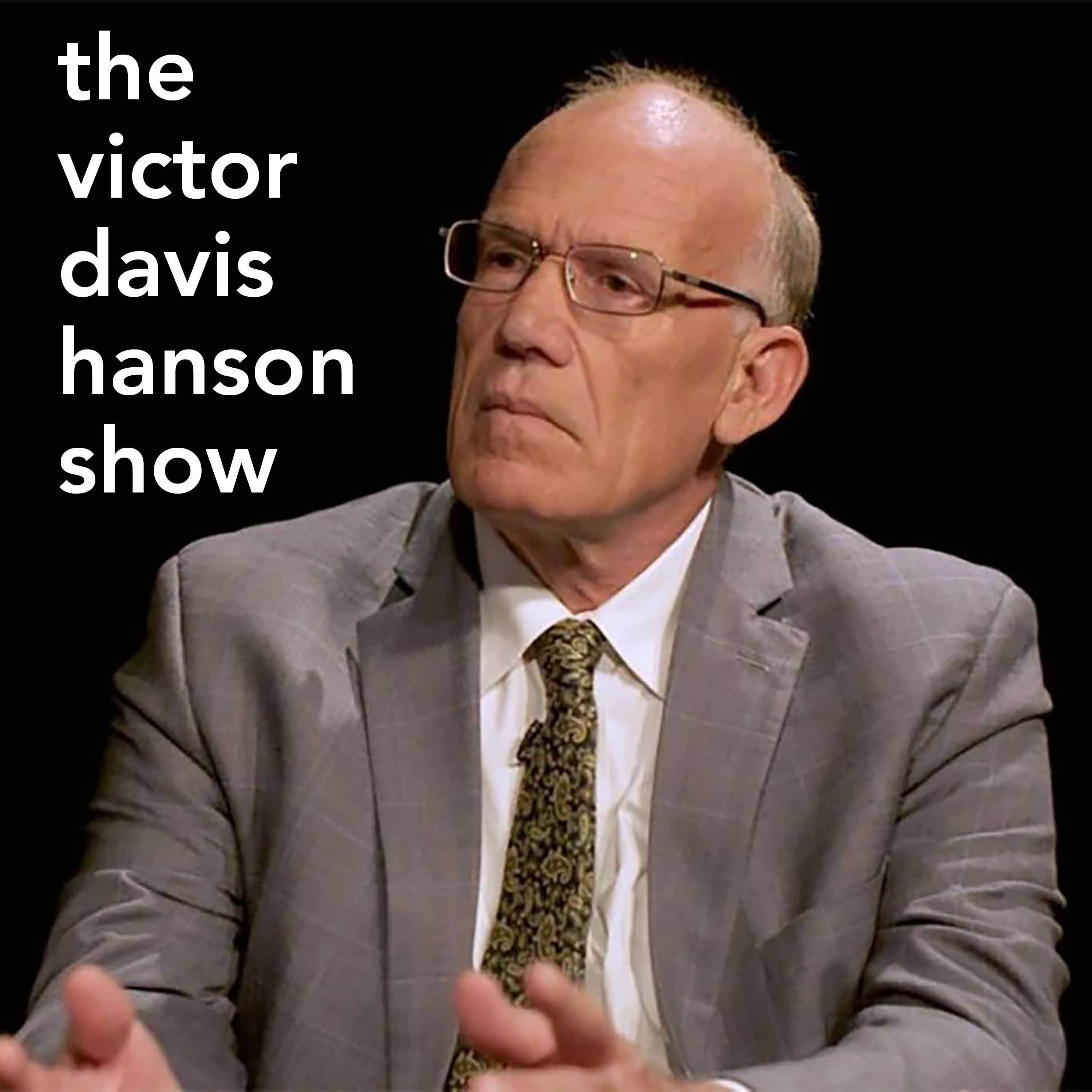
Loading summary
Transcript126 lines
- [00:00]
Victor Davis Hansen
Time is our most precious commodity and we've heard from so many listeners who have asked for advice about how they can spend it wisely to improve themselves and the people around them. That's why we're so excited that Hillsdale College is offering more than 40 free online courses in the most important and enduring subjects. You can learn about the works of C.S. lewis, the stories in the book of Genesis, the meaning of the US Constitution, the rise and fall of the Roman Republic, or the history of the ancient Christian church with Hillsdale College's online courses, all available for free. That's right, for free. We recommend you sign up for Athens and Sparta. In this course you'll hear from Victor Davis Hansen and Paul A. Rey, distinguished professors of history, as they discuss the history, culture and government of each city, the ill fated Peloponnesian War and its consequences, and examine what is necessary in order for a democracy to flourish and endure, how best to form free and self governing citizens, and how to resist tyranny from without and from within. Start your free course, Athens and Sparta today. Go right now to Hillsdale. Edu VDH to enroll. There's no cost and it's easy to get started. That's Hillsdale. Edu vdhtoregister Hillsdale. Edu Slash vdh.
- [01:43]
Jack Fowler
Hello, ladies. Hello, gentlemen. This is the Victor Davis Hansen Show. I'm Jack Fowler, the host. You're here to listen to the star and namesake that is Victor Davis Hansen, who is the Martin and Ely Anderson Senior Fellow at the Hoover Institution and the Wayne and Marshe Busky Distinguished Fellow in History at Hillsdale College. And Victor is a syndicated columnist, a military historian, a philologist, a rancher. He's an everyman. You are Victor. Deal with it. He's got a website, the Blade of Perseus. The web address is victorhansen.com we are recording on Saturday, November 30th and this particular episode will be up on Thursday, December 5th. Plenty of things as usual, to talk about. Victor's written a really wonderful. Do you ever write anything that's not wonderful, Victor?
- [02:35]
Victor Davis Hansen
Yes, I do. Look at book reviews of the case for Trump.
- [02:41]
Jack Fowler
You mean the bestseller?
- [02:42]
Victor Davis Hansen
Yes. Go read the Bulwark. I was called by a former editor at Commentary a Nazi.
- [02:48]
Jack Fowler
Basically I remember because I Gabriel Schoenfeld, I attacked him National Review when he did that.
- [02:56]
Victor Davis Hansen
Yes, he was a very good editor. I don't know why he. I can see why he disagreed with it, but I thought it was on tour of him to suggest that I was a Nazi and was antisemitic.
- [03:07]
Jack Fowler
Yeah, well, Trump derangement syndrome is a real thing. Well, we're going to talk about your recent syndicated column, China's forays into South America, Bill Clinton's kvetching, and plenty more. We'll do all that, Victor, when we return from these important messages.
- [03:32]
LinkedIn Advertisement
Are you struggling to close deals? Cold outreach is wasting the time of both the buyer and seller at every stage, especially when sellers are using shallow and outdated data. Your organization can overcome these challenges with technology that translates comprehensive, high quality buyer data into real time insights. These deeper insights empower sales reps and teams to adopt the habits of top performers, which leads to better outcomes like more pipeline, higher win rates and larger deals. We call this deep sales and we've built the first deep sales platform with the next generation of LinkedIn Sales Navigator. Right now you can try LinkedIn Sales Navigator and get a 60 day free trial@LinkedIn.com trial. That's LinkedIn.com trial for a 60 day free trial. Let LinkedIn Sales Navigator help you sell like a superstar today. Just go to LinkedIn.com trial and get started.
- [04:31]
Instacart Advertisement
The holidays are all about sharing with family meals, couches, stories, Grandma's secret pecan pie recipe. And now you can also share a cart with Instacart family carts. Everyone can add what they want to one group cart from wherever they are. So you don't have to go from room to room to find out who wants cranberry sauce or whether you should get mini marshmallows for the yams or collecting votes for sugar cookies versus shortbread. Just share a cart and then share the meals in the moments. Download the Instacart app and get delivery in as fast as 30 minutes. Plus enjoy free delivery on your first three orders. Service fees and terms apply.
- [05:13]
Jack Fowler
We're back with the Victor Davis Hansen show. Hanschund. I talked about it before the time I called you, Victor David Hansen in front of Sarah Palin. Oh, that was so embarrassing.
- [05:29]
Victor Davis Hansen
I like Sarah Palin. I feel kind of bad. Did you see what just to interrupt you a minute, did you see when she sort of said. She said somebody asked her if she was up for a position in the Trump and she said something to the effect that the Mama Maga net was forgotten or passed over.
- [05:46]
Jack Fowler
Yeah, wasn't she? There was a picture of her against the Capitol building. She was in D.C. i wonder what that was.
- [05:53]
Victor Davis Hansen
They were so unfair to her. I think she should be given a position. She was very competent when we visited her.
- [06:01]
Jack Fowler
Victor. So this was a National Review cruise.
- [06:04]
Victor Davis Hansen
I remember Dick Morris kind of hijacked that interview.
- [06:07]
Jack Fowler
He did.
- [06:07]
Victor Davis Hansen
But I liked Dick Morris.
- [06:10]
Jack Fowler
He was all over her about. By the way, this is a year before John McCain 2007, I think it was. It was. And we were invited to the Governor's mansion for a reception. And remember, she won in 2006. She was probably the only bright light in the election that year. She had a 92% favorable rating in Alaska.
- [06:36]
Victor Davis Hansen
I just remember she was. People said she was stunning, beautifully. Remember that?
- [06:44]
Jack Fowler
She was.
- [06:45]
Victor Davis Hansen
She was. And I remember one person said, now what does Mr. Palin does? And she had a twinkle in her eye and she kind of twink. She kind of flirtatiously twinked. And she said, he's in the oil business. And everybody thought he was a big oil executive. So that was good. And all you have to know about that ill fated ill crossed 2008 campaign, guess who was one of her handlers?
- [07:16]
Jack Fowler
Wait a minute. Could she be on msnbc?
- [07:19]
Victor Davis Hansen
Yes, she is the original Benedict Arnold. Nicole Wallace.
- [07:26]
Jack Fowler
Nicole Wallace, yeah.
- [07:27]
Victor Davis Hansen
Yeah. She sabotaged that campaign.
- [07:30]
Jack Fowler
Gosh, she's still licking her wounds. She'll be doing it for the end of the.
- [07:35]
Victor Davis Hansen
Oh, I think they'll all be out. All of those people will be out. Joy Reed is screaming and yelling, but there's no money there anymore. They've lost half their audience. Yeah, well, it's not a sustainable proposition.
- [07:48]
Jack Fowler
Let the free fall continue. And as we've said, maybe Elon Musk will find some change couch and buy it and convert it.
- [07:57]
Victor Davis Hansen
I wouldn't wish that on anybody.
- [08:00]
Jack Fowler
Hey, Victor, I need to mention VictorHanson.com, the Blade of Perseus. That's your website. More on that later. Folks. Should be subscribing. Okay, so you have a syndicated. Your weekly syndicated column, and the title is universities have a 2025 rendezvous with reality Begins. Universities have suffered a cataclysmic decline in public approval and support. A Gallup poll this year found that only 36% of Americans polled either expressed a great deal or quite a lot of confidence. Higher education, once the agreed on touchstone to upward mobility. Victor, the reckoning is coming in part because of demographics and in part because of, you know, a failure to deliver on the product they promise. And there are other reasons. Tell us about your.
- [08:53]
Victor Davis Hansen
It's a perfect storm. It really is. You have a birth rate has gone from 2.1 just 25 years ago to 1.6. There's fewer students. You've got a student loan program that subsidizes education to the tune of 1.7 trillion in outstanding loans. I think Jack, that 45% of students graduate with debt and we know that almost 20% now are in arrears. They're not paying the loan back. And that affects everything from the age of marriage. I discussed that in the dying citizen to the first age birth age of your first child to homeownership. They've all been delayed or retarded because of that, that huge debt. The universities we know now almost double the rate of inflation until recently on their annual room board and tuition escalation once they knew they had a captive audience that the federal government was guaranteeing and there were not low interest loans. There's 6 and 7% now some of them so and then you look at the bias. Stanford University I think was around 94%. The faculty polled that they voted for Biden in 2020. I think 96% gave money to Harris this time around 2024. This is the university that censored Scott Atlas and Jay Bachari. I wonder, that's curious Jack. What do you do when you say that a colleague with a PhD, an MD, full professor or Hoover Fellows, Freeman's Bogle Institute, distinguished publications like Jay Bhattarya is incompetent, is malicious, has blood on his hands and then you try to censure him and he turns out to be the head of a $50 billion agency whose primary purpose is to give medical grants to universities and other concerns, but mostly to universities of which Stanford wants $500 million from that they tried to destroy psychologically, intellectually, spiritually, career, everything. I don't know what they will do. But I do know that about 25% of that money that goes to these universities a they charge a much higher overhead than private research, tanks and corporations, et cetera. So their overhead is gouging the government. And number two, a lot of it now is dei. In other words, it's not going to. What is the effect of, I don't know, Diazinon on pregnant women as far as birth defects? It is to what effect do Hispanic people feel that in the surgery center their opinion is not accorded what it should be kind of dei. Race, race, race, race, race, gender, gender, gender. So that is going to be very interesting. I talked about Stanford and then we had all these campuses have had. We had a 900 page jack report on antisemitism by liberal faculty and it was damning. It said that Jewish students felt intimidated, frightened and why not? We had the pro Palestinian, pro Hamas encampment. There was supposed to be no Overnight camping four months with impunity. They trashed the president's office. There's a lot of felonies still outstanding for those people. They defaced columns and a colonnade of historic sandstone. They shouted down Judge Duncan, DIA coordinator hijacked his lecturer. This is the. I think I mentioned that I woke up once and there was a helicopter sound and it was a paparazzi taking pictures of Sam Bankman Friedman and his two Stanford law professor parents who both were under investigation for taking, what was it, $10 million in perks.
- [13:13]
Jack Fowler
Did they dodge the bullet? Did the parents dodge the bullet there?
- [13:16]
Victor Davis Hansen
No, I think. I don't know that. Before the bullet was launched, he was often referred to approvingly as an advisor to her, to his son, who was one of the wealthiest men in the world. And she, the mother, was bragged upon as a bundler of St. Stealthy money in Silicon Valley who wanted really radical candidates but didn't want their name associated. So she bundled and they were under investigation. I don't know what happened to them. I know that some law association law associates put up the bail, but I don't know if they lost that bail or not when he was returned to prison for violating some of the conditions of his bail. But they lived about, I don't know, a mile or so from my apartment. So I would, you know, there was a lot of crowd for a while when he was wandering around the backyard or wherever he was there. But that's Stanford now. And I didn't even get into my close friend, dear friend, Scott Atlas. They just said they wouldn't lift the censure. As I pointed out to Sammy, they censored him and they were going to bring it out. There was a group that was ashamed of that, really good people. And they asked to rescind that or at least to have him be accorded due process. They wouldn't even let him come in and explain. And then they said, well, we can't do it before the election because it would help Trump. Think of that, Jack, you're a Stanford professor that no one has ever heard of and you think, wow, I am so brilliant, such a genius, so well known to the people in Pennsylvania, Michigan and Wisconsin. If I vote in the Stanford Faculty Senate to rescind the Scott Atlas that will swing the entire election to Trump because I am so influential. Think about that attitude. What kind of mindset could even conceive of such an absurdity? Then they came out back after the election, they said, nah, we thought it over. We don't want to. He's still censored.
- [15:17]
Jack Fowler
Excuse me, Was he part of a separate action? Because you and Scott and Neil Ferguson were part of one action, but Scott was a separate thing also.
- [15:28]
Victor Davis Hansen
They were riding high because the medical school censored him, the faculty senate censored him. Then after, that was earlier and then after July 6, they were really high. They thought that they were going. So David Palumbo, who was the chairman of the English department at Stanford and was the nominal founder of Stanford Antifa and had been notorious for taking well over 60 students out on a local bridge across the bay at commute time and getting at least 60 or so arrested for causing, I think 13. He was our accuser and he had accused. My fault, as I said earlier, was that I was on Tucker too much. And they thought that I had not vigorously objected if Tucker or Laura questioned the integrity of the balloting in the 2020 election. They never said that. I had said that the election was stolen because I had to read all the transcripts, Jack. For six weeks they made me read all these transcripts. And then Neil, some long ago, two or three years earlier, had said to a student jokingly, if you're going to be on a student group that invites lecturers and the left has just not played fair and got all their lectures, then maybe you should do oppo research on who they are. That was kind of a joke. And then the next thing you know, Neil Ferguson urges the destruction of an 18 year old and they brought that back up against Neil. And then we were kind of orphaned. We didn't have any support on campus, but boy, we had a lot of support with Rush and all the other people. Everybody, everybody rallied tour. I was very thankful about and they dropped it. But I don't trust any of them anymore. I have nothing to do. The one other thing was, it was very funny. I would go to the Fox, would call up and say, victor, we're going to have you on Laura or Tucker. And then I'd say, well, I'm not home at the barn. I have a studio in the barn here at the farm, but, but I'm at work so I'll go to the Stanford studio. And they said, yeah. And I had done that. Hoover has a studio, but it closes at 5:00 usually. So if I was doing a later show, so I'd go with the Stanford studio and the guy would say, you have to write out in advance everything you're going to say. And then Fox people would call me and say, are these people Serious, We've never heard this. I said, I know it. Well, are you going to, we're not going to let you come on. I said, you shouldn't let me on. I don't want to come on. So then I made some calls and complaints and somebody called me and said, oh, this was a mixed communication. We're sorry, we don't censor people. We have people left and right. And I said, well you should because the CNN people, I've been in there and I've heard them in your studio and they're ranting about Russian collusion and the laptop. So they said, no, it won't happen again. Sure enough, next week I go back there and they said, we're sorry, you have to write out everything and what you're going to say to be pre approved. I said, you people are for free speech. I thought, right, well, well, well, well, you know, so I just said I'm done. Zero bomb, kaboom. No more. So I don't do the Stanford studio anymore.
- [18:50]
Jack Fowler
Hey Victor, I still want to press you on this column. I just want to take a moment for our sponsor, Quince. Are you folks looking for the perfect gift this year? Well, I found the perfect spot for timeless gifts from premium materials. You've got to check out Quince. Quince lets you treat your loved ones and yourself to true quality at an affordable price no matter what you're looking for. All Quince Items are priced 50 to 80% less than similar brands. They only work with factories that use safe, ethical and responsible manufacturing practices and they use premium fabrics and finishes for that luxury feel in every piece. Gift Luxury this holiday season without the luxury price tag. Go to quince.com victor for 365 day returns plus free shipping on your order. That's Quince Q U I n c e.com Victor to get free shipping and 365 day returns. Quince.com Victor and we thank the good people at Quince for sponsoring the Victor Davis Hansen Show. Victor, back on the column and you mentioned you brought up Jay. What if for some reason that Victor Davis Hansen was in the shoes of Jay and in control of $50 billion of grants. First of all, there may be the case that there's just too much money going out the door and the federal government.
- [20:12]
Victor Davis Hansen
Yeah, there is. That's going to be. Elon will cut that.
- [20:16]
Jack Fowler
Yeah, but what leverage applicable to a college, a university such as Stanford would that money be used for or. Yeah. What would you, what would you want to see conceding?
- [20:30]
Victor Davis Hansen
Well, it's not what I want. Yeah, I think what, I think what Jay will do and that the Department of Education in particular will do is Ms. McMahon. McMahon.
- [20:43]
Jack Fowler
Linda McMahon.
- [20:44]
Victor Davis Hansen
Yes. They will say that if you're going to receive federal money then you have to honor Bill of Rights. So you cannot suppress free expression or speech your university, you cannot shout down speakers. And if you have people accused of particular thought crimes or sexual, you have to give them due process. We know the Supreme Court has given you a little bit of leeway, but as far as we're concerned this is a privilege, not an obligation. So you universities must do that. Then I think parallel to this but connected will be in general, the administration is I think will say something along the. This mega endowment is out of hand. 50 billion Harvard, 35 billion Stanford, 40 billion Yale. You know what you guys are getting three, $4 billion a year in income and you're not paying any income taxes, not paying any. So we would like you to pay a billion dollars at least or 20%, 25, 30% on your endowment because you do things that are political, you're not diverse. We don't care if you're all left wing. But you start to censor people on their political beliefs, you ban their facilities based on their political beliefs. You are political organizations and our opinion. So we're going to try this experiment. And then I think in addition to that, and this may sound controversial, I think they're going to take a hard look at the student loan. They're going to say, you know what, it's not that cheap, five or six. And you're putting these kids for the rest of their life in Hop for 20 years. And when you go buy a car in California, you got to sign 15 pages. And if you're taking out a loan for that car, you are warned. This is how much it will be, this is how long it will take you. People lend out 10 times the sum of that and you don't apprise these 18 year olds of what type of debt they are incurring. What will be the permanent interest rate explicitly and what will be the likely earning potential once you graduate in 4 years, 5 years, 6, 7 in Chemistry, Biology, ethnic studies, race studies, whatever. They don't give them any information. So what they should do is say we're going to get out of the student loan business, but we're going to expect that these elite universities with these huge endowments pledge, pledge their endowment for the security of the loan. So you want to go to Stanford University, you will take a loan out against their $35 billion endowment. And I guarantee you, Jack, that they will have zero tolerance for Mr. Spaghetti Arm and pro nt for shouting antisemitic student who takes five years to graduate. Da da da da da. And I know that the name is still valuable as far as a cattle brand that's marketable, but they understand that not so much as in the past, but of all these universities, especially these small liberal arts colleges that don't have the resources, but they are very hard left and very intolerant. If they have to guarantee their own students loans, people will have a. They will not have the money to hire all the DEI people. All of these hyphenated, you know, gender studies, leisure studies, environmental studies, peace studies, race studies, Asian studies, Chicano studies, black studies, white studies, none. And they will have to graduate people in four years so they can get their money back. And I think it'll be. And I think they should also take a look at the schools of education and predicate a lot of federal money and say, you know what? We strongly urge states to give graduates the choice. They can either get a master's degree in an academic subject. And that qualifies you, as we all know, for parochial or private schools. It doesn't even have to have that. If you have a ba you can teach at a private school, it's much better. But if you want to teach at a public school and you need a credential for that extra year, we'll have an accelerated MA program choice. And I guarantee you 75% of recent graduates would rather get a master's in their major. They go through that indoctrination year long in the school of education and that would be very valuable. So there's a lot of things they can do. I would like to see a national exit test, SAT at the end, just say, you know what? We are bringing back the SAT for entry. And because we don't trust the relative value of a high school gpa, we don't think that people like Victor who graduate from Selma High school with a 3.99 that is worth as much as Bill over here that graduates from, you know, Westport, Connecticut. Yes, St. Paul's with a 3.2. And he's right about. They were right about that. So just as we don't trust the GPA for being the standard that adjudicates excellence, we have to have the SAT to help. So too we don't trust the BA that we think that a BA from Yale or Harvard is a joke now. And we want to find out what they know before we can certify it. So we're going to just have a national exit sat. So we urge all the universities that when you graduate, you take a SAT test, take the same one. And let's just make sure they don't do worse after four years of your indoctrination than they did when they applied. They would go crazy, Jeff. They would go insane. But it would be very valuable for an employer to say, hmm, he went to Stanford and He had a 770 when he applied and oh my God, it's 720 now. What happened?
- [26:57]
Jack Fowler
Yeah, Victor, I'm shocked. You had only a 3.99. I don't know what.
- [27:02]
Victor Davis Hansen
I had a B. Oh, there you go. That's a long story. But there was a person who was a rival for valedictorian and I was bad and no, actually I had two Bs. Two subjects, calculus. And I was on the baseball team and I quit. And they made you, they judged you in all these different 10 different sports. And I mouthed off to the coach who was teaching pe. I didn't particularly like him. We were arguing about the. Believe this, I was 16 and I was arguing with him about the New Deal and he said the New Deal saved America. And anyway, I didn't disagree with him, but he thought it was. Anyway, I did a high broad jump and he took two feet off because I was a big mouth. And I got a B plus and then I got a B and calculus. Calculus, yeah. And then the other guy who was. I shouldn't say this, he may be listening, I doubt it, but was very uncoordinated and never they. He would have got an F in competitive pe. But you know what they did? They gave him credit for taping the team. So he went in and he was the son of an administrator at high school. So he volunteered to tape our ankles on the football team. Oh, I kind of tape on that. Yes, they gave him an A. So he got a sprayed A. I didn't care.
- [28:31]
Jack Fowler
Anyway, I bet he had spaghetti arms too.
- [28:33]
Victor Davis Hansen
So that would be a little bit generous. You know what? He's very bright. I liked him. I liked him. He was very bright. There was a group of people, they called themselves the nerds in this school. That was pretty wild. It was tough school, working class kids, a mixture of small town America, the Oklahoma diaspora in the. That really hadn't fully acculturated. And then probably 30, 40%, maybe 50% Hispanic. Many people, you know, first generation or you know, born in Mexico and you put all that together and it was pretty. You had to fight a lot. But my point is there's five or six kids that we call nerds and nerds. In 1969, 70, 71 was a guy who had, Remember those little pocket protectors? And they had three or four different colored pins. And then you remember they had that they actually made like a leather scabbard on your belt for a slide rule. And they would wear it like a Roman gladius sword. And then all those guys would end.
- [29:45]
Jack Fowler
Up sticking out of the pocket protector.
- [29:48]
Victor Davis Hansen
And then they had those little. They brought. They were briefcases. They were. They carried a briefcase. All the guys, the gang members and all the poor white guys, when they walked by, they would kick their. Yeah. And then they would. There was one other thing they did was they always were in PE and people would rough them up. So their glasses were always breaking. So they'd put a band aid between. Right above their nose. You know, take their glasses to protect it.
- [30:17]
Jack Fowler
Yeah.
- [30:19]
Victor Davis Hansen
I was just wild. I mean, it was. Everybody says that schools are out of control now. I can remember.
- [30:28]
Jack Fowler
I mean, well, no one was getting shot back in the day.
- [30:31]
Victor Davis Hansen
No one was getting shot. But if the pack or the mob called you a nerd or you were a. They could use the word pansy. If you were a pansy. If you were a pansy, then you were going to be. You either had four years. Yeah. It was a very long.
- [30:47]
Jack Fowler
Yeah. Well, Victor, I have one more thing to bring up about your column because this 2025 year of reckoning and I think back on the demographic stuff, but we'll get to that. We'll get to this. I think an important piece by our friend Chris O'Day on China's logistic threats to the world. We'll do that when we come back from these important messages.
- [31:16]
LinkedIn Advertisement
Credit karma makes building your credit straightforward and stress free with help from our Credit Builder. Sign up today@creditkarma.com and start enhancing your financial health. Credit Karma, your partner in building a brighter financial future. Credit Builder plan is serviced by Credit Karma Credit Builder and requires a line of credit and savings account provided by Cross river bank member fdic.
- [31:36]
Credit Karma Advertisement
Hey prime members, have you heard? You can listen to your favorite podcasts ad free. Good news, with Amazon Music, you have access to the largest catalog of ad free top podcasts included with your prime membership. To start listening, download the Amazon music app for free or go to Amazon.com adfreepodcast that's Amazon.com adfreepodcast to catch up on the Latest episodes without the ads.
- [32:04]
Jack Fowler
We are back with the Victor Davis Hansen show recording on Saturday 30th November. This particular episode should be up on December 5th. Let me get this done now. Victor's got a website, the blade of Perseus. Victorhanson.com is the address. You can find his weekly Essays for American Greatness, his weekly syndicated column, the archives of these podcasts, links to Victor's various books and other appearances. And then you'll click on them. This is terrific. This is great. And then you'll click on these little articles. There's a little black box. Ultra won't open up. You have to subscribe. Victor writes three Ultra pieces a week exclusively for the blade of Perseus. Five bucks a month, $50 a year. There's an awful lot of Ultra content that Victor is producing. So if you're a fan of Victor's writings, you will want to do that. So, Victor, last quick thing about the column you wrote, I was talking to where I work at amfil, we help some colleges with their fundraising and development in one particular school. And the kind of schools we help are, let's call them authentic. You know, they believe in something. And so I find that they will be immune to what is coming. But still this one particular place is pulled back like, wow, we're going to face, we're going to get through this. But there is going to be a huge fall off. There's already 2 million less students now in college from I think from 2019 to now. And then the demographic drought is hitting. So I think in 2025 and then more so in the following year, we're going to see a lot of colleges just shutting their doors.
- [33:49]
Victor Davis Hansen
And what college will not be shutting their doors, but expanding? Small liberal. Edwards, Carl each Hillsdale, record $300 million in fundraising and Dalmont, well over a billion. All brand new facilities. I think their applications are running 14 to 1 for acceptances. Yeah, I don't know if those are multiple. You know, sometimes that people apply to multiple places online, but there's just an enormous interest. I think one of their problems right now is small liberal arts colleges, private, with small endowments are going broke and they're offering Hillsdale the whole shebang. Here's this little take it over. And I think they're at a crux where they don't know, do we want to have a Hillsdale in every state? Will that dilute the mission statement and product? Can we count on that or should we pull our horns in and just concentrate on The Mothership here in Michigan. So it's a tough call because in one way, they've hit on a paradigm that is so successful. Every time I go there, I go there. I've gone there for 21 years. I just, when I get on the ground there, I feel relaxed. I go on that campus, I thought, there's not going to be somebody come up and say something. If I leave my books in the coffee shop, they're going to be there. If I go teach, and I'm so. Because I am absent minded, if I leave, you know, my cell phone on the podium, it's going to be there. When I was at Cal State Fresno, my wife bought me a leather jacket to emulate, a bomber jacket. I was teaching in a class, same classroom, for three hours. I literally put the jacket on my back, walked away to use the restroom across the hall, came back 90 seconds later and it was stolen. And that happened to be a lot. So my point is that there was something about that college, the ethos, it was 360 degrees. Cultural, social, economic, everything. Those students, they're healthy, they're nice, they've done something or they attract somebody. They do both. They attract a particular Hillsdale profile. And when I talk to the students there, they're polite, they're industrious, and it's just.
- [36:08]
Jack Fowler
Yeah, it's just. Well, there's a lot of middling. You know, we josh about faith in Catholic schools, but yeah, there are a lot of middling Catholic colleges that have. Because they're not authentic. They're like nominal religious schools. There's no reason to go to them.
- [36:24]
Victor Davis Hansen
I know, but St. Thomas Aquinas there is.
- [36:26]
Jack Fowler
Well, that's not nominal. That's actual, you know.
- [36:29]
Victor Davis Hansen
Yeah. Gosh, when I went down there and spoke, I was just as impressed as Hillsdale. God, this students were wonderful. There's not that many places for parents. I've talked to so many parents that were determined their children would try to go to the Ivy League, and they just shrugged and said, no more. I don't care what the brand is. And as one said to me, that brand won't even be a brand in five years, given what they're doing. And what they meant was that it's not just the violence, the antisemitism, this constant screaming and yelling, whether it's going after a Stanford judge at Stanford or chasing students into the library or defacing and destroying stuff at Columbia or Harvard Law Review guy trying to go after a Jewish student. It's just that they're not that Good. Their faculty is not that good. They're politicized. And I mean that. I mean that. Armina.
- [37:28]
Jack Fowler
Well, let's change our topics here to something that I find really troubling and dangerous. So does Chris Boday. Chris is a friend. I met him at a National Review event in Chicago some years ago. Awfully nice guy. And he said, you know, I've got this article or two, and, you know, we come across people like that in our lives. Victor. I've got a book, Victor, you know, help me get it published. But I read it, I thought, this guy is onto something. So he just happens to be an expert in international logistics. And that means shipping and containers, etc. And we are in a dire way here in the world because Communist China has invested in this. And this means not only the ships, not only the containers themselves, which are kind of tracking devices, but the ports in various countries around the world and the infrastructures around the ports, which include train system, et cetera. So he wrote a piece for Real Clear World about China's port in Peru. And Xing, he went to Peru and yet another foothold that China has made around the world. So this belt and trade system that they control, I don't know if control is the right word yet, but essentially international trade and trade, trade, whatever you call them, I can't think of the phrase now. You know, anyway, the Internet, the seas, you know, China said this is a huge threat and they own the Panama Canal. They're in places in South America. Anyway, Victor, general thoughts?
- [39:16]
Victor Davis Hansen
Yeah, you just take a map, just take a map and say, where are the choke points in terms of national crisis? Whether it's a Panama Canal or the Eastern Mediterranean Piraeus or Naples, or entry into the North Sea, wherever it is, they're having an effort to. What they do is they go into a place like Greece that has a lot of foreign debt, a stagnant gdp, and they look at the Piraeus, and it's one of the most naturally advantageous ports in the world. At one time, it was going to be a home port for the American 7th Fleet, 6th Fleet, excuse me. And they offer them beautiful port facilities and then they're in debt. So if you go look at the Piraeus today, it's beautiful. It's been completely rebuilt by the Chinese cruise ships and they're building now a rail outside to circumvent the traffic congestion. But there's a price to it, and it's their autonomy. They expect those countries that are so indebted, they vote with them at the UN they try to push them to go away from the West. They're dependent on Chinese products. They hurt their domestic producers. So they have a long view. And it's very analogous our situation with China, especially their military billup about 1913, 1937, 38, where the United States looked at Europe and they saw what Germany was doing. There was a dreadnought race between Britain and Germany. They saw the German army. The general staff of the general army was light years ahead of everything. We were a constable area, you know, worst used to fighting on the frontier, very small, no military, no munitions, and the same thing, believe it or not, after we disarmed 1937, 38, Germany's been rearming since 1934, 35, our army, smaller than Portugal, I think it was number 19th in 1939 when the war broke out. We had no planes, no tanks, and we all these Japanese and German and were formidable, and that's what China's doing. The only question I have is. And the historian Thucydides talks about democracies at a key point in the seventh book of his history. He wants to explain the inexplicable. And the inexplicable was, how did this democracy, this democratic city, send 40,000 of its own sailors and soldiers and its imperial subjects all the way 800 miles to Sicily and have the whole force completely destroyed? And yet they fought on from 413 all the way to 404. And they almost won. And he says, as is true of democracies, they have an amazing. They have amazing ability to get themselves in trouble. But once they reach a consensus, the sense of legitimacy and urgency is like none other, and they go crazy. And it's a beautiful description of what the United States did, and Britain, too, in World War II. So I just don't know at what point does the America wake up and say, we can't build ships anymore, we can't build frigates, we can't build. We're behind on the drones the Chinese have corrupted. We've got to go into a Marshall Plan or something. Carl Vinson, Naval act, emergency mode. And maybe Trump can do it, but we are. It's sad to be an observer and watch this DEI and all of these extraneous, superfluous expenditures. And then you see, gosh, where do you start, Jack? You look at our military. When you mentioned China, does China have a DEI program? Maybe. I hope they do. I hope it's something like a commissar program. And everybody must take communist training to see if you are orthodox thinking. And you still hate the yellow dog running capitalist Running dog capitalist, I hope, but I'm not sure they do. And maybe they have a socialist mandatory acquisitions. I don't think they do. And then I don't think their generals graduate from the military, go get lucrative retirements and work for Chinese munitions companies to use their former contacts to affect procurement. And that doesn't mean it's bad, but it means it's not always based on military realities as far as the corporation is concerned, if it's profitability at stake. So I just hope that, that Trump can reform the Pentagon, get rid of DEI and get procurement that gives us drones and lots of platforms that are inexpensive and not just a few $170 million F22s or something. And then they've got to stop the estrangement attack on people who haven't been vaccinated. People who are so called white males who like to go into combat units. They've got to really do almost everything and they've got to do it quickly because the Chinese are, they're escalating. Another thing is, I'm trying to remember who said this. It might have been Fred Fleitz. But somebody pointed. I do too. Somebody pointed out recently that Joe Biden has the worst of both worlds. He has weakened the military and unweaponized it. But he has this Joe from Scranton braggadocio and smart alec punkness. So he tries to punk people and they say, what do you think about Israel retaliate? Don't. What do you think about Iran? Don't. What do you think? And he says it with a swagger. But it's all going back to that Joe Biden. I'm going to take Trump behind the gym and beat him up if I was in high school with him. Remember that? No, you ain't. You ain't black. Hey, junkie. It's that tough guy insecurity. I took that kid that made fun of my sister and I banged his dad. Let me tell you about the Corn Pop saga. I told old Corn Pop, I'm going to measure. I need to measure off. I told my friend, measure off six feet of chain so I can go take on old Corn Pop. Yeah, Joe, we I. And he says, I remember guys like Trump in high school. We remember people like you too. You were always mouthing off how tough you are and aggressive and bullish and you were a complete fraud. And that's what he is because he threatens people. Prudence, a killer. He's a murderer. No, you don't treat a murderer or a killer that way. What you do is you build a bigger, more effective military than his. You get a much more efficient economy that doesn't have hyperinflation, and then you sit tight. In other words, you do what Teddy Roosevelt you keep quiet and carry a big stick and you don't shoot your mouth off and carry a twig. And so that is what's scary right now, that he's been gone all over the world and he's weak and he's politicized and weakened the military, but he shot his mouth off as if he's tough and nobody listens to him. They love to humiliate him. Remember Obrador when he was in Mexico and Obrador had to help him down off the steps? And then Obrador mouthed off and said, oh, I think it's a beautiful thing. I have sent 40 million of my people to America. Ha ha ha. Oh, you know what I tell all my immigrant citizens to be sure to vote against Republicans. Ha ha ha. And that's what he did.
- [47:13]
Jack Fowler
Well, we have. I want to get back to him at the end of the show, Victor, because he pulled some nasty stunt, more than a stunt, yesterday. This is Joe Biden. But before we do that, and I need to say this, and then I have another topic to raise with you. First, I just want to mention our friends atbesthotgrill.com Football's back. So is tailgating. Whether it's Friday night lights Saturday, college or pro Sunday, Solaire tailgate infrared grills set up fast, heat up quickly, only three minutes to searing hot temperatures. Just like the big backyard Solaires. Solaire grill will make you the master of the tailgater with the juiciest, most flavorful food in the parking lot. And the fast grilling times leave you more time to enjoy the pre game festivities. They also cool down fast so you won't miss a minute of the game. Which I wouldn't mind missing if it was a Giants game because they're so terrible. The usa.
- [48:09]
Victor Davis Hansen
You're making fun of my childhood hero, Juan Marichel. Willie McCovey.
- [48:14]
Jack Fowler
No, no, no.
- [48:14]
Victor Davis Hansen
Willie maids.
- [48:15]
Jack Fowler
The football Giants.
- [48:17]
Victor Davis Hansen
Oh, sorry.
- [48:18]
Jack Fowler
Who should have been. Because they offered your dad.
- [48:22]
Victor Davis Hansen
I have that on the wall in my house.
- [48:24]
Jack Fowler
It's beautiful. The USA made Solaire anywhere, everywhere and all about. Infrared grills are portable and perfect for any grilling on the go. From picnics to camping, Arby's to boating, but especially tailgating. And amaze your tailgating friends with the great food you grilled with your Solaire Infrared grill. Learn more about these fantastic grills and Solaire's try before you buy demo rental program@best hotgrill.com that's best hot grill.com besthotgrill.com we thank the good people from Solaire for sponsoring the Victor Davis Hansen Show. Yeah, when I was at Victor's house, I noticed that this old letter framed on the wall and Wellington Mara had offered your dad, who played, where did he play?
- [49:06]
Victor Davis Hansen
Your dad played for College Pacific with Coach Stagg, Amos Alonzo Stagg. Stagg. Yes, he did. He and his first cousin kind of brother, Victor Hansen were. One was a tight end and one was a tight end. It was a full tight end tee formation, run the ball down their throat. They were very good. Yeah, he played. He ruined his knees, but he played. He got a lot of concussion, but he was a big guy, almost six four, you know, big Swede.
- [49:38]
Jack Fowler
All right.
- [49:40]
Victor Davis Hansen
We are the Danes with our brains blown out.
- [49:43]
Jack Fowler
Oh, gosh. Okay. All right, Victor. Hey, keeping on things military. We've mentioned this every one of the last few podcasts about how elated we are given the election results. But meanwhile, in Ukraine, the meat grinder carries on and there is talk now from the Russians and maybe others about a line being crossed. So here's from the Daily Mail. NATO and the US Are at full war with Russia and have crossed all red lines by allowing Ukraine to use long range missiles. Putin officially warns. That Putin official, by the way, Victor, is the former president, Prime Minister Dmitry.
- [50:29]
Victor Davis Hansen
Medvedev, who I know he's playing the role of bad cop, but really, I mean, like awful cop.
- [50:37]
Jack Fowler
Yeah. Do you think the line is has been crossed?
- [50:42]
Victor Davis Hansen
I think they're getting to the point where in the Kremlin they're sitting around a table and saying we have threatened to use tactical nuclear weapons so many times that we have to do something to restore credibility. B. There was a general rule of the Cold War that you do not use a proxy to attack the home ground, whatever pretext, whatever the strategic logic of your superpower rival. And we learned that when we tried to arm Cuba to hit the American mainland. And we learned that when the United States was using in the Cold War, maybe Turkey to target nuclear missiles at our homeland. So we both stopped it. And we didn't do it in Vietnam, we didn't really do it in Korea, but the Americans are now using Ukraine and supplying them with very sophisticated, top of the line weapons that are hitting targets inside Russia. As I said on the last podcast, historically there's not a good record about that happening in any context. Once we intercepted the Zimmerman telegram, that Mexico would be used, an offer from the German foreign minister to use Mexico to attack the United States and therefore would be given back the southwest of the United States. That was one of the two pretexts we used to go to war in World War I. We had no. We had no patience with that. So anytime that you meddle like that, you've got to be very careful. We're meddling. And so I had talked. I wrote an article about Ukraine we talked about three weeks ago, and I've noticed that Richard Haas wrote something similar. There's people I admire at Hoover. I think Stephen Kotkin wrote something. I don't mean that they're derivative of what they wrote, something similar simultaneously or slightly different. But I think what I'm getting at is there is a consensus, and Zelensky today, just today, and I'm speaking on Saturday morning, November 30, that he was willing to give up land. So I think we all know what's coming, Jack, under Trump, and that is he's going to use these weapons that Biden foolishly put in. He's going to tell Putin, I don't want to do this. It's provocative. I don't want to try to break you. You were doing very well when you sold natural gas. I didn't approve of it with the Nordstrom 2, but you've got a lot of energy. You could get rich if you just kept out of European affairs and sold them energy. And why in the world are you partnering with China? They hate you more than they hate us. We should be triangulated. We don't care if you like them. But why partner with Iran? You want Iran to be a nuclear Vladimir. Right on your borders. That's insane. So. And you know what? I can't say it public, Vladimir, but you're not going to get back. We're not. Zelensky's not going to get Crimea. We know it's been yours since 1787. We understand that when it declared itself independent, that Ukraine grabbed it and stole it before you could. We understand that. We understand that Donbas Khrushchev gave it to Ukraine with the idea that it would never, never not be part of the Soviet Union. We get that. We understand who Robert Kagan and Victoria Nuland are. And the whole, let's get Ukraine into NATO and be provocative. And we understand all that. So here's the deal. You keep the Donbass, you keep Ukraine we'll negotiate about the land you stole since February 24th. We will. If you comply and go back to your demarcation point, we'll have a dmz. We cannot arm. We will arm and help build Ukraine. So with the eu, they'll take the primary responsibility. You will not have a NATO member in your former province. You will have the Crimea, the Donbas. That's what you can tell. You succeeded with your new alliance. You broke, you know, you stopped the NATOization, but you're going to have to stop. And there's all sorts of carrots if you stop. We are not at war with you. But if you keep it up, only bad things are happening. There's a million and a half people dead, Ukrainian dead, wounded or missing. And what you've done, Vladimir, is you created a battle of Stalingrad. But you're on the losing. Maybe not the losing end, but you're really taking casualties. We don't want to see this to go on. I think there's a deal there, I really do. But not if you keep launching more and more missiles. I know that. I understand that as a military historian, that launching missiles that are doing damage and getting Putin angry are a negotiating lever. As you lose, you know they're losing the area they acquired around Kursk when they invaded. But there's a limit to that and that's why it's important right now when you have some credibility left or some leverage. And read Trump's art of the deal, art of the comeback, he has some leverage when he comes in. I think that's what he'll try to do. I really do.
- [56:05]
Jack Fowler
I think it'll work well, or let's hope that is the case. Victor, we have a president, two presidents. I think he's the current president, although I'm not sure if he is, and a former president to get your views on. And we will do that when we come back from these final important messages.
- [56:33]
Credit Karma Advertisement
Forget one size fits all diets. With noom, you get a personalized weight loss plan that's tailored to your lifestyle. Have cravings, food fomo. Noom can help you lose weight while still enjoying your favorite foods. Noom's users love the flexible approach blending psychology and biology to help you lose weight in a way that's sustainable for you. Plus, you can rest assured Noom's approach is grounded in science. They've published more than 30 peer reviewed scientific articles describing their methods and effectiveness. Stay focused on what's important to you with noom's psychology and biology based approach. Sign up for your trial today@noom.com now at.
- [57:11]
LinkedIn Advertisement
T Mobile get four 5G phones.
- [57:13]
Victor Davis Hansen
On us and four lines for $25.
- [57:15]
LinkedIn Advertisement
A line per month when you switch with eligible trade.
- [57:18]
Victor Davis Hansen
All on America's largest 5G network.
- [57:22]
LinkedIn Advertisement
Minimum of 4 lines for $25 per line per month with auto pay discount using debit or bank account $5 more per line without auto pay plus taxes and fees and $10 device connection charge phones via 24 monthly bill credits for well qualified customers. Contact us before canceling entire accounts and continue bill credits or credit stop and balance on a required finance agreement due bill credits end if you pay off devices early.
- [57:38]
Jack Fowler
CT mobile.com we're back with the Victor Davis Hansen Show. Victor today's New York Post, Saturday the 30th has a picture of Joe Biden. He's up in Nantucket. Nantucket is the place where he goes every Thanksgiving. Nantucket is a place where liberals get very, very upset when Governor DeSantis flies illegal aliens into the neighborhood. Biden picks up Anti Israel Book during Black Friday Shopping Retiring President Biden hit the shops on Black Friday and surprised onlookers by picking up a copy of a book describing the establishment of Israel as colonialism that's been met with Palestinian resistance. The book is the Hundred Years War on Palestine, A History of Settler Colonialism, Conquest and Resistance. It's by Columbia University Press Professor Emeritus Rashid Khalidi. So here's Wait, wait, wait, wait.
- [58:46]
Victor Davis Hansen
Where have I heard that name? Jack?
- [58:49]
Jack Fowler
Go ahead, Victor. It's all yours.
- [58:50]
Victor Davis Hansen
I remember in 2008 that Barack Obama went to a banquet honoring Rashid Khalidi, who was going to assume this endowed chair at Columbia and had been a radical Palestinian spiritual spokesman with some suggestion that he had condoned or advocated the use of terrorism as a tactic against the Jewish state. And Barack Obama had said something at this banquet, remember? And they had taped it. And because they're the Los Angeles Times who believes in hard edge, cutting edge, tough journalism, they had taped it. It would be a great story. It would be analogous to the picture of Farrakhan and Obama taken right during the campaign season. And guess what happened? These lions turned into mice. Remember that? They wouldn't release it. The LA Times said, oh, we're not going to release this. We've got to protect Barack Obama. He's going to be president. Same like they suppressed the picture of him. So we never found out what Obama said. But he's a very controversial person and I would guarantee you that if you read rickshidi's Rashid Khalidi's history of the Palestinian version of the current Palestinian Israeli standoff. It's not going to be disinterested. If you're the President of the United States and you go into a bookstore during the holidays and you walk out with one book. One. Let me repeat that one book. You don't. And it's a radical Palestinian's view. Right when of this dispute. Right when there's all this world controversy and you flash the COVID or you're either stupid or you're trying to send a message. Maybe the message is, hey, you Jewish voters, I know I still got 40 or 50% of you, and guess what? The election's over. You can't do anything. I'm on my way out. This is what I think of you. I went in there and, you know, I don't read anymore. I can't comprehend anything. But I just want to get this book and flash the COVID so everybody sees it. I think that's what happened.
- [61:06]
Jack Fowler
The hatred of Israel.
- [61:08]
Victor Davis Hansen
They hate Israel. They hate Israel. I don't understand that. I've said before, I never met anybody Jewish until I was 18, but my mother was so pro Israel and so was my father. We had a congressman who was an Israeli. Can you believe that? In the 1970s, from Central Valley, yes, Fresno. He was very liberal. His name was John Krebs, Jewish, American, but also, I think, a dual citizen of Israel. He actually fought in the 67 day war. And my parents knew him very well and liked him. But my point is that when you go. When I first went to Israel and I've gone back several times, there's something about that country that is just. I don't know, it's amazing everything. It went from being without any advantages, physical advantages, monetary. Just a bunch of poor refugees and an indigenous community that had been there forever in the most hostile environment. And 80 years later, its GDP exceeds Europe. Things work there. It really is amazing what they're doing. I was in Haifa and just. That is one of the most beautiful cities in the world. And it reminds me of what San Francisco used to be. So I don't know why people have this hatred of it. When you see there's 2 million Palestinians that are living there and everybody says, well, those Jews got to get out of that West Pirate. I mean, yeah, maybe settler is a controversial idea, but if you're a Palestinian and you live inside Israel, you're going to be treated a lot better than if you're a Jew living in the west bank by Palestinians and all these people in these campuses with the pink hair and the rainbow T shirts, I can tell you after being in Gaza and the west bank, if you go over there and you demonstrate, just try that. Or try it in Syria, try it in Saudi Arabia, try it in any of those countries, and all of you radical Palestinian students or Egyptians or Jordans who come over here and you occupy all of our facilities, you rush the president's office, you chase a Jew. And I just would like to suggest to you, that was all predicated on an administration that secretly empathized with you but did not have public support because public support shows 65% favor the Israeli position. So just a word of warning. Should you come over here as a guest of the United States and should you deliberately break flagrantly. So not your university. We don't care about university. We know what they're like. But you break the law and go out and occupy the Bay Bridge or the Manhattan Bridge, or you try to disrupt the Christmas festivities, or you try to swarm Black Friday shopping in Chicago, or you go, there's not going to be any public support for you at all. And this new administration will probably say, if you commit a felony or you're arrested, you're going to have your green card. Yeah. Next plane, you get your wish. And they're not going to say this to you. They're not saying, we're going to punish you because you broke our laws. Going to say, you know what? We agree with you. Palestine is a beautiful place. The west bank is nice. Gaza needs talent to rebuild. You're going to get an opportunity. And please go back and help your fellow, show solidarity, your fellow Palestinians, and build the beautiful society that you see in Dubai or Qatar. You can do it. We hope you will be successful.
- [64:55]
Jack Fowler
Victor, I know you talked to Sammy the other day in the recent podcast. Amongst the things you talked about was lack of appreciation for Israel, having invoked the retribution that we should have invoked about people who killed our citizens and went unpunished. And I just have a great, and always have had a great admiration for the idf. And did you see the story the other day where they destroyed this Hezbollah underground?
- [65:23]
Victor Davis Hansen
It did people. It almost had a mythical existence that people had referenced it in two contexts, that it wasn't just a depository, it was a factory where Iranian parts were being assembled. And that it was so stealthily concealed and so carefully guarded the secret of its existence that they didn't think anybody would ever find it. And they found it and destroyed it. I think they referenced in the article a bunker buster bomb.
- [65:56]
Jack Fowler
Yeah, several Bombs. Several.
- [65:58]
Victor Davis Hansen
Yeah. So, I mean, I think one of the reasons that Netanyahu agreed to what might seem an asymmetrical deal was that it's diminishing returns. As far as Hezbollah, you're never going to eliminate it, but they have so treated it that they feel that given the chance of getting all of their own people back living near the border, and given the fact that they're going to have a demilitarized zone and given the fact that they've humiliated Hezbollah, they're going to stop back and see what happens and see if the Lebanese step forward. I don't think they will. Or if Hezbollah, you know, is weak or anemic, they'll be weak for 10 years. But they're basically saying, we have a window breathing space now, and we're going to. Let's see how. What they want to do, but we're going. We've shown the world that within three months, we can destroy everything they are. We can take out their hierarchy, their iconic figures, we can destroy their armories, we can isolate them. And I think they're also saying to the world, we've got, we've done what we need to do with Hezbollah and we've almost done what we've needed to do with Hamas. And now we're going to be free to turn to the creator of this entire mess and the one country that everybody hates is theocratic Iran.
- [67:21]
Jack Fowler
Amen. I'm just curious about Netanyahu, who I know you've met with him any number of times or talked to him, and this does not. There's no wrong answer here. Is he the kind of guy you would want to have a beer with? What's he like to talk to and deal with?
- [67:41]
Victor Davis Hansen
He's very confident. He's very confident, very assured of himself. I've talked to his brother a lot, too. Very bright. Very bright. Father was the scholar of the treatment of Jews during the Spanish Inquisition. Yoni, the older brother, was the hero of the Entebbe. Reid, who was killed, the only person who was killed of that rate. It's a historic family in Israel. It's very controversial. One of the reasons they hate him is that under Sharon, he was the economic minister and he took a socialist kibbutz type of economy and did a Milton Friedman on it. And the prosperity you see today and the. I don't know what the word is. The. Yes, the just unimaginable success of the tech sector. It's one of the most advanced tech sector and economic. The hedge fund and the investment, all of Those consortia that's due to the climate that Netanyahu created. And that, more than anything, hurt the left. The Israeli left is very close to our squad left. They're very fanatical and they hate him. And I think they hate him for a variety of reasons. He grew up in the United States for a long period of time. His father relocated, I think, to Cornell. So he speaks English with a perfect accent. He understands America better than anybody. They understand they'll never get anybody in Israel that has a better understanding of how the United States works or speaks the language so fluently without an axe and is so shrewd and has dominated. He's the longest serving Israeli prime minister. But more of the criticism comes. This is what's ironic. The left calls him corrupt and a warmonger, but actually the problem he has right now are the right wing parties that feel that in the euphoria of defanging Hamas and neutering Hezbollah, there's an opportunity now to resettle Gaza with Jewish settlements that were expelled by Sharon in 2006, or go and expand the settlements. And he's trying to resist that and basically say, we won't increase the settlements if we can get a government other than Hamas in Gaza and maybe you can get Gaul money to come in. They're working on the Abraham Accords with Saudi Arabia, et cetera. So I talked to him a long time. I've talked to him on the phone. He's a very impressive figure. I wouldn't want to negotiate with him because he's like Trump. That would be a very interesting discussion because he's got the same confidence and he's got the negotiating skills of Trump. And I think that the fact that Trump is in charge of the United States and Netanyahu is in charge of Israel, is in councils in Iran that are being held. That is a nightmare. That is a nightmare. They thought that as long as you had a leftist control of Israel and you had somebody like Biden or Obama, they could do whatever they wanted. And now I think it's their worst nightmare.
- [71:06]
Jack Fowler
Well, Victor, having talked about the current alleged president, I think we promised. Maybe it was the previous podcast, never got to it. We'll get to it in a future one. About this, talk about AOC in 2028. But let's talk about one other past president, and this is Bill Clinton. I love the Daily Mail. I check it out throughout the day. And here's a headline. Bill Clinton makes stunning confession about his bizarre behavior after Hillary's defeat in America's Quote, unquote darkest election. Let me just read something here, quickly. Bill Clinton was so enraged by the treatment of his wife Hillary during her failed presidential bid that he couldn't sleep for two years. He now admits maybe he didn't sleep, maybe he was. Who knows what he was doing while he wasn't sleeping. I'll jump ahead. Clinton still blames Hillary's defeat on right.
- [71:59]
Victor Davis Hansen
Wingers, media right, a toxic combination of.
- [72:03]
Jack Fowler
Russian propaganda, an unprecedented investigation into her emails by Comey and a supine political press which he says took more interest in the email controversy than the merits of the candidates.
- [72:18]
Victor Davis Hansen
Let me just say to Bill, Hey Bill, I just want to talk to you. Bill, I just tell you that I know that you've done all you could for us, but here's the deal, Bill. Your wife was Secretary of State. Do you think that anybody wants to pay you $500,000 in Russia as the mayor of Moscow did when your wife oversaw the transfer of North American uranium to the control of the Russians? Do you think that anybody ever believed you when you told us at the height of this crisis that you're now lamenting that your private jet just happened to bump noses with Loretta lynch, the Attorney General's private jet. Then you went out and talked just about your grandchildren, rather how to get ill realized, how to get Hillary out of her mess. Because after all, she had what, 30,000 emails that she destroyed. And many of those from the ones she did not destroy showed that she was transmitting classified information to Secretary of State of the United States against the law, which was a felony. And you were discussing that because lo and behold, Loretta lynch suddenly said I didn't know I was Attorney General, I don't make those decisions. The investigatory people, the FBI that really bring me all of the evidence and then I adjudicate whether it justifies in dying. That doesn't work. I was all wrong. Comey can do both. Hey Jim, you bring the evidence and you decide. And if it's something I agree with, I'll praise you. If it's something I don't, I'll leak that you're an idiot. And so that's what he that did. As far as the Steele dossier and Russia. And Bill, you know what Hillary did? She took an old right wing dossier that was ossified and calcified and then she paid a foreign national, Christopher Steele, which is illegal to do. You cannot hire foreigners to work in a political campaign for president. And she told him, hey Christopher, I gotta hide my money to you. So wait a bit. It's going to go to the dnc. The DNC are going to take a deep breath and then they're going to write a check to Perkins Cohey law firm. Then they're going to take a deep breath and then they're going to write a check to Fusion gps. Then they're going to take a deep breath and get it to you. But it's coming from me. It's just I don't want to have my fingerprints on it. So I want you to get all the dirt you can. Oh, pee pee tape. He urinated on the bed. So he was met. Because he heard. That sounds so great. Now here's the next clincher. We're going to leak that to all my former friends in the State Department. We'll give it to Victoria Nuland, we'll give it to the regular hack politicos, and we're going to leak it right before the election. So we can say that Donald Trump is, as my former associates Jim Clapper and John Brennan said, he's a Russian asset. He's a puppet. And that's what they did. And there was no Russian collusion. We know that because they took 22 months. And the dream team, the All Stars, the killer team that Andrew Weissman bragged about, Max Boot wrote and said it would demolish Trump. They found nothing. So given all that, he has no credibility. So why is he upset in his memoirs? And he couldn't sleep. He could sleep after he was serviced by Monica. I bet you he slept very well that night. I bet he slept even better with Paula Jones and Kathryn Willis and on the jet with Jeffrey Epstein. But you know what? I know he's telling the truth in one aspect. He could not sleep because she lost the election. Because if she had won the election, then Bill Clinton would be the de facto president and he would be all in his desk with the phone ringing and he would give him memos and he would have all the interns and he would be running the country like Obama is now. So Hillary would be, Hillary would be his. He would play Barack Obama to Barack Obama's Biden and Hillary would be his Biden. And he would be telling her what to do and all this. And he would be all over the news and what a great thing. And that didn't happen. In fact, she was humiliated. She's humiliated. She's self destructed. He is self destructed. He's basically playing the role now of Dorian Gray, Oscar Wilde's Dorian Gray. All of his sins are written on his face and heard in his voice, and I don't buy that for one bit, that he couldn't sleep because Hillary lost. He couldn't sleep because he lost.
- [76:59]
Jack Fowler
Imagine the amount of money he imagined. I assume the amount of money that would be coming into the Clinton foundation that just fell off a cliff.
- [77:09]
Victor Davis Hansen
Yeah. Had no money coming and it was all bribe money. But people who wanted quid pro quo, that's what they. And they were using the money basically to fly on the Clinton foundation jet. And so he never came. He never comes. The only redeeming feature of him is in all of his contorted machinations and machiavellian plotting, he did understand one thing. Basically only because he was tutored by crazy Cajun Jim Carville, James Carville and Dick Morris. And basically they told him, bill, if you want to be a liberal Democrat, you have to triangulate. So you have to give bones to the constituencies. You have to say, you're for 100,000 police officers, you're for school uniforms, you're for night basketball. You've got to at least say that. You got to do have one iconic performance art moment, take on sister Soulja, get her out there and say her racist lyrics are not permissible. You do that and you can win the middle class. And they were right about that. And then Hillary didn't understand that.
- [78:15]
Jack Fowler
Yeah. Well, Hillary also. I see some. We'll know by the time you and I re engage in a week. But there's some prattle that she made throw her.
- [78:26]
Victor Davis Hansen
No, she's not going to do that. There's an Internet, some people. One of the nice things about hosting this show, and I'm not hosting being your guest, is this. I get so many emails with, you know, like, pictures.
- [78:41]
Jack Fowler
Yes.
- [78:43]
Victor Davis Hansen
So I got one this morning, the power of Donald Trump. And it says before Trump, and it shows Hillary, like 2014 and she's all bubbly with Botox. She looks pretty good. And then afterwards, now it's kind of like a bag lady picture. And then they show before Trump, they show a made up perfectly Kamala Harris. They show that video where she looks like a drunken, disheveled person. And they go after Trump.
- [79:18]
Jack Fowler
Oh, man. Well, we got to enjoy it while we can.
- [79:24]
Victor Davis Hansen
I think my friend Gary, I don't know if my friend. I have a friend Gary who sends me the most informative email. And Gary struck, I think Gary Strzok, again, I got up from two or three people, but Gary always has the best renditions of them.
- [79:40]
Jack Fowler
Well, thanks, Gary. Hey, Victor, you've been terrific. We have a growing listenership, as you know. And despite our garage band pirate radio.
- [79:52]
Victor Davis Hansen
Set up here, it's, we're trying to do better. I got. Because Spotty has died and Sport has died, then Spike and Gracie are in mourning, so they're not barking all the time. So it's quiet.
- [80:07]
Jack Fowler
How many pups are we had?
- [80:10]
Victor Davis Hansen
5 at our zenith. 2. We have a 13 year old arthritic dog that hobbles around Gracie. And then we have an insane mindless Queensland named Spike, who's about 8, who has an IQ of about 5. But I like him, but he's just, he bumps into things. He doesn't know what he's doing. He's, he bites it when you let him out of the iron gate for the yard, he bites the gate as he goes out as if it's a cattle foot or something. You know, Australian cattle dog.
- [80:47]
Jack Fowler
I love your dogs, Victor. Well, I'm sorry, but God rest their souls and keep the other ones around. Hey, but as I was saying, listenership is growing and folks can take the opportunity through Apple to comment rate the show zero to five stars. And practically everyone gives Victor a five. And thank you for doing that. Some leave comments. We read all the comments here and read the comments on Victor's website also. But here's one from Apple. It's very nice.
- [81:17]
Victor Davis Hansen
It's.
- [81:17]
Jack Fowler
It's titled Convoice for this time. I adore V. D. Hansen, the professor Farmer. I never miss a podcast that brings back memories of office hours with a favorite professor and having his attention in a small group. I listen to a lot of podcasts while I work on my farm because it's hands free. I listen to a lot of young hosts who are loud and who curse so that I have to cut the volume in front of my elderly mother. Hanson sounds more like a nice quiet NPR host. But he didn't mean to be Jacques.
- [81:53]
Victor Davis Hansen
I don't really think I am NPR host, but. But you're conservative.
- [81:59]
Jack Fowler
I can always listen to Hanson in front of anyone in my family without concern for any offensive language. This podcast is my favorite by far. And this is signed Farm Haint. Thank you, Farm Haint. Victor O does not perform blue. He is very family friendly podcast.
- [82:18]
Victor Davis Hansen
Try not to.
- [82:19]
Jack Fowler
Yeah, I'm sorry for the occasional dam.
- [82:22]
Victor Davis Hansen
I do live in a rough neighborhood where by processes of osmosis I hear the taboo word F word.
- [82:30]
Jack Fowler
Well, you hear gunshots. Why shouldn't you hear.
- [82:33]
Victor Davis Hansen
I hear gunshots a lot. I went out on my farm yesterday and there was an armed intruder walking around the periphery. So I never know what to expect.
- [82:47]
Jack Fowler
Well, Victor, I. Oh, about me. Yeah. Jack Fowler. Simple Thoughts. Go to simplethoughts.com why? Sign up for the free weekly email newsletter I write. Comes out every Friday. 14 recommended readings. I know you'll like it. I get a lot of thank you notes from folks and I appreciate that. And we do not sell your name. So it's just an act of kindness on my part. I do think you like it. Thanks everyone for listening. Victor, of course, thank you for all the wisdom you shared today. And we will be back soon with another episode of the Victor Davis Hansen Show.
- [83:21]
Victor Davis Hansen
Thank you everybody. I much appreciate it.