← The Victor Davis Hanson Show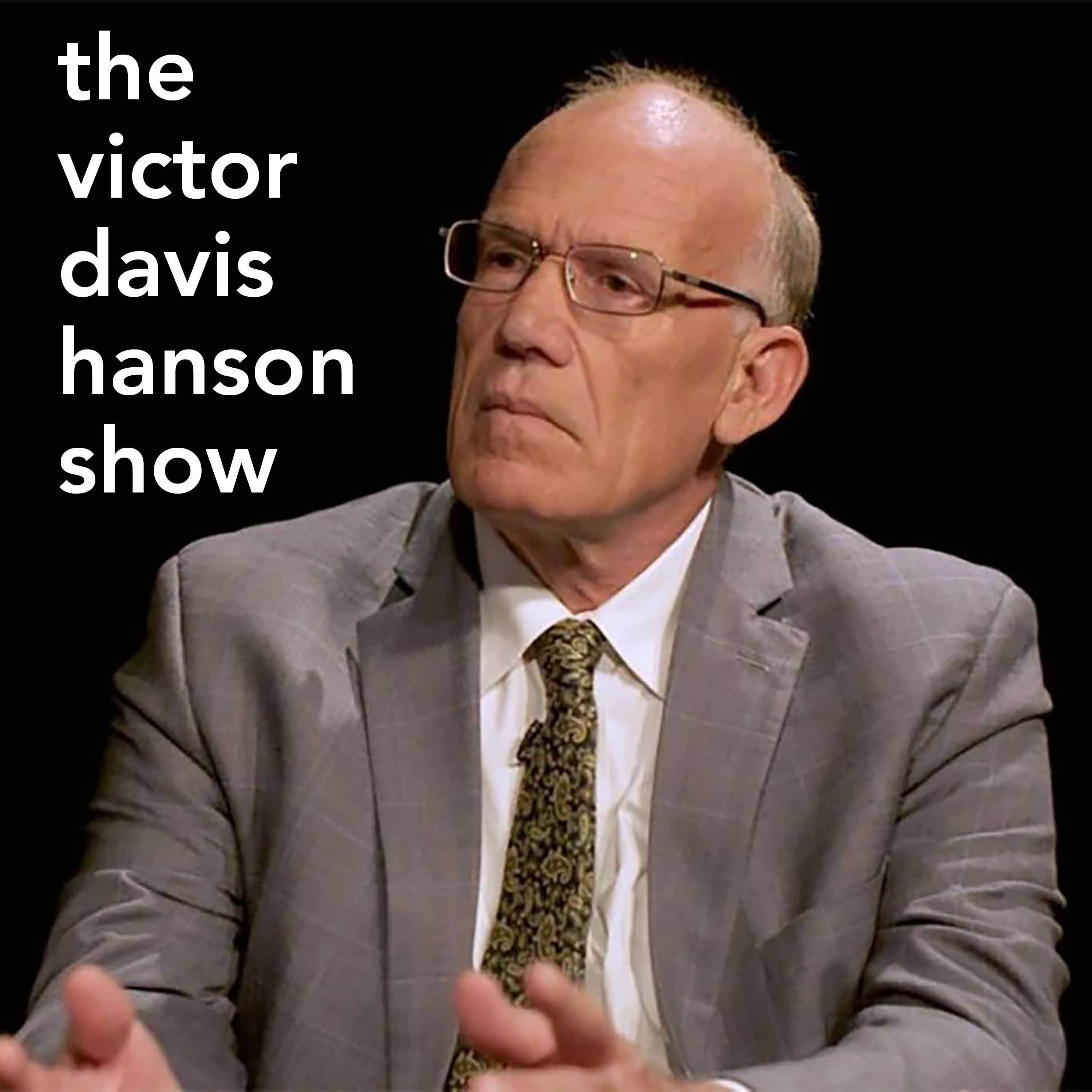
Loading summary
Transcript188 lines
- [00:00]
Sponsor Voice
Hey VDH listeners, as you know, we've recently come across a company that is making a huge difference worldwide called Wired to Fish Coffee. Wired to Fish Coffee cares so much about our Earth and its people that they give back 25% of their net profits to faith based programs and clean water initiatives. That's no joke. And the coffee is delicious. It's sourced in Guatemala and Mexico, known for some of the finest coffee beans in the world. This coffee is also consistently getting five star ratings from the thousands of coffee lovers who comment on its smooth finish and amazing taste. Give Wired to Fish Coffee a try today and join a community of people that are making a positive impact. I mean everyone drinks coffee. So drink coffee for something that you're passionate about. Head over to wired to fish coffee.com that's wired the number two bishopee.com today and use the code give back for 10% off your order. Hello ladies.
- [01:17]
Jack Fowler
Hello gentlemen. This is the Victor Davis Hansen Show. I'm Jack Fowler, the host. You're here to listen to the star and namesake. That is the aforementioned Victor Davis Hansen who is the Martin and Ely Anderson Scene Senior Fellow at the Hoover Institution and the Wayne and Marsha Busky Distinguished Fellow in History at Hillsdale College. Victor is a best selling author, syndicated columnist, farmer, classicist, philologist, I think also military historian. You are okay.
- [01:44]
Victor Davis Hanson
That's what says on my degree.
- [01:48]
Jack Fowler
Okay, I believe your degree. Believe that. Sheepskin. We are recording today, Saturday the 30th of November, two days after Thanksgiving. This particular episode of the show will be up on Tuesday, December 3rd. We have plenty to talk about. Energy issues in California, AOC maybe running in 2028, a really interesting piece in the Wall Street Journal on Donald Trump's Rainbow Coalition and more. Maybe we'll start the show with that and we'll do that when we come back from these important messages.
- [02:33]
Sponsor Voice
Finding the perfect gift can be pretty overwhelming. I always want to make sure that I'm giving gifts that people actually want. This year I found the perfect spot for timeless gifts made from premium materials. You've got to check out Quince. Quince lets you treat your loved ones and yourself to true quality at an affordable price, no matter what you're looking for. All Quint Items are priced 50 to 80% less than similar brands. By partnering directly with top factories and cutting out the cost of the middleman, Quince passes the savings on to you. Quince is on the nice list. They only work with factories. They use safe, ethical and responsible manufacturing practices and they use premium fabrics and finishes for that luxury feel in every piece. And I should know. As the cold weather has arrived, I'm keeping toasty warm with my handsome Quince navy blue Sherpa gift luxury this holiday season without the luxury price tag. Go to quince.com victor for 365 day returns plus free shipping on your order. That's Quince Q U I n c e.com Victor to get free shipping and 365 day returns. Quince.com Victor running a small business means you're wearing a lot of hats. Your personal phone number becomes your business phone and before you know it, you're juggling customer calls day and night. As your team grows, it becomes impossible to manage without your personal number. That's where OpenPhone comes in. OpenPhone is the number one business phone system. Open Phone will help you separate your personal life from your growing business. For just $15 a month, the cost of a few cups of coffee, you can get complete transparency and visibility into everything happening with your business phone number. OpenPhone works through an app on your phone or computer and integrates with HubSpot and hundreds of other systems. It's affordable and easy to use. Whether you're a one person operation and need help managing calls automatically or have a large team and need better tools for efficient collaboration, Openphone is a no brainer. Plus they've won multiple awards by G2 for software reviews and are trusted by over 50,000 businesses. Right now, Openphone is offering 20% off your first six months when you go to openphone.comVictor that's o p e n p h o n e.comVictor for 20% off six months. Openphone.comVictor and if you have existing numbers with another service, Openphone will port them over at no extra charge.
- [05:33]
Jack Fowler
We are back with the Victor Davis Hansen Show. Of course, Victor, I forgot to mention the A to Perseus is your official website. The address is victorhanson.com I'll talk more about that later in the episode. Why folks should be subscribing. By the way, Victor, Thanksgiving in the rearview mirror. Now. How was your?
- [05:54]
Victor Davis Hanson
Very good. We drove up to Northern California and my daughter had just decided, she had decided a year and a half ago that Santa Cruz and its culture was not conducive for the raising of three children, one with special needs. So we, we went in together and we purchased five acres in our house and she's got a little family compound up there out in the country in the foothills. Five acres and they are getting back to this. She grew up on a Farm. So she had to do all sorts of chores when she was as early as 5. So I think it's really good for her. She's in her early 40s and she's doing maintenance and her husband works at a high school and so she's there all day and trying to fix up everything. So I went up there and we viewed the property and I gave her some suggestions of which is it, is.
- [06:53]
Jack Fowler
It open property or.
- [06:55]
Victor Davis Hanson
Yeah, yeah, you know, it's in the, it's in the California mother lode, gold rush country.
- [07:00]
Jack Fowler
Okay.
- [07:01]
Victor Davis Hanson
So there's five acres and there's actually a fisher that runs through the place where they used 1860s hydraulics. You know how those water cannons. So they made a canyon and there's a stream.
- [07:13]
Jack Fowler
Oh.
- [07:14]
Victor Davis Hanson
And she's. It was, it's a very, it's on a dead end road. It's very isolated. They have a dog and they were five of them living in a 1200, 1100 square foot home in Santa Cruz. So it was very cramped. And then they were, you know, the Santa Cruz. I don't need to tell our viewers what Santa Cruz schools are like or the culture there. It's a beautiful city. I went to school there. I lived there for a while. She's lived there for over 12 years. And they needed to get out.
- [07:47]
Jack Fowler
Well. Well, good. I'm, I'm happy for them. I remember growing up in the Bronx, by the way. Victor. I think we maybe had 800 square feet for 12 people and it was just bunk beds galore. Rack them and stack them.
- [08:01]
Victor Davis Hanson
We did the same thing. We had. My dad, he, my grandfather gave him 1/4 acre and he went and bought an auction, an 800 square foot home. And he towed it on a big platform and then he bolted it down. And that was our home until I was about 10. There were five of us. We all shared, the three of us shared one bedroom. And then we built. He built a house that, you know, like a V pitch roof right next to it. So he put the first half of the V and then he stopped and he was going to put the other half of the. And tear down this house so he'd have the complete thing. So he had half a house 15ft away from the regular house. And then he fell when he was doing all the work and smash. He destroyed his elbow. They had to take his elbow bone out, broke off at the tip and he couldn't hammer anymore. So then he stopped. So that's where we lived and that's. My brother lives there and that's exactly what it is today. It's half of a newer home built in 1965, I think, and then the other half that was towed in and three bedrooms. So you have to go from the bedrooms, three bedrooms in the new one to walk out in the cold, to go to cook or something.
- [09:20]
Jack Fowler
And does it actually get cold? I thought the average temperature there was 127.
- [09:26]
Victor Davis Hanson
Well, actually in here yesterday it was 45.
- [09:29]
Jack Fowler
Wow. Freejida. Hey, Victor. I'm gonna surprise you. We talked about this ahead of time. What we talking about? And I had meant to mention this. Yeah. I'm still on a high. Right. I said that the last episode. Yeah. And I see the foreign policy of the United States being conducted by Donald Trump and he's not even president.
- [09:56]
Victor Davis Hanson
And isn't that funny? I was thinking of that too, Jack. I'm glad you brought it up. They put Michael. They tried to destroy Michael Flynn for so called. Remember conducting foreign policy when he was not yet officially in office by supposedly talking to a Russian diplomat. Remember that? Right. And forget that John Kerry was out of office and was finagling around with an Iranian foreign minister to undermine Donald Trump. And they didn't say that the Logan act is just a piece of paper. It doesn't matter. It's just ossified, calcified. But my point is this, is that, that if Joe, if Joe Biden was president and he was sane and they, they would go after Trump. But the reason they're not going after Trump is even the left knows there is no president. There is a president in name only who was put there as a facade to leverage a hard left agenda. And that facade has now dissipated, evaporated. So there's nothing there. I mean he's, he went, he, we just, you know, he wandered into the jungle. We never knew if he came back. And then he speaks a language other than English I couldn't understand. Every time he's on the air, I say to my wife, you know, I can read four or five languages. I cannot read. I cannot understand that language. What is it? I don't know what it is. And I'm not being cruel to the elderly because he's obnoxious and he's cruel to people. So he's not functional and he knows it. And then we have somebody who went, crashed after her aborted bid went to Hawaii. And then all of a sudden this news came out from her loyal supporters. Hey, she was a lousy candidate, B. We lied to you. We. Our internal polls show that she was never ahead There was no hope, there was no joy, there was no big momentum. Luckily, I mean, we looked at the line, New York Times, the Lion, Washington Post, the line, Sienna, the line, Quinnipac, and we were happy. They were giving us momentum, but we didn't see it. And the polls that we actually paid for, to be honest. And then, of course, the donors came out and said, what the. You took off. You went through a billion and a half of our money. You paid Hope for that billionaire half a million or million bucks? That shyster shakedown artist Al Sharpton, 500. What did you give Cardi B? What did you give Beyonce? What are you doing? Who are these little 20 somethings renting jets on our dime? You just took us to the cleaners and you ran a terrible campaign. So then she comes back and you think she would be vigorous, refreshed, optimistic, sober. And what does she do? She does a video, 20 minutes with Waltz, and somebody on her staff does not like her because, well, everybody on her staff doesn't like her. So they take a 30 second clip. It looks like she lost all muscularity in her neck. Her head is drooped. She looks like she has no makeup on. She looks, I don't know, sick. She looks wrinkled, tired. Her hair is dishoved. And she, if you ask me without any evidence, and I'm not engaging in character assassination, but I would think she'd had a little bit to drink. She seemed to be on the verge of slurring a lot of words.
- [13:36]
Jack Fowler
Can you, can you blame her?
- [13:38]
Victor Davis Hanson
No. So after all of that, I mean, she's not in charge, so nobody's in charge. Who's in charge? Don't. Trump stepped up and he said, hey, we don't have a president and we don't have a vice president, so I'm going to be president. So Trudeau flew to Mar a Lago, and I mean, he did this thing with it. Did you see the picture at the G20 when they basically said, when you and I talked about that, screw Joe Biden in America. He's always late, he always wanders around. We're going to go ahead with a picture, and if he shows up, fine, but stick him up in the top corner. And that's what they did. So now we got Trudeau, the man child, flying to Mar a Lago. We have Mark Zuckerberg, the man child flying. I guess what they say is when they go to Mar a Lago, Mark Zuckerberg says, donald Trump, I am so sorry that I stealthily, covertly sent $419 million. That's a lot. It's almost a half a billion dollars to destroy you. And it worked. And so that's what I did in 2020. I tried to absorb the work of registrars and all those key states that you lost. I did that. But I'm sorry. And then you know what I also did? I partnered with the FBI to suppress news of the laptop, which one of these polls said alter the 2020. So if there's one private citizen that is responsible for you losing, it's me. But forget all that. Please don't do to me what I did to you. And then Trudeau comes in and says, I've called you a dictator. I've called you Hitler. I've called you everything in the world. We're sending illegal immigrants back into Canada. 70% of your terrorist suspects are from the Canadian northern border and we want to get rid of them. So since Biden declared that you guys were a dumping ground, we just dumped everybody we didn't want in there and. But I'm so sorry, please don't have a tariff on me. That's pretty much what he's doing now. He's holding court for all these.
- [15:36]
Jack Fowler
He'd like to think he treats them when we've talked about before when he held court with Mitt Romney and that who wanted to be Secretary of State and that was quite an embarrassing outcome.
- [15:49]
Victor Davis Hanson
Yeah. Mitt Romney would go on to beg for Trump's support when he ran for Senate successfully, only to be one of what, four senators to vote to convict him of the impeachment after he was a private citizen in 2021.
- [16:05]
Jack Fowler
Yeah, no favors go unpunished.
- [16:09]
Victor Davis Hanson
Always better in Romney's mind to lose no lo nobly then went ugly.
- [16:16]
Jack Fowler
Well, Victor, before we get on to the Wall Street Journal piece, this is by about. It's an interview with Michael Barone. I just want to take a moment for our sponsor, open phone. OpenPhone is the number one business phone system. They'll help you separate your personal life from your growing business for just $15 a month, the cost of a few coffees, or maybe just that's one coffee at Starbucks. You get complete transparency and visibility into everything happening with your business phone number. OpenPhone works through an app on your phone or computer and it integrates with HubSpot and hundreds of other systems. It's affordable and it's easy to use. Right now OpenPhone is offering 20% off your first six months when you go to openphone.com Victor, that's O P e n p H o n e openphone.com Victor for 20% off six months open. And if you have existing numbers with another service, OpenPhone will port them over at no extra charge. We thank OpenPhone for sponsoring the Victor Davis Hansen Show. Victor. This weekend's Wall Street Journal has an interview with Tunka Varadarajan. I'm not sure I said his name right. He's.
- [17:33]
Victor Davis Hanson
He said it better than I do. And I've known Tunku for, I don't know, 20 years.
- [17:37]
Jack Fowler
Okay, well, it's, thank you.
- [17:39]
Victor Davis Hanson
I've never been able to pronounce his name.
- [17:41]
Jack Fowler
All right. Well, you do say names, interestingly.
- [17:46]
Victor Davis Hanson
Sometimes I do. See, my listeners remind me of that. I can plead that on my bike accident. Both of my lips were upper and lower were severed.
- [17:56]
Jack Fowler
I know.
- [17:57]
Victor Davis Hanson
My gosh, I know. So I have.
- [17:58]
Jack Fowler
You sent me the picture of that.
- [18:00]
Victor Davis Hanson
I have kind of a lisp now.
- [18:02]
Jack Fowler
Yeah, well, we'll suffer through it. This is titled Donald Trump's Rainbow Coalition. And the interesting thing, a victor in general. Yeah, there is a rainbow Coalition. And part to me of the beauty of what happened is the decline of identity politics, which is an abhorrent thing. I wrote Bill Buckley when he ran for mayor 60 years ago. Same thing. You know, this is, can I not just be an American? Do I have to be a black to American? Do I have to be hyphenated American? I wonder though, don't we. Isn't there in, isn't that kind of a pressing need to try to totally break the back?
- [18:47]
Victor Davis Hanson
Are you suggesting there's a paradox when Trump supporters say they got record levels of the black vote, the Hispanic vote, the gay vote. Yeah, I mean, and they're not supposed to be for di. There's a lot of paradoxes that Trump's going to have to reconcile. I mean, in order for us not to be in so called endless wars or endless supporting. Supporting endless wars, you've got to be deterrent because Biden ruined deterrent. So to be deterrent, you're going to have to use force like he did with Solomi or Baghdadi or the Wagner group. But that's also using force abroad. That's a contradiction. You can't ask. You can't really promise a trillion and a half dollars of tax cuts. No. No taxes on retired Social Security income. No tax on tips. No tax on military firemen first and then slash taxes and then say you're going to bet nobody's ever done that before to slash taxes and to keep spending the way it is and balance the budget so you're going to have to slash taxes to create greater prosperity and revenue, slash expenditures and then get toward a balanced budget. So I could go on, but there's a lot. And as far as immigration is, you're going to have to make the case, Mr. Trump, that the reason that Hispanics are supporting you is this time it's different. 50% of the people coming illegally into the United States are not from the Latin American, Spanish speaking world. And so let's just admit it, there's a much greater hostility because it's not necessarily an ethnic solidarity factor at work here. And then number two, they come in such numbers or they're flooding the zone and they're destroying the school, they're spiking crime. So he's going to have to thread the needle and try to explain to his newly acquired constituents that I'm doing this for you. It's a class matter. This was dreamed up by bicoastal elites and the consequences fell on you. And these people are from all over the world. We're not just singling out Hispanics. So that's what he's going to have to do. But you're right, you can't just keep saying, I got more black votes, I got more. But you're going to have to say I created a middle class constituency. And As I said 100 times, the black truck driver, the white carpenter, the Hispanic Roman, this is the last time I'm going to say identify people by their ethnic affiliation. All of you have more in common. So from now on, I'm just going to say our. You know how I used to say our farmers and our, that personal possessive, plural, possessive, our, that was really effective. Our soldiers. He's going to say our middle class people. Our middle class people. Because you don't want to accentuate. And just as a footnote, everybody should remember how this whole debacle started under the Civil Rights Act, 1965, that led to soon affirmative action. If you go back and read about it, it was at a time when 10% blacks were markedly impoverished per capita income compared to the so called white. And they did say so called white. And they lumped in so called white as non blacks and that included Hispanics, that included Asians, et cetera. But then we, the Democratic Party took that under Ted Kennedy and soon they let in the border and they said, no more Europeans, we're going to have family ties. And they flooded the zone and the so called white population dipped from 90 to 70%. That wasn't the only reason there was a crisis in so called white fertility. But the point I'm making is as they flooded the zone, then they came up with a new ide that affirmative action would now consist of Hispanics but not Asians and blacks but not Asians. And why? Because Asians, Japanese Americans, Chinese and area and the beginning of a huge influx of people from the Indian subcontinent, Pakistanis, Indian, they were making more than white. So the subtext, though not overt, was economic. Then two things happened. Blacks and Hispanics started making a lot of money and the Democratic Party not a lot of money, but they were upwardly mobile. And if we had closed the border, the existing Hispanic population would have achieved parity or above by now. But the Democratic Party said this has been a winning issue. We have got back all the black vote. We lost because of the southern Democrats that Eisenhower and Nixon used to win. I think as you mentioned Michael Barone, he cites, I don't know if that's correct, but he cites the 64 Goldwater victory vote against loss and candidacy of someone who voted against the Civil Rights act and so did Buckley. So maybe or not voted, but didn't support it initially, although he later rebooted. But my point is this is that when the Democratic Party looked at that, they said we can develop this or we can mine it. So then they came up under Obama with a new word, an old word that was now new diversity. Diversity said this. It's no longer affirmative action blacks, it's no longer affirmative action Hispanics, it is everybody who can claim not to be a despised white person. So you can be an Indian aristocrat, you can be, and I'm talking now from personal experience, you can be an Indian almond farmer with 5,000 acres, you can be from Basque land, you can be from anywhere that has a claim that you're not white. And that diversity pool went up to 35% of the population. And then the economic factor which had initially helped prompt affirmative action now was discarded entirely. So we end up with an Orwellian situation where you're in a university and somebody who's making $500,000 a year and driving a Mercedes who happens to be Indian from India is telling you how she is oppressed and a member of the non white constituency. And then when you go to a meeting of faculty and you hear people prompt, and I have thousands of times, we need a diversity can. And diversity can. Diversity can. What they mean now by diversity, that person can be from the Middle east, he can be here on oil money, he can be a Kuwaiti grandee. He can be a blond haired blue eyed South American Chilean who trills his Rs can be anybody who claims he's not white and he can be as rich as Croesus and that's what we're in. And they've got to destroy this thing because it's a neo confederate racist idea. It leads to absurdities like Harvard or Stanford's separate graduations by race. Separate spaces, safe spaces. Remember that? Safe spaces where you have to check your idea. And I was about two years ago I had a student intern and I said pretty soon they have to have DNA badges sort of like yellow stars and. And he said what do you mean we? I know students who sent in their DNA in their applications. So you got to end it. Trump's got to end it. Chris Rufu is right. They've got to end it. Vance is right. They've got to end it. Pete Hexeth is right. He's been really overt about he's going to try to end it. And there's a whole bunch of scoundrel officers that you can go on the Internet, Jack. And some people are playing what they said during the heyday of 2021 when Millie and Austin remember they were virtue signaling after George Floyd and Reed Professor Kendi and white rage, white privilege, white supremacy. We're going to find them out and all that stuff. I don't know. I. I'm not supporting professional candy but I just have to learn what it is and I'm going to read him. This is when Kendi had his what bu 50 million dollar race studies program anyway DLM had not stolen $100 million and esconced off to luxury homes Malibu.
- [27:31]
Jack Fowler
I wish there was some intrepid journalist not like that. Chris Rufo isn't as who gave the money, who made the decisions that this corporation, their foundation is going to get blm. You know no one who these people should be paid.
- [27:44]
Victor Davis Hanson
Look at, yeah look at Al Sharpton. He's admitted that he was. He came to currency as being an overt Michael Pack's recent movie document Wall street shared project on Crown Heights riots. He was just, he just stirred up anti Semitic violence that led to death and yet he was really debilitated and that's what he did. He shook down corporations for contributions or owls. But people have to just say we're not going to do this anymore. And that's why Pete Hexeth would be a very good nominee and the fact that he would be a big. I don't know if you saw today, Jack, they're going after him with a renewed attack this morning.
- [28:23]
Jack Fowler
No, I did not. What, is it the same over the same circumstances?
- [28:28]
Victor Davis Hanson
It is, it is. It's. What it was. Is. Allegedly. Well, no. Yes and no. It's not about the alleged assault. It's his three marriages. So he had a marriage and I think he confessed to adultery, and then he married the person he was seen and had three kids. And then he had a relationship. I think he had impregnated her. So he married the second one. Then he got another one, the third. But in that process, from one to two, his mother was angry at him and wrote in the heat of passion, an email to him that said, you've got to start treating women better. You treat them. Them as expendables. You're not civil to them. And it was. It was about the child custody problems between him. And she really bawled him out and said, I'm not proud of you. And then maybe, I don't know, within a very short period, I can't remember if it was hours or minutes, she wrote another email or maybe sometime and said, I'm very sorry. In the heat of passion. I said that. I didn't mean it. You've been a decorated hero. She's gone on Fox. I've seen her on Fox News where she praised his military service, said, he's a wonderful father. He treats his pastor. Anyway. Well, the first email she forwarded to a quote, unquote friend. Do I need to fit.
- [29:51]
Jack Fowler
Oh, my God. I was gonna. I was just gonna ask you how did this come to light and where.
- [29:54]
Victor Davis Hanson
Do you think it came to light at? Who published it? The suspects are. Well, come on. Who are the usual suspects that destroy people?
- [30:03]
Jack Fowler
Politico, the Washington Post.
- [30:05]
Victor Davis Hanson
Close.
- [30:06]
Jack Fowler
Politico, Axios. You tell me.
- [30:10]
Victor Davis Hanson
You're missing the elephant in the room. The New York Times.
- [30:12]
Jack Fowler
Oh, okay, sorry.
- [30:14]
Victor Davis Hanson
The paper of records. The New York Times. Without much context either. So right now, she came back out and said, this is despicable. That was second. That was forwarded to a friend. And that friend betrayed her trust.
- [30:27]
Jack Fowler
Of course, that's what friends do in these this day and age.
- [30:31]
Victor Davis Hanson
Of course.
- [30:31]
Jack Fowler
You know that. Pete's. You've seen these articles also of DEI offices at the Department of Defense and the Pentagon. Like we're going to clear out of this, you know?
- [30:41]
Victor Davis Hanson
Yeah. I mean, if I was a general, say at one star or two star, and I was sniffing the current. So the scent of where promotion was and notoriety and advancement and careerism and a Post retirement billet with a defense contractor. And I saw this DEI thing and I listened to the chief of Naval Operations, the chairman of the Joint Chiefs and the Department of Defense Secretary and they were all promoting this. Then I guess if I had no character, I would jump on it too. So you have clips of these generals and they're saying, well, we're here at DI because we're here to remove the impediments. Well, there was no impediments. I mean, look at Colin Powell 30 years ago, 40 years ago. So they're, they're talking, what they're talking about is proportional representation or repertory representation. What they mean, I mean by that is they're looking at a unit and if it doesn't absolutely mirror image the demographics of the United States or if you think that for prior discrimination it must over represent non white people as reparations, then they're going to find a way to do that and toss away merit. That's what they're talking about. And so I think they're going to go, those people are on record. And I would just, if I was, I think, Pete, I think I could say that if he's confirmed. And that's going to be the reason they go after him, not the marriages and stuff.
- [32:10]
Jack Fowler
Right.
- [32:11]
Victor Davis Hanson
It's like going after Matthew Ridgeway for his three marriages. His daughter never talked to him again because he didn't treat his first or second wife well. But the point is he was, I think he was the best American general since Sherman.
- [32:26]
Jack Fowler
I mean, America just elected president. A man with three marriages, maybe even four. I've lost count. So I mean, I don't see that carrying.
- [32:34]
Victor Davis Hanson
Well, don't you think someone that only was married once his wife passed away, but was married to Dr. Gerald, he's a much better president because he has one less marriage.
- [32:44]
Jack Fowler
Yeah. Oh my God.
- [32:45]
Victor Davis Hanson
And Bill Clinton is the best of all. He's only been married once. So that's, that's what it was all, all about.
- [32:56]
Jack Fowler
Well, Victor, we're going to talk about the insanity of California Energy and we're going to do that when we come back from these important messages.
- [33:10]
Sponsor Voice
Hey folks, the biggest sale of the year at Brickhouse Nutrition is on. This is your chance to save a ton on all their doctor formulated products. One of my favorites is Field of Greens. Right now you'll save 30% on their best selling fruit and vegetable super drink that promises your doctor will notice your improved health or your money back. And lean. The doctor formulated weight loss phenomenon of the year is on sale. The Reviews on this product are incredible and it's a total game changer for folks trying to lose weight. Everything is on sale and there is literally no better time of the year. Visit fieldofgreens.com and use the code sale that's promo code sale@fieldofgreens.com last time and do not forget that Promo Code Sale S A l e@fieldofgreens.com Time is our most precious commodity and we've heard from so many listeners who have asked for advice about how they can spend it wisely to improve themselves and the people around them. That's why we're so excited that Hillsdale College is offering more than 40 free online courses in the most important and enduring subjects. You can learn about the works of C.S. lewis, the stories in the book of Genesis, the meaning of the US Constitution, the rise and fall of the Roman Republic, or the history of the ancient Christian Church with Hillsdale College's online courses all available for free. That's right, for free. We recommend you sign up for Athens and Sparta. In this course you'll hear from Victor Davis Hansen and Paul A. Wray, distinguished professors of history, as they discuss the history, culture and government of each city, the ill fated Peloponnesian War and its consequences, and examine what is necessary in order for a democracy to flourish and endure, how best to form free and self governing citizens and how to resist tyranny from without and from within. Start your free course Athens and Sparta Today. Go right now to Hillsdale Edu VDH to enroll. There's no cost and it's easy to get started. That's Hillsdale Edu VDH to register Hillsdale Edu VDH.
- [35:34]
Jack Fowler
We'Re back with the Victor Davis Hansen show recording on on Saturday, November 30th, and this particular episode is up on Tuesday 3rd December. We are into, as Catholics will say, we're into Advent. Keeping my Catholic hat on. Very excited, Victor, seeing some of these clips of Notre Dame. Notre Dame, which will formally reopen.
- [36:03]
Victor Davis Hanson
The only thing I was going to ask you about that. Do you see the before and after of the interior?
- [36:08]
Jack Fowler
Yes.
- [36:09]
Victor Davis Hanson
Well, before the before, forget about this damage. It was kind of dreary and yellowish brown. Right. From aging and so.
- [36:17]
Jack Fowler
Yeah, sure.
- [36:17]
Victor Davis Hanson
And then the other one looks like a counter reformation glittering white one. You know what I mean?
- [36:22]
Jack Fowler
Yes, it's, it's pretty. You know, this is reminds you of the, of the Sistine Chapel, the ceiling, which I think was about 25 years ago the Vatican had some project with some Japanese television network that paid for the cleaning of it. And so prior to the cleaning, the darkness of the ceiling was part of the artistic analysis. Once it was clean, it was like throw all that analysis.
- [36:54]
Victor Davis Hanson
Every time I go to Europe and I go into a church or a religious structure and it's glistening white with all these colors, I say those were those Catholic bishops that got together and say, we're losing subjects. Those damn Protestants, excuse the word, and we're going to lighten up and get white, glittery, ostentatious, win back the hearts and minds of the apostates. And they did. Those Counter Reformation stuff is pretty impressive. And that's what it looks like.
- [37:25]
Jack Fowler
Have you ever been to Notre Dame?
- [37:27]
Victor Davis Hanson
Yeah, I have. Twice, I think.
- [37:29]
Jack Fowler
Yeah. When Sharon and I got married, our honeymoon in Paris, we went. But it was funny. We just went. Started going up some stairs and we ended up. We were hanging outside with a bunch of gargoyles. It was.
- [37:44]
Victor Davis Hanson
I think the first time I went was 1974. Yeah, it was kind of in the hip. Well, the end of the hippie period. But it wasn't necessarily. Well, what's the word? It seemed unkept, as I remember.
- [37:58]
Jack Fowler
Yes, yes.
- [37:59]
Victor Davis Hanson
As if a hunchback was living up after.
- [38:02]
Jack Fowler
Yeah, yeah, yeah. I was saying the same thing a few years later when I was there. But anyway, this is one of the great structures of Western civilization. So that's, you know, kind of cool that it was early on, part of the talk was, well, we're going to, you know, change this from the church that it was into some cultural center. And thankfully that got shot down anyway, I heard that.
- [38:27]
Victor Davis Hanson
I thought it was going to go back to Robespierre and the cult of the Supreme Being.
- [38:31]
Jack Fowler
Yeah, well, they were gonna. They were gonna put up big screens.
- [38:36]
Victor Davis Hanson
Ratio. Picture of Greta Thunberg, maybe, or.
- [38:41]
Jack Fowler
Yes. The new saint of our age. Hey, Victor. In the same Wall Street Journal that referred to the previous article, there's a piece by Ed Ring. I don't. Ed Ring, who runs policy for the California Policy Center. Terrific people. He's always. The guy is a machine of an California problem.
- [39:05]
Victor Davis Hanson
Very prolific.
- [39:06]
Jack Fowler
Yeah. Climate Action has California's energy economy on his knees. And I'm not going to read from this except one little passage. But first of all, this. A truly crazed offshore wind turbine energy plant that he writes about. But then a very important thing here to me is he says California farmers are losing up to a million acres of some of the planet's finest irrigated farmland thanks to bureaucratic delusions that water should be left in rivers that run to the ocean, Californians can't afford homes thanks to a housing industry subject to climate change laws that require infill or building in unused and underutilized city spaces to prevent the emissions that accompany urban, quote, unquote sprawl. There's so much more in this piece that is overwhelming in the number of things that are being inflicted on Californians, including you. Victor, your thoughts on this?
- [40:09]
Victor Davis Hanson
Well, if you were a Martian and you flew in here and you were an anthropologist professor at Mars, and you wanted to study the sociology of California, and so you travel the state, you talk to people, you look at the internal data, you talk to the elected officials, you would come up with the following exegesis. You would say, wow, this is very strange. This state is systematically being destroyed according to the standards of the past, which this generation had inherited. The last two generation had inherited a wonderful state, and it's systematically being destroyed by people who live in this strange nexus of UC Berkeley, Stanford, 1. $9 trillion of market capitalization, 2 in Silicon Valley, and 3, a wealthy spoiled brat culture of politicians that have created the Pelosi family, the Newsom family, the Feinsteins, the Boxers and the Jerry Browns. And Gavin Newsom, he just bought a $9.1 million mansion and he makes 250,000 a year. So he gets that money either from his wealthy second wife or from the Getty family that's financed him. It was very close to his family. But my point is this. When he does it, California rates about number four in the nation and known 30 billion barrels of oil, perhaps in 30 years of 100% ability to supply its natural, natural gas. And it was the forerunner in nuclear power at Rancho Seco in Diablo Canyon. And it's deliberately shut down Rancho Seco. It's put so much. I just talked to a natural gas guy at a lecture I gave, I think, last year, and he said to me that at the present rate of failure to allow increased fracking and new discoveries and leasing, that the offshore and the Elk Hills fields will be pretty much inert. And they've gone from just recently supplying 40% of our oil and gas down, it's down to 20. And they're going to. That's the point. They want to phase them out. And they now produce, Jack, about 125% of our daily electricity through these mammoth fields. When I drive to work every week, I go down Manning Avenue on the west side of the Great Central Valley. And you should see it, Jack. They have pulled out thousands of acres of Almonds and row crop farming for these solar farms, they're just, they go on for miles. And it's the big. I think it's one of the biggest solar fields in the world. And you look at it and you say to yourself, wow, I thought environmentalists wanted to leave a little imprint on the environment. This is ugly farming. At least there was a beautiful orchard or a beautiful stand of alfalfa. This is hideous. And the upkeep. They have to go in there and wash the things. And then there's it. I thought, well, wait a minute, I thought that the left said that you can't do such things as it would interrupt what the migratory pattern of rats and lizards and turtles and stuff. And it just, it's an artificial barrier, much more evasive on the natural landscape than the wall with Mexico. But there's not a word of. And anyway, my point is this is that because they don't have batteries, they don't, about 20 to 30% of it, they don't use every day. They just disconnect it. I guess nobody wants to buy it because our neighbors with hydroelectric, Oregon and coal and Utah, Arizona, Nevada, they have all the electricity they need. They export to us at night because we don't have any power at night. So our power bills have tripled. So the guy that really is the architect of this, there's two people who were the architect. It was Jerry Brown. And then that was accelerated by Jerry Brown lives in I think a 2000 acre compound up in Grass Valley where he's back with nature. He doesn't have to commute. He doesn't have to raise kids. He doesn't have to pay for grandkids. He doesn't try to help his family. He's a multimillionaire. And Gavin Newsom and his family live in a $9 million Fairfield mansion. They don't care about the price of electricity. Yesterday, Jack, I drove down the 99 from outside of Sacramento to Selma, California, 214 miles. And I can tell you that in large swath, that six lane major, the major north south artery in California. California shrinks down to two lanes each way, four lanes. And it was like Road Warrior, really. It really was. I mean, cars going in and out of traffic at 90 miles an hour, truck drivers who basically say, well, if they're only going to have two lanes and I'm going to end up behind some guy with, you know, two trailers of chopped wood, I'm just going to get in the left lane and I'm going to floor pedal of the metal and I'm going to go 70 and if a guy wants to go 90, let him go around me. And so it's just open war. And it's got the, as I said earlier, the highest fatality rate per miles driven of any road. And so you look at that and then you say, well wait a minute, there's high speed rail parallel to it almost or it dissects at an angle and it's 15 billion. And the cost for just taking another 60 miles to ensure it would be six lanes is a fraction of the cost of Stonehenge. And I don't get it. So I do get it because Gavin Newsom sits there in his palace with all of his Bay Area friends and say, wouldn't it be nice if, you know, we went to Spain this summer, we were in the vineyards of France, we saw this high speed rail go by. It's so neat. We're going to do that. We're going to have one from Bakersfield to Mercedes. Isn't that going to be a nice little toy project? And we're going to split up these farms and ruin the landscape of Kings County. But that doesn't matter. We're not going to fix that gas burning fossil fuel consuming 99 if people die. If you're Hector Lopez and you're a paint contractor and you've got your van and you've got to go up and down every single day from Tulare to Merced and you go into that death trap and then you pull off the side of the road to get your $5 gas or maybe 515 diesel, that's your problem. Hector wouldn't want to be you. That's the attitude of these people. Nobody. Gavin Newsom never comes and says, he says he came down in the valley Jack the other day and said he was going to spend $500 million beefing up our administrators and legal team to stop the Trump agenda. I guess he meant to protect criminals from dep. But he never comes and downs and says, you know what I feel for you people. You, you do not have a safe transportation system in the valley. We have been letting out, I'm so sorry. We've been letting out all your water to the ocean, 90% of the snowmelt rather than let you have and your wells are going dry and you're losing jobs because your farmland cannot be irrigated. I'm so sorry I blew up those four dams. I know what I made me do it. We had cheap electro hydroelectric power. We had recreation. We had Flood control. We had irrigation up there in the Klamath. I just blew them up. It seemed like a good idea at the time. I'm sorry. I want to help you people. I want to help you people in San Joaquin Valley. He doesn't care.
- [48:06]
Jack Fowler
Bob Dole saying, where's the outrage? That's one thing from afar gets me.
- [48:11]
Victor Davis Hanson
Like I think everybody's listening. Why is this? And I can tell you I've thought about that most of my life because I've been unfortunately around these people and there's two exegesis of it and they're not mutually incompatible. The one is, and as a Catholic, Jack, you can, is that these people feel very guilty. They feel very guilty that they have so much. And once they get to a level where they have so much, they know they cannot consume everything, that they will never run out of money and they can consume everything they want. They think I want to help the less fortunate, but I do not want to be around the less fortunate. I've seen these people. I do not want to be in the same room with the people who pull off the 99 into the shell station bathroom and write graffiti all over it and trash. I don't want to be around those people. But I will square that circle of my guilt and still get into the kingdom of atheism after life by I don't know, saying that I want to have high speed rail, I'm going to go green, I want to be clean. I want to have everybody buy their food at Whole Earth. I'm going to have, I want everybody to buy an EV except the demonic Elon Musk. And so if Donald Trump eliminates, eliminates the $7500 EV discount, I will resurrect it in California. Except for the only car maker who assembles EVs in California, Elon Musk, who has 50%. You know why? Because I'm a good socialist and I and the legislator have, the legislature have decided that anybody who has 50% of the EV market, who created the entire EV market market is too greedy. So if he has 50%, he's not going to get that 7,500. So if you have a BMW that gets 6%, a foreign automaker, I will privilege you over our California native maker because I do not like him having too much market share. And incidentally, the fact that he put in $300 million into helping Donald Trump win has, has nothing to do with it. That's what we're asking to believe by him.
- [50:34]
Jack Fowler
Hey Victor, I just want to take a minute here to recognize our friends@best hot grill.com football's back so is tailgating and whether it's Friday night lights, Saturday, college or pro Sundays, Solaire Tailgate Infrared Grills set up fast, heat up quickly. Only three minutes to searing hot temperatures. Just like the big backyard Solaire. The Solaire Grill makes you the master of the tailgater with the juiciest, most flavorful food in the parking lot. And the fast grilling times leave you more time to enjoy the pre game festivities. They also cool down fast so that you won't miss a minute of the game. The USA made Solaire anywhere, everywhere and all about Infrared Grills are portable and perfect for any grilling on the go from picnics to camping RVs to boating, but especially tailgating. Amaze your tailgating friends with the great food you grill with your Solaire Infrared Grill. Learn more about these fantastic grills and Solaire's Try before you buy Demo rental program at best hot grill.com that's best hot grill.com besthotgrill.com and we thank the good people from Solaire for sponsoring the Victor Davis Hansen Show. Victor, you talking about the ugliness of what you see. Not just the ugliness of the highway or the danger of the highway, but the ugliness of these solar fields and wind farms that are to me cuisine arts of the sky, chopping up the bald eagles and bats. We remember growing up that Keep America Beautiful was such Lady Bird Johnson always, always on. You're right. So anathema to that.
- [52:18]
Victor Davis Hanson
I can remember it. I remember when I was, let's see, I was in. I was 12, 11, 10. I was in fifth grade. And Lady Bird Johnson had remember pick up all the trash and make America beautiful. So what did we do every Friday afternoon? Every Friday afternoon. And they did not give us plastic gloves and they did not give us little spikes. They said go out with these trash bags. And they did not not have plastic. Plastic. They had paper bags with two little paper handles. And we had to go out and pick up all the trash on the campus and then we went out on Mitchell Avenue in front of Eric White and pick picked up the trash in front and it was very spotless. And then we had a contest every month the person who made the best don't be a litter bug. So we all made little bugs like litter bugs posters. Don't try. And that's what we did. That was the culture. It was called. It wasn't. There wasn't a word ecology. It was conservationism and we learned about contour plowing and reforestation. So this myth that there were all these grasping capitalists, desecrators of the environment that they'd left, now they are. They have done more damage than they are the ones, as Edward Wing pointed out in this essay, that stop logging. We only have 20% of the logging, and I think we went from 50 companies down to two or three. So they wouldn't let you log. They wouldn't let people go up and cut wood for their, you know, cabins. They would not let controlled burns. They wanted to have a natural lush undergrowth and overcrowded. And then when it goes up, their attitude was, at least until recently, oh, it's burning well, that people shouldn't have been living up there anyway. It's not natural. And after they lost 60 million trees and they put more car soot into the environment than all of the pollution for about a year and a half in these fires. And that was deliberately done so by this administration, the Newsom and earlier, the Brown administration. Yeah, they got theirs. I mean, they're all. It's. I see these guys at various venues. I go to these very, very wealthy, ultra wealthy Bay Area people. They are the kind of people that have John Muir woods on little stickers on their bumper or the Sierra Club buttons.
- [54:47]
Jack Fowler
Right?
- [54:48]
Victor Davis Hanson
Very nice people, but they're very wealthy. They don't mind paying the 13.3 income tax. They don't mind paying the $5 we're gonna gasoline. It's gonna go up by 62 cents. By the way, the Air Resources. Air Resources Board that's not elected, but is the dumping ground for wealthy people who know Gavin Newsom or any governor on the left. They put these people on the board like the Coastal Commission. They've decided that we. That the poor people. And we have 21% of the state below the poverty line. And one out of every three welfare recipients. They think that the more they pay for gas, the cleaner the air, the cleaner the environment. And then they, you know, they don't really care. Their idea of illegal immigration or poor people is, you know, Juanita comes into their home and cleans them and they. They give them their used clothes and they brag about that at their social clubs. Yeah, so they're kind of like medieval grandees and they. They have their keep. And the peasants live outside the walls. And when they walk, when they ride out in their carriages, they throw bread to us. That's how their attitude is, only they call it left wing. I don't know why we Call it left wing. They're the most neoconfederate people in the world. Every aspect of confederacy, whether it's nullifying federal laws with sanctuary cities or safe spaces, separate race graduation or one drop rule for minority status, you name it. That comes right out of the old confederacy.
- [56:25]
Jack Fowler
Yeah, Victor, we're going to move on. But I think about that crying Indian from those old commercials with a little tear running down his cheek. And he'd be weeping and he'd be bawling now to see the ugliness. I drove down from. Where was I? At Napa, down to Selma this summer. I went through some propeller field. What do you call it? I can't think of that. You know the wind turbine.
- [56:56]
Victor Davis Hanson
Yeah.
- [56:57]
Jack Fowler
Oh, my gosh, it was so ugly. It just. We don't have much of that here.
- [57:03]
Victor Davis Hanson
You know, I fly into Palm Springs to speak and you should see it. First thing I notice is half of them don't work. Yeah. At any given time. Then I drive up through the Livermore Pass and I see it and I thought, wow, this used to be a pristine ridge line. You could see the sun rise or set, depending on your position. It's just so ugly.
- [57:24]
Jack Fowler
We read about how much energy it actually takes to create these things and how indisposable they are. And it's all a fraud from that perspective.
- [57:33]
Victor Davis Hanson
And we're, you know, we're what, 60 years into nuclear power. So it's much safer now than it ever was. And they have. We have fifth generation small fusion plants they could create. They can do all sorts of stuff. And we could do this cheaply and environmentally sound and give. If they want to go all electric and they're, you know, they're elon. And these people are getting us. I think Tesla's up to 340 miles on range. It can get up. It'll get up to 400. They're starting in Nevada to have these big recycling plants so they don't even have to go after the precious metals from China as much. Or we could mine them ourselves. We have them here in Cal. We have one of the richest precious metals for battery components anywhere in the world. Here in California. California. And we don't tap it. But we could do all of that with nuclear power. It would be. That would work. That you could have electric car that would go 400 miles an hour in range and you wouldn't have to, you know, you wouldn't have to worry about the environment. You'd get. It would be cheap. You could get down to 10 or 15 cents a kilowatt hour. But they're not going to do that. It's not a high. It's not just Jack. It's not just the environment that they are against. They are against the idea of progress for people. They believe that. They believe in a pyramidal system where a sanctimonious, morally superior, smug, highly educated person like Barack Obama has the right every once in a while to venture out of a mansion and says to people, you don't know what you're doing. You're really racist. You're really sexist. You're voting for the wrong person because you're ignorant. And I'm going to tutor you right now. So listen up. That's how they look at the world. All of them do.
- [59:23]
Jack Fowler
The vanguard of the proletariat needs and.
- [59:25]
Victor Davis Hanson
They do not want to empower. Their biggest fear is empowering people who they feel are not their moral and educational or intelligence equals. And the funny thing about it is, and that's what's so good about the Trump effort to dismantle this administrative state is that once you get through this little. I don't know what it would be called, once you get through this peephole and you get into the credentialed world, that is, once you're branded on your rear end with Ba, Ma, Ph.D. from the appropriate school and you plug into the foundation, the university, the department, Department of Environmental affairs head, whatever it is, it's pretty easy. It's not like you wake up every morning and you're Billy Bob Briggs in Bakersfield and you've got to go find another job to put in gutters, Right? Or you're. You fix leaky roofs and you got a hustle, hustle, hustle. And you've got the government on your back. You got the regulators, you got the customer.
- [60:31]
Jack Fowler
Where's my next job coming from?
- [60:33]
Victor Davis Hanson
Yes. Or you're. You're running a 711 and you get up in the morning, you go in there and think, oh, my God, what's the inventory? Did I replace this? What's the shoplifting loss? Oh, my God. What's the security? Are they security cameras working? Oh, my gosh. That guy pulled out and took off the gas hose in a car. That's 250, $550. A thousand. Well, that's what they do. It's not what Tom Steyer does, or it's not what Gavin Newsom does, or it's not what the Stanford faculty Senate worries about.
- [61:04]
Jack Fowler
Yeah. Well, Victor, one last thing. You know, we'll move on energy. It's shown wherever there is a lack of energy, there's poverty. And where energy is, when we export energy to, let's say, Bangladesh, I mean, this is the solution to the impoverished world, is the growth of an availability of energy. And to suppress it is almost satanic, I would think. Victor, you wrote a piece for X on the fumes of the 2024 elections, and we'll close out the show with your thoughts on the fumes.
- [61:42]
Victor Davis Hanson
Yeah, I did that.
- [61:43]
Jack Fowler
When we come back.
- [61:45]
Victor Davis Hanson
When we come back, we'll discuss it. I wrote it on Thanksgiving. Just spur the moment.
- [61:49]
Jack Fowler
Okay, well, some important messages and then we'll hear from Victor on this. But we'll be right back.
- [61:58]
Sponsor Voice
Are you ready to move easily and independently without pain or stiffness holding you back? Do you want to look in the mirror and see a plump, hydrated glow instead of more fine lines and wrinkles? Discover native path collagen made with only type 1 and 3 collagen fibers, the two most important types that make up 90% of the collagen in your body. Found in your cartilage, bones, skin, hair, nails and gut, types 1 and 3 provide maximum benefits without the need for unnecessary fillers. Native path collagen is a single ingredient formula with no fillers, additives or artificial sweeteners. Plus it's third party tested for heavy metals, ensuring purity and safety. Completely flavorless native path collagen can be added to anything. Coffee, smoothies, oatmeal, you name it. Its peptide formula makes it more bioavailable, meaning it's absorbed more easily and mixes perfectly without clumping. And you can get three or six packs at a fraction of the price of other brands. Visit getnativepath.com Victor and start your transformation today. That's getnativepath.com Victor G E T N A T I V E p a t h.com c o m/vic the holidays.
- [63:21]
Are all about sharing with family meals, couches, stories, Grandma's secret pecan pie recipe. And now you can also share a cart. With Instacart family carts, everyone can add what they want to one group cart from wherever they are so you don't have to go from room to room to find out who wants cranberry sauce or whether you should get mini marshmallows for the yams or collecting votes for sugar cookies versus shortbread. Just share a cart and then share the meals. In the moments, download the Instacart app and get delivery in as fast as 30 minutes. Plus enjoy free delivery on your first three orders, service fees and terms apply.
- [64:03]
Jack Fowler
We're back with the Victor Davis Hansen Show. Victor's got a website, the Blade of Perseus. Victor Hansen.com is the address. Go there and you will find Victor's links to Victor's weekly essays for American greatness, his weekly syndicated column, archives of these podcasts, his other appearances on other podcasts and other shows, his books, many of them bestsellers, and then his Ultra articles, which he writes exclusively, two or three a week for the Blade of Perseus. It costs $5 a month to subscribe, $50 discounted for the full year. You'll want to do it because you're a fan of Victor and you want to read his wisdom. And a lot of that wisdom is in the Ultra pieces. So check that out, please. By the way, Victor, I noticed on your appearance was. It was a Mark Levin last week, but you had your novel behind you.
- [64:59]
Victor Davis Hanson
Ah, the End of Sparta.
- [65:01]
Jack Fowler
End of Sparta, Yeah. So that was.
- [65:04]
Victor Davis Hanson
I don't know if that was a successful effort, but it was kind of a history. I try to make every single thing in that novel of a coterie of people with a pan and among a Pamananas that freed the helots and defeated Sparta. Factual. So I read everything and then I actually wrote the dialogue in classical Greek and then I translate it back into English to get a kind of a. I didn't quite know. I didn't want it to sound like Tolkien, but I didn't want to sound like American English either. Anyway, it's actually sold pretty well. I was pretty happy how it did. But on this piece, the fumes of the election, I wanted to pick out seven things that came to my mind. And I, you know, I had a good friend that corresponds with me and he said, what happened to Eeyore? He disappeared. And you smile on Fox. You've never smiled before. You're happy. And I said, I buried Eeyore, at least for a while. And I have been. I admitted, I think we talked about that. I him euphoric. And I don't. I know you have to come down to earth, but I really think we dodged a bullet. And I'm so happy. And I think the first one I thought is even his enemies. Have you noticed it? His. His approval rating, Jack right now is 55%.
- [66:20]
Jack Fowler
Right.
- [66:20]
Victor Davis Hanson
And Joe Biden's is 36. That is amazing. And so, you know, after all those collusion hoaxes, and I pointed out that in the piece and the mail ballot ambush, the two impeachments, the triumph as a Private citizen, the five criminal and civic lawsuits.
- [66:37]
Jack Fowler
Annie Willis might go by the board between the time.
- [66:41]
Victor Davis Hanson
I hope so. $5 billion in campaign negative ads and two different elections. You could add three elections if you had 2016. Two assassination. He's kind of. And I said this. And now, like an exasperated Wiley E. Coyote, they have developed a bizarre mixture of fe and respect, venomous though it is for the unstoppable. Beep beep. Road Runner Trump it is. It can't get rid of him. And then the other second was that. Did you hear that? Well, anyway, I preface this. I just read that David Floo, the Obama era strategist, admitted on I think Pod Save America that, that she was never, ever, ever ahead. The internal polls showed all the time. So when they were talking about the big momentum, the joy, she had a flawless campaign. I thought so too. But now apparently they were surprised that if I were to translate what he said, I think I could say truthfully, he was shocked that the New York Times, Washington Post polls and all the others were lying on their behalf. Laugh with her leading because they never saw it and they were paying good money for internal polls. And so then I said, you know that she's going nowhere. She is not going anywhere. She's not. She's going to a Dukakis like retirement. She was the worst candidate since George McGovern. And I give him his due. I like George McGovern. I didn't like his politics, of course, but he was sincere, he was honest. He volunteered in World War II. I think he flew Jack, Jack 30 over 30 missions as a B24 pilot.
- [68:24]
Jack Fowler
He was a friend of Buckley. He showed up.
- [68:27]
Victor Davis Hanson
Tragic daughter who died.
- [68:28]
Jack Fowler
Oh, yeah.
- [68:29]
Victor Davis Hanson
And then he didn't. He, he opened that bed and breakfast and said, oh my God, what have I created?
- [68:35]
Jack Fowler
The regular a mile from where I am right now. He had the Stratford and he bought it and got shocked by what it, yeah. Running a business meant in America.
- [68:43]
Victor Davis Hanson
So I, I said she's not going to make a, you know, a Trump comeback pac. They blew. All her donors are furious at her. She blew that 1.5 billion. It's probably more with the packs. And so she ran five points behind Joe Biden four years ago and Adam Schiff got more votes than she did when he ran in senator, you know, on the same ballot in California.
- [69:09]
Jack Fowler
Right.
- [69:09]
Victor Davis Hanson
And the only weird thing is what is she going to do? She says now she's either going to run for president in 2028 or in 2026 for governor, but she's got a 100 day metamorphosis. She is now on record as a crime fighter, a fracker, a border hawk, a deporter. Does she flip back to. Because that we all know that was insincere. But does she do a. She goes I'm in California, I'm gonna, I can't get the nomination. I got to go back to my failed bid for 22020 being the hard left or did you think the country, five or six of these counties moved red in California. Maybe that's a trend. Maybe I should stick with my phony 100 day campaign. Who knows. But all we know is whatever it is, it will not be authentic. And you know, another thing is Jack, this has really clarified the 2020 loss that was. There's only one time in history where a subsequent election got. It was only one time in history, let me put it this way, where a subsequent election got less votes than the prior one. And that 2020 election total votes that had more than this election, of course more than 2016. And Donald Trump's margin was almost the same. He lost handedly to Joe Biden and he lost. He won handily over Kamala Harris. And I just don't believe that a guy who never campaigned like Joe Biden who could hardly speak was going to get more votes than the first black woman. But he did by not even close. He outperformed. And I had, I think, I'm not saying that they changed the ballot ballots. I'm just saying when you go over in a matter of months from 30% voting on election day to 30% not voting on election day and 70% then it's. You have a magnitude of error rate decline. So 5% ballots you throw out Michigan now you're down to 0.5 as you're doubled the incoming ballot. Something went wrong there. And that, and we'll never explain why that one year stands out is having more, so many more votes than the election following it. And I said, you know, they're still there are still catatonic about the result. Did you see that is there name Seltzer who told us that she was going to win Iowa by 3%. She was beloved by pollsters and said she was a gold standard of Iowa polling and she resigned. Did you see that? That he's ret.
- [71:58]
Jack Fowler
Yeah. Or retired.
- [71:59]
Victor Davis Hanson
Retired. Yeah.
- [72:00]
Jack Fowler
Yeah.
- [72:01]
Victor Davis Hanson
And then you know, another thing was very strange is that they said he had lost the women vote. He did almost the same, if not a little better with women than he'd done before. And with men he kept about the same. But what really made that 2 million to 3 million edge was his going up to about 27% of black men. And maybe it was at 14% of the black vote or maybe 16%, 17% of the black vote, 45% of the Hispanic vote, 45% of the Asian vote. So that's what's driving the left crazy, is that. And that's why Joey Reed is ranting all the time about white people, because the increase in minority voting and across the board gave him that extra millions of votes that put her out. And that is driving them, that's driving them really crazy. The other thing, proof to them that.
- [73:04]
Jack Fowler
It'S a racist nation as opposed to take the other takeaway, the right takeaways.
- [73:10]
Victor Davis Hanson
Another thing I pointed out is they are screaming about the weaponization. Oh my God. God, Pam Bondi is going to weaponize the whole doj. If they put Cash Patel in there, he'll just turn the FBI into, I don't know, a personal retrieval service that will go after laptops and missing diaries and missing handguns of the Trump family. And all they're doing is projecting what they would do if they were Trump and suffered what they did to Trump. That's how they think.
- [73:43]
Jack Fowler
A little of that has to happen though, Victor.
- [73:46]
Victor Davis Hanson
Oh, yes, I think they have to subpoena all of Anthony Fauci's emails, all of Jack Smith's emails. They've got to find out what was happening on, I think it was November 23rd, as I said so many times on 2023, when. Or is it 22, when all of a sudden Jack Smith was appointed special counsel and 22, I think. And then Nathan Wade ended up wandering around the halls of the legal counsel's office in the White House. Mr. Coangelo suddenly said that his high paying, prestigious job was not nearly as important as quitting it to go to work for Alvin Bragg. That all happened in 24 hours. So they have to, they really do have to look that. But you know, I was thinking I was a little kid and when JFK was election was elected, my parents were Democrats, but my dad. There was a campaign commercial, I don't know if you remember it, Jack. And it was Eisenhower and he didn't like Nixon. Remember that? He kind of subverted his campaign a little bit. They said at one point, I'm doing this from memory, so you experts out there, give me some slack. He said something, Mr. President, can you think of something to say about. Positive about. And he said, give me. What did he say?
- [74:59]
Jack Fowler
Give Me, Give me a week? Yeah, yeah, something like that.
- [75:03]
Victor Davis Hanson
Ike had that streak in him. He really did. He could be cruel. But anyway, he made a commercial finding. They said, Eisenhower, you got. Your legacy will be imperiled if you let Kennedy come. So he said, basically, get out, get up, get out and vote for Dick Snick. So we would be in bed at 6 o'clock in the morning. My dad had to get us up.
- [75:20]
Jack Fowler
Yeah.
- [75:21]
Victor Davis Hanson
My mom had gone to work and he was, he was going to work, so he had to take us. So he would yell out, boys, get up, get out and vote for Dick Nixon. He'd scream at yell. And we'd get out and jump. And then, and then he'd always say, remember how Kennedy said vigor Viga or something?
- [75:45]
Jack Fowler
He said, we're gonna do that in New England accent.
- [75:48]
Victor Davis Hanson
He'd say, and you're gonna get up with Vega. And then he'd say there was a. Kennedy said, we can have missiles in Cuba. You know, he said that publicly on thing. And my dad said, if you don't get out, you got to remember, boys, we can't have missiles in Cuba. My parents.
- [76:07]
Jack Fowler
So the. So the Hanson boys were trained in politics.
- [76:10]
Victor Davis Hanson
Yes. They love JFK and my dad. And why did they like him? He was for civil rights, he was for tax cuts. Get the country moving again. New frontier. Not that Eisenhower, I think was a really good president, but the point I'm making is there's something about Trump, this feeling right now. It's kind of Kennedy esque and maybe RFK had a little bit to do with it, I don't know. But it's like we're going to get the country moving again. It's a new frontier. You got a president who gets excited, who kind of gushes. Did you see what Elon did with that mechanical army? Got that. We're going to explore space. We're not going to get into Vietnam or Afghanistan. It's kind of a very exciting time. It's like we're going to get back the country and it's just going to have. No, it's not that we're going to be vindictive and go after trans people. We just don't have time to, you know, confess our sins every hour about what happened 150 years ago or we're not going, you know, about. We're not going to say that. I'm so sorry. But I think, you know, smashing a volleyball down a man with muscularity is going to smash a volleyball down the face of a girl across on that that's kind of wrong and we're not going to apologize for that. It's kind of a new type of. So I, I pointed that out in one of them and well, so I.
- [77:32]
Jack Fowler
Said for folks who are on X that that's where they can find us. Just so.
- [77:36]
Victor Davis Hanson
Yeah. And I, you know, so what I meant also that, you know, I, I was kind of tongue in cheek but I just to read what I said about this new Kennedy ask. And then I also said it's the end. It's not the end of the beginning, it's the beginning of the end. Not the beginning of the end, but the end of the beginning. We're just starting to wake up, right. There's no more stomach for spaghetti arm antifa riding, BLM inspired looting, pampered foreign students spouting anti Semitic vet denim while breaking their host laws. Israel has proved that the feared has belonged death to Israel Iran were paper tigers and blowhards. The exhausted public has little tolerance left for toppling statues, renaming iconic buildings and streets, DEI venom, transgendered chauvinism, lectures from bicoastal grandees and why we must buy cars, throw away our gastos, flash our pronouns, study professor kindy, worship the moronic ta Nahisi Coates or listen to the claptrap of sanctimonious Pete Buttigieg and Alejandro Mayorkas. I think that, I think that is what we feel. I know I do and I know people that I talk to do so then the only thing I ended on a note of worry in two cents, Jack. I was worried that Joe to Biden has, he's descended into utter incoherence. And I said from wandering into the jungles to, you know, speaking, as I said, an untranslated language not known to man. And I don't know if he's going to finish the 60 days. Her handlers who said he was fit as a fiddle as did she, are now talking about maybe giving her a bone and saying, you can be the first woman president, the second black president, if you just step in here for 60 days. But I guess maybe that video blew that. I mean, why would you want somebody who looks like she's south on a video to replace Joe Biden, who looks that way. But any case, I'm kind of worried that somebody's going to do something stupid abroad because they're not sure that Trump, they don't know who's in charge of the United States. I mean, they know that Trump's coming and somebody will be in charge. But there is a 60 day window of opportunity for bad actors abroad. And then there's, I'm worried about Trump. I'll confess it. Right. I'm really worried because I think the post election left is so unhinged and so crazy. You know that Dan Goldman, you remember him?
- [80:17]
Jack Fowler
Yeah.
- [80:17]
Victor Davis Hanson
He was the guy that a year earlier said that Trump should be eliminated. Eliminated. And someone after the second assassination chimp said something really stupid as well. They were talking about Trump. And my point is when you call somebody Hitler, Hitler, Hitler, Hitler, and they're still doing it, Hitler, Hitler, Hitler, Hitler. And you have the Secret Service under a cloud of suspicion. As for incompetence, as we learn more about the first and second assassination attempts.
- [80:52]
Jack Fowler
Right. How could you not think that way? Right. Yeah.
- [80:54]
Victor Davis Hanson
There's somebody out there right now now thinking, my gosh, I will be a hero to the iconic. I'll be an icon to the left if I try it a third time. And I think given the competence level of the Secret Service, I can outdo those two knots. And that's what's really scary. I hope he has his own security in auxiliary or primary fashion because he can trust them. But until somebody shakes up the Secret Service and that Secret Service interim guy with the butch haircut that gets on there and growls and yells, that's not very impressive guy.
- [81:31]
Jack Fowler
Yeah.
- [81:32]
Victor Davis Hanson
And it's. I, I'm just looking back at the four year nightmare. You know, I think that I mentioned them. I think the two worst cabinet people were. That's a hard call.
- [81:42]
Jack Fowler
Well, let me, let me guess. One is my orcas.
- [81:44]
Victor Davis Hanson
One of them, yes.
- [81:46]
Jack Fowler
Okay.
- [81:46]
Victor Davis Hanson
That guy just got on TV and lied and said the border was secure. And he said, I never said that they whip people. He did say that.
- [81:55]
Jack Fowler
He did.
- [81:56]
Victor Davis Hanson
And then the other one is Mr. Sanctimonious Mayor Pete.
- [82:03]
Jack Fowler
Mayor Pete.
- [82:04]
Victor Davis Hanson
Guy was so insufferable.
- [82:05]
Jack Fowler
Yeah.
- [82:06]
Victor Davis Hanson
He was always talking about racist clover leaves and racist.
- [82:09]
Jack Fowler
I think Blinken was worse than him. But.
- [82:11]
Victor Davis Hanson
Well, that's my, that's a good point. And I was just going to say that, that they were the most insufferable. But as far as the two people who did the most damage to the United States besides Yellen at treasury were Jake Sullivan, the National Security Advisor in Blinken. They were the people who started this star crossed administration out by being humiliated. Remember that dressing down in Anchorage in March of 2021? Chinese people basically said, shut the F out. You guys are racist. We're not going to listen to you. And they just kind of cried, cried in front of everybody. Then Their Chinese balloon incident, the Afghanistan debar, the Ceding the Red Sea over to the Houthi.
- [82:54]
Jack Fowler
There are a million dead people because of the consequences of their.
- [83:01]
Victor Davis Hanson
When you tell Putin, my reaction will depend on whether it's a major or minor invasion. Or you tell Zelensky the first week, hey, we can fly you out of that mess. Or you suspend javelins weaponry, all offensive weaponry the moment you come into office. So what did they expect? And then Iran, if you beg. Please, please, Mr. Theocrat, would you please, please let us get screwed by you in a new Iran deal? We promise we'll get all the sanctions off. You'll get to have $100 billion in profits. You'll get to supply again. You can resupply the Houthis and Hamas and Hezbollah. But just please, Please, please allow Mr. Blinken to get you back into the Iran deal so he can get the Nobel prize that you rob. We robbed John Kerry of Guinea God very hard. If you said to yourself in 2021, Jack, you said, I want to screw up the United States, I want to destroy it, I want to humiliate it. I want to get inflation, I want to get energy shortages. I want to destroy that border. I want to have 55, 60 million people that were not born in the United States that have not been fully assimilated. I want at least another 12 million illegal aliens. I want a hundred thousand fentanyl deaths. I want child trafficking. I want the mechanism, Mr. Obrador, to insult us every day. I just want this. How. But how do I do it? You couldn't have done a better job, right?
- [84:31]
Jack Fowler
Gosh, the hatred these folks have for their own country is shocking and for.
- [84:35]
Victor Davis Hanson
The people like us.
- [84:36]
Jack Fowler
Yeah.
- [84:37]
Victor Davis Hanson
Speaking of our listeners, you know well again, they hate you, they hate me, they hate all of us.
- [84:42]
Jack Fowler
Yeah, yeah. You'll find that on X Victor's handle. There is at Vdhanson. Victor's also on Facebook. VDH's Morning Cop. There's a great friendly group there.
- [84:55]
Victor Davis Hanson
Not.
- [84:56]
Jack Fowler
Not formally associated, but the Victor Davis Hansen Fan Club. If you're on Facebook, you should check it out. And for me, Jack Fell or I write Sybil Thoughts free weekly email newsletter. If you go to civilthoughts.com sign up. It'll come every Friday. 14 recommended readings. Not selling names. You know, I think you'll like it. I'm very appreciative of folks who write me that say they are enjoying it. Victor, I want to read one comment from Apple and thanks for the folks who take the time to go to app Apple and rate the show zero to five stars. Some people gave it less than five stars recently because they Fowler should shut up. But here's one. It's a little lengthy, but I think it's just wonderful that folks take the time to share this and feel that there is a that you, Victor and the great Sammy Wink and I, you know, read these and are motivated by them. And this one's called Free Range Farm Life. It's based I think off you're talking about some of your growing up on the farm recently. I grew up in the 60s 70s on Norris Farms in central Illinois. At the time the largest farm in Illinois. 10,000 acres, 6,000 head cattle feedlot, 500 head of cow calves and loads of characters. You were talking about some of the characters on the farm there. Victor Dale was a World War II veteran and the angry mechanic whose eyesight dimmed for years of welding. His son was a CB in Vietnam. Hank was a tractor operator who ran a bait shop in Havana. On the side Stubb was a truck driver, World War II infantry veteran who was always pranking employees. There were two handymen that carried all their tools in an all Ford bread van painted dark green and was called the Hoopie wagon. Huey was another truck driver, weighed 400 pounds and his old Impala would lean down on the driver's side. Bill Barkley worked in the feedlot fixing waters and fence with a pint behind the seat of his beat up Chevy pickup. Shorty was a midget, drove an old IH pickup stepside married to Lavina. Neither one of them could read but were very kind neighbors. Always fishing on the banks of the Illinois River. Tom was another big guy that had been a cat skinner, operated bulldozers in the coal mine and ran the heavy equipment. He taught me running a bulldozer back up the hill as if the transmission failed, you drop the blade to stop where rolling backwards the blade would just bounce down the hill. Terry h. Was a OJT from Blackhawk East College in the feedlot driving a 73 Nova SS with a 4 speed and full of college wisdom. And there were others but I learned about the world from these people on the farm. That's signed by Fat Fred 24.
- [87:46]
Victor Davis Hanson
That's very nice.
- [87:47]
Jack Fowler
Yeah, yeah.
- [87:48]
Victor Davis Hanson
You know there's something about a Southern have you ever that distinctive southern Illinois accent? Well, I have a good friend Charles Gargas and his family was from the Charles Gargus senior was a local assemblyman but he was from southern Illinois. Grew up there. Yeah, it's not Quite as Southern. It's a very soft. You know who's the best at example of it, Jack, from Southern Illinois was Burl Ives.
- [88:12]
Jack Fowler
Oh, yeah.
- [88:13]
Victor Davis Hanson
Remember that accent he had? It was beautiful. It was the most beautiful accent in the world. Every time I've gone to Illinois, I went once and spoke about fields without dreams. And a young couple picked me up and they asked me, I know you're going to be here for five hours. Can we drive? And we drove them two. It drove me two hours to their farm. And it was this assistance farm with kids and stuff. And they all had that accent. And I could. I still remember it. Southern Illinois accents. Beautiful.
- [88:41]
Jack Fowler
Yeah. Love for our lives. This is the time of year for him. He has a great Christmas album.
- [88:45]
Victor Davis Hanson
Oh, I really liked him. He. I'm. I was very happy to know that even though he smoked cigars and he was obese, he lived to be about 84. I think there's hope.
- [88:54]
Jack Fowler
This hope for us all.
- [88:55]
Victor Davis Hanson
Oh, I know. Yeah. My mom bought all of his folk song.
- [88:59]
Jack Fowler
Yeah.
- [89:00]
Victor Davis Hanson
And the cow got. I remember I start crying when the cow got sick and died in the spring. Spring. And I said, mom, why did the cow die? She said, I got sick. Cow got the measles and died in the spring.
- [89:12]
Jack Fowler
Jimmy crack corn. Yeah, he did. And then the little white duck sitting in the water.
- [89:17]
Victor Davis Hanson
I learned every one of them. He did every folk song. It was kind of like the Carl Sandberg of music.
- [89:22]
Jack Fowler
Yeah.
- [89:23]
Victor Davis Hanson
Terrific.
- [89:24]
Jack Fowler
Hey, Victor, you've been terrific today. Thanks for all the wisdom and analysis you shared and thank our sponsors and thank you folks for listening. And we will be back soon with another episode of the Victor Davis Hansen Show.
- [89:40]
Victor Davis Hanson
Bye.
- [89:40]
Jack Fowler
Bye.
- [89:40]
Victor Davis Hanson
Thank you everybody for listening. One note I. Somebody sent to me and reminded we were number five in the chartable ratings nationwide on newscast. And I think we were number seven in the audible news and politics ratings.
- [89:54]
Jack Fowler
Despite Fowler being a drag.
- [89:56]
Victor Davis Hanson
No, no, no, no, no, no, no, no. Despite Victor's rants and ravings. But so. So we're getting a huge audience now, and it's all because of you people, and I really appreciate it.