← The Victor Davis Hanson Show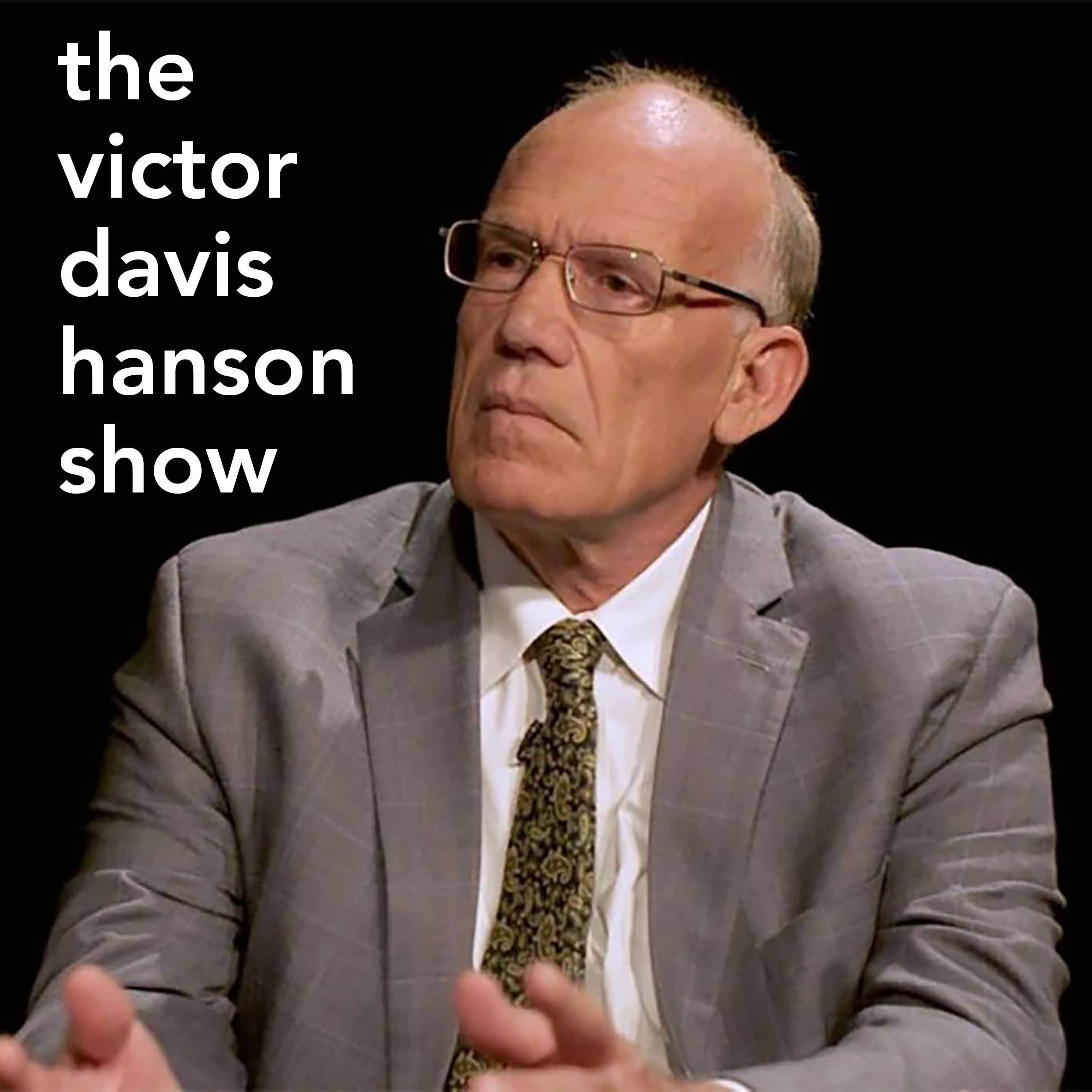
Loading summary
Transcript55 lines
- [00:00]
Victor Davis Hanson
History, economics, the great works of literature, the meaning of the U.S. constitution. Did you study these things in school? Probably not. Or even if you did, maybe it's time for a refresher. Time and technology have changed a lot of things, but they've not changed the basic fundamental truths about the world and our place in it. Hillsdale College is offering more than 40 free online courses. That's right, more than 40 free online courses. Learn about the works of C.S. lewis, the stories in the book of Genesis, the meaning of the US Constitution, the rise and fall of the Roman Republic, or the history of the ancient Christian church with Hillsdale College's free online courses. Personally, I'm enjoying Hillsdale's course the Second World wars, taught by Victor Davis Hansen and Hillsdale's president, Larry Pjorn. This free seven lecture course will help you understand this massive and complex conflict in a new way. It will give you a clear picture of why the war was fought and how the allied powers ultimately triumphed in order to save the west from a new form of tyranny. The course is self paced so that you can start whenever and wherever. Go right now to Hillsdale Edu VDH to enroll. There's no cost and it's easy to get started. That's Hillsdale Edu VDH to enroll for free Hillsdale Edu VDH hello and welcome.
- [01:39]
Sammy Wink
To the Victor Davis Hansen Show. This is our Friday news roundup and lots of news this week. Trump, of course, is making most of it, so. So we'll start with the visit of Netanyahu to the United States. Stay with us and we'll come back from these messages.
- [01:56]
Victor Davis Hanson
Before we continue, I want to tell you about a great American company, iTrust American alternative assets. Like many of you, they understand what's really happening to our nation's financial strength. And they're helping patriotic Americans like you protect their retirement savings. As someone who studied America's history for decades, I'm concerned about what I'm seeing. For the first time ever, our great nation is spending more on interest payments than on our military. That's why we've asked our friends at American Alternative Assets to share their wealth protection Guide. The guide explains why smart Americans are moving their retirement savings to precious metals IRAs. These are true patriots who understand American values. Right now, they're offering our listeners up to $10,000 in free silver plus a free American made safe. They'll show you how generations of Americans have protected their wealth during uncertain times. Call 1-888-615-8047 or visit victorlovesgold.com call 1-888-615-80 47. Again, call 1-888-615- 8047 and tell them Victor sent you New Year Fresh Start. Optimize your nutrition this year with Factor. Factor has chef made gourmet meals that make eating well easy. They're dietitian approved and ready to heat and eat in two minutes so you can fuel right and feel great no matter what life throws at you. Factor arrives fresh and fully prepared, perfect for any active, busy lifestyle. Hey lose up to eight pounds in eight weeks with Factor Keto Meals. Based on a randomized controlled clinical trial with Factor Keto. Results will vary depending on diet and exercise. With 40 options across eight dietary preferences on the menu each week, it's easy to pick meals tailored to your goals. Choose from preferences like Calorie Smart or Protein plus or Keto Factor can help you feel your best all day long with wholesome smoothies, breakfast grab and go snacks and more add ons. Reach your goals this year with ingredients you can trust and convenience that can't be beat. Eat smart with Factor get started@factor meals.com Victor50OFF and use the code Victor50OFF Victor50OFF to get 50% off your first box plus free shipping. That's code Victor50OFF@factormeals.com Victor50OFF to get 50% OFF plus free shipping on your first box.
- [04:56]
Sammy Wink
Welcome back to the Victor Davis Hansen Show. Victor's the Martin and Nelly Anderson Senior Fellow in Military History and Classics at the Hoover Institution and the Wayne Marshabusky Distinguished Fellow in History at Hillsdale College. You can find him at his website, Victor Hansen.com it's called the Blade of Perseus. Please come join us there. For 650amonth or a discounted $65 a year. We would love to have you lots of VDH Ultra material exclusively for our subscribers. So Victor Netanyahu has visited the United States this week. That's the big story. And lots of promises made by Donald Trump. And I was hoping we could go over some of them one by one. So I think the first thing that's very interesting is the idea that he, I think he used the word buy. But we are going to somehow buy, Occupy, Build Back, Better Gaza. And I was wondering if maybe we could start with that.
- [05:59]
Larry Pjorn
Well, I'm up here. We're not in, I'm not in the studio. I'm on a rare. We never really do it from my office here at the Hoover Institution, but that's where I am today. But this has, I just say that. So I point out that this is not any way connected with the Hoover Institution. I'm just here today if anybody marks at my office that will be unpopular with his MAGA base because of two things they're trying to. Well, there's three issues here. They're trying to cut money and the last thing you want is another optional military presence and that's what it would take in the Middle East. And then number two, Gaza. Gaza is not like Panama. Gaza is not like Greenland. Gaza is not like Canada. People are not fond of Gaza, put it that way. They just everything that we have given them over a billion dollars cumulative from usaid, which we can talk about later. So people have no reservoir of goodwill when they Gaza in the news. They see two things. They see terrorists and down with America signs or they see people on American campuses shouting anti American. So the idea we're going to go over there and Donald Trump knows that. The second thing is though, he says that we're going to buy it, run it, organize. I don't think what he's talking about is the United States is going to send 20,000 troops there, Garrison it and then get bulldozers, demolish it, and then build a gleaming Emirates or Saudi Arabia city and then let the lease it out to the Jordanians or the Egyptians and then let Gazans come in that are back to their homes, that are beautiful and they will be audited for no Hamas. So I don't think he's doing that. I think what he's doing is he's trying to get Jordan and Egypt and the Gulf states to say, look, we'll come in here and we'll take control away from Hamas and we will rebuild it with your money and our prestige or power and we'll let the Israelis make sure there's no Hamas people there or somebody, an international group, but it will not be the United Nations. But the reason he's doing that is that every peace treaty they've had, every election they've had since George Bush allowed them to force Sharon to pull out of Gaza in 2006. There was the idea we're going to make this a beautiful place. We're going to get all this American money and we're going to build a Great Greenhouse City. $50 million was one of the and I saw that in 2006 or seven when I went to Israel and it was a beautiful greenhouse. And then they pulled out and they trained people and they destroyed it, they robbed it, they Took the wiring out, the plumbing out, and it didn't exist. So the problem of Gaza is not the rubble. The problem is radical pan Islamicism under Hamas. And I'm just, I'm not trying to be too negative, but you could build, I don't know, a beautiful city. And if you have all the Gazans come back and say thank you for building this beautiful city and it looks like the most sophisticated, it's Paris on, it's the Riviera. It won't look like that if Hamas is controlling it. And they won't. And Hamas will control it unless the people at a very large majority don't want them. But let me point out to something to you, Sammy. When the last iteration of hostages were released, Hamas then came out of the tunnels in their green uniforms and their masks. So you, they're so brave, you don't want to identify them. I guess they had mask on.
- [10:15]
Victor Davis Hanson
They.
- [10:16]
Larry Pjorn
And what were they doing? They were a security force to protect the three Jewish girls that had been. From whom? From Hamas? I don't know. But it looked like to me it was back to October 7th again where the people of Hamas of Gaza, who many of them had said, hey, they broke down the wall, they're raping and killing Jews. Can I get in on it? Yes. 6, 700 went in. And then when they killed Jews or they brought them back, the mob spit on them. And so I didn't see from that reaction of the crowd to those hostages ebullation that they were getting their own people back. And it was now there's going to be peace or what the people in the United States say, oh great, I saw pure hatred. They were going to put it this way, if Hamas, the terrorists had not been there, they would have killed those hostages, they would have. A mob would have killed them. So when you see all that and you're looking, you're in a period of cost cutting and you've got a lunatic left that keeps saying this is imperialism, this is genocide, all that crap. I don't think we want to re enter into that in a very involved way. A multi billion dollar project that requires arms. So I think what Trump is saying is let's just have a new idea. We'll get all the capitalist wealthy countries in the world, they'll come under here without the UN and we'll build a beautiful city. And then I don't know. That's what I think. I don't think it's, it's kind of like we're going to make Canada the 51st state, we're going to buy Greenland. He doesn't mean that literally. He might mean it literally, but he knows that. He has opened a discussion in an art of the deal fashion, back and forth. He wins. And if I could just take a detour or. Next curses. When he said Greenland should be in the United States. What has happened now since he said that? The Danish government has put Greenland on its royal coat of arms. They have given greater autonomy for the people of Greenland. They're very sensitive to the idea. They are an imperialist power and Greenland is a colony for all their left wing fides. They are very sensitive to the new reality the world woke up to, that Greenland is closer to North America, New York, closer to Greenland than Copenhagen. And they spent over a billion. They have committed over a billion dollars for internal development. And they've reached out to the United States and said, we're going to give you greater military access to stop the encroachment in the Arctic Circle of the Chinese and the Russians. Okay, that all came from, I want to buy Greenland. If you look at Canada, well, let's make Canada the first. Oh, he's an imperialist. We Canadians hate him. And then what's the. What's the aftermath? Oh, Canada has a $50 billion surplus. We didn't know that. Canada doesn't let American dairy products in. Canada dumps timber in the United States, but we don't export timber from our northern states into Canada. Oh, Canada didn't do anything about drugs going across. Canada kind of waved people across that were illegal aliens. Ha, ha, ha. And now he. Mr. Trudeau is done for. After Trump started this, he completely was paralyzed. People said, that little wet noodle cannot stand up to Donald Trump. Get rid of him. We got to get Polar Bear in there soon. And the other thing that he accomplishes now, Mr. Trudeau says, I will spend over a billion dollars and I will get all sorts of electronics and I will patrol the border. That's what Donald Trump wanted. And then he said to Mexico, you're cheating. You're running up $170 billion surplus. You were supposed to. It started out with 2 billion. After NAFTA, you're a mercantile partner with the Chinese, who send you product to get around our treaties, and then you assemble it. You're killing our jobs. You're getting 63 billion that our taxpayers pay your illegal aliens to free up money to send to you. And your cartels are killing 75. And that's not going to happen anymore. And I'm going to put a Big tariff on everything. And then now they say, no, no, no, no, we'll get 10,000. We have 10,000 troops at the border. We'll stop it. And there's 97% of all illegal entries have ceased in just two weeks. Joe Biden said, you couldn't do that. Mallorca said, well, you can't just control the border like that. They did. And Mexico will put 10,000. Will Mexico try to cheat? Yes. But Donald Trump has told them if he puts a tariff on that lucrative 170 billion and he stops the border where there's no more illegal aliens and the remittances are frozen or they go down, or he puts a tax on remittances, they're done for. And they know that. And so whether it's Greenland or Panama and then we get in Venezuela, Columbus, screw you. We're not taking back our criminals. Yes, yes, we let out all of our people out of our jails. Ha ha. That feeble, enfeebled Biden. We just send all of our criminals. And you stupid Yankees thought that was so bad you couldn't do a thing. You did nothing. Oh, Donald Trump's going to put a big tariff on and he's going to embargo us against, etc. Well, he's just this white slaver. Ha ha. And then, wow, he's serious. He's not Biden, he's not Obama. He's serious. Okay, we'll take him back. Just don't have him arrive in handcuffs. So it's too humiliating for my government. So Colombia, and so that's what he does. And the same thing is going to happen with Gaza. My God, he did this. He's going to. He's a colonialist. I think I watched Joy Reid and Van Jones. This was people. He cut in as US aid, and people are going to die. They're just going to die. And now he's going into Gaza. It's genocide. And they had every Middle east student here on a student visa who under no circumstances wants to go back to Gaza, wants to stay here where they can protest and be a DEI hero on their campuses. And what are they saying? Oh, this is horrible, horrible. But. But they're talking about it. And that's what he wants. He wants everybody to get his attention. He wants. This has been a terrorist nexus. And he's saying to everybody, they've taken Iranian money and look at Iran. We've weakened Iran. And I'm putting maximum pressure. So it's going to start a dialogue. And the dialogue is Intended to get Arab money in there, maybe EU money in there, maybe some American, not much. And then try to rebuild. But don't let Hamas in. We'll see. He had a lot of other initiatives as well.
- [17:14]
Sammy Wink
I know. So first I would like to welcome a sponsor of ours, Field of Greens. A delicious glass of Field of Greens daily is like nutritional armor for your body. Each fruit and vegetable was doctor selected for a specific health benefit. There's a heart health group, lungs and kidney groups, metabolism, even healthy weight. I love the energy I get from Field of Greens. But most of all, I love the confidence that even if I have a cheat day or a pizza, I can enjoy it guilt free because of Field of Greens. It's the nutrition my body needs daily. And only Field of Greens makes you this better health promise. Your doctor will notice your improved health or your money back. Let me get you started with my special discount. I got you 20% off your first order. Plus you just use code Victor@FieldofGreens.com that's code Victor V I C T O R atfieldofgreens.com and thank you Field of Greens, for sponsoring the Victor Davis Hansen Show. Yes, Victor, there are other initiatives that Donald Trump announced with Bibi Netanyahu's visit. And the other one is just that, that U.S. aid is not going to be receiving money because of all of the corrupt agencies. It works. That was an auxiliary terrorists in those things. Yes, that was an auxiliary. There was a great study by the Middle East Foreign Forum that exposed all of the waste and anti Semitic and terrorist activities that that money was going to. And I thought it was very interesting. But your thoughts even on that?
- [19:09]
Larry Pjorn
Well, they're all related. So he's going to put cut usaid and we'll talk about that in a second as a separate topic. And he's going to fold it into Marco Rubio as Secretary of State. But they're not going to be all that money. $700 million a year for the United nations relief, refugee relief stuff, unra, it's going to be gone. And most of it was, as we know, everybody said, oh, that went to hospitals and mosques and schools. Yeah, it did. And they were used by Hamas as their ground level protective, what do you want to call it, Nexus for their labyrinths of headquarters and armories right below them. That's where our money went. And then he's saying to Iran, maximum pressure. That means embargo on Iranian oil. Iran will be sanctioned. Might not be able to re enter some of the banking system. He said to the Houthis that we bombed. We bombed, he said. And we bombed, as you said, ISIS and Somalia. But he told the Houthis he's put them on notice that if they try to interrupt Red, I don't think they will do that. The Israelis have already taken out a multi million dollar 300 million port facility there that was built with EU and UN money and probably American money. So they have no way really to get big cargo ships at their main port. And the Israelis have hit them. For every time they've hit Israel, Israel has hit them, and they're starting to look at infrastructure. And Donald Trump within one day could stop all of the power. And he's told them that in Yemen. So I don't think they're going to do that. That's new Iran. Then he said another thing. He said in the same day Netanyahu was there, somebody said, are you afraid of assassination? He was referring to a supposed Iranian hit team that was actually in the United States. A Pakistani may have been a coordinator. And he just said, if they were to kill me, and it's not about me because I've left a letter, and that would mean about what to do if I'm assassinated by Iranians. And that would mean J.D. vance would carry that out. He said we would obliterate. I have no doubt we would obliterate Iran. What does obliterate mean? That would mean to destroy its infrastructure, its oil export facilities, all of its military assets. And Iran knows that. And so if I was Iran right now, I would be really, really worried because under Biden, we gave them over $100 billion in sanction relief. We gave them $6 billion for what? Six. Five hostages. Six hostages. And we begged them to get onto the Iran deal. So they had that money. And it went right to 20 or 30,000 more rockets for Hezbollah, Hamas and the Houthis. Now it's going to go in reverse. The Hezbollah apparatus being decapitated. Hamas has been decapitated. The Houthis are scared. Iran's agents of terrorism have been decapitated. And Nasrallah is gone with a Hezbollah. And so the Supreme Khomeini is very worried and he's wearing a bulletproof vest now. He doesn't. If he goes, an Iranian goes to a funeral, he doesn't know if there's going to be a walkie talkie go off or another round of Israeli intelligence is putting out, you know, false claims. You better be careful about your cell phone. They've got the entire Iranian terrorist nexus paranoid. And now Donald Trump comes along and just completely flips what Joe Biden, instead of counting on this enfeebled Joe Biden and Anthony Blinken and Jake Sullivan, he's got Marco Rubio and Mike Waltz and Pete Hexseth and Donald Trump. And they have one thing in common. They not only do not like Iran, they don't trust it one iota. And so it's going to be sanctioned, it's going to be weakened, and they're going, I would predict, in about a year, if this continues, they're going to have social disruption in Iran. And that's the point. If Iran, if they find out. And Donald Trump said another thing in this. He said they will not, under any circumstances, get a nuclear weapon. That would be. I would say, well, how do you know that, Mr. President? And I guess he would answer, we have intelligence. The Israelis have intelligence. When we understand that they have enriched enough uranium to deploy it on a bomb or a missile very quickly, then we're going to act. And I don't know what that would mean. I would have hoped it would mean something like, Israel will be given use of a B2 or something and a 10,000 or 30,000 pound bomb, and we will keep the Chinese and the Russians out, and they will just concentrate on taking out their nuclear facilities if we feel they're going to get a bomb. But it's a completely different world. And that's what he was discussing with Netanyahu. Netanyahu didn't know what to say about Gaza, but he just said, he's thinking out of the box. It's great. But he liked it because it meant one common denominator. Hamas will not be in control of. Yeah, Gaza. They had one election. They said they were democratic. They were. I remember in 2006, everybody remember this. If you just get Sharon. I had a professor at Cal State. I liked her a lot, but she was a nice person. But she would tell me, if we just get Sharon out there, get him out of Gaza, and then we just give some money and let them have infrastructure and they'll have elections. Hamas is not like the Palestinian Authority. It's pure. It's a reform, okay? And so that's what we did. And within, I don't know, two years, there was no more elections. They took the Palestinian Authority, people in the Gaza Strip and threw them out. Windows. Godfather style or Russian, Putin style. Yeah, they just liquidated the entire Gaza contingent that were going to run in. Had run in the election. So then they canceled all elections. Then the people destroyed the infrastructure and Then they didn't know what to do because there were no Jews anymore in Gaza. All of them were gone. And they said, well, if there were no Jews in Gaza, then the problem is solved. That was what they said. It was settler, settler, settler.
- [25:44]
Sammy Wink
Well, then, wait a second. But they also threw out the Palestinian Authority as well. So they just didn't like them.
- [25:51]
Larry Pjorn
So, oh, man, they killed them. They killed the Palestinian Authority, at least the top hierarchy in Gaza. But the Israeli government forced all of the Gaza, thousands of them, Jewish settlers on these hilltops. They had beautiful home. They forced them out. But we had been told by the people of Gaza that their misery was caused by imperialistic Jewish settlers and they didn't have a viable economy because of that. And Sharon, who was this fanatic, they said he actually wasn't. And so. And they didn't have democracy. So the Bush administration allowed, told Sharon to get out. He got out. He got all the Israelis out. And then they didn't build a big wall either. They built an electronic fence. And then they turned over the infrastructure that was very advanced. They'd supplied Europe with sophisticated shipping and agra agriculture of winter vegetables for Europe. And, you know, nobody talks about that here in America in these protests. So you could tell one of, if I'm looking out my window and I see us, there's no Hamas protesters now, by the way. They have vanished. The campus. There's a new president here. And Donald Trump has announced a. In relation to this, if you are here in a student visa and you break a law or you're suspended and it would mean that you broke a university law, you're going to go back. And all of a sudden there's nothing. There's nothing. Nobody wants to go back to Gaza. I thought the whole campus would be flooded by people who would flip the middle finger and say, screw you, we're anti genocide, we're anti Israel, we speak truth to power and then be arrested and then go back to Gaza and rebuild Gaza. But that didn't happen. So I guess what I'm saying is that all of those dreams, we've been there before, and I wish Donald Trump would go back and his team would go back and visit that period from 2005 to 2008 and say, yes, we forced Israel to get out of Gaza. Yes, we left very multimillion dollar infrastructure. Yes, we forced them to have an election. Yes, they defeated the Palestinian Authority by killing most of their top leaders inside Gaza. Yes, they canceled all for the never had an election again. And yes, we started to pour money through them, through the UN for them, and then only made them more radical. And that was a trajectory whose ultimate station was October 7th of 2023. And so I just feel that if we do repeat that process and we go in there and we pacify it and then we level the rubble and we get all this international money and then we rebuild it into a beautiful city and then we know Gaza, but we have, let's say, a new passport control and we let all the people in Jordan and all the people in Egypt that are not there while we're building, or maybe they participate in the building, it's their country. I just don't see it's going to be just a huge version of destroying the hot houses and the greenhouses.
- [29:16]
Sammy Wink
Yeah. Well, Victor, let's go ahead and take a break and come back and talk a little bit more about one more thing on the Netanyahu Trump discussions. Stay with us and we'll be back.
- [29:31]
Victor Davis Hanson
Data brokers make a profit off your data. Your data is a commodity. Anyone on the web can buy your private details. This can lead to identity theft, phishing attempts, harassment and unwanted spam calls. But now you can protect your privacy with Deleteme. I recently found a solution and this is a service called DeleteMe. DeleteMe is a subscription service that removes your personal info from hundreds of data brokers. Sign up and provide Delete Me with exactly what information you want deleted and their experts take it from there. Delete Me sends you regular personalized privacy reports showing what info they found, where they found it and what they removed. To put it simply, Delete Me does all the hard work of wiping your and your family's personal information from data broker websites. Take control of your data and keep your private life private by signing up for Delete Me now at a special discount for our listeners today. Get 20% off your delete me plan by texting Victor to 64000. Text Victor to 64000. That's Victor to 64000. Message and data rates may apply. See terms for details.
- [30:57]
Sammy Wink
Hello everyone. I'm excited to welcome Native Path to the Victor Davis Hanson Show. I use personally their products and the PM collagen with melatonin and electrolyte and amino acid drink mixes when I work out are my favorite. Native Path is made with only type 1 and 3 collagen fibers. These are the two most important types as they make up about 90% of the collagen in the body found in our cartilage, bone, skin, hair, nails, gut and more. A lot of other brands use a rainbow of fibers and fillers, but all you really need for maximum Benefits are types 1 and 3. Native path is a single ingredient, collagen. No fillers, no additives, no artificial sweeteners and they are third party tested for heavy metals. It is also completely flavorless so you can put it in anything. Coffee, smoothies, soup, you name it. Because Native Path's recipe is a peptide formula, it's more bioavailable, meaning it's absorbed into the body more easily and mixes much better than other brands. No clumping at all. And best of all, Native Path offers really amazing bundle deals that are only available with our special link where you can get three and six packs at a fraction of the price of other collagen brands. Native Path has sold over 5 million jars of collagen, has over 1 million happy customers, has over 6,000 5 star reviews and a 365 day no risk guarantee. So visit getnativepath.comvictor and start your transformation today. That's G E T N A T I V E p a t h.com Victor V I c T O R and we're happy to have Native Path as a sponsor of the Victor Davis Hanson Show. Welcome back to the Victor Davis Hansen show. You can find VictorX his handle is Dhanson and you can find him on Facebook, Hanson's Morning Cup. And we've got him on YouTube and rumble now and these video podcasts are being made into videos so you can come watch him there. The Victor Davis Hansen Show. So Victor, the last thing about that I noticed, and you might have noticed more about the meeting between Netanyahu and Trump was that they there was also talk of getting a peace agreement between the Saudis and the Israelis. And I was wondering your thoughts on any further peace agreements for Israel Israelis in the, in the well there would.
- [33:45]
Larry Pjorn
There might have been a peace agreement. But of course when Joe Biden came in in 21, anything that had Donald Trump's fingerprints, he, he reversed even, you know, so there was no illegal immigration. Finally the wall was being built. Stop it. There was the Abraham Accords that had already got some, you know, two or three members and Saudi and this Saudis and the Kuwaitis were about ready to join. So he said I don't want anything to do with that. That was Trump. And that only and then we're going to go back to the Obama, we're going to go back to the Obama strategy. And the Obama strategy is to empower Tehran, Damascus, Beirut, Houthis Hamas, Hezbollah, and then they will balance off the Gulf states and Israel and the Shia and the Persians and the poor of the Middle east will be kind of we're going to be the community organizer that play the role of Obama and we're going to empower them. And then they're going to say to the rich overclass of Israelis and we have a voice too and they're going to go like this and every once in a while we're going to step in and say were the adjudicate that was that insane? So we were going to take a democratic state like Israel and reduce it to the level of Hamas and Hezbollah. Well, so that was all ended. So now Trump says we're going to bring it back. But the Saudis are worried that I used to have a lot of Saudi students and I have a lot of friends I see from the Middle East. And it's so weird because what they'll tell you publicly and what they'll tell you privately, publicly they will say we're not going to sell out the Palestinians. No, no, we're a pan Arabic community and what the Jews did to Gazans was horrible. So you have to give them an independent state, a secure and then privately they'll say, oh my God, if we do this, we've got Shia minorities in our own country. Don't go into Gaza. Empower them or don't empower Iran because they're going to go and peel over our heads and we're not elected. We're a monarchy and they're going to stir up all of these Shia minorities and we're going to have domestic problems. We don't want any Palestinians in our country. Don't you remember the Gulf War of 1991 when the Palestinians all took the side of Saddam Hussein? When they stole Kuwait from us when the war was over, we ethnically cleansed them. We got every Palestinian out of Kuwait and so we just sent them out. We don't want any part of that. So yes, we'll give you all the money you need, but don't go in there and empower an Iran Hezbollah Hamas bloc. That's their attitude. So they're very worried because publicly they have to side with the oppressed fellow Arab Hamas and the people of Gaza. But privately they don't like the idea of going back to square one. So they don't want. It's politically impossible for those regimes to let Israel go into Gaza. It's politically impossible for them to say that the United States is going to be the custodian of Gaza. And it's politically impossible to let Gaza come back under the control of Hamas. So you tell me what the alternatives are.
- [37:16]
Sammy Wink
Yeah, not a lot. As typical in the Middle East. Victor, I'd like to take a moment to welcome our sponsor, Native Path. Native Path Collagen is a single ingredient formula with no fillers, no additives or artificial sweeteners. Plus it's third party tested for heavy metals, ensuring purity and safety. Completely flavorless Native Path collagen can be added to anything. Cough coffee, smoothies, oatmeal, you name it. Its peptide formula makes it more bioavailable, meaning it it's absorbed more easily and mixes perfectly without clumping. And you can get three or six packs at a fraction of the price of other brands. Visit getnativepath.com victor and start your transformation today. That is G E T N A T I V E p a t h.com vi c o r and as a new user of Native Path products, I highly recomm recommend them. I love their chamomile honey at night as a little night cap that puts me to sleep for many hours and I am a big supporter of that. So thank you Native Path for sponsoring the Victor Davis Hansen show. So Victor, the last thing about the Middle east region or things that are connected to the Middle east for this podcast today is and this sort of happened under a little bit under the news wave and that is that the United States killed a bunch of ISIS leaders in Somalia. And I was wondering your thoughts. I was glad it was under the mainstream media news wave. But what are your thoughts?
- [39:00]
Larry Pjorn
Well, Trump used one of his bunker busters and hit a headquarters and that intelligence had been known for five years. And the Biden administration of course, didn't want to do anything. Notice there's a pattern here. All the military, all of our security apparat, they all officially are uneasy with Donald Trump. But they had been telling the Biden administration, and I don't even want to say Biden administration. There was no Biden there. There was just a waxen effigy. It was Anthony Blinken and Jake Sullivan taking orders from the Obama people of the past who were deeply embedded within that administration. And they did not want to remember that Obama had called ISIS the JVs. And when he entered office in 2009, there was no ISIS. And then they started to think that Obama was weak. He said he got, he took a lot of people, everybody out of Iraq. And then they got the, remember, they started executing those people on the beach and they cut their heads off. And it was horrible. And then Donald Trump came in and he bombed the holy shi. He said, and that was no more isis. They controlled half of Iraq. And so he knows that that works. So he's coming in now. And everybody said, well, there's ISIS and they're stuck over there in Africa, but they're going to come back. And he said, no, they're not. We're going to bomb them. And that's what he did. And so he has support from the MAGA base for that. It's a Jacksonian act. No better friend, no worse enemy. They're enemies. They're going to pay. They're not going to hurt Americans or our allies. And we're not getting into a ground operation in the Middle east that's optional.
- [40:50]
Sammy Wink
I think the international community loves the whole.
- [40:53]
Larry Pjorn
They do. They do. The Europeans, they'll all say, oh, my God, that was a unilateral act. Did they get you an approval to do that? No, the UN is on the side of those people. Everybody. Don't you understand that the UN was giving money? And we're finding out now that members of the UN were involved in holding hostages. UN people. People in Gaza that were employed by the United nations were participating in the hostage taking. Why in the world would you give any money to that organization? And part of this whole problem is we're so inured to these alphabetic groups. You know, NATO, you don't ever sell a NATO. You're all freeloaded. Like Canada. No one talks about NATO and Canada. When Donald Trump was demonized for saying that we might have to get out of Canada. If you don't want to pay, get out of NATO. If you don't want to pay your 2% of GDP and military expenditure, this is terrible. But of the 32 nations, only six, six were meeting. You know how many men are meeting their 2% now? 20 over 20 because of Donald Trump. They knew first of all that he threatened them. They started to do it. Then Russia invaded and he said, see? And then they started doing it. And then they saw he's coming in again. They knew. And now what did he say? We're going to go up to 5%. But here's my point about Canada. Canada keeps saying they booed us. And everybody said, Donald Trump is mean to Canada. Canada spends 1.37 on military expenditures. 1.37. Do you really believe that if the United States spent 1.37 that Canada could take its shipping anywhere in the world, it would be safe? Do they Think the Chinese would respect Canada if they had to go into. Do they think the Panama Canal will affect Canada? Don't they understand that?
- [42:53]
Sammy Wink
Victor, it's 1.37% of GDP. Is that what. Okay, I'm sorry, I wanted to make.
- [43:00]
Larry Pjorn
Yes, 1.37 is. And they're way below the 2%, so they're not spending. They used to have, as I said on an earlier broadcast, I think it was the fifth largest navy in the world. Canada was a major player in World War II, and in Korea, it was a wonderful military. Under Trudeau, it's just a joke. And so he sits there in Canada and he screams and yells at the United States, and then he's, you know, he looks every once in a while at the world and says, a Russian jet came kind of close to Alaska. What did NORAD do about it? Or he calls up and say, I'm still under the nuclear shield of the United States. And what are you guys going to do in Ukraine to save Zelensky? Well, what are you going to do, Mr. Trudeau? You don't even. You can't even defend yourself. So it's all predicated on, to be frank, and I love Canada, I love Canadians, but it was all predicated on. The United States is big and rich and powerful, so we can put more tariffs on them than they do on us, and we can run up $50 billion. And because they're so ubiquitous in our culture and they, from time to time, we can just kind of push them around. So we'll just leave the border. Oh, you want to go to the United States? There's the border. Oh, you got little drugs. Well, they don't care. And that's what they did. Oh, we don't have tanks, we don't have plane. Well, the United States is. So what do they do? They. If you look at the Canadian left under Trudeau, it was. Here was the subtext. We're not militaristic like the United States is. We don't put our nose and everybody. We're beloved all over the world. We're not a military imperialistic power. And so we don't even believe in the use of arms solves anything. But. But if we get in a jam with the Chinese or the North Koreans, what if they got in a fight with Kim Jong Un and he said, you know what? I don't like Canada. I'm going to put a missile in British Columbia. What would they do? Would they. Who would they call? They would call the United States. Well, the United States is Going to build a so called version of Iron Dome or something sort of like that. We have kind of one in Alaska, but it's not very good. I don't know how Trump's going to spend all this money and then balance the budget without slashing a lot more than even Elon Musk is talking. That's another topic. But nonetheless, you know what's going to happen when we put missiles in Alaska, which is where we would put a lot of them coming from Asia, what would the Canadians do? They'd say, oh, by the way, now what if one of those missiles from North Korea or Iran comes toward us? Would we be included in this little multi trillion dollar plan that you're doing? And if Trump said, not unless you pay for it, everybody see, look at him, he's so, so anti. Well, who is the bully and who is the person that's culpable in this whole thing? And that's characteristic of all of what we see. And that's what's so frustrating about it. Because the Panamanians cut a silk and road deal with the Chinese. They knew what they were doing. They knew that if they cut this deal, invited China to build a bridge over the canal and update it like they did in The Hong Kong company, I think in 2016, they enlarged lots. They were ceding their sovereignty to China and they thought it was really cute. Hey, Yankee up there, you built it and it's our canal and we can do whatever. So we're going to get your arch enemy right here. And so if you have time of war or tension or there's a problem in Taiwan, maybe the Chinese will say, sorry, there's 700 ships ahead of you out there to get through the canal. You got about nine days. Wait. They knew what they were doing and Colombia knew what it was doing. Venezuela knew what they were doing when they were dumping hardcore criminals and sending them here. Mexico knows what they're doing when they're letting 75,000Americans die. And you know, I really resented the Wall Street Journal the other day. A columnist, I won't mention her name that I like said something to the effect you know, it's, well, don't Americans just don't need to take the drugs. It's their fault. No, it's not their fault because they're not sending things that have a little label that say fentanyl or they're identifiable. They're taking this deadly drug that makes people get high but will kill them. They're lacing it. They're lacing it in all sorts of opiates. They're even doing it in prescription drugs like Xanax or Valium.
- [47:50]
Sammy Wink
So you're saying they're trying to kill people?
- [47:53]
Larry Pjorn
Well, they're trying to hook people with as much as they can. They don't want to kill the addicts, but they're getting so much profit they're taking that risk. So it's a question of how do I get somebody addicted by hiding the amount of fennel. It'll keep them alive, but I know that eventually it's going to kill them. They don't care because they think they're going to get another person. And so that's what they're doing. And I would ask that op ed writer and the Wall Street Journal, and I'd ask the Wall Street Journal, which was very critical of Trump, especially the journalistic site and some of their editorials, if you're correct about that, that The Addict has 100% culpability. And I'm not trying to defend them. Then why do you have felony statutes about American drug. Why do we have all these TV shows about this horrible drug person or the drug cartel in the United States or a drug dealer, the pusher, we used to call him, on the neighborhood beat over there in the corner giving drugs to. Why don't we just say it's not their fault, it's the drug person? But we don't because we have laws against it. But then why, if we have laws against our drugs, pushers and sellers, don't we have laws or anger about theirs? Because theirs are much more deadly. As I said, if you count 75,000 over a decade, you get. And that's what it's been. You get 750,000 deaths. And that's larger than everything from the Spanish American War to Afghanistan, total American deaths. So Mexico knows what it's doing. All of these people know usaid, to change the topic, knows what they're doing. They're knowing that they gave $40 million to the Wuhan Lab for biology research and hid that. Samantha Power, Samantha Power, of all people, hardcore leftist, ran usaid. She knew what she was doing with this gay comic book and gay festivities and LGBT communities and all of this stuff. It was not. You think the Chinese do that? When Van Jones, I almost. I was watching by myself in the apartment and I started laughing. I very rarely laugh to myself, but I heard Van Jones say, if they cancel, this is. People are going to die. They're just going to die. They always say that. I think a columnist wrote that the other Day. Every time you have a question about a principled argument about cutting money that's wasted, they always say the same thing. The left, they're going to die. They're gonna die. You cut that there, you're got blood on your hand. No, you don't. USAID was created. And since we're on that topic, it's not. They kept saying, this is, he's a tyrant. We're going to impeach him because he wants to cut it. In 1961, the Congress passed something about the Foreign Aid Act. And the problem was that after World War II, everybody was in the business, right? Pentagon, State Department, you name it, giving money out. So they thought, we're going to consolidate it all, call it United States Aid Assistance. And then the statute was passed by Congress, and they said, this shall be administered by the executive branch. But it didn't say usaid. Jfk, by what? An executive order. He created usaid and he made it autonomous. And there was no chain of command that oversaw it except the President, and we have no president under Biden. So my point is, when he, by executive order, ended it or put it into the State Department, that was perfectly legal to do because that's how it was created. The statute that passed Congress said, there shall be an entity created. But they could have gone back to Congress and got Congress to. To pass a law for. They didn't. They just had JFK say, okay, I'll call it aid and I'll make it this way. And then it's. That's where it's been. $50 billion later a year. So Donald Trump did something that was completely constitutionally legal. And I feel bad for the 10,000 employees that may lose their job, but people are not going to die. And they will be able to administer aid. The Pentagon and the Senate and the State Department, that will reflect U.S. interest. What we have now is a bunch of people who can't get in the State Department, and they go to USAID and they think of some little domestic agenda that they're, you know, gay this or transgender this, or solar power this or abortion and this. And then they think, wouldn't it be good to give this to Nigeria or Uganda? And then there's a whole group of people, as we know from Elon Musk, he said it wasn't a worm in the apple, it was a bowl of worm that they know people are. And they quit and they say, you know what? I work for USAID for 10 years. I got to go to this company that's specializing in What? Transferring USAID money. Giving them a program to administer USAID money from one of their grants and it's full of corruption. And so it's not that much. It's only 50 billion. But 50 billion here and 50 billion there add up and they should cut it and just give it straight money, straight to the. And they should. I don't know how you give money. I mean it's like giving. If you have a friend or a relative and they need money and you give them $500 and you say no, I don't want you spending this at the movies. I don't want you going out to dinner all of a sudden, well, how can you produce that? They're going to say the $500 is in the bank. I spent it on my books for college. But I'm going to go out to dinner anyway because it's fungible because they're going to go out to dinner more because they have more money they don't have to spend on books. Their book budget just was covered by you. So now they freed up the old book budget to go out to eat. And that's what's the problem with all this aid. I think they should cut it all except for hurricanes, disasters, earthquake rapid response. And if you go look at the charter and I did look at the USAID charter, it doesn't have anything in there about gay comic books and trans this it says natural disaster, famine, vaccination. That's what it was for. It's crooked on both ends. It's crooked on our end where we have people operating for profit, the private contractors and then it's crooked on the. Who gets it? The elites of those countries that are all wealthy.
- [54:41]
Sammy Wink
Yeah. Did you hear that Uganda woman on. I don't know, it was TikTok or Facebook or whatever. She was from Uganda and she just started talking about how corrupt the USAID was and she said it's so obvious in our own country that all that stuff is just going. Going to corrupt causes.
- [55:01]
Larry Pjorn
I was in Greece in 1973 and the like I was looking at a. I lived in Mount La Cabatos. Maybe some of my Greek friends will resent this, but I looked at maps of the 1930s and that priceless real estate that's elevated was not very densely populated. It was mostly a 50s and 60s phenomenon. So as I was talking to a well known Greek fellow, I said this particular family and that particular family, how did they get like 10 different apartment buildings? And he said well they were involved in Marshall Plan money and USAID and what he was trying to tell me is that Greek elites, as in any. I'm not picking on Greek, but they were the ones that administered the money and they were the ones that saw where the money would help bolster the economy. And this area was going to be priceless, which it is. But a lot of money came out of usaid, and I think that's true all over the world. So I really think that we need to just. I don't even think it's the matter of saving the money. It's when you give money to people, they don't like you. You know, it's like that old saying from India, why do they hate me? What have I done? I haven't done anything useful or good for them lately, have I? The more you do something, the more the person thinks you're arrogant or that you owed them that. And it's just better to target very small amounts after natural disasters. Maybe 2 or 3 billion a year. But why would we give 50 billion abroad? And then Biden didn't even go to, to the Carolina, North Carolina or Northern Georgia or we've got to build, rebuild LA. It's going to cost $50 billion. Why doesn't Donald Trump just say aid? US aid is canceled for this year and that 50 billion is going to rebuild Los Angeles.
- [56:59]
Sammy Wink
Yeah. And the workers can go there to distribute the aid as it is needed and hopefully not in a corrupt fashion.
- [57:08]
Larry Pjorn
We had Mark Moyer book on the corruption of usaid, remember, on this podcast. And he, I had a lot of people call me about that. Some of them were angry, but he was absolutely right. He, he, and I think a lot of people in the Trump administration are looking at his book. When he uncovered the amount of corruption in usa, they fired him. And they didn't know he hadn't done anything. They didn't know how to fire him. So they went back to a book he wrote and called their Pentagon buddies and said, hey, we got a guy over here we want to fire. And he's a Dudley Do Right Boy Scout. So he's spotless and he's squeaky clean, but we got to get rid of him because he's uncovering all this corruption. Do you have. How can you do it? Well, he wrote a book about, you know, intelligence. Maybe we'll say that he disclosed confidential. And then they said, well, we got a problem because he gave us the book to audit it and make sure there. And we didn't get it on the. Well, we say we didn't get it on the first round. And now he's disclosed secrets and he's a danger to national security. That's what they did. That's what we're talking about, everybody. When Trump is trying to. And Elon Musk is trying to bring sanity, and the left would just say, okay, you're right about the LGBTQ comic books and the gender studies and the 40 million for gain of function, but there was $10 billion and they were building a necessary bridge over a river, or they went in and they actually dug a well for this town. Why don't they go through the budget? There must be some of that, and say, can't we defend that? But they never do. They never. It's just this, you know, same thing with the tariffs. And all of a sudden, Chuck Schumer holds an avocado up and says, this is going to cost you a lot of money. Because what. Because we're not going to. We're going to crack down on fentanyl or remittances or illegal immigration. It's just they. Jon Stewart had a very good skit where they said, they should never bring that guy out. Every time I see that guy, I think of two things. When Trump was elected in 2016 and he came in, he said, they have six ways of Sundays to get you. He said that. When Trump said, I don't trust the CIA, he said, yeah, they have six ways. He was boasting. And that's exactly what they did. They unleashed the FBI and the CIA against him. And then he, of course, got out in front, and I keep saying that, but he did get out in front of a mob at the doors of the Supreme Court while it was in session and said, gorsuch, Kavanaugh, you sow the whirlwind, you're going to reap. You sowed the wind, you're going to reap the whirlwind, and you are not going to know what's going to hit you. That was a direct threat to the Supreme Court. If a private citizen had done that, I think they would be. The FBI would have visited them.
- [60:15]
Sammy Wink
Well, Victor, we need to take a break and then come back and talk a little bit about a proposal to impeach Trump. So stay with us, and we'll be right back.
- [60:30]
Victor Davis Hanson
Elevating my style used to mean breaking the bank. But with Quince, I get high end, versatile pieces at prices I can actually afford. Now I can upgrade my style by snagging killer luxury essentials that sync with my vibe and my wallet. Quince has all the must haves like Mongolian cashmere, crew neck sweaters from $50, iconic 100% leather jackets and versatile flow knit activewear. The best part? All Quince Items are priced 50 to 80% less than similar brands. By partnering directly with top factories, Quince also cuts out the cost of the middleman and passes the savings on to us. And Quince only works with factories that use safe, ethical and responsible manufacturing practices along with premium fabrics and finishes. I love that. And those were the exact words. I love that my wife said when I opened my latest Quince shipment, this time an all day neoprene black backpack. It is handsome, has plenty of room for laptops and all your essentials and I'd like to testify that I have used it. But my wife grabbed the new delivery and she is now happily using it. So I'm ordering another Quince backpack. Hey, indulge in affordable luxury. Go to quince.com Victor for free shipping on your order and 365 day returns. That's Quince Q U I N C E dot com Victor to get free shipping and 365 day returns. Quince.com Victor did you know that American homeowners nationwide have over $32 trillion in equity and cyber criminals are targeting it with a growing scam the FBI calls house stealing. House alarms, doorbell cameras and deadbolts won't work against these thieves because they're not after your stuff, they're after your equity. If your title isn't being monitored, scammers can transfer the title of your home into their name using a one page document they file at the county, then take out loans against it or even sell it behind your back. The scariest part? You won't find out until collection or even foreclosure notices start arriving in your mailbox. But by then the damage has been done and you're left with a financial and legal nightmare. The best way to protect your equity is with triple lock protection from our friends at home Title Lock triple lock protection is 247 monitoring alerts of any changes and God forbid if the worst happens, restoration services at no out of pocket cost to you. So when was the last time you checked on your title? If you're like me, the answer is never. And that's exactly what scammers are counting on. But you can check on your home's title today and make sure you're not already a victim. You can get a free title history report and 30 day free trial of triple lock protection today by going to hometitlelock.com and using the Promo code Victor or click on the link in the description. That's hometitleock.com promo code Victor hometitlelock.com.
- [63:49]
Sammy Wink
Welcome back to the Victor Davis Hansen Show. So, Victor, Yes, a representative from Texas, Al Green, got up on the podium in Congress and said that there's genocide going on in Gaza with this war that Israel's waging against Hamas, and that this was what was needed for Trump since he supported it was impeachment. And so he made a call for impeachment. I was wondering your thoughts.
- [64:20]
Larry Pjorn
Well, they did that in 2017, Donald Trump had only been in office, I think three days and 63, 62 House members filed articles of impeachment. It went nowhere. I think Green was one of them. The thing is that there has been an effort of the elites of the Democratic Party. They're very worried about the 2024 election. And you can see it in that hysteria that we saw at the Democratic National Conventions elections, where an African American outgoing chief gave us all the rules about the voting, that there was have to be this many women and this many transgender and binary. It was just a, it was a joke. And then the second in command was David Hogg, who's unhinged. And so Al Green. And you know, I think what they're really, the subtext is 25 to 26% of African American males voted for Donald Trump. And that that pushed up the number of black votes up to that magical number of about 13 to 15%. And when it gets there, the Democrats can't win because they have lost 60% of the white vote. And when you add into the equation 55% of Hispanic males voted for Donald Trump. And that pushed the Hispanic vote almost 50, 50, 48 something. And Asians went from 70% to Biden to about 45, 43% for Trump. So there's been a shift. And you would think that minority leaders like Al Green in the House, they would, but there's not one of them. So almost every day, Representative Greene or Crockett, she gets in there and screams about white racists and horrible white racists and horrible, horrible white racists and horrible, horrible, horrible, horrible, horrible slave owners. Then we had an Asian representative from Texas who was playing the race card and he said that all these wealthy people send their kids to prep school and that they're running and they're going to cut it. And then he find out that, well, you do too your kids. And then to defend himself, he said, well, we had to prep them to take these entrance exam. Yes. So you had the money and the knowledge and you're an elite and now you're so. And then we had a lot of Hispanic represent. My point is I don't think they represent anymore the rank and file, especially men. And I think they don't get it that when you have a Democratic National Convention and you start squabbling over your sexual orientation and you say eight or nine people have to be voted, how many were black, how many were span. Oh, we made a mistake. We don't have a non binary. We got to throw this elected candidate. And you're a black male, Hispanic male, you're no different than a white. You look at this and you say these people are blank, blank, crazy. And then you look at other things that are happening. So you're a Hispanic family or down in the Rio Grande or you're in the San Joaquin Valley and all of a sudden your school is overrun with illegal aliens. And all of a sudden M13 Ortano Serenos, the Trenta thing from. They're all in your community. And then you see this wealthy white guy who's a Democrat, the governor of New Jersey, Philip. What was his name? Anyway, he says he wants to virtue signal. Well, I'm not going. I'm going to be a little coy, but I have a person who is not legal, but she's working there, she wants to go somewhere where she be wink, wink, wink, wink, nod, nod. And I am going to defy this by putting this person in a garage above my house. How do you think that I feel so good about myself being a white wealthy person and I'm really helping some. And then all of a sudden they asked Tom Holman and he says, he reads the coat and he says that is a felony to deliberately harbor a illegal alien knowingly. And somebody asked him, are you going to do anything? Yes, I'm going to do something about it. So if we are a rule of law and a nice FBI agent goes to his thing and said, I need our ICE person. I need to know where this illegal alien is that you're hiding. And you know, you knowingly know that. So what did he do? He went back on and he said, I kind of sort of said that, but I kind of sort of didn't. I didn't really mean that. I mean that she's probably, she's probably kind of sort of legal. And I was just kind of sort of lying about to be kind of sort of virtue signaling and act like I'm really important. Then everybody said, well, which lie should we believe the lie when you were virtually virtue signaling or the lie that you're telling now because you're afraid you might go to jail as governor. And so that's another Democratic response along with that thing we saw. And then every day they were out in Los Angeles, freeways. My gosh. So the left organizes this. Shut down the 101 and the mayor, Karen Bass, lets it happen. After what she did with the fires, everybody said, oh, there's, I don't know, 5,000 people, and they're all waving the flag. Under no circumstances do they want to go back to that country. And they're burning over there. The one that under every circumstances, they insist they have a right to stay. That doesn't make sense. That's what everybody is yelling, and that's sad. What do you do? You look at all of this stuff going on and you just say, why doesn't a Hispanic activists on the left say, yes, criminals should be deported. Yes, people who are under a court order, they've already been adjudicated, they had a retainer, they should be reported. Yes, people who have broken the law since. But what about. We're willing to negotiate a year of residence, a number of years, 10, 15, in which you have been an illegal alien, you have not committed a crime, you are not on public assistance, and you are willing to pay a fine and apply for a green card. And why don't they just do that? That might entail several million people have no problem with that. But they don't do that. They always take the people will die argument. You're going to send them back there and they are going to die. When you see Van Jones, you know, I mean, he just. Jeff. He's the recipient of the Jeff bezos Hundred million. $100 million. 100 million. So you want to say, van, you got a hundred million dollars. Don't go on TV and try to scare us all and say people are going to die because they're going to cut out some kind of trans show in Uganda or something. We don't believe. They don't believe in them anymore is what I'm trying to say. They're not constructive. And then. So I've given all these examples about this Talleyrand aphorism. They've forgotten nothing and learned nothing. They've forgotten the whole reason why they lost the 24 election. So they haven't learned how to do anything. Even crazy. James Carl has said that Kamala Harris was what, the seventh stringer? And they asked him, well, who would be the first Stringer and he go, who do you think? Donald Trump to run a guy. We need a. So you think they do that and then they have the confirmation. Poor old Fetterman was the only person to vote for Pam Bondi. When you saw Pam Bondi up there. And she's been the attorney general of a state and she's been thoroughly vetted for years. And she's photogenic. She just all these grumpy, grouchy, weird acting people. You know, women must be believed. Remember Hirono. Women must be believed.
- [72:26]
Sammy Wink
She. That was weird.
- [72:28]
Larry Pjorn
Senator Hirono. Women don't have. Must not be believed. According to you. Because when Tara Reid came out in 2021 and said that she was digitally penetrated and sexually raped by Joe Biden, you probably said, women must not be believed. So we have. You have zero. But they. All that. And then Elizabeth Warren, it just screams and yells and it's like, if I lose my temper, if I act like I'm crazy, maybe I can just dispel from the collective memory that I faked my way into a Harvard Law professorship by claiming I was Native American. No, we still remember that, Pocahontas, that you were a complete fraud. And then there's Bernie Sanders and he loses it. They all lost it. Sheldon Whitehouse. Why don't they just sit very calmly and say, take the nominee. You said this. This. This is what you're going to do and have an exchange. They can't do that. They can't. They're completely crazy. They're not the Democratic Party. That I remember. Everybody said, well, MAGA took over the Democratic Republic, not like the Democrats did. God, that's republic. That party is. JFK would not recognize it.
- [73:41]
Sammy Wink
I think it's all that intersectionality and trying to get all those groups in. You were referring to that. I think it was the DNC meeting earlier where that guy was saying all that stuff. Nobody understood.
- [73:52]
Larry Pjorn
Well, I really believe I was going.
- [73:54]
Sammy Wink
To stop to listen to.
- [73:55]
Larry Pjorn
I do really believe in a divine guiding hand. So they got together in the 60s and 70s and said, the welfare state has been achieved. The Civil Rights Acts have been achieved. We've got affirmative action. We got an eight. We did all these good things. Disability, Social Security. And now we don't have what we thought. We don't have perfect equality. It didn't work. So we're going to mandate equality. But to mandate equality, we have to justify how we're going to make everybody equal on the back end. And we're going to do that by saying racist, homophobic, sexist, that's the only reason we're not equal. And that's what they did. And then they said we still don't have enough people, so let's open the border. So Teddy Kennedy changed the immigration law in the 60s and they said it would not be based on merit any longer or ability to be self supporting, but proximity to the border and family ties. And they thought we're going to bring in all these minorities and we're going to get the old binary 88% white, 12% black and we're going to change it, we're going to make it 70, 30. And that's what they did. And they got more and more radical and they flipped California, Wow. The Hispanic vote is 75% Democratic, 80% flip California, flip. New Mexico, flip Nevada, flip Colorado. Ah. Next is Arizona and Texas. And then something happened. People are people, humans are humans. A lot of people don't identify by their color or appearance. They just say that's incidental, I want to know what the price of eggs are, fuel or gas or power. So they brought in a lot of people they felt were going to be permanent serfs, minions to their dictates, this wealthy white bicoastal elite. And now they're angry because half of them are going to be voting against them. And so the only thing we're going to see is they're going to close the border because they don't want the border open anymore. Not because they don't want to change the demography, but they don't want a 5050 because they feel this way as a person ages, they grow up and they don't want our juvenile adolescent agenda. But if they're already don't want it when we bring them and they're 50, 50 if the Hispanics cross the border and 50% as soon as they can vote, vote against Donald Trump, what are they going to do when they get older? So our 50s and 60 year old Democrats are going to change and that's what's happening. And so I think anytime you try to go against cosmic order, I don't want to be too religious, but there's certain principles every culture or civilization has had that they have different terms for it. Nemesis, karma, payback's a bitch or something. Whatever it is, what comes around, goes around. These are all aphorisms from different times and places, but they all capture a supernatural reality that when you continually are immoderate and you abuse the laws of comportment or decency or civilization, something comes back to get you, maybe not in our lives, but it comes back. I really believe that. And that's, that's a Greek idea that the Neoplatonists saw was very valuable as a method of exegesis for the later church, Christian church, that what you do in this world has ramifications for you in the next, but also for the world beyond you. So ironic. The Democrats did everything to change the demographic so they would have what they said, a permanent Democratic. I'm quoting one of their books, the New Democratic Majority Demographic Demography is destiny. And by that they may have ensured they're going to lose the next five election.
- [77:48]
Sammy Wink
Yeah. And I think that Donald Trump's methods are proving themselves a lot more amicable to a broader population, exposing all of common sense.
- [77:58]
Larry Pjorn
She's got that.
- [77:59]
Sammy Wink
Yeah. And using tariffs against his enemies or our enemies, I should say.
- [78:05]
Larry Pjorn
You know, they're not even, they're not even tariffs. Everybody's angry. The Wall Street Journal said, oh, it's a tariff is a tax designed to protect an industry from unfair competition or the industry is an economist. Hate them because they feel they reward the inability of the industry to compete. And so you're rewarding a failed industry and that it increases prices. Milton Friedman envisioned the world basically as all of these producers. And when you don't have tariffs and you have free trade, they all come in and the consumer gets the, you know, it all distills. They get the cheapest and best quality product. It's largely true. And. But then when you have China and they deliberately dump product at below cost to gain market share or to drive out an American munitions factory that might have national security or you name it, it doesn't work completely. But these aren't even that way. These tariffs were to stop Colombia and Venezuela from dumping jailbirds into the United States. They were to tell Canada you've got to patrol the border and you should defend yourself and make your promises valid. On military expenditure. They were to Mexico, stop the cartels, stop the illegals. And then, incidentally, you all are mercantile, cheating the principle of fair trade. You are dumping product here to capture market share. And you know what you're doing to us. And this is not 1946 when we're the richest country in the world and you're all Poor and the U. EU 500. 500 billion. A half a trillion dollar surplus. So he's not trying just to protect U.S. steel, although he would like to. He's trying to tell everybody, I don't have it. This is not my first choice. I am the we have tried the international conferences. We've tried the summits, we've tried the phone calls. We've tried being nice. We've tried being threatened. It doesn't work with you people because you don't think we're serious. The only thing you tragically understand is that we're going to treat you like you treat us. So, Mexico, you want to have $170 billion, so we'll find a way to have 170 with you. Now, we might have forbid your products to come in, but you need us a lot more than you need us and your remittances. You think we're just going to let you come in here and break our laws and cause all these problems and get 63 billion? We'll catch them. We'll put 30 or 40% on. See how you like that. So he has all the cards and this is a sleeping giant to finish. United States is sort of like Gulliver and the Lilliputians of the world have tied it down with all these ropes. And he's just kind of sat there like, oh, wow, I feel bad. And then he understands that he's a Leviathan. He just gets up and so I don't have to put up with this. And everybody said, what? That's mean. Where's Biden? Where's Obama? Where'd they go? This is mean. This is not fair. We're supposed to tie you down and put little needles in you. No, you're not going to do that anymore. And you'll like us better because we are proud. And everybody. It's like Fang Fang said to me when she ambushed me in an interview. Every country, she said to you, Mr. Hansen, every country tries to do everything for themselves, only for themselves, and the United States is not doing that. So what's the tricky. What's the tricky Wiki. Why are you trying to do this? What's behind this? I said, I wish I knew. But Sheik was shocked that we were not protecting our own interest. But of course, I was emulating her accent because she was faking that accent, everybody. I'm not making fun of a Chinese American accent. She was laying it on thick to me. And then when I said, don't do that, she went into her Valley girl Sonoma state accent, you know, okay, man. It's okay. Yeah, yeah, like, okay, man. So, like, I think you're a loser. That was her real accent. The broken Chinese was her. Was her stereotype of a Chinese person. I'm just referring to. I wrote a very Critical series of columns. And then the consul in New York, San Francisco called me up, and next thing I knew, Fang Fang was at the elevator requesting a meeting with me. So I luckily had my door open and two people in here. Why? She gave me a lecture. And then she dropped the facade, the pretense, when I said she was crazy. And then she got into her Valley Girl truth mode. And it was basically, they could not believe how weak Obama was. And why was Obama letting China get away with murder? And there must be a secret plan. And I was hoping that she thought there was a secret plan, but I couldn't lie and say there was a secret plan, that he was just weak. And if they wanted to go into Japanese airspace, they could do it anytime they wanted and Obama wouldn't do anything.
- [83:16]
Sammy Wink
Yeah. Well, we're in a whole new era. And I think that Trump's diplomacy and doge are really making the difference for most Americans. And they are seeing a huge contrast with that DNC conference that they had trying to choose a leader. And everybody just was like, what are you talking about? So I think that the DNC has a long ways to go, especially if their strongest advocate. The what? The guy that's saying the most sane thing is the most insane. And that would be James Carville. It's so.
- [83:53]
Larry Pjorn
It's so Fetterman has recovered from a stroke.
- [83:56]
Sammy Wink
Yes. And he's recovered from the Democratic Party, too, apparently.
- [84:00]
Larry Pjorn
He did. He did. He's very calm, he's very reasoned, and he wasn't that way in the Oz. He was not able to carry on a conversation like that. So he has had a miraculous healing and he understands that. Pennsylvania, he's not dumb. Part of it is he's a noble guy. But most of it is he's looking at Pennsylvania that Trump carried, and they've had a massive registration, so Republicans, I think they've registered an extra million Republicans. And they know that everybody's angry. And he doesn't know whether Trump's going to succeed or not. And he's looking at an election in four years, and he doesn't want to lose it because he doesn't want Chuck Schumer to lose him election or Hakeem Jeffries. So, anyway, we're at the end of our thing, and I feel like I never do this because I'm stuck here. I shouldn't say I have the. I have this great privilege to be at work, but it's a beautiful day on the Stanford campus. I'm looking out at everything, and I feel like sourman and his tower that I'm trapped up here on the 11th floor and there's ants down there banging.
- [85:09]
Sammy Wink
On the door and the clock went off. So I was afraid your pumpkin was going to return. I don't know.
- [85:17]
Larry Pjorn
I feel out of place up here. I'd rather get back on the farm. But they've been very nice to me over the years, so I shouldn't say that. In addition to that beautiful campus, beautiful weather today after heavy rain. And I will give the new president of Stanford a lot of credit, whatever he's doing. There are no Hamas camp. There are no trashing the president's office. There's no disrupting the law school speakers. Even the Stanford Daily, that was a mark Texas rag, you know. You know what they're writing about?
- [85:53]
Sammy Wink
No.
- [85:53]
Larry Pjorn
Tips for tips for study. The neatest food in the cafeteria, the latest fashion among students.
- [86:00]
Sammy Wink
So perfect.
- [86:03]
Larry Pjorn
Yeah, it's Donald Trump, the age of Donald Trump. And it's put the fear of God in people.
- [86:08]
Sammy Wink
All right, well, this is the end of our show, so we'd like to thank our audience for joining us this.
- [86:15]
Larry Pjorn
Friday and thank you everybody for listening. And I'm going to exit the tower and get in my truck and be in my farm in four hours.
- [86:25]
Sammy Wink
And that light is getting moving up onto our face, so we've got to go anyway. All right, this is Sammy Wink and Victor Davis Hansen and we are signing off.
- [86:38]
Victor Davis Hanson
This Valentine's Day. Elevate your gift giving with a gesture that goes beyond the ordinary. Treat your sweetheart to Wire to Fish Coffee. Wired to Fish Coffee is not just a great cup of coffee which your partner will 100% enjoy. We're also committed to turning your coffee enjoyment into a force for good. Wired to fish Coffee contributes 25% of its profits to vital causes like clean water initiatives, conservation efforts and faith based missions around the world. Make a statement that isn't just some superficial gift for your Valentine by showing your love for your partner and the planet simultaneously. It's the perfect blend of something you can both enjoy combined with a purpose. This Valentine's Day, make it about your love and making a difference. Shop coffee cup combos including a Just the news special offer and Valentine's gift packs or subscribe today for exclusive savings. Enjoy a special 10% off your first order with the discount code Just News. Visit Wired to Fish Coffee and gift your favorite coffee lover a great brew that supports something they love.