Podcast
The Walk
Hosted by Father Roderick · EN
A weekly walk with Fr. Roderick during which he shares his thoughts as a priest on the struggles and challenges as well as the joys and surprises of day-to-day life.
fatherroderick.substack.com
fatherroderick.substack.com
35episodes
Episodes
Newest firstAll episodes
The Eclipse That Measured My Life
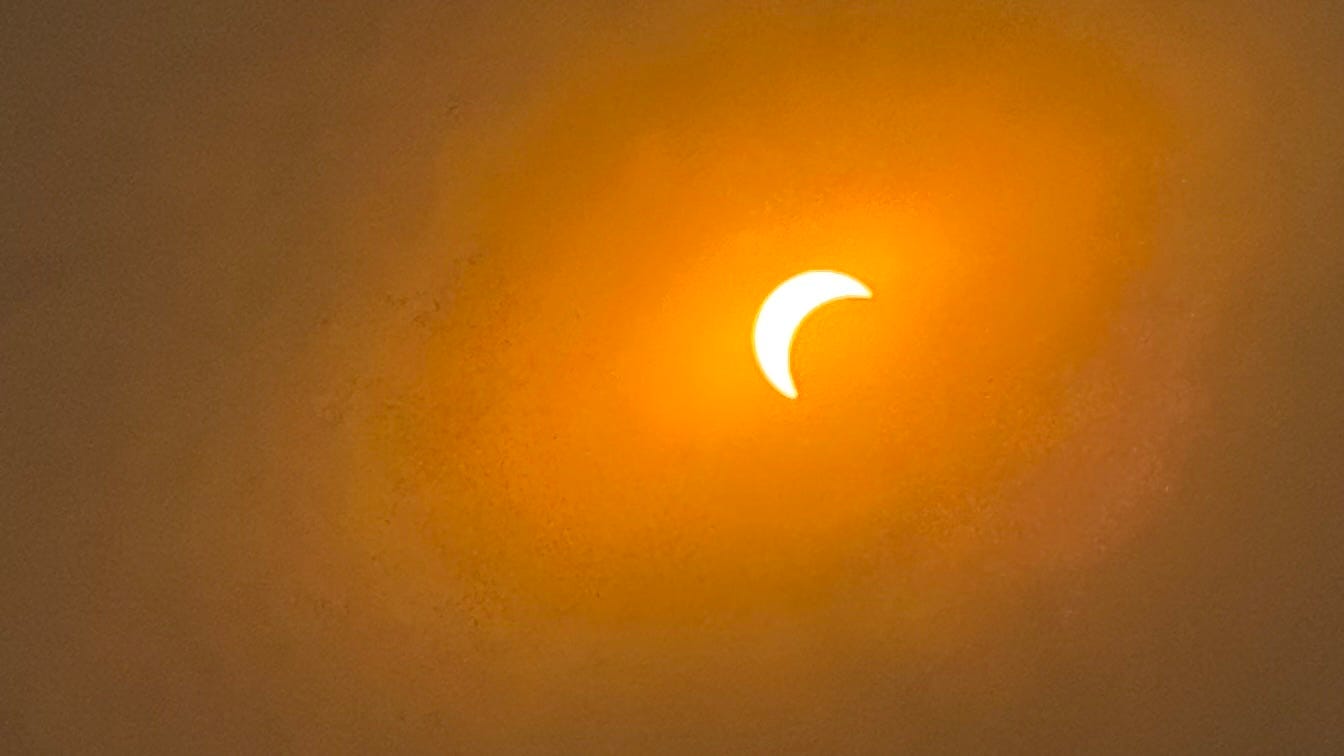
4d ago01:05:02Tap to summarizeWhen a partial solar eclipse became visible across Europe this week, I grabbed the most sophisticated piece of scientific equipment I own.A kitchen colander.I’d read that the tiny holes work like a pinhole camera, projecting dozens of miniature eclipses onto a sheet of white paper. It sounded just improbable enough to be worth trying. So I packed the colander in my backpack, walked to the open fields outside my village, and joined hundreds of other people who had gathered to watch the sky.Some had brought telescopes. Others carried homemade viewing boxes or expensive camera gear. A few generous souls let curious strangers peer through their eclipse glasses. Children pointed excitedly at the strange crescent-shaped shadows beneath the trees, while amateur photographers compared lenses and filters.For a brief moment, complete strangers became companions, united by the simple fact that something remarkable was happening overhead.My humble colander turned out to work perfectly.More Than an EclipseThe last time I witnessed a solar eclipse was more than twenty-five years ago.As I stood there watching the Moon slowly uncover the Sun again, I realised how much life had happened between those two afternoons.Back then I had only recently been ordained. Podcasting barely existed. Smartphones belonged to science fiction. I hadn’t studied in Rome yet. I hadn’t experienced burnout. I hadn’t spent years making television documentaries, walked the Camino de Santiago or started writing novels.Standing in that same sunlight, I wasn’t just watching an eclipse. I was looking across almost three decades of my own life.It’s strange how time works.Twenty-five years ago feels almost like yesterday. Yet when I imagine another twenty-five years stretching ahead, it suddenly seems like an impossibly long road. Our memories compress time. The future, meanwhile, always feels endless, until one day you realise it isn’t.What Actually LastsThat thought lingered with me as I walked home.People often worry about the legacy they’ll leave behind. Buildings. Careers. Collections. Recognition.History suggests those things don’t last very long.One of the advantages of having studied in Rome is that you spend your days surrounded by the remains of people who once believed their empires would last forever. Today, even the mightiest monuments are incomplete. Stones have been reused. Statues have crumbled. Names have faded.Perhaps that’s why I don’t find much comfort in the idea of leaving something behind.What matters far more to me are the moments that quietly shape a life. An afternoon spent filming a documentary. A conversation with a stranger. A walk through the woods. Or standing in a field with hundreds of people, all looking up at the same sky.Those are the moments that stay with us long after the photographs have disappeared into forgotten hard drives.As the sunlight slowly returned to normal, everyone packed away their cameras, folded up their picnic chairs and cycled home.I put the colander back in my backpack.I won’t need it to watch solar eclipses anymore. The next deep partial eclipse in my country will be in 2081.But I’ll keep it anyway.Maybe not for the next eclipse.Just for draining my pasta.This article is based on the latest episode of my podcast The Walk. If you’d rather hear the story in my own voice, you’ll find the podcast player at the top of this page. Get full access to Father Roderick at fatherroderick.substack.com/subscribe
Transcribe →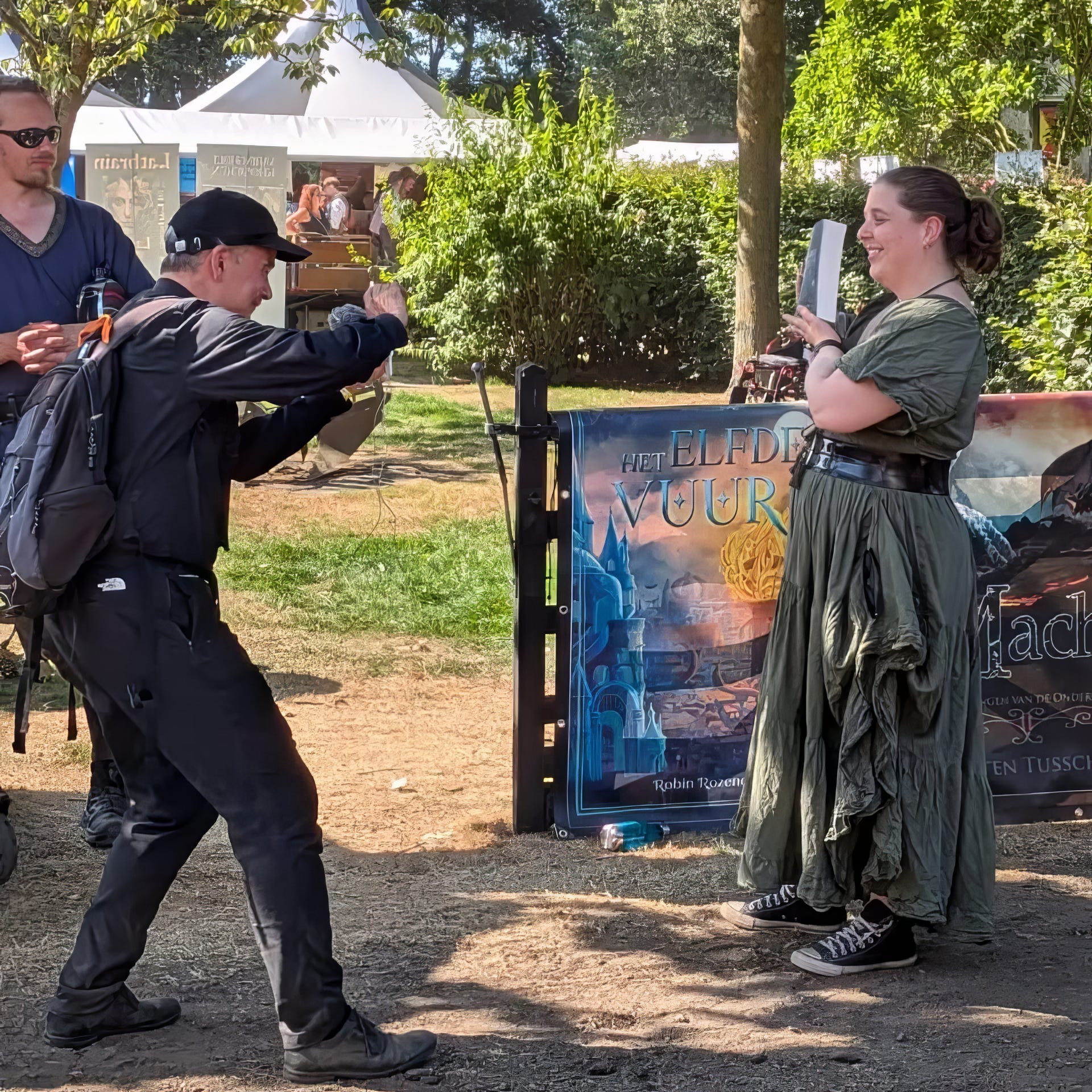
I Didn't Expect to Fall in Love Again
1w ago01:06:54Tap to summarizeOn Sunday afternoon at the Castlefest fantasy festival, I made a last-minute decision.I’d already spent the previous day interviewing authors for my new Dutch podcast, Fantasyfans.nl. Instead of recording more conversations, I decided to spend the rest of the festival making a short documentary.There was no camera crew, no script and no elaborate equipment. Just my iPhone and a rough idea of the story I wanted to tell. I wandered through the castle grounds, talking to visitors about the stories behind their costumes, interviewing artists and following whatever caught my attention.By the time I boarded the train home, I couldn’t stop smiling.This Substack is reader-supported. To receive new posts and support my work, consider becoming a free or paid subscriber.An Old CraftIt took me a while to understand why.Long before writing became such a big part of my life, I spent seventeen years making television documentaries. I eventually learned to do almost everything myself, from finding stories and conducting interviews to filming and editing.The first documentary I ever made was awful.I made every mistake a beginner could make. After spending the better part of a week trying to rescue the edit, I finally asked one of our experienced editors to have a look. He watched the footage for a few minutes, suggested a different structure and suddenly everything fell into place. It wasn’t that I had filmed the wrong material. I simply didn’t yet know how to shape it into a story.That afternoon at Castlefest brought all of that back.As soon as I started filming, it felt familiar. I instinctively knew who to approach, which questions to ask and how to collect the pieces I’d need later in the editing room. It reminded me that seventeen years of practice don’t simply disappear because you spend a few years doing other things.The Next ChapterOn the train home, another thought crossed my mind.Writing my first fantasy novel feels remarkably similar to making that first documentary all those years ago.The story is there. So is the enthusiasm. What I’m still developing is the craft. Over the past year I’ve interviewed dozens of fantasy authors for the new podcast, and every conversation has taught me something. We talk about worldbuilding, rewriting, publishing and all the invisible work that goes into finishing a book. I often leave those interviews with pages of notes, not because I plan to imitate anyone else’s way of writing, but because it’s reassuring to hear how every author has learned their craft one book at a time.That’s exactly what Castlefest reminded me of.For one afternoon I stepped back into a profession that once felt impossibly difficult. It no longer does. Years of practice have taken care of that.Perhaps writing works the same way.Right now, I’m wrestling with the first rewrite of my novel, trying to solve problems that seem enormous. Maybe, years from now, I’ll look back at this manuscript the way I now look back at that first documentary.Not with embarrassment because I was still learning, but with gratitude that I had the courage to begin.And perhaps that’s what I really fell in love with all over again.Not documentary making or writing.But the joy of discovering that every hour you invest in a craft makes the next story a little better.Fr. Roderick VonhögenFrom My Desk* This article is based on the latest episode of The Walk. If you’d like to hear the story as I originally told it, simply press play on the podcast player at the top of this page.* Curious about the documentary I mention in the article? I’ve started sharing a few behind-the-scenes photos and video clips on Instagram and Facebook. I’ll post updates there as the project comes together.* Work on my Camino book continues, although at a slightly slower pace than I’d originally planned. August is also dedicated to rewriting my first fantasy novel, and I’d rather make steady progress on both projects than rush either of them.* If you speak Dutch, you might enjoy my new podcast Fantasyfans, featuring conversations with fantasy authors, artists and cosplayers. Recent guests include Sandy Butchers, Pepijn Hamer, Cocky van Dijk, Charlotte de Winter and Arlieke van Remmerden. You can find all the episodes and articles at fantasyfans.nl.* Meanwhile, my daily Camino series continues in my Dutch podcast Heilige van de Dag, following my pilgrimage to Santiago one saint at a time until the end of August. Earlier this week I also joined a Dutch radio program to talk about the series, and you can listen to that interview here.* One final thing: I’m hoping to resume my live Q&A sessions on YouTube and Substack later this month. I miss talking with you in real time, so keep an eye on my social media channels for dates and announcements. Get full access to Father Roderick at fatherroderick.substack.com/subscribe
Transcribe →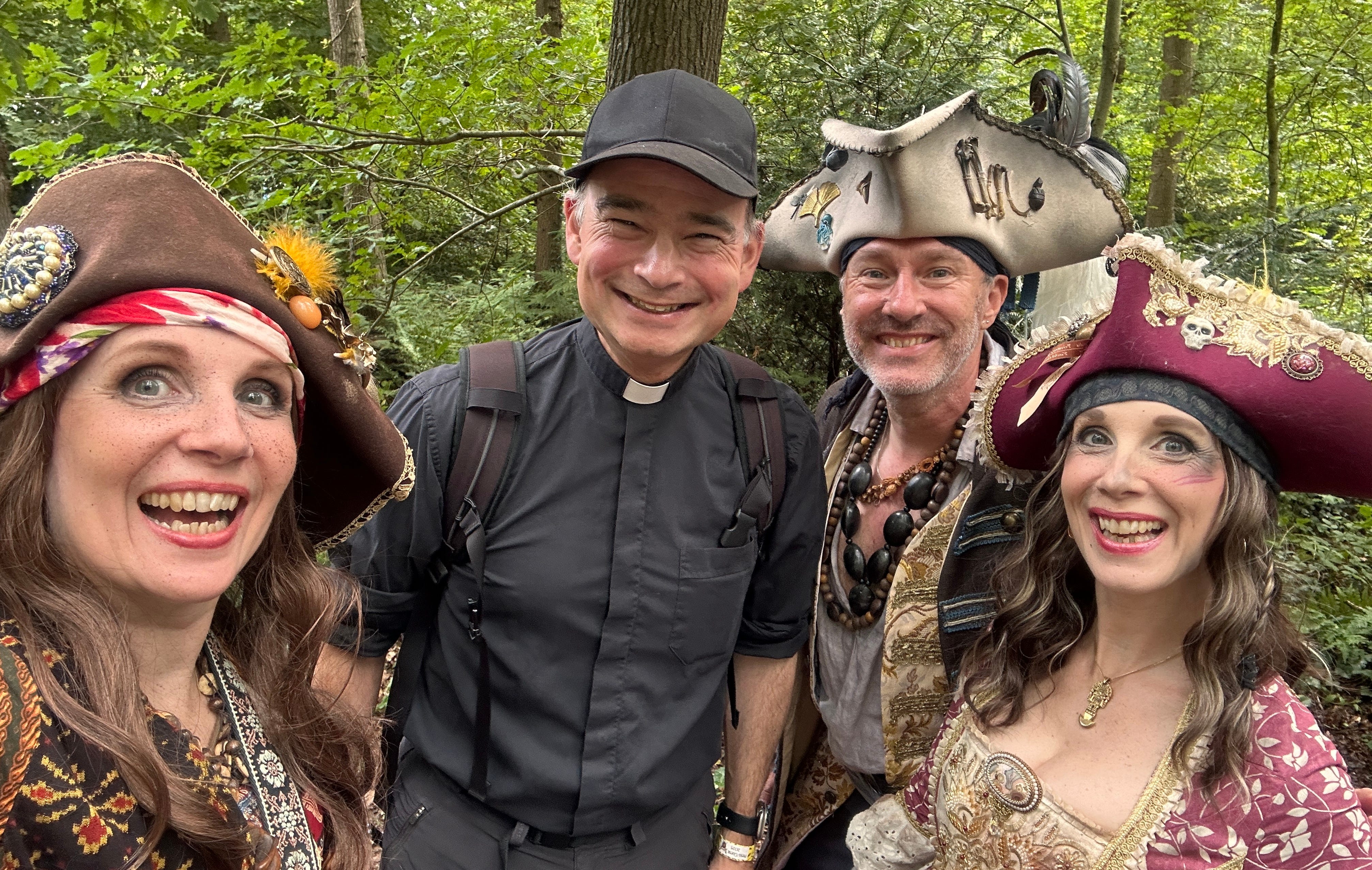
Too Many Good Ideas
2w ago00:47:05Tap to summarizeEvery creative life has one problem that success doesn’t solve. Sometimes it actually makes it worse.Earlier this week, I found myself looking at my calendar with a growing sense of unease. It should have been a quiet week. After walking two hundred kilometres during the Nijmegen Four Days Marches, I’d planned to recover before beginning the next phase of my fantasy novel. Instead, my schedule filled itself almost overnight. Interviews in three cathedrals. Editing another series of podcasts. Publishing a few articles. Parish work. A radio interview about my Dutch podcast. And then, almost at the last minute, an invitation to Castlefest as a member of the press, my favorite fantasy festival of the year. The sensible thing would have been to stay home. Instead, I immediately started looking for my recording gear.That’s the problem with work you genuinely enjoy. It rarely feels like work. I love interviewing authors and exploring old churches. I love telling stories about saints and meeting people who care about fantasy as much as I do. Every invitation sounds like an opportunity I shouldn’t miss. Yet somewhere along the way I realised that I was measuring success by everything I managed to fit into a week, while the project that matters most, writing my own books, kept waiting patiently for “when things calm down.” They never do.Earlier this year, I made a public promise that I wanted to publish eight books this year (most of them already exist as drafts). It’s an absurdly ambitious goal, and I probably wouldn’t recommend it to anyone else. But I know myself well enough to understand why I set it. The number isn’t really the point. It’s a reminder of the person I’m trying to become. You don’t become a writer by thinking about books. You become a writer by protecting the time to write them. That means saying no, not only to bad ideas, but sometimes to wonderful ones as well.So this August I’m trying something different. One chapter a day. That’s all. Not the perfect chapter, just the next one. Everything else will go on hold. Cathedrals will still be there. Festivals will return next summer. New opportunities always appear. Stories, on the other hand, only exist if someone sits down and writes them. For the next month, I want that someone to be me.This article is based on the latest episode of my podcast The Walk. If you'd rather hear the story in my own voice, you'll find the podcast player at the top of this page.This Substack is reader-supported. To receive new posts and support my work, consider becoming a free or paid subscriber. Get full access to Father Roderick at fatherroderick.substack.com/subscribe
Transcribe →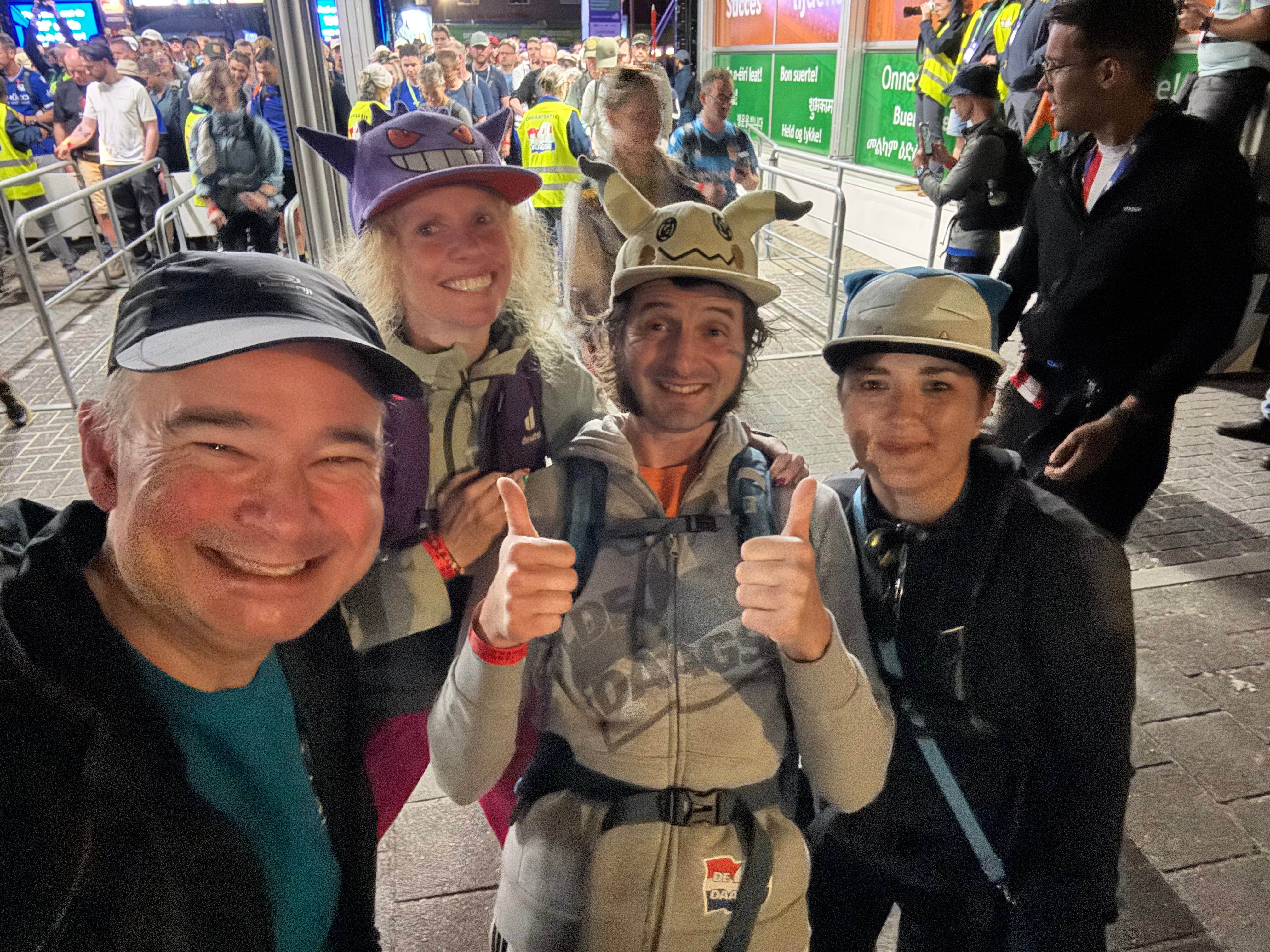
For Four Days, the World Felt Different
3w ago01:17:11Tap to summarizeFor four days, I walked fifty kilometres a day. I came home with sore feet, very little sleep, and a renewed faith in people.This Substack is reader-supported. To receive new posts and support my work, consider becoming a free or paid subscriber.By Friday afternoon, every step hurt.After four days of walking fifty kilometers a day during the Nijmegen Four Days Marches—the world’s largest multi-day walking event—I had reached the point where my feet objected to almost every surface. The next morning, the short walk to the supermarket felt harder than some of the longest stretches during the event itself.Yet that isn't what I remember most.What stays with me are the people.Every village seemed determined to keep forty-five thousand walkers moving. Children stood along the road handing out cucumber slices, cookies and sweets. Churches served us free coffee. Complete strangers applauded as we passed, as if finishing the walk mattered just as much to them as it did to us. Along the route I kept running into familiar faces. Friends from the fantasy community. People I’d interviewed years ago. Listeners who recognized me from my podcasts or from my social media posts. Even the Klingon cosplayer I'd once posed with at Comic Con somehow appeared among the crowds. With tens of thousands of participants, none of those meetings should have happened. Yet they kept happening.Walking fifty kilometres together has an interesting effect on people. Conversation becomes easier. Pretence disappears somewhere around the thirty-kilometer mark. You talk about books, life, work and dreams simply because there's nothing else to do except keep putting one foot in front of the other. I spent much of the week with friends who are organizing a new fantasy festival. We talked about storytelling, community and why so many people feel at home in worlds filled with elves, dwarves and dragons. By the end of the week I found myself sketching the mythology behind their festival in my notebook. Apparently, sore feet don't stop the imagination from wandering.On the final day, someone said something I’ve heard after almost every fantasy convention I’ve ever attended: “I wish the real world were more like this.”I understood exactly what she meant.But perhaps we’ve got it the wrong way round.Maybe this is the real world.A place where strangers encourage one another, where generosity is the default, where differences matter less than the simple fact that we’re all traveling the same road. The news rarely reports on that version of humanity.But it's there.Sometimes you just have to put on your walking shoes before you notice it.This article is based on the latest episode of my podcast The Walk. If you'd rather hear the story in my own voice, you'll find the podcast player at the top of this page. Get full access to Father Roderick at fatherroderick.substack.com/subscribe
Transcribe →
The Camino Didn't End in Santiago
Jul 1501:02:54Tap to summarizeWhen I arrived in Santiago de Compostela two months ago, I assumed the journey was over. I’d recorded forty podcast episodes along the way, filled my phone with hundreds of photos, and written a short diary entry every evening before going to bed. Surely that would be enough to remember what had happened.This month I’ve started turning those memories into a book. Every morning I open my Camino diary, replay one of the podcast episodes I recorded on the trail, and begin writing. Almost immediately, something unexpected happens. A single photograph reminds me of a conversation I’d forgotten. A village on Google Street View brings back the smell of wet earth after an early morning rain. I find myself remembering details I never consciously stored away, as if they had simply been waiting for someone to ask the right question.The biggest surprise is that I’m not just recovering memories. I’m discovering meaning. While I was walking, most days were wonderfully ordinary. Walk, eat, meet people, find a place to sleep, repeat. Only now, with a little distance, do I begin to notice how those encounters belong together. A conversation in the morning sheds light on a visit to a tiny church hours later. The story of a saint suddenly explains why a particular moment stayed with me. None of that was obvious at the time. Apparently, experiences need room to breathe before they reveal what they were trying to say.Perhaps that’s true of more than pilgrimages. We often expect life’s important moments to announce themselves while they’re happening. In reality, they tend to whisper long after we’ve returned home. Looking back isn’t simply an exercise in nostalgia. Sometimes it’s the first time we truly understand where we’ve been. That’s why, in a strange way, I no longer feel that I’m writing about the Camino. I’m still walking it.Listen to the podcastThis article grew out of this week’s episode of my podcast The Walk. You can listen by tapping the play button in the podcast player at the top of this post.Help Me Write This BookFor the next few weeks, I’m publishing a new chapter of Saints on the Camino every weekday on my Substack.You’re reading the book as I’m writing it.Before I send the manuscript to a professional editor, I’d love your help. If you notice an awkward sentence, a typo, or simply have a suggestion that would make a chapter stronger, please leave a comment. Your feedback will help shape the final version.You can start at the beginning or jump to any chapter using the table of contents.→ Read the book in progressThanks in advance!Father Roderick Vonhögen Get full access to Father Roderick at fatherroderick.substack.com/subscribe
Transcribe →
Learning to Stop
Jul 801:00:47Tap to summarizeOn Monday evening, I finally uploaded the first chapter of my Camino book. By the time I’d published the accompanying newsletter and shared it online, it was already half past ten. I stared at the clock with mixed feelings. Not because the chapter had taken longer than expected, but because I’d broken a promise to myself. For months I’d been trying to stop working at five in the afternoon. That simple habit had transformed my days. I slept better, woke up with more energy, and actually looked forward to sitting down at my desk each morning.This Substack is reader-supported. To receive new posts and support my work, consider becoming a free or paid subscriber.The irony was that nothing had gone wrong. Quite the opposite. The book had finally found its voice. I had set out to write a guide to the saints along the Camino de Santiago, but somewhere in the first chapter it became something else. Instead of describing churches and biographies, I found myself back on the trail, meeting fellow pilgrims again, hearing the church bells of small Spanish villages, and rediscovering the conversations that had shaped my own pilgrimage. Every chapter opened the door to another memory, and before I knew it, I wanted to keep writing long after dinner.Only a few weeks ago, I couldn’t persuade myself to work on my novel. Now I had the opposite problem. The words kept coming, and I didn’t want to interrupt them. It’s a much nicer problem to have, but it carries its own danger. I’ve learned often enough that enthusiasm can be just as exhausting as procrastination. Creative work isn’t only about finding momentum. It’s also about protecting it.So this week I’m trying something that feels almost unnatural. When five o’clock arrives, I’ll turn off the computer, even if the next paragraph is already forming in my head. I’d rather leave something unwritten today than discover, a few weeks from now, that I’ve exhausted the very excitement that made me want to write in the first place. The Camino taught me that long journeys are completed one day at a time. Perhaps writing books works the same way.🎧 I talk about this and more in this week’s episode of my podcast ‘The Walk’. You can listen via the player at the top of this page.👉 Read the fist chapters of my book about the Camino here: Saints on the Camino. Get full access to Father Roderick at fatherroderick.substack.com/subscribe
Transcribe →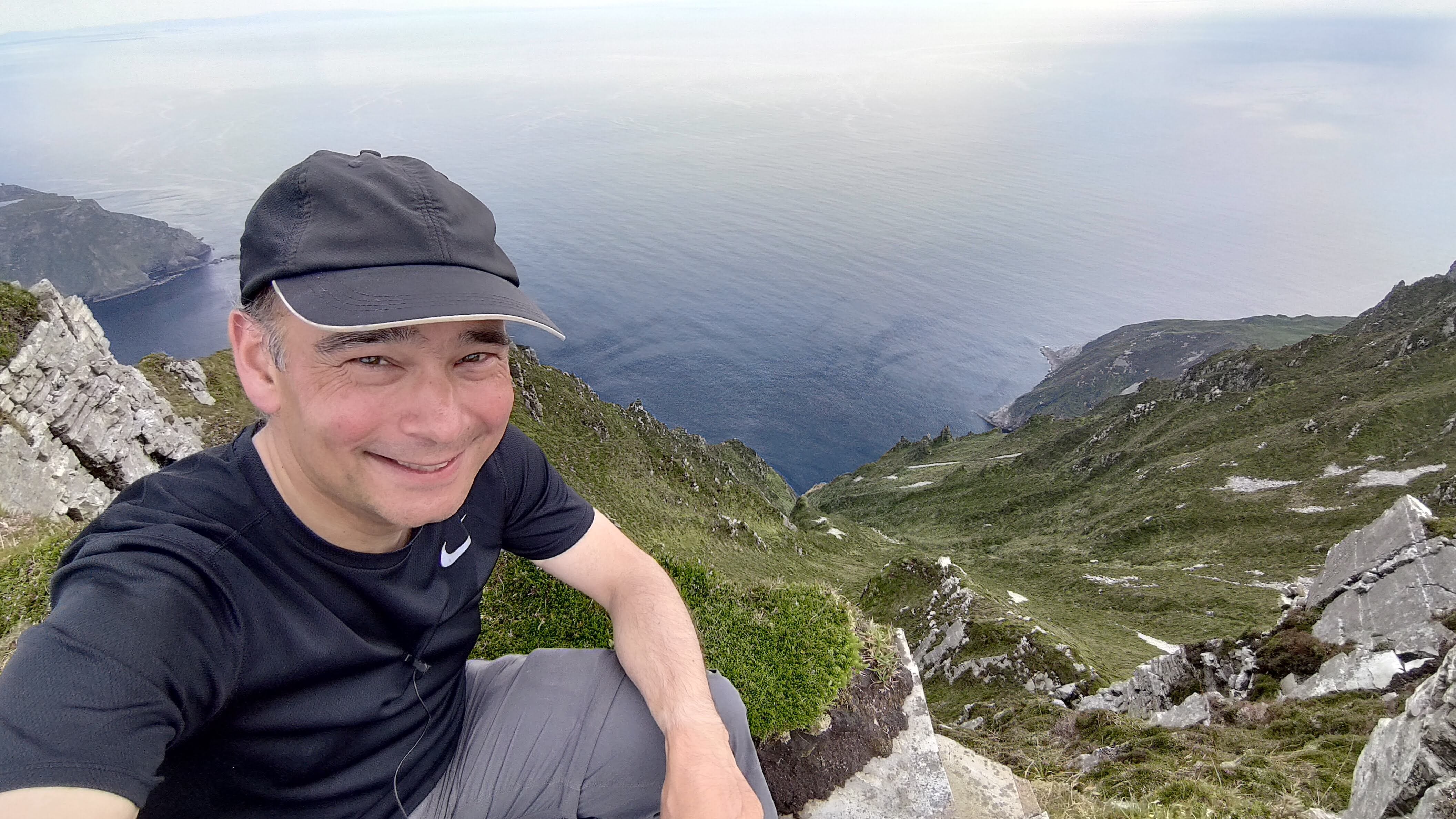
Time Traveling Through Ireland and Scotland
Jul 101:02:46Tap to summarizeThis morning, I found myself back in Ireland on top of a cliff at the end of the Pilgrim’s Path in County Donegal.A little later I wandered through the Scottish Highlands near Ullapool. By the afternoon I was standing inside a medieval chapel in Brittany, listening to the echoes of footsteps from years ago.And yet, I never left my home.In fact, only a day earlier I’d decided that I wasn’t going anywhere this summer.For weeks I’d been trying to convince myself that I should return to Ireland. The Nijmegen Four Days Marches are coming up, and a week of hiking through the Irish countryside seemed like perfect training. I also wanted to record a new series of podcast episodes about Celtic saints. And, if I’m honest, I didn’t need much of an excuse to go back. Ireland has a habit of making me feel at home.Then my left foot had other ideas.This Substack is reader-supported. To receive new posts and support my work, consider becoming a free or paid subscriber.While putting on my walking shoes one morning, I felt a sharp pain across the middle of my foot. Nothing dramatic (probably an irritated tendon due to the amount of walking I’ve been doing lately) but enough to make me wonder whether hiking eight hours a day was really such a brilliant plan. After a bit of reading, the advice seemed remarkably consistent.Take it easy.Not exactly the words an enthusiastic walker hopes to hear.For a day or two I kept trying to negotiate with reality. Maybe it would disappear. Maybe I could simply walk through it. Walkers are remarkably good at bargaining with their own bodies.Eventually I admitted that Ireland would have to wait.Oddly enough, I didn’t feel disappointed for very long.That afternoon I connected an old external hard drive to my computer.Back in timeThe drive was full of video footage I’d almost forgotten about.Ireland.Scotland.Brittany.Hours upon hours of walks through ruined monasteries, tiny churches and windswept landscapes. I started opening folders almost at random, curious to see what my younger self had been filming all those years ago.I was surprised by what I found.Long before I ever started my daily podcast about the saints, I was already stopping in front of ancient statues and forgotten chapels, trying to tell their stories. Apparently I’ve been preparing for this project for years without realising it.I even found clips that I’d filmed twice, once in Dutch and once in English, because at the time I imagined turning them into a television series.That television series never happened.Life took a different direction.But as I watched those old recordings, a new idea began to emerge.Looking forward by looking backI asked myself if I really needed to travel back to Ireland right now? Or had I already brought home everything I needed?Instead of rushing to book flights and hostels, I could revisit those journeys from my desk. I could combine the old recordings with new narration and tell the stories I hadn’t yet found the time to tell.In a way, it felt like walking those roads again.Only this time I could slow down.There’s something strangely comforting about discovering that not every creative project has to begin with something new. Sometimes you’ve already done half the work years earlier, without knowing where it would eventually lead.I’m beginning to suspect that creativity isn’t only about collecting new experiences. It’s also about recognising the value of experiences you’ve been carrying with you all along.The right journeySo Ireland is staying exactly where it is.The hills will still be there in autumn. The monasteries aren’t going anywhere. And perhaps my foot will be a little happier by then as well.In the meantime, I have plenty of stories waiting to be rediscovered.Not only on that hard drive, but also in the growing stack of interviews with fantasy authors, in the pages of my unfinished novel, and in the recordings I made only this week inside a museum filled with centuries of Christian history.It’s funny: I thought I was postponing a journey. Instead, I seem to have found another one.Maybe Doc Brown was right.Sometimes you really don’t need roads.Listen to the PodcastThis article grew out of this week’s episode of my podcast The Walk. You can listen by tapping the play button in the podcast player at the top of this post.Quick updates* This week, my Dutch podcast about the saints follows the route of the Nijmegen Four Days Marches, which begins in just a few weeks. Along the way, we explore the remarkable stories of the saints who have shaped this region for centuries. If you understand Dutch, you can listen to the series here.* Next week, the podcast heads to Spain. Throughout July and August, I’ll be taking listeners along the Camino de Santiago in a 40 part series, sharing the stories of the saints, churches and unexpected encounters I experienced along the pilgrimage.* Behind the scenes, I’m migrating my website and podcasts to a new hosting provider. It’s mostly technical housekeeping and shouldn’t affect listeners, readers or supporters. My hope is simply to make everything a bit more sustainable for the future.* I’m also working on two new podcast projects. One is a soft reboot of The Break, exploring the deeper layers of films, television series and other stories. The other is a Dutch podcast for fantasy readers, featuring conversations with some of my favourite authors. More on both very soon.This Substack is reader-supported. To receive new posts and support my work, consider becoming a free or paid subscriber. Get full access to Father Roderick at fatherroderick.substack.com/subscribe
Transcribe →
What the Camino Taught Me About Writing
Jun 2600:49:28Tap to summarizeIn this episode I record during a historic Dutch heatwave, on a day officially marked as code red. I talk about waking up at five to cool the house, improvising sun‑blocking with bedsheets, and trying to adapt to temperatures that feel increasingly normal in a changing climate.I explain why I cancelled a planned storytelling workshop for seminarians, even though the topic is close to my heart. Instead, I stay home and continue editing the Camino saints series, reflecting on how much I enjoy spontaneous, on‑location storytelling and how these recordings remind me of my early podcasting days.As I walk, I think aloud about the tension between creative energy and ADHD. New ideas give me momentum, while editing drains it. A helpful insight emerges: instead of “editing” my first novel, I can retell it with everything I’ve learned over the past year. That shift in mindset makes the work feel possible again.I also talk about the frustrations of working within a broadcast organization where I have no control over promotion, and why Substack feels like a better home for building a community around my work. A lunch‑walk story about “a man who wanted to take his horse to heaven” reminds me how essential walking and play are to my creativity, and sparks the idea of sharing daily short stories as a way to reach readers.The episode ends with a reflection on focus, choices, and the need to protect creative space — especially on a day when simply surviving the heat already feels like a full‑time job. Get full access to Father Roderick at fatherroderick.substack.com/subscribe
Transcribe →
The Walk - The Joy of Missing Out
Jun 2100:59:29Tap to summarizeThis week I take an evening walk through the woods during a heatwave and reflect on a surprising decision: skipping one of my favorite events of the year.Comic Con Holland was happening just down the road. Friends were there. Authors I admire were there. Under normal circumstances, I would have spent the entire weekend interviewing writers, meeting readers, and soaking up inspiration.Instead, I stayed home.In this episode I talk about why I made that choice, how the fear of missing out can quietly undermine focus, and what I'm learning about protecting my energy and attention so I can return to the work that matters most.I also share updates on my summer plans, my struggle to catch up with podcast production after the Camino, and my ongoing efforts to create a more sustainable rhythm for writing and creative work.Along the way, I reflect on two stories that unexpectedly inspired me this weekend: the emotional finale of Young Sheldon and the animated film Transformers One. Both reminded me why storytelling matters and challenged me to bring more emotional depth to my own novels. Get full access to Father Roderick at fatherroderick.substack.com/subscribe
Transcribe →
The Walk - The Question That Changed My Week
Jun 1601:00:57Tap to summarizeThis week I'm reflecting on something that many creative people struggle with: what happens when motivation disappears.After several busy weeks filled with podcast production, events, travel, administration, and a growing backlog of unfinished tasks, I found myself dealing with fatigue, brain fog, and procrastination. Instead of trying to push harder, I decided to take a closer look at what was really going on.In this episode I talk about the importance of rhythm, the hidden cost of open loops, why journaling helps me make sense of difficult periods, and how I've learned to replace self-criticism with curiosity.I also share updates on several creative projects, including the upcoming Four Days Marches saints series, the Camino podcasts, plans for a book about the saints of the Camino, and my ongoing struggle between chasing exciting new ideas and finishing the stories I've already started.Topics in this episode:• Recovering from mental and physical fatigue• Brain fog, procrastination, and creative work• The value of journaling and self-reflection• Preparing a special saints series for the Four Days Marches• Writing plans for the Saints of the Camino book• Revisiting the Story Mages novel rewrite• Why Ireland keeps calling me back as a writer and pilgrimAs always, thank you for walking with me. Get full access to Father Roderick at fatherroderick.substack.com/subscribe
Transcribe →