← The Who What Wear Podcast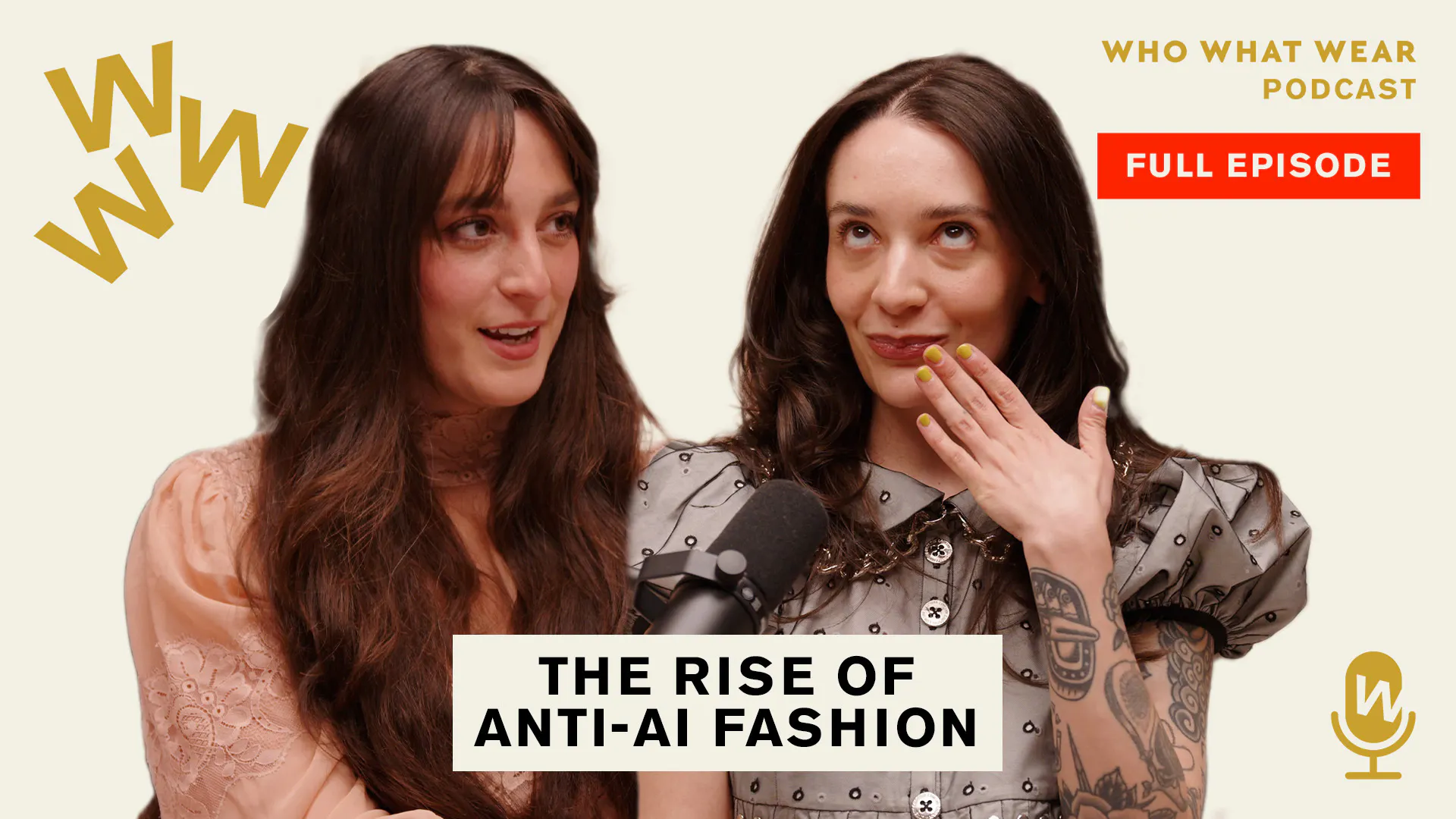
The Who What Wear Podcast
Fashion Analyst Mandy Lee, aka @oldloserinbrooklyn, Talks Met Gala Predictions, 2026 Trend Forecasts, and AI in the Fashion Industry
00:49:36
Loading summary
Transcript132 lines
- [00:02]
A
This episode is sponsored by 20th Century Studios. The Devil Wears Prada 2. Gird your loins. As the iconic cast is back for this highly anticipated sequel. Miranda Priestly is dealing with a major scandal that threatens the entire magazine. And now, award winning journalist Andy Sachs is brought back to Runway to try and save the publication and Miranda's credibility. With Meryl Streep, Anne Hathaway, Emily Blunt, and Stanley Tucci all reprising their roles, this is a reunion you won't want to miss. The Devil wears Prada 2 is now playing in theaters, so make sure to get your tickets.
- [00:55]
B
Welcome to the who what Wear? Podcast. I'm who what Where. Senior fashion and social editor Tara Gonzalez. Slash stepping in for Hillary this week. Today I'm speaking to Mandy Lee, AKA Old Loser in Brooklyn. Mandy's a fashion and trend analyst with hundreds of thousands of followers across her social media profiles. Today we're Talking about her 2026 trend predictions, the impact of AI on the fashion industry, and her Met Gala fashion forecasts. It's all coming up on who what Where. Mandy, welcome back to the pod.
- [01:29]
C
Hi, Tara.
- [01:30]
B
So happy you're here. The last time you were here was two years ago in 2024. I think you talked to our editor in chief, Kat Collings about your career. For anybody listening who hasn't heard about that, I would love to, kind of, if you could just give a little bit of a glimpse into how you started your career as an analyst and then now you are one of the Internet's favorite fashion commentators. I've been a fan girl for a real long time and yeah.
- [01:52]
C
And thank you guys so much for having me back. It's good to be back with www Triple W. Yes, Exactly. Just I guess as like a quick, quick and dirty recap. I started my career working in planning and forecasting at a sort of like a tech company in Boston and eventually moved into beauty. I did the planning and forecasting for In House hair company here in Brooklyn. Actually name redacted. I got laid off during the pandemic. And it ended up being kind of like the best thing that happened to me because that very day I downloaded TikTok. Oh, my gosh. I know. Taylor's. All this time.
- [02:34]
B
Yeah.
- [02:36]
C
And then, you know, one thing led to another. I essentially just wasn't seeing the content that I wanted to see and talk about. And to be honest, I really missed analyzing trends. Like, I really, really loved that about my corporate job. So it felt like I was losing my identity when I got laid off. I hate to say it too. Because now I feel so much more detached from my career as a freelancer.
- [02:58]
B
Yeah.
- [02:58]
C
But I did just like, hold so much stock in my job and my career was part of my identity, so I really miss doing it. And to be honest, like, short form Runway review, fashion analysis, trend forecasting, that did not exist when I started in, like, early 2021, I want to say. So timing was everything for me. I've been able to ride the wave all the way to now. I've been freelance for four years, which is I'm something so, so proud of. I'm now signed with IMG as their currently their only the fashion commentator.
- [03:33]
B
Okay.
- [03:33]
C
I am fucking G. Yeah.
- [03:36]
B
Which is so amazing.
- [03:37]
C
Congrats. That was a huge step that I took this year. It's been really, really crazy. I feel like just this last, I would say six months, our brand's really, really starting to lean in and work with commentators. And it's a little bit different than working with, like, a influencer. Although I think I dabble in that space as well. Or I can. I really kind of like, started my career discussing trend cycles, how trends evolve, and of course, predicting trends. That's kind of my bread and butter and sort of what I'm known for on the Internet.
- [04:10]
B
I would say when you started doing those videos, it was like other people weren't kind of doing that. And I think other people also just weren't thinking about fashion in that way as something that doesn't just have to be something like, consumed in terms of, like, pretty outfits, like people posting on Instagram, really pretty outfits. And I feel like that was kind of, kind of the fashion content outside of traditional media that people were consuming. And then with the advent of like, TikTok and short form content, I feel like then people were like, oh, we could talk and think about fashion in such a smart and interesting way. And I feel like you really led the charge. And I think now, as you were kind of pointing out, a lot of brands are leaning more into that. I just feel like we're starting to see a lot of people being like, wait, I want to actually know about the trends and what that means and what that says about the culture. And it's just like, so exciting and really cool to see.
- [04:55]
C
Yeah. I mean, I remember when I was first starting out and thinking about going off on my own, I was like, I literally have no one to look up to and to see if this trajectory is actually gonna happen. Except for Shout Out Hot la Mode. My friend Luke. Luke was doing that on YouTube. For like, I mean, I think he's been doing it for like 10 years now. And he was probably the only other person that I knew at the time. Like, I just had like a delusional hope that me ha hating working 9 to 5 and then doing content at the end of the day would pay off. Here's a story I don't think I've ever told the way that I quit my last job. I was a senior manager at another big beauty e. Com company. It was not an in house company. It was like a big, you guys probably shop there for all your skincare. But I owned the entire hair care category. And I had a small team and I took PTO to do my very first Fashion Week.
- [05:56]
B
Oh my God.
- [05:56]
C
PTO that I had allotted. I was allowed to use it, but everyone had already known at that point. It got like, it got like outed that I did TikTok on the side. And it was really weird because it was like late 2021. Like, it was still like kind of embarrassing. I was not embarrassed to do it, but it was embarrassing.
- [06:16]
B
I know what you mean when you're like posting videos and then you're like. And it also felt like not everybody was on there. So you were kind of doing something and you're like, oh, there's a chance, like people that I know won't see. And then now it's like, yes, everyone's
- [06:26]
C
just seeing it low key. A little embarrassing to go to work and then like go home and have this like double life essentially. And my director did not like that. Oh, did not like that. And they like, she asked me to do this meeting when I got back from my PTO and like basically wanted to put me on a pip. And I, I sat through the whole meeting, let her Talk for like 20 minutes about like how I'm not like devoted to my job and this and that. And I was like, I'm not signing this pip. I'm putting my two weeks in. Yeah, but yeah, that's the, that's the story of how I actually went freelance. I was sort of like pushed into doing it because I'm like, I'm not getting put on a pip because I took pto. Like, no.
- [07:09]
B
Yeah, exactly. Or like, I went to Fashion Week. I was fabulous. And they're just gonna have to deal with it.
- [07:13]
C
Hardly making any money at the time too. Like, I had a little bit of savings and I was like, just completely delusional. I was like, hopefully this works out.
- [07:20]
B
Yeah. And it did. So it did.
- [07:22]
C
Yes, it did things have really, really changed, especially I would say, in the last two years. Like it is a completely different world now.
- [07:30]
B
And then obviously you were kind of talking about how your bread and butter is trend forecasting, as we all know and love. And obviously we're kind of just Fashion Month just recently ended. I feel like now like the dust is kind of settled from that. And I would just love to hear a little bit of your takeaways from the last season in terms of if you were like, what are some things that like, really stayed with you that kind of got you really excited from last Fashion Month or what's kind of like on your radar that you're still thinking about?
- [07:56]
C
For me, the overall theme of fall winter 26 was movement with fabrics, with silhouettes. I mean, I think, you know, the whole quiet luxury thing is I always hated it. You, I know, were never a fan of it either. I feel like it was sort of the first instinct into recession core. But that doesn't work. Just because you make basic clothes does not mean they're going to sell, unfortunately. I think Sabato's Gucci was a good example of that. Like, just because you're making more simple clothes does not give people an incentive just to buy them. Yeah. So I think movement and texture were the huge takeaways for fall 26 and just kind of leaning more into what makes a brand stand out and really honing on different house codes and what makes a brand actually special, not just making the same white T shirt with the logo on it. That's not going to fly. So I think a lot of brands right now are kind of struggling, like, how do we mix, like commercial success with standing out and having a point of view, which I think can actually apply to a lot of things right now. In my business, having a point of view is literally everything. It's. It's what keeps the lights on, essentially. And I think that's happening with every, everything in fashion at the moment. And then I think another, like, really fun trend that I noticed is this influence with weather. Brands have sort of given up, I think on sustainability, and sustainability efforts are always going to be worth something, but I think a lot of brands are like, we need money now. Like, how can we get money now?
- [09:34]
B
Yeah.
- [09:35]
C
So I think I've noticed a lot of abandoning eco friendly actions and materials and just efforts in general. And I think unfortunately what brands are going to start doing and what we've seen during fall winter 26 especially is more like, how do you survive, like the, the next coming Years and what that will build into. So like looking 10 years into the future and I think what that looks like is very weather specific fabrics, outerwear, like I predicted, rain clothing outerwear. And I mean that was like in almost every big collection. Tom Ford is obviously the biggest, I would say example because they literally had like cle, clear, like a section of clear clothing, clear skirts, clear raincoats, the little granny rain bonnets, which are so chic, so cute.
- [10:31]
B
I love those.
- [10:32]
C
Very, very that. And of course Prada for men's had the like half little rain capelet that transitioned over to women's. This is going to be a trend, guys, that just continues and continues and continues and will just I think be the standard going forward. Because like, think about the last couple of years, there's been a lot of conversations about how quality has fallen, especially at the luxury level, because that is happening. Corners are being cut, fabric swaps are happening, and even like components like zippers, buttons are getting cheapened. So brands really have to think about how what makes our clothing worth it? What makes an $18,000 vest worth buying? Totally. There has to be some kind of value for the consumer in order to, for that person to pull the trigger and buy it. We've also been in the process of losing the mid tier consumer as well. You're either like super rich and you can afford a $12,000 Tom Ford raincoat without thinking twice or you know, you're saving up to buy something from like Aritzia. And the discrepancy I feel like is so depressing a but also more real than ever. And so I think with these luxury brands, they're really going to have to tap into value. That was a big, big takeaway for me. This season is like value and also this expedition into exploring how we are going to survive the changing climate.
- [12:02]
B
I was going to say the plastic. I really loved obviously your 2026 trend predictions video and I was actually going to specifically bring up the raincoats. So you kind of like beat me to the punch there because I do feel like even if what you're saying, you're kind of like, it's a little bleak. But the raincoats are really cute. So texture is something that I feel like I definitely noticed a lot more too. Like obviously like the plastic in itself is also like a texture. And I feel like maybe kind of going into like people in general too are like wanting to feel something just in this, in the world that we're living in. I feel like that kind of like desire for connection in just like everything. And then I feel like the way that it kind of like manifests in clothing is everyone's like fuzzy shoes, like plastic coats, like it's just kind of everywh. And I just feel like it's that type of thing where it's like people are like searching for connection. And so if they can like wear something that like feels like so tangible and real and like something, I feel like that like elicits emotion and that's something that people seem to to want
- [12:59]
C
more of a hundred percent. And if we look at the brands who I would say are winning across the board, Matthew Blaisey for Chanel, Jonathan Anderson for Dior, Willy Chavaria, like, all these. My pants are really, hell yeah. I mean, we love Willie here. But all these brands do something that is above and beyond just being a creative. They are world building every single day. Whether it's intentional or not. I kind of feel like it has to be something brands start leaning into. And also all these creative directors that I just mentioned are more than that. They're more than designers, they're stars. And that's something I think has not always been the case. I think you can say that about like John Galliano. He was always a star and like his own person, beyond just being like a creative director at Dior, at Margiel or whatever, like he was his own like figurehead. But I think that's also a trend that I'm seeing at the top level is these creative directors are having to be their own sort of like person and almost like an influencer in a way where it's like they are creating influence as themselves, not just as a creative director. And like the ability to world build is actually helping people make purchases. Like everyone ran to the Chanel stores to get anything just because like, you wanna be part of this, you wanna be part of the zeitgeist, you wanna be part of this amazing moment that's happening in fashion. And I think that's really, really something to keep an eye out for. And I think a lot of brands are going to start either manufacturing these moments of emotion or letting them happen naturally with giving people on their team, models, influencers, creators, whatever, more freedom.
- [14:47]
B
Yeah, absolutely. And I know that obviously you mentioned the recent like frenzy over the Chanel moment of it all. And I know that you got the pony. You have the pony hair flats, right?
- [14:55]
C
I did.
- [14:56]
B
If you could kind of talk a little bit more about like, what made you like, so connected to that Chanel collection and feeling like you really Wanted them and yeah, how you're liking them, I'll be honest.
- [15:04]
C
Like, I wanted something from that collection because I wanted something from Matthew's first collection because it's fashion history. Like that was my first reason. Yeah, the flats are cute, but like more than that, I wanted to own something that was part of fashion history. Like, like I will be the first to admit that. Yeah, we all have reasons for why we like pull the trigger on something. Especially like more of an expensive purchase. And that was my reason. I hit up my sales associate at Bergdorf's. Cause I don't have a Chanel sales associate. I'm not a customer. I'm sorry, I'm not a vic. But she was able to reserve them for me and yeah, that's how I ended up getting them. So guys, go to your local Bergdorfs in New York. They're amazing. Amazing. Like customer service, top tier. But that's how I ended up, up actually getting them. I was also considering the black Croc flats because those were really, really chic and I, I liked the shape and I knew those would get more wear. But I thought the pony hair ones really did like mark a period in time. Yeah, more like. And I'm okay with that. You know what I mean?
- [16:03]
B
Yeah.
- [16:04]
C
Are they going to be in style forever? No. And that's okay.
- [16:06]
B
And then it's like what you were saying too. It's like where people especially now like really want to be part of something and I feel like want to be part of the world that someone's building. So it's like by buying that you were saying, it's like now you're kind of like have this moment of fashion history and then whenever you see the shoes, you're not just gonna think like, oh, those are really cute. And I bought them at the time because of animal print or texture, whatever you're gonna be like, I bought it because I wanted to be part of something amazing that was happening. And I think that that is so much of what people want right now. So kind of like really exemplifies that makes so much sense, right?
- [16:34]
C
Exactly. And that's kind of what's interesting, I think about fashion in 2026 is there's so much accessibility, there's been so much democratization happening in fashion that there's. There almost seems to be like, oh shit, we went too far. But I think once fashion kind of like once the industry sort of opened the door, they can't shut it. So it's sort of this like double edged sword where there's like so much access and knowledge and inclusivity, almost whether that was intentional or not, that you can't pull the curtain back. Like, people have all this information now. And I think like a brand, like for example, the row, they don't even let phones in. They'll always have their audience, but I don't think that they'll necessarily like, be on a growth trajectory unless they release another hot bag or something. But this more like if, you know, you know, sort of like brand, like, very. Phoebe Filo very. The row, that's kind of over. And it's more like people want to feel like a connection to a brand because it makes them feel like part of it. And it's this like parasocial thing. And there's. I say that with love. Like, I'm parasocial about Jonathan Anderson. Like, in my mind, we're best friends. You know what I mean? Like, that makes you want to actually go out and buy something. So it is like what you were saying, that emotional connection is very, very important, especially at the luxury level.
- [17:58]
B
And I think too, it's like, obviously this was another thing from your trend predictions that I really loved. And it kind of taps into exactly what we're saying where you're like, brands are really pulling back the curtain. Like with Margiela showing the kind of like behind the scenes process. And with like Marc Jacobs, I was obsessed too when he listed all of his references. I also loved how he's like, I'm referencing myself. Like, you should go off king.
- [18:17]
C
Come on.
- [18:18]
B
Like, of course you did. But I think that that is just really like emblematic of like, right now. I think also with things getting more expensive and people can't afford all of these things, it's like everyone's like, okay, if I'm going to like, get behind a brand, if I'm going to get behind an item, I want to know, like, why? Like, I want to know what went into it and maybe what was on the mood board. And I want to feel that kind of connection. And I feel like it's really cool to see brands tapping into that. And I feel like to, to your point, those are the brands that are kind of like getting ahead and that we're seeing people get really excited about on social media.
- [18:46]
C
Yeah, agreed. Also, like, you know, like him or not, Demna knows how to do his job. Was I a fan of that Gucci show? Absolutely not. It was a little embarrassing, I thought, but he did something very smart, which was the see now, buy now. And from what I heard they sold like upwards of $7 million in the first, like, couple of weeks. So, you know, mission accomplished there. We'll see. I can't wait to see the, like, the earnings after his first show. But I'm very, very curious to see if he's able to turn the ship around. And Demn is a whole other story about the way that he approaches his job as not just a creative director, but as a star. And you know, like him or not, he changed the industry forever and ever.
- [19:28]
B
Yeah.
- [19:28]
C
And you know, the senile buy now, which was when, you know, after the Runway, you were actually able to buy many, many of the pieces that were shown. And I think that kind of speaks to our lack of attention span for sure. But then on the flip side, you have Matthew's collection where people did wait the, what, six months, five months to go and buy. And there was no shortage of excitement for that. So, you know, I think two approaches to similar outcomes because I think they both sold very well. So we'll, I think we'll see closer to the end of the year when the earnings get released.
- [20:05]
B
Can't wait to nerd out about that.
- [20:07]
C
I know I love numbers.
- [20:09]
B
I feel like I'm lucky enough to know you personally, but for everyone, that's kind of like seeing your short form content. Obviously, like, so much research and thought goes into like all of these videos and all these, you know, predictions and everything that you're putting out there. And I would love if you could kind of, if you could peel back the curtain a little bit on your own process. How do you know when something's like, you're like, oh, that's. This feels to me like this is something that's, that's happening, that's important. Or like this feels like a trend that's like about to be everywhere.
- [20:34]
C
I mean, you gotta pay for my methodology now. But to be honest, a lot of it comes with experience. I did not always have this, like, knack for it, but I've been doing this going on 11 years. Yeah, this was my 10th anniversary of working in this business. And I didn't always work in fashion, which I think was actually extremely beneficial because I learned the methodology and the technique. I used to work in E. Com, then I worked in beverage, and then I worked in beauty, and then I worked in fashion. So I experienced this kind of methodology in different industries and I was able to like hone and tweak it from job to job to job. When I worked in corporate, a lot of it is like data mining kind of making like future predictions based on numbers and data. And that can be from like different platforms like wgsn, a spate, but, but it can also be. You need to have a human touch, a human element. And I think like something that's really scary that I see is a lot of reports and trend reports that companies are releasing publicly. I can tell right off the bat that they're AI generated because they're not future looking. They are, they are aggregating current available data that is not filtered through a human. So therefore it feels very late. It doesn't feel like a prediction. It feels like a rapport of what's like currently happening. And these brands love to call it a prediction or a forecast. And it's like, that's not what it is. I do like that they are making that information more accessible. I think it's cool. But like call it what it is, it's not a future outlook. And I think something that I'm able to do that a computer could never do is be able to add the cultural context. So like right now we're at war with Iran, our president is insane, and the US is like falling into like a fascist doom hellscape that actually matters. In terms of fashion, I know that like fashion seems arbitrary in comparison because it is like let's be real. But these things that happen in our world on a larger scale and even on like a more micro scale, like in New York City for example, or like in Boston or in San Francisco, like what's happening locally, domestically, internationally, it impacts fashion. So almost like immediately too. Like the whole raincoat weather protection thing, that is a result of our world changing. Do you understand? Like, like it's not just like, oh, we like raincoats now. Like no, like that there is a reason why it's happening. And until AI is able to like filter that through their system, they're never going to be as good as me or as good a human with experience. I want to say before we even go further, I do not use AI for my trend predictions, to write anything reviews. And if I see any of that, I actually block people because of that. Because it's like, I don't want to see this. I'm not an anti AI person. I personally don't use it. I've actually never used chat GPT before. Hell, that's why we're friends.
- [23:57]
B
Exactly.
- [23:58]
C
But you can't avoid it. Like you Google something and it gives you the AI summary review and then I'm like, that's quite helpful actually. I will Say, but, like, when it comes to my work and my creativity, I would not have success if I relied on AI to do it.
- [24:13]
B
Machines can, you know, take all the information that they want, but they're never gonna be able to, like, analyze the things that are happening in our world with the kind of emotion and, like, understanding that we are. That someone like you is, like, able to kind of, like, tie into that and to even go off of that, too. Like, I feel like something. This is, like, really fitting. But I did kind of want to talk a little bit about how. How you had called out aprons, as well as, like, kind of, like, an upcoming trend, which we've seen a ton of on the red carpets and on the runways with, like, Miu Miu, and it's, like, a really cute look. But then I know that it's like, obviously there is that kind of chatter about, like, okay, is this, like, leaning into conservatism in the rise of, like, trad wives, or is this, like, something that's, like, kind of subversive, which I know is, like, how, like, Ms. Prada, like, in her show notes, she was kind of talking about how it was, like, an ode to the working woman. And this idea that, like, being a working woman and, like, you know, having to wear an apron is, like, not, like, something, like, shameful or, like, you know, you could. You should be able to, like, wear that and, like, feel beautiful, you know, so there's that kind of send on that. But I'd love to kind of hear a little bit about, like, your take on, like, the apron trend. And, like, what do you kind of, like, think that has to say about, like, culture in the. In the time that we're in?
- [25:16]
C
I mean, I think it can go both ways, of course. I think, like, conservatism is a. It is a cultural indicator that influences fashion. And. And like you were saying, fashion is emotion. You have to be able to capture the temperature and the emotion in order to understand and analyze fashion, I think in a relevant way. It's literally not like, the clothes on the Runway is not even half the story. And I think with aprons, yeah, I think it can go both ways, because conservatism is a massive factor that has influenced the fashion industry over the last last several years. It's also influenced, like, women's lives all around. Like, look at, like, the politics happening against women in America and, of course, globally as well. Let's not, like, act like that's not a factor in this whole thing. But I think on the flip side, Women run the world. And I think utility is a major, major trend that also coincides with the whole, like weather specific dressing is. Utility is definitely a factor in that too. Like, how do we get more bang for our buck? And aprons sort of like an in between of like a dress, a skirt, a top. So I think having that multifunctionality to a piece is so major. And it's very appealing to people because it's like, okay, this is like a versatile thing. It's almost like outerwear. Or I can take my top off. Like Chloe 7A.
- [26:41]
B
Did you see her at the.
- [26:42]
C
At the Mew Mew thing?
- [26:43]
B
Yes.
- [26:43]
C
Yeah, I think she was wearing a shirt under it, but she was wearing like this leather apron, if I'm not mistaken. I think that was her. But the girls were.
- [26:50]
B
I think so too.
- [26:51]
C
I think the girls were in the aprons in current season. It was so powerful and cool because it's like, imagine a room of what, like 800 powerful women who are like all artsy, nerdy. Like, you were there to watch a crazy short film. Like, you were. You went, yeah, we saw each other.
- [27:08]
B
I saw, yeah, yeah. When we were going up all the stairs. For context, Miu Miu, during Fashion Week had a really cool event where they. They partner with like female filmmakers to make these short films and then they screen the films during Fashion Week. So Mandy and I were at this screening for this Miu Miu, like, movie, and there was like basically like hundreds of girls there wearing like the cutest, like, aprons and looks. And I think that, yeah, that was Chloe that was wearing the leather apron.
- [27:32]
C
Apron, yeah. Chloe was like in the corner in like the VIP section, like literally in the last seat in the last row.
- [27:38]
B
Hot up front.
- [27:39]
C
Yeah, it was really warm, but she was in this like, sick leather apron. And actually my first memory of a Chloe outfit was this like Rick Rack like, apron thing she wore I would think probably in like 2006, 7ish era. And I remember being like, that is so cute. She was just like in a little white T shirt under it and jeans. I was like, that's really sick. And again, I think the appeal of aprons is that sort of like in between piece where it can lend itself to something sexy where you're not wearing anything under it. Or it can be a layering piece. It can be leather crochet, like the Miu Miu show. And also, like, you know, I think Miu Miu has sort of. I don't think Mimiu is the hottest brand anymore. I think I actually think Dior and Chanel are coming for the crown. Yeah. Like, the mighty will fall. They can't stay in that one spot forever and ever. Mimi will always have relevancy, especially for, like, girls like you and I who have been, like, fans before the micro mini 2022 incident and will be fans long after too. But I think in the. When we talk about the Zeitgeist, like, Mew Mew has so much appeal to the girls because it felt like kind of like an if, you know, you know, sort of thing, because a lot of people were discovering Miu Miu and the status that that brand can bring. And then she changed everything with the logo, and that was very different than the, like, Mew Mew girl you and I were used to pre pandemic.
- [29:07]
B
Really? Yes. Yeah.
- [29:08]
C
And now I think it's going back to a place of. Of like, kind of like weird girls. Weird.
- [29:14]
B
Super weird. And like, I feel like even recently, I think some people too, been like, I don't know if I really like the last couple collections. And I was like, I, I. But then I'm like, that's interesting because I feel like they feel like some of them older Mimi, with all the colors and the pattern mixing and like, styling that's almost like slightly off putting, a little weird. But then it's like, that is what Mimi has always been. But it's cool to kind of. To your point, it's like, I feel like people. People get used to, like, one brand being one way, and then they're like, oh, actually, like, it's existed for a really, really long time.
- [29:42]
C
Yeah, I don't know. I think. I think anything that has sort of a utility feel is. And that's been a trajectory also within the Miu Miu universe too. Remember, like, the cargo belt skirts from a couple years ago? Like, Mimi has been on that sort. And even. Even the 1999 half harness vest thing, you know, she's been on that grind forever and ever. But I think the utility moment and the functionality that comes with a utility piece has real appeal right now. Again, more bang for your buck sort of situation. And anything that has versatility with styling I think is very, very appealing to people.
- [30:20]
B
Yeah, that's actually such a good point because I didn't even think about the apron in terms of utility. But you can wear it so many different ways, which I need to get on the apron grind. So I know I need to find one. But in another, maybe this kind of also kind of leans into the other trend that you kind of talked about or at least like you saying a lot about how there was, like, a paper doll vibe kind of happening, obviously with you. Gave a shout out to the who, what, where cover story with Elle Fanning and obviously the incredible Sylvester Mako. Gonna try to pronounce that as best as I can. And, like, how we've been seeing that kind of, like, analog kind of style really, like, everywhere in fashion right now. You can kind of explain a little bit about this, like, paper doll aesthetic maybe for viewers who aren't familiar with that kind of idea. And then what do you kind of think is so appealing about it in fashion right now?
- [31:09]
C
Yeah, so I would classify my, like, area of expertise, especially with trends, is from I'd say 2008 to, like, 2017. Like, that's the area that I am the most obsessed with because I was, you know, growing up in that time and something that was very, very popular kind of when I was getting into fashion was. It's now called hypnis Purgatory. It was like a retroactive named aesthetic because, you know, we didn't name our aesthetics when they were happening like we do now. We didn't call this, like, hypnosis purgatory. We didn't call indie sleaze indie sleaze when it was happening. It's a retroactive, like, named and classified aesthetic. And this was coined by kari, the Consumer Research Aesthetic Institute, which I highly recommend. Anyone who's a nerd like us, go look it up. It's so amazing. It's like a big encyclopedia of all, like, categorized trends, especially with aesthetics. So not just. It's not a fashion encyclopedia, although fashion has to do with it a little bit, but it's more, like, overarching aesthetics. And this was one that was very, like, crafty. So, like, think Paper magazine, Juno. That intro title is so, like, iconic because it was. Was, like, you know, like, hand done. Again, like, what we're talking about with A.I. nobody, like, wants to see A.I. in their art. It's still quite controversial. And, like, it's sloppy. It's. It's, you know, AI Generated slop, as we like to call it. But it got that name for a reason. It's because it's lazy and it has, like, no meaning. And that's what.
- [32:47]
B
When.
- [32:47]
C
I'm sorry, but when I saw the Prada Birds, I was like, girl, why? Yeah, yeah, you're so much better than this.
- [32:51]
B
I know.
- [32:52]
C
And, like, like Demna's Gucci teaser, You couldn't go on the street and find an Italian woman That looked exactly like that. I know, like that what. Like that literally was an AI generated Italian woman that you could pick off a million off the street. Like, I cannot believe, you know, these brands that have endless amounts of resources and money would waste it doing something like that. And you know, you could say, well, you're, you're behind because this is technology and this is the way that things are, are evolving and this is the future. I actually would push back on that a little bit because I think AI for generating art, where does it end really? Why do you need models? Why do you even need fashion? When does it end? So I think the appeal with this sort of new, I'm calling it the Paper doll, Paper doll aesthetic because that's what it looks like to me. I think Sylvester Macau really, really revolutionized that. And he's been. That's like his signature style. And other photographers like Jossa Muller, who was the photographer, the lead photographer and creative director for the Paper magazine IO shoot, highly recommend looking it up. They have very specific signature styles. And it all starts with like the photograph. And then it gets digitally manipulated, manipulated, manipulated later, later on in like post production, which is the way, like, you start with a real image and then you manipulate it later on. Like, that's good enough for me. You know what I mean? Like, you got some real humans to do the work and now you're doing cool shit with it after.
- [34:27]
B
That's great. Part of the reason that we were super excited to chat actually was about all the like, anti AI stuff. And I think through things like this, a lot of like, the fashion industry has like, pushed back against AI in different ways. And I feel like even going back to what we were talking about with the original and true interest in like, what's doing well in fashion, it's like that emotion and that feeling. And I just feel like AI is never going to be able to create those kinds of things. And I think especially people now too seem really interested in analog thinking. Like, oh, I want to actually pick up a book and look at a magazine and take photos and do actual. I feel like people are starting to get into hobbies as well. And I just feel like things that they can make with their hands and I think that that is just so refreshing in a way to at least, least see like people are at least like appreciating all of these things and like the reaction to all of those like photo shoots and everything has been so positive. It is something that in the hellscape that we're living in, I'm like, okay, at least people seem to really like the real art that's being made.
- [35:25]
C
And everything, everything feels so like doom, doom, violence, like horror, terror. Like everyone's afraid for their lives. And, you know, you get this sliver of hope every now and again. And I think one of those things, one of the bright spots in fashion are those really artistic, creative, you know, like handmade editorials and shoots and just like these different photographers with such a specific vision. Again, I think, and this is something that peeves me so much in my specific niche is like, sometimes I'll watch a video and I'm like, you listened to a little too much Ryan Finn, and now you're just trying to pair it with Ryan Finn instead of, like, creating your own point of view. And that can be said with, like, anyone, really. But, you know, there's. There's inspiration and then there's making it a point to, you know, make mistakes and take the time and do the work and actually go through the process of developing your own point of view. And I think something that a lot of these photographers who are getting celebrated so much for their style is they didn't just do that their first ever shoot, and now it's like, okay, there's my signature. Like, this has been a process that we are now seeing. Like the. Not the. I wouldn't say the end result, but the result as of years and years of practice and mistakes, trial and error. And this is something that worries me so much about the younger generation is I feel like they're terrified to make a mistake because everything's so public. What that does, I think, is, is making everyone. The cops. Like, Gen Z are now literally the online police, the fun police, the punctuation police, the grammar police, the pronunciation police.
- [37:12]
B
Oh, my God.
- [37:12]
C
Everyone just wants to.
- [37:14]
B
The pronunciation police has arrested me.
- [37:17]
C
Oh, I've been arrested so many times. And actually some people use that to their advantage to, like, engagement bait. And it's like. Cause it will work.
- [37:25]
B
Cause somebody will get angry.
- [37:27]
C
Well, actually, it's pretty pronounced Rocha, babe, I'm American. I'm not going to roll my Rs. Like, you want me to sound like a fool? Like, I'm not going to do it? Yeah, but, yeah, I mean, I think that's given people a real fear to, like, explore and experiment and make mistakes. Of course, we don't want to be saying crazy. That's not what I mean. I think that was really how this whole, like, cancel thing got born. But it's. It's seeped into everyone's. Everyday life, emotion, their thought process. It's like, it's gone way too far, I think, to the point where people would rather imitate someone who has found success and has found their point of view rather than, like, take the time to develop it yourself. And that's the thing I see with AI in the fashion space, it's like, you can never hope to be as successful as the people you're trying to imitate, because the reason why they're successful is because they have their own point of view. And if you want their point of view, they're gonna hire them and not the, like, other people trying to imitate them.
- [38:30]
B
You've obviously been, like, done a lot of, like, firsts and a lot of, like, really great kind of content that people can try to rip off, but they'll never be as good as you. And I feel like something that you've done really, really well is create a lot of really interesting content around the Met Gala, which we are currently a couple weeks out from the Met Gala. And I know that you obviously. I saw you at the press preview when we were getting a first kind of glimpse at the exhibit, and now we kind of know about the dress code. So I'd love to kind of hear a little bit, too, about what you're thinking in terms of, like, the trends that we're going to see. Are there interpretations of it that you're hoping for, that you're expecting? Or what are. What are some of your, like, Met Gala things that you're predicting or looking forward to? Whoa.
- [39:07]
C
I'm freaking excited about this theme.
- [39:10]
B
Yeah, I know. It's a good one.
- [39:12]
C
This year is costume art. And I believe the dress code is, like, art is fashion.
- [39:19]
B
Yeah.
- [39:19]
C
Right?
- [39:19]
B
Yeah.
- [39:20]
C
So, oh, my God, like, how you can interpret that theme in a million, billion different ways. There's so much to work with.
- [39:26]
B
It's like you could do so many things.
- [39:27]
C
Oh, my God. Like, I'm so excited. So a lot of the exhibition will focus on, like, different bodies. Classical, reclaimed, pregnant, anatomical, and abstract were sort of like the main pillars that they talked about for the exhibition specifically. And as we know, the theme is always a little bit different. Different than the exhibition. But to me, the exhibition leads the theme more often than not. And when I get into my trend predictions more often than not, I'll pick a few that actually end up in the exhibition. And we only get to see, like, five ahead of time. Like, we don't see them all at the announcement press preview. We get to see them on the
- [40:06]
B
day yeah, it's a sprinkling.
- [40:07]
C
Yeah. But we don't see them until the day, just like everybody else. So, I mean, the one I'm most excited about, I think, is the pregnancy one. Like, I'm so thrilled that there's going to be, like, a spotlight on that. I mean, Rihanna goes to the. She went to the Met Gala. What? I think twice. Pregnant Comb. I hope to see a lot. I actually wore a comb coat because I knew bodies would be a thing. And I was like, well, there's gotta be some lumps and bumps here, which
- [40:36]
B
is so cool to see.
- [40:37]
C
And I think the anatomical body will be the most obvious for people. Like, you know, the Schiaparelli long dress Bella wore, or even, like, the bodysuit, the Walter VB1 that we got to see on the press preview day. That was awesome. I mean, I'm always so hopeful about the Met, and I think the thing that always throws me off, though, is I make Met Gala content every year. It's one of my biggest nights of the year. And every year, the interest gets lower and lower and lower and lower, and the criticism gets higher and higher and higher. And unfortunately, I think a theme that we will see this year, year is it's the Billionaire Ballroom. I mean, the, like, I don't know. I don't even know if they're being called the sponsors, but the people who are funding it, the, like, big influx of money and infusion of money is from Bezos, and I wouldn't be surprised if they bought exclusivity to a specific designer. So maybe they'll go to, like, Thom Brown or. Or Schiaparelli or someone and buy the exclusivity rights to be the only ones to wear that brand on the night. That's something we've never seen before. And I feel like, how are they going to set themselves apart on that night? I don't know. I feel like that's gonna happen. That alone will be really interesting. I remember two years ago, there was a bombing happening in Rafah, and it's like you couldn't even, like, have a moment of escapism because it's like the. You know, like, terrible things are, like, happening on the Met to distract us from what's going on. And it's like, just this big, like, orchestration. As much as I love fashion, it is like a hard push, pull. It's like, you know, I want to see beautiful clothes as much as the next person, but it's also like, this is a lot.
- [42:35]
B
Yeah, this is a lot. Yeah.
- [42:37]
C
So we'll see. Do you think they're going to be there for the press preview this year?
- [42:40]
B
I don't know. I was thinking about that. I hope not.
- [42:45]
C
They usually have the co chairs or like, at least one co chair that speaks.
- [42:49]
B
Yeah. Was it last year when Colman Domingo did that amazing, like, amazing speech and I was like, wow, how beautiful. Like, this is what it should. You know what I mean? It's like those moments where you're like, wow, like, how incredible fashion could be. We will see. But I'm definitely also very excited about all of the. The body kind of section.
- [43:08]
C
The theme is so good.
- [43:10]
B
And the theme is really, really good. So I'm just like. I was like, okay, like, I'll focus.
- [43:15]
C
And we. We. The Margiela show happened two days ago in Shanghai. And I'm looking at these dresses and I'm like, this is art. Like, the beeswax technique, where they, like, they like, slathered these ball gowns in layers and layers of beeswax and let it crack, which is just like, oh, it's so Margiela. It's awesome. It's like the next coming of the. Was it Biachatto, the white paint? Yes. It's like that to the extreme. I'm so obsessed with that. Somebody's gotta wear it.
- [43:44]
B
I was gonna say then the. That's the official. We're going to put it out there into the world. We're going to manifest. Someone's going to have to wear that.
- [43:49]
C
You got it. You got to wear it.
- [43:50]
B
There's also everything that you just talked about. Texture, feeling, emotion. Freaky. Weird. Someone's got to wear it.
- [43:57]
C
I mean, Louis Vuitton is always a big sponsor and a lot of people go with their contracts, and it's almost always a letdown. But, you know, Thom Browne and Schiaparelli, I think, own the carpet, like, almost every Met Gala. So I think we'll always have that to look forward to. Those are the two that always. Also, Marc Jacobs last year. Yeah, I think Marc Jacobs won the Met Gala last year.
- [44:19]
B
She killed it.
- [44:20]
C
I was floored and blown away. Like, also, Teyana Taylor will own.
- [44:26]
B
Love her.
- [44:27]
C
She'll own. And I think another prediction is Alandria will make her debut. She's gotta.
- [44:31]
B
Oh, my gosh, you're right. She has to. That's what the people want.
- [44:35]
C
There's always like, one it girl who, like, everyone wants, like, I. I think last year it was Dochi.
- [44:41]
B
Yes.
- [44:41]
C
She dressed up as Andre Leon Talley. There's always like, an it girl that, like, makes a big splash for her debut. And I think this year it will be Alandria. She needs to be there.
- [44:50]
B
You're right, she absolutely needs to. And once again, manifesting bees back stress. Alandria Schiaparelli, as always. Okay, so I just wanted to kind of do a lightning round of last three questions. What's a fashion prediction that you got lots of hate for that inevitably came to true?
- [45:08]
C
Well, my, like, the first time I went viral on TikTok for a trend prediction, I got death threats for. I bring up the story as often as possible, honestly, because I'm like, remember this, remember this and eat your words. It was for bloomers. Oh, my God. And ballet sneakers. This was in August of 2021. I want to say wow. And hello. Hello.
- [45:32]
B
What's a trend prediction you've made that that did maybe not come true?
- [45:36]
C
Oh, a lot. Like, I. I make mistakes all the time. Like I swing and I miss all the time. I think one that I got. Well, I, I did think I got it wrong. It was the Bambi print. I. I thought it was like, really not going to happen because I made that prediction at the beginning of 2025 and now it's 2026 and now I'm seeing it a lot this year. Also paisley. Oh, yeah. Although I also think now it's happening in the form of like, bandana print. Yeah, because bandana print is paisley. Exactly. I think I got the reference wrong with paisley because I thought it was going to be more riding the like, 70s boho wave, which really did not happen. But we'll see. I think bandana print has some potential.
- [46:22]
B
Who is currently an underhyped designer that you think will blow up in 2026.
- [46:26]
C
Pauline Dujancourt. Oh, do you know her? Yes, would love. Yeah, of course. She's an emerging designer who is now doing new gen with. It's a program at London Fashion Week that sort of like British Fashion Council helps them put on their shows. They get like, a lot of, like, support and some funding and London is only going to start growing more and more, especially with emerging brands. Laura Weir, who is a genius and one of my personal heroes, new CEO of British Fashion Council, has put a lot of stock in, like, student designers, emerging designers in London and within the uk. So I, I feel like Pauline is only just getting started. I discovered her in late 2024 at Dover Street Market.
- [47:07]
B
Oh, my God.
- [47:08]
C
They had like three dresses and that was it. And I was like, this girl's going somewhere obsessed.
- [47:13]
B
I love how you like latched and you're like, there's only three of these dresses here.
- [47:15]
C
But I I was shopping for my wedding and I was considering one of her dresses because it was so amazing and beautiful. But she's so talented. She's fiber artistic. Just check her out.
- [47:25]
B
Amazing. Well, Mandy, thank you so much again for joining me. I feel like we've really covered everything. We got some Met Gala predictions in, we got some bleak predictions, but you
- [47:36]
C
know, comes with the territory. Yeah, exactly.
- [47:39]
B
And like just overall, lots of fun stuff. But obviously very big fan of you and everything you do. And thank you so much again for joining me.
- [47:47]
C
Thank you. Www Happy Fabric guys.
- [47:56]
B
A huge thank you to fashion analyst Mandy Lee.
- [48:00]
A
You can now watch all episodes of the POD on our new who what where? Podcast YouTube channel. So please subscribe and check us out there. If you have any guest suggestions or any other feedback, find us on Social at Huawei where. See you next Wednesday on the who what Where? Podcast. This episode was produced by Hilary Kerr, Summer Hammeris and Natalie Thurman. Our audio engineers are at Glen Canyon Audio and our music is by Jonathan, Leah,
- [48:41]
C
Sam.