← The Wild West Extravaganza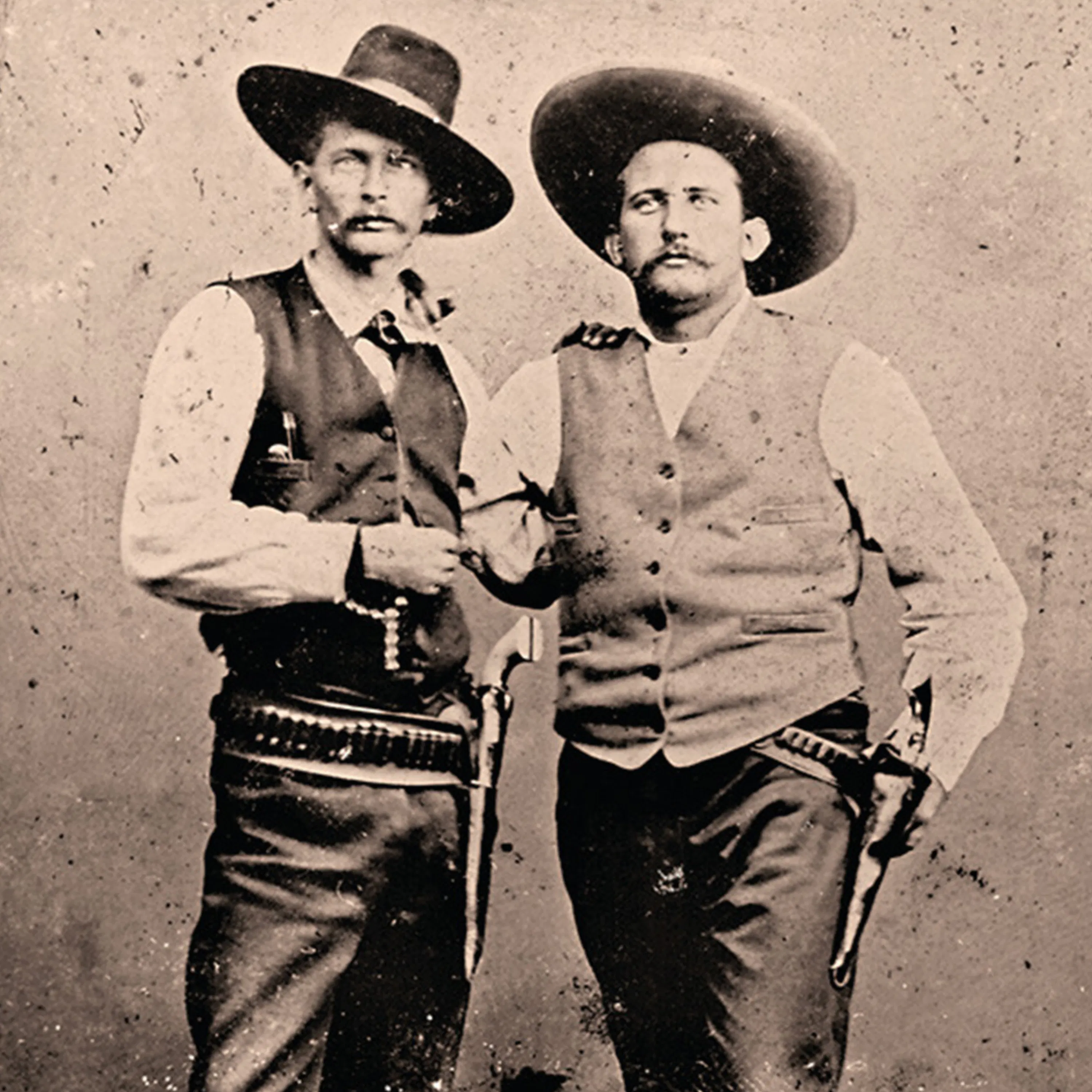
Loading summary
Transcript1 lines
- [00:01]
A
This podcast episode is brought to you by Progressive Insurance. Do you ever think about switching insurance companies to see if you could save some cash? Progressive makes it easy. Just drop in some details about yourself and see if you're eligible to save money when you bundle your home and auto policies. The process only takes minutes and it could mean hundreds more in your pocket. Visit progressive.com after this episode to see if you could save Progressive Casualty Insurance Company and affiliates. Potential savings will vary. Not available in all states. When most people think about the Old west, they imagine legends like Jesse James and Doc Holliday and Billy the Kid. But for every one of these famous gunslingers, there were dozens of others every bit as dangerous, if not more so. Desperate characters whose stories, for whatever reason, have largely been lost to history. Guys like Jesse Evans. Evans rode with the likes of Billy the Kid and John Selman. He shot up dance halls, rustled cattle, even helped to spark the Lincoln County War, only to then vanish without a trace. And to this day, nobody knows for certain what became of him. That said, we will be exploring the options. We'll also take a look at three other lesser known gunfighters, including Nate Champion. Texas cowboys stood up to the most powerful cattle barons in all of Wyoming. Instead, barons sent a small army of 50 hired killers to surround Nate's cabin. He he remained defiant and the 12 hour standoff that followed. He more than earned the title of legend. After Champion, we'll take a look at the wildlife of Billy Brooks. Armed with nothing more than a badge and a bad attitude, Brooks managed to kill or wound at least 15 men in less than a month. And that was before he took stealing horses. Billy's story probably ends about how you'd imagine, but boy oh boy, what a ride. Then there's Barney Riggs, one of the Old West's most controversial gunfighters. Convicted of murder and sentenced to life in Yuma Prison, Riggs saved the warden's life, walked out with a full pardon, and still somehow managed to get into even more trouble back in Texas. And finally, we'll close things out with Old Man Clanton, family patriarch behind the infamous Clanton family of Tombstone. Any guesses as to why the old man wasn't with his sons during the Gunfight at the O.K. corral? Well, stick around and you will definitely find out. And yes, we will also take a look at whether or not the cowboys really wore those red sashes like they did in the movie. So without further ado, my name's Josh and this is the Wild West Extravaganza. Jesse Evans was born in Missouri in 1853, or was it Texas? According to some, Jesse was part Cherokee and had received a college education back East. Others maintained that he was a childhood friend of Billy the Kid and that he and his parents had been arrested in Kansas for passing off counterfeit money. The truth is, we know very, very little about Jesse Evans now. We don't even know for sure if that was his real name. What's more, there are no authenticated photos of Evans. Don't get me wrong, you can find photos online and in books, but none of them have yet to be authenticated. We'll circle back to the origins just a bit. But thankfully, once Evans arrived in New Mexico in the early 1870s, things do start to clear up. Is there where he found employment as a genuine cowboy, working for several different outfits before securing a job with the famous John Chisum, which, ironically, might just be how Evans got to start stealing horses. Look, there's not much in life that's certain other than death, taxes and the fact that almost everyone in New Mexico in the 1870s was. Was still in livestock, including the esteemed John Chisum. In fact, when Chisum sought reimbursement from the government for horses that he had lost to the Apaches, he was rebuked by US Indian Inspector E.C. watkins. Quote, I think the evidence shows conclusively that in the matter of horse stealing, Mr. Chisum is far ahead of the Indians and the. Chisum was systematically robbing the Indians through the instrumentality of the men whom he had hired for the purpose of. End of quote. And, yeah, our very own Jesse Evans was one of those men that said by 1875, he had quit working for Chisholm and joined forces with another bandit by the name of John Kinney. Or as I like to call him, Kinney, you bastard. Now, if you're not familiar with John Kinney, he's a pretty fascinating character in his own right. Originally from Massachusetts, Kinney joined the army at a young age and mustered out there in New Mexico in 1873, at which point he started stealing cattle like a man possessed. In time, Kenny would form a ranch not far from the town of Mesilla, serve as sort of a base of operations for he and his gang, or as a local paper described it, the headquarters and rendezvous for all evil doers in the county. Per historian Robert Utley, the, quote, offenses of both Evans and Kenny went beyond mere rustling. On New year's Eve of 1876, Kenny Evans and several friends got into a brawl with some soldiers at a dance hall near Las Cruces, and Kinney was badly beaten. The vanquished withdrew, only to reappear at the doors and windows with blazing six shooters. A soldier in an unlikely civilian who happened to be in the line of fire died instantly, and three soldiers were severely wounded, one mortally. No charges were brought against the murderers. Skip ahead. Just a little over two weeks later, and Jesse Evans would participate in yet another deadly shooting right there in Las Cruces, that of a fellow bandit by the name of Fletcher. Filled him full of holes and just left him there to rot in the street. This time, Evans was indicted, but he was ultimately found not guilty. And not long thereafter is when he branched off from Kenny and formed an outfit of his own known as the Boys. To once again quote the great Robert Utley. Evans undoubtedly continued his association with Kenny, who occasionally participated in the exploits of the Boys. They, in turn, used the Kinney ranch as a refuge. Evans field of operations, however, extended all the way across southern New Mexico, Whereas Kinney seems to rarely have strayed very far from his Mesilla Valley ranch. Into this heady environment, in late September of 1877 ventured Henry Antrim. And Henry Antrim, of course, was just an alias for Henry McCarty, also known as Billy the Kid. And although Billy and Evans would eventually become sworn enemies, they were initially on friendly terms. Not only would Billy ride with Evans and his gang in the fall of 1877, but they were also rustling stock from the Kid's future employer, John Tunstall, an offense that would see the both of them tossed in the infamous pit jail over in Lincoln. And, yeah, the rest is pretty much history. Billy, of course, would go on to work for Mr. Tunstall, while Evans took the side of the Murphy Dolan faction. Now, I'm not going to rehash the entirety of the Lincoln County War. If you'd like a refresher, please feel free to check out the series I did on Billy the Kid and Link down below. But Jesse Evans was one of the men who upped to murder the aforementioned John Tunstall. And then just a few weeks later, Evans was badly wounded while attempting to rob a sheep herder outside of Tularosa. He'd surrender shortly thereafter due to his wounds and get locked up over at Fort Stanton. And despite being formally charged with Tunstall's murder, he was granted bail. Evans may have been forced to miss out on a good chunk of the Lincoln County War while sitting behind bars, but he would participate in the Battle of Lincoln just days after his release. This is that big fight they show at the end of the movie Young Guns. Per biographer Grady McCrite, quote, details of Jesse Evans participation in the skirmish are meager, but it is certain he was there. A board of investigations sent to Lincoln reported that Jesse was in Peppin's campaign headquarters at the Wortley Hotel. This indicates that he had a position of leadership and not the role of a common fighter, end of quote. Now, that battle there in Lincoln would mark the end of the war. Tunstall and McSween were both dead, The Regulators were scattered to the wind, and the Dolan faction had emerged victorious. L. Jesse Evans and Jimmy Dolan would even travel together to Santa Fe, the territorial capital, just a week later, with Evans seemingly unafraid of being arrested. That said, their troubles hadn't gone away entirely. Susan McSween had hired a one armed attorney by the name of Houston Chapman and was dead set on bringing Colonel Dudley to justice for her husband's murder. Colonel Dudley, of course, had somewhat aligned himself with the Murphy Dolan faction. At the same time, Governor Lou Wallace extended a general pardon to all offenders not already indicted by a grand jury. This is great news for many of the former Regulators, but it didn't apply to Billy the Kid, as he was already under indictment for the killings of Sheriff Brady and Buckshot Roberts. It also didn't apply to Jesse Evans due to his role in the murder of John Tunstall. So, in other words, the war may have been officially over, but there were still some simmering embers threatening to reignite. And it was in the midst of this tension that Billy the Kid sent a message to Jesse Evans and Jimmy Dolan, basically asking if they wanted to continue fighting or did they want to make peace. Per historian and friend of the show James B. Mills, Kid Antrim received word back from his longtime enemies at Fort Stanton that they would arrive in Lincoln that evening to meet and talk peace. True to their word, Jimmy Dolan rode into town with Jesse Evans, Billy Matthews, George Van Sickle, Edgar Walls, James Redmond and Bill Campbell, an occasional cow puncher for Thomas B. Catron, with a droopy brown mustache, malicious disposition and a hair trigger temper while keeping a sharp eye. Billy Bonney, Tom Folliard, Yini O. Salazar and Tom Collins were waiting for them as nightfall approached and each party greeted the other with considerable caution. Billy and his companions kept cover behind a thick adobe wall while Dolan and his cohorts did the same, end of quote. Keep in mind that these guys have been gunning for one another for the past year. In fact, this little rendezvous there in Lincoln occurred exactly one year to the day of John Tunstall's murder. Also, I think it goes without saying that Billy and Jesse Evans were no longer on friendly terms. Hell, Evans would even go so far as to urge Dolan and the others to gun Billy down the moment he emerged from behind the wall, to which Billy responded by saying that he was there to make peace and didn't care to open up the negotiations with a fight. But if you come at me three at a time, I'll whip the whole damn bunch of you. Thankfully, calmerhead soon prevailed and both sides came together and shook hands, according to historian Robert Utley. With peace declared, the uneasy friends embarked on a boozy celebration. Noisily and growing drunker with each stop, they staggered from one drinking place to another. About 10:30pm Lurching up the streets from the courthouse, they chanced to meet Houston Chapman, unarmed and his face swathed in bandages to ease the pain of a severe toothache. Billy, coolly sober in contrast to the others, watched the scene unfold. Ryan Reynolds here from Int. Mobile I don't know if you knew this, but anyone can get the same Premium Wireless for $15 a month plan that I've been enjoying. It's not just for celebrities. So do like I did and have one of your assistant's assistants switch you to Mint Mobile today. I'm told it's super easy to do@mintmobile.com Switch upfront payment of $45 for 3 month plan equivalent to $15 per month required intro rate first 3 months only, then full price plan options available, taxes and fees, extra fee, full terms@mintmobile.com and yeah, it was just moments later when Jesse's buddy Bill Campbell pulled out his pistol and shot Chapman dead or in hell shot him at such close range that the attorney's shirt caught on fire. They then just simply strolled away to another saloon and ordered a round of oysters. Now both Jesse Evans and Billy the Kid had witnessed the murder. In fact, later on that night, Campbell gave Billy a pistol and asked him to place it on Chapman's body. The Kid initially agreed, but rather than do as he was told, he just saddled up and left town. The piece that he had brokered with Evans and the others just hours earlier was already broken. And as far as I'm aware, that's the last time that Billy the Kid and Jesse Evans would ever lay eyes on one another. Now, you may be wondering why Billy failed to kill Evans, especially considering Jesse's role in the death of John Tunstall well, according to author Walter Noble Burns, Jesse had denied taking part in Tunstall's killing, and the Kid believed him. Another possibility put forth by Evans biographer Grady McCrite is that Billy was somewhat mellowed out after a year of fighting. Many of his friends were dead, others had left the territory. And I guess it's entirely possible that people on both sides of the war had grown weary of constantly dodging bullets. And then, of course, there's historian Emerson Huff. According to him, Jesse was one of the few men who didn't fear Billy the Kid. He said that Billy might be able to beat him with a Winchester, but that he could never take him with a six shooter. Even Sheriff Brady had once said that he'd much rather go face to face with Billy Bonnie rather than Jesse Evans allegedly. Not sure how true that is. Many of the sources regarding Jesse Evans are highly questionable. But I do think it's safe to say that he was more than capable of handling himself. So who knows, man? Maybe Billy figured it was touch and go and he didn't want to chance it. As to whether or not he was actually afraid of Evans, that's another story. But I do think, at the very least, we can all agree that Jesse was a formidable gunman. Just to give you an idea how deadly he was. And active Evans would be the subject of 10 arrest warrants out of Donna Ana County, New Mexico, between the years 1875 and 1878. And five of those warrants were for murder. That's not counting additional murder charges over in Lincoln County. So, yeah, I don't know if he was scared of Billy the Kid or vice versa. But Jesse Evans most definitely struck fear in the hearts of everyday citizens. That said, he wouldn't remain there in New Mexico much longer. Evans would be arrested again in early March for being an accessory to the murder of Houston Chapman. Only thing is, he managed to escape less than two weeks later, at which point he just made a beeline for Texas. It's there, near the town of Pecos, that he and his gang began trafficking in stolen cattle to the soldiers over at Fort Stockton. Or at least they did until they were put on notice by the sheriff. Once again, per Evans biographer Grady McCrite, while not true to his character, Jesse elected to relocate after the warning. Fort Davis was a likely prospect since Jesse's Confederate John Selman was a butcher there. Selman's shop could serve as an outlet for Evans contraband beef, end of quote. Now, if the name John Selman rings a bell, that's probably due to him being the El Paso constable who killed John Wesley Hardin in 1895. But back in 1879, Selman was a wanted man. He too had operated a gang of cutthroats down in Lincoln county known as Selman Scouts. They were soon forced out of the territory, much like Evans and his bunch. At which point Selman took on the alias of John Tyson and opened up that butcher shop down at Fort Davis. And to be honest, he and Evans did have a pretty solid operation going. Jesse and his boys could rustle cattle from faraway ranches and then just funnel him through Selman's butcher shop without drawing suspicion. The only thing is, Evans couldn't leave well enough alone. In addition to stealing cattle, he and his gang also started terrorizing the locals. They'd routinely rob both homes and businesses and even pistol whip law abiding citizens in broad daylight. It wasn't long before folks started petitioning the government for assistance. Finally, in Early June of 1880 is when authorities sent a detachment of Texas Rangers under the command of the very capable Sergeant Ed Siker. And although the Rangers did manage to arrest John Selman, Evans and the others eluded capture, at least temporarily. They initially headed to the border town of Presidio, where Jesse openly purchased a new pair of boots. In all reality, this is just a trick to make the Rangers think they had fled to Mexico. But rather than cross the river, the bandits instead turned north to the Chinatti Mountains. And they might have gotten away with it too, had it not been for those pesky Rangers. As fate would have it, Sergeant Psycher and his men were watering their horses just north of Presidio where they noticed suspicious riders in the distance. So they headed out for a closer look. According to Bob Bosbell of True west magazine, Riding forward to investigate, the Rangers soon take fire as the four horsemen mount up and head to the higher ridges. A running gunfight ensues for over a mile as the outlaws climb higher and higher up the range. By the way, those three men with Evans were August Gross and brothers Charles and George Graham. There was a third Graham named Albert, but he had been arrested at the same time as Selman. Now, eventually, Evans and his three compadres dismount and decide to make a stand behind the boulders. The Rangers, however, remained undaunted. They charged on ahead and one of them even managed to put a round in George Graham. And then when the wounded Graham stuck his head out from behind a rock, is when Sergeant Psycher shot him between the eyes. That's when Evans and his buddies Wisely decided to call it quits. Sadly, a ranger by the name of George Bingham had also been killed, A fact that wouldn't become known until Evans and the others had already surrendered. Sergeant Psycher would later state, we charged the party and took their stronghold. Then we had the advantage for the first time and they surrendered. Had I known Bingham was killed at that time, I should have killed them all. But we had disarmed them before we knew it. They then prayed for mercy. The boys were then taken to Fort Davis and tossed in a dungeon like hole known as the Bat Gel. And it's there in the Bat Jill where Jesse Evans would rot for the next four and a half months. He'd eventually be indicted for the death of ranger Bingham, as well as a couple other charges for robbery and assault. Ultimately, he was found guilty on October 15, 1880 and sentenced to 10 years in the Huntsville state Penitentiary, a sentence that Evans did not take lying down. At first he tried tunneling out of the pit there at Fort Davis, but when that didn't work, he sent off a letter to his old pal enemy Billy the Kid. Not making this up, by the way. Ranger Captain Charles Neville reported the following on August 26, the prisoners are getting restless. I have a letter they wrote to a friend of Evans in New Mexico calling himself Billy Antrim to cause their rescue. And to use his words, he was in a damn tight place. Only 14 Rangers here at any time. 10 on a scout and only four in camp now. And that Antrim and a few men could take them out very easy. And if he couldn't do it now to meet him, Evans on the road to Huntsville as he was certain to go. I understand this man Antrim is a fugitive from somewhere and a noted desperado. If he comes down, and I expect he will, I will enlist him for a while and put him in the same mess with Evans and company. End of quote. Now, obviously Billy wouldn't come to Jesse's rescue, but it is fun to imagine how things may have turned out had the letter not been intercepted. Do I think that Billy the Kid would stand a snowball's chance in hell facing off against the Texas Rangers? Not really. But then again, Billy was a very clever young man, so you never know. That said, given he and Jesse's recent history, I doubt he would have came to his aid in the first place. But once again, who knows Now Evans would enter the Huntsville state penitentiary as prisoner 9078 on December 1, 1880. And less than 18 months later, on May 23, 1882, Evans, he managed to escape. Apparently he was on a work detail outside of the walls and just walked away. And to this day, nobody knows what in the hell became of him. So far as history is concerned, Jesse Evans just vanished in the wind. There were a few unconfirmed sightings, though, both in El Paso, Texas, and even further west in Arizona. Years later, in 1906, author Emerson Huff would claim that Evans was, quote, said to have been a Texarkana man and to have returned to his home soon after escaping, only to find his wife living with another man and supposing her first husband dead. He did not tell the new husband of his presence, but took away with him his boy, whom he found now well grown. It is stated that he went to Arizona and nothing more is known of him. And then there's historian Eve Ball. She told one of her colleagues, Maurice Fulton, about a old feller claiming to be the brother of Jesse Evans, and who says that Jesse lived in retirement on a ranch in Texas until his death. Mrs. Ball told another historian in 1961 that she had known an elderly man who claimed to have been Evans nephew. He told me that his uncle died only about seven years ago on a big ranch in Texas. He had not been out of the house in daytime for 40 years, and even his closest neighbors did not know of his existence. This man would not permit me to use this for publication because of his family who did not know of his relationship to Jesse Evans. I found the other material he gave me was very close to the accepted historical versions, but this may not have been true. He did know inside details that made it sound convincing. I cannot vouch for its authenticity, however, nor can I give you his name. End quote. Even the El Paso Times would publish an article in 1951 claiming that Evans was leading a sedate existence at an undisclosed location in Texas. Now, earlier I did mention that we don't know whether or not Jesse Evans was his true name. And there are a lot of people that think his last name was either Davis or Graham. Remember the Graham brothers who he was riding with when he got arrested by the Texas Rangers? They also use the last name of Davis on occasion. And then, of course, there are others who think that Jesse found his way to Florida and began living under the alias Joseph Hines? Now, this is where things are going to get a little bonkers. You see, back in the late 1940s, an attorney by the name of William Morrison met with an old man in Florida named Joseph L. Hines. Mr. Hines claimed to be a veteran of the Lincoln County War and living under an assumed name. His brother had recently died up in North Dakota and he was having a hard time claiming said brother's property on account of not being able to prove his true identity. And yes, this is the same William Morrison who would go on to champion Brushy Bill Roberts. Now that said, in Morrison and Sonichsen's book Alias Billy the Kid, they make it very clear that Hines never told him his real name. But nonetheless, there are a ton of people who think that Hines could have possibly been Jesse Evans. Look, I dug into this for about as far as my sanity would allow, and from what I can tell, there's nothing of substance. But for the sake of transparency, here's what I was able to find. Author Dan Edwards, in his book Billy the Kid, an autobiography, states that Joe Hines was indeed Jesse Evans. According to Dan, quote, joe Hines was able to prove to the satisfaction of a court of law that he was the one and only Jesse Evans of legend. How exactly Dan came to this conclusion is unclear, as his book is devoid of sources. That said, I did find another book making similar claims, Billy the Kid beyond the Grave by W.C. jameson, which if I'm not mistaken, was published nearly a decade prior to Mr. Edwards autobiography. Jameson also makes the bold claim that Hines was, quote, in all reality, Jesse Evans. But once again, no sources are provided. Remember, William Morrison never claimed that Hines was Jesse Evans, at least not publicly. He never listed the man's real name and alias Billy the Kid. There is a letter, however, allegedly written by Morrison where he stated that he thought Hines's real name was William Campbell. Which does kind of make sense considering that Hines dead brother up in North Dakota was Morgan Campbell. Long story short, the only information I can find regarding Joe Hines being Jesse Evans originates solely from Brushy Bill proponents. And you know how they are when it comes to primary sources. If you happen to have additional information, please feel free to email me@josh wildwestextra.com because I genuinely do not know where this whole Jesse Evans, Joe Hines rumor started. If you do, hit me up and let me know. Now here's where things really start to go off the rails. So there was a book published in 1975 titled Jesse James Was One of His Names, in which the authors assert that Joseph L. Hines was actually named Jesse R. James, his brother was Frank, and as fate would have it, they were cousins to the real Jesse and Frank James. So they ended up changing their names so people wouldn't get them mixed up. Not only that, but Joseph Hines, AKA William Campbell, AKA Jesse R. James, claimed that his cousin Jesse Woodson James successfully faked his own death in 1882 and assumed the identity of, wait for it. J. Frank Dalton. And of course it was Dalton who vouched for Brushy Bill Roberts being Billy the Kid. In other words, that's just my long convoluted way of saying there is absolutely zero evidence that any of this is true. It's just a long line of Old west fraudsters telling uncorroborated stories. Yes, there does appear to be an old man residing in Florida in the 1940s named Joseph L. Hines. You can find him on census records, but as of this recording, I have yet to find a shred of proof that Hines had a dead brother in North Dakota named Morgan Campbell. There's also no evidence that Jesse and Frank James had cousins of the same exact names. And there is no evidence that Joseph Hines was Jesse Evans. I have no idea where that rumor even started. Look, I don't know what happened to Jesse Evans after he escaped from prison and I don't think anyone else does either. He very well may have spent the rest of his days hiding out on that ranch in Texas. Maybe his last name really was Davis or Graham and cleaned up his act and became a law abiding citizen. Or maybe he went back to his old ways only to be killed in some nameless go to ravine. His body left to be picked over by the vultures. There is one last theory though, which if true, might just be the most plausible answer. According to Texas Ranger Captain James B. Gillette, Evans was killed while attempting to escape prison. Now, full disclosure, but I was not able to verify that Gillette actually said those words. I thought it was maybe in his book Six Years the Texas Ranger, but I couldn't locate it. I also couldn't find anything online other than people referring to Gillette's statement without citing a primary source. Also, I'm not really sure why his escape would have been reported in the newspapers, but not his death. The only other clue as to what he may have gotten up to after escaping prison comes from Pat Garrett. According to Garrett, he was in his office one day there in Lincoln in 1882 when someone came running in saying that they had just seen Jesse Evans. No month was given, but if this occurred after May 23rd, then there could be a chance that Jesse returned to New Mexico shortly after busting out of the clink. For now though, I think it's safe to say that Jesse's fate remains a mystery. Now, circling back to his childhood, I mentioned earlier that he was possibly arrested in Kansas for passing off counterfeit money. And there are records showing that a Jesse Evans, along with his father, who was also named Jesse, and his mother Louisa, were all apprehended in 1871 and put on trial there in Kansas. Apparently, Jesse Jr. Was let off with just a slap on the wrist due to his young age. I was able to track this family all the way back to Iowa. And all of the names and ages line up perfectly, as do the names and ages of the siblings. So if this is our Jesse Evans, then it does appear as if he were born in Iowa as opposed to Texas or Missouri. That said, much like all the other theories, there is zero evidence that the Jesse Evans arrested in Kansas is the same guy who went on to become the notorious outlaw. It could be. I'm not discounting it, but the fact remains we just don't have the proof. As of right now, it is simply a theory. Likewise for the rumors concerning Evans and Billy the Kid being childhood friends in Silver City. Keep in mind that Jesse was several years older than Billy and there's no indication they knew each other prior to 1877, other than a couple of anecdotal stories. As far as him being part Cherokee or college educated. Once again, I have no idea where those rumors originated. As of right now, all we can know for certain about Jesse Evans is the time that he spent in New Mexico and then later on his brief reign of terror over in West Texas. We have absolutely no idea what occurred the first two decades of his life. And we don't know what happened after he escaped from prison. Maybe he died shortly after escaping. Maybe he spent the rest of his time hiding out on that ranch down in Texas. Or maybe he lived long enough to become a confused old man in Florida known as Joseph Hines. And yeah, I guess that's about all I've got on Jesse Evans. As far as research goes, I leaned heavily on the book Jesse Evans, Lincoln County Bad man by Grady McBride and James Powell. I also consulted the works of historians like Robert Oatley and and James B. Mills. Not to mention constantly pestering James Townsend with my very annoying questions. Sorry, James Y. On the morning of April 9, 1892, a small army of mercenaries surrounded a cabin up in Johnson County, Wyoming. Would be assassins were financed by wealthy cattle barons, outfitted with brand new weapons and promised $5 per day along with a $50 bounty for every man they killed. And the very first name on their list. Man holed up in that cabin I just mentioned was 34 year old cowboy Nate Champion, one man all alone against 50 hardened killers. And what happened over the course of the next 12 hours would go down as one of the greatest last stands in all of the Old west, one made all the more remarkable considering the Champion remained calm enough to grab a pencil and document the attack, even as his cabin was riddled with bullets. More on that in just a moment. But first, just to put things into context, let's go ahead and take a look what was happening up there in Wyoming that ultimately led to such a lopsided standoff. You see, the cattle industry experienced one hell of a boom following the Civil War. There was a massive demand for beef back east and millions of acres of grassland out west just there for the taking, especially in Wyoming. Word soon spread, and wasn't long before some pretty serious money started pouring in. I'm talking investors from places like New York, Boston, and even as far away as London and Scotland, all looking to cash in on the cattle bonanza. As a result, by the 1880s, much of Wyoming was dominated by wealthy ranch and operations. And in order to protect their interests, the cattle barons formed a little something known as the Wyoming Stock Growers association, or the WSGA for short. These were some of the most powerful and well connected men in all of Wyoming, and they basically ran the territory as if it was their own private kingdom. They controlled the roundups, they managed the cattle shipments. Hell, they even employed their own agency of detectives to investigate stock theft. And when they weren't conducting business, they would all gather at the Cheyenne Club, a posh gentleman's establishment where they all smoked cigars and drank brandy with their little pinky fingers sticking out. The acting governor was a member, so were senators and judges and even lawmen. Basically, if you held any type of power or influence in Wyoming back in the 1880s or 90s, there was a very good chance that you were either a member of the WSGA or you owed them a favor. There was just one problem, though. All that land that the cattle barons were using to graze their herds did not belong to them, at least not legally. In all actuality, it was still considered part of the public domain. And thanks to the Homestead act of 1862, any adult citizen could claim up to 160 acres for next to nothing. All they had to do was build a dwelling with live on it for a few years, make a few improvements, and they owned it free and clear. And yes, this would be the same land that was also being used by the wsga. Unlike the homesteaders, the cattle barons did not file on it and they didn't legally own it, but nevertheless, they felt as if it was theirs by right of occupation. So when all those settlers, the smaller ranchers, began flocking in and putting up fences, cattle barons viewed it as a personal insult. Then came the catastrophic winter of 1886 and 1887. A series of blizzards dumped a whopping 16 inches of snow across the northern Great Plains. Temperatures plummeted to 40 below zero. And in some areas, up to 80% of the open range cattle ended up perishing. So much so that the fallen roundup of 1887 was grimly referred to as the great die up. Tire outfits went bankrupt, while others just cut their losses by slashing wages and laying off their hired hands. And really this is when the trouble was kicked into overdrive. I mean, all those out of work cowboys had to go somewhere, right? And rather than return home, many of them just filed claims on the land that their former employers had been using for free. So in return, the cattle barons began blacklisting the cowboys and pretty much anyone else who dared to raise herds of their own. They also changed the laws to rig the roundup so that the smaller operators couldn't participate. And when all that still wasn't enough, they just began accusing the competition of stealing cattle. And by competition, I do mean those smaller ranchers and homesteaders. Didn't matter if you were guilty or not. If you weren't a member of the wsga, or at the very least, if you weren't doing their bidding, you were simply labeled a rustler. And as I'm sure you can imagine, it wasn't long before things turned violent. In Late June of 1889, WSGA launched a pair of homesteaders, one of whom was a woman. Based on absolutely nothing but trumped up charges. They just wanted her land. So they murdered her. Skip ahead to 1891. And a horse trader named Tom Wagner was likewise lynched by masked men. And then not long thereafter, two additional small ranchers, John Tisdale and Orley Jones, were shot and killed as they were leaving the town of Buffalo. These were separate ambushes, by the way. Tisdale was a former trail boss who would come to town to buy Christmas presents for his kids. Whoever killed him also shot his dog and his horses. As for Jones, he was just a young cowboy purchasing lumber to build a cabin for his new bride. His bullet riddled body was found just three miles from where Tisdale was murdered. And yeah, this was the environment that Nate Champion found himself in during the early 1890s. Originally from Texas, Nate most definitely came from a tough stock. His father was sheriff of Williamson county, and one of his aunts drove her own cattle to market as far away as Kansas City. And in time, Champion would do the same, just trailing herds and working his way north to Wyoming. There, where he found employment with the big outfits and earned himself a reputation as a top hand. Everything was going great until he decided to file on a spread of his own. And that's when the cattle barons accused him of being a rustler just like everybody else. And despite eventually being dubbed the king of the cattle thieves, there is zero evidence that Nate ever stole a damn thing. His biggest crime was simply starting a ranch of his own. That, and helping to organize a separate roundup in direct defiance of the cattle barons. There's a lot more involved. If you'd like to learn additional details, I would suggest checking out the series I did on Frank Canton in which I go very in depth on the Johnson county war. I'll drop a link down below. But long story short, WSGA would end up recruiting a small army of mercenaries with the express purpose of invading Johnson county and killing Chapman and the other leaders amongst the spirit smaller ranchers. Guess they figured if they took out the leadership, everyone else would either fold or scatter. And to make matters even worse, this invasion had the full backing of Wyoming's political establishment, including the governor. Like I said, there's a lot more involved. But in a nutshell, this is how Nate Champion found himself under siege in early April of 1892. And by the way, this was not the first time that the cattle barons tried to kill Champion. Did I call him Chapman earlier? I. For some reason, my brain just told me that I may have called him Chapman earlier. My bad. Anyway, the show must go on, right? So the initial attempt on Champion's life was actually five months prior, on November 1, 1891. That's when a handful of gunmen burst into Nate's cabin while he was asleep and started shooting. Champion miraculously managed to pull a pistol of his own from underneath his pillow and return fire Champion, killing one of the attackers and forcing the others to retreat. Needless to say, on the second attempt, the killers would exercise a bit more caution. Rather than storm the cabin, they just waited until daybreak, hoping that Nate would step outside. Only thing is, Champion was not alone. Fellow cowboy Nick Ray was also with him there at the cabin, as well as a pair of fur trappers who just happened to be passing through. Matter of fact, it was the fur trappers who were the first to step outside. Luckily for them, the mercenaries recognized that they were non combatants and let them go. Nick Ray, however, would not be so lucky. As soon as he stepped outside, looking to see what had become of the trappers, the killers opened fire and drilled him through and through. Ray managed to stagger back towards the cabin and collapsed near the door as the rest of the invaders likewise started shooting. And what happened next would stun every man in attendance. Raven of Hell A gunfire and eight Champion appeared in the doorway. Winchester a blazing and then with bullets snapping all around him, he managed to run out, grab Ray and haul him back inside to safety. And yeah, for the next several hours the invaders just continued pumping round after round to the cabin with Nate firing back sporadically just to keep him at bay and let him know that he was still alive. And at some point during a lull is when Champion grabbed a pencil and a piece of paper and began documenting the attack. I guess at that point he knew he wasn't going to make it out alive and just wanted to leave a record of what really happened. It is now about two hours since the first shot. Nick is still alive and they are still shooting all around the house. Boys, there is bullets coming in like hell. Nate would continue shortly thereafter writing, Nick is dead. He died about 9 o'. Clock. I see smoke down at the stable and I think they have fired it. I don't think they intend to let me get away this time boys. I feel pretty lonesome just about now. I wish there was someone here with me so we could watch all sides at once. Much to Champion's surprise, his attackers soon began shooting at a wagon rushing by in the distance. According to Nate, it's about 3 o' clock now. There was a man in a buckboard and one on horseback just past. They fired on him as they went by. I don't know if they killed them or not. I seen lots of men come out on horses on the other side of the river and take off after them. Now, unbeknownst to Chapman or Champion, God damn it, I'm gonna keep calling him Chapman on accident, my bad. But yeah, unbeknownst to Champion, the guy on the buckboard was a buddy of his named Jack Flagg, another leader amongst the so called rustlers. And luckily for Jack, he was able to escape and sound the alarm over in nearby Buffalo. In other words, the invaders had lost the element of surprise. This is very important. As you'll soon discover. For Champion, however, it was far too late. His fate was pretty much sealed. Well boys, they have just got through shelling the house like hell. I heard them splitting wood. I guess they are going to fire the house tonight. I think I will make a break when night comes. If alive and unfortunately for Nate, he was correct. Fire at the house they would. The attackers ended up filling a wagon full of hay, setting it on fire and then shoving it against the cabin while the others kept Champion pinned down with rifle fire. The flame spread quickly as Nate jotted down his final note. The house is all fired. Goodbye boys. If I never see you again. Sources do differ as to where exactly Nate fell or how many times he was shot before he gave up the ghost. All we know for certain is that he burst from the cabin, guns ablazing, and moments later he was dead. We also don't know how many of his opponents he took with him. According to one account, he only wounded two of them. Other sources claim that he killed as many as four and wounded several others. About the only thing everyone agrees on is the champion went down fighting. Even the notorious Frank Canton, who helped orchestrate the entire attack, would admit as much as he gazed upon Nate's lifeless body, he came out fighting and he died game, end of quote. He also bought time for his compadres. Remember the guy in the wagon? Jack flag? Well, like I said, he did manage to reach Buffalo and sound the alarm. Johnson County Sheriff Red Angus then formed a posse comprised of around 200 very pissed off men. And just like that, the hunters became the hunted. Nate's killers were forced to seek refuge on a nearby ranch as they found themselves under siege for the next three days. And then just the sheriff and his posse were getting ready to blow him out with dynamite. That's when the army showed up. Remember what I said earlier about the WSGA being politically connected? Apparently one of their buddies got in touch with a senator back east who woke up the damn President in the middle of the night begging him to send troops, which he did. Soldiers out of Fort McKinney. And what followed was nothing short of an outrage. Although the invaders were taken into custody, it was mostly for their own protection and they were able to pretty much come and go as they pleased. And when Johnson county tried to prosecute them for murder, all their money and political connections saw to it that the charges were dropped. The Texas slipped home. The cattle barons returned to their massive estates, and not a single person was ever convicted of Nate Champion's murder. One of the Texas gunmen, guy by the name of George Tucker, later offered up a remarkably candid assessment. We were in Wyoming as Paid assassins to the big ranchers. We were brought there to murder men in violation of the law. Let no one mislead you by saying that we had the law on our side. We had the politics and the money, but not the law. End of quote. Sounds a lot like what's going on nowadays, right? There are just some people that almost seem untouchable. Instead of cattle barons meeting at the Cheyenne Club, you've got tech billionaires and hedge fund managers meeting at Davos. And instead of buying off senators with cattle money, they're buying them off with super PACs and stock options. Instead of blacklisting cowboys, they lobby against labor protections and rights for workers. Their methods may be a little bit more polished, but the fundamental dynamic small group of extremely wealthy and connected men using power to tilt the game in their own favor, that hadn't changed one goddamn bit. And just like the wsga, they are counting on the rest of us to feel like there's nothing we can do about it. They're just too big and we can't possibly stand up to them. Or can we? Here's the thing that they don't want us to realize. There's way more of us than there are of them. Nate Champion couldn't take on the cattle barons all by himself. Neither could Flagg or Sheriff Angus. But together, combined with all of the small homesteaders, they did outnumber the rich cattlemen and their hired goons. So did the voters of Wyoming, who ended up kicking their asses out of office during the following election. And just like that, the power of the WSGA was forever broken. Hell, by 1893, the once untouchable association was even forced to open up its books to the smaller ranchers. And the cattle barons, despite all of their wealth and connection, are now remembered as the villains that they truly were. Whereas guys like Nate Champion are still considered heroes. Sure, he may have lost the battle, but it was his sacrifice that allowed the little guys to win the war. Now, don't get me wrong. I'm not suggesting that we all need to grab rifles and hole up in remote cabins. But I do think that we just normal everyday people, we do have way more power than we think we do. So with that in mind, how do we fight the modern day oligarchs in the same way that Nate Champion and his allies took on the cattle barons in the wsga? First of all, we can stick together. The mailman living next door, the accountant down the street is not your enemy. Just because they have slightly different political ideologies. Secondly, we can get off our asses and vote. And that does not mean voting on candidates based on what letter they have after their name. We gotta actually take the time to see who's giving them money and why are they giving them money. Who controls these people? And as far as the tech Bros are concerned, we really do hold all the power. Every subscription that you cancel, every platform that you log off of, every small business you choose to support over something like Amazon that sends a message. These men, despite their vast wealth, are not invincible. At the end of the day, they are entirely dependent on our attention and our money. And the moment we stop giving them both, the whole dirty system starts to fall apart. Nate Champion didn't have a super PAC or a strong following on social media. And the cattle barons, for all their money and power, still couldn't make the people of Wyoming forget what they did to him. History has a long memory, but so do we, the people. Especially when we decide to pay attention. And I guess that's about all I've got on Nate Champion. Okay, so in 1872, the brand new town of Newton, Kansas needed a Marshall kind of man who could stare down a saloon full of drunken cowboys and not so much as blink an eye. And they found that man in 22 year old Buffalo hunter Billy Brooks. Now today's story is one of those old west tells that doesn't get near enough attention in my opinion. Mostly on account of just how insane Billy's life truly was. Sherry had pinned on a badge over in Newton, but by the time he made his way to Dodge City, his life had taken a much darker turn. Fact, he wasn't even in Dodge longer than a month before he had already killed or wounded at least 15 men. And that was way before he took to stealing horses and helped provoke a war with the indigenous outlaw ways that would ultimately culminate in a final rendezvous with a lynch mob. Who was the real Billy Brooks? How'd he go from being a respected lawman to swinging at the end of a rope? And is it true that he once got into a gunfight with Morgan Earp? What about the rumors that one of his descendants is now a very famous celebrity? Stick around and find out. My name's Josh. And this is the Wild west extravaganza. Yee Haw. William Brooks was born In Ohio in 1849, the eldest son of a blacksmith named Edmund and his wife Cynthia. Unfortunately, however, there's really not much else in the way of details concerning William's early years. What else is new right all we know for certain is that he left home sometime as a teenager and began hunting buffalo on the Kansas prairie. In fact, he did so good hunting bison that he soon garnered the nickname Buffalo Bill. This would have been around the same time as the other much more famous Buffalo Bill was also hunting in Kansas. But so far as I'm aware, they never actually crossed paths. Either way, by 1870, Brooks found himself a new job driving a stagecoach between the towns of Wichita and El Dorado. Per historian Leon Metz, Quote, it was a tough, demanding job, and Billy Brooks soon gained the respect of his employers and the traveling public for his courage, stamina, and dogged dedication to duty. End of quote. And, yeah, Brooks has such a sterling reputation for courage that less than two years later, on April 1, 1872, he became the official town marshal of Newton, Kansas. Now, for all you longtime listeners, you may recall Newton from the episode I did on the gunfight at Hyde Park, AKA the Newton Massacre. It all started with cowboy Hugh Anderson gunned down local tough Mike McCluskey. A teenager dying of tuberculosis named James Riley had previously been taken in by McCluskey, and I guess he felt like he owed the man a debt. So when McCluskey went down, Riley calmly locked the door and opened fire. By the time the smoke cleared, multiple men were dead or dying, and Riley simply walked out, never to be seen again. A very legendary gunfight. And it happened less than eight months prior to Billy Brooks being sworn in as marshal. So suffice it to say, Newton was just a tad bit rough around the edges. And that being the case, Marshall Brooks didn't have to wait long to prove his mettle. In Early June of 1872, a group of Texas cat cowboys started acting up over in a Newton saloon, getting rowdy and threatening the owner. The owner called for the marshal, and initially, Brooks was able to de escalate to the point that he actually talked two of the cowboys into leaving. Only problem is, just as soon as they hopped in the saddle, one of them decided to pull out a pistol and shoot Brooks in the shoulder. I think most of us would have called it a day at that point. Right? Maybe take a little trip to the emergency room, or at the very least, let your boss know you won't be coming into work the next day. Well, not Billy Brooks. Rather than seek out a doctor, he instead saddled a horse of his own and took off after him. In the chase that ensued, he received two additional gunshot wounds, one of which passed through his right breast. And he still continued the pursuit for another 10 miles before finally turning back to have his wounds treated. Luckily for him, none of them proved fatal. But they were serious enough to force Brooks to resign as city marshal. He'd recuperate for a spell before taking a new job over in Ellsworth as a police officer. But this too would be a short lived venture, and By October of 1872, Brooks had made his way to Dodge City. Now, when I say Dodge City, I think a lot of people automatically envision guys like Wyatt Earp or Bat Masterson, and yes, eventually. But that particular era of Dodge City, it was still years away. Back in the fall of 1872, it was barely even a town. Now, truth be told, it had only been in existence for about a month by the time Brooks arrived. It consisted of maybe a dozen or so frame buildings, a couple dozen tents, and a handful of adobe structures serving primarily as a jumping off point for buffalo hunters and an outlet for soldiers stationed in nearby Fort Dodge. And much like Newton, the violence was staggering. According to a saloon owner by the name of George Hoover, no less than 15 men were killed in Dodge City during just the first winter. One of the town's founders, Robert Wright, but the number even higher, saying that the shootings in the first year alone resulted in the deaths of 25 men, with perhaps twice as many wounded. It's also important to note that Dodge in 1872 was not yet incorporated. In other words, there really wasn't much in the way of organized law. And this really wasn't all that uncommon back in those days. In a lot of your early frontier towns, the local business owners would hire gunmen in lieu of law enforcement officials just to sort of keep the troublemakers at bay. More often than not, these gunmen were given the informal title of marshal, but in all reality, they were more like private security guards. Now, at that point in time, the only legally authorized lawman in that part of Kansas was Deputy Marshal Jack Bridges. He was hired as a air quotes marshal, and then at some point in late 1872, Bridges took on as an assistant, our very own Billy Brooks. It's also there in Dodge where the Buffalo Bill nickname fell to the wayside, as locals instead took to calling Brooks Bully Billy. No details remain as to why they called him a bully, but I'm willing to bet it wasn't due to his relaxed, easygoing nature. I'm also not sure how much time Brooks actually spent assisting the marshal as opposed to playing poker. Per historian Leon Metz, Billy, quote, turned to gambling as a profession and appears to have formed a partnership with a well Known saloon man and gambler named Matt Sullivan who conducted a game, the Kelly and Hunt dance hall. End of quote. And, yeah, later on that November, Brooks and Sullivan would end up tangling with a trio of cowboys right there in the dance hall. Sources do vary, but from what I can tell, the arguments stem from a game of chance gone wrong. Guess the cowboys felt like they had been cheated and demanded their money back. And rather than do as the cowboys demanded, Sullivan instead cracked one of them upside the head with his pistol so hard that it fractured the man's skull and penetrated the frontal lobe of his brain. Good Lord. What? Until a second cowboy aimed his revolver at Sullivan's back that Brooks finally sprang into action, shooting the drover in the head. Sullivan then spun around and put another bullet through the third cowboy's jugular. Now, like I said, there are slightly different versions, one of which comes from an eyewitness who claimed that the cowboys were trying to tree the town and that they had, quote, got no more than they deserved. Per this account, however, they were merely wounded, as opposed to killed. Either way, Billy Brooks was definitely making one hell of a name for himself. Little over a month later, just a couple of days before Christmas, he got into yet another gunfight with a man named Brown. And by the time the smoke cleared, Brown lay dead in the dirt. Skip ahead. Less than a week later, and Brooks's gambling partner Sullivan, was assassinated. And the main suspect was. Any guesses? If you said Billy Brooks, go ahead and give yourself a pat on the back. Per the December 31, 1872 edition of the Kansas Daily Commonwealth, on Saturday evening last, as Matt Sullivan, a saloon keeper, was standing in his place of business, a gun was pointed through the window and discharged, the ball striking Sullivan and killing him almost instantly. It is supposed that the unknown assassin was a character in those parts called Bully Brooks, but nothing definite is known concerning the affair or what led to it. End of quote. Now, apparently, this was never actually proven, and no charges were ever brought up against Brooks over the death of his former partner, at least not officially. That said, just a few months later, Billy was nearly killed by a buffalo hunter named Kirk Jordan. Kirk Jordan? Sounds like a 70s porn name. Kirk Jordan at your service. Now, once again, sources do vary. Some say it was over a woman, while others say that Jordan was looking to avenge the death of one of his friends. Whether or not that friend was Matt Sullivan, I'm not entirely sure. What I do know, however, is that Jordan positioned himself in the doorway of a saloon, and then, once Billy appeared across the street, he raised that buffalo gun of his and took aim. The only problem is, just as Jordan was about to squeeze the trigger, a bystander stepped into his line of sight, forcing him to adjust the rifle. Brooks Apple, despite the movement, was then able to throw himself behind a water barrel just in the nick of time. Now, those of you who've seen Lonesome Dove know that a plank Wall won't stop no.50 caliber bullet, and neither will a barrel of water. But it did serve to throw off Jordan's aim long enough for Billy to haul ass. And really, it was this latest incident that proved to be the final straw for the prominent citizens. Dodge. Guess they had finally had enough of Billy's trouble and sitting packing the following day on an eastbound train. Billy's departure was later summed up by Dodge business owner Robert Wright, who stated, quote, good riddance for everybody. Now, there may be more to the story than that, as I did see another source stating that Jordan Brooks actually made peace before he left town. But whichever way you want to shake it, Billy's time in Dodge had most definitely come to an end. So. So he just went back to what he knew best, hunting buffalo. His base of operations was a little fortified cabin he had built over in Comanche County, Kansas, somewhere along Kiowa Creek. And when he wasn't slaughtering bison, he busied himself stealing horses. A lot of horses, mostly from the indigenous. Now, this doesn't get brought up a lot in the history books, but it was actually a pretty big deal. You see, back in the early 1870s, there were quite a few, quite a few white horse thieves, many of whom were buffalo hunters operating out of southern Kansas, just systematically raiding the pony herds of reservation Indians. And despite the tribes being protected by the Medicine lodge treaty of 1868, the army looked the other way. So that being the case, the raids continued almost completely unchecked. The natives eventually retaliated by stealing horses from the settlers, only for the white stock thieves to do the same thing while disguised as Indians. Some of them would even scalp their victims just to shift the blame. This, of course, would further strain tensions along the frontier. Believe it or not, this is actually one of the causes of the Red River War. Not only were the buffalo being decimated and promised rations not being delivered, but you also had men like Billy Brooks raided indigenous horse herds with impunity. It was also during this same period that Billy became acquainted with other buffalo hunters like Bill Tillman and Bat Masterson. In fact, Masterson and one of his buddies would be forced to take refuge at Brooks cabin one day after being attacked by a war party of Cheyenne. And on and on it went. Hell, things got so bad that by early 1874, that entire part of Kansas had descended into absolute chaos. And rather than take his chances, Billy and his girlfriend Matilda Instead moved about 100 or so miles to the east to a dugout just outside the town of Caldwell, Kansas. Now, I haven't mentioned Matilda just yet, but she and Billy were an item. Way back in Dodge City. She had worked as a dance hall gal. And despite taking Billy's last name and passing herself off as his wife, most historians do think it's unlikely that the couple was officially married. Nevertheless, as you'll soon learn, Matilda was nothing if not ride or die. More on her in just a moment. But in the meantime, it was there in Caldwell where Billy went back to work for the Southwestern Stage Company, same outfit he had worked for back in 1870. There was just one problem, though. A rival stage business known as Vail and Company were attempting to outbid Billy's employer to once again quote historian Leon Metz. In June, the Southwestern Stage Company employees received the distressing news that Vail and Company had underbid Southwestern for the lucrative Caldwell to Fort Seal mail contract. This spelled disaster for Southwestern, for without that mail contract, it was unlikely that the company could maintain its passenger service and it would have to close down its operations in that area. End of quote. In other words, if Vail and Company were successful, Billy would be out of a job. So that being the case, he and a few others came up with the genius idea of stealing all the horses and mules belonging to the competition. I guess they figured that if Vail didn't have any animals, then they wouldn't be able to deliver the mail. Among Billy's conspirators was a livery stable owner named Jud Calkins, along with a young attorney named L. Ben Hosbrook. Now, lawyers are always Gotta start their names with an initial just to sound fancy. And then you had another old boy named A.C. mcLean as well as a couple of the region's most notorious horse thieves. Hurricane Bill Martin and one armed Charlie Smith. Gonna have to cover Hurricane Bill one of these days. This guy's name just keeps popping up. And to be honest, I really don't know a whole lot about him. Gonna have to fix that soon. But, yeah, from what I understand, all total, there were around 15 or so conspirators looking to put the rival stage company out of business. And not all these guys work for Southwestern, by the way. Some of them just had Ventures of their own or other financial interests that relied on Southwestern staying in business. But yeah, by late June of 1874, the scheme was in full operation. That's when a horse and four mules turned up missing from the stables of Vail and Company. They might have actually gotten away with it, too, had it not been for the aforementioned AC MacLean. I guess nobody ever taught him how to keep a secret. And he ended up blabbing to a local doctor. And in turn, the doctor went to the authorities. As such, on July 27, 1874, a Justice of the peace issued warrants not only for Billy, but for several of his buddies. Sumner County Sheriff John Davis then gathered a posse and headed for Caldwell. At the same time, there were several bands of vigilantes also scouring the countryside. And as a result, many of the suspects rounded up one by one. Hasbrook's fancy sounding name didn't stop him from being arrested in a cornfield just outside of town. Another man named Terrell was busted at a friend's house. And one armed Charlie was apprehended as he tried fleeing south into the territory. Only Billy Brooks refused to be taken quietly. Rather than run, he instead holed up in that dugout of his with Matilda. And when Sheriff Davis arrived with the posse, Brooks announced in no uncertain terms that he would not be taken alive. And for good reason, right? I mean, a man like Brooks has spent enough time on the frontier to recognize both the power and prevalence of lynch mobs. And despite the sheriff's promise that he'd protect him and secure to it that he got a fair trial, Billy just flat out refused to budge from that dugout. Hell, even Matilda refused to leave. Story goes that she took a pistol in one hand and a knife in the other and advised Brooks to stand firm, saying that they'd either fight the posse off or die together. Siege would go on for several more hours until Billy finally allowed one of the posse men to come inside. Guy he personally knew by the name of John Kirk. And just like the sheriff, Kirk also promised a safe transport to Caldwell. I guess Billy felt like he could trust Kirk, so he finally agreed on one condition. That he be allowed to retain his firearms. The request was granted, and Brooks finally emerged with two pistols strapped to his hips and a Winchester in his hand. Wasn't until he finally got to Caldwell that he handed his arsenal over to the sheriff. An action that was immediately followed by his supposed friend Kirk pistol whipping him across the forehead. Why, I have no idea. But as I'm sure you can imagine, Billy was not a happy camper. Matter of fact, he even told Kirk that he was going to kill him just as soon as he got out of jail. Much to Brooks dismay, however, that chance would never come. You see, later on that night at around midnight, the lynch mob that Billy had feared finally arrived. They overpowered the guards and then hauled Billy and the other two prisoners down to the Salt Creek bridge back a mile outside of town and hanged all three of them by the neck until they were dead, dead, dead. Billy Brooks was just 25 years old, per historian Leon Metz quote. Later that day, officers took the bodies down and laid them out in the courthouse. Reverend Rideout and his wife were standing there when Matilda Brooks came in. They watched as the distraught woman fell to the floor beside Billy and wept as though her heart was ready to burst with grief. She later purchased a coffin for the burial of the man she called her husband. The other two lynch victims were interred in simple wooden boxes, and that was pretty much the end of it. According to Metz, there were very few people there in Kansas who shared in Matilda's grief. Now, interestingly enough, Matilda would give birth just seven months later to a little boy she named William. Later on in life, William moved south to Tulsa, Oklahoma, and had several children of his own, one of whom was named Troyle. And in the year 1962, Troyle would father none other than country music sensation Garth Brooks. Now, I don't know about you, but Billy Brooks life sort of reminds me of a quote from author Mario Puzo. I think I've shared it on the show before, but it does bear repeating. There are men in this world who go about demanding to be killed. You must have noticed them. They quarrel in gambling games. They jump out of their automobiles in a rage if someone so much as scratches their fender. They humiliate and bully people whose capabilities they do not know. I have seen a man, a fool, deliberately infuriate a group of dangerous men and he himself without any resources. These are people who wander through the world shouting, kill me. Kill me. And there is always somebody ready to oblige them. Billy Brooks killed God only knows how many people. He stole God only knows how many horses, and he made God only knows how many enemies, some of whom may have been part of that lynch mob. He and his buddies weren't necessarily hanged just for stealing a few mules. They were hanged for being the exact type of men that Mario Puzo wrote about. And in the end, young Billy got his wish. And by the way, I did make up everything I said about Garth Brooks. As far as I'm aware, they're not related whatsoever. Just couldn't help myself. Now, full disclosure, if you go to the Wikipedia page for Billy Brooks, it shows that he was born circa 1832 and that he was around 40 or 41 years old when he was killed. This is somewhat corroborated by contemporary sources who describe Billy as looking much older. That said, I did choose to go with Leon Metz, who stated that Billy was born in 1849. I did do a little due diligence of my own and I was able to find Billy and his family on the 1860 census for Clint Clermont County, Ohio. And everything in the census lines up exactly with Metz's information. A father named Edmund working as a blacksmith, mother named Cynthia, and sure enough, Billy is listed as being 11, which would have made him just 25 years old at the time of his death. Just wanted to clear that up in case there were any questions. You may have also heard the story about Billy Brooks getting into a gunfight with Morgan Earp. Legend has it they were both competing for the same marshal position up in Butte, Montana, and Brooks said he intended to gun Morgan down at the first opportunity. In turn, Morgan said that he was going to shoot Brooks on sight. Sure enough, next time the two met, they went for their guns and although Billy was able to shoot Morgan in the arm, Morgan returned fire and put a round straight in Billy's belly. It's a great story, but it never actually happened. Comes from just one source, Stuart Lake. And we know it didn't happen because Morgan didn't become Marshal of Bute until 1880, over five years after Brooks was already dead. Yee ha. Alright. Today we'll be discussing Barney Riggs, a lesser known gunfighter who was so vicious that even the noted assassin Jim Miller gave him a wide berth. Originally from Arkansas, Barney killed his first man in Texas when he was still a teenager. He then disguised himself in women's clothing and fled to Arizona, where he continued killing. Matter of fact, it was Barney's violent tendencies that would earn him a life sentence over at the Yuma Prison, sentence that was ironically cut short on account of Barney killing yet again. Only this time to save the warden. And despite being given a full pardon and pinning on a badge, Riggs just couldn't seem to keep himself out of trouble. Make no mistake about it, the man was absolutely fearless when it came to gunplay. Barney never backed down from a fight and he damn sure knew how to keep his cool when the bullets started flying. It was the rest of his Life that was a total disaster. And in the end, it was Riggs own temper, as well as his many vices that proved to be his final undoing. But hey, enough with the preamble. Let's go ahead and get things started. My name's Josh, and this is the Wild west extravaganza. Yee ha. Barney Kemp Riggs was born in Arkansas on December 18, 1856. Family would head to Texas not long thereafter and settle in Bell County. And as fate would have it, it's right there in Bell county where a teenage Barney killed his first man. Turned out to be a total accident. Apparently, Riggs thought his pistol was empty, and he was quote, unquote, only fooling with it when it went off and killed one of his buddies. As far as I know, he wasn't punished, but he would find himself at odds with the law just a few years later. I'm not really sure about the details. Apparently it was over something minor. But the sheriff did show up at the family farm one day, telling Barney that he needed to come to town and answer some questions. And rather than do as he was told, Reegs instead ran out of the house disguised in his sister's dress. And he wouldn't stop running until he arrived at his uncle's ranch over in Cochise County, Arizona. Now, this is also around the same time when the Earps were feuding with the cowboys. And while Barney would not play a prominent role, he would be briefly deputized by Sheriff Johnny Behan. For the most part, though, he earned a living stealing horses. He'd drive him south to Mexico, sell him, and then on the trip back north, he'd steal a bunch of Mexican ponies to offload north of the border. And it was during one such trip that he allegedly committed an act of what I think most of us would consider mass murder. Story goes that he and his cousin had quarreled with a group of Mexicans at a watering hole. Two men and three women. And one thing led to another, and Rigg shucked iron and killed both of the men. Then later on, as they were headed north, Barney remarked that the women were likely going to snitch him out. So according to said cousin, he, quote, went back and shot the three women. Full disclosure, but the only evidence we have regarding these killings is the word of his cousin. His first officially recorded murder wouldn't occur until the fall of 1886. That's when Riggs started hearing rumors about his wife having a little extramarital fun with his uncle's adult stepson. Old boy by the name of Richmond Hudson. Barney confronted Richmond, but he denied the allegations, at least to Barney's face. Soon as he was gone, however, is when Richmond went right on back to bragging that not only did he seduce Barney's wife, but he also wasn't afraid of him finding out. And yeah, you know what happens next, right? Soon as word gets back to Riggs, he rides out to the ranch where Richmond was working, laid an ambush and shot him dead. Now, I know what you're thinking. It ain't much of a crime for killing a man for messing with your wife. And I tend to agree. The only problem was how he went about doing it. Rather than face Richman up close and personal, he simply dry ghost him from a distance. That being the case, Barney got a life sentence over at the Arizona Territorial Prison, affectionately known as the Hellhole of Yuma. To quote historian Robert D. Arment. Up to this point, Riggs had done nothing to place him in the ranks of the storied gunfighters of the West. He was simply a killer, the back shooting, cold blooded murderer of defenseless men and women. Like many before him and after him, he would live out his days behind bars, die and be buried, unmourned and forgotten. End of quote. And that likely would have been the case had Barney not helped to save the life of the prison superintendent, Thomas Gates. You see, on the morning of October 27, 1887, Superintendent Gates was attacked by several inmates, one of whom they got their hands on his revolver. Meanwhile, another inmate began stabbing Gates in the back with a butcher knife. Barney saw what was going on and sprang into action. He managed to pull the gun out of that one inmate's hand and use it to kill the guy who was stabbing Gates. Barney would later recall, he threw up his knife and turned to run. So I shot him again in the small of the back. He ran a little further when Hartley, one of the guards in the tower, fired and broke his thigh. I whirled and caught the superintendent before he fell, put my hand over the wound in his back and held him until another prisoner came and we carried him to the house. And yeah, for his part in saving Mr. Gates, Barney received a full pardon. Kind of turns out a lot of the good folks there in Cochise county weren't all that happy about Riggs being sent back to him. So they petitioned the territorial government, basically asking that he be kept behind bars. Ultimately, the governor compromised. Riggs would receive his pardon only on the condition that he leave Arizona for good. Which as I'm sure You can imagine he readily agreed to. And by the way, what does that say about Barney's reputation? Cochise county is the same place that had Curly Bill Brosh's, Doc Holliday, the Clantons, Earp brothers. And they were worried about Barney Riggs coming back to him. So, yeah, I'd say this guy was definitely a handful. But as we just mentioned, he did receive that pardon. So it were that convict 426 was released on New Year's Eve, 1888, after exactly one year behind bars. And true to his word, he did leave Arizona. Ended up making a trip to California, where he located his wife and son. But I guess her past indiscretions made reconciliation an impossibility, though he just left her ass there in Cali as he and his boy returned to Texas. There, where Barney would start a horse ranch with his brother about 30 or so miles west of Fort Stockton. Even got married again. To the sheriff's sister, no less. Sheriff, by the way, was Bud Frazier. And if that name sounds familiar, it's likely due to Frazier being killed by none other than the notorious Deacon Jim Miller. Okay, so when Barney first got out of prison, he was on his best behavior, at least temporarily. That said, it didn't take long for him to go back to his old ways. And that being the case, he would find himself under arrest on multiple occasions in the early 1890s, mostly due to being a damn belligerent drunk. Hell, at one point, he was even arrested by his own brother in law. Still, though, he did somehow manage to secure a job as the deputy sheriff over in Pecos County. Not that it improved his attitude none, as he would continue getting in trouble with the law. He was arrested by Texas rangers in early 1894 and charged with assault with the intent to murder. Got off due to insufficient evidence, but he was arrested yet again just months later. It's time for helping a prisoner to escape jail. And once again, Barney got off with a mere slap on the wrist. Meanwhile, trouble was brewing over in neighboring Reeves county, where his brother in law, Bud Frazier, had hired the aforementioned Jim Miller as his deputy, despite Riggs telling him not to. I have discussed this previously. If you'd like a more in depth account, you might want to check out the episode I did on Deacon Jim Miller. But long story short, he and Frazier's relationship would sour very quickly. Matter of fact, they'd even get into a couple of gunfights right there on the streets of Pecos. The beef would continue until September of 1896, when Miller found the then former sheriff in a saloon and blew his head off with a shotgun. Now say what you will about Barney Riggs, but he was not afraid of Deacon Jim Miller. Not in the least. Hell, he even moved to Pecos with the express purpose of avenging his brother in law's death. Only thing is, Miller made himself scarce. And rather than face Barney all on his own, he instead sicced two of his henchmen on him. The would be killers in question were Bill Earhart and John Denson. They confronted Riggs in a Pecos saloon and Earhart even managed to get the drop on him. But you know how that goes, right? I'm reminded of Gene Hackman in Unforgiven. Remember what he told that writer of books and such Being quick with a pistol that don't do no harm, but it don't mean much next to being cool headed. A man who will keep his head and not get rattled under fire. Likely as not he'll kill ya. And yeah, despite being outnumbered two to one, that is exactly what Barney did. Earhart may have been faster, but sure enough, he missed. At which point Barney put a bullet under his left eye, killing him instantly. Ginson also managed to fire off a round, but he missed as well and took off running out the front door. So Riggs just coolly followed and shot him in the back of the head. And although he would later turn himself in, Riggs was ultimately acquitted in what the El Paso Times described as a clear case of self defense. Now like I mentioned earlier, as cool headed as Barney was during a gunfight, the rest of his life proved to be quite the disaster. His second wife Annie filed for divorce around the turn of the century due to him being, quote, addicted to habits of dissipation and improper associations. And then when they temporarily got back together, Barney lost his temper and tried setting her on fire. Sure enough, Annie was granted the divorce the following spring. Not only that, but the court ruled that Barney owed her $2,000 in child support which he refused to pay. So as a result, his ex wife made her son in law from a previous marriage, guy by the name of Buck Chadbourne, a trustee in order to collect the payments. And when Chad Bourne attempted to collect said payments, Riggs publicly berated the young man and whacked him upside the head with his cane. Skip ahead to April 7, 1902. Barney was drinking over at Fort Stockton when he spied Chadbourne across the street loading a wagon. So he very predictably flew off the handle and ran outside yelling obscenities. I Guess Chadbourne wasn't all that keen in getting a second beating. So when Barney raised that cane of his in a threatening manner, the young man pulled out a revolver and put a slug directly in the veteran gunfighter's chest. Riggs would stagger about 100 yards before collapsing, at which point he was taken to the Kohler Hotel, where he died the following day, just 45 years of age, reportedly cursing Buck Chadbourne till his dying breath. By the way, if you've ever been to Fort Stockton or you're planning on going, that hotel that I just mentioned, where Barney died, it is still standing. In fact, Barney's ex wife Annie had been managing the place ever since the divorce. Wasn't until Barney's death that she was able to purchase it outright. And she would continue running it all the way until she herself died in 1931, at which point it became the Annie Riggs Memorial Museum. As far as I know, it is still open as the Annie Riggs Memorial Museum. And yeah, I guess that's about all I've got on Barney Riggs. We've all seen the movie Tombstone, right? Or at the very least, you've probably heard about Wyatt Earp and his feud with the Clantons. But where exactly did the Clantons originate? And is it true that the family patriarch, Newman Clanton, was really the meanest of the bunch? Well, today we'll be discussing just that. We'll trace old man Clanton from Tennessee all the way to Texas. We'll talk about his association with other outlaws like Curly Bill Brocius. And we'll examine his untimely, yet extremely violent demise just two and a half months prior to the gunfight at the OK Corral. And yes, we'll also discuss whether or not the cowboys of Tombstone really wore those red sashes like you see in the movie. And stick around to the end because I'll also be answering a few questions and comments from the audience. Everything from what happened to Billy the Kid's guns after his death to how the Oklahoma Panhandle came into existence, the history of Fort Worth, and I'll even address what in the hell happened to the intro music. My name's Josh, and this is the Wild West Extravaganza. Newman Haynes Clanton was born in Davidson County, Tennessee, sometime around the year 1816. And per usual, there's really not a lot of information about his early life. We do know that at some point he moved to Missouri and that by 1840 he was married to a Miss Mariah Kelso. The pair began Raising a family right there in Callaway county. And it's there they'd remain for about the next decade. Decade. The family would migrate to Illinois for a spell in 1851, and then just a couple years later is when they finally settled near Dallas, Texas. Now, Newman enlisted in the Confederate army at the onslaught of the war, but it does appear as if his service was relatively short lived. It's been a brief period with the 1st Texas Artillery before joining the Home Guard and then mustering out in 1862. Like I said, he really didn't serve all that long and he never saw any action outside of Texas. However, interestingly enough, at least one of his muster roles hints at him possibly having at least one clash with the indigenous. And yeah, following the war's end, he and his family headed west to Port Huenemi, California, about halfway between Santa Monica and Santa Barbara. This was not Newman's first time in California, by the way. He did make a short trip west, I believe in 1850, but so far as I know, he never struck it rich. And this most recent venture proved just as fruitless. Not only did his wife Mariah pass away en route, but no sooner had Clanton arrived there in California that he got himself involved in a little dust up known as the Wainimi War, a bloodless land dispute that pitted him and several other squatters against a powerful railroad magnet by the name of Thomas Scott. Thankfully, no shots were fired, and by the early 1870s is when the family finally packed up and headed east to Arizona. Now, the Clantons initially established a ranch on the Gila river, and this was a legitimate ranch, at least at first. They had their own herd of cattle. They dug irrigation ditches, even cultivated about 100 acres worth of crops. Only thing is, Newman, or Old Man Clanton as he came to be known there in Arizona, apparently wasn't above operating outside of the law. And that being the case, it wasn't long before he began working with the notorious John Kinney, or as we like to refer to him here on the Wild west extravaganza. Kenny, you bastard. And if you're not familiar with John Kinney, he was a pretty well known stock thief over in New Mexico. Had his own gang, oftentimes referred to as the Boys, which included such luminaries as Pony Deal, Curly Bill Brocius, and for a very brief period of time, a young man going by the alias of William H. Bonney. These guys would steal horses and cattle from as far away as Texas and then use their affiliated ranches like the one owned by Clanton to sort of launder the livestock. And according to historian John Bosenecker, old man Clanton and his sons were indeed a quote, important link in the chain trafficking in stolen horses and cattle between southern Arizona and the Texas panhandle. Finally, in 1878, is when the clans move further south to the San Pedro river, not too far away from what would soon become the notorious boomtown of Tombstone. Now, by this point, most of Newman's children were already fully grown. There were six, all total. But his oldest boy and his daughters, they stayed behind in California. You might want to double check me on that. But by the late 1870s, it does appear to have just been Newman and his remaining three sons, Ike, Phineas and Billy. That's also about the same time they began associating with a group of hardened desperados known as the Cochise County Cowboys. Pretty much doing the same type of stuff they were engaged in further north with John Kinney. Only difference is, by 1880, they were doing most of their still in south of the border. Especially after silver was discovered over in Tombstone. Not only did the Clantons have a seemingly endless supply of air quotes free cattle down there in Norte Mexico, but they also had one hell of a market in Tombstone with all the hungry prospectors. Now, contrary to popular belief, neither the Clantons nor the cowboys were a formal criminal organization like you see in some of the movies. They also didn't wear red sashes. More on that in just a bit. Truth be told, they were just a loose confederation of ranch hands and in some cases, outright bandits, some of whom had also ridden with John Kenny, who just routinely banded together when they conducted raids down in Mexico. Not only were they successful in making off with a ton of stolen cattle as well as silver, but they also weren't afraid of using deadly force, like in July of 1879 when they went on a killing spree in Sonora. And then when the Mexican authorities rode out in pursuit, the cowboys set up an ambush and killed all of them but three. This would be repeated just two years later in July of 81, following yet another raid down in Sonora. Once again, they were followed. And once again the cowboys sprung in ambush, killing at least eight of their pursuers. Following day, another bunch of cowboys, including old man Clanton, ambushed a caravan of Mexican smugglers nearby Skull Canyon, killing at least four making off of several thousand dollars worth of silver and livestock. And this probably was not the only time they pulled off such a dastardly attack. Matter of fact, just days prior, another caravan comprised of over a dozen smugglers completely disappeared on their way from Sonora to Silver City. Apparently smuggling was a pretty big business along that stretch of the border, and since the victims were themselves operating outside the law, they really weren't all that fired up to go run into the authorities. So a lot of this stuff just got swept under the rug. Or at least it did until these most recent depredations. To quote historian John Bozenecker, the survivors of the Skull Canyon ambush rode south some 80 miles to Fronteras. They reported the raid and the murder of their four comrades. The news of a dozen murders and two attacks outraged Mexican authorities. As General Dominguez explained to the editor of the Tombstone Epitaph a few weeks later, our people have been great sufferers. We have lost many citizens killed and much property stolen. We are therefore taking active steps to protect our citizens and repel raiders. End of quote. And yeah, to say that they took active steps is a wee bit of an understatement. Just a few weeks later, on August 13, old man Clanton and six of his buddies were rocked back at the scene of the crime. And with around 75 head of what were almost certainly stolen Mexican cattle, Clanton had just woken up and was in the process of rousing the others when all hell broke loose. According to Mark Lee Gardner in his new book, Brothers of the Gun, Clanton had just crawled out of bed and called to the other men to get moving when a hail of bullets ripped into the camp, the echo of the gunfire reverberating between the low hills. Puffs of black powder smoke from as many as 50 guns floated over the ridges directly above the camp. Behind those guns were Mexican soldiers, and they weren't there to take prisoners. And yeah, Old Man Clanton and his entire party, except for just two men, were shot dead. Hell, one of the cowboys didn't even make it out of his blankets. And I guess the rest is history. The cowboys wisely began doing most of their robbing north of the border, and then just two and a half months later is when they squared off against the Earps and Doc Holliday in what will forever be remembered as the gunfight at the O.K. corral. Now what you just heard was my very humble attempt at answering a question from listener crabby trucker who asked the I watched Tombstone with my dad back in the day. He told me Old Man Clanton was a real mean bastard. Who was Old Man Clanton? I asked. Dad said that he was the boss who wasn't in the movie. Anyway, I was young and dad passed. So my dumb young question was all there was. Josh, do you know about the real cowboys with red sashes, Old Man Clanton, or anything else the movie left out? Well, thank you Crabby, and my sincere condolences about your father's passing. Sounds to me like he was pretty much on the mark though. I don't know whether or not Old Man Clanton was an official boss, but he was definitely a very rough customer. As far as the red sashes, I did sort of touch on this earlier, but unfortunately the answer is no. As cool as it looked in the movie, the cowboys there in Tombstone did did not wear red sashes. I actually reached out to my buddy David Lambert. He's my go to expert on all things western movie related and from what he sent me, it does appear as if the screenwriter for Tombstone, Kevin Jarr, got his inspiration from Wild Bill Hickok. Wild Bill, of course was known to wear sashes, but then again, he certainly wasn't the only one. You can find a lot of photos from that same time period of other people wearing very similar getups. It's also worth noting that there was another gang of rustlers up in wyoming in the 1890s known as the Red Sash Gang. I don't have a ton of information about these guys. I've only read a little bit in passing, so I don't know if the sashes were something that they all wore or if it was just their name for some other reason. But yeah, long story short, while there's no historical evidence that the Cochise county cowboys wore red sashes, least as far as I'm aware, it also wasn't unheard of. It's period accurate, if not necessarily tombstone accurate, if that makes any sense. Thanks again for the question and if the rest of you don't mind, I will go ahead and answer a few more listener submitted questions and comments. Sort of like I did a couple weeks ago. If you missed that episode, go ahead and check it out. It's the one where I spoke about the beginning and the end of the Old west, but I had a lot of fun so figured why not go for a repeat. Okay, so next up we've got Picket. It will never heal with another tombstone related question. Which do you prefer and why? Kurt Russell's Tombstone or Kevin Costner's Wyatt Earp? You know, this is probably going to sound like a cop out, but I like them both. I'm probably going to give the slight edge to Tombstone just because a it is a great first Western. If you're trying to introduce somebody new to the genre. And B, it is very, very quotable. I've heard Mark Lee Gardner, who we referenced earlier. I've heard him say the same thing twice now in a couple interviews, and I 100% agree. Other than maybe Lonesome Dove, I can't think of a single Western that people quote more often than Tombstone. Hell, I probably quote it myself on a weekly basis. Especially that line from Billy Bob Thornton. Remember when he was playing poker? Like if I'm stuck in traffic or someone's really starting to irritate me, I'll let loose with a Christ Almighty. It's like I'm sitting here playing cards with my brother's kids or something, you nerve wracking sons of bitches. And that's just one of the many great lines, right? I mean, just Val Kilmer alone makes it one of the most quotable movies of all time. But then again, in Costner's Wyatt Earp, we get to see more of a backstory, right? You see Wyatt Earp running away from home, becoming a buffalo hunter, and even meeting Doc Holliday for the first time. So yeah, to answer your question, I do enjoy them both. Maybe a slight edge to Tombstone, and they do both have flaws, by the way, when it comes to historical accuracy, but that's just sort of par for the course as far as entertainment goes. I give them both two thumbs up. Coming in next is Sky Zach over on Spotify. Can you do a deep dive into the history of the Fort Worth Stockyards within the timeline of the Wild West? Yeah, I could probably do an episode on the Fort Worth Stockyards one of these days. I'll tell you this much though, and I know you didn't ask. The only reason I'm bringing this up is because a lot of people just aren't really aware of it. But historically speaking, the stockyards were just where the cowboys dropped off their herds. And then once all the work was done, that's when they ride into the actual city of Fort Worth to get their drink on. All the saloons and gambling halls, the so called red light district, all of that was located in what's now downtown Fort Worth, as opposed to the stockyards, including the White Elephant. I know there's currently a White Elephant saloon right there in the stockyards, but that is not the original location. And it's also not where Luke Short got into that famous gunfight. Like I said, I'm just bringing this up in case anyone wasn't already aware. I know that area can get a little touristy. But, yeah, I think a history on the stockyards might just make for an interesting episode. So thank you, Zach, for the suggestion. Okay. Got a few good Billy the Kid comments this week, the first coming from listener Shane on YouTube. I love how this dude acts. Like Garrett, who was sheriff in the 1800s wild west. Wouldn't force, threaten, or cohorts. I think he means coerce those there that night to corroborate his story. He had everything to lose and gain by doing so. One, the reward money, and two, if it was the wrong guy, how embarrassing. And he would have lost his job and been imprisoned. And it's known dude was a liar and a traitor. So, nah, I don't think he killed Billy the Kid. I like this dude and his channel, but you're just reciting the same facts that we all have access to, which is the fake info they make known or had made known at the time. The whole era was corrupt. Garrett did not kill Billy the Kid. Okay, so, first of all, thank you very much for the compliment, but as far as Garrett threatening or coercing the citizens of Fort Sumner, if that's the case, then why didn't they speak up after Garrett's death in 1908? Especially considering that many of them were still alive in the 1940s. So I don't know, man. I kind of feel like if they were all threatened, that at least one of them would have come forward at some point and stated the truth if that was really the case. And this whole idea that if Garrett killed the wrong man, he would have been sent to prison. I've heard a lot of other people say the exact same thing, and I'm gonna be honest here. I promise. I'm not trying to be a dick, but I just don't understand the logic. Let's go ahead and just think it through. Okay? Let's pretend that Garrett did shoot the wrong man. Some random Mexican, like a lot of people claim, thinking that it was Billy the Kid, only to then inspect the body and discover that he messed up. I don't know if you're aware of this or not, but sheriffs killing random Mexicans in the Old west wasn't exactly a rare phenomenon, and they almost never got in trouble for it. I mean, hell, the Texas Rangers massacred a ton of innocent Hispanics as recently as the 1910s. And when I say a ton, estimates vary, but it was somewhere between the hundreds, all the way up to the thousands, and not a single person was held accountable. So I Don't really know why you think it would be any different in New Mexico in the 1880s. We also know that Garrett wouldn't have gone to prison for killing the wrong man because he had done just that very thing several months prior when he shot Charlie Bowdre. And as far as I know, he wasn't even reprimanded. And by the way, if he really did shoot the wrong guy and he was worried about getting in trouble, all he had to do was claim self defense. I mean, what's easier? Planting a pistol on your victim or threatening hundreds of people and lying to the entirety of the Santa Fe ring in the hopes that a very young bandit would never again resurface? And then on top of all of that, being gullible enough to think that none of the many, many eyewitnesses would ever spill the beans. It just logically and logistically makes zero sense. And look, I know I said this recently. I'll go ahead and repeat myself. I'm not trying to change anyone's mind regarding Billy's death. If you want to believe that he escaped and lived to be an old man, far be it from me to rain on your parade. That's not what I'm trying to do. All I'm doing is sharing the historical evidence. And as things currently stand, despite any of our personal feelings regarding Pat Garrett, there is simply no evidence whatsoever that Billy escaped death at Fort Sumner. Okay, next we've got listener Keith who wants to know what happened to Billy's guns. So where are Billy the Kid's guns? Pat Garrett claimed he shot Billy in self defense. Does that mean Pat Garrett was attacked by an unarmed man? Strange. No weapon belonging to Billy the Kid was taken by Pat Garrett. Now this is another question I've gotten more than a few times, and believe it or not, we do have information concerning the fate of the pistol. There's actually a document dated October 3, 1881, signed by Garrett himself and filed with the Lincoln County Commissioner's office that reads the following. Quote, I have in my possession, two horses and one saddle captured from Frank Wheeler. Also one gun and six shooter captured off William Bonney, which awaits your orders, by the way. Shout out to Ben Doss for providing me with a copy of said document. And just in case anyone's gonna try to say that it's a fake, I did reach out to the county clerk's office over in Carrizozo, and they were able to send me a copy of the original. Now, this is also backed up by noted frontier detective Charlie Siringo in his book the History of Billy the Kid, quote, during the following spring in the town of Lincoln, the sheriff auctioned off the kid's saddle and the blue barrel rubber handed double action Colts.41 caliber pistol, which the kid held in his hand when he was killed. There were only two bidders for the pistol, the writer and the deputy county clerk, Billy Burt, who got it for $13.50. Its actual value was about $12. So, yeah, according to both Charlie Siringo and official documentation, the pistol was sold about a year or so after the kid's death. Where it is now or what happened to it afterwards, I have absolutely no idea. I wish I did, but I don't. Great question, though. Okay, next we have the real Kevin, who asks, do we really know that the picture of Billy the Kid is really him? What if there were a whole bunch of pictures of him that nobody recognizes because the old tintype was of someone else? Well, Kevin, we do know with relative certainty that the tintype depicts Billy the Kid, and we know this due to providence or a claim of ownership. Now, there were initially four identical images all taken at the same time right there at Fort Sumner. And I don't fully understand the tintype taking process, I don't know all the lingo or the proper terms, but these four images were all developed onto a single thin piece of metal, and then they were separated into four identical tin types, all about the size of a credit card. And by the way, I don't know why I keep doing this with my hand. I. I don't know what to do with my hands. What was that from? Talladega Knights. Right. Yeah, I too do not know what to do with my hands. Anyway, so these tin types, right, there were four of them. We know that Billy gave one to his good friend Dan Diedrich, and then later on Diedrich gave it to his nephew, Frank Upham. It remained with the Upham family until the 1980s when they loaned it out to the Lincoln County Heritage Trust, and then in 2011 is when they sold it at auction for over $2 million. So in other words, we know who owned the tintype, literally from the moment it left Billy's hands, all the way up until it was sold at auction. As far as the other three, Billy gave one of them to Davina Maxwell, but sadly, it was lost in the house fire a few years later. And the third photo somehow came into the possession of the Illustrated Police News. Believe it or not, they actually printed the photograph while Billy was still alive. How they got their Hands on it though, remains a mystery. But then again, this is also when Billy was in custody. So I do think it's likely that a guard took it off of him, or possibly even a deputy, and they were the ones that either gave or sold it. The Illustrated Police News and finally, the last of the four images was obtained by none other than Patrick Floyd Garrett. Once again, we don't know how he got it, but if I had to guess, I'd say it's probably after he arrested the kid at Stinking Springs, or maybe even after he killed him over at Fort Sumner. Now, Garrett was quoted in a newspaper in 1902 saying that he still had the tintype, but much like the one that was given to the Police News, nobody knows what became of it. Maybe they were destroyed or lost or who knows, maybe they're still out there somewhere just awaiting to be discovered. Take that as a reminder to go check out some of the boxes up in your grandma's attic. Never know what's in there as things currently stand though. The only known surviving tintype is the one that I mentioned earlier, the Diedrich tintype that was sold at auction. But wait, there's more. We also have additional proof from Billy's alleged girlfriend, Paulita Maxwell. Apparently she was not a fan stating quote, I never liked the picture. I don't think it does Billy justice. It makes him look rough and uncouth. The expression of his face was really boyish and very pleasant. He may have worn such clothes out on the range, but in Fort Sumner he was careful of his appearance and dressed neatly and in good taste. So yeah, until someone invents a time machine and we can witness the photo being taken with our own two eyes. The that's about as good as it can possibly get as far as proof or provenance. Okay, next we got Kazi keeping things short and sweet by asking bro, what happened to the intro? Now this is more of a YouTube related question as the intro can still be heard on other platforms like Spotify and Apple and everywhere else other than YouTube. But really this was just a strategic decision made on my part, basically just to help maximize reach. Some of you may not remember this, but back in the day, I'm talking like circa 2010, it seemed like everybody on YouTube had these really long songs for their intros, not clips, but full length songs. So you either had to skip the first several minutes or just sit there and twiddle your thumbs until the music was over. Nobody's really doing that anymore. And the reason is number one, it's annoying for the viewers. And number two, it absolutely kills engagement. Even with short intros like mine, you know, people get bored and rather than just skip ahead a few seconds, they click off to the next video. And if that happens enough, then the algorithm just assumes that nobody's interested and stops recommending your content. Now, in my case, the intro was just around 12 seconds, which doesn't seem like a long time. But you gotta remember this is 2025, it's almost 2026, and our attention spans have been absolutely fried by the Internet. So nowadays, unfortunately, 12 seconds could feel like an eternity when you're doing something online. And look, I actually do have access to my own internal analytics, so I am able to see when engagement starts to drop off. And as crazy as it sounds, those 12 seconds were affecting my average view duration. Like I said though, this is just on YouTube. If you listen to the podcast literally any anywhere else, you'll still be able to hear the intro at the beginning and the full song at the end. I'd prefer to keep it on every platform. I really like the intro. I think it fits the show perfectly and I also don't think it's gone forever. This is just something I'm trying out for now. We'll see how it works out and we will adjust from there. But yeah, that is the current situation. Regarding Intro Gate 2025, this next one comes from Gamma with a very nice compliment as well as an interesting question. I've learned more from you than all of my history classes put together. I've always wondered how the Oklahoma Panhandle has come to be. Did you do a video on it? Well, thank you Gamma, and I very much appreciate that. But no, I have not done anything on the Oklahoma Panhandle. But oddly enough, I was just reading about this exact topic a few weeks ago and a lot of people aren't going to like this. But it all comes down to that dreaded S word. Slavery. Okay, so the land that became the Oklahoma Panhandle was originally part of the Republic of Texas. I know I've spoken about the Missouri Compromise on previous episodes, but this is relevant. So let me just give a very quick summary. It was basically a piece of legislation passed in 1820 that prohibited slavery and what remained of the Louisiana purchased lands north of the 3630 parallel, except for Missouri. Hence the Compromise. This was just a way of trying to balance out the Northern states that wanted to abolish slavery and the Southern states who wanted to expand it. Now, if you take a map and draw A line from the border between Arkansas and Missouri. You connect it to what's now the northern border of the Texas Panhandle, all the way west to California. That line is the 3630 parallel. So when Texas sought to enter the Union as a slave slave state, they were told by Congress that any territory north of that line, like what's now the Oklahoma Panhandle, would not be able to be admitted as slave soil. In other words, they'd have to give it up. This was formalized a few years later with a compromise of 1850, and that was that the abandoned strip eventually became sort of a no man's land and remained completely ungoverned for quite a while until it was eventually opened up for settlement, I think, in 1890. But you might want to double check me on that one. Was there more involved? Of course there was. This is history we're talking about. Things are never just that cut and dry. For instance, the compromise to 1850 did not just apply only to the Panhandle. It also reset all of Texas northern and western boundaries. Then there's the fact that Texas never really fully controlled that area to begin with, and there was a lot of money involved. I think Texas ended up getting around $10 million for all that ceded land. There's also an argument to be made that the Missouri Compromise didn't really matter on account of Texas never being part of the Louisiana Purchase, which is technically true. But then again, it's also true that Congress had full authority to impose the terms of admission on new states, and they did explicitly require adherence to the 3630 parallel. So, yeah, as always, history is complicated. But at the most basic level, slavery is the direct reason why the Oklahoma Panhandle exists in its current form. Hope that answered your question. And I look forward to receiving all of the many comments and emails telling me that I am a cuck for mentioning slavery or acknowledging that slavery ever existed. Okay, speaking of criticism, we got a little bit of criticism from listener Clancy over on YouTube. He's not very happy with the way I talk. You must be from the East Coast. A lot of the names and places you pronounce wrong, and it sounds like you were trying too hard to be hip. Well, Clancy, I don't know what to tell you, bro. I was born in Texas. I've lived in Texas my entire life, and I currently reside in Texas. Believe it or not, I have never been further east than Lake Charles, Louisiana. True story. You know, it's really interesting because there's so many names and places that you would never intuitively know how to say properly unless you either live there at some point or you visited and spent time with the locals. Great example of this here in Texas. There's a street in Houston called Kuykendall. My brothers and sisters in Christ. There is no R in the word Kuykendall and you would never know how to say it properly unless you've ever been to Houston. Or maybe you spent time with someone who was in Houston and they told you about it. There is no way someone looks at that word with zero context and says, hey, you know what? I bet that Y is pronounced R. As far as me pronouncing stuff wrong, though I do honestly make an effort, much more of an effort nowadays than I used to. But I do make an effort to get the correct pronunciation. But there's always going to be stuff that slips under the radar. Does that mean I'm from the East Coast? Or does that mean that just the way words are pronounced can oftentimes be complicated and influenced by local culture? You tell me. So, Clancy, I'm sorry if I let you down, buddy. For the way I talk or for being too hip. These things just happen. But I do promise I'll try to be a good boy from now on, okay? Sam. Have you ever wondered why songs on the radio are popular? Why do certain movies get made, even though the premise seems completely random? Why are concert tickets costing you $3,000 but nobody makes any money touring? Well, on my podcast, Breaking down the Biz, we answer all those questions and more. I'm Seth Schachner. I have over two decades of experience in the entertainment and the music industry, and every week I talk to insiders that lend insight and expertise on the media you know and love past, present and future. Subscribe now on your favorite podcasting platform or watch us on YouTube so you never miss a beat. Let's make sense of this industry together.