Loading summary
Transcript6 lines
- [00:01]
A
This podcast episode is brought to you by Progressive Insurance. Do you ever think about switching insurance companies to see if you could save some cash? Progressive makes it easy. Just drop in some details about yourself and see if you're eligible to save money when you bundle your home and auto policies. The process only takes minutes and it could mean hundreds more in your pocket. Visit progressive.com after this episode to see if you could save Progressive Casualty Insurance Company and affiliates. Potential savings will vary. Not available in all states.
- [00:32]
B
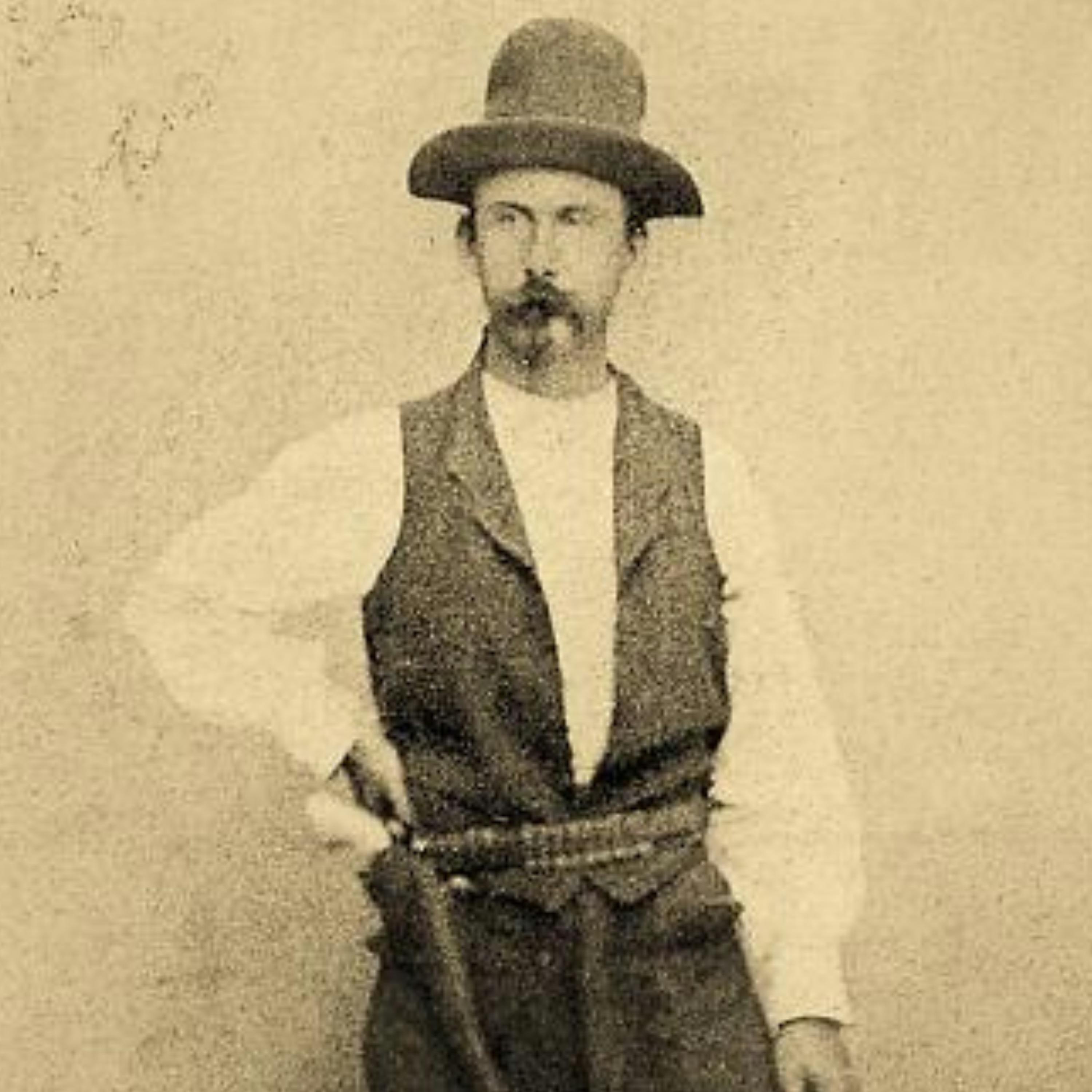
Okay, so in 1872, the brand new town in Newton, Kansas needed a marshal kind of man who could stare down a saloon full of drunken cowboys and not so much as blink an eye. And they found that man and 22 year old Buffalo hunter Billy Brooks. Now, today's story is one of those old west tells that doesn't get near enough attention in my opinion. Mostly on account of just how insane Billy's life truly was. Sherry had pinned on a badge over in Newton, but by the time he made his way to Dodge City, his life had taken a much darker turn. In fact, he wasn't even in Dodge longer than a month before he had already killed or wounded at least 15 men. And that was way before he took to stealing horses and helped provoke a war with the indigenous outlaw ways that would ultimately culminate in a final rendezvous with a lynch mob. Who was the real Billy Brooks? How'd he go from being a respected lawman to swinging at the end of a rope? And is it true that he once got into a gunfight with Morgan Earp? What about the rumors that one of his descendants is now a very famous celebrity? Stick around and find out. My name's Josh and this is the Wild West Extravaganza. William Brooks was born In Ohio in 1849, the eldest son of a blacksmith named Edmund and his wife Cynthia. Unfortunately, however, there's really not much else in the way of details concerning William's early years. What else is new, right? All we know for certain is that he left home sometime as a teenager and began hunting buffalo on the Kansas prairie. In fact, he did so good hunting bison that he soon garnered the nickname Buffalo Bill. This would have been around the same time as the other much more famous Buffalo Bill was also hunting in Kansas. But so far as I'm aware, they never actually crossed paths. Either way, by 1870, Brooks found himself a new job driving a stagecoach between the towns of Wichita and El Dorado. Per historian Leon Metz quote, it was a tough, demanding job, and Billy Brooks soon gained the respect of his employers and the traveling public for his courage, stamina, and dogged dedication to duty. End of quote. And yeah, Brooks has such a sterling reputation for courage that less than two years later, on April 1, 1872, he became the official town marshal of Newton, Kansas. Now, for all you longtime listeners, you may recall Newton from the episode I did on the gunfight at Hyde Park, AKA the Newton massacre. It all started with cowboy Hugh Anderson gunned down local tough Mike McCluskey. A teenager dying of tuberculosis named James Riley had previously been taken in by McCluskey, and I guess he felt like he owed the man a debt. So when McCluskey went down, Riley calmly locked the door and opened fire. By the time the smoke cleared, multiple men were dead or dying, and Riley simply walked out, never to be seen again. A very legendary gunfight. And it happened less than eight months prior to Billy Brooks being sworn in as marshal. So suffice it to say, Newton was just a tad bit rough around the edges. And that being the case, Marshall Brooks didn't have to wait long to prove his mettle. In Early June of 1872, a group of Texas cowboys started acting up over in a Newton saloon, Getting rowdy and threatening the owner. The owner called for the marshal, and initially, Brooks was able to de escalate to the point that he actually talked two of the cowboys into leaving. Only problem is, just as soon as they hopped in the saddle, one of them decided to pull out a pistol and shoot Brooks in the shoulder. I think most of us would have called it a day at that point, right? Maybe take a little trip to the emergency room. Or at the very least, let your boss know you won't be coming into work the next day. Well, not Billy Brooks. Rather than seek out a doctor, he instead saddled a horse of his own and took off after him. In the chase that ensued, he received two additional gunshot wounds, one of which passed through his right breast. And he still continued the pursuit for another 10 miles before finally turning back to have his wounds treated. Luckily for him, none of them proved fatal. But they were serious enough to force Brooks to resign as city marshal. He'd recuperate for a spell before taking a new job over in Ellsworth as a police officer. But this too would be a short lived venture. And By October of 1872, Brooks had made his way to Dodge City. Now, when I say Dodge City, I think a lot of people automatically envision guys like Wyatt Earp or Bat Masterson. And yes, eventually. But that particular era of Dodge City, it was still years away. Back in the fall of 1872, it was barely even a town. Hell, truth be told, it had only been in existence for about a month by the time Brooks arrived. It consisted of maybe a dozen or so frame buildings, a couple dozen tents, and a handful of adobe structures serving primarily as a jumping off point for buffalo hunters and an outlet for soldiers stationed at nearby Fort Dodge. And much like Newton, the violence was staggering. According to a saloon owner by the name of George Hoover, no less than 15 men were killed in Dodge City during just the first winter. One of the town's founders, Robert Wright, the number even higher, saying that the shootings in the first year alone resulted in the deaths of 25 men, with perhaps twice as many wounded. It's also important to note that Dodge in 1872 was not yet incorporated. In other words, there really wasn't much in the way of organized law. And this really wasn't all that uncommon back in those days in a lot of your early frontier towns, the local business owners would hire gunmen in lieu of law enforcement officials, just to sort of keep the troublemakers at bay. More often than not, these gunmen were given the informal title of marshal, but in all reality, they were more like private security guards. Now, at that point in time, the only legally authorized lawman in that part of Kansas was Deputy Marshal Jack Bridges. He was hired as a air quotes marshal, and then at some point in late 1872, Bridges took on as an assistant, our very own Billy Brooks. It's also there in Dodge where the Buffalo Bill nickname fell to the wayside as locals instead took to calling Brooks Bully Billy. No details remain as to why they called him a bully, but I'm willing to bet it wasn't due to his relaxed, easygoing nature. I'm also not sure how much time Brooks actually spent assisting the marshal as opposed to playing poker. Per historian Leon Metz, Billy quote turned to gambling as a profession and appears to have formed a partnership with a well known saloon man and gambler named Matt Sullivan, who conducted a game, the Kelly and Hunt dance hall. End of quote. And yeah, later on that November, Brooks and Sullivan would end up tangling with a trio of cowboys right there in the dance hall. Sources do vary, but from what I can tell, the arguments stem from a game of chance gone wrong. Guess the cowboys felt like they had been cheated and demanded their money back. And rather than do as the cowboys demanded, Sullivan instead cracked one of them upside the head with his pistol so hard that it fractured the man's skull and penetrated the frontal lobe of his brain. Good Lord, what? Until a second cowboy aimed his revolver at Sullivan's back. That Brooks finally sprang into action, shooting the drover in the head. Sullivan then spun around and put another bullet through the third cowboy's jugular. Now, like I said, there are slightly different versions, one of which comes from an eyewitness who claimed that the cowboys were trying to tree the town and that they had, quote, got no more than they deserved. Per this account, however, they were merely wounded as opposed to killed. Either way, Billy Brooks was definitely making one hell of a name for himself. A little over a month later, just a couple of days before Christmas, he got into yet another gunfight with a man named Brown. And by the time the smoke cleared, Brown lay dead in the dirt. Skip ahead. Less than a week later, and Brooks gambling partner Sullivan was assassinated and the main suspect was. Any guesses? If you said Billy Brooks, go ahead and give yourself a pat on the back. Per the December 31, 1872 edition of the Kansas Daily Commonwealth, on Saturday evening last, as Matt Sullivan, a saloon keeper, was standing in his place of business, a gun was pointed through the window and discharged, the ball striking Sullivan and killing him almost instantly. It is supposed that the unknown assassin was a character in those parts called Bully Brooks, but nothing definite is known concerning the affair or what led to it. End of quote. Now, apparently, this was never actually proven, and no charges were ever brought up against Brooks over the death of his former partner, at least not officially. That said, just a few months later, Billy was nearly killed by a buffalo hunter named Kirk Jordan. Kirk Jordan. Sounds like a 70s born name. Kirk Jordan at your service. Now, once again, sources do vary. Some say it was over a woman, while others say that Jordan was looking to avenge the death of one of his friends. Whether or not that friend was Matt Sullivan, I'm not entirely sure. What I do know, however, is that Jordan positioned himself in the doorway of a saloon. And then once Billy appeared across the street, he raised that buffalo gun of his and took aim. The only problem is, just as Jordan was about to squeeze the trigger, a bystander stepped into his line of sight, forcing him to adjust the rifle. Brooks apple, despite the movement, was then able to throw himself behind a water barrel just in the nick of time. Now, those of you who've seen Lonesome Dove know that a plank Wall won't stop no.50 caliber bullet, and neither will a barrel of water. But it did serve to throw off Jordan's aim long enough for Billy to haul ass. And really, it was this latest incident that proved to be the final straw for the prominent citizens, Dodge. Guess they had finally had enough of Billy's trouble. And sitting packing the following day on an eastbound train. Billy's departure was later summed up by Dodge business owner Robert Wright, who stated, quote, good riddance for everybody. Now, there may be more to the story than that, as I did see another source stating that Jordan Brooks actually made peace before he left town. But whichever way you want to shake it, Billy's time in Dodge had most definitely come to an end. So. So he just went back to what he knew best, hunting buffalo. His base of operations was a little fortified cabin he had built over in Comanche County, Kansas, somewhere along Kiowa Creek. And when he wasn't slaughtering bison, he busied himself stealing horses. A lot of horses, mostly from the indigenous. Now, this doesn't get brought up a lot in the history books, but it was actually a pretty big deal. You see, back in the early 1870s, there were quite a few, quite a few white horse thieves, many of whom were buffalo hunters operating out of southern Kansas, just systematically raiding the pony herds of reservation Indians. And despite the tribes being protected by the Medicine lodge treaty of 1868, the army looked the other way. So that being the case, the raids continued almost completely unchecked. The natives eventually retaliated by stealing horses from the settlers, only for the white stock thieves to do the same thing while disguised as Indians. Some of them would even scalp their victims just to shift the blame. This, of course, would further strain tensions along the frontier. Believe it or not, this is actually one of the causes of the Red River War. Not only were the buffalo being decimated and promised rations not being delivered, but they also had men like Billy Brooks raiding indigenous horse herds with impunity. It was also during this same period that Billy became acquainted with other buffalo hunters like Bill Tillman and Bat Masterson. In fact, Masterson and one of his buddies would be forced to take refuge at Brooks cabin one day after being attacked by a war party of Cheyenne. And on and on it went. Hell. Things got so bad that by early 1874, that entire part of Kansas had descended into absolute chaos. And rather than take his chances, Billy and his girlfriend Matilda instead moved about a hundred or so miles to the east to a dugout just outside the town of Caldwell, Kansas.
- [12:02]
C
Choice hotels get you more of what you value. Here's a little tune to help you remember. Same drive, different day don't you wish you were getting away? Pack your bags and come on through Texas, Ohio, Alaska we're up there too Comfort Inn. It's calling your name. Save on the stain. Oh, and free waffles are yours to claim. Well, I hope you like my little song book. Direct at Storiesville, Texas. Zootopia 2 has come home to Disney Plus. Let's go get ready for a new case.
- [12:38]
B
We're gonna crack this case and prove we're the greatest partners of all time. New friends, you are Gary Desnake. And your last name. Desnake. Dream team.
- [12:49]
C
New habitats.
- [12:50]
B
Zootopia has a secret reptile population. You can watch the record breaking phenomenon at home. You're clearly Mark. Zootopia 2 now available on Disney. Rated PG. Now I haven't mentioned Matilda just yet, but she and Billie were an item way back in Dodge City. She had worked as a dancehall gal. And despite taking Billy's last name and passing herself off as his wife, Most historians do think it's unlikely that the couple was officially married. Nevertheless, as you'll soon learn, Matilda was nothing if not ride or die. More on her in just a moment. But in the meantime, it was there in Caldwell where Billy went back to work for the Southwestern Stage Company. Same outfit he had worked for back in 1870. There was just one problem though. A rival stage business known as Vail and Company were attempting to outbid Billy's employer. To once again quote historian Leon Metz. In June, the Southwestern Stage Company employees received the distressing news that Vail and Company had underbid Southwestern for the lucrative Caldwell to Fort Seal mail contract. This spelled disaster for Southwestern. For without that mail contract, it was unlikely that the company could maintain its passenger service. And it would have to close down its operations in that area. In other words, if Vail and Company were successful, Billy would be out of a job. So that being the case, he and a few others came up with the genius idea of stealing all the horses and mules belonging to the competition. I guess they figured that if Vale didn't have any animals, then they. They wouldn't be able to deliver the mail. Among Billy's conspirators was a livery stable owner named Jud Calkins. Along with a young attorney named L. Ben Hosbrook. Now lawyers are always gotta start their names with an initial just to sound fancy. And then you had another old boy named A.C. mcLean. As well as a couple of the region's most notorious horse thieves. Hurricane Bill Martin and one armed Charlie Smith. Gonna have to cover Hurricane Bill one of these days. This guy's name just keeps popping up. And to be honest, I really don't know a whole lot about him gonna have to fix that soon. But, yeah, from what I understand, all total, there were around 15 or so conspirators looking to put the rival stage company out of business. And not all these guys work for Southwestern, by the way. Some of them just had ventures of their own or other financial interests that relied on Southwestern staying in business. But yeah, by late June of 1874, the scheme was in full operation. That's when a horse and four mules turned up missing from the stables of Vail and Company. They might have actually gotten away with it, too, had it not been for the aforementioned AC maclean. I guess nobody ever taught him how to keep a secret. And he ended up blabbing to a local doctor. And in turn, the doctor went to the authorities. As such, on July 27, 1874, a Justice of the peace issued warrants not only for Billy, but for several of his buddies. Sumner County Sheriff John Davis then gathered a posse and headed for Caldwell. At the same time, there were several bands of vigilantes also scouring the countryside. And as a result, many of the suspects rounded up one by one. Hasbrouck's fancy sounding name didn't stop him from being arrested in a cornfield just outside of town. Another man named Terrell was busted at a friend's house. And one armed Charlie was apprehended as he tried fleeing south into the territory. Only Billy Brooks refused to be taken quietly. Rather than run, he instead holed up in that dugout of his with Matilda. And when Sheriff Davis arrived with the posse, Brooks announced in no uncertain terms that he would not be taken alive. And for good reason, right? I mean, a man like Brooks has spent enough time on the frontier to recognize both the power and prevalence of lynch mobs. And despite the sheriff's promise that he'd protect him and see to it that he got a fair trial, Billy just flat out refused to budge from that dugout. Hell, even Matilda refused to leave. Story goes that she took a pistol in one hand and a knife in the other and advised Brooks to stand firm, saying that they'd either fight the posse off or die together. Siege would go on for several more hours until Billy finally allowed one of the posse men to come inside. Guy he personally knew by the name of John Kirk. And just like the sheriff, Kirk also promised a safe transport to Caldwell. I guess Billy felt like he could trust Kirk, so he finally agreed on one condition. That he be allowed to retain his firearms. The request was granted, and Brooks finally emerged with two pistols strapped to his hips and a Winchester in his hand. Wasn't until he finally got to Caldwell that he handed his arsenal over to the sheriff, an action that was immediately followed by his supposed friend Kirk pistol whipping him across the forehead. Why, I have no idea. But as I'm sure you can imagine, Billy was not a happy camper. Matter of fact, he even told Kirk that he was going to kill him just as soon as he got out of jail. Much to Brooks dismay, however, that chance would never come. You see, later on that night at around midnight, the lynch mob that Billy had feared finally arrived. They overpowered the guards and then hauled Billy and the other two prisoners down to the Salt Creek Bridge back a mile outside of town and hanged all three of them by the neck until they were dead, dead, dead. Billy brooks was just 25 years old. Per historian Leon Metz, quote, Later that day, officers took the bodies down and laid them out in the courthouse. Reverend Rideout and his wife were standing there when Matilda Brooks came in. They watched as the distraught woman fell to the floor beside Billy and wept as though her heart was ready to burst with grief. She later purchased a coffin for the burial of the man she called her husband. The other two lynch victims were interred in simple wooden boxes. End of quote. And that was pretty much the end of it. According to Metz, there were very few people there in Kansas who shared in Matilda's grief. Now, interestingly enough, Matilda would give birth just seven months later to a little boy she named William. Later on in life, William moved south to Tulsa, Oklahoma, and had several children of his own, one of whom was named Troyle. And in the year 1962, Troyle would father none other than country music sensation Garth Brooks. Now, I don't know about you, but Billy Brooks life sort of reminds me of a quote from author Mario Puzo. I think I've shared it on the show before, but it does bear repeating. There are men in this world who go about demanding to be killed. You must have noticed them. They quarrel in gambling games. They. They jump out of their automobiles in a rage if someone so much as scratches their fender. They humiliate and bully people whose capabilities they do not know. I have seen a man, a fool, deliberately infuriate a group of dangerous men and he himself without any resources. These are people who wander through the world shouting, kill me. Kill me. And there is always somebody ready to oblige them. Billy Brooks killed God only knows how many people. He stole God only knows how many horses, and he made God only knows how many enemies, some of whom may have been part of that lynch mob. He and his buddies weren't necessarily hanged just for stealing a few mules. They were hanged for being the exact type of men that Mario Puzo wrote about. And in the end, young Billy got his wish. And by the way, I did make up everything I said about Garth Brooks. Far as I'm aware, they're not related whatsoever. Just couldn't help myself. Now, full disclosure, if you go to the Wikipedia page for Billy Brooks, it shows that he was born circa 1832 and that he was around 40 or 41 years old when he was killed. This is somewhat corroborated by contemporary sources who describe Billy as looking much older. That said, I did choose to go with Leon Metz, who stated that Billy was born in 1849. I did do a little due diligence of my own, and I was able to find Billy and his family on the 1860 census for claim Clermont County, Ohio. And everything in the census lines up exactly with Metz's information. A father named Edmund working as a blacksmith, mother named Cynthia, and sure enough, Billy is listed as being 11, which would have made him just 25 years old at the time of his death. Just wanted to clear that up in case there were any questions. You may have also heard the story about Billy Brooks getting into a gunfight with Morgan Earp. Legend has it they were both competing for the same marshal position up in Butte, Montana, and Brooks said he intended to gun Morgan down at the first opportunity. In turn, Morgan said that he was going to shoot Brooks on sight. Sure enough, next time the two met, they went for their guns. And although Billy was able to shoot Morgan in the arm, Morgan returned fire and put a round straight in Billy's belly. It's a great story, but it never actually happened. Comes from just one source, Stuart Lake. And we know it didn't happen because Morgan didn't become Marshal of Bute until 1880, over five years after Brooks was already dead. Speaking of clarifications, something that I failed to mention in last week's episode on Nate Champion, something that many of you rightfully called me out on, is how exactly did Nate's journal make it out of that burning cabin? Well, per sources, he placed it in his vest before rushing out to meet his killers. They discovered it when they were inspecting his body and removed anything that they felt was incriminating. I can't remember if I mentioned this next part, but the WSGA actually brought along a pair of journalists with them when they invaded Johnson county, just as a way of ensuring that the various killings were given A positive spin. And when they were done looking over Nate's journal, one of the reporters, a correspondent for the Chicago Herald named Clover, took possession of it. Now, at some point later on, I'm talking like weeks or months later, one of the leaders of the invasion, Billy Irvine, demanded that Clover turn over the physical diary. But Clover said it had already been destroyed. Whether that's true or not, I don't think anyone can say for certain. All we know for sure is that the original diary has never been located. What survives today, the text that you'll find on the historical marker over in Buffalo or the words that are quoted in all the books about Johnson county, all of that comes from just what Clover published in his newspaper. The actual notebook itself, which was allegedly a little red tally book written in pencil with a bullet hole through it, is apparently long gone, either destroyed by a journalist or hidden so well that it hadn't surfaced in over 130 years. Another thing that I didn't mention was the fate of Nate's brother, Dudley. You see, as soon as Dudley learned about Nate's death, he saddled his horse and headed straight to eastern Wyoming, possibly looking for revenge. And if you'd like to learn what happened next, along with the name and photo of the last surviving participant of the Johnson County War, all that can be found in the latest edition of the Wild West Newsletter. And yes, the Wild west newsletter is 100% free. All you gotta do is go to wildwestnewsletter.com, type in your email address, and that's it. Once you've done that, you'll have immediate access to the entire back catalog. I also going forward, any new editions of the newsletter will be delivered straight to your inbox. And to be completely honest, just between me and you, you don't really even have to put in your email address. Just close out that little popup and you'll still be able to read the entire newsletter for free. Did I mention that it's free? That's wildwestnewsletter.com or just click the link down below that says newsletter. Alright. And I guess that's about all I've got till next week. Adios. Kirk Jordan at your service.