Podcast
The World in Time / Lapham’s Quarterly
Hosted by Lapham’s Quarterly · EN
Donovan Hohn, the acting editor of Lapham's Quarterly, interviews historians, writers, and journalists about books that bring voices from the past up to the microphone of the present. New episodes are released bi-weekly.
24episodes
Episodes
Newest firstAll episodes
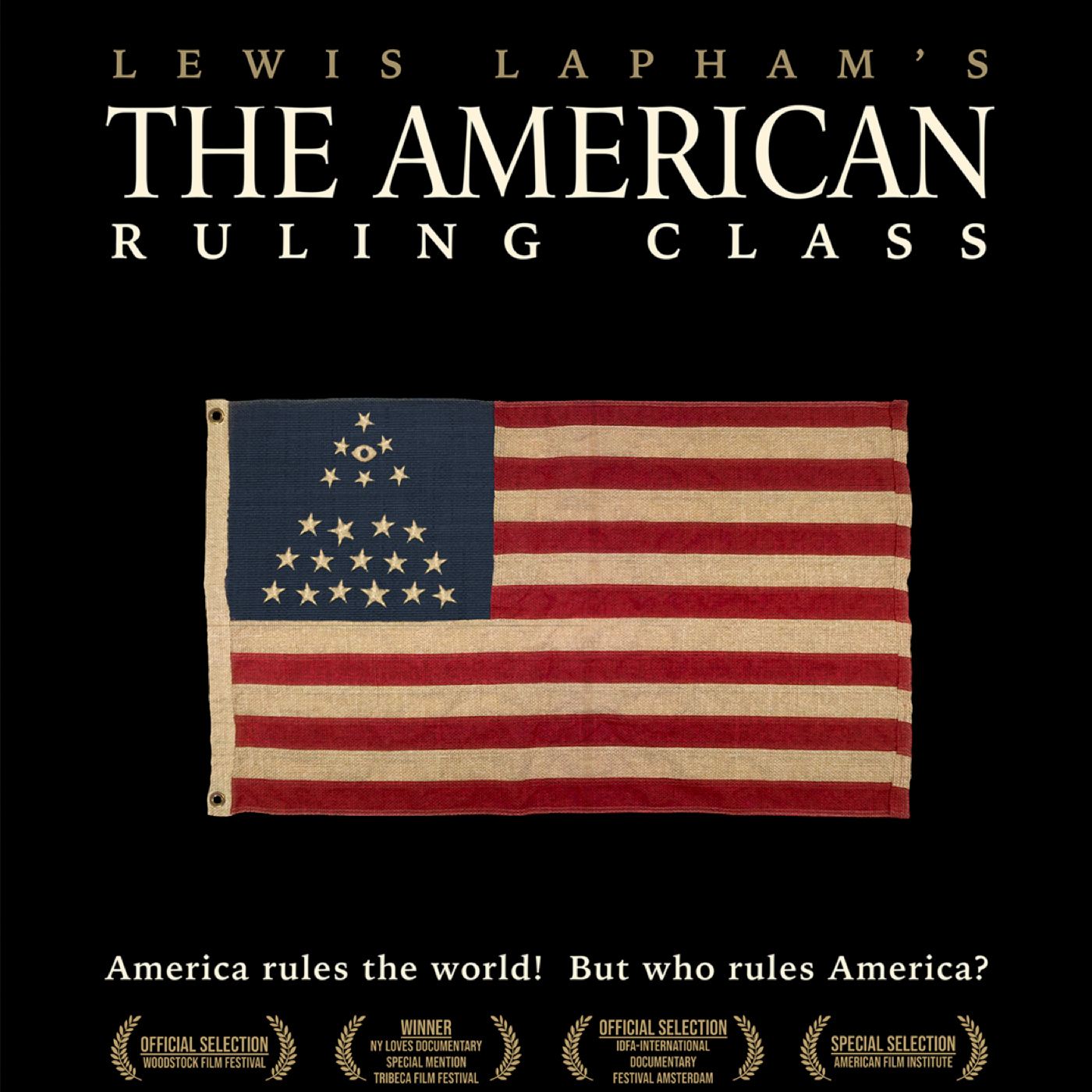
BONUS: Lewis Lapham's The American Ruling Class
2w ago00:19:48Tap to summarizeTwo years ago today, Lewis Lapham’s voice joined all those other departed voices of the past. This summer we’ve been welcoming his voice back to the microphone of the present, and today, in commemoration of the anniversary of his death, we are sharing this bonus episode. In the first years of the new millennium, Lewis Lapham made a movie, a “dramatic documentary musical” called The American Ruling Class, released in 2005. On August 1, 2026, The American Ruling Class is coming to the Criterion Channel. Lewis wrote much of it, narrated much of it, and starred in much of it, playing himself, or a version of himself—a wise, mirthful, sardonic mentor in pinstripes guiding a pair of greenhorn youths who set out to uncover the secrets of the American ruling class. This episode collects audio excerpts from the film. See Privacy Policy at https://art19.com/privacy and California Privacy Notice at https://art19.com/privacy#do-not-sell-my-info.
Transcribe →
America's Violent Birth (with Joseph J. Ellis and Holger Hoock)
3w ago01:10:17Tap to summarize“America’s founding is not just your conventional heroic struggle for noble ideas and ideals,” says historian Holger Hoock on today’s episode of The World in Time. “It is also a profoundly violent civil war—America’s first civil war—and a civil war in the British Empire.” This second, war-torn episode of Lapham’s Revolutionary America, a special series of The World in Time, collects historical dispatches from the battlefields, excerpting two conversations that Lewis Lapham recorded: one with Hoock about his 2017 book Scars of Independence: America’s Violent Birth, the other with Joseph J. Ellis, from 2022, about The Cause: The American Revolution and its Discontents, 1773–1783. The ad-free, unabridged Substack edition of the episode concludes with an audio version of an essay adapted from Peter C. Mancall’s new book, Contested Continent: The Struggle for North America, c. 1000 to 1680, the most recent and chronologically earliest addition to The Oxford History of the United States, other volumes of which include Gordon S. Wood’s Empire of Liberty and Richard White’s The Republic for Which It Stands. Titled “The Mystic River Massacre,” Mancall’s essay takes readers and listeners into a violent colonial prologue to the country’s violent, revolutionary birth.See Privacy Policy at https://art19.com/privacy and California Privacy Notice at https://art19.com/privacy#do-not-sell-my-info.
Transcribe →
Lapham’s Revolutionary America: Jill Lepore and Gordon S. Wood
Jul 301:24:28Tap to summarize“What’s extraordinary in those speeches that Lincoln gave on the eve of the war,” says Gordon S. Wood in this episode of The World in Time, “is his realization of how diverse Americahad become. We’ve got Frenchmen, we’ve got Spaniards, we’ve got Germans, we’ve got Irish, we’ve got all these different Scots, how are we going to hold together? We’re not a nation. Lincoln says, Well, we have an answer to that, and it’s that good old Declaration of Independence. All men are created equal.” On June 7 of this year, news came that the American historian Gordon S. Wood had died at the age of 92. In commemoration of him, this episode presents in its entirety a conversation Wood recorded with Lewis H. Lapham in 2017 about Friends Divided: John Adams and Thomas Jefferson. Lapham’s Revolutionary America, a special series of The World in Time, draws from archival conversations that Lewis H. Lapham recorded with scholars and historians of the American Revolution, occasionally complementing those archival conversations with new ones. As introduction to the series, this episode begins with an excerpt from a 2018 conversation about These Truths, Jill Lepore’s single-volume history of the U.S. It concludes with an audio version of “‘As Though They Were Blood of the Blood’: Jefferson’s Declaration and the Problem of American Identity,” an essay adapted from the foreword Gordon S. Wood wrote to Ted Widmer’s new book, The Living Declaration: A Biography of America’s Founding Text.See Privacy Policy at https://art19.com/privacy and California Privacy Notice at https://art19.com/privacy#do-not-sell-my-info.
Transcribe →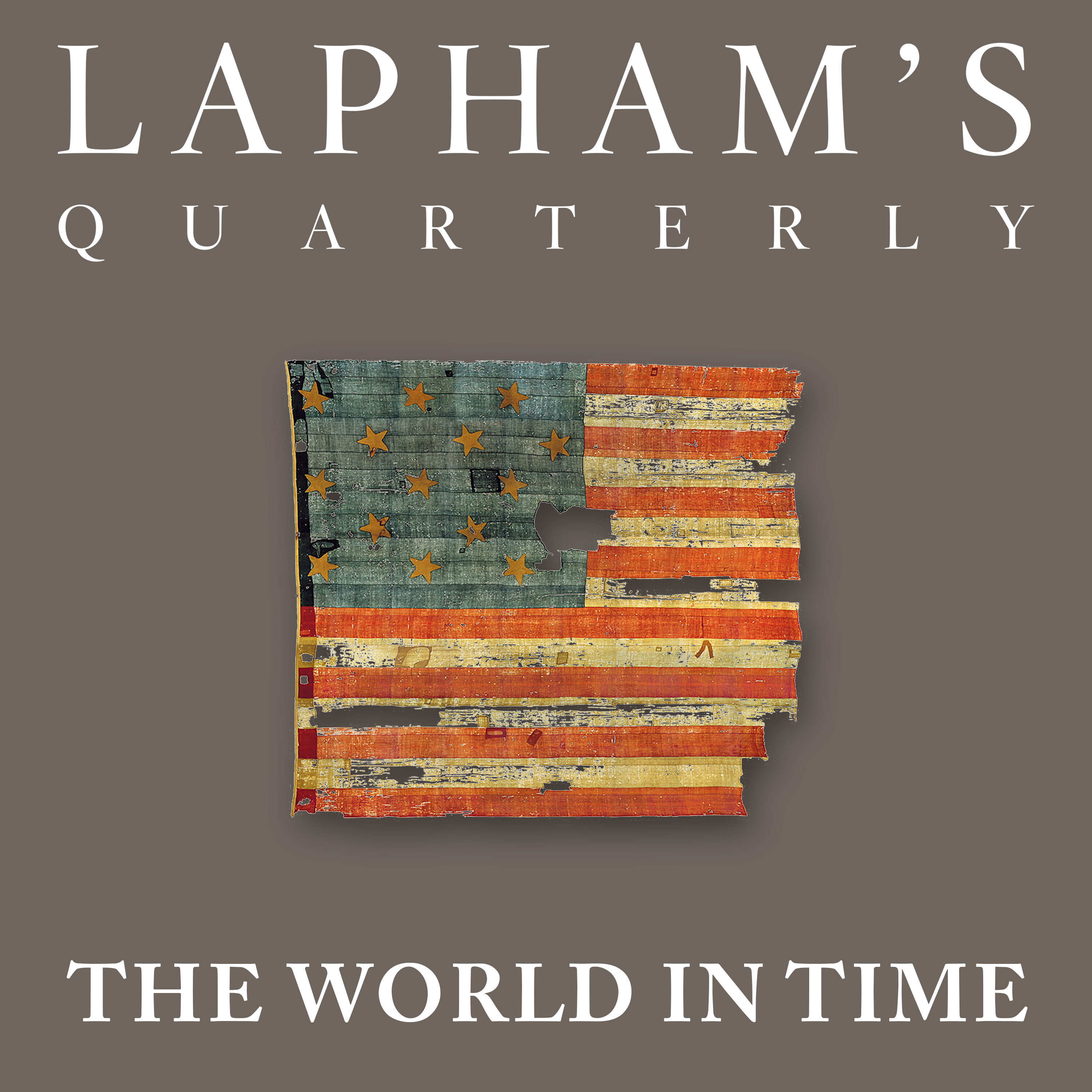
Lapham's Revolutionary America [Teaser]
Jun 3000:03:25Tap to summarizeA series from The World in Time, beginning Friday, July 3, 2026. Voices heard here: Lewis H. Lapham, Jill Lepore, Gordon S. Wood. Illustration: The 1795 flag that flew from Fort McHenry and inspired Francis Scott Key’s “Star-Spangled Banner.”See Privacy Policy at https://art19.com/privacy and California Privacy Notice at https://art19.com/privacy#do-not-sell-my-info.
Transcribe →Michael Pollan on Consciousness
Jun 2601:09:42Tap to summarize“We have language. That’s the best tool we have for understanding the consciousness of another,” says Michael Pollan on this week’s episode of The World in Time. “You can go pretty far with it, as Proust himself showed, but that is, in the end, the function of art: to translate one consciousness into another. That’s the only way we know how to do it right now, and it’s pretty powerful, but there’s still a remnant, some residue that can never be translated. Even Proust, who wrote millions of words and was a great believer in the power of words, said consciousness is not a verbal construction. He didn’t think that consciousness was made of words. The visual arts can tell us things, too. A Rothko painting conveys so much consciousness. That’s the importance of art—helping to ferry us from one island of consciousness to another.” This week on the podcast, Donovan Hohn speaks with Michael Pollan, award-winning author and journalist, about his new book A World Appears: A Journey into Consciousness, in which Pollan explores one of our most complex and enduring mysteries: the “hard problem” of consciousness. Initially, he seeks the headwaters of consciousness in neuroscience, computer science, and in science that bridges computers and biology, but, midway through the book, and midway through this episode, suspecting that “third-person” science might be inadequate to the mystery, he looks elsewhere—to philosophy, literary history, the arts, and, as his journey ends, to Buddhism. The ad-free, unabridged version of this episode, available on the Lapham’s Quarterly Substack, concludes with a bonus segment, an audio version of an essay on animal consciousness, by John Jeremiah Sullivan, that originally appeared in the Spring 2013 Animals issue of Lapham’s Quarterly.See Privacy Policy at https://art19.com/privacy and California Privacy Notice at https://art19.com/privacy#do-not-sell-my-info.
Transcribe →
Whither the Humanities? (With Zena Hitz, Justin Smith-Ruiu, and D. Graham Burnett)
Jun 1202:04:42Tap to summarize“What in God’s name are the humanities,” Lewis Lapham asked in a commencement address he delivered at St. John’s College in 2003, “and why are they of any use to us here in the bright blue, technological wonder of the twenty-first century?” His answer—the humanities are not luxuries akin to “the country club membership or the house in Palm Beach” but liberating necessities—harmonizes with the answers proposed by the three guests on this special, two-part episode of The World in Time, which commemorates the anniversary of the Quarterly’s revival. Today’s three guests are all scholars—“card-carrying, old-school metaphysical humanists”—who have dared to do what Lewis Lapham did nearly two decades ago: launch a nonprofit that brings the humanities and the arts into the American agora, the public square. Zena Hitz, tutor at St. John’s College, is the founder of the Catherine Project, a nonprofit that, through online seminars and reading groups, makes the study of “the great books” available for free to all. She is joined by two returning guests: Justin Smith-Ruiu, professor of philosophy at the Université Paris Cité, editor of the Substack magazine The Hinternet, and founder of the Hinternet Foundation, which seeks to “steward humanism into a machine-driven future”; and D. Graham Burnett, Professor of the History of Science at Princeton University. A member of the Lapham’s Quarterly editorial board, Burnett is also the co-founder and director of the Strother School of Radical Attention, which offers to the general public courses and workshops that “deepen our shared understanding of attention’s relation to human flourishing.” In part two of today’s two-part episode, available for free and in full on the Lapham’s Quarterly Substack, Hohn and Hitz add a new conversation to our intermittent and ongoing series of conversations about Moby Dick and the history of the sea, discussing the “The Doubloon,” chapter 99 of Melville’s novel. Earlier conversations in our series about Moby Dick: Lewis Lapham’s Sea Stories, Wyatt Mason on “Extracts,” Francine Prose on “Loomings,” James Marcus on “The Mast-Head,” Charles Baxter on “The Sermon,” Elizabeth Kolbert on the History of Cetology, Alexander Chee on “The Counterpane,”Aaron Sachs on “The Monkey-Rope,” Caleb Crain on “Queequeg in his Coffin,” Philip Hoare on “Monstrous Pictures of Whales,” and Yiyun Li on “The Try-Works.”See Privacy Policy at https://art19.com/privacy and California Privacy Notice at https://art19.com/privacy#do-not-sell-my-info.
Transcribe →Francine Prose on Charles Dickens and Hans Christian Andersen
Jun 500:56:56Tap to summarize“Everyone expected this comet to hit and obliterate England in 1857,” says Francine Prose in this episode of The World in Time. “So a lot of the novel is about the pressure from this belief or non-belief that the comet is going to hit. And of course, Dickens, who’s sort of scientifically minded, dismisses it immediately. And Andersen, who is romantic—paranoid, fearful, the whole list of things which would make you believe you’re about to be obliterated by a comet—is completely convinced and can’t really accept Dickens’ attempts to reassure his household that this is not going to happen.” This week on the podcast, Donovan Hohn speaks with Francine Prose, editor at large of Lapham’s Quarterly, about her new novel Five Weeks in the Country, which, mingling historical fact with fiction, narrates five disastrous weeks that Hans Christian Andersen spent with Charles Dickens and his family in the summer of 1857.See Privacy Policy at https://art19.com/privacy and California Privacy Notice at https://art19.com/privacy#do-not-sell-my-info.
Transcribe →Mary Beard on the Classics
May 2201:06:00Tap to summarize“Fifth-century Athens still lingers even for us, and it’s a mythical golden age,” says Mary Beard on this week’s episode of The World in Time. “And we imagine that all we can do is count ourselves lucky to be the inheritors of the Greek Miracle, all of the things that the Greeks invented: democracy, philosophy, and theater, among much else. I struggled with that when I was at university because it was almost cliché to say that the fifth- and sixth-century Athenians invented democracy, which is simply not true. It doesn’t take much to say, ‘Look, democracy isn’t like the iPhone or the steam engine.’ It isn’t invented in that way. Democracy is a process and people have been experimenting with that process all over the world–not just in Western Europe–for thousands of years.” This week on the podcast, Donovan Hohn speaks with Mary Beard, best-selling historian and professor emerita of classics at the University of Cambridge, about her new book, Talking Classics: The Shock of the Old. “What is the point of the ancient classics?” Beard asks in the book’s introduction. “Why should we bother about what people did two thousand years ago or more: what they made, wrote, and thought? What can it all mean to us now?” In the chapters that follow, and in this episode of The World in Time, she shares her best answers, drawing from her own lifelong, wonder-struck study of the ancient worldSee Privacy Policy at https://art19.com/privacy and California Privacy Notice at https://art19.com/privacy#do-not-sell-my-info.
Transcribe →
Yiyun Li on “The Try-Works”
May 800:58:11Tap to summarize“‘There is a wisdom that is woe, but there is a woe that is madness’—to me, that summarizes much of life,” says Yiyun Li on this week’s episode of The World in Time. “I don’t think many people would put those three words together in a sentence—wisdom, woe, and madness—as a sort of trinity. I mean, when I say that passage is a touchstone in my reading, I go back to this line and think about what I read, what I write, and what I experience in life. It’s always about these three words. And you cannot separate them in a very clear way.” This week, in a return of our intermittent series on Moby Dick and the history of the sea, Donovan Hohn speaks with novelist and essayist Yiyun Li, author most recently of Things in Nature Merely Grow, winner of the 2026 Pulitzer Prize for Memoir, about “The Try-Works,” chapter 96 of Melville’s novel, in which Ishmael teaches readers how to render whale blubber, falls asleep at the Pequod’s jawbone tiller, and, upon awakening, flies like a “Catskill eagle” into and out of the “blackest gorges” of the soul. The chapter’s closing paragraph is, to Li’s mind, possibly “the most gorgeous paragraph written.” Earlier conversations in our series about Moby Dick: Lewis Lapham’s Sea Stories, Wyatt Mason on “Extracts,” Francine Prose on “Loomings,” James Marcus on “The Mast-Head,” Charles Baxter on “The Sermon,” Elizabeth Kolbert on the History of Cetology, Alexander Chee on “The Counterpane,” Aaron Sachs on “The Monkey-Rope,” Caleb Crain on “Queequeg in his Coffin,” and Philip Hoare on “Monstrous Pictures of Whales.”See Privacy Policy at https://art19.com/privacy and California Privacy Notice at https://art19.com/privacy#do-not-sell-my-info.
Transcribe →Adrienne Mayor on Geomyths
Apr 2400:55:46Tap to summarize“The oarfish is not only extremely long—I think they can be 20 feet long—but they have a very narrow, undulating body. They’re silvery, but they have a red crest all along their back. It really looks exactly like the sea monsters in ancient Greek vase paintings,” says Adrienne Mayor on this week’s episode of The World in Time. “It looks like an oarfish guarding the Golden Fleece. They live in very deep water, and they have fragile bodies. And if there’s an earthquake under the ocean, they’re damaged and they wash up on shore—that’s the only time most people see an oarfish, and it would look like a stereotypical dragon.” This week on the podcast, Donovan Hohn speaks with folklorist, classicist, and historian of ancient science Adrienne Mayor about her new book, Mythopedia: A Brief Compendium of Natural History Lore. In 53 alphabetically arranged essays about “legends of the earth,” or “geomyths,” Mayor’s compendium draws upon oral traditions from all over the world and upon “historical and scientific discoveries that shed light on the remarkable phenomena featured in the legendary stories”—phenomena such as tsunamis, meteor impacts, lethal lakes, perpetual fires, fish that rain from the sky, and sand dunes that sing. See Privacy Policy at https://art19.com/privacy and California Privacy Notice at https://art19.com/privacy#do-not-sell-my-info.
Transcribe →