Loading summary
Transcript83 lines
- [00:11]
Dr. Joy Hardin Bradford
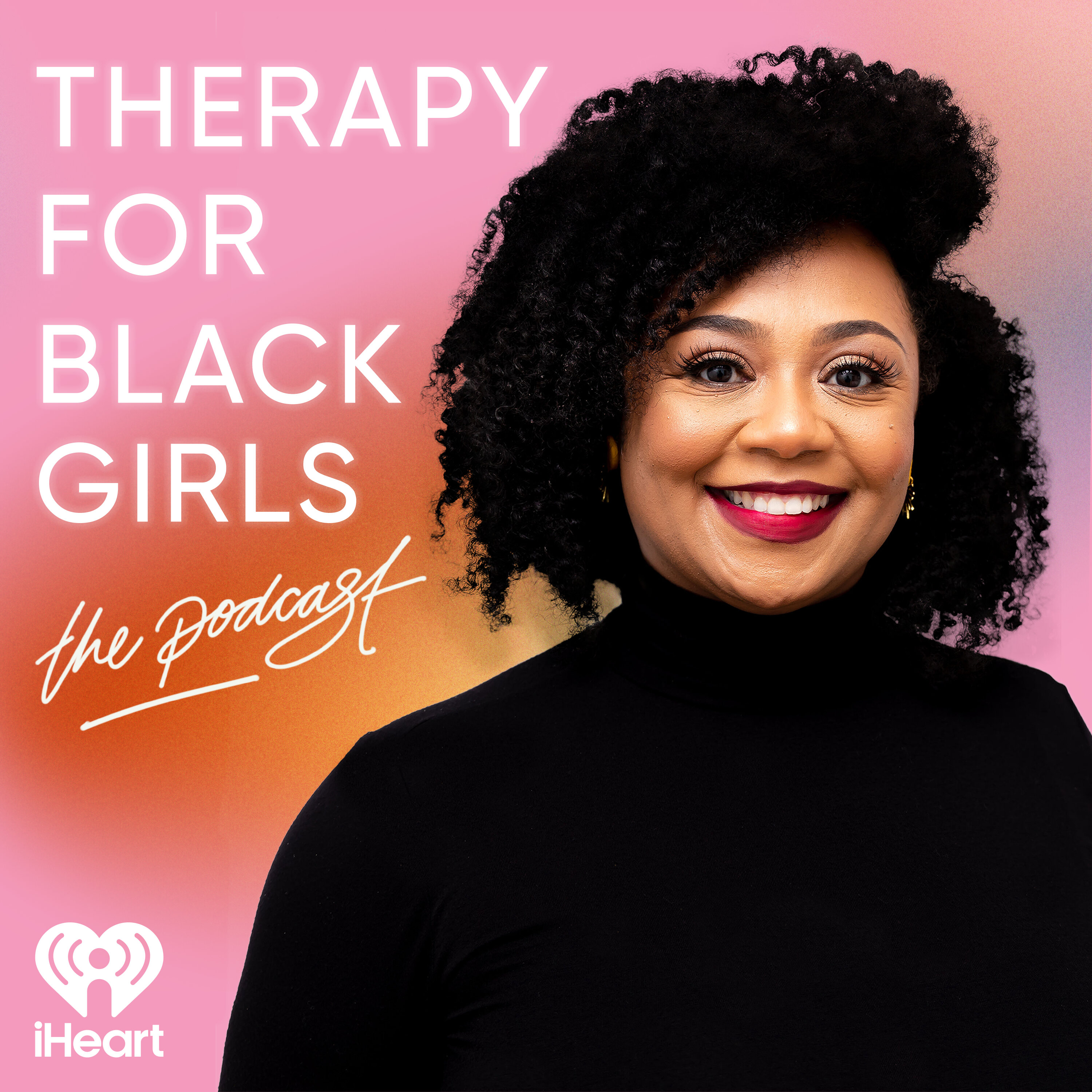
Welcome to the Therapy for Black Girls Podcast, a weekly conversation about mental health, personal development, and all the small decisions we can make to become the best possible versions of ourselves. I'm your host, Dr. Joy Hardin Bradford, a licensed psychologist in Atlanta, Georgia. For more or to find a therapist in your area, visit our website@therapyforblackgirls.com while I hope you love listening to and learning from the podcast, it is not meant to be a substitute for a relationship with a licensed mental health professional. Hey y', all, thanks so much for joining me for session 463 of the therapy for Black Girls Podcast. We'll get right into our conversation after
- [01:03]
Joy Reed
a word from our sponsors.
- [01:11]
Tiffany Cross
This is an I heart podcast. Guaranteed human mom, can I have Lingokids? Dad? Lingokids, please.
- [01:19]
Joy Reed
When did we become the Lingokids house?
- [01:21]
Tiffany Cross
No idea. Last week it was dinosaurs. This week it's Lingokids. Why Lingokids? Because it's the best thing ever. We can play games with astronauts, wild animals and superheroes.
- [01:31]
Joy Reed
With more than 4,000 interactive games, games, songs and shows, LingoKids is the number one entertainment platform for young kids.
- [01:39]
Tiffany Cross
So no dinosaurs and dinosaurs.
- [01:43]
Joy Reed
Everything kids love. Download it for free.
- [01:46]
Dr. Joy Hardin Bradford
I'm Dr. Joy from the Therapy for Black Girls Podcast. Ever been at the pharmacy counter and your mind goes blank when the pharmacist asks any questions? That's why you need to listen to beyond the Script from CBS Pharmacy and iHeartMedia. Hosted by Dr. Jake Goodman, this podcast answers the questions you wish you'd asked, like which meds may not work well together, what vaccines you might need before a trip, and even the ones you were too embarrassed to say out loud. Listen to beyond the script on the iHeartRadio app, Apple Podcasts, or wherever you get your podcasts, what does it mean to feel fully seen, valued and loved, especially as a Black woman navigating relationships, ambition and self worth? In today's conversation, I'm joined by journalist, political analyst and author Tiffany Cross to discuss her new book, Love Me. Tiffany opens up about the inspiration behind the book, the complexities Black women face in dating and relationships, and the importance of reclaiming softness, joy and vulnerability in a world that often asks us to
- [02:48]
Joy Reed
be everything for everyone.
- [02:50]
Dr. Joy Hardin Bradford
We also explore how media narratives shape perceptions of Black women, what healthy partnership can look like, and why self definition is such an important part of the journey towards love. But first, we are desperately in need of an emergency pop culture check in. A lot, maybe even too much, has occurred. And as a therapist, but also someone who appreciates and loves pop culture. It wouldn't be me if I didn't
- [03:12]
Joy Reed
dig into the mental health aspect of all of this.
- [03:15]
Dr. Joy Hardin Bradford
If something resonates with you while enjoying our conversation, please share it with us on social media using the hashtag tbginsession or join us over in our Patreon
- [03:24]
Joy Reed
to talk more about the episode.
- [03:26]
Dr. Joy Hardin Bradford
You can join us at community.therapy for black girls.com. here's our conversation.
- [03:36]
Joy Reed
Tiffany, thank you so much for joining us again today.
- [03:39]
Tiffany Cross
I'm so happy to be with you. Dr. Joy. I want to tell the audience I was so excited to talk to you in particular about my book that I was emailing you, asking you, can I please come on because you have such a one a calming spirit in talking to. You're always very even. But also because of what I wrote about, I really just wanted to have a conversation with someone who could connect with me as a mental health professional, but also just as another black woman. And so thank you for having me on your wonderful show.
- [04:11]
Joy Reed
No, thank you for coming back. And I definitely will say after reading the book, it is a very therapy for black girls coded. So you came to the right place for this conversation for sure. So as you are kind of on the dawn of this new book tour, new book release, I just want to check in to see how are you doing right now. Like, how's your heart?
- [04:31]
Tiffany Cross
My heart is full. It is a time for me seeking the source of self. And so I had to make sure that I was full enough to do this and protect myself. In a way, I think something that's reflective of me. But maybe all black women, it just feels like in life I had this container and there was a faucet pouring into the container and there was no drain. And so I had all this love. You know, we're born with all this love. And as I went out into the world to live a life and was raised in a home and all the things, the faucet started to slowly drip. And then a dream came and things started draining because I was giving what was in that container away. I think that's something true about us as black women. We don't just have a desire to be loved, we have a desire to love. And so pouring that in the wrong places or not really knowing how to corral that love and distribute it properly and purely with pure intention, it felt like it started to drain. And so when I was writing this book, it was a part of plugging that hole and getting that faucet to turn back on. And it's still a Work in progress. But I am just day by day, in the company of my sisters who are going through the same filling up. And so at this particular moment with you, my heart feels very full.
- [06:04]
Joy Reed
Good. I'm glad to hear that. When we talked before, a huge fan of your work and have followed your career and can definitely say Tiffany and I wonder if you agree this is the most vulnerable I've seen you in your writing and in your talking. I mean, you've shared bits and pieces, of course, across platforms, but in looking at Love Me in reading it, you are sharing all the things. Right. And so I'm curious what that process was like for you and how are you anticipating the receiving of, you know, so much vulnerability kind of on the reader's end?
- [06:39]
Tiffany Cross
I'm trying to brace myself for it because at the time, it felt like a conversation with, like, the collective view, the collective of us. There wasn't really a face that when you write a book, you're writing to someone. So it's like, oh, I want to write to black women. And so in just people get the advanced reader copy or people get digital galleys. And then when you're faced with like, oh, no, an individual is repeating back to you these very private, personal thoughts that you had, then it becomes real. So I'm trying not to anticipate it too much. I say the quiet parts out loud. Some of those dark thoughts that we don't want to share at brunch with our girlfriends. I believe courage is contagious, so I try to share those things in service to black women, to give ourselves permission to be more open and vulnerable. There's some family stuff. I write about the relationship with my mother, and she will not read the book, and she will be highly offended that I write about anything that doesn't paint her to look like Clara Huxtal. So that stuff is like, my heart hurts because I want to honor my mother, but also acknowledge the truth of things that happened in childhood that made me feel a little unworthy. And I think that's a balance sometimes that we, as black girls growing to be black women have to confront and face. We can hold these two truths. You know, we can hold the truth that my mother was wonderful and did the best she could with the emotional coping skills and emotional tools that she had at the time. And also there were some things that happen in life that traumatized me and that hurt me. And those two thoughts, I can hold them. And so I think about those components as well in the book. So I've really been Trying to give other people. I gave myself permission. It feels. I don't know if you feel like this, Dr. Choi. I don't know if I'm allowed to ask this because, you know, in therapy, they're like, let's talk about you. You're like, you're. I'm not talking about myself, but I feel like at this age in life, I'm. I don't know how old you are. I'm 47. I feel like at this space in life, for the past few years, I've been meeting myself, and it's been a dark process, a painful process, but also a beautiful process, a blossoming process. And I really enjoyed meeting this version of myself. And I am looking at the past versions of myself and thanking them, thanking them for who they were for me, thinking, I write about heartache and the relationship ending, and I write about hate texting and, like, all the awful things I would say to this guy in this very toxic relationship. And I thank the person who showed up for me at that time, who protected me as best she could. And giving myself grace at that time as I kiss her goodbye. You served your role here, and thank you. I remember you always. And now you can go. You can go be in peace so I can have my peace. So navigating those things in front of an audience, with an audience that's also going through the same, that also will stand up in a room of 300 people and share their story, I think will be a beautiful journey. And that's what I'm hoping to curate. And I hope at some point, if we're in the same city, I would love to be in a conversation with you. I have amazing women on my book tour. Sunny Hostin from the View, Joy Reed, Jamel Hill, Van Lathan, Marc Lemont Hills, all these great people. But I think it would be beautiful to be in conversation in a live audience with an actual therapist and someone with your skill and background says, I'm putting you on the spot, but at some point, I hope that we can be in the same city and do this together.
- [10:08]
Joy Reed
Yeah. I think that we got to give people time to read it first and then give. Because I feel like our conversation would be best with a live audience after people have seen it. Right. Because I think a lot of it will be things that recognize and, like you said, are not proud to admit about themselves.
- [10:22]
Tiffany Cross
Right.
- [10:22]
Joy Reed
Like, oh, like, I also sent that hate text or I also did that thing I'm not so proud of.
- [10:27]
Tiffany Cross
Yeah.
- [10:27]
Joy Reed
So I completely agree with you there. So I Thought it was a really interesting format, you know, Tiffany, because when I think about like you and your voice and kind of the moment we find ourselves as black women in this country, I think about like somebody who will have a very sharp, candid perspective on like, okay, how do we contextualize this moment we find ourselves in? And you do some of that in the book, but you also kind of lay it against the background of like your or personal dating and like friendships and those kinds of things. What made you take that type of approach to talk about like where we find ourselves as black women right now?
- [10:59]
Tiffany Cross
Yeah, I thought it was important to do that, Joy, because so often, especially in this environment when we talk about black women, we're typically talked about as a political commodity. We're the 92% or you know, we're the vertebrae of America. We are the backbone of the Democratic party. And all these things that are really misnomers. If someone asked me, who are you? None of those things would even come into my, my thought process. It's not even a part of the lexicon when it comes to who am I? Nor is it when it comes to who are we collectively. And so I wanted to write a book that acknowledges these things. That yes, we are very active politically. Yes, black women read more than the average. And yes, black women are ambitious and successful. Those things are true. But let me tell you why those things are true. Because underneath all of those monikers is a whole human being with a beating heart and sometimes a broken heart. And so let's unpack why some of those things exist. Why are we so ambitious? We're not aiming to build an empire, some self serving empire to ourselves. We are ambitious, sometimes bore out of our trauma, sometimes in an aim to break a generational curse. We are ambitious for our community. The security we build doesn't belong to us exclusively. We are building this in a defiant way. You know, our ancestors are reaching through generations for us to achieve what they could not. So I wanted to let us have a convening amongst ourselves in these pages to better understand that we're not cogs in the corporate machine, but we are doing something bigger in service to something greater. So I wrote the book in sections. Our labor because we pour our love into our careers. And our careers are not pouring love back into us, especially not now in this anti DEI environment, our land. Because we pour our love into a country, and this country is certainly not pouring love back into us. We have new president who openly disparages women, black people, all people. And our love because we pour our love into our companions, our counterparts. And I won't say that they don't love us back. We don't always feel that love. And so I wanted to acknowledge even that this perception of war, this perception of this divide between black men and black women, I wanted to first examine, is that even true? And then examine the pain that we are all carrying. Not just of our lifetime times, but as a woman, a black woman, I'm carrying my grandmother's pain. And so to acknowledge that our black men are carrying some of that pain, too. We know because we carry our pain and we carry theirs. And it seems like we reached a point in life where it's like I got to ladies burdens down because they are heavy. They are heavy on my back. And we are standing on the line trying to break generational curses. Our backs are lashed a thousand times, and our tears are running on empty sometimes. And our screams are just our voices too hoarse to let out a sound. And it felt like a collective moment to do that after the election. And it wasn't rooted in politics. I think that's such a reductionist viewpoint of who we are as women. I think it was collective heartbreak. And we didn't have some big zoom. We didn't send a nationwide group chat. Black women pass each other on the street. We saw each other and we looked at each other. And we just knew. And that's a connection like nobody else has. We just knew. And even now, when I board flights, I see the flight attendant, when I'm walking through airports, if I'm sitting, getting a cup of coffee, when I see us, there's a knowing to us. We look at each other and we just know. It is a time at this moment to focus on ourselves. And so I wanted to write something that was a guide. I'm not giving anybody the keys to happiness. I'm still figuring this out. But I at least wanted to offer a moment for us to stand still and seek the source of self love, ourselves. For us to be able to get up and fight again and figure out what it is we're fighting for.
- [15:02]
Dr. Joy Hardin Bradford
More from our conversation after the break.
- [15:10]
Tiffany Cross
Mom, can I have Lingokids? Dad, Lingokids, please.
- [15:13]
Joy Reed
When did we become the Lingokids house?
- [15:16]
Tiffany Cross
No idea. Last week it was dinosaurs. This week it's Lingokids. Why Lingokids? Because it's the best thing ever. We can play games with astronauts, wild animals and superheroes.
- [15:26]
Joy Reed
With more than 4,000 interactive games, songs and shows, LingoKids is the number one entertainment platform for Young kids.
- [15:33]
Tiffany Cross
So no dinosaurs and dinosaurs, lingokids, everything kids love.
- [15:38]
Joy Reed
Download it for free. So much of the book is really about, like, this identity and worth, self worth, but also worth in other ways. When you mentioned, you know, you started to question whether joy or in fulfillment was something that you even deserved to have. Can you talk about, like, that experience and what has allowed you to maybe get a little further in that process?
- [16:03]
Tiffany Cross
You know, I. I think it's a question that we all ask of ourselves at some point in life, whether we want to admit it or not, because we come into the world just to be born a black girl is a rad. You know, it's a radical ass step to say, I'm claiming life. What to survive, to be here. What our ancestors went through, what our mothers go through to labor us, to bear us with our maternal mortality and how we're treated so even to climb our way into this world as a sentient being. From that moment, everything seems to tell us that we are undeserving. Despite your best efforts from little things as a child, I remember older folks saying, don't you get out here and embarrass me in front of these white folks. Even something as simple as that lets me know that they are better than me, that there is a hierarchy and I am not at the top and I need to be on my best behavior for them. When you go to dilapidated schools and live in redline neighborhoods, society is letting you know that you are undeserving of nice neighborhoods and new school books. And when the world doesn't look like you and when American society reflects back blue eyed Barbie dolls or sitcoms that don't reflect your lived experience, you feel like, yeah, there's something about this that I don't deserve. The life that other people seem to live. And unlearning those things and disrupting those things, because if it's rooted in you in childhood, by the time you enter a workforce you almost have to fight for, it's like you're declaring yourself worthy instead of just believing yourself worthy. You know, it's like, I'm gonna fake it till I make it. And so for me, I had to examine, where do I get the idea that I am not worthy? And so many people, you ask a room full of black women, like, are you worthy? And you know the answer is, it's a bunch of black women we like, yeah, I'm worthy and I'm it and I'm all of that. You ask a woman, black woman, do you love yourself? And I know I love myself. I just booked me a spa day yesterday. I love myself. But I wanted to peel away the layers and really probe deeply. Are you living your life like you love yourself? Are you dating like you love yourself? Are you showing up in friendship circles when somebody's putting another woman down? Are you showing up in that space like you love yourself because you can't put somebody else down while you're loving yourself? So I wanted to examine that in my own day to day being and some of the darker spaces that I navigated. Because, you know, when my show was canceled, I was heartbroken. I've on the show with you before. I told you. I was so heartbroken. I was so devastated. But a part of me felt like, well, I was already bartering with the universe against my predetermined fate that I am not worthy of a life of ease and success and rest. And at that time, the country was like, we hate you, black women. And at that time, a man I had been dating was like, I don't know if I want to be monogamous. Hello, Megan, Thee stallion, and whatever the boy name is. So the conflation of those three things, it caught up with 47 years of life. And it was just crushing me, joy crushing me. But in my darkest moment, I knew there were other black women down there with me in the depths of hurt and pain. And as I climbed out, I saw to the left and the right, other black women trying to climb out too. And some fell back down, some kept climbing. Everybody's on their different journey. In writing this, I owed it to my fellow black women to be as honest and unfiltered as possible with some of the questions I probed of myself. Because I see it in other women. I see brokenness in other women. I see hurt in other women. And that's not judgment, that's acknowledgment. Because there's some brokenness in me still. And I think the more honest we are about that, that's part of the journey. There's no such thing as healed. There's only healing. And so on that journey, I just. I wanted to give a literary light to people in those dark moments as they find that. And I know that you're asking the questions, but just. I'm just really curious. However comfortable you are sharing this in your life, did you or do you ever feel unworthy? And what is it that you do in those moments to bring yourself out of that?
- [20:26]
Joy Reed
Oh, now you all in my business. Tiffany. I definitely think that there have been some periods of being a mother that have reminded me of that feeling, like, am I really doing this right? Or, like, am I worthy of these kids kind of thing? Because I feel like there isn't really a manual, right? And so today, like, I spent most of the morning at field day and then had to come back home to, like, do interviews, right? And then I'm thinking, like, oh, now I'm missing the afternoon games, right? And so navigating mom guilt, I think, stirs up some of those. Those feelings for me. And it really helps, I think, to check in with other moms who are like, we all do this. It's the navigation. I also want them to see me successful in a career, but I also want to be present and, like, available to them. So I definitely think mothering has reminded me and has opened up a space of, like, examining this worthiness and, like, navigating these very complicated feelings as a woman.
- [21:23]
Tiffany Cross
Yeah. Thank you. Thank you for sharing that. Because I think a lot of people aren't as unfiltered and honest about it, and I think benefits us when we talk about it, especially motherhood. I don't have kids when I write about motherhood. I'm only writing about it through the lens of an adult child of someone, right? And so coming to understand my mother, my mother probably had those moments. And I remember, like, saying things to my mom. I used to watch Jim when I was younger. Jim, she's truly outrageous. Truly, truly, truly outrageous. I'm aging myself. Some of you all don't know what that is, but anyway, you gotta look it up.
- [21:58]
Dr. Joy Hardin Bradford
Up.
- [21:58]
Tiffany Cross
Yes. She was a popular cartoon in the 80s. And my mother was like, what? I don't know anything about that. And I was like, mom, how can you not know that? I watch that all the time. It was one of my favorites. I used to watch it, like, every Saturday morning or whatever day. And she was like, because that's your memory. And she was right. That was my memory. Her memory was likely of her getting me dressed, you know, or making breakfast or getting ourselves together because you had to get out the house. And so through the worthiness, just from your kids perspective, their memories are not yours. And so I feel like with motherhood, there's what made me have peace with my own mom. A friend of mine, Rachel, she told me, with these kids, just three kids, she's like, with these kids, you can do everything you can for them, and it's either going to be the best thing for them or the worst thing for them. But you try your best, right?
- [22:49]
Joy Reed
It's all really?
- [22:51]
Tiffany Cross
Yes. My mother, like, who said my mother was Claire ox booze to say who I would have been? You know, she was who she was and made this person. So how can I begrudge her of her pains and the things that she confronted in life? So these are the things that I. I hope after reading the book, that it spawns these types of conversations at book clubs and brunch tables and among black women. Because, I mean, I think this is a part of how we survive these times. The intimate sense of community that we have with each other. I don't know any other community like ours. And I hate when I hear people say, we need to come together, black folks, because we don't belong. I'm like, name somebody more together than us. Like we are. So the unique experience we have here in this country with each other. I could go to any of Yalls house for the holidays. I know the rules. I know what's going to be on the menu. I know how it works. I know to ask, who made a potato salad? Do I rock with this Mac and cheese? Like, y' all tell me what to do. I can go to any church. I'm good on any MLK Boulevard. And so I think there's something sacred about that to be protected. But if we can't love ourselves, like, that kind of thing will erode and it erode our love for each other. And I say also, and I'm gonna be quiet, but the around the Megan thee stallion stuff, I've been seeing so many comments from other black women of things like, girl, you put your business on social media. You know you shouldn't have done that. And you were doing the most making him this meal. And as a woman of a certain age, I look at that and I think I can see some brokenness and emptiness in Megan because she wanted to love this man. She gave her love to this man. But I see brokenness and emptiness in the women who make those comments. At her lowest moment, is there a reflection of how you feel about yourself to tell somebody else that somehow because you put a picture of this man or you made your content out of your relationship, somehow you invited this heartache on yourself. Somehow you deserve this hurt because you did these things. And I really would like to see us show up in love for each other. The only thing we can say to somebody when your heart is aching like that is, since, I'm so sorry this happened to you and what do you need from us? So I hate to see things like that. And I'm saying that when y' all read this book, don't be judging me about stuff. I'm.
- [25:13]
Joy Reed
Listen, listen. I gotta. I know you talked about in the book, your friend got Gray's number. And I also feel like I have a couple of words for Gray. Now, we don't know who Gray is. Y' all gotta read it out. You know him. We know him only as Gray. But I feel like I got a couple of choice words. But I feel like. Tiffany, my book Sisterhood Heels came out several years ago, and I felt like one of the ways I felt like your book was in conversation with my book was around the way you talked. Talked about sisterhood and showing up in online spaces. Right. And I really do feel like there is a way that the Internet has really flattened our relationships with one another, that we only see each other as avatars, as opposed to, like, you showing up as all of who you are, me showing up as all of who I am. And so your example of how people are responding to Meg feels like a. You realize this is an actual black girl, right? Like, this could be any of our best friends. Is this how you would respond in real life? But. But because you almost view her as a character and a flattened version of herself online, then you say some things that you probably wouldn't actually see in real life.
- [26:18]
Tiffany Cross
I agree. When you go out to lunch or brunch, I look at tables full of people and they're all looking down at their screen, not at each other, showing each other things on their phone. And I do not spend time with people. If I'm talking to you and you're constantly looking at your screen, I don't. I don't choose to spend my time that way. I won't talk to a conversation. I'm not competing with your phone. I think even that that creates a disconnect between us. But even if there's that disconnect, the fact that your instinct is to say somehow you invited this heartbreak on yourself, I think that highlights a brokenness in that you think she must have done something, because if she did nothing, then that means that any of us can be this hurt. Hurt by somebody at any time. And I hate to be the one to spoil it for you young sisters, but, yes, that is the key. Anyone can be hurt. You can be the best version of yourself, and somebody can still come along and hurt you. So at that time, if that does happen to women who make comments like that, I hope that people meet you with more grace than you meet people when you just make ugly Comments about somebody going through a breakup or a date or whoever they are, like, just show up with love for each other. That should be the easiest, easiest thing. And it's the most radical thing we can do for each other and ourselves as black women. Because you cannot love yourself if you're saying things like that. If your instinct is to say, yep, look, that's what happened when you put the man on social media. You talking to yourself on some level. You are putting yourself down on some level. So I just. I hate to see that. I really do. And I try not to ever be that person. You know, you have friends, girl, like, you give them one more chance. Don't talk to me about it. You can talk to me about it a hundred times. I'm never gonna lie to you, and I'm not gonna encourage bad beh behavior. But, yeah, you go back. Like, I don't walk around with that shame and guilt. I think you have to talk about it to be able to break free from it. If you're hiding something about any of these relationships, again, this is all about the journey home to self and love of self, and that's a part of it. I don't want people to think there's some big relationship book. You know, that's one element of it. But it's so much more than that. It's work. It's our politics, it's our land, it's our connection to the motherland, Africa, our connection to each other. So I try to encompass everything.
- [28:39]
Joy Reed
Yeah, I mean, it is a very full picture of all of those things. So you check off Green check for covering all those things. It was interesting to hear you talk about, like, all of the ways that you felt, like, the success at msnbc. What was it like afterwards, after the show was canceled, and you feel like, okay, I've done. Because you talk about a lot of the sacrifices that you made to get that position, the auditioning and those kinds of things. You really wore yourself thin in the interest of this success. And I think that that is a huge theme that we will overwork and overthink and kind of give and give and give to a job, a country, a relationship that is not reciprocal. So what has been the process of unlearning that and coming home to yourself? Especially as you think about, like, your identity and how that's tied to work
- [29:25]
Tiffany Cross
and success, it's giving me even a stronger sense of my morality and the conviction in my belief. I think this thought of, if I do what they want, then I should be safe. If I show up in a way that does not disrupt their comfort, then they should not fire me. Which I understand that way of thinking. But I'm also like, okay, weak link. Like, yeah, because you are so willing to do what they want. Like, it makes it harder for those of us who are standing on the front line. And so even now, I mean, there are shows that I'm not welcome. Welcome on. Because I show up and I am decidedly direct about what is happening in this country. I won't sit there and make small talk with somebody who thinks it's okay for mas men to kidnap people off the street. I don't treat it like a performance. You know, this is something that I feel passionate about, and I've always been that way. But I think the intention is, oh, you are a little too honest, or you are disrupting the stable of America. Are you making. And white people feel uncomfortable all the things that can happen. The intention is to hold up my head before a crowd and say, see what happens when you negresses get out of order? And so for me, it made me dig in my heels. I will not. I will not ever sacrifice who I am, because what did I gain this platform for? Even in a public Persona, by the way? And there is no difference between my public Persona and who you see. Me. Me and Joy could be sitting at a restaurant right now having this conversation. It's going to be the same version, rather, cameras rolling or not. On my show, whoever you saw, that's who I was. There's one version of me. I don't have the energy to be different versions. And so it gave me the confidence to be that person because I know I'm on the right side of history. And I think, like I said, courage is contagious. And so if people hear me and I start to water down my message or I start to try to be more appealing to this corporate entity that's fickle, that can love you on Monday and hate you by Friday. There's just not a big enough check in the world, Dr. Joy. It's not anything I can imagine that I'm gonna sacrifice the love I get from my people. I could leave that job, but I could come home, you know, I mean, I ain't never really leave home, but I could come home to my people who were just there with open arms, like, thank you for what the cross connection gave us. Thank you for what you did. And that meant more to me than the president of the network saying, good job or not. So it definitely made me feel convicted in terms of what I sacrificed and just working an 18 hour day for months and years, that is a harder thing to unlearn because I'm still doing that. I'm just working for myself. And I write about this busyness that we have. It feels like spiritual busyness, but we're busy moving all the time. And that is sometimes because it is hard to stand still, feel and sit in how you feel and sit in your thoughts and allow your mind to daydream or allow your mind to reflect and recall and remember and feel what those memories bring up. I think with all these things begging for our attention, our phones streaming, you know, binge watching 12 hours of TV or something, it takes practice and discipline to say, no, I'm going to stand here in this and just be present with myself. We can't even be present with each other. Being present with yourself is even harder. So I'm navigating that. I do a better job now than I did some years ago. But I think that's a part of the passion that we pour into our career. We are running on that wheel because if we feel like the second we stop, then all of this that we built is not going to just fall for us. It's going to fall for our babies and it's going to fall for our aging parents that we're taking care of. It's going to fall for our nieces and nephews whose prom dress we got to pay for, whose class trip we got to send them on. It's going to fall for our cousins who needed to hold $200 for phone bill, who couldn't have it. Our security belongs to so many more people than just ourselves. And that is a balance that is hard to navigate. But sometimes, and I'm having trouble with it sometimes, I have to say, I ain't got it. I don't have it. And this is my time for myself and that's that. Now if I'm lying to you, if I say I do that and I don't feel any guilt, if I can put some money on my nephew's band care camp, does that mean I can't get my 300 haircut that I want to get? I'm like, my haircut, his band camp. Then a part of me is like, but I work hard and I want my little 300 haircut. You know, like this is what I want for myself. I don't want to have to sacrifice that. Ideally I'd be able to do both, but this is something I worked hard for. So it's a struggle. It's a struggle a lot of times, and I'm still figuring that out. And this temporary space of life, life that we occupy, when I get overwhelmed, I have to remind myself it's temporary. This life goes by like that, you know, in these 47 years. Take a moment. This thing that's a big problem today, I might not be thinking about a year from now, and that will sometimes calm my aches and anxiety. Sometimes. Sometimes. Other times I might have to get Dr. Joy's cell phone number. You already have it here.
- [34:42]
Joy Reed
Damn it. I do.
- [34:42]
Tiffany Cross
I do.
- [34:43]
Joy Reed
Yeah. So I was very excited to see a chapter in the book called Her Therapist Said.
- [34:47]
Tiffany Cross
Yes.
- [34:48]
Joy Reed
You've been on the podcast before talking about your mental health journey, but I don't know that we talked about this last time. You talked about the fact that you felt like you were in denial after your therapist said that she thought that you were depressed and you kind of resisted that until you had an interaction. So talk to me about the experience of being diagnosed with depression or recognizing that you had some symptoms and what it was like to kind of of recognize that as your reality.
- [35:13]
Tiffany Cross
Well, you know, I first had to acknowledge that my therapist is white. She's a white woman. And I talk in the book about how challenging it is to find a black woman therapist and all the challenges that black women have in finding therapy from how much it costs and everything. And so when she was saying, you know, I, tiffany, I think that you are clinically depressed, I did immediately assume, like, oh my God, they so frustrated, fragile, you know, like you think this is depressed, but I'm still getting up, I'm doing everything. I walk. I mean, I. Do you know how publicly humiliated I've been? I got a multi billion dollar network trying to humiliate me. And I still have the wherewithal to get up and shower every day without hanging from the shower rod. By the end of the day, I walk, I go out and do things. So what is she talking about? I just thought it was kind of dismissive of her and she did have to tell me it is. And this happens a lot as. As you well know. It is not that you are not doing those things. I understand you're not laying in bed all day. It's about the energy that it's taking you to get out of bed, to face another day, to walk, to go out, to see people, to engage. And it's true, because depression doesn't always show up. Like somebody comes and they sit at the brunch table and they're like womp, womp, womp, you know, like that's not it. I show up looking like this. I show up smil, joking, laughing. But that is energy. It is taking energy from me because I mean that's part of it. You don't want to take away from somebody else's joy. So it's like let me show up and let me pull it together. And sometimes when you don't have it to give, that can be exhausting. So I had to learn about depression and what it might look like and how it shows up for many people, but particularly how it shows up for black women. And then there was also a hormonal element to it. It. Dr. Sharon Malone writes beautifully about this. But menopause and perimenopause, I mean it can come and yank you to a really dark place where you just start to feel like it's over. You know, like I'm in the winter of my years, I'm tired, I don't want to do this. You can isolate. Not everybody feels this way. But I had to accept that there was life circumstance and there was also a hormonal element that just made me feel feel sad. And because I wasn't showing up to the table saying hey everybody, I'm really sad today. I just didn't experience that as depression. But once I allowed myself to after I was snapping on folks as you as I write about, once I allowed myself to feel became better for me. And I was doing a lot of self medicating. You know, I'm a smoker, not zigger ants. And so just to help myself sleep sometimes, just to quiet my thought, I would have a little bit of a pre roll and that would put me to sleep and I'd wake up at five in the morning and it would help. And I'm not shaming anybody for that. I didn't feel like I had an addiction in any way. It was just something that helped me out with sleeping. But I will tell you, I'm curious your thoughts about this. I've not talked about this publicly before. What really catapulted me out of that darkest space was I started doing psychedelic therapy. And that was a game changer for me. And I did psychedelic therapy. I don't mean like I'm out in the woods doing mushrooms or on the beach doing ayahuasca. I mean like with a licensed professional, a therapist who, you know, administers as a part of therapy, you have like regular sessions where no drugs are administered. But I saw someone who we would have Three or four regular sessions. And then he would administer MDMA or psilocybin. And you're like, under for like eight, nine hours. You're awake, but you're just in a different place. It changed me. I mean, it really did, Dr. Joy. It changed me. After that, I couldn't smoke anymore. I don't know why. I never complained about it. I never said I don't want to smoke anymore. But after that, I just didn't have. I just couldn't. I would smoke and it didn't feel right. It didn't taste good in my throat. I was like, oh, I just don't want to with this. I slept like, normally regularly. I just felt lighter. So it worked wonders for me. And I just thought it was an interesting point to make here in conversation with you, given the policy that's coming out of this particular administration in this White House, The Department of Health and Human Services, Secretary rfk, who has no medical background at all, but there was an executive order out of the White House saying that they should expedite some of these psychedelic therapies. And right now, a lot of the trials, I would say Johns Hopkins and Yale are the most out front on psychedelic therapy, but a lot of the trials focus on veterans, and there's no problem with that because they have a lot of ptsd. But I'm like, black folks do too. Like, we got a lot of ptsd. And so for me, it was life changing. Life changing. It was a demarcation in my mental health journey. So I'm just sharing that. I would love to come back another show and talk about that because I'm curious.
- [40:15]
Joy Reed
I'm sharing an episode of talking to some experts about that. So it was interesting hear you talk about that. I don't feel like I know a lot about it just yet. So I'm really excited to, like, learn more about it and talk to people who practiced in this way and hear from you. That it was very helpful.
- [40:29]
Tiffany Cross
Very, very. And I'm happy to share whatever with you publicly or privately about my experience, but I hope it's something that we can explore more and you think about what psychedelic therapy might do for addiction and the industry it would put out of business. When you think about people, long time nicotine users quit immediately. So I just think from a physical and mental health standpoint, it is an area that is far underdeveloped and not explored enough.
- [41:04]
Joy Reed
Mm.
- [41:05]
Dr. Joy Hardin Bradford
Mm.
- [41:05]
Joy Reed
You mentioned. We've talked about it kind of in passing, this whole conversation around, like this administration and all of the policies that are being rolled back. Like, you talk in the book about all the black women who've lost jobs and like, just the grand scape of, like, awful things that it feels like sisters are really dealing with. What do you feel like is the call to action for black women right now? And what kind of should we have our eyes on in terms of, like, how to take care of ourselves and what this moment means?
- [41:33]
Tiffany Cross
I've been turning into a survivalist because I. I think our call to action is to build shelter for ourselves and our community and to take hold of something because I don't know that we will ever return to. It frightens me when people are like, oh, we'll have another four years of Trump, and then things get back to normal, or I'll just hold on to midterms and then things will be different. I. That's not how I'm experiencing what's happening here. I am experiencing a global shift in superpowers. I think the days of the west are over. Like, all empires fall, and so this may just be our time to fall. I mean, when you look at the rise of the global south and like, what is happening on a global stage, from a political and economic standpoint, the United States is losing its positioning as being the beacon in the world. And when you look at these emerging economies who are developing partnerships that are starting to shrink and shrink America's relevance when we're treating our enemies like allies and our allies like enemies, I mean, we're watching it happen, happen. That's from a global perspective. And we have, I think, start thinking about building global solidarity with the rising majority everywhere. I think from a more domestic perspective, I am not too keen, Dr. Joy, on saving something that never really served me to begin with. Donald Trump was elected under this democracy. Roe fell under this democracy. And so I really don't know how to exist in or co create something new with people who espouse those types of hideous MAGA beliefs that have become generally acceptable again in this country. And I am not interested in befriending or allying with people who supported this president until yesterday. And then they say all of a sudden, oh, I didn't know he was going to deport my husband. Like, you are not my ally. You're not somebody. I can't make room for you on this lifeboat. Sadly, I'm going to have to let you drown. Somebody might save you, but it's not my ministry to save save you. So I just think in this moment, we have to fight on all fronts. I mean, we do have to show up and vote. We do have to canvas and do all the things. We have to attack where we can. But this group project of trying to save this system, I think it has to start to look different, and we have to start thinking, how do we save each other? And just to ponder it, I'm not suggesting anything, but I think we have to be open to the idea of why are we so beholden here to this space? I get that our ancestors built this. I get that we were trafficked here and fourth here. And, like, how can we abandon it? But, yes, our ancestors built this, but the ancestors had ancestors, did they not? So the ancestors had ancestors. Then is it fair to say that I am the dream and the hope of being slave living here in America? Or was the dream and the hope of the enslaved to go back to their home, back to their home in West Africa, back to their home in Congo? And I think we have to start seriously thinking about that. And it's not an easy trek to make. It takes pioneering, especially when you consider how few black folks have passports or the economic ability to leave. But I'm not beholden to this place. And I write about going to Africa, and there's something generational and ancestral about connecting me to that land and stepping foot on soil that felt like home, home. And seeing everyone who looked like me greet me with open arms. My Crawley said a kwaba and welcome home, sister. You are home. And I realized I've never once felt that way here. I've never once felt that sense of safety and security here. So why am I fighting to be here? I don't know. And I'm in the book. I'm not suggesting anything, but I'm at least trying to tap into our imagination to explore what is home for us. So I think those are. Before we start to go out here and fight, fight, fight. It's like, well, let's take a minute and examine what we're fighting for, and then let's identify a goal. Like, this is what I desire. And if we work backwards from that goal, then those are our marching orders. So I'm not saying don't vote like, I'm gonna be out here voting. I'm gonna be out here doing everything I can. I'm just not putting my life and my livelihood in the hands of this American system because I don't know that that will be the thing to save us.
- [46:05]
Dr. Joy Hardin Bradford
More from our conversation after the break. Hey, quick question for the parents listening. When's the last time your kid asked for something and you actually felt good saying yes. Because lately a lot of families have been hearing the same things. Thing. Can I have Lingokids, please? And here's the thing. Lingokids is the number one entertainment platform for young kids with more than 4,000 interactive games, songs and shows. Astronauts, wild animals, superheroes, dinosaurs. It's literally everything kids love all in one place. So when they ask for it, you can actually feel good saying yes. Download Lingokids for free and start exploring today day. Or unlock even more amazing content with LingoKids Plus. And if you go with the yearly plan, you can save up to 60%. Search LingoKids in the app store or Google Play. Lingokids. Everything kids love.
- [47:05]
Joy Reed
If you had to name a single
- [47:07]
Dr. Joy Hardin Bradford
feeling, how would you want people, black
- [47:09]
Joy Reed
women especially, to feel after reading your book?
- [47:13]
Tiffany Cross
Fulfilled. Fulfilled. Seen. I think there's something about knowing you're not so alone on the island, and we can feel that way. We can leave brunches with our friends and feel like, man, they have it all figured out, and I just don't. Or they don't have it figured out. Not on either. And I'm. I'm sad about it, whatever that is. There's something about our solidarity, and I don't know how to give that to other people. I don't even know how to talk to other people about it because there are a lot of people who don't look like us who are buying my book. I have a really good friend, Elsa, who's Colombian, and she read my book, and she was like, I know it's a letter to black women, but I just felt I understood everything you were saying in this book, and I believe she did. You know, she's in my book club, and we talk a lot, and I could tell that she really connected with it. So I think there's something unique to our experience as black women in this country that binds us in a way that's unshakable, that makes us impenetrable. And when I see, like, little ugly comments about relationships or when I see people aiming just to build an empire to themselves, it erodes that solidarity that we have. And so I hope we get in front of it, especially for younger generations who may not know or may not be as experienced in. In the ways of this world that we are, that we can lock arms in such a way that people read this book and they feel like they feel so moved by it that they want to pass it on to somebody else, that they're like, this book did something for me. I Want to buy you a copy. I want to gift you my copy. I felt that way after reading some books. I felt that way after reading Viola Davis's bio. I mean, I just wanted to give it away to people. I felt that way after reading All About Love by Bill Hooks. I wanted to give it away to people. If I could ever even be close to those categories, I would be so humble. So, yeah, I hope it's even the decoration. The COVID of the hard cover is meant to be like a something on your shelf, something that's on your nightstand, something that's on your coffee table that you look at it and you remember. You feel the warmth in your heart. Like, yes. Like, I. I want you to feel like we had a 300 page conversation with each other that you know me. Because I don't know a lot of the people listening to the podcast, but I know all the people listen to this podcast who look like me. I don't know you, but I know you. I know you and you know me. I belong to you and you belong to me. And I just, I'm wrapping us as this bookends of the book. Like a blanket, you know what I'm saying? Everybody just come huddle together and be warm and loved and let's talk about all the things. Let's cry, let's be angry. But at the end, our hands are intertwined like this. So I'm gonna be doing a lot of hugging on this book tour. Already know. And I'm gonna try to, like, keep myself together. Dr. Joy, because I've been telling my therapist, I'm like, I don't want to.
- [50:13]
Joy Reed
I mean, I guess maybe you can talk to your facilitators about. But the content is so, like heartfelt and like personal. So I don't know. I don't know.
- [50:22]
Tiffany Cross
I don't want to break down on stage and cry every tour. I hope I don't. I'm trying to. Like, at least not because I. I don't want to be that vulnerable with people, but I can't. I can't. I ain't no cute crier, you know? Like, I don't.
- [50:35]
Joy Reed
Right. I'm thinking about the pictures. Like, oh, I need some cute pictures, right? Of the moments I'm walking around looking
- [50:40]
Tiffany Cross
like a raccoon got a lash falling out. I don't want that. Like, I want. It's okay if a little cute. See that Little Denzel. Yes. But, you know, some of the stuff I talk about is heavy or when other people tell me because I've had other people come to me and say, I was one of the federal workers who was laid off, and I don't know what I'm going to do. And I. We deep. I had a speaking engagement in Houston Black Girl Caucus. And oh, my God, I got on stage and just started bawling. I was like, I'm sorry, you guys. I'm heartbroken. And I was still writing at the time, and I was reading, like, book excerpts, and I just could not stop crying. And then when I got off stage, other people were coming up to me, just telling me their story. And every time I think I got it all out, they would tell me this story, and I would just start crying because, again. So I hope I can at least keep it a little bit together for those times.
- [51:31]
Joy Reed
I hear you. So finish this sentence.
- [51:35]
Dr. Joy Hardin Bradford
Black women deserve to be loved without limitation.
- [51:39]
Tiffany Cross
Black women deserve to be loved without limitation. Our love is so boundless. And like I said, we have a desire not just to be loved with true love. And because our love has such elasticity, it's not like we grew up together. I can't tell y' all, Joy's whole background, but your spirit exudes love. Your spirit exudes calmness. I mean, you know, we're peers, But I'm talking to you, and I'm like, I kind of want to lay my head on her bosom now.
- [52:10]
Joy Reed
She's trying to have a Yama moment.
- [52:15]
Tiffany Cross
But that is sounds like the. You have it. Your heart is the elasticity of your heart. It expands. And so I want us to get some of that back, even if we're giving it to ourselves. But it would be nice to get it from the world, because we love this world. We are integral to the planet. We are Mother Earth incarnate in many ways. So it would be nice to get some of that back. Black women deserve to love without limitation.
- [52:43]
Joy Reed
I love that. I love that. So tell us, Tiffany, where can we grab our copy of the book? Where can we stay connected? Where can we find information about where we can find you on the book tour? Tell us us all the details.
- [52:53]
Tiffany Cross
Yes, thank you for asking. So the book is available for order now. You can get it right now. And I would just ask. I know the intention or the instinct I should say, is to like, I'm gonna go on Amazon to get my book. Which is fine. Get the book wherever you can. But I really want to encourage us to start being patrons of black owned bookstores, independent bookstores. There's Mahogany Books right here in D.C. if you order there, you'll get an autographed copy and they can ship anywhere there. So find any black bookstore anywhere. There's the Doc Bookshop in Dallas. There is Baldwin Co. In New Orleans. So many politics and pros, busboys and poets, and so many independent bookstores across the country. And once you fill out that form one time, like all you have to do, you can get all your books from that store. So I mean selflessly, I want to say make sure they're New York Times reporting, but. But I would rather just see black bookstores do well because they've always been so integral to us in this environment. And y' all know all about Jeff Bez, so every time y' all doing something, we just put money in this man's pocket when black bookstores can use it. So, yes, go get your hard copy and please display it in your home because the COVID was indesigned with that intention. It is purple because if you combine all the colors of the American flag, you get those shades of purple. So I just, I want people to look at it and wake up and see it and read it once and twice and again. You can find me on tour. So I'm taking off the book tour on May 4 with Sunny Hostin from the View. And then I'm going from there and I'll be in Atlanta, Philadelphia, Chicago, Dallas, New Orleans, Tulsa, Oklahoma. I'm going everywhere. And you can get details on the book tour@tiffanydcross.com and look at Love Me book tour. All your tickets will. All the access to the tickets will be there. We sold out with Joy. I'm doing Joy Reed and I are having a brunch because I don't want on the tour. I'm trying to curate experiences, not just these book talks. So I'm doing a stop with Michael Harriot, the wonderful Michael Harriot, who's the author of the bestselling New York Times bestselling Black AF History. And so for that one, want to curate like a speakeasy environment. Joy and I are doing a brunch, so I'm doing different. A different vibe to Eat Stop. And the official publish date is May 5th. So if you order it today, it will be in your hands by May 5th. And it's done so well. So many people have already ordered the book that if you show up in Brooklyn at the Brooklyn Barnes and Noble on Cobble Hill, Atlantic Avenue for that one on May 4, you will be able to get the copy of the book early. And Sunny and I will be there until the Lines in because it says sold out. But Sunny and I are like, come anyway. Because we don't stay and talk to everybody and take every picture and sign every book. Then I'm so honored that people think enough of me to even read my words and show up for me this way. So even if it says sold out for that particular event in Barnes and Noble, come anyway. Come anyway. And everywhere I'm going, I'm trying to make sure that's the one. The publisher is like, we have to do one with the big retailer. Everywhere else I'm going, I'm intentional about working with black or independent bookstores and just curating an environment. Joy wrote a book, Medgar and Merle. And so at the stop we're doing, I asked the retailer to have some of her copies. And Joy's like, absolutely not. This is your book talk, and it should be all about you. But that's not how we do each other. You know, we want everybody to shine, so everybody who has a book will be signing books. If black people own businesses, I'm like, oh, yes, come. We'll use your catering company, or, yes, we'll come. There's a woman who owns a company, Don't Pay me nothing. But she is a company called Don't Be Ashy. And it's this ointment that I love. And so I was meeting Erica Alexander. Y' all know Pam from Cosby Show, Maxine Shaw from Living Single, and at the Dumbo House. And she brought me a little gift bag, and it was this little jar called Don't Be Ashy. And so I used it, and I was not ashy, like, all day. I just coat my skin in it. I loved it. It smells so good. It was like lemongrass. And so I started ordering it myself. I could only find it on Etsy, and I would talk about it publicly. You. And I don't know who this woman is, but Erica was like, oh, she's some black woman selling inside of Brooklyn. So she started putting notes in my order saying, tiffany, I'm such a fan. I get so thrilled every time I see her name in my order box. And the last time, she sent me three extra jars of don't be ashy. And she's like, please share with your friends. She knows the Machetes, my little girlfriend group. And she's like, would love to, you know, help spread the word about this product that I. I make. And so I was like, I feel so bad because I'm not sharing this with anybody. I'm keeping these jars yes. Because they were, like, smaller. And I'm like, oh, I'm gonna put one in each suitcase. Like, this is mine. I'm not doing it. So I felt guilty, and I was like, I should go on social media and say, like, thank her and tell people, if you DM me a picture of a receipt that you bought my book, I will go out and personally buy you this and mail it to you. And I told my publisher, and they were like, oh, we'll just reach out to. Out to her. They reached out to her, and they gave her an advanced reading copy of the book. She was so moved by the book that she created a whole fragrance, and she's naming Love Me after the book. And I was so honored. We created a few. Met at my publisher's office, and we created the scent and everything together as a body butter. And I was so honored that I've invited her to come to a few of the bookstops where she can display and sell the product, because I was so touched. But that was our first time officially meeting. Meeting. So when I say we got to show up for each other, that's what showing up for each other looks like. Because I want her product to be so popular. That is in Nordstrom and Bloomingdale's, and I want people to go in there like, do y' all have. Don't be asked y', all. So I don't beat you again. I want her to win. I want her to win. So I'm sorry.
- [58:36]
Joy Reed
I wanted to say before you sell them all out on your tour, I gotta make an order before I can not.
- [58:41]
Tiffany Cross
I will bring you some Joy. I will bring you some. I'd be honored for you now.
- [58:46]
Joy Reed
Thank you so much for sending some time with us today, Tiffany. I'm so excited to see how the book does and all the conversations and we'll start.
- [58:53]
Tiffany Cross
Thank you so much, Joy. And I love the space that you create here for your listeners, and I just wish you all the best, and I really hope to see you again soon. And please don't make it awkward when I lay my head in your bosom and tell you all about my problems. Okay? This is what I need to do.
- [59:09]
Joy Reed
I won't. Thank you.
- [59:11]
Tiffany Cross
Thank you.
- [59:16]
Dr. Joy Hardin Bradford
I'm so happy Tiffany was able to join us for today's conversation. To learn more about Tiffany and to grab a copy of her new book, Love Me, visit the show notes at therapy for black girls.com session463. And don't forget to text this episode to two of your girls right now. And tell them to check it out. Did you know that you could leave us a voicemail with your questions or suggestions for the podcast? If you have topics we should discuss, drop us a message at Memo FM Therapy for Black Girls and let us
- [59:43]
Joy Reed
know what's on your mind.
- [59:44]
Dr. Joy Hardin Bradford
We just might feature it on the podcast Podcast. If you're looking for a therapist in your area, visit our Therapist Directory at therapy for black girls.com directory don't forget to follow us over on Instagram at Therapy for Black Girls and come on over and join us in our Patreon community for exclusive updates, behind the scenes content and much more. You can join us at community.therapy for black girls.com this episode was produced by Elise Ellis Indechubu and Tyree Rush. Editing was done by Dennison Bradford. Thank y' all so much for joining me again this week. I look forward to continuing this conversation with you all real soon. Take good care. Hey, quick question for the parents listening. When's the last time your kid asked for something and you actually felt good saying yes? Because lately a lot of families have been hearing the same thing. Can I have Lingo Lingokids, please? And here's the thing. Lingokids is the number one entertainment platform for young kids with more than 4,000 interactive games, songs and shows. Astronauts, wild animals, superheroes, dinosaurs. It's literally everything kids love all in one place. So when they ask for it, you can actually feel good saying yes. Download Lingokids for free and start exploring today or unlock even more amazing content with linguistics Lingokids plus. And if you go with the yearly plan, you can save up to 60%. Search LingoKids in the App Store or Google Play. LingoKids everything kids love.
- [61:16]
Tiffany Cross
This is an I heart podcast. Guaranteed human.