Loading summary
Transcript162 lines
- [00:01]
Ira Glass
Support for this American life comes from Mejouri. From November 25 through December 2, get 25% off everything on orders of $150 or more. From bold hoops to minimalist stacks, Missouri has something for everyone in your life, including yourself. Missouri makes handcrafted fine jewelry for every day. Each piece is made with responsibly sourced materials so you can look and feel good about gifting and wearing them. Shop your wishlist 25% off@mejouri.com or in store today.
- [00:32]
David Kestebaum
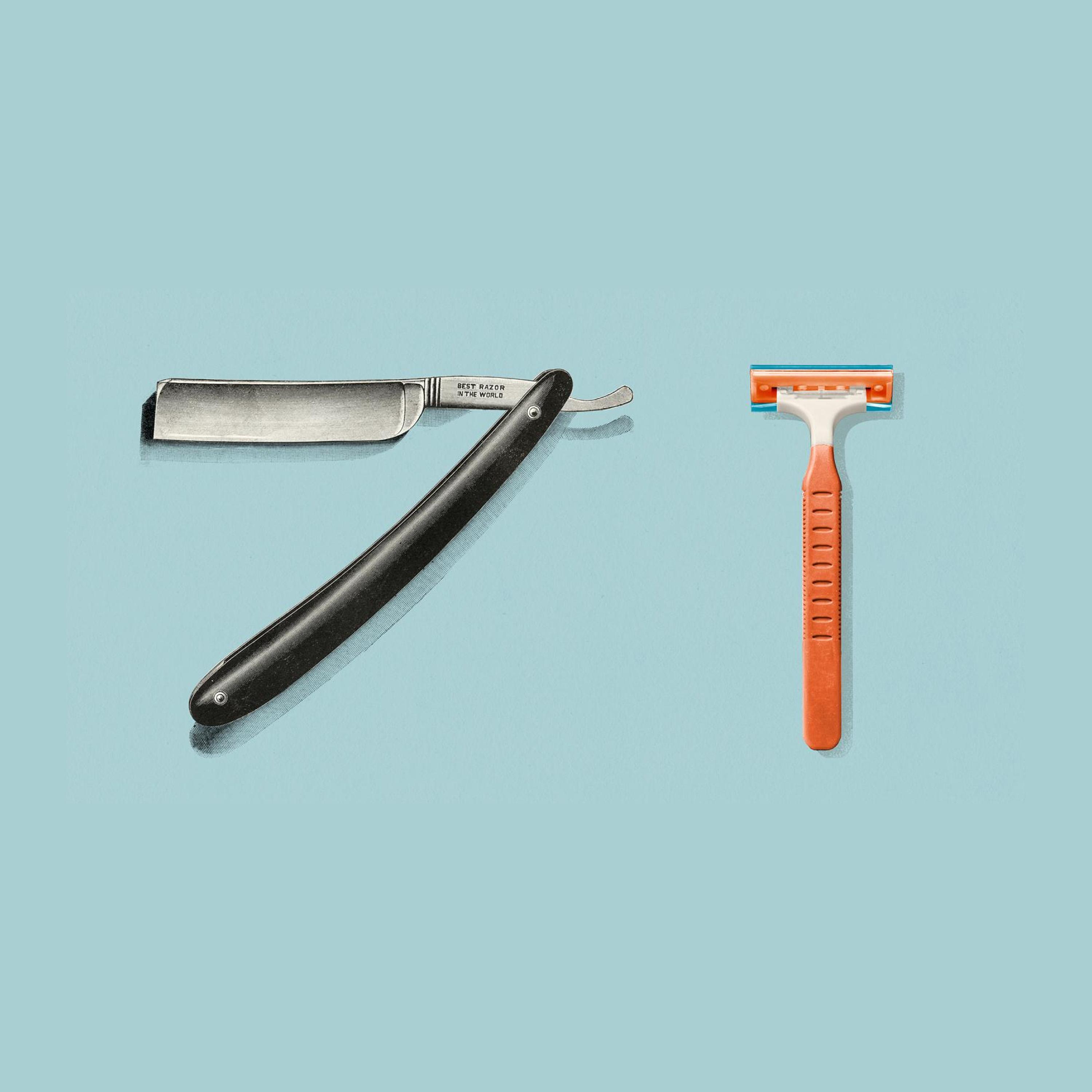
I remember the day my dad taught me how to shave. For him to take the time to instruct me about anything was so unusual that even while we stood there at the sink, I thought I would remember it. I wanted to remember it. I wanted it to mean something like some kind of boy becomes a man rite of passage. Though I have to say that kind of sentimentality is more my personality than my dad's. I doubt he felt anything of the kind. I still think about it some mornings when I shave. Decades later, I remember every part of his instructions that I had to wet my face down with hot water to soften the barely existent facial hair, which, you know, were not the kind of man's whiskers that needed softening. So I wondered if he knew what he was talking about. He showed me how to hold a razor, the length of the strokes. When it came time to demonstrate the actual shaving, he realized he couldn't actually do it from the front. He had needed to stand behind me and then reach up to my face at the same angle that he was used to shaving his own face with. So he got in back of me and sort of reached his arms up around me, close and intimate while he did that, which was unusual. He was a conscientious dad, a worried dad, a caring dad, but we never had much physical contact. What stands out most about this memory is how few I have that are like it of him actually teaching me something, taking the time to impart some kind of lesson about the world. To get this kind of focused attention from him was rare. He grew up without a dad, and he did his best, but he didn't have much feeling for what a son might want or might get from a father. Day to day. His mind didn't seem to be on me or my sisters at all, but on his job. He was an accountant, stressed out, working long hours at the firm he started. Years ago, I was invited to contribute a short chapter to a book about what men learned from their dads, and I wrote something saying that this shaving memory is one of the few that I have of him passing on some kind of knowledge or wisdom. And I showed him the draft. I was worried that he'd be hurt, that I'd think that or that I would say it publicly. But his biggest problem with what I wrote was that I called him an accountant. He was a cpa. He told me very different. Could I change it? Of course I did. He died last year at 90 with dementia. It's weird watching somebody with your same body, your same roll of fat around their stomach, same hands, same fingers, same skin, go gray and stop breathing. And I've been thinking a lot about the parts of him that I carry in me. My dad wasn't very curious about others. If he met you, he wouldn't ask you lots of questions. To figure out who you are or how you tick. Wasn't the most talkative. If anything, some of the moves that I developed as an interviewer come directly from being in the car with him and trying to actually get him to speak about something, anything, Which I guess happens a lot. Kids develop personalities that fit into the jigsaw pieces of what their parents aren't. I honestly see his good traits in me and all of his bad ones, too, all the time. Biggest of those, some deep part of me that just pulls away from other people in all kinds of situations that feel so much more comfortable when I'm alone. That kind of thing isolated my dad from people who cared about him, from love and experiences that he could have had. And he's done that to me as well at times. When was the day he taught me that. I think most of what we learned from our parents, they never intended for us to learn. This stuff just shows up inside of us like a virus. One that they never meant to transmit and we didn't mean to catch. Then we look up later and they're in us while we watch them. Or morphine struggling with their breathing. And after they're gone as well. Today on our show, we have stories where kids grapple with their dad's legacies. Stuff about them consciously and unconsciously, good and bad, that they left behind. Okay, for this next line, I have an old recording of my dad from WBEZ Chicago.
- [04:57]
Rick McIntyre
It's this American Life.
- [04:59]
David Kestebaum
Dad, you are such a pro. Stay with us.
- [05:18]
Ira Glass
Support for this American life comes from BetterHelp. It's important to take time to show gratitude towards others, but it's equally important to thank yourself. Life throws a lot of curveballs, and being grateful isn't always easy therapy. Can help remind you of all that you're worthy of and all that you do have. Let the gratitude flow with BetterHelp. Try@betterhelp.com tal today to get 10% off your first month support for this American Life comes from Capella University. Learning doesn't have to get in the way of life. With Capella's game changing Flex Path Learning format, you can set your own deadlines and learn on your own schedule. That means you don't have to put your life on hold to earn your degree. Instead, enjoy learning your way and pursue your educational and career goals without missing a beat. A different future is closer than you think with Capella University. Learn more at capella.
- [06:08]
David Kestebaum
Edu Throughline is a podcast where we tell stories about a place shrouded in mystery, the past. And to really understand it, we take you there.
- [06:21]
Ira Glass
Something happened to our collective psyche after the atom bomb.
- [06:26]
David Kestebaum
Listen to hear us reopen stories from the past and find clues to the present on Throughline, the history podcast from npr. This is American Life. For this holiday weekend, this family weekend, we have this show about parents and kids that we first broadcast last year. Act 1Am I my Father's Trapper Keeper Keeper? Before we get to the father in this story, let me play you this ad. It's from the 80s. Two teenagers in a crowded library. They stand up and oops, bump into each other. Papers fall to the ground.
- [07:01]
Lily Sullivan
Sorry.
- [07:01]
Ira Glass
I'm sorry.
- [07:02]
David Kestebaum
Such good acting than this realistic piece of dialogue.
- [07:06]
Ira Glass
Here you are.
- [07:07]
Lily Sullivan
Say, what is that thing?
- [07:09]
Ira Glass
It's my trapper. For me, it sure is a lot neater than this.
- [07:12]
David Kestebaum
There's an ad for a Trapper Keeper notebook. One of the main selling points. Keeps all your papers trapped. Get it? So they don't fall out.
- [07:20]
Ira Glass
And I've got a Trapper folder for each subject. That's pretty neat. And the Trapper Keeper holds all my trappers. This flap even has a Velcro closure to keep everything inside.
- [07:29]
Lily Sullivan
Boy, I've got to get a trapper.
- [07:30]
Ira Glass
And get my act together. If you do, I'll let you carry my books.
- [07:34]
David Kestebaum
That last line kind of gets to me. What is wrong with me? Ads like this are the kind of thing that either evoke nostalgia or complete bafflement. But if you were around in the 80s, you knew the Trapper Keeper. The Velcro sound when you open it. The pictures on the covers, the rings of the binder, they sort of smoothly slid open and shut instead of snapping so you wouldn't catch your fingers. According to our press release from the time Half of all middle school and high school students had a trapper keeper in 1989. I don't know if I believe that, but there are a lot of them around. Anyway. When the inventor of the Trapper keeper died in 2022, it got a lot of attention.
- [08:10]
Ira Glass
E. Bryant Crutchfield, the inventor of the.
- [08:13]
Lily Sullivan
Trapper Keeper has died.
- [08:15]
David Kestebaum
If you were in school during the 1980s or 90s, I'd be willing to bet good money you carried around the cultural phenomenon of a binder created by by a man named E. Bryant Crutchfield. Npr, the Today show, the Washington Post, the New York Times, the outran stories. And then we got this email. It was from a woman who was very surprised by this obituaries because as far as she knew the inventor of the Trapper Keeper was very much alive and he was her father. She said her dad had invented it, not the guy in the obit. And she was not happy about it. Obviously this is not the kind of tip that a self respecting radio producer can just let go. Via Benin here in a program tried to figure out what was going on.
- [08:58]
Simon Rich
The dad in the email, his name is John Wyandt, lives in South Carolina. He's 83 years old and I can definitely confirm he's alive. How do I know? I talked to him. He saw the obit when he was looking at his computer one day and there on the screen was his old colleague, E. Bryant Crutchfield.
- [09:17]
Rick McIntyre
After I read it, I told my wife, I said, oh well, poor Bryant, he's gone. But I just looked at it and thought, well, I know the truth, so what could I do? I mean I was not about to sit down and write a rebuttal and send it to the New York Times.
- [09:34]
Ira Glass
How come?
- [09:36]
Rick McIntyre
Well, just not me.
- [09:38]
Simon Rich
The sense I get from talking to John is that he's someone who tucks his feelings away, sealed tightly, maybe with Velcro. Well, that is not true of the rest of his family. His daughter Jackie, the one who wrote us. Here's how she remembers obit day.
- [09:54]
Lily Sullivan
I was sitting in my kitchen and.
- [09:57]
Ira Glass
My phone rings and my mom calls.
- [09:59]
Lily Sullivan
Me and she just said, you're not.
- [10:02]
David Kestebaum
Going to believe this.
- [10:02]
Ira Glass
You're not going to believe this.
- [10:04]
Simon Rich
It was the obit.
- [10:05]
Ira Glass
She's like, and it's everywhere. And I'm like, wait a minute.
- [10:09]
David Kestebaum
I start just Google Trapper Keeper Inventor.
- [10:12]
Ira Glass
And I started looking at all of.
- [10:13]
David Kestebaum
The results and it was like all these, like all these publications, you know.
- [10:20]
Ira Glass
All these online people, like bloggers.
- [10:23]
Lily Sullivan
And I just was like.
- [10:24]
Ira Glass
And I didn't tell her. I go, yeah, okay, I see. Yeah, it's, it's out there in the universe somewhere. And she's like, this is, this is, this is terrible.
- [10:33]
Lily Sullivan
This is terrible.
- [10:34]
Ira Glass
She was on fire.
- [10:36]
Simon Rich
Jackie told me. John may be too polite to say it, but creating the Trapper Keeper has been a big part of his identity, his legacy. A few months before he talked to us, he was at his golf club.
- [10:48]
Rick McIntyre
I was talking to a couple and I just happened to have a Mead jacket on, said Mead on it. And this woman looked over and says, did you work for Meade? And I said, yes, I did. Yeah, 36 years. And she said, Meade, the Trapper Keeper. I said, well, it's interesting that you bring that up. I said, I was very involved in putting that little turkey together. And she said, oh my God. Oh. She said, that was the neatest school supply I could. Oh. I said, I'm Trapper John.
- [11:30]
Simon Rich
Trapper John. That's actually what some of his friends call him. Here's how John says the Trapper Keeper came to be. Back in the 70s, John was working as director of new product development at Mead. He was the person whose job was to build new stuff the company could sell. And he says Crutchfield, the guy in the obits who worked in marketing, came to him one day and asked him to make a binder that could hold these folders that had vertical pockets. John says there wasn't much more guidance than that. And so over a few weeks he put together the pieces that would become the Trapper Keeper. John says he designed the shape of the binder, the shape of the folders, the flap closure, the logo, and even the plastic clipboard in the back with the spot for the pencil. That was something he invented earlier with another guy.
- [12:17]
Rick McIntyre
It was a full three dimensional prototype, designed, created with colors, named, the whole works. I can remember sitting at my desk with a tracing pad and tracing out of a typography book the logo. And it's still the same logo that's on the product today. It was the exact Trapper Keeper. Here it is.
- [12:43]
Simon Rich
John says the whole idea that it would trap papers so they don't fall out like the main cell of that commercial.
- [12:49]
Ira Glass
This flap even has a Velcro closure to keep everything inside.
- [12:52]
Simon Rich
John says that was him too. He created the flap closure so nothing would fall out. He even came up with the name Trapper Keeper. Some of the obituaries actually give John credit for this. In the New York Times, they say over a martini fueled lunch, John suggested the name to Bryant. It Even quotes Bryant saying, bang, it made sense. That's the only mention John gets. He and his family, they're pretty sure Crutchfield deliberately cut him out of the story, grabbed all the credit for himself. Learning all of this, I felt for John. Maybe anybody would, but I really did, like, couldn't let it go. Did. I feel a little silly saying this, but I identify with John. I'm also a behind the scenes kind of person. I hardly ever talk on the radio. I'm an editor here. I love helping make things happen in the background. So I saw myself in him. In fact, another producer started the story, Diane Wu, who you hear in some of the interviews. She lost interest in it, but I wouldn't let it die. It felt like if I could get his hard work noticed, the world in some tiny little way would feel more fair. So did some marketing guy do a marketing job on his own legacy, like convince the national press to tell the story he wanted told? Obviously, the person who would have answers was Crutchfield himself. But since that wasn't an option, I found his kids, Ken and Carol. I'd seen Ken posting about how proud he was of his dad's accomplishments. I didn't relish the idea of calling these people whose dad had just died to say, you know, there's this other guy who says he invented the Trapper Keeper and your dad took all the credit for himself, but they were open to talking about it. Yep, that sounds like my dad, something he would do. This is Carol Crutchfield's daughter. I told her and her brother what John said, that her dad had been a big part of the Trapper Keeper's success, did great marketing for it, but that John was the one who actually built the thing. Yeah, that makes sense that there were more than one person involved in creating.
- [15:10]
Lily Sullivan
The Trapper Keeper, but, yeah, he.
- [15:15]
Simon Rich
He took all the credit.
- [15:17]
Lily Sullivan
It feels.
- [15:18]
Simon Rich
I mean, it feels kind of yucky because I feel bad for them because I didn't know about him.
- [15:25]
Lily Sullivan
But, yeah, yeah, it. It's uncomfortable.
- [15:35]
Simon Rich
Would it be out of character for your dad to play up his role in something?
- [15:40]
Rick McIntyre
He's always been a talker, you know, and he is always somebody who, you know, thinks, you know, to talk about himself.
- [15:49]
Ira Glass
That's one of what was one of his favorite subjects.
- [15:52]
Simon Rich
Here's what I learned about E. Brian Crutchfield, or Crutch as his friends called him from talking his kids. Crutch was a memorable guy, could be a challenging guy, fun living, very proud of his kids, big emphasis on providing for his family. Maybe some imposter syndrome, A big advice giver, a lover of drink. The martinis in the story made sense. And Ken says that for most of his life, the Trapper Keeper wasn't a thing he talked about a lot. Ken wasn't even aware of his dad's relationship with the binder until about a decade ago when a reporter for the website Mental Floss wrote a long story about the invention of the Trapper Keeper. And the piece was all about his dad. Ken's friends started sending him the article.
- [16:36]
David Kestebaum
You know, I got a bit of.
- [16:37]
Ira Glass
A chuckle out of it, but I.
- [16:39]
Rick McIntyre
Didn'T really think much more of it than that because, you know, I think my dad has always been somebody to have certain narratives and things that he would talk about. So he managed to talk about Harvard in that article. And, you know, if he was talking to a perfect stranger, you know, there's a couple of topics that would come.
- [16:55]
Ira Glass
Up, and one of them was he.
- [16:56]
Rick McIntyre
Would find a way to work into.
- [16:58]
Ira Glass
The conversation something about Harvard.
- [17:00]
Simon Rich
What did he do at Harvard?
- [17:01]
Rick McIntyre
It was basically like a semester of an MBA program.
- [17:05]
Ira Glass
So I think that was a proud thing for him, especially having grown up in Alabama and somebody that was the.
- [17:12]
Rick McIntyre
First to go to college, really, I think in his family.
- [17:16]
Simon Rich
The Mental Floss story and the obits explain Crutch's role in creating the Trapper Keeper this way. That Crutch was the one who spotted a need for something like the Trapper Keeper. The copy machine had made its way into schools. Kids had lots of papers. They needed a way to keep them in place. And Crutch had also learned that there was a different kind of folder that he thought would sell well. It had vertical pockets. He put those things together and sold it to the world, which, with this kind of product, is everything, as Ken puts it.
- [17:48]
Rick McIntyre
The imagery, the pop culture, the finding, the trends, being able to reach the audience. You know, what, frankly, is kind of a complex sale.
- [17:58]
Ira Glass
How many kids were able to buy.
- [18:00]
Rick McIntyre
Their own product who had disposable income to buy it versus had to influence their parents to get the binder that they wanted.
- [18:09]
Simon Rich
Talking to Ken, reading the obits, I do think Crutch played a really significant role in the creation of the Trapper Keeper. I found this case study all about Crutch's approach to the project. I talked to a former boss. It really seems like the Trapper Keeper wouldn't have happened without him. I think he does deserve credit, just not all of it. That Mental Fuss article seemed like it was the inspiration for all Those obituaries when Crutch died, both the New York Times and the Washington Post opits linked to it. And Carol says the Mental Floss article stirred things up for her dad back when he was still alive. He was in his 70s when that reporter called him up. Before that, Carol agreed with her brother. The Trapper Keeper wasn't a big topic for him in the last, like, probably.
- [19:00]
Lily Sullivan
Five years of his life.
- [19:01]
Simon Rich
It was very much would turn everything.
- [19:03]
Lily Sullivan
Around to try to show that he had a legacy. He would stop people in the restaurant.
- [19:09]
Simon Rich
And say, I invented the Trapper Keeper. Oh, really?
- [19:11]
Ira Glass
Yeah.
- [19:12]
Simon Rich
And I would find him over here.
- [19:13]
Lily Sullivan
Talking to somebody, asking them what they're eating. And I'd have to go get him.
- [19:18]
Simon Rich
You know, and say, leave these people alone.
- [19:20]
Lily Sullivan
They're eating.
- [19:20]
Simon Rich
Oh, but they want to hear about the Trapper Keeper. Really?
- [19:24]
Ira Glass
Yeah.
- [19:24]
Simon Rich
And I think that that came about.
- [19:27]
Lily Sullivan
After that whole Mental Floss interview. And that got him thinking, oh, I do have a legacy. And then he's just kind of went.
- [19:40]
Simon Rich
With that and focused on it and.
- [19:43]
Lily Sullivan
Look how good looking I used to be. And look, you know, I did this.
- [19:46]
Simon Rich
So it was all ego. I'm sure my mother would love to hear that from me. Carol wanted to make it clear that she loved her dad. He was warm, very funny. Her friends loved him. She didn't think he was trying to be mean or steal anything. He was just the star of his own show. Like, if my dad was here right now and I asked him about John, he would say, oh, yeah, John did this and John did that and John did this.
- [20:13]
Lily Sullivan
You know, like, he wouldn't.
- [20:14]
Simon Rich
I don't think he would lie about.
- [20:16]
Lily Sullivan
It, you know, like purposefully, because my.
- [20:18]
Simon Rich
Dad wasn't like that.
- [20:21]
Lily Sullivan
I think his brain just kind of.
- [20:24]
Simon Rich
Twisted facts to meet his own, you know, ego needs there. Towards the end, I was struck by how honest and thoughtful both kids were about their dad. And after talking to both of them, I got back in touch with John. And Jackie relayed what the Crutchfield kids had said, and they told me it made them feel better. Turns out Crutchfield's son wants to write a book about the Trapper Keeper and really wants to talk to John. I sent them each other's emails. It's funny, as I worked on this story, I realized the reason I love the Trapper actually has nothing to do with John or Crutch. It was the COVID art. Those rainbows and Lisa Frank images and puppies and palm trees. I'm pretty sure mine had an outer space scene with geometric shapes. I tried to find out who the artist was who deserves credit for that, but I haven't had any luck. If that happens to be your dad or mom parent, please write me.
- [21:35]
David Kestebaum
Thea Benin hates being on the radio for now anyway. We're working on her. She's an editor here at our show coming up, explaining the sex robots of the future to your great grandkids and other legacy issues we have yet to face, but will someday. That's in a minute from Chicago Public Radio. Wonder Program continues.
- [22:01]
Ira Glass
Support for this American Life comes from Mint Mobile, who doesn't love a great deal and one with no hoop jumping? Mint Mobile is making it easy to get a wireless plan for $15 a month with the purchase of a three month plan. For high speed data and unlimited talk and text plans go to mintmobile.com American$45 upfront payment required. New customers on first 3 month plan only. Speed slower above 40gb on unlimited plan. Additional taxes, fees and restrictions apply. For details, see mintmobile.com American support for this American Life comes from Squarespace. Connect major social and multimedia accounts to your website in a few clicks as icons, direct links or embedded feeds. Build visitor trust while updating content only where you need it. Sellers can also sync their product catalog directly with Instagram, Facebook, YouTube and Google. To reach more customers and reduce the steps for a purchase, visit squarespace.comameran for 10% off your first purchase of a website or domain.
- [23:05]
David Kestebaum
This is American Life. Myra Glass Today's program How I Learned to Shave Stories of our parents, legacies and what we learned from our dads. Whether it's intended or not, we've arrived at Act 2 of our show, Act 2 raised by Wolf. So we now turn to this. Father and son who go hunting together, have all kinds of adventures. And then things get complicated. Both of them were raised by wolves because they are wolves. Here's Lily Sullivan.
- [23:31]
Lily Sullivan
Rick McIntyre has spent more time watching wild wolves than anyone in the world. He's been doing it for over 40 years. His focus on them is singular and complete. He lives alone in a little cabin just outside of Yellowstone, and every day, seven days a week, he gets up before dawn, figures out where they are and watches them, writes down what they do. It's now over 13,000 pages of field notes, single spaced, and he's turned those notes into books, reading them. It's like you're out there with him, seeing what he sees and you just watch the wolves. Lots of scientific papers have been based on his observations. Before Rick and others started doing this work, we really didn't know much about wolves. Well, except for one thing, that we didn't want them around, even in Yellowstone.
- [24:28]
Rick McIntyre
The early rangers back in the 1920s, like pretty much everyone else in America at that time, felt that wolves were no good and that they should all be killed off. And those early rangers did that job in a very thorough manner.
- [24:46]
Lily Sullivan
US park rangers killed off the last of the wolves in Yellowstone. Then in the 1990s, we realized that was a big mistake. So we decided to reintroduce them by capturing three families of wild wolves from Canada and bringing them back to try to get them to settle in and repopulate the park. They put tracking collars on them so they could find them and watch them, which meant we could really learn what these animals were like. Like in a way that hadn't been possible for most of history. That's what Rick's job was. And of all the things he observed, this is the story that got to him most of two wolves, a father and a son. We're going to start with the father who was one of the first wolves to be reintroduced to Yellowstone, as Rick puts it in his book, if Shakespeare were telling the story, he'd start it deep in a forest, deep in a wolf's den. Three pups come running out of the den, all robust and strong like their father. And then a fourth pup tumbles out after them like an afterthought, a scrawny gray pup. The pup who seemed least likely to amount to anything.
- [25:51]
Rick McIntyre
He was the runt of his litter. His three brothers were all bigger and stronger than him, and he looked different from everyone else in his family. He had a very dull, drab gray coat. His mother had a beautiful whitish coat. His father was jet black. And all of his brothers looked exactly like the father wolf. They also had black coats, so he really stood out, but stood out in a really bad way. His brothers constantly picked on him. He ate last. They would chase him around the pen. They would pin him and beat him up, and it was really a tough time for him.
- [26:35]
Lily Sullivan
They named the pup wolf 8 because the collars they gave the wolves, each one had a number, and his was number eight, so that became his name. These pups were all new to the park. Rick was kind of new to his job, too. This was the first time he'd ever gotten to watch wolves so closely. And Rick, felt for eight, immediately started calling him the little guy, worried about him. But then one day, he was watching 8 out playing with his brothers, and.
- [27:03]
Rick McIntyre
They were just fooling around, chasing each other. And suddenly they stopped, and they stared into a pretty thick forest. And then they suddenly just ran at full speed into those trees.
- [27:16]
Lily Sullivan
Rick lost sight of them in the trees for a while. Then they came darting back out, the three bigger pups in the lead.
- [27:22]
Rick McIntyre
And then last in line, as usual, because he was the slowest, was eight.
- [27:26]
Lily Sullivan
One of the big pups was carrying a dead elk calf. At first, Rick was impressed that such young pups had taken down an elk.
- [27:34]
Rick McIntyre
But it turned out that they had not killed that elk, because just behind eight, as he ran out of the trees, was a huge grizzly bear. And it was really the bear's el calf. The bear was gaining on little eight. He was getting closer and closer. Eight was looking back over his shoulder, and it looked like at any moment the bear would pounce on eight. Eight was maybe 60, 70 pounds. At that time, the bear was maybe 400 pounds. But then little eight just stopped, turned around and confronted that huge grizzly. And somehow it worked. The bear stopped. It looked at this little thing that was standing up to him like he didn't understand. And as the bear was confused, he had lost sight of Eight's brother who had the elk calf. So now the bear literally didn't know what to do. So it basically just shrugged his shoulders, turned around, and walked off the other way. But that made me realize that there was really a lot more to this wolf than any of us had ever realized.
- [28:49]
Lily Sullivan
His bigger, beautiful brothers didn't see this act of heroism. No one shared the elk with him, and they kept picking on him. As the months passed, 8 started spending more and more time alone to get away from them, just kind of wandering the forest like a high schooler might do to get away from your family. And again, Rick felt for him, small like that, out there all by himself with a family that didn't get him. Then one day, Wolf8 was out wandering alone as usual when he ran into these wolf pups. Their mother was in a rough spot. She'd had a litter of eight pups, and she was all on her own because the same day she gave birth to her pups, her mate was illegally shot and killed. And the thing is, it's really hard to raise wolf pups alone. In order to produce milk to feed them, she needed to hunt and eat. But that would mean leaving them alone. And newborn pups can't regulate their body temperature on their own. So starve or freeze, she and her pups were screwed. The wolf project staff was so worried, they even captured the family for a bit. So they could feed them. But then Wolf8 came along. The little guy, just a yearling, just out by himself, he saw these pups and he started playing with them.
- [30:13]
Rick McIntyre
And the mother wolf was watching that from a distance. And she was desperate. She needed whatever help she could get. And he'd already made friends with all of her sons and daughters. So a moment later, she ran to him. They greeted each other, they played a bit.
- [30:33]
Lily Sullivan
Eight liked this family. Over the next days, he started hunting for them, bringing them back little snacks. Little tangent I learned from the books. A wolf often feeds pups by regurgitating the meat it's hunted. A wolf can carry up to 20 pounds of meat in its belly, which is easier than carrying that much in its jaws over a long distance. And once back at the den, the pups then trigger regurgitation by licking its face. That's why your dog licks your face. It's trying to get you to puke. Gross, right? So wolf hates going out hunting and bringing back these little snacks. As I said, all for these little pups. That was the first time they'd ever documented something like that. A male wolf caring for another pack's pups who he wasn't related to.
- [31:21]
Rick McIntyre
And he was invited into the family. Meaning now he went from being a picked on, bullied, undersized wolf to being a big shot alpha male. Perhaps her first impression of seeing this undersized yearling wasn't that he was the best candidate, but he had shown up. He was there.
- [31:46]
Lily Sullivan
He adopted those pups like they were his own. This is one of the things they were seeing while monitoring wolves, by the way. Wolves like lots of creatures, they had really distinct personalities. And now they could see some wolves are aggressive, some are aloof, and eight seemed really. I know how this sounds. He seemed really nice. So that's the dad. Which brings us to the second wolf in this story, the son, one of Eight's adopted pups, known as 21. When Eight came along and started feeding the family, he and 21 really bonded father and adopted son. Part of it was that 8 was young for a father, just a year older than the pups. So still puppy like in lots of ways. Eight would do things like let all the pups attack him, roll on his back and pretend to lose to them. Or they might chase him around. And 8 would pretend to be scared and run away. Not all father wolves play with their pups like this. Some are standoffish or dominant, but 21 seemed particularly connected to 8. As the years went on, the other Pups in the litter wandered off, joined other packs. It was just what wolves do. 21, though, stayed first one year and then another. There was one spring that their den was especially visible and Rick's spotting scope had a clear view of them. So that whole season, Rick was able to watch them every day for hours on end as they chased and played.
- [33:26]
Rick McIntyre
And that's where I really began to understand the depth of the relationship between 8 and 21. It was the peak of my wolf watching career to be able to watch that.
- [33:40]
Lily Sullivan
They were a funny couple. Because eight was so small. In 21, his son grew huge, became significantly larger than his dad. Rick describes 21 as an almost cartoon version of a wolf. Like, if you wanted to draw a wolf as a Marvel superhero, it would look like 21. They'd go hunting together. Eight would decide when to go, and if 21 wasn't around, eight would howl and wait, and then they'd head out together. When they found the prey, 21, so muscly and fast, would usually get there first and grab hold together. They'd take it down.
- [34:14]
Rick McIntyre
So they would go off and hunt, they would come back with food. They were just inseparable. They were buddies. They did everything together. With eight being the older guy, the one in charge, 21 essentially being the apprentice.
- [34:31]
Lily Sullivan
Another season passed, and still 21 stayed in the pack. He was nearly three at this point, which honestly is like too long for a grown ass wolf to be living with his parents. It'd be like a 24 year old with no friends except for his mom and dad. Eventually, 21 did leave. And here's where things get complicated. He went to the pack right next door. What Rick and his team had been calling the Druid Peak Pack, a pack that their family did not get along with, they'd battled in the past. There was still a lot of tension. The Druid Peak Pack was led by a female who was, like, notoriously violent. And seriously, she was wild. She drove her own mother and sister out of the pack. Rick's pretty sure she killed entire litters of her sister's pups two years in a row. To this day, Rick calls her the psychopath. And she was the leader. The whole alpha male running the pack thing, by the way, one male beating all the others into submission, that's a myth. A pack is usually just a family of wolves, and the lead male is just the father. The one calling the shots is actually a female. She's in charge of strategy and decisions. And this female was terrifying. Like, one year after 2ne1 joined her pack. 2ne.1's sister wandered into the pack's territory. The psychopath just went off on her. Someone from the wolf project was in a plane, saw it all happen.
- [35:59]
Rick McIntyre
The researcher in the plane took photographs of what was happening. And I later looked at every one of those photographs. It was not a pretty sight. There was snow on the ground and as the photos were taken, you could see more and more blood on the snow. As she was biting at the helpless opponent.
- [36:21]
Lily Sullivan
21 was there, but he was in her pack and she was the leader. He didn't intervene. As the years went by, he got bigger and their pack thrived. He became the lead male of the pack and he had pups of his own. His true love seemed to be Wolf 42, a real sweetheart. Rick says. They'd bed down together all the time. And his pack grew huge too. Someone shot a documentary. A lot of the footage focused on 21, and 21 actually got famous for being this amazing, majestic wolf. People would travel to Yellowstone to see him. No one really came to see his dad. One winter, the tension started to escalate between 21's pack, the Druid Peak pack, and his father, Wolf 8's pack. Rick would be at home and hear the packs howling at each other from across the valley. He could tell from their radio callers that they were encroaching on each other's territory. Neither side seemed to be backing down. The main way wolves in the park die is in fights with other wolves. Rick had seen wolf fights. They could be brutal, and if a clash came, 21 and his father, 8, would be pitted against each other. 21's job was to protect his pack and 8's job was to protect his.
- [37:46]
Rick McIntyre
I was very worried about eight. He was now very old. He had a lot of health problems. He was losing his strength and his speed. 21 was middle aged at that point. He was at the peak of his strength and fighting ability. He had never lost a fight in his life. He was the undefeated heavyweight champion of Yellowstone.
- [38:13]
Lily Sullivan
Then there was the lead female, the vicious one.8 would be up against her too.
- [38:26]
Rick McIntyre
I was in Lamar Valley. I was getting signals from both the Druid Peak pack to the east. I got the signal from eight's family to the west. Both of those packs were traveling toward each other. It looked like they were both traveling on the same ridge, Specimen Ridge on the south side of Lamar Valley. They were moving toward each other, meaning that there was going to be a fight.
- [39:02]
Lily Sullivan
One side howled, the other side howled. It was January. There Was snow out. Rick pulled over in his truck, got his spotting scope on the wolves. Eight's pack was up on the ridge. 21's pack was running uphill through forests and meadows. 21 was out in front of his pack. Eight was in front of his. Both packs were charging at each other.
- [39:24]
Rick McIntyre
So here I was, watching the two wolves I admired the most in the world. Father and adopted son running at each other. They started to come together. They were charging each other. 8. He wasn't running as fast, but he was still out in front of his family, and nothing was going to stop him. I mean, even now thinking about it, I'm in great distress because I remember how I felt then. I did not want to see eight killed. I did not want to see him torn apart. Of all the deaths that could befall eight, in my mind, this would be the very worst. This would be such a horrible ending to their story.
- [40:32]
Lily Sullivan
Rick starts ticking through possibilities, trying to figure out if there was some way out. 21 could just pin 8 down and let him go. But no, that wouldn't work. The psychopath was right behind 21. She'd surely jump in and kill eight, no question.
- [40:49]
Rick McIntyre
And I was just helpless. But there was nothing that I could do as a researcher other than just watch and document what was about to happen in front of me. They got to within 40 yards, 30 yards, 20 yards, 10 yards. And I knew just in a moment it was all going to be over. So there I am standing there looking through my spotting scope. The moment arrives. They're just a couple of feet apart from each other. Well, in that moment, 21 did something. Ran right past eight without stopping, just in the very slightest way. 21 angles away and just shoots past eight.
- [41:47]
Lily Sullivan
It was the strangest thing. Two sides heading into battle and then running right past each other. 21's pack kept following 21. Cause you know he's leading the charge. So when he sprinted past, they just kept following him.
- [42:04]
Rick McIntyre
All the other Jewett wolves ran past eight, and all the other wolves and eight didn't have the ability to turn around. He just kept on going as well. Wolves from both packs, they were just running back and forth. They were howling at each other. It was a confusing situation. No wolves were harmed. No wolves were fighting. And that was the end of the fight that never was.
- [42:33]
Lily Sullivan
This happened 23 years ago, but Rick still thinks about it all the time, wondering what happened that day. Rick's convinced that what 21 did that day was intentional. He thinks that 21 changed the battle into a game of chase knowing that the other wolves would keep following him and also that he could outrun them all.
- [42:54]
Rick McIntyre
21 had just come up with this genius solution to save the wolf that had raised him. It. It was probably the most emotional moment of my life.
- [43:12]
Lily Sullivan
It was the most emotional moment of your life?
- [43:16]
Rick McIntyre
Yes. By that time, I had known 21 and 8 for so many years and I respected admired them for so much. I was rooting for eight to somehow survive. But the reality was I didn't see any way that that could be the end of the story. And somehow 21 figured it out. He saved the day.
- [43:47]
Lily Sullivan
Rick had been watching 8 and 21 day after day for years, their whole lives. And 8 was such a nice wolf. I know how that sounds, but I really can't think of a better word for it. You'd think that in a world as brutal as theirs, niceness could get you killed. But in the end, it was the thing that saved him. After all, 21 learned how to be a wolf from 8. It's like a dad who just poured out all this love and the son inherited it.
- [44:25]
David Kestebaum
Lily Sullivan is a producer on our show. Rick McIntyre told the story of 8 and 21 in his book the Rise of Wolf 8. Rick says Wolf 8 died a few months after the fight that never was from what it looked like. He died taking care of his pack. An elk kicked him in the head while he was out hunting for them. Rick's latest book is called Thinking like a wolf. Act 3 StoryCorps the Post Apocalypse edition. We close out our show today with Simon Rich who has this story about a dad who was also a grandfather and a great grandfather who has some very strong ideas about what he wants family members who come after him to know about him and his life.
- [45:10]
Ira Glass
I interviewed my great grandfather Simon because he is the oldest person in my family who is still alive. He was born in a country called America on earth. He said he used to be a writer. I asked him if he wrote spider man and he said no, he wrote other things that have all been lost. My great grandfather was one of the only men to escape from Earth. The rest of the people who got seats on the escape pod were women and children. My great grandfather says they let him on because they needed one man to row the spaceship. I'm not sure what he means because there are no oars on a spaceship, but that is what he said. My great grandfather told me how scary it was when earth became too hot to live on. The skies burned with fire day and night and you couldn't walk across the street without collapsing. I asked him if he had any kind of warning about climate change and he said yes. There had been articles, movies and books about how it was going to happen. I asked him if he tried to stop it from happening and he said yes, of course. I asked him how and he said that he had done something called recycling, which is where you throw your garbage into different colored boxes. I asked my mom what he was talking about and she explained that when people become as old as my great grandfather, their brains start to break down and it's almost like they turn back into babies. Since my great grandfather is going to die soon and he is one of the only survivors of Earth, I decided to ask him what his favorite memory of the planet was. I thought he might tell me about the end of World War four or going to see Spider man, but instead he told me about the first date he went on with his wife, my great grandmother, Kathleen. They met in college, which is a place people used to go to after high school to drink alcohol. My great grandfather said that when he was in college, online dating hadn't been invented yet. Instead of matching with someone through a dating app and sending a series of nude photos to each other before eventually meeting up for sex, you would meet them in person before doing anything else. This meant that when my great grandparents went out for the first time, they had no idea what each other looked like naked. At this point, my mother, who was recording our interview, told my great grandfather that he was being inappropriate because this was a project for school, and he apologized but said that the naked stuff was crucial to the story and that he was going to keep bringing it up whenever it was relevant. My great grandfather explained that not only had they not seen each other naked, he wasn't sure if my great grandmother wanted that to happen. Sometimes in those days when someone agreed to go out on a date with you, they were still undecided about the naked thing and wanted to learn more personal information about you before making up their mind. Since this was before social media, the only way to get this personal information was by asking people questions to their face, like as if their actual living, breathing face was their social media profile. Sometimes this would get embarrassing. Like you might say, what do your parents do? And they would say my parents are dead. And then you would have to say something like I'm sorry, I didn't know that because I have no information about you. We're strangers. The point, my great grandfather said, is that he had no idea what my great grandmother thought about Him. He had no idea what she thought about anything. He had zero information about her other than what she looked like wearing clothes and also how it sounded when she laughed, which he had done a couple of times. On their long, slow walk through campus with the cool fall breeze whipping through the scattered leaves, my great grandfather said that all dates began with the same custom. The two people on the date would take turns verbally listing all the TV shows they liked. If they both liked the same show, they'd exchange memes from it. But here's the thing. GIFs did not exist yet. So instead of texting the other person a funny moment from the show, you would say out loud, do you remember the part when? And then you would perform the meme yourself, using your face and body to imitate what an actor had said and done. Exchanging memes in person was much scarier than doing it by text, because when you text someone a meme and they don't respond, you can tell yourself that maybe they liked it, but just didn't have time to text you back. But when you performed a meme with your body and the other person didn't like it, you would be able to tell, because instead of laughing, they would just kind of sadly look away and say, yeah, I remember that part. And you would have to just keep on walking to the restaurant. Luckily, though, my great grandfather's meme performances went over well, or at least well enough to keep the conversation going. And while he still had no idea whether they would ever see each other naked, he knew it was at least technically still possible. My great grandfather had invited my great grandmother to a Spanish restaurant because it was the only restaurant he knew that served wine to people under 21. But when they arrived, it was too crowded to get a table. They needed to find some other place to eat, but neither of them had Internet access, so their only option was to physically search for food by walking around and looking in random directions, like truly the same process used by animals. Things grew tense, the sun had set, and my great grandfather was fearful that they would not be able to find alcohol. But after a few stressful minutes, they followed the scent of fried food around a corner and found a Chinese place that served beer. And they were so proud of themselves that they spontaneously high fived. And that was the first time that they touched. My great grandfather told me they stayed at the restaurant so long that by the end, they were the only customers left because they were strangers. They asked each other very basic questions, like who are you? Where did you come from? What kind of a person are you? They ended up having a lot of things in common, which was exciting because that didn't usually happen on a first date. Often the other person would dislike things you liked or love things that you hated, or things would seem to be going pretty well and the person would seem really nice. But then out of the blue they would say, what is your relationship with Jesus Christ? My great grandfather said the main thing he talked to my great grandmother about was how nervous they both were about the future. I asked if he meant climate change, and he admitted that the imminent climate holocaust hadn't come up much, and instead they mostly talked about their careers. It turned out they both had the same to write stories down onto pieces of paper. In fact, they were both already trying to do that every day. They would each type out stories on computers and then print them with ink onto pieces of white paper. Their goal was to get better at making these paper stories in the hopes that someday they might be able to persuade someone to reprint their paper stories onto multiple pieces of paper and then sell those pieces of paper for pieces of money which were also made of paper. At this point, my mother whispered to me that it was time for my great grandfather to take a nap and she gave him some medicine which made him sleep for about four hours. When he woke up, though, he was still insisting all this paper stuff was real and that it was their actual shared ambition to write stories down on paper and then sell the paper for more paper. And my mother smiled and rubbed his hand and said she believed him. But while she was doing that, she buzzed for the doctor and he brought in this huge syringe that was almost like a gun because it was made out of metal and it had this trigger on the bottom. And the doctor explained that he was going to shoot this thing into my great grandfather's brain to make him less confused. And my great grandfather laughed weirdly and said that he had been joking about all that paper stuff and that really what he and his wife had talked about on their first date was climate change, because that's what any sane person from that era would have prioritized being a climate warrior. And the doctor looked into my great grandfather's eyes with his finger on the trigger and said, are you sure? And my great grandfather swallowed and said, yep. And so the doctor left, but on his way out he told my mom that he would stay nearby in case my great grandfather got confused again, in which case he would come back and give him that gunshot right in the middle of his brain. My great grandfather was quiet for a while, almost like he was afraid to keep going with his story. But I pressed him for more information, and he said the main thing he wanted me to know before was not what he and my great grandmother talked about. It was how they talked. Because even though they were basically still strangers who had never even seen each other naked, they somehow believed in one another from the start. My great grandfather told me that all dates ended with the same custom. After the two people finished all the alcohol they'd been served, one person would ask the other to come over to their dorm room to watch Arrested Development. Arrested Development was a non Spider man show that you played by putting small round discs into a machine. The reason it existed was to create a way for people on dates to gauge each other's interests in becoming naked without having to directly ask them. The way this worked was a little complicated, but my great grandfather was able to explain all the steps. First, you asked the other person if they had seen Arrested Development. And they would respond some, but not all of it. This would be your prompt to ask them if they wanted to come to your dorm room to watch the episodes they'd missed. If they didn't want to see you naked, they would say that they had to finish a paper, which was an expression that meant that they were not attracted to you. If they did agree to watch Arrested Development, it meant that they probably did want to see you naked. But here's where it gets complicated. Sometimes it did not mean that. Sometimes it just meant that they wanted to watch Arrested Development. That's why there was a third part of the custom. After walking back to your dorm room and putting one of the discs into the disc playing machine, you would sit side by side on the small couch. Your eyes would be facing the screen, but your attention would be focused entirely on each other. As the rest of development played, you would physically move closer to the other person, inch by inch, without making any sudden movements. The idea was that if you both moved incrementally towards each other, eventually your hands would touch. If the other person pulled their hand away or laughed and said sorry, that meant that they had really, truly come to watch Arrested Development. But if they did not pull their hand away from yours, that meant it was time to start kissing, which is what my great grandparents did, even though they had never exchanged even the most rudimentary of nudes. And at this point, my mother told my great grandfather to stop telling the story. And he had to admit that the next part was genuinely inappropriate. My great grandfather said that their marriage wasn't perfect. Sometimes they argued. And in the 2050s, they both had full fledged affairs with sex robots, but they ultimately forgave each other because nobody's perfect. And Also by the 2050s, sex robots had become extremely advanced as well as incredibly persuasive. Like, if you refused to have sex with them, they would start making really high level philosophical arguments about why it wasn't wrong, using logic that was essentially bulletproof while their boobs and dick slid up and spun and stuff. And eventually it got to the point where the UN had to regulate the sex robot industry because they needed people to leave their apartments again so we could go back to being a society. The point is, my great grandparents rekindled their romance in the 2000s and. And they even ended up renewing their vows while riding on the escape pod to New Earth, surrounded by their daughters and their grandchildren. And my great grandfather asked my mom if she could remember the ceremony, and she said she was only four at the time, but she did vaguely recall how weird it was to see him on the spaceship when it was supposed to be just for women and children. And my great grandfather said that they needed to bring one man to help the women lift their bags into the overhead compartments. And I reminded him that earlier he'd said he'd been on the ship to Roan, Oregon. And there was a long pause, and then he said that he was tired and had to go to sleep. And he closed his eyes, but it didn't really look like he was sleeping because every few seconds he would open his eyes to check if we were still there. And when he saw we were, he would quickly close his eyes again. And it was around this time that my great grandmother rolled up in her wheelchair. And my great grandfather stopped pretending to be asleep. And he sat up and smiled, and she smiled back. And then he lowered his voice and said, do you want to watch Arrested Development? And my mom reminded my great grandfather that Arrested Development has been lost along with everything else on Earth because of his generation's crimes against humanity. But my great grandfather ignored her and motioned for his wife to wheel next to him. And he flipped through random channels while their hands inched slowly towards each other. And that's when I finally figured out what the Earth was really like. It was kind of like Arrested Development. It was something people talked about and praised and maybe even tried to save, but the whole time, what everybody secretly actually cared about was the person sitting next to them. That's where all mankind's effort went. The sweat and the toil of billions, not to saving the world, but to the frantic, desperate quest for love. And that's why the Earth is gone, because it was nothing more than a conversation starter. It wasn't what we really, truly cared about. We never even really lived there. We lived in the presence of each other. And when my mom read my first draft of this, she said that I shouldn't end it this way because it's glib and defeatist and seems to absolve my great grandfather for his political inaction. But it's not like anybody's going to read this stupid essay anyway, and even if they do, it'll eventually be lost, like everything else besides Spider Man. So I'm just going to stop it right here because I want to go out and the night's still young.
- [58:36]
David Kestebaum
Simon Rich reading his short story history report. It's from his most recent collection of short stories, which is called Gory Days.
- [58:48]
Rick McIntyre
When I was a kid, my dad.
- [58:51]
Lily Sullivan
Brought home a guitar he got from scenes I took lessons from the neighbor.
- [58:59]
Simon Rich
Lady, but it wasn't going anywhere.
- [59:05]
Lily Sullivan
He went and got me a good.
- [59:07]
Ira Glass
Teacher, and in no time at all I was getting better.
- [59:14]
Rick McIntyre
I can play just fine.
- [59:17]
Ira Glass
I still practice a lot, but not.
- [59:20]
Rick McIntyre
As much as nose climb solo.
- [59:23]
Ira Glass
My dad.
- [59:36]
David Kestebaum
Our program was produced today by our show Senior editor David Kestebaum with James Bennet ii. People who put together today's show include Bim Adewomni, Chris Benderev, Dendayi Band, Sean Cole, Michael Kamatey, Aviva DeKornfeld, Mickey Meeks, Joan Nelson, Kathryn Raimondo, Nadia Raymond, Ryan Rumery, Ike Sris, Kondaraja, Frances Swanson, Christopher Julie Whitaker and Diane Wu. Our managing editors, Sara Abdurrahman. Our executive editor is Emmanuel Berry. Help on today's rerun from Henry Larson. Special thanks today to Nicole Wolf, Rodriguez Robbins, Tarek Pouta, Mark Johnson of Global Wildlife Resources, David Mech of the U.S. geological Survey and the University of Minnesota, and Bill White. This American Life is delivered to public radio stations by prx, the public radio exchange to become a this American Life partner, which gets you bonus content, ad free listening and hundreds of our favorite episodes of the show right in your podcast feed. Go to ThisAmericanLife.org LifePartners. That link is also in the show notes. Thanks as always to program's co founder, Mr. Tori Malatia. You know, he was helping his little nephew with a school project, this 3D topographical map of the Ottoman Empire, which was very nice. Tiltore called the kids teacher brag.
- [60:45]
Rick McIntyre
I said I was very involved in putting that little turkey together.
- [60:50]
David Kestebaum
I'm Eric Glass, back next week with more stories of this American life.
- [60:54]
Ira Glass
When I was young, my dad told.
- [60:58]
Lily Sullivan
Me to pay gossip no mind. When people talk bad on you.
- [61:06]
Ira Glass
You gotta flick it off your shoulder like a flight.
- [61:12]
Rick McIntyre
Learn to pick your punches. Don't get no tussles.
- [61:19]
Lily Sullivan
Dead and ditches life is sure young man.
- [61:24]
Rick McIntyre
Get out there and make the best.
- [61:27]
Ira Glass
Of it while you can.
- [61:31]
Simon Rich
Bring me in a little earlier. Support for the following Message come from LinkedIn ads.
- [61:43]
Lily Sullivan
With LinkedIn ads, you can reach professionals.
- [61:45]
Ira Glass
Relevant to your business.
- [61:47]
Simon Rich
Target them by job title, industry company.
- [61:49]
Ira Glass
And more by launching your next campaign.
- [61:52]
David Kestebaum
With a free $100 ad credit at LinkedIn.com results.
- [61:56]
Simon Rich
Terms and conditions apply.