Podcast
This Common Life Podcast
Hosted by Amar D. Peterman · EN
Reflections, interviews, and conversations about the "common," the "good," and our life together.
amardpeterman.substack.com
amardpeterman.substack.com
10episodes
Episodes
Newest firstAll episodes
Masala Chai Theology: Hospitable Pluralism with Joash & Amar
Mar 2000:59:56Tap to summarizeGet full access to This Common Life at amardpeterman.substack.com/subscribe
Transcribe →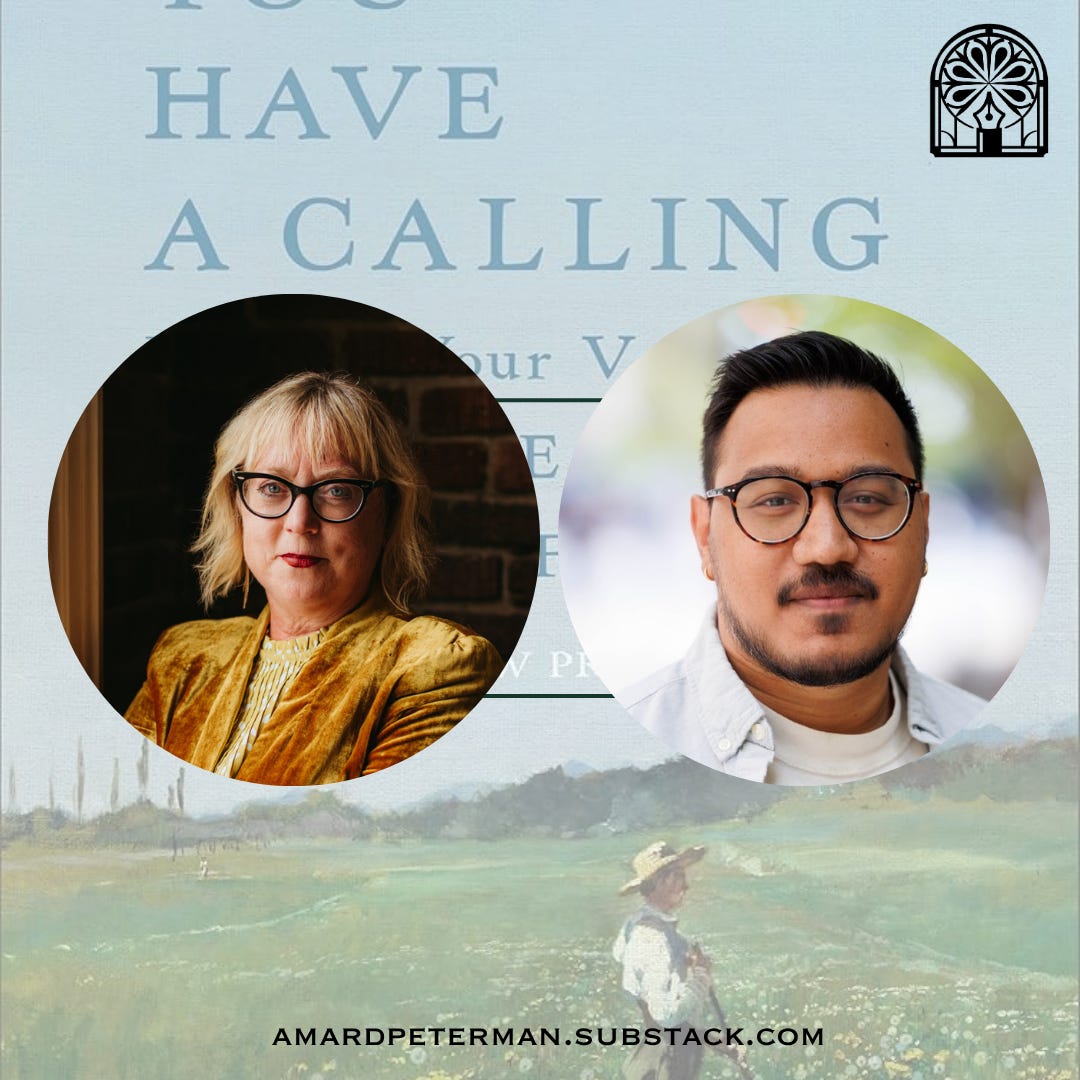
you have a calling: a conversation with karen swallow prior
Aug 6, 202500:18:07Tap to summarizeWhat if your calling didn't come roaring into your ears like thunder rolling down from the mountains, so loud it was impossible to ignore? What if instead it hovered about like a pestering fly with a low, intermittent hum? What if you still can't quite hear that call? …What if a calling isn’t just about what you do but how you do it? What if it isn't just about doing a certain thing but also about being a certain way?" (2)It is an incredible honor to share this conversation with acclaimed author and scholar, Karen Swallow Prior, where we discuss her latest book, You Have a Calling: Finding Your Vocation in the True, Good, and Beautiful (Brazos Press).In this episode, we unpack the subtle yet pervasive ways identity is tethered to occupation, particularly within American culture and evangelicalism. Karen challenges the narrowness of the question “What do you do?” by reframing vocation as not merely personal fulfillment but a means of participating in a larger communal and theological calling.Our conversation also explores the philosophical and theological roots of vocation, drawing on the work of Martin Luther, Iris Murdoch, and Elaine Scarry to emphasize the importance of decentering the self and responding to beauty as a call to justice. Karen also highlights the work of James K.A. Smith, who calls us to consider how our desires are culturally formed and spiritually shaped—an essential insight for understanding both personal formation and the current crisis of malformation within faith communities. As the conversation deepens, we address the temptation of platform culture and the need to recover dignity in ordinary, daily work—be it feeding others, writing, or serving coffee. Karen reminds us that calling is not hierarchical and that hidden lives can be eternally significant. Whether you're discerning your own vocation, wrestling with the pressures of productivity, or trying to integrate faith with everyday work, You Have a Calling offers a rich, unhurried reflection on what it means to be called.You can learn more about Karen and all her incredible work on her website. She also writes regularly on Substack at The Priory. —Karen Swallow Prior (PhD, SUNY Buffalo) is the author of You Have a Calling: Finding Your Vocation in the True, Good, and Beautiful; The Evangelical Imagination: How Stories, Images, and Metaphors Created a Culture in Crisis; and On Reading Well: Finding the Good Life Through Great Books; She is coeditor of Cultural Engagement: A Crash Course in Contemporary Issues and has contributed to numerous other books. Prior is a frequent speaker, a senior fellow at the Trinity Forum, a contributing writer at The Dispatch, a research fellow for Comment, and a monthly columnist at Religion News Service.📝 Show Notes* The American habit of defining people by what they do* Vocation vs. occupation: why they’re not the same* How Protestant theology shapes our understanding of calling* Beauty and radical decentering (a la Iris Murdoch & Elaine Scarry)* How desire is formed by culture, liturgy, and God’s grace* Platform culture vs. quiet faithfulness* The sacred work of feeding others—physically and spiritually* Honoring everyday callings📚 Resources* Beauty and Being Just by Elaine Scarry* The Soverignty of Good by Iris Murdoch * You Are What You Love by James K.A. Smith* Experiencing God by Blackaby* Middlemarch by George Eliot* A Hidden Life (film by Terrence Malick)This Common Life is a reader-supported publication. To receive new posts and support my work, consider becoming a free or paid subscriber. Get full access to This Common Life at amardpeterman.substack.com/subscribe
Transcribe →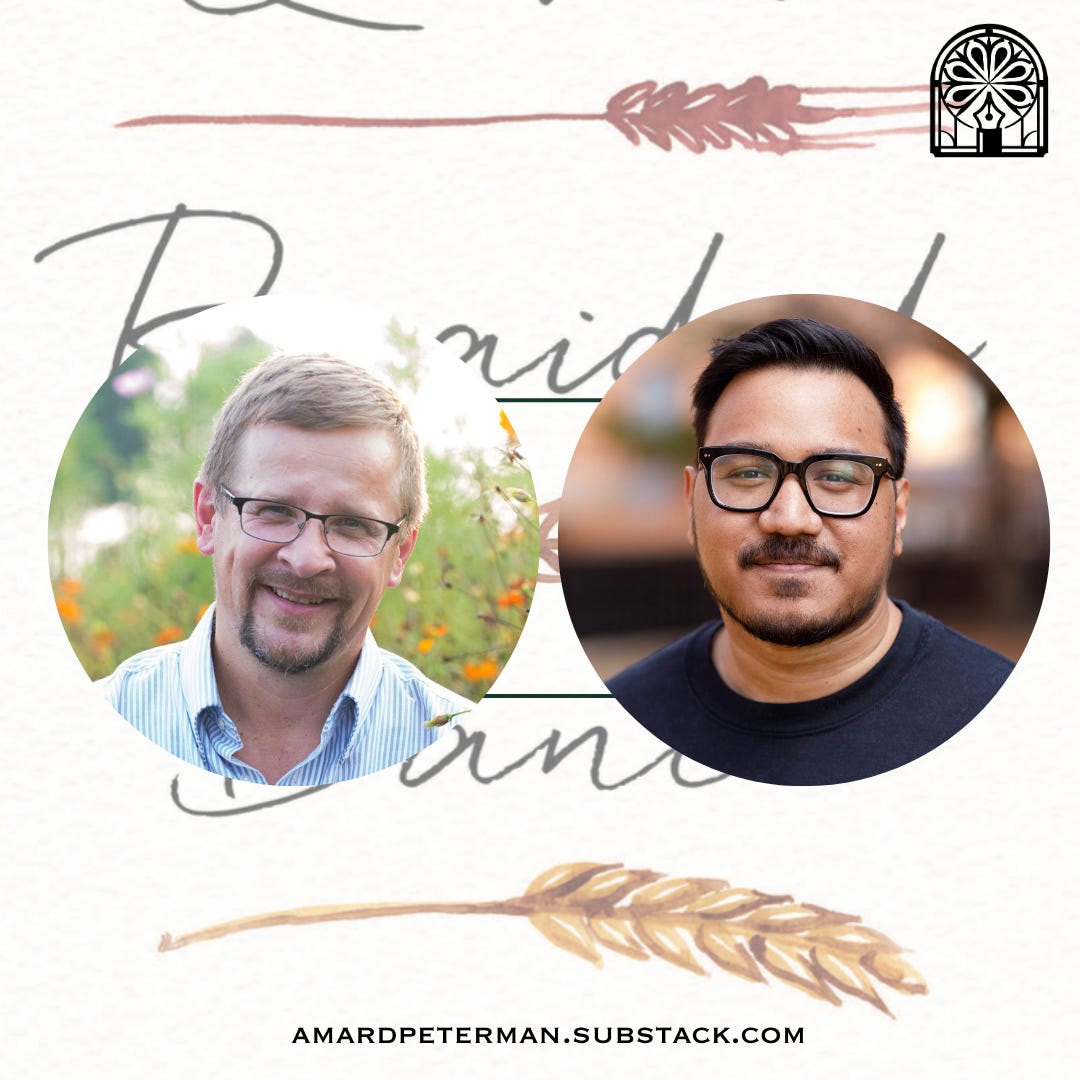
love's braided dance: a conversation with norman wirzba
Oct 29, 202400:34:11Tap to summarizeNorman Wirzba is one of my favorite writers. I have followed his work ever since picking up a copy of Food and Faith: A Theology of Eating when I was a student in Bible college. Since then, each of his books has seemingly met me at the perfect time—from This Sacred Life: Humanity's Place in a Wounded World to Agrarian Spirit: Cultivating Faith, Community, and the Land, to now Dr. Wirzba’s latest book, Love's Braided Dance: Hope in a Time of Crisis.Love’s Braided Dance offers a series of meditations to help us reimagine what hope is and how it shows up in the world. Dr. Wirzba offers a distinctly non-possessive vision that treats hope *not* as something we have, but as something we do. Hope ignites when people join in what Wendell Berry calls “love’s braided dance”—a commitment to care for one another and our world.Once again, Dr. Wirzba has created a beautiful book that weaves together rich and compelling ideas with personal stories, historical examples, and an unwavering commitment to upholding the goodness and love-worthiness of the world.In our conversation, Dr. Wirzba and I talked about this non-possessive vision of hope and how it shifts the questions we commonly ask. We also talk about “erotic hope,” which is the topic of Chapter 1. Dr. Wirzba explains how hope cannot be passive—we can’t sit on our hands and hope that God will make all things right. We must hopefully address the very conditions that are creating despair. Last, I ask Dr. Wirzba to explain why he holds such a firm commitment to the goodness, loveliness, and sacredness of our world, even in these times of crisis.Norman Wirzba is Gilbert T. Rowe Distinguished Professor of Christian Theology & Senior Fellow at the Kenan Institute of Ethics at Duke University. His research and teaching interests are at the intersections of theology, philosophy, ecology, and agrarian and environmental studies.---Show Notes:* Young people are very skeptical and angry with people who keep saying, “you should just have hope”* Hope is important to all people, regardless of religion* A non-possessive vision of hope that leads to a loving way of being in the world* Hope is not something people “have”* Hope can’t leave to passivity. We must address the conditions that are creating despair.* Hope is an action—a way of being “oriented in the world through the posture of love, compassion, or even Eros. This outbound movement wants to meet the world in its beauty, its surprise, its terror, it's manifold mysteries.”* Love exercises patience and humility* “The climate crisis is a crisis of consent” - Kyle White***** Properly oriented love will slow us down and bear the fruit of the Spirit.* Erotic hope* Eroticism must be distinguished from the pornographic.* “Eroticism is this fundamental capacity within people to want to give themselves to a world.“* “The world presents as an opportunity for engagement”* Overriding vs thriving within limits.* There is so much we don’t understand.* “Nurture the world that nurtures you”Books:* Hope in the Dark: Untold Histories, Wild Possibilities — Rebecca Solnit* “The climate crisis is a crisis of consent” - Kyle Whyte // see this interview with Kyle Whyte, “How Can You Hope When You Are Coming Out of a Dystopia?” Gen Dread, October 16, 2020. Get full access to This Common Life at amardpeterman.substack.com/subscribe
Transcribe →
"hope bears scars" a conversation with aimee byrd
Sep 10, 202400:34:29Tap to summarizeAimee Byrd’s latest book, The Hope in Our Scars: Finding the Bride of Christ in the Underground of Disillusionment, offers a vision of hope and love amidst the disillusionment many Christians experience today. She points to the good, true, and beautiful in our world today to see God at work in the world.In this book, Aimee reckons with a key contributor to this disillusion: the vast abuse and harm that the church has perpetuated in recent years—as well as the response of denial, victim-blaming, intimidation, and silencing from leaders and pastors affecting this harm. This isn’t an abstract or impersonal phenomenon for Aimee. Her advocacy for the dignity and humanity of women has led to terrible backlash from those she trusted most. She’s been harassed and ridiculed within the broader church community and on social media. In challenging systems of abuse, Aimee has led with pastoral compassion towards those who bear the scars of living faithfully in our world.In our conversation, I asked Aimee why she chose to center the Song of Songs as the framework for this book. We discuss the role of the sacraments in the Christian life. Aimee shared a few words of encouragement for Christians who are struggling to find Christian community. And, of course, we talk about a popular refrain in the book: “Hope bears scars.”—Aimee is the author of The Hope in Our Scars, The Sexual Reformation, Recovering from Biblical Manhood and Womanhood, Why Can’t We Be Friends?, No Little Women, Theological Fitness, and Housewife Theologian. She is a former cohost of Mortification of Spin podcast for the Alliance of Confessing Evangelicals, and currently cohost of Birds of a Feather YouTube cast with Mike Bird. Aime has articles published in Table Talk, Modern Reformation, First Things, By Faith, New Horizons, Ordained Servant, Common Good, Harvest USA, Credo Magazine, and was interviewed and quoted in Christianity Today and The Atlantic.—Show Notes:* Our story leads others to tell their stories as well. This draws us out of ourselves and creates opportunities for genuine empathy.* Speaking of scars isn’t sentimentalizing woundedness. Harm is terrible and should be recognized as such. But recognizing our scars also means recognizing the site of healing.* “Christ is so obsessed with our suffering that he enters into it”* What are the expectations of a worshiping community and spiritual life?* “I was longing for the confession of sin together as a church and for absolution. I was longing for benediction and a good, deep congregational prayer.”* There is a difference between imperfection and hostility.* The Song exemplifies how we are able to speak to God profoundly and intimately.* The Song as a hermeneutic* Partaking in the Eucharist is literally finding hope in Christ’s scars.* We can’t take the mystery out of the sacraments* Kintsugi—a Japanese art of repairing broken pottery—takes what is broken and mends it with beauty.* Moving from “What gives you hope?” to “What do you love?”* Christ uses what we love to draw us towards him.* When you’re in the underground of disillusionment, look to your left and your right. You will soon find you’re not alone. It is crowded. But this should give us hope: we are not alone.* Looking and listening for Christ. Get full access to This Common Life at amardpeterman.substack.com/subscribe
Transcribe →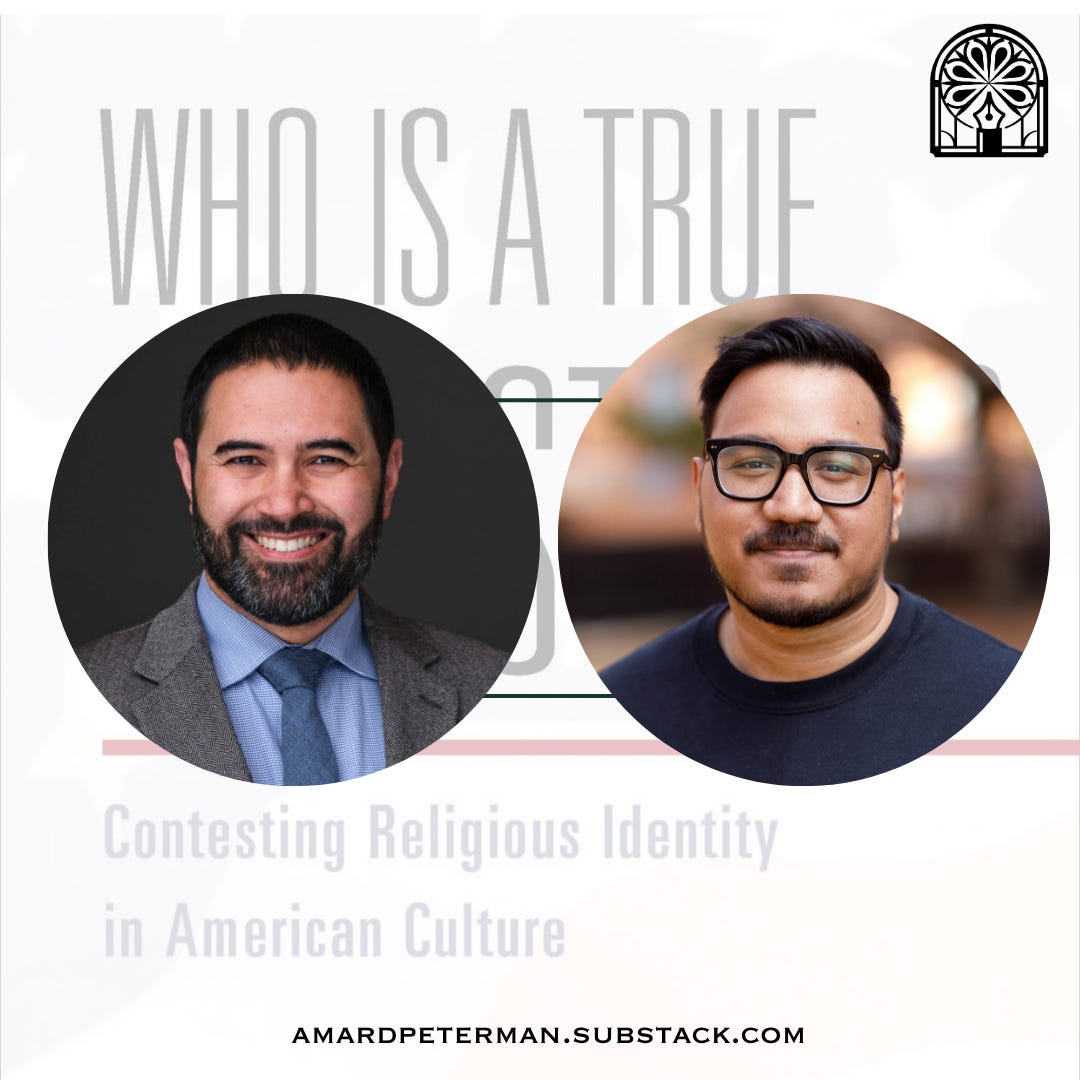
who is a true christian? a conversation with david w. congdon
May 7, 202400:39:27Tap to summarizeThis month I’m joined by David Congdon to talk about his new book and its central question: ”Who is a true Christian?” Together we cover a wide range of topics David engages with in the book ranging from how Christians have sought to define the “essence” of Christianity across place and time through what David calls “prescriptivist” and “descriptivist” accounts to why evangelicals indebted to the very liberalism that they claim to reject so fervently.We also look at how the influence of “modernity” and “post-modernity” have shaped this project differently, including the idea that worshiping communities hang on the fragile choice to remain a Christian when alternatives abound.Finally, we close our conversation in the same way that David closes his book, asking what it might mean to embrace polydoxy over orthodoxy as a way of thinking about Christianity that does not have a magisterial authority.Dr. David W. Congdon is an author, speaker, and scholar working in the area of theology and culture. He is a graduate of Wheaton College and of Princeton Seminary where he received both his M.Div. and Ph.D. in theology. He is also the Senior Editor at the University Press of Kansas, where he oversees the publishing program in political science, law, US history, Native American and Indigenous studies, environmental studies, American studies, and religion.Show Notes:* How can Christianity span cultures, time, geography, etc., and remain the same while inevitably changing/adapting to particular places and times?* A threefold structure: “Believing, behaving, and belonging” (or, “knowing, doing, being”).* Modernity is a period in which that givenness of belief—that givenness of life—has been called into question. This is a period where individuals are empowered to ask questions like, “Do I really have to believe this?”* The distinction between descriptive and prescriptive accounts goes back to linguistics and dictionaries. Do dictionaries give us a description of how language is actually used, or do they give us a prescriptive norm for how we ought to use language?* Descriptive accounts attempt to describe what we see on the ground—accepting the claim of those who call themselves Christian and then examining what they do and say.* Prescriptive accounts suggest that finding the essence of Christianity requires adhering to specific marks—practices, beliefs, ideas, patterns—that. make one a genuine Christian.* “My attempt in this book is to try to form a way of thinking about Christianity that helps in some ways mediate that conversation between the descriptive side and the prescriptive side. I think both have genuinely helpful and important insights, but the terms of the conversation need to be rethought in order to allow for us to recognize the merits of both positions.”* Descriptive historians of evangelicalism have offered really helpful, insightful, descriptive analyses of American evangelicalism. But this is, in part, why their work has become controversial for evangelicals. It is shining a light on what evangelicalism actually is in a way that clashes with evangelicals’ own self-understanding.* “Evangelicals are really interesting…because on the one hand, they're so committed to a prescriptive identity and on the other hand, descriptively, they could not be further from that.”* “The conservative or evangelical take on Christianity is just as liberal as the liberals they're criticizing in that they are just as deeply embedded in the modern liberal project and context as the liberal Protestants that they think they are the opposite of.”* The concept of “worldview” has exploded within American evangelicalism* The concept of worldview, in effect, synthesizes the doctrine-belief aspect with the culture-belonging aspect.* Because of its culture-totalizing dimension, worldview is able to address the current needs of Christians, especially conservative evangelical Christians, in a way that a simple focus on classic creedal doctrine wouldn't be able to do.* George Lindbeck helps theorize the role that culture plays in thinking through what defines Christianity. This is a theory that evangelicals take up.* The quest to define who is a true Christian is part of a larger quest for control.* This attempt to control happens in three primary ways: doctrinally, culturally, and politically.* Polydox Christianity requires everyone to embrace heresy—to embrace choice.* “These constant everyday choices [of faith] create a social context in which faith, whether orthodox, liberal, or otherwise, is constructed and held together, not by any authority, but by the fragile decision of people to continue to participate in a particular form of religious practice.”* “The concept of orthodoxy is in some ways the overarching problem that this book is attempting to analyze because Orthodoxy [is] this attempt to define who is truly Christian.”* “Polydoxy is an attempt to think through a way of thinking about Christianity that does not have a magisterial authority.”* “There's been for far too long an assumption that faith must be a form of obedience; and, and that obedience is the only glue that keeps us together.” Get full access to This Common Life at amardpeterman.substack.com/subscribe
Transcribe →
can we learn to disagree? a conversation with john inazu
Apr 2, 202400:27:52Tap to summarizeThis month I am joined on the podcast by John Inazu, Sally D. Danforth Distinguished Professor of Law and Religion at Washington University in St. Louis. John and I discuss his latest book, Learning to Disagree: The Surprising Path to Navigating Differences with Empathy and Respect.We talk about the relationship between the law and violence, the role of faith formation in how we approach disagreement, the things people say when they think “everyone listening is just like them,” and more.Altogether, John’s new book charts a surprising path to navigating differences with empathy and respect. For those seeking a fruitful and generative path through and beyond this cultural moment of division, Learning to Disagree is a worthy read.This Common Life is a reader-supported publication. To receive new posts and support my work, consider becoming a free or paid subscriber.Show Notes:* Alasdair MacIntyre, After Virtue: A Study in Moral Theory* Robert M. Cover, “Violence and the Word"Timestamps:3:50 — Which “John Inazu” is writing this book?7:30 — The process of writing Learning To Disagree12:40 — The relationship between law and violence16:00 — The role of benevolence, mercy, and grace in our legal system18:00 — Rethinking the “problem” of faith formation22:30 — “I am amazed at the things that people say when they think everyone listening is just like them”From the Author: In Learning to Disagree: The Surprising Path to Navigating Differences with Empathy and Respect, Inazu draws from his experiences teaching law to show how it is possible to disagree about hard issues. By finding nuance in some of today’s most divisive issues and taking time to learn how the other side thinks, Inazu gives readers ideas and tools to navigate the differences and disagreements they encounter in their everyday lives without sacrificing their own convictions.John Inazu is the Sally D. Danforth Distinguished Professor of Law and Religion at Washington University in St. Louis. He teaches criminal law, law and religion, and various First Amendment courses. He writes and speaks frequently about pluralism, assembly, free speech, religious freedom, and other issues. John has written three books and published opinion pieces in the Washington Post, Atlantic, Chicago Tribune, LA Times, USA Today, Newsweek, and CNN. He is also the founder of the Carver Project and the Legal Vocation Fellowship and is a senior fellow with Interfaith America. Get full access to This Common Life at amardpeterman.substack.com/subscribe
Transcribe →
"method can't save us" a conversation with dr. hanna reichel
Feb 6, 202400:29:31Tap to summarizeI am incredibly excited to bring back the audio format of This Common Life in 2024! To kick things off, I talked with Dr. Hanna Reichel about their latest book, After Method: Queer Grace, Conceptual Design, and the Possibility of Theology (Westminster John Knox Press, 2023). After Method assumes the impossibility of doing theology right–and moves beyond it. Leaning on that great Lutheran refrain of “grace alone,” Hanna offers a middle way between either baptizing method as salvific or throwing it out altogether. It is an intriguing read. Hanna and I cover many topics, including the pursuit of theological perfection and the relationship between design and use. We also talk about Christianity and goodness—what kind of claim does Christianity have on goodness? Is ‘the good’ something we should attempt to locate and allocate? Dr. Hanna Reichel is Associate Professor of Reformed Theology at Princeton Theological Seminary. Reichel’s teaching spans doctrine and political theology. Their research interests include Christology, theological anthropology, eschatology, doctrine of God, theological epistemology, political theology, queer theology, and theologies of the digital. Reichel has authored two monographs and more than two dozen peer-reviewed articles or chapters, as well as co-edited six volumes or themed journal issues. After Method is their second book.—Purchase After Method here.Subscribe to “This Common Life” here.For a concise summary and review of After Method, I recommend Stephen D. Morrison’s review published on his website. Get full access to This Common Life at amardpeterman.substack.com/subscribe
Transcribe →
refugee king : advent week 3
Dec 13, 202200:06:17Tap to summarizeTranscript available at amardpeterman.substack.com Get full access to This Common Life at amardpeterman.substack.com/subscribe
Transcribe →
(re)enchanted : advent week 2
Dec 6, 202200:07:45Tap to summarizeIn week two of our advent series, I reflect the complex, difficult realities that surround a season focused on hope, peace, and goodwill. In return, I argue for an enchanted faith centered around God’s uniting with us through Jesus Christ.Through the indwelling and power of the Holy Spirit, we are united with Christ and He with us. We participate in His glory, and He enters in our suffering. This, Augustine argues, is the basis of our salvation: “that God would choose to be incomplete or lacking without His Church.” This, of course, demands the incarnation of God.Transcript available at amardpeterman.substack.com Get full access to This Common Life at amardpeterman.substack.com/subscribe
Transcribe →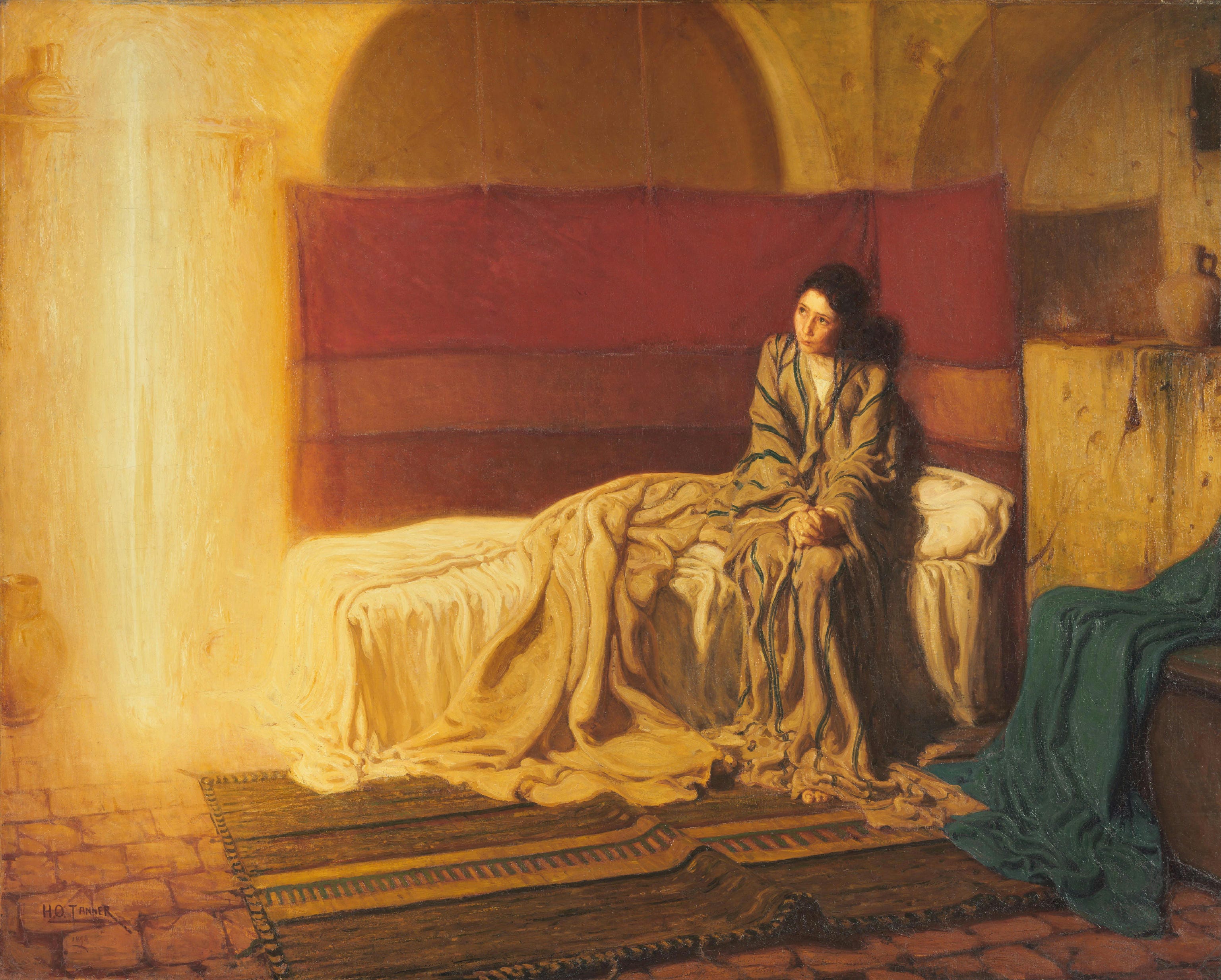
how will this be? : advent week 1
Nov 29, 202200:02:48Tap to summarizeThis week, Sabina Pappu examines the subtle difference between Zachariah’s “can” and Mary’s “will” in the Gospel of Luke.“I’ve been wrestling with the reality that there might be some questions that enable me to hear from God more clearly”This Common Life is a reader-supported publication. To receive new posts and support my work, consider becoming a free or paid subscriber on Substack. Get full access to This Common Life at amardpeterman.substack.com/subscribe
Transcribe →