← This Guy Sucked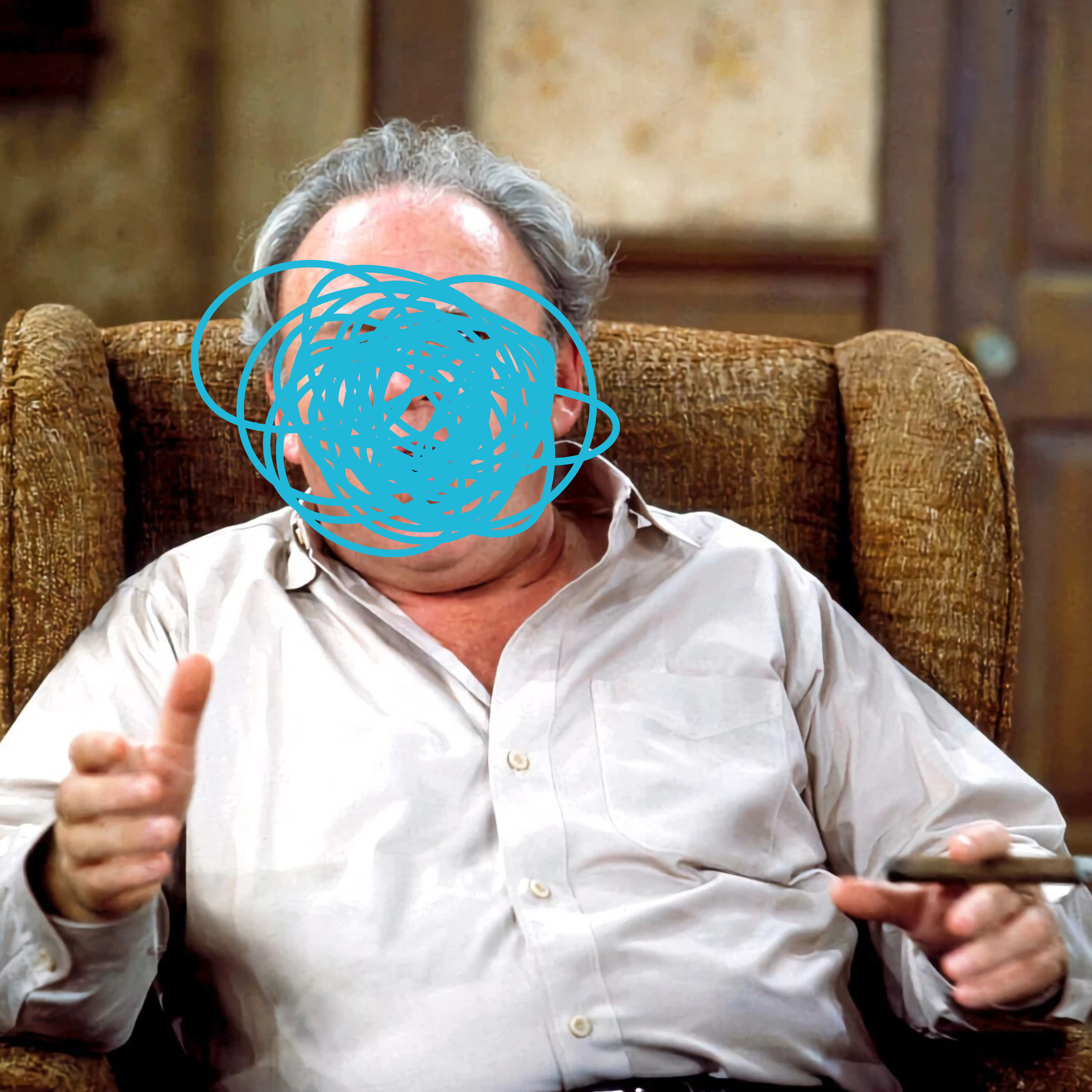
Loading summary
Transcript30 lines
- [00:01]
A
Hi. So I have some wild ass news for you. TGS is turning one year old this month. It has been a bananas year from news coverage to award nominations and best of lists, and I really could not possibly have anticipated the show's success so far, especially because most podcasts fail pretty much immediately and they definitely don't ever make any income. I'm so incredibly grateful to all of you for listening to the show, telling your friends about it, and letting us make good, accessible public history. This was really an experiment and I'm honestly over the moon and slightly bewildered at how well it's working. I really can't express how deep my joy and appreciation for all of you is. We're doing a few things to celebrate. We're having a birthday triple header week to celebrate the actual anniversary with some really exciting guests. And we're doing huge discounts off of our Patreon almost month long between now and April 1st if you head to patreon.com this guy sucked. You can use the code TGSB Month like birth month for 50% off your first month on a monthly subscription, or TGSB Year like birth year for 30% off your first year on an annual subscription, which does stack on top of our normal 17% off annual discount. So the annual subscriptions this month are like incredibly discounted. The Patreon is how we can afford to make the show in the first place, and we've worked really hard to make it actually worth your money. So we thought we'd also make it a little easier to afford as a birthday treat for both us and you all. We've got lots of cool stuff in store for the year ahead. For example, I'm hoping to double our Patreon income so that we can start a K12 history classroom grant program, which would really, really rock. If you'd like to be part of the Patreon and make some of our year two goals more reachable, use code TGSBYear or TGSBMonth between today and April 1st to get started. Thank you and I can't wait to see what happens next. Hi there, it's Claire. If you're hearing me, that means you're listening to the free preview of one of our Patreon episodes. We switch off every week between free and Patreon exclusive episodes. So if you'd like to hear the rest of this conversation, head over to patreon.com thisguysucked and join our honorary Haters Club. A list of sensitive themes and topics included in this episode can be found in the episode description. Welcome to this Guy Sucked, the show where we prove that it's never too late to have haters and you can't libel the dead. I'm your host, Dr. Claire Aubin, and I'm a historian, writer, and most importantly, certified hater. On this show, we talk about people from throughout history with legacies that need a little updating. Whether it's because of their politics, their behavior, or their impact on society and culture, these guys actually kind of sucked. And we bring in a new scholar every week to tell us why. With me today is Oscar Wiener, who is a postdoctoral fellow at the Turku Institute for Advanced Studies and the John Morton center for North American Studies at Turku. He is a historian of American politics and media and his first book, Archie Bunker for President How One Television Show Remade American Politics, is out now. Welcome to the show.
- [03:42]
B
Thank you so much.
- [03:43]
A
So I like to start with a question, and sometimes they're good questions and sometimes they're bad questions. And today I thought I'd go to one of our standard questions. I think we haven't done it in a little while, which is, what would you study if not this?
- [04:01]
B
Oh, man, that's like if I said
- [04:03]
A
no American political history, no media history, potentially no history at all, what would you be doing?
- [04:11]
B
Wow, you start off with a tough one. I guess something in the Nordics that would be my go to. And I guess I've always found cultural history interesting. You know what, there's a comic book in Sweden called Bamse about this strongest bear in the forest and how with that great power comes great responsibility. I always found that very fascinating. So let's say I would be writing about bums.
- [04:42]
A
You know, sometimes people do find that hard at the beginning because I've basically said, hey, so this thing that you've dedicated, you know, a decade of your life to, what are your other interests, basically? And people are like, what? I have no other interests. You understand this. This is what academia is. You have no interests, you have no life, basically. But I think that's great. I think that sounds fascinating and perhaps less stressful than American political and media history.
- [05:12]
B
Potentially 100%. 100%.
- [05:16]
A
Before we talk about your guy for the episode, I need to make a little clarification for the audience. We ran a poll for our subscribers a while ago, like a long time ago, actually, like months ago. So sorry about the wait. But in the poll we asked what or which occasional one off formats they might like us to do. And the overwhelming winner of the poll, slash Vote was fict. So, in honor of our birthday, which will have just happened at the time that this episode comes out, we'll have done two fictional character episodes to make up for the fact that I asked them to answer this, and then I didn't make the episode for, like, nine months. The first fictional character episode with my friend Ali Lukes came out last week, so go back and listen to that one if you haven't yet, listeners. And this is the second. The idea here, though, is not just that we're going to be critiquing the character himself or themself, but that we're critiquing both what they represent historically and what they engender or enable in conjunction with their creation. With that caveat, who are we talking about today?
- [06:26]
B
Today we're talking about Archie Bunker. Archie Bunker is sort of the quintessential Democrat for Nixon, but he's actually the main character on the most popular show on television in the 1970s, all in the Family. So Archie Bunker is the main character on that show. He's played by the fantastic actor Carol O'. Connor. And in fact, in the mid-1970s, in some polls, he's the most recognized face in the nation.
- [06:58]
A
Wow, I didn't realize that. And I guess some of these things are said in your book, so I didn't realize that he's that recognizable. Obviously, I was not alive yet. Nor were you at the time that this is airing, I'm assuming, unless you're a very, very young, what, 50, 60? Wasn't alive then, but yeah, I mean, he's also the lead in the show's sequel series, Archie Bunker's Place in all of this. Please tell me if I'm getting anything wrong. As always, I do a sort of base level of research, and I frequently get things wrong. So tell me when and if that happens. But he's like one of the most influential characters in television history, right?
- [07:44]
B
Yeah, very much so. And, you know, even today you have television writers and producers who sort of say that the history of American television can be divided into two periods. Before Norman and after Norman, meaning Norman Lear, the creator of all in the Family. And it's really because of the show all in the Family, which comes on the air in January of 1971. And it's a show that is so outrageous in terms of what people were used to back in the 60s and early 70s. It's so outrageous that the network refuses to air it without a disclaimer at the beginning of the show that sort of states, this is comedy. You're supposed to laugh at this. Don't take it too seriously.
- [08:33]
A
Can you explain, slash, describe what the media landscape looks like before this? If it's so outrageous, what are the kinds of sitcoms that people are watching beforehand and what is. I don't know if, like, the energy is the right word here, but why is this such a break? Why does this create such a rupture?
- [08:52]
B
Sure.
- [08:53]
A
Maybe we need some context in order to explain how this represents this difference.
- [08:58]
B
Yeah. So let me start by sort of just contextualizing television as an entertainment format. Because I'm realizing we're moving into eras where the young kids no longer will recognize broadcast television. So when we go Back to the 1970s, you have three networks, CBS and NBC, in constant rivalry of the sort of top network spot. And then you have ABC running far behind as the perennial loser. So basically, there are, of course, local stations that sometimes air syndicated shows or other old stuff. But in general, you have three options for your entertainment of the evening, these three networks. So that's important to remember. And then if we look at what sort of the break is with on the family, the 1960s, if we're thinking about television situation comedies, you know, we're mostly thinking about sort of escapist comedies. The Beverly Hillbillies is an example of a really popular show. If we want to be more sort of stereotypical. The flying nun or Mr. Ed about talking Horse would be examples of this sort of escapism. And then the other form is these rural shows. Think about, like, the Andy Griffith Show. And so what's remarkable is throughout the 1960s, as Americans are dying in Vietnam, as the civil rights movement is moving forward, the urban unrest, the sort of demonstrations at colleges and so forth, none of this is really included in these forms of television entertainment. That's where Norman Lear and All in the Family comes in with an intentional attempt to address current issues. And it really comes from. It's sort of a remake of a British show. So it comes from this show that in the late 60s, was the talk of the town in London. And then Norman Lear and his producing partner Bud Yorkin, decide, maybe we can bring this over to the US and they do it at the perfect moment where the networks, they're changing the leadership. And crucially, the sort of business model is changing a bit because there's new ways of measuring audiences. So where in the 1960s, you just wanted the biggest audience possible by the early 1970s, executives are saying, we actually want the right audience. We want the people who are buying what the Advertisers are selling. So if you have a show such as the Andy Griffith show and it's getting monster ratings, but it's people in the rural parts of the us, elderly people, they're not interested in buying a new refrigerator or a new car. That's not a valuable audience. And so only family comes in at this perfect moment to capture the attention in this new sort of playing field for television.
- [12:09]
A
And who is watching all in the Family? Like, what is the actual demographic that ends up being interested in it? I know eventually it's everybody, but, like, who? Because they're looking to do things like sell refrigerators. Does that mean that the audience skews younger? Originally, because there are people who are like, ah, finally, television is showing people arguing about the Vietnam War, or were new homeowners. Like, is that what's happening or am I inventing history?
- [12:38]
B
No, not at all. So it is younger audiences, as you're saying, when it becomes this huge success, obviously you're going to get all demographic groups looking at this, but sort of the key is younger audiences and especially more urbane and more affluent audiences. So television in the 1960s, 1950s, it's seen as sort of lowbrow. Well, even today we make that case in certain circles that television is for the masses.
- [13:05]
A
Sure.
- [13:06]
B
And on the Family's part of another show would be Mary Tyler Moore Show. These new attempts to sort of make television a little bit more respectable, especially for these television executives who are producing television. They're getting rich of television. And at the same time they're saying, like, none of our friends really watch the shows. Like, that's, that's not how we go about our lives. But they're now trying to capture that demographic because it's such an attractive demographic for advertisers.
- [13:38]
A
That's so interesting. It also really does prove how much of media is like, how do I explain this as someone who is, as we speak, producing media? Right. That's for the public. Some media exists and then advertisers attach themselves to it because they're like, ah, this has captured a demographic that we're interested in and some media. And that's not to say that Norman Lear is doing this, but some media is like, from Jump. There's an intertwining of them with advertisements and sponsorships, and we see this with podcasts all the time. And so it is really interesting seeing how the approaches differ in terms of marketing, depending on what your relationship is with advertisers and sponsors and things like that. So I don't know, that's just kind of a digression.
- [14:27]
B
No, it's a great point. And sometimes the moment has to be just right. So when Norman Lear gets this show and he sells it, he originally sells it to abc, and the executives at ABC give him money to produce a pilot, which he does, and it's the same script as the eventual show that goes on the air. But this is a little bit earlier. Late 60s executives at ABC are saying, no way can we put this on television. Like, this is not right. And then that same script, he remakes it with some casting changes for abc, and when they pass, he's able to sell it to cbs. So it's the right story to tell at the right moment, but also the right people to understand this is the right moment. And, you know, the people at ABC were going to be kicking themselves for years after when this becomes the most popular show in the nation. But it is that question of right. People at CBS recognizing this is actually what we need at this particular moment.
- [15:34]
A
Can you tell me a little bit about. So we understand the context now a little bit about why it's so outrageous? Not just because they're talking about current events, but part of this is the way that the show is talking about current events, Right?
- [15:48]
B
Absolutely. And it's so funny to look at it now and be like, what was so controversial? Because television has obviously changed so much. But if we think about, like, the firsts, all in the Family, for example, is the first show to feature the sound of a toilet flushing.
- [16:08]
A
Huh? Yeah.
- [16:09]
B
And that's just to sort of illustrate that what they do is they take the sort of traditional domestic comedy.
- [16:17]
A
Yeah.
- [16:18]
B
But then they add reality. And reality can be a toilet flushing in from the upstairs bathroom, or it can be a conversation about inflation. So they sort of weave it in. It's not that every show is going to be about the war in Vietnam or Nixon or racial segregation, but the conversations in an attempt to be realistic, they're suddenly going to have these conversations. If we're talking about, you know, the father in the family comes home late from work and he's tired and there's gonna be dinner, there might be a chance to have a conversation about the price of beef, for example. That's something that would happen in a normal household. So this is the way. And then the other important thing is Archie Bunker, the character, what he is and what he represents. And that is a openly bigoted character. He's homophobic, he's sexist, he's racist, he's prejudiced against religions and so forth. So just by having him as the sort of the center player in this comedy makes for conversations I mentioned it's the first time you hear a toilet flushing. It's also one of the first times you hear a lot of slurs used on television. So and this is actually one of the things executives argue about before it goes on. Can you have a character use, for example, anti Jewish slurs on national television? But because Archie is always the fool of the joke, that's how you sort of build acceptance for such a character.
- [18:05]
A
Thanks for listening to this preview of a Patreon Exclusive episode. To subscribe and listen to it in full, head over to patreon.com thisguysucked this
- [18:15]
B
episode is brought to you by Progressive Insurance. Do you ever find yourself playing the budgeting game? Well, with the name your price tool from Progressive, you can find options that fit your budget and potentially lower your bills. Try it@progressive.com Progressive Casualty Insurance Company and affiliates Price and coverage match limited by state law not available in all states.