← This Guy Sucked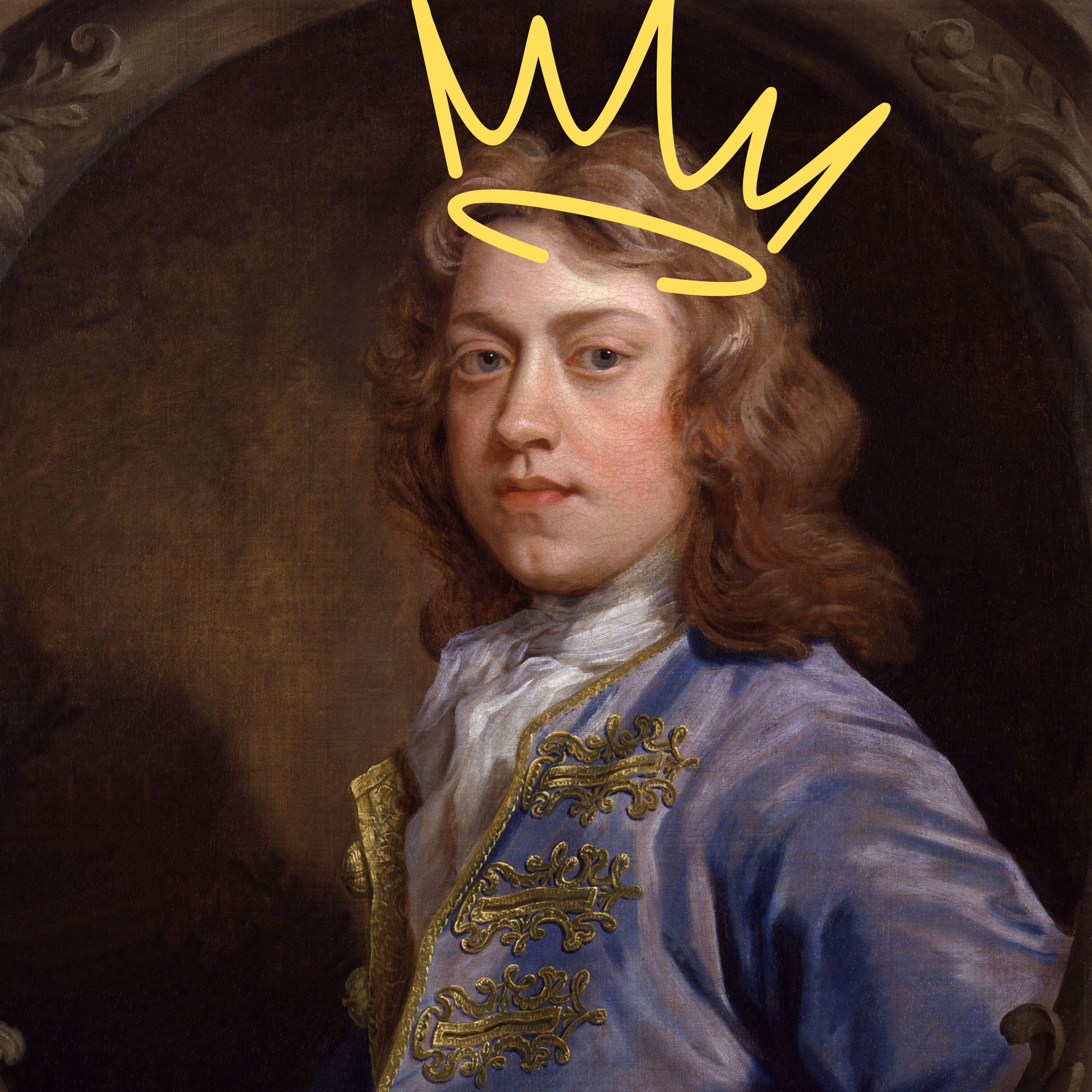
Loading summary
Transcript23 lines
- [00:00]
A
Hi there, it's Claire. If you're hearing me, that means you're listening to the free preview of one of our Patreon episodes. We switch off every week between free and Patreon exclusive episodes. So if you'd like to hear the rest of this conversation, head over to patreon.com thisguysucked and join our honorary Haters club. A list of sensitive themes and topics included in this episode can be found in the episode description. Welcome to this Guy Sucked the show where we prove that it's never too late to have haters and you can't libel the dead. I'm your host, Claire Aubin, and I'm a historian, writer, and most importantly, certified hater. Although that's not super useful for this episode. On this show we talk about people from throughout history with legacies that need a little updating. Whether it's because of their politics, their behavior, or their impact on society and culture, these guys actually kind of sucked. And we bring in a new scholar every week to tell us why. With me today is John Callanan, who is a reader, which for those at home in America is the equivalent of a full professor. He's a reader in philosophy at King's College London. He's particularly interested in the history of philosophy and especially early modern philosophy. And everything can't. He also has a really wonderful book that I truly enjoyed reading over the last few days, the Mind and Times of Bernard Mandeville, the wickedest man in Europe. Welcome to the show and congratulations on this excellent book.
- [01:41]
B
Thank you very much. It was a long time in the writing.
- [01:44]
A
I can imagine the amount of sources that you use in this is wild to me. It's a really, really good book. I say this about a lot of people who come on the show, but I truly thoroughly enjoyed reading this because intellectual history is often a little bit outside of my scope, historical scope, and so it's always exciting when I get to engage with it. I want to start with one of my favorite little warm up introduction questions, which is what is the most exciting thing you've ever found or document you've ever interacted with in an archive? Like, what is something that you one time interacted with and were like, this is so cool.
- [02:19]
B
Oh, wow, there's loads of those, but there are, I think two jump out at me. And one of them is both of them actually relate to my research from the Mandeville book. One of them was I was reading Pierre Bale. I was one of those. All of this reading that I do it's always pointless, you know, it never has any goal. You're just trying, you're just reading, think, wondering what's in there.
- [02:44]
A
Sure.
- [02:44]
B
And if I go looking for something, I never find anything interesting. You have to just be reading for fun. And I found this passage in Pierre Bale and I realized that Mandeville was quoting it and flipping some concepts around and just using it. And everyone who read BAAL would know he was doing that. And in that moment, I felt like I discovered a secret code to how this text should be read. That's super exciting. And then on another time, I was just going through archives of pamphlets in the early 18th century and I found one just the year before Mandeville wrote his thing where a guy was using the exact same concepts and Mandeville is clearly just attacking that guy. I love that. And suddenly again, everything just opens up all of a sudden. It's the sort of. The joy of reading in that time.
- [03:38]
A
Yeah, I mean, absolutely. A lot of people don't. Okay. There are two things people don't understand about working on archival research or looking at documents and primary sources. One is that a lot of it is you taking photos on your phone and reading them at home. It's not us like pouring over a lot of. Sometimes it is, but a lot of it is not us just like pouring over documents. It's us rapid fire taking pictures and then looking at them later because you only have so long in an arch. And then the second thing is you do end up reading so many useless things, but their uselessness does not preclude them from being useful. Which sounds wild, but you read something that you think, I have no idea what this is relating to. I. This seems pointless, but you. It either unfolds something like you said, or you seize upon something in it later or all of a sudden later, some new narrative emerges in your mind and this thing that you thought was kind of pointless and you didn't really know why you're reading, it actually becomes something that's really crucial or in some way deeply impacts the writing and the thinking that you're doing. Which I think is extremely cool.
- [04:43]
B
Exactly. I come from a background of philosophy and the history of philosophy, and there that might surprise you that some of the culture is a little anti reading. You're supposed to read something and then think hard about it for a long time. You're not necessarily supposed to build up a wide collection of texts. And I gradually was becoming to dislike that methodology. Why I went into academia was the pleasure of reading widely Rather than going over the same text again and again in a sort of Talmudic fashion, trying to discover new meanings and deep interpretations, I wanted to just read more of what these guys were reading, for example. And so one text would always lead me on to another text. And that's partly why I started working on the Mandeville one. Just a desire to read more widely, which this gave me the opportunity to do.
- [05:33]
A
I will say that one of the best parts about this podcast is that it gives me an excuse to read very broadly and it be my job at the same time. Like, for example, I work on 20th century America and the Holocaust. There is no reason for me to read this book, like, in terms of, like, professionally speaking. But the podcast gives me an excuse to do that and feel like it is part of my job to read these things that are so far outside of my field, but end up actually really helping me think through some of the ideas that I'm working on, even in this really contemporary history. So I love that that's part of my job now in a way that it wouldn't have been if I hadn't said I should make this stupid history podcast.
- [06:12]
B
Yes, you might say that in this hyper professionalized era of academia, we're very much discouraged from reading widely because we end up reducing the amount of secondary literature we're reading in our very narrow field. So we sometimes maybe feel intellectually forced to do other things, to break out of that. That norm of reading narrowly.
- [06:34]
A
Sure, absolutely. And shout out to people in my thinking group. I'm in this group of 20th century Americanists who are all kind of similar career stages, some of whom will listen to this podcast, some of whom probably won't. But we started as a writing group and then we realized we wanted to have an excuse to read more broadly. And now it's a thinking group where we do one piece of writing each month. And also we all read a book that's outside of our field together and then come and talk through these concepts that are like, we just did Sophia Rosenfeld's Age of Choice and things like that, which are like, anyone who's listening to this, steal that idea. Please borrow it. Create a thinking group. It's really fun. We should probably talk about the point of the podcast. Let's get into what we're actually here for. I want to preface this by saying you are doing one of our occasional this guy rocked episodes, which, for those who are uninitiated, means that instead of just bagging on someone for an hour, John is going to make an argument for the positive introduction or reintroduction into the historical canon, or reframing within the historical canon of someone from his research. We've already kind of given away who it's going to be because we talked about him a lot. But can you tell me who we are talking about today and why he's important?
- [07:53]
B
Yeah, we're talking about Bernard Mandeville, an early 18th century thinker, I suppose is in the broadest way, who gained huge notoriety through a book called the Fable of the Bees in around the 1720s, and I would say by the 1750s, maybe was one of the most well known names in the whole of European letters, in that whole culture, but gradually fell out of the canon for various reasons, but nevertheless influenced and influenced positively an enormous range of thinkers, from Rousseau to Adam Smith to more contemporary thinkers like maybe even Nietzsche, certainly Marx, John Maynard Keynes and even Darwin. They've all read Mandeville and they've all imbibed his thinking and for their own positive purposes. And yet he wouldn't be the household name that we know now. And part of that was because he existed in a state of notoriety for all this time that he was infamous for his writings because of their content. And so that was fascinating for me. He's someone who, when everyone is against him, that is quite an interesting thing already. When lots of. And yet when lots of people are inspired by him, despite thinking ill of him, that's an interesting thing as well.
- [09:11]
A
I mean, one of the things that really stood out to me in the book is that you make the argument that some of the names that you just mentioned were sort of like railing against him in their writing and saying all these things are not good, but then really borrowing directly from what he was saying for their arguments. So that is a very interesting tension that comes out where you're, like, reading it. You kind of feel a little bit confused or frustrated. And I can see how that would lead you to want to write more and understand him a lot better.
- [09:40]
B
Exactly. And in the end, that's my hypothesis about why he's not as well known as he should be. It's simply because his ideas, despite being so fruitful, couldn't be accepted while he was alive or in recent memory. And instead people who read him, attacked him, took his ideas that were positive and then repackaged them in their own systems of thought. And so he ended up having this enormously, powerfully positive influence. But also he needed to be forgotten in some way because of his notoriety, and there needed to be that distance and that's really the thesis of my book, is that. That he was important. And it's his evil reputation, which we should say from the outset, he really enjoyed having. Part of his character is. He enjoyed being thought of in this way. He was a controversialist, so he wouldn't really have wanted to be accepted in the canon. And that's also an interesting thing to me.
- [10:36]
A
That is interesting. I think maybe we should start a little bit with talking about his life leading up to writing the Fable of the Bees, because that is this sort of crucial moment in his life. But we kind of need to understand how he gets there in the first place so that people can understand who he is as a person and why that enables him to write this really, really important piece. So he's Dutch originally. He's born in 1670 in Rotterdam.
- [11:07]
B
That's right.
- [11:07]
A
We're going to soon exhaust my knowledge of the background on this, but he's from a family of physicians and merch. He studies at Leiden, which, by the way, still a great place to study if you're interested in philosophy. Can I just say, he also receives a medical degree in 1691. So at the age of 21, and then he moves to England and becomes a physician. And that's what I know about his early life.
- [11:38]
B
Yeah. And they're at the bare bones of it. And one thing that's interesting is why did he move to England at all? And there are a couple of important reasons. So he was born, as you say, into this quite well connected family of physicians in Rotterdam who also were politically active. And that would have been the likely path for his life, would be just to be a physician and maybe enjoy some political office later on in life. But he got caught up in a political scandal when he was very young and himself and his father, which was over tax collecting, basically. And there was a fight over tax collecting and the tax collector was killed, and then the person who killed the tax collector was executed for it. And then there were riots over that, because no one likes tax collectors. In the middle of it all, Mandeville and his father were deeply involved in getting the crowd agitated against the tax collector and against the political forces that had put this person to death. So in the end, Mandeville lost. William of Orange, the Stadtholder at the time took over and basically banished Mandeville from Rotterdam as a result. He was only about 20 at this stage, so there was no chance anymore of him having any kind of political future in Rotterdam. And sometime after that, after he finished his medical studies, he emigrates to London, which he says autobiographically, he was just to learn the language. He always liked the language, but really he has no future in Rotterdam and he has to go and recreate himself somewhere else. And so we don't really hear from him. This is in 1690s. We don't really hear from him. He's trying to set up a medical practice. But then at the start of the 1700s, we see that he started writing. And he writes little political pamphlets, poetry, satires, little light pieces. And it's clear that literature is his love also. Political engagement is his love of his. But he doesn't. No one buys us. He's not. Everyone wants to be part of the literary political scene at this time, and Mandeville's clearly trying to break into it, and he's just not succeeding. He writes a book on medical practice, and then he writes a little poem making fun of political morality. It's a failure. No one listens again. But then, 1723 now, so he's in his early 50s, he republishes that poem on political morality in a book now called the Fable of the Bees. And that little satirical poem suddenly blows up. He's charged with impiety and all kinds of things, and his book is presented to the court. And suddenly, over the course of two or three years, everybody is writing against him and he becomes hugely famous, and he writes more and more, and now his career is off and running, and he writes more about theories of human nature and theories of politics and theories of morality in a fantastically inventive way. He becomes, in a sense, a central part of intellectual culture. From that moment on, he's set himself all from this moment of notoriety of when his book got set before a court.
- [15:03]
A
So the Fable of the Bees is the commentary, plus the poem. The poem is the grumbling hive.
- [15:10]
B
Right?
- [15:10]
A
Am I getting this right? And before that, though, he writes like a treatise on hypochondriacs and hysterics, which I think that part of the book is very of. Your book is very interesting and very funny where, like, you can kind of see that he is starting to write about the conditions people live in that lead them to behave in certain ways. But he starts off writing it from the perspective of a physician rather than of a sort of moral philosopher. And so it is. It's interesting that that's not like a full precursor, but there are little flashes of this thing coming out, even when he's just writing about the physical and emotional ailments of. Of people at the time. Is that right? Am I reading this right?
- [15:55]
B
I think that's absolutely right. I think he's interested interplay between human beings as physical, embodied animals and the sociological features of groups that play on that. And medical practice is really just exploding as a consumer industry in the early 18th century. And Mandeville's right on us in terms of how the wellness industry, so to speak, at that time is both promoting and hindering human beings well being in various ways. And he's interested in the economics of it, and he's interested in the psychology of it, of the psychology of what it's like to go to a physician and ask for help and to accept their guidance and what you do when it doesn't work and how you respond to that. And he is incredibly funny about it. It's all about the psychology that's involved in wanting to be liked by your doctor, for example, is a really important thing. And I think Mandible is a big believer in the placebo effect. He thinks like that's a large portion of what if you do get better, it's usually because you're feeling better about being heard by your doctor or being prescribed something really confidently that sounds great. Or just being given some scientific data that you don't really understand. Like that just feels great in the.
- [17:17]
A
Sense that this guy was ahead of his time in a lot of things. That's also kind of a psychoanalytic thing that he's doing here too, which is always interesting to sort of hear these early psychoanalytic ideas showing up earlier, or what will become psychoanalytic ideas, but like the idea that physically, sometimes what's happening is as a result of an unconscious experience, you know, or a subconscious experience. So it's interesting that he's already kind of teasing some of that out this early. Thanks for listening to this preview of a Patreon exclusive episode. To subscribe and listen to it in full, head over to patreon.com thisguysucked vrbo last minute deals make chasing fresh mountain powder incredibly easy. With thousands of homes close to the slopes, you can easily get epic pow freshies, first tracks and more. No need for months of planning. In fact, you can't even plan. Pow Pow is on its own schedule. Thankfully, somewhere in the world, it's always snowing. All you have to do is use the last minute filter on the app to book a last minute deal on a slope side private rental home. Book now@verbo.com.