← This Guy Sucked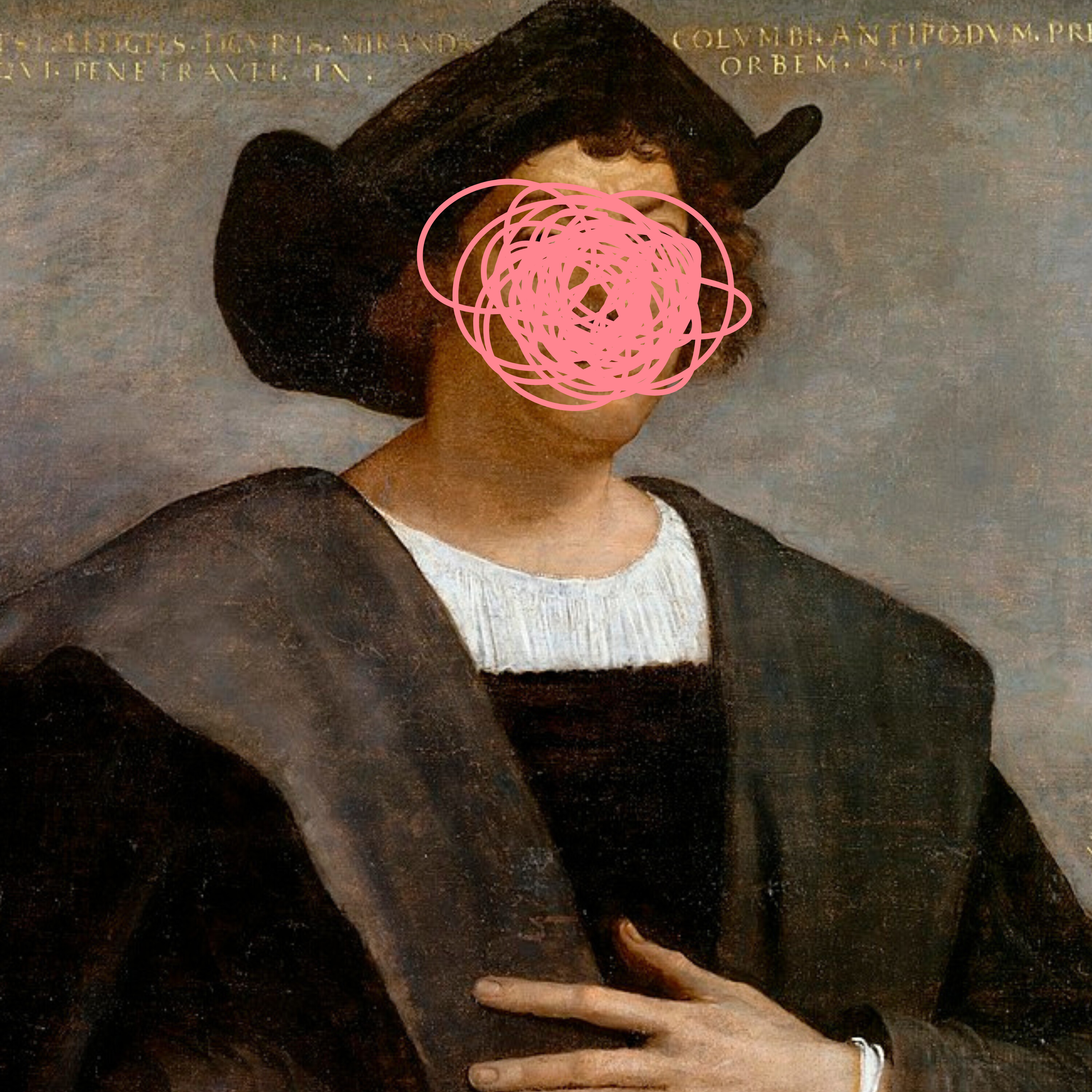
Loading summary
Transcript28 lines
- [00:00]
A
Hi there, it's Claire. If you're hearing me, that means you're listening to the free preview of one of our Patreon episodes. We switch off every week between free and Patreon exclusive episodes. So if you'd like to hear the rest of this conversation, head over to patreon.com thisguysucked and join our honorary haters club. A list of sensitive themes and topics covered in this episode can be found in the episode description. Welcome to this Guy Sucked the show where we prove that it's never too late to have haters and you can't libel the dead. I'm your host, Dr. Claire Aubin, and I'm a historian, writer and most importantly, certified haters. On this show, we talk about people from throughout history with legacies that need a little updating. Whether it's because of their politics, their behavior, or their impact on society and culture, these guys actually kind of sucked. And we bring in a new scholar every week to tell us why. With me today is Dr. Soreka Davis, who is an author, historian of science, speaker, and I think very cool monster consultant. So think a sort of historical consultant for film, tv, radio with a special interest in monsters. She's the author of the multi award winning Renaissance Ethnography and the Invention of the New Worlds, Maps and Monsters. And her writing has appeared in places like the LA Times, the Times Literary Supplement, Nature, Science, EON Magazine. She's writing a lot of things in a lot of places. Most notably, she is the author of a new, well, brand new book out with UC Press called A Monstrous History. Welcome to the show and congratulations on the release of your new book. Srekha.
- [01:51]
B
Thank you, thank you for having me.
- [01:53]
A
So I always start with a question. Always I try to start with the question. My question for today is what is the best archive you've ever been in or your favorite archive and why?
- [02:05]
B
Oh, wow. Best or favorite? I love going to Paris, so that's the one that comes to my mind. The rare book and manuscript room of the Bibliothec Nationale called the kind of CI trichelieu after the Cardinal Richelieu of the 17th century. And they have such a range of materials relating to the Americas, relating to France and the French Empire, relating to the Renaissance and the operations for getting in there and seeing things and finding your desk and getting out again with your skin intact. I have to relearn them every time. You've got like little red cards, pieces of paper, places to sit, and you get to feel a little bit like a spy. Dealing with these special things and special desks.
- [03:00]
A
I think a lot of people, when they imagine what historians are doing, they're not sort of imagining the level of bureaucracy and, like, administrative things you have.
- [03:09]
C
To deal with on a daily basis.
- [03:11]
A
Like, oh, you have to apply for your id, and then you have to get this. And then you have to order this thing that may or may not be there. And sometimes you plan to go to an archive and they say, actually, it's going to take us three weeks for.
- [03:20]
C
Us to get the thing that you hoardered.
- [03:23]
B
And this, or it was turned into microfilm in, I don't know, the 1950s, and that was digitized. So you need to give a reason for needing to see the original. Like, I need to see color. Or the microfilm is illegible. So you go through these procedures to hold these ancient things in your grubby little mitts.
- [03:45]
C
Yeah. Or you'll sort of, at least in.
- [03:47]
A
My experience, a lot of times I'll say, do you have this digitized? They say, no. And you say, can someone scan them? And they say, possibly.
- [03:53]
C
And you say, okay, what does that mean? What does possibly mean in this context? How do I make that happen? This whole thing every time?
- [04:04]
B
Yeah. Well, actually, I think my most ridiculous library adventure was before I Even started my PhD when I went to look at an early 16th century kind of Spanish Empire map made in 1529, stored in the Vatican Library. And I was in Rome on vacation anyway, so I thought, well, I'll go and see this. And I was going to turn my mphil. One of my mphil essays into an article. And, you know, I wrote lots of emails ahead of time, got clearance to go and see this early manuscript map, gigantic map, got to the Vatican. The first thing that happened is they said, oh, we need your passport. And I'm like, what do you mean you need a passport? I'm still in Italy, you know, clueless. And, well, it was required for id. And of course, the Vatican center is its own place. And I was so frustrated, I burst into tears. And the Swiss Guard rolled his eyes and just shooed me in anyway to, like, get this, like, crying woman out of his hair.
- [05:04]
C
Secret hack. To get into the Vatican is to cry.
- [05:07]
B
Yeah. And then it turned out that this gigantic map had been framed so they couldn't bring it up the stairs anymore. It was permanently incarcerated in the basement. So I got them to let me go down to the basement, and they locked me into a giant cage with a security guard to study this map that had been Framed So nothing was fearful again, because I did all that when I was too ignorant to know how difficult a thing like that, you know, might be. The stakes were low because I wasn't a student. I was just writing up a thing I'd done as a student, as an article.
- [05:41]
A
I mean, it reminds me of those stories you hear about people going to Soviet archives, like during before the fall, the Soviet Union, I should say, and going to the Soviet archives.
- [05:51]
C
And there are two men standing directly behind and above you while you're looking at every single document.
- [05:58]
A
Okay, so enough about archives. Although I'm sure people at home are probably like going on some fantasy archive journeys now. And let me tell you, mostly other than places like the British Library or like the bod, the archive experience is a very boring room.
- [06:14]
C
Like, mostly they're not that exciting of places.
- [06:18]
A
But let's get into what we are really here for today. Who are we talking about?
- [06:24]
B
We're talking about Christopher Columbus, originally known as Cristoforo Colombo in Genoa, in what is now Italy, Cristobal Colon in Spain, where he became a citizen and became, you know, known as, you know, supposedly the man who discovered the Americas.
- [06:48]
A
Let's talk about sort of get into some depth in his early life and his legacy and what he's famous for. Because I think sometimes understanding what's wrong with him. And a lot of people who listen to this will already kind of know what's wrong with him. But I want to make sure that there are people who don't know that we answer this, people who don't know this or who might want to know more of it or want to know how a historian thinks about it. So that's kind of who the episode is for. So let's maybe like go through some of his life and legacy. One fun fact that I kind of already knew and people maybe don't think about when we think of his legacy and his impact on the world. Anytime you or anyone else has ever heard the word Columbia, like the Columbia River, British Columbia, Columbia University, Congratulations. That's a Columbus reference. For a long time, Columbia was used even to refer to the sort of personification of the spirit of the Americas and this new world, it only gets displaced or she only gets displaced by Lady Liberty in the late 19th and early 20th century as the spirit of America. But like, he is ever present in our world in so many ways that it's really important to talk about him as a person and his long term historical legacy. Can you tell me a little bit about his early life?
- [08:07]
B
Sure. So he was Genoese, so from the kind of northwestern coast of what's now Italy, he was born into a pretty ordinary family. His father was a wool maker. He did various things in his youth, learned to be a navigator, a sailor, and got a lot of experience in the Mediterranean and eventually found his way to Portugal and was involved in maritime stuff there. And one of the things that the second half of the 15th century is known for, when Columbus was born in 1451. So this is the era in which the Portuguese are at the forefront of European navigation and oceanic ish travel. So they're sailing in ships south and west from Portugal, down the coast of West Africa. And something that Columbus gets stuck in his head for many, many years is this idea that you could reach the Spice Islands, you could reach East Asia, not just by doing what the Portuguese were gradually doing, which is sailing south to get around Africa, but but by sailing west to go around the Earth that way. And what he starts doing in Portugal is trying to get the Crown interested in sponsoring a voyage led by him going west. And he literally spent years, something like seven years in total, trying to get people to believe you could sail west. People didn't believe him because they didn't think that the Earth was small enough to do that. And as it happens, Columbus's estimation of the circumference of the Earth was about one third too small.
- [10:12]
A
Part of this is that he's underestimating the size of the Atlantic based on things like earlier legends. So things like Marco Polo on works like Imago Mundi, like there are all of these things that contribute to his belief that the Earth is easily navigable, is small, everything is sort of reachable. And he is also not aware of the Americas.
- [10:36]
B
That's true. I mean, but in a way the Americas saved him, otherwise they would all have been at the bottom of the ocean. Plenty of people had a different estimation for the size of a degree and thought, well, this space is too wide. But one of the ways, one of the many forms of his magical thinking was this idea that, well, there'd be islands along the way and you know, later in life he would come up with all kinds of explanations and justifications for the authorities who he was paying attention to that justified his whole strategy. And he even talked about the shape of the Earth not being a perfect sphere, but more like a pair. So a little bit narrow, so you could go around it, but. But it wasn't always the same width.
- [11:28]
A
Interesting.
- [11:29]
B
So he was fundamentally wrong about that degree shape. But of course he found something Extraordinary when he finally got funded by the Catholic kings in English as Ferdinand and Isabella of Castile and Aragon. And he ended up going on four voyages. Each time he managed to get to the Caribbean or, you know, sailed along the kind of northeast coast of what is now Central America. And the extraordinary thing, and I could talk for hours about this, so maybe we can save some of it for as we go along, is there were different misadventures in each voyage and extraordinary choices he made along the way and kind of spins. He put onto the things that were happening and he wrote letters, he wrote a diary. And so we can get a sense of how he was trying to present all the things that he gradually realized he was failing to do for. I mean, starting with the fact that even though he found land, he was only out of sight of land for 33 days. When that first voyage sailed from the canaries in early September, 12th of October, they've reached an island in what's now the Bahamas. But of course, what he didn't find is what he promised to find, which is the land of the Great Khan. He was going to find China, basically and set up trading posts so that all the kind of wondrous goods of the east could be shipped to Spain across this much narrower journey than any journeys going east. And so I'll give you like a very quick, like four sentence summary of like the four voyages. So what went wrong in the first one? Well, he didn't find Asia, interestingly, he talked about the people there. So maybe we can come back to that later. He had to abandon one of his ships. I think it ran aground. They had to leave people behind. Second voyage, let's rescue the people we left behind. Then we start seeing something we saw a little bit of in the first voyage, which is abducting people and bringing them back to Spain. So he becomes an enslaver from the very beginning. Second voyage, we learned that he wasn't a really good leader on land. There are problems with a lot of the supplies. It turns out that the men were equipped properly in Spain and they sold half their equipment and their horses and their weaponry when they got to the Canaries and bought cheaper stuff and kept the money. And Columbus says he was too sick to check the goods as they got onto the ship. So second voyage has like, supply issues. Third voyage, he's doing more of this enslaving the troops. The settlers are really not getting on with him and he ends up being sent back to Spain in chains. And in the final voyage, there's a point when two of the ships collide, everybody's marooned. They got to send people out to get folks from one of the other islands, where by now they've got various Spanish forts and settlements. But right up to the end, he was desperate to hold on to the privileges and rights he had been promised in that very first voyage, that he would be Admiral of the Ocean Sea, that he would be governor of the lands that he finds, the kind of viceroy and you have in his story arc. The Catholic Monarchs are very forgiving for a long time. You know, they would like there to be a westward voyage to Asia. They're incredibly patient. But then, you know, gradually they withdraw from putting all their eggs in his basket and he becomes very, very wealthy. But he was constantly moaning about what he didn't have or what he thought he would lose and making excuses, really. And I've now veered into the Kind of Looks like it Might Suck.
- [16:00]
A
Thanks for listening to this preview of a Patreon exclusive episode to subscribe and listen to it in full. Head over to patreon.com this guy sucked.