Loading summary
Transcript102 lines
- [00:00]
A
A list of sensitive themes and topics covered in this episode can be found in the episode description. Welcome to this Guy Sucked, the show where we prove that it's never too late to have haters and you can't libel the dead. I'm your host, Dr. Claire Aubin, and I'm a historian, writer, and most importantly for the purposes of this show, as we all know, certified hater. On this show, we talk about people from throughout history with legacies that need a little updating. Whether it's because of their politics, their behavior, or their impact on society and culture, these guys actually kind of sucked. And we bring in a new scholar every week to tell us why. With me today is Dr. Dan Hicks, who is a professor of contemporary archaeology at Oxford, as well as a curator at the very famous Pitt Rivers Museum in Oxford. He is. He's also the author of some incredible books, including the hugely important to me Brutish Museums, the Ben and Bronzes, Colonial Violence and Cultural Restitution, and most recently out in the UK for a few months, but out in the US for just a week or two. At the point this episode is being released, Every Monument Will Fall, a story of remembering and forgetting. He's also just had a birthday at the time of our recording, so happy birthday and congratulations on the release of Every Monument Will Fall.
- [01:26]
B
Thanks so much, Claire. It's so good to be here.
- [01:29]
A
I always start with a little question for the listeners to sort of see you as a person. What got you into archaeology, anthropology? What was your gateway drug for it?
- [01:41]
B
So, yeah, I mean, I became an archaeologist after leaving school. I didn't go to university immediately. I actually went and dug holes for five years in 18th and 19th century gardens. And so I began as a gardens archaeologist. And gardens archaeology was about reconstructing historic gardens for the public to visit. I worked for the National Trust in the UK series of other gardens as well. And really it got me into the idea of archaeology being applied to, not the ancient world. I mean, I've dug up sort of prehistory and Romans and the Neolithic and all that sort of stuff. But actually what really fired me up right from the start was, was actually where archaeology ends and where history begins. What happens if you apply archaeological approaches to, you know, the 18th century, the 19th century, the near past, as well as the recent past and the near present. So that's really what I've ended up doing, you know, later in life. I'm the world's first professor of contemporary archaeology.
- [02:43]
A
Whoa, I didn't know that.
- [02:45]
B
Which some of your listeners might think is a contradiction in terms, but it's not really. This is all about where anthropology and archeology meet. So it's about the relationship between things and people, memories and history, and really. Yeah, how we can use objects in museums or in the world to understand the world we live in in the present.
- [03:08]
A
It's so interesting because I am what we would call a contemporary historian, which also people sometimes feel is a contradiction in terms. Because I'll say, well, I work on the latter half of the 20th century, but I also work on now. But I'm applying the same sort of historical methodological framework to the now. And a lot of people say that you can't do that. But I have to say, well, actually, this is. It's a real thing. This is a real thing people do.
- [03:35]
B
It's a real thing. But at the same time, you know, I would also say this as an archeologist. I think my work is the exact opposite of contemporary history. So, you know, the historian, you know, tends to quite rightly imagine themselves back into a certain moment in the past and work their way forward. And, I mean, your work is obviously about, you know, biography. That's the theme of this podcast. It's about people. So you might, you know, begin when they're born and move forward across their lives and so on. You might do the same with an institution or an idea. But through archaeology, we do the very opposite. We start with the most recent layer. You have to. In archeology.
- [04:14]
A
Sure.
- [04:14]
B
And you dig down, and we're digging down from the present into the past. And what that means is. And maybe we meet the historians working in the opposite direction halfway through our.
- [04:24]
A
Elevators, pass each other on the way up and down.
- [04:27]
B
I mean, that could be the case. And obviously, I mean, seriously, I mean, real conversations happening between our disciplines, but they are different for one main reason, and that's because we work on the present. Because really, all archaeology is about the contemporary. That means that we work on what survives, on what endures. And so archeology, for me is the science of human duration, what survives from the past. But also, that means what stories who survived as well. And sometimes, as we'll get to in this story, it's about the survivors and the people who didn't survive. It's about the rights and wrongs of the past. And in this case, it's about how the Victorian past was rewired by a descendant. I don't want to go too far into who we're talking about yet, though. I don't know I'll let you lead how we do that.
- [05:19]
A
No, that's perfect. What a beautiful segue into what we're talking about. And I think that's a really wonderful way of describing this. And a lot of people will assume that archeologists and anthropologists and people who work in the sort of intersection between these two things and historians are doing the same thing just because we're often siloed into the same spaces. Right. You'll have your history and archaeology school. And it's sort of like we are in conversation with one another, certainly, but they're not the same thing. The approaches are not the same thing. Even a historian working with archeology will often say, I do material culture, like material culture history. And you have to say, but that's still different than archeological history, right?
- [05:59]
B
Different from archaeology. But what I do say in the book is I say that I work. And a lot of your listeners maybe will understand the relationship between these fields. They might feel that they can kind of tag themselves with either one or two of these fields. So I work in what I call the four A's. So the four A's, we've mentioned two of them, archaeology and anthropology. But there's also art and architecture. So art history of art, art in general, art, architecture, archaeology, anthropology, those disciplinary fields, I guess it's always the people that have just sort of picked the first letter of the Alphabet as the thing they do that's part of it. But also there is a history of how those fields have come together in the later 19th century and their relationships with empire, their relationships with forms of cultural whiteness or cultural racism, if we get into some of that. But the ends to which these disciplines have been put. So where monuments, museums, ideas of the human past, ideas of the human present in terms of cultures meet, has been a contestant space. It has been something that sometimes has been co opted by the hard right and the extreme right by fascists. But also it's a space that we need immensely in the present as well. So it's worth fighting for. And understanding our disciplinary ancestors is an important part of that.
- [07:23]
A
Yeah, absolutely. And like I said, this is a great lead in to who we're talking about, who also is part of, of this family that has all of these interesting relationships with all of these four A's.
- [07:34]
B
I love, if I can just say, I love that we haven't mentioned his name yet.
- [07:38]
A
And what a name it is.
- [07:40]
B
What a name it is. But let's just hold it, let's just hold it for a moment. Having not said his name. And let me make my first real kind of takeaway point I want to give your audience, which is sometimes, you know, it would be possible for us to have this conversation now for another half an hour, 40 minutes or whatever, and simply not say this guy's name. Sure, sometimes when you're telling these histories, the challenge is not to center the bad guy, but actually to talk about all those other people who are part of this story who maybe have been unnamed or denamed or dehumanized. Maybe they're women rather than men. Maybe they're racialized in different ways. Maybe there are different aspects of their history. So, I mean, we will name him, but I would just encourage everyone listening to this to think it's always a choice when you invoke someone's name. And it's important for those of us that work in museums or any part of history, really. We have to be careful when we're talking about these histories not to yet again make another monument to some guy that no one's really heard of and suddenly he becomes the hero. Let's be careful of anti heroes or heroes or even allowing it to be about sort of judging the past or not. This is about understanding, in this case, the history of an institution. It's a story that goes to the heart of what the University of Oxford is. It's about the colleges as well as the museums, but it's also about how any institution deals with that really complex mix of colonialism, imperialism on the one hand, and real hard nosed 1930s fascism on the other.
- [09:19]
A
Yeah, I think that's a wonderful point. And I will say one of the things that's been so interesting about making this show is we do, to be honest, a little bit of a bait and switch in the show, which is we start off by saying, this is a show about a person, right? And then over the course of the show, sure, we lambast them and we make fun of them and whatever. And there is a level of like, anti heroic monumentalization that happens, like, just by virtue of the framing of the show. But also we spend an enormous amount of time writing people back into the story. Like, that's the goal with a lot of this is saying, okay, but what about their wife? What. What happens to their wives? What happens to the people that they harm? We just recorded an episode on Christopher Columbus and we spent the whole time really, like the majority of the time talking about all these other people around him who he actively harms.
- [10:06]
B
So in this case, then in the background of this is going to be the woman's body that he posthumously abuses. That's where we're going to go with this.
- [10:16]
A
Yeah. And so we spend. It's really important to make sure that when we talk about these people, it's because the name almost gets people in the door. And so this is a little bit of like a peek behind the curtain for listeners. But it's the name that gets people in the door. But we spend far more energy saying what's wrong with them is what they do to the people around them or the people who come after them or what they create in the world. And that is what really matters here.
- [10:43]
B
So we still haven't said to them. And before we do, yet again, let me just say that there is more Ursula Le Guin in this book than people might expect, looking at it from the surface. And the reason that the novelist and the sci fi writer Ursula Le Guin is there is because of a short story she wrote that informed all of her Earthsea trilogy and her writing about her imaginary world, Earthsea, which is called the Rule of Names. And her short story, the Rule of Names is about the power of naming, the power of saying someone's name or knowing someone's name who gets mentioned and who doesn't. So this is gonna be a. You know, the next 40 minutes is going to be half hour is about who gets named and who doesn't. And let's see if we can flip it exactly as you say. We begin talking about the dead white fascist and we end up talking about the person whose life wasn't just, you know, not recorded. It was unnamed, it was denamed, it was dehumanized.
- [11:43]
A
Yeah, absolutely. I hope that we can do that. That also, I know we still haven't gotten to the. Even the meat of the episode yet, but I love sometimes when the conversation takes us somewhere different a little bit at the beginning. So as I said before we started recording, I read your new book. I thought it was beautiful. The writing I found particularly compelling and I really, really loved. I also just finished reading Ursula Guin's Space Crone. Have you read this?
- [12:08]
B
Of course, yeah.
- [12:09]
A
It's incredible. And so it's funny that I was reading these two things in concert with one another without Realiz. You were also having a conversation here. So that's a fun sort of confluence to have happened in the background of this as well.
- [12:23]
B
Yeah. There's a surprising amount of. For people that think this is a book which it is about the history of archaeology, anthropology, museums and monuments, there's A surprising amount of Maggie Nelson, the writer Ursula Le Guin, Stuart hall, the cultural theorist Sylvia Winter, really important Jamaican theorist Michel Rolfe Trurlow, Haitian anthropologist from the night where he wrote a wonderful book called Silencing the past in the 1990s. You have Frantz Fanon, Aime Cesaire, really important French anti colonial writer. So there you go. There's a whole host of other names we've mentioned before we get round to Joe. Yeah, I said his name. Well, that's only his nickname. So Joe is the nickname.
- [13:08]
A
I loved seeing Walter Benjamin in this as well. When you talk about things like the library, the archive, because that is. He's like my ultimate. I love Benjamin. And so it was really. I'm a historian. I have to. You can't. I don't know. I don't know how anyone could be a historian and not truly be a Walter Benjamin fan.
- [13:25]
B
Wow. Okay. I just saw the angel of History. The clay painting was on loan to Berlin and I happened to be in Berlin and I went to the Bodo Museum and saw this actually very disappointing exhibition, but still remarkable to see the image that he had held onto for clay. And of course the basis for the famous article that he wrote about the angel of History and how it relates to destruction and change and the winds of change as they went across in the 20th century. So that was. I was thinking about Benjamin actually just the other week because of that.
- [14:04]
A
If nothing else, this show really is a monument to the idea that if you look backwards at history, everything truly is a catastrophe. Like that, that is, which is what he's talking about. This sort of angel of history who looks back and sees one great catastrophe. This wreckage that piles like that to me is what's also happening in this show. And we put a pithy title on it so that people will listen.
- [14:25]
B
Yeah, exactly. So when you look. I mean, when you set up a new podcast called this Guy Didn't Suck and you want to do Walter Binyamin, I'll come back and I'll happily do as long as you want on everything that we should think about. Benny May.
- [14:39]
A
We have occasional episodes where we do that. Occasionally we do. We've had a Marie de France episode where we do this thing where we write people back in very intentionally, but they have to be people that we know enough about. Anyways, we should probably talk about this guy.
- [14:55]
B
This guy really did suck. So come on.
- [14:58]
A
Okay, who are we talking about today?
- [15:00]
B
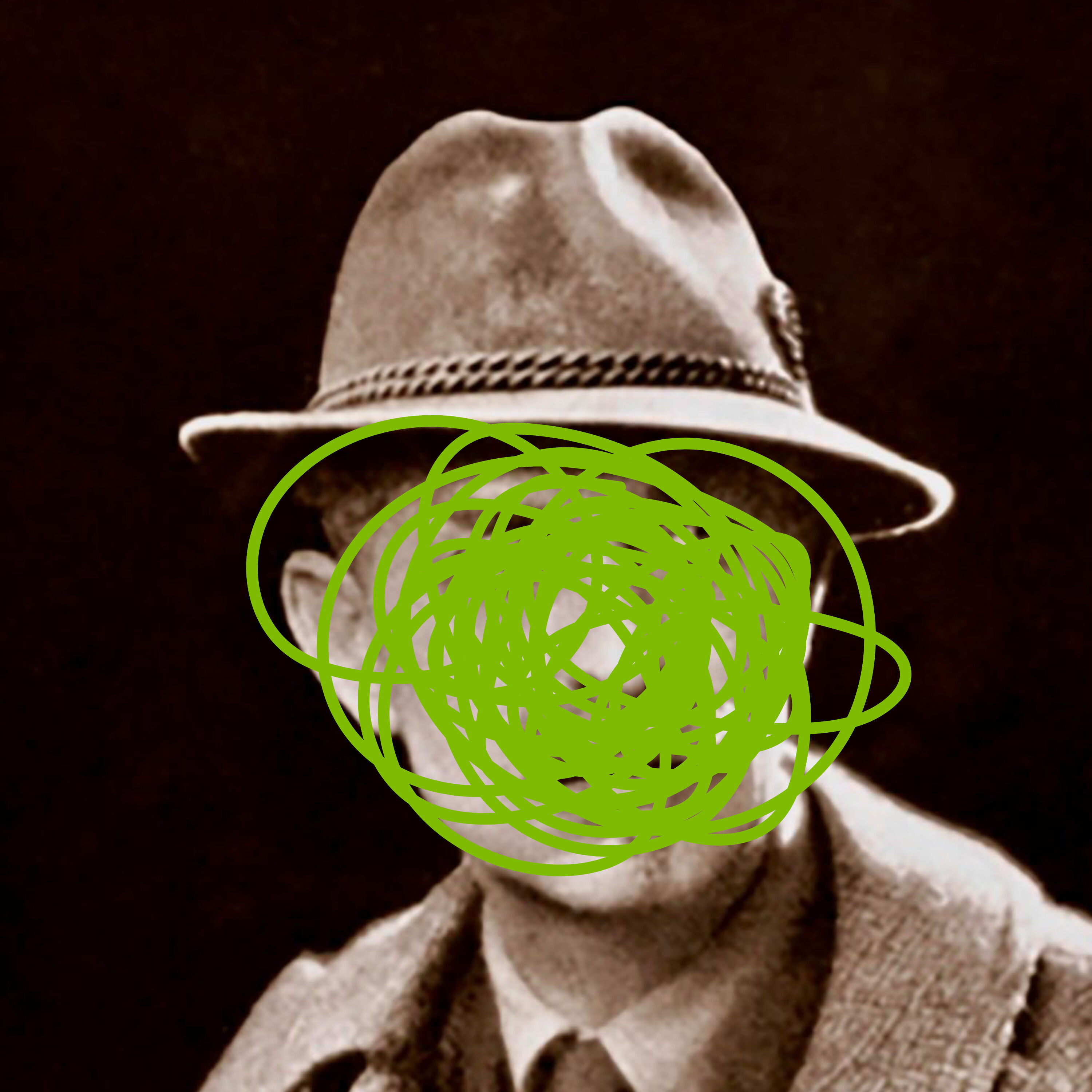
Suck? We're talking today about George, also known as Joe Henry Lane Fox Pitt F R A I F R G S. Born 1890, at Grosvenor Gardens, London. Died 1966. Eugenicist, fascist, incarcerated as a Mosleyite Nazi in the war. And this is a story in part about what he did next, but it's also about the fact that he was the grandson of someone called Augustus Henry Lane Fox Pitt Rivers, who lived in the 19th century and died in 1900. And he was his grandfather. He set up the museum in which I have been the curator or one of the curators for the past 18 years. So my working life and this name, Pitt Rivers have become, and I feel like it's part of my inheritance in some ways, intellectually, in my working life. So, you know, George and I, Joe George, I know what we're calling him. Fox, Pitt and I both have a relationship to the grandfather, Augustus Pitt Rivers, founder of archaeology as a discipline in many ways, a pioneer in the 19th century of ideas, of anthropology, the first inspector of ancient monuments in England, a soldier who thought about conflict in the past. Someone who's sort of thinking, I go into in a great deal, but it's the refraction of his colonialist Victorian, 19th century thinking into what then in the grandson turns into really the worst hard nosed, super rich form of fascism that you could imagine. And what he does next and the thing that he does next after, well, when he was released from jail and allowed to return to the college in Oxford, Worcester College Oxford, where he was a fellow, having been an undergraduate there, where he did all his eugenics and so on. The first thing he did after the war, when he came back was he donated an item that he'd inherited from the general grandfather, Claugusus Pitt Rivers. And that was a human skull that had been turned into a kind of chalice, a sort of goblet. And that item, that person was used at high table in the Senior Common Room, Worcester College, Oxford, not just for 10 or 15 years, but for 70 years, until as recently as 2015. So the book starts with the history of who the Pitt Riverses were, how this person's body got handed over from one generation onto another, but also who was this person, who was this woman, as it turns out, whose body was abused after death in this way.
- [18:05]
A
Hi, it's Claire. I'm here to quickly say that this episode is free for everybody, but the next one won't be. That's because we switch off between free weeks and Patreon weeks. So if you're a fan of public history made by actual experts, consider supporting our Patreon. It's Only one tier, which means everyone who subscribes gets access to the same perks across the board. Because we're not trying to get rich, we're just trying to make good history that is engaging and accessible at the same time. For the price of a fancy muffin, you'll get access to a new episode every week instead of just the bi weekly free ones. And they'll all be ad free for you. You'll also get access to the full episode archive, bonus content, early access to merch, and lots of other fun Patreon exclusives to sweeten the deal, just head over to patreon.com this guy sucked and join the honorary haters club. We can structure the podcast almost similarly to the way that the book is structured in that we can start with explaining this family and then this person and how they're able to, not even able, but enabled to do this terrible, terrible thing. And we can, I think, as you suggested, end with talking about this person who really is who? The person that matters in this story, or one of the people that matters in this story. Much more so than George Henry Lane Fox. Pitt Rivers, I mean. So let's talk about the Pitt Rivers family just for a minute, so that people understand the context in which all of this is made possible. As you said, his grandfather, Augustus Henry Lane Fox, many names this family, which, if you encounter the British aristocracy, that's part of the thing there. So he's an ethnologist and archaeologist, as you said. He also founds the Pitt Rivers Museum using 22,000 items in his personal collection. So when we talk about fabulously wealthy, these people are part of this, including, like, this enormous material wealth that is taken from these groups that they essentially exploit archaeologically. Exploit, I would argue.
- [20:05]
B
Exactly. So he inherits the name Pitt Rivers. So Pitt Rivers isn't even really his name, which is why in the book I call him Fox. The grandfather I call Fox, and the grandson I call Fox Pitt. That was their legal surname, but they adopted this kind of death name, this necronym, as I call it, when he inherited the money in 1884. So he's built up a collection knowing he's going to inherit this immense colonial fortune. He's from money anyway. There are relationships across his mother's side, the family, the father's side. The inheritance is a vast amount of money, but he's already got significant sums, all from this intersection of English landscape, sort of landed gentry and of course, a big dollop of horror story Caribbean money, which is coming from, you know, the unfree labor of untold hundreds or thousands of people in the Caribbean you know, over the years. Certainly there's the argument is put that in 1884, when he inherits the money, it's the largest non formal aristo, non formal, you know, House of Lords, whatever, you know, landed gentry, you know, one of the largest sums, fortunes of that kind, which is just made out of imperial, you know, nascent capitalism really, you know, so they've got a lot of money. That's the first thing to say.
- [21:28]
A
One of the things that we say a lot on the show or that I've said a lot on the show is that glory, whether it's economic glory, whether it's a name, a legacy, whatever is for the people on the show or the people that we talk about on the show is almost always built out of human suffering. The cost of all of these things, of someone becoming very wealthy and all of these is human suffering is at the base of it. This is a case where that is true. Like this is a person where that is absolutely true.
- [21:57]
B
Exactly. So in the book I trace, and that isn't always actually widely understood about Pitt River. So I do trace all the really boring ways of talking about who are the grandfathers, the grandfathers of the grandfather, where does the money come from? What are the sources of money? Just so we show that actually this isn't random wealth, it's exactly as you say. There are emancipation payments made in the 1830s. There are earlier, you know, sums of money made out of the transatlantic slave trade, out of the sugar economy and so on. So understanding that. And then what's interesting is what this generation, what I call the 38, because he isn't, he's born, he's a young boy when obviously abolition has happened a long time before emancipation happens when he's like 10 years old. So he isn't himself involved. He's inheriting these sums of money and some of the vast sums of money made with the so called emancipation payments which were made as compensation not to the people that had been enslaved, but to the people who said they had owned the enslaved people. And that's of course why, you know, lots of people continue to argue that reparations is a very important issue because actually Afro Caribbean people were never compensated in the way that the whites planters were. And these planters were back and forward. Lots of them were basically living in the UK and they were absentee landlords. So that's the background to Pitt Rivers. He then becomes a soldier. He's sort of given the Job of finding the right rifle to adopt as the service weapon of the British army and importantly, training people in the use of that weapon of the rifle in the years running up to the Crimean War. So the Crimean War in the middle of the 1850s becomes a very important point for Pitt Rivers, where for him and for his ideology, he sees an improvement in technology, in material culture, because there are more rifles on the British and French side than there are on the Russian side. Here in the Crimean War, remember that? It's basically an imperial war, but it's not one. We imagine Empire imperial wars as being about the global north and the global south as being north, south, axis. This is east, west. It's a line that kind of reemerged with the invasion of the Crimean Peninsula once more, of course, into 2014. But this is the French Empire, the British Empire and the Ottoman Empire on the one side fighting the Russian Empire. And because the Brits and the French, according to Brit Rivers, have got rifles, that gives them a little advantage because they've got more rifles than muskets as compared with the Russians. And the difference between a rifled barrel and a musket, which of course, the rifle has got the more improved accuracy of the bullet. He says that a relatively tiny difference in things that people have got leads to the question of whether empires fall or succeed. And he then starts, after all the horror of the Crimean War, which I talk about the way in which modern industrialized warfare turns living landscapes into sort of dead landscape, archaeological landscapes almost with dead bodies all over them, with people looting the bodies and having to dig massive trenches to bed that boulders and so on. He comes back from that horror and starts to build a theory not just of weaponry, but of all material culture, which is really a modern theory of cultural supremacy that lies at the heart of what anthropology is today. It's one of the foundational ideas that we're all human, but there are different sorts of humanity based upon how civilized you are, or the language of the time being sort of primitive or barbarians and savages. And all of the language that use, all the horrible language that's used at the time, that's all about essentially whether you've got a bow and arrow or a rifle or later on, indeed, a Maxim machine gun, as we see sort of later in the book. So that's the background is the Pitt Rivers family. The soldier who becomes an archaeologist founds so the modern ideas of the preservation of monuments, modern archaeology, modern museums as educational institutions, all based on this idea, not of kind of racial supremacy. In a very simplistic way, biological way, but something more pernicious than that. Ideas of cultural supremacy, ideas of civilization that are still with us in the present, but were being used in order to justify massive killing on the colonial battlefield.
- [26:29]
A
A lot of people will be familiar with what I would say is the modern iteration of this or the contemporary iteration of this. And this is obviously an anti endorsement, but the sort of like guns, germs and steel view of the world where you say, oh, if you have access to certain technology, that is its own form of cultural supremacy and all of that. And people will still read that today and say, I just love Jared diamond and I just love the way that we think about this. And I have to say, hold on, everybody, hold on, hold on. But this is still a way that there is a lot of move away from this in academic anthropology, but it still persists in the way that the world broadly thinks of culture and of cultural anthropology, I think.
- [27:11]
B
So one of the themes of the book is how things get transmitted over generations. What we inherit intellectually, but not even because we read the books. And so Pitt Rivers, for example, Augustus Pitt Rivers, even George Pitt Rivers that we're talking about today, they're not people that people read. People don't read their books really anymore. It would be quite unusual for any of your listeners to have ever, even if they did, a degree in archaeology, they'll have been told about Pitt Rivers. It's unusual if they had read any of him. And if they had, it might be one or two little things. So how do you remove someone from the thinking in a discipline when they're not even on the reading list, but their ideas continue to shape what the discipline is. That's part of what the theme of this book is. How do we inherit well from the past? And that includes actually receiving certain things that we value, but being happy to reject other things. So the book is called Every Monument Will Fall. It's not called all the Monuments Must Fall. We have to tear down every statue, we have to burn down every academic discipline, we have to shut down the British Museum and so on. But it is about saying that if we choose to hold onto something from the past, if we choose, you know, to value this monument, this idea, this museum, that's a choice in the present. It isn't inevitable fundamentally, in this book. And this is where Pitt Rivers, across the generations sort of come together. There were three movements which have long histories, indigenous led histories, African led histories, that were important for me in recent years because they turned up on Our doorstep at the Pitt Rivers. One was the foolism movement for removing monuments of colonizers and dead white men from the streets, which has a long history that goes back into India in the 1920s, Algeria in the 1960s and so on. Restitution, which a lot of your listeners will know about and obviously is about returning looted objects on a case by case basis where they've been taken. And the third is the decolonisation of knowledge itself. So idea. So from the streets to the museums to the libraries and seminar rooms and spaces like this, all of those movements were reacting, it seemed to me, to actually quite a tight time frame between say the 1870s and the 1920s. That timeframe, which is what's in the book I call the period of militarist realism, the idea of a certain form of cultural supremacy that's being invented and written into our universities and our museums and our monumental cultures that has a history. And that is the time period that links Augustus Pitt Rivers with George.
- [29:55]
A
Yeah, absolutely. And what a great way to get into talking about George. It's also interesting that a lot of this coincides with this incredible monumentalism that happens in the US in this period, which is right after the Civil War. And we see the same thing happening in the US and this obsession around legacy and monument and stuff happens here in that time period as well. So I just wanted to add that as a sort of interesting linkage, that this time period is meaningful in a similar way in a lot of different places.
- [30:21]
B
Well, some people have argued actually that it is the memory and the memorial cultures that come out of the so called lost cause. You know, the idea that the Confederates actually didn't lose, that the Civil War is up for grabs still, that slavery might be reinstated almost is part of the logic that we ought to hold on as cultures to General Lee statues and so on. That's all about a mixing up of the monument with the man, we're told. And this is so important for all your listeners for any of the episodes. This is the point in history where there is an active what does the monument do? What does the museum do? It makes you confuse the image of the man with the man. So people say, don't cancel history. If you want to remove something, you're attacking history. No, what you're doing is you're reshaping memory. So don't mix up memory and history. Don't mix up the man and the monument. This isn't about the rights and wrongs of the Pitt River's name over the door. This is about who people want to remember. It's the difference between the human skull, which is unnamed or bears the Pitt River's name on it, versus those men, and those names that get remembered and memorialized in stone and bronze and other forms.
- [31:44]
A
Yeah, absolutely. Okay. For the backstory on George Pitt Rivers or just the story, normally what we would do in an episode is say, like, what are they famous for? What are they? What's bad about them? But this is a sort of an interesting case in that what he's famous for is also what's bad. They're one and the same.
- [32:01]
B
Yeah, yeah.
- [32:01]
A
Or even if he's not famous, what he does in the world. They're interconnected so intimately with one another that we can't even really separate them out. So he's born in London in 1890. He serves as a captain in the British Army. So it's a similar thing to Augustus, where it's the same model. He starts as a soldier. He's in the British army during World War I. He's severely wounded, sent home and discharged in 1919.
- [32:24]
B
Exactly. Although. Or he possibly shoots himself in the leg to get out of the. Who knows?
- [32:29]
A
He's wounded somehow. Whether it's an own goal or not, we're not sure.
- [32:33]
B
But he has also seen active service in and at a very nasty incident in South Africa and the putting down of some industrial action that happened in a miner's strike. So he was there. He has an interesting background in terms of his military service. Early on in Empire.
- [32:51]
A
One of the things I found very interesting looking into him is, yes, he has this experience in South Africa that makes him also extremely anti union and anti organized labor. And the way that he funnels that into his writing and his thinking is that a year later, after being discharged and retired, returning to the uk, he writes a book on the Russian Revolution, as many have done. And his qualifications for that are basically nothing other than a can do attitude. Again, much like many others who have written on the Russian Revolution. Can I just say. And in it, he rails against the dangers of what we now think of as Judeo Bolshevism, which is the idea that Communism and Judaism are inseparable and. Or the Communism or Bolshevism come out of Jewish ideas that one engenders the other. And so they're both bad and imbued with badness as a result of this. This is kind of, to me, obviously, because I'm a historian of people who do Nazi stuff, basically. I found this really interesting because to me, it creates A very clear sort of baseline for understanding what a lot of his thinking comes from and where it comes from.
- [33:55]
B
Absolutely.
- [33:56]
A
He has one line in his book is the Jews are the principal agents of economic and political misery in the world through their dealings in international finance and their actions in promoting democracy and revolution. This is someone who is very dedicated to his own wealth. He's dedicated to the idea that others desire to take away his wealth. And he has to create or believe in a particularly dangerous conspiratorial other in order to make that his view of the world work, essentially. That's how I was reading these things, at least.
- [34:28]
B
Yes, exactly. And then on the basis of that work and then his work within eugenics and his founding of some of the key societies for eugenics, he has time in Australia. He marries the daughter of the Governor of the Governor General in Australia and has time there with the daughter of Lord Forster. He has time in New guinea when a lot of actually interesting things are happening around fascism and anthropology within the New Guinea, Australian to the context. But then things start to harp with the emergence of. I mean, there's a moment at which Mussolini, when he's a year or two into power, says, yeah, we are putting into practice what our friends Pitt Rivers and others, or what Pitt Rivers and his friends have been talking about for a long time. I mean, just to look at my notes for a moment, I mean, he's not only the father in law of Sonja Orwell, the widow of George Orwell, he's the second daughter cousin of Winston Churchill. He's the second cousin once removed as Diana Mitford, who was the second wife of Oswald Mosley. So you get. And also he was the great, great grandson in law of Sir Francis Baring, the founder of Baring's Bank. So you get this sense of this mix of the Mitford sisters, who are related, of Mosley, who's very important in terms of their interactions. Pitt Rivers is one of the key rich landowners in Wessex who is funding certain of the parties which are emerging, you know, on the far right in the 1930s. And there is the connection to Churchill and the wider. And to Bertrand Russell, even. So, yeah, I mean, it's a story that goes absolutely to the heart of the English establishment. So it's not only the history of Oxford University, it's the history of the British ruling class as well.
- [36:19]
A
Yeah, absolutely. I did think it was interesting that he has this father in law, this. This aristocratic father in law who is the Governor General of Australia, and that that also really enables him to Become this anthropologist who is going around the Antipodes, Australasia, Oceania, Pacific Islands in general, and is sort of fashioning himself this anthropologist, which, as we've said, is also something. Is this echo to something that his grandfather did. So really understanding his family and his relationship to all these people around him is. Is important to seeing how this influence starts to sort of spread and leak out into everywhere. Also, for the second time on the series, he is extremely interested. We've had another guy who does this, very interested in Maori life, culture and biology, which I found very interesting that this seems to be a point of fixation for now. Two people we've had on the show and the show only has 2,25 episodes thus far.
- [37:17]
B
Who was your other guy? Who was that?
- [37:19]
A
Percy Granger. Who's like a folk music, Aryan supremacist guy? Nordic supremacist guy.
- [37:25]
B
That's right. So, yeah, I mean, there's a bunch of them, you know, the, you know, Oceania, the Pacific, whatever, you know, becomes important in terms of trying to tell stories that had already been told a little bit with the Tasmanian genocide and with aboriginal genocide, stories of the inevitability of exterminations of indigenous people, all these racist lies over miscegenation and racial identity and the idea that people just get sad because of colonialism and just die, basically, and that it's sort of inevitable. These are the arguments that the grandfather's putting and now the grandson is taking them and trying to give them even more of a scientific basis. What gets really nasty in the 1930s is it just hardens and hardens. And he writes to Hitler to congratulate him on the Anschluss. He attends one of the Nuremberg rallies. I mean, where the money is going, who knows? There's also. I mean, when we get to after the war, there is the sense as well about where is the money going and the selling off of the collection in terms of fascism. But we can certainly take him up to, say, 1938, 39 in 39, the estate that he's inherited in Wiltshire gets sort of taken over, as often happened as an army barracks. And he walks around wearing a swastika, drives a car which has all sorts of sort of Nazi regalia all over it. It's all sort of detailed in the book. But, yeah, it's fairly extreme stuff that's going on in rural Wessex.
- [39:01]
A
Yeah, absolutely. And there's something that I come across a lot when I talk to people about Nazism and fascism in Europe the 30s and 40s, trying to explain Some of these things to people who have believed for a long time, because of the way that we memorialize them, that they are isolated to central Europe, that he's a very, very strong example of the fact that this is not an isolated experience and that legacies grow out of this with, like, internally, in other countries as well.
- [39:31]
B
They do.
- [39:31]
A
It's not just time limited or geographically limited. Ethan.
- [39:35]
B
Exactly. So what's important for the British in this conversation, though, is that they, that generation, like our generation in the present, are trying to work out what to do, how to inherit legacy colonialist institutions, objects, collections, attitudes, ideas from the 19th century. And they have one set of answers. And I think their set of answers, what George Pitt Rivers does with his inheritance is something that we might look at in order to. I mean, it's horrible, but, you know, we can still learn from it. One would hope, in terms of realizing there is a real question here about how do we deal with the things that were inherited from the 19th century in forms of colonialist white supremacism, but also how that had morphed into forms of the extreme right in, in the 1930s. And the history of the skull and what he does with it is really at the heart of that. But there's also a museum. So you've mentioned that he founded the Pitt Rivers Museum in Oxford. The grandfather did it in 1884. What happened in 1884, which was the same year, just sort of come into the money in 1880. He then found a second museum in the same year on his estate, which is the one that's inherited by George Pitt Rivers and Augustus Pitt Rivers, with all this money, builds up a second museum, an amazing museum with the finest collection, the most important collection of the looted men in bronzes, when they're looted in 1897, right at the end of his life, he gets hold of these objects and has a room for them, a series of other objects from ancient Egypt, from folkloric objects and so on. That museum is inherited by George Pitt Rivers after the grandfather and his father die and after the war, not only does the skull get handed over to the University of Oxford, but that second Pitt Rivers Museum is dispersed. It's sold off, and the Benin bronzes are sold off. So many of these other objects that were made with this vast fortune, and that money goes, well, who knows where? And that's one of the questions I ask in the book, is what happens. He has this girlfriend, the sort of third wife, although they never get married, Stella. In some ways, the most interesting and concerning character in the whole book. She goes under six or eight different surnames and pseudonyms. She changes her name by deed poll to Pitt Rivers. She never marries Pitt Rivers, but she changes her name and again, she'd been incarcerated as a fascist in the war. They kind of meet as locked up Nazis. That's their story, and that's essentially his third wife. But after the war they get together and they sell off to the Pitt Rivers Museum, the second Pitt Rivers Museum, not the one in Oxford, the one in Wiltshire, and do whatever we think they do with it after the war in terms of their ongoing involvement in far right politics. It gets even worse. After he dies in 1966, she carries on right the way across the 70s doing the same thing.
- [42:48]
A
Hi again, it's Claire here with a quick shout out to tell you about other multitude shows I think you'll enjoy. If you like this one. Now, if you're listening to this Guy Sucked, that means you're a history person. Or possibly just someone who likes being mean. But for the purposes of this shout out, I'm gonna say you're a history person. What if I said there was a podcast that would also convert you to being a science person? Well, great news. There is Dive into genes, microbes, and other assorted tiny things that have a big impact on our world. With Tiny Matter, join scientists Sam Jones and Deboki Chakravarti as they take apart complex and contentious topics and rebuild your understanding of the world around you. They have episodes that cover things like evolution, ancient sewers, and the history of birth control. And Sam and Deboki really embrace the messiness of science in its place in the past, present and future. I personally really loved their recent episode on the horrific Legacy of Race Science in Modern Medicine, and I really recommend giving that one a listen. Tiny Matters releases new episodes every Wednesday and is brought to you by the American Chemical Society, a nonprofit that connects and advances chemistry and the broader scientific community. Subscribe to Tiny Matters today wherever you listen to podcasts. Hi, this is a special announcement. Insert sirens here. We, meaning me and some other people, are doing our first ever live show, what the. On October 9th in New York City at Caveat at 7pm It's a special format that we're calling the Worst Wing, with two incredible guests pitting their least favorite presidents against each other. And speaking of those guests, I am super stoked about them. I'm going to be joined by Nicole Hemmer and Kevin Schultz, who you might remember from our Spiro Agnew episode. And it's going to be an absolute hoot. A complete riot, some might say. We're gonna play some games, we're gonna do a little audience participation, and all kinds of fun secret stuff is planned. So head over to thisguysuck.com and click on the live show link at the top of the page to snag tickets. While we've still got a handful available, subscribers to the show get a special discount code too, which is pretty sweet. In order to access that, just go to our Patreon page. So count this right now as me personally inviting you to come and listen to me yap some more. Okay, bye. Enjoy the rest of the episode. It's Claire again. I don't know if you've noticed, but fall is here and with it comes cooler nights, heartier meals, and at least for me, the craving for something warm and satisfying. That's where America's number one choice for home cooking, HelloFresh, comes in. They're bringing comforting chef designed recipes and fresh seasonal ingredients right to your door. This season they've taken things to the next level with their biggest menu refresh yet. Firstly, they've doubled their menu. Now you can choose from 100 options each week, including new seasonal dishes and recipes from around the world. Secondly, it's also an even healthier menu filled with high protein and veggie packed recipes, which I really appreciate as a very active person. I've been really enjoying my most recent hellofresh box which was delivered last week. The creamy zucchini orzotto that I made was the most comforting thing that I've had in a while on a night that was surprisingly cold after a really hot day. So it's was really like the exact right meal for me. And I've also been really enjoying the rice bowls that I got and I'm looking forward to having some more in the future. Between my book, which is due soon, academia, and the pod that you're currently listening to, I have been working really crazy hours lately. So I'm being very genuine when I say that having hellofresh has made my life a lot easier just because I don't have the time or energy to grocery shop or even come up with recipes like pretty frequently the best and easiest way to cook just got better. Go to hellofresh.com tgs10fm now to get 10 free meals and a free item for life. You'll get one per box with an active subscription and the free meals are applied as a discount on the first box to new subscribers only and it varies by plan. That's hellofresh.com TGS10FM to get 10 free meals and a free item for life. Or head to the link in our episode description for the same discount. Trying to trace what happens with the objects, the money, and even saying objects with some of these things, it feels horrible to say because these artifacts are often like, in some cases you talk about, for example, the skull cup are human body parts. We're not talking about someone with a collection of sculptures, which in some cases is also terrible, in many cases also has this terrible story behind it. But we're talking about people with these enormous collections that often contain things that we would find, for the most part, really just abjectly grotesque and awful to own, to possess and collect. I don't know. It's. It's. Reading the book is. So I really recommend everyone get this book because it allows you to feel some of the, like, grotesque feeling in it, if that makes sense, which I think is a real testament to what you've written, where there's, like, you're reading it and you're feeling horrified, but in a way that underscores how important it is to understand some of these things. And that's just an aside.
- [47:59]
B
It's also a book about how to write about those histories and what voice you find, you know, because that's a really serious challenge for all of us that you can, in terms of writing these histories, you can dehumanize, you can reinscribe the violence, you can make things worse. You can inherit this legacy and just repeat it if you're not careful. But no, I mean, one way in which we could talk about this legacy would be, you know, that's how George Pitt Rivers acted. He inherited the skullcart. He invented a new tradition, which was this dehumanizing tradition of the unnamed woman that everyone sort of knows what's going on. Everyone sort of knows what the tradition means and sort of don't. It's sort of deniable. But is it really racist? Is it not? Is it just a horror show? Is it silly? Is it funny? Is it gothic? No, it's obviously, it's fundamentally unethical. We would say it's not something to do in the present, but multiply it now and think about that extreme action continued in an Oxford College for 70 years without anyone undoing it? How many other actions are there that we inherit from colonialism via fascism into the present that just carry on without anyone really daring to challenge them? And that's fundamentally what this book is about, because in terms of human remains let's just point out Augustus Pitt Rivers bought the skull at Sotheby's in 1884. I tried to give a history to who this person was and to trace her life back. The story is that she's an enslaved Caribbean woman. And the circumstantial evidence, the radiocarbon date, that's about 1790. You know, the fact that the guy that had died and left this object at which it was bought at Sotheby's, who was known as the armorer, a collector of items of sort of punishment and weaponry, his father had been in the Royal Navy in the Caribbean. That, that fits as well. We know that from the physical anthropology. It is the skull of a woman by its form and size. We can go that far in terms of telling that story. But then just multiply that and realise, well, it's entirely legal still today for somebody to buy a human skull or an object like that at Sotheby's. If Augustus Pitt Rivers was alive today, he could do just the same at Sotheby's. The law hasn't changed. And then think about how many other ancestral human remains are in a box wrapped up in acid free tissue. How near are your listeners? Right this moment from a warehouse, a storeroom, not a museum with these items on display, but a university or a museum collection or a private collection with such ancestors in them. How many people are we talking about? It might be across America and Europe. It could be that we're talking about half a million or more. We just don't know. Why don't we know? How do we not know about this story? Should it be that we license human remains in the same way as we do for firearms in museums? Should it be, at the very least, that our institutions are open about what ancestors are in their collections? So there's a big story about who we remember, about statues and names above the door of the museum. There's also about who is unnamed.
- [51:23]
A
Absolutely.
- [51:24]
B
In some cases, these are people that were never going to be able to return because the violence was such that who this person was and where they came from was destroyed. So there's a real issue there for institutions, for anthropology and archaeology as disciplines, but for institutions around the world, we hear stories in North America about skull societies at some of the Ivy League institutions and so on. But how much more widespread is this? So. So that's part of what the book is trying to do as well, is to contribute to an emerging conversation about how to find dignity and respect for ancestral human remains and to hold those people up, those Unnamed de named human remains against the statues in bronze and stone of the dead white men whose names we know so well.
- [52:13]
A
Yeah. And much like you're at Oxford and you're a curator at Pitt Rivers, I'm at Yale, and Yale has the Skull and Bone Society very famously.
- [52:21]
B
Exactly.
- [52:22]
A
One of the notes that I wrote down in my sort of prep for this episode is the importance of recognizing that violence is in the archive. Violence is in the museum collection. Everywhere you look around you, there is violence. Even if you don't see it, it just might be an echo. The sanitization of violence is also violent. To erase something by force or as a byproduct of attempting to tell some other less violent story, which is what is happening in museums very often, to say, this is sanitized. This is the story we want to tell about this skull. It belonged to a child living in this place at this time. And not tell how you acquired this, not tell how long it was in your storeroom before it is brought out into the light for 10 years and then returned back to this dark space. This story is also a form of violation of violence. And obviously you know this because that's what you work on. But the people who are listening to this, truly, the vast majority of the people who listen to this are not academics and do not think in this way, because why would they have to? Because we spend all of our lives being told not to think in this way. That really reminds us, or should remind us that there is no untainted, no pure history that exists. There is the thing you are seeing in a museum, unless you know the provenance of it. There is always the possibility and in many cases the likelihood that it's acquired as a result of some great, great violation, some great violence that's enacted upon people. And then there are people who read your book, this book, or British museums or any of your other work and get angry with you for saying this, stating this same fact, saying there is violence that exists around you and in and around the archives. We watched people get mad at us on Instagram for saying that. You know, like, because you. You posted about this and someone said, you don't know what you're talking about, essentially. And you said, well, I certainly do.
- [54:18]
B
Exactly. Well, they said, oh, you're attacking characters. And I said, well, I am a curator.
- [54:22]
A
Yeah.
- [54:23]
B
And then it's like, yeah, yeah, I know that, but you're still attacking. Yeah, but come on. This is. This is really unfair and. Correct. Why is it unfair? And it was only because you'd posted what two lines from the book? Yeah.
- [54:33]
A
The acknowledgement of violence to people feels like violence, which is so. It goes to the heart of a lot of this stuff that we're doing. We're just saying, no, all we're doing in a lot of these episodes is acknowledging violence. We're just putting it in the story.
- [54:49]
B
Yeah, I mean, that was why I left. You know, Twitter was just. There was no, all it was was just attacks like that. But it's why, I mean, my new approach is to turn LinkedIn into Twitter so you can, you can have professional conversations. You can make the Same points on LinkedIn. You can do the same on Instagram, which is where the artists and the writers are there and they've got their angles. You can do the same on Facebook and onto bluesky. So you can still find me having left Twitter and wave Goodbye to my 46,000. Well, who knows how many of them. I mean, the numbers were going down anyway as people were leaving. And then it just got to the point where all it was was abuse, you know, but it was unusual. It was interesting to get that on Instagram in our conversation.
- [55:33]
A
Yeah, that was the first time I'd seen something like that on Instagram.
- [55:37]
B
But then, yeah, I'll always write back to the, you know, feed the trolls, of course, because you have to, you just, you, you just expose how sort of silly the ideas are. But no, I mean, for your listeners. Yeah, in sort of larger context. This is about the invention of this framing of the culture war. That idea, it felt very odd to me five years ago, six years ago, to suddenly be told that the Pitt rivers and that my disciplines, archaeology, anthropology and similar fields, were part of something called a culture war. I'd never heard that. It was news to me. I'd definitely never trained up on how to do the fighting or whatever. The attack seemed to be coming from outside. And so what interested me and part of the story of this book is to say, well, okay, where does this framing come from? This idea of a culture war has got a history. It's about the weaponization of culture in the past. It's about a war on culture, the co opting of museums to tell certain narratives. And in that war, that attack upon museums, they mix up memory and history, they mix up the man and the monument. So you're told before you know it, you can't make any change in the museum. You can't return an object, but you can't even rewrite a label. You can't take down a statue and decide that you want to remember somebody else as a community. When Oriel College voted twice in favor of the removal of the Rhodes statue and then didn't remove it because, well, whatever, no one really knows. Because why? Because it might upset someone. That's fascinating. And I say in the book, look, that moment in time that we're in at the moment is what made the writing of the book possible. Because what you're seeing is that mixing up of objects and people being told that to change your memory, you're canceling history. That makes no sense at all. There is a democratic right of any institution, any society, to reshape their memory culture. It's going on all the time. I can't imagine any other part of our society, whether it was the criminal justice system or the health care system or the private sector or whatever, where you'd be told if something was hurting people or outdated or violent or whatever, in terms of gender or any issue really at all, sexuality, race and so on. And then you said, okay, there's been pointed out, so we want to make a change. And then you'd be told no. So we've always done things that way. It's got to stay the same. You can't imagine that for law or for medicine, you are going to keep on doing the same medical procedures as we were doing in 1880, because we've always done it that way. It would be nonsense. Something about the cultural sector means that we can be told that as soon as we try and keep in step with our times, we're somehow attacking the institutions in which we are working. That itself is the attack. And that's the really complicated, smart attack that happens that in the book. I try to explain that actually, you know, just by doing our job, we are told that we are, you know, attacking the institutions in which we work. And people tell me to oh, yeah, why don't you just resign from the pit? If you hate museums, if you want to shut down the British Museum, why don't you just, you know, why are you being a museum curator? This is being a museum curator. This is what we're all doing in different ways. Yeah, yeah.
- [59:02]
A
I mean, I have said this quite a few times, but I get told all the time that I'm not a historian.
- [59:07]
B
Oh, yeah.
- [59:07]
A
And much of that is because people don't want young women to be historians. That's mostly what's happening there. But there. There is this assumption that history is this and memory and archaeology are the static thing, that they can be paused at one point. And that point is the correct point in time and that is the correct sort of orthodoxy of thinking around them.
- [59:29]
B
Sure.
- [59:29]
A
And it is interesting because obviously things on the show often get sort of accused of having a right versus left thing happening. But it is interesting because at least in the U.S. now, there is a very clear memorial legacy shifting project happening from the right, and they seem to be allowed to do that because they've built all this political power. But if you say, no, I don't want to change it this way, I want to change it in this other way, well, this other way is not allowed. There's only one direction in which it's allowed to shift, and that's whichever direction holds power in that moment.
- [60:06]
B
Exactly. So one of the really hopeful things in the book, something that I really learned in writing this book, is that these movements, restitution, fallism and decolonisation, they take time and they're intergenerational, but they get there in the air. So I tell the story, various stories, of the fact that Cecil Rhodes has already fallen in Zambia in the 1960s, Zimbabwe, 1980, Cape Town, 2015. Each of those movements took a long time. Fallism, as a movement, reaches back into the 1920s in India and so on. There are many, many instances of change happening, but it takes 30, 40 years. I'm old enough to remember the events in the late 1990s when I lived in Bristol, where I was one of the people who turned up to the events for the removal of Edward Colston. Well, not of Edward Colston, of the image of Edward colston, of the 1895 image of the 17th century in Slaver, that for 100 years people have been trying to remove or arguing about. We failed. My generation failed, as there was an attempt to take it through what then was English heritage and to formally do the paperwork and so on, and say, we'd like this removed, we'd like to put something else up instead. And then in the summer of 2020, a new generation came along and just pulled it down. Similar things have happened with so many Civil War monuments, so many other instances of Cecil Rhodes and so many other monuments around the world. So these are intergenerational monuments. The reason the book is called Every Monument Will Fall and Not all the Monuments Must Fall is fundamentally about that right we all have. We should have a democratic right to shaping our memory culture, not this weird example of extreme involuntary memory where we have the memories of a whole bunch of, like, 1890s Victorians forced upon us. This is what you have to remember. You have to celebrate this that or the other. No, we can make our own memories. And sometimes you can remove, as has happened in such a beautiful, beautiful way in Bristol, the removal of the statue. And they leave the plinth and they rewrite the text on the plinth. And the plinth just says they made an image of Edward Colston in this place and now he's in the museum. Really, really simple story. And that reshaping of memory culture is something we need to support in all sorts of different ways. When people are going to all the effort of protesting about these things, and when people, in my case, when there were protests outside the institution in which you work, you've got to pay attention and you've got to understand that. So it's not about removing everything. It's not about a bunch of woke historians or curators doing stuff. Instead, it's about understanding these histories, these issues. Have got a history.
- [63:06]
A
Sure.
- [63:07]
B
And what every Monument Will Fall really tries to do is to tell a bit of that history fundamentally in terms of George Pitt Rivers, how it moves from the colonial into the fascist, into whatever we've got today. So Augustus Pitt Rivers frs, George Pitt Rivers, Elon Musk frs, still going on about civilization, still going on about saving white culture. That's our new version. I mean, look at. They're not building statues. Exactly. Although we'll wait and see. I mean, they've cut in America, they've cut the. The National Endowment for the Humanities, and they're going to spend that money on statues. Right?
- [63:46]
A
Sure.
- [63:46]
B
But equally, look at the aesthetics. The aesthetics of the new fascism is what it's like Donald Trump as the Pope. It's those AI images. We need to understand that all of this has got a history. And that's what the book tries to do.
- [64:00]
A
Absolutely. And one of the. We have an earlier episode that we did that people can go back and listen to with Ashish Kapoor, Siddiq on Henry Dundas. And we talk about the relationship that Scotland has to this and the sort of all the Dundas arguments. And I give some interesting, like, internal arguments that were happening at Edinburgh, like at the University of Edinburgh when this was happening. So people can go back and listen to that too. A big part of this show also is us sitting here saying, okay, he did all these terrible things. He was a race scientist. He believed these certain people shouldn't be allowed to marry each other. He believed that that to be poor was an affliction and that he was actually incredibly pro choice, but only in the sense that he wanted to make sure that poor people were not able to keep sort of diluting the British gene pool, all of those things. And I'm hoping that always the people who are listening to the show will hear us talking about these things and then say, wait, I hear this now, or I hear this here. And instead of saying, oh, we're just trying to do presentism, they'll hear it and say, oh, there is a political long term memorial culture that often prevents us from making the connection to the past and instead insists that we have to simply hold in our minds this past version of a memory. Instead of being able to say no, this thing reiterates itself. It rears its head again and again and again in different ways by different people. And that is part of this legacy too.
- [65:27]
B
So what's incredibly important about what you've just said is that that that thing that you've just described has a very tight history. And that's, I think, insofar as there's one main contribution from this book, it's this idea of militarist realism, the idea that this form of realism, the idea that militarism is the only form of reality, you can't imagine the world otherwise. And I use the idea of capitalist realism there, the idea that you can't. The point about late capitalism is you can't imagine the world otherwise. You can't imagine that things could ever be different. That was the argument from Mark Fisher, wonderful writer in the 90s. That's something that emerged in a very distinctive way between actually the 1870s and the 1920s. So this isn't about all knowledge, all museums, all statues. It's about a very tight time frame from the end of the Civil War in America through to the height of colonialism in pio, from the Europeans into the beginning of fascism. And that is about the co option of culture for the purposes of white supremacy. And as a part of that, the idea was that not only is this a set of ideas, these things are eternal, these things will never change. This is it and it has to be defended. So there's a lot in the book about how we, when we're trained in these disciplines, when we read history books, when we go to university and look at these subjects and, and sort of learn about them, we become a part of them and it starts to feel personal. This defense of the past, this idea that, oh, they're attacking me rather than just my subject, or that in some way this work is sort of unpatriotic. That's what oddly, people say. And at the end of the Book I get into that. There's a chapter called Spitting on Britain, which is something that some of us have been accused of doing by some of the more right wing commentators here. You know, there's nothing more patriotic, I mean, not nationalistic. There's nothing more patriotic in my view, than returning an object from a museum, than saying we can change our memory culture, than, you know, saying that we can update our academic discipline so they're relevant for the world in which we live.
- [67:36]
A
I think so too. And I think that's a great place for us to end the episode, to be honest, because hopefully people are hearing this and rethinking some of these things that maybe they have by osmosis just absorbed over their time living in the world. Because we live in a moment where what you're talking about, this strong reaction to the idea of change, where that reaction is just normal. And maybe you'll listen to this and be a little bit more open to those shifts.
- [68:07]
B
Absolutely. If I can say one thing at the end, congratulations for having listened so far. If you're still listening, and if you are, you might potentially be interested not only in reading the book, but I recorded the audiobook. So I recorded that I read. This is a long book, right? I read the whole thing out. It's like 20 hours. But I got there. I did. I spent seven days reading it out. So if you prefer audiobooks to reading books or some people read along, they listen to it and they have the text and they do. So there is. Yeah, wherever you get your audio, the book is there as an audiobook as well.
- [68:47]
A
We'll link that. Definitely.
- [68:49]
B
That would be great.
- [68:50]
A
You have made a very convincing argument. I think even if we spent so much of this not talking about George Pitt Rivers, I think that is good in this case. We didn't spend that much time talking about him so much as we talk about the things around him. Because I think that goes to the point of your book and that's ideal.
- [69:07]
B
We decentered him, if we used the academic terminology. We de centered George, we maul Jo and we instead hopefully managed to tell the story about who this person was who found themselves in an Oxford college and the other half a million or more other people who, if you do one thing after listening to this podcast, ask yourself about the question, educate yourself about the question of ancestors in museums and, you know, the live sort of questions over whether they should be on display or not, what consent means when it comes to bodies in museums, and how to encourage transparency from our institutions about who not just what, but who is in our collections?
- [69:53]
A
Yeah. And go ask your local museum museums what human remains they have and what their policies are regarding them. It's important that they also and I think this is also part of your whole thing. I say things like your whole deal, but this is part of your thing.
- [70:07]
B
I hope so.
- [70:08]
A
Is you should be encouraging this transparency in the spaces around you, because it is around you and people are probably not aware of this all the time. Thank you so very much for coming on the show.
- [70:19]
B
Thank you.
- [70:19]
A
Professor Hicks can be found on Bluesky, @profdanhix and on Instagram also at profdan Hicks. I'm now learning on LinkedIn as well.
- [70:28]
B
Exactly.
- [70:29]
A
You can head to his website@danhicks.uk or get yourself a copy of Every Monument Will Fall in audiobook and and book book form at the links in the episode description as well.
- [70:41]
B
Thanks so much. It's been fun, but also, you know, not fun.
- [70:45]
A
Yeah, that's part of the whole thing. It's not fun, but it is fun. Thanks for tuning in to this episode of this Guy Sucked, a member of the Multitude Podcast collective. This episode was Hosted by me, Dr. Claire Aubin, featuring special guest Professor Dan Hicks, and edited by Julia Sheffini. All of our theme music was written and produced by dog training expert Marshall Dean Williams. If you'd like to support the show and get access to all episodes, including two extra episodes per month, and access to our full archive of episodes, you can subscribe@patreon.com this guy sucked. See you next week.
- [71:27]
B
Sam.