Loading summary
Transcript76 lines
- [00:00]
A
Hi there, it's Claire. If you're hearing me, that means you're listening to the free preview of one of our Patreon episodes. We switch off every week between free and Patreon exclusive episodes. So if you'd like to hear the rest of this conversation, head over to patreon.com thisguysucked and join our honorary haters club. A list of sensitive themes and topics included in this episode can be found in the episode description. Welcome to this Guy Sucked, the show where we prove that it's never too late to have haters and you can't libel the dead. I'm your host, Dr. Claire Aubin, and I'm a historian, writer, and most importantly, certified haters. On this show, we talk about people from throughout history with legacies that need a little updating. Whether it's because of their politics, their behavior, or their impact on society and culture, these guys actually kind of sucked. And we bring in a new scholar every week to tell us why. I don't know why I still look at this every time I fully have that memorized from how many times I've.
- [01:14]
B
Had to say it. With me today is Brooke Newman, who.
- [01:18]
A
Is an associate professor of history at Virginia Commonwealth University. She is a historian of early modern Britain and the British monarchy. And very important to this episode. She has a book out later this month that you can and should be pre ordering called the Crown the Hidden History of the British Monarchy and Slavery in the Americas. So congratulations on the impending publication of your book and welcome to the show.
- [01:41]
C
Thank you. And it's great to be here. I'm a huge fan of the podcast.
- [01:45]
A
It always freaks me out when historians that I really respect say that because it, like, makes me realize, like, you're listening to me.
- [01:51]
B
You listening to me say mean things about people all the time.
- [01:55]
C
I was looking for history podcasts and I saw the title of this podcast and it was like, it gets people podcast for me. Yes.
- [02:03]
B
I was aiming for. I was at a this Apple podcast thing not that long ago, and so.
- [02:08]
A
Many people, like, they had our podcast covers, like, projected on this screen.
- [02:13]
B
And so many people were like, oh, you have the podcast with the title and the guy. That's a great cover. That's a great title. And I was always like, well, Greg.
- [02:21]
C
You are proof that historical degrees and PhDs can lead to brilliant ideas.
- [02:26]
B
They can. Often they don't, but they it on occasion.
- [02:30]
C
Often they do. They do.
- [02:32]
B
So I always like to start with a question. We haven't done this one in a.
- [02:36]
A
Couple of episodes by the time this comes out. What is your favorite archive to work in or place you've been to in relation to your research?
- [02:45]
C
Well, this may be kind of boring if you're a British historian, but I have to say the National Archives at Q. And yeah, it's not that it's necessarily fun to go to queue, it's kind of annoying. You gotta take, you know, the tube and the overground and all of that. But I love how you can pre order a ton of stuff before you get there. And you've got these great boxes depending on what level you're on. But if you're on the level where a lot of the Royal African Company materials are, they will just give you like 20 boxes. They're in your little box, you got a seat and you can just, you know, get your box, look through it, put it back, get the next box. It's amazing. It's almost like self checkout for historians. And I know that makes me sound like I don't want to talk to people. I do. The people there are lovely and helpful, but to have access to all of these amazing materials and just be able to kind of whip through them quickly when you are on a trip to make a fast deep dive and take, let's say, thousands of main script photos, extremely helpful.
- [03:44]
A
I said this in the Bernard Mandeville episode, but I feel like a lot of people don't realize how much of a historian's job is taking photos on your phone of old documents.
- [03:56]
C
Yes, yes.
- [03:57]
B
Or with a camera.
- [03:58]
C
Yeah, now it is. Now. What's crazy is that only recently, during maybe the second half of working on this current book, did I finally download this amazing application called Genius Scan. And so now I have a mini iPad and I take much better photos, photos with Genius Scan. And it will tell you when the photo is clear and it just does it on so you don't have to keep pushing the buttons.
- [04:21]
A
I've never heard of this in my life.
- [04:22]
C
It's amazing.
- [04:23]
B
I've written this down as my first show note.
- [04:26]
C
It's absolutely worth it. And then it will save the entire block of manuscript files as a PDF, which you can then read on your iPad. Read it as a. I mean, it is transformative for my research and I'm kicking myself that I didn't do this years ago.
- [04:43]
B
This is amazing. And you know what's funny is listeners are like, this is not going to be useful at all to them, but I feel like you've just revolutionized my archival experience.
- [04:51]
C
Genius Scan, it's amazing. I'm not getting paid by them. They should actually let me be their spokesperson. But no, it's awesome.
- [04:58]
A
Look, genius scan press at this guy.
- [05:00]
B
Suck.com. we'll do a sponsorship deal, no problem. Yes, that is a very good answer.
- [05:07]
A
You know, I've. I don't think we've had any British Library people yet. And we haven't had any National Archives either.
- [05:13]
C
So I do love the British Library, too.
- [05:15]
B
We've also not had a bod, which.
- [05:17]
A
I think is fun. I thought someone at some point is going to say the bottom.
- [05:20]
C
Somebody. Yeah, I mean, you know, it's hard. There's so many good archives. The British Library has such beautiful surroundings. I love that it's in the city. The manuscript reading room is great. I actually spent a ton of time researching this book at the British Library in the manuscript reading room. And I would go back months and months later and they would remember me and say, oh, you're here again. Are you here to look at Clarkson's paper? Or whatever.
- [05:40]
B
I love that.
- [05:41]
C
Yeah, they're very sweet. So I really loved working there too. But you do have to go up and harass the A person and wait in a line. So, you know.
- [05:50]
A
But you get a little fun ID card, so that's a bonus.
- [05:53]
C
Yeah. And there's lots of good coffee shops around, so. Yeah, you're trapped when you're. And I gotta tell you one funny story. The last time I was at Kew, or at least one of the more recent times, they were having a bunch of strikes and then also just all kinds of breakdowns on the Tube. And on the way back from Kew, our train part of it, like, caught on fire and so we stopped and we were trapped in this train for hours and hours and hours.
- [06:20]
A
This is not a fun story yet.
- [06:22]
B
No.
- [06:23]
C
And it was a Friday night and I had just gotten done, like a week of long slog at the archives and I could not wait to, like, walk around London and get some food and stuff. And I got trapped on this train with hundreds of people and people started to lose their shit within about an hour. I mean, there was a guy kicking the wall trying to escape, and it wasn't even a crisis. It was just.
- [06:43]
A
We had to wait.
- [06:43]
C
Yeah. So hours and hours and hours went by and eventually someone came, came and pried open the door and then we had to walk. I ended up walking miles back into London. Anyway, it was a crazy time. It made me realize that this can be kind of annoying. Getting out to queue.
- [06:56]
B
Yeah, yeah, yeah, that's also a wild.
- [06:58]
A
Story, which I think it contains all of the classic elements of a British experience, which is you've taken public transportation somewhere, someone has been on strike, people have been wildly inconvenienced for a time, far longer than is reasonable, and then you just have to subject yourself to a small amount of physical torture to.
- [07:19]
B
Get back to where you want to go.
- [07:21]
A
Yes.
- [07:21]
B
Which that is the quintessential British experience.
- [07:24]
C
And the worst thing of all was that I had to pee so bad and I needed to go when I left the archives, but I was like, I'll be fine. I'm just gonna, you know, head in. I want to get out of here. And then I had to hold it for hours and hours and hours. So for me, that was like, the one time in my life when I was like, always go to the bathroom. Listeners, if you are anywhere, don't assume that any kind of institution is going to take care of your welfare if.
- [07:47]
B
You learn nothing from this show. No. Go to the bathroom. Bathroom. Before you get on the tube.
- [07:52]
A
Yes.
- [07:52]
C
Bring water. Bring reading. The two. Bring some gum. I shared my gum with some little children. They liked me so.
- [07:59]
B
Amazing.
- [08:00]
C
Yeah.
- [08:02]
B
You know, I think that's the first time the word pee has been used on this podcast. So that's a really special, important thing for you, and I'm really glad that you're getting to experience this. Okay. Maybe we should talk about what we're supposed to talk about.
- [08:13]
A
Who did you come here to talk with me about?
- [08:16]
C
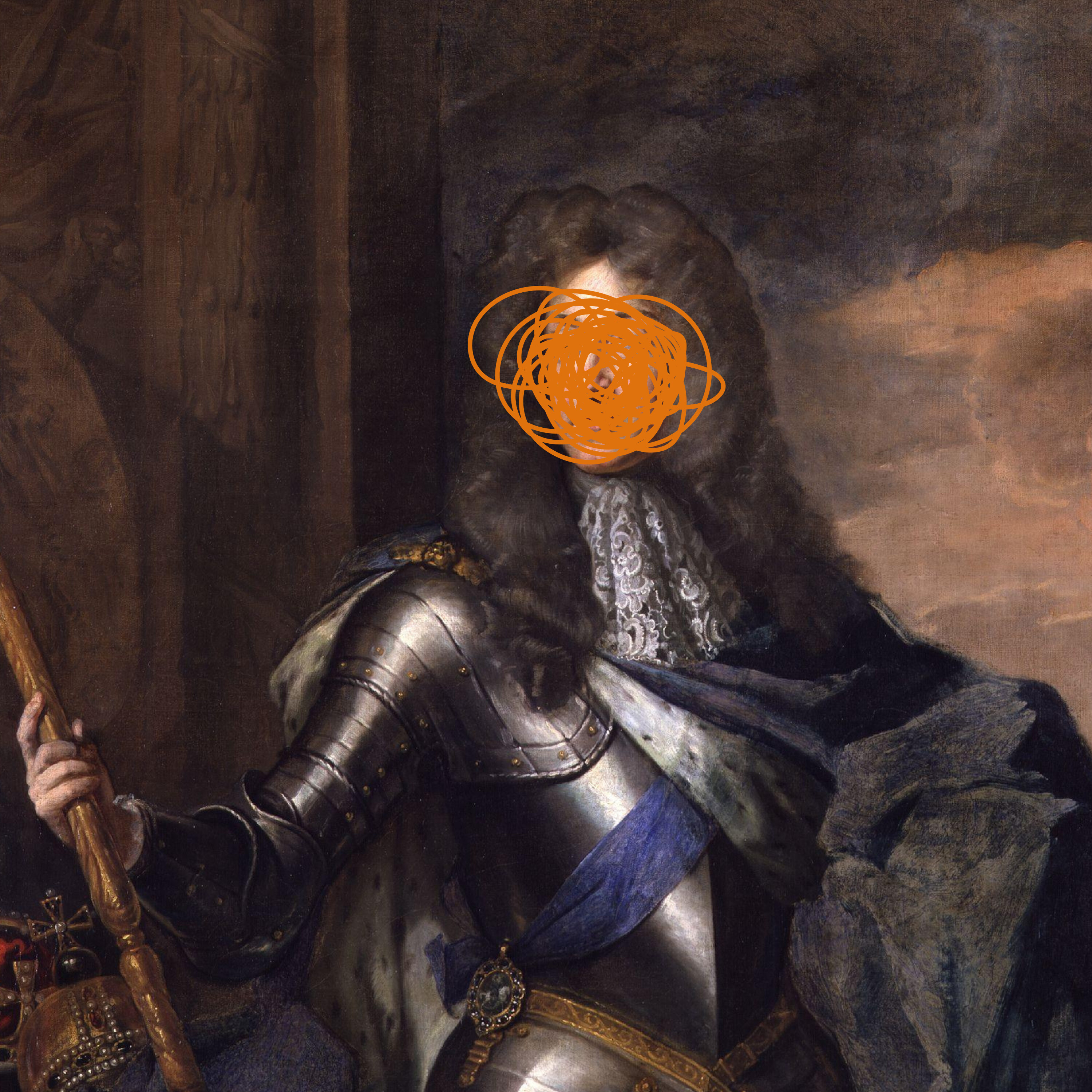
So I could have chosen from many royals. There's so many. But ultimately, I decided to go with King James ii, also known as the Duke of York. And why did I pick him? Well, he's kind of fun because he is a royal that pretty much everyone can hate. Good haters can hate him. Royalists can hate him. Everyone hates him. Which makes it even more fun because we can really just get into some fun stuff about James II. So he's a guy who was born in 1633 and lived until 1701. So his life really encapsulates the 17th century and a lot of the drama and intrigue of the 17th century and the rise of the transatlantic slave trade and England's involvement in the transatlantic slave trade and expansion of empire in the 17th century. So he's unpopular during most of his life. And I think the funniest thing about him is that even now, the British are kind of. They don't really like him that much anymore either. Yeah. So he's a fun one to hate on in that Way, I will say.
- [09:19]
A
Having lived in the UK for like, quite a long time, you just don't really hear about him.
- [09:22]
B
He's unpopular in his life and also in his death.
- [09:25]
A
So that's kind of fun for us.
- [09:26]
C
Right.
- [09:27]
A
For listeners. I believe last week's episode for listeners was on George the Fourth. And because we are equal opportunity British monarchy haters on this show, we're going to go back in time, leave the House of Hanover and set our sights on the stewards for this one, which.
- [09:43]
B
I think is fun that we're doing a little, like, cross temporal British monarchy stretch here for two in a row.
- [09:52]
A
We've also done Scotland and slavery earlier on this show. We've done France and slavery, which in the Napoleon episode, which just came out this past week, while we're recording this, we've done America and slavery because every time you talk about America, you basically have to talk about slavery. And I'm excited to talk about England and slavery in this as well, because I sense also because I asked you this before we recorded the show, I sense that's what we're going to be talking about mostly today. Right. James has a lot of, I think, negative things to his legacy, but that's maybe one of the less popular parts of it, perhaps in terms of, like, popular knowledge or public knowledge of his, like, deep entrenchment in slavery.
- [10:33]
C
People associate him with pushing popery, as they would say in the 17th century. Arbitrary rule, divine right, monarchy being forced out of the country because he was, you know, abusing his royal privileges and all of that. And so I think he's known for that at least somewhere.
- [10:51]
A
Yeah.
- [10:51]
C
But I would say probably Only really since 2020 have we heard more about James II and his role in slavery. When I was working on my book and just, you know, doing my research kind of quietly in the background, obviously I Knew about James II's role in slavery. Historians have been talking about his involvement in the Royal Adventurers and the Royal African Company, these two critical slave trading companies, for decades. But it's not something that the general public was aware of. And it also wasn't something that historians talk that much about, you know, in terms of like, really looking at his role or the role of the monarchy in slavery. But in 2020, after we had the Black Lives Matter movement in the us, after it swept the. After all of the fixation on Edward Colston in Bristol and, you know, his statue being torn down and kicked into the harbor and all of that, what was so fascinating was that Colston, who was the deputy Governor had all of this attention directed at him, but there was still not a lot of people protesting about the role of the monarchs in slavery or in the slave trade. And I was in England at one point, not long after that, walking by Kensington palace, you know, looking at the statue of William iii. You know, there's so many royal statues all over the place. Nobody was protesting in any of these statues, but someone like Colston, people were rallying around him as symbolic of slavery. And as someone who was, you know, an entrepreneur, but who donated all this money to Bristol. And so, because he was like one of the fathers of Bristol, a lot of hate was directed at him. But the fact that he was connected to James II and that James II was someone who had far more power than him, more wealth, more influence and more investment in this company, that was just not on people's radar at the time.
- [12:45]
A
Yeah, we do see people sort of like, doing the historical version of getting angry at, like, a middle manager rather than Jeff Bezos, if that makes sense. You're like, hold on, this person is not actually at the top of this hierarchy. We should also be mad at him, obviously. Obviously. But we have to keep looking upwards here, too. And not even in a sort of, like, conspiratorial way where we're like, it goes deeper than this. It's like, well, someone was employing him. Like someone is paying for the things he's doing.
- [13:10]
C
Yeah, someone is definitely connected to this and is at the top and in, you know, the halls of power.
- [13:15]
A
Yeah, absolutely.
- [13:16]
C
At a much higher level, for sure.
- [13:18]
A
Yeah. And it was really interesting being. Because I was also in the UK in the early 2000s, the first half of the 2000s. And I remember there is a real weirdness around, and everyone knows this, but a real weirdness around the, like, monarchy and the royals and what you are and aren't allowed socially to say about them. Not like, legally, but mostly just socially, like what people will countenance being said about the monarchy and what they will not. And some of these things are just overtly, straightforwardly, obviously, bad. Like things where you're like, well, yeah, we all can appreciate that slavery is a bad thing. Like, we all, for the most part, have agreed on this. But if you connect it to a. A group that people feel some level of, like, preciousness about, all of a sudden there's an inability to acknowledge the connection of the bad thing with a person that they don't want to be bad, because that would mean that that person is just bad, or the way that that Person's family got money or whatever is bad.
- [14:19]
C
Yeah. I mean, essentially, if you have people, a family, an institution associated with national identity, and something that has been associated with national identity for a thousand years, even though it's radically transformed over the centuries, it's very hard for people to look at that institution and the members of that institution in a critical way. I mean, we've had the same issues in the United States with the Founding Fathers, and that is not even a hereditary situation. And I find that also as a parallel, so fascinating that it's taken us many, many decades to even contemplate the reality that somebody like Thomas Jefferson, for example, was involved in a coercive sexual relationship with Sally Hemings, that he actually did father illegitimate children of multiple ancestries and all of that. And we had to have, you know, scholarship on this DNA test to prove this. Like, people really had to be bashed over the head to finally admit that, okay, this might have actually happened, but in the uk, it's just a different world, because it's really, as you said, socially seen as inappropriate to critique the monarchy. And I think what's fascinating to me when I think about someone like James ii, and we can talk obviously more about this, but it's okay a little bit to critique him because of the Glorious Revolution, because he's someone that was driven out of the country and left and essentially was replaced. And at that moment, the power of the monarchy permanently transformed, you know, that he was the last Catholic monarch, the last monarch to really try to exercise arbitrary rule, divine right, monarchy, to push the royal prerogative to its very limits. Because he was the last one, we can kind of talk about him critically, but everybody who's come after him is in this different category, and we're not really allowed to reflect upon them in the same way. I mean, and I find that to be really interesting as a historian, but also just someone who is just kind of an Anglophile. Like, I'm just kind of a nerd. Like, I love British history. I teach the tutors. It's one of my most popular classes. I mean, who doesn't love Henry viii, Elizabeth, all that stuff? Like, these were complicated, messy, difficult, imperfect individuals. At the same time, to not critique them, I think is a bad idea. I mean, we should be critiquing these people in the past, hence this podcast.
- [16:43]
A
Yeah, I was gonna say. Well, let me tell you about a podcast that I've heard of.
- [16:45]
B
Yes.
- [16:51]
A
Thanks for listening to this preview of a Patreon exclusive episode to subscribe and listen to it in full. Head over to patreon.com thisguysucked switching between.
- [17:00]
D
Tools for one project gets disjointed, especially on tight deadlines. Grammarly Built A game changing writing surface tailor made for professionals to help you move ideas forward and sharpen your writing. You can brainstorm ideas, summarize meeting notes in seconds, or strengthen a proposal without context. Switching Easy to get started and even easier to finish. Sign up for Grammarly free and get your professional writing from draft to done. Visit Grammarly.com that's Grammarly.com.