← This Guy Sucked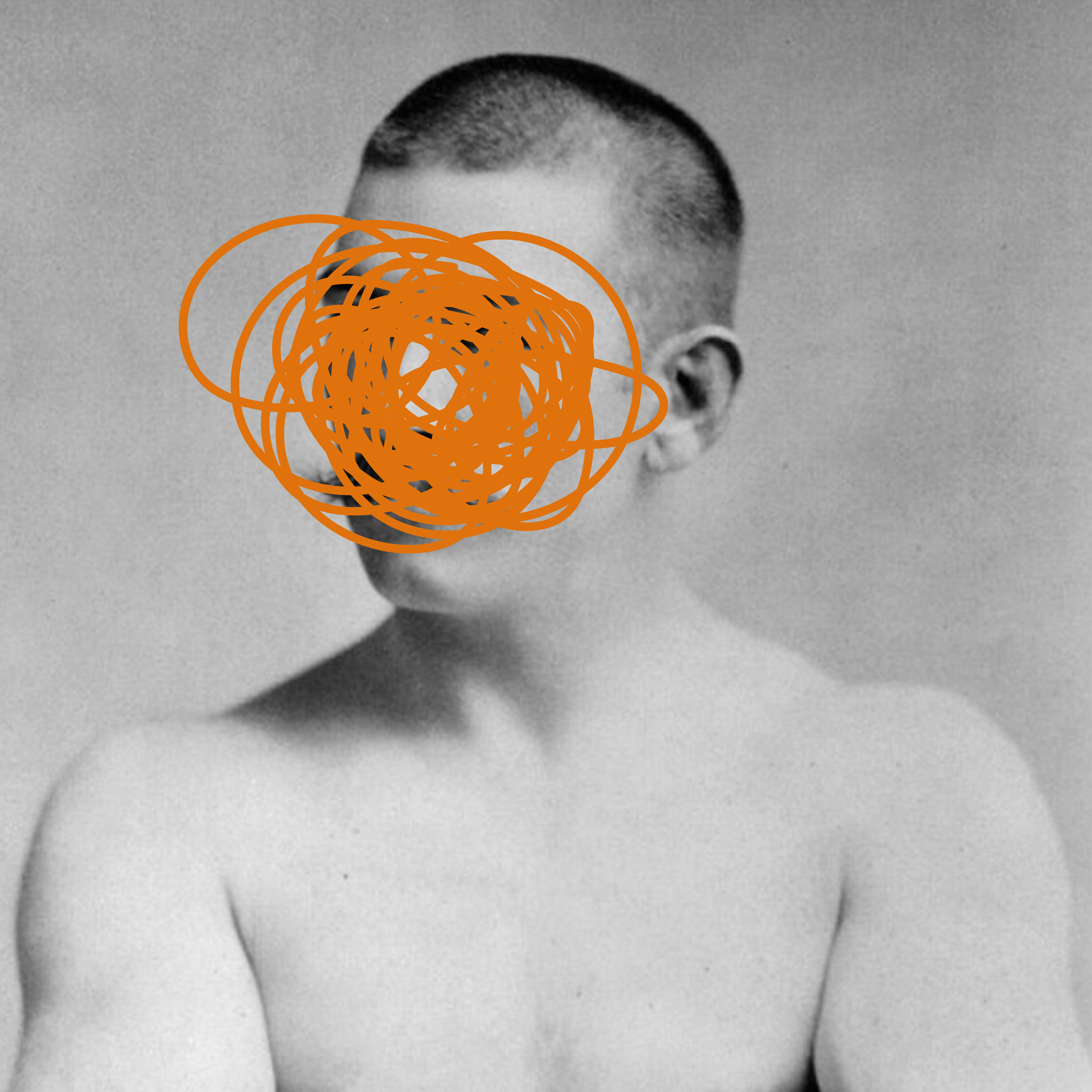
Loading summary
Transcript27 lines
- [00:01]
A
Hi there, it's Claire. If you're hearing me, that means you're listening to the free preview of one of our Patreon episodes. We switch off every week between free and Patreon exclusive episodes. So if you'd like to hear the rest of this conversation, head over to patreon.com thisguysucked and join our honorary haters club. A list of sensitive themes and topics covered in this episode can be found in the episode description. Welcome to this Guy Sucked, the show where we prove that it's never too late to have haters and you can't lie about the dead. I'm your host, Dr. Claire Aubin, and I'm a historian, writer, and most importantly, certified hater. On this show, we talk about people from throughout history with legacies that need a little updating. Whether it's because of their politics, their behavior, or their impact on society and culture, these guys actually kind of sucked. And we bring in a new scholar every week to tell us why. With me today is Professor Lou Moore, who is a professor of history at Michigan State University. He's the co host of the Black Athlete podcast as well as an author. He's written books like I Fight for a Living, Boxing and the Battle for Black Manhood and We Will Win the the Civil Rights Movement, the Black Athlete and the Quest for Equality. His latest book, which I already congratulated him on before, this is the Great Black Hope, Doug Williams, Vince Evans, and the Making of the Black Quarterback. This is an episode I've been very, very excited to do. So welcome to the show and thank you so much for coming on, Lou.
- [01:41]
B
All right, thank you for having me.
- [01:42]
A
Okay, so I've always said that if I restarted my history PhD and did something else, one of the things I'd be really interested in working on would be sport history. I'm like a big sport history person because I think it's absolutely fascinating and there are some just really incredible things happening around sports and sport history at the moment and have been for a while. But, like, I feel like there is something happening right now that's. That's pretty amazing. Your question is if you had to study something else, so another period of history or another field entirely, do you have any other little passions that you secretly are really interested in?
- [02:20]
B
Dang, that's a good question. Never thought I was. You know, I'm US History and then African American history, then I just do sport, right? So it's not like I did a sport history course. So I made myself into this. I would Say, like, if I got away from sport, it'd probably still be something with black history, I think something like late in the 20th century. I don't know how employable that is, but it's so cool. Or something to do with crime. So I could just tell stories and I write trade books and you know what I mean? Like, just. Just kind of go that route for sure. So that's. That'd be it. But yeah, what would you do? I guess, even though this is your podcast, if you could do sports, like, what would be the subject?
- [03:02]
A
I actually have an answer to this. Okay. So slight. The. The backstory is the most impactful class I ever took. As an undergrad, I went to the University of Oregon, which obviously is a very big sports school. As an undergrad, I took a class called Global Sports and Politics. And it was a summer class. And I didn't realize at the time that summer classes that have anything to do with sports are athlete classes. And I was the only non athlete in my sports history class. And I'm saying, like, it was like, like maybe a 40 person class. And it was 39 football players in me.
- [03:36]
B
Wow.
- [03:36]
A
Yeah. And it was an amazing class. Like, it was one of the coolest classes I ever took. And it got me really interested in this, in sports and politics. And I wrote a paper because I was a Russian Eastern European studies major as an undergraduate, wrote a paper on communist metaphor and the Klitschko brothers. So, like, how who are a Ukrainian boxing family, this brothers, and now one is the mayor of Kyiv. And it's like, but I wrote this paper on how communism shows up in the way that they're talked about in the media. Oh, wow. And I just thought it was so cool and was like, well, I guess that's the only time I'm gonna get to write a paper that is so fun and interesting. But yeah, that's what I would do. I think I would look at. Because I'm an Americanist as well. I think I would look at like, maybe U.S. soviet relationships and sports, because I think actually, especially now, even with the Olympics, the way that we talk about anyone from Eastern Europe is so heavily, still heavily influenced by the Cold War. But there are lots of people who are already working on this and know far more than I do.
- [04:44]
B
Well, I think it also helps that two of people's favorite sports movies are Miracle and Rocky iv. Right.
- [04:50]
A
So, yeah.
- [04:51]
B
Should have just done it. Yeah, yeah, yeah.
- [04:53]
A
I mean, one of the things that I was interested in with this is like, even like the nicknames that they would get were like, you know, Dr. Hammer and like these things that were like so obviously like communist things that I was so. Yeah, that class was really cool. Shout out to the poor, poor TA who taught it because we also. It was during the World cup and so part of our assignments was to watch the World cup like in and out of class. We would watch that and then talk about politics in the World Cup. It also really changed the way that I thought about student athletes, which I thought was like, I didn't have like a negative opinion or anything, but we reached a point where we were talking about the NFL draft and we were. I was in class with people who were about to enter the draft and they were talking also. Cause this was in the 2010s. They were talking about how they weren't being paid for things like being on the COVID of like NCAA football. And this is during the Mariota period. And there were all these people who were like, we're an incredible football school and we're, you know, our images are being used all the time and we're not getting paid. And it was just really like changed the way that I thought about athletes and. Or sports and politics and. Yeah, that's the thing. That was the class that makes sense.
- [06:05]
B
I. I hope I have that same impression on students. I don't know though, but hopefully I'm sure you do.
- [06:11]
A
I mean it again, I think a lot of the. What was so cool about it was that I was the only non athlete. So I was really hearing from athletes throughout the whole process and like really seeing a sort of like other side to some of this because these were people who were going into the NFL draft and did get drafted and thinking about like we had a whole week on just the NFL draft and on the combine and it was just so. It was really cool. It was a really, really cool class. So I'm sure that your. Your students have a similar experience because we just don't think about that. We don't think about sports as. And this will be a good segue, but we don't, like a lot of people outside of academia or even within academia, don't think of sports as this vehicle for politics and the other way around too, and don't understand like how important and how intimately interconnected these things are. I don't know if that's your view. That's my view.
- [07:06]
B
No, it is, it is because we just do sports to get away from things. But then we don't admit that we're getting what we're getting away from is the politics. Right.
- [07:15]
A
Yeah.
- [07:15]
B
But at the same time, it helps us see everything. Right. So even when you're talking about modern, modern sports, just the, the conversations they have in any political election nowadays, eventually it's going to be a question about modern sports.
- [07:28]
A
Yeah.
- [07:29]
B
Whether it's trans athletes or when we see changing the name. Right. Like just probably a couple weeks ago, the President of the United States is trying to force a team to change its name back to something that was racist. And everybody understands what that's about. So, yeah, sports are, are especially within the last decade and a half. It's at the forefront of any political discussion. But it's always been there.
- [07:53]
A
Yeah, absolutely. People will get very. Feel very strongly when an athlete agrees or disagrees with their own political sentiment because they see, especially if it's from, like, a team that they care about, they see them as sort of avatars of their, like, well, you're supposed to represent me, so how could you like a politician that I don't like, or vice versa? How could you not like someone that I do like? And it's, there's. People do a lot of sort of internal projecting onto athletes without always sort of acknowledging their own individual personhood. And I find that really interesting when we look at, especially like during elections, how much that becomes a problem for people. Okay, maybe we should talk about the subject of the, of the podcast. But it's good that we got to sports and politics because this is obviously very relevant. Who did you want to talk to me about today?
- [08:41]
B
So I chose the prizefighter John L. Sullivan, who was a fighter in the late 1870s and throughout 1880s and early.
- [08:51]
A
1890S, if someone wanted to know what he was famous for, just like, why is he notable? Before we even get into what's bad about him or, or what he causes or is related to, why is he famous? Like, why is he important?
- [09:06]
B
So he, he's. He was the heavyweight champion of the world, and he. So he's a heavyweight champion from 1882 to 1892. And beyond that, I think it's fair to say he's the first sports celebrity in America. And so, you know, precedes guys like Babe Ruth or, you know, Jack Dempsey or Red Grange or Joe Lewis or Jackie Robinson. Like, he's the first sports celebrity, and I think that's really important. He's also a heavyweight champion at a time where boxing is becoming more mainstream, but it's also looked down on. He's Irish American. Right. Both parents are born in Ireland, and so There is this kind of background that he has where he grows up in Boston in this very Irish ethnic neighborhood. And now he is representation of what it means to be a white American man. Because your historian and our listeners will soon know that manhood is changing and the body becomes very important. So he just like explodes on the scene as. As I guess the best way to put it is like, at one point, the way to think about it is like, he's this poor kid who within 25 years of his life becomes the epitome of American manhood. And what that means politically and also in terms of sports and in terms of, like, gender.
- [10:19]
A
Yeah, absolutely. And it makes sense also that there's this really important aspect, like you mentioned, of him having Irish immigrant parents and how him being seen as this sort of pinnacle of American manhood is also at a moment when Irishness and what it means to be white versus to be Irish is also in question. So there's this, like, he has this weird. Encapsulates this really interesting moment in time in American ethnicity and American race. And for him to become this important sort of apex figure, despite being alive at a time where previous to now, his Irishness disqualifies him from being seen as an American, is really interesting and important and also will play very heavily into the thing that makes him problematic. Can you sort of bring us into the world of late 19th and early 20th century boxing? Like, what does boxing look like at that moment in time?
- [11:18]
B
Yeah, so before Sullivan, it looked completely different than what we would see. It looked more, as I would say, more ufc, like, but without all the intricate fighting style. So it's like boxing at that time before, you know, Sullivan makes it popular, was a combination of wrestling in boxes. So they fought under most people, fought under the London rules, which allowed some grappling. But it was also, like, not seen by the wider public because if we're going to use the term correctly, prize fighting was looked down upon. And prize fighting was two men get together, they agree to make a fight. And generally the way they do this is very public. It's in a newspaper like the New York Clipper or later on the National Police Gazette. And they would write to each other and they would challenge it. Sometimes it was in broad, like, I'm going to fight anybody who weighs 150 pounds. Here's $500 on it. You know, obviously it's not his own $500. He has some financial backer. And this is when I want to fight, and this is where I want to fight. And before the 1880s, that was never going to be in like a place in generally in the city, it's not like it's at athletic club, it's in a barn, it's on a barge, it's a 10 minute ride from the. Because it was illegal. Now in the city they might have like rat baiting contests. Like where, you know, I tell my students this, you get a dog, you get some rats and people would bet how many rats the dog eat. You would have raccoons fighting dogs, you would have bears fighting bulls. You do all this kind of stuff. It's looked down upon, but that was the word where the Price writer also lived. It just happened to be humans doing this. And there are also finish fights. That means we fight to the finish. We fight until someone can't fight anymore. Not timed rounds around was when you went down, that's one round. And so if you keep taking a knee, taking a knee, taking a knee, but get back up, you can see if you look in that in the mid-1800s, sometimes these fights are 30 rounds, 40 rounds. That's because someone's going down, getting back up. And that's what it looked like until the 1880s. And right around the mid-1880s, Box is going to start to look a lot similar to what it is today. They're going to put gloves on, right? A lot of times they were fighting bare fisted. They're going to start to put gloves on because what happens is the middle class wants to see these fights, but they don't want to go out 10 miles on the journey and run away from the police. They just want it where they're at. And so they're going to start to legalize some of these fights. And the way you legalize it is by saying that it's not as brutal. And so we'll put gloves on. Now what we know is that putting gloves on can also make it worse because you're getting hit a lot more. Yeah, of course, right. If I don't have any gloves on, if I hit you with a clean shot, you're going down. But if I have gloves on and hit you with that same shot, you'll be able to take that and then the next one and next one. And that's how you get punch struck, right? Or as we call it, like ct. Now when we talk about football, the other thing is they're going to switch them to rounds. They're going to go to three minute time rounds because it seems more professional. But also for the middle class, it's doable Right. It's not these guys just slugging it out, getting up and fighting again. And they're going to start using terms like science. So boxing becomes a sweet science. And so a lot of what is happening is for the middle class to satisfy themselves that what they're watching is not brutal, even though they know it's brutal. Because at the same time, I'm sure this is going to be another question is the middle class in America is also starting to ward. When I say middle class, by the way, white middle class starting to worry about their position in society. And so sporting events like boxing, college football's on the rise, stuff like that become very popular.
- [14:59]
A
Yeah. And there's also a moment where it becomes a signifier of being interested. Like being interested or involved in sport is a way of signifying that you are part of this other class, depending on the sport that you're interested in. Which I find really interesting. Boxing, my understanding of boxing or the history of boxing, and you can totally correct me if I'm wrong, is that there is this real split between what's considered sort of gentlemanly boxing and then this prize fighting bare knuckle thing. And when gloves come in, it can be elevated to be closer to this sort of gentlemanly, like fisticuff style thing. The working class association with bare knuckle boxing kind of falls away because they're not doing that as much anymore. Does that. Is that a good assessment?
- [15:51]
B
No. No, you're right. So if you look at a newspaper, let's say the New York Flipper, which your library probably owns online, starts in 1853, but if you look at a normal page, you'll see stuff on prize fighting and then you'll see stuff on sparring. And sparring is more that gentlemanly thing you have. It's not a real fight, but we got gloves on and we're going to touch each other a little bit.
- [16:16]
A
Thanks for listening to this preview of a Patreon exclusive episode. To subscribe and listen to it in full, head over to patreon.com this guy sucked.