Loading summary
Transcript59 lines
- [00:00]
Dr. Claire Aubin
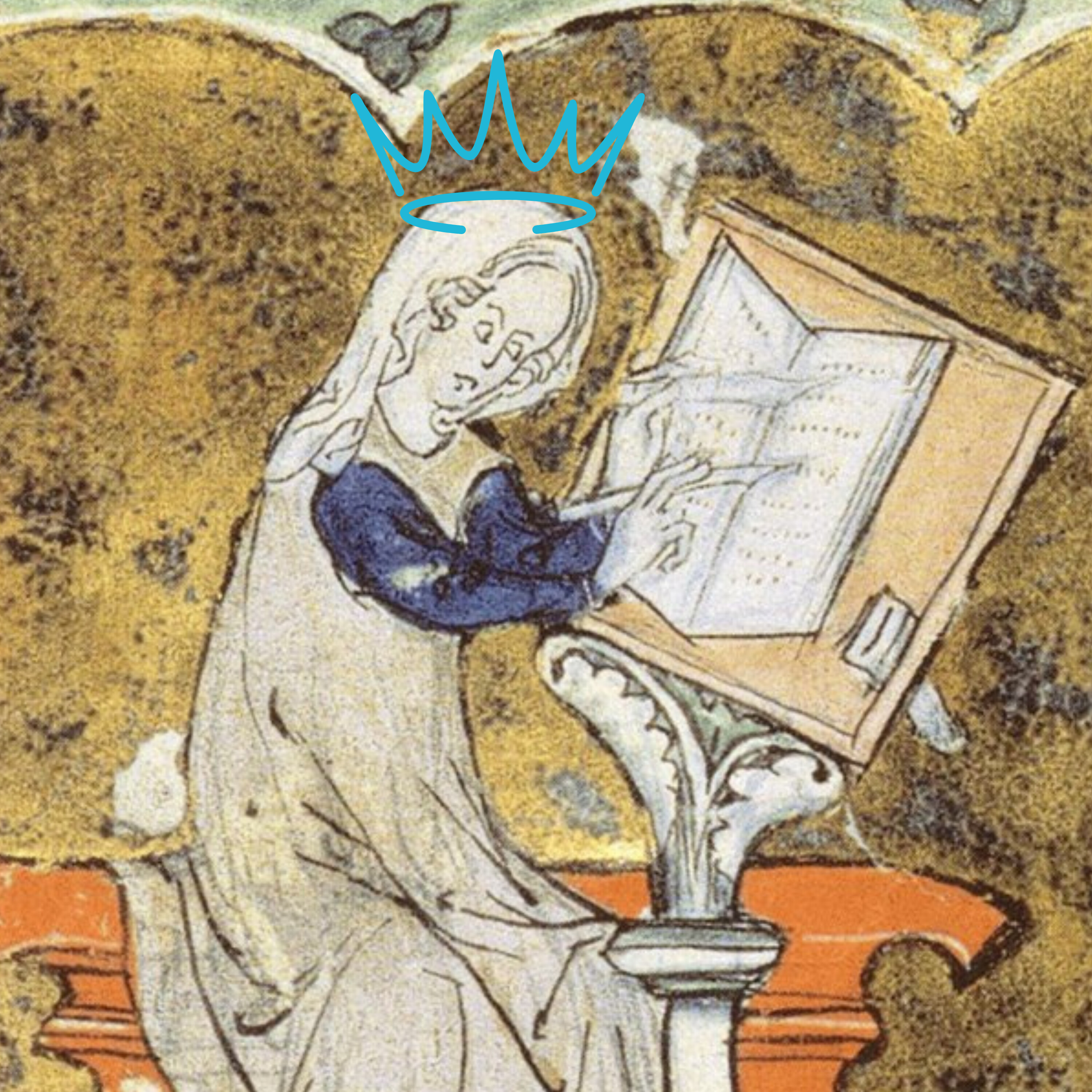
A list of sensitive themes and topics covered in this episode can be found in the episode description. Welcome to this Guy Sucked, the show where we prove that it's never too late to have haters and you can't libel the dead. I'm your host, Dr. Claire Aubin, and I'm a historian, writer, and most importantly, certified hater. On this show, we talk about people from throughout history with legacies that need a little updating. Whether it's because of their politics, their behavior, or their impact on society and culture, these guys actually kind of sucked. And we bring in a new scholar every week to tell us why. However, this week is our first ever this Guy Rocked episode, which we will be doing on occasion, so buckle up. For those in these episodes, we'll be talking about a person whose historical legacy we'd like to update in a positive way. So it might be someone who's unfairly maligned or someone you haven't heard of and definitely need to know about. Basically someone we want to write back into public history and highlight as a person who very much did not suck. With me today is Dr. Sarah Jane Murray, who is a professor of great texts and creative writing at Baylor. She's a storyteller, writer, filmmaker, and most recently, she. She founded the Great Story Lab. Welcome to the show.
- [01:23]
Dr. Sarah Jane Murray
Thanks for having me, Claire. It's great to be here with you all.
- [01:26]
Dr. Claire Aubin
I was wondering if you could tell me and the listeners a little bit about what the great Story Lab is, because I think it's extremely cool.
- [01:33]
Dr. Sarah Jane Murray
Oh, thank you. Yeah. You know, what a lot of people don't know is the idea for the Story Lab in part grew out of my love of Walt Disney's great moments with Mr. Lincoln experience that he built for the World Fair in 1965, and he was working on the first imagineering animatronics at the time. And he recreated, like, Abe Lincoln's Gettysburg Address. But he created a little short film to go before it, to introduce it. And after really sitting through it many, many times, I started thinking, you know, we really have this missed opportunity within learning spaces and entertainment spaces today to use film formats, whether they're short format, long format, virtual and extended realities, to explore, like, the great ideas of the past and to bring that wisdom back to life for us and to help it migrate to new platforms. So that's what we're experimenting with at the lab. And it's been a great ride thus far. We're just in the early days, but we're garnering a lot of support across, I think 52 countries now. So we're really excited.
- [02:40]
Dr. Claire Aubin
That's amazing. That's really cool.
- [02:43]
Dr. Sarah Jane Murray
I mean, as shocked as you are, it's.
- [02:46]
Dr. Claire Aubin
It is really incredible when something that you're hoping, some historical thing that you're hoping people will. Will get what you're going for when they actually do, and you're like, oh, my God, I have a good idea. And it's working. For example, this podcast. Yeah, it's the best. It feels great when you. When people are picking up what you're putting down is like, it's a really, especially intellectually, an incredibly satisfying and. And really bolstering feeling. So I'm really excited for you with that, I think.
- [03:15]
Dr. Sarah Jane Murray
Thank you. And congratulations on the podcast, too. Yeah, I. Content resonates. It makes you feel like you're no longer like Pink Floyd screaming into the void, you know, like, hello, is there anybody out there?
- [03:26]
Dr. Claire Aubin
Yeah, a hundred percent. We should probably get into what we're here for. So who are we going to be talking about today?
- [03:34]
Dr. Sarah Jane Murray
So I thought today we could talk about Marie de France, a medieval, technically French author. She was writing in Anglo, Norman French, but she was living in England at the time. Kind of like in Pontique, Monty Python, you know, like, we're. We're French, but what are you doing in England then? So, you know, she's from the period of the Anglo Norman kings and courts of. Of England.
- [03:59]
Dr. Claire Aubin
And there's a lot of sort of Norman cultural migration at this point. Right. Like between England and France. So it's not unheard of that there would be a French woman working and living in England at the time.
- [04:08]
Dr. Sarah Jane Murray
That's right. And we don't know much about her, but because she calls herself Marie and she says, my name's Marie and I come from France in one of her writings, we assume that you don't go around telling people you're from France if you're living in continental France at the time. So, you know, and all the manuscripts are in this kind of dialect that was spoken at the courts and, you know, French, Old French. At the time, Anglo Norman was the official dialect of the court and of the nobility. So she was hard at work writing her new stories and the first named woman author in French and really in the British Middle Ages as well, which is pretty incredible.
- [04:50]
Dr. Claire Aubin
And it's also pretty incredible that she's not as well known. And obviously we're going to. That's the point of the show. Like, obviously that's what we're doing here, but I'm really excited about this one. And I always say that in these episodes, but I really am always excited. And this one, I'm. I'm always excited for different reasons. And this one, it's because, aside from my own historical time period and subject matter, weird medieval women doing stuff is, like, my favorite historical subject. So when you said you wanted to talk about her, I was, like, absolutely elated. And it feels really cool to be getting to do this and contributing to something that's not even remotely related to my sort of area of subject, but is something that's been a source of, like, fascination for me outside of that, for. For a long time. Normally, we would start by talking about her contributions to the world and what she's best known for. But the whole argument here that I assume we're making is that she's not known enough for her contributions. So that's basically the whole show. Maybe let's contextualize her a little bit. So she was alive from. Well, we know she was working from around 1160 to 1215. We don't know when exactly she was born and when exactly she died. Is that right?
- [06:01]
Dr. Sarah Jane Murray
That's right.
- [06:03]
Dr. Claire Aubin
We know, like you said, she's most likely French. We know she lived in England. What kind of things was she writing on and about?
- [06:12]
Dr. Sarah Jane Murray
Yeah, we have three, and then a few other potential works that we attribute to her. She's probably best known amongst people who do read her today for the Celtic stories she wrote. You know, in addition to being one of the earliest writers to ever write in French instead of Latin. Right. She's kind of like a Dante for Italy or a Chaucer for England. She's also the first person who starts recording and translating into French these whimsical tales, she says, that are full of learning and wisdom that she heard as she traveled around the Celtic world and the British Isles. So probably Britain and Brittany. And everybody loves old Celtic myths and legends. Right. She even has one set at Arthur's Court where Guinevere figures. But she was interested in a broad scope of things. She has a collection of fables that are one of the earliest, if not the earliest, vernacular translation of this sort of collection of Indian pancatantra tales fused with Aesop's fables that traveled around and became the fables of Bidpai. And those are animal tales, you know, about, like, cunning hares and crafty roosters and foxes, full of ruses that we understand, teach us, like wisdom, like stories do today, about human nature. And then another one of my favorite things she wrote is called the Purgatory. Of St. Patrick. And this is about an Irish knight. She says she's translating it from Henry of Soltry's Latin and she's putting it into French. This is kind of her jam, right? She loves to say, hey, you know, we need to migrate platforms. Like, people aren't talking Latin anymore. We should make a podcast. That's essentially what she's saying. And people are pushing back, being like, oh, you heathen people. Like, why would we make a podcast that's not real scholarship? And she's doing it anyway. So she's one of these innovators. She's a disruptor. And I think it's sad that we don't think of her too much as that. We think of this. Her as this, you know, historical, antiquated figure. But she's a disruptor. She's like a thought entrepreneur of her time. And in the purgatory of St Patrick, she tells of the story of this knight who goes down into St. Patrick's Purgatory on Loch Derg in Ireland, near where I was born. And he spends the night. And if you haven't read it, it's worth checking out, especially if you're interested in Dante, because he. He basically visits the afterlife, and he goes through a vision of seeing people in the afterlife that clearly set a precedent for something like Dante writing the Divine Comedy. But we just don't talk about her like that.
- [08:56]
Dr. Claire Aubin
It is interesting that we'll say something like she's like the Dante or the Chaucer of French. But of course, we're talking about people who are very well known for their languages. Right. For writing in English, for writing in. Writing in Italian, like. But we're saying she's that for. For French. Except nobody knows about her.
- [09:17]
Dr. Sarah Jane Murray
That's right.
- [09:18]
Dr. Claire Aubin
Or very few people know about her, which is. It's a very interesting and sad thing to be able to hold someone up to that sort of high of a. Of a standard and to say this person is this important and is this, you know, poorly known or poorly understood part of this? Also that she's. I think, one of the things she's kind of famous for, which is weird because it's a sort of anti. Fame. She's famous for being particularly mysterious. Right. And this happens a lot with. With medieval women and with women throughout history, you know, previous to the last few centuries, where details of her life are extremely ambiguous. People like to argue that maybe it was. She was. Had a pen name, maybe she was secretly a man. What would you say to push back.
- [10:00]
Dr. Sarah Jane Murray
Against, you know, I Have this, I would call him a great, like sort of occasional pen pal friend. Elizabeth Winkler, whom I met via Lucy Carson. And Elizabeth wrote this great book that came out of, I think it was an Atlantic article that she wrote about how Shakespeare might have been a woman. There's lots of theories about these kinds of things. So the book is called Shakespeare Was a Woman and Other Heresies. And the book grew out of the fact that she got millions of comments of hatred about suggesting that the Bard himself might have been a woman. Who knows? Like, we have no idea who Homer was. But when people say this about Maggie de France today, it's really funny because when she's rediscovered by what we call philologists, right, people studying ancient texts and manuscripts at the beginning of the 20th century, they definitely treat her like a woman. And I'd like to tell you a little bit about that, please, for context. You know, if you ask most people who the world's first known by their name author was, a lot of people will say Homer. A lot of people will guess like a male writer. And it's not true, like, you know, that we have a long tradition of women being respected for their contributions. And Anaduanna, right, from Mesopotamia, is now widely believed to be the world's first named author. And she comes way before people like Homer. So, you know, the goal isn't to just reinstate women and say, like, you know, we have to have a bigger voice. It's to say, let's acknowledge everybody's contributions. Scribes in Mesopotamia respected Aneduanna so much that they learned to write in cuneiform, which was the system that they used to press their stylus into the clay for folks who haven't heard of it, to make these clay tablets of writing. They learned to write by copying Aneduana's poems. That's how she survived. So she was really well respected. And I think Marie's probably one of those kinds of figures too. So here's what happens. And there's a group of very prominent and very talented French philologists, so let's say like French academics at the beginning of the 20th century, who do the first writing about Marie. And the first writing that really resonates with me, that I remember, that shocked me to the core is by this amazing medievalist named Gaston Paris. And you can just smell the sexism in the article. For anybody who wants to go read the original, like, I am not exaggerating. He legitimately said she was a woman and she was simple minded and she believed everything she wrote. So he Was like, oh, yeah, she thought that people could turn into birds. That's what a simpleton she was. That's shocking, right? So this other guy comes to her defense and this is where it gets really intriguing. He's like, no, no, Marie has a valuable contribution to make. And his name's Professor Foerster. And he writes an article and he says, look, like there's two types of authors in history. There's the authors who talk about like the important things, if I paraphrase. And then there's other people, like Shakespeare and Jane Austen, and they talk about like human nature. Because at the time, like, for a very long time, we forget that, like, people thought Shakespeare sucked and was not worthy of being discovered by serious, serious academics and readers. And then he argues and says, the thing about Marie is she's like a medieval Jane Austen. And at first I was like, oh, that's awesome. That's a great way to describe her. Except you then discover that at the time, Jane Austen was not well respected either. And he says, well, you know, they were both women, so they only knew how to write about one thing, being a woman. And you really have to think, wow, this is why people like Christine de Pizan, you know, were, were like, let's build our city of ladies. Let's like have respected female learners. Let's read too. Because it wasn't for hundreds of years like, looked upon favorably by scholars. Now today we talk about how Jane Austen, like dynamically shows like great ideas in motion, how she's an amazing character development. Some of the films made from her books are the most famous films and television show like in history. Like, people watch them over and over again. They remake them over and over again. We would never say that Jane Austen has nothing to teach us about human nature because she's a woman. Somehow Shakespeare became a central figure and Jane Austen was rehabilitated. But there's this trickle down idea still, if you're not somebody studying Marie de France. And even amongst folks who do study her, there's a sort of school of thought where, well, she's not trying to say anything serious. She's just a fun writer. And this isn't true. I mean, she tells us things like, you know, I stayed up late into the night, like reading, to guard against vice and to learn to create like my character and forge like my moral formation. These are things that, like big grants and awards look at today. How do we use storytelling to shape the way we think about the world and forge our characters? And she was doing this in the 12th century. So I think it's high time for us to understand that stories like Marie's can be vehicles for really important lessons. It's one of my favorite aspects of storytelling. Like, we don't have to wrap everything up in serious treatise talk. We can also learn a lot from listening to a podcast. And Marie falls somewhere in between, right, this oral tradition and the serious Latin written tradition. But, you know, that's what Chaucer's doing with the Canterbury Tales, and we all take him really seriously. So I think she's a fun author to read, and I think she definitely deserves a wider place in history. But the plot twist that I can tell you more about, if you want me to, is that when I was in school, the first time I read her, I thought, why are we reading this? I mean, I still have a copy of my Penguin translation by a guy who became a friend, Glynn Burgess, and it's written in it like, this is stupid. Like, why are we writing this? So beware. That's the message for you, the listener. If you think an author is stupid, you might spend the rest of your life reading them.
- [16:42]
Dr. Claire Aubin
Extremely true. And I would also say to kind of go off of what you were saying about people like Jane Austen. It is interesting because Jane Austen is still, despite this sort of rehabilitation, this belief in her as this great author, as this wonderful writer, there is still, I think, a persistent belief that her writing is still for women, that women are Jane Austen fans. I'm a huge Austen fan, actually. And it is interesting how most of the men in my life, including my partner, are, like, not at all interested in that. And you have to sort of say, but if it were someone else writing this, would you be taking them as seriously? One thing I came across when looking at Marie de France, like, doing the episode research for this, it's interesting that immediately she is disregarded by philologists as being sort of a simple woman when she is very obviously highly educated from her writing. In her work, she talks about reading authors and. And talks about other authors writing in Latin, like Ovid. She clearly is familiar with these sort of great historical literary works that we talk about as being things read by highly educated people. She clearly is educated, but she is immediately disregarded on the basis of her being a woman writing at a time period where women are believed to be sort of simple and stupid and interested in these sort of frivolities of life, like the. The frivolity of love, the frivolity of creatures and. And these things. So much so that someone would Say, well, she must have believed the things that she wrote based on. No, with no evidence that she believes that other than he believes she believes that. And that's really sad.
- [18:23]
Dr. Sarah Jane Murray
It is frustrating. And when people say, well, she writes about love, my answer always is like, well, so did Plato. The Symposium is one of his most read dialogues. And I think amongst scholarship on Marie de France, the field is shortly and it's changing. People are starting to write more consistently about her classical sources and things like that. But one of the things I've been really interested in, similar to what you're saying, is what if we just take her at face value? Like when she says, oh yeah, I was reading books in Latin, you know, I thought about translating something from Latin, but that's already been done. So I'm going to write down these Celtic stories. It's not because I can't do them. I mean, I really believe she was educated. She was a polyglot. She, you know, we believe that Hildegard of Bingen was well educated. I mean, there's precedent for this. So I really do think that this is the danger of the trickle down or the very first impressions. Like, those first impressions count and they stick around for like a hundred years. It's, it's a hundred years later. We're starting to rehabilitate her. There were some folks in the 60s that I got interested in their research who wrote things like, well, I mean, she says that she like, is trying to follow like Christian theology, essentially. If you read between the lines in her works, and there's really work to be done there and people laugh at it, like, oh, she's no theologian. Like, you can find this in writing. She's not a philosopher, even though she talks about them. But I think that's starting to change. When I started teaching her years ago, Nye to undergraduates in like a broader course about the Middle Ages and thinking about practical wisdom, really, it was fascinating. Like, they all caught on to it right away. I mean, they would see the puns, they would see where she's quoting the Bible and making fun out of the way. People are hypocritical and quote things, but they act differently. And she's really witty. If you do not believe that she's capable of that wit and intrigue, then you strip away everything that makes her special. And I think that we just. She deserves for us to encounter her on her own terms. We don't need to be telling her, oh, she's paying lip service to that. Because people in the Middle Ages had to say that if this was important to Marie, like, let's not silence her by imposing our own modern readers readings on her. I'm really into that. Like, I feel like she's become a friend over the years. She's the kind of person you want to sit down and have a glass of wine with and laugh about how hypocritical people are being at court, you know?
- [21:05]
Dr. Claire Aubin
Hi there, it's Claire. The episode you're currently listening to is free for everybody, but the next one won't be because we're trying to make this show independently and sustainably. We switch off between free weeks and Patreon weeks. So if you are a fan of good, accurate public history made by actual experts, consider supporting our Patreon. It's only one tier, which means that everyone who subscribes gets access to the same perks across the board. For the price of a pair of socks, you'll get access to a new episode every week instead of just the bi weekly free ones. And they'll all be ad free for you. You'll also get access to the full episode archive, bonus content, early access to merch, and lots of other fun Patreon exclusives to sweeten the deal. Just head over to patreon.com this guy sucked or follow the link in the episode description to sign up. I think there's also something that I am finding here or that I was thinking about while I was doing research on this. I think as a historian, that part of what's important about making sure that she has a place in the literary canon, this sort of greats and yeah, the great books of literature and gets what she's due even 800, 900 years later, is that her imagination and the things that she's writing about help us in some ways to work against the perpetual myth of the medieval woman as this sort of sexless, subjugated, helpless creature with no individual agency, no desire, no imagination. Because we have evidence right here. Here is a woman living in the Middle Ages who clearly has imagination, clearly has individual agency, is writing books, publishing them, claiming her name repeatedly in them, talking about her desires. There's a part where she talks about the future, or several parts where she talks about the future and how she wants to be remembered in the future. She is engaging in this sort of like claiming of her agency repeatedly. And she works or can work against this myth that we have in terms of things like when I say this sort of sexless subjugated object, this medieval creature, this woman who is basically nothing other than what is projected onto her by the men in her life. She talks about love and adultery constantly. She talks about marriage regularly in her. In her Breton lays. She talks about it as this. Like, she talks about marriage as for some people, being. This is particularly loveless marriage as being a sort of imprisoning experience. She talks about all these things that are like, this is a woman with desires and thoughts and feelings and agency. And it's, I think, shameful, like, on a sort of broad historical level that we have so much evidence from people like her who. Of the fact that the narrative we have around medieval womanhood is just not accurate. And there are people like Eleanor Jennaga, who was on our first episode, who have spent their whole careers basically trying to work against that idea and sort of. To work with the. To work with the idea that the way we imagine medieval women is not based in any sort of historical, material reality. And I think she really underscores that, that she.
- [24:15]
Dr. Sarah Jane Murray
Yeah, it's really important. It's so important. Like, especially, you know, this from working in history specifically. Like, you know, when you're studying history with a textbook in school, it's really hard to conceive of the fact that the science of understanding the past is just like, exploring under the ocean. Like, we have hypotheses and we have records sometimes, and there's a lot of conjecture because we're trying to fit the pieces together. And I remember the first time I realized that when it came to, like, how texts survived, I felt super cheated. Like, I traveled to Bern in Switzerland to go read one of the oldest surviving copies of Ovid's Metamorphoses. And I was like, wait, this is from, like, probably the 8th or 9th century, and it's only a page and a half long. Like, where's the rest of the book? It was written, like, a lot earlier, hundreds of years earlier. And you start to realize, oh, wow, like, we don't have the records that survive always from earlier times. So the earliest copy, the full surviving copy of Ovid really comes about, like, in the 11th and 12th centuries. That's, like, a thousand years after it's written. So that's how we're also piecing. Like, people like you and me have to piece together these things in order to come up with a viable story and a hypothesis of how things work. But we're always entertaining new hypotheses. And I think one of the big dangers that you're pointing out here is, like, we have to ask ourselves, like, why? Why, when there's so much clear Evidence, like, we have manuscripts, they're court manuscripts, like they were being copied. Like there's a copy of them that's kept in like an abbey, you know, library. I mean, she's clearly well respected by the time the 13th century. Manuscripts that survive are copied. They're beautiful, like, well put together manuscripts. And the only way I can think, like, you know, C.S. lewis always says, scientists have Occam's razor. You gotta, like, connect the dots. He wishes, he says in the discarded image, he wishes that people who worked in human sciences and medievalists used that kind of Occam's razor more instead of saying, we have to have the piece of paper from the past. The only thing that makes sense to me, that we would hold on to this idea that she was less revolutionary and less of a disruptor of a storyteller than she really was, is because that would rewrite the way we think about not only her, but others in history. And it's not that that's necessarily dangerous, it's just. It means you have to rewrite a lot of things, like a lot of history books, a lot of curriculums. People like to curricula and people like to cling to the stability of what they think the past means. For me, it's exciting, like, for young women and young men growing up. Like, I love the Aeneid. I can't imagine telling myself not to read the Aeneid because, like, the protagonist is a man. That makes no sense to me. But we know this is a problem in modern film as well, right? We're really being. Starting to see more mixed stories and protagonists and heroes and heroines coming forth. But there's a lot of tests out there that talk about that we need all these voices and culture because it's telling young women. Yeah, like, be an awesome young woman. You don't have to go and be a male character. You can be an incredible woman. You can be learned. You can read books, you can write stories if you want to. You know, anything goes in terms of what you can learn. To me, Marie inspires me to get up and to think, you know what? Like, how do I think about being a better person today? Like, you mentioned adultery. Like, in her stories, they're really fresh and modern. Probably better from a moral standpoint than a lot of the stories we read or watch on TV today. When one of her heroines escapes, it's usually because she's locked up by a cruel, jealous, repressing husband who, the way the story's told is really kind of violating his marriage vows by not fulfilling his role of caring for and protecting her. In the other hand, if there's a woman who frivolously, like in la, the story about the nightingale, if they're frivolously flirting with somebody else when they have a good, loyal husband, then we watch the whole community disintegrate around them because of the adultery. And that's a clear message too, right? It's like it gives both ways. She doesn't only defend women and she doesn't only condemn men. What she goes after is the moral lesson of, like, marriage is supposed to be something more than this, that answers to something more than this, and people need to be good partners for one another. Now that makes even more sense when you think about the fact that she's living at a time when people like Saint Bernard of Clairvaux are just writing about trying to understand, like, what marriage is and no longer thinking about it as a sort of property trading of a woman going from her, her husband to her husband, from her father as property and really thinking about women having the ability to function as whole, beautiful human beings and for relationships. And that's where love comes into the picture. Because if you're Bernard, you're saying, like, if this marriage is supposed to be a reflection of, like, you know, wherever you're at in your beliefs, like the love of God or the love that's in the whole universe and in all of creation, surely we can do better by than tearing the fabric of our communities apart through betrayal. That's really refreshing to realize that people were writing about this a thousand years ago, like they were caring about this and this was the entertainment of the time. I mean, Marie de France was the Netflix show that you put on after dinner, you know, except she was probably reciting it and entertaining at court. This was how people shaped their imaginations.
- [30:33]
Dr. Claire Aubin
Hi everybody, it's Claire here with my usual quick shout out to tell you about other multitude shows I think you might be interested in this week. I want to talk to you about wow, if True. Wow, if True is your one stop Internet culture shop explaining how what's happening online shapes the real world and tech culture. Journalist Amanda Silberling and science fiction author slash attorney Isabel Kim are the right Internet experts and real life besties to unravel it. Every week they're asking and answering your burning questions about the Internet, like, what is giblification? Why does Erewhon keep going viral? Why are YouTubers locking people in grocery stores? And just how many secret babies does Elon Musk Actually, have I recently recorded an episode of wow if True about some Internet issues that are near and dear to my own heart. So I can confirm that the show is a very fun to be a guest on, and B, will take you on some unexpected journeys as a listener. More importantly, they're the only show that will explain both neopets and horizontal mergers in the same episode. So check out wow If True wherever on the Internet you find your podcasts, new episodes drop every other Wednesday. And I think also, I mean, there are, I think, several amazing things you've said there that I. That I want to touch on. But one of the things that I think is interesting about the sort her being the Netflix show that you watch after dinner is in this moment where she's not remembered the way that we think she should be remembered. There is a direct contrast between us thinking about her now and her at the time that she was alive because her contemporaries were writing about her, so she was popular at the time that she was alive. Her writing was not some sort of obscure, unknown thing. Her contemporaries talk about her by name, or we think they're talking about her because they call her Damari. So they call her like Lady Marie in them. So she was being talked about. So there is a rupture at some point along the lines.
- [32:25]
Dr. Sarah Jane Murray
And she was being copied too. Right. So that's key as well. I mean, it was really expensive. Copy a manuscript, it's like buying a car or a house at the time. So you're completely right.
- [32:35]
Dr. Claire Aubin
Yeah. And another thing I wanted to kind of touch on from what you said, is the idea of writing her back in as being part of. It's not about saying women's stories are more important. It's about the idea that everybody's story is important. And one of the things that she also literally wrote, which is important to understanding her relationship to womanhood, but also to marriage and also to masculinity and all these other things, and just marriage as an equal partnership in general. She writes, love is not honorable unless it is based on equality. She is already thinking about equality in marriage, and marriage is not needing to be an oppressive or. Or political or whatever kind of experience. She is already talking about the ideal love, a godly love. All of those things is one that's based on equality and one where the partners experience love and loyalty and trust and all of that. So this thing we imagine, right, because the curricula that you're talking about, where she's not included, that also is what shapes our social understanding of relationships. Of. Of writing, all of it, the early education that we receive, I'm saying, early up to college, whatever, all of that helps shape the way that we interact with the world now. And so this thing that we imagine, where the women's movements of the 19th and 20th centuries are the sort of originators for a desire or originators of a desire for equality is so enormously ahistorical because women were already talking about that and men were already talking about that almost a thousand years ago. And it's because people like her are not in the curricula that we end up with this ahistorical understanding that becomes incredibly hard for people like you and me to work against now.
- [34:17]
Dr. Sarah Jane Murray
That's right. Yeah. No, you're spot on. And, you know, this is why it's so refreshing to watch 18 year olds discover her for the first time. And I mean, I don't put guardrails in to force them to see in her a certain way. I mean, they read like, for example, the little story of the Nightingale, and they're like, well, that's really messed up. Like, you know, this lady was getting out of bed at night and they're. It feels like ridiculous and it is, it's comedic. Like, they're throwing presents across the wall to each other, like, while the husband is sleeping and the two men are best friends. I mean, this is like a Lifetime movie right today, and it's gonna end badly. Just like most Lifetime movies where, you know, something horrible happens in these failed relationships. And that's what exactly happens in the nightingale story. Like, the husband finds out and he says, hey, where are you going at night? And the lady makes up a lie. And this is a problem too. Like, she's a liar. Or as shout out to my colleague Dr. Robert Miner at Providence College. He would say, she lies. And yeah, like, she does, she lies. She says, well, I just love hearing the sound of the nightingale sing. Now, does the husband say, I call your bluff? No. He goes out and puts bird glue over all the trees in the garden. And this poor little nightingale who's singing at night, like, who did not ask to be part of this problem and their marital problems, he gets trapped and the husband brings the bird to her. And Nye's like, I got your nightingale. You won't have to get up. I mean, this is like really toxic, right? I got your nightingale. And she's kind of like, oh, I don't know what you're talking about. And then in front of her, he, like, rips its little neck off and Throws it at her and it, like, stains her like a red scarlet letter. No, she does not. Relentless. To be clear, she's not like, oh, no. Like, this poor little nightingale has innocently suffered for me and my weird long distance adulterous affair. Throwing gifts across the wall to the night next door. She actually, like, gets it wrapped up in beautiful brocade and she sends it to her lover, who is not like, oh, I guess, like, we're. We're done with that little thing that we was going on. He's like, I will make a golden chest for it and carry it around forever, and I will never love again. And my students aren't like, wow. I mean, a lot of people have written about, oh, wow, look at their love endures. My students are like, he's carrying around a dead, rotten corpse of a bird. And that's kind of her point. She's, like, playing against this trope, I think, that, like, oh, look at this lovely love that transcends death. No, like, the moral of the story, I usually ask them at that point, has anybody, like, had their heart broken yet? And little hands go up? And I was like, the moral of the story is, don't carry around the dead bird. Like, every time you stay stuck in the wrong love affair or the wrong relationship, the thing that has ended, and you only live in the past, you're carrying around a dead bird, and inevitably somebody in the class is going through a breakup at some point in the term, and they ask to come see me, and we go to coffee, and they usually begin the conversation saying, Dr. Murray, I don't want to carry around a dead bird. And I just think, wow, Like, Marie is helping them work their way through a relationship that has ended, like, in 2025. And I think that's really special. How on earth is that story thought off over and over again as written by a woman who's celebrating adulterous affairs. Affairs and the beauty of love outside of marriage. Like, nobody should carry around a dead bird and no little nightingale should die because we lie about it. Like, everybody gets hurt in this story. And I think there's a message there. You know, other stories are very different. They're like, get away from the bad husband and like, the night comes to save you because you've been praying for an escape. So they're really profound, but witty and funny at the same time.
- [38:27]
Dr. Claire Aubin
Absolutely. And I think it's interesting because there's been sort of an attempt to frame her as this proto feminist, which I think in some ways she is in terms of like just being a woman writing and claiming your own name and all those things. I think absolutely a reasonable reading. But she also. I think the. The love and marriage part of her work is actually. I think you're right. Is some of the most profound in this. There are several points where she treats particularly loveless marriages or loveless relationships as both figurative and literal prisons, which I think is. Is incredibly revolutionary in the way that we're thinking about what people think of marriage in scare quotes at this point in time. In one lay, she writes about a woman who is imprisoned by her husband.
- [39:10]
Dr. Sarah Jane Murray
That's right.
- [39:11]
Dr. Claire Aubin
In another, a woman finds out her husband is a werewolf, and she's scared of him, so she imprisons him because she's like, no, I don't want to be married to a werewolf. This is terrifying. So she's not just imagining a future where people are reading her. She's perh. Imagining a future where marriages as political experiences or repressive experiences are not the only possibilities. And, like, talks about this dead bird. She talks about these things that are just innately human experiences, and she, in talking about those things, opens up the possibility of imagining something other than that. And that's what matters. Like, that's the moral, is that there are other options that we have available to us if we are only willing to take them. Like, that is. That's great writing. That is something that should be in the literary gap.
- [39:54]
Dr. Sarah Jane Murray
I stand at you, Claire. How can she have a moral? She's just a woman.
- [39:58]
Dr. Claire Aubin
Yeah, I was gonna say I'm a simple woman, so, you know, I don't.
- [40:01]
Dr. Sarah Jane Murray
And that's the argument that comes up again and again. Like, she can't have a moral. Well, I mean, she did also write the fables where she's like, the moral of the story is. I mean, clearly she understands this. She's well versed in these things. You're spot on. And I love that you have such an insightful reading of her. I mean, that's the dynamic kind of reaction we can have with Marie de France. She opens up this whole possibility of me starting to imagine a different world. I mean, isn't that beautiful? Isn't that what artists are supposed to do? Isn't that what we want art to lift us up for or to shine light into darkness and to help us. I think, you know, it's even Albert Einstein who says that, you know, the imagination is, like, more powerful than anything because it brings into being, like, a whole world that doesn't exist yet. It helps us see ourselves in A different way, in a different place. You know, sometimes I take some comfort. Not that it's okay that this happens to CS Lewis as well, but, you know, this is why he writes about fairy tales and stuff and says, you know, someday may you be old enough to read fairy tales again. Right. Because if you read some of his biographies when he's writing Narnia and he's at the university, like, scholars think he's weird and that he's sold out. So what does that mean, to sell out? Like, I mean, everybody still reads Narnia today. I mean, a lot of people don't even realize that C.S. lewis, like, was a medieval studies professor before he started writing those things, and that's why he was friends with Tolkien, who was also a medieval studies professor. It seems weird to me that we don't learn from those kinds of lessons when people want to wrap up, like, if they're studying moral philosophy in order to shape their minds and now they can reframe it in a story or a television show or whatever, they want a poem, and they can create a world that helps somebody else think through those issues without having to read a big philosophical treatise. I'm okay with that. Like, I welcome that. I think that's the power of art and creativity.
- [42:12]
Dr. Claire Aubin
Yeah, absolutely. And I think also one thing that I came across, I came across an Esquire article with Claire Waters, who's a professor at UC Davis, who has written extensively on Marie de France. And it's an incredible article. And a lot of. Not a lot of my research for this has come from that. But the way that she thinks through this in that article is incredible, and it's really helpful. And she talks about Marie's lays as clearly a way of placing her. This is in quotes, clearly a way of placing herself in a tradition. She imagines future readers for herself who will work on what she's written and think about it. And I think there is a real gravitas to imagining future readers and imagining not just that they will read what you've written, but that they will learn something from it, that they will take some sort of moral from something that you're writing, that they will reimagine their world on the basis of something you have come up with. And so it's devastating to think of her not as a storyteller or to think of her as this sort of only a storyteller, with storyteller being seen in a negative light, as though everyone who has written anything is not a storyteller. We are all storytellers if you write things and you want to read them and learn from them. But for her, it's applied like an epithet, right?
- [43:29]
Dr. Sarah Jane Murray
That's right.
- [43:29]
Dr. Claire Aubin
She's someone who. I'm saying it is sort of a negative epithet. Someone who was only writing stories is writing silly fables. It's the same way that we're able to dismiss people who particularly engage in oral traditions. It's the way that we're able to dismiss groups of people who have oral traditions that predate written language or whose. Whose traditional stories are not written down or only recently written down. We dismiss those as these sort of like, fable, mythological, whatever things. And that is what's happening to her, too. Even though we have so much evidence that that's not what was happening at the time, she's been relegated to that. And that sucks. It's not that she sucked, it's that the things around her suck.
- [44:15]
Dr. Sarah Jane Murray
That's right. Yeah. And we can change that. You know, I'm so glad you mentioned Claire, because this gives me an opportunity here to right a wrong. I've already mentioned my colleague in England's Penguin translation of the Lays, Glynn Burgess, that I recommend to everybody. And the other book I recommend is Claire's. This is her Lays of Marie de France. So the story here, I want to give her a shout out because when she published this, they tried to contact me to get me to blurb the back at the time. And I was away for a few months working on a project on sabbatical. So I found out too late, and I didn't write to Claire at the time to explain it. So I just want to give her a shout out as well and say that her translation is a great one to buy to support another great scholar on Marie. I'm so glad you mentioned her.
- [45:14]
Dr. Claire Aubin
And yeah, I think she hears this.
- [45:16]
Dr. Sarah Jane Murray
Yeah, me too. I will make sure. I will send it to her and like, you know, to the international Marie de France Society. If there's somebody out there thinking, oh, my gosh, I love Marie de France and I wish I could, like, be involved. You know, the Marie de France Society even gets, like, little performances together and stuff. So they're great to connect with. I want to give them a shout out as well. I was involved with them a lot early on in my career and continue to publish with them, have a new piece on Marie on her longest lay, Eli Duke, coming out with them in the next issue. So they're a great place if you want to work on Marie and send stuff to as well. But Everything you're saying? Yeah, like, her whole context. Like, we need. She needs a new PR campaign. That's one of the ways I think about it. Like, we are not the best in academia at doing PR campaigns. We think that that's unimportant. But I think it's. She's proof that we actually do, through the lens of the scholarship tradition, create a public image for a figure. And it's by doing the work and pushing on and, you know, publishing new insights and not being afraid to go against the grain. Like, anybody working on Marie should not be afraid to be a disruptor and to have new, innovative things to. To say, because that's who Marie was like, that's who she's inviting us to be. She wants us to learn to think for ourselves. And she says, you know, you can't pin meaning on things just because it's what you want to hear. She'd hate our fake news things and everybody passing things around with art sources on social media today, on all sides of the aisle. She wouldn't even know what to do with that, because what she says is like, you know, ancient writers wrote obscurely so that we'd have to come along and gloss the letter. And glosses were the little notes people left in manuscripts, and they provided an explanation. It's also the same root word fun fact as, like, lip gloss, because it shines light on the obscure meaning. And the whole idea of reading, she says, is like, you know, we're not supposed to read things that are just easy and that we just understand at face value. We read them, and they're supposed to make us think beneath the surface of the words. And when we think, that's where we get to those things that are the morals of the story that you say. And she says, if we do that, we can learn a lot about life and we can learn a lot about making good decisions and making bad decisions. And this is where I think she's fascinating. She's not telling you what decision to make, but she's creating a story simulation for you to think about right and wrong. That's exactly what great plays like Antigone did. It's exactly what, like, Aesop's Fables did, you know, and it's what great television shows do today, too. Like, having a moral center is not a bad thing. That's what Shakespeare does all the time. Nobody wants to be Walter White on Breaking Bad. Or if you do want to be Walter White on Breaking Bad, this is your sign to, like, go talk to a therapist about it. Like you don't want to be Walter White. The point of that show isn't be like Jesse and Walter White. We're constantly resisting the bad choices they're making. Whereas other entertainment today, you know, sometimes you might be watching it and thinking, huh, I feel like they're getting me to buy into something like, I don't want to buy into here. If we thought more about meaning in our storytelling today, maybe we'd be creating things that don't just go viral for a minute and they stick around for a thousand years. So that's another reason I. Why we owe her her due and a lot of respect and a new public image. Because she has stuck around for like a thousand years. That says something. It's not easy to do that. It's really easy for texts not to get copied and for things to be forgotten. You know, this was not a Wikipedia entry. It was a very labor intensive and cost intensive factor to copy her works down. And usually people did that because they believed exactly what Marie said. Hopefully these stories will have something to teach you in the future.
- [49:36]
Dr. Claire Aubin
I think a lot about what it means to do history, like, as a. As an active thing that we. That we do right. A thing that we make that choices that we as historians or storytellers or academics. It's an active process. We're making choices all the time. And I think about to name another sort of literary canon. Great. I think a lot about a quote from Aristotle in the Nicomachean Ethics where he says, for the things we have to learn before we can do them, we learn by doing them. The process of getting history right, the process of getting stories right is necessarily one of revision, is necessarily one not in terms of revising to remove things. And I've said this before on the show, but it's about adding information back in wherever we. And this is an example of us learning by doing, where we add her back in. And in so doing, we are. We are doing history. In adding her back in, we are doing the verb of history right? Like, we are making that. And I think you're totally right that she needs this sort of PR campaign. And may this episode be a kickoff event for the PR campaign. If nothing else. You're here, you know, because that's us doing history right. That is us doing historical revision in real time, but in the way that it's meant to be done, which is recontextualizing, adding context, adding information back in. And in doing that, we are ensuring that her work exists for another thousand years or it just exists in this moment right now and is respected for what it is and what it was at the time that it was first written. And we are able to, I think in so doing, also repair that rupture that I was talking about earlier where this, this understanding of her totally shifted and shifted for the worse. And we're actively repairing it. Every time you talk about her in class, you are repairing that. Every time we say her name on this podcast, we're repairing it. And I think that's also an important sort of job of the historian and job of the academic too, is to engage in that historical repair alongside the revision.
- [51:43]
Dr. Sarah Jane Murray
I couldn't agree more. Yeah, you're absolutely right there. And you know, she is such a key voice in setting up so many types of literature that come after her. You know, she clearly had a far reaching influence. So it's equally dangerous that we mostly only talk about her lays and that we don't think about the fact that she was translating these other texts from Latin. But that goes back to our problem again, right? If we don't want to believe she really could read Latin and she was just paying lip service to that, then we're not gonna read as seriously the works that she translated from Latin and tells us she did translate from Latin. And I think that's really important that the new generations of people who pick her up and read her think about all of the works that are attributed to her. You know, another friend and colleague, Rupert Pickens, has written pretty extensively on the life of St. Audrey, a female, a saint that is possibly written by Marie as well. So to get the whole picture, I mean, once you start getting the whole picture, it's hard to imagine that somebody writing this sort of Dante like tale of the afterlife and the life of the saint, the Saint Audrey, like, is not at all interested in faith questions at a time that was like super faith driven. It's also hard to believe that she would go and write the fables without being interested in moral philosophy, that she's translating it actually not from the Latin even. She says, although we have no record of the old English text that she says that she's adapting it from. So what I like to think of her as is she's, she's like an influencer figure at the time. If you compare her, she's curating her YouTube channel, you know, of really great stories. And she's. Because she's performing them aloud. I mean, they're written in verse, they rhyme, they're probably performed to music. That's why she calls Them lays in terms of the lays, rather than calling them something else. And, yeah, she's getting up at court. And I mean, just think about it like, this is. I mean, think about Game of Thrones. Think about the Tudors, all these old shows. Imagine the scene when you're in court and you are having illicit rendezvous with your husband's best friends, and Marie de France starts telling your story. I mean, this is drama. This is, like, huge drama. I mean, I would love to have been a fly on that wal wall to see the reaction. Right. And. And she doesn't. She doesn't let you off easy. Like, she keeps on putting a nail in the coffin. I think that's kind of interesting. Similarly, you know, you want to stand up and talk for. You've noticed you haven't seen your friend around much. And in fact, this, quote, jealous husband is even keeping her locked up to where she's not even allowed to, like, come to chapel anymore. I mean, it's a bold statement to speak out and say, oh, let me tell you this story. And for people to be like, oh, no, that's shocking. And then if she's accused of anything, she can say, it's just a story. But she is like a curator of content, you know, and she shaped the future of the way we think of content. It's just we need to sort of flip that switch in our minds to where we don't think we're doing something new today. We're using new technologies and new platforms. But so was she writing in her own language? Was a new platform at the time, and so was using manuscripts. Right. So we're always trying to reinvent the wheel, but I think we can learn a lot from the people who have reinvented the wheel before us as well.
- [55:45]
Dr. Claire Aubin
There's a. I don't know how many gen zers listen to this, or sort of younger millennials, but there's a. In the show euphoria. Oh, yeah, you've seen. There's a scene where Cassie, one of the characters, is in the audience of a play that her sister has written and is performing. And she realizes halfway through that the play is about her, about her adulterous affair and the way she's messing up the lives of all the people around her, and she is getting a Marie de France experience in that. And so you're totally right that there's this. We have this idea that these things are new, but they're a thousand years old, and they were happening before that, too. It's just she is one of the people who is, as you say, a sort of disruptor. She is someone who says, well, let's do it a little bit different and a little bit better. And history is full of those people who do things a little bit different and a little bit better over and over and over again. And the reason she needs to be sort of replaced and. Or when I say replaced, I mean put back into replaced into our sort of broader literary canon is because we are constantly saying the people who are doing things new and better are men, particularly at her time period. And that is why she gets discounted so, so heavily. And now we're able to say, well, well, women are. Are doing things new and better all the time. But unless we can see that as also being part of a historical tradition, we will accidentally think that the new and better thing that women are doing now is also new. But it's not. Women have been doing this forever. Yeah, people have been doing this forever. That's why women are a subset of people.
- [57:34]
Dr. Sarah Jane Murray
Yes, yes. And that's why I'm so. I was so struck, you know, when I read. I mean, Anna Duenna got even more shortchanged than Marie de France in that sense. She didn't really get translated until 1965. I mean, think about that. You've been around since Mesopotamia. You're rediscovered around the same time as the Epic of Gilgamesh. But everybody's like, oh, who wants to hear, like, the tablets of this woman? And then, you know, there's a new translation that came out more recently by a colleague, Sophis Heli. And I want to give him a shout out too, because. Because it's wonderful to see men like Sophus Heli and Glynn Burgess translating Marie de France for the staple Penguin translation. It's so delightful to see them sort of setting the record straight by being serious scholars themselves and replacing people like an edwana and Marie de France into history. And museums play a large part in this, too. I mean, I know the British Museum or Library, I think it was the British Museum. Well, they're all connected anyways. The same apparatus was having the Medieval women exhibit recently and a few years ago, the Pierpoint Morgan Museum in New York. That's the exhibit that generated the PR campaign and video content for the exhibit, quote, she who wrote on Anna Dwanna that made people wake up. That's the first time we really saw in popular culture in the New Yorker, actually. Elizabeth Winkler again wrote an article in the New Yorker on she who wrote the exhibit. And that's when people started Being like, wait, what? Like, the first named author in the world was in Aduana. I told my ancient students that this term in my great text class at Baylor, and the look of shock. They're all freshmen. There was. I was like, well, how does that make you feel? And they were like, I feel cheated that nobody has told me this before. So young people are astute. You know, these are folks who come from all kinds of backgrounds. Finance, premed, you know, all over the place.
- [59:45]
Dr. Claire Aubin
They're. They're.
- [59:46]
Dr. Sarah Jane Murray
They're trying to work on moral formation, right? Thinking through these books and thinking through history and thinking about how to have ethics. Basically, when they go out into their jobs, when they realize that, they feel a bit disenchanted at the education system because they're really interested in knowing what all the stuff out there is and it not being excluded from them. So I think they really inspired me this term to try to start thinking about using the kind of language you and I have used today. I mean, the first thing we can do is maybe not always talk about them in purely academic terms. You know, as we said, like, if we think about Marie as a disruptor, if we think about her as a viral content creator of her time, it helps us connect with how hip she was in culture instead of this stilted historical figure in the past.
- [60:37]
Dr. Claire Aubin
And history should be accessible, right? Like, that's part of accessibility is making sure that is translated to generations that you might not even belong to, but who still deserve to understand and know the things that you're talking about. So I think it's very good that we on occasion, use language that maybe feels to us a little bit like, not silly, but feels like it's a little bit foreign to us because it's not our sort of generational language. But in order to make sure that other generations are understanding and really understanding the importance of the things that we're talking about, using language that they get and they feel more comfortable with, because eventually they will be older and that will still be in their vernacular.
- [61:16]
Dr. Sarah Jane Murray
You know, I was just gonna say, yeah, you're talking about the vernacular. I mean, that was the point of writing in French instead of Latin, right? What if we're speaking our version of Latin when we speak English to the general public? Maybe that's sometimes why people have a hard time understanding what kind of world the humanities is about and investigating. Because we're not speaking in Latin, but we're speaking a form of stilted, rigorous academic speak that just by nature of how our brains work, like, as we Hear this data, like this tiny little center in our brain named Broca's center is trying to process it, and all the blood's moving away from everywhere else in our brain. And if you fell asleep during literature class or history class when you were in school, that's why it wasn't you. You don't have a bad attention span. It's just how your brain works when we speak that way. So I think, like, bringing these dynamic conversations, like what you're trying to curate yourself here as your own, you know, disruptor and content creator and bridge between history and the world and the audiences of the world. I think it's super important. That's what Marie de France was trying to do when she said, I'm not gonna write in Latin.
- [62:36]
Dr. Claire Aubin
Yeah, absolutely. And it's great because we managed to bring this full circle right when we're running out of time, which always is wonderful.
- [62:45]
Dr. Sarah Jane Murray
I noticed the clock.
- [62:48]
Dr. Claire Aubin
What I would usually do is be like, did you convince me that they sucked? But you didn't have to do that because we're. You just needed to convince me that she rocked. And we were already there to get with. Thank you so very much for coming on. Just for anyone listening, slash, for Sarah Jane slash sj, you have an open invitation to come on and talk about Eniduanna anytime you want. If you want to do another, I would love.
- [63:13]
Dr. Sarah Jane Murray
Maybe we can get sofas to come and join us at the same time.
- [63:17]
Dr. Claire Aubin
Totally. Because I also. When you first for Elizabeth, she wrote.
- [63:21]
Dr. Sarah Jane Murray
A by Anadwana, too.
- [63:23]
Dr. Claire Aubin
Yeah. When you first emailed me. For those at home, when you first emailed me saying you wanted to do a this gal rocked episode, I was like, oh, my God. Incredible. Yes. And I thought, I wonder if she'll do Enheduanna. And you didn't. And I was like, okay, that's fine. But that was genuinely my thought process. Process at the beginning that you might do.
- [63:41]
Dr. Sarah Jane Murray
I'd love to come back and talk about Anadwana. She's so great. And, I mean, I have this whole, like, mystical, imaginative idea of who she was. You know, it's like, I always. I'm just like, wow. Like, how epic is she? So, yeah, I'd love to come back another time.
- [63:58]
Dr. Claire Aubin
Yeah. Amazing. Well, we can. We can get that figured out at a time when listeners are not listening to us. Sarah Jane Murray can be found on Twitter jmurray. And you can learn more about the Great story lab@thegreats.org or at the link in our episode description.
- [64:14]
Dr. Sarah Jane Murray
Thank you for having me this has been so much fun.
- [64:17]
Dr. Claire Aubin
Thanks for tuning into this episode of this Guy Sucked or shall I say this Gal Rocked. A member of the Multitude Podcast Collective, this episode was hosted by me, Dr. Claire Aubin, featuring special guest Sarah Jane Murray, and produced and edited by Tom o' Malley. All of our theme music was written and produced by Bach aficionado Marshall Dean Williams. If you'd like to support the show and get access to all episodes, including two extra episodes per month, and access to our full archive of episodes, you can subscribe@patreon.com thisguysucked See you next week.