Loading summary
Transcript185 lines
- [00:00]
Claire Aubin
A list of sensitive themes and topics included in this episode can be found in the episode description. Welcome to this Guy Sucked the show where we prove that it's never too late to have haters and you can't libel the dead. I'm your host, Claire Aubin, and I'm a historian, writer, and most importantly, certified hater. On this show, we talk about people from throughout history with legacies that need a little updating. Whether it's because of their politics, their behavior, or their impact on society and culture, these guys actually kind of sucked. And we bring in a new scholar every week to tell us why. With me today is David M. Perry, who is a journalist and historian, specifically of the medieval variety, as well as an author. He's got several books out.
- [00:59]
David M. Perry
Two.
- [00:59]
Claire Aubin
Two of which have been discussed on the show already. So alongside Friend of the Pod and Multitude Cousin host Matt Gabriel, David has written the Bright A New History of Medieval Europe and the War of Brothers that Shattered an Empire and Made Medieval Europe, which is about to come out on paperback. By the way. Very exciting. And most importantly, David has a whole ass new book available for pre order that I am extremely excited about for personal reasons called the Public A Practical Handbook. Welcome to the show and congratulations on the new book situation.
- [01:33]
David M. Perry
Thank you. It's really great to be here.
- [01:35]
Claire Aubin
I always like to start the show off with a fun question. So here's one. What's the weirdest thing you've ever encountered in an archive or during your research? Like, what's the thing that most made you go? Like, hold on. What?
- [01:47]
David M. Perry
Yeah, I mean, there have been a couple of moments. There's a story of these seven thieves who go and steal a relic, the relic of their patron saint. And I was a grad student and it's in the Context of Constantinople, 1204. The city is just sacked. The these guys go out to steal a relic. They're really stealing it from their own side. I mean, it's from a Greek church, but like they're not supposed to steal from the church. Cause you're supposed to gather all the plunder together. And there's like, it's a weird text. There's like 12 of them and then five of them just get lost. And I was translating it from Latin and what I realized is that it was very funny, but my Latin isn't that good. So I was translating it very slowly. So it would take me like 30 minutes to get from the start of a joke to the end of a joke. And then I would laugh. And people in the Archive would look at me weirdly. So that was like the geeky one, the cool one one is in Venice. So I'm a historian of medieval Venice originally. There's the church of San Marco, which is a church, so it's free and anyone can go in it. And you should. And there's the Palazzo Ducale, which is the palace of the Dukes of Venice, which is a museum and is not free, though you should go in it. It's pretty great. But in the medieval context, the Church of San Marco was just the chapel of the palace. So there's this passageway that goes between them that is just locked from both sides. But there's stuff in there, including a giant marble relief plaque that presumably is still there. Cause it's just too heavy. And I did talk people to like, let me in there and just hang out. And then they were busy and they just left me alone with this. I mean, what was I gonna do? It was made of marble, but sure. But like this sort of Indiana Jones scene of being behind in the secret places between these two priceless heritage sites, just totally alone with this piece of medieval art. I don't know if it's weird. It was the most surreal moment. Still, in my academic career, my random writing has taken me into strange places. And I've met weird and amazing people and, you know, shaking the hands of presidents who I liked and all kinds of other weird things. But that was this just, you know, there I was like 27 or 31. It's all a blur now. I was, you know, I was young. I was. I did not have my PhD. I was alone in this city and I'd just been left abandoned in this amazing place that I just. I'd like to go back. That's the end of the story is I want to go back.
- [03:57]
Claire Aubin
You know, what's interesting is when I try to explain to people what being a historian is, some of the things are like, not what you would expect. So in the episode that will have come out before this one with John Callanin, there is a moment where I say that, like, historians do things that you wouldn't expect. For example, a lot of times being in an archive is taking a lot of photos on your phone and then going back and looking at them later. Rather than.
- [04:19]
David M. Perry
We did not have phones with cameras when I was a grad student sometime back in the Middle Ages. Uh, it's much better now, but go on. Or.
- [04:26]
Claire Aubin
Or, you know, a camera or whatever. Like a lot of things, people don't expect that, but some things for example, getting to be around priceless art or, like, secretly getting to touch things that people feel like you should not be allowed to touch or whatever. Like, some of those things are real and are, in my opinion, not the best parts of being a historian. But every time you're in a moment like that where you're getting to interact with something that you feel like, he. He. I should not be allowed to be here. Like, that is, like, a really precious, cool thing that we get to do. And, like, that, for me, is a good argument for becoming a historian.
- [04:59]
David M. Perry
I hope I never get over the awe and excitement and kind of giddiness I feel when I have a medieval document, even if it's just, like, there's some important real estate transactions that help me pin down who a dude was who may or may not have sucked. I don't have enough information on him, but I wanted to know more about him, and I had this reference. And just holding. It's just a real estate transaction. I mean, I. It was incredible. It's just incredible. So I hope. I hope I never get over that.
- [05:25]
Claire Aubin
Yeah, me too. And I. I feel, especially having sort of the platform that I have, I feel so incredibly grateful because this still feels like a fake job to me, if that makes sense. Like the podcasting part kind of a fake job. But the actual being a historian thing sometimes feels like a fake job where I'm like, what do you mean? I just get to read things and touch things, and not only am I touching something, but the thing I'm touching, the person I'm thinking about has touched, too. That feels so special forever, and I hope it continues to feel that way.
- [05:55]
David M. Perry
Let me just tell you about this marble plaque. So please, it's connected to the Petrarch world that we're gonna talk about later. I don't know if I'm supposed to spoil it or not.
- [06:03]
Claire Aubin
It's okay.
- [06:03]
David M. Perry
Anyway, so this marble plaque, right? It's huge. It's like the size of, I don't know, a typical, like, classroom projection screen. It's giant, and it has these images of relics that I'm interested in. But if you walk by it at waist high, the marble is worn smooth from just generations of hands rubbing. You know, it's like when you're on a railing or a wall. But it is not unlikely that some of the 14th century guys I'm interested in rub their hands along there. And did I rub my hands along the precious medieval artifact? I did. I 100% rubbed my fingers right along that smooth marble. I'm not sorry. It's held up now since 1270 or so. It's doing fine. But there is this smooth part right about waist height. I mean, it's overwhelming to think about now. It's really. It's. It was really amazing.
- [06:48]
Claire Aubin
Yeah. I mean, I will say the people that I work on are just, like, overtly horrible for most part. So I'm not like, woohoo. I'm getting detective. I am sometimes like, a spoiler for my book, which will be out next year, is that I open with talking about this Nazi who was living in New Haven and working at Yale, which is where I work and in departments that I interact with. And I was thinking about, like, well, yeah, I was like, but this person is walking on the streets that I walk on every day. This person is probably in buildings that I'm in regularly. Like, we occupy the same space. We're separated by this time, but. But we're still moving through these same spaces. And it feels sometimes really like I get this, like, eerie feeling, but in a way that makes me feel, like, excited and like I want to know more. This sort of thrilling thing, which is, I think, at the heart of being a historian for me, is like, one, you want to fuck around and find out, and two, you, like, feel this, like, intense need to, like, explore that eeriness, I think, is part of this.
- [07:51]
David M. Perry
When I was in graduate school, all my sources were my. I thought all my sources were printed. And I told the director of graduate studies at Minnesota, Minnesota, where I now work, no, I'm not going to Europe. It was real life. I'm getting divorced. I just want to finish my PhD. And he's like, no, you're a European historian. You have to go to your spot. You have to go live in the place that you're studying for at least a while, and you have to walk around those streets. And he could not have been more right. Venice, not unlike Yale, has kind of the same footprint. These places are just the size they are. But Venice, it's literally the rest of it is water. So the islands are basically in the same size. And the streets, some of the canals are now streets, but it's basically the same layout as it was by about 1350. And so you can just walk it, and it's the same distance and it's the same feel. Anyway, I'm really enjoying our Rah Rah history as a start to this podcast, because I feel it in an almost corny way. Even when they are terrible. Even when they are. I mean, I think the Work we do is really exciting, even when some of the things we work on are pretty terrible to the most terrible ever. Yeah, I have a corny love of the work.
- [08:58]
Claire Aubin
I do, too. And I feel very earnest when I talk about some of this stuff, but I really do. I really do love it. And I'm so excited that every week, I mean, every day at work too, but like, every week I get to talk to people who also love this, and I just think it's so cool. And. And then I have listeners being like, hearing how much everyone on your show loves history makes me love history. And I'm just like, yay, this is so everyone can't see me, but I'm waving. Like when they have a Muppet with their arms in the air. We should probably talk about person at the center of the podcast.
- [09:29]
David M. Perry
Probably.
- [09:30]
Claire Aubin
It will be the title of the episode. And also you've said it. But just for future reference, who are we talking about today?
- [09:36]
David M. Perry
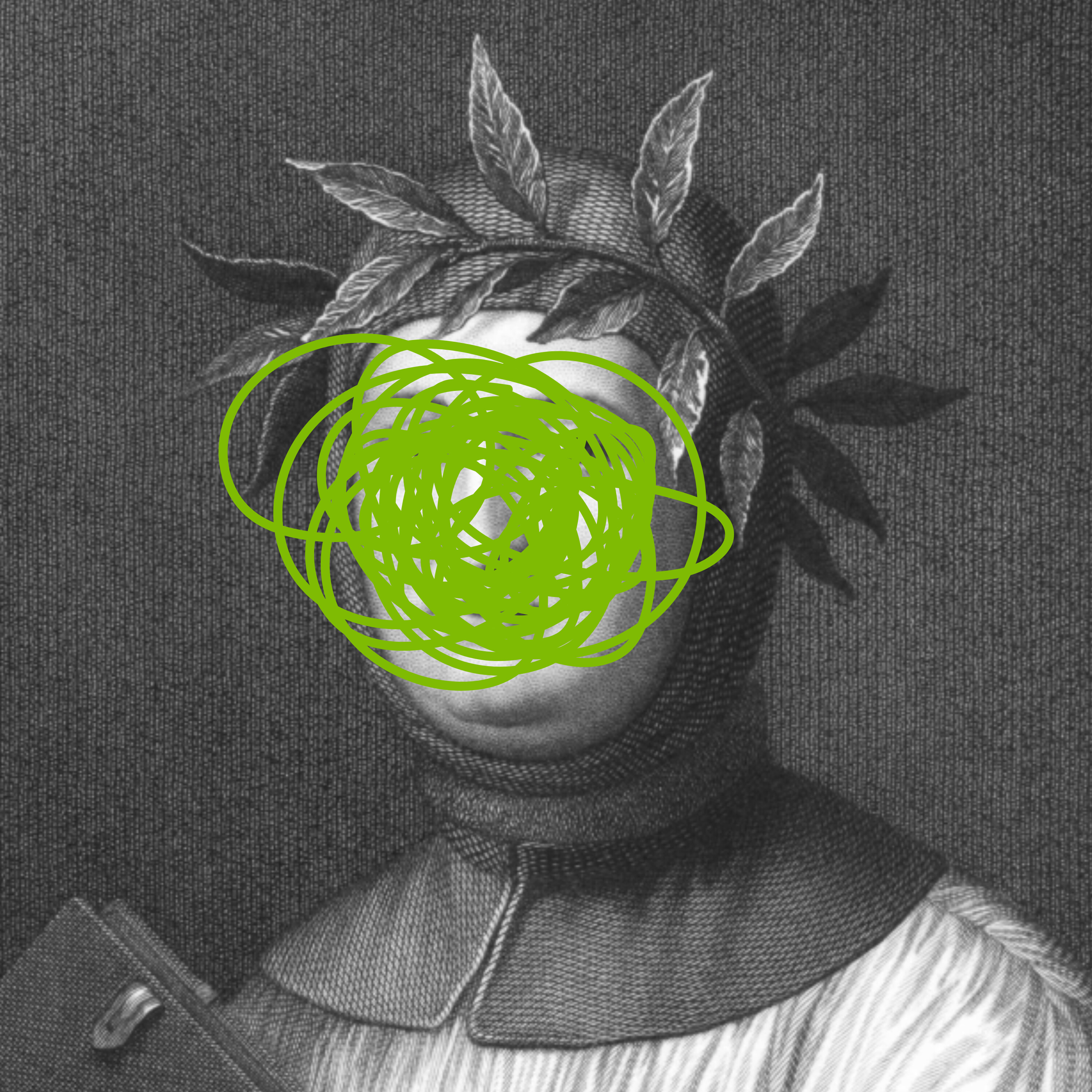
So we are talking about Francesco Petrarca. Petrarch, who we're going to call for the rest of the time. I just thought I'd say an Italian, once lived in the 14th century. 1304, 1374, often did not live in Florence, but thought of himself as a Florentine, and like everyone in Florence at a certain level, found himself and his family in exile from time to time. That was a thing that happened a lot in this brutal factional city. I don't really want to talk about Florentine history, although I can, but, you know, I'm a Venetianist. It's more talk about Venetian history, but I do want to talk about Petrarch. Most people who are listening to the POD probably know him vaguely as a poet. And it is 100% true that he is most famous for writing beautiful Italian poetry. He wrote about a woman named Laura, both kind of an actual woman named Laura, but also in sort of allegorical ways. And you could invite an Italianist, you know, who studies poetry to tell you more about that. He did a lot of work defining the shape of the sonnet. So if you're someone who likes sonnets, including, you know, Shakespeare sonnets and so on, Petrarch's really important in that. And none of that is what I want to talk about. I don't care about his poetry. It's very pretty Italian. It's great. I'm glad I learned Italian and could read Petrarch's poetry. I brought no poems with me to read today. I'm not interested in talking about his poetry. It's all the other stuff Stuff that I want to get into.
- [10:56]
Claire Aubin
I didn't even write down any quotes from his poetry because I was like, that's probably not what we're talking about.
- [11:01]
David M. Perry
Not what I want to talk. And I just want to say the poetry is good. I mean, I'm not a poet, I'm not a scholar, but I don't know, it seems pretty. It rhymes. It sounds nice in Italian.
- [11:10]
Claire Aubin
I mean, overwhelming if you're.
- [11:13]
David M. Perry
Everything sounds nice in Italian. I mean, I could read the phone book. It would sound pretty nice if I did the accent. Right.
- [11:17]
Claire Aubin
But, you know, so in terms of how people think of him conceptually, like, before we talk about, like, the things that are wrong with this, people will have come across him as a poet. Absolutely. But also as what people sort of call this father of humanism. Yeah, right. Like, and these are also, obviously, the things that we're going to problematize. But he's famous for this humanistic thinking, although he was actually sort of a cleric and a Christian. His project was not this sort of secular humanism that we think about now, but really a synthesis of Christian and classical ideals. He's obsessed with classical antiquity, which also we're gonna talk about, particularly ancient Greek and Roman texts, because he sees them as sort of a means of moral and intellectual and literary renewal.
- [12:08]
David M. Perry
Absolutely. He never says, hey, it's the Renaissance. But he is the person with whom, if you're trying to find a place to start, the Renaissance people often would start with him. Certainly intellectually, I always say that as a medievalist, we get Dante, and the Renaissance can have Petrar. But this is not a gift, because I want Dante, and I do not want Petrarch. I mean, in terms of, like, the scope of history, they're pretty close together in late 13th, early 14th century in Florence, in the same context, the same intellectual milieu, but we get Dante, and it's the Renaissance people, the early modernists, they can have Petrarch, and good riddance.
- [12:43]
Claire Aubin
You know what's funny is I actually know a lot of people who work on medieval and Renaissance Italy, and they all seem to have kind of the same opinion as you do, where they're like, Dante stands, like, pro Dante and very anti Petrarch, which I think is. It's funny because that's not something that if you're outside of this field or outside of this world, like, you would have any idea of. Like, this is these sort of, like, factional hatreds. I don't know if hatred. I mean, in your case, hatred is the right word. But, like, this sort of these factional grievances are not something people outside of the world of historians or humanities would like know or care about. But over the course of the episode, we are going to make an argument for why you should care about these things.
- [13:26]
David M. Perry
I mean, it would be interesting to have, you know, someone who really studies poetry and pre modern poetry and knows Italian to talk about why Petrarch is so great and to articulate an aesthetic argument and a form of a literary argument for Petrarch's glory. I'm not going to make that argument and I don't, in fact care, although I'm perfectly happy to accept that his poetry is good and that it's pretty. We could just kind of agree that it's very pretty and that it's good and it does clever things with language. And writing it in Italian, which he does, is important in the development of the vernacular. And again, none of that is why I'm mad at him. If he had just written poetry about Laura, allegorical or not, we'd be fine. It'd be fine. That's all he would have done. It would be great.
- [14:09]
Claire Aubin
That would have been great. But also, I mean, that's fully not what this podcast is. I will definitely not be inviting an Italianist on to explain why Petrarch is.
- [14:16]
David M. Perry
Well, that's why I said I come.
- [14:19]
Claire Aubin
Let's talk about his biography a little bit, just so that people kind of know what's going on with him. So he's born in Arezzo in 1304, in which is like Tuscany. Yeah, Tuscany to this notary family. I'm not fully sure what that means.
- [14:35]
David M. Perry
I mean, they're kind of like lawyers, but essentially they're not lawyers in terms of trial lawyers. They're the kind of lawyer who, when you buy a house, like today. Right. The lawyers who you might interact with when you buy a house, they're a lawyer you might interact with when you make a deal, you know, in terms of contracts there. But often they're, you know, you still go to a notary public.
- [14:55]
Claire Aubin
Sure.
- [14:56]
David M. Perry
In this world, they did that too. They witnessed things. They were often. Because they were literate clerics. They did not have to be clerics because they wrote stuff down as a job that they are enormously important in how we encounter the history of pre modern cities, medieval cities. Like, there is just no, there are other. Many other kinds of sources. But, you know, again, I was mentioning, you know, this, this real estate transaction that I was excited about. Right. That was written by a notary, and I was trying to identify one of These thieves which. Whom I had a first and a last name. And we found other people with those names in the archives. It's all written by a notary. And the notary, in fact, may have been the priest of the parish and may have been a character in my story that I don't know. Seems quite likely, though. But like, these are professional legal people who are just. You can't do business without them. Wills, sales, contracts, all of these things are really, really, really critical.
- [15:51]
Claire Aubin
Yeah. It's interesting that so many of the things that you work on and that medievalist work on and people now who are working on things in the pre modern world will have like, read them and viewed them through the lenses of notaries. And he's from a family of these. Of these kinds of people.
- [16:07]
David M. Perry
That's right. So not elite, but also not like, not elite. I mean.
- [16:11]
Claire Aubin
Yeah.
- [16:11]
David M. Perry
And that he would be literate is normal.
- [16:14]
Claire Aubin
Yeah.
- [16:14]
David M. Perry
It's not a surprise. There are more literate people in Italian cities than people might guess. A lot of people had some level of literacy, but he was. He went to school. He had a lot of literacy.
- [16:24]
Claire Aubin
Yeah. And he's from a family where that would be expected of him. He goes to Avignon with his father as a child because his father's following the papal court. He then goes to study law at Montpellier.
- [16:36]
David M. Perry
Do you think people know that there was a pope in Avignon? Do you think that's something that people generally know these days?
- [16:42]
Claire Aubin
I have no idea.
- [16:43]
David M. Perry
I ask as a medievalist. It's a genuine question. Yeah. Hey, everyone. There was a pope in Avignon for reasons really, really, really, really important reasons that are not relevant to this discussion. But there was a pope in France for a while. You should go there. Really good wine, really pretty palace. It's excellent. Okay.
- [17:00]
Claire Aubin
So, yeah, he goes to France because there is a pope there. Not material to this, but worth knowing.
- [17:07]
David M. Perry
That's right.
- [17:09]
Claire Aubin
He. What else? He. He studies law at Montpellier, then goes to Bologna to do more law stuff. So he's very well read and then is like highly literate. Very well read. This shapes a bunch of the shit.
- [17:22]
David M. Perry
He'S going to do at the very. The very top of sort of the. In his era in terms of literacy, for sure.
- [17:28]
Claire Aubin
Yeah. Let's see what happens next. His father dies in 1326 and he says, I don't want to be a lawyer anymore. I'm not interested in law. To pursue sort of literary, scholarly, ecclesiastical interests.
- [17:43]
David M. Perry
Yep.
- [17:44]
Claire Aubin
And then a year later, he allegedly apparently sees this woman, Lauda, and is like, I'm a poet now.
- [17:53]
David M. Perry
Yeah.
- [17:55]
Claire Aubin
And what a lot of pressure on you if you're Lauda. Can I just.
- [17:59]
David M. Perry
I mean, I gotta say, I mean, she rejects him, first of all. But one of the things that I want to be really clear is that Petrarch is a goddamn liar. In that when something. And I don't know, like, again, there are other people who spend their lives really focused on 14th century Tuscany and have. Have as many thoughts about him as I have about things that I have spent that, you know, decades and decades working on. I'm just mad at him. I'm not a scholar of Petrarch. I'm mad at him, and I want to be really clear about that. But he's a liar. And so when he writes down this biographical moment in which this perfect thing happens that allows him to then shape all of his discourse as a result of his events, I start with the belief that that is not what happened. It's like when people tweet, you know, I was in the Starbucks and so. And so did this, and like, well, tell me one thing that did not happen. It's that, right? Like, was there a Laura? Yes. Did he have some kind of interaction with her? Yes. Is everything he says about his thoughts, his feelings, his ideas, how important she was, the way she was important, reliable? No. Absolutely not. We haven't even gotten to his mountain climbing, which I definitely want to get to. I don't even know if he. There's a really famous moment in which he climbs a mountain. I want to talk about that, but I don't know that he actually climbed the mountain. He just says he did. And I want everyone to know that he is a goddamn liar.
- [19:19]
Claire Aubin
And can I just say, as a woman, as a relatively young woman, if a man encounters me, I reject him. And he spends his life writing poetry about me or about the concept of me.
- [19:30]
David M. Perry
Bad.
- [19:31]
Claire Aubin
Don't like that. Thumbs down for me. Red flag. Don't like that at all.
- [19:35]
David M. Perry
I had a crush on a girl when I was 27, and I wrote a sonnet, and I told a friend, and my friend said, do not, under any circumstances send that sonnet. And I'm like, oh, that's really true. That was kind of creepy.
- [19:44]
Claire Aubin
She's like, yeah, don't you. Don't you dare.
- [19:46]
David M. Perry
It's not. I did not send it. I'm sure I don't have anymore. I don't actually remember. She had red hair. I don't remember her name. She was lovely. We, like, I just had a crush. Right. I was 27, sure. You know, but I did not then create an entire discourse of poetry and time and place in the universe around this random crush.
- [20:04]
Claire Aubin
So for sure, if nothing else, we're getting justice for Lauda by the end of this episode. But being like that guy who you thought was a creep, he actually is a freak. And here we are hundreds of years later. Validated your belief. Hi, it's Claire. Thank you for listening to the show. You're currently hearing the free version of this Guy Sucked. So I'm here to tell you about our Patreon. In order to make the show sustainably and independently, episodes switch off between free weeks and Patreon weeks. So if you're a fan of good, accurate public history made by actual experts, consider supporting us and joining our honorary haters club. It's only one tier, which means everyone who subscribes gets access to the same perks across the board. For the price of a pastry at your local hip coffee shop, you'll get to listen to a new episode every week instead of just the bi weekly free ones. And they'll all be ad free for you. You'll also get access to the full episode archive, bonus content, early access to merch, and lots of other fun Patreon exclusives to sweeten the deal. Just head over to patreon.com this guy sucked or follow the link in the episode description to sign up. This will take us to the mountain climbing so that we can get into what's wrong with him as a. As a good segue. He then travels throughout Europe seeking manuscripts, meeting scholars, engaging in diplomatic missions. He apparently visits a bajillion places. He goes to the Rhineland and France and Flanders and is an explorer guy and apparently at some point climbs a mountain. Yeah, and the rest of his life is kind of whatever. That's. That's the main thing that we need to know about.
- [21:44]
David M. Perry
So a couple of things. He definitely, as he gets later in life, he develops a really strong idea about, like, how important he is. And he gets himself crowned, like, literally with Laura Lis, poet laureate. And it should not escape listeners that Laura is connected to this word laureate, and that, you know, again, that doesn't mean he didn't meet a woman named Laura and have a crush on her. But he's constructing a narrative of who he is in a way that I find super annoying.
- [22:11]
Claire Aubin
Can I ask you a silly question?
- [22:13]
David M. Perry
Please.
- [22:14]
Claire Aubin
Is he the first poet laureate of modern times?
- [22:18]
David M. Perry
Ha ha. A medieval. He creates this new honor by claiming it's an old honor. And I have to tell you I know nothing about poet laureates in classical antiquity. It is a thing we could find out with five minutes of jstor, but let's just skip it. But maybe read it. Listeners will chime in and tell us, that is wild. But he invents it kind of from whole cloth, including with a parade and in Rome, and gets himself sort of elevated to this position by claiming it was a thing that the Romans did, which again, they definitely had triumphal parades with laurel wreaths, like if you conquered Gaul or something like that. And so did they have them for poets? Sometimes I just don't know. I actually meant to check before the episode, but I don't know and I don't care because whatever the Romans did is not what Cicero is doing. Right. Cicero is making claims about the classical era in a way to support his agenda in sort of defining new ideas about intellectual and cultural discourse in the 14th century. So he's just making it up and he's, you know, who does he get to be the first one? Well, me, of course. Says Petrarch.
- [23:22]
Claire Aubin
Right, sure.
- [23:23]
David M. Perry
Because he is extremely full of himself and he lives through the Black Death, which is always an exciting and terrible moment for anyone who lives through it or doesn't live through it. I think actually Laura dies in the 1348 plague. You know, this is 20 years later when they've not had a relationship, but still he's upset about it.
- [23:40]
Claire Aubin
Oh my God, justice for Laura. Guess what to say.
- [23:44]
David M. Perry
There's a lot of stuff going on. And then the other thing that I want to really emphasize about this time period, and this is the book that everyone should read, is from a woman named Ada Palmer, a sci fi author, but also a world class historian at the University of Chicago. Just one of the smartest people I've ever met in my life, who's got this new book called Inventing the Renaissance, which she very kindly pretends is a sequel to the Bright Ages. She says, well, I wanted to keep the story going. It is an amazing. It's much longer, it is brilliant, it is written in a unique style. It's just the voice is incredible. And what she always likes to emphasize and has really informed my understanding of the 14th and 15th and even 16th century Italy, this period we can call the Renaissance, is that not only did this guy suck, but the it sucked. It was a terrible time to be alive. Living in Italy in this time was bad. The factions, the violence, the plague, the external and internal threats. And what's more, the people in this era knew it was bad and they're trying to have it be less bad. They're trying to say, why is it bad and how do we make it better? It's not like it's just. With hindsight, we're like, boy, I wouldn't have wanted to live in, you know, in the 13th century. There are lots of places in history I would not have wanted to live under any circumstances. But they knew it was bad. They were focused on how it was bad. And that's something I think that's, you know, this idea of the Renaissance is this wonderful time, this flowering of culture that is not the narrative that comes from people like Petrarch or Machiavelli, who is sort of more famous. Like, it was bad. It was a bad time to be alive. You would have rather have lived in the 13th century in Italy than the 14th century in general. Like, in the 15th century is bad. It's all bad anyway. The Renaissance is bad. Everyone understand that?
- [25:26]
Claire Aubin
Well, also, like, looking at things like Renaissance art, a lot of people just assume that it's like some faithful representation of the world around you. When it's like, no. People also have imagination at this point in time. I don't know what to tell you. Like, you can also. Yeah, you could be like, something's really bad. I think I'm going to make art that people still do that. I don't understand why people seem to not be able to connect the two.
- [25:47]
David M. Perry
And also there are super rich people who have concentrated wealth and power in their hands to a semi unprecedented degree. It is not unprecedented. And one of the things they do is they hire artists, which is nice. I would like Elon Musk to hire more, you know, fine artists. That is not what he's doing with his time and money, but it's still a sign of incredible inequality and control and power in the hands of the very few.
- [26:10]
Claire Aubin
I mean, if you're gonna be a billionaire now, if there are any billionaires listening to the show, first of all, give us all your money. Second of all, do art patronage instead of trying to blow up the moon or whatever it is that you're gonna do now.
- [26:21]
David M. Perry
It does seem like it does. I mean, the Medicis are terrible, but at least they, you know, sometimes paid stipends to artists.
- [26:27]
Claire Aubin
So, like, hire, hire a violinist to follow you around or something that's way cooler than whatever evil thing you're doing right now.
- [26:35]
David M. Perry
Or organize an entire parade in the streets of the Capitol and with your favorite poet with a laurel wreath.
- [26:40]
Claire Aubin
That also seems that speaking of him. So I think this is an appropriate Time for us to move to the what's the Beef? Like, we know we've had some hints to it, priority wise. What's your first area of beef?
- [26:53]
David M. Perry
Really? It's this issue of the Dark Ages, but that's actually not first. So I want to be really clear with you and explain exactly why I have a really personal hatred of pet shark at a really deep level. Okay.
- [27:04]
Claire Aubin
Okay.
- [27:05]
David M. Perry
It's extremely petty, but it's true. True, his Latin, he wrote poetry in Italian, but he wrote letters, he wrote prose in Latin. And it is the most annoying Latin to read and translate that I have ever encountered in my life. And he did it on purpose. Let me jump in on that a little bit. I know. It's like we have the people who have. You have people on your podcast who have murdered lots of people who have committed all kinds of. I just want to talk about Petrarch's Latin, but I assure you, he sucked. So, first of all, I'm in grad school, right? And there's a class, Petrarch's Latin Letters. And I'm like, oh, Petrarch writes pretty poetry. I'm going to take this class. I'm still mad about that decision to take this class. Because what you do in a Latin class, at least one of them, is you read a lot of Latin. You prepare a translation, you go into class often. It's very performative. This was a professor from England, so sort of that was the model. Very performative, where you go around and each. You sort of read your translation of three or four sentences, and then the. The whole room takes them apart. It's stressful. I'm glad I don't have to do that anymore.
- [28:06]
Claire Aubin
Yeah, that sounds like a nightmare.
- [28:08]
David M. Perry
Yeah, it's terrible. Petrarch had this idea that we've talked about a little bit about sort of recreating classical culture. And he definitely traveled a lot and he read a lot. He read everything he could read from classical antiquity in Latin. He did not know Greek, but everything he could read. And he was very good at Latin, sort of. For people who don't know it, Latin is a very fluid language. It doesn't depend on word order. It depends on what's called declension. So that you can. You can kind of put things anywhere you want, and your sentences can go on as long as you want with a lot of clauses. You can, like, write 70 clauses and then put the verb that makes it all make sense at the end. There's lots of tricks you can do. And the authors of classical Antiquity did various different Tricks like this. And what Petrarch does is essentially tries to do every trick he knows every time, with every letter in every sentence. So he's not writing for sense making. He's not writing, you know, Cicero is writing with a kind of, you know, focus on persuasion, a kind of persuasive rhetoric. Tacitus, the historian is writing, trying to sort of make sense of causality in ways that are really important to how we understand, like what is history. And again, these are not easy to read. Caesar is pretty easy to read, you know, grading on the curve of having taken several years of Latin because he's writing kind of military. He has a straightforward agenda. But like these kinds can be hard to read, but they're doing it with a purpose to like be more persuasive or show the connections between things that happen. Whereas Petrarch, I feel is just doing it to show off. Look how good my Latin is, look how many tricks I've learned. I'm going to do all of them at once. And it was just a terrible. It was a cold and gray Minnesota winter trying to translate Petrarch's Latin letters. And I have held a grudge ever since. And that is 100% leading my agenda to come talk to you here today.
- [29:53]
Claire Aubin
I think that's totally fair because I had a similar experience not with Petrarch, but I was in for my undergrad I was in the Russian Eastern European Studies department at the University of Oregon, which no longer exists as of the last few months, which is horrible, but I had to take flippin old church Slavonic while I was in it. And I remember every day sitting in this class in winter in Oregon where it's pouring rain and it's gray and I would have to go at 8 o' clock in the morning every day and take this stupid old church Slavonic class and think to myself why on earth am I here learning this? And obviously there are many things to be said for like learning has its own merits just by practicing something or learning anything is good. But it's very hard to convince a 19 year old that what she's doing is worth her time when it's just this thing where you're like. Also because Russian for people listening is similar to Latin in this sort of thing with the clenchians and word order and whatever and Slavonic is the same way and it makes you want to die when you're trying to read it. So reading someone who's all about style, not about sense in this context, I get it, that sounds horrible.
- [30:59]
David M. Perry
It's not even good style though. It's just showing off. Like, you know, if it's style because they're trying to write something incredible, but it's just, you know, it's just style. There's lots of Latin texts of people who did that because Latin is a language you can play with in really interesting ways. I don't feel like Petrarch ended up with good stylistic Latin prose. He just wanted to show off that he knew all of the moves of classical antiquity and could do them all in a single paragraph. And the first thing we read, I remember, was his describing how this guy Petrarch, I'm pretty sure he describes himself in the third person, got the first laurel wreaths as a poet since classical antiquity. And it was not a great way to start a class. And again, I'm a graduate student, I've taken many years of Latin, I'm working on Greek, I'm working on Italy. I'm really interested in this stuff. My Italian is developing. I've read a little Petrarch poetry. It's pretty good. I'm not got able to really appreciate it. I've been trying to start getting into Dante and Dante's language and then I come across this. So I'm primed to enjoy this class.
- [32:01]
Claire Aubin
Sure.
- [32:02]
David M. Perry
I'm in a very small self selected niche of people who should enjoy this class and I did not enjoy that class. And that was, I mean, I'm 52, I was probably 26 maybe. So it's been a minute and like half my life ago and I'm still pretty mad about it.
- [32:18]
Claire Aubin
I do love that you're scholarly profile is like largely about something else that Petrarch has done and you were like, but actually at the core of it is that I don't like him as a person and I don't like what he did to me. And from there the whole thing begins to unravel because it's, it's also funny because it's not like, you know, we've had people come on and listeners will say like, well, you know, I didn't feel like their thing was substantive enough. And with this it's like, yeah, but you've written books on Petrarchian problem.
- [32:52]
David M. Perry
Oh yeah, I have a big substantive problem with him that, that I'm sure is what you thought I was going to lead with. But I, I'm being 100% honest with you that.
- [33:00]
Claire Aubin
Good.
- [33:00]
David M. Perry
If he had done, if he had not ever invented the Dark Ages, I would still be mad at him.
- [33:05]
Claire Aubin
Good.
- [33:06]
David M. Perry
He invents the Dark Ages by Which, I mean, it's a Latin letter, though I'm pretty sure we didn't read it in this class, which in hindsight, feels like we kind of should. He writes this letter, it's an apology to his critics. It's not really an apology. Right. Apology is a. I mean, it's honestly a classical genre in which you get a certain kind of rhetorical performance. What he's really doing is saying, I'm good, my critics are wrong. That's what he's doing. But with this apology. And there's a great. I think it's from maybe the 1940s or. I mean, it's an old article, Petrarch's Dark Ages by Theodore Mommsen. You can find it on JSTOR if you want. If you. If you don't have access to JSTOR and you hear this, you can email me. I will send you. I'm an article distribution machine. I have this whole thing on feudalism. And I have sent out this article from 1974, like 200 times now.
- [33:52]
Claire Aubin
Hell, yeah, it's a great article.
- [33:53]
David M. Perry
This is a good article. Petrarch's Conception of the Dark Ages by Mommsen. So I'm taking from him. But Momsen's right. No one has argued with it. So, like, he writes this letter saying, look, I'm doing my best. You know, a thousand years ago, there were these people who were shining lights. But since then, although there were some smart people in the last thousand years, he's not saying he's the first smart guy, but although there were some smart people, they were shrouded in darkness. And he uses this word, I think it's tenebrae in Latin. He uses a word for darkness in Latin. And that is the first moment, as far as I'm aware, as far as I've been able to find, and I have looked pretty hard, in which someone called this thousand years between classical antiquity and the 14th century, darkness. And it sticks. And it's not 100% his fault that it sticks. It becomes something that people pick up. This letter itself, no one really knew about until the 19th century. But when I'm not mad at the 14th century and Petrarch, I'm mad at the 19th century. It is the other century that I'm most angry about, in particular, 19th century people who are in many ways inventing history as a modern discipline. The discipline that you and I are both part of is, you know, not that history was invented in the 19th century, but as an academic discipline is really a 19th century invention. And in many ways I think we're still trying to untangle ourselves from the choices that these men, all men, made in the 19th century. And one of the choices they made was to adopt this Dark Ages and to really, really build on it. Building in part also on the idea of Rome's collapse as a catastrophe. The guy, Edward Gibbon, number two in a this guy sucks podcast choice for me, if I had to choose. But I know more about Petrarch, and I'm angrier directly at Petrarch. Gibbon's a very beautiful writer. He writes beautiful prose, as opposed to Petrarch, who, again, I have this petty personal grudge. So Petrarch really is the one who says, yes, there were smart people, but they were shrouded in darkness so their lights couldn't shine. And. And me, Petrarch, and the movement I'm in, we're going to try to do something different. We're going to try to push away the darkness and create a new era of light. And we're stuck with this Dark Ages, and we're absolutely still stuck with it. I wrote a book called the Bright Ages, which is my little attempt to move that discourse incrementally. But I want to be very clear that if you already know. I know you do, but if the listeners already know that it was not the Dark Ages, you are in a tiny minority in terms of when people think about the Middle Ages at all, they think about it as the Dark Ages. That is still the most common thing.
- [36:34]
Claire Aubin
Yeah, absolutely. I want to actually talk about this quote for just one second because I. This is one of the quotes that I did write down for this.
- [36:41]
David M. Perry
Yeah.
- [36:41]
Claire Aubin
So it's written in 1371 or 1372. Ish. It's in his epistol aposteritate, which is letter to, or posteritati, which is letter to posterity.
- [36:50]
David M. Perry
Yeah.
- [36:51]
Claire Aubin
My Latin is medium good, I will say, but I found a translation of this too good. So, among the many subjects that have occupied my thoughts, I have long wondered why, after the bright light of the ancients, we have been enveloped or shrouded in such darkness of ignorance. So, like, it is interesting because he's doing, like you said, this sort of comparison where he's saying things used to be good, right now they are bad. And I do feel like people still are permanently trapped in this way of thinking about the world.
- [37:22]
David M. Perry
And just to be clear, it doesn't matter, but he. I think there's actually, like, there's an earlier letter that he also starts using this brightness, darkness. And I'd like people to think about him as a human. Right. Like, despite being mad at him, he was a person.
- [37:33]
Claire Aubin
Sure.
- [37:34]
David M. Perry
He's pretty old, right? Like, he was born in 1307. We're talking about the late 1350s, I think, when he first uses this. We're talking 1371 in this letter to posterity. Right. He's lived through the Black Death, Death phase one. Right. Like, this is an older man reflecting on his legacy in his life. And I. I don't know if that's an excuse, but it is an explanation sort of for why he's writing in this way and some of the things that he's saying.
- [37:58]
Claire Aubin
Yeah, it's certainly relevant. I think what's interesting is it's not necessarily that the period he's living in isn't dark. Like, because whatever. People have different perspectives on their experience of the world.
- [38:08]
David M. Perry
Sure.
- [38:09]
Claire Aubin
But it's the imagination, the imagined version of a better world predated your existence that was like, magically perfect and bright. And everyone was smart and everyone was writing and thinking the way that you wish they did. Like, that's the problem. I mean, in this case, he's like, what, 67?
- [38:26]
David M. Perry
Something like that? Yeah, yeah, yeah, yeah.
- [38:27]
Claire Aubin
He's like, in his. Like, he's like 67. He dies at 69. So he's like, near the end of his life. And so, yeah, of course he's thinking things are dark, but that's not the issue as much as it is the way he's positioning it in relation to a period that. That he did not live in and has no idea what was like at all. Really.
- [38:45]
David M. Perry
Well, and I think it's even bigger than that. And though it's not, again, it's not entirely his fault in general, I think that's a problem. I think the specificity of elevating the Late Roman Republic and early Roman Empire to the status of a golden age. And whenever a student says golden Age or someone says golden Age, I say golden age. For whom we have to think about that. And then creating a fall, a collapse, and then articulating this idea of total collapse and then a thousand years of darkness. Like, there's a lot of bad shit in 2025 that depends on that conception of time. Including, just to pick one, the entire sort of over educated Western Civ, white supremacist history bros, including people currently in the Trump administration, currently in Silicon Valley, currently, certainly Musk talks about Western Civ all the time and all the guys on social media with Roman busts in their pictures. It's bad history and it's not true. But also this specific thing that he is at least the genesis of, if not solely responsible for is really underpinning a lot of. Of bad shit right now.
- [40:01]
Claire Aubin
Yeah.
- [40:01]
David M. Perry
The reason the White House ballroom that they're gonna build looks so shitty is because they've got this idea of classical buildings which are white and perfect and columned, which is actually like not what classical buildings look like. But that idea comes right out of this. This idea, you know, deep underpinnings of the idea of sort of white European superiority depends on the Middle Ages as both a formative, isolated period and a savage, barbaric one, isolated from the rest of the world, out of which Europe has its origins and grows and grows to sort of justly conquer the world. I want to be clear, this is bullshit. But that narrative that I really think lies and you know, it's not the only bad idea in the world, and it's not necessarily even the worst idea in the world, but it is a bad idea with a body count over centuries, including today, really comes right out of Petrarch's work. And then the people who worked with Petrarch and the people who worked with them, that, to me, is pretty bad.
- [40:57]
Claire Aubin
I think that is pretty bad. And I think there's something here where in order to hold up this Roman period or classical antiquity as being this complex, wonderful, beautiful thing and hold it in sort of contraposition with this Dark Age, you have to then also say that this Dark Age is lacking in complexity, has no complexity, and also it allows for, like you've said, it's sort of foundationally damaging to public understandings of history. Like that. Just. Yeah, straightforwardly, like, that's bad.
- [41:30]
David M. Perry
Big. That's big and bad.
- [41:31]
Claire Aubin
Yeah, that's pretty big and it's pretty bad. But it also allows people to believe in this, like, level of like Western exceptionalism. And like that, I think is incredibly damaging, like in a long term historical sense too, because there's also this belief that like the Middle Ages, the medieval period only happened in Western Europe. The rest of the world didn't exist while this was happening, and it was bad there, which means it must have been bad everywhere. And there's this really weird thing where it's almost like there's this spotlight on a certain part of the world in a certain period of time and nothing else just exists outside of that. And that gets replicated over and over and over again in historical teaching for.
- [42:14]
David M. Perry
A very long time, and especially from the 19th century guys who built this narrative. And I'm not letting Petrarch off the hook. But a lot of the things that we're seeing today built on this come out of this one moment where European nations have empires and like, oh, we better create a story that explains why this happened and why it's good.
- [42:32]
Claire Aubin
Yeah, they're sort of doing the guns, Germs and steel thing for themselves, which, by the way, I hate that book and I don't like Jared diamond, but like, they're doing that thing where they're like, well, we have to explain why we got here and the reason has to be this long term historical thing rather than we just. Just suck and are mean and are evil. You know, like, they have to come up with all these other. These like, long term historical justification for it. And part of Petrarch's thing is reframing Europe and like, what will become Renaissance Europe as this sort of rebirth of ancient Rome. Right. Like, he's looking for this rebirthed Rome. And in order to do that, you have to kind of sideline all these other intellectual traditions.
- [43:10]
David M. Perry
Yeah, you have to sideline the past and you have to sideline the rest of the world.
- [43:13]
Claire Aubin
Yeah.
- [43:14]
David M. Perry
Mediterranean. Italy is smack in the middle of the Mediterranean. Sure, that may be a surprise, but it's right there. And that means North Africa is right there and Eastern Europe and the Eastern Mediterranean is right there. And these people are talking to each other and they're moving books around and they're exchanging ideas, sometimes really violently, but often not. And they're exchanging stuff, they're exchanging pathogens. That doesn't always go so well, but they sure are exchanging them. And they always have been. And sometimes they do it more and sometimes they do it less. And it is absolutely true that there are medieval ideas of beauty and there are medieval ideas of authority, like how you know what you know that are different.
- [43:52]
Claire Aubin
Sure.
- [43:53]
David M. Perry
And that the shifts in Renaissance aesthetic, the idea of trying to make things look more like classical antiquity in their art, which we in the 21st century think of as beautiful, though these are arbitrary things. I like them. I grew up looking at classical and Renaissance art. I think it's really pretty. I think medieval art is often a little bit weird. And it took me training to see it better. You know, I had to work to see it. But like, these are just choices. These are just choices. And Italy is part of the Mediterranean, which is part of a big, connected, mashed up world. And always has been.
- [44:24]
Claire Aubin
Yeah, absolutely. And I mean, yeah, he's literally right there. And also in order to do this, he has to say, not only are there things, nothing is existing geographically outside of me, that there is no, like, spatial difference happening around me or difference in perspective spatially happening around me. He's also like, in terms of intellectual traditions, these things don't exist. So, like Byzantine intellectual traditions, gone. Islamic intellectual traditions gone. Jewish intellectual traditions like Maimonides, Incredible. Medieval Jewish thinker dies 150 years before him, basically.
- [44:56]
David M. Perry
And.
- [44:57]
Claire Aubin
But he's like, like, that didn't exist. There are no thinkers who've been here.
- [45:01]
David M. Perry
I am uninterested in defending Petrarch, but he does write his grand epic called Africa. And I just read a book coming out that argues that we should take his Africa seriously.
- [45:11]
Claire Aubin
Okay.
- [45:11]
David M. Perry
And I don't know what to think about that because I'm not. I'm not sure I like the book and I blurbed it, but I'm not sure that I'm the right guy for that specific argument. But what does he mean by Africa? What he means, I think is he means late Roman North Africa where, like St. Augustine lived.
- [45:27]
Claire Aubin
Sure, right.
- [45:27]
David M. Perry
He means Cleopatra.
- [45:28]
Claire Aubin
Yeah.
- [45:29]
David M. Perry
You know, he means Roman North Africa, which is a very specific North Africa that he's focused on. And if you mention someone like Maimonides, maybe, or certainly the people in Europe who read Maimonides and built Aristotelian philosophy based on that Islamic and Jewish tradition, he would say, well, yeah, they were the smart people shrouded in darkness who couldn't really do the work, but they were smart. It's fine.
- [45:51]
Claire Aubin
They're just like me now.
- [45:53]
David M. Perry
Well, we're going to push it forward and do this new thing. So.
- [45:56]
Claire Aubin
Yeah, yeah, yeah.
- [45:57]
David M. Perry
I don't know what to say about Petrox Africa, but I can just already hear, like, people running to their keyboards to defend Petrarch's honor, which is probably not a thing that's going to happen. But I just wanted to say it. He has ideas about Africa. I don't know.
- [46:11]
Claire Aubin
You feel like Petrarch still has shooters. So, I mean, he might be. To be fair, some of the people get very mad about some episodes. We do get some very bad responses sometimes because people feel very strongly about, like the wildest one so far has been people like defending Henry Ford. And I'm like, why? Like, famously not a good person?
- [46:31]
David M. Perry
No.
- [46:31]
Claire Aubin
So you might have some people out here being like, actually, have you read Petrarch's Africa? Well, let me tell you about this. Hey, so Black Friday sucks. Money's tight, consumerism is at an all time high. Things are, according to economists, inflating or deflating. They're doing something economic that's bad. The economy is doing a bad thing right now and corporations are pressuring small businesses to juice their sales around the holidays. But we, meaning me and all the people involved in the show, which is almost definitely more people than you imagine it to be like, so many other businesses need your support all year round. So I have a bit of a pitch for you for the rest of November. Our podcast and all of our sister cousin wife shows, a multitude are offering 30% off our brand new annual Patreon and multi crew memberships. So if you're in a position to support us on Patreon and want your hard earned cash to stretch a little further than usual, please spend your money where it counts most and sign up for one of our annual memberships. They Normally get you two months free, but you can get an additional 30% off now through the end of November using the code all year. That's one word. All caps. That's like if I'm doing my math right, which I often am not, I think that's like 5 months free. Head to patreon.com this guy suck to sign up now. Whether you're annual, monthly or a free member, hoping to support financially one day, that's a wonderful place to keep up with the show. I post all kinds of weird daily stuff on there and it's a fun place to go if you want some behind the scenes content. If you do want to take advantage of the sale, that's patreon.com thisguysucked and use the promo code all year. Catch you later. Hi gang, it's Claire again. Look, if you're like me, gift giving holidays sneak up on you. So consider this like me talking to you right now. This message your reminder to start thinking about the people that you love and the things that they might love to receive as gifts. Even better, I've got a recommendation for a place you should check out to get your holiday shopping done and actually have fun with it. It Uncommon Goods makes holiday shopping stress free and joyful with thousands of one of a kind gifts you won't be able to find anywhere else. Uncommon Goods looks for products that are high quality, unique and often handmade or made in the us. Many are crafted by independent artists and small businesses and they're often made in small batches that sell out very quickly. I'm a huge fan of DIY kit gifts because I think it's fun to give someone an item and an activity at the same time. And Uncommon Goods has a ton of those. Those like a cheese making kit or build your own pinball machine. I personally want my loved ones to feel like their gifts are fun and exciting, and Uncommon Goods has so many options that will help me to fulfill that goal this year. And a bonus. Not only does it support small businesses and independent artisans with every purchase you make at Uncommon Goods, they give back $1 to a nonprofit partner of your choice. They've donated more than $3 million to date, so it's a company that you can feel pretty good support. And so get your shopping done early this year, have Fun and get 15% off your next gift by going to UncommonGoods.com TGS that's UncommonGoods.com TGS for 15% off your order. Don't miss out on this limited time offer. Shop at Uncommon Goods because we're all out of the ordinary. Hi, this may come as a shock to you, but it's me, Claire. If you've ever listened to a podcast, which I assume you have, because here you are, then you've probably heard of HelloFresh. They're the number one meal kit in America and they make home cooking easier with chef crafted recipes and fresh ingredients delivered straight to your door. This fall, they've totally revamped their offerings. This isn't the HelloFresh you might remember. It's bigger. They've doubled their menu with 100 meal options every week and recipes from around the world. It's healthier with over 15 special high protein meals each week and dishes packed with more vegetables than ever. And it's tastier. Steak and seafood options are delivered for no extra cost and hearty seasonal recipes also include a variety of seasonal produce like leeks and broccolini. Between my book, academia and the pod, I currently work crazy hours. I'm recording this at seven in the morning, so I'm being very genuine when I say that having HelloFresh has made my life a lot easier just because I don't have the time or energy to grocery shop or come up with recipes. Sometimes times I use it and I genuinely recommend it. The best and easiest way to cook just got better. Go to hellofresh.com TGS10FM now to get 10 free meals plus a free breakfast for life. One per box with active subscription. Free meals are applied as a discount on the first box for new subscribers only. Varies by plan. That's hellofresh.com TGS10FM to get 10 free meals plus free breakfast for life.
- [51:15]
David M. Perry
Why choose a sleep number?
- [51:16]
Claire Aubin
Smart bed Can I make my sight softer? Can I make my sight firmer?
- [51:20]
David M. Perry
Can we Sleep Cooler Sleep Number does that cools up to eight times faster and lets you choose your ideal comfort on either side. Your Sleep Number setting. Enjoy personalized comfort for better sleep night after night. It's the final days of our Black Friday sale. Recharge this season with a bundle of cozy, soothing comfort. Now only $17.99 for our C2 mattress.
- [51:40]
Claire Aubin
And base plus free premium delivery.
- [51:41]
David M. Perry
Price is higher in Alaska and Hawaii. Check it out at a Sleep number store or sleepnumber.com today.
- [51:46]
Claire Aubin
The wait is over. Dive into Audible's most anticipated collection, the Best of 2025. Featuring top audiobooks, podcasts, and originals across all genres, our editors have carefully curated this year's must Listens. From brilliant hidden gems to the buzziest new releases, every title in this collection has earned its spot. This is your go to for the absolute best in 2025 audio entertainment. Whether you love thrillers, romance or nonfiction, your next favorite listen awaits. Discover why there's more to imagine when you listen@audible.com BestOfTheYear.
- [52:33]
David M. Perry
Can I talk about the mountain climbing before we run out of time? Because I'm also specifically irritated about this just because he's such an arrogant guy. Like, just sort of the pure arrogance of I'm going to be the first Laurel poet laureate and then like to organize a parade for him and his poetry.
- [52:48]
Claire Aubin
Sure.
- [52:49]
David M. Perry
Like other people got to do that for you. If you're that good, let someone else do that for you. I'm all for celebrating poets, but, you.
- [52:55]
Claire Aubin
Know, you don't call yourself the greatest medieval historian. You know, like, that's not cute.
- [52:59]
David M. Perry
That's right. That's right. Oh, it's not cute. So he writes this letter in which he's 33, I think, which is an interesting era if you've, you know, studied the life of Jesus. He's outside Avignon and he climbs a mountain and he says, I just climbed to go see the view. Now, first of all, as with all Petrarch things that piss me off, some of it isn't his fault. In sort of the modern mountain climbing movement, people are like, oh, he was the first man to climb a mountain just to see the view. And I don't think he would have said that. And there's certainly lots of other people who said, you know, climbing mountains to see views is the thing people do. It's pretty up there. Right? But yeah, but I'm still irritated about it because, like, that's not true.
- [53:40]
Claire Aubin
Yeah. Yeah. Like this is a natural human impulse.
- [53:43]
David M. Perry
Right? Right. So anyway, so he goes up he climbs this mountain outside Avignon, and he sees the view and he's sort of relaxing. He writes this letter. He just happens to have with him a copy of St. Augustine's Confessions.
- [53:55]
Claire Aubin
Sure.
- [53:55]
David M. Perry
Which is for people who don't know this sort of biographical story about one of the most important Christian thinkers of all time. Very interesting philosopher who had a famously dissolute early life with women and drink. And then at a crisis point, and St. Augustine writes this text, the Confessions, about sort of his life of sin. The sins aren't really that big. They're like stealing pears from a garden. But he's a Platonist, so, like, stealing a pear and stealing a million dollars is the same thing. It's stealing. And he wants to talk about that. And so. So Petrarch says, I brought the Book of the Confessions with me, and I was feeling some despair, so I flipped it open at random. And wouldn't you know it, I flipped it right to the page where in the confession, St. Augustine is feeling despair and picks up the Bible and flips it open at random and it says, pick up the book and read. And this is this famous moment in St. Ambrose's Garden in which Augustine kind of converts. It is one of the fundamental kind of conversion narratives in the history of Christianity. It is extremely importantly to me, also referenced in the Simpsons at one point. So that's really. Well, the baptism of St. Augustine is referenced in the Simpsons at one point. That's important to me. It's a big iconic moment. And this moment, though, where Augustine opens the Bible and just to a random page and finds a message there about reading about the books, which then leads Augustine towards this whole sort of the rest of his life of trying to connect the wisdom of antiquity to Christianity in ways that still really shape how people read the Bible today. St. Augustine, it's not that we couldn't do a this guy sucks St. Augustine episode, but I don't want to to. I'm not moved through it. He's interesting, though, and he's important. We're being led to believe by this, that Petrarch, just at the right, exactly the same age, happens to go up a mountain, happens to have the Confessions with him, just by chance, happens to flip it open to exactly the right page where St. Augustine happened to flip open the Bible. Like, this is bullshit.
- [55:43]
Claire Aubin
This is a narrative.
- [55:45]
David M. Perry
Right. This is a narrative. He might not even have climbed the damn mountain at all.
- [55:49]
Claire Aubin
Sure.
- [55:50]
David M. Perry
And for that matter, St. Augustine, his confessions are not like straightforward testimony that we should just believe. He is doing very sophisticated work in that book. And Petrarch knows it and is trying to do that sophisticated work as well. First of all, again, a level of arrogance to just like say, first there's St. Augustine, then a thousand years, and.
- [56:13]
Claire Aubin
Now there's me and now it's my turn.
- [56:15]
David M. Perry
Now it's my turn. Which I do think he's saying. It is unclear to me whether, like, the people who read him, the person he sent this letter to, would have believed it or would have understood what he's doing. But he did write it that way. He did write it as truth, in which there's no reason to believe it, in which he's kind of telling this story to pump himself up. And then of course, it gets believed by people over the next 500 years and to sort of bring it full circle. The Latin of that letter is really, really, really annoying to read. And maybe had just read it in translation the first time, I would have more respect for the kind of sophisticated work narrative he's trying to craft. But really I just think of him as, you know, one of these bullshit artists who get on Oprah, right? Like, I think of, you know, the Million Little Pieces guy who's telling stories about his life to sell books, but it's all bullshit. That's how I feel about Petrarch.
- [57:10]
Claire Aubin
I think that's very fair. And I do think part of the problem with Petrarch, which has become clearer and clearer over the course of this episode, is actually not a Petrarch, rather a long term crisis of critical thinking problem, which is that people are reading him as though everything he says is factual. And this is a problem we've talked about actually previously on the show, because particularly when we look at medieval and probably like classical antiquity, like sources, ancient and medieval sources. I'll say when we look at those, or not, you and me, but when the general public looks at them, there is this belief that they are, are factually correct, that everything written in them is factual rather than interpreted in any way or interpretable in other ways, right? So like, people read it and think like, oh, well, this is simply an accounting of what happened. Often because they don't understand some of the language that's happening there, they don't understand some of the context. But like, there's this need to believe that everything in the past is factual. And like, my favorite thing to do with students is show them two newspaper articles like from the 19th century that say two different things about, about the same event and say, which one do you believe? And they're like, well, they're Saying different things. And I'm like, okay, well that's also happening in Rome. That's also happening in the medieval period. Like, people write things based on their perspective. There is no actual separation. Like temporarily, in terms of time and space, there's a separation. But like in terms of humanity, there's actually not separation between you and people of the past. Because they were also, to quote Shaylie Patel from an earlier episode, messy bitches. Everybody's been a messy bitch.
- [58:48]
David M. Perry
For sure.
- [58:50]
Claire Aubin
Yeah, yeah. Like people just say stuff and write stuff and we cannot just assume that it's all a factual accounting of events because often it's written for a purpose.
- [59:01]
David M. Perry
That's right.
- [59:02]
Claire Aubin
To argue something. Or in Petrarch's case, to make him look a certain way. Yeah, like, ah, yeah, Ab.
- [59:10]
David M. Perry
Absolutely. Absolutely. I mean, he does not write this letter by accident. Is it possible that he in fact went up the mountain with confessions in his pocket and opened to the right page? Yeah, because he would have staged it for himself. Right. He would have put it in there and then, you know, today he'd be on TikTok filming it. Oh, look, I just happened to just, you know, take 37. He's got the page mark, so he just. Oh. But you know, he's had to redo it again and again. But like he's self crafting a narrative.
- [59:38]
Claire Aubin
There's a TikTok that's really popular right now, like literally today, in the last few days, of a hiker who arrives back at her car and she's like, I just did a really hard trail and I saw the worst thing ever. And it was an influencer driving her car to the trailhead, taking an outfit video and then going back to her car and. And posting about how she had just hiked this trail that she. I watched her not hike. That is what's happening here.
- [60:00]
David M. Perry
Absolutely, absolutely.
- [60:02]
Claire Aubin
That, yeah.
- [60:04]
David M. Perry
I'm 100% here for comparing Petrarch to influencers. Faking exertion. I'm 100% here for that.
- [60:10]
Claire Aubin
I think that's exactly what's happening here. Is there anything else you want to make sure gets covered about Petrarch or do you feel like we have encapsulated much of your frustrations as best as we can?
- [60:21]
David M. Perry
I think we've encapsulated our frustration. I want people to understand that people in the past were people and complicated and that these ideas of sort of like, he's also not the first guy to come up with fake self fashioning, which is another sort of narrative. Well, yeah, but that's because in the Renaissance, they invented individuality. And that's again, like people were doing this kind of thing. Petrarch was just very good at it and he was very skilled at it. But that doesn't mean we have to like him.
- [60:46]
Claire Aubin
Yeah, absolutely. There's some other things that I wrote down that I thought we might touch on that we shouldn't really, but that's okay. Like for example, I thought you might have a thing about like elitism and some of this stuff that I was reading into, some of the stuff he's writing, maybe some stuff on like, I think he's had a long term influence on academic hierarchies and like the idea of the humanities in terms of things like valuing classical languages over other languages, canonical authors over other authors, this idea of a moral refinement, these are all just bonus things he's doing.
- [61:18]
David M. Perry
That's right. I like to focus on the things that I feel he really did. He could not have predicted the 500 year afterlife of his ideas, but I feel like he did these things kind of on purpose. I think it's really a problem. And I'm not in this field, but there are people who are, who are much more eloquent on this. The way that classics, which is a funny word, is Latin and Greek.
- [61:41]
Claire Aubin
Yeah.
- [61:41]
David M. Perry
As if those were the only two literate language. Like Persian should be right in there. Right. Let alone, I mean, of course Chinese, which at least has its own kind of disciplinary spaces, although not so much in this country anymore. But like, you know, this idea that classics is Latin and Greek, that again, I do think it traces to this kind of moment in ways that, that are problematic, especially because so much of it comes to us through Arabic and through Judeo Arabic as I understand it, rather than Hebrew. These are not my languages. So I just read other people and try to remember what they say. But I do think it's a problem. And I think for sure the whole notion of the Renaissance and the impact it's had on how we think about time and value and the humanities, as you say, and separations between things, though also the Renaissance leads directly into the scientific revolution, which again, stuff is happening, but it's not divorced from the past. In a way, this whole notion that these changes happen that are a severing from the past rather than a building on the past. I'm happy to criticize Petrarch iv, but I think he's a little less personally involved in that than writing really, really annoying Latin sentences and making up shit about climbing mountains.
- [62:54]
Claire Aubin
Yeah, And I will say it's not that all of these things are his fault and we can lay all of them at his feet. Right. Like you said, he can't have predictions, predicted this insanity for hundreds of years. But he did want to have some kind of language. Right. Like, we couldn't have predicted what it was going to be. But he did want there to still be this because he was actively positioning himself in a way that he believed he was going to be read forever.
- [63:15]
David M. Perry
Absolutely. And things like in the 19th century, Italian was invented as a language out of Tuscan. Why? Because of Dante and Petrarch. And Boccaccio is sort of like, well, it's these three guys. Well, I guess that's Italian now, where I can tell you that they're older and fewer. But there are people I knew in Venice who are still mad about that. They're mad that they're being told to speak Tuscan, which is not their language. And, you know, it comes directly out of this moment. And I definitely think it's as much Petrarch as anyone who is doing this, though I would hate to say there's a little Dante culpability here. So we're just going to push that. We're just going to push that one aside for the purposes of today.
- [63:53]
Claire Aubin
There can be. It's okay. I think this is a good place for us to end the episode. Thank you so much for coming on and hating on Petrarch with me. I've learned a lot. And I also. I really do love that part of this is like a specific personal beat.
- [64:06]
David M. Perry
Oh, yeah. It's a personal grudge. Personal grudge, absolutely.
- [64:10]
Claire Aubin
You've made a very convincing argument here.
- [64:12]
David M. Perry
Thank you.
- [64:12]
Claire Aubin
And also in the book you have written that directly contradicts a lot of the things that Petrarch said. Thank you so much for coming on. For people listening at home, David can be found on bluesky. Lollard Fish. You don't use Twitter anymore? I don't think.
- [64:24]
David M. Perry
I do not.
- [64:25]
Claire Aubin
And you can pre order yourself a copy. Oh, you're also on Instagram @ lol, fish. And you can pre order yourself a copy of the Public Scholar or snag copies of the Bright Ages or Oath breakers at the links in our episode description.
- [64:37]
David M. Perry
Thank you so much.
- [64:38]
Claire Aubin
And that's the podcast that was a lot of fun. Thanks for tuning into this episode of this Guy Sucked, a member of the Multitude podcast collective. This episode was hosted by me, Claire Aubin, featuring special guest David M. Perry, and edited by Julia Sheffini. All of our theme music was written and produced by Supermassive jazz hole Marshall Dean Williams. If you'd like to support the show and get access to all episodes, including two extra episodes per month and access to our full archive of episodes, you can subscribe on Apple Podcasts or to our patreon@patreon.com this guy sucked. See you next week. Save over $200 when you book weekly stays with VRBO this winter. If you need to work, why not work from a chalet? If you haven't seen your college besties since, well, college. You need a week to fully catch up in a snowy cabin. And if you have to stay in a remote place with your in laws, you should save over $200 a week. That's the least we can do. So you might as well start digging out the long johns because saving over $200 on a week long snowcation rental is in the cards book now@vrbo.com.