← This Guy Sucked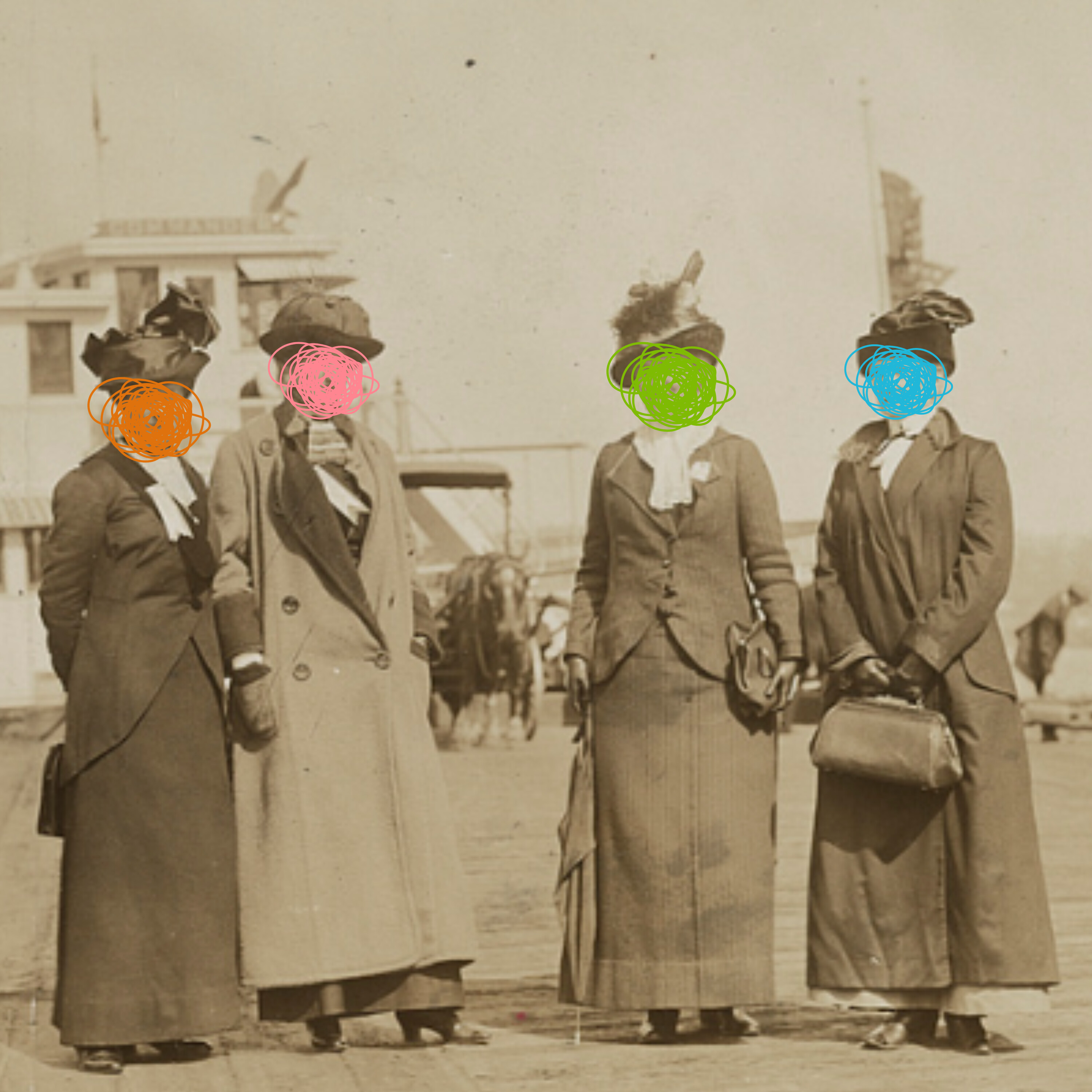
Loading summary
Transcript31 lines
- [00:00]
A
Hi there, it's Claire. If you're hearing me, that means you're listening to the free preview of one of our Patreon episodes. We switch off every week between free and Patreon exclusive episodes. So if you'd like to hear the rest of this conversation, head over to patreon.com thisguysucked and join our honorary Haters club. A list of sensitive themes and topics included in this episode can be found in the episode description. Foreign. Welcome to this Guy Sucked, the show where we prove that it's never too late to have haters and you can't lie with the dead. I'm your host, Claire Aubin, and I'm a historian, writer, and most importantly for the purposes of this show, as we all know, certified hater. On this show, we talk about people from throughout history with legacies that need a little updating. Whether it's because of their politics, their behavior, or their impact on society and culture, these guys actually kind of sucked. And we bring in a new scholar every week to tell us why. With me today is Sophia Rosenfeld, who is the Walter H. Annenberg professor of History at the University of Pennsylvania, where she works primarily on European and American intellectual and cultural history. I want to add for listeners because we had a question about this not that long ago. When I say intellectual history, I'm not saying history for intellectuals. I'm saying the history of thoughts and ideas and thinkers. So just an important side note because a lot of people have been like, what do you mean there's an intellectual and non intellectual history? So. So there you go. Sophia has a new book out called the Age of A History of Freedom in Modern Life. And it was a finalist for the Kundal Prize, which for those uninitiated in this stuff is one of the most prestigious history awards in the world. So I'm very excited to get to talk to her. Welcome to the show and congratulations on the book and its many successes.
- [01:59]
B
Thank you very much. It's a pleasure to be here chatting with you.
- [02:02]
A
So I like to usually start with a question that opens up some thinking and is a little warm up for chatting. This is one of my favorite questions to ask people who come on the show because we always get a different answer. What is your favorite archive to work in and why?
- [02:18]
B
That's an interesting question. What's your favorite archive going all the way back? I'll tell you the archive I loved working in most because it comes from the very beginning of my career. I was writing my dissertation, I was living in Paris and part of the dissertation had to do with the history of the deaf. And there's an institution that dates from the 18th century, so late 1700s, that's on the street called the Rue Abbe de l', Epee, who was, in fact, the founder of Sign Language for the Deaf. And I knew they had some records. It turned out not only did they have some records, they had boxes full of stuff. And they were sort of in the washroom of the institution because they'd never really been cataloged or anything. And as a graduate student, I had that wonderful moment when you think, oh, my God, no one's looked at this stuff. There's all kinds of cool stuff here, and I just have to go through it. And I sat in this washroom over a series of days and went through this material. And it's an experience that's a little hard to have now, because so many things, of course, not everything at all, but so many things have been digitized and organized. But there's a certain thrill still. I will say it's a little like being on a treasure hunt where you think, I found something. And the stranger, the place. You're sitting inside an institution that goes back hundreds of years. People are still living there and working there and opening boxes like that. It was a certain kind of thrill. It doesn't happen that often, but historians do like their dust in their boxes.
- [03:50]
A
The moment of feeling like you are a little bit of a detective is very, very thrilling. Especially like you described, the moment where you realize you might be the first person to really encounter and engage with a piece of material. I think is so exciting and fun whenever that happens. I have been in that position actually the first time that ever happened to me. I had found a way to, like, get a grant to go to CU Boulder. Cause my friend was gonna be at a festival, like a conference festival. And I basically, like, bullshitted my way onto this into this grant that I was like, I have to go to the archives there. When it was really just an excuse to go on a trip with my friend. And then when I got to the archives, they had all these boxes that no one had ever looked at of documents relevant to what I was researching. And so what started out as, like, sort of a silly fake trip ended up being really, really fruitful. And it was, like, really exciting.
- [04:47]
B
Don't always realize how much of historical work is serendipity or just accident.
- [04:52]
A
Yeah.
- [04:52]
B
You know, you're walking through a museum because you're somewhere and you see a painting that somehow speaks exactly to what you're thinking about. Or somebody sends you something they read in the Atlantic or the New Yorker that you missed, and you think, oh, my God. That sort of opens up the whole subject for me. Some of it's very strategic, but a lot of it is accident. And, you know, my most recent book, I can point you to all the places where something in there happened almost without any forethought. Something was discovered in a very miscellaneous way. So I like your story about, you know, the travel that takes you to something you didn't even know you were looking for.
- [05:27]
A
Yeah. Or the conversation you have at a dinner party or something like that, where someone says, oh, I knew somebody who had blank, blank, blank thing happen. Or, oh, did you ever hear about X, Y or Z thing? And all of a sudden you're like, this has blown the case wide open.
- [05:42]
B
Right, right.
- [05:43]
A
Essentially. And those can only happen by interacting with the world outside of the archive, but they make the archival experience so much more meaningful to me. And I love when a document that you weren't expecting to mean anything to you ends up being this really important, fruitful thing. There's a writing piece called the Allure of the Archive by Arlette Farge.
- [06:07]
B
Yeah. Really agreed.
- [06:08]
A
It's so good. The first year of my PhD, that was a thing they had all of my cohort read in the first week. And I remember being like, oh, she gets it. So exactly what you're talking about can.
- [06:17]
B
Also happen at the other end when you sort of say, I went to a lecture and it wasn't at all in my field, but I had a thought because somebody was talking about something completely different. But it resonated with me that sometimes is more exciting than what happens when you hear people talking about what you study.
- [06:33]
A
Yeah, absolutely. That's why I'm such a huge proponent of reading and thinking broadly and attending events that are outside of your sort of small world, your little field. Because I think those are so useful, actually. And I think we talked about this in an episode with John Callanan recently. But a lot of times, academics actually get siloed into these really, really small worlds, and you lose sight of everything beyond them. And the things that are beyond are actually so, so helpful. I find them really helpful to my sort of historical inquiries. I also love when you go. I had this happen last night at an event. I went and saw my friend Samira Negroish talk about Algeria and Algerian poetry. And the way she was talking, like, her style of speaking and her style of writing made me think about how I write and speak and, you know, like, where it's something so far outside of my field, it gave me pause and made me want to think about, like, maybe I should try to write in this way that has a similar flow to how she's writing and thinking. Like, it was really, really useful to my own thinking, which I just love. I just love when things like that.
- [07:40]
B
I mean, you know, it's not that far off of being a novelist in that novelist always keep reading and they keep interacting with people because the things that shape what you do and what you say come from so many different sources. I think you're 100% right that the worst kinds of academic work come out of reading three people and engaging them over and over in the same sort of tight little circle. You can be inspired by people's prose, by their metaphors, by conversations that you have with your parents or your kids or anybody else about daily life. All of that can find its way into the work you do, and it's probably the better for it.
- [08:19]
A
Yeah. And you can sense, I really believe this, like, you can sense when a nonfiction writer is also a reader. Like, you can really tell who is reading and who is engaging with the world broadly when they write, because I think it comes out in the way that they write. And the best writers, I think, are also big, big readers. So. And I think that's very clear to me. End is something that has been told to me sort of over and over again by academic writers that I really respect that the best writer is a reader.
- [08:47]
B
So true.
- [08:48]
A
Should we talk about the people we're supposed to be talking about in this episode? In order to get into this? I will also say this is one of our rare group episodes where we're not talking about an individual, but we're talking about a group of people who are moving in similar ways to one another and who saw themselves as a collective of people. We, for example, talked before about Cold War or mid century American liberals who didn't necessarily always think of themselves as a collective. But here we are talking about people who are thinking of themselves as a collective and organized as a group. Who did you want to talk to me about today?
- [09:25]
B
Interesting. It's a. It's an interesting category because generally speaking, I don't spend a lot of time thinking about, you know, who falls in the good guys and the bad guys category in history, because historians are generally interested in explaining everyone's motivations and trying to sort of make some sense of why people did the things they do. Even awful people. Sure. How did anybody justify slavery in the past? How did anybody think that going to war in this circumstance would be good? So our job is often not to be kind of moral critics. But that said, of course we do end up thinking some people are on the right side versus the wrong side of history. I think that's kind of inevitable. Sometimes it's explicit and sometimes I think you just sort of keep it in the back of your mind.
- [10:11]
A
Yeah.
- [10:11]
B
But I thought I would talk to you about the many people who organize themselves in many countries, including the US and Britain, to oppose the idea of women's suffrage. At first, it's such a radical idea in the middle of the 19th century that you don't have to organize against it because it's just the common sense is essentially that women shouldn't be making decisions about the public good. But over time, the cause of women's rights attracts more supporters and women themselves start to organize. And as a result, anti women's suffrage leagues and groups organize themselves locally and nationally, all over the place to combat the idea of women voting. And those opponents, many of them are men, but some of them are women too. There are women who crusade against women voting. And these organizations are at their heyday, really, at the very end of the 19th century and the first decades of the 20th century. That's the kind of great era for women's vote to be sort of a prominent issue rather than a marginal one.
- [11:17]
A
I think it's so great that we're talking about this, especially because a lot of times when people think about things like rights, for example, or women's suffrage, the people who are highlighted and who we come across are just the people who fight for it.
- [11:32]
B
Right.
- [11:32]
A
Like people will come across like people who worked really hard for women's suffrage. You see them in films, you learn about them in school, but you're not really learning about an organized opposition to this. Right. Or you're saying there's a general antipathy. People don't, you know, I'm. I'm not saying that this is what I think, but there's a sort of belief that there's a general antipathy where people don't in general want women to vote. It's just this social level thing that's happening. And then there are some people who are fighting for women's rights. Nowhere in this narrative are the people who are actively working against this right. That it's just this floating, amorphous idea where people don't want women to vote rather than there is a concerted effort to prevent Women from voting.
- [12:23]
B
Well, most social movements do have organized opposition to them. We don't hear about them as much, but there's organized opposition to everything from gay marriage to civil rights struggles to women's suffrage and various times and places. And that's because these are often presented, I think, as sort of existential crises. For what is the nation, what is the family, what is gender? Kind of really important seeming central questions so that, you know, if you're going to have leagues for women's suffrage, it's not that surprising that people organized, for instance, in Britain into the National League, opposing women's suffrage was their name. They were very clear about their purpose, and they produced propaganda. They produced everything from postcards to banners to op eds to legislative efforts, as did their opponents. And it's really interesting, I think, to look back at them both for the reason you're saying, which is partly to recognize that most struggles for any kind of civil rights have organized opponents, but also to look at what their arguments were, because their arguments often come back around. They draw on older arguments, but they also keep resurfacing, even if we don't think we're fighting exactly this. Cause now I think it's surprising how much their arguments still resonate. Yeah.
- [13:43]
A
I mean, reading your book, I think that it's interesting because you. You don't necessarily dive into the contemporary resonances in the book, but as a reader, you read it and say, oh, yeah, okay, I see this in my life today. Right. And then when I was doing the background research for this episode, I also was like, okay, so this is the same argument I'm hearing over and over again now. So I'm excited to get more into that. Maybe a little bit later in the episode, once we've explained what their whole deal was, we can move into saying, okay, so what are we seeing now that feels like it's directly tied to this? I think one of the more interesting things for me with this was also realizing in terms of this organized opposition, it's also an intellectual opposition.
- [14:30]
B
Right.
- [14:30]
A
Like, these are not just people who are reacting out of ignorance or a sort of fearful rejection of something. This is an intellectual opposition in a way that I think also gets left out of the narrative where there's this belief that people are against something just because they don't like it, rather than they feel that they have some sort of principle moral stance against it, which people who oppose women's suffrage absolutely felt like they had a principled moral stance against the idea of women being enfranchised. So I feel like your book does a very good job of sort of like explaining the intellectual side of it, the sort of ethical, moral compunctions people felt on this side, whether or not you and I think those are like, actually moral or not. They felt like they were. And I think you also show in the book how these deeply reactionary rejections of change can also be wrapped in claims of like, virtue and protection and tradition and like can be wrapped in this virtuous veil. I don't. That's not the word I want to use, but that. That they come in the trappings of something else, which I think is really important and will be relevant to us. Talking about some of the contemporary aspects of this, can you tell me a little bit about the history of anti suffrage?
- [15:51]
B
The history of anti suffrage, when applied to women in particular, is wrapped up with all kinds of other questions about who should vote and why people vote and on what grounds they vote. So much of this is not really much of an issue before the end of the 18th century because most ordinary people don't vote anywhere. Governments only when they're organized as republics or what we now call democracies. Except in the case of Britain, of course, when they're sort of modified. There's a parliament alongside a king. Most places there's very little voting. Britain is something of an exception in the early period. And only once the idea of the enfranchisement of ordinary people to make political decisions becomes a real issue, do these second set of questions emerge. Who has the right to vote? Who should have the right to vote? On what grounds does one earn the right to vote? So the question immediately emerges in France and in the US after the revolutions that take place in the late 18th century. When you say all men are created equal, who are those men? Are they women too? Are they people of color, black people as well as white people? Are they Christians only? Are they people with property or everyone? Are they people doing any kind of profession or only certain professions? Are they residents of some places but not others? These are kind of unsettled questions in the rhetoric of the time, because rights are sort of abstract. So very early on, as early as the French and American revolutions, a few people, a few women, kind of radicals, posed the question, why can't women vote? You know, what would be so terrible about women voting? And there's some evidence that briefly, women in the state of New Jersey actually do vote for a few years after the American Revolution, because they haven't actually explicitly been prevented from doing so. So you might say that the quest for women's right to vote goes back to the 18th century, but it doesn't really gain steam until the middle of the 19th century. So the 1840s and 50s. And that's when the first declaration of the rights of women gets articulated to say the Declaration of Independence should be applied to women too. The language should be women and men. And organized feminism might be thought, aside from these few radicals earlier, to kind of date from that moment. And there are offshoots in other places. John Stuart Mill in England, for instance, just a little while after, in conjunction with Harriet Taylor, his partner starts arguing that women have every reason to be voting if they're property owning and educated. And he doesn't necessarily think everyone should vote, but he thinks women of a certain standing and education level should. And it's only one sort of Movements and legislative bills calling for women to vote start emerging right around debates alongside should suffrage be universal for men? Should property qualifications fall away? Should religious qualifications fall away? That you get both suffrage movements and then pretty quickly anti suffrage movements, which are movements saying something terrible will happen if women are given the vote. And I can say more about that. But the real point is to argue against women voting not just because, as you say, they're opposed, but because they think a whole principle is at stake if you let women vote.
- [19:23]
A
Thanks for listening to this preview of a Patreon Exclusive episode. To subscribe and listen to it in full, head over to patreon.com thisguysucked.