← This Guy Sucked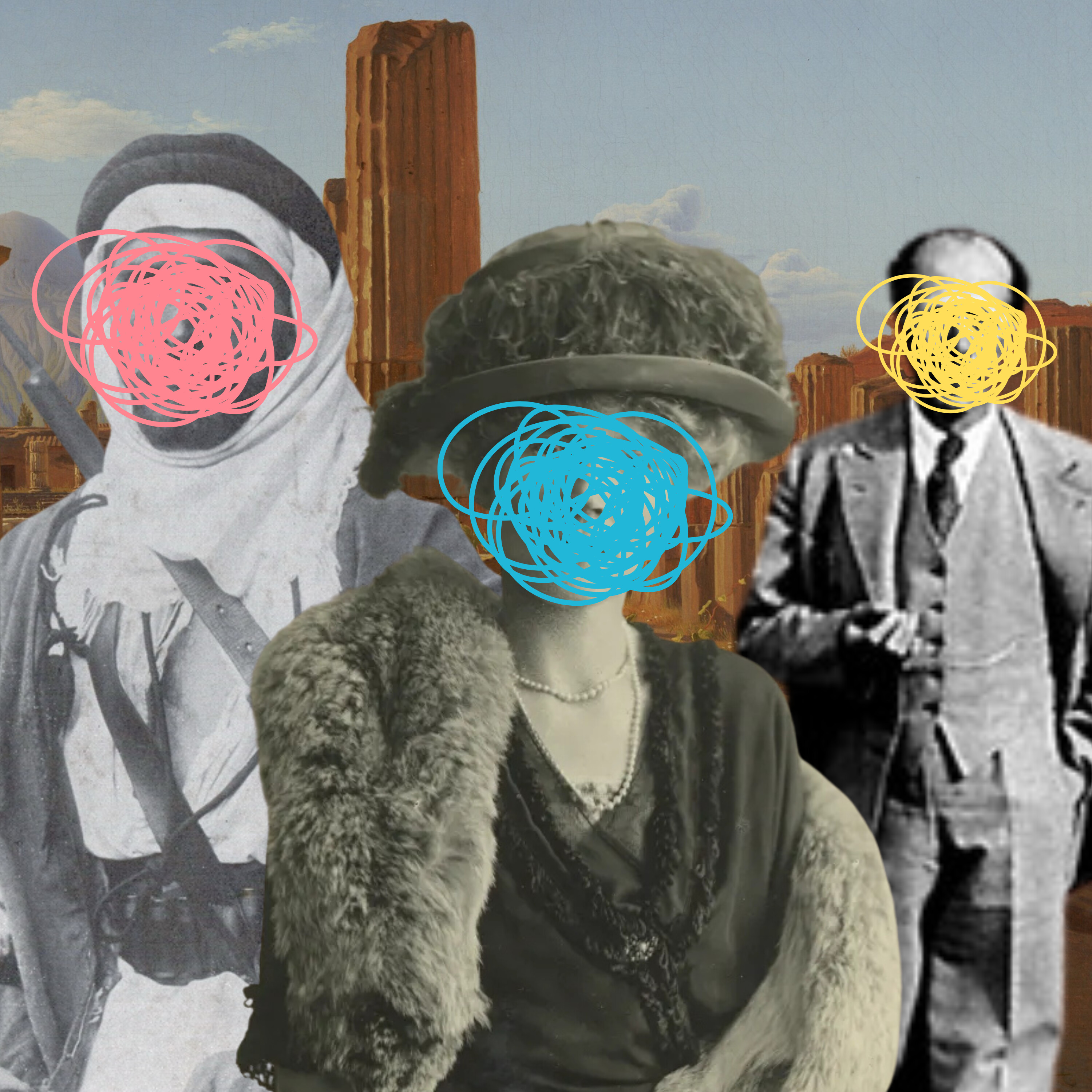
Loading summary
Transcript56 lines
- [00:00]
A
Hi there, it's Claire. If you're hearing me, that means you're listening to the free preview of one of our Patreon episodes. We switch off every week between free and Patreon exclusive episodes. So if you'd like to hear the rest of this conversation, head over to patreon.com thisguysucked and join our honorary haters club. A list of sensitive themes and topics included in this episode can be found in the episode description.
- [00:46]
Welcome to this Guy Sucked, the show where we prove that it's never too late to have haters and you can't liable to dead. I'm your host, Claire Aubin, and I'm a historian, writer, and most importantly, certified hater. On this show, we talk about people from throughout history with legacies that need a little updating. We whether it's because of their politics, their behavior, or their impact on society and culture, these guys actually kind of sucked. And we bring in a new scholar every week to tell us why. With me today is Rhiannon Garth Jones, who is a teaching fellow at the University of Leeds and whose work focuses primarily on art, architecture, and material culture of Early Islam, as well as the relationships between Roman and Late Antiquity periods and Early Islam, including heritage sector. So, like museums, heritage sector, receptions of these things. She's got a new book out called All Roads Lead to why We Think of the Roman Empire Daily. Welcome to this show, to the pod, to the Zoom, Riverside, to the thing.
- [01:41]
B
Hi. Thank you for having me. I'm a big fan of the podcast. This is really cool.
- [01:45]
A
We've been talking about this for a while, so I'm very glad that we're actually doing it.
- [01:48]
B
Yeah. Okay.
- [01:49]
A
So everyone is constantly calling things their Roman Empire, which I think is part of, like, what you play on in the book, but it's in reference to the idea that men boo thumbs down. Not to men, but to the idea that only men do this. Think about the Roman Empire far more than is reasonable other than the literal Roman Empire. What is your Roman Empire like a historical period outside of your own area of work that you feel very fascinated by?
- [02:14]
B
Oh, that's a really good question. I feel like I should have been better prepped for this. I want to start by saying I'm actually a lot less obsessed with the Roman Empire than you'd get the impression from this book. In fact, I don't think about it that often, and I really think everyone should just, like, think about it less.
- [02:29]
A
In fact, chill. Everyone needs to chill.
- [02:31]
B
Sort of like a weird counterintuitive. Goal of the book is, like, it would actually be great if you all just got some other interests. Like, I think that would be cool and fun. What do I think about outside of my actual research? Too much.
- [02:45]
A
Yeah.
- [02:45]
B
Well, so my research is like, early Islam. And I think an awful lot about, like, what's commonly called Byzantium sky quotes or, like, what I would just call the Roman Empire, actually, because that's what they call themselves. So it's both the Roman Empire, but, like, not as anybody else really thinks about it. And I also just think constantly, all the time about, like, textiles.
- [03:07]
A
Ooh, yeah.
- [03:08]
B
Luxury textiles, regular textiles. Textiles is the economy. Textiles is craft. Textiles is power. I've somehow managed to, like, low key influence half my students into, like, bringing textiles into their projects. And I'm really proud of myself as a Pentagon for this.
- [03:27]
A
I was talking about this on a recent episode with Vanessa Williamson. There is this, like, moment sometimes when you're a historian where, like, you get really fixated on one thing, and then all of a sudden it's everything like, okay, this is a stupid reference. So I had this Vanessa Williamson episode, and we were talking about the history of American taxation. And this is now like the millionth time I've brought it up since then. But the next day, after recording the episode, Zoran Mamdani won the mayoral election in New York City. And we were watching on the couch, me and some friends, my partner, we're all watching. And he started talking about taxes in his speech. And I was like, it's all taxes.
- [04:02]
B
It's always taxes.
- [04:03]
A
Like, I had this moment of being like, oh, my God, everything is taxes. And now I'm like, very tax obsessed as a result of talking about this thing. And that's not even my Roman Empire. But that's been a thing that I've been like, yeah, I get it. All of a sudden you're like, I can only see the world through the lens of this other thing. Everything is textiles. Textiles are actually the driver of the economy.
- [04:23]
B
Like, like, I had this joke with my student, one of my first year classes who was like, bas was saying, like, gender is, like, actually always relevant in ways you wouldn't necessarily think about. And so he was like, yeah, I'm interested in the Vikings. And I was like, right, Viking technology, sales. Takes three years to make, like a Viking sale. This is like a huge investment of animals, of land, of, like, craft economy, blah, blah, blah. Somebody has to maintain those sales for the ship. Anyway, at the time he was like, oh, that is really interesting. But not really my main thing. And he submitted his essay topic last week, and he's talking about textiles as part of the technology of, like, Viking expansion and imperialism. And I was like, yes, hell, yeah. Well, you.
- [05:01]
A
You're either like, this student knows me really well and is trying to do something for me, or I have succeeded in textile pillings.
- [05:09]
B
I feel like it's the second, because I feel like I'm pretty good at saying to the students, like, you can do whatever you want. Right. Like, it's really. Don't pick something because I said it. Yeah. I think he just has come, like, realize that they are genuinely essential to wrecking ships. And what he's really interested in.
- [05:23]
A
Well, sure.
- [05:23]
B
Is the technology of the ships. And he's just realized that that's the main thing. But, yeah, just an extremely fun moment for my, like, obsession to pay off.
- [05:33]
A
I feel like so many of these things, for example, the Vanessa Williamson thing, but also, like, so many other things because of this show and also just because of my life, I've, like, picked up from other people, like, these lenses on the world, these views on the world, especially historical views of the world. I've just picked up randomly from people. So, like, my partner is like a psychoanalytic therapist, and he's a.
- [05:53]
B
He's.
- [05:54]
A
I know all this stuff about Freud now, like, that I did not know before we started dating, but it's. But it's like I can't see anything without seeing Freud now. Like, truly, I can't see anything without being like, oh, my God, it's all Freud. Oh, my God, it's all Freud. And it's this, like, thing in my life now. And people are like, are you okay? And I'm like, well, no, and it's Freud's fault.
- [06:16]
B
And actually, yeah, not as. Not as well as you would hope.
- [06:19]
A
Yeah, we should probably talk about the people that we're here to talk about. And that was a slight hint for everyone. We are doing a group today. They will already know this from seeing the episode title, but we are doing another group episode rather than just a guy episode. Although there are some main guys in the group that you feel particular antipathy towards. Who did you want to talk to me about today?
- [06:41]
B
So I want to talk about the Orientalists as a group, as a collective. That's a pretty large and sort of ambiguous group. Sure. Specifically, I want to talk about the ones who are involved in, like, early 20th century art, art, history, archaeology, architecture, anthropology, because these are the people who blight my scholarly existence.
- [07:05]
And the three I want to talk about are actually, I think, a slightly more interesting set of people than the sort of wider cast of villains that the Orientalists often, quite reasonably, are understood to be. Because they're all a bit more sympathetic and they're all just a bit more interesting and nuanced. But they do also suck. They suck hard, in my opinion. And they suck in ways that I think apply to all three of the categories here. Like their behaviour, personally, not great. Their politics, Absolutely not great. And their impact on society, culture, scholarship. Like, actually the world today is still very prevalent and I object to it.
- [07:46]
A
Yeah, absolutely. And I'm glad that we're focusing on, like, not talking about modern Orientalism, which is obviously very, very important. Modern as in, like, now, or like contemporary Orientalism or like late 20th century orientalism. Because I think that will be the access point a lot of people have for this is they'll read like said, for example, and be sort of like, okay, this is what Orientalism is. But we have to, I think, go back a little bit further and talk about, like, how this field is shaped in the first place, which is like, mid. Well, kind of early 19th century through early 20th century is when this, like, turns into the world that we have now basically as a result of. Not these people. Well, in some ways, directly because of these people.
- [08:27]
B
Yeah, I mean, I think there's actually a pretty straight line between these people. Yeah, Actually, I take the risk.
- [08:32]
A
Right.
- [08:32]
B
Like in Samuel Huntington. Like, that's a pretty clear direction of influence. But yeah, there were also some more, like, subtle and kind of amorphous ways this happens. Right. Like, sure.
- [08:43]
A
How would you, if you were trying to explain particularly this sort of, like, late 19th, early 20th century approach to this, how would you explain Orientalism to someone and the group of Orientalists, like, not even necessarily who they are yet, because we'll get to that, but, like, what their worldview is and what their relationships to, like, maybe start with, like, scholarship and institutions. Like, what is that?
- [09:09]
B
Okay, so I think they're like, two things here. One that's a bit more general, but, like, I think a kind of recurring theme of this podcast, at least as far as I listen to it. And so I think, like, the listeners will probably be familiar, as you said in the introduction, I study early Islam. I do not study the 19th and 20th century. And this is like a classic case of whatever period of history you study. There's like a secondary period that you have to become familiar with to make sense of it. And so usually if you do, like, modern history and Anything about nationalism, then you're gonna have to learn about, like, kind of the medieval or ancient region. Because that's what people are grounding their, like, nationalist ideas in. And if you do any of that ancient or medieval stuff, then to, like, unpick a lot of the scholarship, you have to be really aware of this, like, 19th, early 20th century kind of milieu and the nationalism that just, like, underpins all of it, even if it's not explicit or intentional. And so that's the kind of general part of this, and it is really connected because all of the Orientalists are kind of united in their idea that, one, you can understand their contemporary world through the kind, like, a very specific understanding of the past of this region. Because they have this idea that there's just like an eternal, unchanging, constant sort of, like, societal personality. And so you get things like the Arab, the Iranian, like, not like the Arabs collectively, but always just like the individual. Because you can just like, coherently analyze the entire group of people throughout history. And secondly, they're obsessed with this idea of civilizational hierarchies and relationships. Right. And so everything is about, like, oh, is this Eastern or Western? Like, which direction does the influence go in? Which society is better and therefore, like, more appropriate for us to have an interest in. Or, like, not just personally and, like, a scholarly interest, but, like, which society is more worthwhile for the government to engage with. Because also, all these three scholars particularly. But actually, like, broadly, the Orientalists, like, as a collective, are also kind of always part of this, like, diplomatic, administrative, like, imperial kind of government background in usually very overt ways. Sometimes it's more subtle, but, like, frequently, like, they're literally just employed, like, by the Foreign Office. Right. And they're practicing diplomats, and they make maps that are used of the regions for, like, military maneuvers. And sometimes they're actually, like, part of military maneuvers and colonial administrations. And so all of their ideas about people and, like, the eternal, unchanging nature of these societies are also very much connected to, like, who gets a place at the table, who gets, like, taken seriously, who's worth imperial interest. And that, I think, is, like, Orientalism as a phenomenon and as a problem. It's this collection of all of these things that are really enmeshed and really hard to unpick from each other, actually. And also explains the, like, serious impact of their ideas, of their work, of their scholarship. Yeah, because. Yeah, there are like, some really immediate, obvious, real world consequences to this stuff.
- [12:42]
A
Yeah. Let's talk for a minute about some of the Historical context for this so that people kind of understand the rise of this and how we get to the point where archaeologists. Some of this is in quotation marks, but archaeologists, square quotes. Archaeologists end up having this enormous impact on, like, military maneuvers and things like that. So in terms of the institutional rise of Orientalism, a lot of this stuff, and I. I'm hopeful that listeners, as you're listening, will kind of like, the idea of what Orientalism is and who Orientalists are will kind of unfold through the episode. Because it's quite hard to define some of these things until you talk through their.
- [13:21]
B
It's really tricky to be pissing. Yeah, yeah.
- [13:24]
A
So institutionally, a lot of this starts in the early 19th century. So like the 1820s to 1840s. Ish. This is also like peak. Well, not peak, but very high in terms of, like, European imperialism. Right. Like this desire, particularly in the Middle east and North Africa, like, this is all happening here. So European universities in, like, the 1820s-1840s start establishing formal chairs and things like Arabic, Persian, Sanskrit, comparative linguistics. And while that's happening, these big, what are called Orientalist societies emerge. So, like, you have the Society Asiatique, which is Parisian, the Royal Asiatic Society, which is in London, the American Oriental Society, and all of these are people who are ostensibly studying the East, AKA the Orient. And to be interested in the Orient is to be an Oriental. If you are from the west, to be interested in the Orient and interested in the sort of allegedly scholarly study of the Orient makes you an Orientalist. So this is like where this starts to foment a little bit.
- [14:30]
B
Yeah.
- [14:31]
A
And then Orientalist studies, like, to be an Orientalist becomes a profession alongside all of this. So you have, like, scholarly journals, conferences, government funding, and the training that you get or that you would engage in is like classical texts and philology, which I struggle to say every single time.
- [14:49]
B
Philology doesn't deserve pronouncing properly.
- [14:51]
A
Ancient languages, Donald.
- [14:54]
B
Hate me for that, Sorry.
- [14:55]
A
Biblical studies, comparative religion, archeology of the near east and the Orient. Right. Like the near east as opposed to the Far East. Far east meaning like China and Japan and near east meaning dubious question mark, whatever people decide to call the Near East.
- [15:15]
B
So it turns out, historically, the near east is like. I think I'm going to get this right, is basically the Ottoman Empire, because that's where you would get first by train or by boat. And then like the Middle east is anything past the Ottoman Empire. And then the Far east is like, yeah, East Asia, as we would call it now.
- [15:31]
A
Yeah.
- [15:32]
B
But now Those terms are really quite interchangeable. And so the near east just gets used as like a nicer way of saying the Middle east sort of question mark.
- [15:40]
A
Yeah, 100%. You have like a Near east studies department at a school and it could mean like literally anything. It could be like, you could be Afghanistan, you could be Iran, it could be Israel. It could like, like anywhere.
- [15:54]
B
It could also like be Morocco. And you're like, that's on the Atlantic. Yeah, that's just west. By any, like, logical. You can't just say Muslims.
- [16:02]
Like, yeah, I do a thing with some of my students where I'm like, tell me where the Middle east is and then explain to me, like, Al Andalus and Morocco. Yeah. Like, where is this?
- [16:11]
A
And then now they get around it by being like the Middle east and North Africa. And we're like, okay, not better. And what are you saying the regional relationship is here other than the people are brown and may or may not have a certain relationship? Because I think that's really how you're categorizing this.
- [16:30]
B
So it goes back to this thing. Like, it's really defined by like, kind of military intervention and imperialism actually. Like, who do we feel okay in a certain framework? Invading is actually kind of the definition.
- [16:43]
A
100%.
- [16:49]
Thanks for listening to this preview of a Patreon exclusive episode. To subscribe and listen to it in full, head over to patreon.com thisguysucked.
- [16:58]
C
Shopify's point of sale system helps you sell at every stage of your business. Need a fast and secure way to take payments in person? We've got you covered. How about card readers you can rely on anywhere you sell?
- [17:10]
B
Thanks.
- [17:11]
C
Have a good one. Yep, that too. Want one place to manage all your online and in person sales? That's kind of our thing. Wherever you you sell. Businesses that grow grow with Shopify. Sign up for your $1 a month trial at shopify.com listen shopify.com listen.