Loading summary
Transcript23 lines
- [00:01]
HomeServe Advertiser
A burst pipe, a dead water heater, the AC calling it quits. Who do you call? HomeServe is an easy way to handle unexpected home repairs with plans covering stuff basic homeowners insurance usually won't. Instead of scrambling for a contractor, you make one call to get the repair process started. Join the millions of customers who trust HomeServe right now. Go to HomeServe.com podcast for 50% less your first year. That's HomeServe.com podcast savings compared to renewal price void in Florida hey, this is
- [00:31]
J.R. Martinez
J.R. martinez, host of Medal of Honor Stories of Courage. Navy Federal Credit Union is celebrating America's 250th anniversary with exclusive $250 offers for new members. After being approved for membership online, select the special cash rewards offer and earn a $50 bonus when you open a cash rewards credit card, plus an additional $250 when you spend $2,500 within 90 days of opening. And you can get another $250 when you refinance your auto loan from another lender. Learn more and join today@navy federal.org America
- [01:03]
Navy Federal Credit Union Announcer
250 offer ends July 31, 2026. Excludes cash rewards, secured credit cards and applications submitted by mail, telephone or in person. Refinance auto loan must be at least $5,000. Credit and collateral subject to approval. Additional terms and conditions apply for bonus offers subject to change or end at any time.
- [01:16]
Taco Bell Advertiser
Introducing Taco Bell's new Jalapeno Citrus Salsa with bright citrus, real red jalapenos, guajillo chiles. Usually you add sauce to the food, but when the sa good, the food is just there to get the sauce to your mouth. That rolled quesadilla? Not a rolled quesadilla anymore. Now it's a sauce shovel. Taco Bell's Jalapeno Citrus Salsa get it with any item on the Cantina Chicken menu while it's here at participating US Taco Bell locations for a limited time only, while supplies last contact store for availability.
- [01:47]
Coldwater Creek Advertiser
You know what quality feels like. You can see it in the way a fabric moves, recognize it in a flawless fit and appreciate it in the details that make our styles unique. That kind of quality doesn't happen by accident. It happens with imagination, creativity and intention. At Coldwater Creek, it's the design standard we've honored for over 40 years. Our rich Mountain heritage has shaped how we think about clothing from the very beginning, with a commitment to quality that never quits exceptional fabrics considered design silhouettes, we've made our own. The signature touches that set each piece apart and styles that are distinctively Coldwater Creek. For a wardrobe you can count on season after season, visit coldwatercreek.com shop new arrivals and save 15% on purchases $75 or more with code iHeart.
- [02:46]
Rebecca Nagle
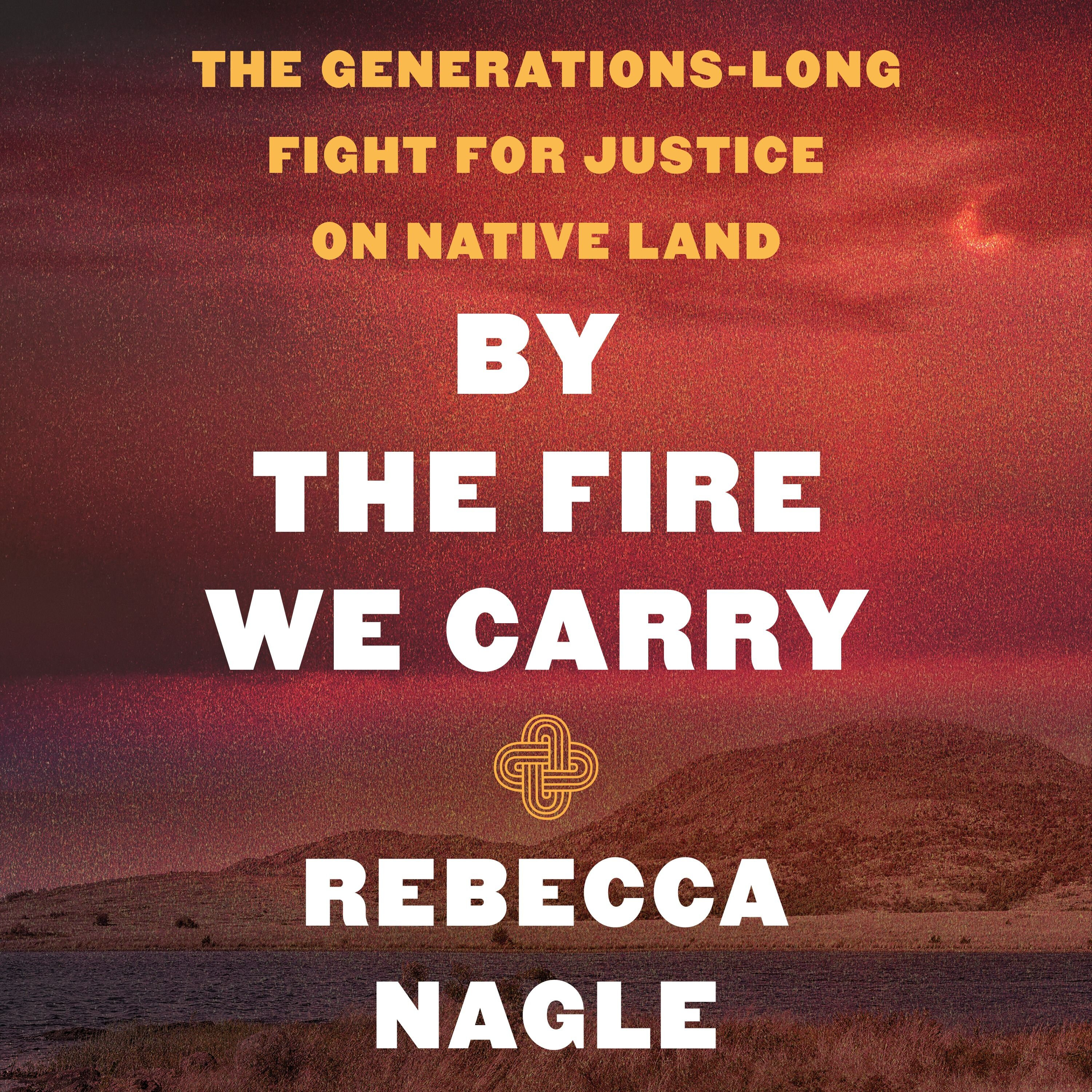
Hello this land listeners. This is host Rebecca Nagle and I am so excited to share with you something that is very near and dear to my heart, something I've been working on for the past four years, my book by the Fire. We the generations long fight for justice on Native Land. The book covers a 2020 Supreme Court case that resulted in the largest restoration of tribal land in US history, which if you listen to season one, you might remember as McGirt v. Oklahoma. If you liked the story of season one, the way it mixed history with the present day, how it followed a court case step by step, and the personal and family history that was woven throughout, then you will like this book. But it is also very different. When I sat down to write this book, I started from scratch. I conducted two years of research, collected hundreds of primary source documents, sued the Attorney General and Governor of Oklahoma to get records, and interviewed over 100 people. The book includes people you haven't met yet and stories you haven't heard, including a whole new Supreme Court case. By the Fire we carry comes out one week from today, Tuesday, September 10th. What I'm sharing with you here is the first 30 minutes of the audiobook, so if you like it and want to listen to the rest, you can just pick up where this podcast left off. You can listen wherever you get your audiobooks, including Audible, Spotify, Apple Books, and more on Audible. You can also pre order it. If paper is more your thing, you can pick up by the Fire We Carry wherever you get your books, including online sellers and your favorite local bookstore. I hope you enjoyed this excerpt of by the Fire We Carry. Thank you for listening. Prologue on the outskirts of Nashville, tucked between open pastures and suburban cul de sacs, stands a museum dedicated to the legacy of Andrew Jackson. The building was once his home. In July of 2015, I arrived to carry out a family tradition. After going through the main house and paying the entrance fee, I nervously guided myself to Andrew Jackson's grave. Our seventh president is buried behind a black wrought iron fence in a neatly kept English garden on grounds that betray their former life as a plantation. Staff and period clothing milled about. I waited until I thought no one was looking, and then I spat on his grave. President Andrew Jackson's signature policy was the ethnic cleansing of indigenous peoples from the territorial limits of the United States to west of the Mississippi. Fearing that Cherokees would not survive on the land of our creation, my ancestors, against the will and government of the Cherokee people, agreed to leave for this they were killed in my family. Andrew Jackson's betrayal is personal. A woman had seen me spit. She started yelling. Don't believe everything you read. She screamed. Her statement confused me. What was she afraid? I had read the museum text surrounding us, the lionizing biographies available in the Gift shop, the popular version of American history. The fight over truth is so bitter because power flows from the dominant narrative, the power to shape both public sentiment and public policy in the telling of the American story. Andrew Jackson, like most US Presidents, is a household name. In contrast, the history of Indigenous peoples is barely known, and the stories that are popular are mostly wrong. Perhaps the woman was afraid of the book I would one day write. In the summer of 2017, I was scrolling through Facebook when I saw a post from the Muskogee legal scholar Sarah Deer. It was about a court case I had not yet heard of. A man on Oklahoma's death row was arguing the state didn't have jurisdiction to execute him because he was Native and the murder happened on the Muskogee Reservation. Oklahoma argued that reservation no longer existed before Muskogee Nation came to present day Oklahoma. The tribe's territory spanned what is now Florida, Georgia and Alabama. In the 1830s, the US military rounded Muscogee people up at gunpoint and forced them into exile halfway across the continent. In a letter to Muskogee leaders, Andrew Jackson promised their new home would remain theirs for as long as the grass grows or the water runs in peace and plenty. That promise was not kept in violation of their treaties. Oklahoma was created on top of Muscogee land. Since it became a state, Oklahoma acted as if all reservations within its borders were abolished. For over a century, the Muscogee Reservation was denied. While that might sound like a reservation no longer exists, that's not what the law says. On August 8, 2017, the 10th Circuit Court of Appeals, one step below the Supreme Court, upheld the Muscogee Reservation. This is a big F deal, dear wrote in her post. My tribal nation has a recognized reservation again. The case would ultimately go all the way to the Supreme Court. Their decision would become one of the most important rulings of this century for Indigenous land and treaty rights. I would spend the next six years reporting on the case, first for news articles, then a podcast, and eventually this book. I knew, whatever the outcome, the case would likely determine the reservation status of my tribe too. I grew up with stories of how my ancestors sacrificed their lives for the sovereignty and land of Cherokee Nation. What I felt was the possibility that the land they died for would be recognized as Cherokee land for the first time in over a century. It was a visceral sense of justice. I felt it in my blood. This case was fought over the Muscogee Reservation. My personal connection to it is through the broader implications it had for my tribe, Cherokee Nation. This book includes both Muscogee and Cherokee history, as well as that of other tribes impacted by the eventual Supreme Court decision, including the Chickasaws, Choctaws, and Seminoles. As neighbors in our ancestral homelands and Oklahoma, the Muscogees and Cherokees share a history that stretches further back than colonization. At times we were enemies. At times we were allies. Most of the time our political relationship was more complicated because of our proximity. Our histories share many parallels, but they are not the same. Our fates, however, remain intertwined. In writing this book, I strove to be honest about where I come from and my personal relationship to this case, while understanding the limits of my perspective and the need to include other Indigenous voices in my family's telling. My ancestors were heroes for signing our tribe's removal treaty. As an adult and a journalist, I have tested my childhood understanding against the historical record. And of course, it is more complicated. I am the descendant of white settlers, Cherokee enslavers, and Indigenous people whose history on this land stretches back to the beginning of time in a world that rewards whiteness. My proximity to it makes it easier for me to be heard, which means that you are more likely to come across an Indigenous voice like mine. Brown and Black Indigenous writers like Elena Roberts, Joy Harjo, and Elizabeth Hidalgo Reese have also contributed to the topics covered here. Suggestions for your future reading can be found in the PDF enhancement. At the center of this case about land and treaty rights are also the survivors and victims of violence. The appeals that led to this Supreme Court decision started with two convictions in Oklahoma State Court. It is important to remember those convictions would not have happened without a very young survivor, her family, and the family of one murdered man pushing for justice. The story of this lawsuit and its connected history includes accounts of murder, suicide, racial violence and sexual violence. A guide to where those subjects appear in this audiobook can be found in the PDF enhancement. Please take care of yourself while you listen. I wrote this book because I wanted the story of this historic Supreme Court decision to be well documented. I wrote this book because during the litigation I heard people gloss over the wrongs of history and I wanted to catalog the cruelty of what they brushed aside. I wrote this book because I believe the American public needs to understand that the legacy of colonization is not just a problem for indigenous peoples, but a problem for our democracy. And selfishly, I wrote this book because the story lived in my body and I needed it to come out. Part 1 Chapter 1 the Crime
- [13:56]
Coldwater Creek Advertiser
the
- [13:56]
Rebecca Nagle
Indian Nation Turnpike is a four lane highway cutting north to south through the bottom right corner of Oklahoma. On a cold day in November, I'm on the highway headed south just after Henrietta. The exit dumps me onto a shiny two lane blacktop. After a mile between the trees and the fence posts, I see a narrow opening on the left. Having pieced together the location from press coverage, court records, and word of mouth, I think I know where I'm going. The legal name for the road is North 3980, but everyone calls it Vernon Road after the small town it leads to. The stereotype of Oklahoma from musicals or Westerns or just plain ignorance, is of a land that is flat and dry, but that's true only for the western part of the state. The fingertips of the Ozarks stretch into eastern Oklahoma, and in the spring and summer months the landscape, dotted with hills, rivers, and creeks, turns verdant. People call it green country. It's fall and the sides of Vernon Road are deep and muddy, so I drive down the middle. I'm going parallel to the interstate now, the hum of the highway still audible, but on this road there is no traffic. After two big curves and a hill, the road stretches out flat and straight in front of me. The gravel is the color of faded rust, a burnt orange teetering on beige. I pass a Muscogee cemetery on the left, then a little yellow house before reaching a spot on the road between the cow pastures and the trees that looks like any other spot except for one, a large metal white cross. The cross stands with a lean in the ditch. Garden stones have been placed in a circle around the base. The white paint is chipping and rust curls around the edges, but in faded letters I can still read the name George Jacobs. It was a few days after the murder in the summer of 1999, when the Jacobs family came to his house over 20 years later. When we speak, Anderson Fields Jr. Can't remember exactly who it was. Maybe a sister and a nephew, probably. Through small town talk, Anderson figures the Jacobs family heard he was the one who found George. They wanted to put up a cross where their loved one had died, and they wanted Anderson to show them the place and so he took them. At the time, it was an otherwise nondescript section of dirt road except for one undeniable blood. There had been so much of it it stayed for months. Even after it rained. You could still see that spot, he told me. After a while, it started to look like an oil stain. The cross commemorates George Jacob's life, but it also marks the exact location of his murder, a fact that would become crucial evidence in the appeal of his killer. That appeal would eventually go all the way to the Supreme Court. Under US Law, tribes occupy a precarious legal status, which often makes it difficult for them to bring cases on their own behalf. As a result, many of the most important legal decisions about tribal land and sovereignty come from surprising places like this one, which started in 1999 as a small town murder. The account of George Jacobs death that I present in this chapter is based on trial transcripts along with interviews I conducted with witnesses, police investigators, family members and members of the community. August 28, 1999, was Patrick Murphy's last day as a free man. It was a Saturday, his day off. He didn't have big plans, just helping his cousin move some furniture. Patrick woke up, took a shower, and pulled a beer out of the chilled six pack waiting in his cooler. He drank it all six while he waited for his cousin to show up. Patrick's heavy drinking is important context, but it's hard to talk about without conjuring stereotypes about Native Americans and drinking. According to national data, rates of heavy or binge drinking among Native Americans and white people are about the same. The widespread myth that Native Americans are genetically predisposed to alcoholism has been thoroughly debunked. Except for a small sliver of road, the view from Patrick's front porch was trees. That summer, Patrick was working in Henrietta as a line lead at a factory that built filters for the military. He was 30 years old and had three children from a previous marriage who were supposed to be staying with him for the weekend but were at his mom's place a few hundred yards down the hill. His girlfriend was staying there, too. They had been fighting. Patrick's trailer, as well as his mom's house, sat on the family's land, a spot relatives still call the home place. It was all cousins that stayed down there, one aunt told me. Even the generations that came and went before Patrick were buried in the yard, tucked into a curve of the North Canadian River. People call the small community the Bottoms. Some call it the Hole, the name you might find on a map if it's marked at all is Ryell. Ryolle is a Muscogee, or Creek in English community. The last treaty Muscogee Nation signed with the US government in 1866 reserved over 3 million acres for the tribe, spanning 11 counties in Oklahoma. Some parts are urban, containing the city of Tulsa and its surrounding suburbs. But the southern half of Muscogee Nation's treaty territory, including Real, is rural. In these isolated communities lies the heartbeat of Muscogee culture. It's where elders still speak the language, where Creek Methodist and Baptist churches stand, and where on Saturday nights people still dance at Muscogee ceremonial grounds. Ryall was small enough that the Murphy kids could walk everywhere between relatives houses to the Ryall school and to the local Creek Baptist Church, Hickory Ground number one. When the grown folks were visiting, children were not allowed to listen or interrupt, so they played outside. The cousins spent those days cutting through the woods to the ball field, the basketball court, or another relative's house. They built makeshift go karts and raced them down the big hill that led to the river bottom. Only when called did they return home. Patrick was raised by his mother, a full blood Muskogee woman. His father, a black man, hadn't been around much. At Ryell's school, Patrick was a star athlete. By the time he went to high school in Dustin, a little ways south, he'd honed in on basketball. A lot of cousins would move north to Henrietta or even further to places like Okmulgee or Tulsa. But after playing basketball for two years in junior college, Patrick moved back to Ryal. By the time Patrick was sitting on his front porch that hot August morning, he had lived back home for almost a decade. Through an opening in the trees, he watched a car pull into the driveway. It was Mark Taylor, the cousin he'd been waiting on. Patrick threw a cooler of beer in the back of his green Chevy pickup truck and both men piled in. After the cousins moved furniture and ate some barbecue. It was about six or seven o' clock on a long, hot summer day. The sun still sat high in the sky. They decided to go driving around, not unlike the days they had spent roaming the hills of Ryal as kids on foot. Except now they were roaming the back roads of McIntosh county by truck. George Jacobs was older than Patrick, but from the same community. Since it was all family down there. George Jacobs grandma and Patrick Murphy's great grandma were sisters, which made them cousins in a way. In his half century of life, George had seen a lot, including a tour in Vietnam. After growing up in Ryal, he moved to Tulsa, where he worked as a mechanic rebuilding motors there. He lived in a second story apartment above his older sister. She remembered George coming downstairs every Saturday morning and saying it's time to eat after cooking breakfast. George was a younger brother, an easygoing guy who was always willing to help anyone if he could. She would later say the Jacobs family did not want to speak about the case. One relative told me it was still too painful. Their comments about George are taken from court transcripts and victim impact statements. George Jacobs spent that Saturday also driving around with his cousin, also named Mark. George and Mark Simka met up that morning on the Okfuskee Okmulgee county line and decided to drive around in Georgia's black Dodge sedan. It was a normal thing to do on the weekend, back roading, visiting friends and dropping in on relatives. Until nightfall, the Dodge sedan would meander back and forth along the four lanes of the Indian Nation Turnpike and the braided curves of the North Canadian River. One of their last stops was George's mother's house where George grew up, down in the North Canadian river bottom. The house sat at the dead end of the same county road that went past the Murphy place. The matriarch of the Jacobs family was a lifelong member of Hickory Ground Number One Baptist Church and a homemaker who liked to garden canned fruit and hand stitched quilts. But she was in her 70s now and the house was getting run down. That day, George told his cousin he was thinking about moving back home. He wanted to help his mom fix the place up. When night fell, George and Sumka took back roads down to a little country bar. At about 8:30 or 9pm they sat down and ordered sandwiches. Mr. G's bar sat in an old rock building that had once been the post office for Vernon, Oklahoma. The handful of streets in Vernon, which is about nine miles south of Ryal, are named after the southern states from which its early residents, Louisiana, Mississippi, Alabama. As Oklahoma was becoming a state, black people saw it as a potential oasis from the violence and segregation of the south. And they founded over 50 all black towns there. Vernon is one of 13 that still exists. In its heyday, the town hosted a grocery store, a hardware store, cotton gin cafes, a syrup mill and a hotel. Today, the only public establishments left in Vernon are churches. By the time they finished their sandwiches, George was pretty drunk. After Sumka helped him into the passenger seat of the Dodge sedan, George passed out. Semka took the keys and drove back north on the only road out of town, Vernon Road. By the summer of the murder, Patrick and his girlfriend Amy had been together for five and a half years. Her name has been changed here. According to Amy, Patrick would get jealous over little things like if Amy talked to other people at work. If she read a book, Patrick would ask her what was more important, my book or him? She remembered. But the biggest thing that made Patrick jealous was George Jacobs. Amy had dated George for three years and they had a child together that summer. Their daughter Megan was nine years old. As an adult, Megan remembered going outside when Patrick would beat her mother. The Thursday before the murder, Amy had gone into town to apply for a job. When she got home, Patrick accused her of going to see George. According to Amy, she and George no longer spoke. But Patrick didn't believe her. He told Amy she should go back and live with George if she wanted. As the fight escalated, Patrick threatened to kill George Jacobs and his entire family. He said he was going to get them one by one. Driving around that Saturday, the first relative Patrick and Mark Taylor dropped in on was a young man named Billy Jack Long. Billy Jack was the baby of all the cousins and that summer had just turned 18. He wanted to go out riding with the older men. There's no room for kids in this truck, Taylor replied, knowing he and Patrick had been drinking. But Patrick and Billy Jack insisted he looked up to Pat a whole lot, Taylor later told me. And I sure wish Patrick hadn't drug him down that road. Later, as the three cousins watched a neighbor rope calves, Taylor remembered he had told his wife he would watch their kids that night. He went home, leaving Patrick and Billy Jack to meander through the dark night without him. Katherine King spent that Saturday painting duck decoys at a factory in Okmulgee County. And after she got off, her eyes along with everything else, needed rest. She was asleep when Patrick's loud truck motor in the driveway woke her up. Lifting the blinds with one hand, she looked to see who was there and recognized the green Chevrolet she and Patrick used to work together. Next to Catherine in bed was her boyfriend of three years who in the complicated relationships of their close knit community was George Jacobs son. Through a crack in the kitchen door, she asked Patrick what he wanted. Is he here? Patrick replied. It wasn't a friendly question. Catherine told Patrick that if he didn't leave she would call the police. But her 14 year old son Kevin wanted to go out drinking and riding around with the older men. People who knew Kevin called him Bear. At first Patrick wasn't sure he wanted the kid to come. But Kevin offered to bring his own 30 pack. Patrick would later say he let Kevin tag along so he could save money on beer. With Patrick behind the wheel, Kevin King and Billy Jack Long piled on to the long bench seat. Patrick knew a country bar he thought would let the teenagers drink. It was a little south of where he lived, somewhere in the small town of Vernon. By the time Patrick turned left on Vernon Road, it was pitch dark. He couldn't see the road curve left, then right, or the view from the top of the hill before it stretches out straight and flat. He could only see the rhythm of trees and fence posts. Through the moving patch of headlight beams on the unlit dirt road. Patrick saw another car coming toward him. When the car got close, Patrick recognized it. It was George's black sedan. Mark Sumka, who was still behind the wheel, had known Patrick since the first grade and slowed down to say hi. The two cars stopped in the middle of the road, their windows parallel. Patrick asked Sumca who else was in the car. When Sumka said it was George Jacobs, Patrick told Sumka to kill the engine. Scared, Sumca took off on the narrow road. Patrick swung his car around and sped up. He passed the sedan, then made a sharp right, cutting Sumca off with his truck. Simka slammed on the brakes. In a cloud of dust, three figures jumped out of Patrick Murphy's truck. Before Sumka could put the car in park, Kevin and Billy Jack pulled George Jacobs out of the passenger seat and started punching him. Bewildered, Sumka ran around the corner of the car, but Billy Jack punched him in the face hard. Blood gushed from Semca's nose and he fell to the ground. The sounds of the fight and the red glow of taillights dimmed as he went, unconscious from the blow. When Semca came to, he was alone. Afraid, he started running, away from the men and the fight and into the dark. He hid about a hundred yards away, breathless and bloody. But as he stood there, his fear turned to worry. What about George? By the time he walked back toward the headlight beams, it was too late. He saw George lying in the ditch. That night, Anderson Fields Jr. Was getting ready for bed when his two sisters and niece arrived from out of town. They told him there was trouble on Vernon Road. The women had seen a group of men fighting, and it looked like one of them wasn't okay. Anderson grabbed his shotgun and hopped in the back of the truck. The three women sat in the cab. When they got to the haphazardly parked cars on Vernon Road, Anderson could see someone lying in the ditch. He asked if the man in the ditch was all right. When the other men turned to face him, Anderson could see blood on their clothes. He tapped the truck to signal for his niece to pull away. They drove back into town, where Anderson left. The women, got a friend and called the sheriff. When Anderson returned to Vernon Road, the men were gone. The black Dodge sedan was still parked on the road with its headlights on. And the light. Anderson could see the man still lying on the edge of the ditch. He tried to talk to him, but the man didn't respond. Blood was gushing out just about from everywhere, he remembers. Anderson thought he was still alive because he could see bubbles in the blood oozing out of his neck as if he was still trying to breathe. But by the time the McIntosh County Sheriff arrived, George Jacobs was dead. It was late, sometime after midnight, when Special Agent Iris Dally got the call. A decade long veteran of the Oklahoma State Bureau of Investigation, Osbi Dalli's job was to collect the forensic evidence at the scene of the crime. The rural crime scene wasn't near a house or building, so Dali wasn't given an address, just directions to drive a mile south of Highway 9 on Vernon Road. On the unlit road, she didn't note any landmarks or watch her odometer. She just drove until she saw police tape and cars. Later, Dally remembers, when she made her report, she used those initial directions one mile south of Highway 9 to pinpoint the location of the crime scene. Normally, as an investigator, Dali had to order sheriff's deputies out of her workspace. But tonight was different. The sheriff's department had blocked off the road, but the deputies were huddled on the far side of the tape. They pointed to the spot still illuminated by the headlights of the Dodge sedan and told Dali the crime scene was that way. As Dali walked down the dark road toward the car, she could see a body Lying in the ditch. In front of the car was a large pool of blood. From the trails across the gravel, Dali could tell the victim had been stabbed there and then dragged to the ditch. In the middle of the pool was a fleshy object. Seeing it, Dali understood why the sheriff's deputies wouldn't go near the scene. The fleshy object was male genitalia. George Jacobs had been castrated. Smears of blood obscured smaller injuries on George's face, but Dali could see the victim's stomach was cut and his throat was slit. A medical examiner would later declare George Jacobs cause of death was exsanguination. He bled to death. The men were still standing out on Vernon Road when Patrick warned Sumka if He said anything, he would kill him. The four of them, Patrick Murphy, Kevin King, Billy Jack Long and Mark Sumka squeezed in to Patrick's truck. He took off, leaving skid marks in the orange gravel. The drive continued in the dark as a truck curved north on Vernon Road, past the cemetery and up the hill until it turned right on Highway 9. As they headed east over the bridge, they could see the painted lanes of the Indian Nation Turnpike below them. Mark Taylor, Patrick's cousin, was watching TV on the couch while his kids slept when he noticed headlights in the front window. When Patrick stepped out of the cab of his truck, Taylor noticed he looked different from just that afternoon. I killed George Jacobs, patrick told him. Shut up, said Taylor. Don't bullshit me. But Patrick looked back at him, serious and cold. Billy Jack nodded. Everybody looked a little bit shocked. Taylor remembered Sumka looked terrified. I didn't think he was alive, said Taylor. He looked so pale. Taylor told the group to leave. He didn't want to be part of any trouble. He warned them that if they ever got caught, they would never get out of prison. The men decided to go on to Kevin's house where George Jacob's son, who was dating Kevin's mom, was still sleeping. On the drive, Patrick told Sumca he was going to do that son of a bitch the same way he'd done the other son of a bitch. At about one o' clock in the morning, Kevin sneaked back into his house and tried to get George's son out of bed, but his mom was awake. Catherine told Kevin that nobody was going anywhere. Kevin tried to go back out to the truck, but she yelled through the front door. The 14 year old listened to his mom and came back inside. After dropping off Billy Jack Long, Patrick headed to his mom's house where his girlfriend Amy was sleeping. Patrick woke Amy up to tell her what happened. If the boys done the job right, George Jacobs was dead, he said. Patrick handed Amy a trash bag of bloody clothes and told her to wash them, but she refused. Then he asked her for a lighter. Minutes later, from the bedroom window, Amy saw a flare. In the dark night, Patrick watched the rush of gasoline fueled fire die down, got back in his truck and drove down the hill to his trailer. He parked his truck out front, went to his bedroom, took off his pants, boots and watch and got into bed. At about five or six o' clock that morning, a McIntosh County Deputy Sheriff pulled up to Patrick's trailer where the green Chevrolet was still parked in the drive. He didn't knock on Patrick's door or try to go inside. He was there just to make sure nobody left while Osbi waited for a search warrant. Word travels fast in a small town, and a few people connected Patrick to the truck out on Vernon Road. Before the night ended, Osbi had their main suspect alone in his patrol car. The deputy sheriff watched the sun rise over the eastern hills of ryal. At about 11am two OSBI agents, another McIntosh county deputy sheriff and a policeman from Muscogee Nation arrived with the warrant. When police entered his home, Patrick Murphy was still asleep. Megan Jacobs woke up that night to a bad dream. She had a feeling something was wrong. In the dream, her father, George, dropped her off without saying goodbye or I love you. When Megan got up, she walked down the hall and saw her mother with Patrick crying. Amy's eyes were red and wet. The look in Patrick's eyes made Megan want to run. The next morning, Megan saw police cars surrounding Patrick's trailer. The morning after the murder, the Jacobs family gathered at a relative's house. There, an aunt took Megan by the hand and led her outside. They walked down the driveway until they were alone. Georgia's sister turned to her niece and told Megan her dad wasn't coming back. He had been killed. Megan's vision went blank and her head fell backward. Her aunt caught her before she hit the earth. In the illogical way grief works, Megan sometimes blamed herself for her father's death. Maybe, she thought, if she had stayed with George that night, none of it would have happened in her nightmares. Patrick would come back to kill her and her entire family, just like he said. If you turn right on Highway 9 away from Vernon Road, the blacktop crosses the turnpike and cuts straight through fields and ranches before arcing north. The otherwise tamed landscape is dotted with hills of bushy trees. After 20 minutes or so, the state highway curves back south where it lands in the small town of Eufaula, the McIntosh county seat. It was here that Patrick Murphy sat in jail for the three seasons he awaited trial. Four months after the murder, Oklahoma issued a bill of particulars seeking the death penalty for both Patrick Murphy and his 18 year old cousin, Billy Jack Long. Kevin was only 14 when he followed Patrick to Vernon Road that night. Some reporting and court records have said that Kevin King was 15 at the time of the murder. During the federal trial, his mother, Katherine King, clarified that he had not yet turned 15 and was only 14. It would take over two years for Oklahoma courts to decide whether he should be tried as a juvenile or as an adult. In 2002, Kevin King was charged as an adult, pled guilty and was sentenced to 45 years in prison. Billy Jack Long would also plead guilty in exchange for life in prison with the possibility of parole. That left Patrick Murphy to face Oklahoma's death penalty alone. But of the three, Patrick is the only one still alive. Both Billy Jack and Kevin died in prison. The McIntosh county courtroom is a mismatch of drop ceilings and fluorescent lights hanging low over ornate wood paneling. In the spring of 2008, months after the murder, the trial of Patrick Murphy began. Patrick sat at a long wooden table with his lawyers. He listened during the proceedings but kept his head down. The state's evidence was damning. Mark Taylor testified that Patrick told him in the hours after the murder that he had killed George Jacobs. Sumka, George Jacobs cousin, described what he had witnessed on Vernon Road that night. It all lined up, the district attorney told the jury. There was one piece of evidence, however, that didn't. When OSBI crime scene investigator Iris Dalley took the stand, the prosecutor introduced state exhibit number 13. It was a map. On it, about a mile south of Highway 9 on Vernon Road, Dali placed a black star to mark the location of George Jacobs murder. Other witnesses also described the location of the crime scene. Anderson Fields Jr. Said it was between a quarter and a half mile south of his house. A police officer with Muskogee Nation said it was two miles north of town. If anybody had plotted these points on Vernon Road where people said the crime occurred and what Dally marked on her map, they would have realized someone was wrong. Patrick's court appointed public defender had a busy year. He was going through a divorce and trying four capital cases, including Patrick's. According to Patrick, his attorney spent less than an hour with him to prepare for trial. The defense attorney told the jury Patrick had been too drunk to form the criminal intent necessary for first degree murder. An argument that implied his client did murder George Jacobs and one he did not have Patrick's consent to make. To this day, Patrick maintains his innocence. He claims that while he was on Vernon Road that night, it was Billy Jack Long and Kevin King who killed George Jacobs, not him. When Patrick got up from the long wooden table to take the stand, his lawyer allegedly whispered, it's your ass. You better get up there and save it. Patrick's testimony was a disaster. He couldn't keep track of the details, so he kept contradicting himself. At the very end of the four day trial, it was the Jacobs family's turn to speak. George's older sister, who lived in the Tulsa apartment below him. Read a victim impact statement. It hurts like hell now. I couldn't eat. I lost £12 in one week after the murder of my brother, she told the jury. They will never suffer hurt like I do. No one knows the pain. Hurt. Lonely, lonesome feeling within. At every family gathering, she could feel George's absence and the trauma of his violent death. I just hope and pray that these killers get the most severe punishment, she said. There is no mercy for them. After deliberating for a few hours, the jury came back. From a small piece of paper the foreman read, having heretofore found the defendant, Patrick Dwayne Murphy, guilty of murder in the first degree. We fix his punishment at death. One day that fall or winter, no one can remember when, just that it was cold, Patrick rode in the back of a police car to the shores of Lake Eufaula. He was getting baptized. The pastor who officiated the outdoor ceremony remembers Patrick taking it very seriously. The Christian God provides a kind of total redemption that is rarely available here on earth. Many would say for someone like Patrick, it shouldn't be offered. Yet in his faith, Patrick found hope. Hope that sustained Patrick the decades it took for his case to meander its way to a historic legal victory. Had Patrick given up, that victory would not have come that fall or winter day in Eufaula. Patrick waded waist deep into the muddy lake. He held his breath as his head plunged below the cold water. It would take a long time, 20 years to be exact, but Patrick's case would grow beyond what anyone could have ever imagined. Like Oklahoma thunderclouds in spring, it billowed. Eventually, the storm would envelop Oklahoma, Muscogee Nation, the Trump administration, members of Congress, the oil and gas industry, the governor, tribal leaders, and the United States Supreme Court. At its beginning, however, the conflict was simple. The state of Oklahoma wanted to execute Patrick Murphy for the murder of George Jacobs. But Patrick wanted to live.
- [48:24]
Pedigree Dog Food Advertiser
We learned how to love dogs from the dogs that loved us and waited for us to get home from school. They were the dogs that raised us. We returned the love with Pedigree dog food. It was good then and it's better now. Every bowl has 100% complete nutrition supporting six health essentials. And now it includes vitamin Good bites, a nutrient boost your dog will love. Pedigree Good then, better now.
- [48:52]
Domino's Pizza Advertiser
Big transfer news today. Who's moving me to the couch with Domino's? Best deal ever since they just added stuffed crust.
- [48:59]
Rebecca Nagle
Any pizza, any toppings? Now with stuffed crust for 9.99.
- [49:03]
Domino's Pizza Advertiser
It's a long term contract with no release clause only.
- [49:06]
Taco Bell Advertiser
9.99.
- [49:08]
Rebecca Nagle
Yeah, that sounds like the move. I'm heading straight to Domino's.
- [49:13]
Domino's Pizza Advertiser
Price is higher for some locations. Excludes Excel and specialty pizzas. Select this offer from 615 through 726 online only. Size availability varies by crest height. Max 7 topping 6 for paint and a New York style crust. Minimum purchase required for delivery prices, participation, delivery area and charges may vary.
- [49:29]
M&M's Advertiser
M&M's popped caramel do sound different. Oh no. People are going to be obsessed.
- [49:35]
Coldwater Creek Advertiser
What do you mean?
- [49:36]
M&M's Advertiser
People hate the sound of chewing. Maybe they won't like the crunch.
- [49:40]
Coldwater Creek Advertiser
Maybe we're saved.
- [49:42]
M&M's Advertiser
Wait a minute. Yellow. Have you been eating them this whole time? Mmm. So tasty. Hands off us.
- [49:53]
Rebecca Nagle
M&M's popped caramel. It's more fun together.
- [49:58]
J.R. Martinez
Hey, this is J.R. martinez, host of Medal of Honor Stories of Courage. Navy Federal Credit Union is celebrating America's 250th anniversary with exclusive $250 offers for new members. After being approved for membership online, select the special cash rewards offer and earn a $50 bonus when you open a cash rewards credit card, plus an additional $250 when you spend $2,500 within 90 days of opening. And you can get another $250 when you refinance your auto loan from another lender. Learn more and join today@navy federal.org America
- [50:30]
Navy Federal Credit Union Announcer
250 offer ends July 31, 2026. Excludes cash rewards, secure credit cards and applications submitted by mail, telephone or in person. Refinance auto loan must be at least $5,000. Credit and collateral subject to approval. Additional terms and conditions apply for bonus offers subject to change or end at any time.