Loading summary
Transcript510 lines
- [00:02]
A
This episode is brought to you by Amazon Prime. From streaming to shopping, prime helps you get more out of your passions. So whether you're a fan of true crime or prefer a nail biting novel from time to time, with services like Prime Video, Amazon music and fast free delivery, prime makes it easy to get more out of whatever you're into or getting into. Visit Amazon.comprime to learn more.
- [00:29]
B
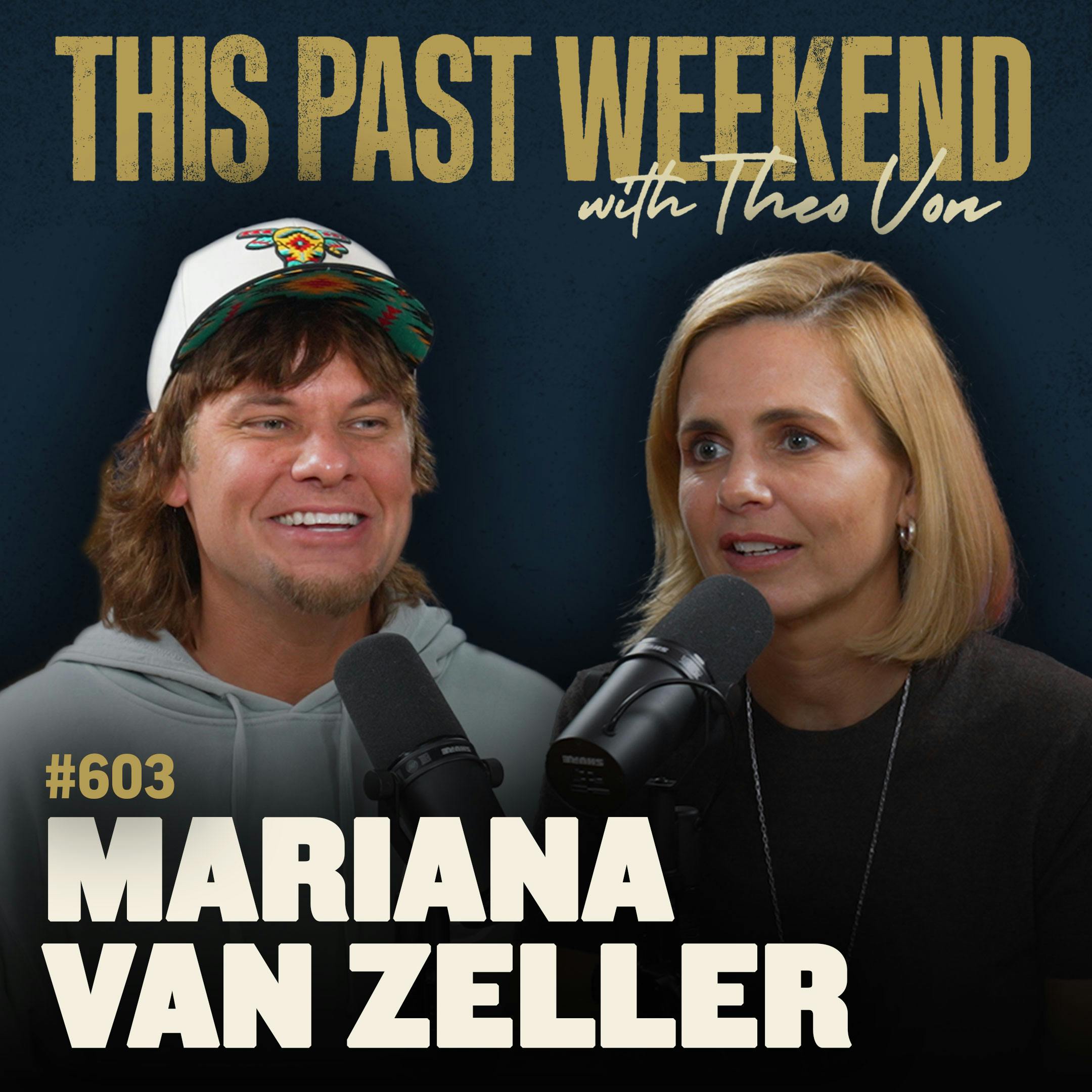
Today's guest is an Emmy award winning journalist for National Geographic. She's known for her investigative reporting where she goes and delves into some of the deepest, most dangerous black markets in the world. Cartels, scammers, extremist groups, trafficking. She has been there for it all. We're going to learn a lot today and I'm already thankful for her time. Today's guest is Mariana Van Zeller. I know. And I will find a song. Mariana Van Zeller, good to see you today.
- [01:15]
A
Great seeing you too.
- [01:16]
B
Yeah, I appreciate you coming in. Congrats on your Emmys.
- [01:18]
A
Thank you so much. Yeah, it was a good night.
- [01:20]
B
How many have you have you guys won now?
- [01:23]
A
We've won nine. But you know what's interesting? I was nominated for. I've been a journalist for over 20 years and throughout my career I've been nominated. I think I had one of the highest nominations with no wins ever, which was like 39 nominate or even more. It was like 46 before I got my first one. The first one was last year and I couldn't believe when they finally called our our name, the name of the team and we all went on stage. That first one was really sweet. That was last year.
- [01:47]
B
But that's crazy that many times you had to go and, and be the loser.
- [01:53]
A
Many, many times.
- [01:54]
B
But I guess that's also the part of the trenches of like the entertainment industry that people don't think about. There's like a lot of times people may feel like we're doing good work or we this or really any industry. But there's somebody before you that had been doing good work that had put their time in and even it takes a while to get even through like the award systems, you know.
- [02:12]
A
Absolutely. And also it's just, it's whatever it's surprise is a prize. It's not the most important thing in the world. But we the show, we do traffic that was nominated this best season for 29 Emmys. It's a really hard show to put together. It's one of the, I think I always say it's the most challenging show in the world to put together. We're Asking people, have you watched, you know, what the show's about? Yeah. We're trying to get people who don't want to talk to talk to us and to open up their lives and show us their crazy underworld and their hidden corners of the world. And. And so it's really, really hard. And. And so to finally be recognized, it's for the whole team is just that that's what was special. Okay. What we're doing, we're doing something right here. I mean. Yeah.
- [02:53]
B
Yeah. Because usually, I mean. Yeah, tickling was the old school way to get people to just tell you everything, you know. But you, you really, you come across some universes where I think if you tickle to be a. It'd be a little bit obtuse.
- [03:04]
A
I'm not sure if they're like that.
- [03:05]
B
I know. It always was kind of like a last resort on this season of Traffic. You guys have some. It looks like I've just seen the trailer. I've seen different clips. You guys have. I know you go to investigate into militias, brides for sale, the trafficking of.
- [03:21]
A
Brides, Rehab scams, which was a really interesting one. I've been covering the opiate crisis, but we also covered sort of the dark side of trying to get clean, which are these rehab scams that exist all over the country.
- [03:33]
B
What's one of the episodes from the new season this season five, that that really kind of. You got kind of attached to. Do you feel like, huh.
- [03:41]
A
It's always a hard question because we spent so much time in each one, I'd say, I mean, Cartel USA is the first one for a good reason. I think it was really chilling what we discovered. We start, you know, I've been covering the cartel for many years now and have traveled extensively throughout Mexico, namely Sinalo. I've reported more from Sinaloa, Mexico than anywhere else in the world and have, you know, reported on the drug trade as well. But I'd. And I'd. Seen the presence of the cartel here in the US which is why I decided I wanted to do a story about what exactly that means, how much of it is here, how widespread it is and what's that mean for our. For the country. But like in small little city towns, they're operating in many cases and have these distribution, drug distribution centers out of small town America. We interviewed a couple of investigators from the Georgia Bureau of Investigations who were called because there had been a murder, a gruesome murder of a woman who'd been tortured. Her fingers were cut off by pliers, one by One in a bathtub. She was basically killed while still conscious and alive with a chainsaw. And this is because her cartel boss, she was a drug runner and her boss was in prison, by the way. All ordered through prison on a cell phone. He was giving the orders on a cell phone live. And he believed that she had stolen some drugs. Turns out it was not the case. But this was in small town Georgia, like the last place you'd expect to see this kind of violence. But it's starting to come here as well. So they use, and I have seen this throughout my reporting and whether we're talking about sort of smaller sheriff offices to, to border patrol corruption is actually here and it's a big tool that they use to be able to continue their operations and then go ahead.
- [05:29]
B
Yeah, no, well, corruption. I mean, I think we're at a space now where to most people it feels like everything seems very corrupt. Right. Are we allowing this drug trafficking, Are we allowing these cartels to work in our country?
- [05:41]
A
I think we're just combating it the wrong way. The war on drugs has been a massive failure. I mean, billions of dollars spent for no returns. I mean, we're seeing, it's getting worse and worse. I think last year was the first year where the numbers didn't go up, but it's been going progressively up. I mean, in the last, I think since 2000, 1 million people have died from the opiate crisis.
- [06:05]
B
Yeah.
- [06:05]
A
You know, so I, I just don't think we are doing what we're supposed to be doing. We're not doing the right thing. We're not using the right tools to combat drug trafficking. And you know, the cartel benefits from drug trafficking. It's their breadwinning industry.
- [06:19]
B
So yeah, it's their big business.
- [06:21]
A
It's their big business.
- [06:22]
B
Like what drugs are the cartels bringing in? I guess that's where I'm everything.
- [06:25]
A
I mean, fentanyl, cocaine, meth. But also, I think one of the biggest misunderstandings that we and was learning for me reporting on this was that a lot of these cartel operators are actually American. American born, American raised, don't even speak Spanish. One of the main guys that we featured in our episode is a guy called that goes by the name of El Gringo. El Gringo. He was born in the United States, doesn't speak a word of Spanish, and he's a massive, he's sort of a wholesale distributor for the cartel. And he realized he could do it, he could distribute the drugs really well. He was really good with logistics. And do you Know how he distributes the drugs? They come in border patrol. It's usually always or 90% of the time is official ports of entry. So it's not going sneaking through the.
- [07:12]
B
Woods or something or tying it to like a deer and having them run over the border or whatever.
- [07:17]
A
Right. Or little kids with backpacks. That happens as well. But most of it is official ports of entry. And then once it gets to the big cities and then gets distributed by guys like this who also operate of small town America, he's using actually commercial planes where he puts the drugs inside suitcases and has people like strippers, usually women that are more unassuming. And a lot of times strippers is what he told us.
- [07:44]
B
Wow.
- [07:44]
A
And you'd never think that, right? I was thinking trucks or vans full of drugs or the white vans full of drugs or something. No, it's actually in planes. A lot of times he says he uses Delta as his favorite airline.
- [07:56]
B
Delta is a great airline, I will say that. But I didn't know. I didn't know the skies were that friendly, you know, I mean, it could get hella friendly if somebody shipping Molly up there. I feel like. So when you start to learn this information, what do you do with it? Like, I know you guys present it, right? Like you, you, you package it into an episode and you present it to people. But how do you convince people to talk to us? How do you convince people to talk to us? But how do you convince them you're not going to turn them in?
- [08:23]
A
Yeah, I think that's the hardest part of our job. It's always the most challenging. I mean, we spent months, sometimes even years trying to convince people to talk to us. And, you know, there's no real benefit to them at first glance at least. I think for me, I've learned that it's three main things. It's ego. People like to boast. And if you're the best counterfeiter in the world or the best guy at making fentanyl or smuggling guns or drugs, whatever it is the best scammer you want. Sometimes your family doesn't even know what you do. We give them an opportunity with a mask and distorted voice to really brag about what they love. I mean, I have spoken to people. I'll never forget. We did an interview for season one, actually, which was with a guy, a Peruvian guy, who makes these $100 bills and 50s that look exactly like the real thing. They're fake, but they're exactly like the real thing. And he'd spend days and days or nights because during the day he was actually a taxi driver nights and nights just perfecting the little creases and using uses a certain powder that he was able to perfect like everything so that it would taste, it would look a taste. I don't think people are putting it in your mouth, but they were so that it would smell, feel, just really sound exactly like a real 100 dol. And you should see him talking about this like his eyes were like shining. He was so proud for being considered the best counterfeiter in.
- [09:45]
B
Well, you are a skull drummer. You're like a money Michelangelo, I guess. And that way, if you really did the best one ever.
- [09:51]
A
But they are actually. Their entrepreneurship and their creativity just never ceases to surprise me. It's pretty incredible. And then the other reason I think is impunity. In many of these places, like Sinaloa, for example, there's just so much police corruption that they just don't see a downside to talking to a person with. To me, to Nat Geo. Now the show is on its fifth season, so it's sort of established. People trust us more. And then I think the third most important reason is a very human characteristic that we all share of wanting to be understood. Right. When I approach people, I say, no matter who they are, I'm not here to judge you. I'm here because I really, truly want to understand why you do what you do. I want to understand your world. And really, I think that's sort of the last thing that gets them to decide whether it's a yes or a no. I've gotten hundreds or thousands of no's. And that's the part that you don't see when you see the show. Right. So it seems easy, but. But I think really is that that sort of human connection and the ability that we have to tell them. Look, I'm. I just want to listen because I think listening and understanding is way more important than just judging.
- [10:50]
B
Yeah, I agree. And I think also when people are living something in secret, right. It's tough. I think living in secret is tough no matter what it is. Like if it's something that you're keeping from loved ones, if it's a reality, some of that you're keeping from yourself. Like, I've done things in my life and I almost like compartmental, so I don't have to feel them, you know, so I don't have to feel like I have done those things. And. And I think living in secret and not having somebody to share something with, it's. I Mean, it's just. It can be. It can. Can get very painful over time. So, yeah, having, I think, an outlet of just somebody to even talk to for a little bit about something that feels so shameful or dark or confusing to you can be really, really wonderful. Yeah, it must be just such a high when you're approaching, like, people who are, I guess, kind of underworld characters, maybe.
- [11:43]
A
Yeah, that's what they are. Black market operators, underworld characters. People who, their whole lives have been trying to stay out of the limelight and, you know, hiding and doing illegal stuff where they don't want journalists poking around.
- [11:56]
B
And are you ever amazed? Did you ever meet someone you were like, I cannot believe this person is involved? Like, it just.
- [12:02]
A
Oh, my God. Constantly. Seriously, all the time. And you think that after I've been covering black markets for 20 years, that you think that after some time I'd sort of have an idea of who's involved. It's not only, you know, your neighbor that looks like a completely normal dude that's involved in some sort of illegal activity that you had no idea about.
- [12:23]
B
You're like a Mets fan or whatever, probably.
- [12:25]
A
But that is also happening all around. I mean, I filmed episodes. We did an episode about assassins that was just a couple of miles from my home in la, and I interviewed an assassin, a guy who's paid to kill. Just a couple of miles in la, an undisclosed location, but in la, not far from my house. It's insane.
- [12:44]
B
And where did you. Do you go alone?
- [12:47]
A
No, I go with my team, but no security. Usually I'm the only woman. We have some female members of our team, but on the majority of cases, it's just me and my camera team who are all male, producer, director. So we're six people usually. Very often, I'm the only woman. And it's never with security. That's the question we get asked a lot, is do we travel with security? And I think that what security would do for us is completely counterproductive to our job. We're trying to convince people to trust us, to show them that we respect them. And if I show up with security, I'm basically telling them, I don't trust you and possibly I don't respect. Why should you trust me? Right.
- [13:30]
B
Yeah. I've thought about having security sometimes even just out in the world, and I just keep shying away from it because I just, like. I just don't like the energy of that. But then also the world gets scary. But I think in your place, yeah, you're coming with a bridge of like, I want to be able to communicate. I'm going to put my cards on the table that I'm here in peace.
- [13:49]
A
Right.
- [13:50]
B
When you pull up on an assassin, like, they're like, where do you meet them at? Where do they go?
- [13:54]
A
Yeah. So again, it's many months, sometimes years of trying to get. I've been wanting to do a story about assassins. It's sort of. Of all the black markets, right? Yeah. This is a former police officer in South Africa. South Africa is one of the. The biggest countries in the world in terms of assassinations and assassination attempts and actual assassinations and people being killed. And you can hire an assassin in South Africa for, like $1,000. And so we. And from LA, from interviewing that assassin, we went to South Africa to see why was it this crazy world and what could we learn from that? And you were asking, yeah, like, when.
- [14:30]
B
You go to meet an assassin, like, is that.
- [14:31]
A
How did I get a meeting with him? Yeah. So in the case of the American assassin, for many years I've been wanting to do that story. If you think of a black market, you think assassins is sort of the worst of the worst thing. Right. Not easy. Right. It's not as if you can go online and do a Google search for an assassin.
- [14:49]
B
Like, yeah, I need.
- [14:49]
A
Yeah, right. But I have a contact here in LA that I've done many stories with who really connects me to people in the underworld. He's a member of the underworld himself and he's a really colorful character. I've done many stories with his help and I contacted him and. And he said, look, Gavin Newsom, I'm gonna see what I can do.
- [15:12]
B
That's just an old Gavin Newsom joke. Sorry. And I shouldn't joke around. Sometimes I do joke around a little bit. Let's go back.
- [15:19]
A
You can definitely joke around.
- [15:20]
B
Okay. Sometimes I feel like, yeah, please do.
- [15:22]
A
These are serious topics. But it's not. Doesn't mean. I hate it when people interview me and they think they can't have fun.
- [15:27]
B
Okay.
- [15:28]
A
Talking about such a series, I don't take myself too seriously. So please, please.
- [15:31]
B
Okay.
- [15:32]
A
Have fun.
- [15:32]
B
Thank you. So you have this contact into the underworld, right. And. And he connects you, or does he connect you on text? Does he connect you in person?
- [15:40]
A
So, yeah. So the thing is, with this contact, it's not. We always have to meet in person because obviously you can't. I can't text him. Even WhatsApp and Signal doesn't work. I can't just text him. I want to see. Did you do you have an assassin for me. So there's always in person meeting, which involves a lot of cigarettes. We smoke a lot of cigarettes. He smokes a lot of cigarettes. I get nervous and I always smoke.
- [15:59]
B
A lot of cigars. You have to smoke.
- [16:01]
A
It's actually one of the. I find I'm not a smoker myself, or I smoke socially once in a while, but I don't smoke every day or even every week. But I find it. It's the best. Whatever you are in the world. If you have cigarettes with you and you're trying to interview some of these characters, you offer them a cigarette or you ask for one of their cigarettes, it immediately puts you on the same playing level, level playing field. It really just helps calm my nerves. It probably helps calm the nerves of the person I'm with. So with this guy, it involves waiting for many hours for him to show up. Cause he's never on time. And then when he shows up, it's like many cigars. It's a black market cigarettes. And then I usually tell him, like, hey, we're looking into doing a story about this and that. And in that case, it was assassins. And he said, I actually know one. He's a hitman. I've known him for a long time. And he organized this meeting and he actually drove me to meet the guy. And he told me all off the bat, be careful. This guy is. I think he's sort of bipolar. I've seen this guy be super happy and suddenly pull out a gun and point it at somebody. He's a little crazy. And I said, but do you really think this guy is actually an assassin? Because a lot of people just thought, brag, right? Oh, yeah, is he an actual assassin? He said, dude, I've seen him being paid $180,000 or whatnot for a hit. He's known in my community. People know him. This is a guy that's well known. And so that was it. And so we met. And so we get there, it's at night, undisclosed place, but very close to my home. And he's waiting outside the car. And the moment I get there, you could see he's jittery and nervous and not happy. And he was there because his friend asked for this favor. And in his case, sometimes it's easier for me to sort of have that human connection and try to talk about how I want to understand what they do. His case, he was just not. He was like, okay, here are the ground rules. And he said, immediately. See this? First thing, he pulled out his Gun, he said, showed me his gun. He's like, if this is a fucking setup, if the police shows up, I'm gonna point this. I'm gonna shoot you. All of you. You and your team are all dead. It's like, okay. And so the rest of the interview was me being super afraid that what if police shows up? Not because I'm there, but what if they just. What if a car just drives by and he's in a.
- [18:05]
B
What if some chubby cop's hiding from his sh. Right off the edge of this DSW shoes or something?
- [18:10]
A
Exactly. So I was so scared. I was so scared. And I think it was the shortest interview we've ever done. I think it lasts like 15, 20 minutes. But also because, you know, there's the question, the initial questions is, what do you do? How often have you done it? Why do you do it? How do you live with yourself doing this kind of thing? I always. The accountability questions, I always ask them. But the part that he didn't like, it wasn't actually like, do you know that you're doing harm to people? This is what you're doing is horrible. Like, do you feel guilty about this? The questions he didn't actually like was when I started asking him. He says, I only kill men. No women and children. And I asked him, but do you have children? And basically, obviously, I was trying to get to the point that even if the child isn't killed, their parent, the dad is killed. That's horrible.
- [18:52]
B
But he's already better than Netanyahu.
- [18:54]
A
No, he was like, don't ask me questions about my children. Don't. You're trying to get all. All soft on me. He got. He was like. His macho Persona was getting, you know, he didn't like that.
- [19:07]
B
He didn't like talking about his children.
- [19:08]
A
No.
- [19:09]
B
Because it probably made things very personal for him. Maybe.
- [19:11]
A
Yeah. I think. I think part of his Persona being a hitman is that he, you know, you can't show emotion, right? That's what. And so I was threatening to him in the sense that I was trying to get emotion out of him, and he was not okay with it. And he said, is this over? And. Yeah, and then we left. So.
- [19:26]
B
And how did he say how he lives? How did they live with what they do or why? Like, is it money? Is it. Once you get into that, you can't get out of it? Was there any.
- [19:35]
A
Yeah, so in his case, it was money. And again, it was a 20 minute conversation. I couldn't get much out of him, but Fast forward to South Africa, where I did interview a guy, an assassin, for two hours. And his story is fascinating, actually, because he. He got. He was. His parents were killed when he was 8 or 9 years old. He was an orphan. And he was bouncing around from, like, family member to family member. Nobody wanted him. He ended up on the streets when he was like 14 years old. No work, no education, and eventually started selling drugs as a drug dealer on the streets. And eventually, somehow, even with that, there wasn't enough money, and he figured out that he could make more money. Somebody offered him more money to go and kill a few people, and he did. Or a person, I don't know. And he did. And it worked. He did. He was high. He said he was very, very high. He says the only way he could do it is by being high. But he did it. And he was able to do it because a lot of people aren't. And thankfully. And so while talking, it starts, he says, but I only killed bad people. It's like, what does that mean, bad people? According to who? To whom? Well, they're bad people. They're people who are stealing or who have raped or whatever in his mind, he had justified for doing what he was doing. And then again, I talked about, do you realize that what you're doing. Because he also said he doesn't kill women and children, but do you realize that what you're doing to those women, and particularly to those children is exactly what was done to you, Right. As a kid. You were left an orphan because of it. It changed your whole life. You're traumatized by it. And he had a moment where he's like, I had never thought about that. I had never in my life thought about that. And we finished the interview, and he comes up to me and he's almost in tears, and he's like, you have no idea what this has done, this conversation. Nobody has ever been interested in my life or why I do what I do. And I've never been able to speak about myself. And it was a therapy session for him. That doesn't mean that I'm healing people. I'm not. But what I'm. I am, I think, is at least trying to understand and trying to show people who watch trafficked.
- [21:33]
B
Yeah.
- [21:33]
A
Why people turn to become criminals. Because no one, I believe, is born wanting to be a criminal.
- [21:39]
B
You know, I believe that there is evil out there. I used to not think that there was. I believe that there is kind of pure evil right now. Can it be coerced into better ways? I Don't know if all of it can sometimes. I mean, there's some pretty dark stuff that happens out there for sure. But I, I do agree with you that everybody needs somebody to listen, which is crazy, right?
- [22:03]
A
Yeah.
- [22:04]
B
Like even Satan, probably like God, I wish sometimes somebody would just sit, sit with me for a couple minutes, you know, maybe I wouldn't be such a piece of, you know, I don't know. But I think it's like the catharsis of having somebody see you, even if it's a part of you that you hate or it's a part of you you're so ashamed of and not look at it with disgust. You know, I think that, yeah, the catharsis and the, the exhale that can happen inside of somebody's soul from a moment like that is pretty powerful.
- [22:37]
A
Right?
- [22:37]
B
But, man, you feel bad that people get stuck into those type of circumstances. And you can also easily see how it can happen to people.
- [22:44]
A
Absolutely. You know, if you look at. I may say that I believe evil exists as well, but I do think that the vast majority of the people that I spend time with, whether the drug dealers or the traffickers or the scammers or whatn, that these are people that are born out of the circumstances that they're born in.
- [23:00]
B
100%.
- [23:00]
A
There's nothing that says that Mexicans from Sinaloa, from the mountain regions of Sinaloa where the Sinaloa cartel operates, there's nothing in their DNA, there's nothing that says that they are prone to being more drug trafficked, have a higher number of drug traffickers than a person like myself born in Portugal or you were born in Louisiana, right?
- [23:22]
B
Yes, yes, young lady, I was born.
- [23:23]
A
In Louisiana, a beautiful state, by the way. So what is it? Because if you were born in an area where there aren't a lot of job opportunities, where your father, your grandfather are drug dealers, and this is what your whole, you know, many generations have survived on. You know, that's what you're going to be. I remember interviewing a pimp also in la, funnily enough, where as a young kid, it was like 26 years old, and I was asking him, why pimp? I mean, did you. And he was like, look, you know, you ask kids in rich neighborhoods or middle class, and they're saying they want to be lawyers and doctors. In my neighborhood, the heroes were the pimps. People we looked up to were the pimps. So all my life I've just wanted to be a pimp.
- [24:02]
B
Oh, yeah. Everybody in my neighborhood was single parent, family, the pimps were the only people that at least had a gal around. At least these pimps and hoes were in a relationship of some sort.
- [24:10]
A
Yeah.
- [24:10]
B
You know what I'm saying? The rest, everybody else was just like, jeepers, okay, yeah, we're eating lunchables at night. This fucking household sucks. But yeah, at least pimps and ho. It's like we're trying to figure something out, you know, I. I say, yeah, I can.
- [24:23]
A
And they were well dressed and they were.
- [24:25]
B
Yeah, money.
- [24:26]
A
Right.
- [24:27]
B
There's definitely a level of pomp, like in poverty of like, certain things, you know? Yeah, yeah. Like, I even remember, like, getting like wheel covers for my first car. Like, it was a total piece of junk, but it was my car. I put. And I had like these fake rims on it, but they were shiny and they looked like. Like if another idiot like me saw it, he's like, damn that.
- [24:48]
A
But that guy got it.
- [24:50]
B
Yeah, there's all these things of, like having some sort of stature, I guess.
- [24:53]
A
Right? Yeah. The status is really interesting because I was listening to a podcast the other day. It was Andre Rogan. I can't remember the name of the guy, but it was so interesting to me because we all know that we all need community, right? It's a huge part of being a human being. We need community, we need identity. But the stat there was this guy, cannot remember his name, but he talked about, he did a book about the need, the biological need that we all have for statistics, stat for. For status, which I found really interesting. So this sort of race to the top is actually something that's.
- [25:22]
B
That's in our DNA.
- [25:23]
A
Yeah.
- [25:24]
B
Well, then that's interesting because they're talking about, like, you know, if, if AI got to certain levels, we'd have to create some sort of a universal basic income. And then I wonder in what way there would be few people that probably had a lot of ownership over status. And then in what ways would the rest of us look for status or create it? Maybe we'd realize that there was an error.
- [25:45]
A
Right.
- [25:45]
B
Because I think even evolution over time, like, realizes sometimes, oh, this is in the right path and it course corrects. Maybe we would realize, oh, that this search for status isn't rewarding us as people and maybe just investing the status that we want for ourselves. If we can get that out of somebody else's joy, creating joy in somebody else.
- [26:06]
A
Right.
- [26:07]
B
Then maybe that would be like a course correction, you know, I'm not sure.
- [26:11]
A
Yeah, I do think it's important for human evolution, though, which is why? Probably that is within us, right? The, the wanting to become the best and then creating the best.
- [26:20]
B
That's a good point, huh?
- [26:21]
A
Probably.
- [26:22]
B
Well, for certain, there's, there's a thing inside of humans where we want to know why. Right. Like, a lot of animals are running around, like, you know, you don't wake up. And like, there's like a goat over there sitting, like, on the edge of the property and he's having a coffee and he's like, scribbling down why things. Things are going on today or something. But we, like, we want answers.
- [26:41]
A
Yeah. You know, not everybody, but a lot of us. Yeah.
- [26:44]
B
Yeah.
- [26:45]
A
I mean, you do. You're obviously very curious person and you, which is why you have a podcast and you like talking to people, but I don't think everybody is that curious.
- [26:52]
B
You do. You're over there tickling Voldemort. Okay. You're over there bumming menthols off of Voldemort so that you can get a little bit of help information. So I'm out here on the per. I'm in the tertiary. You are in the trenches.
- [27:06]
A
Tickling Voldemort is going to be on my buyer.
- [27:09]
B
Tickling Voldemort.
- [27:10]
A
What do you do for a living?
- [27:14]
B
UFC 319 is blowing back to the Windy City, Chicago for the first time in six years. Check out the fight card and get in on all the action at DraftKings sportsbook book. The official sports betting partner of UFC, Drikus du Plessis, puts his middleweight title up against Khamzat Shimaev, who's a perfect 14 0. Who are you taking? I, I, I would love to see Dragus get the upset. I'm an upset guy. First time betting on UFC. If that's you at DraftKings, just pick something simple like a fighter to win and make your pick. It's that easy. And if you're new to DraftKings, check this out. New customers who bet $5 will get $200 in bonus bets instantly. Don't miss out on all the UFC 319 action. Download the DraftKings sportsbook app now and use code THEO. That's code T H E O for new customers to get 200 in bonus bets instantly. When you bet just five bucks only on DraftKings Kings, the crown is yours. You know what I know, and that is that crypto is rocking. It's rocking. There's no doubt about it. It's becoming way more mainstream. I used to be out of crypto, and now this year I've Been back in? Yep. It's blowing up. And when I need more Bitcoin or Ethereum, which I just bought some. Moonpay is always the first app that I open. Since Moonpay works with Apple, Pay, Venmo, PayPal, bank accounts and credit cards, it's fast and easy to get what I need in a few clicks. Yep. And because Moonpay has been around for six years and is used by millions of people, they've also formed pretty cool relationships with other companies in the crypto space. Moonpay is partnered with Trust Wallet. Yeah. One of the most popular self custody wallets in the world. With Trust Wallet, you control your crypto fully, no compromises. And thanks to Moonpay, you can fund your wallet instantly using your favorite payment methods. It's the fastest way to go from cash to crypto, all while keeping full control of your assets. Remember, while Moonpay makes buying crypto straightforward, it's essential to do your own research and understand the risks involved. Crypto trading can be volatile and you could lose your investment. Moonpay is a tool to facilitate your transactions, not a source of financial advice. Trade responsibly. You need to have a positive shipping experience. If you mail something or you have something mailed, you want it to be effective. You want your recipients to be able to send it back if they need to. You need that handled and handled well. If you run an e commerce business, you know the best way to be successful is to keep your customers happy. That's where shipstation comes in. Shipstation helped us to be able to scale our business as it adjusts in our merch store. And sometimes it got bigger and sometimes it got smaller. But shipstation was right there every step of the way. And the shipstation interface is super easy to use like you can, just the ability to automate everything. Like you kind of get a habit of your tasks and then ShipStation will help you do it for you. And it's all in one place. Custom automations, that's what they call it. To reduce shipping errors. And it's all at a fraction of the cost. It's the fastest, most affordable way to ship products to your customers with discounts up to 88% off UPS, DHL Express and USPS rates, and up to 90% off FedEx rates. When shoppers choose to buy your products, turn them into loyal customers with cheaper, faster and better shipping. Go to shipstation.com the to sign up for your free trial. There's no credit card or contract required and you can cancel at any time. That's shipstation.com. theo, let's go down another road. You had mentioned that what's happened. Signal or farcical, right?
- [31:17]
A
I'm not sure if they're farcical. I mean, I know that there are ways the government can see. Can go into it. I mean, there were. There's a Pegasus, which is a program developed in Israel, which was used by. By governments all around the world, including Saudi Arabia. At some point, it was being used by the United States government as well, in which they could basically gain access to our phones and see everything inside. And, you know, even the encrypted messaging apps. Apps, Absolutely. However, it's still the app. Those are still apps that I use. But if, you know, we don't talk about locations and dates or. But the most sensitive information, we. We usually talk face to face or certain ways that I'm not going to disclose, but for sure.
- [31:59]
B
I went to Qatar a few months ago to do comedy for some military personnel over there. And part of me wondered if they had tapped my phone when I was there.
- [32:09]
A
Yeah.
- [32:09]
B
And because they kind of had me come very quickly at the last minute, I was like, why are they having me come? You know, I mean, I thought it.
- [32:16]
A
Was the government that invited you, or was it.
- [32:18]
B
It was the. Yes, it was the hospitality people there. And they were extremely hospitable, and they were very. I didn't get nothing inside of me set off any, like, qualms from them personally, like that they had any ill will. They were out for anything nefarious against me.
- [32:36]
A
For the Qatari military that you were doing.
- [32:38]
B
It was for the US it was a. For. It was a joint base.
- [32:41]
A
Okay.
- [32:42]
B
But it just happened very fast. They're like, you know, can you come? My agent was like, if you can be at the airport in, like, five hours, you can go, wow. And you. You'll be back in 36 hours.
- [32:50]
A
Wow.
- [32:51]
B
And so it was just a lot. And I was like. I was very gracious. I would go back in a heartbeat. I had a great time.
- [32:57]
A
So in a situation like that, do you go? Do you already know what? Do you have a set? Do you have your comedy set already?
- [33:02]
B
Oh, that was a hectic moment for me because. Well, first I thought there was a part of me that was like, I'm gonna. I could. Are they gonna kill me? Or whatever? Because, you know, journalism has recently become a little bit more. And I wouldn't call this journalism. I would definitely call this somebody recovering from addiction doing their best in front of equipment from Best Buy.
- [33:19]
A
But.
- [33:20]
B
But I would say that. But these days, that is kind of like what the world. You know, it's like it's somebody trying to share what they think or get information. That's not mainstream media. Right.
- [33:31]
A
Yeah.
- [33:32]
B
So. And I just didn't know. I said, who knows if they put out a hit on, you know, the top 80 podcast, you know.
- [33:39]
A
Right.
- [33:39]
B
Podcast. And like, okay, they're filing us in. In. There was a part of me was scary weird.
- [33:43]
A
So what did you. Did you do anything with your phone?
- [33:45]
B
Well, the first thing I did was bring a friend. I was like, I'm not dying by myself over there, you know, So I brought my buddy Bizzle, because he's had a good life. And. And so I was like, yeah, I'm picking somebody that's happy. I'm not picking somebody that still has to figure it out. But anyway, no, I just. I didn't. Because at first I didn't think that they would tap my phone or that they could have, but I don't know, is it easier over there? And then I asked Sean Ryan and he's like, they probably did. They probably did. They're probably. They tapped.
- [34:10]
A
Yeah, yeah. It's very possible. You know, I went to Vietnam. I did a story about the bride trafficking story we did was in Vietnam.
- [34:17]
B
And this. In this new season.
- [34:18]
A
For the new season. Yeah. And it's a very sort of. The government controls the press over there. And so it took us months, months to even get the visa approved, the journalism visa, to go to the country where we can bring all our camera gear and all that. And once we did, we were told immediately we were assigned a government minder, a guy who's with us the whole time. And he also had some law enforcement guy with him. So every single interview we did, they were right there. Oh. And we had to send them questions in advance before every interview. And they would have to tell us, it's okay to ask this, it's not okay to ask that. Which for me, for the kind of work we do, is horrible. We're trying to talk to, you know, these bride traffickers and these underworld characters, the Valdemors of the world. And we were being spied and listened, not spied, listened to the whole time. And then we actually found out through some sources there that they believed our phones were absolutely being tapped. And there was one day and so. Oh. And that our vans, our rental vans were being tapped as well. And when we were told this one afternoon, the next morning, we had to go get into the vans and we were told that the fixer had taken our van because the van had had some problems overnight. We were like, oh, we are definitely being listened to. To spine and listen to. This is bananas.
- [35:33]
B
While your van was sitting there overnight doing nothing.
- [35:36]
A
Nothing. And it wasn't even his job. I mean, he was the government minder. And he took our van and disappeared with it for hours. Like, okay, this is.
- [35:43]
B
Well for me. But that's the problem too. In some of those third world countries, you have to work two or three jobs even to get things organized. You're like, wait, I'm the fixer? I'm also. I also have to install these spy equipment. Come on, guys.
- [35:55]
A
And then I get into the hotel room and we're staying at a really nice hotel in Northern Vietnam.
- [36:00]
B
And the Rex Hotel was that.
- [36:02]
A
It's not the Rex Hotel. Is there a Rex Hotel?
- [36:04]
B
There's a beautiful Rex Hotel, I believe, in Ho Chi Minh City. Yeah.
- [36:08]
A
Oh. Oh, you've been.
- [36:09]
B
Yeah, I just been there once when I was a student. But it was nice. This was a long time ago.
- [36:13]
A
I had a place called Sapa. It's up in the mountains.
- [36:15]
B
Okay, carry on. Sorry.
- [36:17]
A
And we. And the phone is. There is a light, a red light. So basically I'm calling another room and discussing when is dinner or something with one of my colleagues. And the red light is, like, going on. And then basically all signs that I was being. And then I was not on the phone, and then the red light kept on going. In moments that I was on my cell phone talking to people, which they're not. If I was being, in fact, tapped, which people there told me I was, they're not doing a great job because figure out the light, you know?
- [36:47]
B
Yeah. Like, the craziest would have been if you just opened the closet. And it's just like a little Vietnamese guy just over here with a.
- [36:52]
A
With a glass.
- [36:53]
B
Yeah, yeah, yeah. It's like. But that is kind of funny when you get into, like, you know, like, I. I don't want to say poor, because a lot of times I think of poor countries as more creative countries. But you. We. As you get into more creative countries, you'll see, like, more creative, fun things like that that are actually.
- [37:08]
A
Oh, that's why I love traveling too.
- [37:10]
B
Yeah. It's pretty heartwarming to see the way that they're like, this guy's a spy. This is your equipment. It's just an empty pint glass. And the guy's like, come on.
- [37:19]
A
It's so good. It's so good. But the, the, the Biden administration had been there with the State Department. Several members of State Department's phones had been tapped, they out. So it is absolutely possible it actually happens and it happens at the highest level. So for, you know, poor journalists like myself, where they're trying to control what I'm putting out there, they were afraid that I was going to be critical of China because China's the one. Are the ones who are sort of the kidnapped women, Vietnamese women are being taken to China and they have a very sort of fragile alliance with China and they don't want to make them angry. So they had everybody, they wanted to know everything we were doing and make sure they weren't going to make China angry.
- [38:01]
B
It's so sad that when you think about, when you think about the news, right? Because the news or journalism is kind of the loudest voice of a nation. Right. Or just anything, you know, it's, it's just, it's so crazy how compromised our voices are at the smallest level and at the loudest level. Take me into some of that bride trafficking, because it sounds bride. You're like, oh, congratulations. You know, you're like trafficking like, oh, this took a turn, you know, in just one word. Yeah, take me through some of that. What do you kind of learn? Like what took you over there in the first place? And then what's that relationship between China and Vietnam?
- [38:39]
A
Yeah. So we started seeing these videos online of essentially these women. A lot of times girls, teenage girls in markets in broad daylight being nabbed from the side of the street or these markets and then. And being kidnapped sometimes. Yes, this, these exist and against their will. You'd see them screaming and yelling and we were, what is this? And we found out that a lot of them were being victims of this bride trafficking where it exists, because in China, you know, for many years they had the, it started in 1970. They started the one child policy. So this one, I remember seeing this.
- [39:16]
B
One.
- [39:19]
A
You see there's a woman there.
- [39:21]
B
Oh, how scary.
- [39:24]
A
Sometimes it's their own families that sell them. A lot of times they're just kidnapped in the middle of the streets and taken across the border to China and people can't help. And, and so it's a little bit. It. I think people decide not to help. There's also a tradition which doesn't help the situation very much, but there's a tradition amongst the Hmong community where, which is terrible, but if you're engaged, it's a tradition that you kidnap your wife to take to the father and Ask for permission for her hand. And it's sort of done with the acceptance of both families. And sometimes the woman is last to know. So what traffickers have been doing is that they've been using this cultural tradition to benefit their own. Actual kidnapping.
- [40:13]
B
Yeah, they're sort of like a mariachi ban or something. And they think it's like part of the thing.
- [40:17]
A
Exactly, exactly. Oh, exactly. And they're actually kidnapping these women and.
- [40:21]
B
So they kidnap these women. And where do they. Were you able to find out more?
- [40:24]
A
Yeah, so what happens is one child policy. A lot of. In China, if you had more than one child, you'd have heavy fines. So as soon as you got pregnant, people wanted to know if it was a boy or girl. And in China, culturally, men are the breadwinners. They're the ones who will take care of the parents when they're older. And so it's very important to have men and not women for them. And so there were massive amounts of abortions done on if they found out it was a female. So nowadays there are more men in China than there are women, single men. And again, if you're single in China, it's. You're really. It's looked down upon because you're not procreating, you're not giving your parents grandkids. And there's enormous pressure on these men to find wives in a. And, you know, there, there just aren't enough.
- [41:09]
B
But it's not even their fault. The government set it up. So it's like, what do you.
- [41:13]
A
I know, it's, it's, it's terrible. But then obviously the last resort is that they go into these poor communities in Vietnam and they pay these traffickers to kidnap them and pay them thousands of dollars to have these women. And the stories we heard were so sad. I mean, this woman who was trafficked in some cases, again, the families actually sell them. I don't believe it was the case with this woman. She was trafficked. She arrived in this apartment in the big city in China, and she was immediately locked in a room and the husband would rape her, would come in. And then she got pregnant. And then they took the baby as soon as she gave birth, took the baby away from her. And then she got another baby and then took the baby away from her. And then she was obviously depressed, so depressed, thinking of committing suicide. Awful. And she, at that point had given them two children. The grandparents were living in the house too, and taking care of the kids. Kids. And she convinced them to let her go see her family in Vietnam because she hadn't seen for like six years, and she did. And. And she had to make the decision, do I go and see my. My parents in Vietnam and leave my kids behind, or do I stay here as a kidnap victim in a way that I can still have a relationship with her kids?
- [42:26]
B
Wow.
- [42:26]
A
And so it was awful because she chose to go back to Vietnam knowing full well that she will never see her kids again. And she was showing me me photos and it was just heartbreaking. It was really horrible. Sorry to bring it down this way.
- [42:39]
B
No, I mean, it's just like we live in such. We all live in such different worlds so often. You know, I mean, you can literally be falling asleep at night in a warm bed and you're okay, and then you. Somebody else somewhere else is getting on a train and having to never see their children again.
- [42:56]
A
You know, having to make that decision.
- [42:57]
B
Yeah, but how did it behoove the. The guy if he doesn't have a wife, if he needs to have a wife, did he just want the woman only for sexual purposes? Do some of them like in that situation?
- [43:11]
A
In this situation, yes. In other situations, they. Mostly it's because of having a woman, but other situations it's also for companionship. Although it's harder if you're detained and kidnapped. It's harder for you to, you know, take the woman out for dinner, I'd imagine. But there are some situations where the woman sees themselves trapped and then. Then it's. There's a lot of shame that goes with being in that situation where then you prefer not to go back home and you just accept your new reality, which is awful. Yeah, it's very depressing.
- [43:42]
B
Yeah. It's like that story you would see sometimes in movies where someone would get kidnapped and then raped and then brought back home, and then people would shun her because she had been raped.
- [43:50]
A
Yeah.
- [43:50]
B
And it's like.
- [43:51]
A
Yeah. And the same thing, actually. It reminds me a lot of the African immigration and even Central American immigration, but particularly African immigration, where I've done many stories about kids. One was a soccer trafficking story where kids were promised by these fake agents that they would take them to Europe to play in these big clubs. And then they'd get there and they'd sell their house, sell anything they have to pay the agent. And then they'd get to Europe and they'd be abandoned. Right. But at that point it was. They were so just embarrassed because they were sort of the hope for the whole family. Right. This is the child that's going to bring US. US Prosperity. And then they were just embarrassed. So they never spoke to their families again. And they would just live in misery on the streets of Europe.
- [44:33]
B
So that was a scam. They were taking people there. They weren't. There was no soccer. There was no setup. People had paid money to be a part of this thing, this opportunity. They made it look great with videos and pamphlets or whatever.
- [44:43]
A
Exactly. Yeah.
- [44:44]
B
And then there was nothing.
- [44:44]
A
There was nothing but the shame. That's.
- [44:47]
B
How can I go home? That I'm the one, that I cost my family every.
- [44:51]
A
Everything. Yeah, exactly. So then these stories aren't told, and nobody knows that this is actually happening because in their minds, the family is saying, oh, he must have made it really rich. He's not contacting the family anymore. The stories that they keep hearing is of success. The same happens in the, you know, immigration that we see in Central America to the United States or, you know, the people coming to the US A lot of them are. They. They are hearing the stories of success.
- [45:13]
B
Right.
- [45:13]
A
And so that's in many cases, what they're. They're not hearing the stories of desperation and how hard it is to get here.
- [45:19]
B
Yeah. They're just hearing the advertising, really, you know, or the positive advertising. Are there brokers that are brokering those women in those countries? Is it like a company that's like, okay, we need to try and get this many women a month. I'd love to know that. And then how often is this happening over there?
- [45:37]
A
It's really hard to get numbers. We spoke to organizations who are on the ground sort of taking care of the victims. Some of them managed to escape and come back. And they say it's in the thousands, but it's impossible to know exactly how many. It is unbelievable. The craziest part of it is because our hands were sort of tied behind our backs in terms of reporting. We had the government minder with us at all times, a police officer. Like, everything we did, we went out in the middle of the night to try to film behind their backs. It was really hard. But we actually were able to contact a group of local journalists who were actually doing their own investigation. And they were mainly Chinese, and they were able to film undercover. So we saw them. They went and had me meetings pretending to be buyers in northern Vietnam. And then they also went to some brothels in Vietnam in China, where you are given. They showed us. It was like lists and lists with photos of girls, their bodies. It's not like modeling advertising, like their.
- [46:40]
B
Height, their weight, their body, but it's.
- [46:42]
A
For girls that are for sale. And so it slid here. He was seeing like a whole catalog of beautiful girls. Some of them look like they were 14 years old. And they're going through the catalog and then they can just point and say, I want this one. And then that person is delivered to you. It's crazy. And a lot of them are being held basically at these brothels on the border in China already where this guy also got access. So he went in. Crazy video. He went in. It's a long corridor full of dark corridor full of rooms. And then the brothel woman, he told them that he was there to meet a wife. And the woman opened the door, he goes in, he gets in and there's like three or four women in there and there's total darkness. He can't see a thing at all. And he's hearing they're communicating very low and talking to him and saying, what do you want? What sex do you want? Let's do it. Because. And he was like, oh, no, because he's a journalist, undercover journalist, and saying, I don't want sex. And she's like, please, they'll beat us if you don't have sex. Sex with us. And, and, and he, he had been locked inside at this point by the woman, the brothel owner on the outside.
- [47:48]
B
So he had to do it.
- [47:50]
A
No. And then he managed to figure out a way where he started knocking on the door and saying that he had to go, that he something had happened and came up with an excuse to leave. But even him, and he's an undercover journalist that covers the worst of the worst crimes. He was telling me it was one of the most depressing and nerve wracking things he's ever done in his life. And these three, four women holed up in there in total darkness and forced to have sex with men that come like this. And then a lot of them are sold to become brides as well. Yeah, it's dark.
- [48:18]
B
Is there regulation in those areas over that sort of thing?
- [48:22]
A
They say there is, but obviously what we found is that there isn't.
- [48:25]
B
And this is part of a new episode.
- [48:27]
A
Yeah, this is one of the episodes of this season. Yeah.
- [48:31]
B
How do you leave a place like that and not bring it with you? Not feel like you have to go back and do something? What is that like?
- [48:39]
A
I think that's the hardest part. It's not so much about bringing a lot of people. You know, I get asked sometimes, how do I not? Why am I not depressed and, you know, at home locked on drugs because of all of what I've seen, it's not so much for me, it's not so much that. It's the fact that, you know, we live a little bit it on somebody's nightmare for a day, you know, and then we have the privilege of coming back. You know, we're almost like it, you know, feels like we're exploiting their nightmare because we want them to share their stories.
- [49:15]
B
Yeah, I can see how it could feel like that at times. How do you manage that feeling? I mean. Yeah, how do you manage that?
- [49:24]
A
I'd say that the way that I rationalize it. I'm not petting myself on the back because I think journalists love to say that they have a very important job. And I do think journalism is important. But I, I'm not the kind of journalist that goes around, you know, telling people I've got the most important jobs, there are jobs that are more important. You know, you don't see teachers going around saying their jobs are important. And I have no idea why journalism.
- [49:47]
B
Neither one of us is Lester Holt. You know what I'm saying? Let's be realistic.
- [49:52]
A
But I do think that the way I rationalize it basically is that, that putting the story out there and being able to gain access to these worlds and showing why this is happening. I'm hoping that then we are holding power accountable. We're telling those people in power that this is happening and trying to change the system. Because at the end of the day, for me, it's not so much that people are broken, it's that the systems are broken, the systems that allow these things to happen. Whether we talk about immigration or we've reported on, on fake pharmaceuticals and how the Mexican cartel and groups in India are making these really dangerous, deadly pharmaceuticals that Americans like. 20 million Americans cannot afford medication, their own medication, that they need life saving medication sometimes. And so they're having to resort to online pharmacies in India or going down to Mexico to these border pharmacies. And a lot of times that stuff is deadly and tainted with other drugs and other chemicals. And what does that tell me? It doesn't tell me. It tells me that people are exploiting a broken system and it's our responsibility and our government that has allowed this to happen. Why is it that 20 million Americans can't afford life saving treatment? Right.
- [51:02]
B
Yeah.
- [51:02]
A
What does that say about us more than what does it say about the guy in India who's making these drugs? You know?
- [51:08]
B
Yeah, it's wild that, you know, most people are afraid of getting sick nowadays. Just because they're like, I don't know if I want to go through all the bullshit, the stress of even trying to get better with this system. It's almost like, like it tries to kill you while you're just trying to get some basic medicine, you know, It's. Yeah, it's heartbreaking, man. It's heartbreaking. Over, over your 20 years, you know, kind of investigating the dark arts, if you will, you know, have you noticed things getting, do you think, better, and I know that's a big kind of blanket term, or do you. Have you noticed things getting not better.
- [51:45]
A
Not better, not better, not better. So most people don't know this, but. But 38% of these, of our global economy are these gray and black markets. It's what economists call the hidden third.
- [51:56]
B
Wait, what do you, what are you.
- [51:57]
A
Saying that almost 38% of the global economy are these black and gray markets?
- [52:03]
B
38% of the global economy. You have the GDP of Earth.
- [52:06]
A
So the drug trade alone is estimated at between 6 to $800 billion. That's more than many GDPs put together. Scams. Last year alone, they went up, I think it was $12.5 billion were scammed from Americans last year alone. That, that industry has been growing. Every single year has been doubling and doubling.
- [52:28]
B
Well, let's look at this first one for a second. So when you say that, that drug trade.
- [52:33]
A
Yeah, the drug trade, what percentage of.
- [52:34]
B
The global economy are greater black markets? Black market shadow economy estimates commonly suggest the black market accounts for around 22 to 23% of global GDP. GDP in developed countries, the black market typically constitutes about 10 to 15%.
- [52:47]
A
So this is, this is just black markets. Gray markets are things that aren't necessarily illegal but are unregulated and untaxed. So things like selling fruit on the streets or clothes or things that aren't regulated or taxed.
- [53:01]
B
Okay, do you think that that's a little bit more. The gray market is more like somebody trying to make ends meet than it is somebody taking advantage of somebody. What do you, what do you think?
- [53:09]
A
I think a lot of it is just people trying to make ends meet. And a part of it is people trying to stay still on this side of the law. But that is not achievable for everybody. Not everybody can do that. So one of the first episodes we ever did for Trafficked was about cocaine. And we went, we went in Peru, we were in Colombia, and we basically saw what it means for a kilo of cocaine to go where it's made. We went to the jungles of Peru. We saw how it's being made in these big pits with the coca Cola leaf.
- [53:37]
B
How does it start? Take me through it a little bit.
- [53:38]
A
Oh, it's fascinating. It's actually fascinating.
- [53:41]
B
I would like you here.
- [53:41]
A
I want to hear about it. Yeah. You've got the jungles of Peru, the coca leaves. They harvest the leaves. And you can see fields and fields of coca leaves that have existed for decades in this area of Peru. It's the Vraime Valley of Peru. And it's sort of play some soft music too.
- [53:59]
B
Nick, if you don't mind. Sorry. I've that I've enjoyed cocaine in my life, but. But no. Okay.
- [54:04]
A
Going in Peru, I've never actually tried it.
- [54:06]
B
Yeah, I was gonna ask you.
- [54:07]
A
I've been offered it so many times. I bet by. By like the purest.
- [54:13]
B
You gotta. At least.
- [54:15]
A
So this is. Then they dry the leaves and then they put them in a big pit. So we went in the middle of the night. We're going down this sort of trail in the middle of the night. It's super muddy. It's sort of rainforesty. Raining all the time. And I'll never forget where it's dark. And we're carrying. All of us are carrying. We're like six of us carrying equipment, plus the guys that are taking us to the place where they're making cocaine. And my dp, who's French, he was with his very French accent, complaining is like, oh, I can't. What do I do? I can't. And complaining that he's like, we're slipping and sliding everywhere. Meanwhile holding these very expensive cameras and canvas bags full of gear. And we thought it was gonna be, you know, like, we'll be there in five minutes. Ten minutes. And 45 minutes later, we're still walking down this rainy path in the middle of the night with nothing. No light at all.
- [55:07]
B
Yeah. We're such Americans. We're like, oh, we'll just park and then walk right over there.
- [55:10]
A
That's what we thought was gonna happen. We'll get the closest parking lot, Just walk. And meanwhile. Yeah. And then there's no light. And I basically have. Have, as I have now, the phone with my. At the time was another photo of me and my son and this. Oh, and they told us we can't use flashlights, even though we had flashlights with us, because they didn't want people around the valley to see this, because what they were doing was they could get them killed. And so I'm only using the light from the front of my phone to sort of just see where I was walking, you know, I'm covered in mud. We get there and there's this pit, enormous pit. It's like Olympic size pool pit with all the drugs, all the cocaine leaves being mixed with products that then once it stays like this for days. And then they sort of bring it out into these buckets, gigantic blue buckets, and they mix it with everything from gasoline and dye and all these products that eventually get made into this powder. And so we are literally seeing the whole process. And as this is happening, we start hearing noises in, you know.
- [56:16]
B
Oh yeah.
- [56:16]
A
And. And that's the moment that we knew they were like, okay. So as you know, as long as it took us to come down that valley, it took us about half that time to go up because we were running out.
- [56:26]
B
Yeah. I even look at a bag of cocaine, I start hearing, you know, so I feel you there. I definitely. Anyway, carry on.
- [56:32]
A
You could actually.
- [56:33]
B
Was there a gift shop?
- [56:34]
A
You could smell it? I mean.
- [56:35]
B
Yeah, in the air. You could kind of smell.
- [56:37]
A
You could smell the petrol. You, you could smell the whole thing. And a bunch of us were worried that we were going to get. I've been in fentanyl labs and that's even worse because there you can actually feel your body starting to like warm up. The like physical. We were in an enclosed fentanyl lab in Sinaloa, Mexico where the chemist. We're actually using like half mat suits and masks because we're an American crew. Meanwhile, these guys have a bandana around their head and they're touching the powder and he's telling me, I was like, how do you know when it's ready? And he's saying, because I can feel it. My heart starts beating really fast and that's when I know the fentanyl is ready. It's insane. You should watch that as well.
- [57:18]
B
That's crazy. And that was last season.
- [57:20]
A
That was actually season one. We did a first season at fentanyl but then just to finish the cocaine. Cause it's so fascinating.
- [57:26]
B
Yeah, for sure.
- [57:27]
A
How it gets out of this valley, this region. We then spent the night with these kids, 16, 17 year old kids who are backpacking and taking these 20, 30 pounds of cocaine or 20 something kilos of cocaine on their backs for days on end for a whole week in the middle of. In really rough terrain, seeing some of their friends being killed in front of them by rival groups. One of the ones I interviewed, I will never forget this interview. It sort of very much changed the show, this interview that I did with him, it was the second episode we ever did of trafficked and it was. I'm talking to this kid, I'm asking, like, why do you do this? I mean, you've seen friends being killed. It's back breaking work. You know, they get insects all over. They're sleeping out in the open for days. It's just horrible, terrible conditions. And he's saying, look, I've always wanted to go to college and I want to be a dentist. And my family is super, super poor and they're never going to be able to afford my education. And so this is the only job that's afforded to me. I do this once a month and I get X amount of money and I'm saving that money to one. They become a dentist. I thought. And dentist is an interesting. Why dentist? Right? You hear a lawyer, you hear a doctor, you don't hear dentists. And he says, because there's a lot of ads for dentists in my town and they all show people the big smile. And I want to make people smile and I want to make them happy.
- [58:44]
B
Oh.
- [58:45]
A
And so it's stories like this. And I seriously started hearing more and more stories like this that I was like, okay, I think this is the message of the show. Yes, it's a dangerous world. We should be careful, we should explain and, you know, shine a light in these underworlds and. But ultimately, I think the message of the show is to show is that this could happen to any of us, you know, if we. Depending on where you were born. You know, it's like the wheel of history turns and where and when you're born determines whether you get lifted or crushed by it. Right. And that's the idea, I think, behind the show and so much of what I've learned. Get yourself ready for a trip through McDonaldland. There's thick shaped volcanoes.
- [59:27]
B
You'll even find a French fr. Now just turn around and see if.
- [59:34]
A
You won't find a hamburger patch as you're heading for.
- [59:41]
B
Order the McDonaldland meal today and get the Mount McDonaldland shake with your very own character souvenir kit. Gotta let you know, today's episode is sponsored by Acorn. Acorns. Acorns. Acorns is a financial wellness app. That's what it is. And it's. I think it's my favorite, to be honest with you. It's one of those apps that makes it easy to start saving. And saving is crucial. You can get it for you, you can get it for your niece, like I just did. Acorns is a financial wellness app that makes it easy to start saving and investing for your future. You don't need to feel like financial wellness is impossible. Acorns gives you small, simple steps to get you and your money on track. You don't need to be an expert. Acorns will recommend a diversified portfolio that matches you and your money goals. You just need to stick with it. And Acorns makes that easy too. You can create your Acorns account and start investing in just five minutes. I've now got three different family members using Acorns. So there. Sign up now and join the over 14 million all time customers who have already saved and invested over $25 billion with Acorns. Plus Acorns will boost your new account with a 20 bonus investment offer available at acorns.com t h e o that's a C-O-R-N-S.com the o to get your 20 bonus investment. Today's LLC and SEC registered investment advisor you important disclosures@acorns.com Theo, you know, I've been out on tour a lot this year. Different cities and crowds and, and different towns, even wonderful places. And one thing that I do not have as much time for anymore, though, is handling the merch from our store. That's why I run my merch through Shopify. It's just easy. I mean, it's. It's easy. You know, I can be backstage, I can be underground in an airport. I can be in the middle of nowhere. I can be in the middle of the night. I can pull up Shopify on my phone and see what's going on. Whether you're going big or just trying to make a little side hustle into something real. Shopify takes the guesswork out of it. And they got this new AI assistant called Sidekick. Sidekick feels like a little robot intern, doesn't it? But this one actually cares. It helps you figure out your next move. Gives you reports, edits, images, even throws you content ideas is it's like they got a little wizard in there making it all smooth. Go ahead, wizard. No matter what you're starting up, Shopify's got your next move covered. It also lets you sell right from your socials. So when I post something on Instagram or whatever, folks can just tap and buy. No friction. It's smooth. So if you're ready to build your own empire, whether it's merch or a new product or the next best idea, get on Shopify. Com th e o and make it happen. That's shopify.com Theo this show is sponsored by Liquid IV. If you're like me, you're soaking up the last bits of summer, baby. You're out there yet there on your lunch break, hiding in the back of your pickup truck, laying out, getting you a little bit of sunshine. God, I like that. I want that. And if you were getting sunned up, you know you can get dehydrated, it'll happen to your dehydration. And nothing fights that better than Liquid IV. Yep, Liquid IV. Just one stick and 16 ounces of water hydrates better than water alone. I use it, I get me a water, crack it open and I take my packet of Liquid iv, open it up, pour it in, cap on, shake, shake, bam. Hydration baby. I'm quinting three times the electrolytes are the leading sports drink. Eight essential vitamins and nutrients always non gmo, vegan, gluten free, dairy free and soy free. And they also have sugar free versions. Yep, they got it all. Savor the last bits of summer with Liquid IV. Tear poor, live more. Go to LiquidIV.com and get 20 off your first order with code THEO at checkout out. That's 20 off your first order with the code T H E O@liquid I V.com. i think you're right. I think, you know, it's like you could look at it as like X. Like what's it called when you take advantage of something?
- [64:07]
A
Exploiting.
- [64:08]
B
Right. But I think you have to shine a light on something people can't even see it, you know. So I don't think it would be if people are like, you're exploiting. I'm like, like good. Someone has to go exploit these things just to give us an idea. I think it's where even when I was a child, it's like, or a teenager, it's where you got ideas. Like you would see certain like documentaries or things that you would and would make you want to join like Amnesty International or different groups that like could have a voice that made you ever even think about having a voice, you know?
- [64:34]
A
Right.
- [64:34]
B
So yeah, I think that the positive far outweighs the risk of any negative. And you must have decided that a long time ago or you wouldn't have kept going.
- [64:43]
A
Yeah, I think so. Yeah. I, I, I, I like to think that there's, that there's some good that is being done in, in just raising awareness to all of this. But it does feel bad sometimes. It just, yeah, it feels wrong. Like it's, yeah. Day Trip in somebody's nightmare, essentially.
- [64:57]
B
Yeah, Yeah. I just, it would be so hard to leave. Have you ever kept in contact with people from some of these experiences?
- [65:04]
A
So many of them, yeah. I've kept in contact with so many. Yeah. You know, I, I, One of the first stories I ever did for an American organization, a media company, was for Current tv. Do you remember Al Gordon?
- [65:17]
B
Oh, yeah, I remember Current tv. Oh, my God. Dude, I was with my buddy Ezra yesterday and he used to. Ezra Kuperstein.
- [65:24]
A
Yeah, of course you know him. Of course.
- [65:25]
B
No way.
- [65:26]
A
Of course I know Ezra.
- [65:27]
B
Yeah, bring up Ezra, man, I love Ezra.
- [65:30]
A
How do you. Oh, you know Ezra from the podcasting world.
- [65:32]
B
Of course. Yeah, Ezra and I just went to Ezra's. Great.
- [65:35]
A
I'm working with him right now.
- [65:36]
B
Are you really?
- [65:37]
A
I'm starting my own podcast. Are you you the Hidden Third?
- [65:40]
B
Congratulations.
- [65:41]
A
Yeah, it's with Ezra.
- [65:42]
B
I love Ezra. He's got a big heart. He's a neat guy.
- [65:44]
A
No, he's great. He's awesome. Yeah. I've known him since the Current TV days.
- [65:47]
B
That's so funny. I didn't know until yesterday that he'd ever worked at Current tv. We're in San Francisco. Did you know it for an interview and we didn't know. He just said, you know, I used to live around here. I used to work with Al Gore. I was like, oh, cool.
- [66:00]
A
Do you remember that company at all, though?
- [66:02]
B
I remember hearing about Current tv. Do you remember it, Nick?
- [66:05]
A
Oh, Nick, Just say yes, I remember it.
- [66:08]
B
What do you remember about it, Zach?
- [66:09]
A
Zach?
- [66:10]
B
I was, I'm kind of an outlier.
- [66:12]
A
I was really tapped into political stuff.
- [66:14]
B
So I was paying attention.
- [66:15]
A
I was at like 13 paying attention to that. Anyway, it was great. It was basically. It was a little bit of YouTube, before YouTube. It was like, the idea was that cameras were getting so cheap and easy to use that they were going to empower young people to get out there and film and edit. So essentially, they gave me, they offered me money to go around the world with my husband at the time when we started with my boyfriend became my husband, and we would travel and did the war in Sri Lanka, the Lebanese Hezbollah war, that's actually was our honeymoon, was covering that war. So we, I know. So we travel all around the world doing these amazing stories together, and we do everything. We'd film, we'd edit the whole package and then just deliver it to Current tv and they'd offer, they'd give us X amount of money per minute of product of TV delivered, and the first story I ever did for Current TV when I was still trying to convince them to hire me was a story about the death train. I'm sure you've heard of it. It's the train in Indonesia, you mean? No, it was in Mexico. So it's the train that carries undocumented immigrants from southern Mexico to northern Mexico to the border with the United States. So it used to be. Yeah, exactly. So it's a cargo plane, and it's not Amtrak.
- [67:26]
B
It is. It.
- [67:27]
A
It's. No, it's just a cargo train that carries everything from.
- [67:30]
B
Oh, okay. So it brings all kinds of stuff. Oh, yeah. Is this the train that every couple years it's on, the political kickball. They kick this around like they're coming back or whatever.
- [67:37]
A
Yeah. It's not. It doesn't operate this way anymore, thank God, because it actually is responsible for lots of deaths and amputations. But we were there at the peak of when this was operating, and it was like that. You see the hundreds of people on the top, they were packed on top of. With no safety measures, obviously, they're on top of a cargo. Sometimes they were holding on to the sides of it, and they would go for days and days on end just to get to this northern border where they could cross into the United States in the sun. And one of the kids we met when we first got to this town, Tapachula, which is right on the border with Mexico and Guatemala, was a kid who was in a clinic, and he had lost an arm. He'd been amputated. Lost an arm to the train. He tried the train. He fell off the train. You know, it went right over his arm. He lost his arm. Three days later. We are taking. We have convinced the guy that sort of runs the train, this part of the train, we've. The railroad. We convinced him to let us go, Me and my then boyfriend, who became my husband, Darren, to get on top of the train and do a certain amount of time. I think we did like almost a day or half a day or something on the train. So we could see just how difficult and dangerous it is. And we could film with the characters we were following because we were following a group of girl women from Guatemala that left their homeland to try and reach the US and provide a better life for their families. And we're on top of the train. No. And we're heading towards the train to get on top of the train. And who do we see but Guillermo? The guy, the kid. Guatemalan kid who had lost his arm. Who's gonna Try that journey again. And there he was. And we then introduced him to Maria, who was the girl, the woman we were. Were filming, and they traveled the whole way together. And eventually Guillermo actually didn't make it across one more time. He was detained on the border. And two years later, and we kept in touch. And two years later, he was still texting me and saying that he was still trying to make it across. And so, yeah, I stay in touch with a lot of these people that I report on. Gosh. Yeah.
- [69:38]
B
What inside of you makes it be able to handle this type of stuff? Have you thought about that over the years? Because I think that it's interesting, like, sometimes even as viewers of things, it's hard for us to take on. It's hard to make it through certain moments of your stories to listen, you know, even compassionately. It's tough, you know, it's tough on our hearts. What do you think that is that's gives you that ability or resilience or. I don't know.
- [70:03]
A
Coldness?
- [70:04]
B
Yeah.
- [70:05]
A
Is that what you're trying to say?
- [70:06]
B
No, I wasn't really. No, I don't think it is a coldness. I think of it as a. I.
- [70:10]
A
Don'T think it's a coldness either. Yeah, I do. I think it's a couple of things. I think it's like.
- [70:14]
B
I'm genuinely like, yeah. How are you able to do it? Right. And do you think that there's. Because some people, we have to hear about things. So, like, some people have to have a gift. Like, if you told the messenger something and he couldn't hear it and his heart stopped, then no one would get the message. Right. So there has to be a reason that the messenger's heart is built a certain way. So I think that's what I'm asking, probably.
- [70:33]
A
Yeah. I like that. I think that a few things. I think curiosity. I've always been incredibly. You know, I decided I wanted to be a journalist when I was 12 years old, mainly because I'd watched anchors on television talking about the whole world. And I was like, these are the most intelligent people. You know, I didn't know they were reading from teleprompters. I just thought their ability of retaining information was out of this world. I was like, okay, that's what I want to do. I want to retain this amount of information as well. So I think I've always been curious and wanted to know about the world. I've always loved traveling. I've always felt comfortable. I think part of growing in a small country, growing up in Portugal, small country, loving to travel and go out. I think very much explorer blood. You know, we have a whole history, a big history in Portugal with the explorers exploring the world. And I think that's very much in my veins and my blood. I think I'm very. I don't think my parents were never worried or scared of the world around me. They were never the kind of parents that would say, don't do this because it's dangerous. They weren't helicopter parents. They never were. And I think that just allowed me to have a, like, look around the world and not see danger and look around the world and see opportunity and excitement. I think that's a big thing. I've tried to raise my son the same way, you know, because there are those parents that everything, oh, don't watch out, don't go. Don't climb that tree. Don't watch out for those steps and everything. And I think you're passing on that sort of anxiety to your kids. So. My parents were never like that. You know, I moved. I moved to the west to study, but then I moved to the middle class. The more in Iraq was happening, I moved to the Middle east and I started my career doing this crazy job. And never once have they told me, be careful or of course they worry about me and they love me, I hope, but they don't. They're not. They won't never tell me not to do it. They. They support me and trust me, I think, which is very important. And then I think I'm really good at compartmentalizing things in my life in general. I can be with you right now and really enjoy this experience. I mean, maybe this is not a good example because we haven't. But I can be with my friends in Portugal that I love and adore and have been my friends since I was 5 years old. And I love every second and I think I'm going to die when I leave them. And then I'm somewhere else and I am there, you know, and I'm there. And I think that's helped me in the work that I do.
- [72:54]
B
Yeah, I think you would have to be able to do those things. That's pretty fascinating. What a neat. Yeah, what a neat ensemble of life you've gotten to experience.
- [73:02]
A
Yeah, I'm very lucky.
- [73:05]
B
You have an episode in Traffic this season about. About rehab scams. How do you get into that and what did you learn?
- [73:12]
A
Yeah, you know, I've been covering the opiate crisis for a long time and drug. The drug business as well, and just seeing, you know, talking to people that have gone to rehab as well, and lots of times I heard horror stories. And so this season we decided to really try to investigate what was happening. And we started our reporting in Arizona, where basically there are all these sort of rehab clinics that are there to exploit Native Americans, mainly Native Americans, because I know it's really horrible. Native Americans get access to healthcare easier, much easier than non Native Americans in the state. It was something that started during COVID where you can just basically call the health department and say, this is my name, this is my Native American ID number, and they will give you insurance just like that. It was to make it easier for them. But what has happened because of it is that now they're seeing as targets as, you know, prizes for these black market rehab operators that set up these clinics. They basically go to reservations. It's insane. They go around these reservations telling, convincing people that have problems with drugs or alcohol to come into their vans. It's these white vans. And so it's a little crystal. I've heard about the white vans for many years, and you always think it's sort of a myth, right? But it turns out that actually in Arizona, it's not a myth, so.
- [74:45]
B
Well, it's a very rehab thing, too. The white van. Like usually if there's a detox center or if there's a halfway house, they usually come in a white van. So it's very typical to see that in that community.
- [74:54]
A
So that's exactly it. So they go in these white vans. They convince people. Sometimes they tell them, we're just going to go for a ride. This is what I heard. But the majority of times they tell them, look, we're going to offer you free treatment, free housing, free food. Just come with us. And then they place them in these houses, but they don't act. They offer them free housing, but they don't actually offer them any treatment. Or if they do, it's shit treatment. And they're charging insurance insane amounts of money for bogus treatment. And a lot of times these are desperate people that really do need that treatment. And instead, you know, they're being lied to and exploited and just horrible, horrible conditions. The state, I think. I think it was $3 billion or somebody don't quote me, because I can't remember exactly, but it was billions of dollars that the state of Arizona lost to these rehab scams in the last few years alone.
- [75:39]
B
Why would they? Why would they. The people stay there, I guess, would be my question.
- [75:43]
A
Because they had a Lot of times they were actually given drugs. And this is happening after Arizona. We came to California as well, where they're exploiting not only Native Americans, but anyone, people from all walks of life. And they're actually going to states like Alaska and Oklahoma, all around the country, and bringing people to these rehab scams facilities in California. This is where multiple states sources.
- [76:06]
B
Yeah. Multiple state sources and news outlets have reported that the cost of fraudulent billing and scams involving rehab and sober living facilities has totaled approximately 2.8 billion for the state of Arizona.
- [76:15]
A
That's unbelievable. Yeah, that's 2.8. Yeah.
- [76:17]
B
The scams primarily exploited loopholes in Arizona Medicaid system, especially the American Indian Health Program. Billing for services that were often never provided or for patients who were not even in the facilities. Were the patients also part of the scam?
- [76:30]
A
So a lot of times they're actually given alcohol and drugs to stay there. Or a lot of times these are people who, you know, whose families, they've suffered from addiction. The families might not want them or, you know, they don't have means to go back and they decide to stay. Cause here they have a free house, free meals, and sometimes even free drugs and alcohol. So they stay. But what they don't know or what they, you know, what is happening behind that, sometimes they don't know is that they are being. They're sort of a prize. They're. They're being exploited and they're making millions of dollars off the fact of having them in these facilities. And this is happening again in California as well.
- [77:03]
B
Did you find out who are the solicitors of this? Yeah, solicitor is the right word.
- [77:06]
A
Yeah. Or the owners of these facilities.
- [77:08]
B
Yeah. Who was the proprietors of this?
- [77:09]
A
Who are the people we actually interviewed? I mean, in. In Arizona, when they figured out that the state started cracking down on these rehab facilities, they closed hundreds and hundreds of of these clinics that they realized were pure Medicaid scams. And a few of them were still operating. One, which was sort of the bad one that we kept on hearing about, was still operating. So we showed up at a Ramada Inn. Like a decommissioned Ramada Inn.
- [77:32]
B
Oh, yeah, Been there.
- [77:34]
A
Yeah. Decommissioned. And where hundreds of people were being held or not held, but they were housed. And we were told that place, the Arizona, the government Department of Health of Arizona had told them, had sent them a cease and desist. And I told them they should not. They could not operate because they were running a scam, a Medicaid scam. And meanwhile, a few months later, we show up and we're outside with our cameras in hiding in our own vans and we see van, white van after white van in the front with people being taken into the vans and then being driven to this treatment center where then that afternoon I was able to take. Talk to somebody who went into the treatment center. Just, I saw that a bunch of people were leaving the motel and I just went up to one, started talking to him and he said, yeah, I mean it was hundreds of people inside this sort of classroom and no one is actually getting treatment. But they're charging, you know, sometimes up to like $10,000 a person for treatment that they are not receiving and they desperately need. And that $10,000 goes straight into the pockets of these, of these owners.
- [78:36]
B
CEO of Tempe Rehab. Absolutely denies allegations of medication kill, fraud. Right, so this is a place that this, these are, this is, this is.
- [78:42]
A
The one that was running the, the, the facility from that decommission.
- [78:46]
B
These are accusations. I want to let you know that's allegedly. We finally caught up with Newfound Hope's owner to see what he had to say. While at the Arizona Office of Administrative.
- [78:53]
A
Hearings, we interviewed him, Dennis Rtillas, and he denied that his operate. His facility was operating. The day that we saw all those vans full of people taking people. We had recorded evidence of, of this and he denied it.
- [79:06]
B
Okay, so he denied that it was. That it was operating.
- [79:08]
A
That it was operating.
- [79:09]
B
You're saying you have evidence that it was operating?
- [79:11]
A
That's right. I mean we saw it, we filmed it. Yeah. That's an amazing.
- [79:16]
B
Denis Ortillas.
- [79:17]
A
Yeah.
- [79:17]
B
He's Latino or.
- [79:18]
A
No, it's Latino maybe. I can't remember exactly. I know that we spoke to his sister in law who was working. She was the one responsible for the billing in his company. And she basically became a whistleblower and told us everything. How he was double billing for people, how he was billing for people that weren't even there. So he's getting that he was making $850 million or his company facility. $850 million a month. She showed us the billing.
- [79:48]
B
That's disgusting. Show him another picture of him. You can't. It's the only photo of him you can get.
- [79:52]
A
Yeah, he's quite. He doesn't like the limelight.
- [79:54]
B
Of course he doesn't. That's why I want to make sure we get a good one of them. Because the problem with is a lot of criminals, they don't get ever get shown and so people don't know who they are. We have a guy who allegedly Stole a bunch of money from us a few years ago. What was that guy's name?
- [80:09]
A
Colin Thompson.
- [80:10]
B
Colin Thompson. I'm gonna put a picture of him up right now just to remind everybody that he's never.
- [80:16]
A
What did he do?
- [80:17]
B
He got paid from advertisers and never paid our podcast. In other words, years.
- [80:23]
A
Oh, no, there he is right there. He.
- [80:25]
B
Well, missing. Defrauded of that I know of. Of me and my friends was up to like $4 million.
- [80:30]
A
No way. What is he doing right now, do you know?
- [80:32]
B
I'm not sure, but, wow. I'm glad that I don't have to be involved with him anymore.
- [80:36]
A
And did you know him personally?
- [80:38]
B
Yeah, I thought we. I thought I did. I thought I did, but he just. He was. According to me. And this is just allegedly, the guy was a complete thief piece of. But I just heard. I'm not saying I heard. The only reason I know that is because I see.
- [80:52]
A
Said it.
- [80:53]
B
I'm not saying anybody else has ever said that. Wow. Hiding his picture from the Internet. So, you know, he must have himself scrubbed off the Internet. Just zoom in on his face a little bit. I just want to get a gander at him. Then we'll move.
- [81:03]
A
There's a video too. There is him being interviewed. Yep.
- [81:05]
B
That's the scary thing about the world. And I think one of the tough things is who do you feel like should come? Like, we. We find so many dark circles and like, pools of existence. Right. And because it's weird, as a human, you start to think, okay, well, I'm part of a neighborhood, my neighborhood helper, or a family, right. Or a government. Right. Or a country. You think these things. What have you surmised over time what's going to come to our rescue? Do we need faith? Do we need teamwork? Is it all different for everything? What do you think?
- [81:40]
A
I think we need a government that works, which is all these people are doing. They're exploiting broken systems. So. So for this story, we interviewed the investigator, the fraud investigator for the Department of Health, California's Department of Health. And he was saying how there are thousands of these rehab clinics in California, and he estimated about 10% of them are fraudulent. And so my question, that made me angry. I mean, I'm angry for these guys who exploit this system and who are basically exploiting the most vulnerable people out there. But I'm mostly angry for our government. You know, these are the people that are responsible to make sure that those people aren't victimized again and who are making sure that these People are getting the treatment that they need, and that is just not happening. So I mainly, I told him, like, I'm angry at them, but I'm mainly angry at. Not you personally, the fraud investigator, but at the government and the department that you work for. And why isn't that? More hasn't been done to prevent this from happening. So I think it's the system.
- [82:40]
B
And what did he say?
- [82:41]
A
He says he understands that.
- [82:43]
B
Right.
- [82:44]
A
And he wishes they had more resources. Nowadays you can. And he told me, like, you are found with a kilo of cocaine, you go to prison, you are found making millions of dollars on the back of vulnerable people, telling them or telling the government, telling the insurance company that you're providing treatment they are not providing. You don't do a day in jail. And so they're just, they're just doing, you know, exploiting a broken system is what I keep saying.
- [83:10]
B
I know. And that's what I think is the biggest realization, I think, especially in the past year or two, is that none of it doesn't feel like our government's here to help us anymore. And that gets kind of scary because then it almost feels like it's up to us, but then it also feels kind of inspiring because the truth is that it's always kind of been up to us, you know.
- [83:27]
A
Yeah.
- [83:28]
B
So. But at least we still hopefully have ourselves to count on, you know.
- [83:31]
A
Yeah. Yeah.
- [83:33]
B
I'm curious about kind of pivoting for a second, but curious about, like, who will. What type of people will be on your podcast that'd be so fascinating.
- [83:40]
A
I mainly, I want people who have some sort of understanding or have experienced the life of crime, which is not necessarily you, but I think you offer other interesting knowledge. I mean, and you've, you've talk a lot about your past addiction.
- [83:59]
B
Yeah, I've been involved in illegal drug use. I've been involved in like s. Sex, getting, hiring prostitutes or paying stripper, that type of stuff. I don't know if that's ill. I mean, everybody wanted to do it or everybody was having a good time, I think. Yes, everybody's having a good time. But I'm trying to think of what other crime I've done. I mean, I hit a guy with a vehicle once. He's fine, he's fine.
- [84:28]
A
It wasn't on purpose. It was on purpose.
- [84:29]
B
No, no, no, no. Yeah, so it was accidental non homicide or whatever it's called.
- [84:33]
A
I'll give you.
- [84:35]
B
He wasn't that great before I hit him, I'll be honest with you. And he Was stoned. It was after a concert and he just. But he's fine. He's doing great still. Text seems good.
- [84:43]
A
Good, good.
- [84:45]
B
Hope you're doing good, Henry.
- [84:46]
A
I.
- [84:47]
B
Anyway, let's keep it going here. What are you gonna say?
- [84:51]
A
But we'll give. I'll give. Give you a truth test after and you can tell me all the illegal things you've done. And I'll say if you.
- [84:57]
B
I think that's all of them. I think that's all of them.
- [85:00]
A
That's pretty good. As in not a lot. I think we'll have a lot of people who are still. You know, because I've reported on this for so many years, I have a Rolodex of really interesting contacts. Yeah, I think a lot of the people that will come on the podcast will still be wearing a mask so that they can talk freely about what they do. But for me, it's another avenue in another format to get people into this, you know, again, the hidden third of the world that no one knows much about. Yeah, that's the idea.
- [85:27]
B
Ooh, it's cool. Well, especially since so much of the. I mean, that black and gray market, you said that's 22% of American GDP.
- [85:34]
A
That's the. That's just the black market. And I think you know what the gray market is where it gets more. But I can't. Was it just American gdp? I know that drugs, drugs alone in America alone is $150 billion dollars a year. And that's just. Just drugs.
- [85:51]
B
And does that include as people sell like dealers on the streets or just. When you say the black market, is that. Is that like a website or is that like the dark web?
- [85:59]
A
No, no, no, no. It's just by black market, I mean it's a market. So it's the market for illegal drugs in the United.
- [86:04]
B
Open that up, Nick. Thank you.
- [86:06]
A
Yeah, that's the one.
- [86:07]
B
Yeah. Estimates commonly suggested the black market accounts 23 of global GDP and the gray market income is about 8%.
- [86:15]
A
And look at 10 trillion. The total global market is estimated with total black market only rivaled by the GDP of the United States.
- [86:22]
B
Wow. 10 trillion. The total black market is estimated worth. 10 trillion. Make it one of the world's largest economic forces. Wow.
- [86:29]
A
Yeah, it's crazy. And we have whole organizations, channels devoted to analyzing every up and down of the legal economy, yet there is nothing out there. If you do, you know, even do searches, there's like no one. We are one of the only outlets out there that is actually, you know, gaining access to These worlds investigating, showing people, you know, peek behind the curtain of how they operate and. Yeah, so I. That's where the idea of the podcast came. I have all these contacts and all this knowledge.
- [86:59]
B
Well, it's a fascinating thing. Say if you look out into the world, say you're standing on a mountain looking down at the world. If you think that 20% of the. It is a black market, that's unbelievable because it starts to make you think, well, this. Is there a baby in that baby carriage? What's going on here? Who's moving that?
- [87:17]
A
Is it.
- [87:17]
B
What's really in that truck that's going down the street?
- [87:20]
A
Yeah.
- [87:20]
B
And do you think those are fear numbers? Do you think that that's real?
- [87:23]
A
Oh, that's real. Oh, I. I think that was. Probably underestimates it actually. I think absolutely, that's real. I mean, I've seen it all around. I mean, like I said, it's. It's your neighbor, it's happening down the street. So many of the work and the filming that we do actually happens the places that you least expect in broad daylight in like, you know, it's not the dark tunnels, it's like in open lit warehouses and, you know, the neighbor's house in the backyard. One of the stories we did for another season was ghost guns. Do you know about ghost guns?
- [87:55]
B
Ghost.
- [87:55]
A
Ghost guns. So it's readily.
- [87:57]
B
Ghost.
- [87:58]
A
Ghost guns.
- [87:59]
B
Crazy term. I thought it was like a. I thought it was British people that are like, you know, spiritual British or whatever. Anyway, sorry. And sorry to say that word, but I thought that I was like, what is she saying? Ghost guns.
- [88:09]
A
By the way, when I moved to the US I spent some time in the UK and I didn't. They use the word cons a lot, but they don't. It's. It's a whole new level.
- [88:18]
B
Yeah, but they use it. It's all the time.
- [88:20]
A
Yeah, they use it all the time. So when I first moved here, one of the things that I used to say is that the rule number one, which I learned in the UK by an English journalist who was my boss at the time, and he taught me a lesson in journalism, which is rule number one in journalism is you don't work with C. Yeah. And so I went around telling people this all the time and not realizing that people were like shocked.
- [88:41]
B
All the lesbians are like, whoa, hold on.
- [88:45]
A
And here I am repeating it.
- [88:46]
B
But, oh, I remember I was in London and the guy's like, it was some cat with his kids. He's like, yeah, these are my Two cunts right here. And I'm like this now this is what are we about? Talking talk. This is. Somebody needs to do an expose on this family. Okay, what were we just talking about?
- [89:01]
A
Oh, we are going back.
- [89:03]
B
Oh, so the podcast. So that's what it's going to be, is a lot of that. Well, especially since it's such a big part of the world. I think it is fascinating. I think it is fascinating to see also who's gotten busted for things when really those things were out of necessity. And though they were crimes, they were probably like more like white. Like. Yeah, like, you know, non violent crimes, you know, and what is that like?
- [89:22]
A
Right.
- [89:23]
B
And the choices people had to make. That's all pretty fascinating.
- [89:25]
A
Yeah. Oh, good. I'm happy. You think that she just brought ghost guns. Oh yeah, ghost guns.
- [89:32]
B
Yeah, ghost guns. That's what you talked about.
- [89:33]
A
Real fast. I'll just explain. So ghost guns are readily available or, you know, firearms that you can assemble with over the counter components or 3D printed parts or all of them together. They don't have a serialized number, they don't have a serial number which is the ID of any gun. And. And sometimes they have fake serial numbers. In our cartels usa, we interviewed a guy who basically goes around the country selling guns to the cartel and to, you know, gangs and whatnot. And he all he makes his guns himself, they're ghost guns. And he actually prints fake serial numbers on the guns so to make them look more legit. So if you're stopped, you have a license to own a gun. You have a gun, you show a serial number. At first glance that's totally legal. But if you investigate further and you actually put the number of the serial gum in the system, you realize that actually that is a ghost gun and it's not legal.
- [90:24]
B
So somebody's just making them.
- [90:26]
A
So somebody's making them and they're making them. One of the other places I film, I'm making it seem like LA is the center of everything. It really isn't. This is happening all around the country. But we actually filmed in a guy's backyard in LA where these guys had an operation. They were making ghost guns. They were assembling them with 3D printed parts and parts that they bought online. They were assembling these AR15s and these pistols. And then we saw, we were there when a buyer came and the guy comes and we had told him that we were filming and he was okay with wearing a mask and being filmed making that purchase. And he's a Gang member. And he comes in and he buys a gun. And then he. He gets mad at our cameraman for some reason, because he thinks our cameraman is smirking. He's like, filming like this, you know, making a face, and he thinks he's smirking and he's smiling.
- [91:13]
B
Oh, yeah. Like that. You have to do that.
- [91:15]
A
And he starts being like, what the fuck? Are you smiling? Are you fucking making fun of me and threatening him? And he had just purchased this gun, and things turned really dangerous, really fast and sketchy. And then we found out the day after that, he went that day and he shot a woman with that same gun that he had just purchased in that backyard yard. So this to say that it's everywhere. It's like the. The. The black market, these illegal markets, Whether it's guns or drugs or scams or whatnot, they're all around us. Yeah. And.
- [91:47]
B
Well, especially when you have, like, people 3D printing guns. When people are. It's like Legos of guns now. It's like, oh, look, I got this cool new Lego kit. I'm building an ar.
- [91:55]
A
Yeah.
- [91:56]
B
Or whatever. It's like, what is happening?
- [91:57]
A
Yeah. What is happening? Yeah. It's craziness.
- [92:03]
B
You have one party. I want to ask before you leave about militias in this new season. I would like to be part of a militia one day. So I want to say that out loud. And. And I think because I. I believe I'm. I'm like the revolution guy. I want there to be a revolution. I want to be, like, on a, you know, charge. You know, I want to be, like, on a horseback or even a pony. I'll get on a pony. It'll be weird. And people are like, dude, hurry the up. I'm like, dude, it's his small horse. And. But I do want to be part of the revolution. Right. I want to at least try and charge the hill before we all get gunned down by Palantir. Allegedly. Allegedly.
- [92:40]
A
You have to go back in time a little bit.
- [92:43]
B
Right.
- [92:43]
A
But you're not living in the right time.
- [92:44]
B
I don't know.
- [92:45]
A
Actually. Might be. Yes.
- [92:46]
B
That's what I'm saying. So what do you find out about militias? Are they good or bad?
- [92:49]
A
I. We don't. I don't go into a story thinking about whether they're good or bad. However, I would say that there's been a growth of militias in the United States, that it can be dangerous, that we are at a time in which we are more divided and torn apart than ever. We are seeing militias grow on Both sides of the spectrum. So not only right wing militias, but left wing militias too. And they're both in answer to the other side. Right. So we filmed with a group called Patriots for America who are operating on the border and basically what they are seeing as an invasion of immigrants into America and they decided they were going to take matters into their own hands. They train, they use combat gear. They use, you know, night vision, like top of the line. This is it. Top of the line combat gear. And they go out there patrolling the border.
- [93:38]
B
Yep. We are a diverse community of patriots that love our country. Okay.
- [93:41]
A
Yeah. So what they say they're doing is they're just patrolling. Although they have been accused of. Of actually detaining one of the migrants. I asked them that. They say they don't touch the migrants ever. They just patrol. And they're sort of a. What do you call it? A deter. Deterring. Deterring. Deterring.
- [94:00]
B
Deterring force kind of force. Yes.
- [94:01]
A
To prevent migrants for coming. What is interesting is that they're also operating. We saw it. They told us that they have support of a lot of sheriff's departments in the area and they're also helping border patrol. We saw, we were there the day we filmed. Filmed. We filmed them calling border patrol because they had seen some migrants crossing. We didn't see the migrants, but they did. And they called border patrol and border patrol came and they hitched a ride with border patrol. We filmed behind as they were going to show where the migrants were crossing into the United States.
- [94:30]
B
They sound awesome to me, to be honest.
- [94:32]
A
Okay. To you they do. It causes all sorts of trouble problems. So actually you. Well regulated militia, which is in fact in our constitution, is allowed. What is not allowed is unregulated militias acting and pretending as if you are law enforcement.
- [94:50]
B
Okay.
- [94:51]
A
Dressing up, training, combat, training for combats. All that is actually not legal. And what we decided is, you know, Sam hall, who's the leader of this militia, we spent a night with him and seeing his work and you know, I'm not saying that what they're trying to accomplish, you know, they believe the country is being invaded. They decided that they wanted to do. I'm a strong believer our government is broken, particularly when it comes to immigration policy. But I'm a strong believer in holding our country accountable. It's very much part of the work that I do instead of arming myself and training for war and going down there.
- [95:25]
B
Yeah, I agree with that.
- [95:26]
A
To scare girls, little girls and kids and women.
- [95:30]
B
I agree with that.
- [95:30]
A
I think that is horrible. Having filmed and spent time with some of these migrants who are crossing the border, who are victims many times of extortion, of rape, you know, little kids who are scared to death, and then they come across these heavily armed uniformed guys that they think are border patrol, that are a deterring factor and therefore probably, you know, whatever they do, even if they don't talk, it's scary. Right. And so I don't personally think that's the way to go.
- [95:59]
B
Right.
- [96:01]
A
I think you vote, I think you go to the ballot, you get involved politically, and if you really want to change, you try to change it that way. Way.
- [96:06]
B
Yeah.
- [96:07]
A
Has it worked? No. But is that the solution? It's not.
- [96:10]
B
Right. I agree. It's not. I think there is part of this. Right. I agree. It's like somebody that's coming over here that's looking for a better life, that wants something different. I think the. The border system, they left it open and broken on purpose, I think, to create a lot almost, because then it inspires people who believe in America. Maybe these people's parents died protecting their country. Right. And now they're thinking, thinking, well, they're having people come across the border, and a lot of them weren't even Latinos. A lot of them were. Were bad actors. A lot of them were people that came here with ill intent. Right. I think only 40% were Latinos that came across the border during, like, this great migration that's happened during, like the Biden administration. Right?
- [96:54]
A
Yeah.
- [96:54]
B
And then also you're like, yeah, it could. It's like.
- [96:57]
A
But that doesn't mean that they're bad people. Not at all.
- [97:00]
B
It doesn't, but at all. I think it's really tough, though, if you're like. If you were a person who. Maybe your dad served in the military, and then you start to think our government doesn't care about us anymore. Maybe some. Maybe a. Someone who came across the border, raped somebody in your town or did something bad. Now you're. All you care about is protecting your own. So it's like, I can just see how people can see. Start to do this sort of thing. Right. And I don't know. And I think in the end, to me, it's all our government's fault. I think they want the wars, they want the videos of the bull, they want all the fighting so they can keep us arguing about this shit.
- [97:44]
A
They can get.
- [97:45]
B
So they can keep getting votes. Well, we're going to do it this year. They've never done it. They've never figured it out, you know, I think not to get animated.
- [97:54]
A
No, I get very animated about this heartbreak.
- [97:56]
B
It's up and they, they're the ones letting us all battle this. There's a new movie called Eddington and it's really cool. It's like this, this sheriff in this town and he. During the COVID During COVID and he has to. And BLM and everything, he has to deal with all this stuff and he's the sheriff, so he's like the authority figure. And it's watching him lose authority over himself as he. As it all falls apart.
- [98:19]
A
Anyway, I get very animated. I mean, particularly with what's happening. I don't tend to become political or to talk politics.
- [98:26]
B
Me either, kind of. It feels like it's just a joint thing. Do you feel like it is or what do you think?
- [98:30]
A
I do. I am not happy, obviously. I'm incredibly just saddened by what's happening in our city right now. I, having spent many years in Los Angeles, you mean? Yes, sorry, In Los Angeles, my city, sorry. Having spent many years reporting on immigration, are there criminals who come across? Absolutely. Are there people carrying drugs? Absolutely. Are the vast majority of people coming because they are under, you know, there's violence in their hometowns, they're in desperate situations. Nobody would be making that very, you know, very few people. I've done that journey, parts of that journey, you know, whether it's the Death Train or the Darien Gap. I've, you know, I've been on the border right at the beginning of the Darien Gap, which is the jungle that, you know, a lot of people die trying to make it. And I've seen what it takes and I've spoken to these people and a lot of them are mothers. And nothing moves a mother more than trying to provide a better, you know, life for their kids. If their children are endangered, if they know that their kids can go out on the streets and be co opted or killed by gangs and if they're not killed, if they're not joining the gangs. I would do. On anything. Exactly. I would, I have a child myself and I would do anything. And a lot of the stories that I hear again and again, they're not lies. They're real stories of human beings that are living under horrible situations, are trying to do everything for a better life for themselves and their kids. So I think when we start going out on the streets of LA in these raids and you know, I know personally people who have been affected by this refuse, you know, people have lived there for decades and are not, are afraid to leave their house. Yes. They weren't born in the United States. Some of them came here when they were still kids. Some of them came when they were adults, but have spent the last 20, 30 years living, paying taxes, you know, working very hard, many hours a day, and have done nothing wrong.
- [100:16]
B
Yeah.
- [100:17]
A
And being treated the way they're treated, being handcuffed, windows smashed in cars. To remove this mother with the kid watching. These are traumatizing events. Whatever happens to that adult person, this is traumatizing for herself, for the kids that are watching. It's, you know, taking away the father of these military members. These are horrible. It's beneath us. It's just beneath us. I think one of the lessons that I've been taught when I was growing up is you should be judged by the way you treat the people that have less power than you do and not by the way you treat those above you. Right.
- [100:53]
B
Yep. And I think we can put that directly onto. That's a great statement. You should be judged by the people who have less power than you do. And that's how you treat them. How you treat them.
- [101:02]
A
Yeah.
- [101:03]
B
And that's our government.
- [101:04]
A
Yeah.
- [101:04]
B
To me, I. I don't think this is a conspiracy theory. I believe that they knew. They wanted all this to. They want. Because they want this constant battle. They want to be able to have something to kickball back and forth. We'll do it. They'll fix it. It's their fault. They. Because if they fix it, then they can. They can't blame it on the other person.
- [101:24]
A
Exactly.
- [101:24]
B
And that's the problem, I think, with a lot of things in this country. And I agree, it's like, it's heartbreaking to see families separated like that. And it makes you question, like, well, why do I get to be here? You know, I was just born here, you know, and then you look at the Native Americans like, well, they didn't. Yeah, they got.
- [101:43]
A
Exactly.
- [101:44]
B
And then who did they take it from? Aliens or somebody? I don't know how far back it goes. You, you know, bar mollusks or whatever. But for me, it makes me certainly question, well, what, you know, to say, this is mine, you know, but at the same time, you. There has to be, like, organized bookkeeping, of course, inventory. And I don't mean. I mean all of us as inventory To. To make it so that everything can make sense. And we could do all that if we want. I believe that they don't want to do it at the top. And I also think that. I think that we're about to enter a surveillance state. Right. I was talking with Sam Altman, the other. The AI guy, and I don't know if he knows or not, but he believes that we'll be under surveillance, will be a big part of things in the next few years.
- [102:27]
A
That's so scary.
- [102:27]
B
But I believe why a lot of this is happening now, and it's painful to see it happen, is because it's all going to be under surveillance soon. So you couldn't even be someone who's here that's undocumented. Right. They have to figure out all the paperwork now. Like they have to figure out what's in the shelves of our. What's on the human shelves of our country. So I believe we're headed there quick. And so that's why I think some of this is all happening now. Because in two years, if you even walked out of your. If you even showed up in a parking lot, you were here like undocumented. Right. Or you're overstaying a visa. If you showed up in a parking lot, there will be like, it is in London. They will have like cameras and it will, you will know pretty quickly. Likely this person isn't, you know. So I think that that's where we're headed and that's why that's happening.
- [103:13]
A
Right.
- [103:14]
B
And it is heartbreaking, though.
- [103:15]
A
I think it's a political tool.
- [103:16]
B
I do too. And that's the sickest thing. It's like we all humans, we're down here having this have, like.
- [103:23]
A
Yeah.
- [103:24]
B
You know, be scared for our neighbors, scared for ourselves. And those people are probably. They.
- [103:29]
A
Right.
- [103:29]
B
You know, they're getting on horseback. What the are they, you know, but they're, they're, you know, they were sold a bill of goods that they. This is their, you know, it's like. Yeah, it's crazy. And you start to wonder who's watching all this? Are we all just being live streamed somewhere?
- [103:44]
A
Yeah. You know, I did a story once about the flat earthers and of course, crazy movement. Obviously, I don't believe in any of it, but one of their core beliefs, again, I do not believe it's not true. The earth is not flat. But one of their core beliefs is that is that we are being. It's like the Truman Show. We're being watched and there is somebody kind of watching.
- [104:03]
B
Well, it does feel like it sometimes though, when you start to spin out a little bit.
- [104:07]
A
Yeah. It's not. Let's. Let's say it again. Flat earth. The earth is not flat. So they don't think there's any credence for me bringing it up, but no, I don't look.
- [104:15]
B
But nobody's expected that.
- [104:17]
A
It just feels. It feels like we're all being basically being. We're pawns in the system. Right?
- [104:21]
B
It does start to feel like that, yeah.
- [104:22]
A
And not in a way. Not in a conspiracy in my case. I don't think of it as a conspiracy. I think it's like they have the power as a president to fix certain things. And the reason why certain things are not being fixed is because it benefits them not to fix them. I talk about this all the time. When 911 happened, 3,000 people died. On 9 11, we reorganized the government. We spent trillions of dollars trying to make us safer. One million people have died with the drug war or because of the opiate crisis in the last 25 years. 1 million people. 3,000 people die a week, which is what died in 9 11. 3,000 every week from drug and alcohol. And our government still hasn't figured out a way to create a better solution to prevent this from happening. That makes no sense to me.
- [105:12]
B
They don't want to. You have to believe that at a certain point.
- [105:15]
A
Huh? At some point you just think, like, what's happening? Like, wake up. This. You know, Americans are suffering. And I think in many ways the suffering, you know, drug addiction, unemployment, poverty, you know, many people. We used to be able to afford a house, be able to get married, things that people aren't allowed or can't make happen.
- [105:34]
B
And one parent used to be able to work.
- [105:35]
A
Right. And you have a president who points the finger at presidents and people who point politicians who point the finger at immigrants as being the cause of all evil. Everything that's bad in Europe, life right now is because. Because of this group of people.
- [105:48]
B
Yeah.
- [105:48]
A
And it's much easier, right? It's easier to blame one group of people than it is to actually fix the things that are wrong. Because then you can just say, this is it.
- [105:57]
B
Yeah, yeah, I totally agree with that. I think. I think we're in a spot right now where there's a lot of exposing of like, I think people are seeing the lies they're seeing. Oh, this is not. You don't care anymore. You're not. You guys aren't voting on it. No. It's all a charade. It's all nothing. You guys are all compromised. I'm working with this Democratic congressman right now. His name is Ro Khanna and he is the congressman for Silicon Valley. And we're working on building an app. Right. So an App where you could put in all your beliefs into it and you could put in, I don't want this person accepting money from these lobbies. Or I don't want them associated with this. And then you can, you can say, tell me who I should vote for based on these things. Right. So then people will be armed. Armed. When they go, it's like, oh, this is exactly who you should vote for if these are the things you want. So that way it's because they trick you with all this, you know? So I don't know. I think that's why when I say militia, I'm like, I don't know what. I'm just glad that militias are at least practicing because there needs to be a revolution. I don't know what it is. I don't think it's some guy riding into the capitol with a. Wearing horns or something, but I think it's something and I don't know what it is.
- [107:08]
A
Right. In my mind, it's not so much. I mean, we haven't found a better system than democracy. Right. What is a revolution gonna bring is a different system. Unfortunately, democracy is it Right.
- [107:17]
B
Cause all we would do is go.
- [107:19]
A
To another democracy or worse, a system that's not democracy, in which case we're totally fucked. So if democracy is the best system and it is about voting, it's, I think, just about getting more engaged. I kick myself every election that I don't get more engaged. And I'm trying to do work that is raising awareness, awareness to issues and sort of shining a light on Bruce. Systems that are broken. But at the same time, I wish I should be doing more. I think all of us should be doing more to make sure that our democracy survives.
- [107:49]
B
Yeah. And maybe with your new podcast, you can enter, have important interviews with people who are going to make commitments. And then, like, I think we as, like, I don't know, we as podcasts. I'll probably go to jail for something, but. But that we can try our best to try to hold people to what.
- [108:05]
A
They say, say, you know, that's all we can do.
- [108:07]
B
Yeah. But thank you. Thank you for thinking out loud with me. You know, one of the craziest things was they weren't people that were coming across the border. They weren't even doing paperwork on them because they wanted them to go back and they wanted there to be this thing. Right. They. Because that makes the numbers look bigger.
- [108:25]
A
It's right.
- [108:26]
B
It just. It's all such a charade.
- [108:28]
A
It really is.
- [108:29]
B
So we just have to think with our hearts and keep shining light where we can in and. And keep just trying to do better ourselves.
- [108:35]
A
Yeah.
- [108:37]
B
I think we've talked about a lot of stuff today.
- [108:39]
A
Yes, we have.
- [108:39]
B
When's the new podcast gonna start?
- [108:41]
A
We don't know yet. Sometime in the fall.
- [108:43]
B
Cool.
- [108:43]
A
That's gonna be great.
- [108:44]
B
And you're working with Ezra. He's great.
- [108:46]
A
Yeah.
- [108:47]
B
And those guys. Rooster, you working with the Roost?
- [108:49]
A
Yeah.
- [108:49]
B
Oh, they're great. That's awesome. Yeah, they do our ads and they're really, really super.
- [108:53]
A
Yeah.
- [108:54]
B
Mariana Van Zeller, thank you so much. Is there anything else you wanted to share?
- [108:58]
A
I'm great. Thank you. This has been really awesome.
- [109:00]
B
Yeah, it's been a lot of fun. It's been easy conversation to have. So the new season traffic starts.
- [109:05]
A
It came out this past weekend on National Geographic. It airs every Saturday at 9pm and then all the episodes are available on Hulu right now. So you can watch the episodes from this season, but you can go back and watch some of the episodes we talked about from season, from all previous seasons.
- [109:20]
B
Yeah. Oh, fascinating. Being alive is interesting, no?
- [109:26]
A
It is. Human beings are fascinating.
- [109:29]
B
I know. It's Mariana Van Zelder, thank you so much for coming in. We appreciate your time. Congrats on the Emmys. And we'll make sure to check out the new season.
- [109:38]
A
Thank you so much, Theo. It's been awesome. Thank you.
- [109:40]
B
Now I'm just floating on the breeze.
- [109:43]
A
And I feel I'm falling like these.
- [109:45]
B
Leaves I must be cornerstone.
- [109:51]
A
Oh but.
- [109:52]
B
When I reach that ground I'll share.
- [109:54]
A
This peace of mind I found I.
- [109:57]
B
Can feel it in my bones but.
- [110:01]
A
It'S gonna take.
- [110:06]
B
You say you'll never join the Navy, Never climb Mount Fuji on a port visit or break the sound barrier Joining the Navy sounds crazy. Saying never actually is. Learn why@navy.com America's Navy forged by the sea.