Loading summary
Transcript132 lines
- [00:04]
A
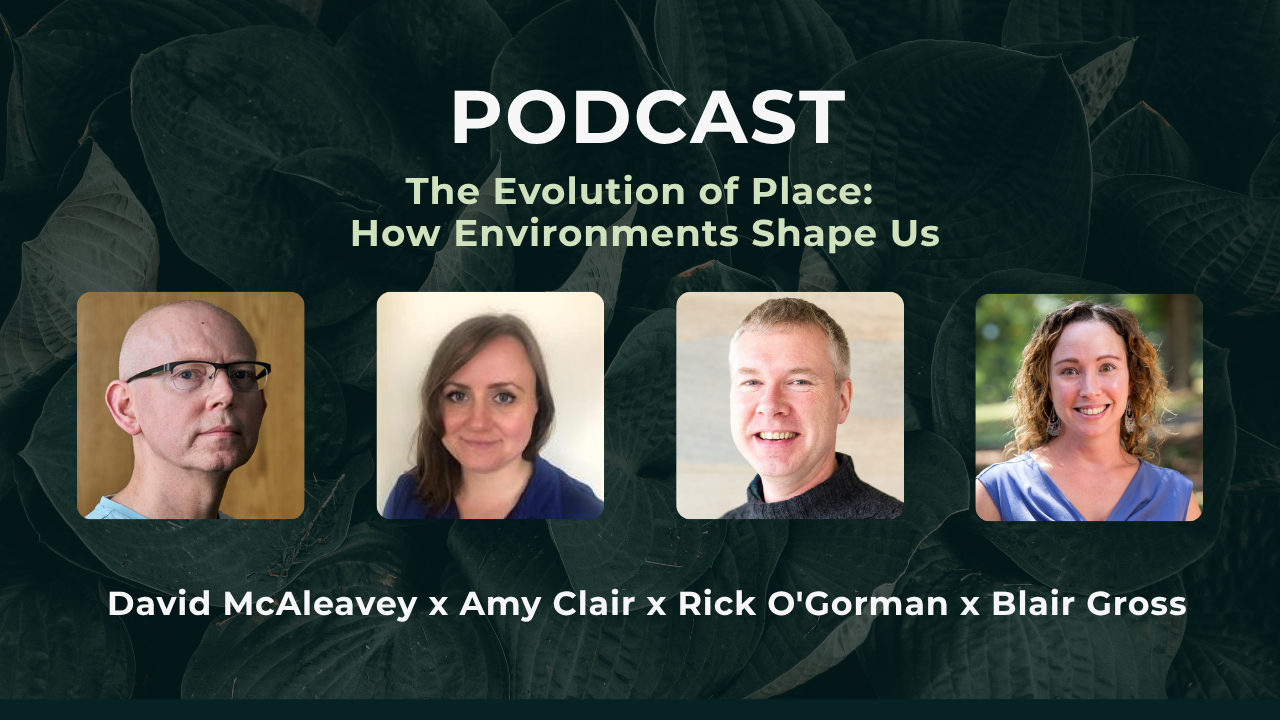
The topic here is the effect of the built environment on health, broadly speaking. And it's very evolutionary in its conception and makes use of a database called the UK Household Longitudinal Study, which is a big longitudinal database which makes the information available that you can do a study like this. And so with that I guess David, are you going to kick things off as the first author of the article?
- [00:34]
B
Yeah, no, very happy to. Thanks for the opportunity of sharing our work with your community in the pro social world. David. So yeah, in fact, so David mentioned that there was this kind of family tree from David down to Rick, then down to me.
- [01:04]
A
Hope we're frozen. I hope that that's not going to be. That's David, I think you froze for me at least. Are you back?
- [01:12]
B
Well, I'm. I can see you. So yes, I'll just keep going.
- [01:17]
A
Yeah, Yep. Okay, go ahead.
- [01:20]
B
Great. So yeah, we took our inspiration from the work that you had done back in Binghamton in 2011. So the community perception work and we. So my doctoral proposal when I applied to join the SOC B program at the University of Essex was to work on the built environment understood through the lens, an evolutionary lens, and foregrounding the work that you had done on community perception as the kind of theoretical framework that we would, I would use to approach the topic. And one of the reasons for choosing Essex was obviously that Rick, whose work I was familiar with from reading your work, David was already an academic there. So when I joined the University of Essex I contacted Rick straight away with my then outline of what I'd like to do. And also Amy Claire, who's also here this morning because Amy's work at the time, Amy was also working at Essex within the Understanding Society, the UK HLS program. And Amy's work was also interested in residential, the built environment, housing, but from a social policy perspective. And as Amy had already worked with the data asset and was interested in the same subject, the director of the program thought it would be a good idea if we would work together. And Amy joined as an advisor on my doctoral panel. So that's how we kind of got started. And then very early on again, David, you, you were work, you working with Stephen Hayes, Steve Hayes on the evolutionary contextual behavior work and the textbook that you guys published. And your chapter in there introduced me to the work of Jim Cohen and from then on. Yeah, so it was. That was my route into understanding how there might be a way of thinking of community perception which once the others have introduced themselves, maybe I can get into community perception a bit. But through the lens of social baseline theory, and then also later through the lens of Josh Brocholt's generalized and safety theory of stress.
- [03:59]
A
Yeah, new person for me. So I'm eager for you to talk about that. So. Awesome.
- [04:06]
B
So maybe if I pass the ball now to Rick for a moment instead of. How's that, Rick?
- [04:12]
C
That's fine, David. So I'm just introducing myself, I guess. Right. So David, or David, whose video clips are sitting either side of me on my screen, have kind of contextualized my place in all of this, I think, very nicely. So I did my PhD with David in Binghamton, and then after a little bit of a nomadic life, as is typical of the academic, especially in the early stages, I found myself at Essex, and my earlier focus was on altruism and cooperation. And then, as happens, if for those who are academics, perhaps you acquire some PhD students who have their own take on things, and your research goes in often all kinds of directions. And so I have worked with a student on leadership and whether it's driven more by dominance or prestige, I've done some work where we've looked at disgust and using pupil dilation to see if that can help us to disentangle the emotions that might be driving people's reports of disgust against certain stimuli. And then I worked with David Michelevy on his work. And now I'm trying to pivot myself into working and volunteering as a topic, because for a long time, my work was kind of testing theory and part of that classic ivory tower of academics talking to academics, kind of. And then I think Covid really made me feel like, actually I want to do stuff that has an impact in the world. And so once again, I'm following David Sloan Wilson's footsteps, because, David, you made this transition right around when I was finishing my PhD in Binghamton, actually. And you've been on this path a long time. And so I find myself once again following those footsteps. But that's my direction. So David McAlevy's work that we did together was very much in that direction. And I think I told David that a couple of times in conversations that I think his work helps me to move in a more real work that's engaging with the real world, that's applying the ideas that we've kind of developed in evolutionary psychology, but trying to apply them to what's around us. So does that do the trick?
- [06:32]
A
That's for me.
- [06:34]
C
I'll pass to Amy, then. Yeah.
- [06:37]
A
Thank you.
- [06:38]
D
It's really nice to see you here, and it's nice to Catch up with you David and Rick. It's been a little while. So as David mentioned, I until a few years ago worked at the University of Essex in the Institute for Social and Economic Research, which is where I met David and then Rick. I now work at the University of Adelaide. So that's why you have such an anti social time for this.
- [06:58]
C
So I apologise.
- [06:59]
D
I'm very sorry that I've skewed this for you all. Yeah, so now I work at the Australian Centre for Housing Research. I do work on housing broadly, but particularly I'm interested in how it links with health, which is how I came to meet David because I've done some work on different housing conditions, different aspects of housing and how that was linked to biomarkers of health. So to begin with it was C reactive proteins, so inflammation. But more recently I've done some work on epigenetic aging and yes, it was a real privilege to work with Edin Rick on this. I got to learn a lot because as mentioned in my background is more social policy. I've done a bit of psychology related stuff as part of that. But I got to relearn some interesting things during this project and think also a bit more about the broader housing context. I tend to work more on people's homes. Obviously it's really hard and probably not the right thing to separate homes from neighbourhoods and from community perceptions. So this was great to get to work on that as well. So thank you.
- [08:05]
A
Awesome.
- [08:07]
E
I suppose it's my turn. So as I was mentioning earlier, I received my PhD from UVA, the University of Virginia. So my primary, primary research advisor was initially Dennis Proffitt. And so his work focuses primarily on perception, so perception of geographic slants, of the slants of hills, distance perception. And through my work with him, Rick, I was really appreciating what you're saying about your students kind of dragging you along. I sort of dragged him into the social aspects, so. And actually Rick, you also mentioned your research and disgust. And I worked with Simona Schnall for a while too also. So. But anyways, Simona published a paper with Denny about the social support and how that changes slant perception. And so that's sort of how I, I got into this and so my dissertation sort of extended that, but from a social baseline theory lens. So at the same time that I was, you know, getting my PhD, Jim Cohen had joined. He'd been at Eva for a couple years I think, but he had joined and I saw a talk that he gave about the very early findings the neurological FMR. Findings about how holding hands, essentially, you would expect the idea at the time was social support would introduce an added process in the brain in terms of pain and threat regulation.
- [09:41]
A
And.
- [09:41]
E
And what he found was quite the opposite and sort of extended this idea of social baseline theory, which is the idea that we, rather than us anticipating ourselves, operating it as individuals, that is, in fact, our baseline cognitive state is to operate in a social environment. And so I extended that work to perception and really just focused a lot on individual differences about what comprises a social baseline and how we move forward from there. So that is my connection to all of this, which.
- [10:16]
D
Yeah.
- [10:18]
A
That'S so great. Okay, so we want to launch into the actual topic at hand, I guess.
- [10:26]
D
Yeah.
- [10:27]
B
So with. The reason why I'd reached out to Blair when I was doing my research was because I'd read her paper on the social. Basically extending social baseline theory into perception. And I saw there a way of bringing together the work that you'd developed in community perception, David, which, it occurs to me, I should give a bit of a background, because I won't presume that many people on here will have read your 2011 paper with Dan O'. Brien.
- [10:58]
A
Yeah, yeah. Background is background. And actually, if I might just give a bit of background on that slope stuff, I mean, because it's so cool. The idea is that basically we've always lived in cooperative groups. We've always had social support in addition to our individual support. And so this is what our brains and bodies have learned to expect. And in the case of the slope study, basically, when you estimate the slope of a hill, you don't just accurately estimate it. You factor the work that's required and the energy that you have for climbing it. And so if you deplete your personal resources, such as fasting or wearing a backpack or something like that, you actually see the hill as steeper. And against that background. Blair, was this your work, your innovation?
- [11:42]
E
Simone Schnall did the original study with Jeanine Stefanucci, I think harbor, but she did the original study with social support. My dissertation extended it to individual differences, senses.
- [11:55]
A
Okay. So if you basically, if you compare you. You're standing at the base of a hill, you compare you versus you standing with a friend. And when you're standing with a friend, the hill becomes less steep that you perceive it as. And so the. The social support of standing next to a friend is seamlessly integrated with your personal resources. Fasting or not, the brain just integrates them all by itself. And so that was social baseline theory. And that wonderful study by Dennis Profitt. And then, David, I'll turn back to you to render the community perception study that I did with Dan o'. Brien.
- [12:39]
B
So I think it'll become obvious why that work that Blair was involved in with Dennis Proffitt and with Jim Cohen that David's just outlined is really important because of community perception. So community perception was a construct that Dan o', Brien, another one of David's students who's working in this space, Dan O' Brien and David, developed at the end, well, 2010, and then in 2011 they published a paper.
- [13:04]
C
I'm going to just increase the level of incestuousness going on here because Blair mentioned Simone's work, Chanel's work, and Simone was actually the external examiner for the viva for the student who did the discuss work with me, Blair, so. Oh, wonderful.
- [13:20]
E
Yeah, yeah.
- [13:21]
C
So the, the entangling is even greater than you might think. Yeah, so she's. But yeah.
- [13:26]
E
So Simona published the original social support and slant study and then she left. She was originally at the University of Plymouth, and so I actually joined her for a year at the University of Plymouth, working in her lab as a paid research assistant before I did my PhD program at UVA. So I worked with her on a replication of the social support work and then some really interesting discussed work. Unfortunately, we couldn't really. We had a lot of really great, really wonderful ideas and unfortunately none of them really panned out for publication. But it was, it was really interesting and I loved, I loved being there and working with her.
- [14:04]
A
So this is, this is academic micro cultural evolution in action. But David, let's see if your reception is better. Hopefully.
- [14:12]
B
Yeah, hopefully. So, apologies, everybody. So, yes, David and Dan's work was building on the fact that we are an obligate social primate. It's a. It would be an understandable adaptation to have developed that because we need to make judgments about who to trust and where to invest our efforts in cooperative building, fostering cooperative relationships, if we could use information available to us in our social environments and physical environments to make judgments when we encountered unfamiliar people in unfamiliar environments. So they developed a construct called community perception, which they understood, or David understood, as a possible reuse of two evolved adaptations for person perception and for environmental perception. So the work that David had done, they. What David and Dan did was to look at the different neighborhoods in Binghamton and then present the. Basically the residential communities to participants. And the residential communities were in different states of maintenance. Dan and David's assumption was that the effort evident in the built environment. So basically the end, this is where I think it comes back to the sort of work that Blair's done. The energy expended in those environments or the potential energy that would be required to be expended in those environments to bring them back up to a level of maintenance is part of the way that we calibrate our social behavior. So in the original study, people who were paired hypothetically with residents from the wrong side of the track in Binghamton tended not to cooperate in prisoner dilemma games. Those that were paired with people whose neighbourhoods seemed to have a level of high energy expended in the maintenance of those neighbourhoods, their behaviour was to be more, in that first prisoner dilemma act of cooperation, were more likely to cooperate. So the environment was functioning as an uncertainty reduction. Well, was helping individuals make decisions, reduce their uncertainty. And I was very interested in the fact that that had the physical environment, the built environment, as part of our extended regulatory system when it came to social interaction. So the extent to which we could then envelop the physical environment into our regulatory system of making judgments about trust, social trust, because obviously personal trust is a different aspect to this. But social trust with these unfamiliar people, what information were we gleaning? So what were we foraging for? And my hunch, building on David's work and building on the work that Blair has done on social baseline theory, is that we were obviously looking for information about the quality of the social environment. And if the social environment looked like it would be favorable, that would be from a social baseline perspective, social baseline theory perspective, that would be a good first move to act in a trusting way, act in a socially pro. Social way. But having done so, you would then look to foster those relationships, build those relationships. So that was the starting point. So again, I don't want to monopolize our short time here, but the additional aspect to that that I thought was very interesting was what would it be about the environment that we would. Then where would the stress in this come from? So my research, my focus was on the extent to which living in neighborhoods without that sort of high energy, high demand, maintenance, construction, ongoing investment in the physical environment, how does that lead to living in a stressful environment? How does that impact on health? And what I saw as a potential way of seeing a mechanism from the place to the people and their health was this social information. And the fact that if the physical environment gave us the information that we have from the physical environment tells us that the social environment isn't going to be particularly. It wouldn't meet our baseline Needs the way that social baseline theory introduces our way of thinking about groups, then that would automatically lead us into a stressful situation. If what we're looking for is signs of the safety of being in functioning, well functioning groups. So just the absence of the sign of the safety of being in an environment where there was opportunities for social trust would be enough to trigger the stress response. So there wouldn't necessarily be the presence of signs of threat. It was purely the absence of those signs of investment in the physical environment that was an index of the social environment.
- [19:52]
A
Okay, and so maybe let's talk about the database that enabled you to test this hypothesis.
- [20:01]
B
Yeah. So Understanding Society is sometimes billed as the largest household survey in the world. It's got 40,000 households. At the beginning it was about 90,000 participants. We have social survey data, so all of the sorts of information you would expect about the participants, the households, the children and the adults. But in addition to that, we also had, sorry, I say, we are no longer at the University of Essex, although still a visiting researcher. The University of Essex has. So I think it was 13. So we have blood samples from 13,000. So a subsample of that larger sample, 13,000 participants. And of that we have the genetic data of those 13,000 participants. We have a subsample of epigenetic data and proteomic data. And we also have created derived variables from that epigenetic data to do with genetic epigenetic clocks. So basically that's the sort of work that Amy has been doing recently to do with households and epigenetic aging. So that was the data asset. But in addition to that, there was some metadata that I found very interesting when I first arrived at Essex. And that metadata was when the initial interviewers would go to the neighborhoods to conduct those interviews. They were asked by the survey designers to make judgments about the built environment. So were the gardens well kept? Were there boarded up or dilapidated buildings in the environment? Was there litter on the streets? And then the relative quality of the focal house, the focal residence and the immediate environment. So we created a maintenance index out of those variables from the metadata and then using the kind of usual suspects of all of the well established variables that impact on. We were interested in looking at inflammation profiles as a kind of a reasonable first step into understanding the health profiles of the neighbourhoods of the individuals in the households. So we looked at CRP C reactive protein as a marker of inflammation, and we looked at levels that were so between 3 milligrams per liter and 10 milligrams per liter, which is the kind of. They're the. That's the envelope for that we presume would be an index of chronic exposure to stressful situations. Any higher than that and that's a kind of inflammatory response to an infection. So we use that data and what we'd look for was the association between chronic inflammation and the level of maintenance of the neighbourhoods. Controlling for all of the established in the literature, the well established household level, individual level factors to do with socioeconomic status, health behaviors, and we found a strong association between maintenance and the inflammation profiles of the residents in those neighbourhoods. It's a very quick precis of the paper and the study.
- [23:45]
A
Oh, that's great. Would any of the other co authors would like to add to that? And I think, you know, what we should be doing is throwing the discussion to the audience and letting our audience guide what comes next.
- [24:02]
C
There's a question in the chat in that regard, David, if you want.
- [24:04]
A
Yes, there is. Can you please define a high energy environment? I can assume, but want to be sure that I'm clear.
- [24:12]
B
Yeah, sorry. If I said high energy, what I really meant was an energy. I'm sorry, an environment that would require considerable energetic expenditure in its maintenance or construction. So if you look at a neighborhood with what might describe high demand gardening, that is an index from a. You know, if you think of it from a kind of behavioral ecologist perspective, it's an it. It acts as a store of the energy that was expended in its creation or its maintenance. So it gives us information. It functions as a kind of semi tectonic store to use E.O. wilson Construct. It acts as a store of information about the energy expended in its creation or its maintenance. So that's what I mean by that phrase about high demand energy or high energy places.
- [25:12]
A
Yeah. So Liane, you have a question, so just pass the questions. Or do I. Or does any of the co authors wish to add to David's account? If not, I think, Lane, I'd ask you to ask your question in person. Is that what we should do? Let's do that. Okay. So Liane, and introduce yourself briefly if you would.
- [25:34]
F
Sure.
- [25:35]
G
Hi.
- [25:35]
H
Thank you so much. It's really great. I'm really grateful to be here. Thank you. My name is Leanne Hartley and I'm director of MEND and I'm a writer around cities, specifically around an idea I have around considerate urbanism, which is urbanism that promotes pro social behavior and kindness. I met David very recently after I wrote an article about embodied stress in the built environment about how stress is almost encoded and expressed through the built environment. And since then we've been talking through some ideas on that. I just thought, given what you've said about how we're social primates, I'm really interested in if the energy and effort invested and signaled to others, does it matter if that's given voluntary, voluntarily. Sorry. Or if it's compelled? Does that, does that matter in any way? And I'm just, I'm really curious to know. Thank you.
- [26:36]
B
I think it matters a great deal. And part of the work that I'm really interested in is work done by Michelle Condo and Charles Branas in Philadelphia where they've demonstrated that the sort of. So again, without going into the detail, they were very interested in the extent to which simple maintenance in residential communities could have an impact initially on gun crime, as it happens, but then basically across other aspects of antisocial behavior, criminality, but also health. And just to very quickly respond to your specific question, Leanne, that they, they found that in those pocket gardens that were created by residents, there was a significant, a much more significant impact on the, the wider community than when those pocket gardens were contractor. They were led by contractors. So the may. And that's because the way that I conceive it is that if you live in a community where you know that contractors come and do the maintenance of your neighborhood, they don't offer you opportunities for extending your social group meaningfully because they're beyond your neighborhood. Whereas when other residents in your community are responsible for that investment of time and energy, that is an index of their basically the opportunities that we all look for, not in a kind of. Not to take advantage of, but just to become part of the outsourcing of these bioenergetic expenditures of just basically risk distribution and load sharing that is about being part in a community. So, yes, I do think it matters. And then obviously what matters there is that all of the different agents in that have a different knowledge of who's responsible for those, you know, that high demand gardening. So people will always come with their priors of who's responsible for that high demand gardening. And that will be their first pass. That'll be how they'll make decisions. But then they'll update those priors. If they then witness it being done by a contractor, that will recalibrate the way that they value that. Whereas if they then witness it's done by a community group, they'll update their prize accordingly and informationally, it will be of different value to them. Does that.
- [29:21]
G
Yeah.
- [29:23]
A
You wanted to add to that.
- [29:25]
E
Yeah, I mean, I think you answered my question by the time we got to the end, David, But I was going to ask you. You were suggesting then that the difference between voluntary or voluntary or compelled is that if it's compelled, it loses its social signal. Is that what you're suggesting?
- [29:39]
B
Well, again, I think the difference between compelled and if you're, you know, if you're a paid contractor, they might not be framed in that way. Yeah. But basically what I think we use that information for is that to the extent to which we have an under, you know, if we have a prior about the intentional motivation of the agent that we presume is responsible for the. The work, that's what we're, you know, that's what we're looking for. You know, we're looking to glean as much information about that, and once we have it, we're then looking at it for its value as social information about the extent to which we can extend our social circle to envelop them, or whether they're just not, you know, they're not an available resource to us because the nature of their relationship with the work that they did.
- [30:29]
E
Right, yeah.
- [30:30]
G
Just.
- [30:30]
C
Just to jump in on that. But just, I mean, I mean, I mean, a lot of this does take you into the question of, you know, intrinsic extrinsic motivation, things like this, and understanding where people, why people are doing things. It also strikes me, of course, that there's a lot of noise in this. So. So in one sense, you can have this nice dichotomy of the compelled versus the voluntary. But of course, in the real urban environment, there's all kinds of experience which you may derive to know that's that way because that work is contracted and those people have no say, for example, in their maintenance. But you might still lots of times make judgments because you look and go, well, why aren't those people taking responsibility for the appearance or whatever it might be?
- [31:07]
B
Right.
- [31:08]
C
And there is still a lot of room for ambiguity in there, isn't there? In terms of the. So the distinction is valid, but in translating into real world judgments then might be quite noisy.
- [31:17]
A
Oh, well, individual differences. Carla, I know that you're next, but then I'd like to jump in and bring out the theme of individual differences. So, Carla, please.
- [31:26]
F
Thank you. This is very interesting. I have a question. It seems that at some point you're talking about gleaning information from the community perception, to use David Wilson's term. And at other times you're talking about how the appearance of the environment actually shapes your level of stress, you know, it changes who you are and those are really very different things. And I'm not always sure when you're talking about one or the other. In particular, when David, I'm probably mispronouncing this, nicolevi, talks about his work, it sounds like it's the experience of living in a place that has, you know, good maintenance versus bad maintenance that shapes my level of stress, that shapes who I am. But then when I. When I think about David Wilson's work, and I actually did read last night his paper on community, his 211 paper on community participation, it seems that it's just the information that my opponent in, let's say a PD game is from a bad or a good neighborhood that gives me information about whether he's going to be a cooperative guy or not a cooperative guy. So you're talking about two different things and I'm never sure which one. Is it information like in, I think, David Wilson's paper, if I understood it correctly, or is it my stress level, my baseline expectations that are affected, as in David mcalevy's paper?
- [33:23]
A
Great question.
- [33:27]
B
My response to that is actually, I don't know if Gillian Pepper is here on the call. I know that she was registered to join us, but. So Gillian Pepper is. She works in the psychology department, but she's also a kind of behavioral scientist and she did a study in 2015 called Being There, which was work with Daniel Nettle in Newcastle, which was again another study in response or inspired by community perception work by Dan and David in Binghamton. But they were interested in the extent to which the residents of a community's levels of social trust, their levels of other variables. That will come back to me in a moment, but let's just use social trust as the one. We'll focus on the extent to which the residents levels of social trust and then visitors to those environments, social trust correlated. So what they were interested in was whether it was whether there was a relationship between living in those neighbourhoods and your level of social trust, or whether if you just happened to be in that neighborhood, the information of being in there for like 20 minutes, 40 minutes, whether you were gleaning that information to make judgments about social trust. And I wouldn't be talking about it if it didn't turn out that it actually simply visiting the neighborhoods in which those communities lived. And so their daily exposures with those low social trust neighbourhoods, or reasonable or high social just neighbourhoods, people's level of social trust was strongly correlated. So whether you live there or Whether you were simply visiting your level of social trust where was very similar. So one thing to take from that is that living in those neighborhoods, you, you come to see that that's the way the world is. That's, that's your, that's the, the air that you breathe, the water that you swim in. But the information is, can be gleaned in the same way by somebody just visits there. But one is they're your priors. And your exposure in a kind of Bayesian sense to that neighborhood means that this is the way you go out to perceive the world thereafter. And that's where I was very keen on reaching out to Blair is because I think that's the way you start to see the world is through that low social trust environment. Whereas just going into that neighborhood in that moment you have the same perceptual experience and your behavioral repertoire is limited as a result. But it doesn't have the same chronic stress exposure because you leave that neighborhood and it won't be somewhere where you've kind of been engaged in social relations or too many social relationships. I don't know if that answers your question, Carla, but that's what came to mind when you were asking it.
- [36:40]
A
Yeah, when we did that study, I had this just this really demoralized feeling because what I realized in these prisoners dilemma games were college students actually were playing a prisoner's dilemma game with somebody from the neighborhoods, all done by paper and so on and so forth. But. And if the neighborhoods were bad as perceived by a photograph, then they were defecting, not cooperating, and a one shot prisoners dilemma. And it made me realize that if you're living in a neighborhood like that, you see a completely different social environment before the first interaction. It's not as if the first interaction is agnostic and something takes place after there. No, the very first interaction is one which is predicated on trust or distrust. And so they truly do live in a different world. By that we mean the response surface of those that you're interacting with. And that's chronic. So basically, I think that's what you were saying, David. And it was so sad to think of somebody in a bad neighborhood and just they don't even have a chance. I mean, before the. It begins with the first interaction. And that was just like sad to me. Go ahead.
- [38:01]
C
I'm just going to add to that, David, that that speaks to people who come from certain backgrounds. Right. Where they talk about. They learn that the moment they open their mouth and start to speak, their accent gives away where they're from. And they then have the experience. They know it changes what happens next, right?
- [38:17]
F
And actually it's also very, very, what David Wilson says is very, very much connected to famous work first done by Heller et al with Central Melanith and 10 other psychologists and economists that look at people from bad neighborhoods, lawless neighborhoods. They learn to be very aggressive just in order to, you know, survive. And then they go to school and they're expected to be obedient. And obviously they, that's not in their repertoire. And so they're constantly suspended, so they don't graduate from high school, so they go into a life of crime and you know, it all is downhill. And then this intervention in this paper by Heller et al in a top econ journal, QJE finds that just training these people to let them see, you know, all the world is not like your lawless neighborhood. There are also cooperative law abiding neighborhoods where your repertoire of behavior should be different. And then they graduate from high school. And then a similar study was done again by a whole big bunch of economists and psychologists. The first author is Al Gonne, the second author is Beasley, and then the third author is Trembling. And then it goes on from there. And it's the first study that looks at the impact 30 years later of taking these second and third graders from lowest, you know, very disadvantaged environments and just teaching them how, how to get along with really cooperative people. They just do this in second and third grade, then they don't do anything more. And then These guys make $140,000 more income by the time they're 39 years old. So what David Wilson says is exactly right, that you know, you, you, you have an idea of the way the world is and you don't think about the way your, your data set is just one teeny tiny part of the world. We all think we know how the world is based on our very, very small experiences of that world. And unfortunately, if you come from a bad neighborhood, you could be doomed.
- [40:30]
A
There's so much to say, but Blair, go ahead.
- [40:33]
E
Yeah, I was going to say this is exactly what social baseline theory is all about. And in fact putting forward this idea that all of us exist in social environments and we all have our own social baseline, if you will. And so individuals, as in David's work, that are environments, you have to think about what the physical environment is signaling to them. What they're signaling is that their community, their peer, might not have a lot of resources and they might not be able or reliable aspects of social support. Or reliable in their interactions. What that does to the individual is that then changes their social baseline so that when they encounter new situations, their social baseline is to not expect much Right. In the way of social support, etc. And so what you're talking about is it's not just that, you know, they don't have, they have a myopic view. It's that they need to have experiences that change their social baseline, that change the priors that they're used to so that they can, you know, that then when they have these other interactions, they aren't, you know, they aren't approaching it from the same baseline, lower baseline, if you will. But, but the idea is that each individual is in its own baseline and then also it's a dynamic response as well, which I think isn't always acknowledged, which I, you know, I would like to point out that over time, you know, these are one off experiences, but over time also your previous interactions also then come to change your priors and your expectations about the social other that you are interacting with.
- [42:13]
F
Right.
- [42:15]
E
And so that's why you see a lot of that other research where you know, if you continue these kinds of interactions where you can then change some of the priors and expectations of other social environments, then it changes the outcomes.
- [42:28]
A
Yeah. And so there's so much to say here, but I want to focus on, on inner and outer. So much depends on how you process this, this information. And there's so many different ways to do this depending upon the way, the way that you're thinking about it. And I think all of us can, anecdotally or supported by studies can see people who actually manage to thrive in harsh environments because of how they're conceptualizing it. And this is what acceptance and commitment therapy and other forms of effective therapy actually do successfully as they manage to work on your inner self without altering the outer environment. But then now we go to outer, let's also alter the outer environment and not just teach people about it, kind of instruct them, Carla, as you were suggesting, but actually provide environments in which cooperation pays and if you don't cooperate, then you know, there's safeguards and so on. And this flurry of activity. When I was working in Binghamton with Dan o' Brien and others, we actually did a school intervention in which we created a school for at risk youth. And to make a long story short, by building in core design principles for cooperative behavior, the students whose lives were hard in every other respect because we could only alter their school environment, we couldn't alter the rest of their environments. They basically they responded to a safe and secure social environment and they became very happily more, more cooperative. And it was not a matter of instruction, it was a matter of creating the social environment. But they, and they responded actually very quickly. So there's a lot of optimism here, I think, but that that distinction between inner and outer is key. And, and I, I wanted again to see how that manifests as individual differences. So, so to say a little bit more about that, Blair, were you the one that was emphasizing individual differences, title.
- [44:37]
F
Of the paper you just referred to?
- [44:39]
A
Sure, I'll put it in the, in the chat. Julia, maybe can put it in the chat.
- [44:46]
E
I'm sorry, what was your question, David?
- [44:47]
A
Well, just focus more on individual differences and the source of individual differences being basically how the information is being processed.
- [45:01]
F
Right. So.
- [45:07]
A
Sorry, I just, just to prompted a bit. We know that these famous experiments that if you educate people in economics, they actually become more like Homo economicus because you train them to, to, to do so. So I'm trying to imagine someone like that, but continue.
- [45:26]
E
So my, my work is most. Has mostly been in visual perception. And so I'll speak a little bit about where my days for individual differences came from and then maybe we can think of ways to apply it.
- [45:37]
A
But.
- [45:38]
E
So for example, the, the original study that said that if you perceive or so if you're standing at the bottom of a hill with, with a friend, a very steep hill with a friend, then that slope appears less steep. The work that I did for my dissertation was that that actually depends on whether you're introverted or extroverted. And so mostly the effect is being driven by extroverts. In fact, what ends up happening is that that effect is magnified for people that are extroverted and not just any extroversion. So we did a 60 item extraversion scale that broke extroversion down into various aspects of extraversion, service sticking, et cetera. And it was specifically the friendliness component of extraversion that was predicting hill slants. Now here was the interesting part. We talk about how having a friend helps you look at a hill as less steep. But what we also asked people do is to imagine someone that had betrayed them once it turns out that that makes them hill even more steep. So there's the opposite direction.
- [46:46]
F
That's just great.
- [46:48]
E
Right. And then, but interestingly in that particular case, if you were introverted, that manipulation actually did not affect you.
- [46:58]
A
Right.
- [46:59]
E
So it was really so. So the, the individual differences then is how much am I relying on my Social network versus trying to operate alone.
- [47:09]
B
Right?
- [47:10]
E
And so in those cases it's sort of, you have to. And one of the things that I'm interested in going forward and using the UK household study study data is to sort of try to. Because right now this idea of social support is very amorphous. Like we don't, we don't have a really good idea of what it. I mean, we know we have ideas, right? We can talk about friends, we can talk about people that betrayed us, we can hold hands, we can have physical presence. But what is it really about our social networks that's really driving this? But you can think about that in terms of. That based on people's previous life experiences and particularly in terms of thinking about attachment theory, you can come to view others as a reliable source or an unreliable source. That is part of what's going to drive. We have to consider the positive benefits that you might lose out. But you also have to consider the idea that people with a lower baseline might also be protected in some cases from negative incidents as well, that it is adaptive. Right. If you have an unreliable or social network to not invest resources in that social network because it's a prior that's telling you you might actually lose them. So when I think about individual differences in terms of these kinds of things, it's sort of, you know, what experiences do you have or have you had or what aspects of your social network are sort of giving this information for you and where does that set you? And that being said, that doesn't mean that just because someone has a particular social baseline at some point in their life doesn't mean that it can't change. I think it's both dynamic over time and also dynamic in terms you have to consider the groups and the social environments that you're in.
- [48:58]
A
So, so I'd like to turn the conversation to what, what we, how could we, can we actually use this in interventions, basically? Use, use this information and actually working with individuals and communities and, and so on. Maybe I could just ask the co authors, what are your next steps, basically? And on the one hand we have this amazing longitudinal study on the other hand that's not actually enabling you to work in actual communities. So if you were to work in actual communities, then what would we be doing? And of course, presumably there are studies that maybe do this. So could I have a, maybe some, some thoughts on that from, from anyone, co authors or, or the, or the audience.
- [49:54]
B
I'll go first and then I'm sure Rick or Amy might want to contribute too. So at the moment, Rick and I are working with Rhiannon Corcoran and some other people on thinking the extent to which place stewardship and understanding how a community can take more and more control over their own physical environment could have an impact when it comes to their medium and long term health through the mechanisms that we think are in play when it comes to the notion that energy and effort expended in our community not only provides or furnishes our community with an environment with lots of signals about the social quality of our community, but in the process of doing creates our psychological experience of belonging to that community. So that actually the opportunities that stewardship and then stewardship affords us, but then in a planning sense. So I think previously we talked about the extent to which there are certain contractual arrangements in local government in the uk where communities can't assume some maintenance.
- [51:16]
D
Roles.
- [51:19]
B
In the public realm in their environment, because there are established contractors with local government roles, responsibilities and contracts, which means that the community don't engage in doing rudimentary maintenance or even more sophisticated maintenance. So actually thinking about the ways in which communities can take more control over their own place stewardship, but then also how you design in these sort of civic affordances and understanding the wider environment as potentially a channel of social information and therefore using materials, using methods of construction, and construction methods that have maintenance routines that are kind of legible to the community that live there. So we're in the process of designing protocols, looking at design codes, thinking about the way that procurement works in local government, where you can change the way that a community can engage in their own environment. So that's one way that we're thinking of applying this and that's kind of changing the informational environment. So, Carla, in the study you mentioned, the participants were told that other communities are more cooperative, you know, or other in other neighborhoods you could encounter people who are more cooperative and the way that they conduct themselves is different. The idea here is that you build that into your environment and the act of building it into your environment is part of the way that you come to belong in that environment and that that in itself becomes the information that you and your social group. So, you know, it reminds me of, I remember listening to you talk, David, about some of the pocket gardens in Binghamton back in 2008, 2009, where the social process itself was the intervention and that that was then building this reservoir of social relationships that were then called upon when there was a flood in Binghamton. So it's that sort of process about creating Opportunities to literally and metaphorically build community spaces. So that's one of the things we're thinking of doing.
- [53:46]
A
No, that's awesome. That's just so great. I wanted to. First of all, the hour is up, but We've planned for 30 minutes spillover for those who want to stay, and I certainly do so. But in our closing minutes, I actually wanted to channel Dan O', Brien, who was my PhD student, who really we talk about professors being led by their students at the beginning of this talk. And Dan o' Brien certainly was such a student. And he went on to Boston and co founded something called the Boston Area Research Initiative, which is a model for this kind of work. And his most recent book is titled the Pointillistic City. Metaphorically, it uses the pointillist tradition in art in which the landscape is made by tiny dots to make the point at how much that takes place in cities is so microspatial that even the neighborhood is too large a unit. We have to go to the street or the property in order to find the scale at which things are actually taking place. And so I think that that is. And one point that that raises is that in addition to this community building that you just described, David, which takes place at a small scale, as it should, that's just the building block for larger scale processes, because this is densely multi level. And one of the things that Dan describes that taking place in Boston and elsewhere, there's other examples, including one in Buffalo that I'm familiar with, is this stuff does place at the small scale, but also there's a city level scale where for example, if there's a property in a neighborhood which is just a real big problem property, the neighbors can't do anything about that. It might be an absentee landlord or something like that. It's at this point that the city comes in, not in a heavy handed fashion, but in a contextual fashion. Because the word context, context, context, context, you don't know what to do unless you understand the context. So first the property owner is contacted and then there's an exploration of the context and then something is done. And typically it can be done at a lower friendly scale, constructive scale, but if not, then it must be possible to escalate. And so those that are familiar with LNR Ostrom work knows that that's the fifth core design principle. So this being multi level with the individual embedded in small, meaningful and appropriately structured groups as a kind of the social cell, not the individual, that's what social baseline theory tells us is the individual embedded in small, meaningful and appropriately structured group, the individual does not lose their agency, quite the contrary. The individual is highly agentic within those groups and those groups are highly agentic in multi group interactions. So there really is a framework for multi level cultural evolution basically that we're, that we're, that we can draw upon basically. And a delight for me of this research, of the many delights, is its strong theoretical foundation. So we have a theory and that theory is informing how we go about studying this and then, and it goes on from there. So, so for those who can stay, let's have some more questions from the audience. You could raise your virtual hands or just speak up. So I'm really eager to hear from other people that are here. And Richard Coates, are you still here because you do this kind of thing in, in Thames, are you. Have you. Yeah. There you are. Yeah, please. Yeah. Hi everyone.
- [57:46]
G
It's not really a question, but just to share my excitement at listening to what you've been saying and link that to kind of what I'm trying to do. I'm a neuropsychologist in the UK and pro social facilitator and also an acceptance and commitment therapist as well. And I've been trying to apply those principles to where I live locally in my small village which has 4,000 people and you know, starting with, with different pockets, you know, we're working on a community orchard. There's a, there's a derelict cafe right by the river owned by the Environment Agency and a, and a lock cottage where it's seen as a source of antisocial behavior. Now it's run down, it's fenced off. So, you know, we've started up a community interest company to be able to transform this space. So I'd be interested, you know, in the long term impacts of doing this work, just changing that environment and then, you know, how does that then feed into trust, you know, perception of antisocial behavior as well. And so one of my colleagues in Reading, Natalie Gampat Singh, she does this work all of the time working in deprived neighborhoods, finding a space. There is one space in Reading called the Holy Brook Nook, which was, you know, a drug den in a drug paraphernalia everywhere. People wouldn't want to go near it. But it's also an important route for people to get to places into the center. So with funding from the local council, she has been able to regenerate this space with volunteers. So now it is a beautiful walkway through. People have cleared away all of the drug stuff. You know, the brambles. There's now a food garden in there with a local charity where people can come and just pick food themselves. People now enjoy walking through this space and as you said, it's that agency, there is a, you know, a monthly look after the Nook meeting where people come, local residents, to keep maintaining and improving this space. They've just been, you know, granted 3,000 from the National Lottery now to do this on a, you know, a longer term basis. So, you know, I'm, you know, what you've said. I'm, I'm interested, you know, in the impact, you know, measuring beforehand and afterwards in these longitudinal studies that we've talked about. You know, can I connect you with Natalie and her work? She already does, you know, a lot of, a lot of sampling. You know, she's very keen to show the evidence behind what she is doing as well.
- [60:34]
A
It's amazing enough when, when these things, but for them to be assessed and monitored and for basically for science to be done around them is, would be even more amazing. And so I think that's what you're calling for, Richard, that.
- [60:49]
G
Yeah, absolutely. And so, yeah, love to love to connect and love. Yeah, love. Yeah, yeah, love what you've talked about. So excited for being here.
- [60:57]
C
Just, just to jump in just before because I see Leanne has her hand up. But just, just to follow up on Richard's story there. I mean, it's really interesting because you do hear about these cases where there is a focal location or. And someone has asked the question along these lines as well a bit. I think where there's a focal location or whatever it might be and that turning it around has this disproportionate, what looks like a disproportionate effect. And it reminds me a little bit of that kind of the social network kind of work in the past. The idea that, you know, there were certain nodes who were particularly influential as individuals. Right. And these individuals carried weight and if you change how they operated, you could affect the bigger network. And it makes me wonder if you could almost map location, you know, some, a village or something. The same way where you might be able to identify with, look, this spot, right? Because you said, Richard, it was a high traffic area, so it's highly prominent. It had a major distortion on people's travel or whatever it might be. So it was turning around was going to be particularly influential. And you can imagine analyzing locations and going, well, if you fix this spot, this is going to have a big effect. And if you go here, it's Marginal. Right. I don't know, it's what, maybe what you made me think about when you said, when you told your anecdote. Anecdote's not the right word, but you know what I mean.
- [62:05]
A
Yeah. Lion.
- [62:09]
H
Thank you. Yes. This has just been an absolutely fascinating hour. Thank you so much. There's so much for me to read up on and things and thoughts pinging, but something I just wanted to share with you and it will come out in quite a garbled fashion because it's something I'm still forming in my head. But I'm interested in the notion of coaching and human growth, personal growth. I have a coach myself. I've had therapy in the past and I often find myself when I'm exploring this and reading about the notion of human potential and human growth, human development, whatever that is, that there's so many parallels with how I see place and so much to sort of maybe translate across. And I suppose my question or my thought was, do you see parallels with that in your own work? And I'm thinking, just hearing, I think it was Amy, talk about the research on slopes and perception of steepness. As an introvert myself, I'm prone to being highly self efficient to the point of probably being, you know, detrimental to myself. I'm very, I'm very self reliant. I'm probably very anxious, hyper vigilant, hyper anxious. So I tend to be. I really recognize what you were saying there about I would probably be unlikely to seek out help with a steep hill. I would, I would get. God damn it, I'd get to the top myself. And what does that say about how we can shape or support people to seek out that help because it is beneficial? So sorry, I did say that we come out in a tumble, but I'm exploring at the moment the notion of how coaching humans can extend coaching place and vice versa.
- [64:04]
A
That's awesome. You know, I mean, the master variable of acceptance and commitment therapy is psychological flexibility, which is the same as adaptability, that if you have psychological flexibility you're able to change basically in response to your, to your circumstance and individuals is the point of entry so often. And I think what you're saying is that the groups could be point of entry. The places can be a point of entry for this. And that's actually just the main theme of my article with Jim Cohen on groups as organisms, basically. And without meaning to. I mean, we criticized economics for being individual homo economicus and we just relentlessly criticize economics without realizing how individualistic we are in so many other respects. Anyhow, after Blair. And then I'll return with another point I wanted to make. But yeah, I was going to say.
- [65:07]
E
Keep in mind that the tenet of social baseline theory is not that all interactions are going to be positive and that what social baseline theory is representing is that you are assessing. So the idea is that as a whole, what our social environments do is they lower the cost of acting. And so to take in, one of my favorite examples that I trot out all the time. So I apologize if I've. I think David's probably heard this several times is ostriches, actually. So if you put ostriches in a pen together, if you put an ostrich in a pen with a certain amount of food, it actually won't eat as much food as it would if you put it in the pen with the group. So as a whole, as a group, even though you're dividing the resources among the group, individually, you actually consume more because you're spending less time. So ostriches to eat have to put their heads down, but then they have to also keep their heads up to look for predators. And so alone, what you're doing is you're consuming less food in a certain amount of time because you're constantly vigilant looking for predators. But as a group, you can offload the cost of interacting to the group and therefore you have more resources available for yourself. So what you were describing, which was interesting to me about, it was interesting to me that you use the words hyper vigilant because that's the cost, that's the trade off. Right. So, but also what, what's happening is it also seems as if that, you know, for some individuals, like for example, interest, introverts, another person doesn't represent an opportunity to offload. They represent an added cost. I have to now interact with this person. Right. And so it's about, it's more about like what is the environment representing for you. And so in terms of, you know, coaching and things along those lines, it seems to me that, you know, as David was talking, that it's that, that, that flexibility and maybe changing your priors a little bit and sort of what other people represent to you.
- [67:09]
H
Okay, thank you so much.
- [67:15]
C
I know you were going to say something about. I just was going to follow up with Leanne's comments because I thought I liked the idea of the question or I think I forgot how you put it exactly. Coaching people to shape the places or coaching people to coach places. I wasn't sure what you said exactly. But you had it nicer than I just tried to say. But I thought it was really interesting because tying that back to the earlier question I think that David Wilson had around interventions. And I was jotting notes as I listened to David McAlevy talk. And there was a couple of things that struck me. I thought, tie in both the intervention side of it, but to what Leanne was saying a little bit. And one of them is anecdotal. Well, they're both anecdotal really, because neither of them are scientific published papers. But one of them was I was meeting a local organization that works with volunteers and helps other organizations set themselves up to be on a voluntary basis. And I said something along the lines of it being hard to change the culture of the area. I meant it on actually a big scale in terms of England, particularly in the culture of being English. But the person responded, well, she had this story about how some charity had recently, I think they put posters up in buses. I can't remember exactly where, but they start putting up posters and buses. And it was encouraging people just to be nice and kind. And I don't know how they evaluated. So I don't know how anecdotal it is, but they. The sense she had was that they felt that just putting up these posters changed people's behavior. And I thought that kind of stuff speaks a little bit to the question of coaching people. And again, interventions, because part of these environments where maybe maintenance is a problem, it's going to be hard to change unless the government comes in and puts money in to help people, say, do upkeep or whatever, or other more interventionist approaches. And part of it might be, can people be encouraged from bottom up to think about their neighborhood in different ways and to recognize that there might be bad elements or people who are not going to contribute, but that there are people who want to contribute always. Because I think this is what you see. And I was also thinking about there was a thing that's been run for years in Ireland called the Tidy Towns Competition. And it was innovate. It was. It was implemented. I don't know when it was there, when I was young. So we're going back to the. At least the 80s, if not earlier, and it was done around tourism. It was to encourage communities to beautify themselves. But it had that effect, had a very powerful effect. I don't know what the prize was because there's a small. There's a small town and a big town competition. And so they had two winners. And it was always announced in the news.
- [69:52]
A
Yeah, Let me just jump in, Rick, because this is like what the good behavior game is. I mentioned the good behavior game in the, in the chat is another study like the one Carla, you cited, in which this intervention in first and second grade has lifelong consequences. And basically what it involves is having. Breaking the class into small groups of students who compete to be good. And, and that's what you're describing with the tiny, tiny towns, friendly competition to compete to be tidy, basically. And then all sorts of stuff comes into, comes into. It's genius. And so simple.
- [70:29]
C
I mean, yeah, it was, it was very effective because lots of places competed and you had a lot of towns and villages that suddenly had, and you had to be it on a community level. And, and, and then you had, you know, committees had to be formed locally to help and encourage because not every business, right. Everybody wants to do it. And so they had to be encouraged to partake. And then, you know, you need, you know, you don't want the one eyesore. And so, yeah, it seemed to have quite a, I think a disproportionate effect. And yes, it was just about tidiness and appearance. But what you're saying is of course, absolutely the same thing where you've got some way to have a goodness measure. And these things are ways to change culture.
- [71:05]
A
By the way, the kids, the kids nominate what's good. First of all, you get the kids together, you ask them what's good and they know just as well as anybody else, but they, the fact that they nominated it is important. Then it goes on the wall and it goes on. I mean, it's so simple when you think of it. But what it's doing is basically it's structuring between group competition in a way that's. Yes, in a way that's benign. Ben, I see you're heavier. Go ahead.
- [71:33]
C
Well, I was just going to say quickly. You're absolutely right. It's absolutely right. You're tapping into that multi level selection approach and you're using the between group competition element in a positive way. So I'll yield the floor.
- [71:43]
A
Sports teams are like that too. There's all these positive examples of well structured group level competition which is not toxic above the level of the group. And refereeing is important. We know this for sports. Sports requires refereeing and so does any other cooperative, any other cooperative group.
- [72:04]
C
You could apply Ella Ostrom's work probably to sports. Right. I don't know if anyone's done that.
- [72:07]
A
But there's probably, there's a literature yeah, there's a wonderful literature on that. Ben, is my hand still up? I thought I'd taken it down. Oh, well, maybe. I actually, I actually was just going to ask about neurodiversity, but I was sort of googling it, looking at how.
- [72:33]
B
Many introverts and extroverts there are versus.
- [72:36]
A
Kind of people that neurodiversion, if that's something that had been explored at all.
- [72:44]
E
Do you mean in terms of prevalence or just in terms of how it applies to social baseline?
- [72:48]
A
Yeah, how it works and how they react. Because you can kind of apply stereotypes to introvert and extrovert. But I was just interested.
- [72:55]
F
Right.
- [72:55]
B
It might not be that useful.
- [72:56]
A
I'm just, I was, that was my thought.
- [72:59]
E
I've never been asked that question. I think it's a really interesting question off the top of my head. Just, I would guess that what's going on is that if you're looking at neurodivergent populations that the signals are very different. The signals that they're both perceiving and then also using are different. And that's the cause of sort of the differences there. And so that's a really interesting question.
- [73:29]
A
I don't know, Richard, this is your specialty. I don't know if you have anything to say about. How about that?
- [73:37]
G
Not my specialty with neurodivergence. Yeah. More required brain injury.
- [73:42]
A
But okay.
- [73:43]
G
But yeah, but I can see this, you know, like, like with introversion as well. There's going to be. Yeah. How do, if you know, if you're autistic or you know, are other people a threat that support, you know, so does it actually make things worse for you? You know, I guess yeah. If you have adhd, I don't know. But if you're, you know, your attention is focusing on multiple different places, how does that impact what you are perceiving from the environment as well? Yeah, I, I don't know, but it's a great question. Ben, I'm curious.
- [74:20]
A
Yeah, Carla, go ahead. And then I have a wrap up comment.
- [74:23]
F
One time he commented one tiny question. My tiny comment is I think many people here would appreciate a recent paper by Matt Lowe for his PhD thesis and now it's published in a top econ journal he created with low cast and high cast cricket teams. And just for one month, playing eight games with the opposite cast, which would be both high and low. You change your level of trust in the opposite cast. It makes you a much less discriminatory person. That was my one comment and my one question is some people mentioned the paper being there and I can't find it. Who's the author of Being There.
- [75:10]
B
So being there it's. I think Gillian Pepper is the first author I think. But it's Daniel Nettles names on that same paper.
- [75:19]
F
Daniel Nettle.
- [75:23]
B
I'll find it for you. Yeah, I'll find it for you Carla and I'll pop it in the chat now.
- [75:30]
C
Like the stinging Nettles.
- [75:32]
F
N E T T L E. Yeah, yeah, yeah.
- [75:35]
A
He's a wonderful caller. He's a wonderful caller.
- [75:37]
F
Okay, great, thank you.
- [75:39]
A
Ah, now we had someone else raise their hand, didn't we?
- [75:43]
C
There's one, there was one comment in the chat there from, from Kim Wager figure. Sorry Kim, if I'm saying it wrong, I don't know if you want to pick up on that David or.
- [76:03]
A
Well first of all Oslo is, just came back from Oslo. So Oslo is a wonderful location for, for this and I'm very excited to be working in Oslo including a new place called the House of Consciousness which could be a location for this to, to take place. And that actually leads to my final comment I wish to make. I often talk about bottom up meets enlightened top down. And what I mean by that is of course there's so much that could be done bottom up by individuals and communities and so on without needing to ask anyone's permission so that bottom up energy is possible and needs to be nourished as much as possible. And the way to nourish it is with top down support any, any, any institution or, or individual or organization and they're able to capacitate this not in a hierarchical fashion, not in a command and control fashion but in a way that basically facilitates the process of multi level evolution is we'll just make it happen faster. And so I think that there's, and so we want, we want both. And so I think in England. Well actually so part of what we do in pro social world is called the New Paradigm Coalition which is global and with Norway as a, as an important, as an important hub that kind of begins with an economics and business focus but it's so holistic that by the time you get done rethinking economics has become thoroughly, you know, holistic. And it's in its approach economic systems embedded in social, political and environmental systems and then with hubs of various sorts that are just capable of this enlightened top down approach which has both a conceptual and a logistic, you might say, dimension. First of all it has to be conceptually oriented just like your research is conceptually oriented. If we don't have the, the right theory in place, then we can't even ask the right questions and, and so on. So the theoretical orientation is huge. And then of course, bringing it about. And in England, working with Dennis Snower, my main colleague on this just recently, and I guess this is so recent that maybe I shouldn't even be talking about it. The University College of London has an institute called the Institute for Global Prosperity. I put the link in which might be becoming a kind of a home for this. And if we think of all of England, I think has a very dense concentration, for example, of ACT trainers and so on. So I think England would be a, a perfect hub for all of this if it could become organized. And so now we have universities, university centers, business schools, you know, institutions like the rsa, the National Lottery, all of these different. First of all, they have to become organized and conceptually oriented. And it's at that point that they're in a position to do such things as Tidy Town competitions, block grants for communities that want to do this and so on and so forth. So that multi level organizing, encouraging the bottom up, but also providing the top down, there's a lot of opportunities. And so I think, and I think the more that we become conceptually unified, then the more that just becomes clear and will be taking place. Rick, we could have final sign off.
- [79:52]
C
Yeah, I just quickly jump in on that because what you just said is interesting. As I said at the beginning, I've been trying to kind of pivot to working and seeing if I could bring something to the volunteering area. And I've been talking to a lot of local organizations which I thought were charities, but they're actually to use Richard from earlier, they're actually what are called in the UK community interest companies. And they exist all across England and we have a number of them around where we're based here at University of Essex. So we're based in Colchester. And so there's an area to our east called Tendering, there's one to the south, Malden, and Colchester itself has one. And they're all essentially what are called community volunteer services. And they are organizations that exist to help other groups who operate on a voluntary basis to operate. And so they help them with governance and they help them to find some funding and they can direct funding to them and they themselves get funding. And it used to, of course, like everything in England and probably globally, they used to get government funding and local council funding. They've kind of lost that. So now they're at the mercy of trying to find it from elsewhere. So we have the National Lottery in England, in the uk, and that helps, that directs money to them, but they're doing something very similar to what you're describing in terms of helping voluntary groups exist. And so you got that bottom up energy that's got to come. Groups come to them looking for support. They don't always know they're there and they don't always do it, but when they do, they come to them and then the CVS can help them with governance and what they need to do to operate as a group. So it's very much along the lines of what you're talking about. And I hadn't made the connection before, so now I need to take that back with me.
- [81:29]
A
Well, what you find in each and every case is what Eleanor Ostrom found for Common pool resource groups. They vary in how well they function, how well they're able to avoid the tragedy of the Commons, and only some employ the core design principles that she derived. So in all of these cases, and I can tell you at this point in my life, I just have so many cases of groups like this and organizations like this and of course they're trying to foster cooperation. And what you get in each and every case is a bell shaped curve of performance. And there's the tale of high performance. They have converged upon the core design principles, but they don't know it. They certainly don't know it by name. Yeah, and then there's, and then, then there's most groups in the middle and then there's the basket cases on the low end of the distribution. And so what's so badly needed is to identify the common denominators of governance and adaptability and then realize this is why the high performing groups are, are working. And let's have everybody do that. So that's where we stand.
- [82:32]
C
Yeah, and I just, and I want one of these conversations. I've actually just shared Eleanor Ostrom's work to this part to, to one that the leader of one of the local groups, because we had a chat around governance and I said, you need to read this, this is, this is really relevant. And to be fair, she had something to give me as well. We swapped papers.
- [82:48]
A
But yeah, I mean, it's just such a sense of possibility that, that, which is great. I mean, it's very, very hopeful. So, and, and isn't that in short supply? So, so, so I think that's what we have to offer and people, people notice it. So, I mean, it's really this is like an open open field in terms of, in terms of of making it happen. So I think that that's, that's what we're all energized to do and, and are coordinated and we need to be coordinated to do. So I look forward to working with all of you and if any of you want to get connected and so on and so forth, that's what pro Social World is about. I just email hellosocialworld and then we'll act as a kind of a hub of our own right for connecting and collaborating and so on. Any final words? David McElvey, Final Word Premiere thank you.
- [83:57]
B
I was just going to say thank you for everybody for contributing well, not everybody for contributing. For those who have contributed to the this morning, this morning, this afternoon, this evening's conversation, thank you very much.
- [84:09]
A
Okay, great. All righty. Well, thank you so much, everybody. And we continue.