
Podcast
This Week in Deeper
Hosted by Holden Lane · EN
Deeper Student Ministries is a student ministry based in Athens, Tennessee. Our goal is to see students build an ongoing and life-long relationship with Jesus Christ! Our student ministry is build on 4 pillars. Every Student, Build Strong Families, Teamwork makes the Dream Work, and the Bible is our Source!
This podcast is a way to connect to our ministry and we hope that it is beneficial to you!
11episodes
Episodes
Newest firstAll episodes
The God Man
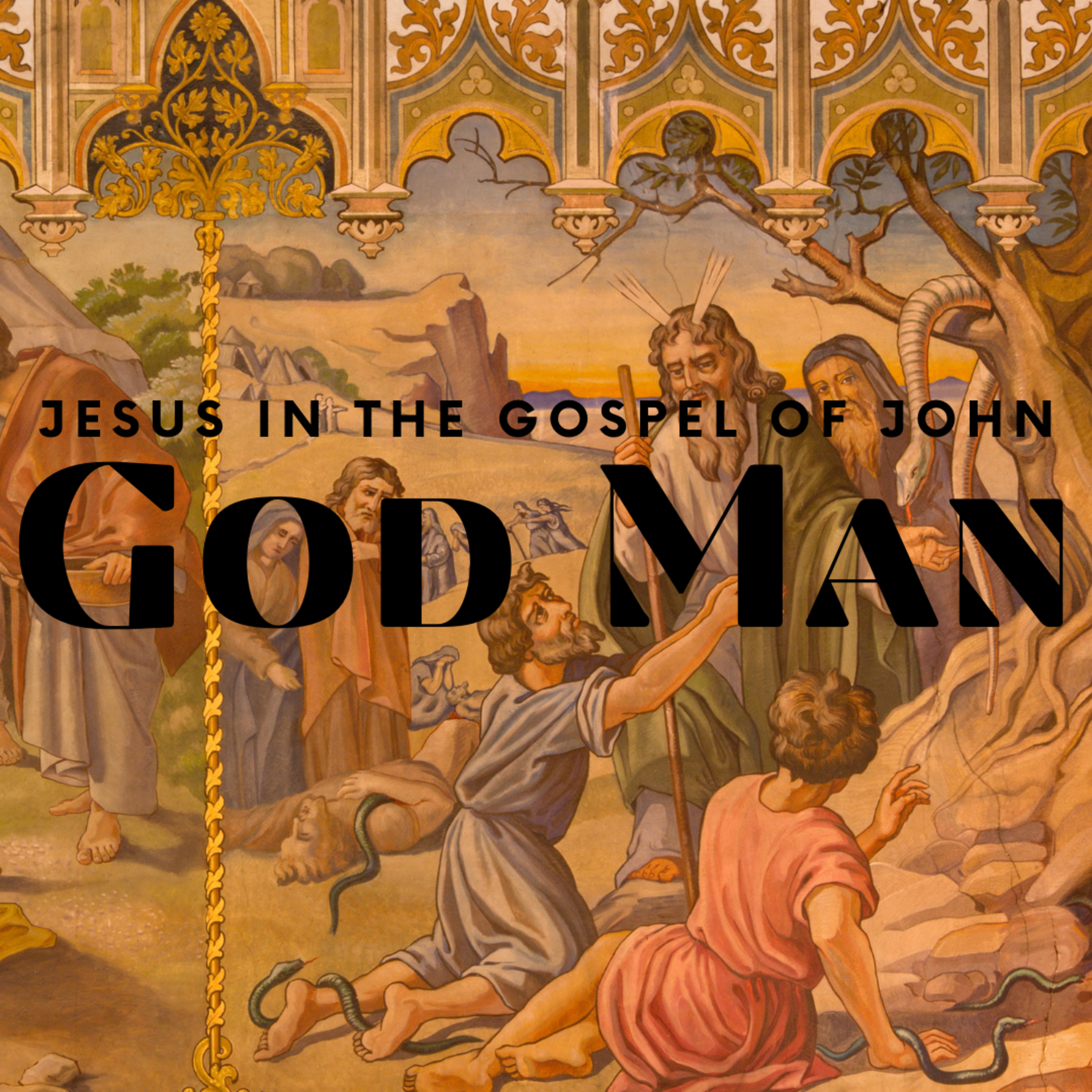
Aug 16, 202100:10:57Tap to summarizeTake a look at Numbers 21:4-9, That's what Jesus told Nicodemus to do when he considered who Jesus actually was. Nicodemus thought that Jesus had the makings of a prodigy teacher, which is why he probably went to see him under the security of the night, but Nicodemus left that conversation with more questions than answers. I imagine he left the meeting with Jesus thinking, "That didn't go how I thought it was going to go..." Nicodemus likely thought that in this meeting he would flex his intellect and press Jesus into submission, but it went exactly the other way. Jesus gave Nicodemus the gospel and clearly explained who He was and why He was here, yet Nicodemus still missed it. Nicodemus was the "Teacher of Israel" and yet he failed to understand that Jesus was salvation for the people.
Transcribe →
Righteousness
Jun 23, 202100:12:16Tap to summarizeLast week we opened a brand new series taking a closer look at one of Jesus’ most well known teachings, often referred to as the Sermon on the Mount. In this series we are taking a closer look at some of the topics that Jesus taught about that day on the mountain in northern Israel. Let’s remember that the sermon occurred up on the mountain, and in Jesus’ time they didn’t have cars or trucks, his followers were on foot. Climbing that mountain was likely no easy task but the reward for reaching the summit was an intimate experience with the Son of God. Jesus taught love, grace and hope in the midst of condemnation and judgement. Jesus was consistent with His mission, “… He was sent into the world not to judge the world, but to save the world.”
Transcribe →
The Huddle
Jun 16, 202100:12:24Tap to summarizeTonight we're opening up a brand new series called "On The Mountain" that is going to examine the sermon on the mount. But first we need to understand that we've got to climb the mountain to hear from Jesus.
Transcribe →
Redeemed
Jun 9, 202100:14:54Tap to summarizeIn this podcast we wrap up our series "The Playlist" with a man who has some serious family history with God.
Transcribe →
Don't Be Ridiculous
Jun 2, 202100:13:31Tap to summarizePsalm 23:4 says, "Even when I walk through the darkest valley, I will not be afraid because You are close beside me. Your rod and you staff protect and comfort me. King Saul looked at David, the young shepherd boy and told him "Don't be Ridiculous" when David offered to take on the mighty Goliath. What Saul failed to understand is that David was empowered by the Holy Spirit to take on the evil giant. Everything about Goliath represented sin and the evil that is in this world, and everything about David represented Jesus, our shepherd who was sent to save what was once lost.
Transcribe →
Raise A Flag
May 26, 202100:12:59Tap to summarizeStarting this week we are going to take a new approach to our media. Figuring out the best way to reach our community is our goal as a youth ministry and we've found that podcasting is a great way to do this. The cool thing is that I personally love to produce the podcast. At the first of the year we started a project that took us through the first 5 books of the Bible over podcast. We produced a podcast every single day, but as we've opened back up from the pandemic, the pace became too much and our goal is to produce quality. So starting with this podcast we are going to produce a weekly episode that is concurrent with what we cover in Deeper. To be clear, this podcast is not a recording of that weeks message. While the same material is covered, the podcast is a more intimate discussion or conversation. I really do hope you enjoy this podcast!
Transcribe →
Ep.46 "Woodcutters and Water Carriers"
Feb 23, 202100:10:46Tap to summarizeFor the Israelites to break a covenant, even one that was made under the pretense of a lie, would’ve been disobedient and would incur God’s anger. The text specifically notes here that the Israelites had failed to consult God in this matter. There were several red flags in play here that the Israelites should’ve picked up on. For one, why would people from a distant land try to make a peace treaty with a nation not technically in charge of really anything yet. At this point they had only won a handful of battles and not necessarily at the point of making international treaties just yet. What truly motivated the Gibeonites was survival and fear of the Lord, God of Israel. Which becomes apparent in verse 9-11 which says, They said to him, “From a very distant country your servants have come, because of the name of the Lord your God. For we have heard a report of him, and all that he did in Egypt, 1and all that he did to the two kings of the Amorites who were beyond the Jordan, to Sihon the king of Heshbon, and to Og king of Bashan, who lived in Ashtaroth. So our elders and all the inhabitants of our country said to us, ‘Take provisions in your hand for the journey and go to meet them and say to them, “We are your servants. Come now, make a covenant with us.” ’ Because the name of the Lord your God. Just as the Fear of God drove Rahab, it had driven the Gibeonites. An interesting parallel here is that the Gibeonites came to Joshua seeking a treaty because of the NAME of the Lord, your God. They feared the God of the Israelites and therefore called on His name. The prophet Joel wrote “Everyone who calls on the name of the Lord will be saved” Joel 2:32 Therefore Joshua and the leaders, without consulting God, made a covenant with people who lived in the land of Canaan. While they did call on the name of the Lord, The Gibeonites brought ungodly influence into the community of Israel. This covenant also made it Israels responsibility to defend the Gibeonites in battle which raised their level of responsibility in the land. This should serve as a reminder to us today that we should never do anything in life without first making it a matter of prayer.
Transcribe →
Ep.45 "Plunder"
Feb 22, 202100:12:29Tap to summarizeJericho was a relatively small city by comparison to what we might think of as a city today, a lap around the city was a whopping 1.24 miles. But the walls were at least 12 feet tall and at some points up to 30 feet tall and around 20 feet thick. The city was fortified and served as a shelter for not just the residents of Jericho, but for the surrounding countrysides as well. The city of Jericho was considered invincible, and was though to be protected by Canaanite gods. Jericho had a reputation for being the strongest city in the region, which is why it was a key starting point for Joshua and the Israelites. It would be a statement win for God to topple the mighty Jericho. We understand from the passage that the people of Israel essentially watched as the Lord destroyed the city walls. Only Rahab the prostitute and all of her household was spared in the destruction of the city as the Israelites destroyed the city by fire. All that they kept went into the Lords treasury After the stunning upset victory at Jericho, Israel then took aim at their next battle, which was the small town of Ai. The only problem is that, the Lord is angry with the people because Achan had stolen some of what was supposed to be devoted to God. God was not with the Israelite warriors when they went to battle the small town of Ai. It was so small in fact that Joshua’s intelligence advised that he only send a couple thousand men. Joshua decided to add to that number and sent 3,000 men. They were routed by the men of Ai and about 36 Israelite mighty men were killed in the battle. The people of Israel were devastated, and terrified. Not only had they lost the battle, but they lost after Joshua added to the number of warriors… Joshua was also devastated. He thought that this battle signified the end of his leadership. In his mind the people had lost all momentum from their big defeat of Jericho. After all if the Israelites couldn’t defeat the small town of Ai, then they were no match for stronger Canaanite cities, and those people would be encouraged to fight against the Israelites. So Joshua turned to God.
Transcribe →
Ep.44 "The Next Administration"
Feb 16, 202100:08:22Tap to summarizeWhenever there is a new United States President there is always a news story on what the new presidents first day in office looks like, what will be the first accomplishment that the new administration tackles in the first moments. Joshua’s first task as leader of the nation of Israel is to reaffirm that the entire nation is still united in their goal of following the Lord into the whole promised land. This is a big moment for Israel and for Joshua. Moses, the leader that the Reubenites and the Gadites negotiated the terms of their deal with was dead. And theoretically it would’ve been easy (not honorable) for them to skip out on fighting for a land that they themselves wouldn’t directly possess. Their response here would have a bigger impact on the moral of the people, if the tribes or Reuben and Gad back out, well that’s two less tribes of soldiers that would be fighting along side of them. However we see in verse 16, 16 They answered Joshua, “We will do whatever you command us, and we will go wherever you send us. 17 We will obey you just as we obeyed Moses. And may the Lord your God be with you as he was with Moses. 18 Anyone who rebels against your orders and does not obey your words and everything you command will be put to death. So be strong and courageous!” And just like that, its wheels up. Next stop Canaan.
Transcribe →
Ep.43 "Moses, What a life"
Feb 13, 202100:10:12Tap to summarizeThen Moses went up to Mount Nebo from the plains of Moab and climbed Pisgah Peak, which is across from Jericho. And the Lord showed him the whole land, from Gilead as far as Dan; 2 all the land of Naphtali; the land of Ephraim and Manasseh; all the land of Judah, extending to the Mediterranean Sea; 3 the Negev; the Jordan Valley with Jericho—the city of palms—as far as Zoar. 4 Then the Lord said to Moses, “This is the land I promised on oath to Abraham, Isaac, and Jacob when I said, ‘I will give it to your descendants.’ I have now allowed you to see it with your own eyes, but you will not enter the land.” 5 So Moses, the servant of the Lord, died there in the land of Moab, just as the Lord had said. 6 The Lord buried him in a valley near Beth-peor in Moab, but to this day no one knows the exact place. 7 Moses was 120 years old when he died, yet his eyesight was clear, and he was as strong as ever. 8 The people of Israel mourned for Moses on the plains of Moab for thirty days, until the customary period of mourning was over.
Transcribe →