← Thriving with Addiction with Dr. Jonathan Avery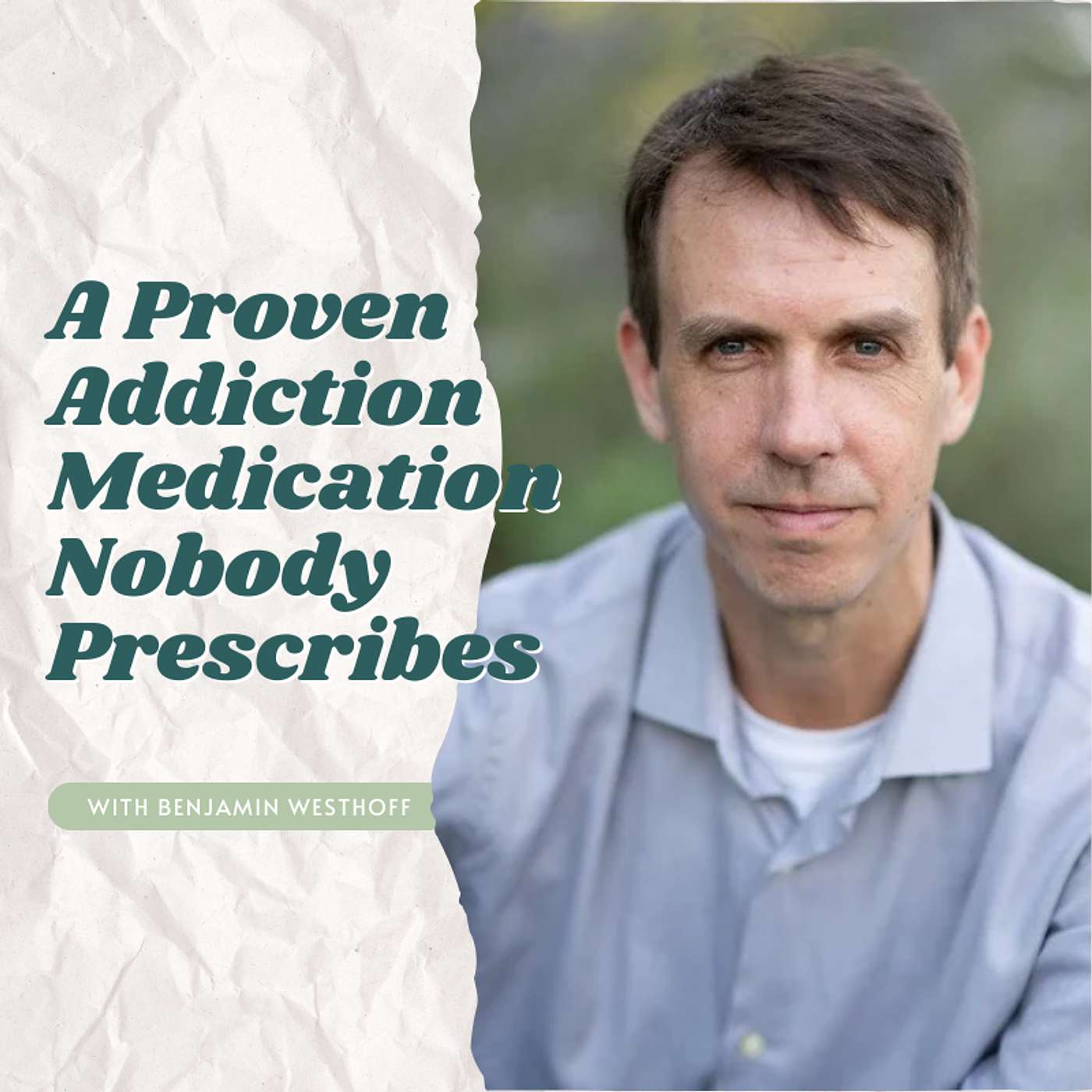
Thriving with Addiction with Dr. Jonathan Avery
A Proven Addiction Medication Nobody Prescribes with Benjamin Westhoff
00:32:10
Loading summary
Transcript58 lines
- [00:00]
Podcast Narrator
Welcome to the Thriving With Addiction podcast where we explore how recovery is not just about surviving, but about truly living. Each week we'll dive into the science stories and strategies that help people and families heal from addiction and build healthier, more resilient lives.
- [00:16]
Dr. John Avery
I'm your host, Dr. John Avery.
- [00:18]
Ben Westhoff
Let's get started.
- [00:26]
Dr. John Avery
John I'm John Avery and welcome back to Thriving with Addiction. Today I'm very lucky to be joined by Ben Westhoff. Ben is an award winning investigative reporter whose books are taught around the country and have been translated around the world, including Fentanyl How Rogue Chemists Created the Deadliest Wave of the Opiate Epidemic, the bombshell first book about the fentanyl epidemic. He has advised officials at the top levels of government about the opiate crisis and has been interviewed as an expert commentator on cnn, npr, N C Span, and on full dedicated episodes of Fresh AIR and the Joe Rogan Experience. His new documentary called Antagonist is about the suppression of the opiate treatment drug naltrexone, best known as Vivitrol by big money interests. He publishes a substack newsletter called Drugs plus Hip Hop and has written for the New York Times, the Atlantic, but Wall Street Journal, Rolling Stone, and the Guardian. Ben, thank you so much for joining me.
- [01:26]
Ben Westhoff
It's great to be here. John.
- [01:28]
Dr. John Avery
I was reminiscing with you before we started that I was very lucky to be interviewed by you for this new documentary. It was really fun to be a part of that.
- [01:36]
Ben Westhoff
Yeah, it was great talking to you. You really distilled down a lot of these concepts that were difficult for even me to understand. So it was great.
- [01:47]
Dr. John Avery
And I was excited to meet you because, you know, you were sort of the on the leading edge of the fentanyl opiate epidemic and describing it and you're just cool. I mean, you've had this remarkably non linear career, you know, from hip hop journalism to fentanyl to different side stories along the way. You know, tell me a little bit about what sort of connects all this work and how you got into it.
- [02:14]
Ben Westhoff
Yeah, well, I'm sort of, you know, investigative journalist, so I take that approach no matter what subject I'm covering. And I wrote about all these big hip hop stars that were blowing up in St. Louis, where I'm from. And then I moved to LA and it wasn't just, you know, the story of NWA and Tupac and Dr. Dreasy. It was the, the Crips and the Bloods, the crack cocaine era. And I continued sort of writing about the drug trade and became more and more interested in the. The supply chain that brings drugs to this country. And so I was writing about the, the rave scene in LA and how so many people were dying, purportedly from ecstasy, but really I knew that ecstasy wasn't a super dangerous drug, mdma, and kind of did a deep dive and found out that almost all these ecstasy pills were adulterated. There was very little mdma, and all these new drugs from China were adulterating the drug supply. And the most, you know, infamous and deadly of them was fentanyl.
- [03:30]
Dr. John Avery
It's amazing how you're able to discover that and being on the leading edge of that whole movement that must have. I mean, you went from hip hop to suddenly being the leading expert almost on the third wave of the opiate epidemic, the fentanyl epidemic. What was that like?
- [03:45]
Ben Westhoff
Yeah, I mean, I was originally going to write about all these different. They're called nps, novel psychoactive substances. All these synthetic drugs coming out of China, which, you know, like you heard about bath salts and all these different crazy drugs that were sold in gas stations, they were sold in head shops and they were legal because they had never been invented, they were just invented. And so they hadn't had time to ban them yet. But the more I explored all these different drugs, I talked to this guy and he was like, you know, fentanyl is worse than all these combined. And that was sort of the light bulb moment for me. And so that's how I ended up publishing this book, really, when the crisis was sort of not even really on the radar for most people.
- [04:37]
Dr. John Avery
And you accomplished that by really diving right in, pretending to buy drugs, or interacting with people on the dark web. It was a hero's journey too. And one that came with a little bit of danger is my sense of,
- [04:51]
Ben Westhoff
yeah, I went to China, I was undercover in a fentanyl lab and at other sales facilities where they sold fentanyl precursors. And actually the fentanyl analogs were even still legal in China at that time. So basically, just like fentanyl, but with the molecules slightly tweaked, these chemists would make a brand new legal drug and just start sending it out all over the globe. And I was able to interview the sales people. I was like, you know, why are you doing this? You know, how'd you get into this? And it was, it was funny because they saw it as like a great job after college and had no idea what fentanyl was. But ultimately the CEO of that company was indicted by the U.S. justice Department. And I spoke on Capitol Hill. And it. Yeah, it all kind of came tumbling down for a lot of people in this industry.
- [05:50]
Dr. John Avery
Right. And I imagine that work with understanding Fentanyl in your book and all your advising is what ultimately led you to this latest work. Antagonist, Correct.
- [06:01]
Ben Westhoff
Yeah. So Fentanyl Inc. Was all about the supply chain. And Antagonist is my first film, is about addiction and recovery and in particular, why the recovery system, why the treatment system in the United States is so completely screwed up.
- [06:22]
Dr. John Avery
And so let's, let's jump into that. Why? Why is the treatment system so completely screwed up? What's going on? What did you discover?
- [06:30]
Ben Westhoff
I guess the short answer is probably just that it's controlled by money. You know, the same reason so many things in our world are screwed up. And it's not really the care and the health and the safety of the addicted user that's at the forefront. It's sort of like a hodgepodge of weird regulations and, you know, customs too. I mean, we talked about how probably the reason, the biggest reason that naltrexone for alcoholism has never caught on is because of the, the history of AA and 12 step programs in this country. And it's not necessarily nefarious intent. It's just that this is what has become seen as the model of treatment.
- [07:20]
Dr. John Avery
Right. And the med we're talking about that this centers around is. Is naltrexone. You mentioned the. The antagonist. It's an opiate antagonist that has been shown to help people drink less as well as a number of other addictions. And then for opioid use disorder is one of the three FDA approved meds for opioid use disorder and opioid use, including fentanyl use being this crisis and a med that can really help people.
- [07:47]
Ben Westhoff
Yeah, absolutely. So the two main things that naltrexone is known for helping with is alcohol use disorder and opioid use disorder. When it comes to opioids, it's really like a vaccine. The naltrexone molecule fuses onto the receptors, the opioid receptors, and binds so tightly that you can take a whole syringe full of heroin or fentanyl or whatever, and it will just bounce right off. It won't affect you at all. And so it was really an amazing pharmacological discovery back in the day and has since gone on to have good results in lots of other things that have nothing to do with opioids at all.
- [08:40]
Dr. John Avery
Right. And, you know, for other substances of misuse or behavioral addictions, sometimes 12 step or outpatient or inpatient is treatment is considered first line treatment. But for opioid use disorder, which is claiming still, you know, so many lives around the United States, medications really are the, the first line treatment that have been shown to decrease overdose and improve outcomes. And, and these include opioid agonists, which are opiate replacement treatments like buprenorphine or methadone, and then the opiate antagonist nowtrexone. And so while there might be some push against maybe using it for alcohol use because of 12 step tradition or some other thoughts on how to tackle that, why would there be resistance, do you think, for opioid use disorder when the data is so strong for it, or what forces are at play that push it more as a second or third line option?
- [09:39]
Ben Westhoff
Yeah, if not fourth or fifth or sixth. I mean, you know, one issue is that you can't take naltrexone if you have any opioids in your system. And so you have to be completely detoxed. And that's a bridge too far for a lot of addicted users. But another reason is that it doesn't give you any euphoric effect at all. And when it comes to these agonists, like you're talking about methadone, buprenorphine, these are actually addictive opioids in themselves. And so on one hand, that's bad because a lot of addicted users told me in this documentary they don't want to have any more drugs in their system that they have to rely upon that is going to make them feel this feeling that opioids make you feel. But in terms of being able to start on a medication, it's a big advantage because they're not going to have to go through withdrawal. And so the, the benefit though, with naltrexone is, like I said, it's, it's not addictive. There's no, there's no diversion. Nobody's selling this on the street. Nobody is overdosing on naltrexone. It's, it's, it's safe. I mean, I think you might have said this. Excuse me, I get this wrong, but I think you said that you could put naltrexone in the drinking water and it would be just fine.
- [11:12]
Dr. John Avery
Naltrexone should be in the drinking water. I'll say it again because it helps us with so much, including eating behaviors, alcohol, gambling, gaming, but especially important for opiate use disorder for that exact population you described for people that either want to transition off of the full agonist, which I do feel are an effective treatment but certainly not for everyone or for people who want to opt for a non opioid treatment from the outset. But you're right, it's hard to. You have to be off of opioids for seven to 10 days at least before you start naltrexone. And that can be hard in an outpatient setting when you're taking these really addictive substances like fentanyl.
- [11:54]
Ben Westhoff
Yeah, and that's totally true. But on the other hand, all long term addicted users go through withdrawal at some point and get off. You know, it's part of the process. And the problem that we see so often is that somebody gets clean, as it's called, but then they fall off the wagon. And this happens again and again. And often once you get the opioids out of your system completely, your tolerance drops. And so people go back to using the same dose of heroin or fentanyl that they used before, but now they overdose and die. And so the idea is when you're going through this, this phase of withdrawal and you're, you got all the opioids out of your system as everyone gets to, at some point, that's the time to take naltrexone or to take the vivitrol shot particularly, which is a shot of naltrexone that lasts 30 days because that gives you this force field. You know, it's like an insurance policy in case you're tempted to use opioids again.
- [13:05]
Dr. John Avery
Right. And so there's some practical barriers. There's, there's coming off of it. Tell me about some of the, more I don't know if we call them, nefarious barriers of money and, and other factors that result in people not getting naltrexone or being sort of pushed to that fourth and fifth option.
- [13:27]
Ben Westhoff
Yeah, well, if you look online and you read media reports, naltrexone is really widely disparaged. And the methadone and buprenorphine, the agonists, are just ad nauseam referred to as the gold standard when it comes to opioid addiction treatment. And you know, people that write these kind of are all consulting the same studies. They're all kind of using the same conventional wisdom. And the most sort of nefarious aspect of all this, I think, is the methadone industry. And methadone is a very powerful drug. And you can actually, you can't just have a doctor prescribe you your dose. You have to go to these special clinics and they're called OTPs, opioid treatment programs. This industry, they, they have their own lobby, believe it or not, and this lobby effectively lobbies in favor of methadone and against anything else. So they, they fought hard against making buprenorphine more accessible to, easier for doctors to write prescriptions. They fought against this long acting form of methadone called lam, which would have made it so people don't have to go to the methadone clinic every day. And if you look on their website, they make it look like naltrexone is going to kill you. They have this long pages and pages of these horrible side effects, including death. They list stuff like liver damage, which is, is widely known not to be a problem from, from naltrexone. And they're, they're really. I, I interviewed the head of the lobby about this and I thought it was a gotcha moment in the film. And I said, isn't this about profits rather, you know, because if people just take, you take a 30 day dose of naltrexone, you wouldn't have to come into the clinic for 30 days. They could, they could dispense naltrexone at these clinics very easily. And I thought I had him in a gotcha moment, but basically he was like, yeah, you're right, that is, that is the reason.
- [15:50]
Dr. John Avery
So although I imagine, I mean, both things are true too. I mean there's a, there's a profit, but it also benefits some people.
- [15:58]
Ben Westhoff
Methadone for sure has save, you know, millions of lives. It's for a lot of people, like I said, they're not ready to go through withdrawal to come off opioids altogether. And for maintenance, methadone maintenance, you know, it's great. But you can be in favor of methadone without being in favor of the treatment system. Because I think there's so much criticism of it, the way that it makes people's lives a lot harder.
- [16:30]
Dr. John Avery
Right? And methadone, I mean, it came around in the 1960s, 70s and it was the only game on the block for the first 30, 35 years. And so it did develop a lot of evidence for its, its, its efficacy, but it also didn't have any sort of medication, at least competition. And then finally buprenorphine came around in the early 2000s and, and, and Vivitrol,
- [16:52]
Ben Westhoff
I should add that, you know, people I talk to in this film, doctors, everyone agrees that like the best medication is the one the user takes, the addictive user takes. So it's really, people should have choice. You know, all these three different medication drugs are better for different people. And but yeah, methadone was for a long time the, the only thing that was available. When buprenorphine came out of the market, it was seen as sort of this, like panacea that was going to fix everything potentially. But with buprenorphine, there's been a lot of problems too. And again, it goes back to money in so many cases. After Purdue Pharma was recognized for basically kicking off the opioid epidemic by over prescribing all these really strong opioids, and the company that was distributing buprenorphine, Suboxone, basically hired those same people. That new book just came out by this great author, Emily Dufton, showing they hired the same salespeople to spread Suboxone into all corners of the country and do so. Ethical way. And, and then they were sued by the US Government too. They hired the same lawyer, the same like lawyers were prosecuting them as prosecuted Purdue Pharma. And then unlike with Purdue Pharma, the head of this company distributing Suboxone was actually went to prison and they had to pay billions of dollars in fines. So everywhere you look there's. And the company that makes Vivitrol has certainly been accused of a lot of ethical problems as well.
- [18:47]
Dr. John Avery
Right. They too have been accused of pharmaceutical influence. And so it sounds like ideally, I mean, what we would recommend for someone coming to treatment for opioid use disorder is that you would ideally give them the option of these medications, all that have shown efficacy, but all with some backstory that makes it a little complicated, but that they would be able to choose between methadone and a methadone clinic or buprenorphine or Suboxone or Vivitrol in sort of an unbiased way based on their preference.
- [19:21]
Ben Westhoff
Yeah, absolutely. You know, we just need people taking medications and if we could get the rate up to, you know, it's some dismal number right now, like 15% of opioid use disorder patients are taking medications. And if we could get that number up to 50%, that would save like literally tens of thousands of lives every year.
- [19:42]
Dr. John Avery
And this is where this work sort of collides with your previous work in terms of how to tackle the opiate epidemic. And, you know, this third wave of the fentanyl epidemic, one of it is getting a more robust treatment. How are we doing on the other, other, other side of the drug supply, do you think, these days?
- [20:00]
Ben Westhoff
Well, the problem is that you can't stop drugs from getting into this country and, you know, blowing up votes, boats in Venezuela is not Going to help anything. You know, securing the border more is not really going to. Going to do anything. I mean, fentanyl is 50 times stronger than heroin, right? So that means that 50 suitcases of heroin is the equivalent of one suitcase of fentanyl if it's in its pure form. And so we couldn't stop 50 suitcases of heroin from getting into this country back in the day. So what makes us think we can stop one suitcase of fentanyl? It's just a giant waste of money, a giant waste of everyone's efforts. When we should be focusing on drug treatment, helping people, education, you know, people here.
- [20:54]
Dr. John Avery
Right. And what's your sense on the rehab industry and their. Their role in providing treatment for all of this?
- [21:03]
Ben Westhoff
I mean, it tends to be not good. I mean, this idea that you can go away to rehab, you know, you hear this all the time. Someone is a family member, recognizes their loved one is in this deep drug crisis, and they pool their money together to send them to an expensive rehab. Maybe it's somewhere by a beach. And then they're. They're in rehab for a few weeks or maybe even a few months, and they come out and everything is great, you know, for. For a little while. But then almost inevitably, you hear that they. They overdose, they. They fell off the wagon. And this idea that you can. It's. It's like a mill. You know, there's pill mills, there's rehab mills, these. These. It's. It's. It's very unethical, a lot of it. And so I think things are changing. I think we need to focus more on, like, rehabs that take into account all the different parts of the experience, you know, holistic. And so in. In the film, I interview this local. The proprietor of a local clinic called arca. His name is Percy Menzies. And they focus on housing, job training, psychiatric care, counseling. And you need to really focus on all of these things.
- [22:29]
Dr. John Avery
Right. I think that's the other piece that's lost, is when we go all medications, we lose all those other supports that people need to get their life back on track. And so the problem with rehab is you go, but you got to come back home. Problem with meds is you're still at home. And, you know, we've. It's part of creating a new life that requires a lot of interventions. But meds are essential for opioid use, Tackling opioid use.
- [22:53]
Ben Westhoff
Yeah, absolutely. The meds are essential. And, you know, people getting their lives back together is, like, as important as anything, you know, you hear often about once people have things right in their personal life, once they're able to work through some of this trauma, that the problems kind of like fall away on their own with drugs and the opioid
- [23:17]
Dr. John Avery
use disorder and its treatment is complicated. Why do you think there's resistance for some of the other conditions around naltrexone, which is. My most read article was for American Journal of Psychiatry editorial where I said that naltrexone is the most underprescribed med in medicine, really focusing on its use for alcohol use in particular. I've always been surprised that the resistance. I understand the resistance sometimes more with opiates because there's all this background. But I'm still trying to understand people's reluctance and the different factors that involved in people's reluctance for alcohol, for gambling, for the other things that naltrexone might help with, like GLPs came along and everyone's like, wants them for substance use and without even questioning it. But naltrexone has this long history of evidence for those. What do you think?
- [24:06]
Ben Westhoff
Well, the GLPs did take a while to sort of firmly, I think, establish themselves in the culture. And I think the weight loss, sort of miracle of it is really grab people's attention, you know, but as far as naltrex, so, yeah, you're completely right when it comes to alcohol use disorder, that it's. There's. There's really not controversy. You know, there's. Most everyone who's in a position to know yourself at the forefront of that thinks that it. It's worth. At the very least, it's worth a try. Anyone who has problems drinking, it's worth a try. And you don't even have to quit drinking. You know, it's easier. It's much easier than aa. And I almost wonder if it. So there's like this too good to be true sort of feeling for a lot of people. In fact, I was just reading Katie Herzog's book Drink Yourself Sober. And you know, I love the title of that book, but. But I can see someone who's been battling, you know, alcoholism for first for years and years just seeing that and being like, well, this is a gimmick. If it were this easy, everyone who else would be doing it? And you know, it doesn't. Naltrexone doesn't work for everyone with aud, but it works for a lot of people, and you certainly don't. You're not giving up anything. There's such little risk, right?
- [25:32]
Dr. John Avery
And that trexone for alcohol use, you know, for some people it's a silver bullet. They take it. I mean, it changes the experience altogether. It's one of the more dramatic things we see in medicine. For a lot of people it helps a little bit, and for some it's not clear it helps at all. But the beauty of it too is that it's not just for those that want to be abstinent from alcohol. Like for opioids, you have to be abstinent from opiates, but you can try to drink on it and drink less and even take it in a targeted way. So it has also this flexibility that may help for like big populations that historically haven't gotten treatment, like binge drinking college kids, for example, or different other populations. So it has this flexibility that it might not have with opioid use that even further recommends it, I think, for drinking.
- [26:18]
Ben Westhoff
Yeah, absolutely. You can just, you could start it tomorrow. You know, you don't have to. There's, there's nothing stopping you. And I, I think like a lot of times I even heard like in Katie Herzog's books that you're encouraged to keep drinking. You know what I mean? Like, that's part of what makes it work, is that you start having this Pavlovian response. You know, the guy who basically invented the idea behind naltrexone went to Russia to study with Pavlov. And that was the whole idea, was that once you don't have this reinforcing effect anymore. That's what's most important. That's what teaches your brain to give up the addiction. And that's exactly what happens with naltrexone for aed.
- [27:09]
Dr. John Avery
What else should we know about the documentary? What else did you learn along the way?
- [27:14]
Ben Westhoff
You know, did a lot of filming in places with open air drug markets like San Francisco. That's kind of become in a lot of ways the kind of face of the crisis. You know, people, tourists coming in from, from Asia or from, you know, the Midwest or whatever. They expecting to see this, you know, Silicon Valley influence. Big, beautiful city full of money, full of like brilliant people. And then everywhere they see like open air drug markets and people sleeping on the ground. And I talk to people and there's, there's methadone clinics, but naltrexone is not really even available. It's not even part of the landscape. And also did a lot of filming here in St. Louis, where I'm from, where we have this horrible problem too. And spoke with some of these critics who have been so down on naltrexone and have really spent, like, untold hours disparaging it and really got to the heart of why they felt that way and kind of, I think, helped them see the light a little. So it's. It's. It's an interesting film.
- [28:30]
Dr. John Avery
That's awesome. And. And it's available. Where can we see this film?
- [28:34]
Ben Westhoff
It's not in wide release, but if you go on our Patreon, you can see a sneak preview. You know, it's the full film, but you have to contribute to our Patreon. So if you go to antagonistfilm.com you can figure out how to do it.
- [28:51]
Dr. John Avery
And. And even though hip hop led you to all this investigating drugs and. And drug treatment, it still features in your work on your. Your newsletter as well, Is that right?
- [29:04]
Ben Westhoff
Yeah, I keep up with the hip hop of my generation. Pretty much. Not the new stuff, but, you know, the West Coast. I wrote my book Original Gangsters, about my old heroes from high school, Snoop Dogg and Ice Cube and Ice Tea, people like that. And I'm still interested in the Diddy trial. That was very interesting to me. And these allegations that he had Tupac killed are the kind of topics that I discuss.
- [29:34]
Dr. John Avery
That's awesome. And I'd be remiss if I didn't mention another great work of yours, which is Little Brother. It was deeply personal, very different in tone from your other work. Do you mind talking about that just for a minute? Because I was sort of touched reading about that story, and for those that haven't heard of it, I think it's a really important read.
- [29:57]
Ben Westhoff
I had a little brother in the Big Brothers Big Sisters program. My mentee, his name was Jor El Cleveland, and we were together for 11 years before he was murdered in Ferguson, Missouri, outside of St. Louis, where I live. And the case went cold. The police just really didn't have leads. And so finally, instead of just waiting around for the police to figure out who did this, I went to work using my skills as an investigative journalist and was able to find out who killed him. And the book is sort of. Is about our relationship and my. My quest to find out this. This information and how it sort of played against the. The backdrop of. Of the history of this region.
- [30:51]
Dr. John Avery
It was a powerful work and very touching, too.
- [30:55]
Ben Westhoff
Well, thank you. Yeah. Ferguson is where Michael Brown was killed in 2014 and sort of kicked off the Black Lives Matter movement. And Jerrell, my mentee, was friends with him, and they really came up in the same environment.
- [31:13]
Dr. John Avery
Well, Ben Is there anything I didn't ask you that I should have asked you today about all this great work you're doing?
- [31:19]
Ben Westhoff
No, but, but, yeah, but congrats on, on the podcast. And, you know, and that's great that you're bringing the good word to the people.
- [31:30]
Dr. John Avery
Well, no Ben Westhoff, but I'm very, very happy that you're able to join us today and I'll continue to follow your work and the film with intra. So thank you so much for joining me.
- [31:41]
Ben Westhoff
Okay, great. Thanks for having me.
- [31:42]
Podcast Narrator
Thanks for listening to the Thriving With Addiction podcast. If you found today's episode helpful, please follow and subscribe wherever you listen to your podcasts and share it with someone who might benefit.
- [31:52]
Dr. John Avery
You can also connect with me on
- [31:53]
Podcast Narrator
Instagram, LinkedIn and YouTube or visit thrivingwithaddiction. Com to learn more. Stay tuned for next week's episode. And remember, thriving is possible.