← Thriving with Addiction with Dr. Jonathan Avery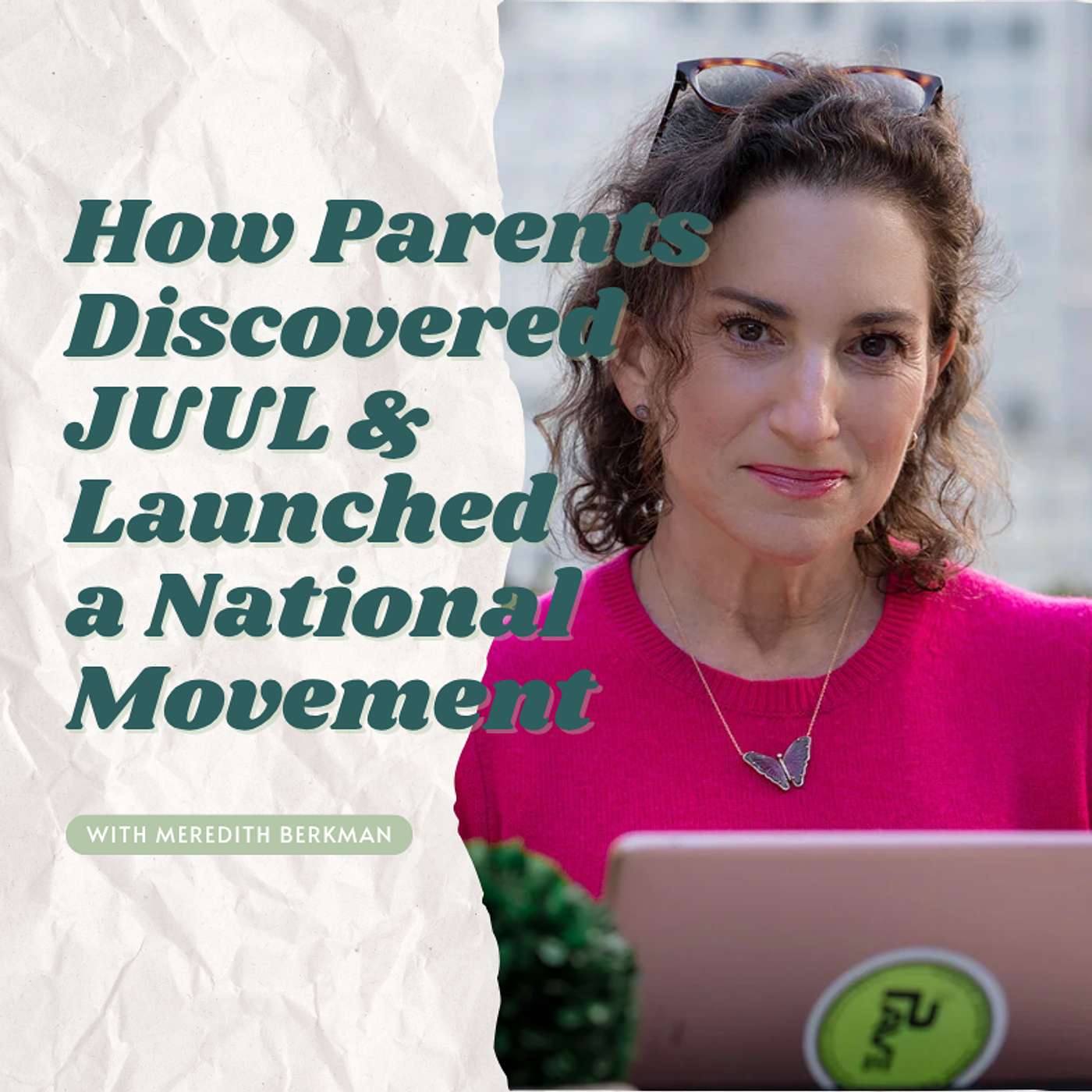
Thriving with Addiction with Dr. Jonathan Avery
How Parents Discovered JUUL—and Launched a National Movement
00:38:32
Loading summary
Transcript39 lines
- [00:00]
A
Welcome to the Thriving With Addiction podcast, where we explore how recovery is not just about surviving, but about truly living. Each week, we'll dive into the science stories and strategies that help people and families heal from addiction and build healthier, more resilient lives. I'm your host, Dr. John Avery. Let's get started. I'm John Avery, and welcome back to Thriving with Addiction. Today we're joined by Meredith Berkman. Meredith is a co founder of Parents Against Vaping, or PAVE, an advocacy and education nonprofit created in 2018 by three moms as a grassroots response to the youth vaping epidemic. Run and powered by volunteers around the country now PAVE is the first national parent voice in the fight against the tobacco industry's predatory behavior. Meredith is a mother of four and graduate of Brown University and the Columbia University Graduate School of Journalism. A former journalist, Berkman has written for publications including New York Magazine, Entertainment Weekly, and the New York Post. Meredith, thanks for joining.
- [01:08]
B
Thank you for having me, John. It's always great to see you.
- [01:11]
A
And we've known each other since the beginning, since 2018. I remember meeting those three moms that started PAVE when those early, scary days. But I don't think I ever knew your background as a journalist. Before we talk about what led you to start pave, tell me just a little bit about yourself.
- [01:29]
B
Sure. I guess the operative for this conversation really is mother of four. I was for many years a journalist. I worked in the late 80s, early 90s at New York Magazine, at Entertainment Weekly, I was at times freelancing. I was a sports writer. I wrote about movies in retrospect. And when we talk about how we started Parents Against Vaping, I sort of retired once I had my, I think my third child and then my fourth child to stay home with them. But looking back, the skills that I developed as a reporter, sometimes doing investigative work, but enjoying the most, the sports work, those are skills that led me to become what I'd like to say is an accidental, very accidental public health activist slash advocate. And I have used my writing skills, definitely now. But it's funny. Life takes turns and you just have to follow, right?
- [02:35]
A
Was the plan always to have four kids and the transition away from journalism or.
- [02:39]
B
I always knew I wanted to have kids until I was actually married and faced with having them. And then, of course, like many women, but no, no one likes to say I panicked and then I got distracted and they just kept coming and they're the joy of my life. I'm very blessed. I never wanted a dog. I have a dog I wasn't sure about kids. I have four kids, a husband and a dog. And I feel enormously blessed. And it's because I'm seeing the world as a mom. That's what led me really was my own son. And you know the story which I'm happy to share when you tell me to that led me to co found with to other mom friends, parents against vaping.
- [03:18]
A
Right. I asked because it's for the kids that you do this, that we do this. And so yeah, let's jump into it. What led you to form PAVE and become this national leader that you've become?
- [03:30]
B
Well, first of all, I just want to say that you, John Avery, are one of our first and closest and really most important partners. And I know that my co founders, Doreen Furman and Dina Alessi and our founding partner Mimi Boblik, you know all of them well, you know, it was, it was happenstance as it were, that we met. So I'll try and you know me well enough to know that I can't make a long story short, but I will try. In April of 2018, my one, I have three daughters and a son. My then 16 year old son Caleb came home from his new high school and said mom, dad, there's something I need to talk to you about that happened at school today and I know you have children. I had never heard that before nor have I heard that really since but because he clearly wanted to talk to, to us about something in school, my husband and I, we were sitting at the dining table, we were really listening and he proceeded to tell us about an anti addiction talk that had been held for the ninth grade at school. This was a new school for him at his high school. It was the whole ninth grade. And the teachers and administrators left the room as is very often common practice when you bring in an outside anti addiction specialist so that the kids can ask questions freely. And what Caleb noted was that this young man, this presumed educator began talking to the kids about Juul. Now back In April of 2018, I did not, I had never heard of Juul. I didn't know what Juul was. But every single kid student in that room was either Juuling had a friend who was addicted to Juul or you know, they knew others who were. And this young man, as Caleb reported to us, began telling this, these students that Jule was not for kids but for adults. But as Caleb said, he followed up every statement by saying that Juul was, was quote totally safe. It was 99.9% safer than traditional combustible cigarettes and that it would be receiving FDA federal, you know, Food and Drug Administration approval, quote, any day now. My son Caleb, being a skeptic, which is hard for the parent, but good for the kid, I mean, in the end it's good for everybody. He, along with Dina and Dorian's sons, who I think were 14, about to be 15, they went up to ask this guy more questions because they thought it was strange. And that's when this man, this adult, alone with this roomful of ninth graders took out a jewel. He showed these three boys how it worked and he referred to it as the, quote, iPhone of vapes. So when Kayla came home and told me this, I mean, I was shocked and horrified. I didn't know what he was talking about. I called two of the moms I knew best at this new school, Dorian and Dina, and I asked if they had heard the same story. They hadn't. They said, we'll call you back. And within, I think 10 or 15 minutes, they both called back. They heard from their kids the same story. And within 24 hours. And again, this is because I had been a journalist, I had done investigations, et cetera. I recalled the name of the outside group because the school, to its credit, this New York City private school was getting ahead of a problem that the school could see, but we parents were not yet very much aware of. I recalled the name I called and I said, you know, there was a really interesting speaker at my kids school. And this young woman who answered the phone said, wow, it's so lucky you got me. I'm the one that found the speaker. I was researching Juul online was brought to their website. They have like a, at the time they had, you know, an education expert. And that woman was very happy to provide a jewel rep who came into the school without the school's knowledge of for whom he worked. And that night, I remember the night the next day we discovered this and we were just shocked. And our first response was, we have to go to the media. I mean, this is insane. You have this, this looks like it's a tobacco product, whatever it is. And there's an email exchange where we decided that no, we were going to learn everything that we could about what this jewel was and how widespread it was, but that we were not going to go to the media because it would make a big splash and there would be no action. And so we, and actually I think I wrote, you know, one day we'll tell the story in front of a congressional committee and I had never thought in my life that that's where I would be a year later, a year and change later. That's exactly what we did. But in the days and weeks that followed, we began to research this Jew, this company. And this was about nine or ten months before the federal government referred to the, quote, youth vaping epidemic. But it was so early and you were one of the first researchers, specialists, experts who would help us to understand. And we started connecting dots, connecting researchers, you know, and it's through no fault of our own that we were googling and we came upon something called the Campaign for Tobacco Free Kids. And then we came upon something else called the Truth Initiative. And we basically launched a website. My daughter's friend, my daughter had graduated, my older one from high school. I paid one of her friends who needed a summer job to make us a website. And the day our website launched that September, after the summer, we were, I mean, I remember staying up all hours of the night. People had, you know, parents who were desperate. They didn't understand what was wrong with their kids, what had they found. So that's not a short story. But a year later, after all of this, as we connected with researchers and experts and clinicians like you around the country and helped to connect various institutions, we did testify in Congress in July of 2019 about Juul coming into our kids school. So the long and the short of it is we successfully in starting what began as a very, very grassroots parents here, parents there. We with our new partners and experts, sounded the alarm about Juul and sounded the alarm about what would later be called the youth vaping epidemic. And we've now, you know, it'll be, I think, nine years this fall, right? 2017, 2018 or eight years this fall, have grown into a national advocacy and education organization. But at its heart, we are and we remain, I mean, the three of us ran, ran this organization for many, many years as volunteers, specifically because we knew and as we did, we wanted to stand up in congress, in the state house, in local city councils, around the country, here in New York and California and everywhere in between. And when we were confronted with the lies of tobacco company executives being paid by Jule and the gang, as we'll call them, we can say, no one is paying us to say anything. We just want you to stay away from our kids and take your flavored products, only the flavored products, which we'll get to, I guess, back into your hole and go back underground. Unfortunately, it's not that simple. But we've all got to Try.
- [10:49]
A
What a story. I mean, it really should be a movie. I'm waiting for that to come out. The first scene of the Jewel rep in the high school is quite a disturbing start to it all too.
- [11:00]
B
I'd like Amanda Peet to play me if you have.
- [11:04]
A
I know who's gonna play me. Geez.
- [11:07]
B
A young George Clooney, obviously.
- [11:09]
A
There we go. There we go. Just shave his head. Exactly. But wow, it was quite a story. And these reps, they really were everywhere. I mean, part of what drew my attention to you guys was seeing these reps at our psychiatric meetings, at our annual psychiatric meetings. I remember giving a talk about nicotine and co occurring, mental health and adolescence and a Juul rep coming up afterwards and trying to sell me on it. The same way that your children were sold on it. And you started to feel in this addiction space that something odd is afoot. And then to connect with you guys, it sort of. It all sort of came together. And the advocacy.
- [11:45]
B
We are so grateful to you, John. As you know, I mean, I remember those very early days, but all of these years that you know where I like to think. I'd like to think that we're sort of translational, quote scientists that really just transl. I'll just speak for myself, not my partners, into a mom with a big mouth. And basically, you know, you made it very easy for us to understand or as much as we can, not having a PhD in anything.
- [12:14]
A
It was great to partner with you around this. And just so people understand, if they don't, why were we concerned? What is some of that science? We went from cigarettes and we all sort of agreed that they cause all this harm and best for adolescents to not use them. What have you come to learn and understand about why we do worry about these vaping devices like Juul or the
- [12:35]
B
disposables and the nicotine pouches, which is.
- [12:39]
A
And now the latest thing with the zins and the flavored nicotine pouches and otherwise. So tell us a little bit of what you learned about why we should all be concerned about our kids using.
- [12:48]
B
Please feel free to correct me if I make a mistake because you know the science. Well, first of all, as you correctly said, this was an entire generation of young people for whom tobacco use would have been likely non existent. And we know this because before the introduction of Juul in 2018 and as you said, smoking rates in this country were the lowest they had ever been. And I'm older than you and don't pretend that I'm not because we know I am. But even when I was a teenager at that point, we knew so much about what smoking could do and how bad it was. Only the, quote, bad kids or like the wild kids were in the back parking lot in high school smoking clove cigarettes before flavored cigarettes with the very unfortunate. And that's a whole other podcast exception of menthol cigarettes were taken off the market. And was that 2008? I believe so. We were not going to have a generation of kids addicted to nicotine. Right. All of the work that had been done. What we discovered was that by creating and people talk so much about juul, appropriately because it was juul that, you know, that created by these grad students at Stanford and certainly now owned by, you know, by Philip Morris International, slash Altria, the tobacco, I mean, Big Tobacco 2.0. But by creating a new form of nicotine delivery through something called nicotine salts, which as I learned from you, you know, which means that you're first of all, so much more nicotine in a vape than in a combustible cigarette. So much more. Yes, there are fewer carcinogenic toxins, but the toxic brew even today has yet to be fully exposed for how dangerous it is with flavorings. But we'll put that to the side for a moment, but with a faster delivery system, huge, much bigger amounts of nicotine going. And I'll translate and you'll correct me if I'm wrong. More directly to, in this case, the adolescent brain. The addiction was, it was like wildfire and adolescent. It's, and it's long been known, and I remember, you know, reading these things that you and others gave us, that nicotine and the adolescent brain do not mix. Right. Because your brain, once your nicotine receptors are activated, even when you quit, they are still, and I think of it as like activated or inflamed. I know that's not the technical term, but you're always more vulnerable to nicotine addiction. In fact, I believe, and please again, correct me if I'm wrong, that if the adolescent brain is rewired for nicotine addiction, essentially your prefrontal cortex, which is not fully developed until 25 or 26, you are rewiring your brain for addiction, period. And you're more vulnerable. And we have seen over time, you know, the rise in co use, for example, of nicotine vapes and marijuana vapes and other substances. And very early on when we would hear these horror stories about kids going to rehab, people thought we were crazy. Well, they. What are you talking about? Everyone's brain Chemistry is unique to them and different.
- [16:18]
A
I think those are the key points. That, yes, it doesn't have the tars and the carcinogens that are in cigarettes. It probably has other contaminants that we'll learn with time.
- [16:28]
B
Many we've already learned, yes.
- [16:30]
A
But the nicotine in itself was given in the high doses in a delivery system that's sleek and undetectable, so you can use all the time. And so it allowed for more use, more constant use.
- [16:41]
B
At least a cigarette you finish and everyone knows you're smoking. That was the stealth by design, secretive nature. You remember, at the very beginning, people thought they were finding caps from pens or from computers, right?
- [16:55]
A
And at first, no one knew that nicotine was in them. And then people really didn't quite understand that nicotine was harmful. As you said, that it primes the reward pathway, can lead to other substance use, but it can also lead to worsening mood and anxiety symptoms, comes with a wicked withdrawal state that's tough to navigate. And so it really does hijack a lot of the brain, and especially in the developing brain. Like you're saying, it's something we need to avoid.
- [17:19]
B
The nicotine addiction can trigger all kinds of issues, right? It's the developing lungs, the developing brains. If you have any kind of. I mean, I remember very clearly early on, I think it was the fall of 2018, shortly after we met the then Attorney General of Massachusetts, Maura Healey, who is still the governor of Massachusetts. She was very early on this and her. Her lawsuit. She was one of the first national AGs to go after Jewel. But she arranged for us to come up, and she got a group of, you know, Massachusetts parents who'd been reaching out to her, and they went around the room, and each family story was unique to them, but it was also the same. And at the very beginning, you know, they all described their children. They were angry, they had a terrible cough, they. They could no longer work out, like, horrible things. And nobody was connecting the dots. A lot of those kids did have underlying mental health issues, but not all. A lot of those kids had underlying, you know, learning challenges, which makes sense because this is all about impulse control. The problem is that the tobacco industry has only one impulse, that it brilliantly, and I say brilliant as an evil genius, controls. And that is, once their original customers die, they need a new generation. And they have very strategically and methodically peddled their poison to a new generation. And that's the problem that we all saw at the beginning and that we continue to battle.
- [19:00]
A
And it Highlights how your journey has not been an easy one as PAVE has developed. I mean, there's been opposition from those who say it's to your work, who say it's really meant as a harm reduction effort for adults. And I think you and I both say when we speak on this, yeah, there might be a role for some adults who are smoking to use it and it doesn't interact with meds. But our focus really has been on the adolescent brain. But still a lot of these folks who are sort of pro vapers, they've zoom bombed. I remember being zoom bombed in a talk with you and have been pretty vicious online at times, in addition to big tobacco trying to counter some of your efforts. What have you observed in terms of some of the challenges or negative feedback that came your way as you guys were building this?
- [19:43]
B
Well, there was a lot as you said, and I'm sure you see this. I mean, I remember being on a CDC partner call and there was a zoom bomb by a very respected professor at an Ivy League institution who, if you dig deep, you know, the tobacco industry spreads its seeds, its money in a lot of places. Another thing about my journalism career that has been helpful is understanding that a lot of these things were hiding in plain sight. I mean, I think you might remember a moment when we were, we discovered on Quizlet, which is a, A, an education platform used by young people. There were marketing, there was marketing information about Juul and I think it was someone in Colorado who reported it. Mainly, you know, we went to the ftc, went to the fcc. There's been a lot of. There was and there continues though I am no longer look at it really negative, negative things put out there. It was not easy. My kids were then younger than they are now. It was embarrassing for them at times. My son, who, you know, who testified in Congress about Jewel coming into the school and actually the testimony that my son gave and Dorian's son gave and we gave is at the heart of, of almost every single one of the state settlements with Juul. And we're very proud of that. We decided, you know, again, we never worked as expert witnesses. We would never take money. You know, so it's that was used. We went to the New York ag, we reported what happened. But wherever there was a state AG who wanted to bring a lawsuit against Juul, we provided parents for free who would share their stories because we knew the more parents that could describe what we were all seeing, the better it would be. And there of course were an enormous amount of money from that Settlement, but it's not enough. First of all, a lot of the funds were meant for education, for quitting resources, and every state is different. And the money does not always go to where it should. I think in the 90s, when there was the tobacco master settlement against the cigarette companies, that money, still, a lot of it went for good, but a lot of it went to build roads. And so, you know, there's just still so much work that needs to be done. But my son, I often say to him, and he's now 24 years old, Caleb, sometimes when I think about how you came home and you changed my life, sometimes I want to hug you and say thank you. I could never have imagined this journey. And sometimes I want to say, well, why did you have to come home and tell me, I. How did I end up in this mess? It's, I love you, but what have you done? So depending on how bad the hate was that day, I. I always want to hug my kids, even now that they're in their 20s, most of them. But, you know, sometimes I thought I wasn't signed up for this, but I'm very lucky to have met people like you who devoted their lives to helping people and helping addiction. And I just want to say quickly about the flavors. I mean, we've talked about this extensively. Adults have tobacco flavor. We know that. There's been so much research that continues to show that flavors hook kids. And so we always, with the exception of Juul, where we did advocate for Juul's application to fda, was not going to get approval any day. That was a whole separate. We don't have to go down that policy road of delay, delay, delay by the federal government, but that it's the flavors that were not prohibitionists, with the exception of Juul, because we knew what they had done personally by going into a school. But it's the flavors that addict the kids and the flavors of the problem. So in terms of policy, we're focused on predatory behavior of the industry towards youth and the use of flavors to successfully addict, which they continue to do, those young people.
- [23:54]
A
Right. And so now here we are, almost eight years later since you guys started. What does everything look like these days in terms of what PAVE is most focused on? Maybe it's, maybe it's the flavors, but it's also education, I think, is a. Is a big part. Walk us through where things stand with this youth vaping epidemic and with PAVE today.
- [24:13]
B
So I would say as. As you know, we. And because you're. You are one of the experts that we're lucky enough to have often speak, you know, we get, we have, you know, an average webinar. We might have, you know, 1500, 1600 people who sign up for one of our free webinars. We do them, we've done them locally, we've done them. You know, the webinar thing that, you know, when I was growing up, Zoom was a TV show that was based in Boston on PBS. And suddenly in 2020, the, you know, that's when Zoom arrived. And in some ways it made our job a lot easier because we could communicate more broadly to more parents. And so we have experts like you and others. Sometimes it's local, sometimes it's national level. We still are committed to educating that the more parents know about the signs of nicotine addiction, the more parents know about the new products that are out there, the more parents know about how to get help for their kids. When we started, there was nothing, John, you know, that you were like the only person that we could send people to. I mean, literally and remain, of course, one of the best. But, you know, thankfully over these years, you know, there is, you know, there is new research, and I know this personally with one of my children, you know, that a combination of medication and cognitive behavioral therapy is the most effective way to help young people quit. So we continue to advocate at the state and local level for restricting these flavored products. That has become somewhat more complicated, you know, recently, first of all because of federal policies. And of course then there, you know, there were slashing of, and now some restoration of federal funds that would filter to state health departments for education and prevention. So that's very complicated at, you know, at the. This is not. And by the way, we're completely nonpartisan, non political. I'm not making any political statements. The same difficulties, but also good communication that we had with the center for Tobacco Products at fda. The same difficulties and the same good things, you know, in terms of. We had under a Democratic administration and a Republican administration. But, you know, things are very complicated. And frankly, that means that the work for policy of restricting flavored products at the state and local level and very broad based and deep education for parents about the signs, the products and how to support quitting resources. Those things at the state and local level are as important, if not more so, than they were when we began. Again, you know, right now, you know, from the high, the highest numbers of youth use that we knew of at the federal level in 2019, you know, from millions of kids that has gone down and that is a good sign. And that means that the work we've all been doing together is working. And yet so many young people who have aged out of those studies, those studies only go up, that the studies that are available only go up for middle and high school students. And so if the tobacco age, legal age, why tobacco was 21, there's a whole group of kids that we're not really getting information about. And then of course, all of these kids who grew up at the very beginning, The Class of 2016, as we call them, because that was right before a lot of those kids. And this is something. I don't know how you feel, but I worry that a lot of those kids, and we know there are millions of young people with the cdc, at least in the last few years, like they look at, I think it's 21 to. Was it the early 30s? But that, you know, it's a lot of young people who are addicted to nicotine.
- [28:22]
A
Yeah. No, the group in the 20s right now might be the heaviest group of current nicotine users. It's a great point. But your two pronged approach is so perfect what PAVE does, because you advocate on so many levels and you have been responsible for driving down these numbers, and then you educate parents about what to look for, but also that there's treatment. I just want to underscore that, that there are great treatments for kids, for adults, you know, medications that have existed long before this even happened, that we've experimented with with nicotine and with cigarettes.
- [28:54]
B
And you're referring to Varon Klein, I assume.
- [28:56]
A
Yeah. There's varenicline, Chantex, there's an antidepressant that helps people stop using. There's other forms of safer nicotine replacement and plans to get people off. There's good therapies, individual therapies, group therapies. And most Department of Health departments have access to, to these treatments or have phone lines that people can reach out to for help. So there's a lot of help out there for people that are worried about their young one or worried about themselves.
- [29:22]
B
So I want to ask you a question, even though it's your podcast, which is one of the things that we've been thinking, and I know this myself, right. Personally, and we hear this from parents all the time, is the struggle. And again, when we started doing all of this, they kept saying, well, there's no research. We know about, smoking, we don't know about. And I understand you have to follow the science. I'm not just dismissing that in any way, but we had desperate parents and we had to, you know, now there is a lot more known about the harms, but also about how to treat them. What we see and we think there should be more conversation about sort of at all levels is how parents can encourage their. How do you make a young person want to quit? And I asked that child of mine this morning, knowing that I would be talking to you, and. And that child answered, well, I always wanted to quit it the whole time, but I couldn't. Now that's what addiction is, right? It takes you over. Ultimately, it was racing heart and trouble breathing. I said, but was there a moment. I know the moment really was when something fell out of that kids. And I, since I have three daughters and one son, I keep saying that kid because I don't think they want their story told necessarily. And I haven't asked. And I'm not ashamed of it. I mean, that's another thing that we learned along the way. There is so much shame, wrongheaded shame about addiction and addiction is an illness. I mean, I learned that from you and many others. That's one of the other things is that working with schools, you know, alternatives to suspension. At the very beginning, you know, you would see schools kicking kids out or putting it on their record or, you know, some states and some counties where, you know, kids, it goes on there like they get arrested for having a nicotine vape at school. But these are kids who were preyed upon by an industry that sought to addict them to these products. And addiction is an illness. You don't punish someone for an illness. So we're also. We've learned a lot about that. But so you can tell your child why they shouldn't do it. You can tell your child what it will do to their brain, to their lungs, to their sports career, to whatever it is. But unless that child really is. Wants to or may want to, but isn't ready to. I'd like to ask you if you could tell parents like me who are training other parents, what are best practices. You can't force someone to want to quit. Like, you can force them to try and quit, but you can't force them to want to quit. So how do we do that?
- [31:55]
A
It's a tough one. And we actually have a good podcast episode on Parenting for substance Use. That was one of our initial episodes. I mean, to start a lot of it should be prevention, that we're talking about substance use all the time. They recommend starting to talk to kids about mental health and substance use at age 8 or 9. And really creating this family environment and it should be the same environment in schools or places of worship or wherever people congregate, where it is, as you say, a non stigmatized thing that we can talk about and know that what our family values are around and that it's sort of a safe thing to talk about. Because what happens often is the first conversation you have with your kid about substance use is when you catch them with something. And it's better if those conversations have been happening for years and they know how you feel. Safe spot. And then yeah, when you capture them, it's hard and I think recognizing as you say, that a part of them doesn't want to use and a part of them wants to use and it's an internal struggle and sort of helping them understand why they're using, getting them the right mental health supports if it's, if it's there, getting the right addiction support if it's gone on beyond their control, but doing so in a way that recognizes that it is a disease, that they often need help and we just have to figure out what sort of help and that people get better. I mean that's the thing about addiction. And parents worry that it's going to lead to all sorts of terrible things. But most people get better and most kids and people in their early twenties are the age when people experiment and just helping them, keeping them safe, not judging them and getting the resources they need so that they can be their best self. But easier said than done. And I say this and then I'm going to go home and scream at my 12 year old for something. So it's hard though. It's a hard thing to navigate.
- [33:41]
B
Well, the point you know, that you make is so well taken is that we really do encourage parents that this is a conversation that you have to start young. This is a conversation that only, you know, what will impact your child. You know, one of the programs we developed over time, we had so many parents saying my kid doesn't care that it's going to harm their lungs. They don't care. And what we knew and we did some focus groups and we've done this in different states and, and it's a program that we offer as some of the things that we, you know, when we are contracted by a state health department. But we, we this program in New York called Vapes are Trash. We know that this is a joke. We all should care. But Vape, the vapes are hazardous waste, liquid nicotine. You know, it's an EPA hazard and you see so Many of these, of these, you know, the lithium batteries, people are throwing them in the garbage. They can go on fire. It's also a huge environmental disaster. Vapes are Trash is a youth focused program with, with our youth board, like advisory board that looks at those harms. With the idea being that the more we educate kids about how harmful these products are and nicotine and, you know, tobacco use is for the environment, for animals, for water, that what will it do to your personal environment? So we're, we're, you know, those are things that we think, but we think that, you know, parents, there should be no, there can't be fear. You know, you want a successful. One of the things when you said when people were really mean to us was that we were terrible parents, that we couldn't control our children. There were no rules. Now, that may be true when it comes to certain. I'm not saying I'm a perfect parent. If anything, I know I'm a flawed parent. And the best parents are the ones who admit it, in my opinion. But being people are afraid that they're bad parents because their kids got addicted to these products. And to say that, that they were addicted does not mean that. That there should be no rules, that there should be no values that open communication, as you said, with children about this early and often and also letting them know that if they need your help, you will help them. I mean that, that we. That's the first thing that we have said to parents. We said it day one and we say it now. And as you just said, that's probably the most important thing. But I remember being shocked when you told me this, how small a number of addiction psychiatrists there are in this country. And I found that I never forgot that. I was so shocked by that. And I think, and I don't want to put words in your mouth, but I think I recall your saying that this sort of societal stigma about addiction perhaps had led into the field of like, why aren't there more addiction psychiatrists in the world? Like, that's so important.
- [36:32]
A
Yeah. No, I think stigma prevents parents from speaking out. It prevents doctors from going to addiction. It allows some of these insidious forces to take over because they often do unabated. Just because you blame yourself or your family member when they're struggling and you don't recognize this is something that we all need to pay attention to, that none of us are immune, that we're all in it together. And that's why one thing I like about Pave, you've always brought Everyone together to sort of rally around this together.
- [37:00]
B
Thank you.
- [37:01]
A
Well, Meredith, it was great to have you on today. Thank you for all you're doing, for all that Pave's doing and helping parents and kids and really fighting the good fight to improve things around youth nicotine use. We're grateful for you.
- [37:14]
B
Oh, my gosh, John Avery, we are enormously grateful for you on a personal level, on a professional level. And again, you were one of the first, and that's why I still feel guilty about that. Anytime someone would call us, we didn't care where they were. We would direct them to you. And I know you've been a real leader in helping parents and patients, but clinicians and colleagues and researchers, I mean, you've taken a real leadership role in this kind of addiction. I know that you cover many different kinds of addiction, but in particular. So as a parent with kids in this cohort, I am enormously grateful for your leadership and your focus because you've really helped others understand this is a big problem, and we need to. We need to fight that. So thank you.
- [38:03]
A
Thanks, Meredith. We'll talk soon. Thanks for listening to the Thriving With Addiction podcast. If you found today's episode helpful, please follow and subscribe. Wherever you listen to your podcasts and share it with someone who might benefit, you can also connect with me on Instagram, LinkedIn and YouTube or visit thrivingwithaddiction.com to learn more. Stay tuned for next week's episode. And remember, thriving is possible.