← Thriving with Addiction with Dr. Jonathan Avery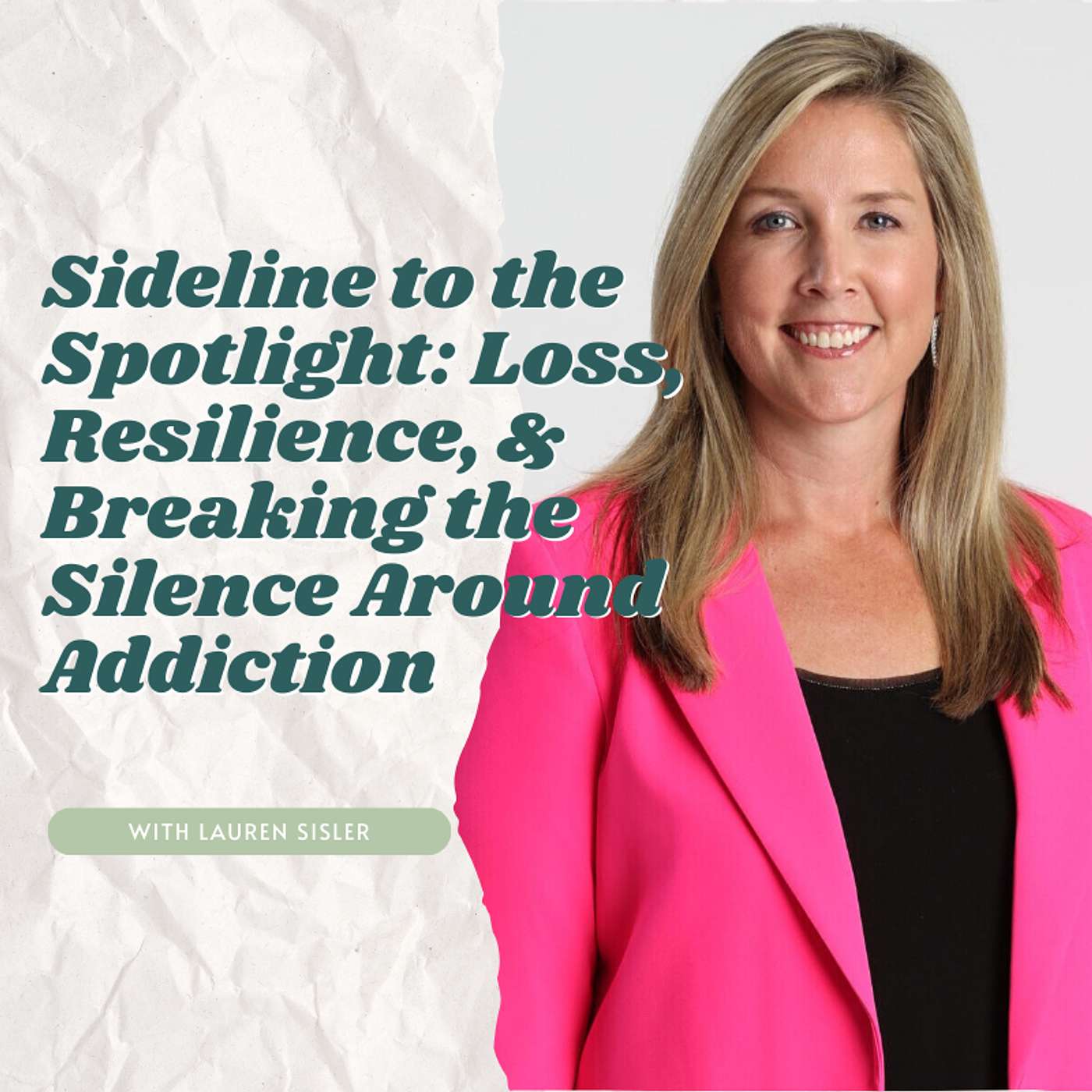
Thriving with Addiction with Dr. Jonathan Avery
Sideline to the Spotlight: Lauren Sisler on Loss, Resilience, and Breaking the Silence Around Addiction
00:34:55
Loading summary
Transcript46 lines
- [00:00]
A
Welcome to the Thriving With Addiction podcast where we explore how recovery is not just about surviving, but about truly living. Each week we'll dive into the science stories and strategies that help people and families heal from addiction and build healthier, more resilient lives. I'm your host, Dr. John Avery. Let's get started.
- [00:25]
B
I'm John Avery and welcome back to Thriving with Addiction. Today I'm joined by Lauren Sisler. Lauren is an ESPN and SEC network sideline reporter, host of SEC Nation, and an Emmy winning sports journalist. Known as much for her authenticity as her on air presence behind the scenes, Lauren carries a deeply personal story. As a college freshman, she lost both of her parents within hours to prescription drug overdoses. In her 2024 memoir, How I Overcame the Shame of Losing My Parents to Opiate Addiction and Found my sideline Shimmy, Lauren writes candidly about grief, shame, faith, and how telling the truth became a path to healing. Today, she uses her platform to speak openly about addiction, resilience and what it means to keep showing up on the sidelines and in life. Lauren, welcome.
- [01:14]
C
Awesome. Thank you, John, for having me. I really appreciate it.
- [01:18]
B
Now, I had this, I had this book around home. I was reading it, it's a, you know, it's a fantastic book, Shatterproof. And my, my 12 year old daughter was reading the title and she was curious what a sideline shimmy was. And so she was taking me through then all your viral online dance moves and she was so impressed. I mean, you're really, really good.
- [01:38]
C
Well, I would say the sideline shimmy piece of it being good is subjective. Some people think it's great, other people not so much. But it is something I really enjoy. And the sideline shimmy. I'm glad that she was able to take you behind the curtain, so to speak. It really has been just a viral thing that was silly kind of to start, but honestly, it became therapy for me. Therapy to calm down the nerves, the anxiety, the anxiousness, the adrenaline on the sidelines, the excitement and really just kind of be where my feet are, bring me back to the moment. And then it became a viral sensation because of how silly it is that I dance on the sidelines.
- [02:21]
B
But what my daughter said was that, wow, this person has so much courage and has a freedom to express herself. I wish I could be that free with myself as Lauren is. And so I think it's an inspiration too that you're able to be so free. And I said, you don't know half of the story about Lauren. She's got courage in Spades. But I think that's what it conveys as well.
- [02:43]
C
Oh, I appreciate that, you know, and I think that is really what this journey and mission has become for me, as you know. I know we'll dig into the story more, but dealing with grief and shame and really just stepping into our stories, I think has been so important for me to step into my own story and the truth behind my life and circumstances and those things. And so finding joy, even in some of the mundane, finding joy where some things scare us and they tell us to go sit in the darkness, don't come out here in the light. And I think that has been maybe the antidote to the fear and the doubt and the shame is to find the joy through the sideline shimmy and you know, other areas of life.
- [03:30]
B
And so take me through that, that story that, that culminated in the shimmy and this, this freedom. And I know growing up you were a gymnast and that defined a lot of your early life, is that right?
- [03:41]
C
Yeah, absolutely. So yeah, I grew up in Roanoke, Virginia and it was my mom, my dad and my older brother Alan. And so gymnastics became like my passion right at an early age. I was enrolled in the sport. I became very competitive at an early age. I was all energy, all the time. My parents are like, we gotta do something with this girl. So they enrolled me in the sport of gymnastics and it just took off quickly. Of course, the other thing that took off was my growth spurt. And so little did I know I was going to grow. Obviously I'm five foot nine now, but at the time, you know, I was five, three, which is honestly pretty tall for a gymnast. And so I was like, what are my next steps? And so I knew the elite level, the Olympic level wasn't going to happen. So I really set my sights on becoming a collegiate athlete. I wanted to be a scholarship gymnast. And so, you know, really middle school into high school, that's what I set my sights on and that's what I went after. And so it was really, you know, just a matter of just kind of climbing that mountain. You know, lots of excitement, but also lots of rejection, trying to figure out where I was going to go, what school I could get into, who was interested in having me compete for their team. And so, you know, finally, after just, you know, a couple years of just that recruiting process, that grueling process, you know, I finally landed on Rutgers, the State University of New Jersey.
- [05:02]
B
And tell me a little bit about your parents role in that because I know from having three kids myself that they're not doing any extracurricular or sports or activities without the parents being fully in. And to be a competitive gymnast, I think you were level 10, you said, I mean, that's as good as it gets. That requires a lot of investment from them. So tell me about their role in your growing up and the gymnast and what they were like in general.
- [05:24]
C
Yeah, I mean, my parents were very dedicated to my life, to my brother's life, to just our activities, school, academics, athletics. My brother was a three sport athlete and so they were always very involved. My dad was typically on the sidelines coaching up my brother. My mom was always driving me to and from gymnastics practice. And, you know, those, those ended up getting pretty long and grueling. You know, I was training over 20 hours a week at one point in my career. And so, you know, and commuting over an hour each way, actually. And so my parents became very devoted. You know, we're traveling all over the, the, the state of Virginia and then, you know, around the region and for regional and national competitions. And so it was a big investment, you know, obviously a big investment, you know, not only emotionally and physically for me, but financially for them and a big time time commitment. And so, you know, I think that was the thing with my parents and my family. We were that family of four. And on the outside, everything looked good, everything looked fine. And as far as I was concerned, everything was great. I was so blessed, so fortunate to have two parents that love me and my brother unconditionally. Were we perfect? Absolutely not. And I knew that, but I felt like there was this just sense of security that I had when I was with my parents and just two people that dreamed big for me and my brother and helped us to go after those dreams. And that was what was really special, I think, about our relationship. And so, you know, that, that was kind of the, the Sisler way, the Sisler family, you know, that's kind of how I grew up. So I was very fortunate. So when I went off to college, it was a big transition for me because my parents were like my best friends. And so I spent a lot of time with my parents. And then when I went off to college, eight hours from home, not a, not a, you know, a quick drive home, I miss them. But it definitely was a relationship that I maintained throughout, throughout, you know, college. When I got to Rutgers, it was important for me to have that relationship with them.
- [07:27]
B
And how much growing up, did you understand about their struggles with pain or even substances? Was that on your radar as a
- [07:34]
C
As a teenager, you know, it's crazy. And look, let's be real, John. Hindsight's always 20 20. But as a kid growing up, you know, my dad was an alcoholic, and it was not something that I was really aware of. I think I was aware of it, but let's put it this way, I was aware of it but didn't understand it. So it was really easy to compartmentalize it. So as a young gymnast, that's what we are trained to do. You compartmentalize. You fall down, you get back up, you finish your routine, onto the next boom, boom, boom. And I think I trained myself as a young gymnast, also as a young girl, to compartmentalize those things sometimes. Compartmentalizing. When my dad would relapse and have struggles, and, you know, I just remember my mom saying, hey, you got to go back to your AA meetings. And it was like, all right, he'd go back to his meetings. Nothing else would be said about it. He'd be sober for six months, and that was it. So to me, it was like, box it up, forget about it, move on. And so the addiction and alcoholism piece was there. But then when it came to the prescription drugs, you know, that really started when myself and my brother were kind of entering into high school. And that's when my mom had started having a lot of chronic pain. She was diagnosed with degenerative disc disease, started going to a pain management doctor. But first she was at a neurosurgeon where she had two neck fusions done. When she was released from that, that's when she started to go seeing a pain management doctor. And that is when things started to shift. And it was kind of this. This. This shift that happened, I think, slowly. But then eventually their use of prescription drugs started to really ramp up. So my mom was going to this pain management doctor. My dad also had chronic back pain, so he was referred to go to this doctor as well. And so they're going to this doctor, getting their pain meds, managing their pain. But what I didn't realize as a young teenager is that that medication was the thing that was helping them to function, but also was the very thing that eventually would take them down, would. Would alter their quality of life and become so reliant on it that it was the only answer for them.
- [09:50]
B
Right? And your heart breaks as you hear that. You see these parents who are doing everything for their kids, driving you and your brother everywhere, sports, trying to give the best life, at the same time, navigating chronic pain. And the way doctors prescribe meds and substance use and really keeping the family afloat through it all.
- [10:08]
C
Well, I tell you, John, I think what's interesting, and as I've, you know, spent years uncovering the truth as as outlined in my memoir, it took years and years to even have the courage to do that, to really dig under the surface, to dig behind all the things, because there were just so many questions like, how did we get here? And that was the hardest part for me because I just couldn't understand it. But years later, after my parents passed away, and I know we'll get into that, the specifics of that here in just a moment, but I remember pulling. My mom had a. My mom saved everything, but she had all of her medical documents, and at one point she had filed for disability, and she was having trouble with it being approved. And so finally she hired an attorney that helped her navigate the process. And the attorney said, hey, I need you to essentially journal, write down your day to day. When you wake up, how are you feeling? What are you taking? What is prescribed to you and just take us through your day. And I am reading these documents, John, and I'm thinking like, this is someone that has no idea what's coming. This is someone that is just innocently doing what she's told by her doctor, feeling pain. My doctor says, do this. I'll feel better. And I feel better today. And then it was, well, today, not as much. And today I took this and, you know, it was really just this. This almost journey down this road of darkness that she never saw coming. And I think that's what breaks my heart, John, when you talk about, you know, kids that are put into these circumstances, that are watching family members, you know, basically deal with addiction, deal with the ramifications of addiction, of prescription drug use, you know, this is. This is a family, as you mentioned, put together, figuring it all out, trying to navigate life, and feeling like we were doing a pretty good job of it. But then here, all of a sudden, is this challenge with the chronic pain and the issues my parents are facing. And I think the hardest part, John, is the fact that my parents felt such a shame that they didn't ask for help, that they didn't take next steps to say, hey, this isn't working anymore. We need to come up with a different resource. We need to come up with a different plan. And I think that was also on the doctor, too, you know, to maybe help have that conversation and those conversations, you know, and I'm not there at their. Their meetings, and I'm not there at their appointments, necessarily to know what conversations were being had. But at some point, I feel like some. Something should have shifted, Something should have changed. Something should have given them an opportunity to say, okay, we've got to do something different. Because if this keeps going, you know, the consequences are gonna be detrimental.
- [13:18]
B
I agree. I mean, I think, as in medicine, in society, it's such a stigmatized condition that even our doctors don't always do the best and have the best attitudes. And then family members feel the shame, and it's hard to be open and honest about it with our family, with our doctors, with ourselves. It's a complicated condition to manage.
- [13:39]
C
Oh, complicated. You said that word right there. I think about when Facebook first, you know, came out. It was like you put your relationship status right, and it was always like, single, you know, you know, in a relationship, and then it's complicated. Like, I literally feel like that is. That is, like, in a nutshell, that is this journey, addiction, dealing with addiction, how to manage it, and then just watching those that we love go through it. And I think as someone, myself, as a journalist, as a sports reporter, as someone that asks questions for a living, I think back to those days, like, why didn't I ask more questions? You know, I think about that often, and, you know, I. I was naive myself. My parents did a great job of sweeping it under the rug. They wanted to protect themselves, they wanted to protect our family, and so it wasn't something they talked about openly, you know, and looking back on, I'm like, man, I wish maybe I would have just pushed in and asked more questions, and perhaps would it have changed the outcome? I don't know that answer. But I do think that maybe there would have been a safer space for open dialogue that maybe could have broken open that fear that they felt walking through the addiction that they were facing.
- [15:02]
B
But you were just a kid, and you were a teenager. That's. That's an impossible task for. For anyone, let alone someone that's. That's a teenager. And. And then you had the biggest, most impossible thing happen once you went to Rutgers. And walk us through how. How you learned of. Of their. Their passing and. And. And that time.
- [15:22]
C
Yeah, so, you know, I'm at Rutgers living the dream, doing, you know, what I had set out to do. And I called my parents this particular evening. It was second semester of my freshman year. Always called my parents, always talked to them on the phone. That was just part of the routine every day. And I just talked to my mom and dad, hung up the Phone. Everything seemed fine. I set my alarm clock, went to bed and woke up in the middle of the night to a phone call from my dad to let me know that my mom died. And it just came as complete shock. Cause I just talked to mom, she was. Everything seemed fine. She seemed happy. Like, life is good. She's 45 years old. Like, what happened, dad? And he said, I can't explain it now. I need you to get on the next plane. You can. I'll be at the airport to pick you up. And my plane touches down. I run outside just hopeful. Like I just want to run and jump in my dad's arms. That's all I want to do in this moment. And instead it was my uncle Mike and my cousin Justin there to let me know that my dad too had passed away. And just talk about a total gut punch. Like my entire world just shattered into a million pieces. The two people that I love more than anything, my two best friends. And now I'm having to navigate this life without them. You know, I'm 18 years old, John. Like I didn't even know how to write a check. I mean, I was still a kid. You know, my parents always had me focusing on schoolwork and, you know, gymnastics. And they said, look, we'll take care of the rest. And so I hadn't quite, you know, met that crossroads of having to grow up and be an adult as I was easing into the college life. And so it was really like slamming into a brick wall and just being like, you know, ready or not. And it would be a grueling process that would follow the months and even years to get to where I am today.
- [17:14]
B
What were those initial weeks and months? Like, how did you, how did you make your way through?
- [17:20]
C
Yeah, I mean, you know, I think first and foremost the uncertainty of, of, of like survival. Right. You know, so it's me and my brother, we have both my parents to rest. Like, where are we going to come up with the money? How are we going to do this? How are we going to, you know, it was just so many decisions, like you don't realize, like so many decisions have to be made. And thankfully my auntie, my auntie Linda, my mom's sister, my Uncle Mike were huge in that role of helping us make some of those next step decisions, helping us, you know, kind of get through those, those initial phases of, you know, resolving all of my parents affairs. Because here's the thing, I'll be honest with you. You know, my parents, when they left us, things were not pretty financially And I think that is another big challenge that we as a family faced is, you know, the, the, the estate was in complete shambles. There was no money, there was no will. Everything went into foreclosure, cars were repossessed. Literally everything in our house was auctioned off to the estate, like auctioned off to complete strangers because there was nothing left. And so it was dealing with those things, dealing with the fact that not only are these two people not here, but now everything we knew of them is just being taken and stripped of us gone. And I think that in and of itself was just going through challenge after challenge after challenge after challenge because it's not just, you know, you lay these two people to rest and you grieve. As an 18 year old, like, I still had so much to figure out. And while I'm grieving, I'm also learning and growing and you know, honestly, like just fighting a lot of internal battles with myself because there was so much uncertainty. And I really had, honestly, I struggled with the why. And I think that became kind of the mission. And while it took 19 years to even have the courage to write Shatterproof, that was the beginning of the journey. And then it released, you know, 22 years later after their passing, the why became the hardest part. Why did this happen? Right? Why did, why, why did we get to this point that ultimately this addiction took my parents lives. And I think that is something I still grapple with today.
- [19:51]
B
And there are words for such a profound loss. And I can only imagine how confusing it was then. It's still confusing now. It's to lose parents in such a dramatic way. And so it sounded like you had to rebuild from scratch. Everything. Finances, your family, support. What was that build like over the years? How did you get back on your feet and keep going?
- [20:16]
C
Yeah, I mean, as I mentioned, having the support system I had, you know, I think the biggest thing for me is, you know, being able to go back to Rutgers. That was a decision that my auntie and uncle Mike really kind of impressed upon me, encouraged me because I think that's where I needed to find my footing again. And having that support system was, was the biggest part of that. And you know, so for me, a lot of it was simply just kind of putting one foot in front of the other, getting myself back, you know, back to ground level, back to ground zero, trying to figure out like this life without them. And I'll be honest, I mean, it was, it was a struggle. You know, my grades were struggling. My, my, my, you know, my physical being was Struggling, you know, I was having trouble getting back in the gym, I was having trouble competing. I was having trouble, you know, working for that scholarship that I had. So, you know, that, that precious scholarship that I had worked so hard to earn, all those things were starting to just what I felt like were just starting to crumble right before me. You know, all the things that I had worked hard towards. And, you know, it really was just a matter of having the courage to stand back up, having the courage to put one foot in front of the other and having that support system from my auntie and Uncle Mike and my family, and then really my Rutgers family, my Rutgers gymnastics family, especially giving me the encouragement, but also sharing that tough love with me and saying, hey, like, we love you, we're here for you, but you gotta do better, and we know you can do better, and here are the resources to help you do better. And so I think it was just a matter of that buy in and recognizing like, my life's not going to change, like my parents aren't coming back. So I can either just like wallow in this and things can just continue to get worse, or I could pick myself back up and keep working through this process and get better every single day and find my way to success again.
- [22:24]
B
And that's the courage and resilience I was telling my daughter about. In your story. Um, complicated. The grief was complicated enough. But then there was also a secret, even still a certain shame that that came with how your parents passed, that you people knew that you were grieving and provide support, but you kept that to yourself a lot, especially those early years. Is that right?
- [22:45]
C
Oh, yeah. You know, because I think what happens is, you know, shame. Society tells us what is good, what is right, what is wrong. And I think for so many years I knew society was, was telling me along the way that addiction was a bad thing, right? So with my dad's alcoholism, I obviously knew it wasn't a good thing, but I was quick to compartmentalize and move on from it, forgive him every single time he would relapse and, and, and just keep going. But then, as you know, I learned the truth about what happened to my parents because I did a lot to protect myself from that truth for a very long time, let me tell you. I did everything I could to ignore the facts, ignore the truth. Would not, look at, look at the toxicology reports, would not acknowledge anything that my Auntie Linda was saying, right? She would lovingly try to introduce the situation to me, and I was having none of it, none of it. I mean, we were. We were like fisticuffs, like, fighting over this because I just did not want to believe that my parents had an addiction. And I think a lot of that was rooted in the fact that society tells us addiction is bad. And the individuals that fall victim to addiction, it's a choice, it's a. It's. It's a wrongdoing, it's a bad thing, it's bad behavior, and in a lot of ways, a selfish disease. And so it was like this thought to me of, like, my parents aren't any of those things. You know, they're. They're happy, they're loving, they contribute. They are, you know, invested in life and in society and people and community. Like, my parents can't be addicts. So then the fear was, once I learned that that was truly what took their lives, then the idea that, like, people would remember them that way, uh, we can't do this. We can't let people in on this secret, because my parents were protecting that secret. Now it was up to me to also protect that secret.
- [24:54]
B
At what point did that change for you? When you started to talk more openly about it and then, of course, ultimately wrote this memoir. But when did that change?
- [25:03]
C
Yeah, I mean, I think for me, that really the, The. The. The change again. You know, as I share this journey, this was not an overnight. Like, I woke up one day and was like, oh, my gosh, I'm going to share this with the world. Right. It took a lot of time for me to get to that place of having the courage and the bravery to speak the truth and share the truth and not be fearful of what the response was going to be from people. And so after years and years and years, it took me 10 years to even open up the toxicology reports. And really that started come that maybe that courage was incited because I finally was here in Birmingham, Alabama, where I currently live, kind of taking that next step in my broadcast career. And what I started to realize as a journalist, as a broadcaster, you know, we go out and search for stories. We find stories. And for me, you know, as a sports reporter was seeking out these sports stories of these athletes, these communities. And people would come to me to share their story. And yet I realized underneath it all, like, I couldn't even share my own story. And so I'm telling stories boldly, truthfully. I see this ripple effect that happens. I see people that are encouraged and impacted by these stories. And yet me over here couldn't even. Couldn't even speak the truth of my own story because of the fear of shame and judgment that I had for myself and my family. And so it really was almost stepping into this role as a reporter, doing my own reporting on other people's lives, and then flipping it around and realizing, like, maybe I need to dig, dig, dig down deep and find the truth in my own life.
- [27:03]
B
And that led to you being open about it and writing the memoir.
- [27:07]
C
Yeah. And again, it took a lot of time. You know, that 10 year mark is when I really started to, to, you know, find that courage. And then it was just little by little, right? It was talking to one person and then maybe a group of people and then standing in a room full of people and then eventually, you know, producing a documentary. Like, those things took a lot of time to get to that place. And the story has evolved. Like, if you, if you went back and listened to my story of What I shared 10 years ago, it'd be like, totally different, you know, the, the, you know, the, the foundation of it, the same. But, you know, I've, I've come to grips with the truth and spoken that truth more boldly as time has gone
- [27:52]
B
on and became quite a well known public figure. Was there some nervousness sharing your story as, as someone that's already out in the spotlight and, and what that might mean for your, your career?
- [28:05]
C
Oh, yeah, absolutely. There definitely was a nervousness because here's the thing, you know, I, I feel like, you know, we see a lot of celebrities, we see a lot of people that are public figures that align with a cause, a mission, something that's maybe near and dear to their heart, something they believe in. And, you know, it's, it's across the board, so many different things, whether it's cancer or ALS or, you know, Alzheimer's or, you know, whatever it may be. But then there's just something that's attached to advocating for addiction. Right. And even when I had started really coming out and speaking about my story and sharing it, I was really quick to kind of like, make sure people knew, like, I wasn't the addict. I'm not the one that's addicted. It was my parents. And then I, then I, then I realized, like, it really doesn't matter. At the end of the day, my goal is to start a conversation. So whatever entry point that looks like for someone to have the courage and confidence to come to me and say, hey, I'm going through this thing, I have a problem, I'm walking through these challenges, my family has a problem, Whatever it may be, giving People permission to open up with courage to say, hey, me too. And I think that has been the coolest part of this journey. Because at once there was a point in time where as an ESPN reporter, I was fearful that someone would do a Google search and find, find out that my parents were, you know, you know, addicted to pain medication. And ultimately that's what took their lives to now owning that and saying, you know what, that's part of the story. That's part of their legacy, because that is what legacy is all about. John it's not just highlighting the, the, the good moments in life. It is also recognizing that we are all going to fall down, we are all going to struggle. None of us are perfect. And honoring that struggle can be just as important as honoring all the successes and accolades that we all love to put up on a pedestal.
- [30:11]
B
And what a freedom that must come with that. To finally have it out in the open probably in turn made you a better journalist and made you connect more with other people, I imagine.
- [30:21]
C
Oh, yeah, I definitely think so. I, I feel like if there's one thing that as a journalist that I take great pride in, and I'm grateful for, that I consider a gift is empathy. I feel that my level of emotion when it comes to connecting with others and connecting with their stories, I feel such a deep empathy when people are experiencing pain, when they're experiencing challenges, circumstances, but also when they experience the joy that comes with walking through those challenges and coming out to the other side.
- [31:03]
B
That's so important. I think many families believe silence is protective, but I think you've learned what it can actually do. And to have things out in the open, it changes everything.
- [31:16]
C
Absolutely. Yeah. And that and that. And I will say it has been. I taught, I use the word gift because I feel like the empathy is a gift, but I feel like freedom has also become a gift for me. Feeling this freedom to just, you know, my husband jokes with me, he says, you know, you're an over sharer sometimes, and I know I am, I overshare sometimes. But I will say that vulnerability has also become a gift. And the freedom that has come from that has just been incredible.
- [31:50]
B
So for someone listening who, you know is carrying loss or addiction in their family, what would you want them to hear? What would you recommend to them?
- [31:59]
C
You know, my life mantra and what I've leaned into, Fall in love with your story. And that's. That is truly taking every single chapter, the good with the bad, the great with the hard, and falling in love with it, leaning into every Single chapter and saying, look, this isn't the thing that broke me. This is the thing that built me. So it's really readjusting the way we think of things when we have setbacks, when we face challenges. Because, oh, by the way, everybody is. And everybody will. And it will continue the rest of your life. We're always going to face challenges in life. And so being able to rework, reframe the way we think of those challenges, not the thing that broke you, but built you, being able to use those circumstances and those challenges while we are walking in the midst of the storm, we can't see it, but eventually my hope for everybody is that they can come out on the other side and say, this didn't happen to me. It happened for me. And so that I'm able to take this very thing that I struggle with, take this very thing that scares me, the daylights out of me, and use it now as, as. As my. My courage, my strength, and ultimately use that to help other people, bring other people along with you. Because none of us are in this alone. And when you start to recognize that and you start to build your team and your support system around you, whether it's one person or a million people, there really is so much beauty in that connection. And I think that's what humanity is all about.
- [33:31]
B
No, I love that. And then it gives you freedom to experience the joy and to dance and to embrace the good part of life as well.
- [33:40]
C
Yep, yep. The gratitude gets grander when you're able to acknowledge the pain points and honor the struggle.
- [33:49]
B
Well, Lauren, I really appreciate you coming on here and sharing your story. The book is how I overcame the shame of losing my parents opiate addiction and found my sideline Shimmy, a must read for anyone sharing. There's the Shimmy. Yes, my daughter said I should do it, but I'm not quite as evolved yet. But I'll get there with time.
- [34:13]
C
Tell her that you'll do it if she'll do it with you.
- [34:16]
B
There we go.
- [34:17]
C
Y' all can put proof out there on the social sphere so all can see it.
- [34:23]
B
Exactly. Exactly. Well, thanks, Lauren, again for coming. I really appreciate it.
- [34:26]
C
Thank you, John. I appreciate you.
- [34:28]
A
Thanks for listening to the Thriving with Addiction podcast. If you found today's episode helpful, please follow and subscribe wherever you listen to your podcasts and share it with someone who might benefit. You can also connect with me on Instagram, LinkedIn and YouTube or visit thrivingwithaddiction.com to learn more. Stay tuned for next week's episode and remember, thriving is possible.