Loading summary
Transcript223 lines
- [00:00]
Sponsor/Advertisement Voice
Support for this podcast and the following message come from Allianz Travel Insurance Barcelona's beaches Heavenly Until a jellyfish joins you for a swim, Emergency medical benefits can help take the sting out of travel challenges. Learn more@alianztravelinsurance.com hey everyone, before we get
- [00:22]
Rund Abdelfattah
into this week's episode, I want to share that Ramtin is no longer with the show. I'm thankful for all his hard work and dedication over the years, from creating the show with me to his contributions to countless episodes since his storytelling, creative vision and music were invaluable. Throughline will be continuing and I will still be your host. The team and I will be making the show, you know, with the same care and curiosity. Thank you for listening. Your support means so much. And now onto the show.
- [01:00]
Coleman Strumpf
$400,000.
- [01:01]
Robin Hanson
Hundreds of thousand. Half a million dollars.
- [01:04]
Coleman Strumpf
$400,000 in profits.
- [01:06]
Rund Abdelfattah
Half a million dollars. That's how much money someone made a couple months ago on a Risky Bet Will the US strike Iran by Saturday, February 28, 2026? The answer, of course, was yes.
- [01:22]
Coleman Strumpf
The United States and Israel are carrying
- [01:24]
Robin Hanson
out major attacks against Iran today.
- [01:26]
Rund Abdelfattah
Huge explosions rang out in the capital, Tehran. Iran has retaliated by striking back at Israel and at US Military targets across the Gulf in several Arab states. And if that person's bet was a lucky guess, it was very lucky because the odds the US was going to strike Iran that day hovered between 7 and 26%, and the better doubled down in the hours before President Trump announced the strike.
- [01:51]
Coleman Strumpf
Our objective is to defend the American people.
- [01:55]
Rund Abdelfattah
Since the beginning of the year, online traders have wagered more than $2 billion on events relating to the Iran war alone. It's all happening on prediction markets, websites where anyone can make an account and bet on the future yes or no questions like will France win the World cup? Or will the White House press secretary use the word heinous in her next news briefing. Both real wagers you could make in 2026 the two biggest prediction market sites, which everyone seems to be talking about these days.
- [02:27]
Coleman Strumpf
Kalshi and Polymarket Polymarket Polymarket Polymarket, Kalshi
- [02:32]
Rund Abdelfattah
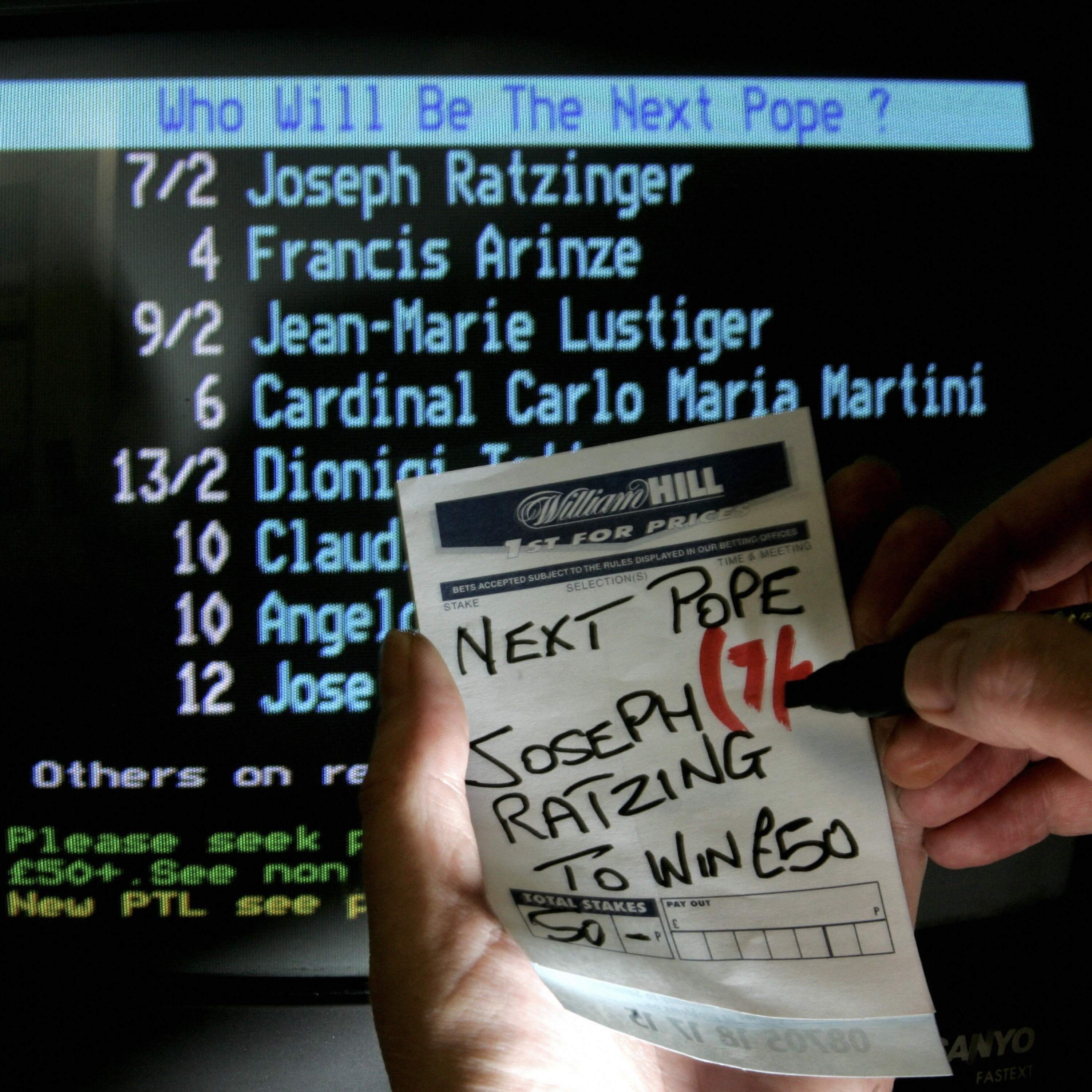
and Polymarket Kalshi and Polymarket combined, they've seen more than $60 billion in trades since the beginning of this year. Their creators say you should think of prediction markets like another version of the stock market, where investors make trades just on current events instead of a company's stock price. But some of the trades you can make on prediction market sites feel a lot less buttoned up than Wall Street. Even a Little icky because you have the option to bet on bombs being dropped, on people dying. It events that will have huge impacts on real people's lives.
- [03:14]
Robin Hanson
An unnamed traitor made hundreds of thousands predicting the ouster of Venezuelan leader Nicolas
- [03:19]
Coleman Strumpf
Maduro in January just hours before the US raid that captured him. The killing of Iran's Supreme Leader and
- [03:26]
Robin Hanson
a ceasefire between the US and Iran
- [03:29]
Coleman Strumpf
all led to six figure profits and very few clues about who made the trades.
- [03:34]
Rund Abdelfattah
And in several cases, there's evidence suggesting that the anonymous people who made these bets may have had insider information.
- [03:44]
Coleman Strumpf
One trader on the site Polymarket made more than $300,000 by making well time bets on who former President Biden would pardon.
- [03:52]
Rund Abdelfattah
The police in France are looking into whether someone tampered with a weather reading device at the Charles de Gaulle Airport to win a Polymarket bet. One trader made hundreds of thousands of dollars correctly guessing Maduro would soon be out of power. And in that last case, the alleged trader turned out to be a US Special Forces soldier was involved in planning the military operation to capture Maduro. The soldier has since been indicted by the Justice Department. In the wake of all this, the White House sent an email warning to its staffers name checking prediction markets. Recent press reports have raised concerns about government officials using non public government information to place wagers on online prediction markets such as Calshi or polymarket. We got a similar email from the standards team at NPR and on Capitol Hill, the Senate has approved a bipartisan resolution saying its members and staff can't trade on prediction markets either. That's how big these markets have gotten in the last few months. Even the President is paying attention to them.
- [04:57]
Coleman Strumpf
That's like Pete Rose betting on his own tickets. It's a little like Pete Rose. The whole world unfortunately has become somewhat of a casino.
- [05:07]
Rund Abdelfattah
One of President Trump, Trump's sons, by the way, is an advisor to both Polymarket and Kalshi and an investor in Polymarket. Some analysts think prediction markets are on their way to becoming a trillion dollar industry. And like President Trump said, these markets have turned the world into a casino where anyone, anywhere can log on and bet on the outcome of almost anything that'll happen in the future. But the prediction markets themselves aren't new. So how did we get here? Where did these markets come? And what can that history tell us about where they might be going? I'm Rund Abdelfattah. Today on Throughline from npr how betting on popes and presidents gave way to an assassination and terrorism market. And how as prediction markets have grown from an idea to an industry. The moral gray areas involved have gotten bigger. Too
- [06:06]
Guest/Interviewee (various listeners and contributors)
foreign. If it's not through line, I apologize
- [06:17]
Coleman Strumpf
for having the wrong number, but I
- [06:19]
Guest/Interviewee (various listeners and contributors)
just wanted to let you know that
- [06:21]
Rund Abdelfattah
I'm Ethan Scarl in Portland, Oregon, and I listen to and appreciate very much Through Line programming.
- [06:29]
Coleman Strumpf
This message comes from NPR sponsor Carvana.
- [06:32]
Guest/Interviewee (various listeners and contributors)
Your time is worth more than a waiting game. Carvana gives you a transparent offer for your car in minutes and picks it up from your door.
- [06:40]
Coleman Strumpf
Sell your car today@carvana.com Pickup fees may apply. New shows, new music, new movies. Keeping up with pop culture sometimes feels
- [06:49]
Robin Hanson
like a full time job.
- [06:51]
Coleman Strumpf
Thankfully, over at Pop Culture Happy Hour, it's literally our job. We break down what's actually worth watching, listening to, and pretending you already knew about. So the next time someone says, did you see that? You can say, yeah, obviously. Follow NPR's Pop Culture Happy Hour wherever
- [07:07]
Robin Hanson
you get your podcasts.
- [07:09]
Sponsor/Advertisement Voice
This message comes from Jerry Many people are overpaying on car insurance. Why? Switching providers can be a pain. Jerry helps make the process painless. Jerry is the only app that compares rates from over 50 insurers in minutes and helps you switch fast. With no spam calls or hidden fees. Drivers who save with Jerry could save over $1,300 a year before you renew your car insurance policy, download the Jerry app or head to Jerry AI NPR
- [07:41]
Rund Abdelfattah
Part 1 Three professors walk into a bar on a spring afternoon in 1988. Robert Forsyth and two of his colleagues were sitting around a table at a local sports bar called the Airliner in downtown Iowa City. And like they often did, the three economics professors got to talking about the news.
- [08:01]
Guest/Interviewee (various listeners and contributors)
And I would say the conversation was helped because it was a three beer lunch, which led to this creativity. I think some days.
- [08:10]
Rund Abdelfattah
Three beers each or each of each. Okay. It was an election year. After Super Tuesday, Michael Dukakis was the presumptive frontrunner for the Democratic nomination. That is, until a huge surprise upset.
- [08:26]
Robin Hanson
The polls had predicted a Dukakis victory, but it didn't happen.
- [08:30]
Guest/Interviewee (various listeners and contributors)
It was the day after the Michigan caucus, which, as you may recall, Jesse Jackson won.
- [08:38]
Rund Abdelfattah
Jesse Jackson, he scored a stunning win yesterday in Michigan's Democratic caucuses, defeating Michael Dukakis by a margin of nearly 2 to 1 in the popular vote.
- [08:47]
Guest/Interviewee (various listeners and contributors)
And that was a big surprise. The polls missed it altogether.
- [08:52]
Rund Abdelfattah
Going in political polls had shown Jackson and Dukakis running neck and neck. But what happened was a blowout. Jackson won the Michigan caucus with 53% of the vote and Dukakis only got 29%.
- [09:06]
Guest/Interviewee (various listeners and contributors)
And that's where it came from. We said, well, gee, you know, as economists, what would we do if we were going to try to predict the outcome of something and what's natural for a bunch of economists? He said, well, let's run a market on it.
- [09:19]
Rund Abdelfattah
Run a financial market like a stock or commodities market. So Robert and his colleagues got together a couple hundred people, students and faculty at the University of Iowa. They set up an online interface where those people could buy stock in political candidates. And just like on Wall street, these political stocks could be traded. So for example, when George H.W. bush and Michael Dukakis ultimately went up against each other in the general election, if you didn't like Dukakis, chances you could sell your shares in him. The overarching idea here, the market might show what people were actually thinking even better than polls could. The wisdom of the crowd.
- [10:00]
Guest/Interviewee (various listeners and contributors)
And lo and behold, at midnight the night before election day, we ended up predicting the outcome of the popular vote within 2. 10 of 1%.
- [10:09]
Rund Abdelfattah
That result outperformed major polls, including Gallup Harris and CBS New York Times. It was so effective that Robert and his colleagues thought we'd like to do this again next election, this time with a bigger sample size.
- [10:24]
Guest/Interviewee (various listeners and contributors)
So we went to the Commodity Futures Trading Commission and asked them whether they would give us permission to operate nationwide.
- [10:30]
Rund Abdelfattah
And just so I understand, what was the law that you needed to get around?
- [10:35]
Guest/Interviewee (various listeners and contributors)
Well, anytime you have people exchanging real money on the outcome of something, the question is, is this gambling or not? And even though there's some form of regulation that's going to oversee you back
- [10:47]
Rund Abdelfattah
then and now, the body that oversees that regulation in the US is called the Commodities Futures Trading Commission or the cftc. It's been in charge of commodity futures, like markets that set the future price of grain since the 1970s.
- [11:02]
Guest/Interviewee (various listeners and contributors)
They've issued us what they call a no action letter.
- [11:06]
Rund Abdelfattah
That letter was basically like a permission slip. As long as the Iowa Electronic markets followed a few set rules, the CFTC would allow it to do its thing.
- [11:16]
Guest/Interviewee (various listeners and contributors)
And the rules were we stayed small, we couldn't accept the cons over $500 and we didn't engage in paid advertising.
- [11:24]
Rund Abdelfattah
So they could only run markets on presidential elections. Sports were off the table and the Iowa Electronic markets did not make a profit. Between 1988 and 2004, the Iowa Electronic markets grew from a one off experiment to one of the most reliable predictors of American presidential elections. During that period, its predictions beat traditional polls 74% of the time. And as the market continued to grow, so did the Public's interest in it.
- [11:55]
Paul Roede
I'm Bob Edwards, and this is NPR's Morning Edition.
- [12:00]
Rund Abdelfattah
If you think you know who the
- [12:02]
Guest/Interviewee (various listeners and contributors)
next president of the United States will be, there's a place in Iowa where you can back up your convictions with
- [12:08]
Coleman Strumpf
a buck or two.
- [12:08]
Robin Hanson
What started out as a research project,
- [12:11]
Rund Abdelfattah
at what point did you realize that people outside of the University of Iowa, outside of your orbit, were starting to pay attention to what you all were doing?
- [12:20]
Guest/Interviewee (various listeners and contributors)
Well, we started to get a lot of national publicity. This was different enough that before we knew it, the Wall Street Journal and the Financial Times of London and npr, NPR and a lot of the television media started picking us up because it was just so different, Right? I mean, who had ever made a market on an election?
- [12:41]
Rund Abdelfattah
Oh, so they thought this was the first time something like this was happening.
- [12:44]
Guest/Interviewee (various listeners and contributors)
That's right. That's right.
- [12:46]
Rund Abdelfattah
But as someone else would soon discover, it wasn't the first time. Not even close. Enter Coleman Strumpf.
- [12:54]
Coleman Strumpf
I am a economics professor at Wake Forest University. I've been teaching a course on prediction markets for almost 20 years.
- [13:03]
Rund Abdelfattah
Coleman may be an economist, but his driving interest is in human behavior on top of prediction markets. He's written papers about illegal file sharing, tax evasion, and the economics of addiction. And he says, if you want to understand where prediction markets came from, just head down to your local horse track.
- [13:22]
Coleman Strumpf
They're under starters orders and they're on. My uncle used to take me to the racetrack and had me been on horses. I guess I was already a social scientist in training at 10 years old. Because first of all, yes, back many, many years ago, you could be 10 years old and go to a racetrack in bed and I couldn't even reach up to the counter and nobody seemed to care very much. But it was as interesting as much to me to watch what everybody else was doing. And a lot of things that I see when I look at markets today, I could sort of first see then
- [13:57]
Rund Abdelfattah
watching people read the odds and make bets taught Coleman something essential about gambling. Winning makes people feel good. And the longer the odds, the better the winners feel.
- [14:11]
Coleman Strumpf
I remember when I was younger and I was watching people do it. If somebody would bet on a long shot horse and that horse would actually win, the person would not only win a lot of money, but. But they were going around to all their friends saying how smart they were because they managed to figure out this very, very unlikely thing from happening. And I sort of realized that's part of the sort of psychology of these markets is people like to be smart people like to use this as a way of sort of showing off their smarts of how they figure these things out.
- [14:40]
Rund Abdelfattah
I should say here there's been a lot of back and forth over the years about whether or not prediction markets are really just betting dressed up as something fancier, or if you're looking at legal definitions, whether they might count as gambling. We're not here to litigate that. Coleman's point is as long as people have been putting money on things, whether it's on the stock market, in insurance, or at the racetrack, social scientists and economists have been able to learn something about us from those bets. So flash forward to the 2000 presidential election. George W. Bush versus Al Gore, one of the closest presidential races in a century. Coleman was doing research about election forecasting at the University of North Carolina, and he was keeping a close eye on the Iowa electronic market.
- [15:30]
Coleman Strumpf
I was writing a paper about the Iowa electronic market when my then colleague was at the University of North Carolina at the time. Paul Rode came by my office, asked me what I was doing, and I said, I'm looking at the first political prediction market we have. And Paul, who is an economic historian, said, nope, that's totally not correct.
- [15:52]
Paul Roede
He was MIT and I'm Stanford. And a lot of times creative frictions happen from people with different perspectives.
- [16:00]
Rund Abdelfattah
That's Paul Roede. He's an economic historian at the University of Michigan. But back in the early 2000s, he worked down the hall from Coleman at the University of North Carolina.
- [16:11]
Paul Roede
I happened to be reading some microfilm at the library and came across news stories in October, November 1924 about election market. So I go up to Coleman Strump to his office and say, hey, did you know these happened? And he wasn't aware that they happened. So it was an interesting surprise for both of us.
- [16:35]
Rund Abdelfattah
Paul and Coleman started digging into the archives in earnest. And it turns out pretty much as long as there have been elections, people have been betting on them back to the 16th century.
- [16:47]
Paul Roede
There's betting on who would become the
- [16:50]
Coleman Strumpf
Pope, elections in city states, in Venice and Genoa.
- [16:53]
Rund Abdelfattah
And in the US you can, like,
- [16:55]
Coleman Strumpf
find markets going back to George Washington,
- [16:57]
Paul Roede
how long the Stamp act would be in place before the American Revolution.
- [17:02]
Rund Abdelfattah
Paul and Coleman say for centuries, these markets stayed relatively small. There wasn't a ton of money on the line. Sometimes the bets didn't involve money at all.
- [17:13]
Coleman Strumpf
If the candidate I support doesn't win, I'm going to cut my beard or I'm going to walk from New York to Boston, or you have to eat
- [17:21]
Paul Roede
a crow if I'm right, you have to push me in a wheelbarrow down Main Street.
- [17:26]
Rund Abdelfattah
But around the turn of the 20th century, election markets in the United States really started to gain steam.
- [17:33]
Coleman Strumpf
The main place that people would trade on elections was something called the curb exchange, which literally, as the name suggests, was the curb outside the New York Stock Exchange.
- [17:43]
Paul Roede
They'd be sitting on the curb and they'd be trading stocks and signaling the people in the offices above them.
- [17:50]
Rund Abdelfattah
Stocks to be clear, in political candidates, people running for office.
- [17:56]
Coleman Strumpf
Reporters for the Wall Street Journal, New York Times could go down to this pit and not only tell us what the overall price was, but the names of the people trading. And if you look, the people were trading. These were like the elite of the city. These were people from Tammany Hall. These were bankers, Wall street folks. People owned hotels.
- [18:15]
Paul Roede
People would be doing this very publicly. So if you were like the head of the Republican Party or you're the head of the New York Tammany hall, you'd be expected to go to the vetting commissioner and be willing to offer money for your candidate. So it would be part of the publicity about you're standing behind this person, you think they have a good shot of winning.
- [18:38]
Rund Abdelfattah
Were you expected to bet on your own candidate, or could you bet against your candidate if you thought your candidate wasn't going to win?
- [18:45]
Paul Roede
So we knew that like William Jennings Bryant, the populace from Nebraska was not popular with the workers in New York. The Democratic machine in New York has to light bet for him. But then the stories are behind the scenes. They're placing bets the other way so
- [19:03]
Rund Abdelfattah
that they cancel out because they don't want to lose money. Like, publicly, they'll say, we love him, we endorse him, but they don't want to lose their money in the market.
- [19:10]
Paul Roede
Yeah, so they're going to be like, hedging or going against their candidate.
- [19:14]
Rund Abdelfattah
All of this was happening in a sort of legal gray area. Making a friendly bet on the outcome of an election wasn't against the law, but if you did that, you weren't supposed to vote.
- [19:25]
Paul Roede
But I don't think anybody ever said, we're turning away from the polls because we know that you bet on elections.
- [19:33]
Rund Abdelfattah
Were these prediction markets, from as far as you can tell, good at predicting the outcomes of elections and whatever else was being bet on.
- [19:43]
Coleman Strumpf
So this was like the second thing that I was wrong about. My sense was, okay, the markets will do as well as they can, but there's not much information to be had. These markets won't really tell Us anything. Well, that I was definitely wrong on. And they were always right. Basically, they would tell us who would win. They could give you a sense of whether there'd be a landslide. It was really pretty remarkable.
- [20:07]
Rund Abdelfattah
You kind of pointed out that late 19th century to World War II era as this kind of golden age almost of prediction markets. Why did they fall off after that for a while?
- [20:19]
Coleman Strumpf
It's a combination of factors. One of the things that both drove the popularity of the markets as well as the discussion in the markets was the press coverage. Through this period, all the newspapers covered it, but they were never very comfortable doing this. Then in the 1930s, that's when the scientific polls, Gallup and some other folks came around. And so the polls were doing something that was kind of the same thing. And newspapers were much more comfortable writing about polls than they were with markets. The other thing in some sense has to do with interest of the people trading. So if you're somebody who really likes this, for whatever reason, you like to be known as a good forecaster, you like to make money, you like the adrenaline rush. Any of these factors, the problem with elections, or at least I'll just say US Elections, is we don't have enough of them. This is around the time when thoroughbred racing started to really take off. And so instead of a couple events a year, you could have 12 races a night. And I think for people who were interested in that, I think the horse track was more attractive as a thing to do. And I think some of the interest among traders kind of dissipated at that time.
- [21:30]
Rund Abdelfattah
As far as Coleman and Paul can tell, presidential election markets went dark sometime in the 1940s, and then for the next four decades, radio silence.
- [21:41]
Coleman Strumpf
I have never found one person who could have been around during that period or even books that talk about elections during that period that mention these markets. This was not some small, tiny thing. I don't know how they've managed to slip through the cracks of, you know, what's known about that time, but they
- [22:01]
Rund Abdelfattah
seemingly did until 1988, when three professors in Iowa went for a three beer lunch. And the Iowa Electronic Markets catapulted prediction markets back into the public consciousness as an alternative to political polls. Here's Robert Forsyth again, one of the founders of the Iowa Electronic Markets.
- [22:23]
Guest/Interviewee (various listeners and contributors)
Once we went nationally, two things happened. We would get phone calls from traders around the country, not realizing we had a $500 limit, then wanting to send us a check for several hundred thousand dollars to invest in the market. And we'd have to say, well, gee, that'd be great, but we only can take $500 of your money. But we got to realize that many of these people weren't speculators. These were people that were involved and were trying to hedge some political risks that would affect their company or their operations.
- [22:52]
Rund Abdelfattah
Say you're worried a certain candidate might win and pass laws that will hurt your business. You can hedge your bets, put some money on the person you do not want to win. If they win, you cover your losses.
- [23:04]
Guest/Interviewee (various listeners and contributors)
So that was one kind of phone call. And then we would occasionally get a phone call saying, this is great, but you know, you have to stay small. If you stay in the United States, why don't you come with us and come over to the Cayman Islands and we operate there and you can run without restriction. And maybe we should have done that. I don't know. That's a point in time. We were bunch of academics who were mainly concerned with our teaching and our research. And so we turned those opportunities down.
- [23:33]
Rund Abdelfattah
Looking back on it now, why do you say, well, maybe we should have done that?
- [23:38]
Guest/Interviewee (various listeners and contributors)
Well, you know, there are days that I'm sort of jealous of Kalshi and the Polymarket. I mean, they've really taken the same idea. I mean, they're running basically the same prediction markets we did, but on a much bigger scale. In fact, they basically use the same rules for trading and issuing contracts that we used back in 1988. But they certainly have expanded it vastly until you can just about trade on anything there.
- [24:03]
Rund Abdelfattah
The Iowa electronic market established something important. It demonstrated to modern economists that prediction markets worked, and that sparked a chain reaction, says economist Coleman Strumpf.
- [24:17]
Coleman Strumpf
Once we see, oh, look, these markets kind of work in the modern period, could we use these markets to forecast other things? So could we look at other elections? Could we look at current events? And I think it kind of showed to the world that these things could work. But maybe it was only in this one specific domain and we didn't yet know, would that same kind of forecasting savvy translate into other situations. So that was for other markets to help point out.
- [24:51]
Rund Abdelfattah
Coming up, another economist gets close to answering that question, but then his experiment goes off the rails.
- [25:00]
Robin Hanson
They called it terrorism futures, I think, well, the accusation was we were having markets betting on death.
- [25:10]
Guest/Interviewee (various listeners and contributors)
Hi, I'm angel from Peonia, Colorado, and
- [25:13]
Rund Abdelfattah
I listen to through line from NPR
- [25:15]
Guest/Interviewee (various listeners and contributors)
when I'm painting houses, and it makes it feel like I'm not even working at all.
- [25:20]
Sponsor/Advertisement Voice
This message comes from Jerry. Many people are overpaying on car insurance. Why switching providers can Be a pain. Jerry helps make the process painless. Jerry is the only app that compares rates from over 50 insurers in minutes and helps you switch fast with no spam calls or hidden fees. Drivers who save with Jerry could save over $1,300 a year. Before you renew your car insurance policy, download the Jerry app or head to Jerry AI NPR.
- [25:51]
Rund Abdelfattah
Part two, the assassination and terrorism market. In the early 1990s, Robin Hanssen was a young programmer and his words, amateur economist. He dropped out of grad school to move to Silicon Valley, where he worked two jobs, one during the day and one at night. Not because he had to, but because he was that excited. All around him, he saw an artificial intelligence revolution unfolding.
- [26:23]
Robin Hanson
I was hanging out with futurist and science fiction fans who generally had a very ambitious vision of the future, of how technology could do lots of things. So, for example, some of the people I was hanging out with eventually, I think, became the bitcoin founders. Other people were doing a thing called nanotechnology, which was a futuristic image of fine, detailed assembly of atoms. Other people were into space. I was in a world all of which were trying to make the future and make it big and grand and different, and we were pursuing different technologies for it. But we all had this idea that what you wanted to do was to be part of a project that was trying to change the world in a big way.
- [27:04]
Rund Abdelfattah
Robin had moved to Silicon Valley in part to join the race to build a World Wide Web. He got a job in the AI center of Lockheed Martin, an American global security company that's one of the biggest defense contractors for the US Government. And later he consulted at Xanadu, an early Internet network pioneer. But more than anything, Robin wanted to change the way we think. He was interested in information, how people get it, how they use it to make decisions. And he was frustrated because the world, as he saw it, was inundated with bad information.
- [27:41]
Robin Hanson
If you think about the topics in the news or pundit commentary or politician stances, those sort of topics, we were thinking that the world just doesn't do very well. People say stupid things, other people believe them, and we don't actually figure out the truth very well. So I thought if we had betting markets on these topics, then that could be a healthier consensus that we could use to decide what we all believe. And in those sort of grand, ambitious terms, I started to think and write about how far could we go with using betting markets on many different topics.
- [28:19]
Rund Abdelfattah
Robin and one of his buddies created board games where players would bet on the outcome of a murder mystery. He built what he thinks might have been the first web based markets where people could trade on scientific questions and policy decisions. And Robin also created a corporate prediction market within Xanadu to help the company navigate technological changes and forecast deadlines. It was an intellectual exercise.
- [28:45]
Robin Hanson
It's an attempt to change the world by demonstrating concepts and showing things that could happen. But again, this, it wasn't.
- [28:51]
Rund Abdelfattah
A get rich quick scheme is I guess what I'm trying to get at. You weren't trying to line your pockets, you were trying to really prove this idea.
- [28:57]
Robin Hanson
I don't mind people getting rich from improving the world. I'm an economics professor, so that's not a problem for me. But I was focused on trying to think through the issues and make demonstration projects to show people what could work.
- [29:11]
Rund Abdelfattah
Robin was imagining a system of what he called idea futures. His vision was, instead of having disagreement over decisions, what if we had a model that could process the lots of data, lots of different points of view, and spit out the best possible answer. A market he thought could fundamentally change how people shared ideas. Eventually, Robin started to feel stunted in the corporate world, so he went back to academia. And that's where around the year 2000, he got a call from DARPA, that's the U.S. defense Advanced Research Projects Agency.
- [29:50]
Robin Hanson
DARPA, which is a blue sky research arm in the Defense Department. It had heard about prediction markets or betting markets and it said, gee, maybe this is something we want to look at. And it set up a proposal to say, show us that this could work for our stuff. Show us that betting markets could do something the Department of Defense would find interesting. And the person who ran that came to me personally to make sure I knew about this because he had read about me and he saw that I was person known in this space getting
- [30:21]
Rund Abdelfattah
this kind of a request from darpa. What was your first thought of potentially working with the government and with Defense specifically? And were you surprised that they would have an interest in incorporating prediction markets in some form into their strategy?
- [30:37]
Robin Hanson
Look, maybe I should have, but come on, I was a young, grandiose, ambitious guy and this was my grand vision. And somebody was finally wanting to pursue the vision and I was very open to that. So I, I, I, I was not overly surprised that the world was catching on to my ideas.
- [30:54]
Rund Abdelfattah
Robin started working on a new, more sophisticated kind of prediction market. Instead of just betting on a single issue or question, traders and Robin's new market would be able to bet on combinations of related questions.
- [31:08]
Robin Hanson
We said, well, what Would we apply that to? So we thought, well, let's take geopolitical events in the Middle east as the forum for our predictions.
- [31:18]
Rund Abdelfattah
So for example, he might ask, do you think the Saudi regime will fall in the next six months? And next question, if it does, how do you think that will affect the price of oil? Here's Robin reading directly from the project proposal.
- [31:32]
Robin Hanson
So it said, we plan to cover eight nations for each nation in each quarter of a year. We plan to have traders predict military activity, political instability, economic growth, US Military activity, and US Financial involvement.
- [31:46]
Rund Abdelfattah
Robin and his team got the green light from the Department of defense shortly after September 11, 2001. The project wasn't a direct response to 9 11, but as the US ramped up its war on terrorism, the work Robin was doing took on a new context. The team decided to call its project the Policy Analysis Market. It was set to launch in summer of 2003. And when it did, members of the public would be invited to trade on it. Each person could invest a maximum of $100. The policy analysis Market did not have permission from the CFTC to do this, but it didn't need approval because it was an agent of the U.S. government.
- [32:27]
Robin Hanson
And then we made a call for proposals for testers. We said, who wants to come be early users of this website and we will pay you to sort of test it out and help us work it out till it's ready for the big leagues. We made a public website where we showed the idea and a sample screen of what the thing might look like. And then we said, please come join our project.
- [32:51]
Rund Abdelfattah
That sample screen showed the sample markets organized in buckets by topic. So there was a section for military activity, one for economic growth and so on, but there was an extra section, miscellaneous for bets that didn't fall neatly under any of the other categories.
- [33:09]
Robin Hanson
And I think in the sample miscellaneous section had two miscellaneous events. One was, what if North Korea sent off a missile somewhere? And another was what if Arafat, who at the time was an important politician, was assassinated? How would that change events?
- [33:23]
Rund Abdelfattah
Yasser Arafat wasn't just an important politician. He was the longtime leader of the Palestine Liberation Organization and President of the Palestinian Authority, placing him at the center of one of the most protracted and high stakes conflicts in the world.
- [33:38]
Robin Hanson
Things that we thought might be relevant for the events we were talking about.
- [33:41]
Rund Abdelfattah
I mean, that's, that's going to attract controversy.
- [33:44]
Robin Hanson
Well, this was the Middle East. I mean, we were doing eight nations in the Middle east, which is going to include Israel.
- [33:49]
Rund Abdelfattah
Yeah.
- [33:49]
Robin Hanson
Which Eight nations, Israel and Egypt and, you know, Syria and Iraq, et cetera. Those would be part of the mix.
- [33:57]
Rund Abdelfattah
The website went live online registration for the policy analysis market was scheduled to go public on August 1, 2003. But it never got that far.
- [34:08]
Coleman Strumpf
Ladies and gentlemen, first of all, thanks for being here. Senator Wyden.
- [34:11]
Robin Hanson
On a Monday morning, a very particular Monday morning, July 28, 2003, two senators had a press conference.
- [34:19]
Coleman Strumpf
We have discovered something that is going on in at the Department of Defense, a relatively small program run by Admiral Poindexter that is almost unbelievable.
- [34:29]
Robin Hanson
And they called attention to our project in their press conference and said, this is terrible.
- [34:34]
Coleman Strumpf
In fact, when you describe it to people, they say, well, this can't be the truth. I mean, obviously this can't be going on.
- [34:39]
Rund Abdelfattah
The senator compares the policy analysis market to a headline in the Onion site. You can hear laughs in the background.
- [34:48]
Robin Hanson
The idea of a federal betting parlor
- [34:51]
Coleman Strumpf
on atrocities and terrorism is ridiculous and it's grotesque.
- [34:56]
Robin Hanson
And they called it betting on terrorist attacks. They said we were going to have betting markets on terrorist attacks. And this was a terrible thing to do.
- [35:03]
Coleman Strumpf
But clearly this is morally wrong. I think this is unbelievably stupid.
- [35:09]
Robin Hanson
And a lot of pundits and people talk to each other. And so much media stuff happened that by the very next morning, the Secretary of Defense in front of Congress said, this project's dead within 24 hours.
- [35:23]
Rund Abdelfattah
Wow.
- [35:24]
Robin Hanson
And in that 24 hours, nobody asked us if the accusations were correct.
- [35:28]
Rund Abdelfattah
What was the nature of the accusations?
- [35:31]
Robin Hanson
Well, the accusations we were having markets betting on death. And that was. The very idea of betting on death was bad. There was also two other kinds of complaints people had about things they thought might go wrong. But that was the most direct presenting complaint. It's just bad to bet on death.
- [35:48]
Rund Abdelfattah
Is that how you saw it? Like on some level, isn't it betting on death?
- [35:53]
Robin Hanson
I mean, yes. The whole point is if we're giving the Defense Department advice about the Middle east, about military stuff, yeah. Deaths are going to be involved somewhere in the Defense Department's events in the Middle East. Right. Death is likely to be involved in those consequences.
- [36:09]
Rund Abdelfattah
When Robin looked at the policy analysis market, he saw the potential good it could do. He believed it might encourage world leaders to think twice before starting short sighted wars. It might help prevent terrorist attacks by predicting when and where they could happen. The public saw it differently.
- [36:27]
Robin Hanson
If this is how we're going to find out about terrorism, we don't want it. Let's not do this thing to find out about Terrorism, like that's just going too far was, I guess, the statement.
- [36:37]
Rund Abdelfattah
It was seen as going too far. Why? Why do you think in that moment? It was seen as going too far.
- [36:43]
Robin Hanson
I'm an economist, and so all my life I have faced the facts that many people have, you might say hang ups or reservations about money. There are many just rules people have about where money should or shouldn't be involved in the world. And that's often a bit puzzling to we economists because we see how powerful money can be and all the great things it can do. And this just seems to be a rule people have in their head. No betting on death. A rationale for that could be that if you bet on death, you could create incentives to cause deaths. But that wasn't very plausible in this context. These are going to be small markets without much money at stake, so nobody's going to go kill anybody for $30. I mean, I was hoping, of course, that in the future there'd be bigger markets, et cetera. But being concerned that this particular market would cause people to do harm, to make some money, it didn't make much sense because of the small stakes involved.
- [37:34]
Rund Abdelfattah
It's understandable that on a kind of psychological or just sort of that feeling of like, ickiness, right, that people feel discomfort.
- [37:43]
Robin Hanson
That's one of these things. The economists see this ickiness thing all the time when we go, why, why, why is this icky?
- [37:47]
Rund Abdelfattah
But yes, people have ickiness, so you don't see it at all.
- [37:50]
Robin Hanson
It's just like, look, if you see a room in surgery and you see them cutting open with a scalpel, it's just icky, right? But you go, I need to suppress that reaction because I do think surgery is legitimate, and I don't want to yell and make them all stop the surgery just because I'm having an icky reaction to seeing somebody get cut with a knife. I've learned that I have all sorts of maybe immediate reactions that I need to hold back and to restrain, because first I need to think about, does the reaction make sense and is it appropriate?
- [38:23]
Coleman Strumpf
TOM that last idea to create a
- [38:25]
Rund Abdelfattah
futures market on terrorist incidents was about
- [38:28]
Coleman Strumpf
as badly received on Capitol Hill as
- [38:30]
Rund Abdelfattah
anything I can remember.
- [38:31]
Coleman Strumpf
Democrats said that market could actually give terrorist groups a way to profit from attacks they carry out. And some Republican leaders made it clear right from the start that not only would the program have to be canceled, they wanted someone to take responsibility for it, which was taken to mean at least one head would probably have to
- [38:48]
Rund Abdelfattah
roll on July 29, 2003, just 24 hours after the media firestorm ignited, the policy analysis market went dark. The head of DARPA resigned, and the promise Robin Hanson had seen in the growing world of prediction markets came to a screeching halt. But prediction markets were not gone forever. Outside darpa, outside universities, a seed had been planted and started to take root. Private industry was poised to capitalize on these theoretical ideas to make very real money.
- [39:26]
Guest/Interviewee (various listeners and contributors)
Hello and welcome. My name is John Delaney and I'm the CEO of Intrade. Let me tell you a little about
- [39:32]
Rund Abdelfattah
what we do that's coming up.
- [39:38]
Coleman Strumpf
This is Jacob in Irvine, California, and you're listening to Throughline npr. Really love to show y' all. Key factor getting me through grad school. I listen to it when I'm working in the lab. Helps keep my mind focused while I'm doing science. So thanks for all your hard work and really appreciate the way you tell stories. Bye.
- [40:03]
Guest/Interviewee (various listeners and contributors)
Bye.
- [40:04]
Sponsor/Advertisement Voice
This message comes from NPR sponsor Shopify. No idea where to sell? Shopify puts you in control of every sales channel. It is the commerce platform revolutionizing millions of businesses worldwide. Whether you're a garage entrepreneur or IPO ready, Shopify is the only tool you need to start, run and grow your business without the struggle. Once you've reached your audience, Shopify has the Internet's best converting checkout to help you turn them from browsers to buyers. Go to shopify.com NPR to take your business to the next level.
- [40:32]
Rund Abdelfattah
Today, part three the world becomes a Casino. Prediction markets are growing fast. Since the beginning of this year, predictably, users on Polymarket and Kalshi traded more than $60 billion on both platforms. That's already more than in all of 2025. Unlike the Iowa Electronic Markets and DARPA's Policy Analysis Market, Polymarket and Kalshi are for profit entities. They make money on every transaction. But they're not the first companies to try and take prediction markets commercial.
- [41:09]
Coleman Strumpf
Around 2000, two markets arose.
- [41:12]
Rund Abdelfattah
This is our prediction markets guide and historian, economist Coleman Strumpf.
- [41:17]
Coleman Strumpf
One was called Intrade, which was an Irish site but mainly oriented towards people in the United States. And the second was a site called Betfair, which was a UK site. And it was mostly oriented to people in Britain.
- [41:33]
Rund Abdelfattah
It's not a coincidence that both In Trade and Betfair were based overseas. As the professors at the University of Iowa found out in the late 1980s, you need permission from the federal government to run a futures market in the United States. And so far, the US Government had only given its blessing to one Such the Iowa electronic market. So even though Intrade's founders were both from New York, they moved their company offshore to Ireland. But Americans still use the site. And when they started wagering money on US elections, the media took notice.
- [42:09]
Coleman Strumpf
Wouldn't you like to predict the future? Like who will be the next president?
- [42:14]
Rund Abdelfattah
Senator Barack Obama of Illinois be selected by this?
- [42:18]
Robin Hanson
Well, there's a website that makes more
- [42:20]
Coleman Strumpf
accurate predictions than any I've ever come across.
- [42:22]
Robin Hanson
You can bet not just on candidates,
- [42:24]
Coleman Strumpf
but on everything from box office receipts to the weather.
- [42:28]
Rund Abdelfattah
And this is real money.
- [42:29]
Coleman Strumpf
When I found out that we could actually trade on politics, it was like, what?
- [42:32]
Rund Abdelfattah
Why have we been investing, investing in stocks all along?
- [42:35]
Coleman Strumpf
Intrade.com lets people bet on the future.
- [42:38]
Guest/Interviewee (various listeners and contributors)
When you trade on Intrade, you put
- [42:40]
Coleman Strumpf
your money where your mind is.
- [42:44]
Rund Abdelfattah
Both Intrade and Betfair were growing around the same time that Robin Hanson was helping to develop the policy analysis market at DARPA. And in 2003, just a few months after the federal government pulled the plug on the policy analysis market, Intrade made its own headlines.
- [43:01]
Coleman Strumpf
It's been a dramatic and historic day in Iraq. One that America.
- [43:04]
Rund Abdelfattah
There was a market open on Intrade about whether Saddam Hussein would be, quote, captured or neutralized before the end of 2003. In the fall, there wasn't much to report. It didn't look like the US military had any particularly good leads. But then in early December, trade sangh would be found, spiked and just a
- [43:26]
Coleman Strumpf
couple days later, Saddam Hussein was captured Saturday, December 13, at about 8:30pm local.
- [43:32]
Rund Abdelfattah
The next year, in 2004, in trade made headlines again, this time for very accurately predicting the results of the Bush v. Kerry presidential election. That media coverage triggered a bump in in trade's American users.
- [43:46]
Coleman Strumpf
The market was going well, aside from the fact that it was not located in the United States. And the CFTC was furious about this.
- [43:55]
Rund Abdelfattah
The Commodity Futures Trading Commission, which regulates futures markets in the US went after both Intrade and its counterpart, the British site Betfair.
- [44:05]
Coleman Strumpf
Betfair pretty much said, okay, I understand, even though, you know, we are not a US company, we will basically set up a wall that will make it harder and harder for people in the US to trade on the site. And in fact, today Betfair still exists. If you go to the site from the United States, you won't even be able to access it.
- [44:24]
Rund Abdelfattah
But intrade and its CEO wouldn't play ball. So between 2005 and 2013, the CFTC came back over and over again, first with a cease and desist and fines Because Intrade allowed its users to trade on commodities that didn't have legal markets in the US like crude oil and gold futures. Then Congress passed legislation cracking down on online gambling. Intrade saw a big drop in users. And finally in 2013, the CFTC came back to hammer in the final nail in Intrade's coffin a lawsuit.
- [45:03]
Coleman Strumpf
They were perpetually trying to get Intrade shut down. This week the website Intrade, based in Ireland, said all American users must shut
- [45:13]
Rund Abdelfattah
down their accounts by the end of the year.
- [45:15]
Coleman Strumpf
Little is known about what happened to Intrade. A statement on its website says it
- [45:20]
Robin Hanson
stopped trading due to, quote, circumstances recently uncovered.
- [45:23]
Coleman Strumpf
I think everyone's surprised. The biggest part of the surprise is we don't yet know why it is that Intrade is shut down. Eventually, a series of things happened at Intrade that led to the company's demise. The CEO died climbing Mount Everest and that was a big issue. And then it also turned out that the company was not following standard accounting practices for keeping the money available for people who wanted to cash out. And when that became public, that was kind of the beginning of the end of this company.
- [45:57]
Rund Abdelfattah
But the CFTC did not stop going after in trade even after the company had gone out of business.
- [46:03]
Coleman Strumpf
Spring of 2013 in trade is basically non existent. The CFTC find Intrade, a company that basically doesn't exist anymore. A few million dollars. There's an expression apparently in the financial world called finding a corpse. So Intrade being the financial corpse in this case. And I guess the idea is to just say, look, if somebody else tries to do what Intrade did, we're going to come after you. They're sending a message exactly 100%. And so clearly around through 2013, the federal regulatory agency in the US is in no way interest in having these markets.
- [46:42]
Rund Abdelfattah
That isn't to say no one tried. A few other election markets made a go of it in the US over the course of the 2010s. Sports gambling became legal in some states during this time. But on the whole, the federal government kept a very tight leash on those markets. And that includes Kalshi and Polymarket, the two prediction markets that are in the news right now. Both sides gained steam around the 2024 presidential election. Kalshi ran legally under the watchful eye of the cftc. But Polymarket did not get that same go ahead and was completely banned by the US government in 2022 for failing to comply with federal regulations. All this until last year when President Trump appointed a new chair to the cftc, a guy named Michael Selig, he was chief counsel of the crypto Task force at the securities and Exchange Commission.
- [47:37]
Coleman Strumpf
And he is very, very favorably inclined to prediction markets. And it is a diametric opposite of anything I'd ever seen in my 30 years of looking at prediction markets. So he is very much on the side of all the prediction markets. And as of now in 2026, this is a very favorable space for prediction markets.
- [47:59]
Rund Abdelfattah
But others say there are real concerns about how prediction markets are being used. For example, the New York Times recently did a close examination of polymarket users. It identified some 11,000 accounts that raised, quote, warning signs that included successful long shot bets, extremely well timed wagers by new accounts, and bettors who gambled on a specific topic without ever losing. A lot of these users focused on military operations. So there's reason to believe the traitors may have been people who work for the US Military or the government. Paul Roede Coleman's Trump's former colleague has been following prediction markets for decades. And he says this ethical question is one he thinks about not just in terms of what's happening with prediction markets now, but where they're likely to go in the future.
- [48:52]
Paul Roede
The logic of you're betting on whether somebody's assassinated, that's really ugly. The idea that you're profiting from somebody else's misfortune that arises, disgust that arises, this kind of reaction that you can help somebody out in their time of trouble, but you should not be gaining from their time of trouble, their misfortune and betting on in favor of or that you believe somebody's going to be assassinated, or you have private information that they're going to be assassinated, that just there is a disgust reaction to that. It seems really dark and really immoral.
- [49:40]
Rund Abdelfattah
Back in 2003, the economist Robin Hanson looked on as that feeling of disgust swallowed up his DARPA project, the policy analysis market. But watching what's happening with prediction markets today, he says he's excited. He hopes this is just the beginning of a future where prediction markets are a much bigger part of our lives.
- [50:01]
Robin Hanson
For example, we could have a market for each company in if you keep the CEO, what's the stock price? And if you get rid of the CEO, what's the stock price? We could have markets for students about what schools to go to or what majors to take. You could have markets to individuals about if you dated somebody, how long would the relationship last? You could have it about whether to change government policies in an area. Calcium polymarket blowing up have now enabled other people to be more comfortable with trying the things that I think is the most promising.
- [50:28]
Rund Abdelfattah
You sound so optimistic. And then there's this part of me that's like, do I want to calculate every decision I ever make? Like, gives me anxiety.
- [50:37]
Robin Hanson
Many people do feel this awkwardness about money being involved, things in numbers, and we're getting both of those here. We are somewhat uncomfortable with the idea that we replace personal relationships and personal habits with structured systems. But over centuries we've made enormous changes in what systems we are comfortable with and that we have around us. And if at one time something was too early, later on it might no longer be too early and people might be ready to accept it. So that's a question about prediction markets. Now, are we ready to accept them now?
- [51:07]
Coleman Strumpf
I hope another possibility is some combination of social backlash, regulatory backlash, a change in administration in the White House and or Congress, and these things are prohibited and then they go to zero.
- [51:23]
Rund Abdelfattah
Coleman Strumpf went from watching horse racing as a kid to studying prediction markets and says economists have almost always felt more optimistic about prediction markets than regular Americans. Every time these markets make a comeback, economists want to believe they're back for good. But as long as Coleman's been studying this history, he says that's never been the case. It's a repeating cycle, a boom in popularity followed by a crash out. Because the more money and power prediction markets hold, the more controversy they attract. Are you surprised at how far we have come in the last 30 years? From those three professors walking into a bar in Iowa to now, people betting on pretty much everything? Right.
- [52:13]
Coleman Strumpf
I'm as mystified as anyone who's going to be listening to this show. I'm as surprised at where we are in 2026 as anyone else. If you had asked me in 2023, would we be here, I would have been nowhere close to this.
- [52:31]
Rund Abdelfattah
As far as what might happen next, Coleman says he's glad he doesn't have to put money on it. And that's it for this week's show. I'm Rundab Dil Fatah. Throughline was created by me and and Ramtin Anablouei. This episode was produced by me and Sarah Wyman, Julia Redpath, Casey Minor, Christina Kim, Devin Kadayama, Kiana Mojatan, Irene Noguchi, Julie Kane. Thank you to David Vieri, Brett Neely, Johannes Durgi, Dylan Kurtz, Rebecca Farrar, Yolanda Sangweni and Tommy Evans. And shout out to Michael Strumpf. Fact checking for this episode was done by Kevin Voelkel. This episode was mixed by Maggie Luthar music for this episode was composed by Ramtin and his band Drop Electric, which includes Naveed Marvi, Sho Fujiwara, Anya Mizani. And finally, if you have an idea or liked something you heard on the show, please write us@throughlinepr.org and if you're open to us giving you a call back, leave your number too. We might feature your idea in an upcoming episode. Also, make sure to follow us on Apple, Spotify or the NPR app. That way you'll never miss an episode. Thanks for listening.
- [54:04]
Sponsor/Advertisement Voice
This message comes from Avalara what's it like running a business with Avalara? No thinking about tax and compliance. It's handled calculating, filing validating accurately and audit defensibly Avalara agentic tax and compliance with confidence. This message comes from Rosetta Stone and their newest language learning experience, Rosetta Stone Sapphire. Get unlimited access to all 25 Rosetta Stone languages and Sapphire learning tools. Visit RosettaStone.com NPR and receive 20% off.