Loading summary
Transcript168 lines
- [00:01]
Narrator
This message comes from National Geographic's Pompeii out of Time with Tom Hiddleston, a new series from the executive producers of Loki. Pompeii out of Time with Tom Hiddleston
- [00:12]
Sponsor/Announcer
is now streaming on Disney and Hulu.
- [00:18]
Dan Wang
There's all sorts of elements of China which have slightly a Blade Runner aesthetic. And Shenzhen is one of these cities that really embody that.
- [00:30]
Rund Abdelfattah
The city of Shenzhen sits right southern coast of China. Its subway is one of the most rapidly expanding on the planet. Skyscrapers tower high above the city. By night, millions of bright neon lights punctuate an impressive modern skyline. Like a futuristic cyberpunk fantasy, it's one of the country's industrial powerhouses. By day, you'd see the insignia of the world's biggest brands around you. Nike, Adidas, Tesla. It's likely the place where all the parts in your smartphone are made. Almost 90% of the world's electronics are made there.
- [01:09]
Dan Wang
All the farmers in Blade Runner who are mining for recycling for electronics there was Shenzhen.
- [01:16]
Rund Abdelfattah
It's a city defined by its manufacturing technology and innovation.
- [01:20]
Dan Wang
If I wanted to propose a grant synthesis for Americans to understand Shenzhen, it would be Detroit in its heyday of about 100 years ago to Silicon Valley today.
- [01:33]
Rund Abdelfattah
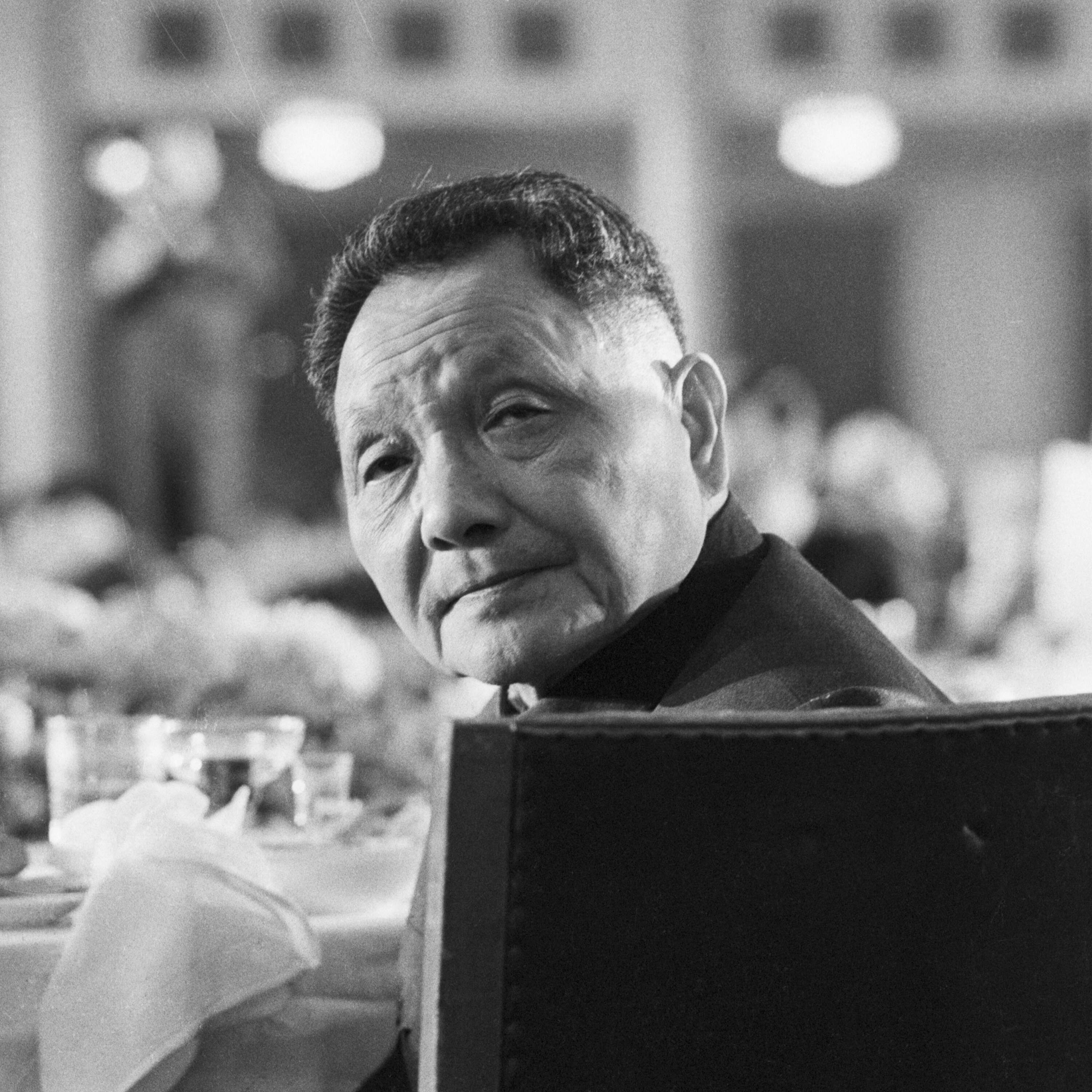
And that comparison is really important because the architect of this industrial city on China's coast was taking notes from American capitalism all the way back in the 1970s when China began to open itself up to the world. That man was Deng Xiaoping, China's paramount leader in the 1980s. When you go to Shenzhen today, you can still see his legacy everywhere you look.
- [01:58]
Carrie Brown
So you've got this big billboard.
- [02:00]
Rund Abdelfattah
Deng Xiaoping is on it in the background, the great skyline of Shenzhen. And he's looking at it as if
- [02:06]
Carrie Brown
to say, I made this.
- [02:15]
Rund Abdelfattah
Today, it's easy to take for granted that China is one of the world's big superpowers and an economic rival to the U.S. but this transformation started as an experiment, a gamble by Deng Xiaoping that he could turn China into an economic powerhouse. Shenzhen embodies that gamble. China's current leader, Xi Jinping, visited Shenzhen soon after taking office on a whistle stop tour designed to mimic one Deng took two decades earlier. And so much of China's ascent globally as a superpower began with the vision set in motion by Dengue. To make that vision real, he had to change China's relationship to the world and introduce capitalism to a society steeped in tradition and communist ideals. I'm Rund Abdelfatah. On this episode of Throughline from npr, we tell the story of Deng Xiaoping's quest to open China, transform its economy, and make it the world's factory.
- [03:25]
Listener/Caller
Hi there, this is Francesca Vilich Kennedy.
- [03:27]
I'm calling in from Brooklyn, New York and I love everything you guys put out. This podcast has taught me a ton and made me look forward to doing the dishes every night. Thanks for everything. You're listening to Throughline from npr.
- [03:41]
Sponsor/Announcer
This message comes from Midi Health, a virtual care platform for women in perimenopause and menopause. CEO Joanna Strober shares the mission behind working with women in midlife.
- [03:52]
Joanna Strober
It's not just about hormones, it's not just about weight loss medications. We are very much a holistic care platform and our job is to figure out whatever medications are appropriate for you and offer you those medications.
- [04:04]
Sponsor/Announcer
MIDI Health committed to helping women in midlife with paramenopause and menopause care. Accessible via telehealth visits@joinmidi.com this message comes from Odoo, the all in one business management software platform. Whether you're a small or large business, Odoo gives you one flexible platform built to grow with you. Try today for free@odoo.com NPRPodcasts this message
- [04:32]
Sponsor Voice
comes from wise, the smart way to manage your money around the world. With Wise, you can send, spend and receive Money in over 40 currencies at the mid market rate. Learn more@wise.com Ts and Cs apply.
- [04:47]
Sponsor/Announcer
This message comes from Lisa Meticulously designed mattresses backed by free shipping, easy returns and a 120 night sleep trial. Visit Lisa.com for 30% off today. Plus get an extra $50 off with promo code NPR
- [05:04]
Narrator
Part 1 the Great
- [05:07]
Rund Abdelfattah
Manager I want to take you back to a time before China was the global juggernaut it is today. It's May 1966 and the Chinese Communist Party run by Chairman Mao Zedong issues a warning. No capitalist infiltrators. Communism must survive. Wealth must be distributed and not held by individuals.
- [05:33]
Carrie Brown
Lao Zedong's approach to economics was non existent.
- [05:36]
Rund Abdelfattah
This is Carrie Brown, a professor of Chinese Studies and director of the Lao China Institute at King's College London.
- [05:43]
Carrie Brown
So 99% of economy was in the hands of the state.
- [05:47]
Rund Abdelfattah
Ma's plan had been to industrialize the country through collective farming, which also diverted labor from other agricultural activities, leading to a plunge in grain production. People were starving. An estimated 30 million people died.
- [06:03]
Carrie Brown
Mao was a believer in class struggle, sort of social mobilization. And the Cultural Revolution was really driven by this idea to remake Chinese culture.
- [06:15]
Rund Abdelfattah
The Cultural Revolution was Chairman Mao's attempt to regain control over the Party. His strategy was ruthless. There's a deliberate destruction of culture, ideas, customs, habits. Historical artifacts were destroyed and ancient scrolls were torn apart. Intellectuals were persecuted or imprisoned. Families were forced to destroy heirlooms to avoid persecution. The lives of citizens themselves were destroyed. Millions were forcibly relocated to the countryside and forced to perform manual labor. Visiting Western journalists covered the strict working conditions.
- [06:53]
Journalist/Reporter
There are 7,000 workers in the Shanghai shipyard. They're constantly being reminded of their need to work for their fellow workers and for China.
- [07:02]
Carrie Brown
The Maoist period seems like another planet.
- [07:05]
Journalist/Reporter
Chairman Mao's thoughts are there on the loudspeakers to egg them on, to remind them of the three main rules of discipline.
- [07:15]
Rund Abdelfattah
Life in China was really dire. Society was in chaos. The country needed someone to help stem the bleeding.
- [07:23]
Carrie Brown
Deng Xiaoping was not at all charismatic, but incredibly effective as a manager.
- [07:38]
Rund Abdelfattah
Deng Xiaoping was a true Communist patriot. He served in the military and later wore many hats in the party. In the 1950s, he served as Vice Premier and Vice chair of the Defense Council. He later served as the Communist Party's General Secretary. In the early 1960s, Deng embarked on a series of reforms to help China's economy recover after the famine and widespread death in the previous decade. Because unlike Mao, who's considered the visionary, cult like leader and dreamer of the Party, Deng is different. He's practical, realistic.
- [08:14]
Dan Wang
He was a ferociously competent and very pragmatic dude.
- [08:20]
Rund Abdelfattah
This is Dan Wang, a writer specializing in contemporary China and author of China's Quest to Engineer the Future.
- [08:29]
Dan Wang
He was a short little dude, chainsmoker
- [08:33]
Carrie Brown
of cigarettes, enormously strong personalities. He was a tough, tough character. He had a spittoon by the side of his feet, which he spat into.
- [08:42]
Dan Wang
There are all of these accounts of foreign leaders meeting him and marveling at how expertly he would spit into a nearby spittoon because he was just able to hock up so much mucus, just direct spit right in there.
- [08:58]
Rund Abdelfattah
Deng's pragmatic approach threatened Mao's project. He was a valuable confidant, yes, but Deng's ideas were pragmatic and growth oriented. And Deng earns a reputation for being a little too innovative for comfort. Mao's rule and the Communist project were paramount. So like the rest of China, Deng succumbed to Mao's rule.
- [09:20]
Carrie Brown
This was a man who was savagely attacked in the Cultural Revolution and had everything taken from him.
- [09:29]
Rund Abdelfattah
In the late 1960s, Deng Xiaoping was removed from his political post and his political titles were stripped. He and his family were sent Far
- [09:38]
Carrie Brown
away to work in a tractor factory. I think in Jiangxi Province. He was disgraced, punished, sent to the countryside.
- [09:48]
Rund Abdelfattah
Deng and his family are banished to work in that factory. From 1969 to 1973, they're forced to read Mao Zedong thought they live in a military compound. But while he's there working at the factory, Deng Xiaoping has plenty of time to think about his country, about what had gone wrong with many of Mao's policies, about what might be possible.
- [10:12]
Carrie Brown
He had this spiritual reawakening where he thought, why is it after 20 plus years of socialism, our country is still so poor and weak? I see all this poverty around me. Something's wrong.
- [10:23]
Rund Abdelfattah
His thoughts start to cohere into one main could there be a way to loosen China up to the outside world economically, but also retain the structure of the Communist Party? By 1973, Deng was summoned back to Beijing. Another official with a good relationship to Deng convinces Mao to let him return. Deng rises in the ranks, becoming Mao's third in command. He's brought back to initiate pragmatic reform organization and essentially do the cleaning up of the destruction caused by the Cultural Revolution.
- [10:59]
Carrie Brown
I think we see that Deng Xiaoping was a really supremely competent administrator and that China is a country which needs being administered, sort of like a continent rather than a country.
- [11:17]
News Anchor
World leaders sent their condolences to Peking today, calling Mao the last giant of the century and one of the world's immortals.
- [11:24]
Rund Abdelfattah
But then, September 1976, Mao Zedong dies
- [11:30]
News Anchor
at the White House. President Ford called Chairman Mao a great man with vision and imagination.
- [11:36]
Rund Abdelfattah
The power structure in China as it had existed in the Maoist era totally collapsed. There was a period of chaotic power struggles as members of the party tried to claim control. But when the dust finally settled, Deng remained.
- [11:52]
Carrie Brown
They needed the skills of someone like Deng Xiaoping. And so he was allowed to come back to Beijing and to be part of the kind of new system.
- [12:01]
Rund Abdelfattah
He also did have a plan, a radically new economy. One opening itself up to science, technology, business, and new big ideas from all over the world. It didn't matter what its political system was. The trick here for Deng was to develop a political system that could fit the unique needs of China at this moment in complete disarray. Diverse, very poor, but a nation with a deep cultural history. Deng cannot simply import another system into China. He had to develop something as unique as its needs. By 1977, he's looking over at nations like the UK and the US and thinking we need to embrace some of what's going on over there, the free market. But he also doesn't want to go full on capitalism.
- [12:53]
Carrie Brown
Well, we don't like capitalists, but they are able to produce what we can't, which is GDP growth. We have to find a way of doing that without being contaminated by them. He was the key architect of that. That's what he's called in China, the key architect of the reform process.
- [13:08]
Rund Abdelfattah
By 1978, newly minted Paramount leader Deng Xiaoping wants to carry out his plan to bring wealth to the people of China. For maybe the first time in the modern era. He didn't know exactly how. Taking a stab at this would be almost like feeling around for the stepping stones as he crossed the river. A favorite saying of his. He's 74 years old by this point back in the Communist Party in Beijing. By now he's losing his hearing. There's a meeting with high ranking members of the party overseeing the government and the military.
- [13:43]
Carrie Brown
But there was a big meeting in Beijing in a hotel, actually a military hotel.
- [13:47]
Rund Abdelfattah
From that meeting comes the start of a project Socialism with Chinese characteristics. It's Deng's brainchild, a system where small private businesses could operate and employees working in those businesses could receive bonuses. Deng and his comrades argue that in order to reach the communist ideal, China needs to go through capital development.
- [14:11]
Carrie Brown
It allowed sort of entrepreneurialism and foreign capital to come to China.
- [14:15]
Rund Abdelfattah
Under Deng's vision, China would finally open itself up to the world to allow it to rejoin the international system.
- [14:23]
Carrie Brown
So these things were complete heresy before, but because of these few words in a high level speech, they became okay. And from that point on, it was good to get rich.
- [14:35]
Rund Abdelfattah
And in that good to get rich spirit, Deng went on a big trip to America for some inspiration. That's after the break.
- [14:53]
Listener/Caller
Hi, my name's Alyssa. I'm in Madison, Wisconsin and I actually work in public radio. And shows like this one just keep me really engaged and inspired. It's my favorite one. So. You're listening to Throughline from npr.
- [15:12]
Sponsor/Announcer
This message comes from Odoo. Running a business shouldn't feel like surviving a software group project. Start managing your business with one unified system. Odoo is the all in one business management software. Try for free today@odoo.com NPRPodcasts
- [15:30]
Narrator
this message comes from Prolon. Want to look and feel your best this spring? Prolon's five Day Fasting Mimicking Diet is a clinically developed nutrition program with the goal of promoting fat loss while protecting lean body mass. Developed at USC's Longevity Institute, it aims to assist the body in entering a fasting like state that helps reset metabolism, target visceral fat and support healthy metabolic markers. Get 15% off plus a bonus gift when you subscribe@prolonlife.com NPR this message comes from Leesa.
- [16:04]
Sponsor/Announcer
Beautifully crafted mattresses from Leesa are tailored for how you sleep and designed with specific preferences in mind. Go to leesa.com for 30% off mattresses plus get an extra $50 off with promo cod.
- [16:23]
Narrator
Part 2 Deng's new plan this house
- [16:29]
US Official
belongs to all Americans, people who are firmly dedicated to a world of friendship and peace and Vice Premier Deng, on behalf of all Americans, I welcome you here to our house.
- [16:42]
Carrie Brown
So Deng Xiaoping went to America in 1979.
- [16:46]
News Reporter
Deng Xiaoping was welcomed to Washington today by President Carter, the two leaders promising to work for peace and stability in the Pacific and the world at large.
- [16:55]
US Official
Your visit here, Mr. Vice Premier, is an important milestone in the development of friend relations between the United States of America and the People's Republic of China.
- [17:08]
Rund Abdelfattah
So this trip to America is a huge deal. Deng was the first Chinese Communist leader to visit the United States.
- [17:16]
News Reporter
Shouting protesters marred the South Lawn ceremony a bit, but Carter carried on with his speech.
- [17:22]
Carrie Brown
When Jimmy Carter became president, he kind of did very end of 1978 shift diplomatic recognition from Taiwan to China. And so Deng very quickly, I think in January or February of 1979, went to America and you know, kind of these are more innocent times. He went to a rodeo in Texas.
- [17:44]
Rund Abdelfattah
It was big news. This Chinese Communist leader was eating barbecue and going full cowboy.
- [17:50]
News Reporter
The eyes of Texas were on Deng Xiaoping today as the Chinese vice premier continued his tour of this country. His two day schedule in Texas is certainly buried. A visit to the Space Center, a rodeo and barbecue tonight, an inspection of oil drilling equipment tomorrow.
- [18:06]
Carrie Brown
And famously sort of wore this 10 gallon hat which is about the same size as him. He's like one of those cartoon characters, that little sort of like cartoon character. When he wears a hat, it's half the size of its body. He famously wore this hat in the stadium and it got huge coverage in America.
- [18:21]
News Commentator
Indeed, at the rodeo, the Chinese came alive, all wore cowboy hats and drank beer. And Lee Sung of the Chinese News Agency, he summed it up, we have
- [18:31]
News Reporter
good relaxation, good barbecue, good country music and good rodeo show.
- [18:40]
News Commentator
So the Chinese leave today with their memories and perhaps a new image for Communist China's leading man. For Deng Xiaoping not only went west, but went western.
- [18:55]
Rund Abdelfattah
Deng went on to other US Cities on his trip. He encouraged American business people to invest In China, academics to collaborate on scholarship and generally advocated for more exchanges between the countries.
- [19:08]
Carrie Brown
So he went to the Boeing factory in Seattle, and this has never happened before. Deng Xiaoping, this die hard, 100% committed communist leader, became very popular in America, really until the late 1980s. And he was times, you know, like man of the year twice. A lot of it was about how America had this image of this, what they thought was a relatively benign, capitalist, friendly communist leader who was leading China towards final capitalist sort of revolution. No, he was 100% committed, a servant of the party. And that was never going to be negotiable. No, never.
- [19:46]
Rund Abdelfattah
When Deng looked at the economic model in America, he learned a lot. And he wanted China to learn those lessons too.
- [19:53]
Carrie Brown
The lessons were very profound. The need for industrialization and a decent technology, infrastructure, the importance of education.
- [20:01]
Dan Wang
There was a very intentional effort by Deng Xiaoping, the then leader, to say, well, you know, who is the most successful country in the world? It's not really the Soviet Union. It's much more the Americans. And so why don't we adopt practices closer to America? And my view is that China adopted absolutely everything from the United States, aside from the political system.
- [20:23]
Carrie Brown
China decided that its only great asset was plentiful, well educated, cheap labor.
- [20:29]
Rund Abdelfattah
Deng wants some of what he sees in America for his own people. The prosperity, the economic freedom. But was there a way to do that within Communist China? If he moves too fast, he could upset members of his own party and be ousted. Or it could embolden protests and plunge the nation into disarray, as it did under Mao. How could he let some freedom trickle in without losing the architecture of a communist society? He needed a bubble, a place where he could experiment with capitalism without letting the contagion loose. In concert with other advisors, as part of the economic reforms, Deng established something called special economic zones, spots where business and trade laws are a little more relaxed than the rest of the country. In 1980, Deng and the party opened the first three special economic zones, one of which was Shenzhen, a small city on the coast near Hong Kong.
- [21:26]
Carrie Brown
Shenzhen was a fishing kind of. Well, it wasn't a village. It was a whole kind of county that had about 300,000 people. But it was rural. And if you stood in Hong Kong in 1978, you would have looked across to mostly fields and rivers, you know, very rural scenery.
- [21:46]
Dan Wang
Shenzhen did not have a great deal of industry. It was a lot of low slung buildings that were making things like harvesting oysters.
- [21:56]
Rund Abdelfattah
Why did Deng see Shenzhen as a good place to experiment with the idea?
- [22:02]
Carrie Brown
Well, special economic zones were to engage with capitalism, but at arm's length. So to allow very designated areas where you could control these sort of nasty capitalist behaviors in case they got out of hand.
- [22:16]
Rund Abdelfattah
Special economic zones would allow Deng to introduce the foreign market in these little city laboratories where market reforms could be tested.
- [22:25]
Carrie Brown
Shenzhen was to benefit from Hong Kong. Hong Kong's land prices were very high. It couldn't manufacture. It was doing manufacturing in other parts of Southeast Asia and Asia. So Shenzhen was perfect. It was just across the border. You could get Hong Kong entrepreneurs.
- [22:40]
Rund Abdelfattah
The idea was that you could mitigate state regulation and taxes and the zones would attract foreign businesses. Deng's bet was that this city would help chip away at socialist structures and begin the capitalistic transformation he dreamed of. The city received loans from Chinese banks. New roads were built, housing, water, power. A brand new Shenzhen was on its way.
- [23:06]
Carrie Brown
But the scale in Shenzhen was what made it unique. Shenzhen, when it developed, was a crazy, crazy sort of, you know, Wild west sort of place.
- [23:16]
Rund Abdelfattah
After Deng made Shenzhen a special economic zone in 1980, rural citizens flocked to it. A job in Shenzhen was a ticket to a totally different life. Soon businesses from around the world moved their manufacturing to Shenzhen.
- [23:31]
Carrie Brown
It become in many ways, the factory for the whole world.
- [23:35]
Rund Abdelfattah
Well into the 1980s and 90s, the city grew at an alarming rate, now colloquially referred to as Shenzhen speed.
- [23:46]
Carrie Brown
It had had 40% growth a year. I mean, literally building, you know, like half the city in a year. It just was growth, growth, growth, even if it wasn't particularly sustainable. So this was one huge experiment.
- [24:06]
Dan Wang
The Shenzhen Commercial Daily newspaper said that there was so much irresponsible construction in Shenzhen that one in five rural buildings simply collapsed in the year 1985. There was quite a lot of.
- [24:22]
US Official
That's a lot though.
- [24:23]
Rund Abdelfattah
20%.
- [24:24]
Dan Wang
That's what progress feels like.
- [24:26]
Rund Abdelfattah
Deng's bet on Shenzhen and the special economic zones of the reform process offered powerful lessons.
- [24:33]
Dan Wang
Let's be open, welcome foreign investment, be ready to learn from other countries and move up. The technology leader, in part through foreign help. Sounds like a great formula for reindustrialization.
- [24:47]
Rund Abdelfattah
Shenzhen was just the beginning. More and more businesses moved in over the coming decades. Titans of industry advertising their products in America like Apple, Walmart and Procter and Gamble started moving operations to China using Macintosh.
- [25:04]
News Reporter
It does all the things you'd expect a business computer to do.
- [25:08]
News Commentator
Tremendous selection, spectacular savings during Walmart's January clearance sale, now through Six Row Family
- [25:14]
News Reporter
Package, the softest family pack you can buy.
- [25:19]
Carrie Brown
But it created massive distortions so that you got huge inflation in 1989 and massive party corruption.
- [25:27]
Rund Abdelfattah
China was growing at breakneck speed, but the bottom was going to give out at some point.
- [25:33]
Narrator
They're butchering people in China today. They are saying the streets are rivers of blood. The aftermath of a youth driven movement for change that has ended in the deaths of hundreds, perhaps thousands.
- [25:44]
Rund Abdelfattah
That's after the break.
- [25:51]
Listener/Caller
Hi, this is Abdullah calling from the Bay Area in California. I love this show so much and if everybody dialed into your program, I think we'd have flying cars already. You're listening to Throughline on npr.
- [26:06]
Sponsor/Announcer
This message comes from Odoo, the all in one business management software platform. Whether you're a small or large business, Odoo gives you one flexible platform built to grow with you. Try today for free@odoo.com NPRPodcasts this message comes from Prolon.
- [26:24]
Narrator
Want to look and feel your best this spring? Prolon's Five Day Fasting Mimicking Diet is a clinically developed nutrition program with the goal of promoting fat loss while protecting lean body mass. Developed at USC's Longevity Institute, it aims to assist the body in entering a fasting like state that helps reset metabolism, target visceral fat and support healthy metabolic markers. Get 15% off plus a bonus gift when you subscribe@prolonlife.com NPR this message comes from Leesa.
- [26:56]
Sponsor/Announcer
Beautifully crafted mattresses from Leesa are tailored for how you sleep and designed with specific preferences in mind. Go to Leesa.com for 30% off mattresses, plus get an extra $50 off with promo COD
- [27:11]
Narrator
Part 3 the World's Factory.
- [27:15]
Rund Abdelfattah
The only known American television interview Deng Xiaoping gave was in 1986. He sat down with Mike Wallace on 60 Minutes.
- [27:25]
News Reporter
Everybody asks the question, Deng Xiaoping has done a wonderful job here in the last few years with modernization. The economy is better. People are not afraid as they were. But after Deng Xiaoping, we don't know what's going to happen. Perhaps it could go back to the bad old days.
- [27:49]
Deng Xiaoping (Interview)
There will be no turning back. When one tries to find out whether the existing policy is here to stay, he should first examine whether the policy is correct, whether the policy is right for the country and the people, and whether the life of the people is gradually improving under the policy. So long as the people think the existing policy is correct, whoever wants to to change it will be brought down.
- [28:31]
Rund Abdelfattah
Deng Xiaoping's reform process instigated the most profound economic development China had ever seen. But with that amount of change that quickly, a completely different Communist party presided
- [28:43]
Carrie Brown
over the country, the party became almost like a business rather than a political movement. And all of this sort of built up to the events over April to
- [28:54]
Rund Abdelfattah
June 1989, the Tiananmen Square massacre.
- [28:58]
Witness/Reporter
It looked like a battleground.
- [28:59]
Rund Abdelfattah
Students protested for a different China.
- [29:01]
Witness/Reporter
Ambulance drivers were prevented from getting into the square when the troops were trying to take it over.
- [29:08]
Rund Abdelfattah
But the government imposed martial law every main intersection.
- [29:12]
Witness/Reporter
There were burnt out vehicles. There was broken glass, pools of blood, twisted road signs, smashed barricades and fences. The violence happened all over the city last night.
- [29:24]
Carrie Brown
Students protested over a whole series of things, but mostly corruption, the prices of things, kind of just very frustrated and put up the goddess of democracy in Tiananmen Square.
- [29:37]
Witness/Reporter
They were pushed in something of a panic down from the steps of the monument and people were crushed.
- [29:45]
Rund Abdelfattah
The tail end of the Soviet Union's existential threat to capitalism already happened. The protests in Tiananmen Square are no accident. It's an eruption, an extension of Deng's vision of opening up the country. The protesters argued that for the country to be truly modern, it should embrace democracy.
- [30:07]
Carrie Brown
The party, though, just couldn't compromise. It did not compromise. It was an existential threat. They did turn their military on, protesting, mostly protesting students, but some protesting workers pretty brutally.
- [30:21]
Rund Abdelfattah
Deng ordered the military to crush demonstrators with estimates between hundreds or possibly thousands of deaths.
- [30:29]
Carrie Brown
At the time, I remember, I mean, I remember kind of observing this from, from Britain. The idea really was that China was going to close the door, that it was not going to continue developing its economy because it had been too risky.
- [30:42]
Rund Abdelfattah
There was international outcry. The massacre threatened China's future and Deng's progress.
- [30:48]
Witness/Reporter
The raspy student broadcast system keeps up a constant barrage of announcements about protests in other cities, about new calls for the resignation of China's top leaders.
- [30:59]
Rund Abdelfattah
Would Deng Xiaoping be a part of China's future? Could communism survive in China after such a public catastrophe? The shorter answer, yes and yes.
- [31:11]
Carrie Brown
So what we see after 1989 is the appearance of this very specific form of Chinese capitalism, but with socialist characteristics and with a very strong insistence on it being a Chinese model with Chinese cultural characteristics. Democracy and the democracy movement was stopped in 89 and never really has, has really never really come back to China.
- [31:39]
Rund Abdelfattah
Following the events in 1989, Deng, then nearing his late 80s, retreated from view, his image tainted by the bloody demonstrations. He was old, and perhaps his reign as the key architect of China's economic reform had come to a close.
- [31:56]
Carrie Brown
There were rumors almost every month about him being dead.
- [32:00]
Rund Abdelfattah
But Deng Xiaoping was a man who had been twice purged by Chairman Mao himself. In January of 1992, at the age of 87, Deng did something extraordinary. Once again, he goes on a southern tour of China. He gives speeches arguing that reform was necessary and China would not turn its back on foreign investment. He's saying if China chooses to give up on socialism, reform and opening up economic development and improving people's livelihoods, than it has chosen certain death. In other words, a brave market oriented approach could work with socialism. And Deng brought his message to other cities.
- [32:50]
Carrie Brown
After the famous southern tour of Deng xiaoping in early 1992, China really basically said, there's the path of reform or the path of perdition, we have to reform.
- [33:02]
Rund Abdelfattah
On January 19, he arrived in his sacred Shenzhen. While he was there, he observed what Shenzhen had become since he had designated it a special economic zone just over a decade earlier. The crowds greeted him. Uncle Deng,
- [33:20]
Carrie Brown
there was a big crowd around him. He had a sort of emperor like figure. He was retired, but of course he was the most consequential leader of his generation. And the fact that he had waded in and gone to Zhuhai, Shenzhen and made these comments which were broadcast on Chinese media, was really basically the thing that decided China's recommitment to the global system and to socialism with market characteristics. Right? Symbolically, it was a huge moment. And the Southern tour of 1992 was his last significant political kind of act.
- [34:01]
Rund Abdelfattah
Deng swan song. His final message was clear. This was his legacy. The continued opening up of China. There would be no going back from the southern tour.
- [34:13]
Carrie Brown
Within a few months, not immediately, there was a massive influx of foreign investment, foreign interest. Suddenly the doors opened and there were way more kind of foreign businesses going there. And it was a high risk but high return environment. So over the 90s, you also got kind of significant finance companies like JP Morgan or the bank of America, or you saw more and more McDonald's restaurants. The biggest McDonald's in the world was in Wang, Fujian, in Beijing, Kentucky Fried Chicken. And I think the 90s were really a kind of period of great experimentation. So, you know, you'd see many speculative business people come in the 1990s, China's GDP growth was 10% a year most years after 1991. And that was just something companies couldn't ignore.
- [35:09]
Rund Abdelfattah
One company that didn't ignore it was Walmart.
- [35:12]
Carrie Brown
Walmart moved to China like a lot of other major retailers because it could produce things way cheaper but very good quality. So, you know, Walmart got a great deal from this. The American consumers got a good deal from it.
- [35:31]
Rund Abdelfattah
Well, what about Chinese workers?
- [35:33]
Carrie Brown
So Chinese workers did get something for it, but for many people it was the first chance to kind of make money. And it was a choice between do you want to be in your work unit where all you're ever going to do is doing the same thing for the same return for the rest of your life? Or the capitalist sort of dream of, well, you've got a chance.
- [35:53]
Rund Abdelfattah
Migrant laborers who moved to places like Shenzhen were able to make money, but their lives were really hard. The working conditions were tough. Unionization efforts were thwarted. For all the promise of Deng Xiaomi unique capitalism, there was considerable human cost. Deng Xiaoping died in February of 1997. Since then, China has undergone even further economic development and expansion. In December 2001, it officially joined the World Trade Organization.
- [36:26]
Carrie Brown
By 2006, I remember going around China and everywhere was growing like crazy. You would go to some places, they would be building skyscrapers, one floor a day. It was unbelievable. The greatest period of on scale growth any country in history has achieved. Xi Jinping walked out to face the world. Now one of its most powerful politicians. The men on this stage rule over 1.3 billion people.
- [37:01]
Rund Abdelfattah
By 2013, Xi Jinping had become the paramount leader of China. And the nation he presides over now is one marked by Deng's strong influence. But there are some key differences.
- [37:14]
Carrie Brown
It's different scale and I think that's where Xi differentiates himself from previous leaders. He is leading a China which they created, they contributed to the creation of, but which is so much more powerful and so much more capable and has greater capacity. And he's the politician mandated to do something with that.
- [37:36]
Rund Abdelfattah
China has defined itself as a manufacturing superpower with Shenzhen serving as a symbol and America is its favorite customer. Both nations sort of depend on each other in a symbiotic relationship. But China's technological advancements are changing the dynamic for the future.
- [37:54]
Sponsor/Announcer
Overnight, the high stakes handshake between superpowers. Chinese President Xi welcoming President Trump back to China for the first time in nearly a decade.
- [38:04]
Carrie Brown
It's kind of China's power underdog was sort of three dimensional. Now we've got this four dimensional power because we've got not just investment manufacturing and you know, kind of the market of China. We've got technologies, technology. And that is something that no other Chinese leadership in modern history has had to kind of really deal with and work out. How do we leverage this?
- [38:31]
Rund Abdelfattah
In May of this year, President Trump visited China and addressed President Xi Jinping. Thank you very much. They talked about global trade, security issues and the two countries business relationship. The US knows this relationship with China is essential to its own economy.
- [38:50]
Carrie Brown
It's a massive historic opportunity and it gives China different kinds of power because as it creates more technology, the west has to basically hit this opportunity. Cost of we don't like your values, we don't like what you're doing diplomatically. But the problem is that if we don't deal with you, we're not going to get this technology that, that you're doing that might be important to us. But if we do deal with you, we're going to basically be strengthening all these things we don't like. It's the ultimate dilemma and I don't think anyone solved this and I don't think it is really soluble.
- [39:28]
Rund Abdelfattah
Think of the relationship between the two countries like a snake eating its tail, one feeding the other. As much political rivals as they are capitalist collaborators. It's an honor to be your friend and the relationship between China and the
- [39:44]
Carrie Brown
USA is going to be better than ever before.
- [39:48]
Rund Abdelfattah
And just off screen from this scene playing out today is Deng Xiaoping in the distant wings who first set it all in motion.
- [39:58]
Carrie Brown
Now China is a technology superpower that is a totally new ballgame.
- [40:04]
Listener/Caller
Foreign.
- [40:12]
Rund Abdelfattah
And that's it for this week's show. I'm Rund Abdelfattah. Throughline was created by me and Ramtin Arablouei. This episode was produced by me and
- [40:21]
Sponsor/Announcer
Amy Padula, Jasmine Romero, Devin Kadayama, Sarah Wyman, Kiana Mojeda, Julia Redpath, Skyler Swenson, Liana Simstrom, Irene Noguchi.
- [40:33]
Rund Abdelfattah
Thank you to Johannes Durgi and Cheyenne Butler. Fact checking for this episode was done by Kevin Voelkel. This episode was mixed by Robert Rodriguez. Some archival footage from this episode comes from Independent Television News. Special thanks to Anthony Kuhn, Vincent nee Jane Gilvin and Barclay Walsh. Music for this episode was composed by Ramtin and his band Drop Electricity, which includes Naveed Marvi, Sho Fujiwara, Anya Mizani. And finally, if you have an idea or liked something you heard on the show, please write us@throughlinepr.org and if you're open to us giving you a call back, leave your number too. We might feature your idea in an upcoming episode. Also make sure to follow us on Apple, Spotify or the NPR app. That way you'll never miss an episode. Thanks for listening.
- [41:30]
Sponsor Voice
This message comes from Schwab. With the new Schwab Teen Investor account, teens can gain hands on investing experience and build positive money habits. It's an account co owned by you and your teen so you can monitor and engage with the account while your teen learns how to invest and manage money. Learn more@schwab.com this message comes from Instacart.
- [41:50]
Sponsor/Announcer
Instacart knows not all bananas are created equal. Some want them green, some ripe. Some want them ready right now. With Instacart's Preference Picker, available at most retailers, you can choose preferences like avocado ripeness or deli thickness before your shopper starts. So instead of hoping for the best, you get groceries picked the way you would pick them. Download the app and get bananas just how you like. With Instacart,